


Community hub
Recent from talks
Contribute something
Nothing was collected or created yet.

| Steels |
|---|
 |
| Phases |
| Microstructures |
| Classes |
| Other iron-based materials |
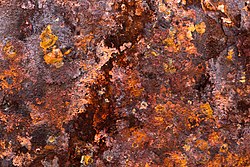
Rust is an iron oxide, a usually reddish-brown oxide formed by the reaction of iron and oxygen in the catalytic presence of water or air moisture. Rust consists of hydrous iron(III) oxides (Fe2O3·nH2O) and iron(III) oxide-hydroxide (FeO(OH), Fe(OH)3), and is typically associated with the corrosion of refined iron.
Given sufficient time, any iron mass in the presence of water and oxygen, will form rust and could eventually convert entirely to rust. Surface rust is commonly flaky and friable, and provides no passivational protection to the underlying iron unlike other metals such as aluminum, copper, and tin which form stable oxide layers. Rusting is the common term for corrosion of elemental iron and its alloys such as steel. Many other metals undergo similar corrosion, but the resulting oxides are not commonly called "rust".[1]
Several forms of rust are distinguishable both visually and by spectroscopy, and form under different circumstances.[2] Other forms of rust include the result of reactions between iron and chloride in an environment deprived of oxygen. Rebar used in underwater concrete pillars, which generates green rust, is an example. Although rusting is generally a negative aspect of iron, a particular form of rusting, known as stable rust, causes the object to have a thin coating of rust over the top; this results from reaction with atmospheric oxygen. If kept free of moisture, it makes the "stable" layer protective to the iron below, albeit not to the extent of other oxides such as aluminium oxide on aluminium.[3]
Chemical reactions
[edit]

Rust is a general name for a complex of oxides and hydroxides of iron,[4] which occur when iron or some alloys that contain iron are exposed to oxygen and moisture for a long period of time. Over time, the oxygen combines with the metal, forming new compounds collectively called rust, in a process called rusting. Rusting is an oxidation reaction specifically occurring with iron. Other metals also corrode via similar oxidation, but such corrosion is not called rusting.
The main catalyst for the rusting process is water. Iron or steel structures might appear to be solid, but water molecules can penetrate the microscopic pits and cracks in any exposed metal. The hydrogen atoms present in water molecules can combine with other elements to form acids, which will eventually cause more metal to be exposed. If chloride ions are present, as is the case with saltwater, the corrosion is likely to occur more quickly. Meanwhile, the oxygen atoms combine with metallic atoms to form the destructive oxide compound. These iron compounds are brittle and crumbly and replace strong metallic iron, reducing the strength of the object.
Oxidation of iron
[edit]When iron is in contact with water and oxygen, it rusts.[5] If salt is present, for example in seawater or salt spray, the iron tends to rust more quickly, as a result of chemical reactions. Iron metal is relatively unaffected by pure water or by dry oxygen. As with other metals, like aluminium, a tightly adhering oxide coating, a passivation layer, protects the bulk iron from further oxidation. The conversion of the passivating ferrous oxide layer to rust results from the combined action of two agents, usually oxygen and water.
Other degrading solutions are sulfur dioxide in water and carbon dioxide in water. Under these corrosive conditions, iron hydroxide species are formed. Unlike ferrous oxides, the hydroxides do not adhere to the bulk metal. As they form and flake off from the surface, fresh iron is exposed, and the corrosion process continues until either all of the iron is consumed or all of the oxygen, water, carbon dioxide or sulfur dioxide in the system are removed or consumed.[6]
When iron rusts, the oxides take up more volume than the original metal; this expansion can generate enormous forces, damaging structures made with iron. See economic effect for more details.
Associated reactions
[edit]The rusting of iron is an electrochemical process that begins with the transfer of electrons from iron to oxygen.[7] The iron is the reducing agent (gives up electrons) while the oxygen is the oxidizing agent (gains electrons). The rate of corrosion is affected by water and accelerated by electrolytes, as illustrated by the effects of road salt on the corrosion of automobiles. The key reaction is the reduction of oxygen:
Because it forms hydroxide ions, this process is strongly affected by the presence of acid. Likewise, the corrosion of most metals by oxygen is accelerated at low pH. Providing the electrons for the above reaction is the oxidation of iron that may be described as follows:
- Fe → Fe2+ + 2 e−
The following redox reaction also occurs in the presence of water and is crucial to the formation of rust:
- 4 Fe2+ + O2 → 4 Fe3+ + 2 O2−
In addition, the following multistep acid–base reactions affect the course of rust formation:
as do the following dehydration equilibria:
From the above equations, it is also seen that the corrosion products are dictated by the availability of water and oxygen. With limited dissolved oxygen, iron(II)-containing materials are favoured, including FeO and black lodestone or magnetite (Fe3O4). High oxygen concentrations favour ferric materials with the nominal formulae Fe(OH)3−xOx⁄2. The nature of rust changes with time, reflecting the slow rates of the reactions of solids.[5]
Furthermore, these complex processes are affected by the presence of other ions, such as Ca2+, which serve as electrolytes which accelerate rust formation, or combine with the hydroxides and oxides of iron to precipitate a variety of Ca, Fe, O, OH species.
The onset of rusting can also be detected in the laboratory with the use of ferroxyl indicator solution. The solution detects both Fe2+ ions and hydroxyl ions. Formation of Fe2+ ions and hydroxyl ions are indicated by blue and pink patches respectively.
Prevention
[edit]
Because of the widespread use and importance of iron and steel products, and because rusting severely compromises the strength, functionality and the appearance of such products, the prevention and control of rust is the basis of major economic activities in a number of specialized technologies. A brief overview of methods is presented here; for detailed coverage, see the cross-referenced articles.
Rust is permeable to air and water, therefore the interior metallic iron beneath a rust layer continues to corrode. Rust prevention thus requires coatings that preclude rust formation.
Rust-resistant alloys
[edit]
Stainless steel forms a passivation layer of chromium(III) oxide.[8][9] Similar passivation behavior occurs with magnesium, titanium, zinc, zinc oxides, aluminium, polyaniline, and other electroactive conductive polymers.[10]
Special "weathering steel" alloys such as Cor-Ten rust at a much slower rate than normal, because the rust adheres to the surface of the metal in a protective layer. Designs using this material must include measures that avoid worst-case exposures since the material still continues to rust slowly even under near-ideal conditions.[11]
Galvanization
[edit]
Galvanization consists of an application on the object to be protected of a layer of metallic zinc by either hot-dip galvanizing or electroplating. Zinc is traditionally used because it is cheap, adheres well to steel, and provides cathodic protection to the steel surface in case of damage of the zinc layer. In more corrosive environments (such as salt water), cadmium plating is preferred instead of the underlying protected metal. The protective zinc layer is consumed by this action, and thus galvanization provides protection only for a limited period of time.
More modern coatings add aluminium to the coating as zinc-alume; aluminium will migrate to cover scratches and thus provide protection for a longer period. These approaches rely on the aluminium and zinc oxides protecting a once-scratched surface, rather than oxidizing as a sacrificial anode as in traditional galvanized coatings. In some cases, such as very aggressive environments or long design life, both zinc and a coating are applied to provide enhanced corrosion protection.
Typical galvanization of steel products that are to be subjected to normal day-to-day weathering in an outside environment consists of a hot-dipped 85 μm zinc coating. Under normal weather conditions, this will deteriorate at a rate of 1 μm per year, giving approximately 85 years of protection.[12]
Cathodic protection
[edit]Cathodic protection is a technique used to inhibit corrosion on buried or immersed structures by supplying an electrical charge that suppresses the electrochemical reaction. If correctly applied, corrosion can be stopped completely. In its simplest form, it is achieved by attaching a sacrificial anode, thereby making the iron or steel the cathode in the cell formed. The sacrificial anode must be made from something with a more negative electrode potential than the iron or steel, commonly zinc, aluminium, or magnesium. The sacrificial anode will eventually corrode away, ceasing its protective action unless it is replaced in a timely manner.
Cathodic protection can also be provided by using an applied electrical current. This would then be known as ICCP Impressed Current Cathodic Protection.[13]
Coatings and painting
[edit]
Rust formation can be controlled with coatings, such as paint, lacquer, varnish, or wax tapes[14] that isolate the iron from the environment.[15] Large structures with enclosed box sections, such as ships and modern automobiles, often have a wax-based product (technically a "slushing oil") injected into these sections. Such treatments usually also contain rust inhibitors. Covering steel with concrete can provide some protection to steel because of the alkaline pH environment at the steel–concrete interface. However, rusting of steel in concrete can still be a problem, as expanding rust can fracture concrete from within.[16][17]
As a closely related example, iron clamps were used to join marble blocks during a restoration attempt of the Parthenon in Athens, Greece, in 1898, but caused extensive damage to the marble by the rusting and swelling of unprotected iron. The ancient Greek builders had used a similar fastening system for the marble blocks during construction, however, they also poured molten lead over the iron joints for protection from seismic shocks as well as from corrosion. This method was successful for the 2500-year-old structure, but in less than a century the crude repairs were in imminent danger of collapse.[18] When only temporary protection is needed for storage or transport, a thin layer of oil, grease or a special mixture such as Cosmoline can be applied to an iron surface. Such treatments are extensively used when "mothballing" a steel ship, automobile, or other equipment for long-term storage.
Special anti-seize lubricant mixtures are available and are applied to metallic threads and other precision machined surfaces to protect them from rust. These compounds usually contain grease mixed with copper, zinc, or aluminium powder, and other proprietary ingredients.[19]
Bluing
[edit]Bluing is a technique that can provide limited [citation needed] resistance to rusting for small steel items, such as firearms; for it to be successful, a water-displacing oil is rubbed onto the blued steel and other steel.[citation needed]
Inhibitors
[edit]Corrosion inhibitors, such as gas-phase or volatile inhibitors, can be used to prevent corrosion inside sealed systems. They are not effective when air circulation disperses them, and brings in fresh oxygen and moisture.
Humidity control
[edit]Rust can be avoided by controlling the moisture in the atmosphere.[20] An example of this is the use of silica gel packets to control humidity in equipment shipped by sea.
Treatment
[edit]Rust removal from small iron or steel objects by electrolysis can be done in a home workshop using simple materials such as a plastic bucket filled with an electrolyte consisting of washing soda dissolved in tap water, a length of rebar suspended vertically in the solution to act as an anode, another laid across the top of the bucket to act as a support for suspending the object, baling wire to suspend the object in the solution from the horizontal rebar, and a battery charger as a power source in which the positive terminal is clamped to the anode and the negative terminal is clamped to the object to be treated which becomes the cathode.[21] Hydrogen and oxygen gases are produced at the cathode and anode respectively. This mixture is flammable/explosive.[22] Care should also be taken to avoid hydrogen embrittlement. Overvoltage also produces small amounts of ozone, which is highly toxic, so a low voltage phone charger is a far safer source of DC current. The effects of hydrogen on global warming have also recently come under scrutiny.[23]
Rust may be treated with commercial products known as rust converter which contain tannic acid or phosphoric acid which combines with rust; removed with organic acids like citric acid and vinegar or removed with chelating agents as in some commercial formulations or even a solution of molasses.[24]
Economic effect
[edit]

Rust is associated with the degradation of iron-based tools and structures. As rust has a much higher volume than the originating mass of iron, its buildup can also cause failure by forcing apart adjacent parts phenomenon sometimes known as "rust packing". It was the cause of the collapse of the Mianus river bridge in 1983, when the bearings rusted internally and pushed one corner of the road slab off its support.
Silver Bridge disaster of 1967 in West Virginia, when a steel suspension bridge collapsed in less than a minute, killing 46 drivers and passengers on the bridge at the time. The Kinzua Bridge in Pennsylvania was blown down by a tornado in 2003, largely because the central base bolts holding the structure to the ground had rusted away, leaving the bridge anchored by gravity alone.
Reinforced concrete is also vulnerable to rust damage. Internal pressure caused by expanding corrosion of concrete-covered steel and iron can cause the concrete to spall, creating severe structural problems. It is one of the most common failure modes of reinforced concrete bridges and buildings.
- Structural failures caused by rust
-
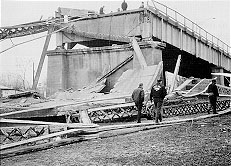 The collapsed Silver Bridge, as seen from the Ohio side
 -
 The Kinzua Bridge after it collapsed
 -
 Rusted and pitted struts of the 70-year-old Nandu River Iron Bridge
 -
 Rusting rebar has expanded and spalled concrete off the surface of this reinforced concrete support.


Cultural symbolism
[edit]Rust is a commonly used metaphor for slow decay due to neglect, since it gradually converts robust iron and steel metal into a soft crumbling powder. A wide section of the industrialized American Midwest and American Northeast, once dominated by steel foundries, the automotive industry, and other manufacturers, has experienced harsh economic cutbacks that have caused the region to be dubbed the "Rust Belt".
In music, literature, and art, rust is associated with images of faded glory, neglect, decay, and ruin.
See also
[edit]References
[edit]- ^ "Rust, n.1 and adj". OED Online. Oxford University Press. June 2018. Retrieved 7 July 2018.
- ^ "Interview, David Des Marais". NASA. 2003. Archived from the original on 2007-11-13.
- ^ Ankersmit, Bart; Griesser-Stermscheg, Martina; Selwyn, Lindsie; Sutherland, Susanne. "Rust Never Sleeps: Recognizing Metals and Their Corrosion Products" (PDF). depotwijzer. Parks Canada. Archived (PDF) from the original on 9 August 2016. Retrieved 23 July 2016.
- ^ Sund, Robert B.; Bishop, Jeanne (1980). Accent on science. C.E. Merrill. ISBN 9780675075695. Archived from the original on 2017-11-30.
- ^ a b "Oxidation Reduction Reactions". Bodner Research Web. Retrieved 28 April 2020.
- ^ Holleman, A. F.; Wiberg, E. (2001). Inorganic Chemistry. San Diego: Academic Press. ISBN 0-12-352651-5.
- ^ Gräfen, H.; Horn, E. M.; Schlecker, H.; Schindler, H. (2000). "Corrosion". Ullmann's Encyclopedia of Industrial Chemistry. Wiley-VCH. doi:10.1002/14356007.b01_08. ISBN 3527306730.
- ^ Ramaswamy, Hosahalli S.; Marcotte, Michele; Sastry, Sudhir; Abdelrahim, Khalid (2014-02-14). Ohmic Heating in Food Processing. CRC Press. ISBN 9781420071092. Archived from the original on 2018-05-02.
- ^ Heinz, Norbert. "Corrosion prevention - HomoFaciens". www.homofaciens.de. Archived from the original on 2017-12-01. Retrieved 2017-11-30.
- ^ "Formation of stable passive film on stainless steel by electrochemical deposition of polypyrrole". Electrochimica Acta.
- ^ "Weathering Steel". azom.com. AZoM. 28 June 2016. Retrieved 2022-09-13.
The steel is allowed to rust and because of its alloy composition rusts more slowly than conventional steel and the rust forms a protective coating slowing the rate of future corrosion
- ^ "Steel corrosion protection - Durability - Structural steel". greenspec.co.uk. greenspec. Retrieved 2022-09-13.
For atmospheric corrosion, refer to the Galvanizers Association Millennium Map of average zinc corrosion rates. About 50% of England and Wales has a rate of under 1 μm/year
- ^ "Cathodic Protection Systems - Matcor, Inc". Matcor, Inc. Archived from the original on 2017-03-30. Retrieved 2017-03-29.
- ^ "Wax-Tape Anticorrosion Wrap Systems" (PDF). Trenton Corporation. Archived from the original (PDF) on 2018-03-23. Retrieved 2018-03-22.
- ^ Schweitzer, Philip A (2007). Corrosion engineering handbook. Boca Raton: CRC Press. ISBN 978-0-8493-8246-8. OCLC 137248977.
- ^ "Corrosion of Embedded Metals". cement.org. Portland Cement Association. Retrieved 9 July 2021.
- ^ "Rust Wedge: Expanding rust is a force strong enough to shatter concrete". exploratorium.edu. 17 April 2018. Retrieved 9 July 2021.
- ^ Hadingham, Evan. "Unlocking Mysteries of the Parthenon". smithsonianmag.com. Retrieved 9 July 2021.
- ^ "Anti-seize Compounds Information". globalspec.com. Engineering 360. Retrieved 9 July 2021.
- ^ Mirza, Lorraine; Gupta, Krishnakali. Young Scientist Series ICSE Chemistry 7. Pearson Education India. ISBN 9788131756591. Archived from the original on 2017-11-30.
- ^ "Rust Removal using Electrolysis". antique-engines.com. Archived from the original on March 30, 2015. Retrieved April 1, 2015.
- ^ Smith, Paul (24 June 2022). "Exploding Hydrogen Balloons with Different Amounts of Oxygen". Youtube. Retrieved 2023-12-29.
- ^ Derwent, Richard (2023). "Global warming potential (GWP) for hydrogen: Sensitivities, uncertainties and meta-analysis". International Journal of Hydrogen Energy. 48 (22): 8328–8341. Bibcode:2023IJHE...48.8328D. doi:10.1016/j.ijhydene.2022.11.219. Retrieved December 9, 2023.
- ^ "Rust Removal with Molasses". 6 July 2005. Archived from the original on September 25, 2016. Retrieved November 29, 2017.
Further reading
[edit]- Waldman, J. (2015): Rust – the longest war. Simon & Schuster, New York. ISBN 978-1-4516-9159-7
- Schweitzer, Philip A. (2007). Corrosion engineering handbook. Fundamentals of metallic corrosion : atmospheric and media corrosion of metals (2 ed.). Boca Raton: CRC Press. ISBN 978-0-8493-8244-4. OCLC 137248972.
- Corrosion of reinforcement in concrete construction. C. L. Page, P. B. Bamforth, J. W. Figg, International Symposium on Corrosion of Reinforcement in Concrete Construction. Cambridge: Royal Society of Chemistry, Information Services. 1996. ISBN 0-85404-731-X. OCLC 35233292.
{{cite book}}: CS1 maint: others (link) - Corrosion – 2nd Edition (elsevier.com) Volume 1and 2; Editor: L L Shreir ISBN 9781483164106


| International | |
|---|---|
| Other | |

Definition and Properties
Chemical Composition and Structure
Rust consists primarily of hydrated iron(III) oxides and iron(III) oxide-hydroxides, with the approximate formula Fe₂O₃·nH₂O, where n indicates variable hydration levels typically ranging from 1 to 3, though the exact stoichiometry depends on environmental conditions during formation.[7] This composition arises from the electrochemical oxidation of iron, yielding ferric ions that bind with oxygen and water molecules.[2] Minor components may include traces of iron(II) oxides like FeO, but rust is predominantly Fe(III)-based, distinguishing it from anhydrous hematite (α-Fe₂O₃).[8] The structural arrangement in rust is generally poorly crystalline or amorphous, forming a heterogeneous, porous matrix rather than a uniform crystal lattice.[9] Key polymorphs include goethite (α-FeOOH), which adopts an orthorhombic crystal structure with Fe³⁺ ions octahedrally coordinated by oxygen and hydroxide ions in a distorted hexagonal close-packed array, and hematite, which exhibits a rhombohedral corundum-type structure (space group R3c) where Fe³⁺ occupies octahedral sites in a close-packed oxygen framework.[2] Lepidocrocite (γ-FeOOH) contributes an orthorhombic structure with similar octahedral coordination but looser packing, while akaganeite (β-FeOOH) forms needle-like tetragonal crystals often stabilized by chloride ions.[10] These phases intermix in rust layers, with hydration enabling hydrogen bonding that promotes the flaky, expansive morphology observed macroscopically. The variable hydration and polymorphic nature reflect rust's formation as a dynamic corrosion product, where water molecules intercalate into oxide lattices, increasing volume by up to 2-6 times that of the original iron and exacerbating mechanical degradation.[7] X-ray diffraction analyses confirm these structures, showing broad peaks indicative of nanoscale crystallites rather than large single crystals.[11] This compositional and structural complexity underlies rust's reddish-brown color, derived from d-d electron transitions in Fe³⁺ octahedra, and its relative chemical stability compared to fresh iron surfaces.[8]Physical and Mechanical Characteristics
Rust, primarily composed of hydrated iron(III) oxide (Fe₂O₃·nH₂O), manifests as a reddish-brown, flaky, powdery, or scaly deposit on iron surfaces.[10] Its color ranges from bright orange-red in fresh layers to darker brown in aged forms, with a characteristic earthy texture that is often porous and uneven.[1] The material is odorless and insoluble in water, though its porous structure allows further moisture ingress, perpetuating corrosion.[8] The density of anhydrous iron(III) oxide is approximately 5.25 g/cm³, significantly lower than that of pure iron at 7.87 g/cm³; however, the hydrated and porous nature of rust results in an effective density often below 3 g/cm³, contributing to its voluminous expansion during formation.[8] [12] Hardness, measured on the Mohs scale, is around 5 to 6 for the crystalline forms akin to hematite, rendering it softer and more friable than the base metal.[8] Mechanically, rust exhibits brittleness, forming a weak, non-adherent layer prone to cracking and flaking under stress, unlike the ductile properties of iron.[13] This fragility stems from its low tensile and compressive strength, with the porous microstructure providing minimal load-bearing capacity compared to uncorroded steel.[14] A key characteristic is the volumetric expansion during rust formation, where the corrosion products occupy 2 to 7 times the volume of the consumed iron, generating expansive pressures that induce tensile stresses and potential fracturing in adjacent materials such as concrete or coatings.[15] This expansion ratio varies with environmental conditions and rust composition, but consistently contributes to structural degradation by promoting crack propagation.[16]Historical Development
Ancient and Pre-Modern Observations
The corrosion of iron, manifesting as rust, was empirically observed from the onset of widespread iron use during the late Bronze Age transition to the Iron Age, circa 1200 BCE, as indicated by oxide layers on artifacts such as iron knives and tools excavated from Near Eastern and Anatolian sites.[17] These early iron objects, often wrought from bloomery processes, exhibited reddish-brown ferric oxide (Fe₂O₃) formations, suggesting ancient smiths recognized rust as a degrading process accelerated by exposure to moisture and air, though preventive techniques like forging with slag inclusions or surface treatments were rudimentary and inconsistently applied.[18] In classical antiquity, Pliny the Elder provided one of the first detailed textual descriptions in his Naturalis Historia (completed circa 77 CE), terming rust robigo and characterizing it as ferrum corrumpitur—the spoiling or corruption of iron—ascribed to nature's deliberate counterweight to iron's martial advantages, preventing unchecked human dominance through weaponry.[19] Pliny further documented practical mitigations, recommending coatings of lead acetate, gypsum, and vegetable oil to inhibit rust, reflecting observational knowledge of environmental triggers like humidity.[19] Biblical texts from the 1st century CE similarly reference rust (brosis in Greek, denoting eating or corrosion) as an agent of material decay, notably in Matthew 6:19, which cautions against amassing earthly treasures "where moth and rust doth corrupt," drawing on the visible oxidation of iron implements common in Judean households and agriculture.[20] This metaphorical usage presupposes widespread familiarity with rust's progressive weakening of iron, akin to organic rot, and appears corroborated in James 5:3, where accumulated "rust" on hoarded metals testifies to neglect and moral failing.[20] In the Indian subcontinent, ancient metallurgists achieved notable rust resistance in high-phosphorus wrought iron, as exemplified by the Delhi Iron Pillar erected circa 400 CE, which showed negligible corrosion for over 1,600 years due to a passive phosphate layer, prompting historical commentary on its anomalous durability amid typically rusted contemporaries.[21] Medieval European records, spanning the 5th to 15th centuries, treat rust as a chronic hazard to armors and structural irons, with corrosion products analyzed in modern studies of Gothic cathedral rebars revealing stratified oxide layers from atmospheric exposure, underscoring pre-modern awareness of rust's layered progression from inner adherent scales to outer friable accretions.[22] These observations informed ad hoc remedies like periodic oiling or sacrificial firescaling, though without causal understanding beyond empirical trial.[23]19th and 20th Century Scientific Advances
In the early 19th century, Humphry Davy's experiments established corrosion as an electrochemical process, demonstrating in 1824–1825 that iron corrodes electrolytically in seawater via anodic dissolution and cathodic reduction of oxygen, with hydrogen evolution as a competing reaction.[24][25] Davy also pioneered sacrificial anodic protection by attaching zinc or iron to copper, preventing its corrosion through galvanic coupling, though initial applications focused on naval sheathing rather than iron rust specifically.[24] Michael Faraday's formulation of the laws of electrolysis in 1832–1834 provided quantitative insights into corrosion rates, linking the mass of iron dissolved to the electric current flow and oxygen reduction equivalents, thus enabling predictions of rust formation based on electrochemical equivalents.[26][25] By mid-century, analytical chemistry advanced the characterization of rust as hydrated ferric oxide (Fe₂O₃·nH₂O), with studies confirming its formation required both moisture and dissolved oxygen, ruling out earlier theories of simple contact with air alone.[27] The late 19th century saw empirical quantification of rusting kinetics, with researchers like Emil Heyn and O. Bauer in 1909–1910 measuring corrosion rates of iron in various atmospheres, revealing linear mass loss over time under constant conditions and the exacerbating role of pollutants like sulfur dioxide.[28] In 1903, William R. Whitney's seminal paper "The Corrosion of Iron" formalized the local cell theory, attributing rust to differential aeration: oxygen-rich cathodic sites drive iron oxidation at adjacent anoxic anodic regions, with experimental evidence from iron sheets showing 100-fold faster corrosion in oxygenated water versus deaerated conditions.[29][25] This electrochemical model supplanted purely chemical oxidation views, emphasizing electrolyte-mediated ion and electron transport. The 1920s marked a maturation with Ulick R. Evans' research, including his 1923 book Corrosion of Metals, which integrated thermodynamics to explain protective rust layers on iron—dense, adherent films slowing diffusion versus porous, cracked ones accelerating it—and introduced scratch tests quantifying film stability under 1–10 μm thicknesses.[25][30] Evans' atmospheric exposure trials on iron coupons, spanning 1920–1940, quantified seasonal rust rates (e.g., 0.1–0.5 g/m²/month in rural UK air), attributing variations to humidity above 60% RH and SO₂ concentrations exceeding 0.01 ppm.[31] Mid-20th-century advances included Carl Wagner and W. Traud's 1938 mixed-potential theory, modeling rust as overlapping anodic and cathodic polarization curves on iron surfaces, validated by potentiodynamic measurements showing corrosion currents of 10–100 μA/cm² in neutral aerated solutions.[25] Post-1940s, isotope tracing with ¹⁸O confirmed oxygen's direct role in ferric oxide formation, while electron microscopy revealed rust microstructures as layered α-FeOOH and γ-FeOOH crystallites, informing kinetic models of propagation rates up to 0.1 mm/year on unprotected steel.[32] These developments enabled predictive simulations, diverging from 19th-century empiricism toward causal mechanisms grounded in electrode kinetics and mass transport.[30]Formation Mechanisms
Electrochemical Oxidation Process
The formation of rust on iron occurs through an electrochemical oxidation process, where the metal surface functions as a galvanic cell in the presence of an aqueous electrolyte, typically moisture containing dissolved oxygen. Anodic regions on the iron surface undergo oxidation, releasing electrons and iron(II) ions via the half-reaction Fe → Fe²⁺ + 2e⁻, while cathodic regions facilitate the reduction of oxygen: O₂ + 2H₂O + 4e⁻ → 4OH⁻.[33][34] These local electrochemical cells arise from surface heterogeneities, such as impurities, grain boundaries, or mechanical stresses, which establish distinct anodic and cathodic sites separated by micrometers.[35] Electrons flow through the metallic iron from anodic to cathodic sites, while ions migrate through the electrolyte to maintain charge balance.[36] The iron(II) ions produced at the anode diffuse toward the cathodic regions, where they combine with hydroxide ions to precipitate iron(II) hydroxide: Fe²⁺ + 2OH⁻ → Fe(OH)₂. This intermediate compound is unstable and undergoes further oxidation by atmospheric oxygen to form iron(III) hydroxide, Fe(OH)₃, which dehydrates to yield the characteristic rust, primarily hydrated iron(III) oxide (Fe₂O₃·nH₂O, where n ≈ 1–3).[33][34] The overall process consumes iron mass and produces a voluminous, porous oxide layer that adheres loosely, allowing continued access of oxygen and water to underlying metal, thereby sustaining corrosion.[36] In neutral aqueous environments, the cathodic reaction dominates the rate, as oxygen reduction is the primary electron acceptor; acidic conditions can accelerate it by enabling alternative reductions like 2H⁺ + 2e⁻ → H₂, though oxygen remains key for rust specifically.[35] This mechanism explains why dry iron does not rust, as water is essential for ion conduction and oxygen solubility, and why salts in the electrolyte (e.g., NaCl) increase conductivity and corrosion rates by enhancing ion mobility.[33] Experimental demonstrations, such as placing iron in oxygenated water droplets, visibly illustrate pitting at anodic sites under the droplet edges where oxygen concentration gradients form.[34] The process is thermodynamically favorable, with a standard potential difference supporting spontaneous oxidation, though kinetic factors like oxide layer porosity prevent passivation on pure iron unlike on chromium alloys.[35]Environmental and Material Factors
The formation of rust, primarily hydrated ferric oxide (Fe₂O₃·nH₂O), requires specific environmental conditions to enable the electrochemical oxidation of iron. Water is indispensable as an electrolyte, forming a thin film on the surface when relative humidity exceeds approximately 60%, which allows ion transport between anodic (iron oxidation) and cathodic (oxygen reduction) sites. Oxygen availability from the atmosphere drives the cathodic reaction (O₂ + 2H₂O + 4e⁻ → 4OH⁻), with corrosion negligible in oxygen-deprived environments like dry air or anaerobic soils.[37][38] Temperature modulates reaction kinetics, typically accelerating rust formation by increasing diffusion rates and electrolyte conductivity, though rates peak around 20–40°C before humidity effects dominate in higher ranges. Pollutants intensify the process: chloride ions from coastal aerosols or de-icing salts disrupt passive films and promote pitting, while sulfur dioxide (SO₂) from industrial emissions acidifies the electrolyte (lowering pH below 5), enhancing anodic dissolution. In urban-industrial atmospheres, SO₂ concentrations above 10–20 μg/m³ correlate with corrosion rates 2–5 times higher than rural baselines.[39][40][41] Material properties of the iron or steel substrate influence susceptibility through their impact on electrochemical potentials and surface reactivity. Pure iron exhibits higher corrosion rates than low-alloy steels due to the absence of elements like copper or phosphorus, which in weathering steels (e.g., COR-TEN) foster a denser, adherent rust layer that self-limits further oxidation after initial exposure. Carbon content above 0.1–0.2% in plain carbon steels can increase rates by creating galvanic couples with iron carbides, though this effect is secondary to environmental drivers. Surface conditions, such as roughness or residual stresses from manufacturing, trap moisture and electrolytes, initiating localized corrosion at defects.[42][40][43]Prevention Strategies
Material Modifications and Alloying
Alloying elements such as chromium, nickel, and molybdenum are added to iron-based alloys to improve corrosion resistance by promoting the formation of passive oxide layers that inhibit further oxidation and electrochemical reactions.[44] In stainless steels, a minimum chromium content of 10.5% by weight enables the development of a thin, adherent chromium oxide (Cr₂O₃) film on the surface, which acts as a barrier to moisture and oxygen diffusion, thereby preventing the propagation of rust formation typical in carbon steels.[45] This passive layer self-heals upon minor damage due to the thermodynamic stability of chromium oxides in atmospheric conditions.[46] Stainless steel grades vary in composition to tailor resistance for specific environments; for instance, austenitic types like AISI 304 contain approximately 18% chromium and 8% nickel, providing general atmospheric and mild chemical resistance, while AISI 316 adds 2-3% molybdenum for enhanced pitting resistance in chloride-laden settings such as marine atmospheres.[47] Ferritic stainless steels, with 16-20% chromium but lower nickel, offer cost-effective resistance in less demanding applications but may suffer embrittlement at elevated temperatures.[48] Higher chromium levels (up to 28% in some high-strength variants) further bolster resistance by thickening the passive film, though economic trade-offs limit widespread use.[49] These modifications shift the alloy's corrosion potential, reducing the anodic dissolution rate of iron compared to unalloyed steels.[50] Weathering steels, also known as atmospheric corrosion-resistant steels, incorporate low levels of alloying elements including 0.2-0.5% copper, 0.07-0.15% phosphorus, and smaller amounts of chromium and nickel to foster a stable, dense rust patina rather than a passive oxide.[51] Upon exposure to alternating wet-dry cycles, initial rusting produces a multilayered patina of iron oxyhydroxides that adheres tightly to the substrate, limiting further ingress of corrosive agents and reducing the corrosion rate to about one-fifth that of plain carbon steel after 5-10 years of atmospheric exposure.[52] This patina's protective efficacy depends on environmental factors, performing optimally in rural or industrial atmospheres but failing in coastal or continuously wet conditions where soluble salts disrupt the barrier.[53] Proprietary grades like COR-TEN exemplify this approach, with documented service lives exceeding 100 years in suitable bridges and structures without coatings.[51] Additional material modifications include microalloying with elements like vanadium or niobium in high-strength low-alloy (HSLA) steels to refine grain structure and indirectly enhance corrosion resistance through improved uniformity, though primary benefits derive from combined use with other strategies.[54] These alloying practices, while effective, increase material costs—stainless steels can be 2-4 times more expensive than carbon steels—and require precise control during melting and heat treatment to avoid sensitization, where chromium carbide precipitation depletes the passive layer.[55] Empirical data from long-term exposure tests confirm that alloyed compositions outperform uncoated carbon steels by factors of 10-100 in corrosion penetration rates under standard atmospheric conditions.[56]Barrier and Coating Techniques
Barrier coatings function by creating a physical impediment that restricts the diffusion of corrosive species, such as water, oxygen, and electrolytes, from reaching the underlying iron or steel substrate.[57] These coatings rely on their integrity, adhesion to the metal surface, and low permeability for effectiveness; any defects like pinholes or holidays can initiate localized corrosion at the coating-metal interface.[58] Unlike sacrificial coatings, pure barrier types do not rely on electrochemical reactions but degrade over time due to environmental exposure, mechanical damage, or UV-induced chalking in organic variants.[59] Organic barrier coatings, predominant for steel protection, typically comprise multi-layer systems: a primer for adhesion and initial inhibition, intermediate layers for build-up, and topcoats for weather resistance. Epoxy-based primers and polyurethane topcoats, for instance, form dense films with thicknesses of 50-200 micrometers per layer, achieving corrosion protection durations of 10-20 years in moderate marine environments when applied at dry film thicknesses exceeding 150 micrometers.[60] Application methods include spray, brush, or dip techniques, often preceded by surface preparation such as abrasive blasting to SA 2.5 standards (near-white metal) to ensure optimal bonding and minimize underfilm corrosion.[61] Powder coatings, applied electrostatically and thermally cured, offer similar barrier properties with added durability against abrasion; polyester or hybrid epoxy-polyester formulations provide corrosion resistance comparable to liquid paints, with salt spray test endurance up to 1,000 hours per ASTM B117.[62] Inorganic barrier coatings, such as vitreous enamels or silicate-based paints, provide exceptional chemical resistance through fused glass-like layers but are limited by brittleness and high processing temperatures (around 800°C for enameling).[63] These are suited for applications like cookware or pipelines, where they maintain barrier integrity against acidic or high-temperature corrosion without organic degradation. Temporary barrier techniques, including petroleum-based oils or waxes, form thin hydrophobic films (1-10 micrometers) for short-term protection during storage, effective for weeks to months indoors but requiring reapplication in humid conditions.| Coating Type | Key Mechanism | Typical Durability (Moderate Exposure) | Application Notes |
|---|---|---|---|
| Organic Paints/Epoxies | Low permeability polymer matrix blocks moisture/oxygen | 10-20 years | Multi-layer; requires surface prep to avoid holidays |
| Powder Coatings | Electrostatic thermoset films with high cross-link density | 10-15 years; 1,000+ hours salt spray | Cured at 180-200°C; abrasion-resistant |
| Vitreous Enamels | Fused inorganic silicates forming impermeable glaze | 20+ years in harsh chemicals | High-temp firing; brittle under impact |
| Temporary Oils/Waxes | Hydrophobic soft films | Weeks to months | Easy application; not for long-term outdoor use |
Electrochemical and Inhibitor Methods
Cathodic protection constitutes a primary electrochemical method for preventing rust on iron and steel structures by converting the protected metal into the cathode of an electrochemical cell, thereby inhibiting the anodic iron oxidation reaction responsible for corrosion.[34] This approach leverages the principle that corrosion requires both anodic and cathodic sites; by supplying electrons externally or via sacrificial means, anodic sites on the steel are suppressed, shifting the corrosion to a more electrochemically active material.[65] Galvanic cathodic protection employs sacrificial anodes, typically composed of zinc, magnesium, or aluminum alloys, which are more anodic than iron and corrode preferentially when electrically connected to the structure.[34] These systems require no external power and are widely applied to buried pipelines, underground storage tanks, marine ship hulls, and offshore platforms, where they maintain a protective potential of approximately -0.85 V versus a copper-copper sulfate reference electrode for steel in soil or water.[66] Impressed current cathodic protection, in contrast, uses an external DC rectifier to drive current from inert anodes (such as high-silicon cast iron or mixed metal oxides) to the cathode, offering greater control and suitability for large-scale structures like pier pilings and long-distance pipelines.[34] This method can achieve protection levels exceeding 99% corrosion reduction when properly monitored, though it demands regular maintenance to prevent overprotection leading to hydrogen embrittlement.[67] Anodic protection, less common for plain carbon steels due to their limited passivity, applies an external anodic potential to alloys like stainless steel, maintaining them in a passive oxide film state that resists breakdown in aggressive environments such as acidic storage tanks.[68] By elevating the potential into the passive region (typically +0.2 to +1.0 V versus a saturated calomel electrode), this technique minimizes current demand compared to cathodic methods and is effective for chemical processing equipment, though it requires precise control to avoid pitting if the passive film destabilizes.[68] Corrosion inhibitors mitigate rust formation through chemical adsorption on iron surfaces, disrupting anodic dissolution or cathodic reactions such as oxygen reduction.[69] Anodic inhibitors, including orthophosphate or nitrites, function by passivating the anode through formation of insoluble protective films like iron phosphate, achieving inhibition efficiencies up to 91.7% in neutral aqueous environments.[70] Cathodic inhibitors, such as calcium, magnesium, or zinc salts, precipitate hydrolyzable products on cathodic sites to block depolarizer access, proving effective in alkaline cooling water systems at concentrations of 10-100 ppm.[69] Mixed inhibitors combine both effects, while organic variants like benzotriazole or fatty amines adsorb via polar functional groups (e.g., nitrogen or oxygen atoms) to form hydrophobic barriers, with efficiencies often exceeding 90% for mild steel in chloride-containing media under laboratory conditions.[71] Inorganic inhibitors like chromates offer high performance but face regulatory restrictions due to carcinogenicity, prompting shifts toward "green" alternatives derived from plant extracts that rely on similar adsorption mechanisms without toxicity concerns.[69] Effectiveness depends on factors like pH, temperature, and inhibitor concentration, necessitating electrochemical testing such as polarization resistance for validation.[72]Removal and Remediation
Mechanical and Abrasive Techniques
Mechanical removal techniques employ physical abrasion to dislodge rust from ferrous surfaces, typically using hand tools or powered devices without chemical agents. Common methods include wire brushing with stainless steel or aluminum bristles, which effectively targets heavy rust deposits on irregular shapes, and sanding with abrasive papers or pads embedded with silicon carbide or aluminum oxide grit.[73][74] These approaches are suitable for light to moderate corrosion depths under 0.001 inch (0.025 mm) and hard-to-reach areas, preserving underlying material when applied progressively from coarser to finer grits.[73] Power-assisted variants enhance efficiency for larger surfaces, utilizing tools such as angle grinders fitted with flap wheels, radial bristle discs, or surface conditioning pads like nylon webs (e.g., Scotch-Brite equivalents). These conform to contours, minimize overheating, and maintain original machining marks when aligned with tool direction, though they risk clogging with rust particles and require frequent cleaning.[74] For severe corrosion exceeding 0.010 inch (0.25 mm), rotary files or mini belt sanders provide high removal rates but demand skilled operation to avoid excessive substrate loss.[73] Such methods prepare surfaces for recoating by achieving a clean, matte finish but expose fresh metal prone to rapid re-oxidation, necessitating immediate application of rust inhibitors.[74] Abrasive blasting represents an advanced mechanical technique, propelling media like glass beads, aluminum oxide, or grit at velocities up to 100 m/s via compressed air (0.3–1.2 MPa) or centrifugal wheels to strip rust and contaminants.[75] Dry variants yield coarse finishes (surface roughness Ra ≈ 1 μm), ideal for industrial steelwork preparation, while hydro-abrasive methods incorporate water to suppress dust, though they may promote flash rust without additives.[75] This process excels in engineering applications such as shipyards and automotive refinishing, removing heavy oxidation efficiently but potentially embedding particles or warping thin sections if pressure exceeds material tolerance.[75][73] All techniques require personal protective equipment, including goggles and dust masks, due to airborne particulates, and post-treatment rust preventives to mitigate re-corrosion.[74] Effectiveness depends on corrosion severity and surface geometry, with blasting preferred for thorough, uniform cleaning in high-stakes contexts like aerospace, though manual methods suffice for precision conservation of machined artifacts.[73][74]Chemical Conversion and Dissolution
Chemical conversion of rust involves treating iron oxide layers with reagents that react to form stable, inert compounds, thereby passivating the surface without complete mechanical or acidic removal. Common rust converters utilize tannic acid, which reacts with ferric oxide (Fe₂O₃) and its hydrates to produce iron tannate, a dark, polymeric complex that adheres to the metal and inhibits further oxidation by blocking moisture and oxygen access.[76][77] Phosphoric acid serves a dual role in conversion at dilute concentrations (typically 4-8% by volume), where it transforms rust into iron phosphate (FePO₄), a gray or black crystalline layer that provides corrosion resistance and a primer-like base for subsequent coatings.[78][79] This process etches the rust layer partially while depositing the phosphate, reducing the need for abrasion, though efficacy depends on rust thickness and environmental exposure prior to application.[80] In contrast, chemical dissolution employs stronger or chelating acids to break down iron oxides into soluble iron salts, fully removing the corrosion product and exposing the underlying metal for refinishing. Hydrochloric acid (HCl) and sulfuric acid (H₂SO₄) are industrial standards for aggressive dissolution, reacting as Fe₂O₃ + 6HCl → 2FeCl₃ + 3H₂O, yielding soluble ferric chloride that can be rinsed away, though prolonged exposure risks pitting the base iron.[81][82] Milder options like acetic acid (from vinegar) or citric acid dissolve rust more slowly via chelation, forming soluble complexes such as iron acetates, suitable for less severe corrosion but requiring longer immersion times (e.g., 24-48 hours) and additives like sodium chloride for enhanced aggression.[83][84] Phosphoric acid at higher concentrations (e.g., 30-45%) shifts toward dissolution by producing more soluble phosphates alongside conversion, often used in baths for immersion treatments.[85] Both methods necessitate post-treatment neutralization to prevent residual acidity from promoting flash rust; for instance, alkaline rinses or inhibitors follow acid dissolution to stabilize the surface.[81] Limitations include hydrogen embrittlement from strong acids like HCl, which generates nascent hydrogen that can penetrate steel lattices, and environmental concerns from acidic effluents, prompting shifts toward greener chelators in recent formulations.[86] Effectiveness varies with rust morphology—loose, hydrated rust dissolves faster than adherent mill scale—and surface preparation, such as degreasing, enhances outcomes.[87]Societal and Economic Impacts
Direct Economic Costs and Global Statistics
The global direct economic cost of corrosion, predominantly rust affecting iron and steel infrastructure and equipment, stands at approximately $2.5 trillion annually, representing 3.4% of the world's gross domestic product based on 2013 assessments by the National Association of Corrosion Engineers (NACE).[88] These direct costs include tangible expenditures on maintenance, repairs, replacements, and protective measures such as coatings and cathodic protection systems across sectors like transportation, utilities, and manufacturing.[89] Updated references from the Association for Materials Protection and Performance (AMPP), NACE's successor organization, continue to affirm this scale, noting that corrosion-related losses exceed $2.5 trillion yearly even as global GDP has grown.[90] In the United States, a comprehensive 2002 federal study estimated direct corrosion costs at $276 billion per year, or roughly 3.1% of the national GDP, with per capita costs averaging $970.[91] This breaks down significantly by sector: infrastructure (including highways and bridges) accounted for $22.6 billion, water and sewer systems $36.2 billion, and transportation (pipelines, vehicles, aircraft) over $47 billion.[91] Comparable analyses in other regions, such as Europe and Asia-Pacific, yield costs of 2-4% of respective GDPs, underscoring corrosion's universal burden on industrialized economies reliant on ferrous metals.[92]| Region/Economy | Estimated Annual Direct Cost (USD Billion) | % of GDP |
|---|---|---|
| Global | 2,500 | 3.4 |
| United States | 276 | 3.1 |
| Europe (select studies) | Varies, ~2-3% of GDP | - |
| Asia-Pacific | Varies, ~3-4% of GDP | - |
Infrastructure Failures and Safety Implications
Corrosion compromises the integrity of metallic components in infrastructure, such as bridges and pipelines, by inducing material thinning, pitting, and cracking, which diminish load-bearing capacity and increase susceptibility to failure under operational stresses.[6] In steel structures, rust expansion exerts internal pressures that exacerbate cracks, while stress corrosion cracking—a synergistic effect of tensile stress and corrosive environments—can propagate flaws undetected until catastrophic brittle fracture occurs.[94] Such degradation poses direct safety risks, including sudden collapses that endanger vehicular and pedestrian traffic, as evidenced by historical incidents where inadequate maintenance allowed corrosion to progress unchecked.[95] The Silver Bridge collapse on December 15, 1967, exemplifies corrosion's role in infrastructure failure; the eyebar-chain suspension bridge over the Ohio River fractured due to stress corrosion cracking in a critical link, compounded by corrosion fatigue over 40 years of service, resulting in 46 fatalities and the loss of 37 vehicles.[96] National Transportation Safety Board investigation attributed the flaw's growth to environmental exposure and cyclic loading, highlighting how corrosion reduces fracture toughness without overt surface indicators.[97] Similarly, the Fern Hollow Bridge in Pittsburgh collapsed on January 28, 2022, after severe corrosion eroded its steel support legs, stemming from clogged drains and neglected protective coatings; while no lives were lost due to timely evacuation, the incident exposed vulnerabilities in urban inspection protocols.[98] In reinforced concrete elements, rusting rebar expands volumetrically—iron oxide occupies 2-6 times the volume of steel—causing spalling and delamination that undermine structural stability and accelerate further corrosion exposure.[5] This mechanism contributes to progressive deterioration in aging bridges, where over 7,000 U.S. structures were classified as critically deficient in 2021, with corrosion implicated in a significant portion of such ratings per Federal Highway Administration assessments.[99] Safety implications extend beyond isolated events to systemic risks: undetected corrosion can precipitate cascading failures during extreme loads like traffic surges or weather events, amplifying injury probabilities and necessitating enhanced nondestructive testing and cathodic protection to mitigate hidden threats.[100] Projections indicate that unaddressed corrosion may shorten steel bridge lifespans by up to 15.9% under high-emission climate scenarios, underscoring the urgency of proactive monitoring to avert public endangerment.[101]| Incident | Date | Primary Corrosion Mechanism | Casualties |
|---|---|---|---|
| Silver Bridge (Point Pleasant, WV) | December 15, 1967 | Stress corrosion cracking and fatigue | 46 |
| Fern Hollow Bridge (Pittsburgh, PA) | January 28, 2022 | Uniform corrosion of supports due to neglect | 0 |
| Morandi Bridge (Genoa, Italy) | August 14, 2018 | Tendon corrosion in concrete piers | 43 |