



Community hub
| Rye | |
|---|---|

| |
Scientific classification 
| |
| Kingdom: | Plantae |
| Clade: | Tracheophytes |
| Clade: | Angiosperms |
| Clade: | Monocots |
| Clade: | Commelinids |
| Order: | Poales |
| Family: | Poaceae |
| Subfamily: | Pooideae |
| Genus: | Secale |
| Species: | S. cereale
|
| Binomial name | |
| Secale cereale | |
| Synonyms | |
|
Secale fragile M.Bieb. | |
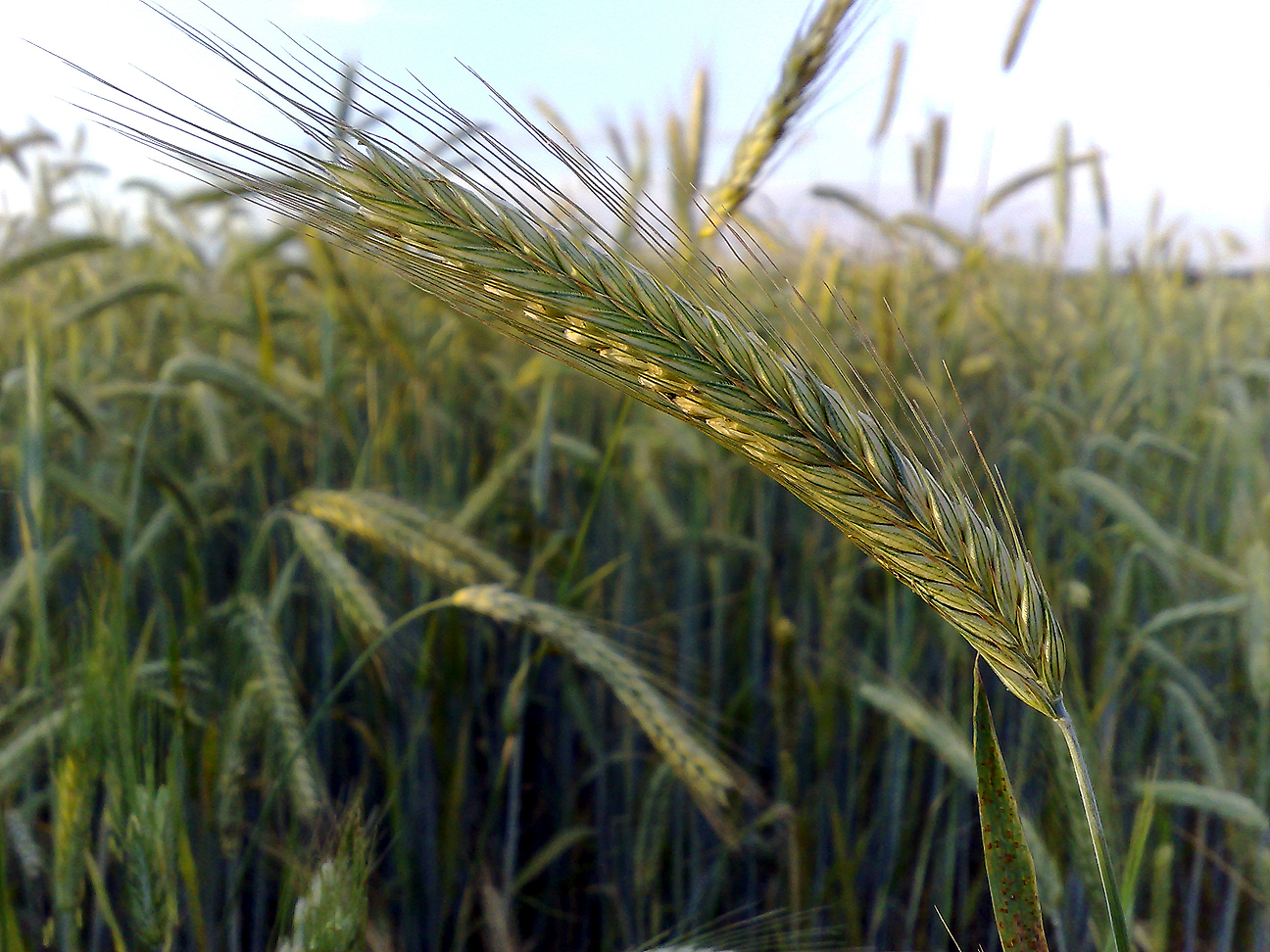
Rye (Secale cereale) is a grass grown extensively as a grain, a cover crop and a forage crop. It is grown principally in an area from Eastern and Northern Europe into Russia. It is much more tolerant of cold weather and poor soil than other cereals, making it useful in those regions; its vigorous growth suppresses weeds and provides abundant forage for animals early in the year. It is a member of the wheat tribe (Triticeae) which includes the cereals wheat and barley. It is likely that rye arrived in Europe as a secondary crop, meaning that it was a minor admixture in wheat as a result of Vavilovian mimicry, and was only later cultivated in its own right.
Rye grain is used for bread, beer, rye whiskey, and animal fodder. In Scandinavia, rye was a staple food in the Middle Ages, and rye crispbread remains a popular food in the region. Europe produces around half of the world's rye; relatively little is traded between countries. A wheat-rye hybrid, triticale, combines the qualities of the two parent crops and is produced in large quantities worldwide. In European folklore, the Roggenwolf ("rye wolf") is a carnivorous corn demon or Feldgeist.
Description
[edit]Rye is a tall grass grown for its seeds; it can be an annual or a biennial. Depending on environmental conditions and variety it reaches 1 to 3 metres (3+1⁄2 to 10 ft) in height. Its leaves are blue-green, long, and pointed. The seeds are carried in a curved head or spike some 7 to 15 centimetres (2+3⁄4 to 6 in) long. The head is composed of many spikelets, each of which holds two small flowers; the spikelets alternate left and right up the head.[1]
The seeds of rye are some 7 or 8 mm long, much larger and less round than wheat.
-
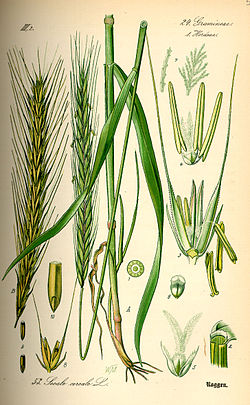 Botanical illustration
 -
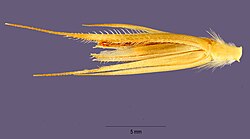 Seed in husk
 -
 Different types of grains
 -
 Seeds in quantity


.jpg)
Origins
[edit]
The rye genus Secale is in the grass tribe Triticeae, which contains other cereals such as barley (Hordeum) and wheat (Triticum).[2]
The generic name Secale, related to Italian segale and French seigle meaning "rye", is of unknown origin but may derive from a Balkan language.[3] The English name rye derives from Old English ryge, related to Dutch rogge, German Roggen, and Russian рожь rožʹ, again all with the same meaning.[4]
Rye is one of several cereals that grow wild in the Levant, central and eastern Turkey and adjacent areas. Evidence uncovered at the Epipalaeolithic site of Tell Abu Hureyra in the Euphrates valley of northern Syria suggests that rye was among the first cereal crops to be systematically cultivated, around 13,000 years ago.[5] However, that claim remains controversial; critics point to inconsistencies in the radiocarbon dates, and identifications based solely on grain, rather than on chaff.[6]
Domesticated rye occurs in small quantities at a number of Neolithic sites in Asia Minor (Anatolia, now Turkey), such as the Pre-Pottery Neolithic B Can Hasan III near Çatalhöyük,[7][8] but is otherwise absent from the archaeological record until the Bronze Age of central Europe, c. 1800–1500 BCE.[9]
It is likely that rye was brought westwards from Asia Minor as a secondary crop, meaning that it was a minor admixture in wheat as a result of Vavilovian mimicry, and was only later cultivated in its own right.[10] Archeological evidence of this grain has been found in Roman contexts along the Rhine and the Danube and in Ireland and Britain.[11] The Roman naturalist Pliny the Elder was dismissive of a grain that may have been rye, writing that it "is a very poor food and only serves to avert starvation".[12] He said it was mixed with emmer "to mitigate its bitter taste, and even then is most unpleasant to the stomach".[13]
Cultivation
[edit]
Since the Middle Ages, people have cultivated rye widely in Central and Eastern Europe. It serves as the main bread cereal in most areas east of the France–Germany border and north of Hungary. In Southern Europe, it was cultivated on marginal lands.[14]
Rye grows well in much poorer soils than those necessary for most cereal grains. Thus, it is an especially valuable crop in regions where the soil has sand or peat. Rye plants withstand cold better than other small grains, surviving snow cover that would kill winter wheat. Winter rye is the most popular: it is planted and begins to grow in autumn. In spring, the plants develop rapidly.[15] This allows it to provide spring grazing, at a time when spring-planted wheat has only just germinated.[16]
The physical properties of rye affect attributes of the final food product such as seed size, surface area, and porosity. The surface area of the seed directly correlates to the drying and heat transfer time.[17] Smaller seeds have increased heat transfer, which leads to lower drying time. Seeds with lower porosity lose water more slowly during the process of drying.[17]
Rye is harvested like wheat with a combine harvester, which cuts the plants, threshes and winnows the grain, and releases the straw to the field where it is later pressed into bales or left as soil amendment. The resultant grain is stored in local silos or transported to regional grain elevators and combined with other lots for storage and distant shipment. Before the era of mechanised agriculture, rye harvesting was a manual task performed with scythes or sickles.[18][19]
Agroecology
[edit]Winter rye is any breed of rye planted in the autumn to provide ground cover for the winter. It grows during warmer days of the winter when sunlight temporarily warms the plant above freezing, even while there is general snow cover. It can be used as a cover crop to prevent the growth of winter-hardy weeds.[20]
Rye grows better than any other cereal in heavy clay and light sandy soil, and infertile or drought-affected soils. It can tolerate pH between 4.5 and 8.0, but soils having pH 5.0 to 7.0 are best suited for rye cultivation. Rye grows best in fertile, well-drained loam or clay-loam soils.[21] As for temperature, the crop can thrive in subzero environments, assisted by the production of antifreeze polypeptides (different from those produced by some fish and insects) by the leaves of winter rye.[22]
Rye is a common, unwanted invader of winter wheat fields. If allowed to grow and mature, it may cause substantially reduced prices (docking) for harvested wheat.[23]
Pests and diseases
[edit]
Pests including the nematode Ditylenchus dipsaci and a variety of herbivorous insects can seriously affect plant health.[24]
Rye is highly susceptible to the ergot fungus.[25][26] Consumption of ergot-infected rye by humans and animals results in ergotism, which causes convulsions, miscarriage, necrosis of digits, hallucinations and death. Historically, damp northern countries that depended on rye as a staple crop were subject to periodic epidemics.[15] Modern grain-cleaning and milling methods have practically eliminated ergotism, but it remains a risk if food safety vigilance breaks down.[27]
After an absence of 60 years, stem rust (Puccinia graminis f. sp. tritici) has returned to Europe in the 2020s.[28] Areas affected include Germany, Russia (Western Siberia), Spain, and Sweden.[28]
Production
[edit]
 Germany Germany |
3,124,200 |
 Poland Poland |
2,533,220 |
 Russia Russia |
1,700,000 |
 Belarus Belarus |
780,000 |
 Denmark Denmark |
601,130 |
 China China |
518,640 |
| World | 12,680,515 |
| FAOSTAT of the United Nations[29] | |
In 2023, world production of rye was 12.7 million tonnes, led by Germany with 25% of the total, and Poland and Russia as major secondary producers.
Nutrition
[edit]Health effects
[edit]| Nutritional value per 100 g (3.5 oz) | |||||||||||||||||||||||||||||||||||||||||||||||
|---|---|---|---|---|---|---|---|---|---|---|---|---|---|---|---|---|---|---|---|---|---|---|---|---|---|---|---|---|---|---|---|---|---|---|---|---|---|---|---|---|---|---|---|---|---|---|---|
| Energy | 1,414 kJ (338 kcal) | ||||||||||||||||||||||||||||||||||||||||||||||
75.86 g | |||||||||||||||||||||||||||||||||||||||||||||||
| Sugars | 0.98 g | ||||||||||||||||||||||||||||||||||||||||||||||
| Dietary fiber | 15.1 g | ||||||||||||||||||||||||||||||||||||||||||||||
1.63 g | |||||||||||||||||||||||||||||||||||||||||||||||
10.34 g | |||||||||||||||||||||||||||||||||||||||||||||||
| |||||||||||||||||||||||||||||||||||||||||||||||
| Other constituents | Quantity | ||||||||||||||||||||||||||||||||||||||||||||||
| Water | 10.6 g | ||||||||||||||||||||||||||||||||||||||||||||||
| Selenium | 14 µg | ||||||||||||||||||||||||||||||||||||||||||||||
| †Percentages estimated using US recommendations for adults,[30] except for potassium, which is estimated based on expert recommendation from the National Academies.[31] | |||||||||||||||||||||||||||||||||||||||||||||||
Raw rye is 11% water, 76% carbohydrates, 10% protein, and 2% fat. A reference amount of 100-gram (3+1⁄2-ounce) provides 1,410 kilojoules (338 kilocalories) of food energy, and is a rich source (20% or more of the Daily Value, DV) of dietary fiber, B vitamins, such as thiamine and niacin (each at 25% DV), and several dietary minerals, including manganese (130% DV), zinc, phosphorus, and magnesium (26–27% DV).
According to Health Canada and the U.S. Food and Drug Administration, consuming at least 4 grams (0.14 oz) per day of rye beta-glucan or 0.65 grams (0.023 oz) per serving of soluble fiber can lower levels of blood cholesterol, a risk factor for cardiovascular diseases.[32][33]
Eating whole-grain rye, as well as other high-fiber grains, improves regulation of blood sugar (i.e., reduces blood glucose response to a meal).[34] Consuming breakfast cereals containing rye over weeks to months also improved cholesterol levels and glucose regulation.[35]
Health concerns
[edit]Like wheat, barley, and their hybrids and derivatives, rye contains glutens and related prolamines, which makes it an unsuitable grain for consumption by people with gluten-related disorders, such as celiac disease, non-celiac gluten sensitivity, and wheat allergy, among others.[36] Nevertheless, some wheat allergy patients can tolerate rye or barley.[37]
Uses
[edit]Culinary
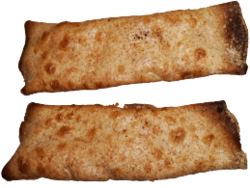
[edit]Rye grain is refined into a flour high in gliadin but low in glutenin and rich in soluble fiber. Alkylresorcinols are phenolic lipids present in high amounts in the bran layer (e.g. pericarp, testa and aleurone layers) of wheat and rye (0.1–0.3% of dry weight).[38] Rye bread, including pumpernickel, is made using rye flour and is a widely eaten food in Northern and Eastern Europe.[39][40] In Scandinavia, rye is widely used to make crispbread (Knäckebröd); in the Middle Ages it was a staple food in the region, and it remains popular in the 21st century.[41]
Rye grain is used to make alcoholic drinks, such as rye whiskey and rye beer.[1] The traditional cloudy and sweet-sour low-alcohol beverage kvass is fermented from rye bread or rye flour and malt.[42]
-

-

-
 Swedish rye crispbread (Knäckebröd)
 -
-
 Rye whiskey
 -
 Rye beer


Production of hybrids
[edit]
Plant breeders, starting in the 19th century in Germany and Scotland,[43] but mainly from the 1950s, worked to develop a hybrid cereal with the best qualities of wheat and rye, now called triticale. Modern triticales are hexaploid with six sets of chromosomes; they are used to produce millions of tons of cereal annually.[44]
Varieties of rye hold much genetic diversity,[45][46][47] which can be used to improve other crops such as wheat. For example, the pollination abilities of wheat can be improved by the addition of the rye chromosome 4R; this increases the size of the wheat anther and the amount of pollen.[48] The 1R chromosome is the source of many crop disease resistance genes.[49] Varieties such as Petkus, Insave, Amigo, and Imperial have donated 1R-originating resistance to wheat.[49] AC Hazlet rye is a medium-sized winter rye with resistance to both lodging and shattering.[50] Rye was the gene donor of Sr31 – a stem rust resistance gene – introgressed into wheat.[51]
The characteristics of S. cereale have been combined with another perennial rye, S. montanum, to produce S. cereanum, which has the beneficial characteristics of each. The hybrid rye can be grown in harsh environments and on poor soil. It provides improved forage with digestible fiber and protein.[52]
Other uses
[edit]Rye is a useful forage crop in cool climates; it grows vigorously and provides plentiful fodder for grazing animals, or green manure to improve the soil.[53] It forms a good cover crop in winter with its rapid growth and deep roots.[54]
Rye straw is used as livestock bedding, despite the risk of ergot poisoning.[55] It is used on a small scale to make crafts such as corn dollies.[56] More recently it has found uses as a raw material for bioconversion to products such as the sweetener xylitol.[57]
Rye flour is boiled with red iron oxide pigments and some additives to make traditional Falun red paint, widely used as a house paint in Sweden and other Scandinavian countries.[58][59]
In human culture
[edit]
In European folklore, the Roggenwolf ("rye wolf") is a carnivorous corn demon or Feldgeist, a field spirit shaped like a wolf.[60] The Roggenwolf steals children and feeds on them.[61] The last grain heads are often left at their place as a sacrifice for the agricultural spirits.[62]
In contrast, the Roggenmuhme or Roggenmutter ("rye aunt" or "rye mother") is an anthropomorphic female corn demon with fiery fingers. Her bosoms are filled with tar and may end in tips of iron. Her bosoms are also long, and as such must be thrown over her shoulders when she runs. The Roggenmuhme is completely black or white, and in her hand she has a birch or whip from which lightning sparks. She can change herself into different animals, such as snakes, turtles, and frogs.[63]
The classical scholar Carl A. P. Ruck writes that the Roggenmutter was believed to go through the fields, rustling like the wind, with a pack of rye wolves running after her. They spread ergot through the sheaves of harvested rye. According to Ruck, they then lured children into the fields to nurse on the infected grains "like the iron teats of the Roggenmutter".[64] The enlarged reddish ergot-infected grains were known as Wulfzähne (wolf teeth).[64]
References
[edit]- ^ a b "Rye". PlantVillage. Retrieved May 4, 2024.
- ^ Soreng RJ, Peterson PM, Romaschenko K, et al. (2017). "A worldwide phylogenetic classification of the Poaceae (Gramineae) II: An update and a comparison of two 2015 classifications". Journal of Systematics and Evolution. 55 (4): 259–290. Bibcode:2017JSyEv..55..259S. doi:10.1111/jse.12262. hdl:10261/240149. ISSN 1674-4918.
- ^ Walde A, Hofmann JB (1954). "secale". Lateinisches etymologisches Wörterbuch [Latin Etymology Dictionary] (in German). Vol. 2 (3rd ed.). Heidelberg: Carl Winter. p. 504.
- ^ "rye (n.)". Online Etymology Dictionary. Retrieved May 4, 2024.
- ^ Hillman G, Hedges R, Moore A, et al. (2001). "New evidence of Lateglacial cereal cultivation at Abu Hureyra on the Euphrates". The Holocene. 11 (4): 383–393. Bibcode:2001Holoc..11..383H. doi:10.1191/095968301678302823. S2CID 84930632. Archived from the original on November 20, 2021. Retrieved July 12, 2016.
- ^ Colledge S, Conolly J (2010). "Reassessing the evidence for the cultivation of wild crops during the Younger Dryas at Tell Abu Hureyra, Syria". Environmental Archaeology. 15 (2): 124–138. Bibcode:2010EnvAr..15..124C. doi:10.1179/146141010X12640787648504. S2CID 129087203.
- ^ Hillman G (1978). "On the Origins of Domestic rye: Secale Cereale: The Finds from Aceramic Can Hasan III in Turkey". Anatolian Studies. 28: 157–174. doi:10.2307/3642748. JSTOR 3642748. S2CID 85225244.(subscription required)
- ^ Sidhu J, Ramakrishnan SM, Shaukat A, et al. (2019). "Assessing the genetic diversity and characterizing genomic regions conferring Tan Spot resistance in cultivated rye". PLOS ONE. 14 (3) e0214519. Bibcode:2019PLoSO..1414519S. doi:10.1371/journal.pone.0214519. PMC 6438500. PMID 30921415.
- ^ Zohary D, Hopf M, Weiss E (2012). Domestication of Plants in the Old World: The Origin and Spread of Domesticated Plants in Southwest Asia, Europe, and the Mediterranean Basin. Oxford: Oxford University Press. p. 62. ISBN 978-0-19-954906-1. Retrieved October 5, 2016 – via Google Books.
- ^ McElroy JS (2014). "Vavilovian Mimicry: Nikolai Vavilov and His Little-Known Impact on Weed Science". Weed Science. 62 (2): 207–216. Bibcode:2014WeedS..62..207M. doi:10.1614/ws-d-13-00122.1. S2CID 86549764.
- ^ Gyulai F (2014). "Archaeobotanical overview of rye (Secale Cereale L.) in the Carpathian-basin I. from the beginning until the Roman age". Journal of Agricultural and Environmental Science. 1 (2): 25–35. Archived from the original on December 31, 2019. Retrieved July 14, 2016. page 26.
- ^ Evans LT, Peacock WJ (1981). Wheat Science: Today and Tomorrow. Cambridge University Press. p. 11. ISBN 978-0-521-23793-2. Archived from the original on May 26, 2020. Retrieved November 15, 2015 – via Google Books.
- ^ Pliny the Elder (1855) [c. 77–79]. The Natural History. Translated by Bostock J, Riley HT. London: Taylor and Francis (T&F). Book 18, Ch. 40. Archived from the original on January 6, 2017. Retrieved July 12, 2016 – via Perseus Digital Library, Tufts University.
- ^ Behre KE (1992). "The history of rye cultivation in Europe". Vegetation History and Archaeobotany. 1 (3): 141. Bibcode:1992VegHA...1..141B. doi:10.1007/BF00191554. S2CID 129518700. Archived from the original on March 23, 2022. Retrieved February 17, 2022.
- ^ a b Wong GJ (1998). "Ergot of Rye: History". Botany 135 Syllabus. University of Hawaiʻi at Mānoa, Botany Department. Archived from the original on November 24, 2005. Retrieved July 12, 2016.
- ^ "Growing Winter Rye in Scotland". Farm Advisory Service Scotland. May 10, 2023. Retrieved May 4, 2024.
- ^ a b Jouki M, Emam-Djomeh Z, Khazaei N (2012). "Physical Properties of Whole Rye Seed (Secale cereal)". International Journal of Food Engineering. 8 (4). doi:10.1515/1556-3758.2054. S2CID 102003836.
- ^ Jensen JM (1988). Loosening the Bonds: Mid-Atlantic Farm Women, 1750–1850. New Haven: Yale University Press (YUP). p. 47. ISBN 978-0-300-04265-8. Retrieved July 17, 2016 – via Google Books.
- ^ Jones PM (2016). Agricultural Enlightenment: Knowledge, Technology, and Nature, 1750–1840. Oxford: Oxford University Press (OUP). p. 123. ISBN 978-0-19-102515-0.
- ^ Burgos NR, Talbert RE, Kuk YI (2006). "Grass-legume mixed cover crops for weed management". In Sing HP, Batish DR, Kohli RK (eds.). Handbook of Sustainable Weed Management. New York: Haworth Press. p. 110. ISBN 978-1-56022-957-5. Retrieved October 5, 2016 – via Google Books.
- ^ Willy H. Verheye, ed. (2010). "Growth and Production of Oat and Rye". Soils, Plant Growth and Crop Production Volume II. EOLSS Publishers. p. 121. ISBN 978-1-84826-368-0. Archived from the original on May 11, 2021. Retrieved December 4, 2020.
- ^ Hon WC, Griffith M, Chong P, et al. (March 1, 1994). "Extraction and Isolation of Antifreeze Proteins from Winter Rye (Secale cereale L.) Leaves". Plant Physiology. 104 (3): 971–980. doi:10.1104/pp.104.3.971. PMC 160695. PMID 12232141.
- ^ Lyon DJ, Klein RN (May 2007) [2002]. "Rye Control in Winter Wheat" (Revised ed.). Institute of Agriculture and Natural Resources, University of Nebraska–Lincoln. Archived from the original on April 13, 2014. Retrieved July 12, 2016.
- ^ Matz SA (1991). Chemistry and Technology of Cereals as Food and Feed. New York: Van Nostrand Reinhold/AVI. pp. 181–182. ISBN 978-0-442-30830-8. Retrieved July 14, 2016.
- ^ ergot Archived March 3, 2016, at the Wayback Machine, online medical dictionary
- ^ ergot, Dorland's Medical Dictionary
- ^ Belser-Ehrlich S, Harper A, Hussey J, et al. (2013). "Human and cattle ergotism since 1900: Symptoms, outbreaks, and regulations". Toxicology and Industrial Health. 29 (4): 307–316. Bibcode:2013ToxIH..29..307B. doi:10.1177/0748233711432570. PMID 22903169.
- ^ a b Annika D, Young B, Berlin A, et al. (2022). "Addressing biohazards to food security in primary production". Food Security. 14 (6). Springer Nature: 1475–1497. doi:10.1007/s12571-022-01296-7. S2CID 250250761.
- ^ "Rye production in 2023, Crops/Regions/World list/Production Quantity/Year (pick lists)". UN Food and Agriculture Organization, Corporate Statistical Database (FAOSTAT). 2025. Retrieved June 18, 2025.
- ^ United States Food and Drug Administration (2024). "Daily Value on the Nutrition and Supplement Facts Labels". FDA. Archived from the original on March 27, 2024. Retrieved March 28, 2024.
- ^ "TABLE 4-7 Comparison of Potassium Adequate Intakes Established in This Report to Potassium Adequate Intakes Established in the 2005 DRI Report". p. 120. In: Stallings VA, Harrison M, Oria M, eds. (2019). "Potassium: Dietary Reference Intakes for Adequacy". Dietary Reference Intakes for Sodium and Potassium. pp. 101–124. doi:10.17226/25353. ISBN 978-0-309-48834-1. PMID 30844154. NCBI NBK545428.
- ^ "21 CFR Part 101 [Docket No. 2004P-0512], Food Labeling: Health Claims; Soluble Dietary Fiber From Certain Foods and Coronary Heart Disease". US Food and Drug Administration. May 22, 2006. Archived from the original on February 24, 2021. Retrieved December 2, 2015.
- ^ "Summary of Health Canada's Assessment of a Health Claim about Barley Products and Blood Cholesterol Lowering". Health Canada. July 12, 2012. Retrieved November 27, 2022.
- ^ Harris KA, Kris-Etherton PM (2010). "Effects of Whole Grains on Coronary Heart Disease Risk". Current Atherosclerosis Reports. 12 (6): 368–376. doi:10.1007/s11883-010-0136-1. PMID 20820954.
- ^ Williams P (September 2014). "The benefits of breakfast cereal consumption: a systematic review of the evidence base". Advances in Nutrition. 5 (5): 636S – 673S. doi:10.3945/an.114.006247. PMC 4188247. PMID 25225349.
- ^ Tovoli F, Masi C, Guidetti E, et al. (March 16, 2015). "Clinical and diagnostic aspects of gluten related disorders". World Journal of Clinical Cases. 3 (3): 275–284. doi:10.12998/wjcc.v3.i3.275. PMC 4360499. PMID 25789300.
- ^ Pietzak M (January 2012). "Celiac Disease, Wheat Allergy, and Gluten Sensitivity". Journal of Parenteral and Enteral Nutrition. 36 (1 Supplement): 68S – 75S. doi:10.1177/0148607111426276. PMID 22237879.
- ^ Suzuki Y, Esumi Y, Yamaguchi I (1999). "Structures of 5-alkylresorcinol-related analogues in rye". Phytochemistry. 52 (2): 281–289. Bibcode:1999PChem..52..281S. doi:10.1016/S0031-9422(99)00196-X.
- ^ "Graansoorten: Rugern" [Grains: Rye]. Bakkerij Museum (in Dutch). Archived from the original on November 13, 2018. Retrieved July 21, 2024.
- ^ Prättälä R, Helasoja V, Mykkänen H (2000). "The consumption of rye bread and white bread as dimensions of health lifestyles in Finland". Public Health Nutrition. 4 (3): 813–819. doi:10.1079/PHN2000120. PMID 11415489.
- ^ "Tuggmotstånd" [Tough to chew]. Dagens Nyheter (in Swedish). May 3, 2016. Archived from the original on May 3, 2016. Retrieved August 9, 2022.
- ^ Hornsey IS (2012). Alcohol and its Role in the Evolution of Human Society. Royal Society of Chemistry. pp. 296–300. ISBN 978-1-84973-161-4.
- ^ "Triticale". Digital Herbarium of Crop Plants Establishment of Digital Herbarium and Herbal museum for Crop plant by Department of Crop Botany, BSMRAU. Retrieved May 4, 2024.
- ^ Faccini N, Morcia C, Terzi V, et al. (October 4, 2023). "Triticale in Italy". Biology. 12 (10): 1308. doi:10.3390/biology12101308. PMC 10603945. PMID 37887018.
- ^ Ribeiro M, Seabra L, Ramos A, et al. (April 1, 2012). "Polymorphism of the storage proteins in Portuguese rye (Secale cereale L.) populations". Hereditas. 149 (2): 72–84. doi:10.1111/j.1601-5223.2012.02239.x. ISSN 1601-5223. PMID 22568702.
- ^ Bauer E, Schmutzer T, Barilar I, et al. (March 1, 2017). "Towards a whole-genome sequence for rye (Secale cereale L.)". The Plant Journal. 89 (5): 853–869. Bibcode:2017PlJ....89..853B. doi:10.1111/tpj.13436. ISSN 1365-313X. PMID 27888547.
- ^ Rabanus-Wallace M, Stein N (2021). The Rye Genome. Springer Nature. pp. 85–100. ISBN 978-3-030-83383-1. which cites Li G, Wang L, Yang J, et al. (2021). "A high-quality genome assembly highlights rye genomic characteristics and agronomically important genes". Nature Genetics. 53 (4). Nature Portfolio: 574–584. doi:10.1038/s41588-021-00808-z. ISSN 1061-4036. PMC 8035075. PMID 33737755. S2CID 232298036.
- ^ Nguyen V, Fleury D, Timmins A, et al. (February 26, 2015). "Addition of rye chromosome 4R to wheat increases anther length and pollen grain number". Theoretical and Applied Genetics. 128 (5): 953–964. doi:10.1007/s00122-015-2482-4. ISSN 0040-5752. PMID 25716820. S2CID 16421403.
- ^ a b Herrera L, Gustavsson L, Åhman I (2017). "A systematic review of rye (Secale cereale L.) as a source of resistance to pathogens and pests in wheat (Triticum aestivum L.)". Hereditas. 154 (1). BioMed Central: 1–9. doi:10.1186/s41065-017-0033-5. ISSN 1601-5223. PMC 5445327. PMID 28559761.
- ^ "AC Hazlet" (PDF). SeCAN. Archived from the original (PDF) on March 4, 2016. Retrieved November 28, 2014.
- ^ Ellis JG, Lagudah ES, Spielmeyer W, et al. (November 24, 2014). "The past, present and future of breeding rust resistant wheat". Frontiers in Plant Science. 5: 641. Bibcode:2014FrPS....5..641E. doi:10.3389/fpls.2014.00641. PMC 4241819. PMID 25505474.
- ^ Sipos T, Halász E (April 25, 2007). "The role of perennial rye (Secale cereale × S. montanum) in sustainable agriculture". Cereal Research Communications. 35 (2): 1073–1075. doi:10.1556/CRC.35.2007.2.227. hdl:2437/4973.
- ^ "Forage Identification: Rye". University of Wyoming: Department of Plant Sciences. September 26, 2017. Archived from the original on August 18, 2017. Retrieved September 26, 2017.
- ^ "Winter Rye: A Reliable Cover Crop". University of Vermont. Retrieved May 4, 2024.
- ^ "Use caution when using rye straw for bedding". Martin-Gatton College of Agriculture, Food and Environment. June 7, 2016. Retrieved May 4, 2024.
- ^ "Frequently Asked Questions – Straw". Straw Craftsmen. Retrieved May 4, 2024.
- ^ Vallejos ME, Area MC (2017). "Xylitol as Bioproduct From the Agro and Forest Biorefinery". Food Bioconversion. Elsevier. pp. 411–432. doi:10.1016/b978-0-12-811413-1.00012-7. ISBN 978-0-12-811413-1.
- ^ "Swedish Red Paint – Falu Röd". Archived from the original on September 25, 2020. Retrieved March 25, 2021.
- ^ "Keittomaali". www.korjaustaito.fi (in Finnish). Retrieved February 24, 2025.
- ^ Golther W (2011). Germanische Mythologie: Vollständige Ausgabe [Germanic Mythology] (in German) (Complete ed.). Wiesbaden: Marix-Verlag. p. 200. ISBN 978-3-937715-38-4.
- ^ Mannhardt W (2005). Wald- und Feldkulte: Band II [Forest and Field Cults: Volume II] (in German). Elibron Classics. p. 319. ISBN 1-4212-4778-X.
- ^ Dahn F, Dahn T (2010). Germanische Götter- und Heldensagen [Germanic God- and Hero-tales] (in German). Wiesbaden: Marix-Verlag. p. 171. ISBN 978-3-937715-39-1.
- ^ Mannhardt W (2014). Die Korndämonen: Beitrag zur germanischen Sittenkunde [The Corn Spirits: Contribution to Germanic Moral Studies] (in German). Bremen: Bremen University Press. p. 20. ISBN 978-3-95562-798-0.
- ^ a b Ruck C (2019). "Persia, Haoma and the Greek Mysteries" (PDF). Sexus Journal. 4 (11): 991–1034.
External links
[edit]
Description and Biology
Taxonomy and Classification
Rye is scientifically classified as Secale cereale L., the sole cultivated species within the genus Secale, which belongs to the tribe Triticeae in the grass family Poaceae.[9][10][11] This placement positions rye among other economically important cereals in the Poaceae family, characterized by its adaptation to marginal soils and cooler climates compared to its relatives.[12] The genus Secale exhibits close phylogenetic relationships with the genera Triticum (wheat) and Hordeum (barley), all members of the Triticeae tribe, reflecting shared evolutionary history in the temperate regions of Eurasia.[12][13] Like barley, rye is diploid with a chromosome complement of 2n=14, facilitating genetic exchanges and hybridizations that have been exploited in breeding programs.[13][14] Wheat, by contrast, is typically hexaploid (2n=42), but the syntenic chromosome groups between rye and wheat underscore their affinity.[13] Subspecific variation within S. cereale includes S. cereale subsp. cereale, the predominant form known as winter rye, which requires vernalization for flowering. Varietal differences within this subspecies include spring rye varieties that complete their life cycle without prolonged cold exposure.[15] These distinctions arise from morphological and physiological adaptations, though taxonomic treatments vary, with some classifying certain forms as varieties under subsp. cereale.[16]Physical Characteristics
Rye (Secale cereale), a cool-season annual grass, typically grows to a height of 0.5 to 2 meters, depending on environmental conditions and variety.[17] The plant features upright, hollow stems known as culms that support the overall structure.[17] Its leaves are flat, blue-green in color, measuring 15 to 40 cm in length and 1 to 3 cm in width, with a waxy (glaucous) coating that contributes to its distinctive appearance.[18] The inflorescence of rye is a terminal spike, 7 to 15 cm long, consisting of 25 to 45 spikelets arranged alternately along the rachis.[19][20] Each spikelet bears two rows of florets, typically two per spikelet, and is equipped with awns measuring 1 to 2 cm in length, which are prominent and aid in seed dispersal.[19] The spike initially stands erect but often droops as it matures.[19] Rye develops a fibrous root system that extends 1 to 2 meters deep into the soil, enhancing its ability to access water and nutrients.[19] This root structure supports drought tolerance by improving soil exploration and stability.[6] The seeds, or kernels, are oblong in shape, 3 to 4 mm long, with a reddish-brown color and a characteristic crease along one side; each kernel weighs approximately 25 to 35 mg.[21] Compared to wheat, rye exhibits longer awns, glaucous leaves with a bluish tint, and more slender, often drooping spikes, which distinguish it morphologically within the Triticeae tribe.[18]Life Cycle and Physiology
Rye (Secale cereale) exhibits either an annual or biennial life cycle depending on the variety and sowing time. Winter rye, the predominant type, is sown in the fall, undergoes vernalization during the cold winter months, and produces heads in the spring, typically maturing over a period spanning from autumn to early summer.[22][23] In contrast, summer or spring rye is sown in early spring and completes its entire cycle within one growing season, from germination to grain harvest, usually in 90–120 days.[24] The key developmental stages of rye follow a progression similar to other small grains, including germination, tillering, jointing (stem elongation), booting, heading (inflorescence emergence), flowering, and grain fill. Germination occurs in 7–10 days under cool temperatures of 5–15°C, with seedlings emerging rapidly in moist soil. Tillering follows, where multiple shoots develop from the base, leading to jointing as internodes elongate; booting involves the swelling of the leaf sheath around the emerging head, followed by heading, flowering (anthesis), and the grain-filling phase, which culminates in maturity after 90–120 days of active growth for spring types or extended periods for winter varieties.[25][26][24] Physiologically, rye demonstrates remarkable adaptability as a cool-season crop through high cold tolerance, surviving temperatures as low as -30°C once established, which enables overwintering in temperate regions. Winter varieties require vernalization—a period of 4–6 weeks at 0–10°C—to transition from vegetative to reproductive growth, promoting flowering upon warming.[27][22][28] Rye employs the C3 photosynthetic pathway, fixing carbon dioxide via the Calvin cycle in mesophyll cells, which supports efficient growth in cooler climates but limits performance under high temperatures compared to C4 plants.[29] Its water use efficiency is notable, requiring 300–500 mm of water per season—20–30% less than wheat per unit of dry matter—facilitated by deep root systems that access subsoil moisture and minimize drought stress.[18][30] Additionally, rye exhibits efficient nitrogen assimilation and uptake, rapidly incorporating nitrate into amino acids and proteins through enzymes like nitrate reductase and glutamine synthetase, enhancing nutrient recycling in low-fertility soils.[31][32]History and Origins
Domestication
Recent genetic studies suggest that the domestication of rye (Secale cereale) from its weedy relative occurred approximately 6,000 years ago (ca. 4000 BCE), likely in central Europe, with the transition to deliberate cultivation as a crop emerging during the early Iron Age around 4440 BCE.[33] This aligns with the traditional view of rye originating as a weedy companion to early cereal crops in the Near East, but challenges earlier estimates placing initial domestication in the Fertile Crescent during the Neolithic. Wild progenitors include Secale montanum, a perennial wild rye native to the region, and S. vavilovii, an annual weedy form. Unlike many cereals domesticated directly from wild ancestors, rye transitioned from a weedy relative thriving in disturbed agricultural environments to a cultivated species.[34] Archaeological evidence highlights rye's early association with human agriculture at the Abu Hureyra site along the Euphrates River in Syria, where charred grains of wild rye dated to approximately 11,000 BCE represent the oldest known remains. At this Natufian-period settlement, rye appeared in low frequencies amid wild and early domesticated wheat and barley, indicating it began as an opportunistic weed in proto-farming plots rather than a primary cultivation target. Environmental pressures, including declining wild plant availability due to Pleistocene-end climatic shifts, may have encouraged early foragers to harvest and select for rye alongside other cereals.[35][36] Central to rye's domestication were genetic changes enhancing its farming suitability, including a non-shattering rachis from mutations in spike disarticulation genes, allowing seeds to stay attached for easier harvest. Other traits included larger seed size for better yield, shorter awns to ease processing, and reduced seed dormancy for synchronized germination and even field stands. These arose from unconscious selection by farmers favoring harvestable plants, shifting rye from weed to crop.[12] The domestication process created a genetic bottleneck in rye, reducing nucleotide diversity in cultivated forms compared to wild relatives like S. montanum, as millennia of selection narrowed the gene pool. This was compounded by hybridizations with Triticum species in mixed fields, introducing wheat genome segments that influenced rye's evolution.[37][38]Historical Cultivation and Spread
Traditional archaeological evidence points to rye's domestication in southwestern Asia around 6500 BCE, after which it spread as a secondary crop with wheat and barley via trade routes into Europe during the Bronze Age (ca. 1800–1500 BCE).[39] By the late Bronze Age, rye was established across much of Europe, evolving from a weed in wheat fields to a deliberate crop, especially in central and eastern regions suited to its tolerance of marginal soils.[40] Dissemination likely followed migrations and exchanges from Asia Minor through the Caucasus and Balkans, with grains found at sites from England to the Iberian Peninsula by 2000 BCE, establishing rye as a staple in cooler, drier climates unfit for other cereals.[41] Recent genetic analyses propose a later domestication from weedy rye in central Europe around 4000 BCE, suggesting rye may have spread as a weed before local adaptation and cultivation intensified.[33] During the Iron Age and Roman period, rye cultivation grew in northern and central Europe, extending to Scandinavia and eastward to Russia and Poland, adapting to acidic, sandy soils and severe winters.[42] In the medieval era, rye dominated agriculture there, as the main grain for dense "black bread" vital to peasant diets; in Scandinavia, Russia, and Poland, it comprised up to 80% of bread production owing to superior yields on poor lands versus wheat.[43] Its role peaked in crises like the Great Famine of 1315–1317, when rains ruined wheat and barley, but rye's hardiness provided key sustenance, with prices surging up to 260% for rye grain in England amid shortages from the Pyrenees to Russia.[44][45] European colonists brought rye to the Americas in the early 17th century, with Pilgrims sowing it in Plymouth Colony from 1620, where it suited northern latitudes akin to Eurasian homelands.[46] By the mid-1600s, cultivation spread through New England and Mid-Atlantic colonies, yielding reliable bread and feed on cleared, infertile soils and aiding early rye whiskey production.[47] This echoed European uses, facilitating settlement where wheat faltered, though output stayed modest until the 18th century. In the 19th century, rye's role diminished in Western Europe and North America as breeding and fertilizers raised wheat yields, favoring versatile white bread for urban tastes; in Germany, early 1800s rye acreage was over four times wheat's but fell sharply after.[48] It remained vital in Eastern Europe, notably Poland and Russia, and saw rising use as a cover crop for soil health, with pre-industrial yields of 500–800 kg/ha limited by hand methods, sickle harvest, and scant manure.[49]Cultivation Practices
Environmental Requirements
Rye (Secale cereale) thrives in cool temperate climates, with optimal growth temperatures ranging from 5°C to 25°C during its active periods. It exhibits exceptional winter hardiness, surviving temperatures as low as -30°C once established, and is adapted to USDA hardiness zones 3 through 7. Regions with 100 to 150 frost days provide beneficial conditions for vernalization, enhancing its transition to reproductive growth.[22] The crop performs well in a variety of soils but prefers acidic to neutral conditions with a pH of 5.0 to 7.0, though it tolerates a broader range of 4.5 to 8.0. Sandy or loamy soils with low fertility suit rye particularly well, as it outcompetes other cereals in nutrient-poor environments. Unlike wheat, rye demonstrates strong tolerance to aluminum toxicity, enabling growth in heavy metal-contaminated or acidic subsoils.[4] For winter rye, sowing typically occurs in the fall from August to October, allowing establishment before winter dormancy. Recommended seed rates range from 100 to 150 kg per hectare to achieve optimal plant density. Crop rotation with legumes is advised to mitigate soil fatigue and maintain nutrient balance over successive seasons.[17][50][51] Rye has relatively low water requirements, needing 400 to 600 mm of precipitation or equivalent irrigation over the growing season, making it more drought-resistant than other winter cereals like wheat. Fertility management focuses on nitrogen applications of 80 to 120 kg per hectare, typically topdressed in early spring to support tillering and grain fill. Phosphorus and potassium are applied based on soil test results to address specific deficiencies without excess.[18][52][53] Due to its resilience, rye is frequently employed in the reclamation of marginal lands, including eroded sites and areas contaminated with heavy metals or excess acidity. Its ability to stabilize soil and cycle nutrients aids in restoring productivity on post-mining or degraded terrains.[54][55]Pest and Disease Management
Rye crops face significant biotic threats from insects and fungal pathogens that can reduce yield and grain quality, necessitating proactive management strategies. Major pests include the Hessian fly (Mayetiola destructor), which infests rye by laying eggs on foliage, with larvae feeding on plant tissues and potentially causing lodging or death in severe cases. Aphids, particularly the bird cherry-oat aphid (Rhopalosiphum padi), colonize rye stems and leaves, extracting sap and transmitting viruses such as barley yellow dwarf virus, leading to stunted growth. Wireworms, the larvae of click beetles (Elateridae family), damage rye seedlings by feeding on roots and seeds in soil, especially in no-till systems following grassy cover crops.[56][57][58] Key diseases affecting rye include Fusarium head blight (FHB), caused by Fusarium graminearum, which infects spikelets during flowering and produces mycotoxins like deoxynivalenol (DON) that contaminate grain and pose health risks to humans and livestock. Ergot, induced by Claviceps purpurea, replaces rye kernels with sclerotia containing toxic alkaloids, resulting in ergotism if ingested and rendering grain unsuitable for seed or feed. Leaf rust, caused by Puccinia recondita f. sp. secalis, produces orange pustules on leaves, reducing photosynthesis and weakening plants under cool, moist conditions.[22][59][22] Integrated pest management (IPM) for rye emphasizes cultural, biological, and chemical controls to minimize threats while preserving beneficial organisms. Crop rotation intervals of 3–4 years with non-host crops like legumes disrupt pest and pathogen life cycles, particularly for Hessian fly and FHB. Seed treatments with insecticides or fungicides protect against wireworms, aphids, and early-season diseases like FHB, applied at rates ensuring seedling coverage without excessive residue. Biological controls, such as entomopathogenic nematodes (Heterorhabditis or Steinernema spp.), target soil-dwelling pests like wireworms by parasitizing larvae, offering a sustainable alternative in organic systems. For aphids and Hessian fly, resistant rye varieties combined with targeted insecticides like pyrethroids provide effective suppression when scouting thresholds are exceeded.[60][61][62] Recent advancements highlight optimized fungicide applications for FHB control; trials in 2024 demonstrated that combining flag leaf and anthesis timings with triazole-based fungicides reduced DON levels by approximately 50% in cereal grains, including rye, under humid conditions. Cover crops, such as rye itself in rotations, have shown mixed effects on secondary pests; while they can harbor melon aphids (Aphis gossypii) early in the season, integrating them with natural enemies like lady beetles mitigates outbreaks in subsequent cash crops.[63][64] Emerging challenges include climate-driven increases in stripe rust (Puccinia striiformis f. sp. secalis) incidence on rye, as warmer winters and altered precipitation patterns favor overwintering and spore dispersal, potentially expanding epidemics in temperate regions. Rye's tolerance to poor soils enhances its resilience against some stresses, but IPM must adapt to these shifts through enhanced monitoring and diversified rotations.[65][22]Modern Production and Varieties
As of November 2025, global rye production for the 2024/25 marketing year is estimated at 7.6 million metric tons, with the European Union accounting for 1.7 million metric tons, Russia for 0.8 million metric tons, and Belarus for 0.4 million metric tons.[66] In the United States, rye production in 2025 was estimated at 12.5 million bushels, representing a 15% decline from 2024 due to reduced harvested area.[67] Among top producers, Germany and Poland contribute the majority within the EU (Germany approximately 1.5 million metric tons and Poland around 1.0 million metric tons in 2024), followed by Ukraine at 0.2 million metric tons.[68][66] Production trends indicate a decline in Western countries, driven by a preference for higher-value wheat crops, while rye acreage is increasing as a cover crop for soil health benefits.[69] Rye is primarily cultivated in cooler temperate climates of the Northern Hemisphere, particularly in Europe (accounting for roughly half of global output), Russia, and parts of North America and Asia. Major producing countries include Germany (often the top producer with 2-3+ million metric tons), Poland (2-2.5+ million tons), Russia (1-2 million tons), Belarus, Denmark, Ukraine, Canada, Turkey, China, and the United States (0.3-0.4 million tons). Global annual production typically ranges from 10-13 million metric tons. In the United States, while much rye is planted as a cover crop, grain production is concentrated in the Midwest and Great Plains. Key states for harvested grain include Oklahoma (frequently leading in grain production), North Dakota, Minnesota, South Dakota, Wisconsin, Pennsylvania, and Nebraska, influenced by historical settlement patterns and rye's suitability to colder, marginal soils. Average rye yields range from 2.5 to 4 tons per hectare globally, influenced by soil and climate variations. Hybrid rye varieties, leveraging hybrid vigor, can achieve yields of 5 to 7 tons per hectare, offering significant improvements over traditional varieties.[70][71] Recent advancements include 2024–2025 field trials of hybrid rye, testing optimum nitrogen application rates of 100–150 kg per hectare to optimize grain yield and quality. Perennial cereal rye (PC-Rye) is emerging as a dual-purpose crop, providing both forage and grain production while enhancing perennial cover for soil protection. Technologies such as GoPro-based structure-from-motion imaging enable precise mapping of rye cover crop biomass, aiding farmers in assessing weed suppression and nutrient uptake potential.[72][73][74] As a cover crop, rye reduces nitrogen leaching by approximately 30%, mitigating environmental impacts from nutrient runoff. In Canada, rye acreage increased by approximately 56% to 286,000 hectares in 2025/26, the highest in over three decades, reflecting growing adoption for sustainable farming practices. Select modern varieties also incorporate enhanced pest resistance to support resilient production systems.[75][76][77]Nutritional Value
Macronutrients and Micronutrients
Rye grain, on a dry weight basis, provides approximately 338 kcal per 100 g.[78] Its macronutrient profile consists primarily of carbohydrates at 75.9 g per 100 g, of which starch comprises about 65 g and dietary fiber 15.1 g; the fiber includes notable soluble components such as 2.7 g of beta-glucan.[79][80] Protein content ranges from 10 to 15 g per 100 g, with a relatively high lysine level at 3.9% of total protein, exceeding that in most other cereals.[81][82] Total fat is low at 1.6 g per 100 g, predominantly unsaturated.[83] Among micronutrients, rye is particularly rich in manganese at 2.6 mg per 100 g (110% of daily value), phosphorus at 332 mg per 100 g (47% of daily value), thiamin (vitamin B1) at 0.3 mg per 100 g, and niacin (vitamin B3) at 4.3 mg per 100 g.[84] It also contains antioxidants, notably ferulic acid at levels of 103–300 mg per 100 g.[85] Nutrient distribution varies across grain fractions, with the bran layer concentrating much of the fiber (up to 40% of dry weight), minerals like phosphorus and manganese, and antioxidants, while the endosperm is dominated by starch and lower-protein storage proteins.[86] Milling processes, which separate bran and germ to produce refined flour, significantly reduce retention of these components; for instance, lowering the extraction rate from whole grain to 60% can decrease fiber by over 80% and essential amino acids like lysine by 20–30%.[87] Compared to wheat and barley, rye exhibits a higher fiber content and lower gluten-forming proteins (secalins versus gliadins and glutenins in wheat), contributing to distinct nutritional profiles. Rye has a lower glycemic index (45–55) than wheat (70–80), aiding in glycemic control.[88]| Nutrient (per 100 g dry weight) | Rye | Wheat (hard red) | Barley (hulled) |
|---|---|---|---|
| Calories (kcal) | 338 | 339 | 354 |
| Protein (g) | 10.3 | 13.7 | 12.5 |
| Carbohydrates (g) | 75.9 | 71.2 | 77.7 |
| Dietary fiber (g) | 15.1 | 12.2 | 17.3 |
| Fat (g) | 1.6 | 2.5 | 1.2 |
| Manganese (mg) | 2.6 | 3.0 | 1.9 |
| Phosphorus (mg) | 332 | 357 | 264 |
| Gluten content (% of flour) | ~7 | ~12 | ~10 |