
.jpg/250px-展望の宿_天神_2016_(26182596995).jpg)


.jpg/2000px-展望の宿_天神_2016_(26182596995).jpg)
Community hub
Recent from talks
Contribute something
Nothing was collected or created yet.
Sievert
View on Wikipedia
| sievert | |
|---|---|
.jpg) Display of background radiation in a hotel at Naraha, Japan, showing dose rate in microsieverts per hour, five years after the Fukushima disaster | |
| General information | |
| Unit system | SI |
| Unit of | Stochastic health effect of ionizing radiation (equivalent dose) |
| Symbol | Sv |
| Named after | Rolf Maximilian Sievert |
| Conversions | |
| 1 Sv in ... | ... is equal to ... |
| SI base units | m2⋅s−2 |
| Sv indicates absorbed dose modified by weighting factors. | J⋅kg−1 |
| CGS units (non-SI) | 100 rem |
The sievert (symbol: Sv[note 1]) is a derived unit in the International System of Units (SI) intended to represent the stochastic health risk of ionizing radiation, which is defined as the probability of causing radiation-induced cancer and genetic damage. The sievert is important in dosimetry and radiation protection. It is named after Rolf Maximilian Sievert, a Swedish medical physicist renowned for work on radiation dose measurement and research into the biological effects of radiation.
The sievert unit is used for radiation dose quantities such as equivalent dose and effective dose, which represent the risk of external radiation from sources outside the body, and committed dose, which represents the risk of internal irradiation due to inhaled or ingested radioactive substances. According to the International Commission on Radiological Protection (ICRP), one sievert results in a 5.5% probability of eventually developing fatal cancer based on the disputed linear no-threshold model of ionizing radiation exposure.[1][2]
To calculate the value of stochastic health risk in sieverts, the physical quantity absorbed dose is converted into equivalent dose and effective dose by applying factors for radiation type and biological context, published by the ICRP and the International Commission on Radiation Units and Measurements (ICRU). One sievert equals 100 rem, which is an older, CGS radiation unit.
Conventionally, deterministic health effects due to acute tissue damage that is certain to happen, produced by high dose rates of radiation, are compared to the physical quantity absorbed dose measured by the unit gray (Gy).[3]
Definition
[edit]CIPM definition of the sievert
[edit]The SI definition given by the International Committee for Weights and Measures (CIPM) says:
"The quantity dose equivalent H is the product of the absorbed dose D of ionizing radiation and the dimensionless factor Q (quality factor) defined as a function of linear energy transfer by the ICRU"
- H = Q × D[4]
The value of Q is not defined further by CIPM, but it requires the use of the relevant ICRU recommendations to provide this value.
The CIPM also says that "in order to avoid any risk of confusion between the absorbed dose D and the dose equivalent H, the special names for the respective units should be used, that is, the name gray should be used instead of joules per kilogram for the unit of absorbed dose D and the name sievert instead of joules per kilogram for the unit of dose equivalent H".[4]
In summary:
- gray: quantity D—absorbed dose
- 1 Gy = 1 joule/kilogram—a physical quantity. 1 Gy is the deposit of a joule of radiation energy per kilogram of matter or tissue.
- sievert: quantity H—equivalent dose
- 1 Sv = 1 joule/kilogram—a biological effect. The sievert represents the equivalent biological effect of the deposit of a joule of radiation energy in a kilogram of human tissue. The ratio to absorbed dose is denoted by Q.
ICRP definition of the sievert
[edit]The ICRP definition of the sievert is:[5]
- "The sievert is the special name for the SI unit of equivalent dose, effective dose, and operational dose quantities. The unit is joule per kilogram."
The sievert is used for a number of dose quantities which are described in this article and are part of the international radiological protection system devised and defined by the ICRP and ICRU.
External dose quantities
[edit]
When the sievert is used to represent the stochastic effects of external ionizing radiation on human tissue, the radiation doses received are measured in practice by radiometric instruments and dosimeters and are called operational quantities. To relate these actual received doses to likely health effects, protection quantities have been developed to predict the likely health effects using the results of large epidemiological studies. Consequently, this has required the creation of a number of different dose quantities within a coherent system developed by the ICRU working with the ICRP.
The external dose quantities and their relationships are shown in the accompanying diagram. The ICRU is primarily responsible for the operational dose quantities, based upon the application of ionising radiation metrology, and the ICRP is primarily responsible for the protection quantities, based upon modelling of dose uptake and biological sensitivity of the human body.
Naming conventions
[edit]The ICRU/ICRP dose quantities have specific purposes and meanings, but some use common words in a different order. There can be confusion between, for instance, equivalent dose and dose equivalent.
Although the CIPM definition states that the linear energy transfer function (Q) of the ICRU is used in calculating the biological effect, the ICRP in 1990[6] developed the "protection" dose quantities effective and equivalent dose which are calculated from more complex computational models and are distinguished by not having the phrase dose equivalent in their name. Only the operational dose quantities which still use Q for calculation retain the phrase dose equivalent. However, there are joint ICRU/ICRP proposals to simplify this system by changes to the operational dose definitions to harmonise with those of protection quantities. These were outlined at the 3rd International Symposium on Radiological Protection in October 2015, and if implemented would make the naming of operational quantities more logical by introducing "dose to lens of eye" and "dose to local skin" as equivalent doses.[7]
In the USA there are differently named dose quantities which are not part of the ICRP nomenclature.[8]
Physical quantities
[edit]These are directly measurable physical quantities in which no allowance has been made for biological effects. Radiation fluence is the number of radiation particles impinging per unit area per unit time, kerma is the ionising effect on air of gamma rays and X-rays and is used for instrument calibration, and absorbed dose is the amount of radiation energy deposited per unit mass in the matter or tissue under consideration.
Operational quantities
[edit]Operational quantities are measured in practice, and are the means of directly measuring dose uptake due to exposure, or predicting dose uptake in a measured environment. In this way they are used for practical dose control, by providing an estimate or upper limit for the value of the protection quantities related to an exposure. They are also used in practical regulations and guidance.[9]
The calibration of individual and area dosimeters in photon fields is performed by measuring the collision "air kerma free in air" under conditions of secondary electron equilibrium. Then the appropriate operational quantity is derived applying a conversion coefficient that relates the air kerma to the appropriate operational quantity. The conversion coefficients for photon radiation are published by the ICRU.[10]
Simple (non-anthropomorphic) "phantoms" are used to relate operational quantities to measured free-air irradiation. The ICRU sphere phantom is based on the definition of an ICRU 4-element tissue-equivalent material which does not really exist and cannot be fabricated.[11] The ICRU sphere is a theoretical 30 cm diameter "tissue equivalent" sphere consisting of a material with a density of 1 g·cm−3 and a mass composition of 76.2% oxygen, 11.1% carbon, 10.1% hydrogen and 2.6% nitrogen. This material is specified to most closely approximate human tissue in its absorption properties. According to the ICRP, the ICRU "sphere phantom" in most cases adequately approximates the human body as regards the scattering and attenuation of penetrating radiation fields under consideration.[12] Thus radiation of a particular energy fluence will have roughly the same energy deposition within the sphere as it would in the equivalent mass of human tissue.[13]
To allow for back-scattering and absorption of the human body, the "slab phantom" is used to represent the human torso for practical calibration of whole body dosimeters. The slab phantom is 300 mm × 300 mm × 150 mm depth to represent the human torso.[13]
The joint ICRU/ICRP proposals outlined at the 3rd International Symposium on Radiological Protection in October 2015 to change the definition of operational quantities would not change the present use of calibration phantoms or reference radiation fields.[7]
Protection quantities
[edit]Protection quantities are calculated models, and are used as "limiting quantities" to specify exposure limits to ensure, in the words of ICRP, "that the occurrence of stochastic health effects is kept below unacceptable levels and that tissue reactions are avoided".[14][15][13] These quantities cannot be measured in practice but their values are derived using models of external dose to internal organs of the human body, using anthropomorphic phantoms. These are 3D computational models of the body which take into account a number of complex effects such as body self-shielding and internal scattering of radiation. The calculation starts with organ absorbed dose, and then applies radiation and tissue weighting factors.[16]
As protection quantities cannot practically be measured, operational quantities must be used to relate them to practical radiation instrument and dosimeter responses.[17]
Instrument and dosimetry response
[edit]This is an actual reading obtained from such as an ambient dose gamma monitor, or a personal dosimeter. Such instruments are calibrated using radiation metrology techniques which will trace them to a national radiation standard, and thereby relate them to an operational quantity. The readings of instruments and dosimeters are used to prevent the uptake of excessive dose and to provide records of dose uptake to satisfy radiation safety legislation; such as in the UK, the Ionising Radiations Regulations 1999.
Calculating protection dose quantities
[edit]
The sievert is used in external radiation protection for equivalent dose (the external-source, whole-body exposure effects, in a uniform field), and effective dose (which depends on the body parts irradiated).
These dose quantities are weighted averages of absorbed dose designed to be representative of the stochastic health effects of radiation, and use of the sievert implies that appropriate weighting factors have been applied to the absorbed dose measurement or calculation (expressed in grays).[1]
The ICRP calculation provides two weighting factors to enable the calculation of protection quantities.
- 1. The radiation factor WR, which is specific for radiation type R – This is used in calculating the equivalent dose HT which can be for the whole body or for individual organs.
- 2. The tissue weighting factor WT, which is specific for tissue type T being irradiated. This is used with WR to calculate the contributory organ doses to arrive at an effective dose E for non-uniform irradiation.
When a whole body is irradiated uniformly only the radiation weighting factor WR is used, and the effective dose equals the whole body equivalent dose. But if the irradiation of a body is partial or non-uniform the tissue factor WT is used to calculate dose to each organ or tissue. These are then summed to obtain the effective dose. In the case of uniform irradiation of the human body, these summate to 1, but in the case of partial or non-uniform irradiation, they will summate to a lower value depending on the organs concerned; reflecting the lower overall health effect. The calculation process is shown on the accompanying diagram. This approach calculates the biological risk contribution to the whole body, taking into account complete or partial irradiation, and the radiation type or types.
The values of these weighting factors are conservatively chosen to be greater than the bulk of experimental values observed for the most sensitive cell types, based on averages of those obtained for the human population.
Radiation type weighting factor WR
[edit]Since different radiation types have different biological effects for the same deposited energy, a corrective radiation weighting factor WR, which is dependent on the radiation type and on the target tissue, is applied to convert the absorbed dose measured in the unit gray to determine the equivalent dose. The result is given the unit sievert.
| Radiation | Energy (E) | WR (formerly Q) |
|---|---|---|
| x-rays, gamma rays, beta particles, muons |
1 | |
| neutrons | < 1 MeV | 2.5 + 18.2e−[ln(E)]2/6 |
| 1 – 50 MeV | 5.0 + 17.0e−[ln(2E)]2/6 | |
| > 50 MeV | 2.5 + 3.25e−[ln(0.04E)]2/6 | |
| protons, charged pions | 2 | |
| alpha particles, nuclear fission products, heavy nuclei |
20 | |
The equivalent dose is calculated by multiplying the absorbed energy, averaged by mass over an organ or tissue of interest, by a radiation weighting factor appropriate to the type and energy of radiation. To obtain the equivalent dose for a mix of radiation types and energies, a sum is taken over all types of radiation energy dose.[1]
where
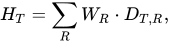
- HT is the equivalent dose absorbed by tissue T,
- DT,R is the absorbed dose in tissue T by radiation type R and
- WR is the radiation weighting factor defined by regulation.
Thus for example, an absorbed dose of 1 Gy by alpha particles will lead to an equivalent dose of 20 Sv.

This may seem to be a paradox. It implies that the energy of the incident radiation field in joules has increased by a factor of 20, thereby violating the laws of conservation of energy. However, this is not the case. The sievert is used only to convey the fact that a gray of absorbed alpha particles would cause twenty times the biological effect of a gray of absorbed x-rays. It is this biological component that is being expressed when using sieverts rather than the actual energy delivered by the incident absorbed radiation.
Tissue type weighting factor WT
[edit]The second weighting factor is the tissue factor WT, but it is used only if there has been non-uniform irradiation of a body. If the body has been subject to uniform irradiation, the effective dose equals the whole body equivalent dose, and only the radiation weighting factor WR is used. But if there is partial or non-uniform body irradiation the calculation must take account of the individual organ doses received, because the sensitivity of each organ to irradiation depends on their tissue type. This summed dose from only those organs concerned gives the effective dose for the whole body. The tissue weighting factor is used to calculate those individual organ dose contributions.
The ICRP values for WT are given in the table shown here.
| Organs | Tissue weighting factors | ||
|---|---|---|---|
| ICRP26 1977 |
ICRP60 1990[19] |
ICRP103 2007[1] | |
| Gonads | 0.25 | 0.20 | 0.08 |
| Red bone marrow | 0.12 | 0.12 | 0.12 |
| Colon | — | 0.12 | 0.12 |
| Lung | 0.12 | 0.12 | 0.12 |
| Stomach | — | 0.12 | 0.12 |
| Breasts | 0.15 | 0.05 | 0.12 |
| Bladder | — | 0.05 | 0.04 |
| Liver | — | 0.05 | 0.04 |
| Oesophagus | — | 0.05 | 0.04 |
| Thyroid | 0.03 | 0.05 | 0.04 |
| Skin | — | 0.01 | 0.01 |
| Bone surface | 0.03 | 0.01 | 0.01 |
| Salivary glands | — | — | 0.01 |
| Brain | — | — | 0.01 |
| Remainder of body | 0.30 | 0.05 | 0.12 |
| Total | 1.00 | 1.00 | 1.00 |
The article on effective dose gives the method of calculation. The absorbed dose is first corrected for the radiation type to give the equivalent dose, and then corrected for the tissue receiving the radiation. Some tissues like bone marrow are particularly sensitive to radiation, so they are given a weighting factor that is disproportionally large relative to the fraction of body mass they represent. Other tissues like the hard bone surface are particularly insensitive to radiation and are assigned a disproportionally low weighting factor.
In summary, the sum of tissue-weighted doses to each irradiated organ or tissue of the body adds up to the effective dose for the body. The use of effective dose enables comparisons of overall dose received regardless of the extent of body irradiation.

Operational quantities
[edit]The operational quantities are used in practical applications for monitoring and investigating external exposure situations. They are defined for practical operational measurements and assessment of doses in the body.[5] Three external operational dose quantities were devised to relate operational dosimeter and instrument measurements to the calculated protection quantities. Also devised were two phantoms, The ICRU "slab" and "sphere" phantoms which relate these quantities to incident radiation quantities using the Q(L) calculation.
Ambient dose equivalent
[edit]This is used for area monitoring of penetrating radiation and is usually expressed as the quantity H*(10). This means the radiation is equivalent to that found 10 mm within the ICRU sphere phantom in the direction of origin of the field.[21] An example of penetrating radiation is gamma rays.
Directional dose equivalent
[edit]This is used for monitoring of low penetrating radiation and is usually expressed as the quantity H'(0.07). This means the radiation is equivalent to that found at a depth of 0.07 mm in the ICRU sphere phantom.[22] Examples of low penetrating radiation are alpha particles, beta particles and low-energy photons. This dose quantity is used for the determination of equivalent dose to such as the skin, lens of the eye.[23] In radiological protection practice value of omega is usually not specified as the dose is usually at a maximum at the point of interest.
Personal dose equivalent
[edit]This is used for individual dose monitoring, such as with a personal dosimeter worn on the body. The recommended depth for assessment is 10 mm which gives the quantity Hp(10).[24]
Proposals for changing the definition of protection dose quantities
[edit]In order to simplify the means of calculating operational quantities and assist in the comprehension of radiation dose protection quantities, ICRP Committee 2 & ICRU Report Committee 26 started in 2010 an examination of different means of achieving this by dose coefficients related to Effective Dose or Absorbed Dose.
Specifically;
1. For area monitoring of effective dose of whole body it would be:
- H = Φ × conversion coefficient
The driver for this is that H∗(10) is not a reasonable estimate of effective dose due to high energy photons, as a result of the extension of particle types and energy ranges to be considered in ICRP report 116. This change would remove the need for the ICRU sphere and introduce a new quantity called Emax.
2. For individual monitoring, to measure deterministic effects on eye lens and skin, it would be:
- D = Φ × conversion coefficient for absorbed dose.
The driver for this is the need to measure the deterministic effect, which it is suggested, is more appropriate than stochastic effect. This would calculate equivalent dose quantities Hlens and Hskin.
This would remove the need for the ICRU Sphere and the Q-L function. Any changes would replace ICRU report 51, and part of report 57.[7]
A final draft report was issued in July 2017 by ICRU/ICRP for consultation.[25]
Internal dose quantities
[edit]The sievert is used for human internal dose quantities in calculating committed dose. This is dose from radionuclides which have been ingested or inhaled into the human body, and thereby "committed" to irradiate the body for a period of time. The concepts of calculating protection quantities as described for external radiation applies, but as the source of radiation is within the tissue of the body, the calculation of absorbed organ dose uses different coefficients and irradiation mechanisms.
The ICRP defines Committed effective dose, as the sum of the products of the committed organ or tissue equivalent doses and the appropriate tissue weighting factors , where is the integration time in years following the intake. The commitment period is taken to be 50 years for adults, and to age 70 years for children.[5]


The ICRP further states "For internal exposure, committed effective doses are generally determined from an assessment of the intakes of radionuclides from bioassay measurements or other quantities (e.g., activity retained in the body or in daily excreta). The radiation dose is determined from the intake using recommended dose coefficients".[26]
A committed dose from an internal source is intended to carry the same effective risk as the same amount of equivalent dose applied uniformly to the whole body from an external source, or the same amount of effective dose applied to part of the body.
Health effects
[edit]Ionizing radiation has deterministic and stochastic effects on human health. Deterministic (acute tissue effect) events happen with certainty, with the resulting health conditions occurring in every individual who received the same high dose. Stochastic (cancer induction and genetic) events are inherently random, with most individuals in a group failing to ever exhibit any causal negative health effects after exposure, while an indeterministic random minority do, often with the resulting subtle negative health effects being observable only after large detailed epidemiology studies.
The use of the sievert implies that only stochastic effects are being considered, and to avoid confusion deterministic effects are conventionally compared to values of absorbed dose expressed by the SI unit gray (Gy).
Stochastic effects
[edit]Stochastic effects are those that occur randomly, such as radiation-induced cancer. The consensus of nuclear regulators, governments and the UNSCEAR is that the incidence of cancers due to ionizing radiation can be modeled as increasing linearly with effective dose at a rate of 5.5% per sievert.[1] This is known as the linear no-threshold model (LNT model). Some argue that this LNT model is now outdated and should be replaced with a threshold below which the body's natural cell processes repair damage and/or replace damaged cells.[27][28] There is general agreement that the risk is much higher for infants and fetuses than adults, higher for the middle-aged than for seniors, and higher for women than for men, though there is no quantitative consensus about this.[29][30]
Deterministic effects
[edit]
The deterministic (acute tissue damage) effects that can lead to acute radiation syndrome only occur in the case of acute high doses (≳ 0.1 Gy) and high dose rates (≳ 0.1 Gy/h) and are conventionally not measured using the unit sievert, but use the unit gray (Gy). A model of deterministic risk would require different weighting factors (not yet established) than are used in the calculation of equivalent and effective dose.
ICRP dose limits
[edit]The ICRP recommends a number of limits for dose uptake in table 8 of report 103. These limits are "situational", for planned, emergency and existing situations. Within these situations, limits are given for the following groups:[31]
- Planned exposure – limits given for occupational, medical and public
- Emergency exposure – limits given for occupational and public exposure
- Existing exposure – All persons exposed
For occupational exposure, the limit is 50 mSv in a single year with a maximum of 100 mSv in a consecutive five-year period, and for the public to an average of 1 mSv (0.001 Sv) of effective dose per year, not including medical and occupational exposures.[1]
For comparison, natural radiation levels inside the United States Capitol are such that a human body would receive an additional dose rate of 0.85 mSv/a, close to the regulatory limit, because of the uranium content of the granite structure.[32] According to the conservative ICRP model, someone who spent 20 years inside the capitol building would have an extra one in a thousand chance of getting cancer, over and above any other existing risk (calculated as: 20 a·0.85 mSv/a·0.001 Sv/mSv·5.5%/Sv ≈ 0.1%). However, that "existing risk" is much higher; an average American would have a 10% chance of getting cancer during this same 20-year period, even without any exposure to artificial radiation (see natural Epidemiology of cancer and cancer rates).
Dose examples
[edit]


Significant radiation doses are not frequently encountered in everyday life. The following examples can help illustrate relative magnitudes; these are meant to be examples only, not a comprehensive list of possible radiation doses. An "acute dose" is one that occurs over a short and finite period of time, while a "chronic dose" is a dose that continues for an extended period of time so that it is better described by a dose rate.
Dose examples
[edit]| 98 | nSv: | Banana equivalent dose, an illustrative unit of radiation dose representing the measure of radiation from a typical 150 g banana[38][a] |
| 250 | nSv: | U.S. limit on effective dose for general-use x-ray security screening systems such as those previously used in airport security screening[39] |
| 5–10 | μSv: | One set of dental radiographs[40] |
| 80 | μSv: | Average (one time) dose to people living within 10 mi (16 km) of the plant during the Three Mile Island accident[41] |
| 400–600 | μSv: | Two-view mammogram, using weighting factors updated in 2007[42] |
| 1 | mSv: | U.S. 10 CFR § 20.1301(a)(1) dose limit for individual members of the public, total effective dose equivalent, per annum[43] |
| 1.5–1.7 | mSv: | Annual occupational dose for flight attendants[44] |
| 2–7 | mSv: | Barium fluoroscopy, e.g. Barium meal, up to 2 minutes, 4–24 spot images[45] |
| 10–30 | mSv: | Single full-body CT scan[46][47] |
| 50 | mSv: | U.S. 10 C.F.R. § 20.1201(a)(1)(i) occupational dose limit, total effective dose equivalent, per annum[48] |
| 68 | mSv: | Estimated maximum dose to evacuees who lived closest to the Fukushima I nuclear accidents[49] |
| 80 | mSv: | 6-month stay on the International Space Station |
| 160 | mSv: | Chronic dose to lungs over one year smoking 1.5 packs of cigarettes per day, mostly due to inhalation of Polonium-210 and Lead-210[50][51] |
| 250 | mSv: | 6-month trip to Mars—radiation due to cosmic rays, which are very difficult to shield against |
| 400 | mSv: | Average accumulated exposure of residents over a period of 9–20 years, who suffered no ill effects, in apartments in Taiwan constructed with rebar containing Cobalt-60[52] |
| 500 | mSv: | The U.S. 10 C.F.R. § 20.1201(a)(2)(ii) occupational dose limit, shallow-dose equivalent to skin, per annum[48] |
| 670 | mSv: | Highest dose received by a worker responding to the Fukushima emergency[53][a] |
| 1 | Sv: | Maximum allowed radiation exposure for NASA astronauts over their career[34] |
| 4–5 | Sv: | Dose required to kill a human with a 50% risk within 30 days (LD50/30), if the dose is received over a very short duration[54][33] |
| 5 | Sv: | Calculated dose from the neutron and gamma ray flash, 1.2 km from ground zero of the Little Boy fission bomb, air burst at 600 m.[55][56] |
| 4.5–6 | Sv: | Fatal acute doses during Goiânia accident |
| 5.1 | Sv: | Fatal acute dose to Harry Daghlian in 1945 criticality accident[57] |
| 10 to 17 | Sv: | Fatal acute doses during Tokaimura nuclear accident. Hisashi Ouchi who received 17 Sv lived for 83 days after the accident.[58] |
| 21 | Sv: | Fatal acute dose to Louis Slotin in 1946 criticality accident[57] |
| 36 | Sv: | Fatal acute dose to Cecil Kelley in 1958, death occurred within 35 hours.[59] |
| 54 | Sv: | Fatal acute dose to Boris Korchilov in 1961 after a reactor cooling system failed on the Soviet submarine K-19 which required work in the reactor with no shielding[60] |
| 64 | Sv: | Nonfatal dose to Albert Stevens spread over ≈21 years, due to a 1945 plutonium injection experiment by doctors working on the secret Manhattan Project.[61][a] |
Dose rate examples
[edit]All conversions between hours and years have assumed continuous presence in a steady field, disregarding known fluctuations, intermittent exposure and radioactive decay. Converted values are shown in parentheses. "/a" is "per annum", which means per year. "/h" means "per hour".
| <1 | mSv/a | <100 | nSv/h | Steady dose rates below 100 nSv/h are difficult to measure.[citation needed] |
| 1 | mSv/a | (100 | nSv/h avg) | ICRP recommended maximum for external irradiation of the human body, excluding medical and occupational exposures. |
| 2.4 | mSv/a | (270 | nSv/h avg) | Human exposure to natural background radiation, global average[a] |
| (8 | mSv/a) | 810 | nSv/h avg | Next to the Chernobyl New Safe Confinement (May 2019)[62] |
| ~8 | mSv/a | (~900 | nSv/h avg) | Average natural background radiation in Finland[63] |
| 24 | mSv/a | (2.7 | μSv/h avg) | Natural background radiation at airline cruise altitude[64][b] |
| (46 | mSv/a) | 5.19 | μSv/h avg | Next to Chernobyl Nuclear Power Plant, before installing the New Sarcophagus in November 2016[65] |
| 130 | mSv/a | (15 | μSv/h avg) | Ambient field inside most radioactive house in Ramsar, Iran[66][c] |
| (350 | mSv/a) | 39.8 | μSv/h avg | Inside "The Claw" of Chernobyl[67] |
| (800 | mSv/a) | 90 | μSv/h | Natural radiation on a monazite beach near Guarapari, Brazil.[68] |
| (9 | Sv/a) | 1 | mSv/h | NRC definition of a high radiation area in a nuclear power plant, warranting a chain-link fence[69] |
| (17–173 | Sv/a) | 2–20 | mSv/h | Typical dose rate for activated reactor wall in possible future fusion reactors after 100 years.[70] After approximately 300 years of decay the fusion waste would produce the same dose rate as exposure to coal ash, with the volume of fusion waste naturally being orders of magnitude less than from coal ash.[71] Immediate predicted activation is 90 MGy/a.[citation needed] |
| (1.7 | kSv/a) | 190 | mSv/h | Highest reading from fallout of the Trinity bomb, 20 mi (32 km) away, 3 hours after detonation.[72][c] |
| (2.3 | MSv/a) | 270 | Sv/h | Typical PWR spent fuel waste, after 10-year cooldown, no shielding and no distance.[73] |
| (4.6–5.6 | MSv/a) | 530–650 | Sv/h | The radiation level inside the primary containment vessel of the second BWR-reactor of the Fukushima power station, in February 2017, six years after a suspected meltdown.[74][75][76][77][78] In this environment, it takes between 22 and 34 seconds to accumulate a median lethal dose (LD50/30). |
Notes on examples:
- ^ a b c d Noted figures are dominated by a committed dose which gradually turned into effective dose over an extended period of time. Therefore the true acute dose must be lower, but standard dosimetry practice is to account committed doses as acute in the year the radioisotopes are taken into the body.
- ^ The dose rate received by air crews is highly dependent on the radiation weighting factors chosen for protons and neutrons, which have changed over time and remain controversial.
- ^ a b Noted figures exclude any committed dose from radioisotopes taken into the body. Therefore the total radiation dose would be higher unless respiratory protection was used.
History
[edit]The sievert has its origin in the röntgen equivalent man (rem) which was derived from CGS units. The International Commission on Radiation Units and Measurements (ICRU) promoted a switch to coherent SI units in the 1970s,[79] and announced in 1976 that it planned to formulate a suitable unit for equivalent dose.[80] The ICRP pre-empted the ICRU by introducing the sievert in 1977.[81]
The sievert was adopted by the International Committee for Weights and Measures (CIPM) in 1980, five years after adopting the gray. The CIPM then issued an explanation in 1984, recommending when the sievert should be used as opposed to the gray. That explanation was updated in 2002 to bring it closer to the ICRP's definition of equivalent dose, which had changed in 1990. Specifically, the ICRP had introduced equivalent dose, renamed the quality factor (Q) to radiation weighting factor (WR), and dropped another weighting factor "N" in 1990. In 2002, the CIPM similarly dropped the weighting factor "N" from their explanation but otherwise kept other old terminology and symbols. This explanation only appears in the appendix to the SI brochure and is not part of the definition of the sievert.[82]
Common SI usage
[edit]The sievert is named after Rolf Maximilian Sievert. As with every SI unit named after a person, its symbol starts with an upper case letter (Sv), but when written in full, it follows the rules for capitalisation of a common noun; i.e., sievert becomes capitalised at the beginning of a sentence and in titles but is otherwise in lower case.
Frequently used SI prefixes are the millisievert (1 mSv = 0.001 Sv) and microsievert (1 μSv = 0.000 001 Sv) and commonly used units for time derivative or "dose rate" indications on instruments and warnings for radiological protection are μSv/h and mSv/h. Regulatory limits and chronic doses are often given in units of mSv/a or Sv/a, where they are understood to represent an average over the entire year. In many occupational scenarios, the hourly dose rate might fluctuate to levels thousands of times higher for a brief period of time, without infringing on the annual limits. The conversion from hours to years varies because of leap years and exposure schedules, but approximate conversions are:
- 1 mSv/h = 8.766 Sv/a
- 114.1 μSv/h = 1 Sv/a
Conversion from hourly rates to annual rates is further complicated by seasonal fluctuations in natural radiation, decay of artificial sources, and intermittent proximity between humans and sources. The ICRP once adopted fixed conversion for occupational exposure, although these have not appeared in recent documents:[83]
- 8 h = 1 day
- 40 h = 1 week
- 50 weeks = 1 year
Therefore, for occupation exposures of that time period,
- 1 mSv/h = 2 Sv/a
- 500 μSv/h = 1 Sv/a
Ionizing radiation quantities
[edit]
The following table shows radiation quantities in SI and non-SI units:
| Quantity | Unit | Symbol | Derivation | Year | SI equivalent |
|---|---|---|---|---|---|
| Activity (A) | becquerel | Bq | s−1 | 1974 | SI unit |
| curie | Ci | 3.7×10¹⁰ s−1 | 1953 | 3.7×10¹⁰ Bq | |
| rutherford | Rd | 106 s−1 | 1946 | 1000000 Bq | |
| Exposure (X) | coulomb per kilogram | C/kg | C⋅kg−1 of air | 1974 | SI unit |
| röntgen | R | esu / 0.001293 g of air | 1928 | 2.58×10⁻⁴ C/kg | |
| Absorbed dose (D) | gray | Gy | J⋅kg−1 | 1974 | SI unit |
| erg per gram | erg/g | erg⋅g−1 | 1950 | 1.0×10⁻⁴ Gy | |
| rad | rad | 100 erg⋅g−1 | 1953 | 0.010 Gy | |
| Equivalent dose (H) | sievert | Sv | J⋅kg−1 × WR | 1977 | SI unit |
| röntgen equivalent man | rem | 100 erg⋅g−1 × WR | 1971 | 0.010 Sv | |
| Effective dose (E) | sievert | Sv | J⋅kg−1 × WR × WT | 1977 | SI unit |
| röntgen equivalent man | rem | 100 erg⋅g−1 × WR × WT | 1971 | 0.010 Sv |
Although the United States Nuclear Regulatory Commission permits the use of the units curie, rad, and rem alongside SI units,[84] the European Union European units of measurement directives required that their use for "public health ... purposes" be phased out by 31 December 1985.[85]
Rem equivalence
[edit]An older unit for the dose equivalent is the rem,[86] still often used in the United States. One sievert is equal to 100 rem:
| 100.0000 rem | = | 100,000.0 mrem | = | 1 Sv | = | 1.000000 Sv | = | 1000.000 mSv | = | 1,000,000 μSv |
|---|---|---|---|---|---|---|---|---|---|---|
| 1.0000 rem | = | 1000.0 mrem | = | 1 rem | = | 0.010000 Sv | = | 10.000 mSv | = | 10000 μSv |
| 0.1000 rem | = | 100.0 mrem | = | 1 mSv | = | 0.001000 Sv | = | 1.000 mSv | = | 1000 μSv |
| 0.0010 rem | = | 1.0 mrem | = | 1 mrem | = | 0.000010 Sv | = | 0.010 mSv | = | 10 μSv |
| 0.0001 rem | = | 0.1 mrem | = | 1 μSv | = | 0.000001 Sv | = | 0.001 mSv | = | 1 μSv |
See also
[edit]- Acute radiation syndrome
- Becquerel (disintegrations per second)
- Counts per minute
- Radiation exposure
- Rutherford (unit)
- Sverdrup (a non-SI unit of volume transport with the same symbol Sv as sievert)
Explanatory notes
[edit]References
[edit]- ^ a b c d e f g ICRP (2007). "The 2007 Recommendations of the International Commission on Radiological Protection". Annals of the ICRP. ICRP Publication 103. 37 (2–4). ISBN 978-0-7020-3048-2. Retrieved 17 May 2012.
- ^ Based on the linear no-threshold model, the ICRP says, "In the low dose range, below about 100 mSv, it is scientifically plausible to assume that the incidence of cancer or heritable effects will rise in direct proportion to an increase in the equivalent dose in the relevant organs and tissues." ICRP publication 103 paragraph 64.
- ^ ICRP report 103 para 104 and 105.
- ^ a b CIPM, 2002: Recommendation 2, BIPM, 2000
- ^ a b c ICRP publication 103 - Glossary.
- ^ ICRP publication 60 published in 1991
- ^ a b c "Operational Quantities and new approach by ICRU" – Akira Endo. The 3rd International Symposium on the System of Radiological Protection, Seoul, Korea – October 20–22, 2015 [1]
- ^ "The confusing world of radiation dosimetry" - M.A. Boyd, U.S. Environmental Protection Agency 2009. An account of chronological differences between US and ICRP dosimetry systems.
- ^ ICRP publication 103, paragraph B147
- ^ Measurement of H*(10) and Hp(10) in Mixed High-Energy Electron and Photon Fields. E. Gargioni, L. Büermann and H.-M. Kramer Physikalisch-Technische Bundesanstalt (PTB), D-38116 Braunschweig, Germany
- ^ "Operational Quantities for External Radiation Exposure, Actual Shortcomings and Alternative Options", G. Dietze, D.T. Bartlett, N.E. Hertel, given at IRPA 2012, Glasgow, Scotland. May 2012
- ^ ICRP publication 103, paragraph B159
- ^ a b c Calibration of Radiation Protection Monitoring Instruments (PDF), Safety Reports Series 16, IAEA, 2000, ISBN 978-92-0-100100-9,
In 1991, the International Commission on Radiological Protection (ICRP) [7] recommended a revised system of dose limitation, including specification of primary limiting quantities for radiation protection purposes. These protection quantities are essentially unmeasurable
- ^ ICRP publication 103, paragraph 112
- ^ ICRP publication 103, paragraph B50
- ^ ICRP publication 103, paragraph B64
- ^ ICRP publication 103, paragraph B146
- ^ UNSCEAR-2008 Annex A page 40, table A1, retrieved 2011-7-20
- ^ ICRP (1991). "1990 Recommendations of the International Commission on Radiological Protection: Quantities used in radiological protection". Annals of the ICRP. ICRP publication 60. 21 (1–3): 8. Bibcode:1991JRP....11..199V. doi:10.1016/0146-6453(91)90066-P. ISBN 978-0-08-041144-6.
- ^ "Measuring Radiation". NRC Web. Archived from the original on 16 May 2025. Retrieved 6 October 2025.
- ^ ICRP report 103 paragraphs B163 - B164
- ^ ICRP report 103 paragraphs B165- B167
- ^ Mattsson, Sören; Söderberg, Marcus (2013), "Dose Quantities and Units for Radiation Protection" (PDF), Radiation Protection in Nuclear Medicine, Springer Verlag, doi:10.1007/978-3-642-31167-3, ISBN 978-3-642-31166-6
- ^ ICRP report 103 paragraphs B168 - B170
- ^ "ICRP draft "Operational Quantities for External Radiation Exposure"" (PDF).
- ^ ICRP publication 103 - Paragraph 144.
- ^ Tubiana, Maurice (2005). "Dose–effect relationship and estimation of the carcinogenic effects of low doses of ionizing radiation: The joint report of the Académie des Sciences (Paris) and of the Académie Nationale de Médecine". International Journal of Radiation Oncology, Biology, Physics. 63 (2). Elsevier BV: 317–319. doi:10.1016/j.ijrobp.2005.06.013. ISSN 0360-3016. PMID 16168825.
- ^ Allison, Wade (2015). Nuclear is for life: a cultural revolution. Aylesbury: Wade Allison Publishing. ISBN 978-0-9562756-4-6. OCLC 945569856.
- ^ Peck, Donald J.; Samei, Ehsan. "How to Understand and Communicate Radiation Risk". Image Wisely. Archived from the original on 8 December 2010. Retrieved 18 May 2012.
- ^ United Nations Scientific Committee on the Effects of Atomic Radiation (2008). Effects of ionizing radiation: UNSCEAR 2006 report to the General Assembly, with scientific annexes. New York: United Nations. ISBN 978-92-1-142263-4. Retrieved 18 May 2012.
- ^ ICRP. "Report 103": Table 8, section 6.5.
{{cite journal}}: Cite journal requires|journal=(help) - ^ Formerly Utilized Sites Remedial Action Program. "Radiation in the Environment" (PDF). US Army Corps of Engineers. Archived from the original (PDF) on 11 February 2012. Retrieved 18 May 2012.
- ^ a b "Ionizing Radiation Dose Ranges (Rem and Sievert charts)" (PDF). US Department of Energy. June 2010. Retrieved 28 May 2018.
- ^ a b Kerr, R. A. (31 May 2013). "Radiation Will Make Astronauts' Trip to Mars Even Riskier". Science. 340 (6136): 1031. Bibcode:2013Sci...340.1031K. doi:10.1126/science.340.6136.1031. ISSN 0036-8075. PMID 23723213.
- ^ Zeitlin, C.; et al. (31 May 2013). "Measurements of Energetic Particle Radiation in Transit to Mars on the Mars Science Laboratory". Science. 340 (6136): 1080–1084. Bibcode:2013Sci...340.1080Z. doi:10.1126/science.1235989. ISSN 0036-8075. PMID 23723233. S2CID 604569.
- ^ Chang, Kenneth (30 May 2013). "Data Point to Radiation Risk for Travelers to Mars". The New York Times. Retrieved 31 May 2013.
- ^ Gelling, Cristy (29 June 2013). "Mars trip would deliver big radiation dose; Curiosity instrument confirms expectation of major exposures". Science News. 183 (13): 8. doi:10.1002/scin.5591831304. Retrieved 8 July 2013.
- ^ RadSafe mailing list: original posting and follow up thread. FGR11 discussed.
- ^ American National Standards Institute (2009). Radiation Safety for Personnel Security Screening Systems Using X-Rays or Gamma Radiation (PDF). ANSI/HPS N43.17. Retrieved 31 May 2012.
- ^ Hart, D.; Wall, B. F. (2002). Radiation Exposure of the UK Population from Medical and Dental X-ray Examinations (PDF). National Radiological Protection Board. p. 9. ISBN 0-85951-468-4. Retrieved 18 May 2012.
- ^ "What Happened and What Didn't in the TMI-2 Accident". American Nuclear Society. Archived from the original on 30 October 2004. Retrieved 28 December 2018.
- ^ Hendrick, R. Edward (October 2010). "Radiation Doses and Cancer Risks from Breast Imaging Studies". Radiology. 257 (1): 246–253. doi:10.1148/radiol.10100570. PMID 20736332.
- ^ "NRC: 10 CFR 20.1301 Dose limits for individual members of the public". NRC. Retrieved 7 February 2014.
- ^ Grajewski, Barbara; Waters, Martha A.; Whelan, Elizabeth A.; Bloom, Thomas F. (2002). "Radiation dose estimation for epidemiologic studies of flight attendants". American Journal of Industrial Medicine. 41 (1): 27–37. doi:10.1002/ajim.10018. ISSN 0271-3586. PMID 11757053.
- ^ Wall, B. F.; Hart, D. (1997). "Revised Radiation Doses for Typical X-Ray Examinations". The British Journal of Radiology. 70 (833): 437–439. doi:10.1259/bjr.70.833.9227222. PMID 9227222. (5,000 patient dose measurements from 375 hospitals)
- ^ Brenner, David J.; Hall, Eric J. (2007). "Computed Tomography — an Increasing Source of Radiation Exposure". New England Journal of Medicine. 357 (22): 2277–2284. doi:10.1056/NEJMra072149. PMID 18046031. S2CID 2760372.
- ^ Van Unnik, J. G.; Broerse, J. J.; Geleijns, J.; Jansen, J. T.; Zoetelief, J.; Zweers, D. (1997). "Survey of CT techniques and absorbed dose in various Dutch hospitals". The British Journal of Radiology. 70 (832): 367–71. doi:10.1259/bjr.70.832.9166072. PMID 9166072. (3000 examinations from 18 hospitals)
- ^ a b "NRC: 10 CFR 20.1201 Occupational dose limits for adults". NRC. Retrieved 7 February 2014.
- ^ Hosoda, Masahiro; Tokonami, Shinji; Sorimachi, Atsuyuki; Monzen, Satoru; Osanai, Minoru; Yamada, Masatoshi; Kashiwakura, Ikuo; Akiba, Suminori (2011). "The time variation of dose rate artificially increased by the Fukushima nuclear crisis". Scientific Reports. 1: 87. Bibcode:2011NatSR...1E..87H. doi:10.1038/srep00087. PMC 3216573. PMID 22355606.
- ^ "F. Typical Sources of Radiation Exposure". National Institute of Health. Archived from the original on 13 June 2013. Retrieved 20 June 2019.
- ^ "Radiation Risk for Xray and CT exams - dosage chart". 26 April 2012. Archived from the original on 26 April 2012. Retrieved 15 April 2019.
- ^ Chen, W. L.; Luan, Y. C.; Shieh, M. C.; Chen, S. T.; Kung, H. T.; Soong, K. L.; Yeh, Y. C.; Chou, T. S.; Mong, S. H.; Wu, J. T.; Sun, C. P.; Deng, W. P.; Wu, M. F.; Shen, M. L. (25 August 2006). "Effects of Cobalt-60 Exposure on Health of Taiwan Residents Suggest New Approach Needed in Radiation Protection". Dose-Response. 5 (1): 63–75. doi:10.2203/dose-response.06-105.Chen. PMC 2477708. PMID 18648557.
- ^ American Nuclear Society (March 2012). "Appendix B" (PDF). In Klein, Dale; Corradini, Michael (eds.). Fukushima Daiichi: ANS Committee Report. Retrieved 19 May 2012.
- ^ "Lethal dose (LD)". www.nrc.gov. Retrieved 12 February 2017.
- ^ Wellerstein, Alex. "NUKEMAP". nuclearsecrecy.com. Alex Wellerstein. Retrieved 15 April 2021.
- ^ Glasstone, Dolan (1962), The Effects of Nuclear Weapons, Defense Atomic Support Agency, Dept. of Defense, Chapter VIII, Initial nuclear radiation
- ^ a b McLaughlin, Thomas P.; Monahan, Shean P.; Pruvost, Norman L.; Frolov, Vladimir V.; Ryazanov, Boris G.; Sviridov, Victor I. (May 2000). A Review of Criticality Accidents (PDF). Los Alamos, NM: Los Alamos National Laboratory. pp. 74–75. LA-13638. Retrieved 21 April 2010.
- ^ "JCO worker succumbs after 83 days". Retrieved 24 April 2016.
- ^ "The Cecil Kelley Criticality Accident: The Origin of the Los Alamos Human Tissue Analysis Program" (PDF). Los Alamos Science. 23: 250–251. 1995.
- ^ Dolgodvorov, Vladimir (November 2002). "K-19, the Forgotten Sub" (in Russian). trud.ru. Retrieved 2 July 2015.
- ^ Moss, William; Eckhardt, Roger (1995). "The Human Plutonium Injection Experiments" (PDF). Los Alamos Science. Radiation Protection and the Human Radiation Experiments (23): 177–223. Retrieved 13 November 2012.
- ^ "Google Maps". Google Maps.
- ^ An introduction to nuclear waste immobilisation, second edition (2nd ed.). Elsevier. 13 November 2018. ISBN 978-0-08-099392-8.
- ^ Bailey, Susan (January 2000). "Air crew radiation exposure—An overview" (PDF). Nuclear News. Retrieved 19 May 2012.
- ^ "The Most Radioactive Places on Earth". 17 December 2014. Archived from the original on 17 November 2021 – via YouTube.
- ^ Hendry, Jolyon H.; Simon, Steven L.; Wojcik, Andrzej; et al. (1 June 2009). "Human exposure to high natural background radiation: what can it teach us about radiation risks?" (PDF). Journal of Radiological Protection. 29 (2A): A29 – A42. Bibcode:2009JRP....29...29H. doi:10.1088/0952-4746/29/2A/S03. PMC 4030667. PMID 19454802. Archived from the original (PDF) on 21 October 2013. Retrieved 1 December 2012.
- ^ Charleston, LJ (7 July 2019). "The Claw of Chernobyl: most dangerous thing in the exclusion zone". news.com.au. Retrieved 31 January 2021.
- ^ "Annex B". Sources and Effects of Ionizing Radiation. Vol. 1. United Nations Scientific Committee on the Effects of Atomic Radiation, United Nations. 2000. p. 121. Retrieved 11 November 2012.
- ^ Regulatory Guide 8.38: Control of Access to High and Very High Radiation Areas in Nuclear Power Plants (PDF). US Nuclear Regulatory Commission. 2006.
- ^ "Consideration of strategies, industry experience, processes and time scales for the recycling of fusion irradiated material" (PDF). UKAEA. p. vi. Archived from the original (PDF) on 12 October 2013. Retrieved 5 March 2013.
dose rates of 2-20 mSv/h, typical of plasma facing components after intermediate storage for up to 100 years
- ^ Energy Markets: The Challenges of the New Millennium, 18th World Energy Congress, Buenos Aires, Argentina, 21–25 October 2001, Figure X page 13.
- ^ Widner, Thomas (June 2009). Draft Final Report of the Los Alamos Historical Document Retrieval and Assessment (LAHDRA) Project (PDF). Centers for Disease Control and Prevention. Retrieved 12 November 2012.
- ^ Su, S. (August 2006). TAD Source Term and Dose Rate Evaluation (PDF). Bechtel Saic. p. 19. 000-30R-GGDE-00100-000-00A. Retrieved 17 September 2021.
- ^ "High radiation readings at Fukushima's No. 2 reactor complicate robot-based probe". The Japan Times Online. 10 February 2017. Archived from the original on 12 February 2017.
- ^ McCurry, Justin (3 February 2017). "Fukushima nuclear reactor radiation at highest level since 2011 meltdown". The Guardian – via theguardian.com.
- ^ Hruska, Joel (3 February 2017). "Fukushima's Reactor #2 is far more radioactive than previously realized". extremetech.com. Retrieved 31 January 2021.
- ^ Dvorsky, George (10 February 2018). "Excessive Radiation Inside Fukushima Fries Clean-up Robot". Gizmodo.com. Retrieved 31 January 2021.
- ^ Fifield, Anna; Oda, Yuki (8 February 2017). "Japanese nuclear plant just recorded an astronomical radiation level. Should we be worried?". The Washington Post. Tokyo. Retrieved 31 January 2021.
- ^ Wyckoff, H. O. (April 1977). Round table on SI units: ICRU Activities (PDF). International Congress of the International Radiation Protection Association. Paris, France. Retrieved 18 May 2012.
- ^ Wyckoff, H. O.; Allisy, A.; Lidén, K. (May 1976). "The New Special Names of SI Units in the Field of Ionizing Radiations" (PDF). British Journal of Radiology. 49 (581): 476–477. doi:10.1259/0007-1285-49-581-476-b. ISSN 1748-880X. PMID 949584. Retrieved 18 May 2012.
- ^ "Recommendations of the ICRP". Annals of the ICRP. ICRP publication 26. 1 (3). 1977. Retrieved 17 May 2012.
- ^ The International System of Units (PDF), V3.01 (9th ed.), International Bureau of Weights and Measures, August 2024, ISBN 978-92-822-2272-0
- ^ Recommendations of the International Commission on Radiological Protection and of the International Commission on Radiological Units (PDF). National Bureau of Standards Handbook. Vol. 47. US Department of Commerce. 1950. Retrieved 14 November 2012.
- ^ 10 CFR 20.1004. US Nuclear Regulatory Commission. 2009.
- ^ The Council of the European Communities (21 December 1979). "Council Directive 80/181/EEC of 20 December 1979 on the approximation of the laws of the Member States relating to Unit of measurement and on the repeal of Directive 71/354/EEC". Retrieved 19 May 2012.
- ^ Office of Air and Radiation; Office of Radiation and Indoor Air (May 2007). "Radiation: Risks and Realities" (PDF). U.S. Environmental Protection Agency. p. 2. Archived from the original (PDF) on 8 April 2008. Retrieved 19 March 2011.
External links
[edit]- Glover, Paul. "Millisieverts and Radiation". Sixty Symbols. Brady Haran for the University of Nottingham.
- Eurados - The European radiation dosimetry group

Sievert
View on GrokipediaDefinition
Formal Definitions
The sievert (symbol: Sv) is the special name for the SI derived unit of dose equivalent, defined as equal to one joule per kilogram (1 Sv = 1 J kg⁻¹).[9] This unit incorporates a dimensionless quality factor to account for the varying biological effectiveness of different types of ionizing radiation relative to absorbed dose.[10] The International Committee for Weights and Measures (CIPM) clarified in 2002 that the dose equivalent is given by , where is the absorbed dose in gray (Gy) and is the quality factor determined by the linear energy transfer of the radiation, ensuring the sievert distinguishes biological risk from mere energy deposition.[10] The International Commission on Radiological Protection (ICRP) defines the sievert as the special name for the SI unit of equivalent dose, effective dose, and operational dose quantities, each expressed in joules per kilogram (J kg⁻¹).[11] This definition emphasizes the sievert's role in radiological protection by integrating radiation type (via radiation weighting factors) and tissue sensitivity (via tissue weighting factors) to estimate stochastic health risks, as outlined in ICRP Publication 60 (1990) and reaffirmed without substantive changes in Publication 103 (2007).[11] As of 2025, the ICRP's 2007 recommendations remain the current standard, with no major revisions to the sievert's foundational definition.[12] The sievert has its origins in mid-1970s efforts by the International Commission on Radiation Units and Measurements (ICRU) to adopt SI units for radiation quantities. It was formally introduced by the ICRP in 1977 (Publication 26) to unify dose concepts in the SI system, replacing earlier units like the rem and providing a coherent measure for dose equivalent that factors in biological effects. This was recognized by the 16th General Conference on Weights and Measures (CGPM) in 1979 via Resolution 5, establishing it as an SI unit specifically for radiation protection purposes.[5][13]Relation to Gray
The sievert (Sv) builds upon the gray (Gy), the International System of Units (SI) base unit for absorbed dose, which measures the amount of energy deposited by ionizing radiation in a material. The gray is defined as an absorbed dose of 1 joule of energy per kilogram of mass, or 1 Gy = 1 J/kg.[14] This physical quantity, denoted as D, provides a measure of energy deposition without regard to the type or biological effects of the radiation.[15] To incorporate the differing biological impacts of various radiation types, the dose equivalent H is calculated by multiplying the absorbed dose D in grays by a quality factor Q—a legacy term from earlier dosimetry systems—or, in modern practice, by the radiation weighting factor w_R as recommended by the International Commission on Radiological Protection (ICRP).[16][12] Thus, the sievert serves as the unit for dose equivalent, where 1 Sv = 1 Gy × w_R (or Q), enabling the assessment of stochastic health risks from ionizing radiation.[17] This relation distinguishes the sievert from the gray by adjusting for the relative biological effectiveness of radiation particles: photons and electrons have w_R = 1, while heavier particles like alpha particles have higher values, such as w_R = 20, reflecting their greater potential for cellular damage per unit energy absorbed.[12] For instance, an absorbed dose of 1 Gy from alpha particles equates to an equivalent dose of 20 Sv, highlighting how the sievert facilitates comparisons of biological harm across radiation types.[18]Unit Symbol and Prefixes
The sievert is represented by the symbol Sv, consisting of a capital "S" followed by a lowercase "v" with no period, except when the symbol concludes a sentence. This notation was formally adopted by the 16th General Conference on Weights and Measures (CGPM) in 1979 as the special name for the SI unit of dose equivalent in radioprotection.[9] The symbol is never abbreviated as "sie," adhering to standard SI conventions that prohibit informal shortenings of unit names.[9] SI prefixes are applied to the sievert for practical scaling in measurements, particularly in low-dose scenarios common to environmental and occupational monitoring. The most frequently used prefixes include the millisievert (mSv) and microsievert (μSv), with conversion factors as follows:| Prefix | Symbol | Factor | Conversion to Sv |
|---|---|---|---|
| Milli- | mSv | 1 mSv = Sv | |
| Micro- | μSv | 1 μSv = Sv |
Dose Quantities
Physical Quantities
The physical quantities in radiation dosimetry provide the foundational measures of energy transfer and deposition from ionizing radiation to matter, serving as the basis for deriving biologically weighted quantities like the sievert. These include kerma, absorbed dose, and fluence, which quantify interactions without incorporating radiation type or tissue sensitivity factors.[21] Kerma, or kinetic energy released per unit mass, represents the initial transfer of kinetic energy from indirectly ionizing radiation (such as photons or neutrons) to directly ionizing charged particles (like electrons) in a material. It is defined as the quotient of the sum of the initial kinetic energies of all charged particles liberated by uncharged particles in a small mass element divided by that mass:where is the transferred energy and is the mass of the volume element. For monoenergetic photons, kerma relates to energy fluence (product of particle fluence and photon energy) via the mass energy transfer coefficient :
This quantity is particularly useful for describing energy deposition at the onset of interactions, before charged particles lose energy through subsequent collisions.[22][21] Absorbed dose measures the actual energy imparted to matter by ionizing radiation after charged particle interactions, defined as the mean energy deposited per unit mass:
where is the average energy transferred to the mass . Under conditions of charged particle equilibrium—where the number of charged particles entering a volume equals those leaving—absorbed dose approximates collision kerma (kerma excluding radiative losses): . Absorbed dose can be specified as a point value, representing the local energy deposition at a specific location, or as an organ-averaged value, which integrates the dose over the mass or volume of a tissue or organ to assess overall exposure: , the absorbed dose in tissue from radiation type , averaged over the organ volume. Point doses highlight localized effects, such as in radiotherapy hotspots, while organ-averaged doses provide a mean for broader risk evaluation. The unit for both kerma and absorbed dose is the gray (Gy), equivalent to 1 joule per kilogram (J/kg).[23][21] Fluence quantifies the incident radiation field as the number of particles passing through a unit area, typically an infinitesimal sphere: , where is the number of particles and is the cross-sectional area (unit: m⁻²). Energy fluence (with as average particle energy) links directly to dose quantities; for example, absorbed dose in a medium relates to energy fluence via the mass energy absorption coefficient : . This connection allows fluence measurements to estimate dose deposition, especially in uniform fields, though actual dose varies with material properties and geometry. These physical quantities in grays underpin sievert calculations by providing the unweighted energy metrics that are later modified for biological effectiveness.[21]
Operational Quantities
Operational quantities in radiation protection are defined by the International Commission on Radiation Units and Measurements (ICRU) as practical, measurable proxies for the protection quantities established by the International Commission on Radiological Protection (ICRP), enabling assessments of external radiation exposure through instrumentation and calculations.[24] These quantities, expressed in sieverts (Sv), approximate the biological effects of radiation by incorporating quality factors or radiation weighting factors into absorbed dose measurements at specified depths in idealized phantoms, without requiring full anatomical modeling of human tissues.[25] Their primary role is to support the calibration of dosimeters and survey meters, ensuring that instrument readings provide conservative estimates of potential health risks in diverse radiation fields.[26] Central to the definition of many operational quantities is the ICRU sphere, a standardized phantom consisting of a 30 cm diameter sphere constructed from tissue-equivalent material with a density of 1 g/cm³ and elemental composition of 76.2% oxygen, 11.1% carbon, 10.1% hydrogen, and 2.6% nitrogen.[27] This sphere simulates soft tissue for area monitoring purposes, where dose equivalents are computed at depths such as 10 cm for deeper-penetrating radiation (relevant to ambient dose equivalents) or shallower depths like 0.07 mm for skin exposure in directional fields. By expanding and aligning radiation fields within or around this phantom, the quantities account for scattered radiation, providing a basis for environmental and workplace assessments that correlate reasonably with protection quantities like effective dose. Conversion coefficients link measurable physical quantities, such as particle fluence (particles per unit area) or air kerma for photons, to operational dose equivalents, allowing estimation across various radiation types including photons, neutrons, electrons, protons, and heavier ions.[25] These coefficients, calculated via Monte Carlo simulations of radiation transport in the ICRU sphere or updated phantoms, vary with energy and field geometry; for example, neutron coefficients incorporate fluence-to-dose conversions that peak around 1 MeV due to tissue interactions.[24] Tabulated in seminal reports like ICRU Report 57 (1998) and extensively revised in the joint ICRU/ICRP Report 95 (2020), they enable instruments to display readings directly in sieverts for photons from diagnostic X-rays (e.g., coefficients around 1.2 pSv m² for 100 keV) to high-energy neutrons (up to 10 pSv m² at thermal energies).[25] This approach ensures practical application in radiation protection without exhaustive biological computations, prioritizing overestimation for safety.Protection Quantities
Protection quantities in radiological protection are sievert-based measures designed to estimate the stochastic health risks, such as cancer induction and heritable effects, from ionizing radiation exposure to humans. These quantities account for the varying biological effectiveness of different radiation types and the differing sensitivities of body tissues, providing a framework for assessing overall risk rather than physical energy deposition alone. Unlike absorbed dose, which is a fundamental physical quantity in grays, protection quantities incorporate weighting factors to better represent health detriments.[11] The equivalent dose, denoted , to a specific tissue or organ T is calculated as the sum over all radiation types R of the product of the radiation weighting factor and the mean absorbed dose in that tissue: This quantity expresses the dose in sieverts (Sv) and adjusts for the relative biological effectiveness of the radiation on stochastic effects in the targeted tissue, enabling organ-specific risk evaluation. For instance, it is used to assess potential harm to radiosensitive organs like the bone marrow from mixed radiation fields. The unit of equivalent dose is the sievert, the same as for effective dose, emphasizing its role in protection contexts.[11] The effective dose, denoted , extends this by providing a whole-body risk metric through the tissue-weighted sum of equivalent doses across all specified organs and tissues: Here, represents the tissue weighting factor, which reflects the relative contribution of each tissue to total stochastic risk. Expressed in sieverts, effective dose allows comparison of risks from uniform or non-uniform exposures, equating them to the stochastic detriment from a whole-body uniform exposure of the same magnitude. This makes it particularly valuable for scenarios involving partial-body irradiation, where direct whole-body absorbed dose would underestimate or misrepresent the health impact.[11] A key distinction between organ equivalent dose and effective dose lies in their scope: focuses on the risk to individual tissues or organs, useful for targeted assessments like deterministic effects thresholds, whereas integrates these into a single value representing the total body stochastic risk, facilitating broad protection strategies. In practice, effective dose serves as the primary quantity for regulatory limits and risk assessment, such as annual limits of 20 mSv for radiation workers and 1 mSv for the public, ensuring compliance and optimization in planned exposure situations like medical diagnostics or occupational settings. These applications, as outlined in ICRP Publication 103, support prospective dose planning and verification against international standards.[11]Calculation of Protection Quantities
Radiation Weighting Factor
The radiation weighting factor, denoted as , is a dimensionless multiplier applied to the absorbed dose from a specific radiation type to derive the equivalent dose, accounting for the relative biological effectiveness (RBE) of different ionizing radiations in inducing stochastic health effects.[12] It adjusts the physical absorbed dose, measured in grays (Gy), to reflect variations in biological damage potential due to differences in linear energy transfer (LET), where high-LET radiations like alpha particles cause denser ionization tracks and greater cellular harm compared to low-LET radiations such as photons.[12] The rationale for centers on RBE values derived from radiobiological studies, emphasizing stochastic endpoints like cancer induction and hereditary effects at low doses, rather than deterministic effects.[12] These factors are established through a combination of in vitro and in vivo data, epidemiological observations, and biophysical modeling, averaged over human tissues to provide a conservative estimate suitable for radiological protection.[12] In the equivalent dose calculation for protection quantities, scales the absorbed dose to yield results in sieverts (Sv).[12] The International Commission on Radiological Protection (ICRP) Publication 103 specifies fixed values for most radiation types, with neutrons requiring energy-dependent adjustment.[12] These values represent refinements from prior recommendations, incorporating updated RBE data without altering the core framework for photons, electrons, or heavy ions.[12]| Radiation Type | Value |
|---|---|
| Photons, all energies | 1 |
| Electrons and muons, all energies | 1 |
| Protons and charged pions, >2 MeV | 2 |
| Alpha particles, fission fragments, and heavy ions | 20 |
Tissue Weighting Factor
The tissue weighting factor, denoted as , represents the fraction of the total stochastic detriment (primarily cancer induction and heritable effects) attributable to the irradiation of a specific tissue or organ , assuming uniform whole-body exposure.[12] These factors are dimensionless and sum to 1 across all tissues, enabling the calculation of effective dose by weighting the equivalent dose to each organ according to its relative radiosensitivity.[12] In the 2007 recommendations (ICRP Publication 103), the tissue weighting factors were revised based on updated epidemiological data from atomic bomb survivors and other cohorts, emphasizing sex-averaged values derived from reference male and female computational phantoms.[12] The values are applied uniformly for both sexes in general protection scenarios, though sex-specific factors can be used for targeted assessments; no major revisions to these factors have occurred since 2007.[12] Key examples include bone marrow (red blood cells) at 0.12, lungs at 0.12, and the remainder tissues (a group of 13 organs including adrenals, extrathoracic region, gall bladder, heart, kidneys, lymphatic nodes, muscle, oral mucosa, pancreas, prostate, small intestine, spleen, thymus, and uterus/cervix) at 0.12 collectively.[12]| Tissue or Organ Group | Tissue Weighting Factor |
|---|---|
| Bone marrow (red), colon, lung, stomach, breast | 0.12 each |
| Remainder tissues (13 specified organs) | 0.12 (total) |
| Gonads | 0.08 |
| Bladder, oesophagus, liver, thyroid | 0.04 each |
| Bone surface, brain, salivary glands, skin | 0.01 each |
Effective Dose Formula
The effective dose , a protection quantity used to quantify stochastic radiation risks to the whole body, is computed as the double summation over specified tissues and radiation types : , where is the tissue weighting factor, is the radiation weighting factor, and is the absorbed dose to tissue from radiation . This formula integrates the relative biological effectiveness of different radiations and the varying sensitivities of body tissues to produce a single risk-related value in sieverts (Sv).[29] The derivation proceeds in steps from fundamental physical quantities. First, the absorbed dose , measured in grays (Gy) as energy deposited per unit mass, quantifies energy absorption but does not account for radiation type differences. Second, the equivalent dose to tissue adjusts for biological impact by applying : , expressed in Sv. Third, the effective dose then weights these equivalent doses by to reflect overall detriment: , yielding the composite formula above. These steps enable comparison of diverse exposures on a common scale for radiological protection.[17] This framework rests on key assumptions, including the linear no-threshold (LNT) model, which posits that stochastic effects like cancer induction are proportional to dose across all levels without a safe threshold, allowing summation for mixed exposures. Additionally, calculations average over a reference population, typically sex-averaged adult values, to represent collective risk rather than individual-specific doses.[29] For illustration, consider a hypothetical uniform external exposure delivering 0.10 Gy from gamma rays (photons, ) to the lungs () and 0.05 Gy from alpha particles () to red bone marrow (), with negligible doses elsewhere. The equivalent dose to lungs is Sv, and to marrow is Sv. The effective dose is then Sv, demonstrating how high-LET radiation amplifies overall risk despite lower absorbed dose. This example uses and values from established standards but simplifies by ignoring other tissues and sex-averaging.External Dose Measurement
Ambient Dose Equivalent
The ambient dose equivalent, denoted as , is an operational radiation protection quantity defined as the dose equivalent at a depth of 10 mm in the ICRU sphere resulting from the corresponding expanded and aligned radiation field at a specified point in the actual field.[30] The ICRU sphere is a 30 cm diameter sphere composed of tissue-equivalent material with density 1 g/cm³ and elemental composition approximating soft tissue.[31] This quantity is specifically intended for strongly penetrating radiation and serves as a conservative estimate of the effective dose for external whole-body exposures, particularly from photons, where it approximates the protection quantity by accounting for depth dose in a simplified phantom.[32] In practical applications, is widely used for area monitoring in radiation-controlled workplaces, such as nuclear facilities and medical environments, to assess potential exposure risks to personnel.[33] It also forms the basis for calibrating survey meters and other area dosimeters, ensuring instruments respond appropriately to ambient radiation fields by relating their readings to established conversion coefficients.[34] For instance, calibration factors for survey monitors are determined as , where is the instrument reading, facilitating accurate environmental dose assessments.[34] The energy response of is engineered for near-uniformity across relevant spectra: for photons, conversion coefficients from air kerma to remain approximately flat, with a ratio close to 1.20 from 20 keV to 10 MeV, enabling reliable measurements without significant energy dependence in this range.[35] For neutrons, fluence-to- conversion coefficients vary with energy, increasing from low values below 1 keV to a peak around 1 MeV (reaching about 80 pSv·cm² at 1 MeV) before decreasing at higher energies, reflecting the quality factor's modulation by neutron interaction characteristics.[36] Similar overestimations occur for high-energy protons and muons; updated coefficients in ICRU Report 95 address energies up to 10 GeV for better accuracy in such fields.[37] Despite its utility, has limitations, particularly overestimating the effective dose for neutrons in high-energy ranges above 10 MeV or in fields dominated by high-energy charged particles like protons or muons, where the operational definition based on expanded fields does not fully capture anisotropic or secondary particle contributions.[32] This can lead to conservative but potentially excessive assessments in accelerator or cosmic ray environments.[38]Directional Dose Equivalent
The directional dose equivalent, denoted , is an operational quantity in radiation protection dosimetry that quantifies the dose equivalent at a specified depth in tissue along a given direction of radiation incidence . It is defined as the dose equivalent produced at a point within the ICRU sphere (a 30 cm diameter sphere filled with tissue-equivalent material of density 1 g/cm³) by the corresponding expanded and aligned radiation field from the actual anisotropic field.[39] The unit is the sievert (Sv). Common depths include mm for shallow dose assessment, corresponding to , and mm for deep dose, corresponding to . The shallow version approximates the equivalent dose to the skin or lens of the eye in oriented fields, while the deep version serves as a conservative surrogate for the effective dose from external exposure.[40] This directionality distinguishes it from isotropic quantities like the ambient dose equivalent, making it suitable for scenarios with known radiation direction.[35] The quantity is applied in monitoring anisotropic external radiation fields, such as scattered radiation from accelerators or nuclear facilities, where the incident direction can be specified.[40] Conversion coefficients from fluence to are provided in ICRP Publication 116 for various radiation types and energies to facilitate practical measurements. For calibration in directional fields, the ICRU sphere is used; the slab phantom is employed for personal dose equivalents.[32][41]Personal Dose Equivalent
The personal dose equivalent, denoted as , is an operational quantity defined by the International Commission on Radiological Protection (ICRP) as the dose equivalent in ICRU four-element soft tissue at a depth below a specified point on the human body, calculated using a slab phantom that simulates the human trunk.[42] This phantom is a rectangular prism measuring 30 cm × 30 cm × 15 cm, composed of ICRU tissue with a density of 1 g cm⁻³, to account for the attenuation and scatter from the body during external radiation exposure.[42] The most commonly used variants are , which estimates the dose to tissues at a 10 mm depth for penetrating radiation such as photons and neutrons, and , which measures the dose at a 0.07 mm depth for superficial effects like skin dose from beta particles or low-energy photons.[42] A key feature of the personal dose equivalent is its inclusion of the backscatter factor, which represents the increase in dose due to radiation reflected from the body surface back toward the dosimeter.[43] For photon radiation in the energy range above 100 keV, this factor typically increases the measured dose by approximately 30% compared to measurements in free air, as the body's tissues reflect a portion of the incident radiation, enhancing the local dose at the point of measurement.[43] This correction is embedded in the conversion coefficients provided by ICRP Publication 74, ensuring that more accurately reflects the dose to the wearer than field quantities alone.[42] The personal dose equivalent thus builds on the directional dose equivalent by incorporating body scatter effects for individual monitoring scenarios.[42] In practice, the personal dose equivalent is primarily applied in personal dosimetry systems, such as thermoluminescent dosimeter (TLD) badges or optically stimulated luminescence (OSL) dosimeters worn by radiation workers to track cumulative exposure. These devices are calibrated to read and , enabling the estimation of individual doses in occupational settings like nuclear facilities, medical radiology, and industrial radiography. Annual monitoring is standard for workers likely to exceed 10% of regulatory dose limits, with badges exchanged periodically to integrate exposure over time and ensure compliance with protection standards. For relating personal dose equivalent to protection quantities, ICRP provides approximate conversion factors from to effective dose, particularly for external photon exposures where serves as a conservative overestimate of effective dose in anterior-posterior geometries.[44] These factors, derived from Monte Carlo simulations in ICRP Publication 116, vary by radiation type and energy but generally show approximating effective dose within 20-30% for broad-beam photon fields, allowing dosimetric readings to inform risk assessments without full phantom calculations.[45] For neutrons and other particles, specific coefficients adjust to better align with organ-equivalent doses.[45]Instrumentation Response
Instrumentation in radiation protection is calibrated to operational quantities such as the ambient dose equivalent and personal dose equivalent , expressed in sieverts (Sv), to approximate protection quantities for monitoring purposes. Calibration typically employs standard radiation sources like cesium-137 (Cs-137) for photons and americium-beryllium (Am-Be) for neutrons, ensuring traceability to national or international standards such as those defined in ISO 4037. For instance, Cs-137 sources, emitting gamma rays at 662 keV, are used to irradiate instruments in controlled fields, with the reference dose determined via air kerma measurements converted to using established coefficients (e.g., Sv·Gy⁻¹). Am-Be sources provide a neutron spectrum with a mean energy of about 4.4 MeV, calibrated similarly for neutron fields to match on phantoms like the ICRU slab.[46] Common types of detectors include ionization chambers, thermoluminescent dosimeters (TLDs), and optically stimulated luminescence (OSL) dosimeters. Ionization chambers, often used in survey meters, directly measure ionization current proportional to absorbed dose, suitable for real-time monitoring of . TLDs, typically based on lithium fluoride (LiF), accumulate dose over time and are read via thermoluminescence, covering ranges from 0.1 mSv to 10 Sv for . OSL dosimeters, using aluminum oxide (Al₂O₃:C), offer similar ranges (10 µSv to 10 Sv) with optical readout, providing advantages in reusability and lower detection limits. These devices are calibrated on phantoms (e.g., PMMA slabs for ), where backscatter effects are included via the phantom setup, ensuring response to the defined depths of 10 mm.[47] Response functions of these instruments account for energy and angular dependencies to approximate sievert-based quantities accurately. Energy dependence is critical; for example, electronic personal dosimeters (EPDs) must maintain response within ±20% over 30 keV to 1.3 MeV for photons, while OSL dosimeters exhibit flat response from 5 keV to 40 MeV. Angular response for survey meters is evaluated up to ±60° or ±80° from normal incidence, ensuring isotropic behavior in varied fields, as per ISO standards. Conversion from raw detector signals (e.g., counts or charge) to Sv involves applying calibration factors, such as , where is the conversion coefficient, the reading, and any corrections for environmental factors.[46][47] Uncertainties in these measurements arise from factors like energy spectrum variations, scatter, and field non-uniformity, with typical values of ±20-30% for operational quantities under laboratory conditions using survey meters. For personal dosimeters, laboratory uncertainties are around ±10% at 95% confidence, but can reach ±100% in workplace scenarios due to unknown field characteristics. These uncertainties highlight the approximate nature of operational quantities, emphasizing the need for regular calibration and performance testing.[47][46]Recent Developments
In 2024, ICRU Report 95 proposed revisions to operational quantities for external radiation exposure to improve alignment with protection quantities. Key changes include redefining H*(10), H'(d, α), and H_p(d) as products of air kerma or fluence with appropriate factors at a point in air or on a phantom surface, using an updated ICRU computational phantom, and providing conversion coefficients for particles up to 10 GeV. These updates address limitations in high-energy fields and are under consideration by ICRP for adoption in radiological protection standards as of November 2025.[37][48]Internal Dose Assessment
Committed Effective Dose
The committed effective dose quantifies the total effective dose resulting from the incorporation of radionuclides into the body, projected over a specified integration period following intake. It represents the sum of the products of the committed equivalent doses to specified tissues or organs, , and their respective tissue weighting factors, , such that . This integration time is 50 years for adults and extends to age 70 for children, capturing the long-term stochastic risk from internal emitters.[49][50] Intake of radionuclides occurs primarily through inhalation of aerosols or gases, ingestion of contaminated food or water, and to a lesser extent, absorption through the skin or wounds, with the activity intake denoted as in becquerels (Bq). The committed effective dose is derived by applying biokinetic models to model radionuclide uptake, distribution, retention, and excretion in reference individuals, as established by the International Commission on Radiological Protection (ICRP). These models account for physiological processes specific to each radionuclide and exposure route. Recent updates in the ICRP Environmental Intakes of Radionuclides series (e.g., Publication 158, 2024) provide revised age-specific coefficients aligned with updated biokinetics and tissue weighting factors from Publication 103 (2007).[51][49][52] Dose coefficients, denoted for committed equivalent dose to tissue per unit intake or for committed effective dose per unit intake, are computed from these biokinetic and dosimetric data. For instance, the committed effective dose coefficient for ingestion of iodine-131 by an adult member of the public is approximately Sv/Bq (as of 2024), predominantly due to uptake in the thyroid gland. These coefficients enable straightforward calculation of , facilitating assessments in occupational and public exposure scenarios.[52] Distinctions between acute and chronic intakes influence assessment but not the core definition of committed effective dose, which applies to each identifiable intake event. For acute intakes, a single is computed based on the instantaneous activity incorporated. In chronic exposure scenarios, involving repeated or continuous intakes, the total committed effective dose is the sum of individual values for each intake over the relevant period, often using time-integrated intake rates.[35][44]Integration Over Time
In internal dosimetry, the effective dose rate Ė(t) represents the time-dependent radiation exposure to the whole body following the intake of radionuclides, arising from their radioactive decay within organs and tissues as influenced by biokinetic processes such as uptake, translocation, and excretion.[44] This rate varies over time due to the combined effects of physical decay (characterized by radionuclide-specific half-lives) and biological elimination, which determine the amount of activity present in target tissues at any moment post-intake.[53] The committed effective dose, which quantifies the total internal dose attributable to a single intake, is obtained by integrating the effective dose rate over a specified period following exposure. For adults, this integration extends from the time of intake to 50 years later, effectively capturing the long-term dose accumulation while truncating at infinity to ensure practicality; for children, it extends to age 70 years to account for longer remaining lifespan.[44] Mathematically, this is expressed as: where is the integration period (50 years for adults), and incorporates tissue-specific contributions weighted by radiation and tissue weighting factors.[28] To compute these quantities, organ retention functions describe the fraction of the systemic activity retained in tissue at time after entry into the blood, typically modeled as a sum of exponential terms to reflect multi-compartmental biokinetics: Here, are fractional coefficients summing to 1, and combines the physical decay constant with biological removal rates for each compartment .[53] These functions enable the derivation of time-integrated activity and subsequent dose coefficients used in practice. Updated biokinetic parameters in recent ICRP publications (e.g., Occupational Intakes series, 2016–2017) refine these retention functions for accuracy.[51] The nature of the isotope significantly affects the integration outcome. For short-lived radionuclides, such as iodine-131 (physical half-life of 8 days), the dose rate peaks rapidly post-intake and decays quickly, with nearly all committed dose delivered within weeks due to swift physical decay dominating over biological retention.[51] In contrast, for long-lived isotopes like caesium-137 (physical half-life of 30 years), the dose accumulates gradually over decades, as the integration period captures a substantial portion of the physical decay while biological retention—modeled with components of about 0.25 days and 70 days half-life—prolongs systemic exposure beyond the physical half-life alone.[54] This distinction underscores the importance of the 50-year truncation, which conservatively includes most relevant dose for such nuclides without extending indefinitely.[44]Biokinetic Models
Biokinetic models in radiation protection describe the uptake, distribution, retention, and excretion of radionuclides within the human body following internal intake, enabling the estimation of time-integrated dose to organs and tissues. These models are physiological representations that account for biological processes such as absorption from entry sites, transport via blood, and accumulation in target organs. Developed primarily by the International Commission on Radiological Protection (ICRP), they form the basis for calculating committed internal doses, integrating radionuclide behavior over periods like 50 years for adults or until age 70 for children. The Occupational Intakes of Radionuclides series (Publications 130–137, 2016–2017) and Environmental Intakes series (e.g., Publication 158, 2024) provide updated models and coefficients.[54][52] The ICRP Human Respiratory Tract Model (HRTM), introduced in Publication 66, specifically addresses inhalation as a primary intake route by modeling particle deposition, mucociliary clearance, and absorption into blood across respiratory regions. The tract is divided into the extrathoracic region (ET), comprising ET1 (anterior nasal passages and mouth) and ET2 (posterior nasal passages, pharynx, and larynx), the bronchial region (BB: bronchi), bronchiolar region (bb: terminal bronchioles), and alveolar-interstitial region (AI: alveoli and associated interstitium). Deposition efficiency varies with particle aerodynamic diameter (typically 0.001–20 μm): particles larger than 5 μm predominantly deposit in ET1 and BB via inertial impaction, with up to 50% of ET1 deposits cleared directly to the environment; particles of 1–5 μm settle in BB and bb through sedimentation and impaction, with rapid clearance (e.g., 2 hours from BB); and ultrafine particles below 1 μm favor AI deposition via diffusion, where retention can extend to years in slow-cleared compartments (AI2: ~2 years, AI3: ~20 years). This size-dependent deposition ensures accurate prediction of initial lung burdens for aerosols with activity median aerodynamic diameters of 1 μm (environmental) or 5 μm (occupational).[55][53] Once absorbed into the systemic circulation, radionuclide behavior is governed by element-specific biokinetic models that quantify transfer rates between blood (as the central compartment) and organs such as liver, kidneys, bone, and thyroid. These models use fractional transfer coefficients (e.g., in day⁻¹) to represent uptake from blood to tissues and recycling back to plasma, tailored to chemical form and solubility. For instance, ICRP Publication 128 compiles such models for key elements in radiopharmaceuticals, including rapid uptake of iodine-131 into the thyroid (transfer coefficient ~0.3 from blood) and strontium-89 retention in bone via surface-seeking mechanisms. Gastrointestinal absorption models, like those in Publication 100, further specify fractional uptake (f₁ values) ranging from 0.001 for plutonium to 1 for cesium, influencing systemic entry from ingestion.[56][57] ICRP biokinetic models incorporate age- and sex-dependent parameters to reflect physiological variations, particularly higher uptake and retention in vulnerable populations. Children exhibit elevated gastrointestinal absorption for elements like strontium (f₁ up to 0.3 vs. 0.15 in adults) and faster bone turnover, leading to greater skeletal doses; for example, lead models in Publication 72 show 30–50% higher blood retention in infants due to immature barriers. Sex differences arise from variances in organ masses and hormonal influences, such as lower iron absorption in adult males compared to females, as detailed in Publication 89's reference data. These adjustments ensure dose coefficients scale appropriately, with pediatric models often derived from adult baselines scaled by body weight and maturity.[58][59] Software tools implement these ICRP models to automate committed dose computations from bioassay data or intake scenarios. IMBA (Integrated Modules for Bioassay Analysis) supports user-defined parameters for HRTM and systemic kinetics, calculating organ-specific committed effective doses for over 800 radionuclides while allowing customization of transfer coefficients. Similarly, MONDAL (Monitoring to Dose cALculation support system), developed by Japan's National Institute of Radiological Sciences (now QST), integrates biokinetic simulations for intake assessment, generating retention functions and dose coefficients aligned with ICRP recommendations, particularly for occupational monitoring. Both tools facilitate integration of biokinetic outputs with time-dependent exposure data to derive total internal doses and are compatible with updated ICRP data as of 2024.[60][61][62]Health Effects and Limits
Stochastic Effects
Stochastic effects refer to radiation-induced health outcomes, such as cancer and hereditary disorders, where the probability of occurrence is proportional to the absorbed dose in sieverts, but the severity remains independent of dose level. These effects are characterized by their random nature and lack of a dose threshold, meaning even small exposures carry some risk of manifestation years or decades later. The effective dose, expressed in sieverts, serves as the primary quantity for quantifying and comparing these probabilistic risks across different exposure scenarios. The linear no-threshold (LNT) model underpins risk assessment for stochastic effects, positing a straight-line relationship between dose and risk probability without a safe threshold. Endorsed in the BEIR VII report, this model extrapolates from high-dose observations to predict low-dose risks, estimating an approximate 5% increase in lifetime fatal cancer risk per sievert of low-linear energy transfer (low-LET) radiation for the general population. This extrapolation assumes risks scale linearly, with adjustments for factors like age, sex, and exposure type, though uncertainties increase at doses below 100 millisieverts. Among sensitive endpoints, leukemia exhibits elevated susceptibility, with epidemiological models showing risks detectable around 100 millisieverts, aligning with LNT predictions despite statistical challenges at lower doses.[63] Hereditary effects, involving transgenerational genetic mutations, carry an estimated risk of approximately 0.6% per sievert, though direct human evidence remains limited and primarily inferred from animal data and doubling dose concepts.[12] The epidemiological foundation for these models derives mainly from the Life Span Study of over 120,000 atomic bomb survivors in Hiroshima and Nagasaki, which has tracked excess cancers proportional to dose over decades.[64] Supporting data come from cohorts exposed via medical procedures, such as diagnostic imaging and radiotherapy, confirming stochastic patterns in populations receiving 10-500 millisieverts.[65] These studies collectively validate the LNT framework for sievert-based risk estimation.Deterministic Effects
Deterministic effects, also referred to as tissue reactions, are radiation-induced injuries to normal tissues and organs that exhibit a clear threshold dose below which no observable effect occurs. Above this threshold, the severity of the injury increases predictably with higher absorbed doses, measured in sieverts (Sv) for equivalent dose to account for radiation type and biological effectiveness. These effects are distinct from stochastic processes because they depend on the depletion of functional cells rather than random genetic alterations, allowing for dose-dependent clinical manifestations in radiation protection contexts.[66] The underlying mechanisms of deterministic effects primarily involve cell killing through processes such as clonogenic cell death or apoptosis, leading to insufficient repopulation and subsequent tissue dysfunction. This contrasts with stochastic effects, which stem from unrepaired DNA damage causing mutations and probabilistic outcomes like cancer. For instance, in highly radiosensitive tissues, radiation depletes parenchymal cells (e.g., epithelial cells in the skin or intestinal crypts) or damages supportive structures like vascular endothelium, resulting in observable harm only when a critical fraction of cells is lost. Biological modifiers, including repair mechanisms and tissue-specific responses, can influence the expression of these effects post-exposure.[67][66] Prominent examples include skin erythema, where acute exposures of 2-6 Sv cause transient reddening starting at around 2 Sv and more pronounced reactions at 6 Sv due to vascular damage and inflammatory responses. Acute radiation syndrome (ARS) emerges in whole-body exposures exceeding 1 Sv, encompassing hematopoietic, gastrointestinal, and neurovascular subsyndromes with increasing lethality above 2-10 Sv from widespread cell depletion in bone marrow, gut, and central nervous system. Lens opacification leading to cataracts has a threshold of 0.5-2 Sv for acute doses to the eye, involving damage to epithelial cells and fiber disruption, though individual variability exists.[66][68] Dose-rate plays a critical role in modulating deterministic effects, as protracted exposures allow time for sublethal damage repair and cell repopulation, thereby raising effective thresholds and reducing severity compared to acute irradiation. For example, chronic lens exposures may tolerate up to 5 Sv without cataracts, while skin and hematopoietic tissues show enhanced recovery during fractionated dosing. This sparing effect underscores the importance of exposure timing in assessing risks for protection quantities like equivalent dose.[66][68]Regulatory Dose Limits
The International Commission on Radiological Protection (ICRP) establishes fundamental dose limits in sieverts to safeguard workers and the public from ionizing radiation exposure in planned situations. For occupational exposure, the effective dose limit is 20 mSv per year, averaged over 5 consecutive years, with no single year exceeding 50 mSv; for members of the public, it is 1 mSv per year.[12] These limits encompass the total effective dose, which sums contributions from both external irradiation (e.g., measured via personal dosimeters) and internal contamination (e.g., from inhalation or ingestion, assessed using biokinetic models).[12] In addition to effective dose, ICRP specifies separate equivalent dose limits for radiosensitive tissues to prevent deterministic effects. The equivalent dose limit to the lens of the eye is 20 mSv per year, averaged over 5 years, with no single year exceeding 50 mSv for workers, and 15 mSv per year for the public; for the skin, it is 500 mSv per year (averaged over any 1 cm² for any part of the body) for workers and 50 mSv per year for the public.[66] These tissue-specific limits complement the effective dose by addressing localized exposures that could lead to tissue reactions.[66] A core principle underlying these limits is the ALARA (As Low As Reasonably Achievable) optimization process, which requires keeping doses below the limits through engineering controls, administrative measures, and protective equipment, while balancing economic and social factors.[12] These limits are designed to minimize risks of stochastic effects, such as cancer, while ensuring deterministic effects are avoided.[12] Many national and international regulations align with ICRP recommendations; for instance, the International Atomic Energy Agency (IAEA) endorses these limits in its Basic Safety Standards (GSR Part 3, 2014), with no fundamental changes to the core framework since ICRP Publication 103 (2007), except for the reduced lens of eye limit in 2012.Practical Examples
Common Dose Levels
The sievert (Sv) quantifies the effective dose of ionizing radiation, providing context for health risks when compared to typical exposure levels from natural, medical, and accidental sources. These doses are expressed in millisieverts (mSv; 1 mSv = 0.001 Sv) for everyday scenarios and sieverts for higher acute exposures, helping to illustrate the scale relative to regulatory limits like the 1 mSv annual public exposure guideline from the International Commission on Radiological Protection. Natural background radiation, arising from cosmic rays, terrestrial sources, and internal radionuclides like potassium-40, delivers a global average annual effective dose of approximately 2.4 mSv, though this varies by location due to factors such as soil composition and altitude.[69] In regions with elevated radon concentrations, such as certain mining areas or geologically active zones, annual doses can reach up to 10 mSv, primarily from inhalation of radon decay products.[70] Medical procedures contribute variably to individual doses, with a standard chest computed tomography (CT) scan delivering an effective dose of about 7 mSv, equivalent to roughly three years of natural background exposure.[71] Routine dental X-rays, assuming 2-4 intraoral images per year, result in a negligible annual effective dose of approximately 0.01 mSv.[72] Notable accidental exposures highlight higher dose ranges; during the 1986 Chernobyl nuclear accident, acute effective doses to initial responders and cleanup workers (liquidators) ranged from less than 0.1 Sv for most cleanup workers to over 6 Sv for some initial responders, with averages around 0.12 Sv across over 500,000 participants, leading to acute radiation syndrome in cases exceeding 1 Sv.[73] In contrast, public exposures from the 2011 Fukushima Daiichi accident were much lower, with lifetime effective doses for residents in affected prefectures estimated at less than 10 mSv, primarily from external gamma radiation and minor internal contamination.[74] Over a typical human lifespan of 70 years, cumulative natural background exposure accumulates to about 100-200 mSv, underscoring that most individuals encounter low-level radiation routinely without exceeding safe thresholds.[69]| Source | Typical Effective Dose | Notes |
|---|---|---|
| Global natural background (annual) | 2.4 mSv | Includes cosmic, terrestrial, and internal sources; varies by geography.[69] |
| High-radon areas (annual) | Up to 10 mSv | Mainly from radon inhalation in homes or workplaces.[70] |
| Chest CT scan | ~7 mSv | Single procedure; diagnostic imaging.[71] |
| Annual dental X-rays | ~0.01 mSv | Routine checkups with 2-4 images.[72] |
| Chernobyl workers (acute) | <0.1 to >6 Sv | Initial responders and liquidators; average 0.12 Sv.[73] |
| Fukushima public (lifetime) | <10 mSv | Evacuated and nearby residents.[74] |
| Lifetime natural background | 100-200 mSv | Over 40-80 years at average rates.[69] |
Dose Rate Comparisons
The dose rate, expressed in sieverts per unit time (typically per hour), quantifies the rate at which effective dose is delivered from ionizing radiation sources, allowing comparisons of exposure intensity across everyday, occupational, and accidental scenarios. This metric is crucial for assessing relative risks without integrating over exposure duration. Natural background radiation, arising from cosmic rays, terrestrial sources, and radon, exposes individuals to an average dose rate of approximately 0.3 μSv per hour in the United States.[75] This baseline level varies by location but provides a reference for negligible chronic exposure. In contrast, cosmic radiation during commercial air travel at typical cruising altitudes (around 10 km) elevates the dose rate to 5–10 μSv per hour, primarily due to galactic cosmic rays and solar particles, with higher values at polar routes or during solar minimum.[76] Medical fluoroscopy procedures, such as those in interventional cardiology or radiology, can produce significantly higher dose rates to the patient, reaching up to 50 mSv per hour for prolonged or complex imaging, though typical rates for standard procedures are lower, around 8–10 mSv per hour of beam-on time.[77] Extreme dose rates occurred during the 1986 Chernobyl accident, where initial levels near the exposed reactor core were estimated at up to 300 Sv per hour, posing immediate lethal risks to unprotected personnel within minutes.[78]| Source | Typical Dose Rate | Context |
|---|---|---|
| Natural Background | ~0.3 μSv/h | Global average exposure |
| Air Travel | 5–10 μSv/h | Cruising altitude, commercial flights |
| Fluoroscopy (Medical) | Up to 50 mSv/h | Patient during interventional procedures |
| Chernobyl Core (1986) | Up to 300 Sv/h | Immediately post-explosion |