Hubbry Logo
Tin(IV) oxideTin(IV) oxideMain
Open search
Tin(IV) oxide
Community hub
Tin(IV) oxide
logo
8 pages, 0 posts
0 subscribers
Be the first to start a discussion here.
Tin(IV) oxide
Tin(IV) oxide
from Wikipedia

Tin(IV) oxide
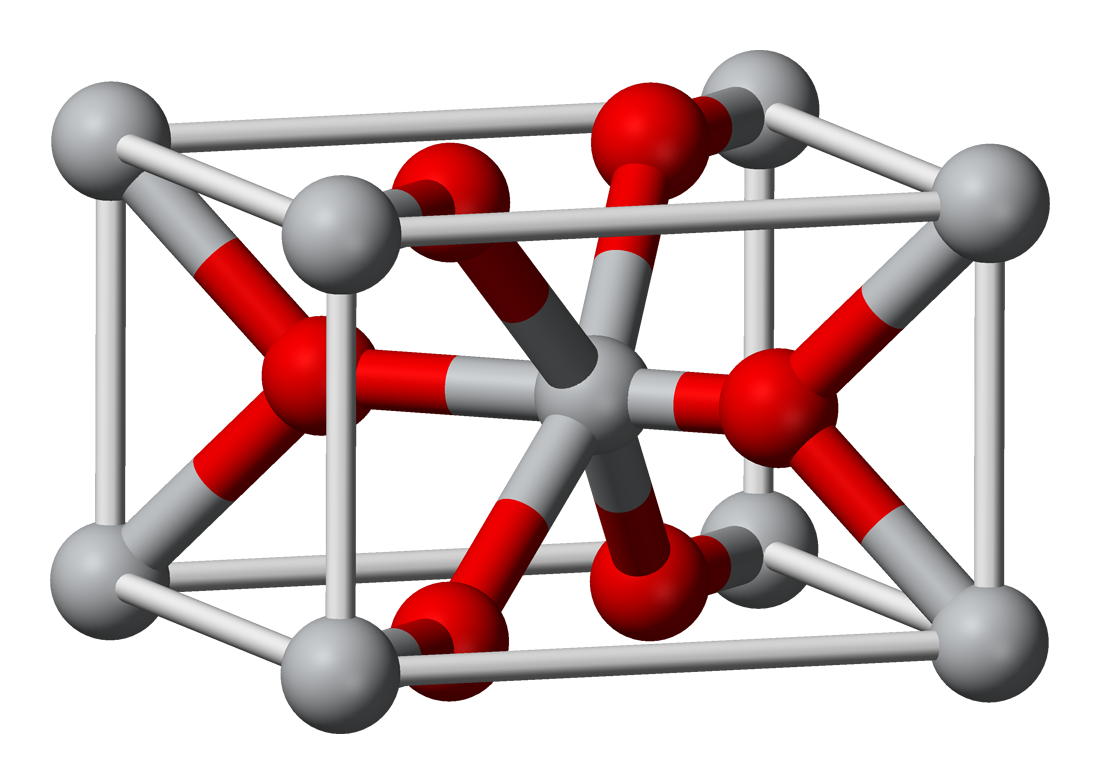
3D model of tin (IV) oxide, red atom is oxide
Sample of tin (IV) oxide
Names
IUPAC name
Tin (IV) Oxide
Other names
Stannic oxide, Tin(IV) oxide, Flowers of tin,[1] Cassiterite
Identifiers
3D model (JSmol)
ChemSpider
ECHA InfoCard 100.038.311 Edit this at Wikidata
EC Number
  • 242-159-0
RTECS number
  • XQ4000000
UNII
  • InChI=1S/2O.Sn ☒N
    Key: XOLBLPGZBRYERU-UHFFFAOYSA-N ☒N
  • (O=Sn=O): O=[Sn]=O
Properties
O2Sn
Molar mass 150.708 g·mol−1
Appearance Yellowish or light grey powder[2]
Odor Odorless
Density 6.95 g/cm3 (20 °C)[3]
6.85 g/cm3 (24 °C)[4]
Melting point 1,630 °C (2,970 °F; 1,900 K)[3][4]
Boiling point 1,800–1,900 °C (3,270–3,450 °F; 2,070–2,170 K)
Sublimes[3]
Insoluble[4]
Solubility Soluble in hot concentrated alkalis,[4] concentrated acids
Insoluble in alcohol[3]
−4.1·10−5 cm3/mol[4]
2.006[5]
Structure
Rutile tetragonal, tP6[6]
P42/mnm, No. 136[6]
4/m 2/m 2/m[6]
a = 4.737 Å, c = 3.185 Å[6]
α = 90°, β = 90°, γ = 90°
Octahedral (Sn4+)
Trigonal planar (O2−)
Thermochemistry
52.6 J/mol·K[4]
49.04 J/mol·K[4][7]
−577.63 kJ/mol[4][7]
−515.8 kJ/mol[4]
Hazards
NFPA 704 (fire diamond)
Lethal dose or concentration (LD, LC):
> 20 g/kg (rats, oral)[8]
NIOSH (US health exposure limits):
PEL (Permissible)
none[2]
REL (Recommended)
TWA 2 mg/m3[2]
IDLH (Immediate danger)
N.D.[2]
Safety data sheet (SDS) ICSC 0954
Related compounds
Related tin oxides
Tin(II) oxide
Except where otherwise noted, data are given for materials in their standard state (at 25 °C [77 °F], 100 kPa).
☒N verify (what is checkY☒N ?)

Tin(IV) oxide, also known as stannic oxide, is the inorganic compound with the formula SnO2. The mineral form of SnO2 is called cassiterite, and this is the main ore of tin.[9] With many other names, this oxide of tin is an important material in tin chemistry. It is a colourless, diamagnetic, amphoteric solid.

Structure

[edit]
Tin (IV) oxide fibers (optical microscope)

Tin(IV) oxide crystallises with the rutile structure. As such the tin atoms are six coordinate and the oxygen atoms three coordinate.[9] SnO2 is usually regarded as an oxygen-deficient n-type semiconductor.[10]

Hydrous forms of SnO2 have been described as stannic acid. Such materials appear to be hydrated particles of SnO2 where the composition reflects the particle size.[11]

Preparation

[edit]

Tin(IV) oxide occurs naturally. Synthetic tin(IV) oxide is produced by burning tin metal in air.[11] Annual production is in the range of 10 kilotons.[11] SnO2 is reduced industrially to the metal with carbon in a reverberatory furnace at 1200–1300 °C.[12]

Reactions

[edit]

The reaction from tin(IV) oxide with hot carbon monoxide is practiced on a large scale as this carbothermal reduction is used to obtain tin metal from its ores:

SnO2 + 2 CO → Sn + 2 CO2

Some other reactions relevant to purifying tin from its ores are:[13]

SnO2 + MgCl2 + CO → SnCl2 + MgO +CO2
4 SnO2 + 6 FeCl2 → 2 SnCl2 + 2 SnCl4 + 2 Fe3O4

SnO2 converts to the monoxide at 1500 °C:[13]

2 SnO2 → 2 SnO + O2

SnO2 is insoluble in water. It dissolves in sulfuric acid and in molten sodium hydroxide. It is not amphoteric. Like rutile, it is not attacked by solutions of acid or base.

Dissolution of SnO2 in sulfuric acid gives the sulfate:[11]

SnO2 + 2 H2SO4 → Sn(SO4)2 + 2 H2O

The latter compound can add additional hydrogen sulfate ligands to give hexahydrogensulfatostannic acid.[14]

SnO2 dissolves in molten alkali to give "stannates," with the nominal formula Na2SnO3.[11] Dissolving the solidified SnO2/NaOH melt in water gives Na2[Sn(OH)6], "preparing salt," which is used in the dye industry.[11]

Uses

[edit]

In conjunction with vanadium oxide, it is used as a catalyst for the oxidation of aromatic compounds in the synthesis of carboxylic acids and acid anhydrides.[9]

Ceramic glazes

[edit]

SnO2 is used as pigment in the manufacture of glasses, enamels and ceramic glazes. Thousands of tons of SnO2 are produced annually for this application. Pure SnO2 gives a milky white colour; other colours are achieved when mixed with other metallic oxides e.g. V2O5 yellow; Cr2O3 pink; and Sb2O5 grey blue.[11][15] This use probably led to the discovery of the pigment lead-tin-yellow, which was produced using tin(IV) oxide as a compound.[16] The use of tin(IV) oxide has been particularly common in glazes for earthenware, sanitaryware and wall tiles; see the articles tin-glazing and Tin-glazed pottery. Tin oxide remains in suspension in vitreous matrix of the fired glazes, and, with its high refractive index being sufficiently different from the matrix, light is scattered, and hence increases the opacity of the glaze. The degree of dissolution increases with the firing temperature, and hence the extent of opacity diminishes.[17] Although dependent on the other constituents the solubility of tin oxide in glaze melts is generally low. Its solubility is increased by Na2O, K2O and B2O3, and reduced by CaO, BaO, ZnO, Al2O3, and to a limited extent PbO.[18]

Glass coatings

[edit]

SnO2 coatings are valued as transparent conducting oxides (TCOs). Like other TCOs, SnO2 has significant electrical conductivity but is transparent, an unusual combination of properties. Windows coated with SnO2 also reflect infrared radiation, which is relevant to temperature control for smart windows.[19] Coatings can be applied using chemical vapor deposition, vapour deposition techniques that employ SnCl4[9] or organotin trihalides[20] e.g. butyltin trichloride as the volatile agent. This technique is used to coat glass bottles with a thin (<0.1 μm) layer of SnO2, which helps to adhere a subsequent, protective polymer coating such as polyethylene to the glass.[9]

Thicker layers doped with Sb or F ions are electrically conducting and used in electroluminescent devices and photovoltaics.[9]

Gas sensing

[edit]

SnO2 has been evaluated as sensors of combustible gases including carbon monoxide detectors. In these the sensor area is heated to a constant temperature (few hundred °C) and in the presence of a combustible gas the electrical resistivity drops.[21]

Historical uses

[edit]

This oxide of tin has been utilized as a mordant in the dyeing process since ancient Egypt.[22] A German by the name of Kuster first introduced its use to London in 1533 and by means of it alone, the color scarlet was produced there.[23]

Tin(IV) oxide for this use is sometimes called as "putty powder"[24] or "jeweler's putty".[1]

Polishing

[edit]

Tin(IV) oxide can be used as a polishing powder,[11] sometimes in mixtures also with lead oxide, for polishing glass, jewelry, marble and silver.[1]

Further reading

[edit]

References

[edit]

Further reading

[edit]
Revisions and contributorsEdit on WikipediaRead on Wikipedia
from Grokipedia
Tin(IV) oxide is an with the SnO₂, also known as stannic oxide or tin dioxide. It appears as a white to off-white, odorless, crystalline powder and is the most stable oxide of tin. Occurring naturally as the mineral , it serves as the principal source of tin in ores. As an amphoteric oxide, it reacts with strong acids to form tin(IV) salts and with strong bases to produce stannate ions. Tin(IV) oxide crystallizes in the structure, a tetragonal lattice typical of many metal dioxides, and functions as an n-type with a wide optical bandgap of 3.6–4.0 eV. Its physical properties include a of 6.95 g/cm³, a of 1630 °C, and sublimation at 1800–1900 °C. The compound is insoluble in water but dissolves in concentrated sulfuric or . These characteristics, combined with high (up to 240 cm² V⁻¹ s⁻¹) and , make it suitable for diverse technological applications. Key uses of tin(IV) oxide include its role as a polishing powder for , , and semiconductors, as well as an and colorant in glazes and pigments. In , it facilitates reactions such as the oxidation of hydrocarbons. Advanced applications leverage its semiconducting nature: as a transparent conductive oxide in optoelectronic devices like displays and organic light-emitting diodes, an electron transport layer in and organic solar cells (achieving efficiencies over 20%), and a sensing for gases such as CO and H₂. It also serves as an in lithium-ion batteries and supercapacitors due to its electrochemical properties.

Structure and properties

Crystal structure

Tin(IV) oxide, with the SnO₂, adopts a rutile-type tetragonal belonging to the P4₂/mnm at ambient conditions. In this arrangement, each Sn⁴⁺ cation is octahedrally coordinated by six O²⁻ anions, forming edge- and corner-sharing SnO₆ octahedra that constitute the framework. Conversely, each oxygen anion is trigonally coordinated by three tin cations, contributing to the overall stability of the lattice. The unit cell of the phase is characterized by lattice parameters a = 4.737 and c = 3.186 , reflecting the tetragonal with a c/a of approximately 0.672. While SnO₂ exhibits several polymorphs under extreme conditions, such as the cubic (Fm3̅m) at or hypothetical forms like Pa3̅, the phase remains the thermodynamically stable and most commonly observed form under standard environmental pressures and temperatures. SnO₂ behaves as an n-type , primarily due to intrinsic oxygen vacancies that serve as shallow donor levels, introducing free electrons into the conduction band; this material has a wide direct of 3.6 eV. Hydrated variants, collectively referred to as stannic acid (SnO₂·nH₂O where 1 < n ≤ 2), form amorphous, gel-like structures upon precipitation from aqueous solutions, lacking long-range crystalline order but retaining local Sn-O coordination similar to the anhydrous oxide.

Physical properties

Tin(IV) oxide appears as a white, odorless powder. Its density is 6.95 g/cm³. The material has a melting point of 1,630 °C and sublimes at approximately 1,800 °C without boiling. The refractive index of SnO₂ is 2.006, reflecting its high optical density. It exhibits a Mohs hardness of 6–7, indicating significant mechanical durability suitable for abrasive applications. SnO₂ displays anisotropic thermal expansion, with linear coefficients of approximately 5.1 × 10⁻⁶ K⁻¹ parallel to the a-axis and 5.7 × 10⁻⁶ K⁻¹ along the c-axis, contributing to its structural stability in high-temperature environments. The thermal conductivity of single crystals is direction-dependent, measuring 98 W/m·K parallel to the c-axis and 55 W/m·K perpendicular to it at room temperature. Optically, SnO₂ is transparent in the visible spectrum due to its wide direct band gap of 3.6 eV, which leads to strong absorption in the ultraviolet region. This property, enabled by its , underpins its use in optical coatings. SnO₂ is diamagnetic, exhibiting no unpaired electrons in its bulk form. It shows negligible solubility in water, underscoring its chemical inertness under neutral conditions.

Occurrence and preparation

Natural occurrence

Tin(IV) oxide occurs naturally as the mineral (SnO₂), which serves as the primary ore for tin extraction worldwide. Cassiterite typically forms through magmatic-hydrothermal processes associated with granitic intrusions, crystallizing in high-temperature veins and greisens. Due to its high density (approximately 7 g/cm³) and chemical stability, it weathers out of primary deposits and concentrates in placer deposits, including alluvial gravels and beach sands. Significant deposits are found in hydrothermal veins, pegmatites, and secondary placers, often linked to granite-related mineralization. Historically, Cornwall in the United Kingdom hosted major vein deposits that fueled tin production for millennia, while contemporary primary sources include Bolivia's highland veins and Indonesia's granite-associated systems. Other key regions encompass China, Myanmar, and Brazil, with global tin reserves estimated at >4.2 million metric tons (as of 2025), predominantly as . In 2023, worldwide mine production reached 305,000 metric tons of tin content from these ores, with an estimated 300,000 metric tons in 2024. Cassiterite commonly associates with gangue minerals such as and sulfides including and in vein systems, which can complicate beneficiation. Impurities like iron oxides, , and —often from co-occurring columbite-tantalite—reduce ore purity and require specialized processing to achieve high-grade concentrates. Cassiterite exhibits the rutile-type , contributing to its durability in natural environments. Tin mining from cassiterite deposits generates substantial environmental challenges, particularly through tailings disposal that contaminates soil and water with heavy metals such as arsenic, iron, and sulfates. In regions like and , improper management of mine waste has led to and degradation, affecting aquatic life and local water supplies.

Synthetic preparation

Tin(IV) oxide can be prepared through traditional methods such as the direct combustion of tin metal in air, following the reaction Sn + O₂ → SnO₂, which yields the oxide in a straightforward oxidation process. Another common laboratory approach involves the hydrolysis of tin(IV) chloride, where SnCl₄ + 2H₂O → SnO₂ + 4HCl, followed by precipitation and calcination to obtain pure SnO₂ powder. On an industrial scale, SnO₂ is primarily produced by calcining tin salts, such as tin(II) or , at elevated temperatures around 500–800°C, or through controlled reduction-oxidation cycles starting from tin precursors. Annual synthetic production of SnO₂ is estimated at 1,000–10,000 tons in the , reflecting its demand in ceramics, , and other sectors. Modern synthetic methods focus on to achieve precise control over particle size and morphology, essential for applications like sensors and . The sol-gel process, involving and of precursors, produces uniform SnO₂ nanoparticles with sizes tunable from 10–50 nm. , typically using SnCl₄ with NaOH at 200°C for 4–6 hours in an , yields rutile-phase SnO₂ nanoparticles of 5–20 nm, enabling high surface area materials. techniques generate uniform nanoparticles by confining reactions in nanoscale water droplets, while co-precipitation methods, often with as a precipitant, form mesoporous SnO₂ structures with pore sizes around 2–5 nm for enhanced . Recent advancements as of 2025 emphasize eco-friendly and thin-film production routes. Green synthesis using plant extracts, such as or Croton macrostachyus leaves, reduces tin salts to SnO₂ nanoparticles (10–30 nm) at ambient conditions, minimizing and enabling sustainable scalability. Vapor deposition methods, including (CVD) with SnCl₄ and O₂ precursors at 400–600°C, deposit high-quality SnO₂ thin films (50–200 nm thick) on substrates for . Particle size and morphology are further tailored by doping, such as with (Sb) at 5–10 mol%, to enhance electrical conductivity while maintaining the structure.

Chemical reactions

Reduction reactions

Tin(IV) oxide, primarily obtained from ore, is reduced to metallic tin through carbothermic processes in industrial . The principal reaction involves heating SnO₂ with carbon at temperatures of 1200–1300°C, yielding tin metal and gas according to the equation: SnO2+2CSn+2CO\text{SnO}_2 + 2\text{C} \rightarrow \text{Sn} + 2\text{CO} This two-stage process first partially reduces the ore to form an iron-tin (hardhead), followed by a second stage to recover high-purity tin, with silica added to form a calcium silicate that encapsulates impurities like iron oxides. An alternative reduction pathway utilizes as the reductant, particularly in controlled atmospheres: SnO2+2COSn+2CO2\text{SnO}_2 + 2\text{CO} \rightarrow \text{Sn} + 2\text{CO}_2 This method enhances gas utilization in modern furnaces and minimizes solid carbon residues. Historically, early tin production relied on reverberatory furnaces, which indirectly heated the charge to avoid from ash, operating batch-wise with lower . In contrast, contemporary furnaces enable continuous operation, precise temperature control, and higher energy efficiency, often achieving tin recovery rates exceeding 95% while reducing emissions through off-gas scrubbing. The of SnO₂ reduction by carbon favor the reaction above approximately °C, where the standard change (ΔG°) becomes negative, as indicated by Ellingham diagrams plotting oxide formation energies against temperature. The process exhibits an barrier of about 221 kJ/mol when using carbonaceous reductants like , influencing the kinetics and requiring elevated temperatures to overcome limitations in solid-state reactions. formation with silica not only aids metal separation but also captures residual tin (typically <1 wt% in modern operations), which can be recovered via fuming processes to boost overall efficiency. In laboratory settings, milder reductants produce fine tin powders for applications like nanomaterials. Reduction with hydrogen gas proceeds at 500–750°C under controlled partial pressures (30–100 kPa), yielding nanoscale Sn particles via stepwise deoxygenation. Sodium borohydride (NaBH₄) enables room-temperature or low-heat reduction in aqueous or solvent media, often forming oxygen-deficient SnO₂ or metallic Sn nanoparticles suitable for catalysis. Electrochemical methods further allow precise control, where SnO₂ electrodes are cathodically reduced to Sn in electrolytic cells, typically in acidic or bicarbonate electrolytes, facilitating heterostructure formation for advanced materials.

Acid-base reactions

Tin(IV) oxide, SnO₂, displays amphoteric properties characteristic of many metal oxides with polar metal-oxygen bonds, enabling it to react with both acids and bases by accepting protons in acidic media or releasing oxide ions (or forming hydroxo complexes) in basic media. This behavior results in pH-dependent solubility, with minimal dissolution near neutral pH and increased solubility in strongly acidic or alkaline conditions due to the formation of soluble tin(IV) species. Consistent with its insolubility in water, SnO₂ remains stable in neutral aqueous environments but undergoes dissolution under extreme pH values. In acidic conditions, SnO₂ dissolves in hot concentrated sulfuric acid to yield tin(IV) sulfate according to the reaction: SnO2+2H2SO4Sn(SO4)2+2H2O\text{SnO}_2 + 2\text{H}_2\text{SO}_4 \rightarrow \text{Sn}(\text{SO}_4)_2 + 2\text{H}_2\text{O} It also exhibits solubility in hydrofluoric acid, forming tin(IV) fluoride via: SnO2+4HFSnF4+2H2O\text{SnO}_2 + 4\text{HF} \rightarrow \text{SnF}_4 + 2\text{H}_2\text{O} With bases, SnO₂ reacts upon fusion with sodium hydroxide to produce sodium stannate: SnO2+2NaOHNa2SnO3+H2O\text{SnO}_2 + 2\text{NaOH} \rightarrow \text{Na}_2\text{SnO}_3 + \text{H}_2\text{O} In aqueous alkaline solutions, it undergoes hydrolysis and complexation to form the hexahydroxostannate(IV) ion, [Sn(OH)₆]²⁻, which enhances its solubility. In qualitative inorganic analysis, tin(IV) ions in solution are often identified by precipitation as hydrated tin(IV) oxide, known as metastannic acid (SnO₂·nH₂O), typically achieved by treating tin-containing samples like brass with concentrated nitric acid, followed by ignition to pure SnO₂ for gravimetric confirmation.

Applications

Ceramics and glass

Tin(IV) oxide has been utilized in ceramics since the 9th century, when Islamic potters in Abbasid Iraq developed tin-opacified glazes, marking the first widespread application of SnO₂ as a white pigment in lead-based frits to achieve opaque, glossy finishes on earthenware. This innovation spread across the Islamic world and reached Europe by the 16th century, where it was adopted for tin-glazed earthenware (maiolica and delftware), enhancing decorative pottery with durable, white opaque surfaces. In modern ceramic glazes, SnO₂ serves primarily as an opacifier and colorant, producing white, tin-opacified glazes through the fine dispersion of its microcrystalline particles, which scatter light without significantly altering the glaze's transparency in lower concentrations. These particles remain suspended in the molten glaze during firing, providing a bright white opacity that is stable and resistant to chemical leaching, making it suitable for both decorative and functional tableware. Typical formulations incorporate 1-10% SnO₂ into lead or lead-free frits, enhancing durability and gloss while contributing to thermal stability up to 1,600°C, beyond which sublimation may occur. For glass applications, SnO₂ acts as a key precursor in the production of indium tin oxide (ITO) coatings via chemical vapor deposition (CVD), where organotin compounds decompose to form thin films on architectural windows that reflect infrared radiation, reducing heat transfer and improving energy efficiency. These IR-reflective films, often 0.3-1 μm thick, achieve up to 85% reflectivity in the near-infrared spectrum while maintaining high visible light transmittance. Environmental regulations, such as those limiting lead and cadmium migration in glazed ceramics under frameworks like the U.S. FDA and EU standards, have promoted SnO₂-based lead-free alternatives, which provide equivalent opacity without the toxicity risks associated with traditional lead glazes.

Sensors and electronics

Tin(IV) oxide, or SnO₂, is extensively utilized in gas sensing applications owing to its n-type semiconductor characteristics, enabling the detection of reducing gases such as (CO), (H₂), and (NO₂). The primary sensing mechanism relies on the adsorption of gas molecules on the SnO₂ surface, which modulates the depletion layer and alters the material's electrical resistivity; for instance, oxidizing gases like NO₂ withdraw electrons, increasing resistance, while reducing gases like donate electrons, decreasing it. Sensors based on SnO₂ demonstrate high sensitivity, often in the range of 10-100 ppm for these target gases, with sensitivities up to 190 for 2 ppm NO₂ at room temperature in nanoparticle-based structures. Device fabrication commonly involves depositing SnO₂ as thick or thin films via methods like sol-gel or sputtering, frequently doped with noble metals such as palladium (Pd) or platinum (Pt) to improve selectivity and lower the optimal operating temperature to 200-400°C. Pd doping, for example, enhances response to CO by catalyzing surface reactions, achieving sensitivities up to 72% at 350°C for low concentrations. These sensors are integral to environmental monitoring and industrial safety systems, where the doping and film morphology—such as porous networks—significantly boost response and recovery times, often under 10 seconds for H₂ detection. Recent advancements as of 2025 include SnO₂ nanowire architectures for volatile organic compound (VOC) detection, offering enhanced surface area and faster response kinetics compared to bulk films. These nanowires, often integrated into Internet of Things (IoT) platforms for real-time air quality assessment, achieve classification accuracies exceeding 90% for mixed VOCs through machine learning-assisted arrays, enabling applications in smart homes and wearable devices. Oxygen vacancies in these structures further tune conductivity for improved sensitivity. In electronics, fluorine-doped SnO₂ (FTO) functions as a transparent conductive oxide, prized for its high optical transmittance (>80%) and low (<10 Ω/sq), making it suitable for front electrodes in thin-film solar cells and transparent touchscreens. FTO films, typically deposited by , provide better stability than in high-temperature processing, supporting efficiencies in solar cells up to 20%. Additionally, SnO₂ serves as an anode material in lithium-ion batteries and supercapacitors due to its high theoretical capacity (around 790 mAh/g for Li₄.₄Sn), though volume expansion during lithiation remains a challenge addressed by nanostructuring and composites, achieving practical capacities over 500 mAh/g in recent designs as of 2025.

Catalysis and photocatalysis

Tin(IV) oxide, or SnO₂, serves as an effective heterogeneous catalyst in various organic transformations due to its high surface area and Lewis acid properties. SnO₂ nanoparticles (NPs) with surface areas exceeding 100 m²/g facilitate enhanced reactant adsorption and catalytic activity, enabling reactions at mild conditions. For instance, SnO₂ NPs catalyze the Pechmann condensation of phenolic alcohols and β-ketoesters to form coumarins, achieving yields of 93–98% at room temperature in ethanol with 1 mol% catalyst loading, and the Knoevenagel condensation–Michael addition for biscoumarins from 4-hydroxycoumarin and aldehydes, with similar high yields in short reaction times (5–20 minutes). Additionally, SnO₂ NPs promote the one-pot synthesis of 2H-indazolo[2,1-b]phthalazine-triones from phthalhydrazide, aromatic aldehydes, and dimedone under solvent-free conditions at 80°C, delivering yields up to 100% with 10 mol% catalyst and recyclability over 5–6 cycles. These applications highlight SnO₂'s role in promoting C–C bond formation and multicomponent reactions, with its nanoscale morphology minimizing byproduct formation and allowing easy recovery by filtration. In , SnO₂ exploits its wide of approximately 3.6 eV to absorb UV light, generating electron-hole (e⁻/h⁺) pairs that drive oxidative degradation of . The photocatalytic process follows the Langmuir-Hinshelwood model, where pollutant adsorption on the SnO₂ surface precedes reaction with photogenerated species, with adsorption equilibrium constants influencing the rate; smaller nanocrystals (e.g., 4 nm) exhibit superior adsorption synergy, enhancing decomposition efficiency for trace like at ppb levels. For dye degradation, SnO₂ NPs achieve 87–90% removal of under UV irradiation within 30–85 minutes, depending on particle size (3–27 nm), through hydroxyl radical-mediated breakdown into non-toxic products. Doping with elements like or silver improves charge separation and extends response to visible light, boosting efficiency to 70–90%; for example, 6 wt% Ag-doped SnO₂ degrades by 82% under UV, while Ag-modified variants with achieve near-complete removal under visible light via plasmonic effects. Recent advances in 2025 emphasize SnO₂'s integration into nanostructured systems for sustainable applications. Mesoporous SnO₂ photoanodes, synthesized via co-precipitation and electrodeposition, support photoelectrochemical processes with band gaps around 3.5 eV and porous structures aiding charge transport, though primarily demonstrated in dye-sensitized solar cells with 0.78% . Green synthesis methods, such as using ginger extract, produce SnO₂ NPs for , degrading dyes like by 42% and by 58% under UV in 100 minutes, offering an eco-friendly route to pollutant breakdown without toxic stabilizers. in these systems quantifies photon utilization, often improved by defect engineering to minimize recombination, as seen in doped variants where yields approach those of benchmark TiO₂. SnO₂-based composites further enhance photocatalytic performance by addressing its UV limitation. SnO₂-TiO₂ heterostructures, particularly with Ag mediation, reduce the effective to 2.3 eV, enabling visible-light-driven degradation at a rate 9.5 times faster than pure TiO₂, through efficient interfacial charge transfer and plasmonic enhancement that suppresses e⁻/h⁺ recombination. These ternary systems maintain stability over multiple cycles (retaining 90% after four uses), positioning SnO₂ composites as promising for scalable .

Polishing and abrasives

Tin(IV) oxide, often in the form of calcined with particle sizes ranging from 0.5 to 5 μm, serves as an effective mechanical abrasive for glass, metals, gemstones, and , where it removes surface scratches while avoiding deep due to its controlled abrasiveness. This material is incorporated into putty powders, typically comprising 20-50% tin(IV) oxide, which have been used historically since the for polishing silverware and other metals to achieve a high-luster finish. As a non-toxic alternative to oxide, tin(IV) oxide offers advantages in applications requiring gentle abrasion on delicate surfaces, providing a fine finish without excessive material removal. Its hardness of approximately 6.5 on the , stemming from its crystal structure, enables precise suitable for and jewelry. Abrasives represent one of the key applications of SnO₂, contributing to its total global production of approximately 10,000 tons per year. In terms of safety, inhalation of tin(IV) oxide dust poses a lower risk than silica, potentially leading only to benign stannosis—a non-fibrotic —rather than the severe lung scarring associated with silica exposure.

References

Add your contribution
Related Hubs
User Avatar
No comments yet.