Hubbry Logo
search
logo
2093633

Three-body problem

logo
Community Hub0 Subscribers
Read side by side
from Wikipedia
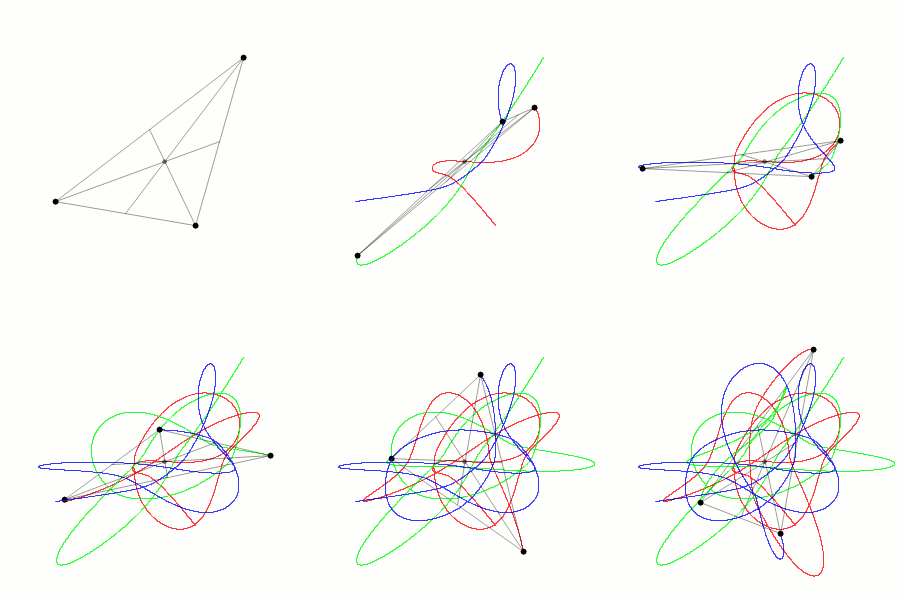
Approximate trajectories of three identical bodies located at the vertices of a scalene triangle and having zero initial velocities. The center of mass, in accordance with the law of conservation of momentum, remains in place.

In physics, specifically classical mechanics, the three-body problem is to take the initial positions and velocities (or momenta) of three point masses orbiting each other in space and then to calculate their subsequent trajectories using Newton's laws of motion and Newton's law of universal gravitation.[1]

Unlike the two-body problem, the three-body problem has no general closed-form solution, meaning there is no equation that always solves it.[1] When three bodies orbit each other, the resulting dynamical system is chaotic for most initial conditions. Because there are no solvable equations for most three-body systems, the only way to predict the motions of the bodies is to estimate them using numerical methods.

The three-body problem is a special case of the n-body problem. Historically, the first specific three-body problem to receive extended study was the one involving the Earth, the Moon, and the Sun.[2] In an extended modern sense, a three-body problem is any problem in classical mechanics or quantum mechanics that models the motion of three particles.

Mathematical description

[edit]

The mathematical statement of the three-body problem can be given in terms of the Newtonian equations of motion for vector positions of three gravitationally interacting bodies with masses :

where is the gravitational constant.

As astronomer Juhan Frank describes, "These three second-order vector differential equations are equivalent to 18 first order scalar differential equations."[3][better source needed] As June Barrow-Green notes with regard to an alternative presentation, if represent three particles with masses , distances and coordinates in an inertial coordinate system ... the problem is described by nine second-order differential equations.[4]: 8 

The problem can also be stated equivalently in the Hamiltonian formalism, in which case it is described by a set of 18 first-order differential equations, one for each component of the positions and momenta :[citation needed][5]

where is the Hamiltonian:[citation needed]

In this case, is simply the total energy of the system, gravitational plus kinetic.[citation needed]

Restricted three-body problem

[edit]
The circular restricted three-body problem

In the restricted three-body problem formulation, in the description of Barrow-Green,[4]: 11–14 

two... bodies revolve around their centre of mass in circular orbits under the influence of their mutual gravitational attraction, and... form a two body system... [whose] motion is known. A third body (generally known as a planetoid), assumed massless with respect to the other two, moves in the plane defined by the two revolving bodies and, while being gravitationally influenced by them, exerts no influence of its own.[4]: 11 

Per Barrow-Green, "[t]he problem is then to ascertain the motion of the third body."[4]: 11 

The restricted three-body problem is easier to analyze theoretically than the full problem. It is of practical interest as well since it accurately describes many real-world problems, the most important example being the Earth–Moon–Sun system. For these reasons, it has occupied an important role in the historical development of the three-body problem.[6]

The restricted 3-body problem has a 4-dimensional phase space, but only one conserved quantity, the Jacobi integral.[7] It was shown by Heinrich Bruns that there are no more algebraic conserved quantities, and by Henri Poincaré in 1889 that there are no more analytic conserved quantities.[7] Therefore, since the dimension of the phase space is larger than the number of constants of motion, the system is not exactly solvable; in fact, it is chaotic.[7]

Depending on the value of the Jacobi integral, a body initially orbiting the larger mass may be able to be captured by the secondary mass or be ejected via Lagrange points L2 or L3.[8]

A variant of this problem, where the two large bodies both exert radiation pressure, results in the addition of four additional equilibrium points in addition to the five classical Lagrange points.[9]

Solutions

[edit]

General solution

[edit]
While a system of 3 bodies interacting gravitationally is chaotic, a system of 3 bodies interacting elastically is not.[clarification needed]

There is no general closed-form solution to the three-body problem.[1] In other words, it does not have a general solution that can be expressed in terms of a finite number of standard mathematical operations. Moreover, the motion of three bodies is generally non-repeating, except in special cases.[10]

However, in 1912 the Finnish mathematician Karl Fritiof Sundman proved that there exists an analytic solution to the three-body problem in the form of a Puiseux series, specifically a power series in terms of powers of t1/3.[11] This series converges for all real t, except for initial conditions corresponding to zero angular momentum. In practice, the latter restriction is insignificant since initial conditions with zero angular momentum are rare, having Lebesgue measure zero.

An important issue in proving this result is the fact that the radius of convergence for this series is determined by the distance to the nearest singularity[further explanation needed]. Therefore, it is necessary to study the possible singularities of the three-body problems. As is briefly discussed below, the only singularities in the three-body problem are binary collisions (collisions between two particles at an instant) and triple collisions (collisions between three particles at an instant).

Collisions of any number are somewhat improbable, since it has been shown that they correspond to a set of initial conditions of measure zero. But there is no criterion known to be put on the initial state in order to avoid collisions for the corresponding solution. So Sundman's strategy consisted of the following steps:

  1. Using an appropriate change of variables to continue analyzing the solution beyond the binary collision, in a process known as regularization.
  2. Proving that triple collisions only occur when the angular momentum L vanishes. By restricting the initial data to L0, he removed all real singularities from the transformed equations for the three-body problem.
  3. Showing that if L0, then not only can there be no triple collision, but the system is strictly bounded away from a triple collision. This implies, by Cauchy's existence theorem for differential equations, that there are no complex singularities in a strip (depending on the value of L) in the complex plane centered around the real axis (related to the Cauchy–Kovalevskaya theorem).
  4. Find a conformal transformation that maps this strip into the unit disc. For example, if s = t1/3 (the new variable after the regularization) and if |ln s| ≤ β,[clarification needed] then this map is given by
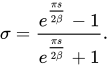
This finishes the proof of Sundman's theorem.

The corresponding series converges extremely slowly. That is, obtaining a value of meaningful precision requires so many terms that this solution is of little practical use. Indeed, in 1930, David Beloriszky calculated that if Sundman's series were to be used for astronomical observations, then the computations would involve at least 108000000 terms.[12]

Special-case solutions

[edit]
Twenty examples of special periodic solutions to the three-body problem

In 1767, Leonhard Euler found three families of periodic solutions in which the three masses are collinear at each instant. In 1772, Lagrange found a family of solutions in which the three masses form an equilateral triangle at each instant. Together with Euler's collinear solutions, these solutions form the central configurations for the three-body problem. These solutions are valid for any mass ratios, and the masses move on Keplerian ellipses. These four families are the only known solutions for which there are explicit analytic formulas. In the special case of the circular restricted three-body problem, these solutions, viewed in a frame rotating with the primaries, become points called Lagrangian points and labeled L1, L2, L3, L4, and L5, with L4 and L5 being symmetric instances of Lagrange's solution.

In work summarized in 1892–1899, Henri Poincaré established the existence of an infinite number of periodic solutions to the restricted three-body problem, together with techniques for continuing these solutions into the general three-body problem.

In 1893, Meissel stated what is now called the Pythagorean three-body problem: three masses in the ratio 3:4:5 are placed at rest at the vertices of a 3:4:5 right triangle, with the heaviest body at the right angle and the lightest at the smaller acute angle. Burrau[13] further investigated this problem in 1913. In 1967 Victor Szebehely and C. Frederick Peters established eventual escape of the lightest body for this problem using numerical integration, while at the same time finding a nearby periodic solution.[14]

In the 1970s, Michel Hénon and Roger A. Broucke each found a set of solutions that form part of the same family of solutions: the Broucke–Hénon–Hadjidemetriou family. In this family, the three objects all have the same mass and can exhibit both retrograde and direct forms. In some of Broucke's solutions, two of the bodies follow the same path.[15]

In 1993, physicist Cris Moore at the Santa Fe Institute found a zero angular momentum solution with three equal masses moving around a figure-eight shape.[16] In 2000, mathematicians Alain Chenciner and Richard Montgomery proved its formal existence.[17][18] The solution has been shown numerically to be stable for small perturbations of the mass and orbital parameters, which makes it possible for such orbits to be observed in the physical universe. But it has been argued that this is unlikely since the domain of stability is small. For instance, the probability of a binary–binary scattering event[clarification needed] resulting in a figure-8 orbit has been estimated to be a small fraction of a percent.[19]

In 2013, physicists Milovan Šuvakov and Veljko Dmitrašinović at the Institute of Physics in Belgrade discovered 13 new families of solutions for the equal-mass zero-angular-momentum three-body problem.[10][15]

In 2015, physicist Ana Hudomal discovered 14 new families of solutions for the equal-mass zero-angular-momentum three-body problem.[20]

In 2017, researchers Xiaoming Li and Shijun Liao found 669 new periodic orbits of the equal-mass zero-angular-momentum three-body problem.[21] This was followed in 2018 by an additional 1,223 new solutions for a zero-angular-momentum system of unequal masses.[22]

In 2018, Li and Liao reported 234 solutions to the unequal-mass "free-fall" three-body problem.[23] The free-fall formulation starts with all three bodies at rest. Because of this, the masses in a free-fall configuration do not orbit in a closed "loop", but travel forward and backward along an open "track".

In 2023, Ivan Hristov, Radoslava Hristova, Dmitrašinović and Kiyotaka Tanikawa published a search for "periodic free-fall orbits" three-body problem, limited to the equal-mass case, and found 12,409 distinct solutions.[24]

Numerical approaches

[edit]

Using a computer, the problem may be solved to arbitrarily high precision using numerical integration. There have been attempts at creating computer programs that numerically solve the three-body problem (and by extension, the n-body problem) involving both electromagnetic and gravitational interactions, and incorporating modern theories of physics such as special relativity.[25] In addition, using the theory of random walks, an approximate probability of different outcomes may be computed.[26][27]

History

[edit]

The gravitational problem of three bodies in its traditional sense dates in substance from 1687, when Isaac Newton published his Philosophiæ Naturalis Principia Mathematica. Newton, having solved the two-body problem, tried to discover whether any long-term stability is possible for a system such as the Earth, the Moon, and the Sun.[28] Guided by major Renaissance astronomers Nicolaus Copernicus, Tycho Brahe and Johannes Kepler, Newton introduced later generations to the beginning of the gravitational three-body problem.[29] In Proposition 66 of Book 1 of the Principia, and its 22 Corollaries, Newton took the first steps in the definition and study of the problem of the movements of three massive bodies subject to their mutually perturbing gravitational attractions. In Propositions 25 to 35 of Book 3, Newton also took the first steps in applying his results of Proposition 66 to the lunar theory, the motion of the Moon under the gravitational influence of Earth and the Sun.[30] Later, this problem was also applied to other planets' interactions with the Earth and the Sun.[29]

The physical problem was first addressed by Amerigo Vespucci and subsequently by Galileo Galilei, as well as Simon Stevin, but they did not realize what they contributed. Though Galileo determined that the speed of fall of all bodies changes uniformly and in the same way, he did not apply it to planetary motions.[29] Whereas in 1499, Vespucci used knowledge of the position of the Moon to determine his position in Brazil.[31] It became of technical importance in the 1720s, as an accurate solution would be applicable to navigation, specifically for the determination of longitude at sea, solved in practice by John Harrison's invention of the marine chronometer. However the accuracy of the lunar theory was low, due to the perturbing effect of the Sun and planets on the motion of the Moon around Earth.

Jean le Rond d'Alembert and Alexis Clairaut, who developed a longstanding rivalry, both attempted to analyze the problem in some degree of generality; they submitted their competing first analyses to the Académie Royale des Sciences in 1747.[32] It was in connection with their research, in Paris during the 1740s, that the name "three-body problem" (French: Problème des trois Corps) began to be commonly used. An account published in 1761 by Jean le Rond d'Alembert indicates that the name was first used in 1747.[33]

From the end of the 19th century to early 20th century, the approach to solve the three-body problem with the usage of short-range attractive two-body forces was developed by scientists, which offered P. F. Bedaque, H.-W. Hammer and U. van Kolck an idea to renormalize the short-range three-body problem, providing scientists a rare example of a renormalization group limit cycle at the beginning of the 21st century.[34] George William Hill worked on the restricted problem in the late 19th century with an application of motion of Venus and Mercury.[35]

At the beginning of the 20th century, Karl Sundman approached the problem mathematically and systematically by providing a functional theoretical proof to the problem valid for all values of time. It was the first time scientists theoretically solved the three-body problem. However, because there was not a qualitative enough solution of this system, and it was too slow for scientists to practically apply it, this solution still left some issues unresolved.[36] In the 1970s, implication to three-body from two-body forces had been discovered by V. Efimov, which was named the Efimov effect.[37]

In 2017, Shijun Liao and Xiaoming Li applied a new strategy of numerical simulation for chaotic systems called the clean numerical simulation (CNS), with the use of a national supercomputer, to successfully gain 695 families of periodic solutions of the three-body system with equal mass.[38]

In 2019, Breen et al. announced a fast neural network solver for the three-body problem, trained using a numerical integrator.[39]

In September 2023, several possible solutions have been found to the problem according to reports.[40][41]

Other problems involving three bodies

[edit]

The term "three-body problem" is sometimes used in the more general sense to refer to any physical problem involving the interaction of three bodies.

A quantum-mechanical analogue of the gravitational three-body problem in classical mechanics is the helium atom, in which a helium nucleus and two electrons interact according to the inverse-square Coulomb interaction. Like the gravitational three-body problem, the helium atom cannot be solved exactly.[42]

In both classical and quantum mechanics, however, there exist nontrivial interaction laws besides the inverse-square force that do lead to exact analytic three-body solutions. One such model consists of a combination of harmonic attraction and a repulsive inverse-cube force.[43] This model is considered nontrivial since it is associated with a set of nonlinear differential equations containing singularities (compared with, e.g., harmonic interactions alone, which lead to an easily solved system of linear differential equations). In these two respects it is analogous to (insoluble) models having Coulomb interactions, and as a result has been suggested as a tool for intuitively understanding physical systems like the helium atom.[43][44]

Within the point vortex model, the motion of vortices in a two-dimensional ideal fluid is described by equations of motion that contain only first-order time derivatives. I.e. in contrast to Newtonian mechanics, it is the velocity and not the acceleration that is determined by their relative positions. As a consequence, the three-vortex problem is still integrable,[45] while at least four vortices are required to obtain chaotic behavior.[46] One can draw parallels between the motion of a passive tracer particle in the velocity field of three vortices and the restricted three-body problem of Newtonian mechanics.[47]

The gravitational three-body problem has also been studied using general relativity. Physically, a relativistic treatment becomes necessary in systems with very strong gravitational fields, such as near the event horizon of a black hole. However, the relativistic problem is considerably more difficult than in Newtonian mechanics, and sophisticated numerical techniques are required. Even the full two-body problem (i.e. for arbitrary ratio of masses) does not have a rigorous analytic solution in general relativity.[48]

n-body problem

[edit]

The three-body problem is a special case of the n-body problem, which describes how n objects move under one of the physical forces, such as gravity. These problems have a global analytical solution in the form of a convergent power series, as was proven by Karl F. Sundman for n = 3 and by Qiudong Wang for n > 3 (see n-body problem for details). However, the Sundman and Wang series converge so slowly that they are useless for practical purposes;[49] therefore, it is currently necessary to approximate solutions by numerical analysis in the form of numerical integration or, for some cases, classical trigonometric series approximations (see n-body simulation). Atomic systems, e.g. atoms, ions, and molecules, can be treated in terms of the quantum n-body problem. Among classical physical systems, the n-body problem usually refers to a galaxy or to a cluster of galaxies; planetary systems, such as stars, planets, and their satellites, can also be treated as n-body systems. Some applications are conveniently treated by perturbation theory, in which the system is considered as a two-body problem plus additional forces causing deviations from a hypothetical unperturbed two-body trajectory.

See also

[edit]

References

[edit]

Further reading

[edit]
[edit]
Revisions and contributorsEdit on WikipediaRead on Wikipedia
from Grokipedia
The three-body problem is a fundamental challenge in classical mechanics and celestial mechanics, involving the prediction of the motions of three point masses subject to their mutual gravitational attractions as described by Newton's law of universal gravitation.[1] Unlike the two-body problem, which admits a closed-form analytical solution reducible to conic sections, the general three-body problem does not possess a general closed-form solution in terms of elementary functions, requiring instead numerical integration or series expansions for most configurations.[1] This problem requires solving a system of 18 coupled nonlinear differential equations (nine for positions and nine for velocities in three dimensions), with only ten independent integrals of motion available—namely, the center-of-mass position (three), linear momentum (three), angular momentum (three), and total energy (one)—leaving eight degrees of freedom that generally lead to chaotic behavior.[1] The problem originated in the late 17th century when Isaac Newton, in his Philosophiæ Naturalis Principia Mathematica (1687), solved the two-body case but recognized the complexity of extending it to three bodies, such as the Earth, Moon, and Sun system.[1] Early progress came in the 18th century with Leonhard Euler, who in 1767 discovered the first exact periodic solutions involving collinear configurations where the bodies move along elliptical paths aligned with their centers of mass.[2] Joseph-Louis Lagrange advanced the field in 1772 by identifying stable periodic solutions in which the three bodies form an equilateral triangle that rotates rigidly around the center of mass, a configuration relevant to Trojan asteroids in the Sun-Jupiter system.[2] Further developments by Pierre-Simon Laplace in 1799 attempted perturbative approaches, but it was Henri Poincaré's work in 1889, during a competition on planetary perturbations, that revealed the inherent instability and sensitivity to initial conditions, laying the groundwork for chaos theory in dynamical systems.[1] In the 19th and 20th centuries, mathematicians like Heinrich Bruns (1887) and Poincaré proved that no additional algebraic integrals exist beyond the known ten, confirming the non-integrability of the general case.[1] Special cases, such as the restricted three-body problem—where one body has negligible mass and the other two follow fixed circular orbits—have been extensively studied for applications like satellite trajectories and planetary formation.[3] The problem's study has profoundly influenced fields beyond astronomy, including nonlinear dynamics, numerical methods, and space mission design, where invariant manifolds in the circular restricted three-body problem enable efficient low-energy transfers, as utilized in missions like NASA's Genesis (2001–2004).[4] Despite advances in computational power, the three-body problem remains unsolved analytically in general, exemplifying the limitations of deterministic classical physics and the ubiquity of chaos in natural systems.[1]

Introduction

Definition and Scope

The three-body problem in classical mechanics is the challenge of predicting the motions of three point masses that interact exclusively through mutual gravitational attraction, as governed by Newton's law of universal gravitation. This formulation assumes the bodies are point-like, with forces following the inverse-square law proportional to their masses and inversely proportional to the square of their separations, and that no external forces or influences act on the system. The problem seeks to determine the positions and velocities of these bodies over time given initial conditions, highlighting the complexity arising from their interdependent dynamics. Central assumptions include treating the bodies as having negligible physical size to avoid complications from extended structures or collisions, and considering the system as isolated in space. Under these conditions, fundamental conservation laws hold: total linear momentum is conserved due to translational invariance, total angular momentum is conserved in the absence of external torques, and total mechanical energy remains constant. These assumptions simplify the model to focus on purely gravitational interactions without dissipative effects or relativistic corrections. The scope of the three-body problem is confined to the classical, non-relativistic framework of Newtonian mechanics, emphasizing deterministic evolution in an inertial frame. While the general case permits motion in three-dimensional space (spatial formulation), a restricted version assumes coplanar orbits (planar formulation) to explore specific symmetries, though both share the core gravitational dynamics. A real-world exemplar is the Earth-Moon-Sun system, where the Moon's orbit around Earth is significantly perturbed by the Sun's gravitational pull, illustrating the interplay of three massive bodies.

Importance in Physics

The two-body problem, solved analytically by Isaac Newton in his Principia Mathematica (1687), allows for exact predictions of orbital motion in elliptical, parabolic, or hyperbolic paths, as later refined by Johannes Kepler's laws describing planetary orbits around a central body.[5] In stark contrast, the three-body problem introduces mutual gravitational interactions among all three masses, leading to no general closed-form solution and rendering long-term predictions inherently unpredictable due to chaotic dynamics.[5] This shift from deterministic exactness to complexity underscores the limitations of classical mechanics when extending beyond pairwise interactions.[6] The three-body problem holds foundational importance in celestial mechanics as it reveals the boundaries of Newtonian determinism in physical systems. Henri Poincaré's analysis in 1889–1899, particularly in Les Méthodes Nouvelles de la Mécanique Céleste, demonstrated that even deterministic equations can produce chaotic behavior through sensitivity to initial conditions, where minuscule variations in starting positions or velocities amplify into vastly different outcomes over time.[7] This discovery laid the groundwork for chaos theory, challenging the 19th-century view of a perfectly predictable universe and influencing fields from dynamical systems to nonlinear science.[6] Its significance extends to understanding why simple gravitational models fail for multi-body scenarios, prompting a paradigm shift toward qualitative and probabilistic approaches in physics.[7] The absence of a general analytic solution necessitates reliance on numerical approximations and simulations for practical applications, profoundly impacting studies of solar system stability, exoplanet dynamics, and binary star systems. For instance, in our solar system, three-body interactions (e.g., Sun-Jupiter-Saturn) can destabilize orbits over billions of years, as shown in long-term simulations revealing chaotic diffusion of planetary eccentricities.[7] In exoplanetary contexts, the problem informs the habitability and longevity of orbits around binary stars, where restricted three-body approximations predict ejection risks or stable circumbinary paths for planets.[8] Similarly, for binary stars with a third companion, chaotic resonances can lead to ejections or collisions, shaping the evolution of stellar clusters and informing observations of hierarchical systems.[9] These implications highlight the three-body problem's role in bridging theoretical physics with astrophysical realities, emphasizing chaos as a key driver of cosmic complexity.[5]

Mathematical Formulation

General Three-Body Equations

The general three-body problem in Newtonian gravity describes the motion of three point masses m1m_1, m2m_2, and m3m_3 interacting solely through mutual gravitational attraction, with positions given by vectors r1(t)\vec{r}_1(t), r2(t)\vec{r}_2(t), and r3(t)\vec{r}_3(t) in three-dimensional Euclidean space and gravitational constant GG.[1][2] The equations of motion are derived from Newton's second law, yielding a system of three coupled second-order ordinary differential equations (ODEs):
r¨i=Gjimjrirjrirj3,i=1,2,3. \ddot{\vec{r}}_i = -G \sum_{j \neq i} m_j \frac{\vec{r}_i - \vec{r}_j}{|\vec{r}_i - \vec{r}_j|^3}, \quad i = 1,2,3.
These vector equations represent 9 scalar second-order ODEs in total, or equivalently 18 first-order ODEs when rewritten in terms of positions and velocities.[2][1] In Hamiltonian mechanics, the system is formulated using the total energy as the Hamiltonian H=T+VH = T + V, where the kinetic energy is
T=i=1312mir˙i2 T = \sum_{i=1}^3 \frac{1}{2} m_i |\dot{\vec{r}}_i|^2
and the gravitational potential energy is
V=G1i<j3mimjrirj. V = -G \sum_{1 \leq i < j \leq 3} \frac{m_i m_j}{|\vec{r}_i - \vec{r}_j|}.
Hamilton's equations then generate 18 first-order ODEs for the phase-space variables (positions and momenta pi=mir˙i\vec{p}_i = m_i \dot{\vec{r}}_i).[1][10] Due to the translational and rotational invariance of the gravitational force, several quantities are conserved: the total energy E=T+VE = T + V, the linear momentum P=i=13mir˙i\vec{P} = \sum_{i=1}^3 m_i \dot{\vec{r}}_i, and the angular momentum L=i=13ri×mir˙i\vec{L} = \sum_{i=1}^3 \vec{r}_i \times m_i \dot{\vec{r}}_i.[2][1] Additionally, the center-of-mass motion decouples, allowing reduction to the relative motion of the bodies; in the center-of-mass frame where i=13miri=0\sum_{i=1}^3 m_i \vec{r}_i = 0 and P=0\vec{P} = 0, the problem simplifies to 12 degrees of freedom (from the original 18).[2][10] Further reduction techniques, such as Jacobi coordinates—which define relative vectors like ρ1=r1r2\vec{\rho}_1 = \vec{r}_1 - \vec{r}_2 and ρ2=r3m1r1+m2r2m1+m2\vec{\rho}_2 = \vec{r}_3 - \frac{m_1 \vec{r}_1 + m_2 \vec{r}_2}{m_1 + m_2}—or the barycentric frame, eliminate redundancies and facilitate analysis of the intrinsic dynamics.[1][10]

Restricted Three-Body Problem

The restricted three-body problem is a simplification of the general three-body problem, where the mass of one body is negligible compared to the other two, allowing for analytical and computational tractability in modeling hierarchical gravitational systems.[11] This variant assumes two primary bodies of masses m1m_1 and m2m_2 (with m1m2m_1 \geq m_2) orbit their common center of mass in circular paths, while the third body of mass m30m_3 \approx 0 moves in the same plane without perturbing the primaries' motion.[11] The primaries are treated as point masses fixed in a rotating reference frame, eliminating mutual perturbations between them and reducing the system's complexity.[11] In the synodic (rotating) coordinate frame, where the primaries are stationary, the equations of motion for the third body are derived from Newton's laws, incorporating Coriolis and centrifugal terms.[11] After exploiting symmetries such as conservation of the center of mass and rotational invariance, the problem reduces to a 4-dimensional phase space.[11] The governing equations in normalized units (where the total mass m1+m2=1m_1 + m_2 = 1, distance between primaries is 1, and gravitational constant G=1G = 1) are:
x¨2y˙=Ωx,y¨+2x˙=Ωy, \ddot{x} - 2 \dot{y} = \frac{\partial \Omega}{\partial x}, \quad \ddot{y} + 2 \dot{x} = \frac{\partial \Omega}{\partial y},
with the effective potential Ω(x,y)=12(x2+y2)+1μr1+μr2\Omega(x, y) = \frac{1}{2} (x^2 + y^2) + \frac{1 - \mu}{r_1} + \frac{\mu}{r_2}, where r1r_1 and r2r_2 are distances from the third body to the primaries at (μ,0)(-\mu, 0) and (1μ,0)(1 - \mu, 0), respectively, and μ=m2/(m1+m2)\mu = m_2 / (m_1 + m_2) is the mass ratio parameter (0 < μ\mu ≤ 0.5).[11] This potential combines the gravitational attractions of the primaries with the centrifugal term from the frame rotation at angular velocity ω=1\omega = 1 in normalized units.[11] For example, in the Earth-Moon system, μ0.0121\mu \approx 0.0121.[11] A key conserved quantity is the Jacobi integral, arising from the time-independence of the effective potential in the rotating frame:
C=x2+y2+2(1μr1+μr2)(x˙2+y˙2), C = x^2 + y^2 + 2 \left( \frac{1 - \mu}{r_1} + \frac{\mu}{r_2} \right) - (\dot{x}^2 + \dot{y}^2),
which defines forbidden regions of motion (Hill's regions or zero-velocity curves) where the third body's speed would need to exceed the local escape velocity.[11] This integral, first derived by Jacobi in 1836 for the lunar problem, provides an energy-like constraint that bounds accessible phase space.[11] The circular restricted three-body problem (CRTBP) assumes circular primary orbits, as formulated above, but an elliptic variant (ERTBP) relaxes this to elliptic orbits for the primaries, introducing time-dependent perturbations while retaining the massless third body assumption.[11] Equilibrium points, known as Lagrange points L1 through L5, occur where the effective potential gradient vanishes and Coriolis forces balance, first identified by Lagrange in 1772: L1, L2, and L3 lie on the line joining the primaries, while L4 and L5 form equilateral triangles with them.[11] These points enable stable or quasi-stable orbits useful in applications like spacecraft trajectories.[11]

Analytical Solutions

Absence of General Closed-Form Solution

The three-body problem lacks a general closed-form solution due to its non-integrability, a property that emerges for systems with more than two bodies under Newtonian gravity. Integrability in the Liouville-Arnold sense requires as many independent first integrals as degrees of freedom (18 for three bodies in three dimensions), but only ten such integrals exist: the total energy, three components of angular momentum, and six from the center-of-mass motion. This deficiency leads to chaotic dynamics in generic configurations, precluding reduction to quadratures via elementary functions.[12][13] The Bruns–Poincaré theorem rigorously establishes this limitation. In 1887, Heinrich Bruns proved that no additional algebraic first integrals exist beyond the ten classical ones for the Newtonian three-body problem, regardless of mass ratios. Henri Poincaré refined this in 1889 by showing that no new uniform analytic integrals are possible, using arguments based on the form of asymptotic solutions and periodic orbits; his work, detailed in Les méthodes nouvelles de la mécanique céleste, highlighted the theorem's implications for qualitative analysis over explicit solutions.[14][7] These results collectively demonstrate that no general closed-form expression in elementary or algebraic functions can describe the motions for arbitrary initial conditions. Despite the theorem's constraints, Karl Fritiof Sundman constructed a formal analytic solution in 1912, expressing the position vectors as an infinite power series after a suitable time regularization to handle binary collisions:
r(t)=n=3an(tt0)n/3, \vec{r}(t) = \sum_{n=3}^{\infty} a_n (t - t_0)^{n/3},
where the coefficients ana_n depend on initial conditions, and the exponent n/3n/3 arises from the regularization variable τ=(tt0)1/3\tau = (t - t_0)^{1/3}. This series converges for all t>0t > 0 in non-degenerate cases (non-zero angular momentum, avoiding triple collisions), providing a global analytic continuation past singularities. However, its extreme slowness renders it impractical: achieving accuracy equivalent to one second of physical time demands approximately 108×10610^{8 \times 10^6} terms, far exceeding computational feasibility.[15][16] More recent efforts, such as Wang's 2018 extension, employ analytic continuation to broaden Sundman's framework, yielding quasi-analytic series solutions valid over larger domains but still infinite and non-closed-form, preserving the fundamental barriers to explicit solvability. Poincaré's early insights into non-integrability laid groundwork for these developments, emphasizing qualitative over quantitative approaches.[17]

Special-Case Periodic Solutions

In the three-body problem, special-case periodic solutions arise under restrictive initial conditions where the bodies maintain fixed relative configurations while rotating around their common center of mass. These solutions, known as central configurations, satisfy the condition that the acceleration of each body is proportional to its position vector from the center of mass, expressed mathematically as r¨i=λri\ddot{\mathbf{r}}_i = -\lambda \mathbf{r}_i for each body ii, with λ>0\lambda > 0 a constant scalar.[18] Such configurations enable exact analytic descriptions, contrasting with the general case's intractability. The earliest known periodic solutions were discovered by Leonhard Euler in 1767. In Euler's collinear solutions, the three bodies remain aligned on a straight line at all times, rotating rigidly around their center of mass with constant angular velocity. These solutions exist for arbitrary mass ratios, with the bodies oscillating along the line while the configuration rotates uniformly; the relative distances are determined by solving a quintic equation derived from the equations of motion.[19] Euler identified three distinct families based on the ordering of the masses along the line.[16] Joseph-Louis Lagrange extended this work in 1772 with equilateral triangle solutions, where the bodies occupy the vertices of an equilateral triangle that rotates rigidly around its centroid. These solutions hold for any mass ratios, though they exhibit linear stability only when the masses are equal or satisfy specific ratios close to equality.[20] The equilateral configuration is a central configuration, with the gravitational forces balancing to produce uniform rotation; for equal masses, small perturbations lead to bounded oscillations around the equilibrium.[18] In the restricted three-body problem, these correspond briefly to the stable L4 and L5 Lagrange points. A notable modern periodic solution is the figure-eight orbit, discovered numerically by Cris Moore in 1993 and rigorously proven to exist by Alain Chenciner and Richard Montgomery in 2000. In this planar orbit, three bodies of equal mass follow a single figure-eight path, chasing each other symmetrically with zero angular momentum relative to the center of mass; the solution is choreographic, meaning all bodies trace the same curve phased apart by 120 degrees.[21] This orbit is a central configuration at certain instants but evolves periodically over its 6.326 period (in normalized units). Subsequent discoveries have vastly expanded the catalog of periodic solutions. In 2013, Suvakov and Dmitrašinović identified 13 new families of planar periodic orbits for equal masses and zero angular momentum. This was followed by 14 additional families in 2015. By 2017, Li and Liao reported over 600 new families using high-precision numerics, focusing on collisionless orbits.[22] In 2018, Li et al. extended this to 1,349 new families for unequal masses where two bodies are equal.[23] By 2023, comprehensive searches yielded 12,409 distinct periodic free-fall orbits for equal masses, all collisionless and planar.[24] Stability analyses reveal that nearly all these periodic solutions are unstable. For instance, the figure-eight orbit is linearly unstable, with perturbations growing exponentially; its maximal Lyapunov exponent is positive, approximately 0.047 in normalized units, quantifying the chaotic divergence of nearby trajectories. Euler's collinear solutions are generally unstable except in limiting mass ratios, while Lagrange's equilateral solutions show stability only for equal masses, as confirmed by Lyapunov exponent computations indicating zero or negative exponents in those cases.[25] Across the broader families, positive Lyapunov exponents predominate, underscoring the inherent chaos of the three-body problem even in these special cases.[26] Topological classifications of these solutions often rely on central configurations, which serve as fixed points or snapshots in the reduced phase space. Euler's collinear and Lagrange's equilateral triangles exhaust the central configurations for three bodies, up to permutation and scaling; any periodic solution must pass through such configurations periodically.[18] This property links the solutions to homographic motions, where the entire figure scales and rotates self-similarly, providing a framework for understanding their geometry and bifurcation into more complex orbits.[27]

Numerical and Computational Approaches

Traditional Integration Methods

Traditional numerical integration methods for the three-body problem involve approximating solutions to the coupled ordinary differential equations (ODEs) governing the motion of three point masses under mutual gravitational attraction, typically derived from the Hamiltonian formulation. These methods, developed primarily in the mid-20th century and earlier, rely on deterministic algorithms to propagate trajectories step by step, but they face inherent challenges due to the problem's nonlinearity and potential for chaotic behavior.[28] One of the most widely used classical approaches is the Runge-Kutta method, particularly the fourth-order variant (RK4), which provides a balance between computational efficiency and accuracy for integrating the ODEs of the three-body system. RK4 evaluates the derivatives at multiple intermediate points within each time step hh to estimate the next position and velocity, achieving a global truncation error of O(h4)O(h^4). This method has been applied extensively in early simulations of planetary motion, though it requires careful step-size selection to maintain stability over long integration times.[29][28] For Hamiltonian systems like the three-body problem, symplectic integrators such as the Verlet or leapfrog methods offer advantages over non-symplectic schemes by preserving the geometric structure of phase space, including long-term energy conservation. The leapfrog algorithm alternates velocity and position updates in a staggered manner, effectively second-order accurate with error O(h2)O(h^2) per step, but it excels in maintaining bounded energy errors over extended periods, making it suitable for orbital simulations where secular drift must be minimized. This preservation of symplecticity prevents artificial dissipation or excitation, a common issue in general-purpose integrators like RK4.[30][31] Perturbation theory provides an analytical-numerical hybrid for cases where one body has a significantly smaller mass, treating the system as a perturbed two-body problem expanded in series of small parameters like mass ratios. In the lunar theory for the Earth-Moon-Sun system, perturbations from the Sun on the Earth-Moon orbit are expanded to high orders, enabling predictions of lunar motion with accuracies sufficient for eclipse calculations over centuries. These expansions, often computed numerically for higher terms, rely on canonical transformations to manage secular terms and resonances.[32][33] To address singularities arising from close encounters or collisions, regularization techniques transform the equations into a form where such events are non-singular, allowing uniform time steps and improved numerical stability. The Levi-Civita regularization, applicable to planar problems, uses a canonical transformation to a fictitious harmonic oscillator, regularizing binary collisions by stretching time near singularities. For the full three-dimensional case, the Kustaanheimo-Stiefel (KS) method extends this via a quaternion-based mapping to four dimensions, converting the inverse-square force into a linear perturbation of a harmonic oscillator and enabling efficient integration of multi-body encounters.[34][35] Despite these advances, traditional methods encounter fundamental limitations in accuracy due to the chaotic nature of the three-body problem, where trajectories exhibit exponential divergence from nearby initial conditions governed by Lyapunov exponents. Small errors in initial conditions or round-off during integration amplify rapidly, limiting long-term predictability to timescales on the order of the orbital periods unless initial states are specified to extraordinary precision, often beyond machine epsilon. This sensitivity necessitates adaptive step-sizing and high-order methods, yet even symplectic regularized integrators cannot fully mitigate the intrinsic unpredictability beyond the Lyapunov time.[36][37]

Modern Computational Techniques

Modern computational techniques have revolutionized the study of the three-body problem by leveraging high-performance computing and advanced algorithms to uncover vast catalogs of periodic orbits that were previously inaccessible. The Clean Numerical Simulation (CNS) method, introduced in 2017, enables automated detection of periodic orbits in chaotic systems by ensuring high numerical accuracy over long integration times, avoiding artificial chaos from truncation errors. This approach facilitated the discovery of over 600 new periodic orbits in the equal-mass three-body problem. Building on such high-performance computing paradigms, researchers in 2023 identified 12,409 distinct periodic collisionless equal-mass free-fall orbits through exhaustive grid searches of initial conditions combined with numerical verification, significantly expanding the known solution space for zero-angular-momentum configurations.[38] More recently, in 2025, a high-accuracy numerical strategy uncovered 10,059 new three-dimensional periodic orbits in the general three-body problem with unequal masses, demonstrating the scalability of these methods to non-planar dynamics.[39] Machine learning and physics-informed approaches have further enhanced efficiency in handling the inherent chaos of three-body systems. Physics-informed neural networks (PINNs), applied in 2025, train deep networks to solve the system's ordinary differential equations (ODEs) while embedding physical constraints like energy conservation directly into the loss function, yielding more stable and efficient predictions for long-term evolution in chaotic regimes compared to traditional integrators.[40] Similarly, neural networks have been employed to classify orbital stability, distinguishing regular from chaotic regions in phase space; for instance, in 2024, machine learning models mapped stable orbits around planets in three-body configurations, accelerating stability assessments by orders of magnitude and revealing structured "isles of regularity" amid chaotic seas.[41] These techniques prioritize conceptual pattern recognition over brute-force simulation, enabling rapid identification of integrable substructures. Statistical and analytic methods complement these numerical advances by predicting chaotic behaviors without exhaustive computations. The flux-based statistical theory, developed in 2024, models escape rates and outcome distributions in non-hierarchical three-body encounters by focusing on phase-space fluxes through dividing surfaces, achieving predictions accurate to within 6% of direct simulations and bypassing the need for full trajectory integrations.[42] For hierarchical systems, 2025 analytic models describe the gradual evolution under high-eccentricity conditions involving Kozai-Lidov cycles, reducing the dynamics to a simple pendulum-like equation that captures resonant precession and eccentricity oscillations, providing closed-form insights into stability boundaries.[43] Together, these innovations shift the focus from mere computation to predictive understanding, illuminating the three-body problem's complex landscape.

Historical Development

Early Formulations and Attempts

The three-body problem emerged in the late 17th century as astronomers grappled with deviations from Keplerian orbits caused by mutual gravitational interactions among celestial bodies. In his Philosophiæ Naturalis Principia Mathematica published in 1687, Isaac Newton first recognized the complexity of the three-body dynamics while attempting to explain perturbations in the Moon's orbit due to the Sun's gravitational influence on the Earth-Moon system.[44] Newton's analysis highlighted that the Moon's motion could not be fully captured by a simple two-body approximation, marking the initial formulation of the problem as an extension of his laws of motion and universal gravitation.[45] By the 18th century, the three-body problem gained urgency from concerns over the long-term stability of the solar system, particularly the resonant orbits of Jupiter's moons—Io, Europa, and Ganymede—which raised questions about whether such configurations could persist without collapse under gravitational perturbations.[16] This motivation drove early mathematical efforts to model these interactions perturbatively, treating the third body as a small disturbance to a primary two-body orbit. In the 1740s, Alexis Clairaut and Jean le Rond d'Alembert developed independent perturbative approaches to lunar motion, expanding series solutions to account for the Sun's influence and introducing secular terms that described long-term drifts in the Moon's apogee and mean motion.[46] Their methods, though approximate, revealed discrepancies with observations, prompting debates over the inverse-square law and underscoring the challenge of integrating three-body equations analytically.[47] Leonhard Euler advanced the formulation in the 1760s by shifting to relative coordinates, which separated the center-of-mass motion from the internal dynamics of the three bodies, simplifying the problem for specific configurations.[48] In his 1767 work, Euler identified early collinear solutions where the three bodies align along a straight line and orbit their common center of mass with the same period, providing the first exact periodic orbits beyond two-body ellipses.[2] These solutions, while limited to degenerate cases, offered insight into potential stable arrangements amid the general intractability. Joseph-Louis Lagrange built on these efforts in the 1770s, applying variational principles from his emerging analytical mechanics to seek equilibrium configurations in the three-body system.[48] In 1772, Lagrange discovered equilateral triangular solutions where the bodies maintain fixed relative positions at the vertices of a rotating equilateral triangle, demonstrating another class of periodic motion that preserved stability under central forces.[2] These findings, motivated by solar system perturbations, represented significant progress but also affirmed the absence of a general closed-form solution, as attempts to extend them universally failed.[16]

Key Advances in the 19th and 20th Centuries

In 1887, German mathematician Heinrich Bruns proved that the only independent algebraic integrals of motion for the three-body problem are the ten classical ones: the total energy, the three components of linear momentum, the three components of angular momentum, and the three components of the center-of-mass position.[14] This result dashed hopes for additional algebraic first integrals that could simplify the problem to a closed-form solution, limiting analytic progress to known conserved quantities.[1] Two years later, in 1889, French mathematician Henri Poincaré submitted a memoir to a prize competition sponsored by King Oscar II of Sweden on the stability of the solar system, focusing on the three-body problem.[49] In this work, published as Les Méthodes Nouvelles de la Mécanique Céleste, Poincaré demonstrated that no additional algebraic integrals exist beyond those identified by Bruns, extending the non-integrability result.[7] More profoundly, he uncovered the chaotic nature of the system through the discovery of homoclinic tangles—interwoven stable and unstable manifolds in phase space—near periodic orbits, showing that small perturbations could lead to exponentially diverging trajectories, foreshadowing modern chaos theory.[50] This qualitative insight shifted attention from exact solutions to the long-term behavior and sensitivity of three-body dynamics.[7] In 1912, Finnish mathematician Karl Fritiof Sundman provided the first proof of an analytic solution to the general three-body problem, expressing positions as convergent power series in terms of (t - t_0)^{1/3}, where t_0 is a reference time, valid except for total collisions.[51] This regularization technique transformed the equations to handle singularities at binary collisions, yielding a formal series expansion that converges for almost all initial conditions, excluding zero angular momentum cases prone to total collapse.[52] However, the series' extremely slow convergence—requiring billions of terms for practical accuracy over short times—rendered it computationally infeasible, highlighting the limitations of analytic approaches despite proving the existence of a solution in principle.[51] The mid-20th century marked a pivotal shift from purely analytic pursuits to numerical methods, enabled by the advent of electronic computers, as the three-body problem's inherent chaos and non-integrability made closed-form solutions unattainable for most cases.[16] Post-World War II, early digital computers like ENIAC in the 1940s began facilitating numerical integrations of multi-body systems, including simulations of planetary orbits to assess long-term stability in the solar system.[53] These efforts revealed the sensitivity of planetary configurations to initial conditions, supporting Poincaré's earlier findings on chaos while enabling practical predictions for astrophysical applications, such as the stability of the inner solar system over billions of years.[54] By the 1950s, numerical techniques had become the dominant tool, bridging theoretical insights with computational exploration of three-body dynamics.[16]

Recent Discoveries and Theoretical Progress

In 1993, physicist Cris Moore discovered the figure-eight orbit, the first known periodic solution for the three-body problem involving three equal masses in a non-collinear configuration with zero angular momentum, where the bodies chase each other along a fixed eight-shaped trajectory in the plane. This breakthrough, achieved through numerical methods, marked a significant advance in identifying choreographic solutions beyond the classical collinear cases. Subsequent computational efforts in the 2010s dramatically expanded the catalog of periodic orbits. In 2013, Milovan Šuvakov and V. Dmitrašinović numerically identified 13 new distinct planar periodic orbits for equal-mass systems using zero angular momentum, classifying them into 11 families via topological analysis and distinguishing them from prior solutions like the figure-eight. Building on this, Xiao-Ming Li and Shi-Jun Liao employed advanced numerical continuation techniques in 2017 to uncover over 600 new families of planar collisionless periodic orbits for equal-mass three-body systems with zero angular momentum, leveraging high-precision simulations to trace bifurcations from known solutions. By 2018, their work extended to unequal masses, yielding over a thousand additional periodic orbits through similar automated searches that systematically explored parameter spaces for stability and periodicity. These discoveries, totaling hundreds of new families between 2013 and 2018, highlighted the richness of the solution landscape and relied on refined algorithms to handle the problem's inherent sensitivity to initial conditions. The proliferation continued into the 2020s, with automated methods revealing thousands of periodic orbits by 2023–2025, facilitated by supercomputing resources and optimized numerical strategies that enabled exhaustive scans of configuration spaces. A landmark in 2025 came from Li and Liao, who used a high-accuracy clean numerical simulation approach on national supercomputers to discover 10,059 new three-dimensional periodic orbits for the general three-body problem with finite unequal masses, including novel choreographic and piano-trio configurations, vastly expanding the known 3D solution set beyond the handful identified since Newton's era. Complementing these, physics-informed neural networks (PINNs) emerged as a promising tool in 2025 for approximating solutions to the three-body equations, incorporating gravitational laws directly into neural network training to predict trajectories with reduced computational overhead compared to traditional integrators.[40] Additionally, that year saw a unified center manifold model for the collinear Lagrange points in the restricted three-body problem, providing an analytical framework that couples in-plane and out-of-plane dynamics to explain orbit bifurcations more precisely than prior approximations.[55] A re-examination of Kozai oscillations further underscored their universality across hierarchical three-body configurations, confirming their role in driving eccentricity and inclination variations in diverse astrophysical contexts through secular perturbations. Theoretical insights also advanced in 2024, with the introduction of flux-based statistical theory for predicting outcomes in chaotic scattering of non-hierarchical three-body systems, where the distribution of final states—such as binary formation and ejection—is derived from asymptotic flux measurements, achieving high accuracy in simulations without resolving full dynamics. This approach reduces the chaotic outcome probability to a product of emissivity and absorptivity factors, offering a probabilistic framework for otherwise unpredictable interactions. Concurrently, studies revealed enhanced understanding of regular islands embedded in the chaotic seas of phase space, where non-chaotic trajectories occupy 28–84% of the domain depending on energy levels, challenging purely statistical escape models and demonstrating fractal-like coexistence of order and disorder in gravitational encounters. These developments collectively deepen the theoretical foundation, bridging numerical discoveries with analytical predictions for the three-body problem's complex behavior.

Applications and Implications

In Celestial Mechanics and Astrophysics

In celestial mechanics, the three-body problem plays a crucial role in understanding perturbations within the Solar System, particularly in the Earth-Moon-Sun system. The Sun's gravitational influence on the Earth-Moon pair induces significant dynamical effects, including the tidal evolution of the lunar orbit and the precession of the Moon's apsides. Tidal friction arises from the differential gravitational pull, leading to energy dissipation that gradually increases the Earth-Moon distance while slowing Earth's rotation; this process is modeled as a hierarchical three-body interaction where the Moon and Sun are treated as point masses perturbing Earth.[56] The solar perturbation also causes the primary precession of the lunar orbit, with a period of approximately 8.85 years, resulting from the torque exerted by the Sun on the Earth-Moon system's tidal bulge.[57] These effects are essential for accurate lunar ephemerides and have been observed through tidal braking measurements, confirming the secular lengthening of the length of the day by about 2.3 milliseconds per century, consistent with tidal braking models.[58] The three-body problem extends to exoplanetary systems, where it informs the long-term stability of multi-planet configurations around single stars. In compact systems like those detected by Kepler and TESS, three-body resonances and perturbations determine orbital spacing and survival timescales; for instance, stability requires mean-motion resonances to avoid chaotic ejections, with analytical criteria derived from the restricted three-body model predicting habitable zones' boundaries. Hierarchical three-body dynamics further govern the stability of circumbinary exoplanets, where a planet orbits a close stellar binary; the restricted three-body approximation reveals stable zones beyond about three times the binary's semi-major axis, enabling predictions of orbital lifetimes exceeding billions of years for low-eccentricity binaries. This model has facilitated the detection and characterization of circumbinary planets, such as those identified via radial velocity surveys like TATOOINE, using dynamical stability models to distinguish true planets from false positives, and transit timing variations in photometric surveys. Recent observations, including a polar circumbinary candidate confirmed in 2025, underscore how these dynamics influence detectability through modulated radial velocities.[59] In dense stellar environments like star clusters, the three-body problem elucidates the formation and evolution of hierarchical triples, which comprise an inner binary orbited by a distant companion. These configurations dominate observed triples, with stability governed by the octupole-order interactions that drive eccentricity oscillations via the Kozai-Lidov mechanism, potentially leading to tidal friction and binary mergers. In globular clusters, three-body encounters between singles and binaries harden orbits, ejecting low-mass members and concentrating heavier stars; this process is pivotal for the dynamical evolution of clusters like 47 Tucanae.[60] For supermassive black holes in galactic nuclei, three-body interactions facilitate eccentric mergers, where a single black hole perturbs a binary, imparting high eccentricity (up to 0.999) and accelerating inspiral via gravitational wave emission; simulations show such encounters boost merger rates by factors of 3 in dense environments like around Sagittarius A*.[61] These dynamics explain the observed population of intermediate-mass black hole binaries detectable by LIGO-Virgo.[62] A classic application appears in the Sun-Jupiter-asteroid system, where Trojan asteroids reside in stable orbits at the L4 and L5 Lagrange points. These equilateral triangular configurations, solutions to the restricted three-body problem, allow massless particles to librate around the points with periods matching Jupiter's orbit, resisting perturbations for millions of years due to the mass ratio exceeding 25:1.[63] Over 10,000 Trojans have been cataloged, providing insights into Solar System formation as primordial planetesimals captured during planetary migration. Observationally, the three-body problem informs gravitational wave signals from inspiraling triples, particularly in hierarchical systems where the inner binary's decay couples with the outer body's perturbation, producing characteristic phase shifts in waveforms detectable by future detectors like LISA. In the 2020s, James Webb Space Telescope (JWST) observations of triple systems, such as Alpha Centauri, have revealed potential gas giants influenced by three-body stability, with mid-infrared imaging constraining disk dynamics and planet formation in these environments.[64]

In Chaos Theory and Other Fields

The three-body problem serves as a foundational example in chaos theory, illustrating sensitive dependence on initial conditions due to its non-integrable nature. In classical dynamics, small perturbations in the positions or velocities of the bodies can lead to exponentially diverging trajectories, a hallmark of chaotic behavior first highlighted by Henri Poincaré's analysis of the restricted three-body problem. This sensitivity is quantified through Lyapunov exponents, which measure the rate of divergence; for instance, in gravitational three-body systems, the inverse of the maximum Lyapunov exponent provides the Lyapunov time, often on the order of the orbital crossing time, with higher angular momentum configurations exhibiting shorter times and thus stronger chaos. Poincaré sections, constructed by sampling the phase space at periodic crossings of a surface, reveal transitions from regular to chaotic motion, dividing the phase space into regions of quasiperiodic orbits, chaotic scattering with prolonged interaction times, and fast scattering with minimal collisions. These sections demonstrate how nearby initial conditions in the chaotic region yield vastly different dwell times and final states, underscoring the unpredictability inherent in the system. In quantum mechanics, the three-body problem manifests in atomic and molecular physics, particularly in scattering processes and bound states. For the helium atom, the quantum three-body dynamics govern electron-helium scattering and the formation of exotic bound states, where the interplay of two-body interactions leads to complex recombination pathways. A prominent example is the Efimov effect, predicted in 1970, which arises in systems with short-range interactions tuned near a Feshbach resonance, producing an infinite series of shallow three-body bound states with a universal scaling factor of approximately 22.7. This effect has been observed in the helium trimer (^4He_3), where experiments using Coulomb explosion imaging detected the ground-state Efimov trimer with a binding energy of 2.6 ± 0.2 mK and a size of about 80 Å, confirming the gigantic, Borromean-like structure dominated by a triangular configuration. In ultracold atomic gases, Efimov states emerge in mixtures like ^6Li-^133Cs, enabling the study of universal three-body physics through three-body recombination rates, which scale with the scattering length and reveal resonant enhancements in loss spectra. Beyond gravitational and quantum contexts, the three-body problem finds analogues in fluid dynamics via point vortex models, where three point vortices in two-dimensional inviscid flows mimic the mutual interactions of celestial bodies. In this framework, the passive advection of tracers by three identical point vortices replicates the restricted three-body problem, exhibiting chaotic trajectories and fractal structures in phase space due to vortex merging and scattering events. These models aid in understanding turbulent flows and vortex dynamics in geophysical contexts, such as atmospheric or oceanic circulations. In general relativity, the relativistic three-body problem is crucial for modeling binary black hole systems perturbed by a third body, as in hierarchical triples involving a supermassive black hole tertiary. Relativistic corrections, including post-Newtonian terms up to octupole order, induce eccentricity excitations and Lidov-Kozai-like oscillations, enhancing merger rates through gravitational wave emission; for example, in simulated populations of 30 M_⊙ and 20 M_⊙ binaries orbiting a 2 × 10^7 M_⊙ black hole, these effects can reduce merger timescales from millions to hundreds of thousands of years for moderate inclinations. The three-body problem also inspires analogies in control theory and biological modeling, extending its principles to engineered and natural systems. In control theory, particularly for spacecraft navigation in the circular restricted three-body problem, data-driven methods stabilize unstable periodic orbits like Lyapunov or halo orbits using small velocity impulses along stable manifolds, derived from local Poincaré maps identified via sparse regression; this approach minimizes control costs, achieving Δv on the order of 10^{-8} m/s for Earth-Moon configurations. In biological population dynamics, the three-species Lotka-Volterra model with cyclic interactions (e.g., rock-paper-scissors predation) parallels the three-body problem by exhibiting chaos through heteroclinic cycles connecting unstable fixed points, where populations slow near near-extinction states before rapid transitions, leading to unpredictable long-term coexistence or collapse patterns observed in microbial ecosystems.

Relation to Broader Problems

The n-Body Problem

The n-body problem extends the classical two- and three-body problems to an arbitrary number n2n \geq 2 of point masses interacting solely through Newtonian gravitational forces, without external influences. The dynamics are described by a system of coupled second-order ordinary differential equations for the position vectors ri(t)\vec{r}_i(t) of each body i=1,,ni = 1, \dots, n:
r¨i=Gjimjrirjrirj3, \ddot{\vec{r}}_i = -G \sum_{j \neq i} m_j \frac{\vec{r}_i - \vec{r}_j}{|\vec{r}_i - \vec{r}_j|^3},
where GG is the gravitational constant and mjm_j is the mass of body jj. This formulation assumes point masses in three-dimensional Euclidean space, with initial conditions specifying positions and velocities at t=0t=0. The three-body equations emerge as the special case n=3n=3.[65][66] Analytic solvability diminishes rapidly with increasing nn. For n=2n=2, the problem reduces to a central force motion solvable in closed form via conic sections, yielding explicit expressions for trajectories, periods, and stability. However, for n=3n=3, only restricted configurations (e.g., collinear or equilateral setups) admit analytic solutions, with the general case lacking a closed-form expression due to its inherent nonlinearity and potential for chaos. For n>3n > 3, no general analytic solution exists; in 1887, Heinrich Bruns and Henri Poincaré independently demonstrated that the equations possess no additional algebraic integrals of motion beyond the ten classical conserved quantities—total energy, linear momentum, angular momentum, and center-of-mass motion—precluding a general algebraic resolution. Consequently, solutions for n3n \geq 3 rely exclusively on numerical integration, which approximates trajectories over finite time steps but cannot capture exact global behavior analytically.[67][68] Numerical treatment of the n-body problem faces significant computational challenges, particularly for large nn. The direct pairwise force evaluation requires O(n2)O(n^2) operations per integration step, rendering simulations infeasible for n103n \gtrsim 10^3 without approximations. Hierarchical methods, such as the Barnes-Hut algorithm introduced in 1986, address this by constructing a quadtree (in 2D) or octree (in 3D) to approximate distant particle clusters as single effective masses, achieving O(nlogn)O(n \log n) complexity suitable for systems up to n106n \sim 10^6 or more. These techniques balance accuracy and efficiency by truncating interactions based on a multipole acceptance criterion, enabling studies of complex gravitational systems.[69] In n-body simulations, three-body encounters serve as fundamental building blocks driving long-term dynamical evolution, as pairwise approximations break down during close approaches where scattering, ejections, or captures occur. Such events, which constitute a small fraction of interactions but dominate relaxation processes, are often isolated and integrated using high-precision three-body solvers to maintain overall accuracy without excessive computational cost.[61][70]

Extensions and Variations

The relativistic three-body problem incorporates general relativistic effects, primarily through post-Newtonian (PN) approximations that expand the equations of motion beyond Newtonian gravity to account for finite-speed light propagation, gravitational wave emission, and spacetime curvature. These approximations, valid for weakly relativistic systems with velocities much less than the speed of light, are derived order by order (e.g., 1PN includes terms of order $ (v/c)^2 $), and have been extended to 4PN for binaries, with applications to triples via effective field theory methods that model the conservative dynamics up to higher orders. In the context of gravitational waves, PN expansions predict the energy flux and waveform generation from three-body configurations, particularly in hierarchical setups where the inner binary's inspiral is perturbed by a distant companion, influencing detectability by observatories like LIGO.[71] A key application arises in pulsar triple systems, such as those observed in globular clusters, where the three-body dynamics in general relativity (GR) manifest through orbital precession and timing residuals that test PN predictions. For instance, the effective two-body approach reduces the hierarchical relativistic three-body problem to an inner binary perturbed by the outer body, incorporating 1PN quadrupole terms that capture cross-effects on long timescales, with numerical integrations revealing deviations from adiabatic approximations due to backreaction. These systems provide natural laboratories for validating GR in strong fields, as the rapid orbits amplify relativistic corrections compared to solar-system scales.[72] In quantum mechanics, the three-body problem is formulated via the Schrödinger equation for particles interacting through short-range potentials, often solved using hyperspherical coordinates that parameterize the configuration space with a hyperradius $ R $ and five hyperangles on a hypersphere. This transformation separates the center-of-mass motion and exploits rotational invariance, enabling an adiabatic expansion where the wave function is expanded in hyperspherical harmonics, which has proven essential for few-body physics by revealing universal scaling laws independent of microscopic details. The method facilitates the study of bound states and scattering in systems like ultracold atoms, where three-body recombination rates exhibit interference effects tied to the Efimov spectrum of geometrically spaced trimers.[73] A prominent example is the helium atom, treated as a quantum three-body system of a nucleus and two electrons under Coulomb interactions, where hyperspherical harmonics reduce the six-dimensional problem to a set of coupled algebraic equations for eigenenergies and wave functions. This approach yields precise ground-state energies (e.g., -2.9037 hartree for helium) and enables calculations of ionization potentials, capturing electron correlation effects that variational methods approximate less accurately, with applications to photoionization cross-sections in helium-like ions.[74] Variations of the classical three-body problem include the elliptic restricted case, where the two massive primaries follow Keplerian elliptic orbits around their center of mass, rather than circular ones, introducing time-dependent separation and rotation rates that complicate the equations of motion but allow modeling of eccentric binaries like those in exoplanet systems. In this setup, the test particle's dynamics exhibit modified Lagrange points and periodic orbits, with formulations using constant angular velocity frames simplifying comparisons to the circular restricted problem and revealing enhanced chaos for higher eccentricities.[75] For unequal masses, the three-body problem lacks the equal-mass symmetries, resulting in asymmetric potential landscapes that support a diverse array of periodic solutions; numerical explorations have uncovered over 1,300 families of planar orbits with zero angular momentum, starting from equal initial velocities and collinear configurations, many of which remain stable over long times and generalize earlier equal-mass findings. These orbits highlight the problem's sensitivity to mass ratios, with unequal cases showing more ejections and figure-eight-like paths perturbed by the heaviest body.[76] Dissipative variants incorporate non-conservative forces like tidal friction, which arises from viscoelastic deformations in extended bodies and leads to energy dissipation through internal friction, modeled in the three-body context via creep tide theories that treat tidal bulges as creeping toward equilibrium shapes. In such models, the equations for spin and orbital evolution include torques proportional to the lag angle and viscosity, applicable to circumbinary planets where tidal interactions with the binary drive synchronization on timescales of millions to billions of years, as demonstrated in Kepler-like systems. For example, low-eccentricity planets achieve 1:1 spin-orbit resonance, while higher viscosities prolong the approach to equilibrium.[77] Hierarchical approximations simplify the three-body problem for configurations where two bodies form a tight inner binary (separation $ r $) and the third is widely separated (distance $ \rho \gg r $), reducing the dynamics to a perturbed two-body problem by averaging the inner orbit's fast motion over secular timescales. This secular approximation captures octupole-level perturbations that drive eccentricity oscillations and lidov-kozai cycles, with relativistic extensions at 1PN order including post-Newtonian terms in the effective potential for the outer orbit. Such methods are vital for stability assessments in triples, predicting outcomes like binary mergers or ejections based on mass ratios and inclinations.[78] Connections to higher-body problems emerge in simulations, where three-body encounters within four-body or restricted n-body frameworks govern key processes like the capture of light objects into bound triples or their ejection from clusters. Direct n-body integrations reveal that three-body interactions dominate the demographics of stable hierarchies, with capture efficiencies scaling with velocity dispersion and extending classical comet-capture results to stellar environments, informing the formation of pulsar triples and exomoons.[79]

References

User Avatar
No comments yet.