Hubbry Logo
William QuantrillWilliam QuantrillMain
Open search
William Quantrill
Community hub
William Quantrill
logo
8 pages, 0 posts
0 subscribers
Be the first to start a discussion here.
William Quantrill
William Quantrill
from Wikipedia

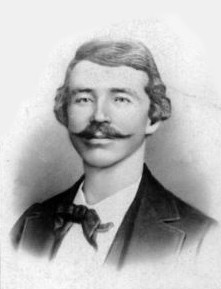
William Clarke Quantrill (July 31, 1837 – June 6, 1865) was a Confederate guerrilla leader during the American Civil War.

Key Information

Quantrill experienced a turbulent childhood, became a schoolteacher, and joined a group of bandits who roamed the Missouri and Kansas countryside to apprehend escaped slaves. The group became irregular pro-Confederate soldiers called Quantrill's Raiders, a partisan ranger outfit best known for its often brutal guerrilla tactics in defense of the Confederacy, and including the young Jesse James and his older brother Frank James.

Quantrill was influential to many bandits, outlaws, and hired guns of the American frontier as it was being settled. On August 21, 1863, Quantrill's Raiders committed the Lawrence Massacre. In May 1865, Quantrill was mortally wounded in combat by U.S. troops in Central Kentucky in one of the last engagements of the American Civil War. He died of his wounds in June 1865.

Early life

[edit]

William Quantrill was born at Canal Dover, Ohio, on July 31, 1837. His father was Thomas Henry Quantrill, formerly of Hagerstown, Maryland, and his mother, Caroline Cornelia Clark, was a native of Chambersburg, Pennsylvania. William was the oldest of twelve children, four of whom died in infancy.[1] Quantrill taught school in Ohio when he was sixteen.[2] In 1854, his abusive father died of tuberculosis, leaving the family with a huge financial debt. Quantrill's mother turned the home into a boarding house to survive. During this time, Quantrill helped support the family by working as a schoolteacher, but he left home a year later for Mendota, Illinois.[3]: 54  There, Quantrill worked in the lumberyards, unloading timber from rail cars.

Authorities briefly arrested him for murder, but Quantrill claimed he had acted in self-defense. Quantrill was set free since there were no eyewitnesses, and the victim was a stranger who knew no one in town. Nevertheless, the police strongly urged him to leave Mendota. Quantrill continued teaching, moving to Fort Wayne, Indiana, in February 1856. Quantrill journeyed back home to Canal Dover late that year.[3]: 55 

Quantrill spent the winter in his family's diminutive shack in the impoverished town and soon grew restless. Many Ohioans migrated to the Kansas Territory for cheap land and opportunity. This included Henry Torrey and Harmon Beeson, two local men hoping to build a large farm for their families out west. Although they mistrusted the 19-year-old Quantrill, his mother's pleadings persuaded them to let Quantrill accompany them to turn his life around.[citation needed] The party of three departed in late February 1857. Torrey and Beeson agreed to pay for Quantrill's land in exchange for Quantrill working for them. They settled along the Marais des Cygnes River, but a dispute arose over the claim, and Quantrill sued Torrey and Beeson. The court awarded Quantrill $63, but he was only paid half of this amount. Quantrill later attempted to rectify this by stealing oxen, firearms, and blankets from Beeson, but he was caught and returned the oxen and weapons; the blankets were not found until later, by which time they had rotted. Afterwards, Beeson became hostile towards Quantrill, but Quantrill remained friends with Torrey.[4]

Soon, Quantrill accompanied a large group of hometown friends in their quest to settle near Tuscarora Lake. However, neighbors soon began to notice Quantrill stealing goods out of other people's cabins and banished him from the community in January 1858.[citation needed] Soon thereafter, Quantrill signed on as a teamster with the US Army expedition heading to Salt Lake City, Utah in early 1858. Quantrill's journey out west is little known except that he excelled at poker. Quantrill racked up piles of winnings by playing the game against his comrades at Fort Bridger but lost it all on one hand, leaving him broke. Quantrill then joined a group of Missouri ruffians and became a drifter. The group helped protect pro-slavery Missouri farmers from the Jayhawkers for pay and slept wherever they could find lodging. Quantrill traveled back to Utah and then to Colorado but returned in less than a year to Lawrence, Kansas, in 1859[5] where he taught at a schoolhouse until it closed in 1860. Quantrill then partnered with brigands and turned to cattle rustling and anything else to earn him money. Quantrill also learned the profitability of capturing runaway slaves and devised plans to use free black men as bait for runaway slaves, whom he subsequently captured and returned to their enslavers in exchange for reward money.[citation needed]

Before 1860, Quantrill appeared to oppose slavery. He wrote to his good friend W.W. Scott in January 1858 that the Lecompton Constitution was a "swindle" and that James Henry Lane, a Northern sympathizer, was "as good a man as we have here". He also called the Democrats "the worst men we have for they are all rascals, for no one can be a democrat here without being one".[6] However, in February 1860, Quantrill wrote a letter to his mother that expressed his views on the anti-slavery supporters. Quantrill told her that slavery was right and that he detested Jim Lane. He said that the hanging of John Brown had been too good for him and that "the devil has got unlimited sway over this territory, and will hold it until we have a better set of man and society generally."[7]

Guerrilla leader

[edit]

In 1861, Quantrill went to Texas with Marcus Gill. They met Joel B. Mayes and joined the Cherokee Nations. Mayes, of mixed Scots-Irish and Cherokee descent, was a Confederate sympathizer and a war chief of the Cherokee Nations in Texas. Mayes had moved from Georgia to the old Indian Territory in 1838. Mayes enlisted and served as a private in Company A of the 1st Cherokee Regiment in the Confederate army. Mayes taught Quantrill guerrilla warfare tactics, ambush fighting tactics used by Native Americans, camouflage, and sneak attack tactics. Quantrill, in the company of Mayes and the Cherokee Nations, joined with General Sterling Price and fought at the Battle of Wilson's Creek and First Battle of Lexington in August and September 1861.[8]

In late September Quantrill went to Blue Springs, Missouri, to form his own partisan unit made of loyal men who had great belief in him and the Confederate cause, and they came to be known as "Quantrill's Raiders". By Christmas 1861, ten men followed Quantrill full-time in his pro-Confederate guerrilla organization:[3][page needed] William Haller, George Todd, Joseph Gilcrist, Perry Hoy, John Little, James Little, Joseph Baughan, William H. Gregg, James A. Hendricks, and John W. Koger. Later, in 1862, John Jarrett, John Brown (not to be confused with the abolitionist John Brown), Cole Younger, William T. "Bloody Bill" Anderson, and the James brothers would join Quantrill's army.[9] On March 7, 1862, Quantrill and his men attacked a small US Army outpost in Aubry, Kansas, and ransacked the town.[10]

On March 11, 1862, Quantrill joined Confederate forces under Colonel John T. Hughes and took part in an attack on Independence, Missouri. After what became known as the First Battle of Independence, the Confederate government decided to secure the loyalty of Quantrill by issuing him a "formal army commission" to the rank of captain.[11]

In the early hours of September 7, 1862, William Quantrill and a force of 140 men seized control of Olathe, Kansas, capturing 125 US Army soldiers.[12] On October 5, 1862, Quantrill attacked and destroyed Shawneetown, Kansas; William T. Anderson soon revisited and torched the rebuilding settlement.[13] On November 5, 1862, Quantrill joined Colonel Warner Lewis to stage an attack on Lamar, Missouri, where a company of the 8th Regiment Missouri Volunteer Cavalry protected a US Army outpost. Warned about the attack, the US soldiers repelled the raiders, who torched part of the town before they retreated.[14]

Lawrence Massacre

[edit]

The most significant event in Quantrill's guerrilla career occurred on August 21, 1863. Lawrence had been seen for years as the stronghold of the antislavery forces in Kansas and as a base of operation for incursions into Missouri by Jayhawkers and pro-Union forces. It was also the home of James Henry Lane, a US senator known for his staunch opposition to slavery and a leader of the Jayhawkers.

During the weeks immediately preceding the raid, US Army General Thomas Ewing, Jr., ordered the detention of any civilians giving aid to Quantrill's Raiders. Several female relatives of the guerrillas were imprisoned in a makeshift jail in Kansas City, Missouri. On August 14, the building collapsed, killing four young women and seriously injuring others. Among the dead was Josephine Anderson, the sister of one of Quantrill's key guerrilla allies, Bill Anderson. Another of Anderson's sisters, Mary, was permanently crippled in the collapse. Quantrill's men believed the collapse was deliberate, which infuriated them.

Some historians have suggested that Quantrill planned to raid Lawrence before the building's collapse, in retaliation for earlier Jayhawker attacks[15][page needed] as well as the burning of Osceola, Missouri.

Early in the morning of August 21, Quantrill descended from Mount Oread and attacked Lawrence with a combined force of 450 guerrilla fighters. Lane, a prime target of the raid, managed to escape through a cornfield in his nightshirt, but the guerrillas, on Quantrill's orders, killed around 150 men and boys who could carry a rifle.[16] When Quantrill's men rode out at 9 a.m., most of Lawrence's buildings were burning, including all but two businesses.

On August 25, in retaliation for the raid, General Ewing authorized General Order No. 11 (not to be confused with General Ulysses S. Grant's order of the same name). The edict ordered the depopulation of three and a half Missouri counties along the Kansas border except for a few designated towns, which forced tens of thousands of civilians to abandon their homes. Union troops marched through behind them and burned buildings, torched planted fields, and shot down livestock to deprive the guerrillas of food, fodder, and support. The area was so thoroughly devastated that it was known as the "Burnt District".[17]

In early October, Quantrill and his men rode south to Texas, to pass the winter. On the way, on October 6, Quantrill attacked Fort Blair in Baxter Springs, Kansas, which resulted in the so-called Battle of Baxter Springs. After being repelled, Quantrill surprised and destroyed a US Army relief column under General James G. Blunt, who escaped, but Quantrill killed almost 100 US Army soldiers.[18]

In Texas, on May 18, 1864, Quantrill's sympathizers lynched Collin County Sheriff Captain James L. Read for shooting the Calhoun Brothers from Quantrill's force who had killed a farmer in Millwood, Texas.[19]

Final year

[edit]
The grave of Captain William Quantrill at Fourth Street Cemetery, Dover, Ohio.
The grave of Captain William Quantrill in Higginsville, Missouri.

While in Texas, Quantrill and his 400 men quarreled. His once-large band broke up into several smaller guerrilla companies. One was led by his lieutenant, "Bloody Bill" Anderson, and Quantrill joined it briefly in the fall of 1864 during a fight north of the Missouri River.

In early 1865, now leading only a few dozen bushwackers, Quantrill staged a series of raids in western Kentucky. Confederate General Robert E. Lee surrendered to Ulysses Grant on April 9, and General Joseph E. Johnston surrendered most of the rest of the Confederate Army to General Sherman on April 26. On May 10, the US Army caught up to Quantrill and his band in an ambush in Wakefield, Kentucky. While attempting to flee on a skittish horse, Quantrill was shot in the back and paralyzed from the chest down. The unit that successfully ambushed Quantrill and his followers was led by Edwin W. Terrell, a guerrilla hunter charged with finding and eliminating high-profile targets by General John M. Palmer, the commander of the District of Kentucky. US officials, Palmer and Governor Thomas E. Bramlette, did not wish to see Quantrill staging a repeat of his performance in Missouri in 1862–1863.[20] Quantrill was brought by wagon to Louisville, Kentucky, and taken to the military prison hospital on the north side of Broadway at 10th Street. He died from his wounds on June 6, 1865, at the age of 27.[21]

Burial

[edit]

Quantrill was buried in an unmarked grave in what became known as St. John's Cemetery in Louisville. A boyhood friend of Quantrill, the newspaper reporter William W. Scott, claimed to have dug up the Louisville grave in 1887 and brought Quantrill's remains back to Dover at the request of Quantrill's mother. The remains were supposedly buried in Dover in 1889, but Scott attempted to sell what he said were Quantrill's bones, so it is unknown if the remains he returned to Dover or buried in Dover were genuine. In the early 1990s, the Missouri division of the Sons of Confederate Veterans convinced the Kansas State Historical Society to negotiate with authorities in Dover, which led to three arm bones, two leg bones, and some hair, all of which were allegedly Quantrill's, being re-buried in 1992 at the Old Confederate Veteran's Home Cemetery in Higginsville, Missouri. As a result, there are grave markers for Quantrill in Louisville, Dover, and Higginsville.[22]

Claims of survival

[edit]

In August 1907, news articles appeared in Canada and the US that claimed that J.E. Duffy, a member of a Michigan cavalry troop that had dealt with Quantrill's raiders during the war, met Quantrill at Quatsino Sound on northern Vancouver Island, while he was investigating timber rights in the area. Duffy claimed to recognize the man, living under the name of John Sharp, as Quantrill. Duffy said that Sharp admitted he was Quantrill and discussed raids in Kansas and elsewhere in detail. Sharp claimed that he had survived the ambush in Kentucky but received a bayonet and bullet wound, making his way to South America, where he lived some years in Chile. He returned to the US and worked as a cattleman in Fort Worth, Texas. He then moved to Oregon, acting as a cowpuncher and drover, before he reached British Columbia in the 1890s, where he worked in logging, trapping, and finally as a mine caretaker at Coal Harbour at Quatsino. Within weeks after the news stories were published, two men came to British Columbia, traveling to Quatsino from Victoria, leaving Quatsino on a return voyage of a coastal steamer the next day. On that day, Sharp was found severely beaten and died several hours later without giving information about his attackers. The police failed to solve the murder.[23]

Another legend that has circulated claims that Quantrill may have escaped custody and fled to Arkansas, where he lived under the name of L.J. Crocker until he died in 1917.[24]

The family of Major Cornelius Boyle believed that Quantrill had actually served as a bodyguard for the Provost Marshal General when he visited Mexico after the war, while Jubal Early was also in the country as they sought out an alternate resolution.[25]

Personal life

[edit]

During the war, Quantrill met the 13-year-old Sarah Katherine King at her parents' farm in Blue Springs, Missouri. They never married, although she often visited and lived in camp with Quantrill and his men. At the time of his death, she was 17.[citation needed]

Legacy

[edit]
The reunion of Quantrill's Raiders was c. 1875.

Quantrill's actions were barbaric. Historians view him as an opportunistic, bloodthirsty outlaw. James M. McPherson, one of the most prominent experts on the American Civil War, calls Quantrill and Anderson "pathological killers" who "murdered and burned out Missouri Unionists".[26] The historian Matthew Christopher Hulbert argues that Quantrill "ruled the bushwhacker pantheon" established by the ex-Confederate officer and propagandist John Newman Edwards in the 1870s to provide Missouri with its own "irregular Lost Cause".[27] Some of Quantrill's celebrity later rubbed off on other ex-Raiders, such as John Jarrett, George and Oliver Shepherd, Jesse and Frank James, and Cole Younger, who went on after the war to apply Quantrill's hit-and-run tactics to bank and train robbery.[28]

[edit]

Film

[edit]

Literature

[edit]

Other

[edit]

References

[edit]

Further reading

[edit]
[edit]
Revisions and contributorsEdit on WikipediaRead on Wikipedia
from Grokipedia

William Clarke Quantrill (July 31, 1837 – June 6, 1865) was an American outlaw and Confederate guerrilla leader during the American Civil War, best known for commanding Quantrill's Raiders in brutal partisan warfare along the Kansas-Missouri border. Born in Canal Dover, Ohio, to a Methodist family, Quantrill drifted westward as a young man, working as a schoolteacher and teamster before turning to criminal activities such as horse theft and cattle rustling in Utah Territory and Texas. By 1861, amid escalating border conflicts between pro-Union Jayhawkers and pro-Confederate Bushwhackers, he aligned with the Southern cause, forming a guerrilla band that operated irregularly under Confederate auspices and included future figures like Jesse and Frank James and the Younger brothers.
Quantrill's most infamous action was the August 21, 1863, raid on —a stronghold of abolitionists and Union supporters—where approximately 450 raiders killed between 150 and 200 unarmed men and boys, looted businesses, and burned about one-quarter of the town, destroying an estimated $2 million in property (equivalent to over $40 million today). This massacre, framed by Quantrill as retaliation for Union General Thomas Ewing's Order No. 11—which forcibly evacuated rural counties and destroyed homes of suspected Confederate sympathizers—and earlier depredations, nonetheless targeted non-combatants indiscriminately, fueling cycles of reprisal that characterized the region's . His band's tactics, blending combat against Union troops with civilian atrocities, earned Quantrill a commission as captain in the Confederate army but also vilification as a terrorist by Union authorities, who offered rewards for his capture. As the war progressed, internal fractures splintered Quantrill's command, with subordinates like "Bloody Bill" Anderson pursuing even more savage independent operations; Quantrill himself shifted east to in late 1864, where on May 10, 1865, he was mortally wounded in a skirmish with Union near Taylorsville and died shortly after in Louisville. Quantrill's legacy remains polarizing: hailed by some Southern sympathizers as a defender against Northern aggression in a theater where conventional rules of war often collapsed, yet condemned broadly for embodying the unchecked violence that claimed thousands of civilian lives in the Trans-Mississippi borderlands.

Early Life and Pre-War Years

Birth and Family in Ohio

William Clarke Quantrill was born on July 31, 1837, in Canal Dover (present-day Dover), . He was the eldest of eight children born to Thomas Henry Quantrill, a by trade who also served as principal of the Canal Dover Union School, and Caroline Clarke Quantrill, whose family background included English roots. The Quantrill family resided in a modest household in the canal town, where Thomas initially worked in education before financial difficulties prompted a shift to other pursuits; he died in 1849, leaving Caroline to raise the children amid economic hardship. Caroline, a devout Methodist, instilled strict in her children, emphasizing moral discipline, though historical accounts note William's early rebellious tendencies contrasted with this upbringing.

Education, Occupations, and Western Migration

Quantrill received a in public schools, influenced by his father , a classical who occasionally taught. By age 16 in 1853, he secured a position as a schoolteacher in Stanton, , leveraging his early skills despite limited formal training beyond primary levels. His father's death from in 1849, when Quantrill was 12, imposed financial strain on the family, prompting him to supplement income through teaching and odd jobs such as farm labor in and nearby states. He taught intermittently in and possibly during the early , though records of sustained employment remain sparse and tied to short-term rural school terms. Seeking opportunity amid economic pressures, Quantrill migrated westward in 1857 to , initially working as a and drover hauling goods along trails. In 1858, he joined the U.S. Army's Utah Expedition during the as a civilian transporting supplies, but deserted after several months to pursue independent ventures including at military outposts. This pattern of mobility continued as he drifted through , engaging in transient occupations like prospecting and stock handling, before returning to the Kansas-Missouri border by 1860.

Early Criminal Allegations and Border Tensions

In 1858, Quantrill joined an army provision train bound for during the , where he engaged in criminal activities including thefts and murders near and . By 1860, a warrant was issued against him for horse stealing in the territory, prompting his flight back to . Returning to the Kansas-Missouri border region, Quantrill adopted aliases such as Charley Hart and aligned with pro- border ruffians, participating in the capture of fugitive slaves for bounty rewards while living among the Indians north of the . These activities occurred amid escalating pre-Civil War tensions in "," where rival factions—anti-slavery Free-Staters and pro-slavery settlers from —committed mutual depredations, including raids, thefts, and killings over territorial status following the Kansas-Nebraska Act of 1854. A pivotal incident unfolded in December 1860, when Quantrill betrayed a party of abolitionists led by Morgan Walker, who aimed to liberate slaves on a farm in western ; he guided them into an ambush by pro-slavery forces, resulting in the deaths of three men and the capture of others. This act of duplicity exemplified the lawless opportunism and factional violence characterizing the border strife, as Quantrill shifted allegiances for personal gain amid the breakdown of civil order. By early 1861, Quantrill faced indictments in , for horse theft, cattle rustling, and related offenses tied to his border ruffian associations; after brief imprisonment in Lawrence, he posted bail on April 3 and absconded southward to with a slaveholder companion, evading trial. These criminal pursuits, intertwined with the polarized debates and retaliatory skirmishes along the Kansas-Missouri line, foreshadowed his recruitment into Confederate as sectional conflict intensified.

Guerrilla Warfare in the Missouri-Kansas Border Conflict

Historical Context of Bleeding Kansas and Mutual Atrocities

The , signed into law on May 30, 1854, organized the Kansas and Nebraska territories and introduced the principle of , allowing residents to vote on whether to permit , thereby repealing the of 1820 that had prohibited north of 36°30′ parallel. This shift intensified sectional tensions, prompting organized migrations: pro- settlers, often called Border Ruffians from neighboring , crossed into to influence elections and territorial legislature through illegal voting and intimidation, while anti- Free-Staters, supported by Emigrant Aid Company expeditions, established strongholds like Lawrence to secure a free . Violence erupted almost immediately after the territory's organization on May 29, 1854, with disputed elections in 1854 and 1855 marred by fraud; pro- forces claimed a legislative victory in 1855, leading to a bogus at Lecompton that favored , though contested by Free-Staters who formed a rival government at Topeka. characterized the period from 1855 to 1859, known as , involving raids, assaults, and murders by irregular bands on both sides: Border Ruffians conducted cross-border incursions to enforce pro- dominance, while Kansas Jayhawkers—armed Free-State militants—responded with retaliatory thefts and attacks into , targeting slaveholders and sympathizers. A cycle of mutual atrocities escalated in 1856. On May 21, approximately 800 pro-slavery militiamen, led by Douglas County Sheriff Samuel J. Jones, sacked Lawrence, destroying Free-State presses, hotels, and homes with minimal casualties—one accidental death among the attackers—but symbolizing organized suppression of anti-slavery voices. In direct retaliation, abolitionist John Brown and a small band murdered five pro-slavery settlers along Pottawatomie Creek on May 24–25, using broadswords to hack and decapitate victims, including James Doyle and his sons, before shooting them, an act that ignited further reprisals and guerrilla ambushes. Jayhawkers under leaders like Charles Jennison later perpetrated thefts and burnings in Missouri border counties, while Border Ruffians responded with similar depredations, fostering a shadow war of personal vendettas that blurred military and civilian targets. Overall, resulted in an estimated 55 to 200 deaths from between 1854 and 1861, with documented cases including 56 direct killings amid broader skirmishes, though both sides exaggerated casualties for to rally Northern or Southern support. This border conflict prefigured Civil War divisions, hardening animosities along the Missouri–Kansas line where persisted, with pro-Confederate bushwhackers eventually countering Unionist jayhawking as formal armies mobilized.

Formation of Quantrill's Raiders and Confederate Commission

In late 1861, following his service in the Confederate Army at the Battles of Wilson's Creek on August 10 and Lexington from September 12–20, William Quantrill deserted his unit and began organizing a small band of pro-Confederate guerrillas in western to conduct against Union forces and sympathizers along the Kansas- border. This group, initially comprising local Missourians resentful of Unionist "jayhawker" raids from , operated as using ambush tactics to target patrols and civilians perceived as threats to Southern interests. Quantrill claimed personal motivation from alleged attacks on his family by , though evidence for such incidents, including the existence of a brother killed, remains unconfirmed. By early 1862, the band had expanded to include notable recruits such as William T. "Bloody Bill" Anderson and the James and Younger brothers, growing into a force of up to 200 men focused on hit-and-run operations amid the escalating border violence. The Raiders gained formal Confederate recognition after their successful role in capturing , on August 10–11, 1862, an action that demonstrated their effectiveness against Union garrisons. On August 11, Quantrill received a field promotion to captain from Confederate Colonel , formalizing the group's status as an authorized partisan unit, though Union authorities promptly declared them outlaws exempt from prisoner-of-war protections. Four days later, Confederate General issued further authorization, integrating the Raiders into the Southern military structure and enabling them to draw supplies and recruits under official auspices. This commission, dated to August 1862 overall, transformed the irregular band into a semi-official Confederate troop, allowing Quantrill to expand operations while maintaining operational independence from conventional army discipline.

Initial Raids and Skirmishes Against Union Forces

Following his participation in the Battles of Wilson's Creek on August 10, 1861, and Lexington on September 20, 1861, as part of regular Confederate forces, William Quantrill transitioned to independent guerrilla operations in late 1861, organizing a small band of approximately a dozen men in . This group initially focused on against Union patrols and supply lines along the Missouri-Kansas , avoiding large-scale confrontations while disrupting federal control in pro-Confederate areas. One of the earliest documented actions occurred on March 7, 1862, when Quantrill led his guerrillas across the border into , for a raid on the town of Aubry, which housed a small Union military post. The band looted stores, drove off , burned buildings, and killed three citizens in the attack, carrying away significant plunder before withdrawing to . This operation marked Quantrill's first organized incursion into as a guerrilla leader, targeting Union-aligned settlements and foreshadowing his escalating border warfare. Throughout spring and summer 1862, Quantrill's growing force—numbering up to 200 men by mid-year—conducted multiple skirmishes near Kansas City, , and other frontier outposts, ambushing Union foraging parties and scouts to seize weapons, horses, and intelligence. These actions included support for Confederate offensives, such as the Second Battle of on August 11, 1862, where Quantrill's riders harassed Union reinforcements and contributed to the capture of a federal garrison of about 300 troops. A subsequent engagement at the Battle of Lone Jack on September 30, 1862, saw his band fight alongside regular Confederate units, inflicting casualties on Union forces before federal counterattacks dispersed the attackers. In the early hours of September 7, 1862, Quantrill escalated with a bold nighttime assault on , deploying around 140 men to overrun a Union camp, capturing and paroling 125 federal soldiers while looting the town for supplies and arms. These initial operations against Union military targets honed the Raiders' tactics of rapid mobility and surprise, yielding matériel gains but also drawing intensified federal pursuit, as Quantrill's commissions from Confederate authorities formalized his partisan status amid the border's chaotic .

Major Military Operations

Planning and Execution of the Lawrence Raid

In mid-August 1863, William Quantrill convened with his lieutenants, including George Todd and William "Bloody Bill" Anderson, to coordinate the raid on Lawrence, Kansas, assembling roughly 400 to 450 Confederate guerrillas from scattered bands in western Missouri. The operation stemmed from long-simmering border warfare grievances, including Union Jayhawker raids into Missouri such as the sacking of Osceola in September 1861, but gained urgency after the August 14 collapse of a Kansas City jail holding female relatives of the raiders, which killed at least four women affiliated with the group. Quantrill's force, lacking formal Confederate orders for the specific action but operating under a general guerrilla commission, gathered near Pleasant Hill, Missouri, before marching southwest across the Kansas border, camping briefly near Aubrey to evade detection, and advancing under cover of darkness to approach Lawrence from the south and west. At approximately 5:00 a.m. on August 21, 1863, the raiders surged into Lawrence, initially overwhelming a small group of unmustered Union recruits on the outskirts and killing 17 of 22 men in a brief skirmish. Quantrill divided his command into smaller detachments to systematically cover the town's streets and neighborhoods, with orders to target adult males and older boys—sparing women and children—while ransacking homes, looting stores, and torching buildings housing Free-State sympathizers and abolitionist leaders. Raiders inquired after prominent figures like Senator James H. Lane, who fled into a and escaped, and ignited major structures including the Eldridge hotel; by 9:00 a.m., much of the central business district and residences lay in ruins, with property damage estimated at $1 to $1.5 million. The attackers killed between 160 and 190 unarmed men and boys in door-to-door executions and street shootings, leaving 85 widows and rendering the town defenseless as most able-bodied males were absent on military duty. Only one raider, Larkin Skaggs, died during the four-hour assault, shot while pursuing a defender; the guerrillas withdrew southward with stolen horses, wagons, and valuables, evading immediate Union pursuit amid the chaos. This calculated guerrilla tactic exploited Lawrence's vulnerability as an abolitionist hub, amplifying the raid's terror but also escalating the cycle of retaliatory violence in the Missouri-Kansas .

Casualties, Retaliation Cycle, and Strategic Impact

The Lawrence Raid resulted in the deaths of approximately 150 to 200 unarmed men and boys, primarily targeted as perceived Union sympathizers or abolitionists, with estimates varying across contemporary accounts and historical analyses; the records 150 Union casualties, while other records cite 182 specific executions. No women or children were deliberately killed, though some perished in fires set to around 185 buildings, causing estimated at $1 to $1.5 million in 1863 dollars. On the Confederate side, Larkin Skaggs was the only raider killed during the withdrawal, with his body mutilated by locals. In direct retaliation, Union Brigadier General issued No. 11 on August 25, 1863, mandating the evacuation of rural areas in Missouri's Jackson, Cass, Vernon, and Bates counties within 15 days, sparing only residents of Kansas City, , Harrisonville, and Westport who could prove loyalty to the Union. The order aimed to deny guerrillas , , and from civilian sympathizers, leading to the of tens of thousands and widespread destruction by Union troops and Jayhawkers, who burned farms and looted property, rendering the region a depopulated "" for months. This scorched-earth policy exacerbated civilian suffering on both sides, with artist later condemning it as tyrannical in his 1868 painting No. 11. The raid and subsequent order intensified the cycle of retaliatory violence along the Kansas-Missouri border, where prior Union depredations—such as the 1861 sacking of Osceola, Missouri—had already fueled Confederate guerrilla resentment, prompting Quantrill's action as payback. Order No. 11, while temporarily disrupting Raider logistics, inadvertently boosted recruitment for irregular Confederate units by alienating Missouri civilians and symbolizing Union overreach, contributing to sustained bushwhacker activity through 1864. Strategically, the raid achieved tactical surprise and terror but yielded no lasting military advantage for the Confederacy, as it hardened Union resolve, prompted federal reinforcements in Kansas, and failed to disrupt broader supply lines or shift Missouri's allegiance amid the Civil War's western theater stalemate. It exemplified the pitfalls of reciprocal savagery, escalating civilian-targeted warfare without altering the war's trajectory toward Union victory.

The Centralia Raid and Other Late-War Actions

On September 27, 1864, a band of approximately 80 Confederate guerrillas under the command of William T. "Bloody Bill" Anderson, a former lieutenant in , conducted a raid on . The group, which included notable figures such as and , intercepted a northbound train carrying about 100 passengers, including 23 unarmed soldiers of the 100th State Militia returning from . After robbing the passengers of valuables estimated at $900 and stripping the soldiers of their uniforms, the guerrillas executed the 23 captives by shooting them at close range, mutilated and scalped many of the bodies, and set fire to the train. Later that afternoon, Anderson's men ambushed a pursuing Union force of roughly 150 militia under Major A. V. E. Johnston, annihilating the column and killing 123 more troops in a brief engagement near the town; the guerrillas suffered no casualties and captured over 100 horses and weapons. This action, often termed the Centralia Massacre, resulted in approximately 147 Union deaths and exemplified the escalating brutality of in , though Quantrill himself was not present, as his command had fragmented earlier in the year. By mid-1864, Quantrill's Raiders had splintered due to internal disputes, Union pressure, and leadership rivalries, with subgroups under Anderson, George Todd, and others operating semi-independently while loosely aligned with Confederate objectives. Quantrill, leading a diminished force, sustained a wound in a skirmish near Chapel Hill, , in May 1864, which temporarily sidelined him. Remnants of the Raiders supported General Sterling Price's Confederate invasion of in October 1864, participating in skirmishes such as the October 20 engagement near Fayette, where Todd's faction clashed with Union militia, killing several defenders and briefly occupying the town before withdrawing. These actions disrupted Union supply lines and boosted Confederate morale amid Price's broader campaign, which ultimately failed but tied down federal resources. In late 1864, Quantrill shifted operations eastward, crossing into Kentucky by November or December to evade intensified Union pursuits in Missouri and seek formal Confederate recognition. Commissioned as a captain in the 4th Missouri Cavalry, he led a small band of two to three dozen men in raids across central and western Kentucky from January to May 1865, targeting Union garrisons, couriers, and sympathizers in a bid to harass federal forces until the war's end. These forays, including ambushes near Taylorsville and Bardstown, yielded minor successes such as captured horses and supplies but drew sharp Union retaliation, culminating in Quantrill's mortal wounding on May 10, 1865, at Wakefield Farm in Spencer County. The Kentucky operations marked Quantrill's final efforts to sustain guerrilla warfare post-Appomattox, reflecting a tactical adaptation to shrinking Confederate prospects in the Trans-Mississippi theater.

Death, Identification, and Immediate Aftermath

Final Engagement at Spencer Farm

On May 10, 1865, remnants of Quantrill's disbanded guerrilla band, reduced to approximately six to eight men including Quantrill himself, Clark Hockensmith, Dick Glasscock, William Noland, Henry Noland, and John Ross, sought shelter in a barn on the farm of James H. in Spencer County, , during a heavy rainstorm. Lulled by the weather, the group posted no sentries, leaving them vulnerable to detection. A Union guerrilla unit under Captain Edwin Terrell, comprising irregular scouts tasked with hunting Confederate holdouts, located the barn and initiated an . As Terrell's men— including Ben Kirkpatrick, Horace Allen, and John Langford—closed in, John Ross spotted them during a corncob-throwing diversion and raised the alarm. Quantrill ordered a mounted charge to break out, but his stirrup strap snapped, throwing him to the ground where he was exposed to close-range fire from three Union soldiers. He sustained a to the hand, severing a finger, and a second bullet struck near his left shoulder blade, lodging in his spine and causing immediate paralysis from the waist down. The skirmish resulted in heavy losses for Quantrill's men: Hockensmith, Glasscock, and the Noland brothers were killed outright, while survivors scattered or surrendered in the ensuing chaos. No Union casualties were reported in the brief exchange. Terrell's forces initially overlooked the paralyzed Quantrill amid the fighting but returned to capture him after discovering his identity; he was transported first to Wakefield's house for initial care, then to a in Louisville. This engagement marked one of the final actions involving Confederate guerrillas post-Appomattox, as Quantrill's band had been evading federal pursuit through central after the war's formal end.

Wounds, Death, and Initial Burial Disputes

On May 10, 1865, Quantrill and a small remnant of his guerrilla band, numbering about 15 men, were surprised by a detachment of Union cavalry from the 15th New York Cavalry near Taylorsville in Spencer County, , while encamped at a farm (variously identified as Spencer Farm or Wakefield Farm). During the ensuing skirmish, as Quantrill attempted to mount his horse and flee through a wooded draw, he sustained a severe to the lower spine or upper back, which left him paralyzed from the waist down and caused extensive internal damage. Union forces captured him alive but incapacitated; he was initially treated at a before being transported under guard to the U.S. Military Prison Hospital in , where complications from the wound, including infection and mobility loss, deteriorated his condition over the following weeks. Quantrill lingered in agony until June 6, 1865, when he succumbed to his injuries at age 27 in the Louisville hospital; contemporaneous accounts describe his final days as marked by , requests for , and a reported conversion to Catholicism facilitated by a local . The cause of death was officially attributed to the gunshot trauma and ensuing medical complications, with no evidence of additional wounds inflicted post-capture. His passing concluded one of the final guerrilla actions of the Civil War, as organized Confederate resistance had collapsed with Lee's surrender in April. Immediate burial arrangements sparked disputes rooted in Quantrill's polarizing reputation as a notorious raider, with Union authorities and civilians fearing his could become a site for , trophy-hunting by soldiers, or by Southern sympathizers. To avert such risks, the attending Catholic priest interred him in an within St. Mary's Catholic Cemetery in Louisville, initially under a tree in the cemetery yard, concealing the exact location to prevent interference. This secretive disposal reflected pragmatic concerns over —common for high-profile Confederate figures—but also elicited quiet contention among Quantrill's surviving associates, who lacked means to claim or transport the remains amid ongoing Union occupation. No verified records confirm attempts to exhume or relocate the body during the immediate postwar period, though the unmarked status fueled early rumors of misidentification or survival that persisted into later decades.

Posthumous Controversies

Reburials and Grave Identifications

Following Quantrill's death on June 6, 1865, and initial burial in an at St. Mary's Cemetery in , his remains were exhumed on , 1887, by his mother, Caroline Quantrill, and associate William W. Scott. The identification relied on a chipped molar known to Quantrill, with the bones placed in a zinc-lined , though Scott retained the and five other bones. In 1889, portions of the remains were reburied in an in the Fourth Street Cemetery in Dover, —Quantrill's birthplace—with a private service attended by fewer than six people. Scott's retention of the skull led to further dispersals and disputes; he attempted to sell it to the Kansas State Historical Society in 1888 but kept it, later passing it to the fraternity around 1905, where it was used in rituals until 1942. Three arm bones and a were sold to the Kansas State Historical Society in 1903, while the was donated to the Dover Historical Society in 1972. These actions fragmented the remains, fueling ongoing questions about authenticity and complete reinterment, as historical chain-of-custody records from sympathizers formed the primary evidence without modern forensic corroboration at that stage. In 1992, efforts to consolidate and honor the remains culminated in dual reburials amid local controversies over Quantrill's violent legacy. On October 24, five bones and the lock of hair were interred with military honors at the Confederate Veterans Cemetery in Higginsville, Missouri, organized by the Sons of Confederate Veterans and attended by over 300 people, establishing a site aligned with Confederate guerrilla commemorations. Six days later, on October 30, the skull was reburied in a child's fiberglass coffin in Dover's Fourth Street Cemetery by the Dover Historical Society, with 22 attendees, preserving the Ohio family plot connection. Verifications drew on the 1887 dental identification and documented provenance, though debates persisted regarding the Louisville site's remains—marked in 2008 but unexhumed—and the absence of DNA testing, leaving some historians skeptical of full authenticity due to the era's informal handling. These reburials reflect divided regional perspectives, with Missouri emphasizing military service and Ohio familial ties, without resolving all claims to additional fragments.

Claims of Survival and Alternative Identities

Following Quantrill's reported death on June 6, 1865, in a Louisville military hospital from wounds sustained during a skirmish at Wakefield Farm in Spencer County, Kentucky, on May 10, 1865, sporadic claims surfaced alleging his survival and assumption of alternative identities to evade capture. These assertions typically hinge on purported inconsistencies in eyewitness accounts of his final engagement and the absence of forensic verification, such as autopsies or DNA analysis, available at the time. Biographer Edward E. Leslie, in his 2002 work The Devil Knows How to Ride, argued that "there is no incontrovertible, scientific proof that Quantrill died in Louisville," positing instead that the guerrilla leader may have escaped and lived out his days under an assumed name, potentially in relative obscurity post-war. One variant of these survival narratives places Quantrill in after faking his demise, where he allegedly resettled in remote areas like , , under a and died as an elderly man, possibly imparting a linking him to his past exploits. This claim, circulated in genealogical circles and anecdotal family lore, relies on unverified documents purportedly tying or vital records to Quantrill's physical description and aliases from his pre-war career, such as "Charles Hart," which he used while and in around 1858–1859. However, such stories lack primary documentation from Canadian archives or contemporary newspapers and are dismissed by most historians as conflations with other fugitives or romanticized . Additional fringe assertions, often amplified in informal discussions among Civil War enthusiasts, suggest Quantrill relocated domestically—potentially to or the Midwest—adopting identities like a or tradesman to blend into Reconstruction-era society, evading bounties and Union retribution. These draw from discrepancies in survivor testimonies from the Spencer County , where Quantrill's band of about a dozen men scattered, and initial reports variably described his wounds (e.g., spinal injury versus chest shot) without confirming identity via unique markers like scars or personal effects beyond a captured . Proponents cite the chaotic disbandment of guerrilla units in spring 1865, allowing for body substitutions, though no affidavits from alleged acquaintances have surfaced in reputable collections.

Debunking Persistent Myths

A persistent myth about the Lawrence Raid claims that Quantrill's men indiscriminately killed women and children in addition to adult males. Eyewitness accounts and subsequent historical reviews establish that the casualties consisted solely of 160 to 190 men and teenaged boys, selected for their ties to Union forces or raids; no women or children perished in the attack, though the violence left approximately 85 widows and orphaned many dependents indirectly. Equally enduring is the portrayal of the raid as gratuitous without contextual justification. The operation, executed on August 21, 1863, served as calculated retaliation for Union incursions into , notably the systematic burning and looting of on September 23, 1861, by U.S. Senator James H. Lane's Kansas Brigade, which razed the town and executed unarmed civilians, alongside the August 13, 1863, collapse of a Kansas City jail housing female relatives of guerrillas, killing four—including the sister of "Bloody Bill" Anderson—and injuring others, which galvanized Quantrill's band. Quantrill's legitimacy as a is often dismissed in favor of labeling him a common or bandit. Quantrill, however, organized his unit as Confederate partisans following service at Wilson's Creek on August 10, 1861, and earned a captain's commission after capturing on August 11, ; his tactics adhered to the framework of the Partisan Ranger Act passed by the Confederate Congress on April 21, , which sanctioned irregular forces for operations behind enemy lines, despite Union General Henry Halleck's order denying them prisoner-of-war status.

Personal Life and Leadership

Family Relationships and Marriages

William Clarke Quantrill was born on July 31, 1837, in Canal Dover (now Dover), Ohio, the eldest son of Thomas Henry Quantrill, a and part-time schoolteacher originally from , and Caroline Cornelia Clarke, a native of . Thomas Quantrill, who had emigrated from as a child, supported the family through intermittent teaching and tinsmithing amid financial instability, while Caroline managed household affairs and emphasized education for her children. The couple had at least eight children who survived infancy, including sons and James, and daughter Mary Ellen, though Quantrill's early family life was marked by his father's death from in 1854, which exacerbated economic pressures and prompted Quantrill to leave home at age 17 to seek work as a teacher and . Quantrill maintained limited documented contact with his mother and siblings after departing in the mid-1850s, with Caroline Quantrill later expressing toward her son's guerrilla fame in postwar correspondence, reportedly describing him as wayward but not disowning his Confederate service. No evidence indicates close ongoing relationships with siblings, who remained in or scattered amid the family's postwar circumstances; Quantrill's prewar letters home focused on personal ambitions rather than familial bonds. In late 1861, while operating in western , Quantrill met Sarah Katherine "Kate" King, born around 1848 near , the daughter of pro-Confederate farmer James King and his wife Elizabeth. King, approximately 13 years old at the time, became Quantrill's companion during his guerrilla campaigns, accompanying his band in camps and participating in their nomadic lifestyle for over three years; she later recounted in a 1926 Kansas City Star interview that they had decided to marry in spring 1861 after he protected her family's farm from Union forces, though no formal marriage record exists and contemporary accounts describe their union as informal or common-law. Historians note the relationship's controversy due to King's youth and lack of legal documentation, with some Union reports portraying it as coercive amid wartime chaos, while King herself insisted on its legitimacy until her death in 1930. The couple had no children, and King survived Quantrill, remarrying merchant John Wesley Clarke in 1870 and living quietly in thereafter. No other marriages or significant romantic relationships are verifiably attributed to Quantrill.

Character Traits, Motivations, and Command Style

William Clarke Quantrill exhibited a complex personality marked by opportunism and ruthlessness, traits evident in his early career as a adventurer who initially aided both Free-State and proslavery groups for personal gain before aligning with Confederate forces in 1861. He was enigmatic and prone to self-mythologizing, fabricating a narrative of his older brother's death at the hands of Union jayhawkers to foster among his followers, despite historical indicating no such existed and the story served primarily as a motivational tool rather than a factual basis for action. Quantrill's motivations were driven by a mix of personal grievances, opposition to antislavery extremism, and allegiance to the Confederate cause amid the brutal Kansas-Missouri border conflicts. In a January 1860 letter, he expressed contempt for abolitionist John Brown, reflecting his disdain for perceived antislavery violence that he associated with Unionist incursions into Missouri. His raids, including the August 21, 1863, where his band killed 160-190 men and boys, were framed as reprisals against Unionist sympathizers, though analyses suggest they stemmed less from ideological purity and more from retaliatory cycles of border warfare and opportunities for plunder. As a , Quantrill employed a charismatic yet decentralized style, personally leading daring strikes that inspired hundreds to join his irregular band, which grew to around 400 men by mid-1863 through shared hardships and promises of vengeance. He maintained discipline through example and narrative appeals but tolerated fragmentation, as subordinates like William "Bloody Bill" Anderson formed splinter groups after internal disputes, reflecting the fluid, autonomous nature of guerrilla operations rather than rigid . This approach emphasized mobility and terror over conventional tactics, enabling rapid raids but contributing to the band's reputation for atrocities against civilians.

Legacy and Historiographical Assessment

Confederate and Southern Perspectives on Guerrilla Effectiveness

Confederate military authorities in the formally recognized the value of Quantrill's irregular operations by commissioning him as a captain under the Partisan Ranger Act of April 21, 1862, integrating his band into sanctioned guerrilla activities to harass Union forces in and . This endorsement reflected the practical effectiveness of such units in a region where conventional Confederate armies faced severe logistical and numerical disadvantages, allowing small, mobile groups to disrupt Union supply lines, gather intelligence, and conduct ambushes with low risk to larger Southern formations. General Thomas Hindman, commanding Confederate forces in the area, authorized Quantrill's recruitment and operations as a means to counter Unionist militias and jayhawkers, viewing guerrillas as essential for maintaining Southern loyalty amid occupation. Quantrill's Raiders demonstrated tactical success through high-impact raids that inflicted significant casualties relative to their size; for instance, the August 21, 1863, Lawrence Raid involved approximately 450 men who killed 150 to 190 Union men and boys, burned over 200 buildings, and withdrew with only one fatality and few wounds, tying down Union resources in retaliation-prone border warfare. Southern accounts credit these actions with providing the Confederacy's primary military achievements in , where guerrillas like Quantrill's forced the Union to divert thousands of troops to internal security rather than frontline offensives, sustaining pro-Confederate resistance in an otherwise lost theater. General later requested operational reports from Quantrill to document such contributions, indicating command-level appreciation for their role in justifying irregular tactics against federal excesses. Among Southern sympathizers and post-war chroniclers, Quantrill was often hailed as a heroic defender whose bushwhacking preserved Southern honor and avenged atrocities like the earlier by Union forces in 1861, framing his command style as adaptive leadership in asymmetric conflict. Figures in Southern heritage narratives, such as those emphasizing retaliation against abolitionist aggression, portray his band's cohesion and marksmanship as key to demoralizing Union garrisons and inspiring recruits, with many Raiders transitioning to respected Confederate regular units or postwar roles. While expressed broader reservations about relying on guerrillas for national strategy, local Confederate perspectives prioritized their localized efficacy in prolonging resistance and exacting a human cost on invaders.

Union, Northern, and Mainstream Critiques

Union military authorities classified Quantrill's Raiders as unlawful combatants rather than recognized soldiers, denying them protections under the laws of war and authorizing summary execution upon capture. Following the August 21, 1863, raid on Lawrence, Kansas, where approximately 150-180 unarmed men and boys were systematically killed and much of the town burned, Union General Thomas Ewing Jr. issued General Order No. 11 on August 25, 1863, mandating the evacuation of rural areas in four Missouri counties to deprive guerrillas of civilian support and resources. This order reflected the Union command's assessment of Quantrill's operations as predatory banditry sustained by local sympathizers, rather than legitimate partisan warfare. Contemporary Union accounts condemned the Lawrence attack as a savage of non-combatants, executed with deliberate by "brutalized fiends" who dragged victims from homes and shot them in streets without resistance. Eyewitness reports and official dispatches emphasized the absence of military targets, portraying the raid as indiscriminate slaughter that created 80 widows and 250 orphans, unprecedented in its targeting of civilians in a free-state abolitionist center. Union officers, including Ewing, viewed Quantrill personally as a cunning opportunist who exploited Confederate commissions for plunder and revenge, having previously deserted regular forces and engaged in slave-catching and theft. Northern public and press reactions amplified these critiques, depicting Quantrill as a bloodthirsty murderer whose atrocities exemplified Confederate barbarism, justifying escalated Union countermeasures despite their own harshness. Reports in Northern papers highlighted the methodical house-to-house killings and , framing the event as vengeance disproportionate to prior Union actions like the collapse of a City jail holding female relatives of raiders, which killed four on August 13, 1863. In mainstream historiography, Quantrill is routinely characterized as an outlaw leader whose guerrilla bands devolved into terrorist operations, prioritizing personal vendettas and looting over strategic Confederate aims. Historian James M. McPherson, in assessing border warfare, portrays Quantrill as an opportunistic figure who aligned with the Confederacy primarily for license to plunder, commanding some of the war's most undisciplined and vicious irregulars. Scholarly analyses distinguish his tactics—such as death lists targeting Union sympathizers—from sanctioned warfare, labeling them criminal atrocities that eroded any claim to military legitimacy, even amid the irregular conflict's mutual savagery. This view persists in evaluations citing empirical records of civilian targeting, rejecting romanticized Southern narratives of heroism in favor of evidence-based condemnation of his command's causal role in escalating border violence.

Modern Debates: Terrorism vs. Asymmetric Warfare Patriotism

In contemporary historiography, William Quantrill's guerrilla operations, particularly the Lawrence Raid of August 21, 1863, which resulted in the deaths of approximately 150 to 183 unarmed men and boys and the destruction of much of the town, have sparked debate over whether they exemplify terrorism or patriotic asymmetric warfare. Critics framing Quantrill as a terrorist emphasize the deliberate targeting of non-combatants to instill fear and suppress Union sympathy in Kansas, a stronghold of anti-slavery Jayhawkers who had conducted raids into Missouri; this aligns with modern definitions of terrorism as violence against civilians for political coercion, as articulated in analyses of Civil War irregular conflict. For instance, some observers, including Kansas-based commentators, equate the raid's indiscriminate brutality with terrorist tactics, noting the absence of primary military objectives beyond retribution and intimidation. This perspective draws on Union-era accounts and post-war condemnations, amplified in modern contexts by parallels to non-state violence post-9/11, though such analogies often overlook the era's total war dynamics where both sides suspended restraints on civilian areas. Proponents of viewing Quantrill's methods as patriotism highlight the operational necessities faced by Confederate irregulars in occupied , where Union forces under generals like imposed harsh measures, including the exile of 20,000 residents via General Order No. 11 in August 1863, following Lawrence, and earlier incursions that burned homes and killed civilians. , operating as a mobile band of 400-450 men under loose Confederate sanction via the Partisan Ranger Act of April 21, 1862, employed to disrupt Union supply lines, protect Southern sympathizers, and retaliate against perceived atrocities, mirroring successful guerrilla strategies like those of in the Revolutionary War. Historians such as those examining 's border war argue that labeling such actions retroactively imposes anachronistic standards, ignoring how inherently blurs combatant lines in asymmetric conflicts against a superior conventional force; Quantrill's pre-raid targeted specific Unionist figures, though execution devolved into broader violence amid reciprocal escalations. This view posits his leadership as defensively patriotic, sustaining Confederate resistance in a theater where formal armies faltered, as evidenced by the Raiders' role in delaying Union advances through ambushes and gathering. The debate underscores tensions in interpreting Civil War guerrilla warfare, with academic sources often critiqued for Northern-leaning biases that de-emphasize Union excesses like the earlier sacking of Osceola in September 1861, which destroyed an entire town and killed dozens. While empirical records confirm Quantrill's band's commissions of atrocities exceeding typical irregular norms—such as executing prisoners and reveals a cycle of escalation driven by both sides' abandonment of proportionality, rendering strict classifications reductive without accounting for the context and lack of international oversight. Recent military studies, informed by lessons, advocate evaluating Quantrill through the lens of irregular efficacy rather than , noting his tactics' temporary disruption of Union control despite ultimate failure. Ultimately, the hinges on whether one prioritizes intent (retaliatory defense) or outcome (civilian terror), with no consensus among historians, as evidenced by divergent portrayals from terrorist archetypes to tactical innovators.

Representations in Culture and Media

Film and Television Portrayals

William Quantrill has appeared in various films and television productions, often depicted as a cunning and brutal Confederate guerrilla commander orchestrating raids during the , with many narratives centering on the 1863 . These portrayals frequently emphasize his role in along the Kansas-Missouri border, though they commonly take dramatic liberties with historical events and his personal motivations. In the 1940 film Dark Command, directed by Raoul Walsh, Walter Pidgeon plays William Cantrell, a fictionalized stand-in for Quantrill leading a band of raiders in pre-war ; the story portrays him as a charismatic yet increasingly fanatical figure descending into lawlessness amid rising sectional tensions. The film, loosely inspired by Quantrill's activities, features as a lawman opposing Cantrell's , highlighting themes of and in a fictionalized conflict. The 1950 Universal-International production , directed by Ray Enright, casts as Quantrill recruiting and mentoring young outlaws including () and the Younger brothers; Donlevy presents him as a cold, calculated strategist exploiting the chaos of . This depiction underscores Quantrill's influence on future bandits while framing his operations as vengeful Confederate resistance. Subsequent films like Red Mountain (1951) feature a fictionalized "General Quantrell" as an in a tale of Southern defiance, while The Woman They Almost Lynched (1953) shows Quantrill as clever and ruthless amid lawless border town intrigue. In Quantrill's Raiders (1958), directed by Edward Bernds, embodies Quantrill as a vicious gang leader plotting the Lawrence assault, opposed by a Confederate infiltrator (); the film climaxes with the raid's execution, portraying Quantrill's tactics as savage and opportunistic. Television depictions include the 1954 episode "Quantrill and His Raiders" from Stories of the Century, where Bruce Bennett plays Quantrill as a formidable raider chief targeted by railroad detectives ahead of the Lawrence attack; the story focuses on infiltration efforts to avert the massacre. Later, Ang Lee's Ride with the Devil (1999) portrays Quantrill's Raiders through protagonists loosely affiliated with figures like "Bloody Bill" Anderson, culminating in a graphic depiction of the Lawrence raid that acknowledges the era's moral ambiguities without centering Quantrill as a primary character. Across these works, Quantrill is routinely cast as an older, more menacing figure than his historical mid-20s age during peak operations, amplifying his image as a terrorist-like insurgent rather than a tactical partisan. Few productions explore Confederate sympathies for his methods, instead aligning with Union-era narratives of villainy.

, , and

Quantrill appears in several works of that dramatize the along the Missouri-Kansas border. In Max McCoy's I, Quantrill (2008), the narrative is presented from Quantrill's perspective as a hunted guerrilla leader reflecting on the Lawrence raid and his transformation from schoolteacher to . James Carlos Blake's Wildwood Boys (2000) features Quantrill prominently as a mentor figure to Bloody Bill Anderson in a biographical emphasizing the brutal personal vendettas driving Confederate partisans. Similarly, Call Me Charlie: A of a Quantrill Raider (2008) explores a young raider's internal conflict between loyalty to Quantrill's command and moral qualms amid the band's operations. Non-fictional accounts have shaped literary depictions by framing Quantrill's legacy. John Newman Edwards' Noted Guerrillas (1877) romanticized Quantrill and his raiders as chivalric avengers against Union oppression, influencing subsequent Southern narratives that portrayed them as folk champions rather than mere bandits. In contrast, William E. Connelley's Quantrill and the Border Wars (1909) critiqued him harshly as a psychopathic opportunist, a view echoed in later analytical works like Albert Castel's biography, which balanced tactical acumen with atrocity. Folk ballads have preserved Quantrill in , often glorifying his raids as righteous retribution. The traditional "Quantrill" , documented in collections like Malcolm Laws' Native American Balladry, recounts the August 21, 1863, Lawrence assault with lyrics summoning "bold robbers" to hear of Quantrill's band burning the town and pursuing Senator James , framing it as vengeance for depredations. Variants circulated in and by the 1920s, reflecting border-state animosities post-Kansas-Nebraska Act. Modern adaptations include The Dave Chastain Band's "Ballad of William Quantrill" (2001), a rock-infused retelling of his guerrilla strikes. In Southern , particularly Missouri border lore, Quantrill evolved into a mythic figure of daring resistance, with tales amplifying his escapes and raids into heroic exploits that thrilled generations. Raiders' annual reunions in persisted until 1929, cultivating a of honor among survivors and embedding Quantrill in local legends as a protector against Union "jayhawkers." Persistent myths include claims of his survival beyond 1865, with impostors surfacing into the to capitalize on his notoriety, underscoring a divide where some viewed him as a defender of Southern homes against federal incursions.

Documentary and Scholarly Depictions

Scholarly biographies portray William Quantrill as a ruthless yet tactically adept Confederate guerrilla leader whose actions exemplified the of the Kansas-Missouri border during the Civil War. Albert Castel's 1999 biography, William Clarke Quantrill, draws on verified primary sources to depict Quantrill as a figure driven by and , responsible for organizing raids that killed hundreds, including the August 21, 1863, where approximately 150 unarmed Union sympathizers perished, while emphasizing his band's disruption of Union supply lines and occupation of thousands of federal troops. Duane Schultz's 1996 work, Quantrill's War: The Life and Times of William Clarke Quantrill, 1837-1865, frames him as an unlikely amid cycles of and retaliation, highlighting how Union depredations like the October 1861 by forces provoked Quantrill's escalation, though it underscores the raid's disproportionate civilian toll without excusing it. Historiographical assessments have shifted from early Confederate sympathizers' glorification—such as John Newman Edwards' romanticized narratives of chivalric —to more critical modern analyses that view Quantrill's operations as opportunistic violence rather than structured . A 2014 U.S. Army analysis argues Quantrill's band prioritized plunder and personal vendettas over strategic Confederate goals, lacking the ideological cohesion of true guerrilla movements and resembling more than . Recent scholarship, including Joseph M. Beilein's A Man (2023), reexamines Quantrill through the lens of 19th-century manhood ideals, portraying his leadership as embodying masculinity amid chaos, where Union-sanctioned atrocities fostered reciprocal brutality, though academic sources often downplay Southern perspectives due to prevailing institutional biases against Confederate . Documentaries on Quantrill are limited and typically center on the Lawrence Raid's horrors rather than his full career, reflecting a focus on Union victimhood in mainstream productions. The 2007 film Bloody Dawn: The offers a detailed reenactment and historical account of the raid, stressing its savagery—raiders burned 200 buildings and targeted abolitionists like Charles L. Robinson—while noting contextual Union orders displacing civilians, praised for accuracy in costuming and detail by Civil War enthusiasts. Broader Civil War documentaries, such as segments in series covering , depict as emblematic of irregular warfare's descent into , with less emphasis on their role in pinning down Union forces estimated at 10,000-15,000 troops across the border region.

References

Add your contribution
Related Hubs
User Avatar
No comments yet.