Hubbry Logo
Applied artsApplied artsMain
Open search
Applied arts
Community hub
Applied arts
logo
8 pages, 0 posts
0 subscribers
Be the first to start a discussion here.
Applied arts
Applied arts
from Wikipedia
Examples of industrial designs
Examples of architecture
Examples of sculpture and metalworks
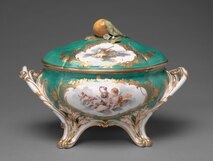
Examples of ceramic art and ceramic sculpture
Examples of fashion
Examples of furniture
Examples of glassware

The applied arts are all the arts that apply design and decoration to everyday and essentially practical objects in order to make them aesthetically pleasing.[1] The term is used in distinction to the fine arts, which are those that produce objects with no practical use, whose only purpose is to be beautiful or stimulate the intellect in some way. In practice, the two often overlap. Applied arts largely overlap with decorative arts, and the modern making of applied art is usually called design.

Examples of applied arts are:

Movements

[edit]

Art movements that mostly operated in the applied arts include the following. In addition, major artistic styles such as Neoclassicism, Gothic and others cover both the fine and applied or decorative arts.

Museums of Applied Arts

[edit]

See also

[edit]

References

[edit]

Further reading

[edit]
Revisions and contributorsEdit on WikipediaRead on Wikipedia
from Grokipedia
The term "applied arts," derived from the 19th-century French "arts appliqués," refers to the application of and decoration to practical objects in industrial and educational contexts. Applied arts encompass the creative application of aesthetic , decoration, and craftsmanship to functional objects intended for , such as furniture, ceramics, textiles, jewelry, and household items, thereby merging artistic expression with practical utility. This discipline distinguishes itself from fine arts, which prioritize intellectual or emotional contemplation without inherent functionality, and from crafts, which emphasize traditional handmade techniques over innovative for production, by focusing on objects that serve a purpose while enhancing visual appeal and . Key types include , , , , and , each integrating form and function to create aesthetically pleasing yet usable products. The practice has evolved from ancient origins through key movements like the Arts and Crafts and , as detailed in later sections. Contemporary applied arts continue to evolve with digital tools and sustainable practices, encompassing fields like (e.g., the Valencia Stool by Andreu World, 2023, made from recycled materials) and branding (e.g., Milton Glaser's "I ♥ NY" , 1977). These works highlight the discipline's enduring role in improving through innovative, aesthetically driven solutions, often blurring boundaries with fine arts in postmodern contexts.

Definition and Scope

Core Definition

Applied arts encompass the application of and decorative techniques to everyday functional objects, such as utensils, furniture, and , with the goal of enhancing their aesthetic qualities while preserving their practical utility. This integration of artistry and purpose distinguishes applied arts as a field where serves both and , often involving materials like clay, fabric, and metal to create items that are both durable and visually engaging. Central characteristics of applied arts include functionality as the core driver, ensuring objects remain effective for their intended use; skilled craftsmanship that demands technical expertise in production; aesthetic appeal that elevates ordinary items through harmonious form, pattern, and color; and cultural significance, as these works often embody societal traditions, values, and historical contexts. These elements ensure that applied arts not only meet practical needs but also contribute to the enrichment of daily life and . Representative examples illustrate this balance, such as pottery crafted for storage that features intricate glazing and motifs to combine utility with decoration, woven fabrics designed for clothing that incorporate patterns reflecting , and metalwork tools adorned with engravings to add elegance without compromising performance. The term "applied arts" emerged in the 19th century, particularly during the , to differentiate these utilitarian yet artistic practices from fine arts, which focus more on pure expression and contemplation.

Distinction from Fine Arts and Crafts

The fine arts are traditionally defined as creative works primarily valued for their aesthetic and intellectual qualities, rather than any practical function, emphasizing expression, contemplation, and beauty in forms such as and . This non-utilitarian focus distinguishes them from other artistic practices, positioning fine arts as autonomous expressions of individual and , often exhibited in galleries for appreciative viewing without regard to everyday use. In contrast, crafts emphasize skilled, hands-on production rooted in technical proficiency and , frequently resulting in anonymous or outputs like folk pottery, where the maker's identity is secondary to the object's reliable functionality and cultural continuity. Unlike the individualized artistry of fine arts, crafts prioritize mastery of materials and methods over personal innovation, often serving communal or utilitarian needs without elevating the creator's . Applied arts occupy a hybrid position, integrating artistic intention and aesthetic innovation into functional objects, bridging the expressive freedom of fine arts with the practicality of crafts through collaborative roles for designers and makers. This synthesis elevates everyday items—such as decorative ceramics or textiles—by infusing them with deliberate beauty and form, while maintaining their utility, thus challenging strict hierarchies between pure art and mere production. Philosophical debates underscore these boundaries, as seen in John Ruskin's advocacy for art's moral and aesthetic integration with utility, critiquing industrial-era designs that prioritized economic efficiency over harmonious beauty and human labor's dignity. Ruskin viewed , for instance, as a model where ornamental excess resisted reductive , promoting instead a "sacrificial" creativity that enriched functional forms. In the , movements like further blurred these lines through , merging fine arts' conceptual rigor with applied production to create mass-reproducible objects that embodied artistic principles. This evolution reflected broader societal shifts toward democratizing in , diminishing traditional separations.

Evolution of the Term

The concept of applied arts emerged in the mid-19th century within French and British intellectual and institutional discourse, driven by the rapid industrialization that necessitated a reevaluation of 's role in . In , the term "arts appliqués" gained prominence around the , reflecting efforts to integrate aesthetic principles into industrial production; this was exemplified by the founding of the Union Centrale des Beaux-Arts Appliqués à l'Industrie in 1864, an organization dedicated to advancing decorative and practical through and exhibitions. Similarly, in Britain, discussions on "" and "" intensified during the same period, as critics and reformers sought to elevate machine-made goods through artistic intervention amid concerns over mass production's aesthetic shortcomings. The 1851 in played a pivotal role in popularizing these ideas, showcasing over 100,000 objects from around the world that blended utility and ornamentation, thereby highlighting the need for purposeful in an . This event spurred institutional responses, such as the establishment of schools and in both nations, which formalized the distinction between fine arts and those applied to everyday objects. By the late , the terminology had spread across , with variations reflecting national contexts: "decorative arts" became standard in English-speaking regions to emphasize ornamental functionality, while in , "Kunstgewerbe" (artistic craft or applied art) emerged in the to describe the fusion of craft traditions with modern industry, as seen in the creation of Kunstgewerbemuseen ( of applied arts) like the one in founded in 1867. In the , the term "applied arts" was widely adopted in art education, particularly through the school's curriculum established in 1919 by , which integrated theoretical fine arts training with practical workshops in crafts like textiles, metalwork, and furniture to produce functional, aesthetically unified designs for modern life. This approach influenced global design , bridging traditional craftsmanship and . Contemporary understandings of applied arts have broadened to encompass digital media and sustainable practices, adapting to technological advancements and environmental imperatives; for instance, digital design tools now enable interactive and virtual applications, while sustainability frameworks emphasize eco-friendly materials and circular economies in fields like and .

Historical Development

Ancient Origins

The applied arts in their ancient origins trace back to prehistoric times, where functional objects were adorned with aesthetic elements, blending utility with symbolic expression. In and , some of the earliest evidence of decorated ceramics dates to around 29,000–25,000 BCE, as seen in the culture's ceramic figurines from sites like in the , where fired clay objects combined practical use with ritualistic designs such as incised patterns and animal motifs. These artifacts, often associated with early human settlements, illustrate how applied arts served both daily needs and spiritual purposes, with decorations reflecting environmental and cultural symbols. Similarly, in , pottery from the in , beginning around 14,000 BCE, featured cord-marked surfaces and intricate rope impressions on utilitarian vessels, highlighting the integration of form and function in nomadic and early sedentary societies. In , applied arts flourished around 3000 BCE during , with metalwork and jewelry exemplifying sophisticated craftsmanship for both ritual and everyday use. Gold and silver artifacts, such as the jewelry from the tomb of Queen Hetepheres, incorporated techniques like and to create amulets and collars symbolizing protection and status, often featuring motifs of scarabs and lotuses that conveyed religious and social meanings. These pieces were not merely decorative but integral to funerary practices and trade, influencing styles across the Mediterranean through exchanges with neighboring regions. Enameling techniques, though rudimentary, appeared in Egyptian glasswork and beads, where vitreous materials were fused to metal or clay bases to produce vibrant colors for beads and inlays, enhancing the aesthetic appeal of functional items like vessels and tools. Mesopotamian civilizations advanced applied arts through innovative glazing techniques from around 1500 BCE, with early glazed bricks from sites like exemplifying the use of colored ceramics in architectural elements to depict mythological scenes, combining durability with visual storytelling. In , from approximately 800 to 300 BCE, vase painting emerged as a hallmark of applied arts, where black-figure and red-figure techniques on vessels portrayed daily life, myths, and heroic tales, serving as both storage and narrative devices in symposia and . Wheel-thrown , a key technique refined by the Mycenaeans and adopted widely, allowed for symmetrical forms that facilitated while enabling detailed painted decorations, underscoring the role of routes in disseminating styles across the Aegean and beyond. These ancient practices highlight how applied arts encoded cultural symbolism into tools and objects, fostering exchanges that shaped regional without separating utility from artistry.

Medieval and Renaissance Periods

In medieval , from approximately 1100 to 1500 CE, craft guilds emerged as essential institutions regulating the production of applied arts, particularly in fields like goldsmithing and . These guilds, formed by artisans in urban centers such as , , and , protected members' economic interests, enforced quality standards, and controlled apprenticeships to maintain skill levels. Goldsmiths' guilds oversaw the creation of intricate jewelry, reliquaries, and liturgical objects using techniques like and enameling, often incorporating precious metals and gems for and noble commissions. Weavers' guilds, meanwhile, standardized production, from woolen cloths to luxurious silks, influencing across through regulated workshops that blended functional utility with decorative motifs inspired by local and imported patterns. Islamic artistic traditions exerted significant influence on European applied arts between c. 800 and 1500 CE, particularly through and cultural exchanges in the Mediterranean. Intricate tilework, featuring geometric interlaces, arabesques, and luster glazes, adorned mosques and palaces in regions like Persia, , and , with techniques such as firing allowing vibrant, durable polychrome designs. These innovations spread to Europe via Islamic , inspiring Iberian azulejos and later Italian ceramics. Similarly, hand-knotted carpets from workshops in and showcased dense pile weaves with floral and calligraphic motifs, often using and wool dyed in rich hues; prized as , they were imported to European courts, influencing local weaving patterns and floor coverings. During the , from c. 1400 to 1600 CE, applied arts in saw innovations that bridged medieval craftsmanship with humanistic ideals, emphasizing refined and classical revival. In , maiolica ceramics evolved as a hallmark of this period, with tin-glazed earthenware produced in centers like , , and ; potters refined Islamic-derived techniques to create opaque white grounds for painting in , copper green, and antimony yellow, yielding dishes, drug jars, and tiles with narrative scenes from mythology and daily life. French tapestry production flourished independently in workshops, where weavers crafted monumental and hangings, such as the Story of Diana series (ca. 1550), depicting elaborate courtly and allegorical subjects with advanced shading and perspective to suit palatial interiors. These developments built upon ancient and weaving methods but adapted them for greater expressive depth. Patronage by the church and drove much of this artistic output, funding works that enhanced religious devotion and secular prestige while gradually shifting toward personalized designs reflective of . Ecclesiastical commissions, such as gold-embossed chalices and woven altar hangings, sustained medieval , but by the , noble patrons like the Valois court in commissioned bespoke items—tapestries for châteaux and enameled metalwork for banquets—to symbolize power and cultural sophistication. This support fostered innovation, as seen in the transition from standardized guild motifs to tailored humanistic themes. A pivotal figure in metalwork was (1500–1571), a Florentine whose virtuosity elevated the craft through technical mastery and bold artistry. Employed by King from 1540 to 1545, Cellini created the renowned Saliera (golden saltcellar, 1540–1543), a sculptural masterpiece in gold, enamel, and ebony depicting mythological figures like and , which demonstrated advanced and narrative reliefs. His treatise Treatise on Goldsmithing and Sculpture (1568) documented techniques like and chasing, influencing subsequent generations and underscoring the applied arts' role in courtly display.

Industrial Revolution and Modernization

The , beginning in the late in Britain and spreading across , fundamentally transformed applied arts by shifting production from artisanal workshops to mechanized factories, enabling of decorative and functional objects. In the sector, innovations such as the steam-powered , introduced by in 1785 and refined through the , revolutionized by automating complex patterns previously achieved by hand, allowing for rapid output of fabrics with intricate designs that were once the domain of skilled craftsmen. This mechanization extended to other applied arts, including ceramics and metalwork, where steam engines powered kilns and presses, reducing costs and increasing accessibility but often at the expense of individuality and quality in design. By the mid-, Britain's cotton industry, fueled by these technologies, had become a global leader, exporting machine-produced adorned with ornamental motifs that blended traditional with industrial efficiency. The rise of machine production elicited strong critiques from artists and reformers who decried the dehumanizing effects on labor and the aesthetic decline of goods. , a pivotal figure in the , lambasted machine-made items for their shoddy craftsmanship and soulless uniformity, arguing in his writings that industrialization alienated workers from meaningful creation and flooded markets with inferior products that degraded public taste. Founding Morris, Marshall, Faulkner & Co. in 1861, he sought to revive handmade applied arts through designs emphasizing natural forms and honest materials, viewing mechanization as a barrier to artistic integrity and social well-being. This reaction highlighted a broader tension in applied arts, where efficiency clashed with the era's lingering appreciation for Renaissance-era of craftsmanship. The of 1851 at London's exemplified the era's embrace of industrialized applied arts while exposing their global dimensions, drawing over six million visitors to view 100,000 exhibits ranging from machinery to decorative manufactures. Organized by Prince Albert, the event showcased Britain's mechanical prowess alongside international contributions, featuring applied arts like ornate , glassware, and textiles that demonstrated how could democratize design, yet it also revealed inconsistencies in aesthetic standards across nations. This spectacle spurred design reform movements in the latter , such as the Museum's initiatives (now the V&A), which aimed to elevate through and standards, predating by promoting harmony between utility and beauty in everyday objects. Colonial expansion during this period influenced European applied arts through the appropriation of non-Western motifs, as imperial trade introduced exotic patterns from , , and the into machine-produced goods. British and French designers incorporated Indian paisley shawls and Japanese asymmetry into textiles and ceramics, often simplifying or hybridizing these elements for mass appeal without cultural , a practice critiqued as that exoticized colonized aesthetics to enhance marketability. This appropriation, evident in exported wares like pottery featuring Egyptian or Persian-inspired reliefs, underscored how industrialization amplified the global circulation of design influences while reinforcing European dominance.

Major Branches

Ceramics and Glassware

Ceramics and glassware represent enduring branches of applied arts, where functional objects are crafted from malleable earth-derived materials to serve both utilitarian and aesthetic purposes. Ceramics involve shaping and firing clay-based substances to create durable items like pottery and tiles, while glassware entails melting silica-rich compounds into fluid forms that solidify into transparent or colored vessels and panels. These mediums emphasize the interplay between material properties, craftsmanship, and cultural expression, with techniques refined over millennia to balance form, durability, and beauty. Key techniques in ceramics include , where clay is centered and shaped on a to form symmetrical vessels such as bowls and vases, and glazing, which applies a vitreous to bisque-fired ware before a final high-temperature firing to achieve and decorative sheen. Clay, the primary material, is a fine-grained, plastic sediment composed mainly of and other minerals, allowing for molding before at temperatures around 900–1300°C. In glassware production, blowing is a foundational method, involving gathering molten on a blowpipe and inflating it into shapes like goblets or bottles, often requiring temperatures exceeding 1000°C for silica-based melts. Silica, derived from pulverized pebbles, forms the glass matrix when combined with fluxes like plant ash to lower the and stabilizers such as lime for durability. Historically, Chinese exemplifies early mastery in ceramics, with the first true porcelain emerging during the Eastern (25–220 CE) through processes of proportioning kaolin-rich clay, molding, drying, and high-firing to produce translucent, resonant ware. This innovation, tougher and more refined than earlier , facilitated global trade along from the Han era onward. In glassware, 16th-century Venetian production on advanced blowing techniques to create luxury cristallo— a clear, crystal-like glass—using imported silica and Syrian plant ash, building on mid-15th-century developments by Angelo Barovier for elite tableware and decorative items. Functional applications of ceramics and glassware span everyday utility and architectural integration, including like plates and cups for dining, vases for floral display, and glass panels for windows that admit light while offering decorative potential through tinting or . These objects prioritize practicality—ceramics for resistance in cookware, glass for optical clarity in vessels—while allowing artistic embellishment to enhance domestic and public spaces. Cultural variations highlight diverse approaches: Japanese , originating in the late 16th century with the Raku family in , employs hand-molding of rough clay followed by low-temperature firing in small indoor kilns and opaque lead glazes, yielding lightweight, crackled bowls esteemed for their imperfection in tea ceremonies. In contrast, European ceramics, founded by in 1759, industrialized and production using refined clays and precise wheel-throwing, creating neoclassical vases and that emphasized , durability, and mass appeal for bourgeois markets. Innovations in the included , developed by English potters like Josiah Spode in the 1790s and refined through the century at factories such as , incorporating calcined (up to 50% of the body) with kaolin clay for exceptional whiteness, translucency, and strength in fine . In the , modern emerged as an artistic movement, pioneered by figures like Harvey Littleton in the 1960s following exhibitions at the in 1959 and 1979, which encouraged individual artists to experiment with blowing and techniques outside industrial settings, producing sculptural vessels and installations that blurred craft and boundaries.

Textiles and Fashion Design

Textiles and represent a vital branch of applied arts, where functional materials are transformed through skilled manipulation into aesthetically pleasing and culturally significant objects for personal and domestic environments. This discipline emphasizes the integration of , , and patterning techniques to create textiles that serve practical purposes while conveying artistic expression, , and identity. Unlike fine arts, which prioritize conceptual , textiles in applied arts balance with decorative , often adapting to the properties of natural fibers to produce durable yet ornate fabrics for and . Central to textile production are foundational techniques such as on looms, block , and , which exploit the versatility of fibers like , , and . Looms, mechanical devices that maintain warp threads under tension while interweaving weft yarns, enable the creation of structured fabrics ranging from simple weaves to complex patterns, forming the basis for both apparel and . Block involves carving designs into wooden blocks inked with dyes and stamping them onto fabric, allowing for repeatable motifs on large scales, particularly suited to and for vibrant, multi-colored results. , the art of decorating textiles with needle-worked stitches using threads of or , adds dimensional texture and fine detail, often enhancing woven or printed bases to elevate garments or hangings. These methods, historically refined within systems that standardized production and training, have sustained textile craftsmanship across cultures by ensuring quality and innovation in fiber manipulation. Pre-Columbian Andean weaving exemplifies early mastery of patterning through resist-dyeing, where warp or weft yarns are tied and dyed before to produce blurred, geometric motifs symbolizing identity and cosmology. Utilizing warps and camelid wefts dyed with natural sources like for bold reds, these textiles from cultures such as the Paracas and (ca. 200 BCE–200 CE) were woven on backstrap looms into tunics and mantles that denoted social roles. Similarly, during the Mughal era (16th–19th centuries), Indian block printing thrived under imperial patronage, producing intricate floral and figural designs on fabrics using multiple carved blocks and fast natural dyes, as seen in luxurious wall hangings and garments traded across and . In applied arts, textiles find diverse applications, including apparel for daily wear and ceremonial , upholstery for furnishings like cushions and curtains, and flags or banners as symbols of allegiance and . Wool and garments provided warmth and prestige in historical wardrobes, while patterned served in upholstery to adorn interiors with cultural narratives. Flags, often embroidered or printed with heraldic devices on durable or , functioned in and civic contexts to rally communities, their designs reflecting through applied artistry. Cultural roles of textiles extended to regulating social hierarchies, as evidenced by medieval European sumptuary laws that restricted luxurious fabrics to maintain class distinctions. In and from the , laws prohibited peasants from wearing fine dyed scarlet with kermes or imported silks like , reserving them for to curb extravagance and reinforce feudal order. Prior to the 21st century, sustainable dyeing practices relied on natural sources to color textiles without synthetic chemicals, promoting ecological balance through renewable materials. Techniques such as mordanting with fixed plant-derived dyes like madder roots for reds on and , or vats for blues on silk, as practiced in ancient and since the period. Insect-based yielded vibrant scarlets for high-status fabrics, extracted sustainably from scaled insects in before 1500 CE, ensuring colorfastness while minimizing environmental impact compared to later industrial methods.

Metalwork and Jewelry

Metalwork and jewelry represent a vital branch of the applied arts, involving the manipulation of metals through , , and to produce both functional tools and exquisite ornaments for personal . These practices emphasize the transformation of raw metals into durable, aesthetically pleasing objects that blend utility with artistic expression. Artisans have long exploited the malleability and luster of metals to create items that endure across generations, from everyday implements to symbols of prestige. Central techniques in metalwork include hammering, chasing, and , often applied to alloys such as , silver, and iron for their varying properties of strength and shine. Hammering shapes metal sheets or wires by repeated strikes, enabling the creation of raised designs through repoussé work from the reverse side. Chasing refines these forms by incising patterns from the front with specialized punches, adding intricate details without removing material. , meanwhile, involves fine, twisted wires of high-purity or silver into motifs, prized for its delicate, lace-like appearance in jewelry. Iron alloys provided robustness for larger structural pieces, while and silver alloys offered resistance ideal for ornamental work. During the , goldsmithing further refined these methods with advanced enameling and gem integration, elevating metalwork's role in courtly adornment. Notable historical examples highlight metalwork's evolution and cultural depth. Celtic from around 500 BCE, crafted as rigid neck rings from twisted , , or , exemplified mastery and served as badges of nobility for warriors. By the late 19th century, the produced iconic jeweled eggs, starting with the 1885 Hen Egg of enameled housing a hidden hen, which showcased innovative casting, chasing, and gem-setting for imperial commissions. These techniques found diverse applications in everyday and elite contexts, such as for refined dining, hinges for and cabinets, and rings as timeless personal ornaments. , often forged from silver or iron alloys, combined ergonomic design with decorative , while hinges demonstrated precise for functional durability in . Rings, typically chased or filigreed in , encapsulated personal sentiment through engravings or stones. In ancient societies, metalwork jewelry held profound cultural significance as status symbols, signaling wealth, authority, and social hierarchy among elites from Mesopotamia to Celtic Europe. Torcs, for instance, denoted high rank and were awarded for battlefield valor, reinforcing communal values of bravery and prestige. A transformative innovation in 19th-century metalwork was electroplating, pioneered by Luigi Brugnatelli in 1805 using a voltaic battery to deposit thin layers of gold or silver onto base metals. Patented commercially by the Elkington brothers in 1840, this process enabled affordable replication of luxurious finishes, expanding access to ornate jewelry and decorative items while preserving traditional techniques.

Furniture and Interior Design

Furniture and interior design within applied arts encompass the craftsmanship of wooden structures and spatial configurations that support daily human activities, blending utility with decorative elements to form habitable environments. Key techniques include , where pieces are interlocked without metal fasteners—such as dovetailing bottoms and tops of chests to sides for structural integrity—alongside for ornamental reliefs and for embedding contrasting materials like or metals into wood surfaces. These methods evolved from preindustrial practices, emphasizing precision to ensure durability and aesthetic appeal. Common woods selected for their workability and strength include , valued for its hardness and grain in medieval European pieces, and , prized for its rich color and resistance to warping in 18th-century . Historical examples illustrate the branch's longevity, such as ancient Egyptian stools dating to around 2000 BCE during the Middle Kingdom, which featured simple three- or four-legged designs crafted from local woods like or imported cedar, often with woven rush seats for basic seating in homes and tombs. By the 18th century, the Chippendale style emerged in and America, named after cabinetmaker Chippendale's 1754 publication The Gentleman and Cabinet-Maker’s Director, which popularized chairs with rectilinear frames, intricately carved splats depicting naturalistic motifs like C-scrolls and acanthus leaves, and cabinets such as high chests with claw-and-ball feet for elegant storage. These designs reflected a fusion of Gothic, Chinese, and influences, prioritizing both form and fine detailing in domestic settings. Applications of these techniques extend to essential items like chairs for seating, cabinets for , and broader room layouts that optimize flow and interaction within spaces. For instance, chairs often incorporate ergonomic considerations, such as curved backs in ancient designs to support posture and reduce strain, while cabinets provide compartmentalized storage integrated into wall arrangements. Room layouts historically arranged furniture in enfilades—sequential adjoining rooms—to guide movement and highlight architectural features, ensuring pieces like upholstered seating clusters promote social gathering without obstructing pathways. Influences from and domestic shape these creations, with furniture adapting to human scale for comfort—evident in stool heights matching average sitting postures—and aligning with building layouts to enhance spatial harmony, such as placing cabinets against paneled walls in Georgian homes. A notable pre-modern innovation was Michael Thonet's process in the , where steam-softened beech wood was bent into continuous forms using metal molds and screws, producing lightweight yet sturdy chairs like the iconic No. 14 model for versatile applications from dining to lounging. This technique facilitated early industrial , making affordable, scalable furniture accessible beyond elite circles.

Artistic Movements

Arts and Crafts Movement

The emerged in Britain during the 1860s as a direct response to the dehumanizing effects of industrialization, particularly the that prioritized quantity over quality in . Influenced by the writings of art critic , who in his 1853 essay "The Nature of Gothic" from The Stones of Venice critiqued the division of labor in factories as degrading to workers' creativity and moral well-being, the movement sought to revive medieval craftsmanship and integrate beauty into everyday objects. , a key proponent, founded Morris, Marshall, Faulkner & Co. in 1861, which produced handmade textiles, wallpapers, and furniture to counter the "soulless" machine-made goods of the era. This period, spanning roughly 1860 to 1910, emphasized ethical production and the joy of labor as essential to artistic value. Central to the movement's principles was the concept of "truth to materials," which advocated using natural substances like wood, stone, and fabric in their honest forms without deceptive ornamentation, promoting simplicity and functionality in design. An anti-machine ethos underpinned this approach, viewing industrialization not only as aesthetically inferior but also as socially destructive, as it separated designers from makers and reduced artisans to mere operators of tools. Morris articulated these ideals in his 1882 lecture "The Lesser Arts," arguing that good design should serve utility while elevating the human spirit through handcrafted quality. Practitioners aimed to democratize beauty by making well-crafted items accessible, though ironically, the labor-intensive methods often limited production to affluent buyers. Prominent figures exemplified these ideals through innovative applied arts. William Morris personally designed over 50 wallpaper patterns, such as "Trellis" (1862) and "Acanthus" (1879), featuring naturalistic motifs inspired by medieval tapestries and printed using woodblocks for authentic texture. His collaborator, architect , contributed sturdy, functional furniture like the Sussex chair (1860s), crafted from oak with visible joinery to honor the wood's grain and the maker's skill, often produced by Morris & Co.'s workshops. These works embodied the movement's fusion of and utility, influencing domestic that prioritized between object and environment. The movement spread internationally, particularly to the , where it adapted to local contexts in the late 19th and early 20th centuries. , inspired by Morris during a European tour, established the Craftsman Workshops in Eastwood, New York, in 1900, producing "mission-style" furniture characterized by clean lines and exposed construction. Through his magazine The Craftsman (1901–1916), Stickley popularized these ideas, reaching a wide American audience and fostering regional guilds like the Society of Arts and Crafts in Boston (1897). This transatlantic diffusion adapted British romanticism to American , emphasizing durable, affordable home furnishings. The legacy of the Arts and Crafts Movement profoundly shaped subsequent design paradigms, laying foundational principles for modernism by prioritizing form following function and honest expression of materials. Its critique of industrialization influenced architects like , whose Prairie School style echoed the movement's integration of crafts into architecture, while its emphasis on simplicity informed the and in the and . Though eclipsed by machine aesthetics, the movement's advocacy for ethical craftsmanship endures in contemporary practices.

Art Nouveau and Art Deco

Art Nouveau, flourishing from approximately 1890 to 1910, emerged as an in applied arts, drawing inspiration from the organic forms of and featuring sinuous "whiplash" lines that evoked botanical and vegetal motifs. This movement reacted against the rigid historicism of Victorian design, emphasizing fluid, asymmetrical compositions in objects like furniture, jewelry, and decorative ironwork, often integrating structure and ornament seamlessly. Influenced briefly by the Arts and Crafts movement's advocacy for craftsmanship, Art Nouveau prioritized innovative materials such as cast iron, stained glass, and enamel to create elegant, modern pieces that blurred the boundaries between fine and applied arts. Key centers included and , where designers like crafted the iconic organic entrances for the using wrought iron and glass, while in , the group, led by figures such as , produced silverware and glassware with stylized natural elements. René Lalique's frosted glass vases and jewelry, with their swirling floral patterns, exemplified the style's sensual, nature-inspired luxury in . Transitioning into the interwar period, Art Deco arose around 1920 and peaked through the 1930s, characterized by streamlined geometric forms, bold exotic motifs, and a luxurious eclecticism that celebrated modernity and global influences. Unlike Art Nouveau's flowing organicism, Art Deco embraced angularity, symmetry, and materials like ivory, exotic woods, and polished metals to produce opulent applied arts, from furniture to accessories, reflecting the era's fascination with speed, technology, and non-Western aesthetics such as Egyptian and African patterns. The 1925 Exposition Internationale des Arts Décoratifs et Industriels Modernes in served as its defining showcase, where over 16 million visitors encountered innovative displays of decorative objects, solidifying the style's international prominence. Notable examples include the luxurious furniture of and the glasswork of , which captured Art Deco's machine-age glamour through geometric precision and exotic materials. Both movements elevated applied arts through material innovation—Art Nouveau's iron and glass evoking natural vitality, and Art Deco's ivory and lacquer conveying refined opulence—but their exuberance waned in the late amid the Great Depression's economic constraints, culminating in decline during as austerity measures and wartime priorities shifted focus toward functionalism.

Modernist and Contemporary Styles

The Modernist period in applied arts, spanning roughly from the 1920s to the 1960s, emphasized functionalism and the integration of art with industrial production, most notably through the Bauhaus school's principles established in 1919 by Walter Gropius. At its core was the dictum "form follows function," which prioritized practical utility over ornamentation, leading to designs that utilized new materials like tubular steel and glass to create efficient, mass-producible objects. This approach sought to democratize design by making high-quality aesthetics accessible to everyday life, influencing fields from furniture to typography. A seminal example is Marcel Breuer's Wassily chair (model B3), designed in 1925–1928 while at the Bauhaus, which replaced traditional wood with a lightweight steel frame and leather straps, embodying geometric simplicity and structural innovation suited to modern living spaces. Breuer's work, including subsequent pieces like the Cesca chair, exemplified how Modernism stripped away excess to focus on ergonomic form, setting a benchmark for 20th-century furniture design. Postmodernism emerged in the as a reaction against Modernist austerity, introducing eclectic and ironic elements into applied arts from the to the . Designers rejected the rigid functionalism of the preceding era, embracing playful juxtapositions of historical styles, bold colors, and exaggerated forms to critique consumer culture and uniformity. This shift fostered self-referential designs that incorporated humor and , such as Memphis Group's furniture with its vibrant, asymmetrical motifs that mocked Bauhaus . In applied arts like ceramics and textiles, Postmodern works often blended high and , using ironic references to revive ornamental motifs while challenging the notion of timeless functionality. Contemporary applied arts, from the late 20th century onward, have integrated and digital technologies, with eco-materials and enabling innovative, environmentally conscious designs. Artists and designers increasingly employ biodegradable composites, recycled plastics, and bio-based filaments to address ecological concerns, as seen in projects that repurpose waste into functional objects like furniture and jewelry. , in particular, allows for and customization, transforming traditional crafts through parametric modeling and additive techniques. Ron Arad exemplifies this trend through his explorations of digital fabrication, including eyewear and critiques of the technology's potential for originality in design. These advancements promote precision and waste reduction, revitalizing applied arts for a resource-constrained world. Globalization has spurred a fusion of traditional and digital crafts in applied arts, enabling exchanges that blend indigenous techniques with computational tools. For instance, artisans in regions like and incorporate laser-cutting and digital weaving into age-old practices such as block printing and metalwork, creating hybrid products that preserve heritage while appealing to international markets. This synthesis, facilitated by global supply chains and online platforms, fosters innovation, such as African beadwork integrated with 3D-printed elements for contemporary jewelry. However, it also navigates challenges like cultural appropriation, emphasizing ethical collaborations to maintain authenticity. A key tension in contemporary applied arts lies between and the artisanal revival, where industrial competes with handmade uniqueness. Mass-produced items dominate due to cost efficiency, yet growing consumer demand for sustainable, personalized has revived artisanal methods, supported by digital tools that scale small-batch production. This revival counters homogenization by valuing skilled labor in areas like ceramics and textiles, though artisans face economic pressures from global competition. Initiatives promoting local markets and ethical sourcing help balance these forces, ensuring artisanal practices endure amid technological proliferation.

Institutions and Practice

Education and Training

Education and training in applied arts have historically relied on structured pathways that blend practical skill-building with theoretical knowledge, evolving from traditional guild systems to modern academic programs. Prior to the 19th century, apprenticeships within craft guilds served as the primary method for learning applied arts such as metalwork, ceramics, and textiles in medieval Europe. These guilds, prominent in cities like London and Florence, regulated trades by pairing young apprentices—often starting as early as age 12—with master craftsmen for periods of seven years or more, emphasizing hands-on techniques, material handling, and workshop discipline to ensure quality and standardization in production. As industrialization disrupted monopolies in the early , formal academies and schools emerged to address the need for education aligned with demands. This shift marked a transition from informal, master-apprentice models to institutionalized training, with governments recognizing the role of applied arts in economic competitiveness. Key institutions include the Royal College of Art, established in 1837 as the Government School of Design in to advance ornamental for industry, offering structured courses in , modeling, and applied techniques. Similarly, the , founded in 1877 in Providence, USA, pioneered integrated art and education, focusing on practical applications in crafts and to foster innovation in American . Contemporary curricula in applied arts programs emphasize a multidisciplinary approach, integrating —which explores , functionality, and user-centered principles—with material science to understand properties like and , and prototyping to test concepts through iterative model-making and digital fabrication. Students typically engage in studio-based projects that simulate real-world production, honing skills in sketching, CAD software, and physical assembly to bridge creative ideation with technical execution. The 20th century introduced significant pedagogical innovations, notably the model established in 1919 by in , , which revolutionized applied arts education by unifying fine arts, crafts, and in a workshop-oriented . This approach promoted across disciplines, such as weaving with mechanics or pottery with architecture, to produce functional designs suited to modern , influencing global design schools through its emphasis on experimentation and problem-solving. Today, formal certifications in applied arts include bachelor's and master's degrees in , which prepare students for product development roles through coursework in , manufacturing processes, and sustainable materials. Additionally, (MFA) programs in crafts, such as those specializing in ceramics or furniture design, offer advanced studio practice and , enabling artists to refine techniques while engaging with contemporary markets.

Professional Organizations and Markets

Professional organizations in the applied arts provide essential networks for practitioners, fostering skill development, advocacy, and economic sustainability. The , established by in 1327, serves as one of the oldest guilds supporting metalworkers and jewelers, enforcing quality standards through hallmarking since the and offering modern training via the Goldsmiths' Centre, which includes workshops and apprenticeships for contemporary craftspeople. Similarly, the World Crafts Council, founded in 1964 by Aileen Osborn Webb and , operates as a global nonprofit promoting craft economies through regional affiliates in over 100 countries, organizing conferences, awards, and initiatives to enhance market access and cultural preservation for artisans in textiles, ceramics, and other fields. Markets for applied arts encompass diverse venues that connect creators with buyers, emphasizing handmade and design-led works. Craft fairs, such as the Renegade Craft Fair in major U.S. cities and the American Craft Council's shows, enable direct sales of ceramics, textiles, and jewelry, drawing thousands of attendees annually to support independent makers. Auctions like Design Sales, held biannually in New York and , feature high-value applied arts items including ceramics by Axel Salto and Tiffany Studios glassworks, achieving multimillion-dollar totals that underscore the sector's investment appeal. Online platforms further democratize access, with , which reported approximately 95 million active buyers as of December 2024, facilitating sales of handmade goods since its 2005 launch, while Amazon Handmade and provide tools for global shipping and inventory management tailored to craft sellers. Economic roles in applied arts often involve commissions and manufacturing collaborations that bridge artistry with industry. Commissions allow designers to create pieces for clients or institutions, as seen in programs like the Art of initiative, where artists partner with UK makers to produce limited-edition items since 2016. collaborations, such as those between furniture designers and factories, enable scaled production while retaining creative input, contributing to the global creative economy, valued at over $2.25 trillion according to estimates. Practitioners face significant challenges, including protection for designs amid . In the U.S., the lack of protection for industrial designs leaves applied arts vulnerable to , with fast fashion's rapid replication eroding traditional craftsmanship markets. exacerbates this by shifting production to low-cost regions, diluting cultural authenticity and exposing local artisans to competition from mass-manufactured goods, as evidenced by the decline in indigenous trades due to imported synthetics. In the , trends toward ethical sourcing and cooperatives reflect a push for in applied arts. Ethical sourcing prioritizes eco-friendly materials like recycled metals and organic fibers, aligning with circular economy principles to reduce environmental impact in jewelry and production. cooperatives, such as the worker-owned Artisans Cooperative launched in 2023 as an alternative, empower makers through shared governance and fair profit distribution, fostering rural development and heritage preservation in global networks.

Museums and Collections

The (V&A) in , founded in 1852, stands as the world's leading institution for the study and display of applied arts, encompassing , , and across 5,000 years of human creativity. In May 2025, the V&A opened the East Storehouse, offering public access to over 250,000 objects previously in storage. Its vast holdings, exceeding 2.8 million objects, include exemplary works in textiles, ceramics, furniture, and metalwork, serving as a cornerstone for understanding applied arts evolution. Similarly, the MAK – of Applied Arts in , established in 1864 as the Imperial Royal Austrian Museum for Art and Industry, focuses on the intersection of applied arts, , , and , with collections spanning historical and modern decorative objects. These museums exemplify the dedication to preserving functional yet aesthetically driven artifacts, highlighting applied arts' role in cultural and industrial history. Specialized collections further enrich the field, such as the in , which houses over 50,000 glass objects from ancient to contemporary periods, emphasizing glassmaking's technical and artistic dimensions within applied arts. In Asia, the Kyoto Costume Institute (KCI) maintains extensive archives, including approximately 13,000 clothing items and 20,000 related documents from the onward, preserving Japan's rich tradition of woven and dyed fabrics alongside global influences. These institutions undertake critical roles in conservation through advanced restoration techniques, via scholarly publications and collaborations, and public education through exhibitions and programs that contextualize applied arts for diverse audiences. Notable acquisitions underscore these museums' impact; for instance, the V&A holds a premier collection of designs, including textiles and wallpapers acquired through purchases and donations since the late , reflecting the Arts and Crafts movement's influence on applied arts. Post-2000 digital initiatives have transformed access, with the V&A's online Search the Collections portal, launched in , providing high-resolution images and data for millions of items to support global research and education. The MAK's digital database and the Corning Museum's online exploration tools similarly enable virtual engagement, while KCI's Digital Archives offer detailed views of over 13,000 textile and costume entries, fostering broader appreciation of applied arts heritage.

References

Add your contribution
Related Hubs
User Avatar
No comments yet.