


Community hub
Recent from talks
Contribute something
Nothing was collected or created yet.
Beothuk language
View on Wikipedia | This article should specify the language of its non-English content using {{lang}} or {{langx}}, {{transliteration}} for transliterated languages, and {{IPA}} for phonetic transcriptions, with an appropriate ISO 639 code. Wikipedia's multilingual support templates may also be used - notably bue for Beothuk. (February 2025) |
| Beothuk | |
|---|---|
| Beothukan | |
| Native to | Canada |
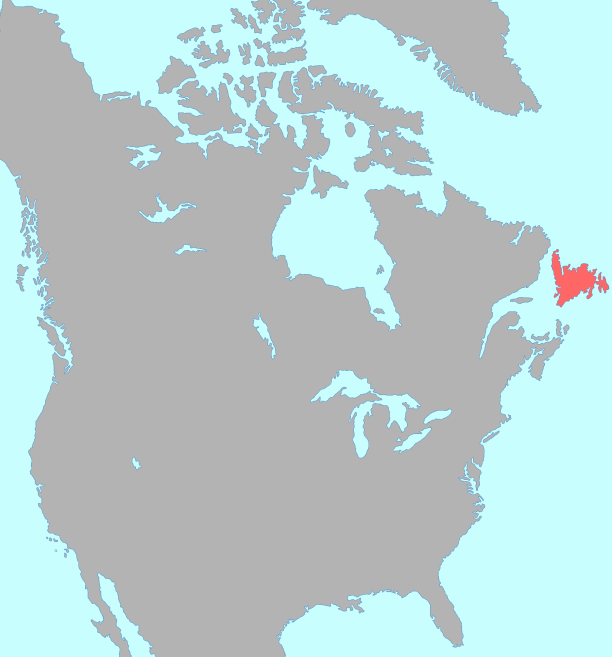
| Region | Newfoundland |
| Ethnicity | Beothuk |
| Extinct | 6 June 1829, with the death of Shanawdithit |
unclassified (Algonquian?) | |
| Language codes | |
| ISO 639-3 | bue |
bue | |
| Glottolog | beot1247 |
 Pre-contact distribution of Beothuk language | |
Beothuk (/biːˈɒtək/ or /ˈbeɪ.əθʊk/), also called Beothukan, is an extinct language once spoken by the indigenous Beothuk people of Newfoundland. The Beothuk have been extinct since 1829, and there are few written accounts of their language. Hence, little is known about it, with practically no structural data existing for Beothuk.
Classification
[edit]Claims of links with the neighbouring Algonquian language family date back at least to Robert Gordon Latham in 1862. From 1968 onwards, John Hewson has put forth evidence of sound correspondences and shared morphology with Proto-Algonquian and other better-documented Algonquian languages. If this is valid, Beothuk would be an extremely divergent member of the family.[1]
Other researchers claimed that proposed similarities are more likely the result of borrowing than cognates.[2] The limited and poor nature of the documentation means there is not enough evidence to draw strong conclusions.[3] Owing to this overall lack of meaningful evidence, Ives Goddard and Lyle Campbell claim that any connections between Beothuk and Algonquian are unknown and likely unknowable.[4]
Recorded song
[edit]In 1910, American anthropologist Frank Speck recorded a 74-year-old native woman named Santu Toney singing a song purported to be in the language. The recording resurfaced at the very end of the 20th century. Some sources give the year 1929, but the 1910 date is confirmed in Speck's book Beothuk and Micmac (New York 1922, p. 67). The words are hard to hear and not understood. Santu said she had been taught the song by her father, which may be evidence that one person with a Beothuk connection was alive after the death of Shanawdithit in 1829 since Santu Toney was born about 1835). Contemporary researchers have tried to make a transcription of the song and to clean up the recording with modern methods. Native groups have learned the song.[5]
James P. Howley, Director of the Geological Survey of Newfoundland, who for more than forty years was interested in the history of the Beothuk, doubted (in 1914) the truthfulness of Santu Toney.[6]
Vocabulary
[edit]Beothuk is known only from several wordlists from the 18th and the 19th centuries by George C. Pulling (1792),[7] Rev. John Clinch, Rev. John Leigh, and Hercules Robinson (1834).[8] They contain more than 400 words that had been collected from speakers such as Oubee, Demasduit, and Shanawdithit, but there were no examples of connected speech. Wordlists had also been collected by W. E. Cormack (who worked with Shanawdithit), Richard King (whose wordlist had been passed on to Robert Gordon Latham[9]), and James P. Howley (1915)[10] (who worked with Jure, a widow from the islands of the Bay of Exploits).[11]
The lack of any systematic or consistent representation of the vocabulary in the wordlists makes it daunting to establish the sound system of Beothuk, and words that are listed separately on the lists may be the same word transcribed in different ways. Moreover, the lists are known to have many mistakes. That, along with the lack of connected speech, leaves little upon which to build any reconstruction of Beothuk.
Combined lists
[edit]The wordlists have been transcribed and analyzed in Hewson (1978). The combined Beothuk wordlists below have been reproduced from Hewson (1978: 149–167).[11]
| Gloss | Beothuk (all lists combined) | Latham / King (1850) | Cormack (m.s.) | Clinch (m.s.) | Leigh (m.s.) | Robinson (1834) | Howley (1915) |
|---|---|---|---|---|---|---|---|
| afraid | cockaboset don't be afraid | cockaboset don't be afraid | |||||
| alive | mamisut; mamseet | mamseet | mamisut | ||||
| angry | assoyt | assoyt | |||||
| ankle | geijebursut | geijebursut | |||||
| arm | watheek; shedbasing wathik upper arm; watheekee; memayet arms | watheekee | watheek; shedbasing wathik upper arm | memayet arms | |||
| arrow | ashooging; dogemat | ashooging | ashooging | dogemat | |||
| asleep, dead | widdun | widdun | |||||
| awake | amet | amet | |||||
| baby | messiligethook | messiligethook | |||||
| back | posson; possont | posson | possont | ||||
| bad | mudty; mudeet bad man; maudee, muddy, madich | maudee, muddy, madich | mudty; mudeet bad man | ||||
| bakeapples | abidemashick | abidemashick | |||||
| bat | sosheet | sosheet | |||||
| bead | baasick (cf. necklace) | baasick (cf. necklace) | |||||
| bear | washawet; gwashuwet | washawet | gwashuwet | ||||
| beast | obditch (cf. cat, seal) | obditch (cf. cat, seal) | |||||
| beat | pugathuse beating; bukashowite | pugathuse beating | bukashowite | ||||
| beaver | maumshet; mamshet | maumshet | mamshet | ||||
| (go to) bed | boochauwhit (cf. sleep, lie down) | boochauwhit (cf. sleep, lie down) | |||||
| belly | haddabatheek (cf. body) | haddabatheek (cf. body) | |||||
| berries | manus; bibidigemidic | manus | bibidigemidic | ||||
| birch | paushee birch rind or paper; by-yeech birch tree; boyish birch rind | by-yeech birch tree | paushee birch rind or paper | boyish birch rind | |||
| bird | deynyad, deynyadrook birds | deynyad, deynyadrook birds | |||||
| bird (large) | popadish (cf. pigeon) | popadish (cf. pigeon) | |||||
| bird (little) | obseet; ounermish | obseet | ounermish | ||||
| birds' excrement | sugamith | sugamith | |||||
| bite | bashoodite | bashoodite | |||||
| black | maudzyke; mandzey | mandzey | maudzyke | ||||
| blackbird | woodch | woodch | |||||
| blankets | manaboret; manavorit | manaboret | manavorit | ||||
| blind | kaesing-guinyeet | kaesing-guinyeet | |||||
| blood | ashaboouth; arrowbauth; izzobauth or iggobauth | ashaboouth | arrowbauth | izzobauth or iggobauth | |||
| blow | deschudodoick | deschudodoick | |||||
| blow the nose | shegame; shegamit | shegame | shegamit | ||||
| blue | eeshang-eyghth | eeshang-eyghth | |||||
| blunt | boas seek; mocothutt blunt-nosed fish | boas seek; mocothutt blunt-nosed fish | |||||
| boat | adolthtek (cf. canoe, ship); adothe boat or vessel | adolthtek (cf. canoe, ship) | adothe boat or vessel | ||||
| boat (large) | dhoorado | dhoorado | |||||
| body | haddabothy; haddabothic | haddabothy | haddabothic | ||||
| boil (as water) | oadjameet | oadjameet | |||||
| boil (transitive) | moadamutt | moadamutt | |||||
| bone | aenameen | aenameen | |||||
| bonnet, hat | abodoneek; abadungeyk; abodonec | abadungeyk | abodoneek | abodonec | |||
| bosom | bodchmoot; boghmoot (cf. breast) | boghmoot (cf. breast) | bodchmoot | ||||
| bow | hathemay; anyemen | anyemen | hathemay | ||||
| boy (white) | bukashamesh; buggishamish; buggishamesh | buggishamesh | bukashamesh | bukashamesh | buggishamish | ||
| boy (Indian) | mossessdeesh; mogazeesh | mogazeesh | mossessdeesh | ||||
| bread | maujebathook; annawhadya | annawhadya | maujebathook | ||||
| break a stick | pugenon | pugenon | |||||
| break wind | tediddle | tediddle | |||||
| breast | bemoot (cf. bosom); bogomot | bemoot (cf. bosom) | bogomot | ||||
| breath | gaboweete | gaboweete | |||||
| bushes | maudeweech | maudeweech | |||||
| buttons | aegumet; agamet buttons or money | aegumet | agamet buttons or money | ||||
| candle | shapoth; shaboth | shapoth | shaboth | ||||
| canoe | thubathew boat or canoe; dapathook; tapathook | dapathook | thubathew boat or canoe | tapathook | |||
| cap | eeseeboon (cf. bonnet) | eeseeboon (cf. bonnet) | |||||
| capelin | shamook; shaamoo; shamooth | shamook; shaamoo | shamooth | ||||
| cat | obodish; abidesoot; abideeshook | abidesoot | abideeshook | obodish | |||
| cat (marten) | abidish | abidish | abidish | ||||
| catching fish | eshbauth | eshbauth | |||||
| cattle | methabeet; nethabete | methabeet | nethabete | ||||
| cheek | weenoun | weenoun | |||||
| chin | keoun; geoun; goun | geoun | keoun | goun | |||
| clothes | dhingyam; thingyam | dhingyam | thingyam | ||||
| clouds | berroick | berroick | |||||
| coal | methie; methie dirt | methie | methie dirt | ||||
| cockle | sheedeneesheet | sheedeneesheet | |||||
| codfish | bobboosoret (cf. fish) | bobboosoret (cf. fish) | bobboosoret (cf. fish) | ||||
| cold | eenodsha; moidewsee | eenodsha | moidewsee | ||||
| comb | edrathin | edrathin | |||||
| come | touet; deiood | touet; deiood | |||||
| come back again | nadyed | nadyed | |||||
| come hither | dyoot thouret; dyoom; thooret | dyoom | dyoot thouret | thooret | |||
| comet | anin | anin | |||||
| cream jug | nadalahet; motheryet | nadalahet | motheryet | ||||
| cry | mautheauthaw; matheothuc | mautheauthaw | matheothuc | ||||
| currants | shamye | shamye | shamye | ||||
| cut | hadyusum; odishuik or odishuite | hadyusum | odishuik or odishuite | ||||
| dancing | thubwedgie; badiseet | thubwedgie | badiseet | ||||
| dead | gosset; gausep (cf. asleep) | gosset; gausep (cf. asleep) | |||||
| deer | osweet; cosweet | cosweet | osweet | osweet | |||
| deer's horns | megorum; megorun | megorum | megorun | ||||
| devil | ashmudyim; haoot | haoot | ashmudyim | ||||
| dirt | yew-why | yew-why | |||||
| dog | mammasamit; mammasameet | mammasameet | mammasameet | mammasamit | |||
| dogberries | menome | menome | |||||
| dogwood, mountain ash | emoethook | emoethook | emoethook | ||||
| drawing knife | moheshaudet; moeshwadet | moheshaudet | moeshwadet | ||||
| drink | ebathook; ebathoot (cf. water) | ebathook; ebathoot (cf. water) | |||||
| drinking cup | shoewan; shoewanyeesh (dim.) | shoewan; shoewanyeesh (dim.) | |||||
| dry | gasook | gasook | |||||
| duck | eesheet; boodowit | eesheet | boodowit | ||||
| ducks and drakes | mameshet; howmeshet | mameshet | howmeshet | ||||
| eagle | gobidin | gobidin | |||||
| ear | mismuth; mootchiman; mooshaman | mootchiman | mismuth | mooshaman | |||
| eat | pugazoa; bocootyone; pokoodsoont; odoit | bocootyone; pokoodsoont | pugazoa | odoit | |||
| egg | deboin; debine | deboin | debine | ||||
| elbow | moocus | moocus | moocus | ||||
| Eskimo | ashwan | ashwan | |||||
| eye | geegnyan; gwinya | geegnyan | gwinya | ||||
| eyebrow | momeaugh; marmeuck | momeaugh | marmeuck | ||||
| fall | koshet | koshet | |||||
| fat | eeg | eeg | |||||
| fear | geswat; cockaboset no fear | geswat; cockaboset no fear | |||||
| feather | evenau; ewinon; abobidress feathers | ewinon | evenau | abobidress feathers | |||
| finger | onnus forefinger; oddesamick little; awadshibik middle; wyabick ring; hanyees | hanyees | onnus forefinger; oddesamick little; awadshibik middle; wyabick ring | ||||
| fire | koorae; oodrat; boobeeshawt (cf. lightning); woodrat | oodrat; boobeeshawt (cf. lightning) | koorae | woodrat | |||
| fish | poopusrout; baubooshrat (cf. codfish) | baubooshrat (cf. codfish) | poopusrout | ||||
| fish hook | adooch; adothook | adooch | adothook | ||||
| fishing line | disup; edat | disup | edat | ||||
| flea | kessyet | kessyet | |||||
| flesh (meat) | ashauch | ashauch | |||||
| flying | miawoth; miaoth | miawoth | miaoth | ||||
| foot | hodwitch; adyouth (cf. leg) | adyouth (cf. leg) | hodwitch | ||||
| forehead | doothun | doothun | |||||
| fork | papade-aden; etheuwit | papade-aden | etheuwit | ||||
| fowl | edgedoweshin | edgedoweshin | |||||
| fox | dogajavick | dogajavick | |||||
| fur, animal hair | peatha | peatha | peatha | ||||
| gaping | abemite | abemite | |||||
| get up | amshut; kinup; ganyess | amshut | ganyess | kinup | |||
| gimlet | quadranuck | quadranuck | quadranuck | ||||
| girl (white) | imamuset; emamooset | emamooset | emamooset | imamuset | |||
| girl (Indian) | woaseesh | woaseesh | |||||
| give me | dayhamin | dayhamin | |||||
| (we) give thee a knife | wawashemet o-owin | wawashemet o-owin | |||||
| glass | hadalahet (cf. cream jug); hadibiet | hadalahet (cf. cream jug) | hadibiet | ||||
| gloves | obsedeek | obsedeek | obsedeek | ||||
| go away | gayzhoot | gayzhoot | |||||
| go home | baetha | baetha | |||||
| go out | baeodut; enano | baeodut | enano | ||||
| good | homedick; oomdzech; betheote good night | homedick; oomdzech | betheote good night | ||||
| goose | yewone; odo-ezheet (cf. duck); odeusook | odo-ezheet (cf. duck) | yewone | odeusook | |||
| gooseberry | jiggamint | jiggamint | |||||
| grass | shisth | shisth | |||||
| grindstone | shewthake; aquathoont | shewthake | aquathoont | ||||
| groaning | cheeashit; cheashit | cheeashit | cheashit | ||||
| gull | asson | asson | asson | ||||
| gun | harreen or huz-seen; adamadret | adamadret | harreen or huz-seen | adamadret | |||
| gun powder | beasothunt | beasothunt | beasothunt | ||||
| hair | donna; drummet; drone-oock; dronna | drone-oock | donna | dronna | drummet | ||
| halibut, flatfish | hanawasutt | hanawasutt | |||||
| hammer | iwish; mattuis | iwish | mattuis | ||||
| hand | memen hands or fingers; maelmed; memet | maelmed | memen hands or fingers | memet | |||
| hare | odusweet | odusweet | odusweet | ||||
| (make) haste | ishu; eeshoo | eeshoo | ishu | ||||
| hatchet | nowaut; thinyun; dthoonanyen; thingaya | thinyun; dthoonanyen | nowaut | thingaya | |||
| head | keawthaw; geothuk; keauthut, gonothun | geothuk | keawthaw | keauthut, gonothun | |||
| hear | noduera | noduera | |||||
| heart | bedoret; bogodoret | bedoret | bogodoret | ||||
| heaven | theehone | theehone | |||||
| herring | washemesh | washemesh | |||||
| hiccups | mudyraw; madyrut | mudyraw | madyrut | ||||
| hill | kaasook; keoosock | kaasook; keoosock | |||||
| hoop | woin | woin | |||||
| house | mae-adthike (cf. hut); mammateek | mae-adthike (cf. hut) | mammateek | ||||
| hungry | dauoosett | dauoosett | |||||
| (not) hurt | aoodrach | aoodrach | |||||
| husband | zathrook (cf. man) | zathrook (cf. man) | |||||
| hut | meothik (cf. house) | meothik (cf. house) | |||||
| ice | ozrook; ozeru | ozrook | ozeru | ||||
| Indian (red) | behathook; beothuck; beathook | behathook; beothuck | beathook | ||||
| Indian cup | shucodidimet; shucodidimit | shucodidimet | shucodidimit | ||||
| iron | mauageene; maudshinuk; mowageenite | mauageene | mowageenite | maudshinuk | |||
| islands | mammasheek | mammasheek | |||||
| kill | whadicheme; bogathoowytch | whadicheme; bogathoowytch | |||||
| (not) kill | datyuns | datyuns | |||||
| kiss | sheboth; widumite | sheboth | widumite | ||||
| knee | hodsmishit; hodamishit | hodsmishit | hodamishit | ||||
| kneeling | abusthibe; abusthibit | abusthibe | abusthibit | ||||
| knife | yewoin; iwo-in; aewaeen; hewhine; uine | aewaeen; hewhine | yewoin | uine | iwo-in | ||
| lamp | mondicuet; bobdiduishemet | mondicuet | bobdiduishemet | ||||
| laugh | whoishme; wyeeth | whoishme | wyeeth | ||||
| lead | goosheben | goosheben | |||||
| lean, thin, sick | ashei | ashei | |||||
| leaves | madyua; madyna | madyua | madyna | ||||
| leg | cogadealla; aduse (cf. foot) | cogadealla | aduse (cf. foot) | ||||
| lie | pisauwau; bituwait (cf. sleep) | pisauwau | bituwait (cf. sleep) | ||||
| life | mamset (cf. alive) | mamset (cf. alive) | |||||
| lightning | koorae; barodiisick (cf. fire and thunder) | koorae | barodiisick (cf. fire and thunder) | ||||
| (I) like | adjeedisk | adjeedisk | |||||
| lip | coosh; ooish | coosh | ooish | ||||
| lobster | odjet | odjet | odjet | ||||
| long | kannabuck | kannabuck | |||||
| lord bird, harlequin duck | mammadrouit | mammadrouit | |||||
| louse | cusebee; kusebeet | cusebee | kusebeet | ||||
| lumpfish | aeshemeet | aeshemeet | |||||
| mainland | gauzewook | gauzewook | |||||
| man (white) | pushaman; buggishaman; bukashaman | buggishaman | pushaman | bukashaman | buggishaman | ||
| man (Indian) | shawdtharut (cf. husband) | shawdtharut (cf. husband) | |||||
| Micmac | shanung | shanung | |||||
| milk | madabooch | madabooch | |||||
| moccasin | moosin; mosen | moosin; mosen | |||||
| money | beodet | beodet | |||||
| moon | kuus; keeose, washageuis; kius, washewiush | keeose, washageuis | kuus | kius, washewiush | |||
| mosquito | shema bogosthuc | shema bogosthuc | |||||
| mouth | mamudthun; mameshook | mamudthun | mameshook | ||||
| muscle (mussel) | owameet | owameet | |||||
| nails | cush; quish | cush | quish | ||||
| neck | tedesheet (cf. throat) | tedesheet (cf. throat) | tedesheet (cf. throat) | ||||
| necklace | zeek (cf. beads); bethec | zeek (cf. beads) | bethec | ||||
| needle | tuzmus; dosomite (cf. pin) | tuzmus | dosomite (cf. pin) | ||||
| net | giggaremanet | giggaremanet | giggaremanet | ||||
| night | washewch; washew | washewch | washew | ||||
| nipper | bebadrook | bebadrook | |||||
| no | newin | newin | |||||
| nose | gheen; geen | gheen | geen | ||||
| oakum | mushabauth | mushabauth | mushabauth | ||||
| oar | poodybeac | poodybeac | poodybeac | ||||
| ochre | odemen; odement | odemen | odement | ||||
| oil | emet | emet | emet | ||||
| otter | edachoom; edru | edachoom | edru | ||||
| partridge | susut; zosoot; zosweet | zosoot | susut | zosweet | |||
| partridgeberries | shaudame | shaudame | |||||
| pigeon (sea), (guillemot) | bobbodish (cf. bird) | bobbodish (cf. bird) | bobbodish (cf. bird) | bobbodish (cf. bird) | |||
| pin | tusmug; dosomite | dosomite | tusmug | dosomite | |||
| pitcher, cup, plate | manume; manune | manume | manune | ||||
| pond | woodum | woodum | |||||
| puffin | gwoshuawit | gwoshuawit | |||||
| puppies | mammasameet (cf. dog) | mammasameet (cf. dog) | |||||
| rain | pedthae; watshoosooch; badoese; bathuc | watshoosooch; badoese | pedthae | bathuc | |||
| raspberries | gauzadun | gauzadun | |||||
| rat | gadgemish | gadgemish | |||||
| red | deedrashow | deedrashow | |||||
| river | shebon; shebin brook | shebon; shebin brook | |||||
| rocks | ahune | ahune | |||||
| rolling | odausot | odausot | |||||
| rowing | huzzagan; osavate | huzzagan | osavate | ||||
| run | wothamashee; ibadinnam; wothamashet | ibadinnam | wothamashee | wothamashet | |||
| sails | ejabathook | ejabathook | ejabathook | ||||
| salmon | wasemook | wasemook | wasemook | ||||
| saw | dedoweet; deddoweet | dedoweet | deddoweet | ||||
| salt water | massoock | massoock | |||||
| scab | pigathee | pigathee | pigathee | ||||
| scallop | gowet | gowet | |||||
| scalping the head | nomushrush keawthaw | nomushrush keawthaw | |||||
| scissors | oseenyet; osegeeu | oseenyet | osegeeu | ||||
| scratch | bashubet | bashubet | |||||
| seal | momau; bidesuk; beedzuk; bidesook | bidesuk; beedzuk | momau | bidesook | |||
| seal sunk | aparet a bidesook | aparet a bidesook | |||||
| seal skin bag | bochmoot seal skin sledge full | bochmoot seal skin sledge full | |||||
| see | ejew | ejew | |||||
| shake hands | meman momasthus; kawinjemeesh; meman monasthus | kawinjemeesh | meman momasthus | meman monasthus | |||
| ship, vessel | mamzhing; mamashee (cf. boat) | mamashee (cf. boat) | mamzhing | ||||
| shoes | moosin (cf. mocassin) | moosin (cf. mocassin) | |||||
| shoot | hodthoo shoot a gun; outhaje-arrathunum shoot an arrow perpendicularly; wadshoodet | wadshoodet | hodthoo shoot a gun; outhaje-arrathunum shoot an arrow perpendicularly | ||||
| short | yeech | yeech | |||||
| shoulder | momezabethon; momegemethon | momezabethon | momegemethon | ||||
| shovel | hadowadet; godawick | hadowadet | godawick | ||||
| silk handkerchief | egibiduish | egibiduish | egibiduish | ||||
| sinew of deer | modthamook | modthamook | |||||
| singing | tuauthaw; awoodet | tuauthaw | awoodet | ||||
| sit | haddosdoding; athep | athep | haddosdoding | athep | |||
| sleep | puthuauth; bootzhawet; aoseedwit I am sleepy (cf. lie, bed); isedoweet | bootzhawet; aoseedwit I am sleepy (cf. lie, bed) | puthuauth | isedoweet | |||
| sleeve | wobesheet | wobesheet | |||||
| smell | marot | marot | |||||
| smoke | possthee; basdiek; besdic | basdiek | possthee | besdic | |||
| snail | aeueece | aeueece | |||||
| sneezing | midyathew; adjith | midyathew | adjith | ||||
| snipe | auojet | auojet | |||||
| snow | (corrasoob); causabow; kaasussabook | causabow; kaasussabook | (corrasoob) | ||||
| song | mamatrabet (a long?) | mamatrabet (a long?) | |||||
| soon | jewmetcheen | jewmetcheen | |||||
| sore throat | anadrick | anadrick | anadrick | ||||
| sorrow | corrasoob (cf. snow) | corrasoob (cf. snow) | corrasoob (cf. snow) | ||||
| speak | carmtack; jeroothack | carmtack; jeroothack | |||||
| spear | anun; aaduth seal spear; amina deer spear; hannan | anun; aaduth seal spear; amina deer spear | hannan | ||||
| spider | woadthoowin | woadthoowin | |||||
| spoon | hanamait; adadiminte, andemin | adadiminte, andemin | hanamait | ||||
| spouse | anwoyding | anwoyding | |||||
| spruce | trawnasoo | trawnasoo | trawnasoo | ||||
| spruce rind | sousot | sousot | |||||
| standing | kingabie; kingiabit | kingabie | kingiabit | ||||
| stars | so-ushzeth; shawwayet; adenishit | shawwayet | so-ushzeth | adenishit | |||
| stinking seal | mattik bidesook | mattik bidesook | mattik bidesook | ||||
| stockings | gassek; gasset | gassek | gasset | ||||
| stones | ougen; oun (cf. rocks) | oun (cf. rocks) | ougen | ||||
| stooping | hedy-yan | hedy-yan | hedy-yan | ||||
| sugar | shedothoon | shedothoon | |||||
| sun, moon | dewis; keeose; keuse; magaragueis sun; washageuis moon; kius; maugerooius sun; washewiush moon | keeose; keuse; magaragueis sun; washageuis moon | dewis | kius; maugerooius sun; washewiush moon | |||
| swimming | tuwedgie; thoowidgee (cf. dancing) | tuwedgie | thoowidgee (cf. dancing) | ||||
| sword | bidisoni | bidisoni | bidisoni | ||||
| tea | butterweye (but probably garbled) | butterweye (but probably garbled) | |||||
| teeth | outhermay; botomet outhermayet | outhermay | botomet outhermayet | ||||
| thank you | thine | thine | |||||
| thigh | ipeween; ipweena | ipeween | ipweena | ||||
| thread | meroopish; meroobish (cf. twine) | meroopish | meroobish (cf. twine) | ||||
| throat | tedesheet (cf. neck) | tedesheet (cf. neck) | |||||
| throw a trap | shaubabuneshaw | shaubabuneshaw | |||||
| throw | pugatho; pugathoite | pugatho | pugathoite | ||||
| thumb | pooith; buit; boad; pooeth | boad | pooith | pooeth | buit | ||
| thunder | petothorish; barodiisick (cf. lightning) | petothorish | barodiisick (cf. lightning) | ||||
| ticklace (kittiwake) | gotheyet | gotheyet | gotheyet | ||||
| tickle (gut, sound, strait) | kaduishuite | kaduishuite | |||||
| tinker (razorbill) | oothook | oothook | |||||
| tobacco | nechwa | nechwa | |||||
| tomorrow | maduck | maduck | |||||
| tongue | memaza; mamadthuk (cf. mouth); memasuck | mamadthuk (cf. mouth) | memaza | memasuck | |||
| trap | tibethun; lathun; shebathoont | lathun | tibethun | shebathoont | |||
| tree, woods | annooee | annooee | |||||
| trousers | mowead | mowead | mowead | ||||
| trout | dottomeish | dottomeish | dottomeish | ||||
| turr (murre) | geonet | geonet | geonet | ||||
| twine | meroopish; madobeesh | madobeesh | meroopish | ||||
| walk | woothyan; baysot (cf. run); woothyat | woothyan | woothyat | baysot (cf. run) | |||
| walking stick | cheething | cheething | |||||
| warm | obosheen warming yourself; boobasha | boobasha | obosheen warming yourself | obosheen warming yourself | |||
| watch | dewis; keeose (cf. sun, moon); kius | dewis; keeose (cf. sun, moon) | kius | ||||
| water | ebauthoo; ebadoe; zebathoong water (drink) | ebadoe; zebathoong water (drink) | ebauthoo | ebauthoo | |||
| water bucket | guinyabutt (with vertical or sloping sides); sunong-guinyabutt (large at bottom, small at top) | guinyabutt (with vertical or sloping sides); sunong-guinyabutt (large at bottom, small at top) | |||||
| wet | wabee (confusion with white) | wabee (confusion with white) | |||||
| whale's tail | owasposhno-un | owasposhno-un | |||||
| where do you go | becket | becket | |||||
| white | wobee | wobee | |||||
| whortle berries | mamoose (cf. berries) | mamoose (cf. berries) | |||||
| wife | oosuck | oosuck | |||||
| wife (white) | adizabad-zea | adizabad-zea | |||||
| wind | tisewthun; gidgeathuc | tisewthun | gidgeathuc | ||||
| wood | adiab | adiab | adiab | ||||
| woodpecker | sheebuint; shebohoweet | shebohoweet | sheebuint | shebohoweet | |||
| wolf | moisamadrook | moisamadrook | |||||
| woman | imamus; emamoose; woass-sut red Indian woman | emamoose; woass-sut red Indian woman | emamoose | imamus | |||
| yawning | tibeath; jibeath | tibeath | jibeath | ||||
| yes | ethath; yeathun | ethath; yeathun |
Numerals
[edit]Numerals in Beothuk:[11]
| Gloss | Cormack | Latham / King (1850) | Leigh |
|---|---|---|---|
| one | yaseek | yazeek | gathet |
| two | adzeich | adzeech | adasic |
| three | shendeek | shendee | shedsic |
| four | dabseek | dabzeek | abodoesic |
| five | ninezeek | nunyetheek | nijeek |
| six | bashedtheek | beshed | bigadosick |
| seven | oodzook | odeozook | oodosook |
| eight | aadazook | adosook | aodoosook |
| nine | yeothoduk | yeothoduck | yeothoduck |
| ten | shansee | shansee | theant |
| eleven | ee-zaziech | ||
| twelve | ee-adzide | ||
| thirteen | ee-shendeek | ||
| fourteen | ee-dabzook | ||
| fifteen | ee-ninezeek | ||
| sixteen | ee-beshedtheek | ||
| seventeen | ee-oodzook | ||
| eighteen | ee-aadazook | ||
| nineteen | ee-yeothoduck | ||
| twenty | adzeich dthoonut | ||
| thirty | shendeek dthoonut |
Months
[edit]Months in Beothuk:[11]
| Gloss | Cormack list (from Shanawdithit) |
|---|---|
| January | cobshuneesamut |
| February | kosthobonong bewajoite |
| March | manamiss |
| April | wasumaweeseek |
| May | bedejamish bewajowite |
| June | wasumaweeseek |
| July | cowazaseek |
| August | wadawhegh |
| September | wasumaweeseek |
| October | godabonyegh |
| November | godabonyeesh |
| December | odasweeteeshamut |
Comparison with Proto-Algonquian
[edit]Below is a comparison of Beothuk words from Hewson (1978) with Proto-Algonquian lexical reconstructions from Hewson (2017).[12]
gloss Proto-Algonquian Beothuk head *wiᐧši (his) keawthaw; geothuk; keauthut, gonothun hair *wiᐧΘeʔsi donna; drummet; drone-oock; dronna eye *neškiᐧnšekwi (my) geegnyan; gwinya ear *nehtaᐧwakaᐧyi (my) mismuth; mootchiman; mooshaman nose *nexkiwani (my) g(h)een tooth *niᐧpiči (my) outhermay tongue *wiᐧΘani (his) memaza; mamadthuk (cf. mouth); memasuck mouth *wetoᐧni (his) mamudthun; mameshook hand *neΘenčyi (my) memen (hands or fingers); maelmed; memet foot *nesiči (my) hodwitch; adyouth (cf. leg) breast *wetoᐧhšali bemoot; bogomot meat *wiᐧyawehsi ashauch blood *meçkwi ashaboouth; arrowbauth; izzobauth, iggobauth bone *weΘkani aenameen person *elenyiwa; *naᐧpeᐧwa; *niᐧmaΘawa shawdtharut dog *aΘemwa mammasamit; mammasameet fish *nameᐧwa, *nameᐧʔsa; *mesaya poopusrout; baubooshrat louse *ehkwa cusebee; kusebeet tree *-aᐧhtekw annooee leaf *aniᐧpyi madyua; madyna water *nepyi ebauthoo; ebadoe fire *eškweteᐧwi koorae; oodrat; boobeeshawt (cf. lightning); woodrat stone *aʔsenya ou(ge)n; ahune 'rocks'
Legacy
[edit]References
[edit]- ^ Hewson, John (1971). "Beothuk Consonant Correspondences". International Journal of American Linguistics. 37 (4): 244–249. doi:10.1086/465172. JSTOR 1264516. S2CID 145190678.
- ^ Voegelin, C.F.; Voegelin, E.W. (1946). "Linguistic considerations of northeastern North America". In Johnson, F. (ed.). Man in Northeastern North America. Andover, MA: Philip's Academy. pp. 178–194.
- ^ Mithun, Marianne (2001). The Languages of Native North America (First paperback ed.). Cambridge, United Kingdom: Cambridge University Press. p. 368. ISBN 0-521-23228-7.
- ^ Campbell, Lyle (1997). American Indian Languages: The Historical Linguistics of Native America. Oxford University Press. p. 290. ISBN 0-19-509427-1.
- ^ Perry, SJ (2008-09-10). "Santu's Song: Memorable day for Beothuk Interpretation Centre". Porte Pilot. Archived from the original on 2012-03-09. Retrieved 2010-01-13.
- ^ "View of Santu's Song | Newfoundland and Labrador Studies". journals.lib.unb.ca. 2022-04-26. Archived from the original on April 26, 2022. Retrieved 2024-07-21.
- ^ Pulling, George C. 1792. A few facts by G.C. Pulling respecting the Native Indians of the Isle of Newfoundland. Manuscript in British Museum, additional MSS 38352.
- ^ Robinson, Sir Hercules. 1834. "Vocabulary of the Natives of Newfoundland." Royal Geographical Society Journal 4:218-220.
- ^ Latham, Robert G. 1850. Natural History of the Varieties of Man. London: J. Van Voorst.
- ^ Howley, James P. (1915). The Beothucks or Red Indians. Cambridge University Press.
- ^ a b c d Hewson, John. 1978. Beothuk Vocabularies. (Technical Papers of the Newfoundland Museum, 2.) St. John's: Newfoundland: Newfoundland Museum. 178pp.
- ^ Hewson, John. 2017. Proto-Algonquian online dictionary. Algonquian Dictionaries Project.
- ^ Liu, A. G.; Matthews, J. J.; Menon, L. R.; McIlroy, D.; Brasier, M. D. (2014). "Haootia quadriformis n. gen., n. sp., interpreted as a muscular cnidarian impression from the Late Ediacaran period (approx. 560 Ma)". Proceedings of the Royal Society B: Biological Sciences. 281 (1793) 20141202. doi:10.1098/rspb.2014.1202. PMC 4173675. PMID 25165764.
External links
[edit]
Beothuk language
View on GrokipediaHistorical Context
Beothuk People and Early European Contact
The Beothuk inhabited Newfoundland as a small, semi-nomadic hunting-gathering population, subsisting primarily on caribou, seals, fish, and gathered plants, with pre-contact estimates placing their numbers between 500 and 1,000 individuals.[5] [6] This limited population size, combined with their reliance on both coastal and interior resources, rendered them vulnerable to disruptions in access to traditional territories. European competition for salmon, seals, and other coastal foods intensified pressures on Beothuk foraging patterns from the early 16th century onward.[6] Initial European sightings of the Beothuk occurred during John Cabot's 1497 voyage, when he coasted Newfoundland's shores and claimed the island for England, though no direct interactions were documented.[7] Later 16th-century fishermen and explorers noted the Beothuk's distinctive use of red ochre smeared on bodies, clothing, canoes, and tools, which led to their designation as "Red Indians" in European accounts.[6] These observations remained superficial, as Beothuk groups avoided sustained engagement, retreating inland to evade encroaching seasonal fishing camps.[6] By the 17th century, opportunistic Beothuk scavenging and theft of European fishing gear and iron tools—valued for their utility in crafting superior implements—escalated into retaliatory violence from settlers defending their equipment and catches.[6] This tit-for-tat conflict over resources eroded any potential for peaceful exchange, cultivating deep mutual suspicion and prompting the Beothuk to impose strict isolation by confining activities to Newfoundland's remote interior bogs and forests, where poorer soils and scarcer marine access further strained their adaptation.[6] [8] Such self-imposed withdrawal severely curtailed opportunities for Europeans to observe or record Beothuk social practices, including language use, prior to the 18th century.[9]Factors in Language Extinction
The Beothuk population experienced significant decline following European contact, primarily due to introduced diseases such as tuberculosis, to which they lacked prior exposure and immunity owing to their geographic isolation on Newfoundland. Historical records indicate that tuberculosis epidemics ravaged the group in the early 19th century, contributing directly to the deaths of known captives like Demasduit in 1820 and Shanawdithit in 1829.[10][11] This susceptibility was exacerbated by the Beothuk's avoidance of sustained interaction with Europeans or neighboring Indigenous groups like the Mi'kmaq, which limited opportunities for acquiring trade goods, tools, or knowledge that might have aided survival amid ecological pressures.[9] Displacement from coastal territories by expanding European settlements forced the Beothuk into the island's interior, where resource availability was markedly inferior to their traditional maritime and riverine economies. Coastal areas provided abundant seals, fish, and migratory birds, but inland retreat confined them to seasonal caribou herds and scarce freshwater fish, with no moose populations present until later introductions; this shift led to nutritional stress and overhunting of limited game, as evidenced by archaeological patterns of intensified interior site use in the late 18th and early 19th centuries.[9][12] The Beothuk's cultural practices, including their red ochre body painting symbolizing separation from outsiders, reinforced this isolation, rejecting overtures for alliance or integration that historical accounts document as repeatedly rebuffed, thereby foreclosing adaptive strategies employed by other Indigenous groups in similar contexts.[13] The language became extinct with the death of its last known fluent speaker, Shanawdithit, on June 6, 1829, marking the end of the Beothuk as a distinct people amid these intertwined demographic and ecological collapses. While European expansion undeniably restricted access to resources and introduced pathogens, empirical evidence from captive narratives and skeletal analyses underscores a confluence of factors—including endogenous vulnerabilities and behavioral choices favoring withdrawal over accommodation—rather than attributing extinction solely to deliberate aggression.[14][15]Documentation Sources
Key Informants and Captives
Demasduit, a Beothuk woman also known as Mary March, was captured in March 1819 on the frozen surface of Red Indian Lake by a party led by furrier John Peyton Jr., during an expedition authorized by the colonial governor to retrieve stolen property.[16] Her husband, Nonosabasut, was reportedly shot in an attempt to intervene, though accounts vary on the details of the confrontation.[17] Taken to Twillingate, she was placed under the care of Reverend John Leigh, a Methodist minister, who elicited a short vocabulary list from her comprising basic terms in the Beothuk language, later copied and disseminated to figures including William E. Cormack.[18] Demasduit's captivity lasted less than a year; she gave birth to a son in August 1819, who died shortly after, and she herself succumbed to tuberculosis on January 8, 1820, limiting the depth of linguistic data obtainable under duress from non-specialist recorders.[19] Shanawdithit, Demasduit's niece born around 1801, was captured in 1823 near Badger Bay along with female relatives by European traders, marking the last known live seizure of Beothuk individuals.[20] Initially held by the Peyton family, she was transferred in 1828 to St. John's at the behest of William E. Cormack, a Scottish-born explorer and founder of the Beothic Institution, who sought to document Beothuk culture and language through reciprocal English instruction.[9] Over her six years in captivity, Shanawdithit supplied Cormack with an extensive word list exceeding 100 terms, phrases illustrating basic sentence structures, and illustrative drawings of Beothuk tools, settlements, and historical events, including depictions of prior captures.[1] These outputs, while opportunistic and shaped by her trauma and gradual acculturation, represent the most substantial direct attestation of Beothuk lexicon, though collected by amateurs without systematic phonetic transcription.[21] Shanawdithit died of tuberculosis on June 6, 1829, in St. John's, after which no fluent Beothuk speakers survived to verify or expand the records.[9] An earlier informant, the young Beothuk girl known as Oubee, captured around 1798 or shortly after and held by settler David Peddle, contributed a vocabulary of approximately 111 English words translated into Beothuk equivalents, filed among colonial papers but limited by her youth and the informal context of elicitation.[1] Collectively, data from these captives—Demasduit, Shanawdithit, and Oubee—yielded over 400 lexical items, primarily nouns and basic verbs, but were constrained by the informants' health declines, psychological strain from abduction, and the absence of trained linguists, resulting in inconsistent orthography and no connected discourse.[1]Vocabulary Lists and Recorded Song
The primary sources for Beothuk vocabulary consist of short lists elicited from captives in the early 19th century, primarily Demasduit (captured in 1819 and deceased in 1820), her niece Shanawdithit (who provided data until her death in 1829), and an earlier informant known as Oubee (a young male captive from the 1790s).[1] These were documented by figures including William Cormack and later compiled and analyzed by scholars such as James P. Howley in his 1915 publication The Beothuks or Red Indians and John Hewson in his 1978 Beothuk Vocabularies: A Comparative Study.[22] Hewson's work integrates the disparate lists into a master compilation of approximately 325 unique glosses, supplemented by 21 numerals and names for months tied to seasonal activities, covering categories such as body parts (e.g., head, eyes, hands), natural elements (e.g., water, trees, animals like bear and beaver), and utensils or tools (e.g., canoe, arrow).[1] These terms reflect practical, survival-oriented lexicon but remain fragmentary, with no full sentences or extended discourse preserved.| Category | English Gloss | Beothuk Form (Selected Examples from Hewson Compilation) |
|---|---|---|
| Numerals | One | yaseek |
| Two | adjieich | |
| Three | shendeek | |
| Body Parts | Head | keathut |
| Water | ebauthoo | |
| Nature | Bear | washawet |
| Beaver | maumshet |
Linguistic Description
Phonology and Phonetics
The phonology of the Beothuk language is poorly attested, with no systematic phonetic analysis possible due to the limited and inconsistent transcriptions recorded primarily in the early 19th century by European observers lacking linguistic training.[24] Vocabulary lists and proper names, such as those compiled by William Cormack from informant Shanawdithit between 1828 and 1829, employ ad hoc English-based orthographies that reflect the transcribers' perceptual biases rather than native phonemic distinctions, often resulting in ambiguous representations of sounds.[1] For instance, consonant gemination appears frequently in these records, but this is attributed to English scribal conventions rather than a feature of Beothuk phonotactics. Inferred consonants from available word lists include voiceless stops /p/, /t/, and /k/, as well as fricatives /s/ and /ʃ/ (often spelled "sh" in transcriptions); nasals /m/ and /n/ are also recurrent. Liquids like /l/ occur but are scarce, and there is no evidence for /f/ or /v/, distinguishing Beothuk tentatively from neighboring Algonquian languages that feature additional fricatives and laterals. Possible glottal stops or ejective consonants have been speculated based on sporadic orthographic indicators like abrupt stops in syllables, but these remain unconfirmed due to the absence of audio records or repeated elicitations.[24] Vowels appear to include a basic set of /a/, /e/, /i/, /o/, and /u/, with potential length contrasts suggested by doubled letters in some transcriptions (e.g., "oe" in "Boeothuck" for the autonym, pronounced with emphasis on the diphthong-like sequence).[1] However, vowel quality and quantity are obscured by the influence of English vowel perceptions on the recorders, who described Beothuk sounds as diverging from typical Indigenous North American patterns toward European-like qualities in some respects.[24] Overall, these evidential gaps preclude definitive phonological rules, such as syllable structure or stress patterns, rendering any reconstruction provisional and reliant on cross-comparisons with limited reliability.Morphology and Grammar
Due to the paucity of linguistic data, primarily limited to vocabulary lists totaling around 325 items compiled by scholars such as John Hewson from 19th-century records of informants like Shanawdithit, the morphology and grammar of Beothuk elude comprehensive description.[1] No extended texts, full sentences, or grammatical treatises were elicited from speakers, rendering analysis of word formation, inflection, or derivation speculative at best.[25] Attested materials reveal minimal evidence of morphological processes, such as possible possessive markers in kinship and body-part terms (e.g., forms implying inalienable possession), but no systematic affixes, prefixes, or suffixes have been isolated or paradigmatically charted.[1] Verb entries in the lists lack conjugational variation for person, number, tense, or aspect, with fragments suggesting potential incorporation or compounding akin to polysynthetic structures in regional languages, yet insufficient corpus size precludes verification of such traits.[25] Syntactic patterns remain undocumented, as phrases like those for basic actions or relations (e.g., "I am thirsty") appear only in isolation without connective elements, cases, or ordering rules observable.[1] This evidentiary void highlights the causal barrier posed by early extinction—last fluent speaker Shanawdithit died in 1829—foreclosing empirical reconstruction and rendering early comparative assertions, which inferred grammar from lexical resemblances, methodologically tenuous absent internal structural data.[25]Lexicon and Semantic Categories
The documented Beothuk lexicon, derived from 18th- and 19th-century wordlists totaling over 400 entries, has been systematically cataloged by linguist John Hewson into a consolidated master list of 325 glosses, alongside 21 numerals and month names, emphasizing empirical groupings without interpretive expansion.[1] These entries, elicited primarily from informants Oubee (111 words, 1791), Demasduit (~180 words, 1819), and Shanawdithit (phrases, 1823–1828), cluster thematically around concrete referents tied to subsistence and environment, with sparse representation of abstract or ritualistic vocabulary.[1][26] Kinship terminology is minimally attested, reflecting the fragmented elicitation process rather than comprehensive coverage; recorded instances focus on immediate relations, such as potential markers for parental or sibling bonds, but lack systematic depth due to informant constraints like youth, trauma, and limited fluency in English.[1] No expansive relational systems (e.g., distinguishing maternal vs. paternal lines) appear, underscoring the lexicon's bias toward survival pragmatics over social elaboration. Environmental and faunal terms dominate, cataloging fauna central to hunting and trapping in Newfoundland's insular ecology; examples include maumshet for beaver (a key fur and food resource) and obditch for generic beast (extended to seals and cats in glosses).[26] Tools and daily artifacts feature prominently, with mamateek denoting wigwam or conical shelter, essential for seasonal mobility, and terms for implements like arrows or canoes implied in broader subsistence glosses.[27] Natural elements, such as weather or terrain descriptors, further emphasize practical orientation, e.g., month names like cobshuneesamut (January, tied to winter onset).[28] This distribution—prioritizing tangible, resource-linked items over hypotheticals—mirrors the causal demands of hunter-gatherer adaptation, where lexical precision for local biota and artifacts directly supported caloric intake and sheltering.| Semantic Category | Examples (English Gloss: Beothuk Form) | Notes on Representation |
|---|---|---|
| Kinship | Limited; immediate family markers sparsely noted without full paradigm | Underrepresented; elicitation focused on basics amid informant distress[1] |
| Fauna/Environment | Beaver: maumshet; beast/seal: obditch | Abundant, reflecting subsistence hunting priorities[26] |
| Tools/Daily Life | Wigwam: mamateek; arm (body/tool context): watheek | Concrete artifacts for mobility and crafting dominant[27][28] |
Classification and Comparative Linguistics
Proposed Algonquian Connections
Proposals to affiliate the Beothuk language with the Algonquian family emerged in the 19th century, based on preliminary lexical comparisons amid sparse documentation of approximately 400 Beothuk words collected primarily from captives and indirect reports. In 1862, Robert Gordon Latham classified Beothuk as an Algonkian language, albeit with obscure relations to known branches, drawing on vocabulary lists that showed superficial resemblances in basic terms despite inconsistent orthographies and limited samples.[1] This view persisted, influencing later scholars who sought systematic affinities rather than ad hoc matches. Frank G. Speck advanced the connection in 1922 through ethnographic parallels between Beothuk and neighboring Micmac (an Eastern Algonquian language), including shared material culture like caribou-skin robes and leggings, which he interpreted as supporting linguistic divergence from a common Algonquian stock. Speck posited Beothuk as an early, isolated branch of Eastern Algonquian, citing potential lexical overlaps in everyday terms, though his analysis emphasized cultural borrowing alongside possible genetic ties, constrained by the unreliability of Beothuk records from non-speaker observers. John Hewson provided the most systematic affirmative evidence in 1968, reconstructing Proto-Algonquian forms and identifying consonant correspondences, such as Beothuk k aligning with Proto-Algonquian k or x in select items, alongside morphological parallels like noun endings resembling Algonquian conjunct participles. He highlighted resemblances in numerals (e.g., for one, five, six, and nine) and other core vocabulary, arguing these exceeded chance given regular sound shifts, though the sparse corpus—lacking connected texts—limited verification to about two dozen proposed cognates amid claims of 20-30% basic vocabulary overlap. Hewson's approach prioritized methodical reconstruction over mass comparisons, yet acknowledged methodological challenges from orthographic variability and potential informant errors in 18th-19th century lists.[25][29]Evidence for Language Isolate Status
The Beothuk language's status as an isolate stems from the failure of comparative linguistic analysis to identify systematic genetic ties to surrounding families, notably Algonquian languages of the Labrador Peninsula and Maritime regions, despite spatial adjacency. Examinations of the attested lexicon disclose mismatches in core vocabulary, such as body part terms, where Beothuk forms exhibit no derivable cognates via regular sound shifts from Proto-Algonquian reconstructions; for instance, Beothuk lacks equivalents aligning with Algonquian patterns for "head" (*wskw-) or "hand" (*askih-).[29] This absence extends to morphological hallmarks, including the Algonquian personal possessive prefix (e.g., *ne- for "my"), which finds no parallel in Beothuk noun structures.[29] Phonological profiles further underscore divergence, with Beothuk attesting potential labialized or fricative elements undocumented in core Algonquian inventories, which emphasize obstruent stops and nasals without comparable fricatives like /f/ or /v/ in non-borrowed forms—yet Beothuk's system resists mapping onto Algonquian proto-phonemes without ad hoc adjustments.[29] The corpus, comprising under 400 lexical items primarily from 18th- and 19th-century records by observers like John Peyton and Demasduit, provides insufficient depth for grammatical reconstruction, precluding tests for shared innovations or areal diffusion that might signal affiliation.[30] Linguistic standards for relatedness, such as those requiring 10-15% cognate matches in Swadesh 100-word lists with consistent correspondences, cannot be met here due to the dataset's sparsity and variability from non-fluent elicitation.[4] Post-2000 assessments reinforce this isolation, with scholars emphasizing that sporadic resemblances represent chance or borrowing rather than inheritance, as no proto-form alignments hold across multiple lexical domains.[2] Analyses by Ives Goddard highlight Beothuk's placement as a Northeast isolate, distinct from Algonquian expansions, based on the evidentiary shortfall for subgrouping.[31] Similarly, broader typological reviews of North American languages classify Beothuk among single-member families, attributing the paucity of ties to empirical gaps rather than deep-time divergence untestable with available remnants.[32] This consensus prioritizes disconfirmatory data—non-matching pronominals, numerals, and toponyms—over speculative links, aligning with principles demanding verifiable regularities for family assignment.Critiques of Comparative Methods
The application of comparative methods to Beothuk has been hampered by the precarious and unreliable nature of the surviving linguistic remnants, which consist primarily of ad hoc recordings by 19th-century non-linguists lacking standardized phonetic training.[29] These early efforts, including vocabulary lists compiled from captives like Demasduit and Shawnadithit, often introduced transcription errors that distorted sounds and obscured potential patterns, complicating subsequent analyses.[33] Confirmation bias further undermined these attempts, as scholars in the 1800s selectively highlighted chance resemblances to familiar languages like Algonquian while downplaying inconsistencies, a methodological flaw exacerbated by limited data comprising fewer than 400 words.[29] Modern critiques emphasize the absence of regular sound correspondences—a cornerstone of the established comparative method—which is indispensable for verifying genetic affiliations amid sparse corpora.[22] Proposals linking Beothuk to Algonquian families, such as those by John Hewson in his 1978 comparative vocabulary study, rely on tentative phonological and lexical parallels but falter without systematic evidence of shared innovations or predictable shifts, rendering them speculative rather than demonstrable.[22] Distinguishing genuine cognates from loanwords—potentially borrowed from neighboring Mi'kmaq or English during contact—poses additional challenges, as superficial similarities can mimic relatedness without underlying historical ties.[1] Mass comparison techniques, which aggregate broad lexical resemblances across languages, offer heuristic value by generating testable hypotheses and highlighting Beothuk's typological uniqueness relative to North American families. However, they invite methodological overreach, fostering pseudoscientific affiliations when applied to data-deficient isolates like Beothuk, where family-tree models demanding rigorous sound laws yield no conclusive branches.[2] This tension underscores the need for skepticism: while exploratory comparisons can illuminate descriptive features, unsubstantiated claims of relatedness risk perpetuating unverified narratives absent empirical validation through expanded, error-corrected datasets.[34]Scholarly Debates and Controversies
Reliability of Historical Records
The primary historical records of the Beothuk language consist of short wordlists compiled in the early 19th century from a handful of informants, including Demasduit (also known as Mary March), captured in January 1819 following the killing of her husband Nonosbawsut, and Shanawdithit, who entered voluntary association with settler William Eppes Cormack in 1828 amid famine conditions that claimed her family. These lists, totaling fewer than 200 unique terms across sources, were elicited under duress: Demasduit's vocabulary of about 14 words was recorded by non-linguists like missionary John Leigh amid her captivity and grief, while Shanawdithit's approximately 120 words were gathered by Cormack, an amateur ethnographer lacking phonetic training, during her declining health from tuberculosis, leading to potential inaccuracies in elicitation and transcription.[35][24] Recorder limitations compounded informant vulnerabilities, as transcriptions relied on English orthography ill-suited to Beothuk phonetics, resulting in inconsistent spellings—such as variations in terms for "man" (e.g., "Neenamak" vs. "Niamook")—and possible conflations with English or neighboring languages due to informants' limited proficiency in the settlers' tongue. Scholar John Hewson, after extensive analysis, described the surviving data as "precarious and unreliable remnants," highlighting amateurish methods and small sample sizes that preclude robust grammatical reconstruction or phonological verification.[36][24] Cross-informant comparisons reveal modest consistencies, such as recurrent roots for body parts (e.g., "eb" for nose across lists) and numerals, supporting selective usability, yet discrepancies in phonetic rendering and semantic glosses—attributable to individual idiolects, stress-induced errors, or recorder interpretation—necessitate empirical caution, with scholars prioritizing overlapping forms while discounting outliers lacking corroboration. These gaps stem from the documentation's ad hoc nature rather than deliberate fabrication, though colonial contexts introduced unexamined assumptions about indigenous speech, underscoring the need to weigh data against archaeological or comparative linguistic evidence rather than accept 19th-century publications at face value.[24][36]Causal Factors in Cultural and Linguistic Loss
The decline of the Beothuk population, culminating in cultural and linguistic extinction by 1829, resulted from a confluence of environmental pressures, epidemiological impacts, and social dynamics rather than any singular orchestrated campaign. European settlement in Newfoundland from the late 17th century onward progressively restricted Beothuk access to coastal resources, particularly salmon rivers essential for their subsistence economy, as settlers and allied Mi'kmaq groups monopolized these fisheries. This displacement forced the Beothuk into interior habitats with lower resource yields, contributing to chronic malnutrition and population reduction estimated at several hundred individuals by the early 19th century.[9][11] Epidemiological factors played a dominant role, with European-introduced diseases such as tuberculosis inflicting mortality rates potentially exceeding 80% in initial contacts, akin to patterns observed in other uncontacted indigenous groups lacking immunity. Skeletal remains and historical accounts indicate widespread tuberculosis among captured Beothuk, including the last known individuals like Shanawdithit, who succumbed in 1829 after providing limited linguistic data. Isolation amplified these effects, as the Beothuk's cultural taboo against direct European interaction—manifest in their practice of body reddening and inland retreat—prevented acquisition of medical knowledge or intermarriage that might have bolstered resilience in comparable native groups.[10][9] Sporadic conflicts with settlers, including retaliatory killings over livestock raids and territorial encroachments, accounted for documented deaths but lacked evidence of systematic extermination policies; governors' reports from the 1790s–1820s urged capture for "civilization" rather than annihilation, with bounties focused on live apprehension. Proponents of a genocide attribution emphasize cumulative settler violence, citing incidents like the 1810s killings, yet archival records reveal these as opportunistic rather than state-directed, with no legislative framework for group destruction comparable to later colonial precedents. Beothuk agency in escalating avoidance, forgoing trade or alliances evident in Mi'kmaq adaptations, further hastened internal demographic collapse, as small kin groups failed to sustain reproduction amid resource scarcity.[13][15] Linguistic extinction followed cultural disintegration, with the language untransmitted beyond rudimentary vocabularies recorded from captives like Demasduit (died 1820) and Shanawdithit, whose 150–200 words offered no grammatical framework for revival. Absent broader community survival, endogenous factors such as endogamy and refusal of assimilation precluded language maintenance, underscoring how self-imposed isolation intersected with exogenous pressures to preclude intergenerational transfer. Scholarly analyses reject monocausal narratives privileging violence, instead integrating archaeological evidence of pre-contact vulnerabilities with post-contact stressors for a realist accounting.[37][11]Modern Research and Implications
Genetic and Archaeological Correlations
A 2017 ancient DNA study analyzing mitochondrial genomes from Beothuk remains, primarily from Notre Dame Bay, demonstrated a clear genetic discontinuity between the Beothuk and the preceding Maritime Archaic population in Newfoundland.[11] This analysis, involving samples from 14 Beothuk individuals dated between the 16th and 19th centuries, revealed no maternal lineage continuity with Maritime Archaic mitogenomes from approximately 3,000 years ago, pointing to a population replacement or influx following a roughly 1,400-year gap in year-round archaeological occupation of the island.[11] The Beothuk lineages instead showed affinities to more distant Indigenous groups, suggesting a relatively recent migration event that isolated them biologically from earlier local inhabitants.[38] Archaeological evidence supports this picture of isolation and limited scale. Excavations at sites like Boyd's Cove in eastern Notre Dame Bay, occupied from around AD 1650 to 1820, yield Beothuk artifacts such as red ochre-painted tools, triangular endscrapers, and caribou bone processing remains, indicative of a mobile, low-density hunter-gatherer adaptation focused on interior forests and coastal retreats rather than expansive territorial control.[39] Population estimates at European contact hover around 500 to 700 individuals, distributed in small bands across Newfoundland's northeast, with no evidence of large-scale settlement or trade networks that might facilitate linguistic borrowing.[40] This demographic constraint, combined with post-contact retreats to defensible inland areas, aligns with patterns of minimal interaction with Algonquian-speaking Mi'kmaq or Innu groups, potentially preserving linguistic distinctiveness.[40] These genetic and archaeological proxies imply indirect support for the Beothuk language's isolate status by highlighting prolonged isolation and recent demographic origins, which would reduce opportunities for sustained contact-induced convergence with neighboring tongues.[11] However, such data illuminate migration histories and population bottlenecks rather than direct linguistic phylogeny, as language transmission hinges on cultural practices decoupled from strict maternal descent lines.[11] Overextrapolation risks conflating biological discontinuity with linguistic divergence, given that small, isolated groups can retain archaic features or innovate independently without genetic turnover.[41]Ongoing Analyses and Reconstruction Efforts
Contemporary linguistic analyses of the Beothuk language remain severely limited by a corpus consisting of roughly 350 words and phrases, almost entirely lexical items collected from Shanawdithit between 1823 and 1829, with no substantial grammatical paradigms or connected discourse available for syntactic reconstruction.[1][42] This paucity of data—lacking full sentences or morphological paradigms—renders systematic revival or hypothetical grammar-building untenable, as evidential constraints preclude inferences beyond basic etymological speculation.[43] Reanalyses of the vocabulary, such as John Hewson's compilation of a master wordlist integrating sources from Oubee, Demasduit, and Shanawdithit, have facilitated targeted semantic studies but yield no viable pathways for broader reconstruction, emphasizing instead the language's structural opacity.[1] Historical drawings by Shanawdithit, while valuable for cultural ethnography, offer negligible linguistic content, as they depict concepts without phonetic or syntactic annotation sufficient for philological recovery. Cultural organizations in Newfoundland, including the Beothuk Institute, conduct ongoing historical research as of 2021, but these efforts center on archaeological and contact-era contexts rather than linguistic reconstruction, acknowledging the insurmountable data deficits.[44] Informal initiatives purporting "language lessons" or remembrance by non-speaker descendants prioritize symbolic decolonization over empirical validation, often introducing unsubstantiated forms that diverge from documented sources and invite critique for conflating heritage activism with verifiable linguistics. Ultimately, the Beothuk language exerts negligible influence on contemporary linguistic theory due to its early extinction and documentary shortcomings, fostering regional cultural interest while highlighting causal realities of isolation, population collapse, and archival incompleteness that defy optimistic revival narratives.[45]References
- https://en.wiktionary.org/wiki/Appendix:Beothuk_word_list