Hubbry Logo
Xincan languagesXincan languagesMain
Open search
Xincan languages
Community hub
Xincan languages
logo
8 pages, 0 posts
0 subscribers
Be the first to start a discussion here.
Xincan languages
Xincan languages
from Wikipedia
Xincan
Geographic
distribution
Guatemala
Ethnicity16,200 Xinca people (2003 census)
Extinct1970s (3 semi-speakers reported)
Linguistic classificationOne of the world's primary language families
Subdivisions
Language codes
ISO 639-3xin
Glottologxinc1237
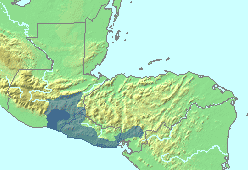
Geographic distribution of the Xincan languages. Solid blue is the recorded range, transparent is the range attested by toponyms.

Xinca (or Xinka, Sinca, or Szinca) is a small extinct family of Mesoamerican languages; formerly, the language was regarded as a single language isolate. Xinca was once spoken by the Indigenous Xinca people in southeastern Guatemala, parts of El Salvador, and Honduras.

They have also historically been referred to as Popoluca or Popoluca-Xinca; Popoluca being a Nahuatl term for unintelligible speech.[1]

Classification

[edit]

The Xincan languages have no demonstrated affiliations with other language families. Lehmann (1920) tried linking Xincan with Lencan, but the proposal was never demonstrated.[2] An automated computational analysis (ASJP 4) by Müller et al. (2013)[3] also found lexical similarities between Xincan and Lencan. However, since the analysis was automatically generated, the grouping could be either due to mutual lexical borrowing or genetic inheritance.

The Xincan languages were formerly regarded as one language isolate. However, the most recent studies suggest they were indeed a language family.[4]

Languages

[edit]

There were at least four Xincan languages, each of which is now extinct.[2] Yupiltepeque was spoken in Jutiapa Department, while the rest were spoken in Santa Rosa Department. Campbell also suggests that the Alagüilac language of San Cristóbal Acasaguastlán may have in fact been a Xincan language.

To these, Glottolog adds

Sachse (2010) considers all Xincan speakers today to be semi-speakers, with the completely fluent speakers having already died.

History

[edit]

Xincan languages have many loanwords from Mayan languages especially in agricultural terms, suggesting extensive contact with Mayan peoples.[6] According to Campbell, Xinca also has a "vast number of Mixe-Zoquean loanwords", suggesting contact with now extinct Mixe-Zoque varieties of the Guatemalan Pacific coast.[7]

In the 16th century the territory of the Xinca extended from the Pacific coast to the mountains of Jalapa. In 1524 the population was conquered by the Spanish Empire. Many of the people were forced into slavery and compelled to participate in the conquest of modern-day El Salvador. It is from this that the names for the town, river, and bridge "Los Esclavos" (The Slaves) are derived in the area of Cuilapa, Santa Rosa.

After 1575, the process of Xinca cultural extinction accelerated, mainly due to their exportation to other regions. This also contributed to a decrease in the number of Xinca-language speakers. One of the oldest references concerning this language was presented by the archbishop Pedro Cortés y Larraz during a visit to the diocese of Taxisco in 1769.

Contemporary situation

[edit]

Xinca was most recently spoken in seven municipalities and a village in the departments of Santa Rosa and Jutiapa. In 1991, it was reported that the language had only 25 speakers; the 2006 edition of the Encyclopedia of Language and Linguistics reported fewer than ten.[8] Nonetheless, of the 16,214 Xinca who responded to the 2002 census,[9] 1,283 reported being Xinka speakers, most probably semi-speakers or people who knew a few words and phrases of the languages.[10] However by 2010, all completely fluent speakers have died, leaving only semi-speakers who know the languages.

Distribution

[edit]

Xincan languages were once more widespread, which is evident in various toponyms with Xincan origins (Campbell 1997:166). These toponyms are marked by such locative prefixes as ay- "place of" (e.g. Ayampuc, Ayarza), al- "place of" (Alzatate), san- "in" (e.g. Sansare, Sansur), or with the locative suffixes -(a)gua or -hua "town, dwelling" (e.g. Pasasagua, Jagua, Anchagua, Xagua, Eraxagua).

Kaufman (1970:66) lists the following towns as once being Xinca-speaking.[11]

Sachse (2010), citing colonial-era sources, lists the following villages in Santa Rosa Department and Jutiapa Department as having Xinca speakers during the Spanish colonial era.

Phonology

[edit]

The phonological system of Xincan languages had some variance, as evidenced by the variations in recorded phonology exhibited among semi-speakers of the two remaining languages.[12][13]

Vowels

[edit]

It is generally agreed upon that the Xincan languages have 6 vowels.[12][13]

Front Central Back
Close i iː ɨ ɨː u uː
Close-mid e eː o oː
Open a aː

Consonants

[edit]

These charts show the consonants of two languages, used by the final semi-speakers of the language.[12][13]

Jumaytepeque consonants
Labial Alveolar Post-
alveolar
Retroflex Velar Glottal
plain sibilant
Stop/
Affricate
plain p t t͡ʃ k ʔ
ejective t͡sʼ t͡ʃʼ
voiced b d (ɡ)
Fricative ɬ s ʂ h
Nasal plain m n
glottalized
Approximant plain l j w
glottalized
Trill plain r
glottalized
Yupiltepeque consonants
Labial Alveolar Post-
alveolar
Velar Glottal
plain sibilant
Stop p t k
Affricate plain t͡ʃ
ejective t͡sʼ
Fricative ɬ s ʃ h
Nasal plain m n
glottalized
Approximant l j w
Trill r

Many younger semi-speakers also used the phonemes /b, d, g, f, ŋ/ due to greater influence from Spanish.[12]

See also

[edit]

References

[edit]
[edit]
Revisions and contributorsEdit on WikipediaRead on Wikipedia
from Grokipedia
The , also known as Xinca or Xinka, constitute a small, extinct family of comprising four closely related varieties—Chiquimulilla Xinka, Guazacapán Xinka, Jumaytepeque Xinka, and Yupiltepeque Xinka—once spoken by the primarily in the Santa Rosa Department of southeastern . Formerly regarded as a single , the Xincan family is now recognized as distinct from neighboring Mayan and other regional language groups, though it exhibits significant lexical borrowing from , particularly in agricultural terminology. These languages, unique within for their internal diversification despite a confined geographic range, became extinct in the , with the last fluent speakers documented in the mid-1900s and revival efforts ongoing but limited by scant documentation. Xinca is officially recognized as a in under the 2003 Law of National Languages, reflecting its cultural significance despite moribund status. Linguistic research, including comparative grammars, highlights phonological and morphological features such as postposed and preverbal articles, distinguishing Xinkan from typologically similar families..pdf)

Classification and Genetic Relations

Internal Family Structure

The Xincan language family consists of four closely related but mutually unintelligible languages, all extinct by the mid-20th century: Chiquimulilla Xinka, Guazacapán Xinka, Jumaytepeque Xinka, and Yupiltepeque Xinka. These languages were documented through colonial-era vocabularies and 20th-century fieldwork, revealing systematic phonological and lexical correspondences that establish their genetic unity as a distinct family rather than dialects of a single proto-language. Comparative reconstruction, including shared innovations in verb morphology such as prefixal subject marking and suffixal object agreement, supports this internal coherence without evidence of deeper branching or subgroups. Each language was tied to specific locales in southeastern Guatemala: Chiquimulilla Xinka around the town of Chiquimulilla in Santa Rosa Department, Guazacapán Xinka in the Guazacapán municipality of Santa Rosa, Jumaytepeque Xinka near Jumaytepeque in Jutiapa Department, and Yupiltepeque Xinka in the vicinity of Yupiltepeque in Jutiapa. Limited attestation—primarily wordlists from the 16th to 19th centuries and fragmentary grammars—precludes finer resolution of internal phylogeny, though Guazacapán Xinka preserves the most extensive records, including a last fluent speaker documented in 1980. Some analyses propose a possible fifth variety from Estanzuela, but it lacks sufficient distinct data to confirm separation from the core four.

Proposed External Affiliations and Debates

The Xincan languages lack established genetic affiliations with any other language families, positioning them as a small isolate family within the Mesoamerican linguistic area. Proposals for external relations have been sparse and unconvincing, primarily relying on vocabulary comparisons rather than systematic phonological or morphological evidence. The most notable hypothesis linked Xincan to the , spoken historically in western and eastern . In 1920, German linguist Walter Lehmann proposed this connection based on 20 shared lexical items, such as apparent cognates for body parts and numerals. However, critics have noted that none of Lehmann's proposed cognates exhibit regular sound correspondences, with similarities attributable to chance, borrowing, or rather than inheritance from a common . Lyle Campbell, in assessments of Middle American languages, has similarly dismissed the link due to insufficient evidence, emphasizing the need for shared innovations beyond diffused areal traits. In a comprehensive comparative grammar, linguist Christopher Rogers evaluates Lehmann's proposal alongside other potential ties, such as to Mixe-Zoquean or Mayan families, but finds no support for genetic relatedness. Rogers argues that observed parallels stem from prolonged contact in southeastern , including loanwords for agriculture from Mayan (e.g., terms for cultivation), rather than descent. This areal influence is evident in shared phonological features like glottal stops and ejective consonants, but these do not indicate ancestry. Modern consensus, as reflected in surveys of indigenous American languages, treats Xincan as unclassified externally, with debates centering on the rigor required to distinguish contact-induced convergence from true kinship.

Historical Development

Pre-Columbian Origins and Early Evidence

The Xincan language family, consisting of four closely related but distinct languages—Chiquimula Xinca, Guazacapán Xinca, Jumaytepeque Xinca, and Yantacoyuca Xinca—originated in southeastern , with Proto-Xinkan reconstructed as the common ancestor exhibiting minimal divergence among daughter languages, suggesting relatively recent internal development within the . reveals that a significant portion of Proto-Xinkan's core agricultural and commercial vocabulary derives from loans originating in Mayan or Mixe-Zoquean languages, indicating prolonged pre-Hispanic contact and possible displacement of Xincan speakers from highland interiors toward Pacific coastal plains under pressure from expanding Mayan groups during the Late Classic or Postclassic periods (ca. 600–1500 CE). These borrowings, comprising nearly all terms for cultivated plants and , underscore causal dynamics of linguistic tied to Mesoamerican economic networks rather than genetic affiliation, as Xincan remains an isolate family unlinked to Mayan, Lencan, or other regional phyla despite superficial areal influences. Early evidence for Xincan presence derives primarily from toponyms bearing identifiable Xinkan morphemes, attesting to a broader pre-Columbian distribution extending beyond attested speech areas into eastern and southern , potentially reflecting ancient migrations or territorial contractions predating Nahua (Pipil) incursions around 1200 CE. Such place names, analyzed through comparative onomastics, preserve lexical roots absent in colonial documentation of neighboring languages, providing indirect corroboration of Xincan ethnolinguistic continuity in regions like the Motagua Valley and Pacific piedmont, where archaeological correlates of non-Mayan sedentary communities align temporally with Post-Olmec horizons (ca. 1000 BCE onward). This toponymic footprint, combined with reconstructed syntax and showing stability from Proto-Xinkan, supports an indigenous Mesoamerican rooting without trans-Pacific or external origins, countering unsubstantiated diffusionist claims lacking phonological or semantic rigor. Direct pre-Columbian textual evidence is absent, as no indigenous writing system is attested for Xincan speakers, limiting verification to interdisciplinary synthesis of and rather than epigraphy or codices available for Mayan or . Colonial-era vocabularies and grammars, while postdating 1524 Spanish contact, retroactively illuminate pre-Hispanic patterns through preserved substrate elements in regional ethnonyms and unchanged syntactic frames, affirming Xincan's role in eastern Guatemala's multilingual amid Mayan dominance.

Colonial Documentation and Spanish Influence

The primary colonial documentation of the Xincan languages dates to the late 18th and early 19th centuries, reflecting efforts by Spanish clergy to facilitate evangelization among Xinca speakers in southeastern . The most comprehensive source is the Arte de la lengua szinca, a compiled circa 1773 by de Matos, a secular who served in Xinca-speaking regions from 1745 to 1764 and may have been a native speaker. This work, preserved in the Tozzer Library at , spans 108 to 153 folios and employs a Latin grammatical model to describe Xinka (including orthographic conventions like for affricates and for ejectives), morphology (such as cross-referencing affixes and possessive distinctions), syntax (favoring verb-object-subject order), and lexicon, with approximately 1,300 entries including sample phrases for religious instruction. Earlier indirect references appear in colonial geographic surveys, such as Antonio de Crespo's 1740 Relación geográfico del Partido de , which notes Xinca linguistic presence, and Pedro Cortés y Larraz's 1768–1770 Descripción geográfico-moral, documenting Xinca distribution amid Spanish-dominant missionary practices. Supplementary materials include vocabularies and texts from the early , such as Hermenegildo Morales's 1812 Idioma Zeeje, a word-for-word translation of a Spanish proclamation into Chiquimulilla Xinka by an indigenous priest, marking one of the earliest known Xinca-authored colonial texts. By the late colonial period, compilations like Juan Gavarrete's 1868 vocabularies—covering about 90 terms from Sinacantán, Yupiltepeque, and Jalapa variants, organized by semantic categories including numerals—further preserved lexical data for administrative and scholarly purposes, edited posthumously by C. Hermann Berendt in 1875. These documents, produced amid Franciscan and secular missionary oversight, prioritized religious terminology over ethnographic detail, with no substantial 16th- or 17th-century records identified, likely due to the peripheral status of Xinca territories relative to central Mayan evangelization efforts. Spanish linguistic influence on Xincan languages manifested through extensive lexical borrowing, syntactic calquing, and phonological adaptation, driven by colonial imposition of Spanish as the language of church, governance, and trade. Religious loanwords dominate, including misa (''), doctrina (''), confesar ('to confess'), and anima (''), integrated into Xinka grammars for catechetical use. Secular borrowings encompassed administrative terms like cabildo (as capiltu, denoting local council) and economic items such as tumin ('money'), reflecting bilingual interactions in Santa Rosa Department communities. Phonologically, Spanish mid vowels often raised to high vowels (e.g., e to i, o to u), and clusters simplified (e.g., porque as por k'e), while orthographies in colonial texts adapted Spanish script with modifications for Xinca ejectives and fricatives. Syntactically, potential shifts toward subject-verb-object patterns and passive constructions mirrored Spanish models, alongside subordinator imports like si ('if') and porque ('because'), as observed in translations; these changes accelerated among semi-speakers substituting unknown Xinca forms with Spanish equivalents, per 18th-century clerical reports. Such influences, critiqued by colonial archbishops for hindering full immersion in indigenous tongues, underscore the causal role of in promoting over preservation.

Decline, Extinction Processes, and Causal Factors

The decline of the Xincan languages began acutely after the Spanish conquest of southeastern in the 1520s, when Xinca communities suffered massive reductions from violence, introduced diseases, and exploitative labor systems such as the , which scattered populations and undermined communal language transmission. These factors, combined with the Xinca's relatively small pre-conquest estimated in the tens of thousands, created immediate vulnerability, as surviving speakers were often relocated for and agricultural labor, further eroding dialectal cohesion across variants like Guazacapán and Chiquimulilla Xinca. By the 18th and 19th centuries, Spanish imposition through Catholic evangelization, colonial administration, and trade had marginalized Xincan usage to domestic and ritual contexts, with early documentation efforts—such as 18th-century vocabularies—revealing already heavy Spanish borrowing and simplification in moribund speech forms. Intergenerational transmission faltered as mixed marriages with Spanish settlers and neighboring Pipil or Maya groups increased, and children were incentivized or coerced into Spanish monolingualism for ; this shift intensified in the amid Guatemala's modernization, , and Spanish-only schooling policies, leaving only elderly fluent speakers by the 1960s–1980s. Extinction processes followed a classic pattern of : initial demographic attrition reduced speaker pools, followed by structural decay—evidenced in surviving records by excessive and atypical simplifications in final-generation speakers of Guazacapán Xinca—culminating in dormancy by the late , with no remaining first-language users and minimal L2 proficiency even among descendants. Primary causal factors included not only colonial disruption but also the absence of a Xincan , which prevented cultural preservation against Spanish's literate dominance, and economic pressures favoring Spanish for wage labor and migration, rendering native tongues economically disadvantageous without institutional support. These non-linguistic pressures—prioritizing assimilation over —outweighed any internal linguistic resilience, as the family's isolate status offered no broader affiliations for reinforcement.

Modern Revitalization Attempts

Efforts to revitalize the Xincan languages, which became extinct with the death of the last fluent speaker of the Guazacapán variety around 2020, have focused on among descendants since the early 2000s. Key documentation includes audio and video recordings made in 2008 by linguist Chris Rogers of with a 95-year-old native speaker named Carlos, providing foundational materials for learners. In 2013–2014, Rodrigo Ranero, a student, led the project "The Reclamation of Xinka: Returning the Language to its People" in collaboration with the Coordinating Council of the Xinka People of (COPXIG). This initiative produced the first Xinka textbook, conducted teacher workshops, and developed pedagogical materials approved by the Guatemalan government for school integration, funded by $20,000 from the Davis Projects for Peace and Strauss Public Service Scholarship. Plans for two advanced textbooks followed, aiming to expand teaching to other Xincan communities. The Xinka Parliament has advocated for cultural and linguistic support since the mid-2000s, organizing events and lobbying for inclusion, though implementation faces hurdles like a lack of fluent instructors. Youth-led initiatives, prominent in the , emphasize learning; for instance, volunteers at the Xinka Academy in Guazacapán, such as 22-year-old Ayda Cortes Carrillo, promote the language through community activities, supported by university lecturers like Misrain de la Rosa Perez mentoring students including Obed Vasque and Jimmy Revolorio. Challenges persist, including the absence of native media like radio or television programming and reliance on archived recordings, limiting fluency development despite two decades of . Xincan-driven programs emerged alongside broader policies, but progress remains modest, with revitalization tied to preservation amid Spanish dominance.

Geographic Distribution

Core Regions in Guatemala

The Xincan languages were historically spoken in the southeastern departments of Guatemala, with Santa Rosa and Jutiapa serving as the primary core regions. These departments, located along the Pacific coastal plain and adjacent highlands, hosted the Xinca people, whose territories extended from coastal areas inland to the southeastern highlands. The four attested varieties of the family—Guazacapán Xinka, Chiquimulilla Xinka, Jumaytepeque Xinka, and Yupiltepeque Xinka—were each tied to specific municipalities within these departments, reflecting localized dialectal distinctions maintained until colonial documentation in the 16th–18th centuries. In Santa Rosa Department, Guazacapán Xinka prevailed in the municipality of Guazacapán, while Chiquimulilla Xinka was documented in Chiquimulilla municipality; both areas lie near the border with and were centers of pre-Columbian Xinca settlement predating extensive Mayan influence. Adjacent Department encompassed the inland municipalities of Jumaytepeque and Yupiltepeque, where the respective Xinka varieties were spoken, marking the northeastern extent of the family's distribution. Linguistic records, including colonial vocabularies and modern comparative analyses, confirm these locales as the epicenters, with no robust evidence of Xincan speech beyond this compact zone in proper. Xinca communities in nearby Jalapa Department represent peripheral extensions of ethnic presence rather than core linguistic strongholds, as primary documentation focuses on Santa Rosa and for the languages themselves. Today, these regions retain Xinca descendants amid Spanish dominance, but the languages are dormant, with no first-language speakers reported since the late and revitalization efforts limited to cultural documentation rather than fluent transmission.

Historical Migrations and Relocations

The , speakers of the Xincan languages, occupied the southeastern Pacific coastal plain of , extending along the Río de los Esclavos (now Río Los Esclavos) and its tributaries, approximately at 13°50' N, 90°25' W, prior to European contact. Linguistic and toponymic indicates they may represent an ancient layer of inhabitants predating the arrival of Mayan and Nahua-speaking groups, potentially displaced inland or to peripheral coastal zones by these later migrations during the Preclassic and periods (ca. 2000 BCE–900 CE). Postclassic expansions of Pipil (Nahua-speaking) populations from central , beginning around 1200 CE, exerted further pressure on Xinca territories, likely restricting them to eastern enclaves in modern Santa Rosa and departments while Pipil dominated adjacent western areas in and . This displacement is inferred from overlapping settlement patterns and the absence of Xinca toponyms in core Pipil zones, though direct archaeological confirmation remains limited. Spanish conquest initiated significant relocations. In 1524, Pedro de Alvarado's forces defeated Xinca warriors at Atiquipaque, incorporating survivors into tributary systems. Renewed resistance in 1526 prompted intervention by Pedro Portocarrero, resulting in mass enslavement, branding, and forced labor relocations, which named the Río de los Esclavos after the enslaved Xinca transported along it. Colonial policies subsequently concentrated remaining Xinca populations into doctrina towns such as Guazacapán, Chiquimulilla, Jumaytepeque, and Yupiltepeque for administrative control, , and labor extraction, where Xincan linguistic varieties persisted into the 18th century.

Phonological Inventory

Vowel Systems and Harmony Processes

The Xinkan languages possess a vowel system comprising six phonetic qualities—/i, e, a, o, u, ə/—each realized in both short and long forms, with length serving as a phonemic contrast across the family. This inventory is largely uniform among the five attested varieties (Chuti, Yupiltepeque, , Guazacapan, and Santa Rosa Xinca), though minor orthographic variations appear in colonial sources due to Spanish missionary transcriptions. Long vowels, often transcribed as geminates (e.g., ii for /iː/), typically occur in stressed syllables and contribute to lexical distinctions, such as minimal pairs differentiating meaning based on duration. Vowel harmony in Xinkan operates as a long-distance assimilatory process, enforcing co-occurrence restrictions within morphemes and across word domains, a feature atypical for the broader Mesoamerican linguistic area but paralleled in neighboring isolates like Jicaquean and Lencan, suggesting areal diffusion via contact. Traditional descriptions posit harmony among "strong" vowels /i, u, a/, which permit only compatible vowels in suffixed or compounded forms, while "weak" vowels (/e, o, ə/) reduce or alternate to match. However, a reanalysis incorporating data from all five languages proposes an underlying inventory of four vowels—/i, a, u, ə/—augmented by word-spanning propagation of an extrasegmental feature [-high]. Under this model, [-high] lowers high vowels to mid counterparts (/i/ → /e/, /u/ → /o/), yielding the observed six surface qualities without invoking multiple underlying mids; /a/ and /ə/ remain neutral. This feature spreads rightward from a trigger vowel, typically in the root, affecting affixes and enforcing uniformity, as in forms where non-harmonic combinations are unattested in native . Such simplifies phonological representation and aligns Xinkan patterns with typological cross-linguistic tendencies for height-based assimilation, though empirical attestation is limited to fragmentary 16th–19th-century vocabularies and grammars, precluding full paradigmatic testing. Loanwords from occasionally violate , adapting via to /ə/ or truncation, indicating its productivity in core vocabulary but permeability under borrowing. Across varieties, scope varies slightly—stricter in eastern dialects like Guazacapan—but consistently targets over backness or , distinguishing it from Uralic or Turkic systems.

Consonant Systems and Phonotactics

The Xinkan languages exhibit inventories characterized by a series of plain and glottalized (ejective or preglottalized) stops, fricatives, affricates, nasals, liquids, and glides, with notable variation across the four attested languages (Chiquimulilla, Guazacapán, Jumaytepeque, and Yupiltepeque Xinca). Proto-Xinkan is reconstructed with a robust system including bilabial, alveolar, alveopalatal, and velar stops (*p, *b, *p'; *t, *d, *t'; *k, *g, k'), nasals (*m, *m'; *n, n'), fricatives (*s, *s'; *š, š'), affricates (*č, č'), lateral (*l, l'), rhotic (*r, r'), and glides (*w, *w'; *y, y') alongside glottal ʔ and h. serves as a phonemic contrast, distinguishing pairs like p/p' and t/t', and is retained variably in daughter languages, with simplification observed in Yupiltepeque (lacking glottalized stops except possibly n') and fuller retention in Guazacapán (including glottalized laterals l' and palatals ʎ').
Place of ArticulationStops (Plain/Glottalized)Fricatives (Plain/Glottalized)Affricates (Plain/Glottalized)Nasals (Plain/Glottalized)Laterals/Rhotics/Glides
Bilabial*p, *b / *p'*m / *m'*w / *w'
Alveolar*t, *d / *t'*s / *s'*n / *n'*l / *l'; *r / *r'
Alveopalatal*š / *š'*č / *č'*y / *y'
Velar*k, *g / *k'
Glottal*h
This table reconstructs the Proto-Xinkan inventory, with voiced stops (*b, *d, g) marginal or allophonic in some contexts but phonemic in others like Jumaytepeque. Daughter languages show innovations such as retroflex fricatives (*ʂ, ʂ') in Chiquimulilla and Guazacapán, and voiceless lateral ɬ in Guazacapán and Yupiltepeque, reflecting areal influences or internal developments. Phonotactics in Xinkan languages favor open syllables, with the canonical structure (C)V(C) permitting optional single-consonant onsets and codas but prohibiting complex onsets like CCV. Codas are restricted, primarily to stops (*k, ʔ), nasals (n), and select fricatives or liquids in specific languages (e.g., *s, *š, *r, l in Guazacapán loans or derivations), and are absent word-finally in conservative reconstructions of Proto-Xinkan. Consonant clusters occur medially as biconsonantal sequences (e.g., *sp, st), typically across syllable boundaries (CVC.CV), with the first member non-glottalized and no geminates (C1C1) allowed; illegal clusters trigger epenthetic vowel insertion (e.g., CVCCVCVeCCV) to maintain sonority hierarchies. Glottalized consonants rarely cluster as the second member, except in Jumaytepeque, and word-initial positions accommodate all consonants, though voiced stops and certain fricatives like ɸ (in Chiquimulilla) are rarer, often loan-derived. These constraints interact with morphological processes, such as glottalization of the rightmost consonant in imperfective transitive verbs, underscoring the phonological role of glottal features in aspect marking.

Grammatical Structure

Morphological Features

Xinkan languages exhibit agglutinative morphology, characterized by sequential affixes marking grammatical categories with minimal fusion, alongside a head-marking strategy where verbs arguments via prefixes and suffixes. Derivational processes are prominent, enabling the formation of nouns from verbs and vice versa through suffixes such as -k for instrumentals, -ɠa for agentives, and -wa for locatives. Inflectional morphology distinguishes between alienable and in nouns, with prefixes (e.g., nu- for first-person alienable) applied to alienable items and suffixes (e.g., -n for first-person inalienable) to body parts and terms. Plural marking is restricted primarily to animate and nouns via suffixes like -ɠi or -kaɲi, while inanimates employ quantifiers such as te:na- for multiplicity. Verb morphology features person cross-referencing that varies by tense-aspect: prefixes mark subject or agent-subject in non-past or imperfective aspects (e.g., Ɉan- for first-person), shifting to suffixes in past or perfective forms (e.g., -n for first-person), reflecting a split between accusative alignment in ongoing actions and tripartite marking in completed ones. Tense-aspect-mood categories are encoded through a combination of agglutinative suffixes (e.g., -ka for simple past, -ya for progressive) and periphrastic constructions involving auxiliaries like Ɉaya- or adverbials such as paɈ for perfective completion. Derivational valency adjustments include transitivizers like -ya or -ɠa for causatives and intransitivizers such as -ki for antipassives, with verbs classified into paradigms based on stem-final vowels influencing conjugation patterns. Nominal derivation from verbs occurs productively, as evidenced by patterns forming object nouns, alongside classifiers in compounds (e.g., þu- for diminutives or Ɉuk- for mature status) that specify gender, age, or relational roles. Proto-Xinkan reconstructions indicate that core morphological traits, including these affixation strategies and verb categorization into transitive and intransitive classes with classifiers like -ɬaʔ, persisted across daughter languages, though contact with introduced ergative influences on alignment. Overall, the system's agglutinative nature supports complex without heavy reliance on for argument encoding, distinguishing Xinkan from neighboring fusional or isolating families.

Syntactic Patterns

Xincan languages are characterized by a basic verb-initial of VOS (verb-object-subject), reconstructed for Proto-Xinkan and retained with minimal variation across daughter languages such as Guazacapán Xinca and Chiquimulilla Xinca. This order reflects a head-marking structure where predicates precede core arguments, though flexibility arises from pragmatic factors like information packaging, enabling SVO or SOV variants without altering core relations, often supported by case markers on nouns. Clause structure distinguishes independent main clauses from subordinate ones through distinct verbal morphology: main clauses employ set-A prefixes for agents/subjects in non-past contexts and set-B suffixes for patients/objects or past tenses, while subordinate clauses favor dependent suffixes and deranked predicates lacking full TAM marking. For example, in Guazacapán Xinca, a transitive main clause might appear as na nen' tura-n pe' maaɬɨk ('I brought the firewood here'), with the verb tura-n incorporating agent agreement and completion aspect before the object and oblique. Argument alignment is accusative, with subjects of intransitives patterned like transitive agents (A/S), though contact with verb-final introduced occasional SOV shifts in some varieties without disrupting the inherited VOS dominance. Syntactic patterns show limited diachronic evolution, with near-identical clause types and nominal embedding across the family; possessors precede possessums in NPs (e.g., Ɉan-Ɉuk-šumu 'my husband' in reconstructed forms), and interrogatives front wh-words before the predicate. Complex constructions include periphrastic progressives with existential auxiliaries (e.g., Ɉišapa Ɉahi 'he is leaving') and causal/purposive subordinates marked by particles like ɈaȠi or neȠa, maintaining verb centrality. These features underscore a conservative syntax resistant to substrate influence, despite areal pressures from Mayan and Spanish.

References

Add your contribution
Related Hubs
User Avatar
No comments yet.