


Community hub
Recent from talks
Contribute something
Nothing was collected or created yet.
Boston University
View on Wikipedia
Boston University (BU) is a private research university in Boston, Massachusetts, United States. BU was founded in 1839 by a group of Boston Methodists with its original campus in Newbury, Vermont. It was chartered in Boston in 1869. The university is a member of the Association of American Universities and the Boston Consortium for Higher Education.[13][14]
Key Information


The university has nearly 38,000 students and more than 4,000 faculty members[15] and is one of Boston's largest employers.[16] It offers bachelor's degrees, master's degrees, doctorates, and medical, dental, business, and law degrees through 17 schools and colleges on three urban campuses.[17] BU athletic teams compete in the Patriot League and Hockey East conferences, and their mascot is Rhett the Boston Terrier. The Boston University Terriers compete in NCAA Division I.
The university is nonsectarian, though it retains its historical affiliation with the United Methodist Church.[5][6][7] The main campus is situated along the Charles River in Boston's Fenway–Kenmore and Allston neighborhoods, while the Boston University Medical Campus is located in Boston's South End neighborhood. The Fenway campus houses the Wheelock College of Education and Human Development, formerly Wheelock College, which merged with BU in 2018.[18] The university is classified among "R1: Doctoral Universities – Very high research activity".[19]
History
[edit] | This section needs additional citations for verification. (May 2019) |


Boston University traces its roots to the establishment of the Newbury Biblical Institute in Newbury, Vermont, in 1839,[20] and was chartered with the name "Boston University" by the Massachusetts Legislature when it moved there in 1869. The university organized formal centennial observances both in 1939 and 1969.[21] One or the other, or both dates, may appear on various official seals used by different schools of the university.
In Vermont and New Hampshire
[edit]On April 24–25, 1839, a group of Methodist ministers and laymen at the Old Bromfield Street Church in Boston elected to establish a Methodist theological school. Set up in Newbury, Vermont, the school was named the "Newbury Biblical Institute".
In 1847, the Congregational Society in Concord, New Hampshire, invited the institute to relocate to Concord and offered a disused Congregational church building with a capacity of 1200 people. Other citizens of Concord covered the remodeling costs. One stipulation of the invitation was that the Institute remain in Concord for at least 20 years. The charter issued by New Hampshire designated the school the "Methodist General Biblical Institute", but it was commonly called the "Concord Biblical Institute".[22]
In Beacon Hill
[edit]With the agreed twenty years coming to a close, the trustees of the Concord Biblical Institute purchased 30 acres (120,000 m2) on Aspinwall Hill in Brookline, Massachusetts, as a possible relocation site. The institute moved in 1867 to 23 Pinkney Street in the Beacon Hill neighborhood of Boston, and received a Massachusetts Charter as the "Boston Theological Seminary".
In 1869, three trustees of the Boston Theological Institute obtained from the Massachusetts Legislature a charter for a university by the name of "Boston University".[23] These trustees were successful Boston businessmen and Methodist laymen, with a history of involvement in educational enterprises, and they became the founders of Boston University. They were Isaac Rich (1801–1872), Lee Claflin (1791–1871), and Jacob Sleeper (1802–1889), for whom Boston University's three West Campus dormitories were later named. Lee Claflin's son, William, was then Governor of Massachusetts and signed the University Charter on May 26, 1869, after it was passed by the Legislature.
As reported by Kathleen Kilgore in her book Transformations, A History of Boston University (see Further reading), the founders directed the inclusion in the Charter of the following provision, unusual for its time:
- No instructor in said University shall ever be required by the Trustees to profess any particular religious opinions as a test of office, and no student shall be refused admission ... on account of the religious opinions he may entertain; provided, nonetheless, that this section shall not apply to the theological department of said University.[24]
Every department of the new university was also open to all on an equal footing regardless of sex, race, or (with the exception of the School of Theology) religion.
Boston Theological Institute was absorbed into Boston University in 1871 as the BU School of Theology.[25]
On January 13, 1872, Isaac Rich died, leaving the vast bulk of his estate to a trust that would go to Boston University after ten years of growth while the university was organized. Most of this bequest consisted of real estate throughout the core of the city of Boston, which was appraised at more than $1.5 million. Kilgore describes this as the largest single donation to an American college or university as of that time. By December, however, the Great Boston Fire of 1872 had destroyed all but one of the buildings Rich had left to the university, and the insurance companies with which they had been insured were bankrupt. The value of his estate, when turned over to the university in 1882, was half what it had been in 1872.[26]
As a result, the university was unable to build its contemplated campus on Aspinwall Hill, and the land was sold piecemeal as development sites. Street names in the area, including Claflin Road, Claflin Path, and University Road, are the only remaining evidence of university ownership in this area. Following the fire, Boston University established its new facilities in buildings scattered throughout Beacon Hill, and later expanded into the Boylston Street and Copley Square area.[27]
After receiving a year's salary advance to allow him to pursue his research in 1875, Alexander Graham Bell, then a professor at the school, invented the telephone in a Boston University laboratory.[28] In 1876, Borden Parker Bowne was appointed professor of philosophy. Bowne, an important figure in the history of American religious thought, was an American Christian philosopher and theologian in the Methodist tradition. He is known for his contributions to personalism, a philosophical branch of liberal theology.[29] The movement he led is often referred to as Boston Personalism.[30]
The university continued its tradition of openness in this period. In 1877, Boston University became the first American university to award a PhD to a woman, when classics scholar Helen Magill White earned hers with a thesis on "The Greek Drama".[28][20] Then in 1878 Anna Oliver became the first woman to receive a degree in theology in the United States, but the Methodist Church would not ordain her.[28] Lelia J. Robinson, who graduated from the university's law school in 1881, became the first woman admitted to the bar in Massachusetts.[28] Solomon Carter Fuller, who graduated from the university's School of Medicine in 1897, became the first black psychiatrist in the United States and would make significant contributions to the study of Alzheimer's disease.[28]
Move to current campus and expansion
[edit]

.jpg)
Seeking to unify a geographically scattered school and enable it to participate in the development of the city, school president Lemuel Murlin arranged that the school buy the present campus along the Charles River. Between 1920 and 1928, the school bought the 15 acres (61,000 m2) of land that had been reclaimed from the river by the Riverfront Improvement Association. Plans for a riverside quadrangle with a Gothic Revival administrative tower modeled on the "Old Boston Stump" in Boston, England were scaled back in the late 1920s when the State Metropolitan District Commission used eminent domain to seize riverfront land for Storrow Drive.[31] Murlin was never able to build the new campus, but his successor, Daniel L. Marsh, led a series of fundraising campaigns (interrupted by both the Great Depression and World War II) that helped Marsh to achieve his dream and to gradually fill in the university's new campus.[32] By spring 1936, the student body included 10,384 men and women.[33]
In 1951, Harold C. Case became the school's fifth president and under his direction the character of the campus changed significantly, as he sought to change the school into a national research university. The campus tripled in size to 45 acres (180,000 m2), and added 68 new buildings before Case retired in 1967. The first large dorms, Claflin, Rich and Sleeper Halls in West Campus were built, and in 1965 construction began on 700 Commonwealth Avenue, later named Warren Towers, designed to house 1800 students. Between 1961 and 1966, the BU Law Tower, the George Sherman Union, and the Mugar Memorial Library were constructed in the Brutalist style, a departure from the school's traditional architecture. The College of Engineering and College of Communication were housed in a former stable building and auto-show room, respectively.[34] Besides his efforts to expand the university into a rival for Greater Boston's more prestigious academic institutions, such as Harvard University and the Massachusetts Institute of Technology (both in Cambridge across the Charles River from the BU campus), Case involved himself in the start of the student/societal upheavals that came to characterize the 1960s.
When a mini-squabble over editorial policy at college radio WBUR-FM – whose offices were under a tall radio antenna mast in front of the School of Public Relations and Communications (later College of Communications) – started growing in the spring of 1964, Case persuaded university trustees that the university should take over the widely-heard radio station (now a major outlet for National Public Radio and still a BU-owned broadcast facility). The trustees approved the firing of student managers and clamped down on programming and editorial policy, which had been led by Jim Thistle, later a major force in Boston's broadcast news milieu. The on-campus political dispute between Case's conservative administration and the suddenly active and mostly liberal student body led to other disputes over BU student print publications, such as the B.U. News and the Scarlet, a fraternity association newspaper.
The presidency of John Silber also saw much expansion of the campus and programs. In the late 1970s, the Lahey Clinic vacated its building at 605 Commonwealth Avenue and moved to Burlington, Massachusetts. The vacated building was purchased by BU to house the School of Education.[35] After arriving from the University of Texas in 1971, Silber set out to remake the university into a global center for research by recruiting star faculty. Two of his faculty "stars", Elie Wiesel and Derek Walcott, won Nobel Prizes shortly after Silber recruited them.[36] Two others, Saul Bellow and Sheldon Glashow won Nobel Prizes before Silber recruited them.[36]
In addition to recruiting new scholars, Silber expanded the physical campus, constructing the Photonics Center for the study of light, a new building for the School of Management, and the Life Science and Engineering Building for interdisciplinary research, among other projects.[37] Campus expansion continued in the 2000s with the construction of new dormitories and the Agganis Arena.
Student and faculty activism
[edit]
To protest the poor condition of Boston University's African-American curriculum, on April 25, 1968 (three weeks after the assassination of Martin Luther King Jr.), African-American students conducted a sit-in and locked BU president Arland F. Christ-Janer out of his office for 12 hours.[38] Umoja, BU's Black Student Union, put forward ten demands to Christ-Janer and got nine of them approved that included the creation of a Martin Luther King Chair of Social Ethics, expansion of African-American library resources and tutoring services, opening an "Afro-American coordinating center," admission and selection of more Black students and faculty. No disciplinary action was taken against the students who only opened the chains after their demands were met. "There was no surprise, or feeling of victory on the students' parts," said Christ-Janer in response to the sit-in. "They had confidence in their demands, and I had a confidence in them. The university, black and white alike, was the winner."[38] The late twentieth century saw a culmination in student activism at Boston University during the presidency of John R. Silber.
In 1972, student protests rose against the university administration's endorsement of Marine Corps recruitment on campus which faced significant opposition from the Student Democratic Society.[39]
On March 27, 1972, 50 police officers in "riot gear" defused a demonstration of 150 protesters at 195 Bay State Road, the BU Placement Office, where Marine recruiters were holding student interviews. A few protesters were arrested while some sustained minor injuries, including a student and two officers. Contrary to student claims of a peaceful protest, Silber said, "Civilization doesn't abdicate in face of barbarism. Those students or nonstudents who deliberately seek violent confrontation and refuse all efforts at peaceful resolution of issues must expect society to use its police power in its own defense." In response to Silber's decision of a forceful police intervention, the Faculty State conducted a vote on Silber's resignation which could not pass due to a "vote of 140–25 with 32 abstentions."[39] As a result of this failed motion, Peter P. Gabriel resigned his position as the dean of Boston University's School of Management in protest of Silber's presidency and his "counterproductive" leadership.[40] Silber's support of military recruitment on campus, which he pushed to make the university eligible for federal grants,[41] caused other demonstrations. On December 5, 1972, fifteen BU Student Government officers started a three-day hunger strike at Marsh Chapel demanding Silber "to file a lawsuit against the Federal government challenging the constitutionality of the Herbert Amendment."[42]
On March 16, 1978, about 900 Boston University students gathered at the George Sherman Union to protest against the $400 rise in tuition and $150 rise in housing charges declared by the trustees on March 7.[41] The protest interrupted a board of trustees conference. While John Silber and Arthur G. B. Metcalf, chairman of the board of trustees, were negotiating with student government representatives to discuss the matter further on a separate occasion, the protesters marched into the building from two entrances, effectively trapping 40 trustees and 10 university administrators in the building for over thirty minutes. Twenty officers from the Boston University Police Department had to disperse the crowd from the stairwells. The protest resulted in the arrest of 19 year old Joshua Grossman, while another student and two BUPD officers were taken to hospitals.[41]
On April 5, 1979, several hundred faculty members, as well as clerical workers and librarians, went on strike. The faculty members were seeking a labor contract while the clerical workers and librarians were seeking union recognition. The strike ended by mid-April under terms favorable to the employees.
On November 27, 1979, the committee to Defend Iranian Students—composed of Iranian students, Youths Against Foreign Fascism and the Revolutionary Communist Party—held a demonstration at the George Sherman Union against the deposed Shah of Iran and the deportation of Iranian students from the US. "To the Iranian people, that man (the shah) is Adolf Hitler," students protested. "The Shah Must Face the Wrath of the People." This was met with chants of "God Bless America" from the opposing group. Twenty policemen broke up the confronting parties though no arrests were made.[43]
21st century
[edit]

Following the trustees' push for the resignation of the university's eighth president, Jon Westling, they voted unanimously to offer the presidency of the university to Daniel S. Goldin, former administrator of NASA under presidents George H. W. Bush, Bill Clinton, and George W. Bush. Goldin was set to take over the job on November 1, 2003, and be officially inaugurated on November 17, though the deal collapsed in the week leading up to his arrival in Boston.
The university eventually terminated Goldin's contract at a cost of $1.8 million and initiated a second search to fill the presidential position, culminating with the inauguration of Robert A. Brown as the university's 10th president on April 27, 2006. (Aram Chobanian, who had served as president ad interim during most of the second search, was formally recognized as the 9th president in 2005.)[44] In the wake of this fiasco, several actions were taken to improve the image projected to potential presidential candidates as well as the functioning of the board itself.[45]
In 2012, the university was invited to join the Association of American Universities, comprising 66 leading research universities in the United States and Canada. BU, one of four universities at the time invited to join the group since 2000, became the 62nd member. In the Boston area, Harvard, MIT, Tufts, and Brandeis are also members.[14][46][47]
That same year, a $1 billion fundraising campaign was launched, its first comprehensive campaign, emphasizing financial aid, faculty support, research, and facility improvements. In 2016, the campaign goal was reached. The board of trustees voted to raise the goal to $1.5 billion and extend through 2019. The campaign has funded 74 new faculty positions, including 49 named full professorships and 25 Career Development Professorships.[48] The campaign concluded in September 2019, raising a total of $1.85 billion over seven years.[49]
In February 2015, the faculty adopted an open-access policy to make its scholarship publicly accessible online.[50] The Charles River and Medical Campuses have undergone physical transformations since 2006, from new buildings and playing fields to dormitory renovations. The campus has seen the addition of a 26-floor student residence at 33 Harry Agganis Way, nicknamed StuVi2, the New Balance Playing Field, the Yawkey Center for Student Services, the Alan and Sherry Leventhal Center, the Law tower and Redstone annex, the Engineering Product Innovation Center (EPIC), the Rajen Kilachand Center for Integrated Life Sciences & Engineering, and the Joan and Edgar Booth Theatre, which opened in fall 2017.[51] The construction of the Rajen Kilachand Center for Integrated Life Sciences & Engineering was funded by part of BU's largest ever gift, a $115 million donation from Rajen Kilachand.[52] The Dahod Family Alumni Center in the renovated BU Castle began in May 2017 and was completed in fall 2018.[53] Development of the university's existing housing stock has included significant renovations to BU's oldest dorm, 610 Beacon Street (formerly Myles Standish Hall) and Annex, and to Kilachand Hall, formerly known as Shelton Hall, and a brand new student residence on the Medical Campus. In May 2024, Boston University removed Myles Standish's name from the building. It is now referred to by its address, 610 Beacon Street.[54] [55] [56]
In 2019, Boston University expanded its financial aid program so that it would "meet the full need for all domestic students who qualify for financial aid," starting in fall 2020.[57][58]
In September 2022, Robert A. Brown announced he will step down at the end of the 2022–2023 academic year. Brown began his presidency in September 2005, and his contract was set to run through 2025.[59] Although Brown chose to end his presidency, he will resume teaching at the university.[60] On August 1, 2023, Kenneth W. Freeman started serving as president ad interim.[61] In October 2023, Melissa Gilliam was named the incoming president, starting her term on July 1, 2024.[62]
On July 1, 2024, Melissa Gilliam began her tenure as the university's 11th president.[63][64] On October 16, 2024, the 2024 Boston University strikes ended.[65]
Response to the COVID-19 pandemic
[edit]The university closed down due to the COVID-19 and shifted to online learning for the remainder of the semester on March 11, 2020.[66] For the fall 2020 semester, BU offered a hybrid system that allows for students to decide whether to take a remote class or participate in-person. Larger classes would be broken down into smaller groups that rotate between online and in-person sessions. The school started administering its own COVID-19 testing for faculty, staff, and students on July 27, 2020.[67] The new BU Clinical Testing Laboratory has accelerated testing that can give results to students, staff, and faculty by the next day.[68] The lab uses eight robots to process up to 6,000 tests per day.[69] A contact tracing team is part of the process to contain infections on campus.[70] BU also started a new website "Back2BU" to provide students with the latest information on reopening.[71] The results of the tests were published on BU's public COVID-19 Testing Data Dashboard.[72]
BU's National Emerging Infectious Diseases Laboratories (NEIDL) has been working with live coronavirus samples since March 2020, and—at the time—was the only New England lab to have live samples.[73][74]
In August 2020, BU filed a service mark application with the United States Patent and Trademark Office to secure the phrase "F*ck It Won't Cut It" for a student-led COVID-19 safety program on campus. The slogan is meant to promote "safe and smart actions and behaviors for college and university students in a COVID-19 environment", according to the application.[75][76]
In July 2021, BU announced faculty and staff will be required to be vaccinated against COVID-19 for the fall 2022 semester. This comes after a vaccine requirement for all students, which was announced in April.[77][78][79]
COVID-19 research and gain-of-function controversy
[edit]In October 2022, Boston University's National Emerging Infectious Diseases Laboratories conducted research in a Biosafety Level 3 lab that modified the original strain of the virus that causes COVID-19 with the spike proteins of the Omicron variant.[80] This resulted in a virus that was more lethal to lab mice than the Omicron variant itself, but less lethal than the original strain.[80] Some medical authorities criticized the research as dangerous "gain of function" research, but others argued that it did not technically count as gain of function research because the modified virus happened not to be quite as lethal as the original strain.[81] Marc Lipsitch of Harvard, however, argued "these are unquestionably gain-of-function experiments. As many have noted, this is a very broad term encompassing many harmless and some potentially dangerous experiments. GOF is a scientific technique, not an epithet."[82] While the BU researchers gained internal research and Boston government approvals for the research, they failed to notify the US Government's National Institute of Allergy and Infectious Diseases that was a funder of the lab.[80]
Campus
[edit]Boston campuses and facilities
[edit]


The university's main Charles River Campus follows Commonwealth Avenue and the Green Line, beginning near Kenmore Square and continuing for over a mile and a half to its end near the border of Boston's Allston neighborhood. The Boston University Bridge over the Charles River into Cambridge represents the dividing line between Main Campus, where most schools and classroom buildings are concentrated, and West Campus, home to several athletic facilities and playing fields, the large West Campus dorm, and the new John Hancock Student Village complex. Boston University also has a campus located in the Fenway area, housing undergraduate students.
The main campus buildings of BU are separated from the Charles River Esplanade parkland and the Paul Dudley White Bike Path along the banks of the nearby Charles River, by heavily trafficked Storrow Drive, a high-speed limited-access major roadway connecting downtown Boston to its western suburbs. The separation occurred in the late 1920s, when the Commonwealth of Massachusetts seized land by eminent domain for the construction of the new roadway along the riverbank. A narrow strip of grassy lawn between BU academic buildings lining Commonwealth Avenue and the torrent of traffic on Storrow Drive has been humorously dubbed "BU Beach", because it is a favorite hangout for sunbathing in good weather.[83] The lounging students are protected from traffic incursions by a raised earthen berm, which also muffles the traffic noise to a dull roar. To protect pedestrians from vehicular collisions, Storrow Drive is enclosed by fencing, with pedestrian bridges allowing safe crossings at Silber Way and at Marsh Chapel. An additional crossing is possible at the BU Bridge, which also allows street traffic to cross from the Boston side to the Cambridge side of the Charles River.
As a result of its continual expansion, the Charles River campus contains an array of architecturally diverse buildings. The College of Arts and Sciences, Marsh Chapel, and the School of Theology buildings are the university's most recognizable, and were built in the late-1930s and 1940s in collegiate gothic style. A sizable amount of the campus is traditional Boston brownstone, especially at Bay State Road and South Campus, where BU has acquired almost every townhouse those areas offer. The buildings are primarily dormitories, but many also serve as various institutes as well as department offices.
From the 1960s through the 1980s, several contemporary buildings were constructed, including the Mugar Library, BU Law School, and Warren Towers, all of which were built in the brutalist style of architecture. The Metcalf Science Center for Science and Engineering, constructed in 1983, might more accurately be described as Structural Expressionism. Morse Auditorium, adjacent, stands in stark architectural contrast, as it was originally constructed as a Jewish synagogue. The most recent architectural additions to BU's campus are the Center for Computing & Data Sciences, Photonics Center, Life Science and Engineering Building, The Student Village (which includes the FitRec Center and Agganis Arena), and the Questrom School of Business. All these buildings were built in brick, a few with a substantial amount of brownstone. Boston University converted the old Nickelodeon Cinemas complex into College of Engineering labs and offices.[84] In 2016, the university sold the building that housed the Huntington Theatre Company and constructed the Joan & Edgar Booth Theatre and College of Fine Arts Production Center to consolidate the theater program on campus.[85][86]


BU has earned several historic preservation awards with recent extensive building renovation projects, such as the School of Law tower,[87] the Alan & Sherry Leventhal Center,[88] 610 Beacon Street (formerly Myles Standish Hall[54]),[89] and the Dahod Family Alumni Center (formerly The Castle).[90] Construction of the brick and glass Yawkey Center for Student Services was designed to follow the requirements of the Bay State Road historic district.[91] Use of glass and steel for new construction on Commonwealth Avenue includes the Rajen Kilachand Center for Integrated Life Sciences & Engineering, which opened in 2017, and the 19-story Center for Computing and Data Sciences, which opened in 2022.
The ceremonial opening on December 8, 2022, was covered by publications including Bloomberg, The Boston Globe, and CBS News which praised the building for being the largest carbon-neutral building in Boston and noted its unusual design.[92][93][94] A ribbon cutting ceremony was performed by Boston Mayor Michelle Wu, President Robert A. Brown, the associate provost for computing and data sciences Azer Bestavros, dean of Arts & Sciences Stan Sclaroff, BU Board of Trustees chair Ahmass Fakahany, BU provost Jean Morrison, and Boston city councilor Kenzie Bok.[95]
In 2018, following negotiations in the preceding year, Boston University purchased the former Wheelock College, which is now referred to as the Boston University Fenway Campus (although it is actually located in the adjacent neighborhood of Longwood).
As of 2019[update], BU has sold or leased to real estate developers several building sites it owned in Kenmore Square next to its campus. Large multistory buildings are being constructed there, which will transform the long-time appearance of the busy traffic hub.[96]
In September 2021, BU completed a $115 million project to renovate and expand the Henry M. Goldman School of Dental Medicine.[97] The project expanded clinical spaces, added a simulation learning center, and improved collaborative spaces for students.[98]
Student housing
[edit]


Boston University's housing system is the nation's 10th largest among four-year colleges. BU was originally a commuter school, but the university now guarantees the option of on-campus housing for four years for all undergraduate students. Currently, 76 percent of the undergraduate population lives on campus. Boston University requires that all students living in dormitories be enrolled in a year-long meal plan with several combinations of meals and dining points which can be used as cash in on-campus facilities.[100]
Housing at BU is an unusually diverse melange, ranging from individual 19th-century brownstone townhouses and apartment buildings acquired by the school to large-scale high-rises built in the 1960s and 2000s.
The large dormitories include the 1,800-student Warren Towers, the largest on campus, as well as West Campus and The Towers. The smaller dormitory and apartment style housing are mainly located in two parts of campus: Bay State Road and the South Campus residential area. Bay State Road is a tree-lined street that runs parallel to Commonwealth Avenue and is home to the majority of BU's townhouses, often called "brownstones". South Campus is a student residential area south of Commonwealth Avenue and separated from the main campus by the Massachusetts Turnpike. Some of the larger buildings in that area have been converted into dormitories, while the rest of the South Campus buildings are apartments.
Boston University's newest residence and principal apartment-style housing area is officially called 33 Harry Agganis Way, "StuVi2" unofficially, and is part of The John Hancock Student Village project. The north-facing, 26-story building is apartment style while the south-facing, 19-story building is in an 8-bedroom dormitory-style suite pattern. In total, the building houses 960 residents.
Aside from these main residential areas, smaller residential dormitories are scattered along Commonwealth Avenue.
Boston University also provides specialty houses or specialty floors to students who have particular interests.
Kilachand Hall, formerly Shelton Hall, is rumored to be haunted by the ghost of playwright Eugene O'Neill. O'Neill lived in what was originally room 401 (now 419) while the building was a residential hotel. He died in a hospital on November 27, 1953, and his ghost is rumored to haunt both the room and the floor. The fourth floor is now a specialty floor called the Writers' Corridor.[101]
John Hancock Student Village
[edit]
The Student Village is a large new residential and recreational complex covering 10 acres (40,000 m2) between Buick Street and Nickerson Field, ground formerly occupied by a National Guard Armory, which had been used by the university for indoor track and field and as a storage facility before its demolition and the start of construction. The dormitory of apartment suites at 10 Buick Street (often abbreviated to "StuVi" by students) opened to juniors and seniors in the fall of 2000. In 2002, John Hancock Insurance announced its sponsorship of the multimillion-dollar project.
The Agganis Arena, named after Harry Agganis, was opened to concerts and hockey games in January 2005. The Agganis Arena is capable of housing 6,224 spectators for Terrier hockey games, replacing the smaller Walter Brown Arena. It can also be used for concerts and shows. In March 2005, the final element of phase II of the Student Village complex, the Fitness and Recreation (FitRec) Center, was opened, drawing large crowds from the student body. Construction on the rest of phase II, which included 19- and 26-story residential towers was finished in fall 2009.
Other facilities
[edit]

The Mugar Memorial Library is the central academic library for the Charles River Campus. It also houses the Howard Gotlieb Archival Research Center, formerly called the Twentieth Century Archive, where documents belonging to thousands of eminent figures in literature, journalism, diplomacy, the arts, and other fields are housed.
The George Sherman Union (GSU), located next to Mugar Memorial Library, provides students with a food court featuring many fast-food chains, including Panda Express, Basho, Starbucks, El Comal, Rhett's, The Coop, Halal Shack, and Urban Table. The GSU also provides lounge areas for students to relax or study. The basement of the George Sherman Union is home to the BU Central lounge, which hosts concerts and other activities and events.
BU Castle, located on the West end of Bay State Road, is one of the older buildings on campus. The building was commissioned by William Lindsay for his own use in 1905, long before his daughter's honeymoon on the ill-fated Lusitania.[102] In 1939, the university acquired the property by agreement with the city to repay all back taxes owed; these funds were raised through donations from, among others, William Chenery, a University Trustee.[103] It served as the residence of the university president until 1967, when President Christ-Janer found it too large for his needs as a residence and turned it to other uses. It is now a conference space. Underneath the Castle is the BU Pub, the only BU-operated drinking establishment on campus.[104] [105]
The Florence and Chafetz Hillel House on Bay State Road is the Hillel House for the university. With four floors and a basement, the facility includes lounges, study rooms and a kosher dining hall, open during the academic year (including Passover) to students and walk-ins from the community. The first floor also includes the Granby St. Cafe as well as TVs and ping-pong, pool and foosball tables. The Hillel serves as a focal point for BU's large and active Jewish community. It hosts approximately 30 student groups, including social, cultural, and religious groups, and BU Students for Israel (BUSI), Holocaust Education, and the Center for Jewish Learning and Experience. It hosts a plethora of programs and speakers as well as Shabbat services and meals.[106]
Cultural life
[edit]
The university is located at the junction of Fenway-Kenmore, Allston, and Brookline. In the Fenway-Kenmore area are the Museum of Fine Arts, the Isabella Stewart Gardner Museum, and the nightlife of Landsdowne Street as well as Fenway Park, home of the Boston Red Sox. Allston has been Boston's largest bohemian neighborhood since the 1960s. Nicknamed "Allston Rock City",[107] the neighborhood is home to many artists and musicians, as well as a variety of cafés, and many of Boston's small music halls.
Beyond the southern border of the campus in Brookline, Harvard Avenue offers independent and foreign films at Coolidge Corner Theatre, and author readings at the Brookline Booksmith. Other nearby cultural institutions include Symphony Hall, Jordan Hall, the main branch of the Boston Public Library in Copley Square, the art and commerce of fashionable Newbury Street, and across the Charles River, the museums, shops, and galleries in Harvard Square and elsewhere in Cambridge.
The university is home to the Boston Playwrights' Theatre. Previously associated with the Huntington Theatre Company on Huntington Avenue, but put the BU Theatre property up for sale in 2016, it cast a shadow over the future of the organization.[108][109] BU replaced the old Huntington Theatre facilities with the new Joan and Edgar Booth Theatre, located next to the Fuller Building housing the College of Fine Arts.
BU hosts campus and non-campus musical performances in the Tsai Performance Center at 685 Commonwealth Avenue, and the CFA Concert Hall at 855 Commonwealth Avenue.
Visual art works by students and by visiting artists are displayed in rotating exhibitions in the university's three galleries: the BU Art Gallery (BUAG) at the Stone Gallery, the 808 Gallery, and the Sherman Gallery, located respectively at 855, 808, and 775 Commonwealth Avenue. In addition, BU had been associated with the Photographic Resource Center located at 832 Commonwealth Avenue, which mounts several exhibitions yearly, as well as special events for student and professional photographers. However, BU withdrew its support as of May 2017[update],[110] and the Photographic Resource Center is now a resident partner with the College of Art and Design at Lesley University.[111]
Guest and visitor policies
[edit]Prior to September 2007, Boston University had a restrictive visitor policy, which limited the ability of students from different dormitories to visit each other at night. This changed when a new policy approved by Brown took effect.[112] The new policy allows for students living on campus to swipe into any on-campus dormitory between the hours of 7 am and 2 am using their Terrier cards. Student residents can also sign in guests with photo identification at any time, day or night. Overnight visitors of the opposite sex are no longer required to seek a same-sex "co-host".[113] However, during reading period and the week before final exams,[114] no guests are permitted in the halls overnight, and are expected to be out of the hall by 2 am.[115]
Mass transit
[edit]
Most of the buildings of the main campus are located on or near Commonwealth Avenue, served by the Kenmore subway stop on the Green Line and five surface stops on the Green Line B branch. Crowding on the busy B branch is very seasonal; during the summer, ridership falls by more than half, largely due to the reduced student population.[116] The South Campus and Fenway Campus areas are served by St. Mary's Street on the C branch and Fenway on the D branch. MBTA bus route 57 parallels the B branch on Commonwealth Avenue; Lansdowne on the MBTA Commuter Rail Framingham/Worcester Line is located near East Campus.
Bicycle traffic on Commonwealth Avenue is heavy,[117] and advocacy groups have held public meetings with BU, the MBTA, and the City of Boston to improve safety and congestion along this travel corridor.[118][119] The MBTA plans to consolidate and reduce the number of stops along Commonwealth Avenue to speed travel and to reduce construction costs to upgrade the remaining stations. Improvements planned include full handicapped accessibility at the new stations, fencing to encourage pedestrians to use protected crosswalks, traffic signal prioritization for transit vehicles, and improved esthetics. The Commonwealth Avenue Improvement Project is coordinated by the Massachusetts Highway Department, in cooperation with BU, the MBTA, the City of Boston, the Boston Water and Sewer Commission, and other organizations.[120][117]
The medical campus is served by the #1 and CT1 crosstown buses, which run along Massachusetts Avenue, and the No. 47 and CT3 crosstown buses, which connect the Boston University Medical Center with the Longwood Medical Area. The Silver Line Washington Street Branch runs the entire length of the Medical Campus, one block north of most parts of the campus; it connects Boston University Medical Center with Tufts Medical Center station and downtown Boston. The nearest rapid transit subway station is the Massachusetts Avenue station on the Orange Line, located three blocks north of the Medical Center.
Sustainability
[edit]The university has a sustainability initiative and a sustainability office.[121] Boston University's Strategic Plan for Campus Sustainability is also integrated into the university's overarching strategic plan in many areas including the Climate Action Plan Task Force, a faculty-led initiative developing the university's first Climate Action Plan. The Campus Climate Lab, led by the Boston University Institute for Global Sustainability in partnership with Boston University Sustainability and the Office of Research, provides opportunities for student-led research projects that support sustainability on the campus.[122]
In July 2022, social scientist Benjamin Sovacool[123] led the establishment of the Boston University Institute for Global Sustainability. Formerly the Institute for Sustainable Energy, the university-wide institute advances cross-disciplinary research on sustainability with a focus on justice and equity.[124]
The university bought a wind farm in South Dakota to meet its goal of carbon neutrality by 2040.[125] [126]
Other campuses
[edit]London campus
[edit]
Boston University's largest study abroad program is located in London, England. Boston University London Programmes offers a semester of study and work in London through their London Internship Program (LIP), as well as a number of other specialized programs. The LIP program combines a professional internship with coursework that examines a particular academic area in the context of Britain's history, culture, and society and its role in modern Europe.[127] Courses in each academic area are taught exclusively to students enrolled in the Boston University program by a selected faculty body representing multiple cultural backgrounds. Upon successful completion of a semester, students earn 16 Boston University credits. BU London Programmes are headquartered in South Kensington, London. The campus consists of the main building at 43 Harrington Gardens, as well as three nearby residences to house students. This program is open to Boston University students, as well as students at other American colleges.
Los Angeles campus
[edit]In Los Angeles, the university has an internship program for students to study and work in the heart of the film, television, advertising, public relations, and entertainment management and law industries. The program offers three tracks from which undergraduate and graduate students can choose: Advertising and Public Relations, Film and Television, and Entertainment Management. Graduated students have the opportunity to continue their education by enrolling in the Los Angeles Certificate Program, where students can choose either the Acting in Hollywood or the Writer in Hollywood track. Courses are taught by Boston University faculty and alumni who serve as mentors in and out of the classroom. Upon successful completion of a semester students will earn 16 Boston University credits. Students who successfully complete the Los Angeles Certificate Program will receive 8 Boston University credits and a certificate from Boston University College of Fine Arts or College of Communication.[128]
Paris campus
[edit]The Paris Center runs several programs, the largest of which is the Paris Internship Program dating from 1989. Students take language and elective courses with French faculty at the BU Paris Center, then are placed in internships with French businesses and organizations in the area. Students live with host families or in a dormitory for the extent of the semester. Boston University Paris also organizes exchange programs with the business school Paris Dauphine University and a yearlong program with the Institut d'études politiques de Paris (Sciences Po).[129]
Washington, D.C. campus
[edit]In Washington, D.C., Boston University offers internship, journalism and management programs. Students study in the university's building on Massachusetts Avenue in Dupont Circle and take advantage of the city by interning at different locations. In 2011, the university completed construction of a new, multistory residence to house students in the program featuring touch-less entry cards for security and suites with communal kitchens, right next to the Woodley Park Metro station.[130] The Multimedia and Journalism program allows students to act as Washington, D.C. correspondents for newspapers and television stations across the Northeast and New England while interning at major news outlets in the city, as well as at many PR internships in politics, government and public affairs. Internship opportunities are also offered in a wide variety of sectors for students enrolled in other BU Study Abroad Washington programs.
Sydney campus
[edit]In Sydney, Australia, Boston University has internship, management, film festival, travel writing, engineering, and School of Education programs that vary based on semester. Around 150 students live in the university's building in Chippendale developed by Tony Owen Partners.[131][132] The building uses "fissures to provide maximum solar access to bedrooms as well as natural ventilation throughout the building".[133] The building opened in the beginning of 2011 and features underground classrooms, a lecture hall, office space, library, and a roof patio.
Other internship and study abroad opportunities are available through the Study Abroad office.[134]
Academics
[edit]Colleges and schools
[edit]| College/School | Year founded |
| School of Theology | 1839 |
| Chobanian & Avedisian School of Medicine | 1848 |
| School of Law | 1872 |
| College of Arts & Sciences | 1873 |
| Graduate School of Arts & Sciences | 1874 |
| Sargent College of Health and Rehabilitation Sciences (Sargent College) | 1881 |
| Questrom School of Business | 1913 |
| Wheelock College of Education & Human Development | 1918 |
| School of Social Work | 1940 |
| College of Communication | 1947 |
| College of Engineering | 1950 |
| College of General Studies | 1952 |
| College of Fine Arts | 1954 |
| Henry M. Goldman School of Dental Medicine | 1963 |
| Metropolitan College | 1965 |
| School of Public Health | 1976 |
| School of Hospitality Administration | 1981 |
| Arvind & Chandan Nandlal Kilachand Honors College[a] | 2010 |
| Frederick S. Pardee School of Global Studies | 2014 |
Boston University offers bachelor's, master's, doctorate, medical, dental, and law degrees through its 17 schools and colleges. The newest school at Boston University is the Frederick S. Pardee School of Global Studies (established 2014). Boston University Wheelock College of Education & Human Development was renamed in 2018 following the merger with Wheelock College. In 2019, BU created the Faculty of Computing & Data Sciences, which is an interdisciplinary academic unit that will train students in computing and enable them to combine data science with their chosen field. In 2022, BU's medical school was renamed the Aram V. Chobanian & Edward Avedisian School of Medicine (following a $100 million gift from Edward Avedisian, a career clarinetist).[135][136] In December 2024, the Center for Computing & Data Sciences was renamed the Duan Family Center for Computing & Data Sciences.[137]
Each school and college at the university has a three letter abbreviation, which is commonly used in place of their full school or college name. For example, the College of Arts & Sciences is commonly referred to as CAS, the College of Engineering is ENG, the College of General Studies is CGS, and the College of Fine Arts is CFA.
The College of Fine Arts was formerly named the School of Fine Arts (SFA). The College of Arts & Sciences (CAS) was formerly named the College of Liberal Arts (CLA). The College of Communication was formerly named the School of Public Communication (SPC). The Questrom School of Business (Questrom) was formerly known as the School of Management (SMG),[138] and the College of Business Administration (CBA) prior to that. The College of General Studies (CGS) was formerly named the College of Basic Studies (CBS).
The Mental Health Counseling and Behavioral Medicine (MHCBM) Program at Boston University School of Medicine offers a master's degree for students who wish to become licensed to practice as a mental health counselor. The program adheres to educational guidelines and standards of the American Counseling Association (ACA), American Mental Health Counselors Association (AMHCA), and the Council for Accreditation of Counseling and Related Educational Programs (CACREP), which is an independent agency recognized by the Council for Higher Education Accreditation. The MHCBM Program is the only counselor education program in the entire United States that is housed in a medical school for solely training students in clinical mental health counseling to treat clients and patients with a mental disorder via counseling and psychotherapy. Boston University is accredited by the New England Commission of Higher Education.[139]
Admissions
[edit]Fall freshman statistics[140][141][142][143][144][145][146][147]
| 2024 | 2023 | 2022 | 2021 | 2020 | 2019 | |
|---|---|---|---|---|---|---|
| Applicants | 78,769 | 80,495 | 80,794 | 75,733 | 61,006 | 62,210 |
| Admits | 8,743 | 8,733 | 11,434 | 13,884 | 11,286 | 11,260 |
| Admit Rate (%) | 11.1 | 10.9 | 14.4 | 18.3 | 18.5 | 18.1 |
| Enrolled | 3,268 | 3,145 | 3,635 | 3,200 | 3,100 | 3,100 |
| Yield (%) | 37.3 | 36.0 | 31.8 | 23.1 | 27.5 | 27.5 |
| Avg Unweighted GPA | 3.9 | 3.9 | 3.95 | 3.90 | 3.90 | 3.82 |
| SAT Middle 50% | 1469 | 1419 | 1491 | 1482 | 1470 | 1468 |
Based on currently enrolled student responses within the university student database 50.6% white, 14% Asian, 11.6% international students, 8.6% Hispanic, and 3.2% black. Fall 2015 international student enrollment at Boston University is 43% Chinese, 9% Indian, 5% Korean, 5% Saudi Arabian, 4% Canadian, 4% Taiwanese, 2% Turkish, and 1% from each of the following countries: Venezuela, Brazil, Mexico, Italy, France, Thailand, Spain, and Japan. The other 18% of international enrollment comes from 123 other countries.[148] Among international students, 39% are pursuing undergraduate degrees, 37% are pursuing graduate degrees, and 23% are enrolled in other programs.[148] BU has the largest number of Jews out of all private schools in the U.S. with about 6,000 students identifying as Jewish.[149][150]
The plurality of registrants were from Massachusetts (19%), followed by New York (16%), New Jersey (9%), California (8%), Connecticut (4%), Pennsylvania (4%), and Texas (2%).[151]
Boston University's financial aid program, "affordableBU", meets 100% of the demonstrated need of domestic students (U.S. citizens and permanent residents).[152]
Rankings
[edit]| Academic rankings | |
|---|---|
| National | |
| Forbes[153] | 45 |
| U.S. News & World Report[154] | 42 |
| Washington Monthly[155] | 69 |
| WSJ/College Pulse[156] | 171 |
| Global | |
| ARWU[157] | 101–150 |
| QS[158] | 88 (tie) |
| THE[159] | 76 |
| U.S. News & World Report[160] | 86 (tie) |
| Business | 46 | |
|---|---|---|
| Education | 40 | |
| Engineering | 27 | |
| Law | 22 | |
| Public Health | 7 | |
| Social Work | 12 | |
| Occupational Therapy | 1 | |
| Biomedical Engineering | 10 |
|---|---|
| Biological Sciences | 80 |
| Chemistry | 67 |
| Clinical Psychology | 27 |
| Computer Science | 45 |
| Earth Sciences | 70 |
| Economics | 22 |
| English | 41 |
| Fine Arts | 32 |
| Health Care Management | 19 |
| History | 54 |
| Mathematics | 55 |
| Physics | 38 |
| Political Science | 59 |
| Psychology | 46 |
| Public Health | 7 |
| Social Work | 12 |
| Sociology | 41 |
| Speech-Language Pathology | 5 |
| Statistics | 41 |
U.S. News & World Report ranks Boston University tied for 42nd among national universities and tied for 86th among global universities for 2026.[162][163] It also ranked BU 26th in "Best Value Schools" and tied for 42nd in "Best Undergraduate Engineering Programs" at schools whose highest degree is a doctorate.[164] U.S. News & World Report's 2025 list also ranks Boston University's online graduate information technology programs 10th in the U.S.[165] the online graduate criminal justice programs tied for 6th, and the online graduate business programs (excluding MBAs) tied for 10th.[166][167]
Boston University is ranked No. 171 nationally in the 2025 Wall Street Journal/College Pulse U.S. colleges and universities ranking.[168]
QS World University Rankings ranked Boston University 88th overall in the world in its 2026 rankings.[169]
Times Higher Education ranked Boston University 76th in the world for 2026.[170]
Times Higher Education ranked Boston University 34th in the 2024–25 Global University Employability Rankings.[171]
The Academic Ranking of World Universities ranks Boston University 38–48 in the United States, and 101–150 in the world, in its 2025 list.[172]
In 2016, the Chronicle of Higher Education placed the Boston University School of Social Work as sixth in the nation for research productivity by faculty.[173]
Boston University is also one of 250 global universities selected for the Emerging Group's 2025 Global Employability University Ranking and Survey (GEURS), and is ranked 34th in the world (12th in the U.S.) within this select group.[174]
BU is one of 146 American universities receiving the highest research classification ("RU/VH") by the Carnegie Foundation.[19]
Research
[edit]
In 2024, the university reported in $579.5M million in total research awards, and in fiscal year 2023 it ranked 16th in the U.S. among private institutions for all research and development expenditures.[175][176] Funding sources included the National Science Foundation (NSF), the National Institutes of Health (NIH), the U.S. Department of Defense, the European Commission, the Susan G. Komen Foundation, and the federal Health Resources and Services Administration. The university's research enterprise encompasses dozens of fields, but its primary focus currently lies in seven areas: data science, engineering biology, global health, infectious diseases, neuroscience, photonics, and urban health.[177]
In 2017, BU received a $20 million grant over five years from the NSF in order to establish an Engineering Research Center (ERC).[178][179] The ERC's goal is to bioengineer functional heart tissue.[180] The director of the center is David Bishop, a professor of physics and computer and electrical engineering.[181]
In 2003, the National Institute of Allergy and Infectious Diseases awarded Boston University a grant to build one of two National Biocontainment Laboratories. The National Emerging Infectious Diseases Laboratories (NEIDL) was created to study emerging infectious diseases that pose a significant threat to public health.[182] NEIDL has biosafety level 2, 3, and 4 (BSL-2, BSL-3, and BSL-4, respectively) labs that enable researchers to work safely with the pathogens.[183] BSL-4 labs are the highest level of biosafety labs and work with diseases with a high risk of aerosol transmission.[184]
The strategic plan also encouraged research collaborations with industry and government partners. In 2016, as part of a broadbased effort to solve the critical problem of antibiotic resistance, the U.S. Department of Health & Human Services (HHS) selected the BU School of Law (LAW)—and Kevin Outterson, a BU professor of law—to lead a $350 million trans-Atlantic public-private partnership called CARB-X to foster the preclinical development of new antibiotics and antimicrobial rapid diagnostics and vaccines.[185] CARB-X was allotted an additional $370 million in funding in May 2022. HHS will continue to support CARB-X with up to $300 million over 10 years, and global charity Wellcome will fund up to $70 million over three years.[186] In May 2023, CARB-X secured renewed funding from the UK government (£24M over four years)[187] and the German government (€39M over four years, and €2M for accelerator),[188] and the Canadian government also announced its plan to support CARB-X with CAD $6.3 million over two years.[189]
In its effort to increase diversity and inclusion, Boston University appointed Ibram X. Kendi in July 2020 as a history professor and the director and founder[190] of its newly established Center for Antiracist Research.[191][192] The university also appointed alumna Andrea Taylor as its first senior diversity officer.[193] Later in August, Twitter founder and then CEO Jack Dorsey donated $10 million to the Center, noting that the gift came with "no string attached."[194] Ibram Kendi was named a 2021 MacArthur fellow and will receive a "genius grant" of $625,000 split over five years for his center's research.[195][196][197]
On March 2, 2025, the Lunar Environment heliospheric X-ray Imager (LEXI) telescope landed on the moon—a first for BU—aboard NASA's Blue Ghost lunar lander. BU researchers involved included principal investigator Brian Walsh,[198] lead data scientist Ramiz Qudsi, and others. LEXI will send information on Earth's magnetic shield back to BU for analysis.[199]
Grade deflation
[edit]The independently run student newspaper at Boston University, The Daily Free Press,[200] and The New York Times,[201] have published articles exploring the existence of grade deflation. The Times discovered that administrators have suggested to faculty members deflated ideal grade distributions. Although an article in the official publication BU Today asserted that "the GPAs of BU undergrads and the percentage of As and Bs have both risen over the last two decades", The New York Times has found BU grades have been rising more slowly with respect to many other schools.
In 2014, the average GPA of a BU undergraduate was 3.16, compared to the averages of 3.35 for Boston College (2007), 3.48 for Amherst College (2006), 3.52 for New York University (2015), and 3.65 for Harvard University (2015).[202]
About 81 percent of all grades earned in either the A or B range (75% in the B range). The article went on to note that although the university attempted to curb grade inflation and inconsistency in the late 1990s, both the percentage of As and GPAs have been rising since. They attributed the grade inflation that has occurred not to teachers' grading policies, but to the increasing quality of each incoming class which leads to more top grades.[203]
Journals and publication
[edit]
Boston University is home to several academic journals and publications. The School of Law hosts six nationally recognized law journals: the Boston University Law Review, American Journal of Law and Medicine, Review of Banking & Financial Law, Boston University International Law Journal, Journal of Science and Technology Law, and Public Interest Law Journal.[204] The School of Education houses the Journal of Education, which is the oldest continuously published journal in the field of education in the country.[205] In the College of Arts and Sciences, Studies in Romanticism is housed at the Department of English[206] and the Journal of Field Archeology is housed at the Department of Archeology.[207][208] The Department of History is affiliated with The Historical Society, which publishes The Journal of the Historical Society and Historically Speaking.[209] The American Journal of Media Psychology and the Public Relations Journal are currently edited by professors at the College of Communication,[210] which is also home to the New England Center for Investigative Reporting, which generates numerous publications yearly.[211]
Special academic programs
[edit]BU Hub
[edit].jpg)
BU Hub, the university-wide undergraduate core curriculum, requires courses and learning experiences that develop six essential capacities. These essential capacities include: philosophical, aesthetic, and historical interpretation; scientific and social inquiry; quantitative reasoning; diversity, civic engagement, and global citizenship; written, oral, and multimedia communication; and an intellectual toolkit that includes critical thinking, collaboration, and creativity.[212]
Kilachand Honors College
[edit]Boston University's honors college matriculated its first class in 2010. In 2011, it was renamed Arvind and Chandan Nandlal Kilachand Honors College following a $25 million donation from alum and billionaire businessman, Rajen Kilachand. The Kilachand Honors College is a university-wide community of faculty and students dedicated to preserving, renewing, and rethinking classic ideals of liberal education: love of learning, intellectual curiosity, self-discovery, empathy, clarity of thought and expression. It rests on three pillars: an integrated, four-year curriculum; an extensive series of co-curricular events that include site-visits to leading cultural institutions as well as talks and readings by leading figures in the arts, sciences, and professions; and, finally, a "living and learning" community that offers students the personal atmosphere of a small liberal arts college and fosters responsibility and citizenship.[213]
In 2013, Kilachand donated an additional $10 million to fund a renovation of Kilachand Hall, where first year students in the honors college are required to live.[214] Kilachand would go on to become one of Boston University's largest benefactors upon donating $115 million to bolster the university's research at the intersection of the life sciences and engineering in 2017. The gift created the Rajen Kilachand Center for Integrated Life Sciences & Engineering and a $100 million endowment that advances, in perpetuity, groundbreaking research at the intersection of the life sciences and engineering.[215]
Boston University Academy
[edit]Boston University Academy (BUA) is a private high school operated by Boston University. It has an enrollment of 234 students (2023) in grades 9–12 and a 10:1 student-to-teacher ratio. It is the only high school in New England that is part of a major research university. Founded in 1993, the school sits within the university's campus and students are offered the opportunity to take university courses with BU students. The mean SAT score for the BUA class of 2023 was 1491 (98th percentile), and the mean ACT was 34 (99th percentile). 41% of the class of 2023 were recognized by the National Merit Scholarship Program.
Student life
[edit]| Race and ethnicity[216] | Total | ||
|---|---|---|---|
| Non-Hispanic whites | 33% | ||
| Foreign national | 23% | ||
| Asian | 20% | ||
| Hispanic | 11% | ||
| Other[b] | 9% | ||
| Black | 5% | ||
| Economic diversity | |||
| Low-income[c] | 18% | ||
| Affluent[d] | 82% | ||
Student publications
[edit]Independent from the university, The Daily Free Press, often referred to as The FreeP, is the campus student newspaper and the fourth largest daily newspaper in Boston. Since 1970, it has provided students with campus news, city and state news, sports coverage, editorials, arts and entertainment, and special feature stories. The Daily Free Press is published every regular instruction day of the university year and is available in BU dorms, classroom buildings, and commercial locations frequented by students.
The literary magazine Clarion has been printed since 1998. The first issue, titled "?", was published by the group Students for Literary Awareness with the sponsorship of the Department of English; subsequent issues were issued by the BU Literary Society, and most recently, by the BU BookLab. Burn Magazine is a younger literary magazine, affiliated with Clarion, but publishing the work of student authors only.
ROTC
[edit]The Reserve Officer Training Corps (ROTC) at BU traces its origins back to August 16, 1919, when the US War Department stood up the Students' Army Training Corps at Boston University, the predecessor to the current Army ROTC program.[217] Today, BU is one of twenty five colleges and universities in the country to host all three ROTC programs – Army, Navy, and Air Force. Students wishing to be commissioned into the Marine Corps study as Navy Midshipmen.
Honor societies
[edit]Alpha Phi Sigma – Nu Mu chapter
Athletics
[edit]

Boston University's NCAA Division I Terriers compete in men's basketball, cross country, golf, ice hockey, rowing, soccer, swimming, tennis, track, and lacrosse, and in women's basketball, dance, cross country, field hockey, golf, ice hockey, lacrosse, rowing, soccer, softball, swimming, tennis, and track. Boston University athletics teams compete in the Patriot League, Hockey East, and Coastal Athletic Association conferences, and their mascot is Rhett the Boston Terrier. As of 1 July 2013[update], a majority of Boston University's teams compete in the Patriot League.[218] On April 1, 2013, the university announced it would cut its wrestling program following the 2013–14 season.
The Boston University men's hockey team is the most successful on campus, and is a storied college hockey power, with five NCAA championships, most recently in 2009. The team was coached by hall-of-famer Jack Parker for 40 seasons, and is a major supplier of talent to the NHL, as well as to the 1980 USA Olympic gold medal-winning men's hockey team. The Terriers have won 31 Beanpot titles, more than any other team in the tournament, which includes Harvard University, Boston College, and Northeastern University.[219][220] The BU Women's ice hockey team has won 2 Beanpot titles, once in 1981 and once in 2019. Boston University also won a game in 2010 against Boston College at Fenway Park by a score of 3–2, played a week after the NHL Winter Classic.[221]
In July 2024, Macklin Celebrini was drafted first overall to the San Jose Sharks of the NHL. He is the second Terrier to be drafted first overall—with Rick DiPietro going first in 2000 to the New York Islanders.[222]
BU has also won two national championships in women's rowing, in 1991 and 1992.
In 2020, the men's basketball team won the Patriot League Men's Basketball Championship for the first time, but the NCAA men's Division I basketball tournament was canceled due to coronavirus concerns.[223][224][225]
The softball team won their fifth Patriot League Championship title in six seasons, defeating Lehigh 1–0 on May 11, 2024.[226][227]
The women's tennis team has won the most conference titles of any varsity sport at Boston University, and currently holds 28 conference titles across the America East and Patriot League Conferences, having most recently defeated its two major rivals, Navy and Army, back-to-back in the 2025 post-season conference tournament. The women's tennis team has competed in NCAA national competition 19 times.
Boston University's Agganis Arena opened on January 3, 2005, with a men's hockey game between the Terriers and the University of Minnesota Golden Gophers. The arena also hosts non-sporting events, such as concerts, ice shows, and other performances.
Boston University disbanded its football team in 1997. The university used the nearly $3 million from its football program to build the multimillion-dollar John Hancock Student Village and athletic complex. The university also increased funding to women's athletic programs. "By implementing the total plan, we can achieve a much more balanced set of sports programs for both men and women, which is consistent with the philosophy underlying Title IX", said former BU athletic director Gary Strickler.[228]
Club sports
[edit]
Boston University students also compete in athletics at the club level. Thirty-four club sports are recognized by the university: badminton; baseball; cricket; cycling; equestrian; fencing; figure skating; golf; gymnastics; inline, men's, and women's ice hockey; jiu-jitsu; kendo; kung fu; women's and men's rugby; sailing; Shotokan karate; ski racing; snowboarding; men's and women's soccer; squash; women's synchronized skating; synchronized swimming; table tennis; triathlon; women's and men's ultimate frisbee; men's and women's volleyball; and women's and men's water polo.[229]
The BU Sailing Team is one of the most successful teams in college sailing. The team has won seven National Championships, most recently in 1999. They have also had three team members graduate as "College Sailor of the Year".[230] Notable alumni of the team include Ken Read, skipper for PUMA Ocean Racing in the Volvo Ocean Race, and 2012 US Sailing Rolex Yachtsman of the Year nominee, John Mollicone.[231]
The BU Figure Skating Team has won seven Intercollegiate National Figure Skating Championships[232] and has not finished outside of the top three since 2009. They are the most decorated team in collegiate figure skating.
The BU Men's Club Volleyball team won the NCVF 1AA National Championship in 2016.
The BU Roller Hockey Team advanced to the NCHRA Tournament in 2001, 2002, and 2003. The team advanced all the way to the Final Four in 2001.
Both Men's and Women's Intervarsity Table Tennis Teams have attended the National Collegiate Table Tennis Tournaments and ranked as high as the top 10 nationwide.
Notable alumni and academics
[edit]-
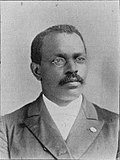 John W. Bowen (STH 1885, STH 1887), the first person born a slave to earn a Ph.D. and the second African American
 -

-

-

-
 Martin Luther King Jr. (STH '55), a leader in the civil rights movement, 1964 Nobel Peace Prize, 1977 Presidential Medal of Freedom
 -
 Gary Locke (LAW '75), the first Asian American governor, U.S. Ambassador to China, and 36th U.S. Secretary of Commerce
 -
 Anna Howard Shaw (STH 1878, MED 1886), a leader in the women's suffrage movement, National American Woman Suffrage Association president, and the first woman awarded Distinguished Service Medal
 -
 Edward Brooke III (LAW '48), the first African American U.S. Senator and a 2004 Presidential Medal of Freedom recipient
 -
 Helen Magill White (GRS 1877), the first woman in the U.S., in 1877, to earn a Ph.D.


With over 342,000 alumni, Boston University graduates can be found around the world, and its graduates have achieved a number of notable historical firsts in United States history. In 1837, BU became the first university in the nation to open all of its divisions to women with a "founding mission [built] upon inclusion, regardless of gender, race, or religion."[233] 9 Truman Scholars have graduated from the university.[234]
Among its alumni and current or past faculty, the university counts 9 Nobel Laureates, 23 Pulitzer Prize winners, 10 Rhodes Scholars,[235][236] 6 Marshall Scholars,[237] 14 Academy Award winners, 11 Emmy Award winners, and 9 Tony Award winners.[238] BU also has three MacArthur Fellows[239] and Fulbright Scholars among its past and present graduates and faculty. In 1876, BU professor Alexander Graham Bell invented the telephone in a BU lab.
Mathematics and sciences
[edit]
Affiliates of Boston University have won seven Nobel Prizes. Alexander Graham Bell, inventor of the telephone, conducted many of his experiments on the BU campus when he was professor of Vocal Physiology and Elocution.[240] In Boston, Bell was "swept up" by the excitement engendered by the many scientists and inventors residing in the city. In 1875, the university gave Bell a year's salary advance to allow him to pursue his research. The following year, he invented the telephone in a Boston University laboratory.[28] In the twenty-first century, the university has become a pioneering center for synthetic biology thanks to the work of James Collins. Collins and co-workers also discovered that sublethal levels of antibiotics activate mutagenesis by stimulating the production of reactive oxygen species, leading to multidrug resistance.[241] This discovery has important implications for the widespread use and misuse of antibiotics.
Christopher Chen, an interdisciplinary researcher whose work involves engineering, medicine, and biology, joined BU in 2013.[242] Chen directs the Biological Design Center at the Rajen Kilachand Center for Integrated Life Sciences & Engineering.[243] His research focuses on tissue engineering and regenerative medicine.
Other notable Boston University scientists include Sheldon Glashow, winner of the 1979 Nobel Prize in Physics, Daniel Tsui, winner of the 1998 Nobel Prize in Physics, and Osamu Shimomura, winner of the 2008 Nobel Prize in Chemistry.[244]
Literature
[edit]
_by_Erling_Mandelmann_-_2.jpg)
Two US Poets Laureate have taught at Boston University: Robert Lowell and Robert Pinsky.[244] During John Silber's tenure as president, he recruited two Nobel Prize–winning literary figures to the university's faculty: Elie Wiesel, winner of the 1986 Nobel Peace Prize, and Saul Bellow, winner of the 1976 Nobel Prize in Literature.[244] Another Nobel Prize winner in the English Department in the 20th century was Derek Walcott, winner of the 1992 Nobel Prize in Literature.[244] Alumni of the university have earned over thirty Pulitzer Prizes.[245] Other writers associated with the university include Bob Zelnick,[246] executive editor of the Frost-Nixon interviews, Lambda Literary Award winner Ellen Bass, historian Andrew Bacevich,[247] Ha Jin, Pulitzer Prize winner Jhumpa Lahiri, and Isaac Asimov.[248]
In 1986, literary critic Christopher Ricks, whom W. H. Auden called "exactly the kind of critic every poet dreams of finding", joined the university's faculty and founded the Editorial Institute with Geoffrey Hill.[249] Controversial historian Howard Zinn taught in the political science department for many years.[250] Journalist Thomas B. Edsall and playwright Eliza Wyatt graduated from Boston University.[251] Paul Beatty, who earned bachelor's and master's degrees in psychology at BU, won the National Book Critics Circle Award and the Man Booker Prize for his novel The Sellout. He is the first writer from the United States honored with the Man Booker. The bestselling author Casey Sherman graduated from BU in 1992.
Sigrid Nunez is the 2018 winner of the National Book Award and author of eight novels including What Are You Going Through, The Friend, and Salvation City. She teaches in Boston University's Creative Writing Department.[252][253]
David Grann is a staff writer for The New Yorker and a New York Times bestselling author who earned his master's degree in creative writing from Boston University. His 2017 novel Killers of the Flower Moon: The Osage Murders and the Birth of the FBI was adapted into a 2023 award-winning film, directed by Martin Scorsese and starring Leonardo DiCaprio, Lily Gladstone, Robert De Niro, and Jesse Plemons.[254]
Government and politics
[edit].jpg)

Boston University alumni include 13 current or former governors of U.S. states, eight U.S. senators, and 33 members of the U.S. House of Representatives.
Its graduates have achieved a number of historical firsts in United States history, including Edward Brooke III, the first African-American Senator, Barbara Jordan, the first African-American Representative from a Southern state, Gary Locke, the first Chinese American governor, and Alexandria Ocasio-Cortez, the youngest woman elected to the House.
Notable alumni in American politics include former Defense Secretary William Cohen, former US Ambassador to China Gary Locke, former Senator Judd Gregg, former United States Senator Edward Brooke, former Massachusetts Attorney General Martha Coakley, former Second Lady Tipper Gore, and the former First Vice President of the Federal Reserve Bank of Boston Earle O. Latham. Former President William Howard Taft lectured on Legal Ethics at the university's law school from 1918 to 1921.[255]
After leaving politics in 2014, former Boston mayor Thomas Menino was professor of the practice of political science at the university until his death later in the year.[256]
Television personality Bill O'Reilly studied journalism at the university in the 1970s and was a columnist for the student newspaper, The Daily Free Press.[257] Describing his time at the university, he wrote, "Throughout that fall at BU, covering stories became a passion for me. I loved going places and seeing new things. I ran around Boston annoying the hell out of everyone, but bringing back good, crisp copy" and "what I learned at Boston University firmly set me on the course I continue to this day. Amidst the chaos of Commonwealth Avenue, I found an occupation that I enjoyed."[257]
In international politics, Boston University alumni include Sherwin Gatchalian, a Philippine senator elected in 2016, and Daniyal Aziz, a Pakistani politician affiliated with the Pakistan Muslim League (N) who is currently a member of the National Assembly of Pakistan. Archbishop Makarios, the first President of Cyprus, studied at Boston University under a World Council of Churches scholarship. The founder of the Albanian Orthodox Church, Fan S. Noli, received a doctorate from Boston University. Moeed Yusuf, the current National Security Advisor (Pakistan) to the Prime Minister of Pakistan, received his master's and doctoral degrees from Boston University.[258]
Film and television
[edit].jpg)

.jpg)
In 2014, The Hollywood Reporter took note of the number of female Boston University graduates working in Hollywood.[259] The university estimates that more than 5,000 alums, 54 percent of them women, work in entertainment. Graduates include famous actors, screenwriters, producers, directors and entertainment industry executives. Over 30 alumni have gone on to win or receive nominations for Academy Awards and countless have earned Emmy Awards, Golden Globes, and Screen Actors Guild Awards.
While a student at BU, Harold Russell took home the university's first Oscar, winning Best Supporting Actor for The Best Years of Our Lives, going on to earn his BFA in 1949.
Faye Dunaway, regarded as powerful emblem of New Hollywood, earned her BFA from Boston University in 1962. Dunaway won Best Actress for Network and received Best Actress nominations for both Bonnie and Clyde and Chinatown. All three films are listed in the American Film Institute's 100 best American movies ever made.
Beetlejuice star Geena Davis received her BFA in 1979 and went on to win Best Supporting Actress for The Accidental Tourist and pick up a nomination for Best Actress as Louise in the feminist classic, Thelma & Louise. Her eponymous nonprofit is cited as producing pioneering, data-driven research on women's presence in film and media. In 2019, the Academy awarded her the Jean Hersholt Humanitarian Award for "whose humanitarian efforts have brought credit to the film industry", joining the likes of Paul Newman, Oprah Winfrey, and Angelina Jolie.
Julianne Moore, often described by the media as one of the most accomplished actresses of her generation, earned her BFA from Boston University in 1983. Moore won Best Actress for Still Alice in 2014 and was named to Time's 100 most influential people in the world in 2015. In 2020, The New York Times ranked her eleventh on its list of the greatest actors of the 21st century.
Alfre Woodard graduated with a BFA in 1974 and joins Moore on the list of greatest actors of the 21st century. Woodard is a board member of Academy of Motion Picture Arts and Sciences, has four Emmy Awards and an Academy Award nomination for Best Supporting Actress in Cross Creek.
Olympia Dukakis earned her BA and MFA from Boston University and joins Russel in winning Best Supporting Actress for Moonstruck. Other nominees in the category include Mariel Hemingway, the granddaughter of Ernest Hemingway, for Manhattan and, most recently in 2022, Hong Chau for The Whale.
In the Best Animated Feature category, alumni Roy Conli and Peter Del Vecho had back-to-back wins for Frozen (2013) and Big Hero 6 (2014). The two build upon the work of alumna Bonnie Arnold, a prominent figure in initial wave of computer-animation, known for producing Toy Story, Tarzan, and the How to Train Your Dragon series, the latter garnering Arnold nominations for Best Animated Feature in 2014 and 2019.
Media and popular culture
[edit]
Boston University graduates in media include radio personality Howard Stern, Bravo executive Andy Cohen, CBS producer Gordon Hyatt;[260] the celebrity chef Rocco DiSpirito, self-help author Mark Manson, New York Times bestselling author and serial entrepreneur Dave Kerpen, reality show contestant and television host Rob Mariano, Kevin O'Connor, presenter of This Old House and cohost of Project Runway, and Elle magazine editor-in-chief Nina Garcia, comedian Marc Maron and YouTube personality Jenna Marbles, Craigslist killer Philip Markoff, YouTube essayist Evan Puschak of The NerdWriter, and musician and YouTube personality Dan Avidan.
Athletics
[edit]1968 Olympic 400 m hurdles gold medalist David Hemery[261] was a student at BU in the 1960s, and a coach in the 1970s and 1980s. John Thomas[262] attended BU in the early 1960s and he won a silver medal in the Olympic High Jump. He was an assistant track coach at BU during the 1970s.
On October 29, 2020, Travis Roy, a philanthropist, motivational speaker, and former BU ice hockey player, died. In 1995, Roy collided with the boards and was paralyzed just 11 seconds into his first hockey game for Boston University, making him quadriplegic.[263] In 1996, Roy founded the Travis Roy Foundation to fund research for and help other spinal cord injury survivors.[264] In 2017, BU created the Travis M. Roy Professorship in Rehabilitation Sciences after receiving $2.5 million from anonymous donors.[265][266][267]
BU athletes also played a significant role in the 1980 Miracle on Ice. Four players on that team were BU alumni: Mike Eruzione (team captain, who scored the game-winning goal), Jim Craig, Jack O'Callahan, and Dave Silk.
In popular culture
[edit]Boston University has sometimes been referenced in popular culture. For example, in 1962, Timothy Leary performed his Marsh Chapel Experiment, also known as the "Good Friday Experiment", in the university's Marsh Chapel.[268] The experiment investigated whether psilocybin (the active principle in psilocybin mushrooms) would act as a reliable entheogen in religiously predisposed subjects. Boston University's campuses have also appeared in several movies, including The Social Network and Ghostbusters (2016 film).[269]
See also
[edit]Notes
[edit]- ^ Though not a degree granting college, students enrolled in it must take courses provided by the college itself. Students not in the program are not allowed to take courses provided by this college.
- ^ Other consists of Multiracial Americans & those who prefer to not say.
- ^ The percentage of students who received an income-based federal Pell grant intended for low-income students.
- ^ The percentage of students who are a part of the American middle class at the bare minimum.
References
[edit]- ^ "Search". Internet Archive.
- ^ "The origin of BU's motto: Learning, Virtue, Piety". BU Today. October 20, 2005. Archived from the original on December 6, 2010. Retrieved November 22, 2009.
- ^ "BU Timeline". Boston University. Archived from the original on March 10, 2015. Retrieved March 11, 2015.
- ^ First quarter centennial of Boston university: Programs and Addresses. Boston: The Riverdale Press. 1898. pp. iii. Archived from the original on March 19, 2015. Retrieved March 11, 2015.
- ^ a b "Boston University Names University Professor Herbert Mason United Methodist Scholar/Teacher of the Year". Boston University. 2001. Archived from the original on December 26, 2010. Retrieved October 20, 2011.
Boston University has been historically affiliated with the United Methodist Church since 1839 when the Newbury Biblical Institute, the first Methodist seminary in the United States, was established in Newbury, Vermont.
- ^ a b Cambridge University Student Union International 2003–2004. The Hermit Kingdom Press. 2005. ISBN 978-1-59689-044-2. Archived from the original on February 17, 2023. Retrieved June 30, 2007.
Emory University, an academic institution of higher education that is under the auspices of the United Methodist Church (Duke University, Boston University, Northwestern University are among other elite universities belonging to the United Methodist Church).
- ^ a b Kurian, George Thomas; Lamport, Mark A. (November 10, 2016). Encyclopedia of Christianity in the United States. Rowman & Littlefield. p. 1502. ISBN 978-1-4422-4432-0.
Methodists-affiliated universities founded during the nineteenth century include Northwestern, Boston (University), Syracuse, Duke and Emory.
- ^ "Consolidated Financial Report June 30, 2024 and 2023" (PDF). Boston University. Retrieved September 28, 2024.
- ^ As of July 1, 2024. A Conversation: Boston University President Melissa L. Gilliam on First Impressions, Challenges, and Ambitions (Report). Boston University. July 1, 2024. Retrieved July 1, 2024.
- ^ As of July 1, 2024. About the Provost (Report). Boston University. July 1, 2024. Retrieved July 1, 2024.
- ^ a b c d e f "Our DNA". Boston University. Archived from the original on October 2, 2011. Retrieved June 21, 2024.
- ^ "BU Colors". Archived from the original on February 7, 2023. Retrieved February 7, 2023.
- ^ "The Boston Consortium". The Boston Consortium. Archived from the original on April 14, 2010. Retrieved May 31, 2010.
- ^ a b "BU Joins Association of American Universities". BU Today. Archived from the original on August 22, 2017. Retrieved April 4, 2017.
- ^ "BU Facts & Stats | Office of the President". bu.edu. Archived from the original on November 18, 2020. Retrieved November 30, 2020.
- ^ "The Boston Economy 2008 Holding Strong" (PDF). Boston Redevelopment Authority – Research Division. September 2008. p. 16. Archived from the original (PDF) on July 29, 2012. Retrieved November 22, 2009.
Largest Private Employers in Boston, April, 2006 (With 1,000+ employees, listed alphabetically)
- ^ "About BU". Boston University. Archived from the original on January 25, 2018. Retrieved November 24, 2020.
- ^ "Take a Virtual Tour of BU's New Fenway Campus". Boston University. October 17, 2018. Archived from the original on January 5, 2021. Retrieved November 24, 2020.
- ^ a b "The Carnegie Classification of Institutions of Higher Education". Indiana University Bloomington's Center for Postsecondary Research. Archived from the original on December 1, 2017. Retrieved June 26, 2024.
- ^ a b "Boston University | university, Boston, Massachusetts, United States". Encyclopædia Britannica. Archived from the original on April 17, 2021. Retrieved April 19, 2021.
- ^ Boston University |Visitor Center |About the University |History Archived February 16, 2006, at the Wayback Machine, retrieved May 6, 2006
- ^ "Methodist General Biblical Institute (Concord, NH) | A People's History of the School of Theology". bu.edu. Retrieved June 28, 2023.
- ^ Buckley, James Monroe (1898). A History of Methodism in the United States. Harper & Brothers Company. p. 203.
- ^ Massachusetts General Court (1869). "Chapter 322: An Act to Incorporate the Trustees of Boston University". Acts and Resolves. Boston: Massachusetts Secretary of the Commonwealth. pp. 631–633.
- ^ "history » School of Theology". Boston University. Archived from the original on October 16, 2017. Retrieved October 16, 2017.
- ^ "A Short History of BU's Biggest Campus Disruptions". Boston University. May 1, 2020. Retrieved August 1, 2025.
- ^ "B.U. Bridge: Boston University community's weekly newspaper". bu.edu. Retrieved January 21, 2024.
- ^ a b c d e f Kilgore, Kathleen (1991). Transformations: A History of Boston University. Boston: Boston University Press.
- ^ Buford, Tom (2006). "Persons in the Tradition of Boston Personalism". The Journal of Speculative Philosophy. 20 (3): 214–218. doi:10.1353/jsp.2007.0000. S2CID 170564853.
- ^ "Personalism (Stanford Encyclopedia of Philosophy)". Stanford Encyclopedia of Philosophy. Stanford University. November 12, 2009. Archived from the original on April 23, 2013. Retrieved May 5, 2013.
- ^ "Between World Wars". Boston University. Archived from the original on December 12, 2007. Retrieved April 28, 2008.
- ^ Healea, Christopher Daryl, "The Builder and Maker of the Greater University: A History of Daniel L. Marsh's Presidency at Boston University, 1926–1951" (Boston University, 2011). Order No. DA3463124.
- ^ "10.384 are enrolled at B.U. Archived August 30, 2018, at the Wayback Machine, The New York Times. April 12, 1936. p. N7.
- ^ Alex Taylor. "Activism, dorm construction pervade campus in 1950s–60s". The Daily Free Press. Archived from the original on April 1, 2007. Retrieved April 27, 2008.
- ^ "Lahey History". The Lahey Clinic. Archived from the original on April 23, 2010. Retrieved December 28, 2009.
- ^ a b Wolfe, Tom (February 2015). "Silberado". Bostonia. Boston University: 37.
- ^ "Life Science and Engineering building: "cathedral to science"". Boston University. Archived from the original on September 22, 2010. Retrieved July 6, 2010.
- ^ a b Waters, Bertram (May 5, 1968). "Science Medicine Education: 'Reason' Won' at Sit-in, Says B.U. President". The Boston Globe (Historical Newspapers). p. 1. ProQuest 366547855. Archived from the original on March 31, 2022. Retrieved September 28, 2020.
- ^ a b Rosenbloom, Joseph (March 28, 1972). "33 protesters arrested at BU career office". Boston Globe (1960–1988); Boston, Mass. (Historical Newspapers). p. 1. ProQuest 375333303. Archived from the original on April 14, 2021. Retrieved September 29, 2020.
- ^ McCain, Nina (May 6, 1976). "BU dean resigns to protest trustees' approval of Silber". Boston Globe (1960–1988); Boston, Mass. (Historical Newspapers). ProQuest 657914676. Archived from the original on March 31, 2022. Retrieved September 29, 2020.
- ^ a b c Cullen, John (March 17, 1978). "Tuition protest turns ugly, students trap 50 at BU". Boston Globe (1960–1988); Boston, Mass. (Historical Newspapers). p. 1. ProQuest 757677881. Archived from the original on April 14, 2021. Retrieved September 29, 2020.
- ^ "B.U. Protesters Begin Hunger Strike In Effort to Stop Military Recruitment". The Harvard Crimson. Archived from the original on August 18, 2021. Retrieved September 29, 2020.
- ^ Rivas, Maggie (November 28, 1979). "Iran Rallies at BU Clash: UMass-Amherst Asks Iranians to Interviews". Boston Globe (1960–1988); Boston, Mass. (Historical Newspapers). p. 9. ProQuest 747170454. Archived from the original on April 14, 2021. Retrieved September 29, 2020.
- ^ Rimer, Sara. "Turmoil at the Top at Boston University." The New York Times October 28, 2003, Late ed., sec. A: 16. LexisNexis Academic. Boston, MA. May 6, 2006.
- ^ Rimer, Sara. "Boston U. Trustees Regrouping After Turmoil Over Presidency." The New York Times April 16, 2004, Late ed., sec. A: 16. LexisNexis Academic. Boston, MA. May 6, 2006.
- ^ Kelderman, Eric (November 5, 2012). "Boston U. Receives Coveted Invitation to Join Assn. of American Universities". The Chronicle of Higher Education. Archived from the original on July 18, 2020. Retrieved July 18, 2020.
- ^ "AAU Welcomes Tufts University to Membership | Association of American Universities (AAU)". aau.edu. May 13, 2021. Archived from the original on February 15, 2022. Retrieved February 15, 2022.
- ^ "Boston University – Annual Report 2016". Boston University – Annual Report 2016. Archived from the original on May 4, 2017. Retrieved April 4, 2017.
- ^ Crimaldi, Laura (September 21, 2019). "BU celebrates raising $1.85b over seven years". The Boston Globe. Archived from the original on April 14, 2021. Retrieved November 24, 2020.
- ^ "Boston University". ROARMAP: Registry of Open Access Repository Mandates and Policies. UK: University of Southampton. March 30, 2015. Archived from the original on May 31, 2019. Retrieved July 23, 2018.
- ^ Caffrey, Christi (May 15, 2018). "New Joan & Edgar Booth Theatre Opens". Boston University. Archived from the original on January 30, 2021. Retrieved November 24, 2020.
- ^ Fern, Deirdre (September 14, 2017). "$115m gift, BU's largest ever, will fund life sciences and engineering research". The Boston Globe. Archived from the original on April 14, 2021. Retrieved November 24, 2020.
- ^ "Take a peek inside BU's renovated castle". Boston.com Real Estate. March 28, 2019. Archived from the original on April 14, 2021. Retrieved November 24, 2020.
- ^ a b c "Boston University Removes the Myles Standish Name from Dorm". Boston University. May 23, 2024. Retrieved June 21, 2024.
- ^ Spatz, Emily (May 29, 2024). "BU dorm named after English colonist will be renamed, school says". www.boston.com.
- ^ Topf, Sydney (June 2, 2024). "Myles Standish Hall renamed to 610 Beacon Street – The Daily Free Press".
- ^ "BU Boosts Financial Aid to 100 Percent of Calculated Need". Boston University. Archived from the original on October 5, 2020. Retrieved November 24, 2020.
- ^ "Scholarships & Financial Aid | Admissions". www.bu.edu.
- ^ Most, Doug (September 7, 2022). "Robert A. Brown, BU's 10th President, to Retire after 2022–23 School Year". BU Today. Archived from the original on September 19, 2022. Retrieved September 17, 2022.
- ^ Mullins, Lisa (September 8, 2022). "BU President Robert Brown on why he's stepping down, what he hopes to leave behind". WBUR. Retrieved August 1, 2023.
- ^ Cutler, Sonel (May 10, 2023). "Boston University taps Kenneth Freeman, former business dean, as interim president". The Boston Globe. Retrieved August 1, 2023.
- ^ Jung, Carrie (October 4, 2023). "Dr. Melissa Gilliam will lead Boston University as school's first Black and first female president". WBUR. Retrieved October 4, 2023.
- ^ "A Conversation: Boston University President Melissa L. Gilliam on First Impressions, Challenges, and Ambitions". Boston University. July 2024. Retrieved July 1, 2024.
- ^ "Meet Our President - Office of the President". www.bu.edu.
- ^ Quinn, Ryan (October 17, 2024). "7-Month Boston University Grad Worker Strike Ends, but Fight May Not Be Over". Inside Higher Ed.
- ^ Most, Doug (March 11, 2020). "Updated: BU Moves All Classes Online Due to Coronavirus — Questions and Answers". BU Today. Archived from the original on May 26, 2020. Retrieved August 12, 2020.
- ^ "Universities use robots to reopen safely during pandemic". NBC News. August 21, 2020. Archived from the original on January 14, 2021. Retrieved November 30, 2020.
- ^ "Boston University Clinical Testing Lab | Back To BU". www.bu.edu. Archived from the original on December 2, 2020. Retrieved November 30, 2020.
- ^ "Boston University develops lab to regularly test students for coronavirus". NBC News. Archived from the original on February 4, 2021. Retrieved November 30, 2020.
- ^ "COVID-19 Screening, Testing & Contact Tracing | Back To BU". bu.edu. Archived from the original on December 1, 2020. Retrieved November 30, 2020.
- ^ Barlow, Rich (August 12, 2020). "FAQ: Quarantine vs Isolation and BU's Safety Plans for Reopening Campus". BU Today. Archived from the original on August 12, 2020. Retrieved August 12, 2020.
- ^ "BU COVID-19 Testing Data Dashboard | Healthway". bu.edu. Archived from the original on November 29, 2020. Retrieved November 30, 2020.
- ^ Groopman, Jerome. "The Long Game of Coronavirus Research". The New Yorker. Archived from the original on November 28, 2020. Retrieved November 30, 2020.
- ^ Saltzman, Jonathan (March 24, 2020). "Controversial BU lab is only one in New England with live coronavirus". The Boston Globe. Archived from the original on October 27, 2020. Retrieved November 30, 2020.
- ^ "F*CK IT WON'T CUT IT". United States Patent and Trademark Office. Retrieved August 12, 2020.
Promoting public awareness of safe and smart actions and behaviors for college and university students in a COVID-19 environment
- ^ Annear, Steve (August 11, 2020). "Here's why Boston University had the f-bomb in a trademark application for a COVID-19 initiative". The Boston Globe. Archived from the original on August 13, 2020. Retrieved August 12, 2020.
- ^ "Boston University announces vaccination requirement for faculty and staff". www.boston.com. July 19, 2021. Archived from the original on February 15, 2022. Retrieved February 15, 2022.
- ^ "Staff and Faculty React to BU COVID-19 Vaccine Mandate". Boston University. July 20, 2021. Archived from the original on February 16, 2022. Retrieved February 15, 2022.
- ^ Larkin, Max (July 19, 2021). "Boston University Will Require Vaccination For Faculty, Staff On Campus This Fall". WBUR. Archived from the original on February 15, 2022. Retrieved February 15, 2022.
- ^ a b c Branswell, Helen (October 18, 2022). "Boston University researchers' testing of lab-made version of Covid virus draws government scrutiny". STAT. Archived from the original on October 20, 2022. Retrieved October 20, 2022.
- ^ "Gain of Function? Not So Fast". www.science.org. Archived from the original on October 20, 2022. Retrieved October 20, 2022.
- ^ @mlipsitch (October 19, 2022). "First, these are unquestionably gain-of-function experiments..." (Tweet) – via Twitter.
- ^ Stevens, Ellie (April 26, 2024). "In the green: BU students search for nature on campus – The Daily Free Press".
- ^ "Nickelodeon Cinemas in Boston, MA – Cinema Treasures". cinematreasures.org. Archived from the original on April 14, 2021. Retrieved February 10, 2021.
- ^ "$10 million gift from Trustee names new CFA theatre – The Daily Free Press". March 16, 2017. Archived from the original on April 14, 2021. Retrieved February 10, 2021.
- ^ "Joan & Edgar Booth Theatre and the College of Fine Arts Production Center / Elkus Manfredi Architects". ArchDaily. September 24, 2019. Archived from the original on January 17, 2021. Retrieved February 10, 2021.
- ^ "BU Law Tower wins 2016 Boston Preservation Alliance Award | Bruner / Cott". October 25, 2016. Archived from the original on January 16, 2021. Retrieved February 10, 2021.
- ^ "Awards". Goody Clancy. April 1, 2014. Archived from the original on April 14, 2021. Retrieved February 10, 2021.
- ^ "Boston University's Myles Standish Hall Honored with Preservation Achievement Award". www.shawmut.com. Archived from the original on March 4, 2021. Retrieved February 10, 2021.
- ^ "Dahod Family Alumni Center Earns Double Accolades I News and Events". www.faainc.com. Archived from the original on January 23, 2021. Retrieved February 10, 2021.
- ^ "Yawkey Center for Student Services | Bruner / Cott". Archived from the original on January 18, 2021. Retrieved February 10, 2021.
- ^ "Staid Boston Gets an Architectural Wake-Up Call". Bloomberg.com. April 26, 2022. Archived from the original on May 7, 2022. Retrieved January 9, 2023.
- ^ Chesto, Jon (March 27, 2022). "BU's 'Jenga Building' is coming together above the Charles River – The Boston Globe". The Boston Globe. Archived from the original on January 9, 2023. Retrieved January 9, 2023.
- ^ "Grand opening for unique-looking Boston University building". www.cbsnews.com. December 8, 2022. Archived from the original on January 9, 2023. Retrieved January 9, 2023.
- ^ "BU Unveils Dramatic, Fossil Fuel–Free Center for Computing & Data Sciences". Boston University. December 11, 2022. Archived from the original on January 9, 2023. Retrieved January 9, 2023.
- ^ Woolhouse, Megan (January 31, 2019). "Reimagining Kenmore Square". BU Today. Boston University. Archived from the original on September 24, 2019. Retrieved September 21, 2019.
- ^ "Boston University Celebrates Renovation and Expansion of Dental School". SmithGroup. Archived from the original on February 15, 2022. Retrieved February 15, 2022.
- ^ Williams, Taylor (September 29, 2021). "Shawmut Completes $115M Expansion of Boston University's School of Dental Medicine". REBusinessOnline. Archived from the original on February 15, 2022. Retrieved February 15, 2022.
- ^ "BU Bridge. Vol II No. February 24, 19 1998 "BU Yesterday: Third time's the dorm"". Boston University. February 19, 1999. Archived from the original on December 1, 2016. Retrieved October 4, 2013.
- ^ Boston University |Office of Housing |Dining Plans and Convenience Points |Dining Plans, retrieved May 6, 2006 Archived December 12, 2009, at the Wayback Machine
- ^ Berghaus, Robin (September 27, 2012). "Kilachand Honors College Students Get Their Own Home". BU Today. Archived from the original on January 25, 2019. Retrieved January 27, 2019.
- ^ 403 Forbidden Archived March 3, 2006, at the Wayback Machine accessed May 8, 2006
- ^ Salzman, Nancy Lurie. Buildings and builders : a history of Boston University. Boston : Boston University Press, 1985. (ISBN 0-87270-056-9)
- ^ "BU Pub offers college experience". Daily Free Press. April 21, 2004. Archived from the original on October 4, 2013.
- ^ Admin, Daily Free Press (April 6, 2006). "BU Pub still a popular secret after decades on campus – The Daily Free Press".
- ^ "Hillel House". Boston University. Archived from the original on October 5, 2013. Retrieved October 4, 2013.
- ^ Tomlinson, Sarah (August 27, 2004). "Rock City revival". The Boston Globe. Archived from the original on June 4, 2011. Retrieved October 17, 2011.
- ^ Gay, Malcolm (January 20, 2016). "Boston-area arts groups launch online campaign to support Huntington Theatre". The Boston Globe. Archived from the original on August 22, 2017. Retrieved May 8, 2017.
- ^ Aucoin, Don (December 26, 2015). "A year of upheaval and uncertainty in Boston theater". The Boston Globe. Archived from the original on August 22, 2017. Retrieved May 8, 2017.
- ^ Feeney, Mark (May 5, 2017). "With excellent 'Exposure,' PRC bids farewell to BU". The Boston Globe. Archived from the original on May 8, 2017. Retrieved May 8, 2017.
- ^ "Photographic Resource Center moves to Lesley | Lesley University". lesley.edu. Archived from the original on October 31, 2020. Retrieved October 27, 2020.
- ^ "President Approves New Guest Policy", BU Today May 7, 2007 Archived December 13, 2007, at the Wayback Machine
- ^ "New Guest Policy Means More Power, More Responsibility", BU Today March 2, 2007 Archived October 14, 2007, at the Wayback Machine
- ^ "Residential Policies » Dean of Students | Boston University". www.bu.edu. Archived from the original on May 30, 2019. Retrieved May 30, 2019.
- ^ BU Guest Policy from bu.edu Archived March 25, 2009, at the Wayback Machine
- ^ Ramos, Nestor (April 10, 2017). "Section of Commonwealth Avenue to be closed to most traffic this summer during bridge facelift". The Boston Globe. Archived from the original on May 12, 2017. Retrieved May 8, 2017.
- ^ a b Brown, Joel (November 3, 2016). "Phase II of the Commonwealth Avenue Improvement Project Kicks Off". BU Today. Archived from the original on May 4, 2017. Retrieved May 8, 2017.
- ^ Dungca, Nicole (November 30, 2014). "Bike advocates set public meeting for Commonwealth Ave. improvements". The Boston Globe. Archived from the original on August 31, 2017. Retrieved May 8, 2017.
- ^ Powers, Martine (August 2, 2014). "Bicycle advocates seek safety changes in Commonwealth Avenue". The Boston Globe. Archived from the original on February 27, 2017. Retrieved May 8, 2017.
- ^ "Commonwealth Avenue Improvement Project". www.bu.edu. Trustees of Boston University. Archived from the original on May 4, 2017. Retrieved May 8, 2017.
- ^ "Recognition – Sustainability". www.bu.edu. Archived from the original on May 8, 2017. Retrieved May 15, 2017.
- ^ "Newly Funded BU Campus Climate Lab Projects Announced for Spring 2023". BU Institute for Global Sustainability. March 30, 2023.
- ^ "Benjamin Sovacool". Google Scholar.
- ^ Colarossi, Jessica (March 15, 2022). "BU Institute to Focus on Equity and Justice in the Climate Change Fight". The Brink.
- ^ "A Study in Emissionality: Why Boston University Looked Beyond New England for Its First Wind Power Purchase". Renewable Energy World. January 14, 2019. Archived from the original on September 20, 2020. Retrieved November 30, 2020.
- ^ Wade, Adam. "Boston University Signs Long-Term Power Purchase Agreement for Wind Energy". foleyhoag.com.
- ^ Van Loon, Emma. "England London Internship: Business | Study Abroad". www.bu.edu.
- ^ "Los Angeles Internship | College of Fine Arts". Boston University. October 14, 2016. Archived from the original on January 13, 2017. Retrieved January 11, 2017.
- ^ "Study Abroad: Paris". Boston University. Archived from the original on September 6, 2013. Retrieved August 21, 2013.
- ^ "Washington, DC Housing". Boston University. Archived from the original on June 17, 2013. Retrieved August 21, 2013.
- ^ "Boston University nears completion". Tonyowenpartners.blogspot.com. October 3, 2010. Archived from the original on March 26, 2012. Retrieved October 17, 2011.
- ^ "tonyowenpartners: Latest Boston University Shots". Tonyowenpartners.blogspot.com. February 3, 2011. Archived from the original on March 26, 2012. Retrieved October 17, 2011.
- ^ "Tony Owen Partners | Boston University Student Housing". arthitectural.com. Archived from the original on March 26, 2012. Retrieved October 17, 2011.
- ^ "Study Abroad". Boston University. Archived from the original on October 16, 2011. Retrieved October 17, 2011.
- ^ Mogg, Katie (September 29, 2022). "Retired clarinetist donates $100 million to rename Boston University's medical school after his friend". The Boston Globe. Archived from the original on October 14, 2022. Retrieved November 3, 2022.
- ^ Brown, Joel (September 29, 2022). "The Lifelong Friendship behind Astonishing $100 Million Gift to BU's Medical School". Boston University. Archived from the original on October 19, 2022. Retrieved November 3, 2022.
- ^ "Naming Ceremony for BU's Duan Center for Computing & Data Sciences | BU Today". Boston University. Retrieved January 15, 2025.
- ^ "Boston University alumnus gives $50M gift to school". Boston Herald. Associated Press. March 31, 2015. Archived from the original on April 2, 2015. Retrieved March 31, 2015.
- ^ Massachusetts Institutions, New England Commission of Higher Education, archived from the original on October 9, 2021, retrieved May 26, 2021
- ^ "Brimming with Brilliance | Boston University Annual Report 2024". ar.bu.edu. Retrieved January 15, 2025.
- ^ "The Future Is Bright and So Is the Class of 2027 | Boston University Annual Report 2023". ar.bu.edu. Retrieved December 8, 2023.
- ^ Laskowski, Amy (March 25, 2020). "A First Peek at the (Potential) BU Class of 2024". BU Today. www.bu.edu. Archived from the original on November 3, 2020.
- ^ "Academic Profile – Admissions". www.bu.edu. Archived from the original on February 1, 2019. Retrieved January 27, 2019.
- ^ "Boston University Common Data Set". Boston University Institutional Research. Archived from the original on December 24, 2016. Retrieved January 10, 2017.
- ^ Laskowski, Amy (February 16, 2016). "Getting in: A Little Tougher Every Year". BU Today. Archived from the original on December 24, 2016. Retrieved December 23, 2016.
- ^ Laskowski, Amy (July 27, 2016). "Boston University Class of 2020". BU Today. Archived from the original on January 26, 2017. Retrieved January 23, 2017.
- ^ "Profile of Admitted Students". BU Today. January 23, 2017. Archived from the original on January 24, 2017. Retrieved January 23, 2017.
- ^ a b "2015 International Student Data". Boston University International Students & Scholars Office. Archived from the original on December 20, 2016. Retrieved December 11, 2016.
- ^ "Top 60 Jewish Colleges". Hillel.
- ^ "Boston University". Hillel.
- ^ "Freshman Profile". Boston University. Archived from the original on October 5, 2008. Retrieved August 5, 2008.
- ^ "AffordableBU | Admissions". Archived from the original on February 5, 2023. Retrieved February 5, 2023.
- ^ "America's Top Colleges 2025". Forbes. September 6, 2025. Retrieved October 3, 2025.
- ^ "2025-2026 Best National Universities Rankings". U.S. News & World Report. September 23, 2025. Retrieved October 3, 2025.
- ^ "2024 National University Rankings". Washington Monthly. August 25, 2024. Retrieved August 29, 2024.
- ^ "2025 Best Colleges in the U.S." The Wall Street Journal/College Pulse. September 4, 2025. Retrieved October 3, 2025.
- ^ "2024 Academic Ranking of World Universities". ShanghaiRanking Consultancy. August 15, 2024. Retrieved August 21, 2024.
- ^ "QS World University Rankings 2026". Quacquarelli Symonds. June 19, 2025. Retrieved June 19, 2025.
- ^ "World University Rankings 2025". Times Higher Education. October 9, 2024. Retrieved June 19, 2025.
- ^ "2025-2026 Best Global Universities Rankings". U.S. News & World Report. June 17, 2025. Retrieved June 17, 2025.
- ^ a b "BU's Graduate School Rankings". U.S. News & World Report. Archived from the original on March 17, 2017. Retrieved October 11, 2025.
- ^ "U.S. News Best Colleges Rankings". U.S. News & World Report. September 23, 2025. Archived from the original on October 11, 2025. Retrieved October 11, 2025.
- ^ "Boston University". June 17, 2025. Archived from the original on October 11, 2025. Retrieved October 11, 2025.
- ^ "Boston University Rankings". U.S. News & World Report. June 17, 2025. Archived from the original on October 11, 2025. Retrieved October 11, 2025.
- ^ "Best Online Master's in Information Technology Programs". January 21, 2025. Retrieved October 11, 2025.
- ^ "Online Programs Rankings". U.S. News & World Report. January 21, 2025. Archived from the original on October 11, 2025. Retrieved October 11, 2025.
- ^ "Best Online Master's in Business Programs". January 21, 2025. Retrieved October 11, 2025.
- ^ "Best U.S. Colleges 2025 - WSJ / College Pulse Rankings". WSJ. Retrieved January 14, 2025.
- ^ "Boston University". Top Universities. June 19, 2025. Retrieved October 11, 2025.
- ^ "World University Rankings". Times Higher Education (THE). October 9, 2025. Retrieved October 11, 2025.
- ^ "Best universities for graduate jobs: Global Employability University Ranking 2024-25". Student. November 14, 2024. Retrieved January 14, 2025.
- ^ "ShanghaiRanking's Academic Ranking of World Universities". www.shanghairanking.com. August 15, 2025. Retrieved October 11, 2025.
- ^ "Boston University School of Social Work Rankings". Archived from the original on March 23, 2016. Retrieved March 24, 2016.
- ^ "Global Employability University Ranking and Survey". www.emerging.fr. November 14, 2024. Retrieved October 11, 2025.
- ^ "Boston University Annual Report 2024" (PDF). ar.bu.edu. Retrieved January 14, 2025.
- ^ "Higher Education Research and Development (HERD) Survey 2022 | NSF – National Science Foundation". ncses.nsf.gov. Retrieved December 8, 2023.
- ^ "Research Areas | Research". www.bu.edu. Archived from the original on April 15, 2017. Retrieved April 14, 2017.
- ^ "Four new NSF Engineering Research Centers will advance US health, energy sustainability". www.nsf.gov. Archived from the original on February 15, 2022. Retrieved February 15, 2022.
- ^ "NSF Award Search: Award # 1647837 – Nanosystems Engineering Research Center for Directed Multiscale Assembly of Cellular Metamaterials with Nanoscale Precision: CELL-MET". nsf.gov. Archived from the original on February 15, 2022. Retrieved February 15, 2022.
- ^ "BU Wins $20M for NSF Engineering Research Center | The Brink". Boston University. Archived from the original on February 15, 2022. Retrieved February 15, 2022.
- ^ "David Bishop, Ph.D. | College of Engineering". www.bu.edu. Archived from the original on February 15, 2022. Retrieved February 15, 2022.
- ^ "Biocontainment Laboratory—Boston University National Emerging Infectious Diseases Laboratory | NIH: National Institute of Allergy and Infectious Diseases". www.niaid.nih.gov. September 10, 2020. Archived from the original on January 9, 2021. Retrieved November 30, 2020.
- ^ "About | National Emerging Infectious Diseases Laboratories". www.bu.edu. Archived from the original on October 30, 2022. Retrieved November 30, 2020.
- ^ "CDC LC Quick Learn: Recognize the four Biosafety Levels". www.cdc.gov. Archived from the original on September 24, 2020. Retrieved November 30, 2020.
- ^ Taylor, Mark (August 3, 2016). "International coalition putting $350M behind CARB-X to fight drug-resistant bacteria". MedCity News. Retrieved April 14, 2017.
- ^ "U.S. Government and Wellcome Commit Up To An Additional US$370 Million to CARB-X". AMR Insights. May 20, 2022. Archived from the original on May 25, 2022. Retrieved June 8, 2022.
- ^ "UK Government Bolsters Partnership with CARB-X". GOV.UK. Retrieved August 10, 2023.
- ^ "German government renews commitment to CARB-X".
- ^ "Government of Canada to join CARB-X partnership".
- ^ "Ibram X. Kendi, Director and Founder | Center for Antiracist Research". www.bu.edu. Archived from the original on November 30, 2020. Retrieved November 30, 2020.
- ^ "Dr. Ibram X. Kendi Joins Boston University to Lead New Antiracist Research Center – Higher Education". June 4, 2020. Archived from the original on December 26, 2020. Retrieved November 30, 2020.
- ^ Mitchell, Jack (June 4, 2020). "Scholar Ibram X. Kendi Joins Boston University Faculty To Lead New Anti-Racism Center". WBUR. Archived from the original on January 28, 2021. Retrieved November 30, 2020.
- ^ "Boston University names first-ever senior diversity officer". Boston Business Journal. August 13, 2020. Retrieved November 30, 2020.
- ^ Ward, Marguerite. "Twitter CEO Jack Dorsey donates $10 million to Ibram X. Kendi's center on antiracism at Boston University". Business Insider. Archived from the original on January 9, 2023. Retrieved January 9, 2023.
- ^ "Ibram Kendi, BU Center for Antiracist Research Founding Director, Wins 2021 MacArthur 'Genius' Grant". Boston University. September 29, 2021. Archived from the original on February 15, 2022. Retrieved February 15, 2022.
- ^ "MacArthur 'genius grant' winner Ibram X. Kendi shares how his time at Temple helped shape him". Temple Now | news.temple.edu. December 14, 2021. Archived from the original on February 15, 2022. Retrieved February 15, 2022.
- ^ Asare, Janice Gassam. "2021 MacArthur Fellow Ibram Kendi Discusses Racial Healing And The Power We All Have To Create Change". Forbes. Archived from the original on February 15, 2022. Retrieved February 15, 2022.
- ^ "NASA's LEXI Will Provide X-Ray Vision of Earth's Magnetosphere - NASA Science". January 3, 2025. Retrieved July 15, 2025.
- ^ Berkey, Dennis (March 7, 2025). "Success! BU Telescope Lands on the Moon Aboard NASA's Blue Ghost Mission 1". Boston University. Retrieved July 15, 2025.
- ^ "About – The Daily Free Press". Archived from the original on December 12, 2018. Retrieved January 27, 2019.
- ^ Freedman, Samuel G. (June 7, 2006). "Can Tough Grades Be Fair Grades?". The New York Times. p. B8. Archived from the original on February 6, 2012. Retrieved June 7, 2006.
- ^ Rojstaczer, Stuart (April 7, 2017). "Grade Inflation Across the U.S." Boston University. gradeinflation.com. Archived from the original on April 30, 2012. Retrieved May 13, 2012.
- ^ Berdik, Chris (September 14, 2006). "Grade Deflation or Not?". BU Today. Archived from the original on October 14, 2007. Retrieved October 6, 2006.
- ^ "BU Law – Prospective Students J.D. Program". Archived from the original on April 13, 2010. Retrieved July 26, 2010.
- ^ "Journal of Education". Archived from the original on May 1, 2010. Retrieved July 26, 2010.
- ^ "Boston University Arts & Sciences". Archived from the original on July 1, 2010. Retrieved July 26, 2010.
- ^ "Index for JFA". Archived from the original on July 12, 2010. Retrieved July 26, 2010.
- ^ "Maney Publishing Journal of Field Archaeology". Archived from the original on July 23, 2010. Retrieved July 26, 2010.
- ^ rs. "The Historical Society, Boston University". Boston University. Archived from the original on September 26, 2013. Retrieved October 4, 2013.
- ^ "Research at the College of Communication". Archived from the original on May 5, 2010. Retrieved July 26, 2010.
- ^ "New England Center for Investigative Reporting at Boston University". Archived from the original on August 17, 2009. Retrieved July 26, 2010.
- ^ "University-Wide General Education Program Proposed". BU Today. Archived from the original on April 5, 2017. Retrieved April 4, 2017.
- ^ "What is Kilachand Honors College? » Kilachand Honors College | Boston University". Boston University. Archived from the original on March 27, 2013. Retrieved April 22, 2013.
- ^ "Kilachand Honors College Students Get Their Own Home". Bostonia. Retrieved December 8, 2023.
- ^ "Rajen Kilachand: Generations of Philanthropy Behind BU Gift | BU Today". Boston University. September 14, 2017. Retrieved December 8, 2023.
- ^ "College Scorecard: Boston University". United States Department of Education. Archived from the original on June 30, 2022. Retrieved May 8, 2022.
- ^ "Boston University – Division of Military Education". Boston University. Archived from the original on July 1, 2009. Retrieved October 4, 2013.
- ^ "Boston University accepts bid to join Patriot League starting in 2013–2014". Patriot League General Release. Patriot League. Archived from the original on September 18, 2018. Retrieved June 15, 2012.
- ^ "National Collegiate Athletic Association". Ncaa.com. Archived from the original on September 1, 2010. Retrieved October 17, 2011.
- ^ "Men's Beanpot 2022: Dylan Peterson's lone goal powers BU past Northeastern to win men's title | NCAA.com". www.ncaa.com. Archived from the original on June 8, 2022. Retrieved June 8, 2022.
- ^ Marrapese-Burrell, Nancy (January 9, 2010). "Great outdoors". The Boston Globe. Archived from the original on October 25, 2012. Retrieved May 31, 2010.
- ^ "BU's Macklin Celebrini Is NHL's Top Draft Pick, Second Terrier Ever to Go First". Boston University. Retrieved January 15, 2025.
- ^ "No. 3 Boston University Claims First Patriot League Men's Basketball Championship (3.11.20)". patriotleague.org. March 11, 2020. Archived from the original on April 14, 2021. Retrieved November 30, 2020.
- ^ Steve Almasy (March 12, 2020). "The NCAA is canceling March Madness". CNN. Archived from the original on January 19, 2021. Retrieved November 30, 2020.
- ^ "Men's Basketball Upsets Colgate, Wins First-Ever Patriot League Championship". Boston University. March 12, 2020. Archived from the original on February 25, 2021. Retrieved December 8, 2020.
- ^ "Top Seed Boston University Claims 2024 Patriot League Softball Title (5.11.24)". patriotleague.org. May 11, 2024. Retrieved June 21, 2024.
- ^ Jr, Paul F. Creighton (May 15, 2024). "BU Softball Claims Patriot League Title, Begins NCAA Tournament Play Friday". Boston University. Retrieved June 21, 2024.
- ^ Hanson, Gayle M.B. & Berg, Stacie Zoe. Long on losses, short on funds, BU football lets clock run out. Insight on the News (December 15, 1997).
- ^ "Club Sports". Boston University. Archived from the original on July 12, 2020. Retrieved July 28, 2020.
- ^ "About | BU Dinghy Sailors". Budinghysailors.wordpress.com. February 4, 2010. Archived from the original on September 12, 2013. Retrieved April 22, 2013.
- ^ "Shortlist Announced for US Sailing's Rolex Yachtsman & Yachtswoman of the Year". Media.ussailing.org. Archived from the original on May 12, 2013. Retrieved April 22, 2013.
- ^ "Boston University Wins Historic Seventh Title at the National Intercollegiate Final". U.S. Figure Skating Fan Zone. April 17, 2023. Retrieved January 6, 2024.
- ^ "Notable History | Diversity & Inclusion". www.bu.edu. Retrieved December 8, 2023.
- ^ "Scholar Listing | The Harry S. Truman Scholarship Foundation". www.truman.gov. Retrieved May 19, 2024.
- ^ "Past Winners » Fellowships & Scholarships – Boston University". bu.edu. Archived from the original on January 9, 2019. Retrieved January 27, 2019.
- ^ "Rhodes Scholars". bu.edu. Archived from the original on January 28, 2019. Retrieved January 27, 2019.
- ^ "Statistics". marshallscholarship.org. Archived from the original on January 26, 2017. Retrieved January 27, 2019.
- ^ "Rankings & Achievements | College of Fine Arts". www.bu.edu. Retrieved May 19, 2024.
- ^ "All Fellows - MacArthur Foundation". www.macfound.org. Retrieved May 19, 2024.
- ^ "About BU: Fast Facts | Boston University Admissions". Boston University. May 5, 1922. Archived from the original on April 24, 2014. Retrieved October 17, 2011.
- ^ Kohanski, M. A.; DePristo, M. A.; Collins, J. J. (2010). "Sublethal antibiotic treatment leads to multidrug resistance via radical-induced mutagenesis". Molecular Cell. 37 (3): 311–320. doi:10.1016/j.molcel.2010.01.003. PMC 2840266. PMID 20159551.
- ^ "Leading Tissue Engineering Researcher Chen Joins BME Faculty | College of Engineering". www.bu.edu. Archived from the original on February 15, 2022. Retrieved February 15, 2022.
- ^ "The Team | Rajen Kilachand Center for Integrated Life Sciences & Engineering Building". www.bu.edu. Archived from the original on February 15, 2022. Retrieved February 15, 2022.
- ^ a b c d "Award Winning Faculty". Boston University Research. Boston University Office of the Vice President and Associate Provost for Research. Archived from the original on June 28, 2014. Retrieved June 25, 2014.
- ^ "Pulitzer Winners". Boston University College of Communication. Boston University. Archived from the original on February 19, 2015. Retrieved October 12, 2015.
- ^ "Faculty » College of Communication » Boston University". Boston University. Archived from the original on April 14, 2010. Retrieved October 17, 2011.
- ^ "Andrew J. Bacevich » International Relations | Boston University". Boston University. Archived from the original on May 29, 2013. Retrieved October 17, 2011.
- ^ "WVU Libraries: Isaac Asimov Online Exhibit". Libraries.wvu.edu. Archived from the original on September 28, 2011. Retrieved October 17, 2011.
- ^ Ricks, Christopher, ed. (1999). Oxford Book of English Verse. Oxford University Press. ISBN 978-0-19-214182-8.
- ^ Feeney, Mark; Marquard, Bryan (January 27, 2010). "Howard Zinn, historian who challenged status quo, dies at 87". The Boston Globe. Archived from the original on February 9, 2014. Retrieved June 12, 2010.
- ^ "Biography". Archived from the original on September 5, 2014. Retrieved September 4, 2014.
- ^ "Sigrid Nunez". National Book Foundation. Retrieved June 21, 2024.
- ^ "Sigrid Nunez » Writing » Boston University". www.bu.edu. Retrieved June 21, 2024.
- ^ "About David Grann". www.davidgrann.com. Retrieved June 21, 2024.
- ^ "BU School of Law Timeline". Boston University. Archived from the original on January 18, 2014. Retrieved January 16, 2014.
- ^ Ryan, Andrew; Bombardieri, Marcella (November 12, 2013). "Menino to help start urban institute at BU". The Boston Globe. Archived from the original on May 9, 2019. Retrieved May 9, 2019.
- ^ a b Leving, Jessica (June 4, 2009). "Bill O'Reilly's BU Days". BU Today. Archived from the original on January 27, 2015. Retrieved June 25, 2014.
- ^ "Moeed Yusuf". Pardee School of Global Studies. Archived from the original on November 3, 2011. Retrieved August 25, 2021.
- ^ Sandberg, Bryn Elise (December 12, 2014). "Boston University: Hollywood's Secret Female Training Ground". The Hollywood Reporter. Archived from the original on November 16, 2019. Retrieved November 16, 2019.
- ^ "Gordon Hyatt". Television Quarterly. 2. National Academy of Television Arts and Sciences. 1963.
- ^ Buccini, Cindy (October 29, 2013). "Friends and Memories Bring 5,000 Back to Campus – BU Today – Boston University". BU Today. Archived from the original on April 15, 2019. Retrieved April 15, 2019.
- ^ Seligson, Susan (January 22, 2013). "Track and Field Icon John Thomas Dies at 71 – BU Today – Boston University". BU Today. Archived from the original on April 15, 2019. Retrieved April 15, 2019.
- ^ Paybarah, Azi (October 30, 2020). "Travis Roy, Who Inspired Millions After a Hockey Tragedy, Dies at 45". The New York Times. ISSN 0362-4331. Archived from the original on November 22, 2020. Retrieved November 30, 2020.
- ^ "About". Travis Roy Foundation. Archived from the original on December 5, 2020. Retrieved November 30, 2020.
- ^ D'Angelo, Bob (October 30, 2020). "Travis Roy, former hockey player who was champion for people with paralysis, dead at 45". KIRO. Archived from the original on November 1, 2020. Retrieved November 30, 2020.
- ^ "Paralyzed ex-BU hockey player Roy dies at 45". ESPN. October 29, 2020. Archived from the original on December 4, 2020. Retrieved November 30, 2020.
- ^ "Travis M. Roy Professorship in Rehabilitation Sciences | Sargent College | Boston University | College of Health & Rehabilitation Sciences: Sargent College". www.bu.edu. Archived from the original on April 14, 2021. Retrieved November 30, 2020.
- ^ Penner, James. "The Good Friday Experiment" Archived November 1, 2022, at the Wayback Machine Timothy Leary: The Harvard Years: Early Writings on LSD and Psilocybin with Richard Alpert, Huston Smith, Ralph Metzner, and others, July 21, 2014. Retrieved on February 12, 2016.
- ^ Griffin, Siena. "BU on Screen: Five movies filmed on (or near) BU's campus". The Daily Free Press. Retrieved June 27, 2025.
Further reading
[edit]- Healea, Christopher Daryl. "The builder and maker of the greater university: A history of Daniel L. Marsh's presidency at Boston University, 1926–1951" (PhD dissertation, Boston University; ProQuest Dissertations Publishing, 2011. 3463124).
- Kilgore, Kathleen (1991). Transformations: A History of Boston University. Boston: Boston University Press. ISBN 0-87270-070-4.
- Saltzman, Nancy (1985). Buildings and Builders: An Architectural History of Boston University. Boston: Boston University Press. ISBN 0-87270-056-9.
External links
[edit]

- Official website

- The Brink, Boston University research news
- . . 1914.
- . Encyclopedia Americana. 1920.
- . Collier's New Encyclopedia. 1921.
| Schools | |
|---|---|
| Research | |
| Athletics | |
| Housing | |
| Media | |
| Others | |

Boston University
View on GrokipediaHistory
Founding as a Methodist Institution
Boston University originated from the Newbury Biblical Institute, established in 1839 in Newbury, Vermont, by members of the Methodist Episcopal Church seeking to create the first seminary dedicated to training Methodist ministers in the United States.[10][11] The initiative arose from discussions at a Methodist Episcopal conference in Boston, where delegates, including figures from the Bromfield Street Methodist community, identified a need for formalized theological education amid the denomination's expansion.[12][11] This institution emphasized practical ministry preparation, distinguishing it from more academically oriented seminaries, and reflected early Methodist commitments to accessible education, including for lay preachers and, notably, women alongside men from its inception.[13] The institute relocated to Concord, New Hampshire, in 1847, adopting the name Methodist General Biblical Institute, before moving again to Boston in 1867 as the Boston Theological Seminary to align with growing urban Methodist influence.[11] These shifts preserved its core mission of Methodist clerical education while expanding facilities and enrollment, with initial faculty such as Osmon C. Baker teaching theology and biblical languages.[14] By the late 1860s, amid post-Civil War educational reforms, Methodist leaders advocated for a broader university framework, leading to the Massachusetts legislature's charter of Boston University on March 26, 1869, under Governor William Claflin.[11] Although the 1869 charter established the university as nonsectarian and open to students of all denominations, its foundational ties to Methodism remained evident through the integration of the Boston Theological Seminary as its first academic unit in 1871, which evolved into the School of Theology.[11] This structure allowed the institution to pursue comprehensive higher education while maintaining Methodist oversight, with early presidents like William Fairfield Warren, a Methodist minister, embodying the denomination's emphasis on piety, learning, and social reform.[2] The motto "Learning, Virtue, Piety," derived from these origins, underscored the blend of intellectual rigor and religious ethos that characterized the university's Methodist inception.[15]19th-Century Development and Abolitionist Roots
Boston University's institutional antecedents emerged from the Methodist movement's anti-slavery faction amid the escalating national crisis over human bondage in the early 19th century. In 1839, abolitionist Methodists established the Newbury Biblical Institute in rural Newbury, Vermont, as the first seminary of the Methodist Episcopal Church explicitly dedicated to training ministers equipped to confront social evils, including slavery, through rigorous biblical scholarship and moral reform.[2][13] LaRoy Sunderland, a Methodist minister and vocal abolitionist who had broken from pro-slavery elements within the denomination, advocated for the seminary's creation in essays emphasizing theological education as a tool for eradicating slavery and promoting ethical leadership.[16] This founding reflected the broader schism in American Methodism, culminating in the 1844 division into northern (anti-slavery) and southern (pro-slavery) branches, with Newbury's leaders aligning firmly against the ownership of human beings as incompatible with Christian doctrine.[17] The institute's early development intertwined with the intensifying abolitionist fervor in New England, where Vermont served as a hub for anti-slavery agitation. Enrollment grew modestly from a handful of students in the 1840s, focusing on practical ministry training that incorporated critiques of slavery drawn from Wesleyan theology's emphasis on personal and social holiness.[18] In 1847, amid financial pressures and regional shifts, the seminary relocated to Concord, New Hampshire, rebranding as the Concord Biblical Institute; this move facilitated expanded facilities and attracted faculty sympathetic to the era's reformist impulses, including opposition to the Fugitive Slave Act of 1850.[13] By the 1860s, as the Civil War exposed the moral failings of compromise with slavery, the institution's abolitionist ethos influenced its curriculum, producing graduates who preached against the peculiar institution and supported Union efforts.[19] Postwar reconstruction and urban migration propelled further evolution. In 1867, the seminary transferred to Boston, adopting the name Boston Theological Seminary to capitalize on the city's intellectual vibrancy and proximity to abolitionist networks like those centered in Beacon Hill.[20] This relocation preceded the formal chartering of Boston University in 1869 by the Massachusetts legislature, which consolidated the seminary with nascent colleges of liberal arts and medicine under a non-sectarian charter—the first in the U.S. to impose no religious tests for admission or faculty appointment, embodying the egalitarian impulses forged in anti-slavery advocacy.[2] Key benefactors, including shoe manufacturer Lee Claflin (a Republican governor of Massachusetts who supported emancipation) and merchants Jacob Sleeper and Isaac Rich, provided endowments exceeding $1 million by 1870, enabling rapid infrastructural growth along Beacon Street.[13] The university's 19th-century maturation underscored its abolitionist heritage through inclusive policies amid Reconstruction-era debates. Women were admitted to the seminary as early as the 1860s, and in 1873, Helen Magill White received the first Ph.D. awarded to an American woman from BU's nascent graduate programs, signaling a commitment to merit-based access unhindered by traditional barriers—a direct extension of principles that rejected human subjugation.[13] By the 1880s, enrollment surpassed 500 students annually, with the School of Theology (formerly the seminary) graduating ministers who continued advocating for civil rights, though the university began secularizing as Methodist oversight waned. This phase marked a transition from rural abolitionist seminary to urban research institution, yet retained a foundational opposition to hierarchical oppression rooted in empirical moral reasoning against slavery's causal harms.[2]20th-Century Expansion and Secular Shift
In the early 1920s, Boston University undertook a major consolidation effort by acquiring 15 acres of land along the Charles River between Commonwealth Avenue and the riverfront on February 28, 1920, for $1.7 million, establishing the foundation for its unified Charles River Campus.[21] This addressed the prior dispersion of university facilities across Boston, enabling centralized development that included new buildings for schools such as the College of Business Administration, which relocated there in September 1939.[22] Under President Daniel L. Marsh (1926–1951), the campus saw accelerated physical and academic expansion, with enrollment surging from 9,687 students in 1926 to 34,202 by 1950, driven by post-Depression recovery and World War II-era demands for higher education.[23] Marsh emphasized practical service-oriented education, aligning with the university's evolving mission amid urban growth pressures.[24] Subsequent presidents, including Harold C. Case (1951–1967), further propelled expansion through infrastructure investments and program diversification, capitalizing on the GI Bill's influx of veterans and rising national college attendance rates, which tripled American higher education enrollment from 1940 to 1960.[25] By the mid-20th century, BU had transformed from a commuter-focused institution into a residential research university, with the Charles River Campus encompassing over 100 acres by the 1960s and incorporating graduate and professional schools in fields like medicine and engineering.[26] This period marked a departure from its 19th-century seminary roots, as administrative autonomy increased and federal funding prioritized secular research over denominational oversight. Parallel to physical growth, BU underwent a gradual secular shift, becoming non-denominational while retaining nominal ties to the United Methodist Church through its School of Theology.[27] Founded as a Methodist seminary in 1839, the university's charter and operations evolved in the 20th century to prioritize inclusive, non-sectarian access, reflecting broader American trends where formerly church-controlled institutions secularized to broaden appeal and secure diverse funding sources amid declining religious exclusivity in higher education.[28] Marsh Chapel, dedicated in 1955 and named for President Marsh, exemplifies this: designed as non-denominational despite Methodist influences, it hosted interfaith services and symbolized BU's pivot toward pluralistic values over doctrinal control. By John Silber's presidency (1971–1996), BU operated fully as a private research university, with church affiliation limited to historical and theological programs, enabling enrollment of students from varied backgrounds without religious prerequisites.[29] This transition, while preserving some Methodist ethos like social justice emphases, prioritized empirical scholarship and institutional independence, consistent with causal drivers such as market competition and state disestablishment of religious education mandates.Student Activism in the Mid-20th Century
Student activism at Boston University during the mid-20th century gained prominence in the 1960s, aligning with national movements against racial discrimination and the Vietnam War. BU's urban Boston location and ties to civil rights figures like Martin Luther King Jr., who earned his doctorate there in 1955, fostered an environment for student involvement in broader social causes.[30] Students participated in civil rights efforts, including local demonstrations and advocacy for curriculum reforms addressing African American history and studies during the Black Power era.[31] In one notable instance, BU student Julian Houston led peers in singing Freedom songs during Boston's 1960s civil rights events, explaining their origins and significance to rally participants.[32] Opposition to the Vietnam War intensified student protests, with BU hosting some of the largest such demonstrations in the region. In 1965, students joined rallies on Boston Common, where draft cards were burned to symbolize resistance to conscription.[30] Demonstrators targeted military recruiters on campus, leading Boston police to arrest 33 individuals amid escalating anger over U.S. involvement.[33] By the late 1960s, actions included sit-ins along Bay State Road and marches to the Massachusetts State House, contributing to the university's reputation as the "Berkeley of the East."[30] Other forms of activism emerged, such as challenges to restrictive social policies. In 1967, birth control advocate Bill Baird conducted an action at BU to contest Massachusetts laws prohibiting contraceptive information for unmarried individuals, drawing student support and highlighting tensions over personal freedoms.[34] Unrest peaked in spring 1970, when fires, vandalism, and bomb threats—linked to anti-war fervor—prompted the cancellation of final exams and commencement exercises, citing a "clear and present danger" to campus safety.[30] These events reflected causal pressures from national draft policies, urban racial tensions, and ideological shifts, though earlier 1950s activism remained limited compared to the disruptive scale of the 1960s.[35]21st-Century Growth and Challenges
In the 21st century, Boston University experienced substantial enrollment expansion, reaching a total of 37,737 students in the 2024-2025 academic year, including 18,805 undergraduates and 18,932 graduate and professional students.[36] This growth reflected increased applications, with 80,495 undergraduate submissions in 2023, contributing to a highly selective admissions process with acceptance rates around 10-14%.[37] [38] The university's endowment also expanded significantly, increasing by over $1.9 billion since 2014 to approximately $3.5 billion by mid-2024, achieving a compound annual growth rate of 8.2%.[39] This financial strengthening supported infrastructure developments, including the $550 million renovation of Warren Towers, the nation's second-largest nonmilitary residence hall, set for completion in 2026, and the opening of the Center for Computing and Data Sciences in 2022, emphasizing sustainable design.[40] [41] Additional projects encompassed expansions at the Questrom School of Business and the Fredrick S. Pardee School of Global Studies, featuring a 12-story mass timber tower planned for 2025.[42] [43] Research funding and output advanced, with notable awards such as a $4.5 million NIH grant in 2025 for women's health initiatives and multimillion-dollar support for infectious disease laboratories.[44] [45] University rankings improved concurrently, with Boston University ascending to 88th globally in the QS World University Rankings 2026 and 42nd among national universities in U.S. News & World Report's 2026 edition.[46] [8] Despite these advancements, Boston University faced administrative and operational challenges, including a 2023 inquiry into the Center for Antiracist Research led by Ibram X. Kendi, which resulted in mass layoffs amid allegations of financial mismanagement and disorganization, highlighting inefficiencies in grant-funded ideological projects.[47] [48] A prolonged graduate student strike in 2024 secured stipend increases to $45,000 annually but prompted subsequent reductions in PhD enrollments to manage costs.[49] Broader pressures included threats to humanities funding and federal research support, as well as efforts to foster open dialogue amid campus tensions over political issues.[50] [51]COVID-19 Response and Gain-of-Function Research Controversy
During the COVID-19 pandemic, Boston University implemented stringent campus policies, including mandatory daily asymptomatic testing for unvaccinated students, mask requirements indoors, and capacity limits on gatherings, shifting to primarily remote instruction in March 2020 before resuming hybrid in-person classes in fall 2020 with enhanced health protocols.[52] The university enforced compliance aggressively, suspending students for violations such as hosting or attending parties exceeding 25 people; for instance, on October 3, 2020, 12 students were suspended for the remainder of the fall semester following reports of loud off-campus parties involving underage drinking and disturbances.[53] Similarly, in September 2020, 20 students faced potential suspension after police dispersed an outdoor gathering on West Campus that breached gathering limits and social distancing rules.[54] These measures drew mixed reactions, with some students and faculty expressing safety concerns about resuming in-person activities; in June 2020, professors voiced anxiety over health risks and inadequate protections in public debates ahead of fall planning.[55] In January 2022, approximately three dozen students from the School of Social Work protested outside administrative offices, arguing that semester policies—such as optional masking and testing—failed to provide sufficient safeguards amid ongoing variants, demanding stricter mandates like universal masking and remote options.[56] Additionally, a class-action lawsuit filed by students sought partial tuition refunds for the diminished in-person experience due to restrictions and online shifts, with a federal court refusing to dismiss the case in May 2021, citing potential merit in claims of educational value loss.[57] Parallel to campus operations, BU's National Emerging Infectious Diseases Laboratories (NEIDL), a BSL-3 and BSL-4 facility, conducted research on SARS-CoV-2, contributing to controversies over gain-of-function (GOF) experiments amid heightened scrutiny of lab-origin hypotheses for the pandemic. On October 14, 2022, NEIDL researchers, led by Mohsan Saeed, released a bioRxiv preprint detailing the creation of a chimeric recombinant SARS-CoV-2 virus (Omi-S) by inserting the spike gene from the Omicron BA.1 variant into the backbone of an ancestral USA_WA1/2020 strain.[58] In experiments using K18-hACE2 transgenic mice, the ancestral strain caused 100% mortality, unmodified Omicron caused 0%, and the Omi-S chimera caused 80% mortality with more severe lung pathology than Omicron alone, though less than the ancestral virus; the study aimed to dissect the molecular basis of Omicron's attenuation, later identifying non-structural protein 6 (nsp6) alongside spike as key factors in reduced pathogenicity.[59] [60] The preprint ignited backlash, with social media users and commentators alleging BU had engineered a "new strain" of COVID-19 capable of killing 80% of infected individuals, fueling demands to halt such work and linking it to broader GOF risks exemplified by debates over pre-pandemic bat coronavirus manipulations.[61] U.S. Senator Roger Marshall condemned the research as "risky gain-of-function" that enhanced lethality, urging federal oversight and defunding.[62] BU refuted claims of human lethality or novel enhancement, emphasizing the work occurred in a BSL-3 lab, used a mouse model not reflective of human outcomes, and demonstrated Omicron's spike attenuates disease rather than amplifies it beyond wild-type levels; the university maintained the chimera did not qualify as GOF under the HHS P3CO framework, as it did not reasonably anticipate creating a potential pandemic pathogen with heightened transmissibility or virulence in humans.[59] [63] The National Institutes of Health (NIH) responded by initiating a review in October 2022 to assess whether the experiments warranted enhanced oversight or funding restrictions, given the absence of direct NIH support for the chimeric construction but potential applicability of GOF review criteria.[64] Critics, including computational biologist Steven Salzberg, argued the study exemplified unnecessary "superbug" creation in labs, questioning oversight gaps post-Wuhan Institute of Virology concerns, while proponents viewed it as essential for understanding variant evolution and vaccine evasion without violating moratoriums, as the pathogenicity shift derived from the pre-existing mouse-adapted backbone rather than de novo engineering.[65] [66] The peer-reviewed version appeared in Nature on January 11, 2023, affirming the findings without resolving public debates on biosafety risks.[60]Campus and Infrastructure
Boston-Area Facilities and Housing
Boston University's Boston-area facilities are anchored by the Charles River Campus and the Medical Campus. The Charles River Campus covers approximately 115 acres along the Charles River in the Fenway-Kenmore and Allston-Brighton neighborhoods, housing undergraduate programs, graduate schools, academic buildings, libraries, and administrative structures.[67] Prominent amenities include the Fitness & Recreation Center, which provides recreational programs, fitness equipment, and aquatic facilities, and Agganis Arena, a venue for university athletics, concerts, and events with premium seating options.[68] [69] The Medical Campus, situated in the South End neighborhood adjacent to Boston Medical Center, supports health-related education and research with facilities for the School of Medicine, School of Public Health, and Henry M. Goldman School of Dental Medicine.[70] It features specialized core laboratories, including the Animal Science Center for veterinary and animal care services and the Biomedical Optics Laboratory for advanced imaging research.[71] [72] Undergraduate housing is centralized on the Charles River Campus, where the university guarantees accommodations for all four years and mandates on-campus residency for first-year students to foster community integration.[73] [74] Options encompass traditional-style halls such as Warren Towers, a high-rise complex with double, triple, and single rooms accommodating large numbers of students; The Towers at 575 Commonwealth Avenue; and 610 Beacon Street.[75] Modern alternatives include apartment-style units in the Student Village at 10 Buick Street and 33 Harry Agganis Way, featuring suites with kitchens and panoramic views of the Charles River and Boston skyline, primarily for upperclassmen.[76] Suite-style and dorm accommodations are available at Myles Standish Hall near Kenmore Square and on the Fenway Campus, with amenities like study lounges and laundry facilities.[77] Additional choices involve converted 19th-century brownstones and West Campus halls such as Claflin, Sleeper, and Rich Halls, located proximate to recreational areas.[78] [79] Graduate housing options are more limited, offering shared apartments and private units within select Charles River Campus communities tailored for professional and family needs.[80] All residences provide secure access, resident support staff, and proximity to dining and academic resources, though graduate students often opt for off-campus living in surrounding neighborhoods.[81]Recent Construction and Renovation Projects
The Duan Family Center for Computing and Data Sciences, a 19-story mass timber structure completed in 2022 at a cost of $288 million, serves as the flagship facility for Boston University's Faculty of Computing & Data Sciences, housing approximately 3,000 students, faculty, and staff alongside the Department of Mathematics and Statistics.[82][83] This 345,000-square-foot building features 12 classrooms, computer labs, collaboration spaces, and a ground-floor cafe, designed to foster interdisciplinary research in data sciences while achieving LEED Platinum certification as the largest fossil fuel-free academic building in Boston.[84][85] In 2025, Boston University initiated a $550 million renovation of Warren Towers, its largest undergraduate residence comprising three 18-story buildings typically accommodating 1,800 students, with work projected for completion in summer 2028.[86][87] The project encompasses full masonry repairs, window replacements, added exterior wall insulation, bathroom core reconfigurations for efficiency, accessibility enhancements, and modernization of mechanical, electrical, and plumbing systems to improve energy performance and resident amenities.[88][89] A 12-story mass timber building for the Frederick S. Pardee School of Global Studies, planned for Bay State Road after five years of development as of April 2025, aims to consolidate the school's programs and expand green space adjacent to BU Beach, positioning it as the East Coast's largest such structure.[43] Additional ongoing efforts include facade restoration at the Boston University Academy building, replacing decorative panels with replicas to preserve historical elements, completed in phases through 2025.[90] These initiatives reflect BU's emphasis on sustainable, high-density infrastructure to support enrollment growth amid urban constraints.[91]International and Satellite Campuses
Boston University operates academic centers abroad that serve as hubs for its study abroad programs, enabling students to earn credits through BU-taught courses while providing administrative, academic, and sometimes residential support. These facilities support over 2,300 students annually across more than 170 programs in locations worldwide, extending the university's curriculum internationally without maintaining full-degree-granting satellite campuses.[92] BU pioneered such overseas programs among American universities, with initiatives dating back decades.[93] The BU London Academic Center, situated in the South Kensington district, hosts semester and summer programs in disciplines including literature, history, art, and internships, often incorporating site visits to museums and cultural landmarks.[94] Classes are conducted in dedicated classrooms at the center, which facilitates integration with London-based institutions like the Courtauld Institute of Art for specialized tracks.[95] In Sydney, the BU Sydney Academic Centre (BUSAC) in the Chippendale neighborhood features classrooms, student apartments, and proximity to the University of Sydney and public transport hubs, supporting study abroad and internship programs with practicum elements established since at least 1993.[96][97] The BU Paris Academic Center, located in the 15th arrondissement, offers courses taught by BU faculty supplemented by guest lectures and excursions, focusing on French language, culture, and professional internships in the city's business and artistic sectors.[98][99] The BU Padua Academic Center in central Padua, near Prato della Valle, includes classrooms and a library for programs in Italian studies, European affairs, and business internships, capitalizing on the city's status as home to one of Europe's oldest universities.[100][101]Sustainability Initiatives and Criticisms
Boston University established a comprehensive Climate Action Plan in 2017, committing to net carbon neutrality for its operations by 2040 through strategies including a 31% reduction in energy demand by 2032, electrification of heating systems, and enhanced renewable energy procurement.[102] A cornerstone initiative is the BU Wind power purchase agreement, operational since December 1, 2020, which sources offshore wind energy and has reduced the university's Scope 1 and 2 greenhouse gas emissions by 53% relative to a 2005 baseline.[103][104] Additional programs target zero waste by 2030 via waste reduction, composting, and recycling enhancements across campuses, including the Boston University Medical Campus.[105] The university's Institute for Global Sustainability, formerly the Institute for Sustainable Energy, conducts interdisciplinary research on climate governance, energy systems, and planetary health, integrating sustainability into curricula and community outreach.[106] Recent infrastructure projects emphasize green design, such as the Duan Family Center for Computing and Data Sciences, completed in 2023, which features passive solar strategies, high-performance envelopes, and net-zero energy goals through on-site solar and geothermal systems.[107] Renovations to Warren Towers aim for net-zero carbon emissions via energy-efficient upgrades and renewable integration.[108] Student-led efforts, supported by the Sustainability Office, include innovation grants and annual festivals promoting campus-wide behavioral changes.[109][110] Despite reported advances, BU's sustainability efforts face challenges in verification and scope. The 53% emissions reduction primarily stems from off-site renewable purchases rather than direct on-campus generation, raising questions about the durability of reductions amid grid fluctuations and contract dependencies.[103] Achieving neutrality requires addressing Scope 3 emissions—indirect sources like commuting and procurement—which constitute over 70% of many universities' footprints and are harder to mitigate without supply chain overhauls.[111] Plans to offset residual emissions via carbon credits have drawn skepticism, as such mechanisms do not eliminate the university's actual emissions and depend on the integrity of offset projects, which studies indicate often underperform.[111] Early assessments highlighted deficiencies; a 2000 evaluation by a Cambridge research group gave BU low marks for recycling programs and financial transparency in environmental disclosures.[112] More broadly, university sustainability claims, including BU's, operate in an academic context prone to aspirational targets amid expanding campuses and energy-intensive research, potentially inflating perceived progress without proportional on-ground impact.[111] Annual reports document incremental gains, such as procurement best practices to lower embodied carbon, but independent audits of long-term efficacy remain limited.[113][114]Academics
Colleges, Schools, and Organizational Structure
Boston University is structured around 17 independent schools and colleges, each granting degrees and maintaining distinct administrative, faculty, and curricular oversight, which fosters specialized academic environments while aligning under central university leadership.[115] This decentralized model, common in large private research universities, allows deans to manage budgets, admissions, and programs autonomously, subject to coordination by the provost's office for cross-unit initiatives like shared research facilities and the BU Hub general education requirements. The provost, reporting to the president and ultimately the Board of Trustees, oversees academic policy, faculty appointments, and resource allocation, ensuring coherence amid the units' independence.[116] This structure has evolved through mergers and renamings, such as the 2022 redesignation of the School of Medicine to the Chobanian & Avedisian School of Medicine following a major donation, reflecting donor influence on nomenclature without altering operational autonomy.[117] The schools and colleges span traditional liberal arts, professional training, and interdisciplinary fields, with origins tracing to the university's Methodist roots in the 19th century. The School of Theology, founded in 1839 as part of the original Methodist seminary, remains the oldest unit, focusing on divinity and religious studies. The Chobanian & Avedisian School of Medicine, established in 1848, and the School of Law, opened in 1872, represent early expansions into professional education, now operating primarily on the Fenway-area Medical Campus.[118] Subsequent units include the College of Arts & Sciences (1873), providing core undergraduate offerings in sciences and humanities; the Graduate School of Arts & Sciences (1874); and Sargent College of Health and Rehabilitation Sciences (1881, originally a women's physical education school). Business education began with the 1913 founding of what became the Questrom School of Business in 2014 after a naming gift. Later 20th-century additions diversified into communication (College of Communication, 1947), engineering (College of Engineering, 1950), and health professions, with the School of Public Health established in 1976 amid growing emphasis on public policy and epidemiology. The Henry M. Goldman School of Dental Medicine (1963) and Metropolitan College (1965, emphasizing continuing and online education) expanded professional and flexible programming. More recent interdisciplinary entities include the Frederick S. Pardee School of Global Studies (2014), integrating international relations across units, and the Faculty of Computing & Data Sciences (2019), a non-degree-granting entity promoting data-driven collaboration without traditional departmental silos. The Arvind & Chandan Nandlal Kilachand Honors College (2010) overlays enriched curricula on select undergraduates from multiple schools.| School/College | Founding Year | Primary Focus Areas |
|---|---|---|
| School of Theology | 1839 | Divinity, religious studies |
| Chobanian & Avedisian School of Medicine | 1848 | Medical education, biomedical research |
| School of Law | 1872 | Legal training, jurisprudence |
| College of Arts & Sciences | 1873 | Humanities, social/natural sciences |
| Questrom School of Business | 1913 (renamed 2014) | Management, finance, hospitality |
| Sargent College of Health & Rehabilitation Sciences | 1881 | Physical therapy, occupational therapy, nutrition |
| Wheelock College of Education & Human Development | 2018 (merged; orig. 1888) | Education, child development |
| School of Social Work | 1940 (orig. 1918) | Social welfare, policy |
| College of Communication | 1947 | Journalism, advertising, film |
| College of Engineering | 1950 | Biomedical, mechanical, electrical engineering |
| College of General Studies | 1952 | Core curriculum, foundational studies |
| College of Fine Arts | 1954 | Music, theatre, visual arts |
| Henry M. Goldman School of Dental Medicine | 1963 | Dentistry, oral health |
| Metropolitan College | 1965 | Continuing education, professional certificates |
| School of Public Health | 1976 | Epidemiology, health policy |
| Frederick S. Pardee School of Global Studies | 2014 | International affairs, diplomacy |
| Faculty of Computing & Data Sciences | 2019 | Data science, AI (interdisciplinary) |
Admissions Statistics and Processes
Boston University utilizes a holistic admissions process for first-year undergraduate applicants, assessing academic performance through high school transcripts and course rigor, alongside personal qualities demonstrated via essays, extracurricular achievements, and letters of recommendation.[119] Applicants submit materials through the Common Application, including a school report, counselor recommendation, and at least one teacher evaluation.[119] The university offers binding Early Decision I (deadline November 1) and Early Decision II (deadline January 4), as well as non-binding Regular Decision (deadline January 4).[120] An optional 60- to 90-second "Glimpse" video allows candidates to provide additional context about their experiences.[119] Standardized testing remains optional through the fall 2028 and spring 2029 cycles, meaning applicants may choose whether to submit SAT or ACT scores without penalty; this policy, initially adopted amid COVID-19 disruptions, has been extended to evaluate equity in access but correlates with rising application volumes that may dilute selectivity metrics.[121] Among admitted students who submit scores, the middle 50% SAT range is 1420–1530, with an average of 1470, and ACT scores fall between 32 and 34.[122][123] Admitted students generally maintain unweighted GPAs around 3.9, with many ranking in the top 10% of their high school classes.[123] For the Class of 2029 (entering fall 2025), Boston University received 76,779 applications, admitted 12.83% of applicants (approximately 9,852 students), and enrolled 3,461 first-year students, yielding a 35% yield rate.[124][125] Of the enrolled class, 59% entered via Early Decision, reflecting a strategy to secure higher-yield commitments amid competitive recruiting.[124] Acceptance rates have trended downward in recent cycles due to surging applications—exceeding 75,000 annually—and deliberate reductions in admits to elevate yield from historical averages near 26% to over 35%.[126][127]| Entering Class | Applications | Acceptance Rate | Enrolled First-Years |
|---|---|---|---|
| Class of 2025 | 75,778 | 18.6% | ~14,129 |
| Class of 2026 | 80,796 | 14.0% | ~3,100 |
| Class of 2028 | ~78,000 | ~11% | ~3,200 |
| Class of 2029 | 76,779 | 12.83% | 3,461 |