Hubbry Logo
Chasing the dragonChasing the dragonMain
Open search
Chasing the dragon
Community hub
Chasing the dragon
logo
8 pages, 0 posts
0 subscribers
Be the first to start a discussion here.
Chasing the dragon
Chasing the dragon
from Wikipedia

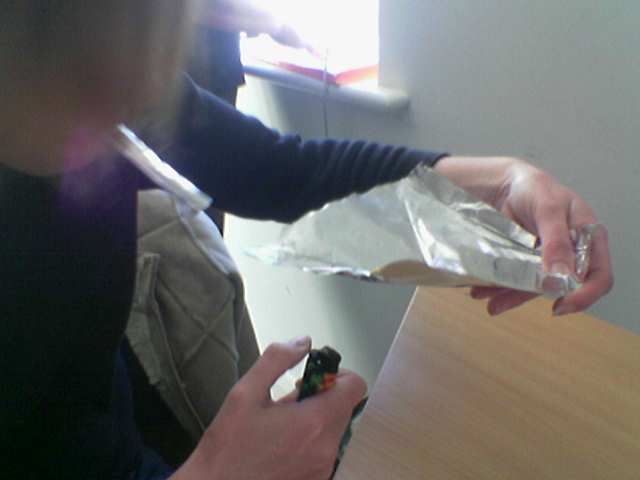
"Chasing the dragon" (CTD) (traditional Chinese: 追龍; simplified Chinese: 追龙; pinyin: zhuī lóng; Jyutping: zeoi1 lung4), or "foily" in Australian English,[1] is the act of inhaling the vapor of a powdered psychoactive drug off a heated sheet of aluminium foil. The moving vapor is chased after with a tube (often rolled foil) through which the user inhales.[2] The "chasing" occurs as the user gingerly keeps the liquid moving to keep it from overheating and burning up too quickly, on a heat-conducting material such as aluminium foil.

"Chasing the dragon" is also the elusive pursuit of a high equal to the user's first in the use of a drug, which after acclimation is no longer achievable.[3] Used in this way, "chasing the dragon" can apply to any recreational drug administered by any means.

History

[edit]

The practice of smoking low-grade heroin via heating on tinfoil first originated in Hong Kong in the late 1950s, and thereafter spread to other parts of Southeast Asia during the 1960s, Western Europe during the late 1970s, and to the Indian subcontinent during the 1980s.[2] A report published in 1958 by the Government of Hong Kong stated that since syringes were difficult to obtain in the colony, local addicts bought street deals of crude heroin (often mixed with powdered barbiturates) weighing approximately 0.126 grams for HK$2 each, which was then vaporized on tinfoil while the consumer inhaled the rising smoke through a cardboard tube. The use of common materials for consumption of the drugs allowed the addict to quickly dispose of the evidence if they detected the police nearby, and also allowed them to forgo carrying incriminating paraphernalia on their person (such as pipes or syringes).[4]

Risks

[edit]

Lung cancer from natural talc

[edit]

Talc is an excipient often used in pharmaceutical tablets. Also, illicit drugs that occur as white powder in their pure form are often cut with cheap talc. Natural talc is cheap but contains asbestos while asbestos-free talc is more expensive. Talc that has asbestos is generally accepted as being able to cause lung cancer if it is inhaled. The evidence about asbestos-free talc is less clear, according to the American Cancer Society.[5]

Smoke inhalation

[edit]

It is always harmful to expose the lungs to any kind of smoke or heated vapor.[6]

Heroin

[edit]

Inhaling heroin appears to rarely lead to toxic leukoencephalopathy.[7][8] There are also documented cases of both severe acute asthma and exacerbation of underlying asthma caused by heroin inhalation, potentially resulting in death.[9][10][11]

See also

[edit]

References

[edit]
Revisions and contributorsEdit on WikipediaRead on Wikipedia
from Grokipedia
Chasing the dragon is a method of consumption involving the of vapors produced by heating the drug on aluminum foil. The technique, which originated as a refinement of smoking in Hong Kong during the 1950s, entails placing powdered on foil, applying heat from below with a or until it liquefies and vaporizes, and then inhaling the rising fumes through a or tube while following the trail of smoke. This practice, metaphorically likened to pursuing an elusive dragon, spread from to and beyond, often adopted by users seeking to avoid the visible stigmas and infection risks of intravenous injection. Despite perceptions of relative safety compared to injecting, chasing the dragon exposes users to unique hazards, including the formation of toxic byproducts that can cause severe neurological damage such as spongiform , a progressive degeneration leading to , , and potentially death. Empirical studies document higher incidences of such brain toxicities among inhalers than injectors, underscoring the causal link between vapor and these irreversible effects due to heated 's chemical alterations. While less prevalent in the United States where injection dominates, the method persists in regions with impure supplies, contributing to cycles driven by tolerance escalation and the unattainable pursuit of initial .

Definition and Terminology

Primary Meaning as a Drug Administration Method

Chasing the dragon refers to a method of inhaling psychoactive drug vapors, most commonly heroin, by heating the substance on aluminum foil and capturing the resulting pyrolysis products through a tube or straw. The technique involves placing a small quantity of powdered or base-form heroin onto a sheet of aluminum foil, which is then heated from below using a flame, such as from a cigarette lighter. As the heroin melts and vaporizes, it forms a liquid trail that the user "chases" by tilting the foil and following the movement with the heat source to maximize vapor production. The vapors, resembling a dragon's tail in appearance due to the swirling smoke, are inhaled through a narrow tube, often a rolled piece of foil or straw, held near the liquefied drug. This inhalation route avoids injection, which users perceive as reducing risks like transmission, though it delivers heroin's active metabolites such as and into the bloodstream via pulmonary absorption. Primarily associated with diacetylmorphine (), the method has been applied to other substances including , methamphetamine mixtures like yaba, and occasionally or , though remains the archetypal drug. The term "chasing the dragon" originated in during the 1950s as a refinement of earlier smoking practices, evoking the elusive pursuit of the drug's effects akin to chasing a mythical . Despite perceptions of relative compared to intravenous use, the method carries estimates of 38-53%, leading to rapid onset but potential for high-dose toxicity and unique harms like from inhaled pyrolysates.

Alternative Interpretations

Beyond its primary association with a specific technique of vapor , "chasing the dragon" is employed metaphorically to denote the relentless and ultimately futile pursuit of recapturing an initial , particularly the first euphoric high from a substance, which becomes unattainable due to physiological tolerance and . This interpretation arises from the experiential reality of , where subsequent uses yield , compelling users to escalate doses or methods in vain. The phrase has extended beyond narcotics to describe analogous patterns in behavioral addictions, such as , where participants chase the adrenaline of early wins amid mounting losses and escalating risks, mirroring the drug user's tolerance cycle. In this context, it underscores the psychological compulsion to replicate transient highs, often leading to financial ruin or compulsive escalation, as evidenced by clinical observations of behaviors. Further applications appear in domains like elite athletics and , where individuals "chase the dragon" by fixating on reliving formative triumphs—such as an or startup breakthrough—that subsequent efforts fail to match due to external variables, aging, or market shifts. For instance, retired swimmers report an enduring void after peak competition, driving maladaptive rather than forward progress. Similarly, business leaders are cautioned against pursuing inflated past valuations or hype-driven successes, which distort sustainable strategies. Occasionally, the broadly signifies pursuing any elusive ideal, akin to "chasing ," detached from but retaining the connotation of an ever-receding target. This usage, while less prevalent, appears in motivational literature to critique obsessive goal-setting without grounding in realistic constraints.

Historical Development

Origins in (1920s–1950s)

The practice of smoking first emerged in during the 1920s, marking a shift from traditional smoking to vaporizing diacetylmorphine using porcelain bowls heated over lamps and inhaled through bamboo tubes. This method spread rapidly across eastern amid widespread availability following its commercial production by pharmaceutical companies like , which had introduced the drug in as a cough suppressant before its addictive potential became evident. By the 1930s and 1940s, smoking had become entrenched in urban centers of and neighboring regions, often as a cheaper alternative to injecting scarce or smoking , which required more elaborate preparation and faced increasing regulatory scrutiny under international treaties like the 1925 Opium Conference. Users adapted local materials, heating the powder to produce vapors that avoided the visible residue of dross, facilitating discreet consumption in dens amid rising anti-narcotics enforcement by Nationalist Chinese authorities. In the post-World War II era, particularly in under British colonial rule, heroin smoking evolved into the refined technique known as "chasing the dragon" by the early . This involved placing powder on aluminum foil, heating it from below with a until it liquefied and vaporized—forming a trailing, serpentine path likened to a dragon's movement—and inhaling the fumes through a or rolled paper. The method arose amid 's role as a transit hub for Southeast Asian refined from Golden Triangle opium, where low-purity "Chinese heroin" No. 3 (mixed with caffeine and ) proved suitable for vaporization without dissolution. Colonial records from the document its prevalence among young triads and refugees fleeing mainland China's communist crackdowns, with the term "chasing the dragon" reflecting both the visual effect and the elusive pursuit of , though some accounts trace the phrase's metaphorical roots to earlier Chinese idioms for opium-induced hallucinations dating to the 1920s. This foil-based approach offered perceived hygiene advantages over pipes, reducing infection risks from shared mouthpieces while enabling rapid onset effects comparable to injection, thus accelerating its adoption before spreading beyond .

Spread to Western Countries (1970s–1990s)

The practice of inhaling vapors, known as "chasing the dragon," spread from to parts of in the late , marking its initial introduction to Western countries. This occurred amid rising availability and experimentation with non-injecting routes, influenced by n practices carried by immigrant communities or returning travelers. In the , where injection had dominated use since the 1960s, via foil emerged as a notable alternative by the late , with surveys indicating a shift where up to 44% of sampled users preferred over injection by the mid-1980s. Adoption accelerated through the 1980s in the UK, driven by perceptions of reduced health risks compared to injecting, particularly amid HIV/AIDS concerns; new users increasingly initiated via chasing, with longitudinal data showing many progressed to injection after an average of 2-3 years. In the Netherlands, the method—locally termed "chinezen"—gained traction similarly, with early clusters linked to urban youth; associated toxic leukoencephalopathy was first documented in Amsterdam in 1982, affecting multiple users inhaling vapors from impure heroin heated on foil. By the 1990s, the technique had disseminated more broadly across , including , where smoking trends peaked in the 1980s amid a , with over 90% of young users in some cohorts starting via chasing to mitigate injection fears. , adoption lagged, remaining marginal through the 1980s-1990s as white powder favored snorting or injecting, though sporadic non-injecting smoking appeared in urban areas by the decade's end, often conflated with emerging practices. This European-centric spread reflected 's Southeast Asian sourcing and purity variations, enabling without dissolution.

Administration Technique

Step-by-Step Process

The process of "chasing the dragon" begins with placing a small quantity of , typically in powder or base form, onto a sheet of aluminum foil. The foil is positioned on a stable, heat-resistant surface to allow for controlled heating. A , usually from a , is then applied from below the foil to heat the , causing it to melt, vaporize, and form a mobile residue that traces erratic paths across the surface—resembling a "dragon" in motion, from which the term derives. The user must adjust the intensity to avoid burning the substance, as excessive heat can degrade the or produce harsh, inefficient vapors. Simultaneously, vapors rising from the heating are inhaled through a narrow tube, such as a rolled-up piece of foil, a straw, or a stem, held just above the foil to capture the pyrolysate without direct contact. The user "chases" the moving residue by shifting the tube's position to follow the vapors, ensuring maximal of the opioid-laden smoke. This step requires steady breathing to draw in the vapors efficiently, often producing a characteristic acrid odor. The entire administration typically lasts 1-2 minutes per dose, with users extinguishing the flame once the is fully volatilized or the desired effect is approached. Variations may include prepping the with impurities removed or using additives to alter vapor quality, though these increase risks of toxic byproducts.

Required Materials and Variations

The standard materials for "chasing the dragon," a method of inhaling vapors, consist of a sheet of aluminum foil to hold the , a cigarette lighter or similar source to it from below, and a narrow tube such as a or rolled-up piece of foil for inhaling the resulting vapors. The , typically in freebase form, is placed in a small pile on the foil's surface, which is then heated to volatilize the substance without direct , producing a trail of vapor that users "chase" along the foil. Variations in materials are limited but include substitutions for the inhalation tube, such as using a glass pipe instead of a , though this deviates from the traditional technique and may alter vapor capture efficiency. Some users employ as an alternative to aluminum, citing perceived differences in distribution, but aluminum remains predominant due to its widespread availability and low suitability for controlled heating. In pharmacokinetic studies, "chasing the dragon" has been compared to via dedicated heating devices, which require specialized equipment like vaporizers but yield lower than the foil method.
  • Foil: Aluminum sheets, approximately 15-20 cm square, provide a non-stick surface for vaporization.
  • Heat source: Bicycle lighters or matches allow precise flame control to avoid burning the drug.
  • Inhalation tube: Thin straws (e.g., from fast-food outlets) or self-rolled foil cylinders, often 10-15 cm long, facilitate directed vapor intake without direct foil contact.
These elements enable rapid onset effects while avoiding injection risks, though material purity and user technique influence yield and safety.

Pharmacological Aspects

Bioavailability and Onset Compared to Other Routes

Chasing the dragon, involving the inhalation of vapors produced by heating the drug on foil, yields a of 38–53%, reflecting incomplete , potential degradation, and respiratory losses such as exhalation of unabsorbed vapors. This is substantially lower than the near-complete systemic absorption of approximately 100% achieved via intravenous injection, where the drug bypasses first-pass and enters circulation directly. In comparison, intranasal provides a of around 50–60%, limited by mucosal absorption efficiency and partial to active metabolites before reaching systemic circulation, while oral ingestion results in the lowest of 20–30% due to extensive hepatic first-pass converting much of the to . The onset of pharmacological effects via chasing the dragon is rapid, with peak plasma concentrations (T_max) of and its primary metabolite (6-MAM) occurring within up to 5 minutes, driven by efficient pulmonary absorption akin to alveolar . Intravenous injection produces an even faster onset, with effects manifesting in seconds and T_max for at 0.3–1.5 minutes, owing to immediate bolus delivery into the bloodstream. Intranasal administration shows a slightly delayed onset of 2–5 minutes, as absorption across is slower than pulmonary uptake, whereas oral routes delay effects to 15–30 minutes or longer, further compounded by slower gastrointestinal absorption and metabolism.
Route of AdministrationBioavailability (%)Onset of Effects (T_max approximate)
Intravenous~100Seconds (0.3–1.5 min for )
(chasing the dragon)38–53Seconds to minutes (up to 5 min)
Intranasal~50–602–5 minutes
Oral20–3015–30 minutes
These differences influence subjective and potential, with providing a potent but less intense "hit" than injection due to reduced peak concentrations (C_max 2–6 times lower for ). Variability in for chasing can arise from technique, drug purity, and user factors like efficiency, potentially lowering effective delivery below reported averages.

Active Metabolites and Duration of Effects

Upon inhalation via the "chasing the dragon" method, (diacetylmorphine) undergoes rapid deacetylation in the body to form (6-MAM), a potent responsible for much of the initial euphoric "rush," followed by further metabolism to , the primary long-acting that mediates sustained effects through mu-opioid receptor agonism. This remains consistent across administration routes, including , with 6-MAM exhibiting higher and faster blood-brain barrier penetration than , contributing to quicker onset despite lower systemic of 38–53% for inhaled compared to intravenous administration. Pharmacokinetic studies of smoked heroin show plasma concentrations of heroin peaking within 1–5 minutes post-inhalation, mirroring intravenous kinetics due to efficient vapor absorption in the lungs, while 6-MAM and morphine levels rise subsequently, with morphine persisting longer. Elimination half-lives are brief for heroin (approximately 3.3 minutes) and 6-MAM (5.4 minutes), but morphine's half-life extends to about 18.8 minutes, influencing the overall profile. Variability in metabolite exposure can occur due to factors like inhalation efficiency in the foil method versus controlled devices, with "chasing the dragon" yielding higher area-under-curve values for heroin and metabolites than less efficient heating techniques. The duration of subjective effects from chased typically spans 4–5 hours, driven primarily by morphine's receptor binding and slower clearance, though initial intense effects from 6-MAM subside within minutes, prompting redosing in dependent users. This profile supports rapid tolerance development to the euphoric phase while prolonged sedation persists, with total influencing dose requirements for equivalent effects to parenteral routes. Peer-reviewed pharmacokinetic modeling confirms inhaled 's terminal half-lives align closely with those of metabolites from other routes, underscoring minimal route-specific divergence in longevity beyond onset speed.

Physiological and Subjective Effects

Immediate Euphoria and Sedation

Upon via the "chasing the dragon" method, vapors are rapidly absorbed through the pulmonary vasculature, resulting in an onset of effects within 1–2 minutes and peak plasma concentrations of metabolites occurring 1–5 minutes post-administration. This rapid , estimated at 38–52%, facilitates a prompt conversion of to its active metabolites, (6-MAM) and , which bind to mu-opioid receptors in the , eliciting a surge of characterized as a "rush" of intense pleasure and well-being. Users typically report this euphoric phase as dose-dependent, with subjective measures of drug-liking increasing linearly from 25 mg to 100 mg doses in controlled studies. Following the initial rush, which lasts several minutes, a phase of ensues, marked by drowsiness, mental clouding, and reduced responsiveness, akin to the general short-term effects of across routes of administration. Pharmacodynamic indicators include dose-related declines in reaction time, averaging 13 msec prolongation at higher doses, alongside elevations in and body temperature, reflecting and autonomic activation. This biphasic pattern—initial exhilaration transitioning to tranquility—drives repeated use, as the sedation provides a prolonged sense of contentment, though less intense than intravenous administration due to slightly slower but still rapid pulmonary uptake.

Tolerance Development and Escalation Patterns

Tolerance to the euphoric and effects of delivered via chasing the dragon arises primarily from neuroadaptations at mu-opioid receptors, including receptor desensitization, internalization, and downregulation in brain regions such as the and . These changes occur with repeated exposure, reducing the drug's rewarding potency and necessitating compensatory behaviors. The method's of 38–53% supports rapid pulmonary absorption and swift onset of effects, comparable to intravenous administration, which encourages frequent redosing and accelerates tolerance development relative to less efficient routes like intranasal (approximately 14% ). Escalation patterns typically involve progressive increases in quantity per session—often from initial small foil loads to multiple grams daily—and heightened frequency of use to counteract tolerance-induced of the "." of adolescent vapor demonstrate dose-independent escalation in self-administration behaviors, with long-term persistence of altered and reduced sensitivity to effects into adulthood, mirroring trajectories of compulsive use. qualitative accounts reveal that initial tolerance builds within days of regular , prompting adaptations like refined heating techniques for maximal vapor yield, though re-exposure after shows variable recovery, with psychoactive tolerance re-emerging faster than respiratory tolerance. This differential tolerance—faster adaptation to and analgesia than to respiratory depression—amplifies risks during escalation, as users pursue escalating doses for subjective relief while remaining susceptible to life-threatening . Longitudinal patterns indicate a shift from experimental to maintenance use within weeks, driven by withdrawal avoidance and economic pressures from rising consumption, often culminating in polydrug involvement or route progression despite the method's initial appeal as an injection alternative.

Health Risks and Complications

Neurological Damage Including

Chasing the dragon, the practice of inhaling vapors from heated on aluminum foil, is linked to (TLE), a spongiform degeneration of cerebral distinct from hypoxic-ischemic injury. This condition arises from exposure to byproducts or adulterants in the , which are leukotoxic when inhaled but less so via other routes like injection. First systematically reported in the in 1982 among users adopting this method, TLE manifests symmetrically in the posterior cerebral , , and . Clinically, acute TLE presents with gait , , tremors, and within days to weeks of heavy use, progressing to , mutism, and quadriparesis in severe cases; mortality reaches up to 40% in documented outbreaks, with survivors often facing permanent cerebellar dysfunction or cognitive deficits. via MRI reveals characteristic T1 hypointensities and T2/FLAIR hyperintensities in periventricular and subcortical , with diffusion restriction in acute phases indicating cytotoxic ; proton MR shows elevated lactate peaks, supporting a toxic-metabolic etiology over vascular compromise. confirms vacuolar spongiform changes in and , without prominent or . Beyond TLE, chasing the dragon can induce acute like choreoathetosis or from involvement, as well as focal infarcts in cortex and due to or embolic phenomena from adulterants. Recent cases implicate fentanyl-adulterated in exacerbating these risks, with similar symmetric lesions but higher fatality from combined respiratory depression. Prognosis varies: mild cases may resolve with abstinence and supportive care, including trials of CoQ10 or for , but advanced spongiform changes correlate with irreversible disability. No specific exists, underscoring the method's unique compared to parenteral use.

Respiratory and Cardiovascular Issues

Inhalation of vapors via the "chasing the dragon" method, involving heating the substance on aluminum foil and inhaling the products, is associated with significant respiratory impairment, including reduced forced expiratory volume in one second (FEV1) and forced vital capacity (FVC). A 2002 of 118 users in found that those employing this technique exhibited markedly lower function compared to non-inhalers, with mean FEV1 at 78% of predicted values versus 92% in controls, independent of history, suggesting direct toxic effects from byproducts on bronchial airways.00193-x) Chronic exposure correlates with obstructive patterns akin to (COPD), as evidenced by a 2021 Iranian study of 100 chronic smokers showing 68% prevalence of moderate to severe airflow limitation, attributed to inflammatory damage from inhaled particulates and thermal injury. Acute respiratory complications include non-cardiogenic , occurring even in non-intravenous users due to opioid-induced negative pressure ventilation and capillary leak. Case reports document this in "chasing the dragon" practitioners, with rapid onset of and bilateral infiltrates on imaging, often requiring ; a 2016 review noted mortality rates up to 50% in severe instances without prompt intervention. Additionally, inhalation has precipitated acute , characterized by fever, dyspnea, and eosinophil-rich alveolar infiltrates, as in a documented case of foil leading to responsive to corticosteroids. Respiratory depression remains a primary overdose risk, with vapors delivering rapid systemic effects that suppress medullary chemoreceptors, potentially culminating in apnea and secondary hypoxic organ damage. Cardiovascular effects stem largely from hypoxia secondary to respiratory compromise, though direct myocardial occurs in overdose scenarios. Inhaled overdose has induced stunned myocardium, a reversible hypocontractility state mimicking ischemia without , as reported in a case of a young adult presenting with and elevated troponins post-vapor inhalation, resolving with supportive care. Rare instances link the practice to reverse , featuring apical sparing and basal ballooning, potentially from catecholamine surge amid , as in a of a with -induced and echocardiographic abnormalities. Systemic and exacerbate risks, with contaminants possibly contributing to endothelial , though data remain limited compared to intravenous routes.

Adulterant-Specific Hazards

, an agent sometimes used as a cutting agent in street , has been implicated in cases of following inhalation via chasing the dragon. In a 2023 , a patient developed symmetrical hyperintensities on MRI after smoking levamisole-adulterated on foil, with symptoms including , , and ; the was suspected due to its prior association with leukoencephalopathies when used therapeutically or in contaminated . 's mechanism may involve vascular endothelial damage or direct upon , exacerbating the spongiform changes characteristic of heroin-related brain injury. Fentanyl and its analogs, potent synthetic opioids frequently adulterating , heighten overdose risks during foil smoking due to their high volatility and uneven vaporization, potentially delivering rapid, supratherapeutic doses. of fentanyl-adulterated can produce inconsistent particles, leading to acute respiratory depression and hypoxia more unpredictably than pure , as evidenced by pharmacokinetic studies showing variable in smoked mixtures. This adulteration has contributed to surges in inhalation-related fatalities, with data from overdose cases confirming presence in lung tissues of smokers. Quinine, a common bulking agent in , poses hazards when heated on foil, as its vapors can induce systemic cinchonism including , visual disturbances, and cardiac arrhythmias upon inhalation. Street samples analyzed via gas chromatography-mass spectrometry have revealed products such as derivatives, which are absorbed rapidly and may amplify respiratory toxicity in chronic users. Additionally, rare but documented adulterants like (used as "rat poison" cutting) can volatilize during heating, causing severe muscle spasms and seizures from even trace inhaled amounts, based on forensic analyses of contaminated batches. These risks underscore the variability of street composition, where adulterants' yields unpredictable toxic byproducts beyond those of diacetylmorphine itself.

Comparative Analysis

Versus Intravenous Injection

Chasing the dragon, involving the of vapors produced by heating the drug on aluminum foil, exhibits lower than intravenous (IV) injection, with estimates ranging from 38% to 53% for inhaled compared to near-complete absorption (approximately 100%) via direct venous administration. This reduced efficiency in arises from incomplete , variable technique, and pulmonary absorption losses, often necessitating higher doses to achieve comparable effects. Pharmacokinetic studies indicate that while both routes yield rapid onset—IV within seconds due to immediate systemic circulation and via quick lung-to-brain transfer in 10-30 seconds—the peak plasma concentrations are higher and more abrupt with IV, leading to steeper dose-response curves. Duration of effects is similar, typically 3-5 hours for primary metabolites like , though may prolong subjective due to slower clearance of inhaled residues. Subjectively, IV injection produces a more intense initial "" of attributed to the rapid delivery of and its active metabolite to opioid receptors in the , often described by users as overwhelming compared to the comparatively milder, wave-like onset from chasing the dragon. This difference stems from the pharmacokinetic profile, where IV achieves supraphysiological peak levels faster, enhancing and potentially accelerating dependence escalation. In contrast, provides a less precipitous high, which some users perceive as smoother but requiring more frequent dosing to maintain effects, though pharmacodynamic in constriction and subjective ratings shows overlapping profiles between routes. Health risks differ markedly in profile: IV heroin use carries elevated dangers of bloodborne infections such as and C from , alongside local complications like abscesses, , and venous sclerosis. Chasing the dragon mitigates these infectious hazards but introduces unique neurological threats, including toxic spongiform —a progressive degeneration linked to inhaled products like those from overheated , with cases showing , quadriparesis, and high mortality rates up to 40% in reported series. Respiratory complications, such as non-cardiogenic and exposure from foil heating, further distinguish smoking, while both routes share overdose potential via respiratory depression, though IV's higher amplifies acute lethality per milligram. Despite these distinctions, dependence severity appears comparable between routes, with both exceeding that of non-parenteral methods like , as evidenced by withdrawal intensity correlating more with dose than administration mode. Transitions from IV to smoking, promoted in some efforts via foil distribution, aim to curb infectious disease spread but may increase overall consumption due to perceived relative safety, potentially offsetting benefits. Epidemiological data from cohorts indicate smoking's rise in regions with vein-damaged injectors, yet it does not eliminate trajectories or long-term morbidity.

Versus Other Smoking Methods

Chasing the dragon, involving the heating of base on aluminum foil to produce inhalable vapors, differs from other smoking methods such as or incorporation into in terms of , , and health risks. In , is typically placed in a specialized pipe (e.g., or ) and heated directly, often with a applied to the substance, allowing or for through the stem. of inhaled via chasing ranges from 35% to 53%, enabling rapid onset of effects within seconds to minutes due to direct pulmonary absorption, comparable to intravenous administration but with lower peak plasma concentrations. yields similar rapid absorption but may involve partial , potentially reducing efficiency and altering metabolite profiles due to higher temperatures or mixing with in cigarette methods, which dilutes potency and slows onset slightly. Health risks diverge notably, with chasing linked to unique neurological complications absent in pipe or . Toxic spongiform , a progressive degeneration causing , , and quadriparesis, arises specifically from inhaling pyrolyzed vapors in the foil method, as evidenced by outbreaks in the (1970s–1980s) and (2001–2006), affecting dozens with irreversible damage attributed to heated contaminants or direct toxin inhalation rather than the drug itself. , while exposing users to respiratory irritants from combustion byproducts like , lacks this association with , though chronic use correlates with general cognitive deficits potentially from hypoxia or adulterants. Both methods mitigate bloodborne risks compared to injection but introduce pulmonary hazards; chasing may exacerbate these via aluminum foil residues or uneven vapor heating, prompting efforts favoring pipes for cleaner delivery. User patterns reflect practical differences: chasing offers discretion without visible smoke but requires foil and straws, increasing mess and public detection risks, whereas or cigarettes enable more controlled, portable use, particularly in regions like where pipe traditions persist. Escalation to chasing often follows injection avoidance, yet its neurological specificity underscores higher long-term brain injury potential versus , which support transitions from injecting without the same toxic profile.

Epidemiology and Usage Patterns

The practice of "chasing the dragon," involving the inhalation of vapors produced by heating the drug on aluminum foil, originated in during the 1950s among users facing barriers to intravenous injection, such as poor vein access. It subsequently spread across in the and 1970s, where smoking became a dominant route due to cultural preferences and the availability of smokable forms. By the 1980s, the method reached , particularly the , , and , often as a harm-reduction response to HIV transmission risks associated with injecting. In , prevalence of chasing the dragon rose sharply from the onward, with surpassing injection as the primary route in Western European countries by 2009. European Monitoring Centre for Drugs and Addiction (EMCDDA) data indicate a continued decline in injection, with only 18-20% of new clients entering opioid treatment reporting it as their main route in 2023-2024, reflecting a sustained shift toward and snorting amid purity variations and awareness campaigns. In , particularly heroin-producing regions like and , has remained prevalent for decades, accounting for a substantial portion of consumption where injection rates are lower due to traditional practices. Globally, comprehensive route-specific data remain limited, but Office on Drugs and Crime (UNODC) estimates suggest around 31.5 million past-year users in 2021, with non-injection methods like predominant in , which consumes approximately 70% of the world's supply. Injection prevails in high-prevalence areas such as parts of , , and , affecting an estimated 11 million people who inject drugs worldwide, though many users opt for to mitigate infectious risks. Recent trends in show rising , including , with U.S. Centers for Disease Control and Prevention reporting it as the leading route in 21.7-42.4% of overdose deaths in certain regions by 2022, driven by adulteration and accessibility. Overall use prevalence has stabilized globally since the 2010s, but non-injection routes like chasing the dragon have expanded in response to purity changes, adulterants, and interventions, though underreporting complicates precise tracking.

Demographic and Regional Variations

Chasing the dragon, the practice of inhaling vapors produced by heating the drug on aluminum foil, exhibits significant regional differences in prevalence, largely tied to historical diffusion patterns and cultural preferences for non-injective routes. Originating in during the 1950s, the method spread to , , and parts of between the and , becoming established in countries like the , the , , and . In the , particularly , approximately 85% of users reported the drug by the early 2000s, reflecting a strong preference for inhalation over injection. Conversely, in the United States, via this method remains uncommon, with intravenous injection dominating as the primary route, though general of and has increased recently amid the opioid crisis. In , particularly , cases are documented but prevalence data is limited and poorly characterized. Demographically, users employing chasing the dragon tend to skew younger and include a higher proportion of males compared to injectors. A 1998 Irish study of 46 users under age 28 found 96% had initiated use via this method, often to mitigate comedowns from ecstasy, with primary persisting stably before any transition to injection. Median age at first use is higher among smokers (20 years) than injectors (18 years), suggesting appeals to slightly older novices wary of . In a cohort assessing lung impacts, 84% of chasing practitioners were male and 77% white, though broader demographics—males, ages 18–25, low-income urban dwellers—likely overlap, with favored to evade risks associated with sharing injection equipment. In the UK, a 1995 sample showed 44% of users versus 54% injecting, indicating balanced but method-specific uptake without strong divergence in early adoption. These patterns underscore 's role as an for in -prevalent regions, potentially delaying but not preventing escalation.

Cultural and Societal Context

Representation in Media and Literature

The practice of "chasing the dragon," involving the inhalation of vapors from heated foil, has been depicted in several films to illustrate the sensory pursuit of and the ensuing cycle. In Trainspotting (1996), directed by and adapted from Irvine Welsh's novel, protagonist smokes in this manner, with the sequence emphasizing initial pleasure contrasted against withdrawal torment. The film's visual style captures the method's ritualistic appeal, contributing to its cultural impact on perceptions of use in 1990s Britain. Similar portrayals appear in (2000), directed by , where characters engage in chasing the dragon to convey the drug's cross-border trafficking and personal devastation. The technique underscores the film's theme of inescapable dependency, showing vapors chased with a straw amid scenes of moral decay. In (1993), directed by , the method is shown during a heist narrative set in , highlighting impulsive consumption and its role in escalating criminal chaos. In literature, Irvine Welsh's Trainspotting (1993) provides raw, first-person accounts of chasing the dragon among Edinburgh's , detailing the physical mechanics—foil heating, vapor pursuit—and psychological toll, including tolerance buildup and health decline. These depictions prioritize experiential realism over moralizing, drawing from observed subcultures to critique systemic failures in addressing . Non-fictional media, such as the FBI and DEA's documentary Chasing the Dragon: The Life of an Addict (2016), uses survivor testimonies to demonstrate the method's progression from experimentation to ruin, aiming at prevention among youth without dramatizing highs. Such representations often balance visceral detail with cautionary outcomes, though critics note potential glamorization risks in fictional works.

Role in Harm Reduction Strategies

In harm reduction initiatives, "chasing the dragon" functions as an alternative route of heroin administration to intravenous injection, primarily to avert bloodborne pathogen transmission risks, including HIV and hepatitis C virus, which are elevated by needle sharing and injection-site infections. Users often select this inhalation method over injecting due to its perceived lower infectious disease burden, as it eliminates direct bloodstream entry via shared equipment. Needle and syringe programs (NSPs) in the have distributed aluminum foil packs since the mid-2000s to facilitate transitions to chasing, aiming to curb injecting initiation and promote safer consumption patterns. A 2006–2007 pilot evaluation across four NSPs in involved 320 users, of whom 174 (54%) accepted foil; among 48 recent injectors at one site, 85% (41 individuals) used foil for chasing instead of injecting on at least one occasion, while 32 new non-injectors were engaged, and NSP attendance rose 32.5% (from 1,672 to 2,216 visits). Similar foil provision efforts have correlated with increased non-injection routes like or snorting, which are associated with reduced needle-sharing likelihood. Feedback from participants in these programs underscored foil's utility in reducing injecting frequency, though some reported diminished , , or inconsistent compared to injection. Epidemiological data indicate chasing has contributed to declining injection prevalence in select European cohorts, where it has emerged as a predominant entry route, potentially delaying or preventing progression to injecting among novices. However, evaluations reveal limitations, including short-term follow-up periods, small samples, and no direct measurement of sustained infectious reductions, with transitions often partial rather than complete. These strategies prioritize averting injection-related harms despite introducing inhalation-specific risks, such as respiratory irritation, though long-term efficacy requires further .

References

Add your contribution
Related Hubs
User Avatar
No comments yet.