
Hubbry Logo
Development economicsDevelopment economicsMain
Open search
Development economics
Community hub
Development economics
logo
7 pages, 0 posts
0 subscribers
Be the first to start a discussion here.
Development economics
from Wikipedia

Development economics is a branch of economics that deals with economic aspects of the development process in low- and middle- income countries. Its focus is not only on methods of promoting economic development, economic growth and structural change but also on improving the potential for the mass of the population, for example, through health, education and workplace conditions, whether through public or private channels.[1]

Development economics involves the creation of theories and methods that aid in the determination of policies and practices and can be implemented at either the domestic or international level.[2] This may involve restructuring market incentives or using mathematical methods such as intertemporal optimization for project analysis, or it may involve a mixture of quantitative and qualitative methods.[3] Common topics include growth theory, poverty and inequality, human capital, and institutions.[4]

Unlike in many other fields of economics, approaches in development economics may incorporate social and political factors to devise particular plans.[5] Also unlike many other fields of economics, there is no consensus on what students should know.[6] Different approaches may consider the factors that contribute to economic convergence or non-convergence across households, regions, and countries.[7]

Theories of development economics

[edit]

Mercantilism and physiocracy

[edit]
World GDP per capita, from 1400 to 2003 CE

The earliest Western theory of development economics was mercantilism, which developed in the 17th century, paralleling the rise of the nation state. Earlier theories had given little attention to development. For example, scholasticism, the dominant school of thought during medieval feudalism, emphasized reconciliation with Christian theology and ethics, rather than development. The 16th- and 17th-century School of Salamanca, credited as the earliest modern school of economics, likewise did not address development specifically.

Major European nations in the 17th and 18th centuries all adopted mercantilist ideals to varying degrees, the influence only ebbing with the 18th-century development of physiocrats in France and classical economics in Britain. Mercantilism held that a nation's prosperity depended on its supply of capital, represented by bullion (gold, silver, and trade value) held by the state. It emphasised the maintenance of a high positive trade balance (maximising exports and minimising imports) as a means of accumulating this bullion. To achieve a positive trade balance, protectionist measures such as tariffs and subsidies to home industries were advocated. Mercantilist development theory also advocated colonialism.

Theorists most associated with mercantilism include Philipp von Hörnigk, who in his Austria Over All, If She Only Will of 1684 gave the only comprehensive statement of mercantilist theory, emphasizing production and an export-led economy.[8] In France, mercantilist policy is most associated with 17th-century finance minister Jean-Baptiste Colbert, whose policies proved influential in later American development.

Mercantilist ideas continue in the theories of economic nationalism and neomercantilism.

Economic nationalism

[edit]
Alexander Hamilton, credited as Father of the National System

Following mercantilism was the related theory of economic nationalism, promulgated in the 19th century related to the development and industrialization of the United States and Germany, notably in the policies of the American System in America and the Zollverein (customs union) in Germany. A significant difference from mercantilism was the de-emphasis on colonies, in favor of a focus on domestic production.

The names most associated with 19th-century economic nationalism are the first United States Secretary of the Treasury Alexander Hamilton, the German-American Friedrich List, and the American politician Henry Clay. Hamilton's 1791 Report on Manufactures, his magnum opus, is the founding text of the American System, and drew from the mercantilist economies of Britain under Elizabeth I and France under Colbert. List's 1841 Das Nationale System der Politischen Ökonomie (translated into English as The National System of Political Economy), which emphasized stages of growth. Hamilton professed that developing an industrialized economy was impossible without protectionism because import duties are necessary to shelter domestic "infant industries" until they could achieve economies of scale.[9] Such theories proved influential in the United States, with much higher American average tariff rates on manufactured products between 1824 and the WWII period than most other countries,[10] Nationalist policies, including protectionism, were pursued by Clay, and later by Abraham Lincoln, under the influence of economist Henry Charles Carey.

Forms of economic nationalism and neomercantilism have also been key in Japan's development in the 19th and 20th centuries, and the more recent development of the Four Asian Tigers (Hong Kong, South Korea, Taiwan, and Singapore), and, most significantly, China.

Following Brexit and the 2016 United States presidential election, some experts have argued a new kind of "self-seeking capitalism" popularly known as Trumponomics could have a considerable impact on cross-border investment flows and long-term capital allocation[11][12]

Post-WWII theories

[edit]

The origins of modern development economics are often traced to the need for, and likely problems with the industrialization of eastern Europe in the aftermath of World War II.[13] The key authors are Paul Rosenstein-Rodan,[14] Kurt Mandelbaum,[15] Ragnar Nurkse,[16] and Sir Hans Wolfgang Singer. Only after the war did economists turn their concerns towards Asia, Africa, and Latin America. At the heart of these studies, by authors such as Simon Kuznets and W. Arthur Lewis[17] was an analysis of not only economic growth but also structural transformation.[18]

Linear-stages-of-growth model

[edit]

An early theory of development economics, the linear-stages-of-growth model was first formulated in the 1950s by W. W. Rostow in The Stages of Growth: A Non-Communist Manifesto, following work of Marx and List. This theory modifies Marx's stages theory of development and focuses on the accelerated accumulation of capital, through the utilization of both domestic and international savings as a means of spurring investment, as the primary means of promoting economic growth and, thus, development.[5] The linear-stages-of-growth model posits that there are a series of five consecutive stages of development that all countries must go through during the process of development. These stages are "the traditional society, the pre-conditions for take-off, the take-off, the drive to maturity, and the age of high mass-consumption"[19] Simple versions of the Harrod–Domar model provide a mathematical illustration of the argument that improved capital investment leads to greater economic growth.[5]

Such theories have been criticized for not recognizing that, while necessary, capital accumulation is not a sufficient condition for development. That is to say that this early and simplistic theory failed to account for political, social, and institutional obstacles to development. Furthermore, this theory was developed in the early years of the Cold War and was largely derived from the successes of the Marshall Plan. This has led to the major criticism that the theory assumes that the conditions found in developing countries are the same as those found in post-WWII Europe.[5]

Structural-change theory

[edit]

Structural-change theory deals with policies focused on changing the economic structures of developing countries from being composed primarily of subsistence agricultural practices to being a "more modern, more urbanized, and more industrially diverse manufacturing and service economy." There are two major forms of structural-change theory: W. Lewis' two-sector surplus model, which views agrarian societies as consisting of large amounts of surplus labor which can be utilized to spur the development of an urbanized industrial sector, and Hollis Chenery's patterns of development approach, which holds that different countries become wealthy via different trajectories. The pattern that a particular country will follow, in this framework, depends on its size and resources, and potentially other factors including its current income level and comparative advantages relative to other nations.[20][21] Empirical analysis in this framework studies the "sequential process through which the economic, industrial, and institutional structure of an underdeveloped economy is transformed over time to permit new industries to replace traditional agriculture as the engine of economic growth."[5]

Structural-change approaches to development economics have faced criticism for their emphasis on urban development at the expense of rural development which can lead to a substantial rise in inequality between internal regions of a country. The two-sector surplus model, which was developed in the 1950s, has been further criticized for its underlying assumption that predominantly agrarian societies suffer from a surplus of labor. Actual empirical studies have shown that such labor surpluses are only seasonal and drawing such labor to urban areas can result in a collapse of the agricultural sector. The patterns of development approach has been criticized for lacking a theoretical framework.[5][citation needed]

International dependence theory

[edit]

International dependence theories gained prominence in the 1970s as a reaction to the failure of earlier theories to lead to widespread successes in international development. Unlike earlier theories, international dependence theories have their origins in developing countries and view obstacles to development as being primarily external in nature, rather than internal. These theories view developing countries as being economically and politically dependent on more powerful, developed countries that have an interest in maintaining their dominant position. There are three different, major formulations of international dependence theory: neocolonial dependence theory, the false-paradigm model, and the dualistic-dependence model. The first formulation of international dependence theory, neocolonial dependence theory, has its origins in Marxism and views the failure of many developing nations to undergo successful development as being the result of the historical development of the international capitalist system.[5]

Neoclassical theory

[edit]

First gaining prominence with the rise of several conservative governments in the developed world during the 1980s, neoclassical theories represent a radical shift away from International Dependence Theories. Neoclassical theories argue that governments should not intervene in the economy; in other words, these theories are claiming that an unobstructed free market is the best means of inducing rapid and successful development. Competitive free markets unrestrained by excessive government regulation are seen as being able to naturally ensure that the allocation of resources occurs with the greatest efficiency possible and that economic growth is raised and stabilized.[5][citation needed]

There are several different approaches within the realm of neoclassical theory, each with subtle, but important, differences in their views regarding the extent to which the market should be left unregulated. These different takes on neoclassical theory are the free market approach, public-choice theory, and the market-friendly approach. Of the three, both the free-market approach and public-choice theory contend that the market should be totally free, meaning that any intervention by the government is necessarily bad. Public-choice theory is arguably the more radical of the two with its view, closely associated with libertarianism, that governments themselves are rarely good and therefore should be as minimal as possible.[5]

Academic economists have given varied policy advice to governments of developing countries. See for example, Economy of Chile (Arnold Harberger), Economic history of Taiwan (Sho-Chieh Tsiang). Anne Krueger noted in 1996 that success and failure of policy recommendations worldwide had not consistently been incorporated into prevailing academic writings on trade and development.[5]

The market-friendly approach, unlike the other two, is a more recent development and is often associated with the World Bank. This approach still advocates free markets but recognizes that there are many imperfections in the markets of many developing nations and thus argues that some government intervention is an effective means of fixing such imperfections.[5]

National development continuum theory

[edit]

This approach recognizes patterns across time and geographies to achieve certain standards of living across different sectors of the economy on a continuum, using wealth as a means to solve problems rather than an end in itself, recognizing that many high-income countries simultaneously experience a level of poverty elsewhere in the economy, while some lesser “developed” ones seem to achieve better outcomes on other measures. It also highlights that much like human development, real experiences are usually non-linear and use multiple trajectories.

Author Joy D’Angelo describes it this way: “Our goals as humans may remain largely unchanged, even if periods of violence, conflict, poverty and change punctuate the journey. Also like we judge humans based on certain “achievements” like marriage, reproduction, knowledge accumulation or wisdom, the theory posits a framework to locate where a country might be on a “map”, and inspire leaders on where to make changes to unlock economic potential.”

One of the first developed by a practitioner, the theory came from designing a tool[22] that external consultants could use for their own work, and to empower their national partners to identify and own their next steps.

Topics of research

[edit]

Development economics also includes topics such as third world debt, and the functions of such organisations as the International Monetary Fund and World Bank. In fact, the majority of development economists are employed by, do consulting with, or receive funding from institutions like the IMF and the World Bank.[23] Many such economists are interested in ways of promoting stable and sustainable growth in poor countries and areas, by promoting domestic self-reliance and education in some of the lowest income countries in the world. Where economic issues merge with social and political ones, it is referred to as development studies.

Geography and development

[edit]

Economists Jeffrey D. Sachs, Andrew Mellinger, and John Gallup argue that a nation's geographical location and topography are key determinants and predictors of its economic prosperity.[24] Areas developed along the coast and near "navigable waterways" are far wealthier and more densely populated than those further inland. Furthermore, countries outside the tropic zones, which have more temperate climates, have also developed considerably more than those located within the Tropic of Cancer and the Tropic of Capricorn. These climates outside the tropic zones, described as "temperate-near," hold roughly a quarter of the world's population and produce more than half of the world's GNP, yet account for only 8.4% of the world's inhabited area.[24] Understanding of these different geographies and climates is imperative, they argue, because future aid programs and policies to facilitate economic development must account for these differences.

Economic development and ethnicity

[edit]

A growing body of research has been emerging among development economists since the very late 20th century focusing on interactions between ethnic diversity and economic development, particularly at the level of the nation-state. While most research looks at empirical economics at both the macro and the micro level, this field of study has a particularly heavy sociological approach. The more conservative branch of research focuses on tests for causality in the relationship between different levels of ethnic diversity and economic performance, while a smaller and more radical branch argues for the role of neoliberal economics in enhancing or causing ethnic conflict. Moreover, comparing these two theoretical approaches brings the issue of endogeneity (endogenicity) into questions. This remains a highly contested and uncertain field of research, as well as politically sensitive, largely due to its possible policy implications.

The role of ethnicity in economic development

[edit]

Much discussion among researchers centers around defining and measuring two key but related variables: ethnicity and diversity. It is debated whether ethnicity should be defined by culture, language, or religion. While conflicts in Rwanda were largely along tribal lines, Nigeria's string of conflicts is thought to be – at least to some degree – religiously based.[25] Some have proposed that, as the saliency of these different ethnic variables tends to vary over time and across geography, research methodologies should vary according to the context.[26] Somalia provides an interesting example. Due to the fact that about 85% of its population defined themselves as Somali, Somalia was considered to be a rather ethnically homogeneous nation.[26] However, civil war caused ethnicity (or ethnic affiliation) to be redefined according to clan groups.[26]

There is also much discussion in academia concerning the creation of an index for "ethnic heterogeneity". Several indices have been proposed in order to model ethnic diversity (with regards to conflict). Easterly and Levine have proposed an ethno-linguistic fractionalization index defined as FRAC or ELF defined by:

where si is size of group i as a percentage of total population.[26] The ELF index is a measure of the probability that two randomly chosen individuals belong to different ethno-linguistic groups.[26] Other researchers have also applied this index to religious rather than ethno-linguistic groups.[27] Though commonly used, Alesina and La Ferrara point out that the ELF index fails to account for the possibility that fewer large ethnic groups may result in greater inter-ethnic conflict than many small ethnic groups.[26] More recently, researchers such as Montalvo and Reynal-Querol, have put forward the Q polarization index as a more appropriate measure of ethnic division.[28] Based on a simplified adaptation of a polarization index developed by Esteban and Ray, the Q index is defined as
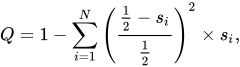
where si once again represents the size of group i as a percentage of total population, and is intended to capture the social distance between existing ethnic groups within an area.[28]

Early researchers, such as Jonathan Pool, considered a concept dating back to the account of the Tower of Babel: that linguistic unity may allow for higher levels of development.[29] While pointing out obvious oversimplifications and the subjectivity of definitions and data collection, Pool suggested that we had yet to see a robust economy emerge from a nation with a high degree of linguistic diversity.[29] In his research Pool used the "size of the largest native-language community as a percentage of the population" as his measure of linguistic diversity.[29] Not much later, however, Horowitz pointed out that both highly diverse and highly homogeneous societies exhibit less conflict than those in between.[30] Similarly, Collier and Hoeffler provided evidence that both highly homogenous and highly heterogeneous societies exhibit lower risk of civil war, while societies that are more polarized are at greater risk.[31] As a matter of fact, their research suggests that a society with only two ethnic groups is about 50% more likely to experience civil war than either of the two extremes.[31] Nonetheless, Mauro points out that ethno-linguistic fractionalization is positively correlated with corruption, which in turn is negatively correlated with economic growth.[32] Moreover, in a study on economic growth in African countries, Easterly and Levine find that linguistic fractionalization plays a significant role in reducing national income growth and in explaining poor policies.[33][34] In addition, empirical research in the U.S., at the municipal level, has revealed that ethnic fractionalization (based on race) may be correlated with poor fiscal management and lower investments in public goods.[35] Finally, more recent research would propose that ethno-linguistic fractionalization is indeed negatively correlated with economic growth while more polarized societies exhibit greater public consumption, lower levels of investment and more frequent civil wars.[33]

Economic development and its impact on ethnic conflict

[edit]

Increasingly, attention is being drawn to the role of economics in spawning or cultivating ethnic conflict. Critics of earlier development theories, mentioned above, point out that "ethnicity" and ethnic conflict cannot be treated as exogenous variables.[36] There is a body of literature that discusses how economic growth and development, particularly in the context of a globalizing world characterized by free trade, appears to be leading to the extinction and homogenization of languages.[37] Manuel Castells asserts that the "widespread destructuring of organizations, delegitimation of institutions, fading away of major social movements, and ephemeral cultural expressions" which characterize globalization lead to a renewed search for meaning; one that is based on identity rather than on practices.[38] Barber and Lewis argue that culturally-based movements of resistance have emerged as a reaction to the threat of modernization (perceived or actual) and neoliberal development.[39][40]

On a different note, Chua suggests that ethnic conflict often results from the envy of the majority toward a wealthy minority which has benefited from trade in a neoliberal world.[36] She argues that conflict is likely to erupt through political manipulation and the vilification of the minority.[36] Prasch points out that, as economic growth often occurs in tandem with increased inequality, ethnic or religious organizations may be seen as both assistance and an outlet for the disadvantaged.[36] However, empirical research by Piazza argues that economics and unequal development have little to do with social unrest in the form of terrorism.[41] Rather, "more diverse societies, in terms of ethnic and religious demography, and political systems with large, complex, multiparty systems were more likely to experience terrorism than were more homogeneous states with few or no parties at the national level".[41]

Recovery from conflict (civil war)

[edit]

Violent conflict and economic development are deeply intertwined. Paul Collier[42] describes how poor countries are more prone to civil conflict. The conflict lowers incomes catching countries in a "conflict trap." Violent conflict destroys physical capital (equipment and infrastructure), diverts valuable resources to military spending, discourages investment and disrupts exchange.[43]

Recovery from civil conflict is very uncertain. Countries that maintain stability can experience a "peace dividend," through the rapid re-accumulation of physical capital (investment flows back to the recovering country because of the high return).[44] However, successful recovery depends on the quality of legal system and the protection of private property.[45] Investment is more productive in countries with higher quality institutions. Firms that experienced a civil war were more sensitive to the quality of the legal system than similar firms that had never been exposed to conflict.[46]

Growth indicator controversy

[edit]

Gross domestic product (GDP) per capita, real income, median income and disposable income are used by many developmental economists as an approximation of general national well-being. However, these measures are criticized as not measuring economic growth well enough, especially in countries where there is much economic activity that is not part of measured financial transactions (such as housekeeping and self-homebuilding), or where funding is not available for accurate measurements to be made publicly available for other economists to use in their studies (including private and institutional fraud, in some countries).

Even though per-capita GDP as measured can make economic well-being appear smaller than it really is in some developing countries, the discrepancy could be still bigger in a developed country where people may perform outside of financial transactions an even higher-value service than housekeeping or homebuilding as gifts or in their own households, such as counseling, lifestyle coaching, a more valuable home décor service, and time management. Even free choice can be considered to add value to lifestyles without necessarily increasing the financial transaction amounts.

More recent theories of Human Development have begun to see beyond purely financial measures of development, for example with measures such as medical care available, education, equality, and political freedom. One measure used is the Genuine Progress Indicator, which relates strongly to theories of distributive justice. Actual knowledge about what creates growth is largely unproven; however recent advances in econometrics and more accurate measurements in many countries are creating new knowledge by compensating for the effects of variables to determine probable causes out of merely correlational statistics.

Recent developments

[edit]

Recent theories revolve around questions about what variables or inputs correlate or affect economic growth the most: elementary, secondary, or higher education, government policy stability, tariffs and subsidies, fair court systems, available infrastructure, availability of medical care, prenatal care and clean water, ease of entry and exit into trade, and equality of income distribution (for example, as indicated by the Gini coefficient), and how to advise governments about macroeconomic policies, which include all policies that affect the economy. Education enables countries to adapt the latest technology and creates an environment for new innovations.

The cause of limited growth and divergence in economic growth lies in the high rate of acceleration of technological change by a small number of developed countries.[citation needed] These countries' acceleration of technology was due to increased incentive structures for mass education which in turn created a framework for the population to create and adapt new innovations and methods. Furthermore, the content of their education was composed of secular schooling that resulted in higher productivity levels and modern economic growth.

Researchers at the Overseas Development Institute also highlight the importance of using economic growth to improve the human condition, raising people out of poverty and achieving the Millennium Development Goals.[47] Despite research showing almost no relation between growth and the achievement of the goals 2 to 7 and statistics showing that during periods of growth poverty levels in some cases have actually risen (e.g. Uganda grew by 2.5% annually between 2000 and 2003, yet poverty levels rose by 3.8%), researchers at the ODI suggest growth is necessary, but that it must be equitable.[47] This concept of inclusive growth is shared even by key world leaders such as former Secretary General Ban Ki-moon, who emphasises that:

"Sustained and equitable growth based on dynamic structural economic change is necessary for making substantial progress in reducing poverty. It also enables faster progress towards the other Millennium Development Goals. While economic growth is necessary, it is not sufficient for progress on reducing poverty."[47]

Researchers at the ODI thus emphasise the need to ensure social protection is extended to allow universal access and that active policy measures are introduced to encourage the private sector to create new jobs as the economy grows (as opposed to jobless growth) and seek to employ people from disadvantaged groups.[47]

Notable development economists

[edit]

See also

[edit]

Footnotes

[edit]

Bibliography

[edit]
[edit]
Revisions and contributorsEdit on WikipediaRead on Wikipedia
from Grokipedia

Development economics is the subdiscipline of economics that analyzes the economic structures, growth processes, and policy interventions aimed at transforming low-income countries from poverty to prosperity, emphasizing factors such as capital accumulation, technological adoption, and institutional frameworks. Emerging prominently after World War II amid decolonization and the Cold War, it initially advocated state-led planning and import substitution but later incorporated empirical evidence highlighting the limitations of such approaches in fostering sustained growth.
Central to the field are debates over causal drivers of development, with empirical studies underscoring the primacy of inclusive institutions—such as secure property rights and —over geographic endowments like climate or resource abundance in explaining cross-country income disparities. For instance, East Asian economies like and achieved rapid convergence to high-income status through market liberalization, export orientation, and investment in , contrasting sharply with Sub-Saharan Africa's stagnation despite substantial foreign aid inflows that often entrenched dependency and governance failures. Recent methodological advances, including randomized controlled trials, have refined policy insights on micro-level interventions like cash transfers and health programs, though scalability remains contested due to contextual dependencies and weak in many settings. Notable controversies persist around foreign aid's efficacy, with rigorous analyses revealing fungibility risks, crowding out of domestic savings, and negligible macroeconomic impacts in aid-reliant nations, prompting calls for conditionality tied to institutional reforms rather than unconditional transfers. Achievements include identifying human capital's role in growth accelerations and the pitfalls of resource curses, informing successful transitions in select Latin American and Southeast Asian cases via trade openness and fiscal discipline. Overall, the field prioritizes causal identification through natural experiments and , challenging earlier optimistic models with evidence that development hinges more on endogenous policy choices than exogenous or .

Definition and Scope

Core Principles and Objectives

Development economics seeks to elucidate the mechanisms underlying economic underperformance in low-income nations and to formulate policies that elevate material living standards, primarily through sustained increases in and . A central objective is , achieved via structural shifts from to diversified, higher-value economic activities, as evidenced by historical transitions in where manufacturing-led growth lifted hundreds of millions out of between 1960 and 1990. This focus contrasts with mere aggregate growth, incorporating multidimensional metrics like access to nutrition, education, and healthcare to address absolute deprivation. Core principles emphasize endogenous drivers of development, including domestic savings mobilization, accumulation, and institutional reforms to mitigate coordination failures and externalities inherent in poor economies. For instance, high savings rates—often exceeding 30% of GDP in successful cases like from the 1960s onward—enable capital deepening and technological catch-up, underscoring the causal link between investment and output expansion. Policies must prioritize over perpetual external aid, as empirical studies reveal aid's limited impact on growth when institutions remain extractive, with correlations showing stronger outcomes from property rights enforcement and market liberalization. Further objectives include fostering equity and , though evidence indicates that growth-induced inequality often precedes convergence, as seen in Gini coefficients rising temporarily before stabilizing in industrializing economies. Principles grounded in causal realism highlight the primacy of incentives: secure property rights and low transaction costs facilitate , while —such as fertility declines correlating with per capita GDP rises of 1-2% annually in phases—amplify resource availability per worker. These tenets, drawn from cross-national data spanning 1950-2020, prioritize verifiable outcomes over ideological prescriptions, cautioning against interventions unsubstantiated by randomized evaluations or natural experiments.

Distinction from Mainstream Economics

Development economics distinguishes itself from mainstream economics, which is predominantly neoclassical in orientation, by prioritizing the analysis of economies characterized by pervasive market failures, weak institutions, and structural dualism rather than assuming idealized conditions of perfect competition and rational utility maximization. Mainstream models often posit that growth arises from capital accumulation, technological progress, and factor reallocation under equilibrium conditions applicable across contexts, as formalized in Solow's exogenous growth framework where steady-state convergence is expected given similar savings rates and population growth. In low-income settings, however, development economists argue that such assumptions fail due to coordination problems, credit constraints, and missing markets, necessitating targeted interventions like industrial policy to overcome poverty traps—evident in cases where initial capital shortages prevent self-sustaining investment, as South Korea's export-led industrialization from 1960 to 1990 demonstrated through state-directed financing that mainstream theory undervalues. Methodologically, development economics diverges by integrating empirical tools such as randomized controlled trials (RCTs) and natural experiments to test causal impacts of policies on outcomes like health, education, and productivity, contrasting with ' reliance on deductive general equilibrium models that abstract from historical and institutional specifics. For instance, RCTs in and have shown that programs yield high returns on investment—up to $28 per $1 spent in some evaluations—highlighting interventions overlooked in neoclassical frameworks focused on price signals alone. This empiricism addresses endogeneity issues in , where mainstream cross-country regressions often confound institutions with geography, as critiqued in analyses revealing that property rights enforcement explains more variance in growth than factor endowments. Theoretically, development economics incorporates and big-push models, recognizing that multiple equilibria can trap economies in low-output states without , unlike mainstream emphasis on unique equilibria and . Historical evidence from post-colonial , where ethnic fractionalization correlates with 1-2% lower annual growth rates due to failures, underscores this focus on endogenous institutions over exogenous shocks. While has influenced development through liberalization prescriptions since the 1980s —yielding mixed results like Argentina's 1990s growth followed by 2001 collapse—development perspectives critique overreliance on markets without complementary reforms, advocating hybrid approaches blending state capacity-building with private incentives.

Historical Foundations

Pre-20th Century Precursors

Mercantilist doctrines, prevalent in Europe from the 16th to 18th centuries, emphasized state intervention to achieve trade surpluses and accumulate precious metals as measures of national wealth, often through colonial expansion and monopolistic companies like the British East India Company established in 1600. These policies represented early attempts at directed economic development, prioritizing national power over individual enterprise, with governments subsidizing exports and restricting imports to foster domestic industries and secure raw materials. While critiqued for zero-sum views of trade, mercantilism facilitated capital accumulation in leading powers like Britain and France, laying groundwork for later industrialization. Adam Smith's An Inquiry into the Nature and Causes of the Wealth of Nations (1776) shifted focus from bullion hoarding to productive capacity through division of labor and market exchange, arguing that colonies could drive growth via expanded markets but criticizing mercantilist monopolies for stifling efficiency. Smith viewed economic progress as stemming from and , yet acknowledged transitional challenges in agrarian societies transitioning to , influencing debates on self-sustaining growth. His highlighted how institutional barriers, such as colonial restrictions, hindered mutual prosperity between metropoles and dependencies. In the United States, Alexander Hamilton's Report on the Subject of Manufactures () advocated protective tariffs, bounties, and infrastructure investments to nurture infant industries in an agriculture-dominant economy, contending that temporary interventions could overcome scale disadvantages against established European . Hamilton argued that diversified production enhanced and revenue, with manufacturing multiplying agricultural value through processing and markets, a rationale empirically tied to U.S. early industrialization. Friedrich List's The National System of Political Economy (1841) extended such protectionist logic, positing sequential stages of economic advancement—from barbarism to agrarian, , and commercial—from which less advanced nations required tariffs to shield emerging industries until achieving productive powers parity with Britain. List critiqued cosmopolitan as benefiting advanced economies disproportionately, advocating national systems integrating customs unions and education to build human and physical capital, ideas that resonated in 19th-century German unification and beyond. These pre-20th century arguments foreshadowed development economics' tensions between market liberalization and strategic state roles in structural transformation.

Post-World War II Emergence

The establishment of the Bretton Woods institutions in 1944, including the International Bank for Reconstruction and Development (World Bank) and the , marked an initial institutional foundation for post-war economic efforts, though initially focused on European reconstruction following the war's end in 1945. By the late 1940s, as European recovery advanced, the World Bank began extending loans to developing regions, with its first development-oriented projects in areas like power infrastructure in and by 1949, reflecting a pivot toward addressing chronic in non-industrialized economies. This shift coincided with accelerating —India's in 1947, followed by dozens of African and n nations in the 1950s—creating urgent demand for frameworks to foster self-sustaining growth in resource-scarce, agrarian societies. Intellectual origins traced to wartime planning, with Paul Rosenstein-Rodan's 1943 paper on Eastern European industrialization introducing the "big push" concept of simultaneous investments across complementary sectors to overcome coordination failures and low demand equilibria that perpetuated underdevelopment. This idea gained traction post-1945 amid global reconstruction debates, emphasizing externalities where individual investments alone faltered due to insufficient scale, as evidenced in Rosenstein-Rodan's later applications to and in the 1950s and 1960s. Complementing this, Ragnar Nurkse's 1953 analysis in Problems of Capital Formation in Underdeveloped Countries argued for balanced growth strategies, positing that fragmented investments reinforced poverty traps through inadequate market linkages and disguised , drawing on empirical observations of low savings rates (often below 5% of GDP) in colonies transitioning to . A pivotal advancement came with W. Arthur Lewis's 1954 model of economic development with unlimited labor supplies, delineating a dual economy where surplus agricultural workers migrate to a modern industrial sector at subsistence wages, enabling capital accumulation until labor scarcity drives wage rises—calibrated to contexts like 1950s Caribbean and African economies with over 70% rural employment and productivity gaps exceeding 10-fold between sectors. These frameworks diverged from mainstream growth models like Harrod-Domar (1939–1940), which assumed full employment and capital-output ratios around 3–4, by incorporating structural rigidities and the necessity of state-orchestrated transitions, as tested in early World Bank appraisals showing investment needs 20–30% above domestic savings in low-income states. United Nations bodies, such as the Economic Commission for Latin America founded in 1948, further institutionalized these ideas through import-substitution analyses, though critiques later highlighted overemphasis on planning amid evidence of inefficiencies in coordinated projects.

Shifts in the Late 20th Century

In the and , development economists increasingly critiqued import-substituting industrialization (ISI) strategies, which had dominated post-World War II policy in and elsewhere, for fostering inefficiencies, , and chronic balance-of-payments deficits due to overprotection of domestic industries and neglect of export competitiveness. This reassessment gained momentum from of superior growth in East Asian economies—such as and —which pursued (EOI) from the 1960s onward, achieving annual GDP per capita growth rates averaging 6-8% through the by prioritizing manufactured exports, macroeconomic stability, and selective state intervention in and rather than broad . These "miracle" outcomes challenged dependency theories positing inherent exploitation by advanced economies, instead highlighting causal factors like high savings rates (often exceeding 30% of GDP), investments, and integration into global markets as drivers of sustained catch-up growth. The 1982 Mexican debt default, precipitated by rising U.S. interest rates, oil price volatility, and prior capital inflows to and , triggered a broader that exposed vulnerabilities in state-led models reliant on foreign borrowing for ISI financing. In response, the (IMF) and World Bank implemented structural adjustment programs (SAPs) across over 100 developing countries by the late 1980s, conditioning on reforms including fiscal , currency , , and reduction of subsidies to curb (often above 100% annually in affected nations) and restore external balances. These programs marked a toward market-oriented policies, emphasizing efficiency over government planning, though implementation varied and outcomes included short-term contractions in GDP (e.g., -2% to -5% in some Latin American cases) alongside longer-term stabilization. By 1989, economist John Williamson articulated the "" as a synthesis of these lessons, outlining ten policy prescriptions—fiscal discipline, reoriented public expenditures toward health and education, , liberalized interest rates, competitive exchange rates, trade openness, foreign direct investment liberalization, , , and secure property rights—aimed at promoting growth through reduced state distortion and enhanced incentives. Adopted widely in the , this framework influenced development economics by reinvigorating neoclassical perspectives, with cross-country regressions showing that sustained reform adherence correlated with 1-2% higher annual GDP per capita growth, though critics from academic institutions often highlighted uneven distributional effects without disproving the aggregate efficiency gains from liberalization. This era thus pivoted the field from skepticism of markets to recognition of their role in alleviating poverty traps, informed by causal evidence from high-performing exporters rather than ideological priors.

Theoretical Frameworks

Neoclassical and Exogenous Growth Models

The neoclassical growth models, epitomized by the Solow-Swan framework introduced independently by and Trevor Swan in 1956, provide an exogenous explanation for long-run by emphasizing , labor force expansion, and technological progress determined outside the model. In this setup, output per worker converges to a steady-state level influenced by savings rates, , and , with sustained per capita growth requiring exogenous increases in . The model's aggregate assumes constant and diminishing marginal returns to capital, typically formalized as Y=Kα(AL)1αY = K^\alpha (AL)^{1-\alpha}, where YY is output, KK capital, LL labor, AA , and 0<α<10 < \alpha < 1. Capital evolves according to K˙=sY(δ+n)K\dot{K} = sY - (\delta + n)K, with savings rate ss, δ\delta, and nn, leading to a balanced growth path where output grows at rate n+gn + g (with gg as exogenous technological progress). Applied to development economics, these models imply conditional convergence: economies with lower initial capital per worker should grow faster than richer ones if they share identical parameters for savings, population growth, and technology diffusion, due to higher marginal returns on capital in capital-scarce settings. Empirical tests, such as cross-country regressions augmenting the Solow framework with (e.g., years of schooling), find support for conditional convergence at rates of about 2% per year among post-1960 samples, explaining roughly half of output differences via factor accumulation. However, unconditional convergence fails to hold, as evidenced by persistent income gaps; for instance, sub-Saharan African countries grew at only 0.9% annually in terms from 1960 to 2000, far below the model's predictions absent parameter differences. This discrepancy arises because poor countries often exhibit lower rates despite higher returns—estimated at 20-30% marginal products of capital versus 5-10% in rich nations—suggesting barriers like weak property or financial frictions impede capital deepening. Policy prescriptions from exogenous models prioritize boosting domestic savings and investment to shift the steady-state capital stock higher, as small increases in ss can yield outsized growth in low-capital economies; Solow's analysis showed that raising savings from 10% to 20% of output could double steady-state income per worker. Extensions incorporating , as in Mankiw, Romer, and Weil's 1992 empirical augmentation, reinforce this by treating as akin to , with data indicating it accounts for 20-30% of income variation across countries. Yet, the exogeneity of technological progress limits explanatory power for cross-country divergences, as the model assumes uniform gg diffusion, ignoring empirical patterns where growth correlates with policy and institutional variables like trade openness or , which explain up to 70% of residual variation in augmented regressions. In developing contexts, this underscores that while factor accumulation drives transitional growth—as seen in East Asia's 1960-1990 miracle, where rates exceeded 30% of GDP—the absence of endogenous mechanisms for leaves unexplained why many low-income nations stagnate despite capital inflows.

Structuralist and Dependency Perspectives

Structuralist perspectives in development economics emerged primarily in during the mid-20th century, emphasizing inherent structural obstacles in peripheral economies that hinder self-sustaining growth through market mechanisms alone. Pioneered by economists associated with the Economic Commission for Latin America (ECLA, established in 1948), these views posited that developing countries faced deteriorating , where prices of primary commodity exports declined relative to manufactured imports over time—a phenomenon formalized in the Prebisch-Singer hypothesis articulated by in 1950. Prebisch argued that this asymmetry stemmed from low income elasticities for primary goods in industrialized markets and productivity gains in manufacturing not fully passed to commodity producers, necessitating deliberate policy interventions to break the cycle. Central to structuralism was the advocacy for import substitution industrialization (ISI), a strategy promoting domestic manufacturing behind protective tariffs to reduce import dependence and foster industrial deepening. Implemented widely in Latin America from the 1950s to 1970s, ISI involved state-led investments in heavy industries, exchange controls, and subsidies, as seen in Argentina under Perón and Brazil's developmentalist policies, which achieved initial GDP growth rates averaging 5-6% annually in the 1950s-1960s. However, empirical outcomes revealed structuralist prescriptions' limitations: over-reliance on protectionism bred inefficient, uncompetitive industries shielded from global competition, contributing to balance-of-payments crises and the 1980s Latin American debt crisis, where real GDP per capita stagnated or fell in countries like Mexico and Argentina. In contrast, East Asian economies pursuing export-oriented industrialization post-1960s, such as South Korea with its average annual growth of 8.5% from 1960-1990, demonstrated that selective protection combined with outward orientation yielded superior results, undermining structuralism's inward-focus dogma. Dependency theory, building on structuralist foundations but adopting a more radical Marxist lens, gained prominence in the 1960s-1970s, arguing that resulted not from internal deficiencies but from exploitative integration into the global capitalist system. Key proponents like André Gunder Frank contended in works such as Capitalism and Underdevelopment in (1967) that metropolitan centers extracted surplus from satellites through , perpetuating a "development of " where peripheral economies supplied cheap raw materials while importing high-value goods, locking them into subservient roles. This view, echoed by and Enzo Faletto in Dependency and Development in (1971), highlighted how multinational corporations and foreign aid reinforced dependency, dismissing domestic reforms as illusory without delinking from the core. Critiques of dependency theory emphasize its causal overreach and empirical weaknesses: it downplayed agency in peripheral states and internal factors like and institutions, failing to predict the rapid industrialization of Asian newly industrialized countries (NICs), where South Korea's export-led model transformed it from of $158 in 1960 to over $6,000 by 1990 despite heavy foreign integration. Latin American applications of dependency-inspired policies, including nationalizations in the 1970s, correlated with macroeconomic rather than sustained growth, as evidenced by episodes (e.g., Argentina's 5,000% annual rate in 1989) and persistent inequality, contrasting with endogenous growth successes elsewhere. While dependency illuminated global asymmetries, its rejection of market incentives and emphasis on systemic exploitation lacked robust cross-country econometric support, often serving ideological rather than predictive purposes in academic circles prone to anti-capitalist biases.

Endogenous Growth and Institutional Theories

Endogenous growth theory emerged in the late 1980s as a response to the limitations of neoclassical models, positing that long-term arises from internal economic forces such as accumulation, , and knowledge spillovers rather than exogenous technological progress. Paul Romer's 1990 model formalized this by incorporating (R&D) activities that generate non-rivalrous ideas, leading to increasing in production and eliminating the convergence predicted by Solow's exogenous framework. Robert Lucas's 1988 contribution emphasized externalities, where educated workers enhance productivity beyond their direct input, suggesting policies like subsidies could permanently elevate growth rates. In development economics, endogenous growth models explain persistent income disparities between rich and poor countries by highlighting barriers to internal in low-income settings, such as low initial stocks and weak incentives for R&D . Empirical studies on developing economies, including from and Latin America spanning 1960–2000, find that increases in schooling years correlate with higher growth, supporting the role of endogenous but revealing scale effects that favor larger economies. However, critics argue that the theory overstates policy leverage, as evidence from sub-Saharan Africa shows limited spillovers from education without complementary , and scale effects have been empirically challenged by firm-level data indicating constant rather than increasing returns. Institutional theories complement endogenous growth by identifying formal and informal rules—such as property rights, , and structures—as determinants of the incentives for and . Douglass North's framework, developed in the 1990s, views institutions as reducing transaction costs and uncertainty, enabling efficient markets that foster endogenous ; historical analyses of Western Europe's rise from 1000–1800 CE attribute growth accelerations to secure property rights that encouraged investment. , Simon Johnson, and James Robinson's work, culminating in their 2001 and 2005 papers, uses settler mortality rates during European colonization as an instrument to demonstrate that inclusive institutions—those protecting investor rights and limiting elite extraction—explain up to 75% of income variation across former colonies today, outperforming or in cross-country regressions. Integrating the two, institutions shape the efficacy of endogenous mechanisms; for instance, extractive regimes in post-colonial and suppress R&D and returns, perpetuating low growth equilibria, as evidenced by World Bank data showing GDP per capita growth rates below 1% annually in weakly governed states from 1990–2020 versus over 4% in institutionally reformed East Asian tigers. This perspective, recognized in the 2024 to Acemoglu, Johnson, and Robinson, underscores causal realism: institutional quality causally precedes growth by aligning private incentives with social returns, though endogeneity concerns persist, with some studies finding reverse causality from growth to institutions in short panels. Empirical robustness checks, including difference-in-differences on judicial reforms in 1990s , confirm that stronger contract enforcement boosts firm by 10–15%, validating the linkage without relying on aggregate correlations alone.

Empirical Research Domains

Institutions, Property Rights, and Governance

Institutions in development economics refer to the rules, norms, and organizations that structure incentives for economic agents, profoundly influencing long-term growth trajectories by shaping transaction costs and enforcement mechanisms. argued that institutions determine economic performance by reducing uncertainty in exchange and production, with historical evidence showing that societies with adaptive institutions fostering secure exchange outperform those reliant on or arbitrary rule. Empirical analyses across centuries confirm this, as institutional quality explains persistent divergences in levels beyond factor endowments or . Secure property emerge as a cornerstone, enabling individuals to capture returns from investments without fear of expropriation, thereby incentivizing and . Cross-country studies demonstrate a robust positive association between property enforcement and rates; for instance, reforms strengthening titling in during the 1990s increased agricultural productivity by up to 5% through enhanced credit access and land use efficiency. In sub-Saharan , formalizing land has correlated with higher inflows and yields, as secure tenure mitigates disputes and encourages long-term improvements. However, debates persist, with some evidence suggesting growth may precede institutional strengthening, though instrumental variable approaches using colonial origins as exogenous shocks affirm that initial property quality predicts contemporary GDP . Governance quality, encompassing , control of , and government effectiveness, further mediates development outcomes by curbing and ensuring public goods provision. The World Bank's (WGI) reveal strong correlations between composite scores and log GDP across over 200 countries from 1996 to 2019, with coefficients often exceeding 0.7 for and control. and James Robinson's framework posits that "inclusive" institutions—those protecting property and enabling broad participation—sustain prosperity, as evidenced by divergences like South Korea's post-1960s growth under legal reforms versus North Korea's stagnation under extractive controls, where GDP ratios widened from near parity to over 20:1 by 2020. Weak , conversely, entrenches , as seen in resource-rich nations like , where indices plummeted alongside a 75% GDP contraction from 2013 to 2021. While academic sources occasionally underemphasize enforcement challenges due to ideological preferences for state-led solutions, regressions consistently isolate as a causal driver, independent of or trade openness.

Geography, Resources, and Environmental Factors

Geographic features, such as and access to coastlines, exhibit strong correlations with economic outcomes across countries, with nations farther from the and those with coastal access tending to achieve higher per capita incomes. For instance, empirical analyses find that a one-standard-deviation increase in distance from the is associated with approximately 0.5-1% higher annual growth rates, potentially due to temperate climates supporting higher and lower prevalence. However, causal interpretations remain contested, as cross-country regressions often fail to isolate geography's direct effects from confounding historical and institutional factors; studies controlling for settler mortality rates—a proxy for environments—show geography's influence largely operates indirectly through the formation of enduring institutions. The "" hypothesis posits that abundant natural s hinder long-term , a pattern observed in numerous resource-rich developing countries where primary commodity exports as a share of GDP exceed 10% correlate with 1-2% lower annual growth rates over subsequent decades. Seminal evidence from spanning 1970-1990 across over 100 countries demonstrates that higher resource dependence predicts slower growth, even after accounting for initial income levels and investment rates, with mechanisms including real appreciation (), which crowds out , and revenue volatility exacerbating fiscal mismanagement. This effect is not inevitable, as resource abundance in countries with strong institutions, such as , correlates with positive growth outcomes, suggesting poor governance and behaviors amplify the curse rather than resources themselves causing . Meta-analyses confirm a fragile negative relationship, with the curse's magnitude diminishing when institutional quality is included as a . Environmental factors, particularly disease burdens in tropical regions, impede development by reducing labor productivity and human capital accumulation; for example, high malaria endemicity in sub-Saharan Africa is estimated to lower GDP per capita by up to 1.3% annually through increased morbidity and mortality rates exceeding 10% in affected populations. Climate variability further constrains agricultural output in low-latitude countries, where erratic rainfall patterns contribute to yield volatility 20-30% higher than in temperate zones, perpetuating poverty traps via food insecurity and underinvestment in education. Emerging evidence on anthropogenic climate change projects amplified risks for developing economies, with projected temperature rises of 2-4°C by 2100 potentially slashing growth rates by 0.5-2% in tropical regions through heightened extreme weather events and ecosystem degradation, though adaptation via infrastructure could mitigate up to half these losses. Overall, while environmental endowments shape development paths, their effects are mediated by policy responses and institutional capacity, as evidenced by divergences among similarly endowed nations.

Human Capital, Demographics, and Labor Markets

, encompassing , , and skills, serves as a core driver of productivity and long-term in developing countries by enhancing worker capabilities and fostering within endogenous growth frameworks. Empirical analyses of augmented Solow models demonstrate that increases in contribute significantly to GDP growth, with accumulation explaining variations in output beyond and labor inputs. Private returns to an additional year of schooling average 9% globally, rising to above 10% for social returns at secondary and higher levels in low-income settings, though these figures vary by and location, with higher yields for females and urban residents. Health investments, such as improved , further amplify these effects by extending productive lifespans and reducing morbidity-related output losses. However, quantity of schooling often overstates impacts without corresponding improvements; derived from effective instruction correlate more strongly with growth than mere years of enrollment, as evidenced by cross-country regressions where gains predict up to 1.5% annual GDP increases. In African nations from 2000 to 2019, indices—incorporating both and —positively influenced growth rates, though emerge at higher accumulation levels, underscoring the need for complementary factors like institutional to translate skills into sustained output. Demographic transitions in developing economies create opportunities for a "," where declines and a rising share of working-age individuals (typically 15-64 years) relative to dependents boost savings, , and growth. This first dividend arises during the shift from high to low birth and death rates, potentially accounting for substantial growth shares; in , it contributed 15% to between 1982 and 2000 through expanded labor supply and capital deepening. Realization requires proactive policies, including human capital investments to equip the youth bulge for productivity gains, as passive reliance on demographics alone yields limited benefits without and job creation. Case studies from , such as and , illustrate successful harnessing of this dividend via fertility control and schooling expansions, yielding growth accelerations of 2-3% annually during peak windows, while failures in highlight risks of unmet expectations leading to unemployment pressures when youth enter labor markets without skills. A second dividend from extended healthy lifespans follows, but recent fertility collapses in some regions, like parts of , signal emerging challenges with aging populations straining fiscal systems before full dividend capture. Labor markets in developing countries exhibit dualism, with formal sectors employing skilled workers amid rigid regulations and informal segments absorbing 50-80% of the in low-productivity, unregulated activities that hinder aggregate . hovers at 20-30% in many low-income states, exacerbated by skill mismatches, rapid demographic entries, and barriers like credentialism, which distort allocations and suppress . Frictions such as search costs and limited elevate equilibrium and , reducing growth by 1-2% annually in models for market imperfections. Reforms emphasizing flexibility—such as easing hiring/firing rules and reducing payroll taxes—have lowered by up to 3 percentage points in reformed economies, while boosting participation, though informal workers often evade benefits, complicating enforcement. Migration remittances from labor exports, as in or the , inject capital but risk brain drain, with net effects positive only when host-country skill acquisition repatriates. Overall, integrating informal labor through vocational training and property rights enhancements remains key to converting demographic pressures into growth engines.

Trade Liberalization and Market Integration

Trade liberalization refers to the reduction of tariffs, quotas, and other non-tariff barriers to international trade, enabling greater market access and competition. In development economics, it is theorized to promote growth through specialization based on comparative advantage, technology transfer via imports, and expanded export markets that encourage scale economies. Empirical analyses of post-World War II reforms indicate that countries adopting outward-oriented trade policies, such as South Korea and Taiwan in the 1960s-1980s, achieved average annual GDP growth rates exceeding 7%, contrasting with inward-oriented Latin American economies averaging under 3%. Heterogeneity persists, however, as liberalization's growth effects depend on complementary policies like macroeconomic stability and human capital investment; for instance, sub-Saharan African liberalizations in the 1980s-1990s yielded modest gains without strong institutions. Market integration extends liberalization by fostering deeper economic linkages, including regional trade agreements that harmonize standards and reduce internal barriers. Examples include the Association of Southeast Asian Nations (ASEAN) Free Trade Area, established in 1992, which boosted intra-regional from 19% of total in 1990 to 25% by 2010, correlating with accelerated per capita income growth in member states averaging 5% annually. Similarly, China's 2001 WTO accession integrated its markets globally, lifting 800 million people out of between 1981 and 2018 through export-led expansion, though gains were uneven across regions. from panel data across developing economies shows openness, a proxy for integration, raises growth by 1-2% per standard deviation increase in the Sachs-Warner openness index, but effects weaken in low-income contexts without . On , liberalization channels benefits via higher incomes and cheaper imported goods, with cross-country regressions finding that a 1% rise in trade-to-GDP ratio correlates with 0.5-1% poverty decline in developing nations, as seen in Vietnam's post-1986 Doi Moi reforms reducing headcount poverty from 58% to 14% by 2014. and Kraay's analysis of 92 countries from 1970-1998 confirms the poor share proportionally in globalization-induced growth, countering claims of inherent inequality exacerbation. Yet, short-term dislocations occur, such as job losses in import-competing sectors; India's 1991 initially widened rural-urban gaps before converging via remittances and service exports. Critics, including structuralists, argue infant industries suffer without protection, but longitudinal studies refute sustained protection's efficacy, as evidenced by Argentina's pre-1990s import substitution yielding stagnation. Regional integration's developmental impact varies: the (SADC) trade protocol since 2000 increased intra-bloc trade but showed limited spillover to growth without binding enforcement, highlighting institutional prerequisites. Overall, meta-analyses affirm positive net effects on and welfare in integrating markets, provided mitigates adjustment costs through safety nets and skills training. While some academic sources emphasize distributional risks—potentially amplified by selection biases favoring negative outliers—causal estimates from difference-in-differences on unilateral liberalizations consistently support growth acceleration over .

Methodological Approaches

Microeconomic Experiments and RCTs

Randomized controlled trials (RCTs) emerged as a prominent methodological tool in development economics during the late 1990s and early 2000s, pioneered by economists such as Michael Kremer, Abhijit Banerjee, and Esther Duflo, who adapted experimental techniques from medicine to evaluate the causal impacts of interventions aimed at alleviating poverty in low-income settings. Their approach emphasized random assignment of treatments, such as educational programs or health subsidies, to small groups in field settings to isolate effects from confounding factors, contrasting with prior reliance on observational data prone to selection bias. This shift gained formal recognition in 2019 when Banerjee, Duflo, and Kremer received the Nobel Memorial Prize in Economic Sciences for demonstrating how RCTs could rigorously test poverty alleviation strategies, influencing organizations like the Abdul Latif Jameel Poverty Action Lab (J-PAL), founded in 2003 to scale such experiments globally. Key findings from these microeconomic experiments have highlighted the efficacy of targeted, low-cost interventions in specific domains. For instance, Kremer's 1997 study in found that providing free treatments to schoolchildren increased attendance by 25% and long-term earnings by up to 20%, establishing as a high-return adopted in over 50 countries by 2019. and Duflo's work on remedial in revealed that structured, teacher-led sessions improved learning outcomes by 0.28 standard deviations, far exceeding generic incentives like merit scholarships, which showed negligible effects. In health, RCTs confirmed that insecticide-treated bed nets reduced child mortality by 20% in areas with high prevalence, while conditional cash transfers in programs like Mexico's Progresa increased school enrollment by 20% and reduced incidence. However, experiments also debunked overhyped solutions; multiple RCTs, including those by et al. in 2015 across six countries, found expansions yielded no significant increases in household income or consumption, challenging claims of transformative entrepreneurial impacts. Despite these contributions, RCTs face substantive limitations in addressing broader development challenges. Critics, including Lant Pritchett, argue that the method's emphasis on —achieved through —often sacrifices , as effects observed in controlled micro-settings fail to scale due to general equilibrium effects, political implementation barriers, and contextual dependencies not captured in small samples. For example, while succeeds locally, systemic underinvestment in public goods like persists because RCTs systematically understudy non-excludable interventions, biasing toward private goods amenable to randomization. Pritchett further contends that RCTs divert attention from macro-level drivers of growth, such as institutional reforms, which observational evidence links more strongly to sustained , yet are harder to randomize at scale. Ethical concerns arise too, as withholding potentially beneficial treatments from control groups in high-poverty areas raises moral hazards, though proponents counter that ensures fair allocation under resource constraints. The proliferation of RCTs has reshaped development policy by providing evidence hierarchies favoring interventions with proven returns, such as cash transfers over unconditional aid, influencing donors like the World Bank to condition funding on experimental validation. Yet, this methodological dominance has sparked debate over field evolution; while RCTs have generated over 1,000 studies by , many reveal modest effect sizes insufficient for escaping traps without complementary growth-oriented policies. Academic incentives, including funding from bodies like USAID and the Gates Foundation, have amplified RCT adoption, potentially overlooking biases in source selection where null results or macro critiques receive less weight. Ongoing refinements, such as clustered and integration with structural models, aim to mitigate these gaps, but causal realism demands recognizing RCTs as tools for tactical efficacy rather than strategic blueprints for economic transformation.

Macroeconomic and Cross-Country Regressions

Macroeconomic and cross-country regressions constitute a of empirical analysis in development economics, employing large-N datasets to quantify associations between —typically measured as average annual per capita GDP growth over 20-30 year periods—and explanatory variables such as initial income, investment rates, proxies, policy indicators, institutions, and geography. These approaches often use ordinary (OLS) specifications on from 100+ countries, with subsequent refinements incorporating instrumental variables (IV) to address endogeneity or to leverage within-country variation over time. Early applications, dating to the , aimed to test neoclassical predictions like , where poorer countries grow faster than richer ones after controlling for factors like and determinants. Influential cross-country studies by , using data from circa 1960-1990 across roughly 100 countries, identified robust positive correlations between growth and measures of (e.g., male enrollment rates around 0.7-1.0% higher growth per additional year of schooling) and the investment-to-GDP ratio (approximately 0.2-0.3% higher growth per percentage point increase), alongside evidence of (growth rates declining by about 1-2% with each doubling of initial GDP). Negative associations emerged with macroeconomic distortions, such as rates above 15-20% annually reducing growth by 0.5-1% or more, and large consumption shares (over 15% of GDP) impeding expansion. Barro's regressions also highlighted rates (around 2-3 fewer births per woman linking to 0.5-1% faster growth) and political instability as drags, though results varied with sample periods like 1960-1990 versus subintervals. A pivotal advancement came from Acemoglu, Johnson, and Robinson (2001), who used settler mortality rates from the colonial era (1700-1900, ranging from under 50 to over 250 deaths per 1,000 Europeans annually) as an IV for institutional quality, arguing that high mortality led Europeans to establish extractive institutions in affected colonies, while low-mortality areas received inclusive ones fostering property rights and investment. Their IV regressions on post-1960 income levels showed institutions—proxied by an index of expropriation risk (0-10 scale, with higher scores indicating better )—explaining up to 75% of income variation across former colonies, outperforming direct measures like or prevalence after instrumentation; for instance, a one-standard-deviation improvement in institutions correlated with 1-2 log points higher GDP . This "" pattern held: resource-rich areas in 1500 (e.g., high ) became relatively poor today due to institutional persistence, challenging purely geographic . Macroeconomic regressions extend this framework by analyzing panel datasets (e.g., 5-year or annual observations across countries from onward), incorporating country fixed effects to absorb time-invariant heterogeneity and dynamic panels to model persistence. Such models confirm core cross-sectional findings, like investment's growth elasticity of 0.1-0.2, but reveal heterogeneity; for example, World Bank analyses using 1980-2020 panels show growth accelerations (e.g., 2-4% sustained surges) associating with reforms like trade openness increases of 10-20 percentage points in trade-to-GDP ratios. These approaches better isolate policy impacts, such as fiscal deficits under 3% of GDP linking to 0.5% higher growth via stability channels. Despite widespread use, these regressions face methodological critiques for fragility and causal ambiguity. Levine and Renelt (1992) demonstrated that most variables lose significance under extreme bounds analysis, with only the investment rate robustly positive across permutations of included controls. Endogeneity plagues OLS estimates—e.g., reverse causality from growth to policies—and omitted variables like cultural factors bias coefficients; Rodrik (2005) argued policy-growth regressions fail to establish without randomization, as interventions respond to shocks rather than vice versa. IV strategies like AJR's mitigate this but invite scrutiny over instrument validity (e.g., settler mortality's relevance waning post-independence). Panel methods reduce cross-sectional biases but amplify short-term noise, yielding less precise long-run estimates. Nonetheless, replicated findings on , low (under 10-15%), and property rights underscore their empirical weight, informing that institutional quality—often weaker in high-disease-burden or resource-curse settings—explains persistent disparities more than endowments alone.

Major Controversies

Foreign Aid Effectiveness and Dependency

Empirical studies on foreign aid's impact on in recipient countries have yielded mixed results, with many finding no significant positive effect overall. A of over 100 papers in the aid-growth literature estimates the mean effect of aid on growth at approximately 0.1 percentage points, which is statistically insignificant and economically small. This finding persists even after accounting for , which tends to favor studies reporting positive outcomes. Earlier influential work suggested aid effectiveness conditional on sound macroeconomic policies, but subsequent replications failed to confirm robustness, highlighting methodological sensitivities in cross-country regressions. While some evidence indicates modest growth benefits in contexts of strong institutions and low —such as aid boosting investment in or —these gains often fail to materialize broadly due to , where funds are diverted to non-productive uses. For instance, econometric analyses show that higher inflows correlate with reduced domestic tax efforts and public savings, undermining fiscal responsibility. In , where has averaged 5-7% of GDP since the 1990s, has not translated into sustained growth, with many countries experiencing stagnation or decline relative to pre-aid baselines. Critics attribute this to aid's tendency to prop up inefficient governments, delaying necessary structural reforms like property rights enforcement and market liberalization. The dependency hypothesis posits that prolonged aid reliance erodes self-sufficiency by creating and institutional decay. Theoretical models and panel data from low-income countries demonstrate that aid exceeding 10-15% of government expenditure fosters "aid illusion," where policymakers prioritize donor preferences over domestic accountability, leading to and weakened . Empirical tests support this, finding negative correlations between aid dependence and indicators like domestic revenue mobilization and ; for example, a 1% increase in aid-to-GDP ratio associates with a 0.5-1% decline in as a share of GDP. In cases like , where aid constituted over 40% of the budget in the early , sudden reductions exposed vulnerabilities, including halted public services and economic contraction, illustrating the "dependency trap." Proponents of reducing aid volumes argue that phasing out inflows encourages endogenous growth drivers, as observed in post-aid recoveries in countries like through resource-led diversification rather than transfers.

Measurement of Development and Growth Indicators

Economic growth is primarily measured by the annual percentage change in real gross domestic product (GDP) per capita, which captures the increase in the value of goods and services produced within a country adjusted for inflation and population size. This indicator reflects expanded production capacity and is calculated using national accounts data via expenditure (consumption plus investment plus government spending plus net exports), income, or production approaches, with cross-country comparisons often employing purchasing power parity (PPP) to account for cost-of-living differences. Real GDP per capita growth rates above 2-3% annually have historically driven sustained improvements in living standards, as seen in post-World War II recoveries in Western Europe and East Asia, where rates exceeding 4% correlated with rapid industrialization. Development indicators extend beyond pure output to encompass human welfare outcomes, including at birth, literacy rates, , and access to , which are tracked through household surveys and vital registration systems by organizations like the and national statistical offices. is quantified via headcount ratios, such as the proportion of population living below $2.15 per day (2022 PPP international poverty line, updated from prior $1.90 thresholds to reflect and new data), derived from consumption or income surveys that reveal undercounts in low-income nations. These metrics show strong empirical associations with income levels; for instance, countries achieving GDP per capita above $5,000 (constant 2017 PPP) typically exhibit life expectancies over 70 years and literacy rates exceeding 90%, underscoring income's role in enabling health and education investments. Composite indices like the (HDI), developed by the in 1990, aggregate normalized values of , mean and expected years of schooling, and () using a to emphasize balanced progress. The HDI ranks nations on a scale from 0 to 1, with values above 0.8 denoting very high development as of the 2022 report, where scored 0.961 and 0.962 topped the list. However, methodological critiques highlight arbitrary dimension weights, sensitivity to data inaccuracies in and health metrics from developing countries, and failure to incorporate inequality or sustainability, potentially masking disparities within high-HDI nations. Variants such as the Inequality-adjusted HDI (IHDI) apply Atkinson-type penalties for distribution, reducing scores by up to 30% in unequal societies like , while the (MPI) counts deprivations in health, , and living standards affecting 1.3 billion people globally in 2023 per Oxford Poverty and Human Development Initiative data. Despite limitations, GDP per capita remains the foundational metric because it proxies the resources available for welfare enhancements, with peer-reviewed analyses confirming it accounts for the bulk of variance in indicators across countries, outperforming multidimensional alternatives in for outcomes like reduced . Critics argue GDP overlooks non-market activities, , and leisure, as defensive expenditures (e.g., cleanup) inflate figures without net gains, and it equates output volume with value irrespective of . Proposed alternatives, including the (GPI) which adjusts GDP for inequality, , and household labor, or the incorporating 11 dimensions like work-life balance, have gained academic traction but face adoption barriers due to subjective valuations and weaker causal links to policy levers compared to GDP. from cross-country regressions indicates that prioritizing GDP growth yields verifiable gains in ancillary indicators, as resource-poor but growth-oriented economies like advanced from low to high development between 1960 and 2020, validating output-focused measurement over purely subjective composites.

Market Reforms vs. Government Intervention

The debate in development economics centers on whether reducing government controls through market-oriented reforms—such as , , liberalization, and secure property rights—fosters sustained growth more effectively than extensive state intervention, including subsidies, , and industrial planning. Empirical analyses of liberalization episodes indicate that such reforms typically accelerate GDP growth in developing countries by enhancing , incentivizing , and attracting , though outcomes vary with institutional quality and complementary policies. For instance, cross-country regressions show that episodes of reform are associated with average annual growth increases of 1-2 percentage points, with stronger effects in economies starting from lower openness levels. India's 1991 reforms exemplify positive impacts, as the dismantling of the "License Raj"—which had imposed heavy licensing, quotas, and dominance—coincided with GDP growth surging from an average of 3.5% in the 1980s to 6-7% annually in the 1990s and beyond. Post-reform rates declined sharply, from 45% in 1993 to around 21% by 2011, driven by expanded activity in services and , though inequality rose initially due to uneven sectoral gains. These changes, including reductions from over 80% to below 20% and foreign liberalization, boosted growth and productivity without relying on state-directed allocation. In contrast, (ISI) strategies in during the mid-20th century, which emphasized tariffs, subsidies for domestic industries, and state-led investment to replace imports, resulted in stagnant growth and balance-of-payments crises by the 1980s. Countries like and experienced average annual GDP growth of under 1% from 1950-1980, hampered by inefficient protected firms, fiscal deficits from subsidies, and suppressed exports due to overvalued currencies. The policy's failure stemmed from reduced competition, which discouraged productivity improvements, and by vested interests, leading to debt accumulation exceeding 50% of GDP in several nations by 1982. Chile's market reforms under the 1970s-1980s military regime, influenced by economists trained at the University of Chicago, provide a counterpoint, with privatization of over 200 state enterprises, pension system overhaul, and trade openness yielding average annual growth of 7% from 1985-1997 and poverty reduction from 45% to 8% by 2014. While initial shocks caused recession in 1982, subsequent stabilization and fiscal discipline amplified gains, outperforming regional peers; econometric assessments attribute much of the acceleration to reduced state distortion rather than authoritarianism alone. Critics note increased initial inequality, but long-term data show broad-based income rises uncorrelated with regime type post-transition. Panel data from transition economies further support marketization's role, with a 1% increase in marketization index (measuring and ) linked to 0.2-0.5% higher growth, as state withdrawal curtails monopolies and improves . Government interventions, while potentially addressing externalities like deficits, often exacerbate distortions in weak-governance settings, where capture by elites leads to misallocation; studies find no robust evidence that selective industrial policies outperform broad absent strong mechanisms. Overall, causal evidence from episodes underscores that minimizing intervention in factor markets promotes development, with failures of heavy-handed approaches highlighting risks of policy-induced inefficiencies over market-driven adaptation.

Evidence from Case Studies

Successes in East Asia and Market Liberalization

The —comprising , , , and —achieved rapid from the mid-20th century onward through policies emphasizing market liberalization, export orientation, and integration into global trade. These economies shifted from import-substitution strategies to outward-looking approaches in the 1960s, reducing trade barriers, incentivizing exports, and welcoming , which facilitated and . In South Korea, post-war reforms under President Park Chung-hee from 1961 initiated five-year plans that prioritized export-led industrialization, with tariffs on imports lowered for export producers and financial incentives tied to performance. GDP per capita surged from about $850 in 1950 to between $4,000 and $11,000 by 1980, reflecting average annual growth rates of over 8%. By 2022, it reached $32,395. Taiwan followed a parallel path, implementing land reforms in the 1950s followed by export promotion in the 1960s, including tax rebates for exporters and establishment of export processing zones, leading to sustained high growth and industrialization. Singapore, independent since 1965, adopted a free-port policy with low taxes and regulatory simplicity to attract multinational firms, resulting in GDP per capita rising to $97,749 by 2023. Hong Kong maintained its status as a low-intervention entrepôt, with minimal tariffs and strong property rights, supporting per capita GDP averaging over $23,000 from 1961 to 2024, peaking at $45,280 in 2018. Empirical analyses attribute these successes to the causal effects of market openness, which enhanced , , and , as evidenced by cross-country regressions showing positive correlations between trade liberalization and growth in the region. The World Bank's examination concluded that "market-friendly" policies, including macroeconomic stability and avoidance of price distortions, underpinned the high investment and equitable outcomes, contrasting with less successful interventionist models elsewhere. While selective support existed, such as in directed , its efficacy stemmed from alignment with market signals rather than overriding them, with openness preventing and ensuring discipline. This model lifted millions from , with rates dropping near to zero by the , demonstrating the viability of liberalization-driven development in resource-poor settings.

Failures in Import Substitution and Socialism

Import substitution industrialization (ISI), a policy framework adopted widely in , , and parts of from the 1950s onward, sought to foster domestic manufacturing by protecting infant industries through tariffs, quotas, and subsidies while restricting imports of consumer goods. Proponents, including of the UN Economic Commission for , argued it would break dependency on primary exports and build self-sufficiency, but empirical outcomes revealed systemic inefficiencies: overvalued exchange rates discouraged exports, state interventions bred and , and sheltered firms suffered from low due to lack of . By the , ISI contributed to balance-of-payments crises, as domestic industries failed to generate sufficient foreign exchange, leading to external debt accumulation—'s public rose from 20% in 1970 to over 50% by 1982. In , ISI's initial spurt in manufacturing output (averaging 6-7% annual growth in the 1950s-1960s) gave way to stagnation and the "lost decade" of the , during which regional per capita GDP declined by 8-10% amid and defaults, as in Mexico's 1982 crisis triggered by oil price falls and unsustainable borrowing. exemplifies the policy's pitfalls: under Juan Perón's administration from 1946 to 1955, aggressive ISI nationalized industries and imposed trade barriers, yielding short-term wage gains but distorting toward uncompetitive sectors; by 1975, GDP had fallen 20% from 1950 peaks, with chronic exceeding 100% annually in the 1970s due to fiscal deficits and import dependence. India's "License Raj" from 1947 to 1991 mirrored these issues, enforcing industrial licensing and import controls that capped manufacturing growth at under 4% annually; GDP growth averaged the "Hindu rate" of 3.5% from 1950-1990, far below East Asian peers, with productivity stifled by bureaucratic delays—firms waited years for permits, fostering black markets and . Post-1991 dismantled these controls, accelerating growth to 6-7% annually, underscoring ISI's drag on efficiency. Socialist policies in developing countries, emphasizing , central planning, and wealth redistribution, compounded ISI's flaws by prioritizing ideological control over market signals, resulting in misallocated capital, shortages, and output collapses. In Venezuela, Hugo Chávez's "Bolivarian socialism" from 1999 nationalized oil () and expanded and expropriations, initially buoyed by oil booms but leading to decline; GDP contracted 75% from 2013 to 2021, peaked at 63,000% in 2018, and imports plummeted from $80 billion in 2012 to $10 billion by 2017, causing acute shortages despite vast reserves. Tanzania's villages under from 1967 collectivized agriculture, forcibly relocating millions and banning private farming incentives; agricultural output fell 25% by the mid-1970s, GDP growth averaged under 2% annually through the , and the policy's failure necessitated IMF structural adjustments in 1986, highlighting how coercive planning eroded producer incentives and invited aid dependency. Cross-country analyses confirm 's pattern: regimes adopting it post-independence saw 20-30% lower long-term growth than market-oriented peers, driven by distorted prices and rather than exogenous shocks alone. These cases illustrate how shielding economies from global and enforcing egalitarian mandates undermined and adaptability, contrasting sharply with export-led successes elsewhere.

Persistent Challenges in Sub-Saharan Africa

Sub-Saharan Africa's economic growth has remained subdued, averaging around 3.6% in 2024, with projections for a modest increase to 4.2% in subsequent years, yet GDP growth lags significantly due to rapid expansion exceeding 2.5% annually. Real GDP stood at approximately $1,623 in 2023, reflecting a 3.88% decline from 2022 amid commodity price volatility and internal disruptions. This contrasts sharply with East Asian economies that achieved sustained growth through export-led industrialization and institutional reforms, highlighting SSA's failure to translate resource endowments into broad-based productivity gains. Poverty remains entrenched, with 46% of the population living below $3.00 per day (2021 PPP) as of 2024, and accounting for 67% of global despite comprising only 16% of the world's population. Labor markets exacerbate this, characterized by high informality and insufficient formal job creation, where workforce expansion outpaces economic output, perpetuating . dependence amplifies vulnerability to external shocks, such as the 2022-2023 global slowdown, which stifled investment and fiscal space without diversified bases. Governance deficits constitute a core barrier, with the region's average score on the 2024 Corruption Perceptions Index at 33 out of 100, the lowest globally, reflecting systemic impunity and weak enforcement that diverts resources from public services. Institutional quality, as measured by policy and institutional assessments, remains low across 39 IDA-eligible countries, hindering development through unreliable contract enforcement, property rights insecurity, and bureaucratic hurdles. These factors, compounded by ethnic fragmentation and frequent political instability, impede the essential for and , as evidenced by stalled reforms in historical high-performers like relative to laggards such as . Health and human capital challenges persist, with disease burdens like and reducing productivity; life expectancy averages below global norms, while systems yield low and skills mismatches that limit technological adoption. Infrastructure gaps, including shortages affecting up to 600 million without reliable , further constrain industrialization, as seen in recurring power crises in countries like and in 2023-2024. Despite decades of foreign aid exceeding $1 trillion since 1960, these endogenous institutional failures have fostered dependency rather than self-sustaining growth, underscoring the need for domestic accountability over external palliatives.

Recent Advances

Post-2010 Empirical Insights

The proliferation of randomized controlled trials (RCTs) since the early 2010s has provided granular causal evidence on micro-level interventions in developing economies, though their scalability to macroeconomic growth remains debated. Pioneered by economists like , , and , RCTs have evaluated interventions in , and , revealing modest but context-specific benefits; for instance, deworming programs in increased school attendance by 25% and earnings by 20% over a , yet long-run gains were inconsistent across studies. Critics, including , argue that RCTs prioritize narrow over external generalizability, potentially diverting attention from structural factors like property rights and incentives, which empirical cross-country analyses link more robustly to sustained growth. Empirical work on financial inclusion highlights market-driven innovations outperforming traditional aid. Kenya's , launched in 2007 but scaling post-2010, increased consumption by 2% and lifted 194,000 households (2% of the population) out of by 2014 through remittances and transaction efficiency, with effects concentrated among female-headed households. Similar patterns emerged in , where mobile money adoption smoothed consumption during rainfall shocks for the poorest quintile, reducing vulnerability without relying on subsidies. These findings underscore how private-sector expands access to savings and credit in low-institution environments, contrasting with RCTs on , which post-2010 meta-analyses show yield negligible average reductions due to high default risks and limited entrepreneurial demand. Reevaluation of foreign aid's growth impacts post-2010 reveals conditional effectiveness tied to governance, challenging optimistic narratives. Panel data from 2000-2018 across developing countries indicate aid boosts short-term humanitarian outcomes, such as post-disaster recovery, but correlates weakly with GDP growth absent strong institutions, with coefficients near zero or negative in low-rule-of-law settings. A 2020 study of 100+ aid recipients found no significant inequality reduction from aid inflows exceeding 10% of GDP, attributing inefficacy to fungibility and rent-seeking. Meanwhile, cross-country regressions reaffirm institutions—measured by rule of law and property rights indices—as primary growth drivers, explaining up to 75% of income variation between nations from 1996-2021, with Latin American cases showing that judicial independence amplifies investment returns by 1-2% annually. Human capital investments face scrutiny for emphasizing quality over quantity. Post-2010 analyses of and TIMSS data across 50+ developing countries demonstrate that , not mere schooling years, predict 1-2% higher annual growth rates, as seen in East Asia's outperformance versus Latin America's enrollment-focused expansions. programs, rigorously tested via RCTs in and , raised short-term consumption by 10-20% but showed fading effects on labor participation after 5 years, suggesting behavioral responses like reduced work incentives in lax regulatory environments. These insights collectively caution against universal prescriptions, prioritizing incentive-compatible policies over top-down interventions amid rising global shocks like commodity volatility.

Emerging Issues in Technology and Global Shocks

The advent of (AI) and poses significant challenges and opportunities for developing economies, where labor-intensive sectors dominate employment. According to IMF analysis, AI could affect nearly 40 percent of global jobs, with advanced economies facing higher exposure at 60 percent, while emerging markets see around 40 percent and low-income countries about 26 percent, often displacing routine tasks in and before complementing higher-skill roles. In regions like and , this shift risks exacerbating among low-skilled workers unless offset by rapid skill upgrading, as automation adoption accelerates with declining technology costs and rising labor wages. Empirical studies indicate that while AI may boost productivity growth by 0.5 to 3.4 percentage points annually when combined with other technologies, its net effect in developing contexts depends on institutional quality and levels, with potential for widened income inequality if adoption remains uneven. The further complicates technology's role in development, hindering broad-based adoption in low-income regions. In , World Bank-supported initiatives have driven a 115 percent increase in users since 2019, reaching about 43 percent penetration by 2023, enabling applications like mobile finance that enhance . However, persistent barriers such as inadequate , low , and high costs limit uptake; for instance, fixed broadband adoption lags mobile phones significantly, with only select urban areas benefiting, as evidenced by varying rates across countries like versus more rural-dependent nations. In , digitalization correlates positively with when paired with strong institutions and , but contextual factors like regulatory hurdles amplify divides, potentially stalling total factor productivity gains. Global shocks, including the , the Russia- war, and climate events, have amplified vulnerabilities in developing economies by disrupting supply chains and inflating essentials. The combined effects of the pandemic and Ukraine conflict are projected to push 75 to 95 million more people into by end-2022, with low-income countries facing acute food insecurity as and fertilizer prices surged 20-30 percent globally. These shocks compound preexisting fragilities, particularly in conflict-affected states, where GDP contractions averaged 5-10 percent deeper than in stable peers during 2020-2022, underscoring reliance on imported commodities and weak domestic buffers. Climate-induced disruptions, such as droughts in , further erode agricultural output—contributing 20-40 percent of GDP in many nations—while interacting with geopolitical tensions to hinder recovery, as seen in slowed rates post-2020. Intersections between technology and shocks reveal both risks and adaptive potentials; for example, digital tools mitigated some disruptions via remote services in , yet automation's advance during recovery phases threatens to lock out unskilled labor in shock-hit regions. In low-income contexts, these dynamics highlight the need for policies prioritizing investment over short-term subsidies, as unaddressed divides could perpetuate slower convergence with advanced economies.

References

Add your contribution
Related Hubs
User Avatar
No comments yet.