


Community hub
Recent from talks
Contribute something
Nothing was collected or created yet.
Dielectric
View on Wikipedia
| Electromagnetism |
|---|
 |
In electromagnetism, a dielectric (or dielectric medium) is an electrical insulator that can be polarised by an applied electric field. When a dielectric material is placed in an electric field, electric charges do not flow through the material as they do in an electrical conductor, because they have no loosely bound, or free, electrons that may drift through the material, but instead they shift, only slightly, from their average equilibrium positions, causing dielectric polarisation. Because of dielectric polarisation, positive charges are displaced in the direction of the field and negative charges shift in the direction opposite to the field. This creates an internal electric field that reduces the overall field within the dielectric itself. If a dielectric is composed of weakly bonded molecules, those molecules not only become polarised, but also reorient so that their symmetry axes align to the field.[1]
The study of dielectric properties concerns storage and dissipation of electric and magnetic energy in materials.[2][3][4] Dielectrics are important for explaining various phenomena in electronics, optics, solid-state physics and cell biophysics.[5][6]
Terminology
[edit]Although the term insulator implies low electrical conduction, dielectric typically means materials with a high polarisability. The latter is expressed by a number called the relative permittivity. Insulator is generally used to indicate electrical obstruction while dielectric is used to indicate the energy storing capacity of the material (by means of polarisation). A common example of a dielectric is the electrically insulating material between the metallic plates of a capacitor. The polarisation of the dielectric by the applied electric field increases the capacitor's surface charge for the given electric field strength.[1]
The term dielectric was coined by William Whewell (from dia + electric) in response to a request from Michael Faraday.[7][8]
A perfect dielectric is a material with zero electrical conductivity (cf. perfect conductor infinite electrical conductivity),[9] thus exhibiting only a displacement current; therefore it stores and returns electrical energy as if it were an ideal capacitor.
Electric susceptibility
[edit]The electric susceptibility of a dielectric material is a measure of how easily it polarises in response to an electric field. This, in turn, determines the electric permittivity of the material and thus influences many other phenomena in that medium, from the capacitance of capacitors to the speed of light.

It is defined as the constant of proportionality (which may be a tensor) relating an electric field to the induced dielectric polarisation density such that


where is the electric permittivity of free space.

The susceptibility of a medium is related to its relative permittivity by


So in the case of a classical vacuum,

The electric displacement is related to the polarisation density by


Dispersion and causality
[edit]In general, a material cannot polarise instantaneously in response to an applied field. The more general formulation as a function of time is

That is, the polarisation is a convolution of the electric field at previous times with time-dependent susceptibility given by . The upper limit of this integral can be extended to infinity as well if one defines for . An instantaneous response corresponds to Dirac delta function susceptibility .



It is more convenient in a linear system to take the Fourier transform and write this relationship as a function of frequency. Due to the convolution theorem, the integral becomes a simple product,

The susceptibility (or equivalently the permittivity) is frequency dependent. The change of susceptibility with respect to frequency characterises the dispersion properties of the material.
Moreover, the fact that the polarisation can only depend on the electric field at previous times (i.e., for ), a consequence of causality, imposes Kramers–Kronig constraints on the real and imaginary parts of the susceptibility .

Dielectric polarisation
[edit]Basic atomic model
[edit]
In the classical approach to the dielectric, the material is made up of atoms. Each atom consists of a cloud of negative charge (electrons) bound to and surrounding a positive point charge at its center. In the presence of an electric field, the charge cloud is distorted, as shown in the top right of the figure.
This can be reduced to a simple dipole using the superposition principle. A dipole is characterised by its dipole moment, a vector quantity shown in the figure as the blue arrow labeled M. It is the relationship between the electric field and the dipole moment that gives rise to the behaviour of the dielectric. (Note that the dipole moment points in the same direction as the electric field in the figure. This is not always the case, and is a major simplification, but is true for many materials.)
When the electric field is removed, the atom returns to its original state. The time required to do so is called relaxation time; an exponential decay.
This is the essence of the model in physics. The behaviour of the dielectric now depends on the situation. The more complicated the situation, the richer the model must be to accurately describe the behaviour. Important questions are:
- Is the electric field constant, or does it vary with time? At what rate?
- Does the response depend on the direction of the applied field (isotropy of the material)?
- Is the response the same everywhere (homogeneity of the material)?
- Do any boundaries or interfaces have to be taken into account?
- Is the response linear with respect to the field, or are there nonlinearities?
The relationship between the electric field E and the dipole moment M gives rise to the behaviour of the dielectric, which, for a given material, can be characterised by the function F defined by the equation:

When both the type of electric field and the type of material have been defined, one then chooses the simplest function F that correctly predicts the phenomena of interest. Examples of phenomena that can be so modelled include:
Dipolar polarisation
[edit]Dipolar polarisation is a polarisation that is either inherent to polar molecules (orientation polarisation), or can be induced in any molecule in which the asymmetric distortion of the nuclei is possible (distortion polarisation). Orientation polarisation results from a permanent dipole, e.g., that arises from the 104.45° angle between the asymmetric bonds between oxygen and hydrogen atoms in the water molecule, which retains polarisation in the absence of an external electric field. The assembly of these dipoles forms a macroscopic polarisation.
When an external electric field is applied, the distance between charges within each permanent dipole, which is related to chemical bonding, remains constant in orientation polarisation; however, the direction of polarisation itself rotates. This rotation occurs on a timescale that depends on the torque and surrounding local viscosity of the molecules. Because the rotation is not instantaneous, dipolar polarisations lose the response to electric fields at the highest frequencies. A molecule rotates about 1 radian per picosecond in a fluid, thus this loss occurs at about 1011 Hz (in the microwave region). The delay of the response to the change of the electric field causes friction and heat.
When an external electric field is applied at infrared frequencies or less, the molecules are bent and stretched by the field and the molecular dipole moment changes. The molecular vibration frequency is roughly the inverse of the time it takes for the molecules to bend, and this distortion polarisation disappears above the infrared.
Ionic polarisation
[edit]Ionic polarisation is polarisation caused by relative displacements between positive and negative ions in ionic crystals (for example, NaCl).
If a crystal or molecule consists of atoms of more than one kind, the distribution of charges around an atom in the crystal or molecule leans to positive or negative. As a result, when lattice vibrations or molecular vibrations induce relative displacements of the atoms, the centers of positive and negative charges are also displaced. The locations of these centers are affected by the symmetry of the displacements. When the centers do not correspond, polarisation arises in molecules or crystals. This polarisation is called ionic polarisation.
Ionic polarisation causes the ferroelectric effect as well as dipolar polarisation. The ferroelectric transition, which is caused by the lining up of the orientations of permanent dipoles along a particular direction, is called an order-disorder phase transition. The transition caused by ionic polarisations in crystals is called a displacive phase transition.
In biological cells
[edit]Ionic polarisation enables the production of energy-rich compounds in cells (the proton pump in mitochondria) and, at the plasma membrane, the establishment of the resting potential, energetically unfavourable transport of ions, and cell-to-cell communication (the Na+/K+-ATPase).
All cells in animal body tissues are electrically polarised – in other words, they maintain a voltage difference across the cell's plasma membrane, known as the membrane potential. This electrical polarisation results from a complex interplay between ion transporters and ion channels.
In neurons, the types of ion channels in the membrane usually vary across different parts of the cell, giving the dendrites, axon, and cell body different electrical properties. As a result, some parts of the membrane of a neuron may be excitable (capable of generating action potentials), whereas others are not.
Dielectric dispersion
[edit]In physics, dielectric dispersion is the dependence of the permittivity of a dielectric material on the frequency of an applied electric field. Because there is a lag between changes in polarisation and changes in the electric field, the permittivity of the dielectric is a complex function of the frequency of the electric field. Dielectric dispersion is very important for the applications of dielectric materials and the analysis of polarisation systems.
This is one instance of a general phenomenon known as material dispersion: a frequency-dependent response of a medium for wave propagation.
When the frequency becomes higher:
- The dipolar polarisation can no longer follow the oscillations of the electric field in the microwave region around 1010 Hz,
- The ionic polarisation and molecular distortion polarisation can no longer track the electric field past the infrared or far-infrared region around 1013 Hz,
- The electronic polarisation loses its response in the ultraviolet region around 1015 Hz.
In the frequency region above ultraviolet, permittivity approaches the constant ε0 in every substance, where ε0 is the permittivity of the free space. Because permittivity indicates the strength of the relation between an electric field and polarisation, if a polarisation process loses its response, permittivity decreases.
Dielectric relaxation
[edit]Dielectric relaxation is the momentary delay (or lag) in the dielectric constant of a material. This is usually caused by the delay in molecular polarisation with respect to a changing electric field in a dielectric medium (e.g., inside capacitors or between two large conducting surfaces). Dielectric relaxation in changing electric fields could be considered analogous to hysteresis in changing magnetic fields (e.g., in inductor or transformer cores). Relaxation in general is a delay or lag in the response of a linear system, and therefore dielectric relaxation is measured relative to the expected linear steady state (equilibrium) dielectric values. The time lag between electrical field and polarisation implies an irreversible degradation of Gibbs free energy.
In physics, dielectric relaxation refers to the relaxation response of a dielectric medium to an external, oscillating electric field. This relaxation is often described in terms of permittivity as a function of frequency, which can, for ideal systems, be described by the Debye equation. On the other hand, the distortion related to ionic and electronic polarisation shows behaviour of the resonance or oscillator type. The character of the distortion process depends on the structure, composition, and surroundings of the sample.
Debye relaxation
[edit]Debye relaxation is the dielectric relaxation response of an ideal, noninteracting population of dipoles to an alternating external electric field. It is usually expressed in the complex permittivity ε of a medium as a function of the field's angular frequency ω:
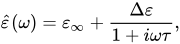
where ε∞ is the permittivity at the high frequency limit, Δε = εs − ε∞ where εs is the static, low frequency permittivity, and τ is the characteristic relaxation time of the medium. Separating into the real part and the imaginary part of the complex dielectric permittivity yields:[10]


![{\displaystyle {\begin{aligned}\varepsilon '&=\varepsilon _{\infty }+{\frac {\varepsilon _{s}-\varepsilon _{\infty }}{1+\omega ^{2}\tau ^{2}}}\\[3pt]\varepsilon ''&={\frac {(\varepsilon _{s}-\varepsilon _{\infty })\omega \tau }{1+\omega ^{2}\tau ^{2}}}\end{aligned}}}](https://wikimedia.org/api/rest_v1/media/math/render/svg/b380f6753bf58cda57ac2737341a9edcea387a72)
Note that the above equation for is sometimes written with in the denominator due to an ongoing sign convention ambiguity whereby many sources represent the time dependence of the complex electric field with whereas others use . In the former convention, the functions and representing real and imaginary parts are given by whereas in the latter convention . The above equation uses the latter convention.[11]




The dielectric loss is also represented by the loss tangent:
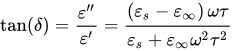
This relaxation model was introduced by and named after the physicist Peter Debye (1913).[12] It is characteristic for dynamic polarisation with only one relaxation time.
Variants of the Debye equation
[edit]- Cole–Cole equation
- This equation is used when the dielectric loss peak shows symmetric broadening.
- Cole–Davidson equation
- This equation is used when the dielectric loss peak shows asymmetric broadening.
- Havriliak–Negami relaxation
- This equation considers both symmetric and asymmetric broadening.
- Kohlrausch–Williams–Watts function
- Fourier transform of stretched exponential function.
- Curie–von Schweidler law
- This shows the response of dielectrics to an applied DC field to behave according to a power law, which can be expressed as an integral over weighted exponential functions.
- Djordjevic–Sarkar approximation
- This is used when the dielectric loss is approximately constant for a wide range of frequencies.
Paraelectricity
[edit]Paraelectricity is the nominal behaviour of dielectrics when the dielectric permittivity tensor is proportional to the unit matrix, i.e., an applied electric field causes polarisation and/or alignment of dipoles only parallel to the applied electric field. Contrary to the analogy with a paramagnetic material, no permanent electric dipole needs to exist in a paraelectric material. Removal of the fields results in the dipolar polarisation returning to zero.[13] The mechanisms that causes paraelectric behaviour are distortion of individual ions (displacement of the electron cloud from the nucleus) and polarisation of molecules or combinations of ions or defects.
Paraelectricity can occur in crystal phases where electric dipoles are unaligned and thus have the potential to align in an external electric field and weaken it.
Most dielectric materials are paraelectrics. A specific example of a paraelectric material of high dielectric constant is strontium titanate.
The LiNbO3 crystal is ferroelectric below 1430 K, and above this temperature it transforms into a disordered paraelectric phase. Similarly, other perovskites also exhibit paraelectricity at high temperatures.
Paraelectricity has been explored as a possible refrigeration mechanism; polarising a paraelectric by applying an electric field under adiabatic process conditions raises the temperature, while removing the field lowers the temperature.[14] A heat pump that operates by polarising the paraelectric, allowing it to return to ambient temperature (by dissipating the extra heat), bringing it into contact with the object to be cooled, and finally depolarising it, would result in refrigeration.
Tunability
[edit]Tunable dielectrics are insulators whose ability to store electrical charge changes when a voltage is applied.[15]
Generally, strontium titanate (SrTiO
3) is used for devices operating at low temperatures, while barium strontium titanate (Ba
1−xSr
xTiO
3) substitutes for room temperature devices. Other potential materials include microwave dielectrics and carbon nanotube (CNT) composites.[15][16][17]
In 2013, multi-sheet layers of strontium titanate interleaved with single layers of strontium oxide produced a dielectric capable of operating at up to 125 GHz. The material was created via molecular beam epitaxy. The two have mismatched crystal spacing that produces strain within the strontium titanate layer that makes it less stable and tunable.[15]
Systems such as Ba
1−xSr
xTiO
3 have a paraelectric–ferroelectric transition just below ambient temperature, providing high tunability. Films suffer significant losses arising from defects.
Applications
[edit]Capacitors
[edit]Commercially manufactured capacitors typically use a solid dielectric material with high permittivity as the intervening medium between the stored positive and negative charges. This material is often referred to in technical contexts as the capacitor dielectric.[18]
The most obvious advantage to using such a dielectric material is that it prevents the conducting plates, on which the charges are stored, from coming into direct electrical contact. More significantly, however, a high permittivity allows a greater stored charge at a given voltage. This can be seen by treating the case of a linear dielectric with permittivity ε and thickness d between two conducting plates with uniform charge density σε. In this case the charge density is given by

and the capacitance per unit area by

From this, it can easily be seen that a larger ε leads to greater charge stored and thus greater capacitance.
Dielectric materials used for capacitors are also chosen such that they are resistant to ionisation. This allows the capacitor to operate at higher voltages before the insulating dielectric ionises and begins to allow undesirable current.
Dielectric resonator
[edit]A dielectric resonator oscillator (DRO) is an electronic component that exhibits resonance of the polarisation response for a narrow range of frequencies, generally in the microwave band. It consists of a "puck" of ceramic that has a large dielectric constant and a low dissipation factor. Such resonators are often used to provide a frequency reference in an oscillator circuit. An unshielded dielectric resonator can be used as a dielectric resonator antenna (DRA).
BST thin films
[edit]From 2002 to 2004, the United States Army Research Laboratory (ARL) conducted research on thin film technology. Barium strontium titanate (BST), a ferroelectric thin film, was studied for the fabrication of radio frequency and microwave components, such as voltage-controlled oscillators, tunable filters and phase shifters.[19]
The research was part of an effort to provide the Army with highly-tunable, microwave-compatible materials for broadband electric-field tunable devices, which operate consistently in extreme temperatures.[20] This work improved tunability of bulk barium strontium titanate, which is a thin film enabler for electronics components.[21]
In a 2004 research paper, U.S. ARL researchers explored how small concentrations of acceptor dopants can dramatically modify the properties of ferroelectric materials such as BST.[22]
Researchers "doped" BST thin films with magnesium, analyzing the "structure, microstructure, surface morphology and film/substrate compositional quality" of the result. The Mg doped BST films showed "improved dielectric properties, low leakage current, and good tunability", meriting potential for use in microwave tunable devices.[19]
Some practical dielectrics
[edit]Dielectric materials can be solids, liquids, or gases. (A high vacuum can also be a useful,[23] nearly lossless dielectric even though its relative dielectric constant is only unity.)
Solid dielectrics are perhaps the most commonly used dielectrics in electrical engineering, and many solids are very good insulators. Some examples include porcelain, glass, and most plastics. Air, nitrogen and sulfur hexafluoride are the three most commonly used gaseous dielectrics.
- Industrial coatings such as Parylene provide a dielectric barrier between the substrate and its environment.
- Mineral oil is used extensively inside electrical transformers as a fluid dielectric and to assist in cooling. Dielectric fluids with higher dielectric constants, such as electrical grade castor oil, are often used in high voltage capacitors to help prevent corona discharge and increase capacitance.
- Because dielectrics resist the flow of electricity, the surface of a dielectric may retain stranded excess electrical charges. This may occur accidentally when the dielectric is rubbed (the triboelectric effect). This can be useful, as in a Van de Graaff generator or electrophorus, or it can be potentially destructive as in the case of electrostatic discharge.
- Specially processed dielectrics, called electrets (which should not be confused with ferroelectrics), may retain excess internal charge or "frozen in" polarisation. Electrets have a semi-permanent electric field, and are the electrostatic equivalent to magnets. Electrets have numerous practical applications in the home and industry, for instance in the Electret microphone found in telephones, headsets, videorecorders etc.
- Some dielectrics can generate a potential difference when subjected to mechanical stress, or (equivalently) change physical shape if an external voltage is applied across the material. This property is called piezoelectricity. Piezoelectric materials are another class of very useful dielectrics.
- Some ionic crystals and polymer dielectrics exhibit a spontaneous dipole moment, which can be reversed by an externally applied electric field. This behaviour is called the ferroelectric effect. These materials are analogous to the way ferromagnetic materials behave within an externally applied magnetic field. Ferroelectric materials often have very high dielectric constants, making them quite useful for capacitors.
See also
[edit]- Classification of materials based on permittivity
- Paramagnetism
- Clausius-Mossotti relation
- Dielectric absorption
- Dielectric losses
- Dielectric strength
- Dielectric spectroscopy
- EIA Class 1 dielectric
- EIA Class 2 dielectric
- High-κ dielectric
- Low-κ dielectric
- Leakage
- Linear response function
- Metamaterial
- RC delay
- Rotational Brownian motion
- Paschen's law – variation of dielectric strength of gas related to pressure
- Separator (electricity)
- Physical crystallography before X-rays
References
[edit]- ^ a b "Dielectric". Encyclopædia Britannica. Chicago, Illinois: Encyclopædia Britannica, Inc. Archived from the original on 27 April 2021. Retrieved 20 November 2021.
Dielectric, insulating material or a very poor conductor of electric current. When dielectrics are placed in an electric field, practically no current flows in them.
- ^ Arthur R. von Hippel, in his seminal work, Dielectric Materials and Applications, stated: "Dielectrics... are not a narrow class of so-called insulators, but the broad expanse of nonmetals considered from the standpoint of their interaction with electric, magnetic or electromagnetic fields. Thus we are concerned with gases as well as with liquids and solids and with the storage of electric and magnetic energy as well as its dissipation." (p. 1) (Technology Press of MIT and John Wiley, NY, 1954).
- ^ Thoms, E.; Sippel, P.; et., al. (2017). "Dielectric study on mixtures of ionic liquids". Sci. Rep. 7 (1): 7463. arXiv:1703.05625. Bibcode:2017NatSR...7.7463T. doi:10.1038/s41598-017-07982-3. PMC 5547043. PMID 28785071.
- ^ Belkin, A.; Bezryadin, A.; Hendren, L.; Hubler, A. (2017). "Recovery of Alumina Nanocapacitors after High and Low Voltage Breakdown". Sci. Rep. 7 (1): 932. Bibcode:2017NatSR...7..932B. doi:10.1038/s41598-017-01007-9. PMC 5430567. PMID 28428625.
- ^ Hossain, Shadeeb (2020-12-27). "Malignant cell characterisation via mathematical analysis of bio impedance and optical properties". Electromagnetic Biology and Medicine. 40 (1): 65–83. doi:10.1080/15368378.2020.1850471. ISSN 1536-8378. PMID 33356700. S2CID 229694503.
- ^ Hossain, Shadeeb (2020-04-02). "Biodielectric phenomenon for actively differentiating malignant and normal cells: An overview". Electromagnetic Biology and Medicine. 39 (2): 89–96. doi:10.1080/15368378.2020.1737804. ISSN 1536-8378. PMID 32138569. S2CID 212565141.
- ^ Daintith, J. (1994). Biographical Encyclopedia of Scientists. CRC Press. p. 943. ISBN 978-0-7503-0287-6.
- ^ James, Frank A.J.L., editor. The Correspondence of Michael Faraday, Volume 3, 1841–1848, "Letter 1798, William Whewell to Faraday, p. 442". Archived from the original on 2016-12-23. Retrieved 2012-05-18. The Institution of Electrical Engineers, London, United Kingdom, 1996. ISBN 0-86341-250-5
- ^ Microwave Engineering – R. S. Rao (Prof.). Retrieved 2013-11-08.
- ^ Kao, Kwan Chi (2004). Dielectric Phenomena in Solids. London: Elsevier Academic Press. pp. 92–93. ISBN 978-0-12-396561-5.
- ^ Böttcher, C.J.F. (1952). Theory of Electric Polarisation. London: Elsevier Publishing Companys. pp. 231–232, 348–349.
- ^ Debye, P. (1913), Ver. Deut. Phys. Gesell. 15, 777; reprinted 1954 in collected papers of Peter J.W. Debye. Interscience, New York
- ^ Chiang, Y. (1997). Physical Ceramics. New York: John Wiley & Sons.
- ^ Kuhn, U.; Lüty, F. (1965). "Paraelectric heating and cooling with OH—dipoles in alkali halides". Solid State Communications. 3 (2): 31. Bibcode:1965SSCom...3...31K. doi:10.1016/0038-1098(65)90060-8.
- ^ a b c Lee, Che-Hui; Orloff, Nathan D.; Birol, Turan; Zhu, Ye; Goian, Veronica; Rocas, Eduard; Haislmaier, Ryan; Vlahos, Eftihia; Mundy, Julia A.; Kourkoutis, Lena F.; Nie, Yuefeng; Biegalski, Michael D.; Zhang, Jingshu; Bernhagen, Margitta; Benedek, Nicole A.; Kim, Yongsam; Brock, Joel D.; Uecker, Reinhard; Xi, X. X.; Gopalan, Venkatraman; Nuzhnyy, Dmitry; Kamba, Stanislav; Muller, David A.; Takeuchi, Ichiro; Booth, James C.; Fennie, Craig J.; Schlom, Darrell G. (2013). "Exploiting dimensionality and defect mitigation to create tunable microwave dielectrics". Nature. 502 (7472): 532–536. Bibcode:2013Natur.502..532L. doi:10.1038/nature12582. hdl:2117/21213. PMID 24132232. S2CID 4457286.
- ^ Kong, L. B.; Li, S.; Zhang, T. S.; Zhai, J. W.; Boey, F. Y. C.; Ma, J. (2010-11-30). "Electrically tunable dielectric materials and strategies to improve their performances". Progress in Materials Science. 55 (8): 840–893. doi:10.1016/j.pmatsci.2010.04.004. hdl:10356/93905.
- ^ Giere, A.; Zheng, Y.; Maune, H.; Sazegar, M.; Paul, F.; Zhou, X.; Binder, J. R.; Muller, S.; Jakoby, R. (2008). "Tunable dielectrics for microwave applications". 2008 17th IEEE International Symposium on the Applications of Ferroelectrics. p. 1. doi:10.1109/ISAF.2008.4693753. ISBN 978-1-4244-2744-4. S2CID 15835472.
- ^ Müssig, Hans-Joachim. Semiconductor capacitor with praseodymium oxide as dielectric, U.S. patent 7,113,388 published 2003-11-06, issued 2004-10-18, assigned to IHP GmbH- Innovations for High Performance Microelectronics/Institute Fur Innovative Mikroelektronik
- ^ a b Cole, M. W.; Geyer, R. G. (2004). "Novel tunable acceptor doped BST thin films for high quality tunable microwave devices". Revista Mexicana de Fisica. 50 (3): 232. Bibcode:2004RMxF...50..232C.
- ^ Nair, K. M.; Guo, Ruyan; Bhalla, Amar S.; Hirano, S.-I.; Suvorov, D. (2012-04-11). Developments in Dielectric Materials and Electronic Devices: Proceedings of the 106th Annual Meeting of The American Ceramic Society, Indianapolis, Indiana, USA 2004. John Wiley & Sons. ISBN 9781118408193.
- ^ Nair, K. M.; Bhalla, Amar S.; Hirano, S.-I.; Suvorov, D.; Schwartz, Robert W.; Zhu, Wei (2012-04-11). Ceramic Materials and Multilayer Electronic Devices. John Wiley & Sons. ISBN 9781118406762.
- ^ Cole, M. W.; Hubbard, C.; Ngo, E.; Ervin, M.; Wood, M.; Geyer, R. G. (July 2002). "Structure–property relationships in pure and acceptor-doped Ba1−xSrxTiO3 thin films for tunable microwave device applications". Journal of Applied Physics. 92 (1): 475–483. Bibcode:2002JAP....92..475C. doi:10.1063/1.1484231. ISSN 0021-8979.
- ^ Lyon, David (2013). "Gap size dependence of the dielectric strength in nano vacuum gaps". IEEE Transactions on Dielectrics and Electrical Insulation. 20 (4): 1467–1471. doi:10.1109/TDEI.2013.6571470. S2CID 709782.
Further reading
[edit]- Jackson, John David (10 August 1998) [1962]. Classical Electrodynamics (3rd ed.). John Wiley & Sons. ISBN 978-0-471-30932-1. OCLC 535998.
- Scaife, Brendan K. P. (3 September 1998). Principles of Dielectrics. Monographs on the Physics & Chemistry of Materials (2nd ed.). Oxford University Press. ISBN 978-0-198-56557-4.
External links
[edit]- Feynman's lecture on dielectrics
- Dielectric Sphere in an Electric Field
- Dissemination of IT for the Promotion of Materials Science (DoITPoMS) Teaching and Learning Package "Dielectric Materials" from the University of Cambridge
 Texts on Wikisource:
- "Dielectric". Encyclopedia Americana. 1920.
- "Dielectric". Encyclopædia Britannica (11th ed.). 1911.

| International | |
|---|---|
| National | |
| Other | |

Dielectric
View on GrokipediaBasic Concepts
Terminology
A dielectric is defined as an electrical insulator that can be polarized by an applied electric field, resulting in the formation of induced dipoles within the material.[11] This polarization allows the material to store electrical energy without significant conduction under normal conditions, though partial conduction may occur under sufficiently high electric fields due to dielectric breakdown, where the material transitions from insulating to conductive behavior.[12] While all dielectrics are insulators, the terms are not synonymous; insulators merely prevent the flow of electric current due to low conductivity, whereas dielectrics specifically exhibit polarizability, enabling them to respond to external fields by developing internal electric moments that modify the overall field distribution.[13] This polarizability is quantified by electric susceptibility, a measure of how readily the material's dipoles align with the field.[2] The terminology originated in the 19th century, when William Whewell coined the term "dielectric" in response to a request from Michael Faraday around 1837 to describe materials that support electrostatic induction between charged bodies, analogous to the behavior in capacitors.[14] James Clerk Maxwell later formalized and expanded this in his electromagnetic theory, using "dielectric" to denote media that influence electric displacement in his equations, building on Faraday's ideas of lines of force and specific inductive capacity (now known as the dielectric constant).[15] Dielectrics are classified based on their response to electric fields and structural properties. Linear dielectrics exhibit a proportional relationship between polarization and the applied field, while nonlinear dielectrics show a non-proportional response, often at high field strengths.[16] Homogeneous dielectrics have uniform properties throughout their volume, in contrast to inhomogeneous ones with spatially varying characteristics.[14] Isotropic dielectrics respond equally in all directions, whereas anisotropic dielectrics display direction-dependent properties due to their molecular or crystalline structure.[17]Electric Susceptibility
Electric susceptibility, denoted as , quantifies the degree to which a dielectric material becomes polarized in response to an applied electric field. It serves as the constant of proportionality in the relation between the polarization density and the electric field , expressed as , where is the permittivity of free space.\] [](https://phys.libretexts.org/Bookshelves/Electricity_and_Magnetism/Electricity_and_Magnetism_(Tatum)/05:_Capacitors/5.17:_Polarization_and_Susceptibility) This parameter is dimensionless, arising from the fact that both $\mathbf{P}$ and $\epsilon_0 \mathbf{E}$ share the same units of electric flux density.\[ [18] For linear, isotropic dielectrics, electric susceptibility directly relates to the relative permittivity (also known as the dielectric constant) through the equation .\] [](https://www.feynmanlectures.caltech.edu/II_10.html) This connection highlights how susceptibility measures the material's enhancement of [capacitance](/page/Capacitance) compared to [vacuum](/page/Vacuum); for instance, inserting a dielectric into a parallel-plate [capacitor](/page/Capacitor) increases its [capacitance](/page/Capacitance) by the factor $\epsilon_r$, which can be used to determine $\chi_e$ experimentally by comparing capacitances with and without the material.\[ [2] In such setups, the electric field is generated by applying a voltage across the plates, and the resulting change in stored charge or capacitance yields via the measured . In anisotropic materials, such as crystals, electric susceptibility is represented by a second-rank tensor , where the polarization components are given by .\] [](https://ocw.mit.edu/courses/6-974-fundamentals-of-photonics-quantum-electronics-spring-2006/e1e047e358e9bf49e9af7dfb43b73c80_wv_prop_anis_med.pdf) In the principal axis system, the tensor is diagonal, with the diagonal elements corresponding to the principal susceptibilities along each direction, reflecting the material's directional dependence on polarization response. For frequency-dependent cases, particularly in alternating fields, susceptibility becomes complex: $\chi(\omega) = \chi'(\omega) - i \chi''(\omega)$, where $\chi'(\omega)$ is the real part governing energy storage and $\chi''(\omega)$ the imaginary part related to dissipation or absorption.\[ [19] This form accounts for phase lags in the polarization response at different frequencies.Microscopic Origins of Dielectric Response
The dielectric response in materials arises fundamentally from microscopic processes at the atomic level, where an applied electric field causes a displacement of the electron cloud relative to the positively charged nucleus in atoms or ions.[20] This relative shift induces a temporary electric dipole moment in each atom, with the magnitude proportional to the field strength and the atom's polarizability.[7] Such polarization occurs because electrons, while bound to nuclei, can deform their charge distribution under the influence of the external field, leading to a net separation of positive and negative charges without free motion.[21] In insulators, or dielectrics, these charges remain bound to their atomic or molecular sites, preventing the flow of current and instead producing a collective polarization that modifies the local electric field.[22] By contrast, in conductors, free charges—such as conduction electrons—can move unhindered, rapidly redistributing to cancel the internal field and resulting in no net dielectric response beyond screening effects.[2] This distinction underscores why dielectrics exhibit bound charge polarization as their primary mechanism, while conductors rely on free charge mobility. The connection between these microscopic polarizabilities and the observable macroscopic dielectric properties is encapsulated in the Clausius-Mossotti relation, derived by considering the local field experienced by molecules in a dense medium.[23] It states that where is the relative permittivity, is the number density of polarizable units, is the molecular polarizability, and is the vacuum permittivity.[24] This equation accounts for the enhancement of the local field due to surrounding dipoles, bridging atomic-scale responses to bulk susceptibility. From a quantum mechanical perspective, the induced dipole arises through perturbation theory applied to the Schrödinger equation for an atom in an external electric field, where the field acts as a perturbation to the unperturbed Hamiltonian.[7] The first-order correction to the wavefunction yields the induced dipole moment, while the second-order energy shift directly relates to the polarizability , providing a rigorous basis for calculating atomic responses without classical approximations.[7] In crystalline solids, the lattice structure further modulates the dielectric response by imposing spatial arrangements that affect dipole-dipole interactions and the effective local field at each site.[25] For instance, the symmetry and periodicity of the lattice can enhance or suppress collective polarization through long-range Coulomb couplings, leading to anisotropic dielectric constants that vary with crystal orientation.[26] This structural influence is evident in materials like perovskites, where lattice distortions directly impact the overall susceptibility.[27]Polarization Mechanisms
Overview of Dielectric Polarization
Dielectric polarization refers to the electric dipole moment induced per unit volume within a material when exposed to an external electric field, quantified as the polarization vector P, with units of coulomb per square meter (C/m²). This phenomenon arises primarily from two mechanisms: the alignment of preexisting permanent dipoles in polar molecules with the field, or the induction of temporary dipoles through the displacement of bound charges, such as electrons relative to nuclei. In non-polar materials, polarization stems mainly from induction, while polar materials exhibit both alignment and induction effects.[28] The total polarization P in a dielectric is the vector sum of distinct contributions from different physical processes: electronic polarization , which involves electron cloud distortion; atomic (or ionic) polarization , due to relative displacement of ions or atoms in lattices; and orientational polarization , from the rotation of permanent molecular dipoles. Thus, . For linear isotropic media, P relates to the macroscopic electric field E through the electric susceptibility , as , where is the vacuum permittivity. However, the effective field influencing individual dipoles is the local field, which in the Lorentz approximation for cubic dielectrics corrects for the surrounding polarization: . This local field enhancement is crucial for understanding the microscopic response in dense materials.[29][30] Polarization is measured using techniques that capture its effects on charge displacement. Pyroelectric methods exploit the temperature dependence of polarization in certain materials, generating a measurable current proportional to the rate of change of P with temperature, often via the pyroelectric coefficient . Alternatively, in time-varying fields, polarization can be quantified by integrating the displacement current density , where the electric displacement ; this approach, rooted in Maxwell's equations, allows extraction of P after subtracting the vacuum contribution. In nonlinear dielectrics, such as ferroelectrics, polarization displays hysteresis, manifesting as a closed loop in the P versus E plot, where the material retains some polarization after field reversal due to domain switching or irreversible alignment. This behavior quantifies energy dissipation and remanent polarization, key for applications like memory devices.[31][32][33]Electronic Polarization
Electronic polarization arises from the distortion of the electron cloud surrounding atomic nuclei in response to an applied electric field. In the absence of the field, the electron distribution is symmetric around the nucleus, resulting in no net dipole moment. When the field is applied, the electrons are displaced relative to the positively charged nucleus, creating an induced electric dipole moment. This displacement is typically small and reversible, occurring on the timescale of atomic vibrations or faster.[34] The magnitude of the induced dipole moment for an individual atom or molecule is given by , where is the electronic polarizability, a measure of how easily the electron cloud distorts, and is the local electric field experienced by the atom. The polarizability depends on the atomic or molecular structure, particularly the size and number of electrons in the outer shells. For hydrogen-like atoms, increases with the principal quantum number, reflecting looser electron orbitals in larger atoms.[23][35] In dense media, such as solids or liquids, the total electronic polarization accounts for interactions between atoms via the local field approximation. Under the Lorentz local field model, , where is the number density of atoms and is the vacuum permittivity. This expression corrects for the field enhancement due to surrounding polarized atoms and leads to the Clausius-Mossotti relation, , linking the relative permittivity to the polarizability.[23] Electronic polarization is the fastest among dielectric mechanisms, responding instantaneously up to ultraviolet frequencies, beyond which resonance effects dominate. It is particularly significant in non-polar materials lacking permanent dipoles, where it constitutes the primary contribution to the dielectric response. Examples include noble gases like helium and neon, which exhibit low due to tightly bound electrons, and hydrocarbons such as benzene, where is higher owing to delocalized -electrons. Polarizability generally increases with atomic number within a group, as seen in the progression from fluorine to iodine, due to expanding electron clouds.[28] Unlike orientational or ionic mechanisms, electronic polarization is independent of temperature because it involves non-thermal distortion of electron orbitals rather than molecular rotations or vibrations. This temperature insensitivity makes it reliable for dielectric applications across wide thermal ranges in inert materials.[35]Ionic and Atomic Polarization
Ionic polarization arises from the relative displacement of positively and negatively charged ions within a crystal lattice under an applied electric field. In ionic solids, such as sodium chloride (NaCl), the electric field causes cations like Na⁺ to shift in one direction and anions like Cl⁻ to shift in the opposite direction, slightly altering the bond lengths and creating induced dipoles that align with the field.[35] This collective ionic motion results in a macroscopic polarization, distinct from faster electronic responses that serve as the high-frequency baseline.[34] The ionic polarization mechanism contributes significantly to the relative permittivity (ε_r) in ionic solids, typically yielding values in the range of 5 to 10, which is higher than in non-ionic molecular solids where ε_r often falls below 4.[36] For instance, in alkali halides like NaCl (ε_r ≈ 5.9) and LiF (ε_r ≈ 8.6), the ionic displacement enhances the overall dielectric response beyond electronic contributions alone.[36] In complex structures like perovskites, such as SrTiO₃ (ε_r > 200 at low temperatures), ionic polarization plays a key role in achieving even higher permittivity through cooperative ion shifts in the lattice.[36] This ionic motion is intimately linked to transverse optical (TO) phonon modes, where the relative vibrations of ions in the lattice respond to the electric field at infrared frequencies. The relationship between these modes and the dielectric function is captured by the Lyddane-Sachs-Teller (LST) relation, which connects the longitudinal optical (LO) and TO phonon frequencies to the static and high-frequency dielectric constants: Here, ε(0) is the static relative permittivity, and ε(∞) is the high-frequency value dominated by electronic polarization; the relation holds for ionic crystals with polar phonons, illustrating how ionic displacements amplify the low-frequency dielectric response.[37] In biological contexts, ionic polarization occurs in ion channels of cell membranes, where applied fields induce charge displacements that facilitate selective ion transport, such as Na⁺ or K⁺ movement across lipid bilayers.[38] The temperature dependence of ionic polarization stems from lattice vibrations, which intensify with rising temperature, leading to thermal expansion and a modest decrease in ε_r for many ionic solids as ion mobility and anharmonicity alter the effective displacements.[36]Orientational Polarization
Orientational polarization arises in materials containing molecules with permanent electric dipole moments, such as polar liquids and gases, where an applied electric field causes these dipoles to align preferentially with the field direction, partially overcoming the randomizing effects of thermal motion.[39] This alignment follows the statistics of the Langevin function for classical dipoles or, in the low-field limit, the Boltzmann distribution, leading to a net macroscopic polarization proportional to the field strength.[40] Without the field, thermal agitation at temperature randomizes the dipole orientations, resulting in zero net polarization.[41] The orientational contribution to the molecular polarizability, denoted , was derived by Peter Debye using the Boltzmann distribution for dipole orientations, yielding the formula where is the permanent dipole moment, is the Boltzmann constant, and is the absolute temperature.[40] This expression shows that decreases inversely with temperature, as higher thermal energy enhances randomization.[39] The total static dielectric permittivity incorporates this term via the Clausius-Mossotti relation, where orientational effects dominate in polar substances, often leading to relative permittivities .[42] In polar liquids like water, where at 20°C, orientational polarization accounts for the majority of the high static permittivity, far exceeding contributions from electronic or atomic mechanisms.[43] Similarly, liquid ammonia exhibits significant orientational polarization, with near its boiling point, due to its permanent dipole moment of about 1.47 D.[44] This mechanism remains effective at frequencies up to the gigahertz range, beyond which rotational diffusion times—typically on the order of picoseconds for small molecules—limit the ability of dipoles to follow the oscillating field.[45] For associated polar liquids, where dipole-dipole interactions lead to correlations, the simple Debye model is refined by the Kirkwood-Fröhlich equation, which introduces a correlation factor to account for short-range orientational order among neighboring molecules.[46]Dynamic Behaviors
Dielectric Dispersion
Dielectric dispersion refers to the frequency-dependent variation of the complex permittivity ε(ω) in a dielectric material, where the real part ε'(ω) represents energy storage and the imaginary part ε''(ω) represents energy loss.[47] As the angular frequency ω increases, ε(ω) transitions from the static value ε_s at low frequencies (where all polarization mechanisms contribute) to the high-frequency limit ε_∞ (dominated by instantaneous electronic responses).[47] This dependence arises because different polarization mechanisms have characteristic response times, leading to a decrease in ε'(ω) beyond certain frequencies where slower mechanisms cannot follow the oscillating field.[14] The Kramers-Kronig relations enforce causality in dielectric response, linking the real and imaginary parts of the susceptibility χ(ω) = ε(ω)/ε_0 - 1 through Hilbert transforms, ensuring that the material's reaction precedes the applied field.[48] Specifically, the real part is given by where denotes the Cauchy principal value, and a similar relation holds for the imaginary part from the real part.[49] These relations stem from the analyticity of χ(ω) in the upper half of the complex frequency plane for causal systems, preventing non-physical anticipatory responses.[50] Dielectric dispersion manifests through distinct mechanisms at different frequency ranges: electronic dispersion occurs in the ultraviolet (UV) regime (~10^{15} Hz), where electron cloud distortions fail to respond; ionic (or atomic) dispersion in the infrared (IR) (~10^{13} Hz), involving relative ion displacements in lattices; and orientational dispersion in the microwave to radio frequency range (MHz to GHz, ~10^6–10^{10} Hz), due to dipole reorientation in polar materials.[14][45] Each type contributes a step-like drop in ε'(ω) near its resonant frequency, with associated absorption peaks in ε''(ω).[47] For transparent dielectrics, the Sellmeier equation empirically models this dispersion via the refractive index n(ω) ≈ √ε(ω)/ε_0, expressed as where B_i are strength coefficients and ω_i are resonant frequencies corresponding to UV and IR transitions.[51] This form captures the contributions from multiple oscillators without absorption terms, suitable for non-absorbing regions.[52] Experimentally, dielectric dispersion is observed using broadband dielectric spectroscopy, which measures ε(ω) across wide frequency spans (e.g., from Hz to THz) by applying an AC field and detecting the material's response via impedance analysis or transmission/reflection techniques.[53] For instance, in ceramics like BaTiO₃, spectroscopy reveals dispersion steps below GHz frequencies attributable to domain dynamics.[54] Such measurements validate Kramers-Kronig consistency and identify material resonances.[50]Dielectric Relaxation
Dielectric relaxation refers to the time-dependent dissipation of polarization in a dielectric material after the removal of an applied electric field, resulting in the gradual return of the material to its equilibrium state and associated energy losses. This phenomenon arises from the finite time required for molecular or atomic dipoles to reorient or for charges to redistribute in response to field changes, leading to irreversible heat generation through frictional or viscous interactions within the material.[55] In idealized single-relaxation systems, the polarization decay is described by the exponential equationwhere is the polarization at time , is the initial polarization, and is the relaxation time constant representing the average time for polarization to decrease to of its initial value.[40] This decay process directly contributes to energy dissipation, which is characterized by the loss tangent , the ratio of the imaginary part (related to absorption) to the real part (related to energy storage) of the complex permittivity.[56] The value of increases near the relaxation frequency, indicating higher losses during the dynamic adjustment of polarization. When viewed in the frequency domain, dielectric relaxation manifests as a frequency-dependent response where the imaginary permittivity reaches a maximum at the angular frequency , marking the point of optimal coupling between the field oscillation and the material's relaxation dynamics, thereby maximizing dissipation.[57] In complex materials like glasses, polymers, or heterogeneous dielectrics, a single relaxation time is insufficient; instead, a broad distribution of relaxation times prevails due to structural disorder or varying local environments, resulting in smeared or multi-peaked loss spectra that broaden the frequency range of dissipation.[58] The relaxation time often exhibits strong temperature dependence through thermally activated mechanisms, following the Arrhenius relation
where is a pre-exponential factor, is the activation energy barrier for the relaxation process, is Boltzmann's constant, and is the absolute temperature; higher temperatures reduce , accelerating relaxation and shifting loss peaks to higher frequencies.[59] This behavior underscores the role of thermal energy in overcoming potential barriers for dipole reorientation or charge migration, a key factor in applications requiring low-loss materials at elevated temperatures.
Debye Relaxation Model
The Debye relaxation model describes the frequency-dependent dielectric response of materials exhibiting a single relaxation time, originating from Peter Debye's foundational work on polar dielectrics between 1913 and 1929, as detailed in his book Polar Molecules. This model captures the orientational alignment and subsequent relaxation of molecular dipoles in an applied electric field, providing a cornerstone for understanding dielectric dispersion in polar substances. Debye's approach built on earlier concepts of rotational Brownian motion, assuming non-interacting dipoles that reorient freely under thermal agitation. The model rests on two key assumptions: a linear response where the polarization is proportional to the applied electric field strength, and a single exponential relaxation process characterized by a unique relaxation time τ, during which dipoles lose memory of their initial orientation. These assumptions simplify the dynamics to a first-order process, applicable to dilute systems of polar molecules in gases or low-viscosity liquids. The frequency-domain behavior is encapsulated in the complex permittivity: where ε(ω) = ε'(ω) - i ε''(ω) is the complex permittivity, ε_s is the static (low-frequency) permittivity, ε_∞ is the high-frequency permittivity (dominated by electronic and atomic contributions), ω is the angular frequency, and τ is the relaxation time. The real part ε'(ω) represents energy storage, while the imaginary part ε''(ω) accounts for dielectric losses due to dipole reorientation.[40] This expression derives from the time-domain description of polarization decay. In the absence of an applied field, the polarization P(t) follows the continuity-inspired rate equation for dipole decay, governed by rotational diffusion: where P_eq is the equilibrium polarization proportional to the field. For free relaxation (E = 0), the solution is a single exponential decay: P(t) = P(0) exp(-t/τ). To obtain the frequency response, the time-domain equation is Fourier-transformed, assuming harmonic fields E(t) = Re[E_0 exp(i ω t)]. Substituting yields P(ω) = [ε_0 (ε_s - ε_∞) / (1 + i ω τ)] E(ω), leading directly to the complex permittivity form above. This transform reveals the Lorentzian lineshape for both ε'(ω) and ε''(ω), with maximum loss at ω = 1/τ.[55] In the Argand (Cole-Cole) diagram, plotting ε'(ω) versus ε''(ω) for the Debye model produces a perfect semicircle centered at (ε_∞ + ε_s/2, 0) with radius (ε_s - ε_∞)/2, spanning from ω = 0 to ∞. This geometric representation highlights the symmetric dispersion and absorption, serving as a benchmark for experimental validation. The Debye model applies effectively to polar liquids such as water, where orientational polarization dominates and relaxation occurs on picosecond timescales due to dipole reorientation in a viscous medium. For pure water at 25°C, τ ≈ 8.3 ps, with ε_s ≈ 78.3 and ε_∞ ≈ 5, yielding good agreement with microwave measurements. However, limitations arise in systems with broad distributions of relaxation times, such as hydrogen-bonded networks or supercooled liquids, where intermolecular interactions cause deviations from the ideal single-exponential decay and semicircular plot, necessitating more advanced models.[60][61]Advanced Relaxation Models
Advanced relaxation models extend the Debye framework by incorporating distributions of relaxation times to better capture the broadened and asymmetric dielectric responses observed in complex materials.[62] The Cole-Cole model addresses symmetric broadening of the relaxation spectrum through a parameter α (0 < α ≤ 1), where α = 1 recovers the Debye case. The complex permittivity is given by with ε_s the static permittivity, ε_∞ the high-frequency permittivity, ω the angular frequency, and τ the characteristic relaxation time; this empirical form fits data from liquids and solids exhibiting non-exponential decay.[62] The Cole-Davidson model introduces asymmetric broadening on the high-frequency side via a parameter γ (0 < γ ≤ 1), modifying the form to which proved effective for describing the dielectric relaxation in viscous liquids like glycerine, where the asymmetry arises from interactions constraining molecular reorientation.[63] The Havriliak-Negami model combines elements of both, using parameters α and β (0 < α, β ≤ 1) to account for both symmetric and asymmetric broadening: originally developed to represent dielectric and mechanical relaxation processes in polymers, where β controls the low-frequency asymmetry.[64] Fractional calculus approaches model anomalous diffusion underlying non-Debye relaxation by replacing integer-order derivatives in the diffusion equation with fractional ones, leading to power-law behaviors in the permittivity that capture sub- or super-diffusive charge or dipole motion in disordered systems. These models find widespread application in analyzing broadband dielectric spectra of polymers and glasses, where fitting experimental loss peaks reveals heterogeneity in relaxation times; for instance, the Cole-Cole model parameter α correlates with chain rigidity in amorphous polymers, while Havriliak-Negami fits reveal multiple relaxation modes in glassy states due to structural disorder.[65] Post-2020 developments incorporate nanoscale heterogeneity by extending these models with spatial correlations, such as in fractal or interface-dominated systems; one such approach uses machine learning to parameterize interfacial transitions in nanocomposites, enhancing predictions of relaxation dynamics influenced by nanoparticle distributions.[66] Another recent model accounts for scale-dependent relaxation in nanocrystals, where heterogeneity broadens the spectrum inversely with particle size, improving fits to experimental data in nanomaterials.Material Properties and Phenomena
Paraelectricity
Paraelectricity describes the linear response of certain dielectric materials to an applied electric field in their high-temperature phase, where polarization is induced proportionally to the field strength without any spontaneous polarization in the absence of the field. In this state, the material exhibits a centrosymmetric crystal structure, and the dipoles are randomly oriented, resulting in zero net polarization at zero field. The electric susceptibility in paraelectrics follows the Curie-Weiss law, given by where is the Curie constant, is the absolute temperature, and is the Curie-Weiss temperature, which often approximates the Curie temperature for materials near a ferroelectric transition. This law reflects the enhanced polarizability as temperature approaches the phase boundary from above, leading to a divergence in susceptibility at . Unlike ferroelectric materials, which develop spontaneous polarization below their Curie temperature , paraelectrics lack this intrinsic ordering and require an external field to align dipoles. This distinction arises because the free energy minimum in paraelectrics remains at zero polarization, whereas in ferroelectrics, it shifts to a nonzero value below . A classic example is barium titanate (BaTiO₃), which adopts a cubic paraelectric structure above its Curie temperature of approximately 120°C, transitioning to a tetragonal ferroelectric phase upon cooling. Many perovskite-structured materials, such as lead titanate (PbTiO₃) and strontium titanate (SrTiO₃) at elevated temperatures, also exhibit paraelectric behavior. The microscopic origin of paraelectricity in displacive ferroelectrics is explained by soft mode theory, where a transverse optical phonon mode—modeled as a quantum harmonic oscillator—progressively softens (its frequency approaches zero) as temperature decreases toward . This softening enhances lattice polarizability, resulting in a high relative permittivity that follows the Curie-Weiss behavior. The theory, initially developed for the paraelectric phase, predicts that the inverse susceptibility is proportional to the square of the soft mode frequency, providing a direct link between structural dynamics and dielectric properties. In relaxor paraelectrics, such as lead magnesium niobate (PMN), compositional disorder on the cation sublattice creates local polar nanoregions that fluctuate dynamically. These regions lead to a broad, frequency-dependent maximum in the dielectric permittivity, with polarization freezing into a non-ergodic state at a temperature-dependent freezing point, rather than a sharp transition. This disorder-induced behavior distinguishes relaxors from classical paraelectrics, enabling diffuse phase transitions useful in applications requiring broad temperature stability.Dielectric Tunability
Dielectric tunability refers to the controllable variation in the relative permittivity (ε_r) of a material in response to external stimuli, such as applied DC electric bias, temperature changes, or mechanical strain. This property arises primarily in paraelectric materials operated above their Curie temperature, where the permittivity can be modulated without inducing a permanent ferroelectric phase transition.[67] The underlying mechanism for tunability in ferroelectric and relaxor ferroelectric materials involves field-induced suppression or redistribution of polar nanoregions (PNRs), which are local clusters of aligned dipoles that contribute to the overall polarizability. Under an applied electric field, these PNRs can be aligned or their fluctuations suppressed, leading to a decrease in ε_r as the material's susceptibility is reduced. This process is particularly pronounced in materials with disordered structures, where the random fields from compositional inhomogeneities enhance the responsiveness of PNRs to external stimuli.[68] A key figure of merit for evaluating tunability is , where ε_max and ε_min represent the maximum and minimum values of the relative permittivity under varying stimuli, respectively; this metric quantifies the relative change in permittivity and is often normalized by the loss tangent (tan δ) to assess overall performance. High values of k indicate strong modulation capability, essential for applications requiring variable capacitance. Barium strontium titanate (BST, Ba_{1-x}Sr_xTiO_3) thin films exemplify this property, demonstrating tunability exceeding 50% at gigahertz frequencies under moderate electric fields, such as in compositions with x ≈ 0.3-0.7. For instance, epitaxial BST films on suitable substrates achieve this level of modulation at 1 GHz with applied biases around 10-20 V/μm, attributed to their paraelectric phase stability and low intrinsic losses at microwave frequencies.[69] However, achieving high tunability often involves trade-offs with dielectric losses, as increased field-induced alignment of PNRs can enhance dissipation mechanisms like domain wall motion or interfacial effects, resulting in elevated tan δ values typically above 0.01. Strategies to mitigate this include doping or multilayer structuring to decouple tunability from lossy contributions, though complete elimination remains challenging due to inherent material correlations.[70] Recent advancements from 2023 to 2025 have focused on lead-free materials exhibiting enhanced tunability linked to electrocaloric effects, where field application induces reversible temperature changes that further modulate permittivity. For example, Fe-doped barium zirconate titanate (BZT) ceramics have achieved tunability up to 93.8% with low tan δ ≈ 0.0038 at room temperature, leveraging optimized PNR dynamics for electrocaloric-enhanced performance in sustainable devices. Similarly, NaNbO_3-based relaxor ferroelectrics show improved tunability through phase ratio adjustments, enabling electrocaloric temperature lifts of up to 0.62 K at 5 MV/m while maintaining high k values. These developments prioritize environmentally friendly alternatives to lead-based systems, with figures of merit surpassing 700 in select BST variants.[71][72][73]Breakdown and Nonlinear Effects
Dielectric breakdown represents the failure of a material's insulating properties under sufficiently high electric fields, leading to a sudden increase in conductivity and potential catastrophic damage. This phenomenon limits the operational voltage in dielectric devices and is classified into several types based on the underlying mechanisms. Intrinsic breakdown occurs in defect-free materials due to electron avalanche or field ionization, typically at electric field strengths ranging from 10 to 100 MV/m for thin oxide films and polymers. Thermal breakdown arises from Joule heating that exceeds the material's heat dissipation capacity, causing runaway temperature rise and material softening. Partial discharge breakdown involves localized ionization in voids or defects, gradually eroding the dielectric over time through repeated discharges. In strong electric fields, dielectrics exhibit nonlinear responses that deviate from the linear susceptibility observed at low fields. The permittivity can be expanded as , where is the nonlinear coefficient associated with electrostriction, a quadratic electromechanical coupling that induces strain proportional to the square of the field. This nonlinearity manifests in polarization-electric field (P-E) hysteresis loops as higher harmonics, where the polarization response includes odd-order terms beyond the fundamental, leading to distortion and increased energy loss under high-amplitude cycling. These effects are particularly pronounced in ferroelectric and relaxor materials, where domain wall motion and lattice distortions amplify the anharmonic contributions. The distribution of breakdown strengths in dielectric samples is often analyzed using Weibull statistics, which models the probability of failure as a cumulative distribution function reflecting weakest-link failure mechanisms in heterogeneous materials. The Weibull modulus, derived from plotting versus —where is the cumulative failure probability and the applied field—quantifies the variability and reliability, with higher values indicating more uniform breakdown behavior. This approach, justified by percolation-like defect propagation, is widely applied to predict long-term performance from short-term tests. To mitigate breakdown, strategies such as doping with ions to suppress charge carrier mobility and multilayering to distribute stress and block defect propagation have been employed, enhancing overall field tolerance. Recent advancements in 2024 include nanomaterials like GdOCl nanosheets, which achieve breakdown fields exceeding 500 MV/m due to their high- properties and defect passivation, and bioinspired nanocomposites with self-assembled nanoscale interfaces that boost strength while maintaining flexibility. Under repeated electric cycling, dielectrics undergo aging and fatigue, characterized by progressive loss of polarization and increased leakage due to mechanisms like domain pinning by oxygen vacancies and microcrack formation at electrode interfaces. In ferroelectrics, fatigue accelerates under bipolar fields, reducing switchable polarization by up to 90% after millions of cycles through charge injection and defect aggregation.Applications and Practical Materials
Capacitive Devices
Dielectrics play a central role in capacitive devices by serving as insulating materials between conductive plates, enabling the storage of electrical energy through polarization in response to an applied electric field. The capacitance of a parallel-plate capacitor filled with a dielectric is given by the formula , where is the permittivity of free space, is the relative permittivity of the dielectric, is the plate area, and is the plate separation.[74] To optimize performance, dielectrics are selected to maximize for higher capacitance while minimizing dielectric losses, which represent energy dissipation as heat during charge-discharge cycles.[75] Various types of dielectric capacitors are employed based on specific requirements for capacitance, stability, and loss characteristics. Ceramic dielectrics, such as those in multilayer ceramic capacitors (MLCCs), offer high values (often exceeding 1000), making them suitable for compact, high-capacitance applications.[76] Polymer film dielectrics, like polypropylene or polyester, provide low dielectric losses (dissipation factors below 0.1%) and excellent stability, ideal for applications requiring minimal energy dissipation.[77] Electrolytic capacitors, typically using oxide dielectrics such as aluminum or tantalum pentoxide, achieve high capacitance densities (up to thousands of microfarads) through electrochemical formation of the dielectric layer, though they exhibit higher losses and polarity constraints.[77] The practical limits of dielectric capacitors are determined by the breakdown voltage, the maximum electric field the material can withstand before conduction occurs, which influences energy storage capacity. The maximum energy density is expressed as , highlighting the trade-off where higher enhances storage but must be balanced against reduced in some materials.[78] Historically, early capacitors utilized natural dielectrics like mica, first applied in 1909 by William Dubilier for wireless applications due to its high breakdown strength and stability, and glass, which emerged during World War II as a mica substitute for its thermal resilience.[79] Modern advancements include MLCCs with X7R dielectrics, introduced in the mid-20th century, offering capacitance stability within ±15% over -55°C to +125°C for reliable performance in varied environments.[80] In applications, dielectric capacitors are essential in power electronics for energy storage and smoothing in DC-link circuits, where high-voltage ceramic or film types handle pulse loads efficiently.[81] They also serve as decoupling capacitors in integrated circuits (ICs), placed near power pins to filter high-frequency noise and supply transient currents, preventing voltage droops that could disrupt circuit operation.[82] Common ceramic materials, such as barium titanate-based formulations, are frequently used in these roles for their balance of high and cost-effectiveness.[76]Resonators and Waveguides
Dielectric resonators are compact devices that utilize high-permittivity materials to confine electromagnetic fields at microwave and millimeter-wave frequencies, enabling efficient energy storage and oscillation. Typically constructed as cylindrical or spherical pucks from ceramics like barium titanate or rutile (TiO₂) with relative permittivities ε_r exceeding 20–100, these resonators function as microwave cavities by supporting resonant modes where the fields are primarily confined within the dielectric, minimizing losses to surrounding conductors. The quality factor (Q-factor) of such resonators often reaches 10⁴ to 10⁵, reflecting low dielectric losses (tan δ < 10⁻⁴) and enabling applications in precise frequency control. A notable configuration involves whispering gallery modes (WGMs) in low-loss spherical resonators, where electromagnetic waves propagate along the curved interior surface via total internal reflection, achieving extremely high Q-factors up to 10⁹ in materials like sapphire (Al₂O₃, ε_r ≈ 9.4). These modes are particularly sensitive to surface perturbations, making them useful for sensing and filtering, as demonstrated in sapphire-based resonators for atomic clocks and precision spectroscopy. In waveguides, dielectrics serve to guide electromagnetic waves without metallic conductors, reducing ohmic losses at high frequencies. Dielectric slab waveguides consist of a high-ε_r core sandwiched between lower-ε_r claddings, supporting guided modes with a dispersion relation given by β = k₀ √ε_r for TE/TM guided modes, where β is the propagation constant and k₀ is the free-space wavenumber. Optical fibers exemplify this in cylindrical form, using silica (ε_r ≈ 2.1) as the core with a slight refractive index step for light confinement over kilometers, enabling long-haul telecommunications. At microwave frequencies, dielectric rod or slab waveguides are employed in integrated circuits for low-loss signal propagation. These components find critical applications in modern communication systems, such as bandpass filters in 5G base stations, where dielectric resonators provide compact, high-selectivity tuning to mitigate interference in dense spectral environments. Temperature-stable designs further enhance reliability by incorporating compensated materials, such as mixtures of titanates with opposing temperature coefficients of ε_r, ensuring minimal frequency drift (e.g., <1 ppm/°C) over operational ranges. Dielectric dispersion influences mode velocities in these structures, but primary performance relies on material uniformity and boundary conditions.Modern Thin-Film and High-k Dielectrics
In the scaling of metal-oxide-semiconductor field-effect transistors (MOSFETs), traditional silicon dioxide (SiO₂) gate dielectrics have been largely replaced by high-k materials such as hafnium oxide (HfO₂) and zirconium oxide (ZrO₂), which exhibit relative permittivities (ε_r) greater than 20, allowing for equivalent oxide thicknesses (EOT) below 1 nm while maintaining sufficient gate capacitance.[83] This transition, initiated in the mid-2000s for advanced nodes, enables continued transistor miniaturization by permitting physically thicker films that reduce quantum mechanical tunneling compared to ultra-thin SiO₂ layers.[83] HfO₂, with ε_r ≈ 25, and ZrO₂, with ε_r ≈ 25–30, have become staples due to their thermodynamic stability on silicon substrates and compatibility with high-temperature processing.[84] Atomic layer deposition (ALD) is the preferred technique for fabricating these high-k thin films, offering atomic-scale control over thickness, exceptional uniformity on high-aspect-ratio structures, and minimization of interface traps that could degrade carrier mobility.[85] By sequentially exposing the substrate to volatile precursors and reactants in a self-limiting manner, ALD achieves conformal coatings with defect densities reduced by optimizing process parameters such as temperature and purge times, often below 10¹¹ cm⁻² for HfO₂ films.[85] This method also facilitates interface engineering, such as incorporating thin silicon oxynitride interlayers, to suppress trap states at the high-k/semiconductor boundary. In dynamic random-access memory (DRAM) capacitors, high-k dielectrics like HfO₂ enable high-density storage by supporting cylindrical or pillar structures with increased capacitance per unit area, while in FinFETs, they wrap around the fin channel to enhance electrostatic control and reduce short-channel effects.[86] However, challenges persist, including gate-induced drain leakage and direct tunneling currents, which can exceed 1 fA/cell in DRAM and compromise power efficiency in FinFETs, necessitating bandgap engineering or stacked dielectrics to mitigate these issues.[86][87] Emerging two-dimensional (2D) dielectrics, such as hexagonal boron nitride (h-BN) and molybdenum disulfide (MoS₂) interlayers, are being explored post-2023 for ultra-scaled nanoelectronics, where h-BN serves as an atomically flat, wide-bandgap insulator (ε_r ≈ 4) to passivate interfaces in 2D transistor stacks, reducing scattering and enabling sub-5 nm gate lengths.[88] Recent advancements include industry-compatible chemical vapor deposition of h-BN on MoS₂ channels, yielding defect-free van der Waals heterostructures with cohesive energies exceeding 1 eV/atom for stable operation.[89] These 2D interlayers address nucleation challenges on inert surfaces, improving uniformity in ALD-grown high-k overlayers for next-generation logic devices.[88] For tunable radio-frequency (RF) devices, ferroelectric thin films integrated with high-k materials, such as doped HfZrO₂, form varactors that exploit field-induced polarization switching for capacitance tuning ratios up to 2:1 at GHz frequencies.[90] These films, deposited via ALD to thicknesses below 10 nm, enable low-loss reconfigurable components like phase shifters, with quality factors (Q) above 50, addressing the limitations of traditional varactors in 5G and beyond applications.[91] The ferroelectricity in HfZrO₂ arises from orthorhombic phase stabilization, providing hysteresis-free tunability under bias voltages less than 5 V.[90]Common Dielectric Materials
Dielectric materials are broadly categorized into gases, liquids, solids, and vacuum, each selected based on specific properties such as relative permittivity (ε_r), loss tangent (tan δ), dielectric breakdown strength, and temperature coefficient to suit applications requiring insulation, capacitance, or low energy dissipation.[92][93] Vacuum serves as the ideal dielectric with ε_r = 1 and zero intrinsic loss, enabling maximal electric field penetration without material-induced attenuation or absorption.[94][95] Gaseous dielectrics, like air and sulfur hexafluoride (SF6), are favored for high-voltage applications due to their low ε_r and high breakdown strength under pressure. Air has ε_r ≈ 1.0006 at standard conditions and a breakdown strength of approximately 3 kV/mm, while SF6 exhibits ε_r ≈ 1.002 and a superior breakdown strength of about 8.9 kV/mm at 1 atm, making it effective for gas-insulated switchgear despite environmental concerns over its greenhouse gas potency.[96][97][95] Liquid dielectrics, such as water and transformer oils, provide higher ε_r for enhanced capacitance but vary in suitability for insulation; water's ε_r ≈ 80 enables strong polarization yet results in high conductivity and loss, limiting it to controlled low-voltage uses, whereas mineral transformer oils offer ε_r ≈ 2.2, low tan δ (<0.001), and breakdown strengths of 30–50 kV/mm, ideal for cooling and insulating power equipment.[98][92] Solid dielectrics dominate practical implementations, with polymers like polytetrafluoroethylene (PTFE, or Teflon) prized for low-loss RF applications (ε_r = 2.1, tan δ < 0.0002 at 1 MHz, breakdown strength ≈ 60 kV/mm, and minimal temperature coefficient of -400 ppm/°C) and ceramics like rutile TiO2 valued for high-ε_r capacitors (ε_r ≈ 100–170 along principal axes, tan δ ≈ 0.0002–0.005, breakdown strength 4–8 kV/mm, temperature coefficient varying from +1000 to -500 ppm/°C depending on orientation).[99][100][101]| Material Category | Example | ε_r (at 1 MHz, RT) | tan δ (at 1 MHz, RT) | Breakdown Strength (kV/mm) | Temperature Coefficient (ppm/°C) |
|---|---|---|---|---|---|
| Vacuum | - | 1 | 0 | Infinite (theoretical) | 0 |
| Gas | Air | 1.0006 | <0.0001 | 3 | -900 |
| Gas | SF6 | 1.002 | <0.0005 | 8.9 (at 1 atm) | Low (<100) |
| Liquid | Water | 80 | 0.005–0.02 | 65–70 (distilled) | -2000 |
| Liquid | Transformer Oil | 2.2 | <0.001 | 30–50 | -500 to -1000 |
| Polymer Solid | PTFE | 2.1 | <0.0002 | 60 | -400 |
| Ceramic Solid | TiO2 (Rutile) | 100–170 | 0.0002–0.005 | 4–8 | +1000 to -500 (anisotropic) |