Hubbry Logo
search
logo
2324117

Frequentist probability

logo
Community Hub0 Subscribers
Read side by side
from Wikipedia

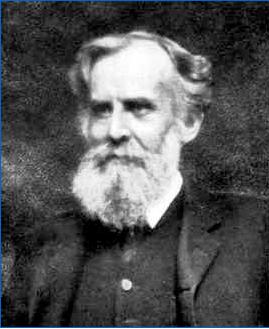
John Venn, who provided a thorough exposition of frequentist probability in his book, The Logic of Chance[1]

Frequentist probability or frequentism is an interpretation of probability; it defines an event's probability (the long-run probability) as the limit of its relative frequency in infinitely many trials.[2] Probabilities can be found (in principle) by a repeatable objective process, as in repeated sampling from the same population, and are thus ideally devoid of subjectivity. The continued use of frequentist methods in scientific inference, however, has been called into question.[3][4][5]

The development of the frequentist account was motivated by the problems and paradoxes of the previously dominant viewpoint, the classical interpretation. In the classical interpretation, probability was defined in terms of the principle of indifference, based on the natural symmetry of a problem, so, for example, the probabilities of dice games arise from the natural symmetric 6-sidedness of the cube. This classical interpretation stumbled at any statistical problem that has no natural symmetry for reasoning.

Definition

[edit]

In the frequentist interpretation, probabilities are discussed only when dealing with well-defined random experiments. The set of all possible outcomes of a random experiment is called the sample space of the experiment. An event is defined as a particular subset of the sample space to be considered. For any given event, only one of two possibilities may hold: It occurs or it does not. The relative frequency of occurrence of an event, observed in a number of repetitions of the experiment, is a measure of the probability of that event. This is the core conception of probability in the frequentist interpretation.

A claim of the frequentist approach is that, as the number of trials increases, the change in the relative frequency will diminish. Hence, one can view a probability as the limiting value of the corresponding relative frequencies.

Scope

[edit]

The frequentist interpretation is a philosophical approach to the definition and use of probabilities; it is one of several such approaches. It does not claim to capture all connotations of the concept 'probable' in colloquial speech of natural languages.

As an interpretation, it is not in conflict with the mathematical axiomatization of probability theory; rather, it provides guidance for how to apply mathematical probability theory to real-world situations. It offers distinct guidance in the construction and design of practical experiments, especially when contrasted with the Bayesian interpretation. As to whether this guidance is useful, or is apt to mis-interpretation, has been a source of controversy. Particularly when the frequency interpretation of probability is mistakenly assumed to be the only possible basis for frequentist inference. So, for example, a list of mis-interpretations of the meaning of p-values accompanies the article on p-values; controversies are detailed in the article on statistical hypothesis testing. The Jeffreys–Lindley paradox shows how different interpretations, applied to the same data set, can lead to different conclusions about the 'statistical significance' of a result.[citation needed]

As Feller notes:[a]

There is no place in our system for speculations concerning the probability that the sun will rise tomorrow. Before speaking of it we should have to agree on an (idealized) model which would presumably run along the lines "out of infinitely many worlds one is selected at random ..." Little imagination is required to construct such a model, but it appears both uninteresting and meaningless.[6]

History

[edit]

The frequentist view may have been foreshadowed by Aristotle, in Rhetoric,[7] when he wrote:

the probable is that which for the most part happens — Aristotle Rhetoric[8]

Poisson (1837) clearly distinguished between objective and subjective probabilities.[9] Soon thereafter a flurry of nearly simultaneous publications by Mill, Ellis (1843)[10] and Ellis (1854),[11] Cournot (1843),[12] and Fries introduced the frequentist view. Venn (1866, 1876, 1888)[1] provided a thorough exposition two decades later. These were further supported by the publications of Boole and Bertrand. By the end of the 19th century the frequentist interpretation was well established and perhaps dominant in the sciences.[9] The following generation established the tools of classical inferential statistics (significance testing, hypothesis testing and confidence intervals) all based on frequentist probability.

Alternatively,[13] Bernoulli[b] understood the concept of frequentist probability and published a critical proof (the weak law of large numbers) posthumously (Bernoulli, 1713).[14] He is also credited with some appreciation for subjective probability (prior to and without Bayes' theorem).[15][c][16] Gauss and Laplace used frequentist (and other) probability in derivations of the least squares method a century later, a generation before Poisson.[13] Laplace considered the probabilities of testimonies, tables of mortality, judgments of tribunals, etc. which are unlikely candidates for classical probability. In this view, Poisson's contribution was his sharp criticism of the alternative "inverse" (subjective, Bayesian) probability interpretation. Any criticism by Gauss or Laplace was muted and implicit. (However, note that their later derivations of least squares did not use inverse probability.)

Major contributors to "classical" statistics in the early 20th century included Fisher, Neyman, and Pearson. Fisher contributed to most of statistics and made significance testing the core of experimental science, although he was critical of the frequentist concept of "repeated sampling from the same population";[17] Neyman formulated confidence intervals and contributed heavily to sampling theory; Neyman and Pearson paired in the creation of hypothesis testing. All valued objectivity, so the best interpretation of probability available to them was frequentist.

All were suspicious of "inverse probability" (the available alternative) with prior probabilities chosen by using the principle of indifference. Fisher said, "... the theory of inverse probability is founded upon an error, [referring to Bayes' theorem] and must be wholly rejected."[18] While Neyman was a pure frequentist,[19][d] Fisher's views of probability were unique: Both Fisher and Neyman had nuanced view of probability. von Mises offered a combination of mathematical and philosophical support for frequentism in the era.[20][21]

Etymology

[edit]

According to the Oxford English Dictionary, the term frequentist was first used by M.G. Kendall in 1949, to contrast with Bayesians, whom he called non-frequentists.[22][23] Kendall observed

3. ... we may broadly distinguish two main attitudes. One takes probability as 'a degree of rational belief', or some similar idea...the second defines probability in terms of frequencies of occurrence of events, or by relative proportions in 'populations' or 'collectives';[23](p 101)
...
12. It might be thought that the differences between the frequentists and the non-frequentists (if I may call them such) are largely due to the differences of the domains which they purport to cover.[23](p 104)
...
I assert that this is not so ... The essential distinction between the frequentists and the non-frequentists is, I think, that the former, in an effort to avoid anything savouring of matters of opinion, seek to define probability in terms of the objective properties of a population, real or hypothetical, whereas the latter do not. [emphasis in original]

"The Frequency Theory of Probability" was used a generation earlier as a chapter title in Keynes (1921).[7]

The historical sequence:

  1. Probability concepts were introduced and much of the mathematics of probability derived (prior to the 20th century)
  2. classical statistical inference methods were developed
  3. the mathematical foundations of probability were solidified and current terminology was introduced (all in the 20th century).

The primary historical sources in probability and statistics did not use the current terminology of classical, subjective (Bayesian), and frequentist probability.

Alternative views

[edit]

Probability theory is a branch of mathematics. While its roots reach centuries into the past, it reached maturity with the axioms of Andrey Kolmogorov in 1933. The theory focuses on the valid operations on probability values rather than on the initial assignment of values; the mathematics is largely independent of any interpretation of probability.

Applications and interpretations of probability are considered by philosophy, the sciences and statistics. All are interested in the extraction of knowledge from observations—inductive reasoning. There are a variety of competing interpretations;[24] All have problems. The frequentist interpretation does resolve difficulties with the classical interpretation, such as any problem where the natural symmetry of outcomes is not known. It does not address other issues, such as the dutch book.

  • Classical probability assigns probabilities based on physical idealized symmetry (dice, coins, cards). The classical definition is at risk of circularity: Probabilities are defined by assuming equality of probabilities.[25] In the absence of symmetry the utility of the definition is limited.
  • Subjective (Bayesian) probability (a family of competing interpretations) considers degrees of belief: All practical "subjective" probability interpretations are so constrained to rationality as to avoid most subjectivity. Real subjectivity is repellent to some definitions of science which strive for results independent of the observer and analyst.[citation needed] Other applications of Bayesianism in science (e.g. logical Bayesianism) embrace the inherent subjectivity of many scientific studies and objects and use Bayesian reasoning to place boundaries and context on the influence of subjectivities on all analysis.[26] The historical roots of this concept extended to such non-numeric applications as legal evidence.

Footnotes

[edit]

Citations

[edit]
  1. ^ a b Venn, John (1888) [1866, 1876]. The Logic of Chance (3rd ed.). London, UK: Macmillan & Co. – via Internet Archive (archive.org. An essay on the foundations and province of the theory of probability, with especial reference to its logical bearings and its application to moral and social science, and to statistics.
  2. ^ Kaplan, D. (2014). Bayesian Statistics for the Social Sciences. Methodology in the Social Sciences. Guilford Publications. p. 4. ISBN 978-1-4625-1667-4. Retrieved 23 April 2022.
  3. ^ Goodman, Steven N. (1999). "Toward evidence-based medical statistics. 1: The p value fallacy". Annals of Internal Medicine. 130 (12): 995–1004. doi:10.7326/0003-4819-130-12-199906150-00008. PMID 10383371. S2CID 7534212.
  4. ^ Morey, Richard D.; Hoekstra, Rink; Rouder, Jeffrey N.; Lee, Michael D.; Wagenmakers, Eric-Jan (2016). "The fallacy of placing confidence in confidence intervals". Psychonomic Bulletin & Review. 23 (1): 103–123. doi:10.3758/s13423-015-0947-8. PMC 4742505. PMID 26450628.
  5. ^ Matthews, Robert (2021). "The p-value statement, five years on". Significance. 18 (2): 16–19. doi:10.1111/1740-9713.01505. S2CID 233534109.
  6. ^ Feller, W. (1957). An Introduction to Probability Theory and Its Applications. Vol. 1. p. 4.
  7. ^ a b Keynes, J.M. (1921). "Chapter VIII – The frequency theory of probability". A Treatise on Probability.
  8. ^ Aristotle. Rhetoric. Bk 1, Ch 2.
    discussed in
    Franklin, J. (2001). The Science of Conjecture: Evidence and probability before Pascal. Baltimore, MD: The Johns Hopkins University Press. p. 110. ISBN 0801865697.
  9. ^ a b Gigerenzer, Gerd; Swijtink, Porter; Daston, Beatty; Daston, Krüger (1989). The Empire of Chance : How probability changed science and everyday life. Cambridge, UK / New York, NY: Cambridge University Press. pp. 35–36, 45. ISBN 978-0-521-39838-1.
  10. ^ Ellis, R.L. (1843). "On the foundations of the theory of probabilities". Transactions of the Cambridge Philosophical Society. 8.
  11. ^ Ellis, R.L. (1854). "Remarks on the fundamental principles of the theory of probabilities". Transactions of the Cambridge Philosophical Society. 9.
  12. ^ Cournot, A.A. (1843). Exposition de la théorie des chances et des probabilités. Paris, FR: L. Hachette – via Internet Archive (archive.org).
  13. ^ a b Hald, Anders (2004). A history of Parametric Statistical Inference from Bernoulli to Fisher, 1713 to 1935. København, DM: Anders Hald, Department of Applied Mathematics and Statistics, University of Copenhagen. pp. 1–5. ISBN 978-87-7834-628-5.
  14. ^ Bernoulli, Jakob (1713). Ars Conjectandi: Usum & applicationem praecedentis doctrinae in civilibus, moralibus, & oeconomicis [The Art of Conjecture: The use and application of previous experience in civil, moral, and economic topics] (in Latin).
  15. ^ Fienberg, Stephen E. (1992). "A Brief History of Statistics in Three and One-half Chapters: A Review Essay". Statistical Science. 7 (2): 208–225. doi:10.1214/ss/1177011360.
  16. ^ a b David, F.N. (1962). Games, Gods, & Gambling. New York, NY: Hafner. pp. 137–138.
  17. ^ Rubin, M. (2020). ""Repeated sampling from the same population?" A critique of Neyman and Pearson's responses to Fisher". European Journal for Philosophy of Science. 10 (42): 1–15. doi:10.1007/s13194-020-00309-6. S2CID 221939887.
  18. ^ Fisher, R.A. Statistical Methods for Research Workers.
  19. ^ a b Neyman, Jerzy (30 August 1937). "Outline of a theory of statistical estimation based on the classical theory of probability". Philosophical Transactions of the Royal Society of London A. 236 (767): 333–380. Bibcode:1937RSPTA.236..333N. doi:10.1098/rsta.1937.0005.
  20. ^ von Mises, Richard (1981) [1939]. Probability, Statistics, and Truth (in German and English) (2nd, rev. ed.). Dover Publications. p. 14. ISBN 0486242145.
  21. ^ Gilles, Donald (2000). "Chapter 5 – The frequency theory". Philosophical Theories of Probability. Psychology Press. p. 88. ISBN 9780415182751.
  22. ^ "Earliest known uses of some of the words of probability & statistics". leidenuniv.nl. Leidin, NL: Leiden University.
  23. ^ a b c Kendall, M.G. (1949). "On the Reconciliation of Theories of Probability". Biometrika. 36 (1–2): 101–116. doi:10.1093/biomet/36.1-2.101. JSTOR 2332534. PMID 18132087.
  24. ^ a b Hájek, Alan (21 October 2002). "Interpretations of probability". In Zalta, Edward N. (ed.). The Stanford Encyclopedia of Philosophy – via plato.stanford.edu.
  25. ^ Ash, Robert B. (1970). Basic Probability Theory. New York, NY: Wiley. pp. 1–2.
  26. ^ Fairfield, Tasha; Charman, Andrew E. (15 May 2017). "Explicit Bayesian analysis for process tracing: Guidelines, opportunities, and caveats". Political Analysis. 25 (3): 363–380. doi:10.1017/pan.2017.14. S2CID 8862619.

References

[edit]
Revisions and contributorsEdit on WikipediaRead on Wikipedia
from Grokipedia
Frequentist probability, also known as the objective interpretation of probability, defines the probability of an event as the limiting relative frequency with which it occurs in an infinite sequence of independent trials under identical conditions.[1] This approach treats probability as an empirical property of repeatable processes in nature, such as coin flips or dice rolls, rather than a measure of subjective belief or uncertainty.[2] It requires the existence of a stable, long-run frequency for the event, emphasizing objectivity by grounding probabilities in observable data rather than personal degrees of confidence.[3] The historical roots of frequentist probability trace back to the 17th century with early work on games of chance by Blaise Pascal and Pierre de Fermat, but it gained formal structure in the 19th century through applications in social statistics and error theory in astronomy, where stable frequency ratios emerged from large datasets.[4] In the early 20th century, Émile Borel proposed a frequency-based view in 1909, laying groundwork for modern developments.[2] Richard von Mises advanced the theory in the 1920s and 1930s by axiomatizing probability as the limit of relative frequencies in "random collectives"—infinite sequences satisfying conditions of randomness and independence—published in his seminal 1928 German work Wahrscheinlichkeit, Statistik und Wahrheit, later translated as Probability, Statistics and Truth.[1] Jerzy Neyman and Egon Pearson further refined it in the 1930s through their decision-theoretic framework, introducing concepts like hypothesis testing and confidence intervals to apply frequencies to inductive inference in experimental design.[4][2] Andrey Kolmogorov's 1933 axiomatic probability theory provided a mathematical foundation compatible with frequentism, while Abraham Wald extended it to sequential analysis during World War II.[2] Central to frequentist probability are tools for statistical inference, including hypothesis testing, which evaluates evidence against a null hypothesis by controlling the long-run error rate of falsely rejecting a true hypothesis (Type I error, at significance level α, often 0.05).[2] Confidence intervals complement this by constructing ranges around point estimates that cover the true parameter with a specified long-run success rate (e.g., 95% confidence), derived from the sampling distribution under repeated experiments.[5] These methods prioritize randomization in experiments to ensure validity and have been pivotal in fields like genetics, agriculture, and quality control, though they face critiques for not directly quantifying uncertainty in single events or incorporating prior information.[2] In contrast to Bayesian probability, which updates beliefs using priors, frequentism maintains an objective stance by avoiding subjective elements, influencing much of modern empirical science.[4]

Fundamentals

Definition

Frequentist probability is an interpretation of probability within the framework of probability theory that defines the probability of an event as the limiting relative frequency with which that event occurs in an infinite sequence of independent, identically distributed trials under fixed conditions.[6] This approach grounds probability in empirical, objective repeatability rather than subjective degrees of belief, emphasizing observable long-run behavior in repeated experiments.[7] To formalize this, consider the foundational concepts of a sample space, which is the set of all possible outcomes of a random experiment, and an event, which is a subset of the sample space representing outcomes of interest.[8] These elements provide the structure for interpreting probabilities based on frequencies within the axiomatic framework of probability theory.[9] Unlike other interpretations that may incorporate personal priors or subjective assessments, frequentist probability insists on an objective basis derived solely from the data-generating process and its hypothetical infinite repetitions.[10] This empirical focus distinguishes it from general probability theory, where probabilities can sometimes reflect uncertainty about unique events, by restricting application to scenarios amenable to replication.[6] The probability measure thus captures the stable proportion of occurrences, ensuring that claims about likelihood are tied to verifiable patterns rather than opinion.[7] A classic illustration is the fair coin toss, where the sample space consists of two outcomes—heads or tails—and the event of interest is heads. In this setup, the probability of heads is 0.5, meaning that over an infinite number of flips, heads would appear in exactly half of the trials on average.[6] This example highlights how frequentist probability operationalizes the concept through the expectation of equal relative frequencies for symmetric outcomes, providing a concrete, testable foundation for more complex statistical analyses.[9]

Interpretation of Probability

In the frequentist framework, probability is interpreted as an objective property inherent to the experimental setup or process, rather than a subjective degree of belief held by an observer.[11] This view posits that probabilities exist independently of personal judgments, grounded instead in the empirical regularity of outcomes from repeatable experiments.[11] The operational definition of probability in this interpretation is given by the limiting relative frequency of an event's occurrence over an infinite sequence of identical trials. Specifically, for a repeatable event AA, the probability is
P(A)=limnnumber of occurrences of A in n trialsn, P(A) = \lim_{n \to \infty} \frac{\text{number of occurrences of } A \text{ in } n \text{ trials}}{n},
assuming the limit exists and remains stable.[11] This formulation emphasizes that probability quantifies the long-run proportion of successes in a hypothetical infinite series of repetitions under the same conditions.[11] Central to this interpretation is the idealization of infinite repetitions, which assumes that such sequences are theoretically possible even if practically unattainable due to finite resources or time.[11] This abstraction allows for a precise mathematical treatment but applies only to events that can be conceptualized as part of a stable, repeatable collective.[11] Unlike propensity interpretations, which attribute probability to underlying causal tendencies or dispositions of the experimental setup independent of actual frequencies, the frequentist approach adheres strictly to observed or hypothetical relative frequencies without invoking such physical propensities.[11][12]

Scope and Limitations

Frequentist probability is best suited for scenarios involving repeatable experiments under stable conditions, where the long-run relative frequency of an event can be meaningfully estimated, such as in games of chance or controlled clinical trials.[13] This approach defines probability as the limit of relative frequencies in an infinite sequence of independent trials, making it applicable to processes like coin flips or sampling from a fixed population, provided the underlying mechanism remains unchanged.[14] A primary limitation of frequentist probability is its inability to directly assign probabilities to unique or one-off events, such as the likelihood of rain on a specific future date, since these cannot be repeated under identical conditions to observe frequencies.[15] Similarly, it does not incorporate prior information or subjective beliefs about parameters, relying solely on observed data from the experiment itself.[13] In practice, frequentist methods face challenges from finite samples, which inevitably introduce estimation errors due to sampling variability, even as sample sizes increase; the ideal of infinite trials remains an unattainable abstraction used to justify asymptotic properties.[13] For boundary cases involving non-repeatable events, frequentist approaches handle them indirectly by analogy, embedding the event within a reference class of similar repeatable trials to infer a probability, though the choice of reference class can introduce ambiguity.[15]

Historical Development

Origins in the 19th Century

The foundations of frequentist probability can be traced to the 18th century, where early probabilistic ideas emerged from analyses of games of chance, providing the groundwork for later frequency-based interpretations. Jacob Bernoulli's posthumously published Ars Conjectandi (1713) introduced the law of large numbers, demonstrating that under repeated independent trials, the relative frequency of an event's occurrence converges to its theoretical probability, thus linking empirical observation to mathematical expectation. Pierre-Simon Laplace further developed these concepts in his Théorie Analytique des Probabilités (1812), applying probabilistic methods to astronomical data and error analysis, emphasizing the stability of frequencies in large samples as a basis for inference in natural phenomena.[16] These works shifted focus from purely combinatorial calculations to empirical regularities, setting the stage for a more data-oriented view of probability. In the 19th century, the frequentist interpretation began to formalize, with key contributions emphasizing probability as an objective limit of relative frequencies. Siméon Denis Poisson's Recherches sur la probabilité des jugements en matière criminelle et en matière civile (1837) applied probabilistic reasoning to empirical judicial data, interpreting probabilities as stable frequencies derived from observed patterns in legal outcomes, thereby grounding abstract theory in real-world repetitions.[17] Antoine Augustin Cournot advanced this in his Exposition de la théorie des chances et des probabilités (1843), explicitly defining the probability of an event as the limit to which its relative frequency approaches as the number of trials increases indefinitely, providing a rigorous empirical criterion for probabilistic statements.[18] Robert Leslie Ellis further solidified the frequency interpretation in his paper "On the Foundations of the Theory of Probabilities," presented in 1842 and published in 1844, where he argued that probability measures the limit of the relative frequency of an event in a series of analogous trials, critiquing subjective elements in favor of inductive, observation-based foundations.[19] This work, collected in The Mathematical and Other Writings of Robert Leslie Ellis (1863), emphasized the objective nature of probability through long-run frequencies.[20] John Venn elaborated on these ideas in his 1866 book The Logic of Chance, providing a comprehensive defense of the frequency theory by interpreting probability as the limiting relative frequency in an infinite sequence of trials, which helped popularize the objective, empirical approach among philosophers and scientists.[21] The rise of frequentist ideas reflected a broader empiricist shift in the sciences during the 19th century, driven by the industrial revolution's demand for statistical methods to analyze vital records, manufacturing quality, and social data. This era's emphasis on observable, repeatable phenomena—exemplified by Adolphe Quetelet's application of probability to social averages in Sur l'homme (1835)—moved probability from rationalist, a priori assumptions toward data-driven approaches, aligning with empirical philosophy's focus on induction from experience.[22]

Key Figures and Advancements

Karl Pearson played a foundational role in bridging empirical frequencies to statistical inference in the early 20th century. In 1900, he introduced the chi-squared test as a measure of goodness-of-fit for categorical data, allowing researchers to assess whether observed frequencies deviated significantly from expected values under a null hypothesis, thus formalizing the use of relative frequencies in hypothesis testing.[23] Pearson also developed the Pearson correlation coefficient around the same period, providing a quantitative measure of linear association between variables based on frequency distributions, which facilitated early inferential methods in biometrics and social sciences. His work emphasized the interpretation of probability as long-run relative frequencies, laying groundwork for later frequentist developments. Émile Borel contributed to the frequency-based view in 1909 through his book Éléments de la théorie des probabilités, where he connected the law of large numbers to empirical probabilities observed in repeated trials, helping to establish probability as an objective limit of frequencies in practical applications.[24] Ronald A. Fisher advanced frequentist probability through innovations in estimation and experimental design during the 1920s and 1930s. In his 1922 paper, Fisher proposed maximum likelihood estimation as a method to find parameter values that maximize the probability of observing the given data, assuming the underlying probability model, which became a cornerstone of frequentist inference for its efficiency in large samples.[25] He further developed significance testing in his 1925 book Statistical Methods for Research Workers, introducing the concept of p-values to quantify the strength of evidence against a null hypothesis based on the frequency of extreme outcomes under repeated sampling. Fisher's emphasis on randomization in experimental design, detailed in his 1935 book The Design of Experiments, ensured that inferences about treatment effects relied on the stability of relative frequencies across randomized trials, minimizing bias and enabling causal interpretations in agriculture and biology. Richard von Mises advanced the theory in the 1920s and 1930s by axiomatizing probability as the limit of relative frequencies in infinite sequences known as "random collectives," which satisfy conditions of randomness and independence. His seminal 1928 German work Wahrscheinlichkeit, Statistik und Wahrheit, later translated as Probability, Statistics and Truth, provided a philosophical and mathematical foundation for frequentism by emphasizing empirical stability over subjective beliefs.[1] Jerzy Neyman and Egon S. Pearson refined hypothesis testing and interval estimation in the 1930s, establishing a decision-theoretic framework for frequentist statistics. Their 1933 Neyman-Pearson lemma provided a unified approach to constructing the most powerful tests for simple hypotheses by maximizing power subject to a controlled type I error rate, derived from likelihood ratios and long-run error frequencies.[26] Neyman later introduced confidence intervals in 1937, defining them as intervals that contain the true parameter with a specified long-run coverage probability across repeated samples, offering a frequentist alternative to point estimation for quantifying uncertainty.[27] Following World War II, frequentist methods integrated deeply into modern statistics, particularly in quality control and experimental design. W. Edwards Deming applied Shewhart's control charts—rooted in frequentist monitoring of process frequencies—to postwar Japanese manufacturing, promoting statistical process control to reduce variability and improve product quality, which spurred Japan's economic recovery.[28] Fisher's randomization principles and Neyman-Pearson testing frameworks also expanded into industrial experimental design, enabling efficient optimization of processes through factorial designs and response surface methods, as seen in George Box's postwar adaptations that standardized frequentist approaches in engineering and operations research.

Etymology and Terminology Evolution

The term "probability" originates from the Latin probabilitas, denoting likelihood, credibility, or the quality of being probable, entering English via Old French probabilité in the mid-15th century.[29] Its application evolved in the 17th century with the foundational mathematical developments in probability theory, such as the 1654 correspondence between Blaise Pascal and Pierre de Fermat on games of chance, which began incorporating notions of repeatable events that later aligned with frequency-based interpretations. The designation "frequentist" emerged in the mid-20th century as a label to differentiate this approach from Bayesian methods, with the term first appearing in 1949 in the work of statistician Maurice G. Kendall, amid ongoing critiques of statistical inference paradigms.[30] Key terminology within frequentist probability also developed progressively: the concept of "relative frequency" was articulated by Antoine Augustin Cournot in his 1843 treatise Exposition de la théorie des chances et des probabilités, where he defined probability as the limit of the ratio of favorable outcomes to total trials in repeated experiments.[31] Similarly, "confidence interval" was introduced by Jerzy Neyman in 1937 through his paper "Outline of a Theory of Statistical Estimation Based on the Classical Theory of Probability," formalizing intervals that cover unknown parameters with a specified long-run success rate.[32] These terms, including Ronald Fisher's 1925 introduction of the "p-value" in Statistical Methods for Research Workers as a measure of evidence against a null hypothesis via tail probabilities under repeated sampling, have profoundly shaped modern statistical discourse by establishing a standardized lexicon for frequentist inference and hypothesis testing.[33]

Core Concepts and Principles

Long-Run Frequency Approach

The long-run frequency approach defines probability as the limiting value of the relative frequency of an event's occurrence in an infinite sequence of repeated trials under fixed conditions. This interpretation, central to frequentist probability, posits that the probability $ P(A) $ of an event $ A $ is the stable ratio limnnAn\lim_{n \to \infty} \frac{n_A}{n}, where $ n_A $ is the number of favorable outcomes and $ n $ is the total number of trials, assuming the sequence can be extended indefinitely while maintaining the limit.[14] This view treats probability not as a static property but as an empirical regularity emerging from asymptotic behavior, applicable only to repeatable processes where such a limit exists.[34] A classic conceptual example illustrates this approach with fair dice rolls, where the probability of rolling a six is $ \frac{1}{6} $, as the empirical frequency of sixes in a long sequence of independent throws converges to this value. In practice, after many rolls—say, thousands—the proportion of sixes stabilizes near $ \frac{1}{6} $, reflecting the underlying symmetry of the die despite short-term fluctuations. This example underscores how the approach grounds probability in observable patterns rather than abstract assignments, with the long-run limit providing a benchmark for verification.[35] The approach relies on key assumptions to ensure the limit's existence and stability: independence of trials, meaning each outcome does not influence subsequent ones; identical conditions across trials, such as using the same fair die; and stationarity, where the underlying process remains unchanged over time. These assumptions imply ergodicity, allowing the frequency in a single extended sequence to represent the expected proportion across hypothetical repetitions. Without them, the relative frequency may not converge, limiting the approach to well-defined, repeatable experiments.[14][36] By tying probability to verifiable long-run data, this method promotes objectivity, as probabilities can be tested empirically rather than derived from subjective degrees of belief or prior assumptions. It ensures that claims about probabilities, such as the fairness of a coin, are falsifiable through accumulated evidence from trials, aligning frequentist probability with scientific empiricism. This verifiability distinguishes the approach from more interpretive views, emphasizing data-driven confirmation over personal judgment.[34][35]

Relative Frequency and Convergence

In frequentist probability, the relative frequency of an event is defined as the proportion of trials in which the event occurs, formally expressed as fn=knf_n = \frac{k}{n}, where kk is the number of occurrences of the event in nn independent trials.[37] This measure serves as an empirical approximation to the underlying probability pp of the event. Richard von Mises, in his foundational work, emphasized this definition within the framework of repeatable experiments, where the sequence of trials forms a "collective" allowing for such frequencies to be observed.[34] The concept of convergence posits that, as the number of trials nn increases, the relative frequency fnf_n oscillates around the true probability pp but tends to stabilize and approach it in the limit. This idea, central to the frequentist interpretation, relies on the notion that sufficiently large samples provide reliable indicators of pp, even though finite observations may show variability due to random fluctuations. Von Mises articulated this convergence as a key property for defining probabilities in empirical settings, distinguishing it from purely mathematical abstractions.[37][34] A practical implication of this convergence is that unknown probabilities can be estimated from finite datasets by computing the observed relative frequency, which becomes increasingly accurate with more trials. For instance, in binomial trials such as repeated coin flips, the relative frequency of heads estimates the probability pp of heads landing face up, improving as the number of flips grows from a few dozen to thousands. This approach underpins empirical probability assessment in fields like quality control and risk analysis, where direct infinite repetition is impossible but large samples approximate the limit.[34]

Role in Statistical Inference

Frequentist statistical inference provides a framework for drawing conclusions about unknown population parameters from sample data by relying on the properties of sampling distributions, which describe the behavior of statistics under repeated sampling from the same population. In this approach, parameters are treated as fixed but unknown constants, and probabilities are interpreted as long-run frequencies of events in hypothetical repetitions of the sampling process. This enables the evaluation of estimators and test statistics through their sampling distributions, allowing inferences that generalize from observed samples to the broader population without incorporating subjective prior beliefs.[38][39] A central role of frequentist methods lies in procedures for parameter estimation and hypothesis testing that operate solely on the data and the assumed sampling model. For estimation, techniques such as maximum likelihood estimation yield point estimates and interval estimates, like confidence intervals, which achieve a specified coverage probability over repeated samples—for instance, a 95% confidence interval covers the true parameter in 95% of repeated experiments in the long run. Hypothesis testing, formalized in the Neyman-Pearson framework, compares competing hypotheses by selecting tests that maximize power while controlling error probabilities, ensuring decisions are based on objective criteria derived from the sampling distribution rather than personal priors. These methods emphasize reproducibility and calibration across potential samples, distinguishing frequentist inference from purely Bayesian approaches that update beliefs with priors.[40][26][38] The objectivity of frequentist inference stems from its focus on controlling error rates in the long run, such as the Type I error rate (the probability of rejecting a true null hypothesis), typically set at a level like α = 0.05, and the Type II error rate (failing to reject a false null). Procedures are designed so that, under the assumed model, the overall error rates remain bounded across repeated applications, providing a guarantee of performance without reliance on subjective inputs. This error control is achieved by tailoring tests and intervals to the sampling distribution under specified conditions, ensuring inferences are defensible in terms of frequentist coverage and significance levels.[40][41][38] Unlike descriptive statistics, which merely summarize observed data without generalization, frequentist inference explicitly moves to inductive reasoning about unseen cases by leveraging the stability of relative frequencies in large samples to estimate population characteristics. This shift enables statements about the likelihood of future observations or the reliability of generalizations, grounded in the convergence properties of estimators to true parameters as sample size increases. By focusing on the behavior of procedures over the sampling process, frequentist methods facilitate robust decision-making in fields requiring evidence-based conclusions from limited data.[39][38]

Mathematical Foundations

Probability Spaces and Measures

In the frequentist approach to probability, the underlying mathematical structure is formalized through the theory of probability spaces, providing a rigorous measure-theoretic foundation for defining probabilities as limits of observable frequencies in repeatable experiments. This axiomatic framework was established by Andrey Kolmogorov in his seminal 1933 work, which recasts probability in terms of set theory and measure, enabling the treatment of both discrete and continuous cases.[42] A probability space is defined as a triple (Ω,F,P)(\Omega, \mathcal{F}, P), where Ω\Omega represents the sample space encompassing all possible outcomes of a random experiment, F\mathcal{F} is a σ\sigma-algebra of measurable subsets of Ω\Omega (events), and P:F[0,1]P: \mathcal{F} \to [0,1] is a probability measure satisfying the normalization condition P(Ω)=1P(\Omega) = 1. The σ\sigma-algebra F\mathcal{F} ensures that events are closed under countable unions, intersections, and complements, allowing for the systematic assignment of probabilities to complex event structures.[42] The probability measure PP adheres to three fundamental axioms: non-negativity, which requires P(E)0P(E) \geq 0 for every event EFE \in \mathcal{F}; normalization, as noted; and countable additivity, stating that for a countable collection of pairwise disjoint events {En}n=1F\{E_n\}_{n=1}^\infty \in \mathcal{F}, P(n=1En)=n=1P(En)P\left( \bigcup_{n=1}^\infty E_n \right) = \sum_{n=1}^\infty P(E_n). These properties imply continuity of PP, meaning that if a non-decreasing sequence of events EnE_n converges to EE, then P(En)P(E)P(E_n) \to P(E), which supports the consistent handling of limiting processes in probability calculations.[42] Within the frequentist instantiation, the probability space is conceptualized for scenarios involving infinite sequences of independent, identically distributed trials, where P(E)P(E) quantifies the asymptotic relative frequency of EE across such repetitions, aligning the abstract measure with empirical long-run frequencies. For instance, in the uniform probability space modeling a fair coin flip, Ω={heads,tails}\Omega = \{\text{heads}, \text{tails}\}, F=2Ω\mathcal{F} = 2^\Omega (the power set), and P({heads})=1/2P(\{\text{heads}\}) = 1/2, reflecting the expected frequency of heads in numerous tosses.[37][42]

Laws of Large Numbers

The laws of large numbers (LLNs) are fundamental theorems in probability theory that underpin the frequentist interpretation by establishing the convergence of empirical frequencies to theoretical probabilities under repeated independent trials. These results demonstrate how the average outcome stabilizes as the number of observations increases, providing a rigorous justification for interpreting probabilities as limiting relative frequencies.[43] The Weak Law of Large Numbers (WLLN) asserts that for a sequence of independent and identically distributed (i.i.d.) random variables X1,X2,,XnX_1, X_2, \dots, X_n with finite expected value μ=E[Xi]\mu = \mathbb{E}[X_i] and finite variance σ2=Var(Xi)<\sigma^2 = \mathrm{Var}(X_i) < \infty, the sample mean Xˉn=1ni=1nXi\bar{X}_n = \frac{1}{n} \sum_{i=1}^n X_i converges in probability to μ\mu as nn \to \infty. Formally,
XˉnPμ, \bar{X}_n \xrightarrow{P} \mu,
meaning that for any ϵ>0\epsilon > 0,
limnP(Xˉnμϵ)=0. \lim_{n \to \infty} P(|\bar{X}_n - \mu| \geq \epsilon) = 0.
This convergence holds due to the application of Chebyshev's inequality to the variance of the sample mean, which scales as σ2/[n](/page/N+)\sigma^2 / [n](/page/N+). The finite variance condition ensures the probability of large deviations diminishes sufficiently fast.[44][45] The Strong Law of Large Numbers (SLLN) provides a more robust guarantee, stating that under similar i.i.d. assumptions with finite mean μ\mu, the sample mean Xˉn\bar{X}_n converges almost surely to μ\mu, i.e.,
P(limnXˉn=μ)=1. P\left( \lim_{n \to \infty} \bar{X}_n = \mu \right) = 1.
This almost sure convergence implies that deviations from μ\mu occur only on a set of probability zero. A seminal generalization for i.i.d. random variables, extending beyond finite variance in some cases, was proved by Andrey Kolmogorov in 1933.[46] In frequentist probability, the LLNs offer the theoretical basis for the relative frequency approach, where the probability of an event is defined as the limit of its observed frequency in an infinite sequence of independent repetitions, ensuring consistency between empirical data and probabilistic models. This framework, as articulated by Richard von Mises, relies on the SLLN to validate the stability of such limits in practical statistical inference.[34]

Confidence Intervals and Hypothesis Testing

In frequentist statistics, confidence intervals offer a method to estimate an unknown population parameter while quantifying the uncertainty associated with the estimate. Developed by Jerzy Neyman, these intervals are constructed such that, over repeated random sampling from the population, a specified proportion—known as the confidence level—will contain the true parameter value.[32] A 95% confidence interval, for instance, implies that if the sampling and interval construction process were replicated infinitely many times, approximately 95% of the resulting intervals would encompass the true parameter; however, for any single interval, the true value either lies within it or does not, with no probability attached to that specific case.[32] This frequentist interpretation avoids assigning probabilities to parameters themselves, focusing instead on the long-run performance of the procedure. The width of the interval reflects the precision of the estimate, narrowing as sample size increases due to reduced variability, a property underpinned by the law of large numbers.[32] For estimating the mean μ of a normally distributed population with known standard deviation σ, based on a sample of size n with sample mean \bar{x}, the 95% confidence interval is given by:
xˉ±zα/2σn \bar{x} \pm z_{\alpha/2} \frac{\sigma}{\sqrt{n}}
where α = 0.05 and z_{0.025} ≈ 1.96 is the 97.5th percentile of the standard normal distribution, ensuring the interval covers μ with 95% confidence in repeated sampling.[32] Hypothesis testing provides a frequentist approach to decision-making about population parameters by evaluating evidence against a null hypothesis H_0 in favor of an alternative H_1. The null hypothesis typically posits no effect or a specific value (e.g., equality), while the alternative suggests deviation from it; the test assesses whether observed data are compatible with H_0 under the assumption it is true. Central to many tests is the p-value, defined by Ronald Fisher as the probability, under H_0, of obtaining a test statistic at least as extreme as the one observed in the sample. A small p-value (e.g., below 0.05) indicates data unlikely under H_0, leading to its rejection, though Fisher viewed it as a measure of evidential strength rather than a strict decision rule. In contrast, the Neyman-Pearson framework formalizes tests to maximize statistical power—the probability of correctly rejecting H_0 when H_1 is true—while controlling error rates, as outlined in their 1933 lemma, which identifies the most powerful test for simple hypotheses via the likelihood ratio. Error control is fundamental: a Type I error occurs when H_0 is rejected despite being true, with probability α (the significance level, often set at 0.05); a Type II error happens when H_0 is not rejected but H_1 is true, with probability β, where power equals 1 - β. The Neyman-Pearson approach balances these by fixing α and minimizing β for a given sample size, ensuring long-run error frequencies align with these probabilities across hypothetical repeated tests.[32][47] A classic example is testing the fairness of a coin, modeled as a binomial experiment with success probability p (heads). The null hypothesis is H_0: p = 0.5 (fair coin), against the alternative H_1: p ≠ 0.5 (biased). For n = 100 tosses yielding k = 60 heads, the p-value is computed as twice the tail probability from the binomial distribution: 2 \times \sum_{i=60}^{100} \binom{100}{i} (0.5)^{100}, approximately 0.057 under exact calculation. Since this exceeds α = 0.05, H_0 is not rejected, suggesting insufficient evidence of bias, though increasing n would enhance power to detect deviations.[48]

Comparisons and Criticisms

Differences from Bayesian Probability

Frequentist probability treats model parameters as fixed but unknown constants, whereas Bayesian probability regards them as random variables characterized by probability distributions that incorporate prior information.[49] This foundational distinction arises because frequentists avoid assigning probabilities to parameters themselves, viewing them as deterministic entities inferred solely from data, while Bayesians update beliefs about parameters using Bayes' theorem to derive posterior distributions. In terms of probability interpretation, frequentists define probability as the long-run relative frequency of an event in repeated trials under identical conditions, emphasizing objective repeatability over subjective assessment.[49] Conversely, Bayesians interpret probability as a degree of belief that can be updated with new evidence, allowing for subjective priors that reflect existing knowledge before observing data. This leads to frequentist probabilities being tied to hypothetical ensembles of experiments, whereas Bayesian probabilities quantify uncertainty directly about hypotheses or parameters. For statistical inference, frequentists rely on procedures like p-values and confidence intervals, which are calibrated based on their long-run performance across repeated sampling before data collection, providing guarantees about coverage but not direct probabilities for specific parameter values.[49] In contrast, Bayesians derive posterior distributions after observing data, enabling credible intervals that directly represent the probability that the parameter lies within the interval given the data and prior. P-values in frequentist analysis assess the compatibility of observed data with a null hypothesis under the assumption it is true, while Bayesian posteriors offer a full probabilistic description of parameter uncertainty post-data. A illustrative example is estimating the bias of a coin, say the probability $ p $ of heads. In the frequentist approach, observing 7 heads in 10 tosses yields a 95% confidence interval for $ p $ around the sample proportion (e.g., approximately [0.35, 0.93]), interpreted as containing the true fixed $ p $ in 95% of repeated samples, but not as a probability statement about $ p $ itself given this data.[49] Bayesian estimation, however, starts with a prior distribution for $ p $ (e.g., uniform on [0,1] for ignorance), updates it with the data to form a posterior (Beta distribution), and computes a 95% credible interval (e.g., [0.36, 0.92]) that directly gives the probability the true $ p $ falls within it, conditional on the observed tosses and prior. This contrast highlights how frequentist intervals emphasize procedural reliability, while Bayesian intervals provide substantive probability updates.

Other Interpretations

The propensity interpretation views probability as an objective, dispositional property or tendency inherent in physical systems or experimental setups, rather than a mere frequency of outcomes.[12] This approach, developed by Karl Popper, posits that probabilities measure the strength of a propensity for certain events to occur under specific conditions, allowing for objective assignments even in non-repeatable scenarios.[50] For instance, the probability of a die landing on six reflects its physical propensity to do so, independent of observed frequencies.[12] The logical interpretation treats probability as a measure of partial entailment or the degree of logical support that evidence provides for a hypothesis, akin to an extension of deductive logic into inductive reasoning.[51] John Maynard Keynes introduced this view in his 1921 work, arguing that probabilities are objective relations between propositions, determined by rational analysis rather than empirical frequencies or personal beliefs.[51] Rudolf Carnap further formalized it through inductive logic, developing systems where confirmation functions assign degrees of probability based on the logical structure of language and evidence, as outlined in his 1950 book.[52] Subjective interpretations, distinct from full Bayesian frameworks, emphasize probability as a coherent degree of personal belief, where coherence ensures that beliefs avoid contradictions such as sure losses in betting scenarios.[53] Bruno de Finetti articulated this in his foundational work on subjective probability, focusing on operational definitions through fair betting odds without mandating Bayesian updating rules for all revisions.[54] Here, probability reflects an individual's rational stance, calibrated to maintain consistency across judgments.[53] Unlike the frequentist approach, which limits probabilities to long-run frequencies in repeatable experiments and thus avoids assigning them to unique or single events, these interpretations enable direct probability assessments for one-off occurrences.[37] The propensity view attributes tendencies to specific situations, logical probability evaluates evidential support for hypotheses in isolation, and subjective probability captures beliefs about any proposition, thereby addressing frequentism's scope limitations for non-repeatable cases.[37]

Common Critiques and Responses

One major critique of frequentist probability is its perceived inability to handle unique events or incorporate prior information effectively, as exemplified by Lindley's paradox. In this scenario, with a large sample size and a modest effect size, frequentist hypothesis testing may reject a point null hypothesis based on a p-value below a conventional threshold (e.g., 0.05), while a Bayesian analysis with a diffuse prior on the alternative hypothesis favors the null, leading to conflicting conclusions.[55] This paradox arises because frequentist p-values focus solely on the compatibility of data with the null without considering prior plausibility or model comparison, rendering the approach inadequate for one-off or non-repeatable events where priors could provide necessary context.[56] Critics argue that this limitation stems from frequentism's rejection of subjective priors, forcing reliance on long-run frequencies that do not apply to singular analyses.[55] Another common criticism involves the frequent misinterpretation of p-values as posterior probabilities of the null hypothesis being true. In frequentist inference, a p-value represents the probability of observing data as extreme or more extreme than the sample, assuming the null is true, but it is often erroneously equated with the probability that the null is correct or the posterior probability of the hypothesis given the data.[57] This confusion leads to overstatement of evidence against the null, as p-values confound effect size with sample size and do not directly quantify belief in hypotheses, unlike Bayesian posterior probabilities.[57] Such misinterpretations undermine the reliability of frequentist results in practice, particularly when p-values are used to claim definitive proof rather than assessing long-run error rates.[57] Frequentist probability also faces criticism for its over-reliance on long-run frequencies, which are deemed irrelevant to single-case analyses. The interpretation defines probability as the limiting relative frequency in an infinite sequence of repeatable trials, but for unique events—such as a specific scientific experiment or policy decision—this framework provides no direct applicability, as the "long run" cannot be observed or replicated.[58] Critics contend that this renders frequentist tools philosophically disconnected from real-world inference, where decisions must be made based on finite, non-repeatable data without hypothetical infinite repetitions.[58] The approach's emphasis on asymptotic properties thus prioritizes theoretical guarantees over practical utility for isolated instances.[58] In response to these critiques, proponents of frequentism emphasize the framework's focus on procedures with desirable long-run behavior, such as controlling error rates across repeated applications, which ensures reliability in scientific practice even if not directly interpretable for single events.[59] For instance, confidence intervals and p-values are designed to achieve nominal coverage probabilities (e.g., 95%) in hypothetical replications, providing a objective standard for inference without subjective priors.[59] Regarding Lindley's paradox and prior incorporation, some hybrid approaches integrate objective or non-informative priors into frequentist testing to reconcile differences, approximating Bayesian credible intervals while maintaining frequentist guarantees.[59] On p-value misinterpretations, defenders clarify that proper use treats them as measures of evidence strength rather than posterior odds, and simulations show high agreement with Bayesian results under weak priors, mitigating interpretive issues.[57] Overall, frequentism's strength lies in its empirical calibration for repeated use, with misapplications attributed to user error rather than inherent flaws.[59]

Applications

In Statistics and Data Analysis

In statistics and data analysis, frequentist approaches underpin many core methods for modeling relationships and testing differences in data. Regression analysis, particularly ordinary least squares (OLS) estimation, exemplifies this paradigm by treating model parameters as fixed but unknown quantities, with the goal of minimizing the sum of squared residuals to obtain unbiased and efficient estimators under assumptions like linearity, independence, and homoscedasticity. Developed by Carl Friedrich Gauss in 1809 as a method for adjusting observations in astronomical data, OLS provides point estimates and standard errors for inference about these fixed parameters, enabling predictions and assessments of variable significance through t-statistics and associated p-values. This fixed-parameter view contrasts with probabilistic assignments to parameters, emphasizing long-run frequency properties of the estimator across repeated samples from the same population. Analysis of variance (ANOVA) and experimental design further illustrate frequentist principles, where Ronald Fisher's introduction of randomization in the 1920s ensured unbiased causal inference by treating treatment assignments as random to control for confounding factors. In ANOVA, this randomization allows partitioning of total variance into components attributable to treatments and errors, with F-tests evaluating whether observed differences exceed what randomization alone would produce. Fisher's framework, detailed in his 1935 work on experimental design, supports the validity of p-values for testing null hypotheses of no treatment effects, facilitating robust conclusions in controlled studies like agricultural trials. This approach prioritizes the experiment's design to guarantee the procedure's error rates in hypothetical repetitions. For scenarios where parametric assumptions fail, non-parametric tests offer distribution-free alternatives within the frequentist tradition. The Wilcoxon rank-sum test, introduced by Frank Wilcoxon in 1945, compares two independent samples by ranking observations and summing ranks from one group, yielding a test statistic whose sampling distribution under the null hypothesis of identical distributions does not rely on normality or equal variances. This method computes exact or approximate p-values to assess shifts in location, providing a powerful option when data deviate from parametric ideals, such as in skewed distributions or small samples. Its distribution-free nature ensures controlled Type I error rates across a broad class of underlying distributions, making it a staple for exploratory data analysis. Frequentist tools are widely implemented in statistical software, enabling routine computation of p-values and confidence intervals for inference. In R, the base stats package's t.test() function performs hypothesis tests and constructs confidence intervals based on the t-distribution, returning p-values for one- or two-sample comparisons alongside interval estimates that cover the true parameter with the nominal probability in repeated sampling. Similarly, Python's SciPy library, through the scipy.stats module, supports frequentist hypothesis testing with functions like ttest_ind() for independent samples, which output p-values and optional confidence intervals derived from asymptotic normality or exact methods for small samples. These implementations standardize frequentist procedures, allowing analysts to apply them scalably in data pipelines while adhering to classical error control.

In Scientific Experiments and Physics

In particle physics experiments, frequentist methods are employed to establish discovery claims through stringent confidence levels, particularly in high-energy collider data analysis. The 5σ criterion, corresponding to a p-value of approximately 2.87 × 10^{-7}, serves as the gold standard for declaring a new particle or phenomenon, ensuring that the probability of a false positive due to background fluctuations is exceedingly low.[60] This threshold was pivotal in the 2012 announcement of the Higgs boson discovery by the ATLAS and CMS collaborations at CERN's Large Hadron Collider, where the combined excess over background reached 5σ after analyzing collision events.[61] Frequentist confidence intervals further quantify uncertainties in signal strength, providing bounds on parameters like particle masses without assuming prior distributions. In quantum mechanics, the frequentist interpretation aligns the Born rule with the notion of probabilities as long-run relative frequencies observed in repeated measurements on identically prepared systems. According to this view, the squared modulus of the wave function coefficient, |⟨ψ|φ⟩|^2, represents the limiting frequency with which a system in state ψ collapses to outcome φ upon measurement, as the number of trials approaches infinity. This perspective underpins experimental validations of quantum predictions, such as interference patterns in double-slit setups, where frequency ratios match Born probabilities across numerous runs, reinforcing the rule's empirical foundation without invoking subjective beliefs. Frequentist approaches dominate the design and analysis of randomized controlled trials (RCTs) in clinical research, particularly for assessing drug efficacy through power analysis. Power calculations determine the minimum sample size needed to detect a clinically meaningful effect size with a specified power (typically 80-90%) at a significance level of α=0.05, under the null hypothesis of no treatment difference.[62] In phase III trials, this involves simulating the probability of rejecting the null when an alternative hypothesis of efficacy holds, as seen in evaluations of antihypertensive drugs where frequentist tests confirmed superiority over placebo based on endpoint reductions. In astronomy, frequentist hypothesis testing is integral to exoplanet detection using the transit method, which monitors stellar light curves for periodic dips indicative of planetary orbits. The null hypothesis posits no transit (pure noise or stellar variability), while the alternative assumes a planetary signal; detection significance is assessed via test statistics like the Box-fitting Least Squares periodogram, yielding p-values to reject the null. For instance, Kepler mission analyses applied this framework to identify thousands of candidates, confirming exoplanets when transit depths exceeded 5σ thresholds relative to photometric noise.[63]

Practical Examples and Case Studies

In election polling, frequentist probability underpins the estimation of candidate support through random sampling and the calculation of margins of error as part of confidence intervals. For instance, a poll reporting 48% support for a candidate with a ±3% margin of error at the 95% confidence level implies that, if the poll were repeated many times under identical conditions, 95% of such intervals would contain the true population proportion. This frequentist interpretation treats the interval as a long-run frequency measure of coverage accuracy, rather than a probability statement about the specific parameter value. A practical example from the 2012 U.S. presidential election polls showed aggregated results with margins reflecting sampling variability, where a 5-point lead between candidates had an effective margin of ±6%, highlighting how differences in proportions require wider intervals to account for covariance in estimates.[64] In quality control, Shewhart control charts apply frequentist principles to monitor manufacturing processes by tracking cumulative frequencies of measurements against empirical control limits derived from sample data. Developed by Walter Shewhart in the 1920s, these charts plot sample means (X-bar) and ranges over time, with upper and lower control limits set at ±3 standard deviations from the process mean, corresponding to a low probability (about 0.27%) of points falling outside under stable conditions assuming normality. This setup allows detection of special cause variation signaling process shifts, as seen in early applications at Bell Laboratories for inspecting telephone wire quality, where out-of-control signals prompted immediate adjustments to maintain consistency. For example, if successive sample averages exceed the upper limit, it indicates a non-random increase in defect rates, enabling corrective action based on the chart's probabilistic thresholds.[65] In genetics, frequentist testing of Hardy-Weinberg equilibrium uses the chi-squared goodness-of-fit statistic to assess whether observed allele and genotype frequencies in a population match expected proportions under assumptions of random mating and no selection. The test compares observed counts of homozygous and heterozygous genotypes against expectations calculated as p², 2pq, and q², where p and q are allele frequencies, yielding a chi-squared value that follows a chi-squared distribution with 1 degree of freedom under the null hypothesis. A significant result (e.g., p < 0.05) suggests deviation due to factors like population structure. An illustrative case involves analyzing single nucleotide polymorphisms (SNPs) in human populations; for a locus with observed genotypes AA: 990, Aa: 2550, aa: 1460 in a sample of 5000 individuals, the expected counts under equilibrium (with p ≈ 0.453) lead to a chi-squared statistic of approximately 1.3, failing to reject equilibrium and supporting stable allele frequencies. Such tests are routine in genome-wide association studies to validate data quality before further analysis.[66] These examples illustrate how frequentist probability relies on finite sample approximations, such as the central limit theorem for confidence intervals in polling or normality assumptions in control charts, which provide reliable inferences for large datasets but can introduce bias in small samples where distributions deviate from ideals. A common pitfall is multiple testing, where conducting numerous hypothesis tests (e.g., across many genetic loci) inflates the family-wise error rate; for instance, performing 20 independent tests at α = 0.05 yields a 64% chance of at least one false positive without correction methods like Bonferroni adjustment, which divides α by the number of tests to maintain overall control. Addressing these requires careful sample sizing and adjustments to ensure the long-run frequency properties hold in practice.[67]

References

User Avatar
No comments yet.