


Community hub
Recent from talks
Contribute something
Nothing was collected or created yet.
Lettuce
View on Wikipedia
| Lettuce | |
|---|---|

| |
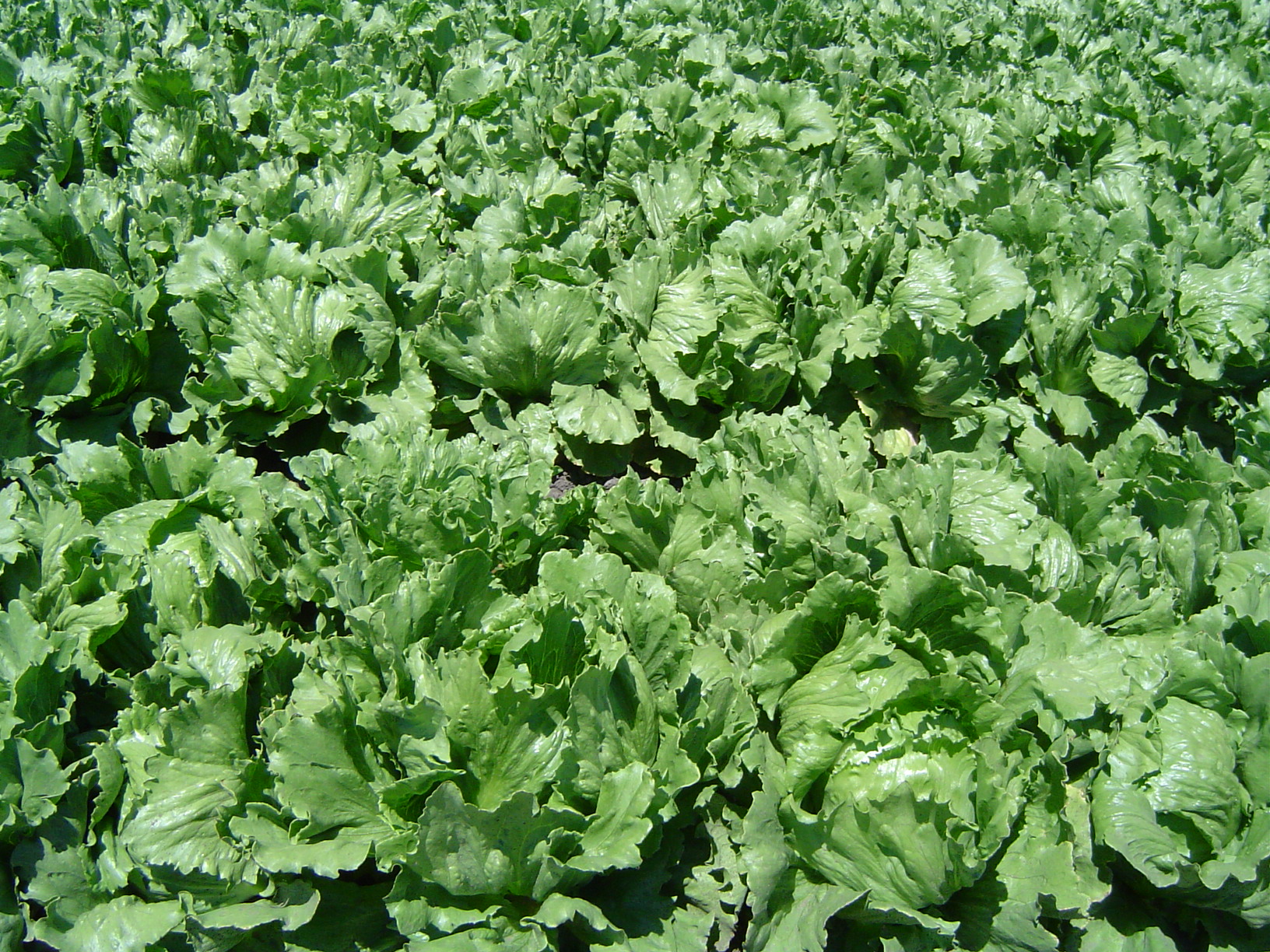
| A field of iceberg lettuces in California | |
Scientific classification 
| |
| Kingdom: | Plantae |
| Clade: | Tracheophytes |
| Clade: | Angiosperms |
| Clade: | Eudicots |
| Clade: | Asterids |
| Order: | Asterales |
| Family: | Asteraceae |
| Genus: | Lactuca |
| Species: | L. sativa
|
| Binomial name | |
| Lactuca sativa | |
| Synonyms[1][2] | |
| |
Lettuce (Lactuca sativa) is an annual plant of the family Asteraceae mostly grown as a leaf vegetable. The leaves are most often used raw in green salads, although lettuce is also seen in other kinds of food, such as sandwiches, wraps and soups; it can also be grilled.[3] Its stem and seeds are sometimes used; celtuce (asparagus lettuce) is one variety grown for its stems, which are eaten either raw or cooked. In addition to its main use as a leafy green, it has also gathered religious and medicinal significance over centuries of human consumption. Europe and North America originally dominated the market for lettuce, but by the late 20th century the consumption of lettuce had spread throughout the world. In 2023, world production of lettuce (and chicory) was 28 million tonnes, led by China with 53% of the total.
Lettuce was originally farmed by the ancient Egyptians, who transformed it from a plant whose seeds were used to obtain oil into an important food crop raised for its succulent leaves and oil-rich seeds. Lettuce spread to the Greeks and Romans; the latter gave it the name lactuca, from which the English lettuce is derived. By 50 AD, many types were described, and lettuce appeared often in medieval writings, including several herbals. The 16th through 18th centuries saw the development of many varieties in Europe, and by the mid-18th century, cultivars were described that can still be found in modern gardens.
Generally grown as a hardy annual, lettuce is easily cultivated, although it requires relatively low temperatures to prevent it from flowering quickly. It can be plagued by numerous nutrient deficiencies, as well as insect and mammal pests, and fungal and bacterial diseases. L. sativa crosses easily within the species and with some other species within the genus Lactuca. Although this trait can be a problem to home gardeners who attempt to save seeds, biologists have used it to broaden the gene pool of cultivated lettuce varieties.
Contaminated lettuce is often a source of bacterial, viral, and parasitic outbreaks in humans, including E. coli and Salmonella.
Taxonomy and etymology
[edit]
Lactuca sativa is a member of the Lactuca (lettuce) genus and the Asteraceae (sunflower or aster) family.[4] The species was first described in 1753 by Carl Linnaeus in the second volume of his Species Plantarum.[5] Synonyms for L. sativa include Lactuca scariola var. sativa,[1] L. scariola var. integrata and L. scariola var. integrifolia.[6] L. scariola is itself a synonym for L. serriola, the common wild or prickly lettuce.[2] L. sativa also has many identified taxonomic groups, subspecies and varieties, which delineate the various cultivar groups of domesticated lettuce.[7] Lettuce is closely related to several Lactuca species from southwest Asia; the closest relationship is to L. serriola, an aggressive weed common in temperate and subtropical zones in much of the world.[8]
The Romans referred to lettuce as lactuca (lac meaning "milk" in Latin), an allusion to the white substance, latex, exuded by cut stems.[9] The name Lactuca has become the genus name, while sativa (meaning "sown" or "cultivated") was added to create the species name.[10] The current word lettuce, originally from Middle English, came from the Old French letues or laitues, which derived from the Roman name.[11] The name romaine came from the variety of lettuce grown in the Roman papal gardens, while cos, another term for romaine lettuce, came from the earliest European seeds of the type from the Greek island of Kos, a center of lettuce farming in the Byzantine period.[12]
Description
[edit]
.jpg)

Lettuce's native range spreads from the Mediterranean to Siberia, although it has been transported to almost all areas of the world. Plants generally have a height and spread of 15 to 30 cm (6 to 12 in).[13] The leaves are colorful, mainly in the green and red color spectrums, with some variegated varieties.[14] There are also a few varieties with yellow, gold or blue-teal leaves.[15]
Lettuces have a wide range of shapes and textures, from the dense heads of the iceberg type to the notched, scalloped, frilly or ruffly leaves of leaf varieties.[14] Lettuce plants have a root system that includes a main taproot and smaller secondary roots. Some varieties, especially those found in the United States and Western Europe, have long, narrow taproots and a small set of secondary roots. Longer taproots and more extensive secondary systems are found in varieties from Asia.[15]
Depending on the variety and time of year, lettuce generally lives 65–130 days from planting to harvesting. Because lettuce that flowers (through the process known as "bolting") becomes bitter and unsaleable, plants grown for consumption are rarely allowed to grow to maturity. Lettuce flowers more quickly in hot temperatures, while freezing temperatures cause slower growth and sometimes damage to outer leaves.[16]
Once plants move past the edible stage, they develop flower stalks up to 1 m (3 ft 3 in) high with small yellow blossoms.[17] Like other members of the tribe Cichorieae, lettuce inflorescences (also known as flower heads or capitula) are composed of multiple florets, each with a modified calyx called a pappus (which becomes the feathery "parachute" of the fruit), a corolla of five petals fused into a ligule or strap, and the reproductive parts. These include fused anthers that form a tube which surrounds a style and bipartite stigma. As the anthers shed pollen, the style elongates to allow the stigmas, now coated with pollen, to emerge from the tube.[15][18] The ovaries form compressed, obovate (teardrop-shaped) dry fruits that do not open at maturity, measuring 3 to 4 mm long. The fruits have 5–7 ribs on each side and are tipped by two rows of small white hairs. The pappus remains at the top of each fruit as a dispersal structure. Each fruit contains one seed, which can be white, yellow, gray or brown depending on the variety of lettuce.[1]
The domestication of lettuce over the centuries has resulted in several changes through selective breeding: delayed bolting, larger seeds, larger leaves and heads, better taste and texture, a lower latex content, and different leaf shapes and colors. Work in these areas continues through the present day.[19] Scientific research into the genetic modification of lettuce is ongoing, with over 85 field trials taking place between 1992 and 2005 in the European Union and the United States to test modifications allowing greater herbicide tolerance, greater resistance to insects and fungi and slower bolting patterns. However, genetically modified lettuce is not currently used in commercial agriculture.[20]
History
[edit]
DNA analysis of 445 types of lettuce indicates that lettuce was first domesticated from its wild ancestor near the Caucasus, where seed shattering was first selected out of the cultivar. At this time, the lettuce plant was only suitable for harvesting its seeds, which could be pressed to extract oil, likely used for cooking, among other purposes.[21][22] From there, lettuce was likely transported to the Near East and then to ancient Egypt,[21] where the first depictions of lettuce cultivation can be found as early as 2680 BC.[9] Like the early lettuce from the Caucasus, this lettuce was grown to produce cooking oil from its seeds.[21][23]
Lettuce was considered a sacred plant of the reproduction god Min, and was carried during his festivals and placed near his images. The plant was thought to help the god "perform the sexual act untiringly".[24] Its use in religious ceremonies resulted in the creation of many images in tombs and wall paintings. The cultivated variety appears to have been about 75 cm (30 in) tall and resembled a large version of the modern romaine lettuce. These upright lettuces were developed by the Egyptians and passed to the Greeks, who in turn shared them with the Romans.[citation needed] Around 50 AD, Roman agriculturalist Columella described several lettuce varieties – some of which may have been ancestors of today's lettuces.[9]
The plant was eventually selectively bred into a plant grown for its edible leaves.[21][23] The long leaves in Egyptian depictions suggest that it may have been grown for its leaves, which would make it the first lettuce cultivar grown for this purpose.[23] However, genome wide analysis suggests the traits needed for cultivation as a leafy vegetable, like the loss of bitterness and thorns, evolved much later, from around 500 BC in Southern Europe. Lettuce cultivars radiated more rapidly from this point, with oilseed lettuce likely being brought by the ancient Greeks from Egypt to Italy, where it was modified into cos lettuce and cultivated for its leaves. From there, it was brought north to Central Europe, where it was modified into butterhead lettuce and other varieties.[21][22]
Lettuce appears in many medieval writings, especially as a medicinal herb. Hildegard of Bingen mentioned it in her writings on medicinal herbs between 1098 and 1179, and many early herbals also describe its uses. In 1586, Joachim Camerarius provided descriptions of the three basic modern lettuces – head lettuce, loose-leaf lettuce, and romaine (or cos) lettuce.[12] Lettuce was first brought to the Americas from Europe by Christopher Columbus in the late 15th century.[25][26] Between the late 16th century and the early 18th century, many varieties were developed in Europe, particularly Holland. Books published in the mid-18th and early 19th centuries describe several varieties found in gardens today.[23]
Due to its short lifespan after harvest, lettuce was originally sold relatively close to where it was grown. The early 20th century saw the development of new packing, storage and shipping technologies that improved the lifespan and transportability of lettuce and resulted in a significant increase in availability.[27][citation needed] During the 1950s, lettuce production was revolutionized with the development of vacuum cooling, which allowed field cooling and packing of lettuce, replacing the previously used method of ice-cooling in packing houses outside the fields.[28]
Lettuce is easy to grow, and as such has been a significant source of sales for many seed companies. Tracing the history of many varieties is complicated by the practice of many companies, particularly in the US, of changing a variety's name from year to year. This practice is conducted for several reasons, the most prominent being to boost sales by promoting a "new" variety, or to prevent customers from knowing that the variety had been developed by a competing seed company. Documentation from the late 19th century shows between 65 and 140 distinct varieties of lettuce, depending on the amount of variation allowed between types – a distinct difference from the 1,100 named lettuce varieties on the market at the time. Names also often changed significantly from country to country.[29] Although most lettuce grown today is used as a vegetable, a minor amount is used in the production of tobacco-free cigarettes; however, domestic lettuce's wild relatives produce a leaf that visually more closely resembles tobacco.[30]
Cultivation
[edit]
A hardy annual, some varieties of lettuce can be overwintered even in relatively cold climates under a layer of straw, and older, heirloom varieties are often grown in cold frames.[31] Lettuces meant for the cutting of individual leaves are generally planted straight into the garden in thick rows. Heading varieties of lettuces are commonly started in flats, then transplanted to individual spots, usually 20 to 36 cm (7.9 to 14.2 in) apart, in the garden after developing several leaves. Lettuce spaced farther apart receives more sunlight, which improves color and nutrient quantities in the leaves. Pale to white lettuce, such as the centers in some iceberg lettuce, contain few nutrients.[17]
Lettuce grows best in full sun in loose, nitrogen-rich soils with a pH of between 6.0 and 6.8. Heat generally prompts lettuce to bolt, with most varieties growing poorly above 24 °C (75 °F); cool temperatures prompt better performance, with 16 to 18 °C (61 to 64 °F) being preferred and as low as 7 °C (45 °F) being tolerated.[32] Plants in hot areas that are provided partial shade during the hottest part of the day will bolt more slowly. Temperatures above 27 °C (81 °F) will generally result in poor or non-existent germination of lettuce seeds.[32] After harvest, lettuce lasts the longest when kept at 0 °C (32 °F) and 96 percent humidity. The high water content of lettuce (94.9 percent) creates problems when attempting to preserve the plant – it cannot be successfully frozen, canned or dried and must be eaten fresh.[33] In spite of its high water content, traditionally grown lettuce has a low water footprint, with 237 liters (52 imp gal; 63 U.S. gal) of water required for each kilogram of lettuce produced.[34] Hydroponic growing methods can reduce this water consumption by nearly two orders of magnitude.
Lettuce varieties will cross with each other, making spacing of 1.5 to 6 m (60 to 240 in) between varieties necessary to prevent contamination when saving seeds. Lettuce will also cross with Lactuca serriola (wild lettuce), with the resulting seeds often producing a plant with tough, bitter leaves. Celtuce, a lettuce variety grown primarily in Asia for its stems, crosses easily with lettuces grown for their leaves.[17] This propensity for crossing, however, has led to breeding programs using closely related species in Lactuca, such as L. serriola, L. saligna, and L. virosa, to broaden the available gene pool. Starting in the 1990s, such programs began to include more distantly related species such as L. tatarica.[35]


.jpg)
Seeds keep best when stored in cool conditions, and, unless stored cryogenically, remain viable the longest when stored at −20 °C (−4 °F); they are relatively short lived in storage.[1] At room temperature, lettuce seeds remain viable for only a few months. However, when newly harvested lettuce seed is stored cryogenically, this life increases to a half-life of 500 years for vaporized nitrogen and 3,400 years for liquid nitrogen; this advantage is lost if seeds are not frozen promptly after harvesting.[36]
Cultivars (varieties)
[edit]

There are several types and cultivars of lettuce. Categorization may sometimes refer to "leaf" versus "head", but there are seven main cultivar groups of lettuce, each including many varieties:
- Leaf—Also known as looseleaf, cutting or bunching lettuce,[37] this type has loosely bunched leaves and is the most widely planted. It is used mainly for salads.[33]
- Red leaf lettuce—A group of lettuce types with red leaves.
- Romaine/Cos—Used mainly for salads and sandwiches, this type forms long, upright heads.[33] This is the most often used lettuce in Caesar salads.[25]
- Little Gem—a dwarf, compact romaine lettuce, popular in the UK.[38]
- Iceberg/Crisphead—The most popular type in the United States. Iceberg lettuce is very heat-sensitive and was originally developed in 1894 for growth in the northern United States by Burpee Seeds and Plants. It gets its name from the way it was transported in crushed ice, where the heads of lettuce looked like icebergs.[39] Today, it ships well, but is low in flavor and nutritional content, being composed of even more water than other lettuce types.[33]
- Butterhead—Also known as Boston or Bibb lettuce,[37] and traditionally in the UK as "round lettuce",[40] this type is a head lettuce with a loose arrangement of leaves, known for its sweet flavor and tender texture.[33]
- Summercrisp—Also called Batavian or French crisp, this lettuce is midway between the crisphead and leaf types. These lettuces tend to be larger, bolt-resistant and well-flavored.[37]
- Celtuce/Stem—This type is grown for its seedstalk, rather than its leaves, and is used in Asian cooking, primarily Chinese, as well as stewed and creamed dishes.[33]
- Oilseed—This type is grown for its seeds, which are pressed to extract an oil mainly used for cooking. It has few leaves, bolts quickly and produces seeds around 50 percent larger than other types of lettuce.[41]
The four main types in the Western world have been looseleaf, romaine, crisphead, and butterhead, with the others being intermediary or more exotic. The butterhead and crisphead types are sometimes known together as "cabbage" lettuce, because their heads are shorter, flatter, and more cabbage-like than romaine lettuces.[42]
Cultivation problems
[edit]
Soil nutrient deficiencies can cause a variety of plant problems that range from malformed plants to a lack of head growth.[32] Many insects are attracted to lettuce, including cutworms, which cut seedlings off at the soil line; wireworms and nematodes, which cause yellow, stunted plants; tarnished plant bugs and aphids, which cause yellow, distorted leaves; leafhoppers, which cause stunted growth and pale leaves; thrips, which turn leaves gray-green or silver; leafminers, which create tunnels within the leaves; flea beetles, which cut small holes in leaves and caterpillars, slugs and snails, which cut large holes in leaves. For example, the larvae of the ghost moth is a common pest of lettuce plants.[43] Mammals, including rabbits and groundhogs, also eat the plants.[44] Lettuce contains several defensive compounds, including sesquiterpene lactones, and other natural phenolics such as flavonol and glycosides, which help to protect it against pests. Certain varieties contain more than others, and some selective breeding and genetic modification studies have focused on using this trait to identify and produce commercial varieties with increased pest resistance.[45]
Lettuce also suffers from several viral diseases, including big vein, which causes yellow, distorted leaves, and mosaic virus, which is spread by aphids and causes stunted plant growth and deformed leaves. Aster yellows are a disease-causing bacteria carried by leafhoppers, which causes deformed leaves. Fungal diseases include powdery mildew and downy mildew, which cause leaves to mold and die and bottom rot, lettuce drop and gray mold, which cause entire plants to rot and collapse.[44] Bacterial diseases include Botrytis cinerea, for which UV-C treatments may be used: Vàsquez et al. 2017 find that phenylalanine ammonia-lyase activity, phenolic production, and B. cinerea resistance are increased by UV-C.[46] Crowding lettuce tends to attract pests and diseases.[17] Weeds can also be an issue, as cultivated lettuce is generally not competitive with them, especially when directly seeded into the ground. Transplanted lettuce (started in flats and later moved to growing beds) is generally more competitive initially, but can still be crowded later in the season, causing misshapen lettuce and lower yields. Weeds also act as homes for insects and disease and can make harvesting more difficult.[47] Herbicides are often used to control weeds in commercial production. However, this has led to the development of herbicide-resistant weeds in lettuce cultivation.[19]
Production
[edit] China China |
15.0 |
 United States United States |
4.7 |
 India India |
1.2 |
 Spain Spain |
0.9 |
| World | 28.1 |
| Source: FAOSTAT of the United Nations[48] | |
In 2023, world production of lettuce (report combined with chicory) was 28 million tonnes, with China alone accounting for 53% of the total (table).
Lettuce is the only member of the genus Lactuca to be grown commercially.[49]
Markets
[edit]Western Europe and North America were the original major markets for large-scale lettuce production. By the late 1900s, Asia, South America, Australia and Africa became more substantial markets. Different locations tended to prefer different types of lettuce, with butterhead prevailing in northern Europe and Great Britain, romaine in the Mediterranean and stem lettuce in China and Egypt. By the late 20th century, the preferred types began to change, with crisphead, especially iceberg, lettuce becoming the dominant type in northern Europe and Great Britain and more popular in western Europe. In the US, no one type predominated until the early 20th century, when crisphead lettuces began gaining popularity. After the 1940s, with the development of iceberg lettuce, 95 percent of the lettuce grown and consumed in the US was crisphead lettuce. By the end of the century, other types began to regain popularity and eventually made up over 30 percent of production.[50] Stem lettuce was first developed in China, where it remains primarily cultivated.[51]

In the early 21st century, bagged salad products increased in the lettuce market, especially in the US where innovative packaging and shipping methods prolonged freshness.[52][53][54]
In the United States in 2022, lettuce was the main vegetable ingredient in salads, and was the most consumed among leaf vegetables; its market was about 20% of all vegetables, with Romaine and iceberg having about equal sales.[53] Some 85% of the lettuce consumed in the United States in 2022 was produced domestically.[53]
Uses
[edit]Culinary
[edit]As described around 50 AD, lettuce leaves were often cooked and served by the Romans with an oil-and-vinegar dressing; however, smaller leaves were sometimes eaten raw. During the 81–96 AD reign of Domitian, the tradition of serving a lettuce salad before a meal began. Post-Roman Europe continued the tradition of poaching lettuce, mainly with large romaine types, as well as the method of pouring a hot oil and vinegar mixture over the leaves.[55]
Today, the majority of lettuce is grown for its leaves, although one type is grown for its stem and one for its seeds, which are made into an oil.[23] Most lettuce is used in salads, either alone or with other greens, vegetables, meats and cheeses. Romaine lettuce is often used for Caesar salads. Lettuce leaves can also be found in soups, sandwiches and wraps, while the stems are eaten both raw and cooked.[10]
| Nutritional value per 100 g (3.5 oz) | |||||||||||||||||||||||||||||||||||||||||||||||
|---|---|---|---|---|---|---|---|---|---|---|---|---|---|---|---|---|---|---|---|---|---|---|---|---|---|---|---|---|---|---|---|---|---|---|---|---|---|---|---|---|---|---|---|---|---|---|---|
| Energy | 58 kJ (14 kcal) | ||||||||||||||||||||||||||||||||||||||||||||||
3.0 g | |||||||||||||||||||||||||||||||||||||||||||||||
| Sugars | 2.0 g | ||||||||||||||||||||||||||||||||||||||||||||||
| Dietary fiber | 1.2 g | ||||||||||||||||||||||||||||||||||||||||||||||
0.14 g | |||||||||||||||||||||||||||||||||||||||||||||||
0.9 g | |||||||||||||||||||||||||||||||||||||||||||||||
| |||||||||||||||||||||||||||||||||||||||||||||||
| Other constituents | Quantity | ||||||||||||||||||||||||||||||||||||||||||||||
| Water | 95.6 g | ||||||||||||||||||||||||||||||||||||||||||||||
| †Percentages estimated using US recommendations for adults,[56] except for potassium, which is estimated based on expert recommendation from the National Academies.[57] | |||||||||||||||||||||||||||||||||||||||||||||||
The consumption of lettuce in China developed differently from in Western countries, due to health risks and cultural aversion to eating raw leaves; Chinese "salads" are composed of cooked vegetables and are served hot or cold. Lettuce is also used in a larger variety of dishes than in Western countries, contributing to a range of dishes including bean curd and meat dishes, soups and stir-frys plain or with other vegetables. Stem lettuce, widely consumed in China, is eaten either raw or cooked, the latter primarily in soups and stir-frys.[51] Lettuce is also used as a primary ingredient in the preparation of lettuce soup.
Nutrition
[edit]Raw iceberg lettuce is 96% water, 3% carbohydrates, and contains negligible protein and fat (table). In a reference amount of 100 grams (3.5 oz), iceberg lettuce supplies 14 calories and is a rich source (20% or more of the Daily Value, DV) of vitamin K (20% DV), with no other micronutrients in significant content (table).
In lettuce varieties with dark green leaves, such as romaine (also called cos), vitamin A contents are appreciable due to the presence of the provitamin A compound, beta-carotene.[33] Dark green varieties of lettuce also contain moderate amounts of calcium and iron.[33] The edible spine and ribs of the lettuce plant supply dietary fiber, while micronutrients are contained in the leaf portion.[33]
Food-borne illness
[edit]Food-borne pathogens that can survive on lettuce include Listeria monocytogenes, the causative agent of listeriosis, which multiplies in storage. However, despite high levels of bacteria being found on ready-to-eat lettuce products, a 2008 study found no incidents of food-borne illness related to listeriosis, possibly due to the product's short shelf life, indigenous microflora competing with the Listeria bacteria or inhibition of bacteria to cause listeriosis.[58]
Other bacteria found on lettuce include Aeromonas species, which have not been linked to any outbreaks; Campylobacter species, which cause campylobacteriosis; and Yersinia intermedia and Yersinia kristensenii (species of Yersinia), which have been found mainly in lettuce.[59] Salmonella bacteria, including the uncommon Salmonella braenderup type, have also caused outbreaks traced to contaminated lettuce.[60] Viruses, including hepatitis A, calicivirus and a Norwalk-like strain, have been found in lettuce. The vegetable has also been linked to outbreaks of parasitic infestations, including Giardia lamblia.[59]
Lettuce has been linked to numerous outbreaks of the bacteria E.coli O157:H7 and Shigella; the plants were most likely contaminated through contact with animal[61] or human feces.[62] A 2007 study determined that the vacuum cooling method, especially prevalent in the California lettuce industry, increased the uptake and survival rates of E. coli O157:H7.[63] Scientific experiments using treated municipal wastewater as irrigation for romaine lettuce have shown that the contamination levels of foliage, leachate, and soil with E. coli[62] and bacteriophage AP205 (used by researchers as a surrogate for enteric viruses), respectively, were directly correlated with the presence of these organisms in the irrigation water.[64]
Due to the increase in food demand, the use of treated wastewater effluent for irrigation and animal or human excreta (i.e., manure or biosolids) as soil amendments is increasing.[65] As such, so are the outbreaks of food-borne illnesses. Due to the overuse of antibiotics in farming, the number of pathogens resistant to antibiotics is increasing,[66] one of these being AR E.coli, which has been found on lettuce irrigated with wastewater.[67]
Pathogens found on lettuce are not specific to lettuce (though some E. coli strains have affinity for Romaine). But, unlike other vegetables which tend to be cooked, lettuce is eaten raw, thus food-borne outbreaks associated with it are more frequent and affect a larger number of people.[68]
References
[edit]- ^ a b c d "Lactuca sativa". Kew Royal Botanical Gardens. Archived from the original on 2 November 2012. Retrieved 2 April 2012.
- ^ a b "Lactuca serriola L". United States Department of Agriculture. Archived from the original on 5 June 2012. Retrieved 2 April 2012.
- ^ Hugh Fearnley-Whittingstall. "Grilled lettuce with goats' cheese". BBC. Archived from the original on 17 July 2013. Retrieved 17 May 2013.
- ^ "Lactuca sativa L". Integrated Taxonomic Information System. Archived from the original on 25 October 2011. Retrieved 27 March 2010.
- ^ Natural History Museum (2022). "The Linnaean Plant Name Typification Project". Natural History Museum. doi:10.5519/qwv6u7j5. Archived from the original on 22 December 2015. Retrieved 17 December 2015.
- ^ "Lactuca sativa L". United States Department of Agriculture. Archived from the original on 8 June 2012. Retrieved 2 April 2012.
- ^ Porcher, Michael H. (2005). "Sorting Lactuca Names". Multilingual Multiscript Plant Name Database. University of Melbourne. Archived from the original on 16 September 2012. Retrieved 2 April 2012.
- ^ Zohary, Daniel; Hopf, Maria; Weiss, Ehud (2012). Domestication of Plants in the Old World: The Origin and Spread of Domesticated Plants in Southwest Asia, Europe, and the Mediterranean Basin. Oxford University Press. p. 157. ISBN 978-0-19-954906-1. Archived from the original on 23 July 2016. Retrieved 10 January 2016.
- ^ a b c Weaver, William Woys (1997). Heirloom vegetable gardening: a master gardener's guide to planting, growing, seed saving, and cultural history (1st ed.). New York: Henry Holt and Company. pp. 170–172. ISBN 978-0-8050-4025-8.
- ^ a b Katz and Weaver, p. 376.
- ^ Chantrell, Glynnis, ed. (2002). The Oxford Dictionary of Word Histories. Oxford University Press. p. 300. ISBN 0-19-863121-9.
- ^ a b Weaver, William Woys (1997). Heirloom vegetable gardening: a master gardener's guide to planting, growing, seed saving, and cultural history (1st ed.). New York: Henry Holt and Company. p. 172. ISBN 978-0-8050-4025-8.
- ^ "Lactuca sativa". Missouri Botanical Garden. Archived from the original on 16 June 2013. Retrieved 27 March 2012.
- ^ a b Fine Cooking Magazine (2011). Fine Cooking in Season: Your Guide to Choosing and Preparing the Season's Best. Taunton Press. p. 28. ISBN 978-1-60085-303-6. Archived from the original on 20 May 2021. Retrieved 6 October 2020.
- ^ a b c Ryder, J.; Waycott, Williams (1993). "New Directions in Salad Crops: New Forms, New Tools, and Old Philosophy". In Janick, J.; Simon, J.E. (eds.). New Crops. Wiley. pp. 528–532. Archived from the original on 17 July 2012. Retrieved 11 April 2012.
- ^ Smith, Richard; Cahn, Michael; Daugovish, Oleg; Koike, Steven; Natwick, Eric; Smith, Hugh; Subbarao, Krishna; Takele, Etaferahu; Turin, Thomas. "Leaf Lettuce Production in California" (PDF). University of California Vegetable Research and Information Center. Archived from the original (PDF) on 19 June 2012. Retrieved 11 April 2012.
- ^ a b c d Weaver, pp. 175–176.
- ^ Barkley, Theodore M.; Brouillet, Luc; Strother, John L. "Asteraceae tribe Cichorieae". In Flora of North America Editorial Committee (ed.). Flora of North America North of Mexico (FNA). Vol. 19, 20 and 21. New York and Oxford: Oxford University Press. Retrieved 24 September 2012 – via eFloras.org, Missouri Botanical Garden, St. Louis, MO & Harvard University Herbaria, Cambridge, MA.
- ^ a b Davey, et al., pp. 222–225.
- ^ "Lettuce". GMO Compass. Archived from the original on 11 May 2012. Retrieved 3 April 2012.
- ^ a b c d e Wei, Tong; van Treuren, Rob; Liu, Xinjiang; Zhang, Zhaowu; Chen, Jiongjiong; Liu, Yang; Dong, Shanshan; Sun, Peinan; Yang, Ting; Lan, Tianming; Wang, Xiaogang; Xiong, Zhouquan; Liu, Yaqiong; Wei, Jinpu; Lu, Haorong (12 April 2021). "Whole-genome resequencing of 445 Lactuca accessions reveals the domestication history of cultivated lettuce". Nature Genetics. 53 (5): 752–760. doi:10.1038/s41588-021-00831-0. ISSN 1546-1718. PMID 33846635.
- ^ a b van Treuren, Rob (12 April 2021). "The DNA of lettuce unravelled: in 6000 years from weed to beloved vegetable". Wageningen University & Research. Retrieved 22 October 2024.
- ^ a b c d e Katz, Solomon H.; Weaver, William Woys (2003). Encyclopedia of Food and Culture. Vol. 2. Scribner. pp. 375–376. ISBN 978-0-684-80568-9.
- ^ Hart, George (2005). The Routledge Dictionary of Egyptian Gods and Goddesses (2nd ed.). Routledge. p. 95. ISBN 1-134-28424-1. Archived from the original on 28 September 2021. Retrieved 6 October 2020.
- ^ a b "Vegetable of the Month: Lettuce". Centers for Disease Control and Prevention. Archived from the original on 22 March 2012. Retrieved 26 March 2012.
- ^ Subbarao, Krishna V.; Koike, Steven T. (2007). "Lettuce Diseases: Ecology and Control". In Pimentel, David (ed.). Encyclopedia of Pest Management, Volume 2. CRC Press. p. 313. ISBN 978-1-4200-5361-6. Archived from the original on 28 September 2021. Retrieved 6 October 2020.
- ^ Twilley, Nicola (2024). Frostbite: How Refrigeration Changed Our Food, Our Planet, and Ourselves (1st ed.). New York: Penguin Press. pp. 124–131. ISBN 978-0-7352-2328-8.
- ^ Enochian, R.V.; Smith, F.J (November 1956). "House Packing Western Lettuce" (PDF). California Agriculture. Archived from the original (PDF) on 15 June 2013.
- ^ Weaver, pp. 173–174.
- ^ Katz and Weaver, p. 377.
- ^ Weaver, pp. 172–173.
- ^ a b c Bradley, p. 129.
- ^ a b c d e f g h i "Lettuce". University of Illinois Extension. Archived from the original on 15 March 2012. Retrieved 25 March 2012.
- ^ Holden, Joseph (2013). Water Resources: An Integrated Approach. Routledge. p. 335. ISBN 978-0-203-48941-3. Archived from the original on 5 June 2020. Retrieved 12 November 2019.
- ^ Koopman, Wim J.M.; Guetta, Eli; van de Wiel, Clemens C.M.; Vosman, Ben; van den Berg, Ronald G (1998). "Phylogenetic relationships among Lactuca (Asteraceae) species and related genera based on ITS-1 DNA sequences". American Journal of Botany. 85 (11): 1517–1530. doi:10.2307/2446479. JSTOR 2446479. PMID 21680311.
- ^ Davey, et al., p. 241.
- ^ a b c Miles, Carol. "Winter Lettuce". Washington State University. Archived from the original on 11 April 2012. Retrieved 26 March 2012.
- ^ "Lactuca sativa 'Little Gem' | lettuce (Cos) 'Little Gem' Annual Biennial/RHS Gardening". www.rhs.org.uk. Retrieved 14 November 2022.
- ^ Renna (3 July 2007). "Iceberg lettuce". Chicago Tribune. Tribune Publishing. Retrieved 22 June 2011.
- ^ "Lettuce". Tesco Real Food. Tesco. Archived from the original on 18 January 2017. Retrieved 16 January 2017.
- ^ Katz and Weaver, p. 375.
- ^ Rana, M. K. (2 October 2017). Vegetable Crop Science. CRC Press. p. 173. ISBN 978-1-351-65279-7. Archived from the original on 28 September 2021. Retrieved 28 September 2021.
- ^ Edwards, C. A. (May 1964). "The bionomics of swift moths. I.—The ghost swift moth, Hepialus humuli (L.)". Bulletin of Entomological Research. 55 (1): 147–160. doi:10.1017/S000748530004935X. ISSN 1475-2670.
- ^ a b Bradley, pp. 129–132.
- ^ "Developing Multi-Species Insect Resistance in Romaine Lettuce". United States Department of Agriculture. Archived from the original on 19 October 2013. Retrieved 5 April 2012.
- ^ Urban, L.; Chabane Sari, D.; Orsal, B.; Lopes, M.; Miranda, R.; Aarrouf, J. (2018). "UV-C light and pulsed light as alternatives to chemical and biological elicitors for stimulating plant natural defenses against fungal diseases". Scientia Horticulturae. 235. Elsevier: 452–459. Bibcode:2018ScHor.235..452U. doi:10.1016/j.scienta.2018.02.057. ISSN 0304-4238. S2CID 90436989.
- ^ "Lettuce: Integrated Weed Management". UC Pest Management Guidelines. University of California. August 2007. Archived from the original on 7 July 2012. Retrieved 3 April 2012.
- ^ "Lettuce production (combined with chicory) in 2023, Crops/Regions/World list/Production Quantity/Year (pick lists)". UN Food and Agriculture Organization, Corporate Statistical Database (FAOSTAT). 2025. Retrieved 1 July 2025.
- ^ Koike, Steven T; Gladders, Peter; Paulus, Albert O. (2006). Vegetable Diseases: A Color Handbook. Gulf Professional Publishing. p. 296. ISBN 0-12-373675-7. Archived from the original on 30 April 2016. Retrieved 10 January 2016.
- ^ Katz and Weaver, p. 378.
- ^ a b Simoons, Frederick J. (1991). Food in China: A Cultural and Historical Inquiry. CRC Press. pp. 147–148. ISBN 0-8493-8804-X. Archived from the original on 26 December 2019. Retrieved 22 March 2020.
- ^ Fulmer, Melinda (19 August 2002). "Lettuce Grows into A Processed Food". Los Angeles Times. Archived from the original on 18 December 2013. Retrieved 30 June 2012.
- ^ a b c "Lettuce". Agricultural Marketing Resource Center, Iowa State University. April 2023. Retrieved 16 April 2024.
- ^ Charles, Dan; Aubrey, Allison (12 July 2016). "As Bagged Salad Kits Boom, Americans Eat More Greens". NPR.org. National Public Radio. Archived from the original on 3 April 2018. Retrieved 5 April 2018.
- ^ Weaver, pp. 170–172.
- ^ United States Food and Drug Administration (2024). "Daily Value on the Nutrition and Supplement Facts Labels". FDA. Archived from the original on 27 March 2024. Retrieved 28 March 2024.
- ^ "TABLE 4-7 Comparison of Potassium Adequate Intakes Established in This Report to Potassium Adequate Intakes Established in the 2005 DRI Report". p. 120. In: Stallings, Virginia A.; Harrison, Meghan; Oria, Maria, eds. (2019). "Potassium: Dietary Reference Intakes for Adequacy". Dietary Reference Intakes for Sodium and Potassium. pp. 101–124. doi:10.17226/25353. ISBN 978-0-309-48834-1. PMID 30844154. NCBI NBK545428.
- ^ Hanning, I.B.; Johnson, M.G.; Ricke, S.C (December 2008). "Precut prepackaged lettuce: a risk for listeriosis?". Foodborne Pathogens and Disease. 5 (6): 731–746. doi:10.1089/fpd.2008.0142. PMID 18847382.
- ^ a b "Chapter IV. Outbreaks Associated with Fresh and Fresh-Cut Produce. Incidence, Growth, and Survival of Pathogens in Fresh and Fresh-Cut Produce". Analysis and Evaluation of Preventive Control Measures for the Control and Reduction/Elimination of Microbial Hazards on Fresh and Fresh-Cut Produce. US Food and Drug Administration. 12 April 2012. Archived from the original on 9 November 2012. Retrieved 19 April 2012.
- ^ Gajraj, Roger; Pooransingh, Shalini; Hawker, Jeremy; Olowokure, Babatunde (April 2012). "Multiple outbreaks of Salmonella braenderup associated with consumption of iceberg lettuce". International Journal of Environmental Health Research. 22 (2): 150–155. Bibcode:2012IJEHR..22..150G. doi:10.1080/09603123.2011.613114. PMID 21916661. S2CID 27881973.
- ^ Davis, J. G.; Kendall, P. "Preventing E. coli from Garden to Plate". Colorado State University. Archived from the original on 5 March 2012. Retrieved 26 March 2012.
- ^ a b Summerlin III, HN; Pola, CC; McLamore, ES; et al. (20 May 2021). "Prevalence of Escherichia coli and Antibiotic-Resistant Bacteria During Fresh Produce Production (Romaine Lettuce) Using Municipal Wastewater Effluents". Front. Microbiol. 12 660047. doi:10.3389/fmicb.2021.660047. PMC 8172605. PMID 34093474.
- ^ Li, Haiping; Tajkarimi, Mehrdad; Osburn, Bennie I (2008). "Impact of Vacuum Cooling on Escherichia coli O157:H7 Infiltration into Lettuce Tissue". Applied and Environmental Microbiology. 74 (10): 3138–42. Bibcode:2008ApEnM..74.3138L. doi:10.1128/AEM.02811-07. PMC 2394940. PMID 18344328.
- ^ Summerlin III, HN; Pola, CC; Chamakura, KR; et al. (2021). "Fate of enteric viruses during leafy greens (romaine lettuce) production using treated municipal wastewater and AP205 bacteriophage as a surrogate". Journal of Environmental Science and Health, Part A. 566 (10): 1138–1144. Bibcode:2021JESHA..56.1138S. doi:10.1080/10934529.2021.1968231. PMID 34427159. S2CID 237282172.
- ^ Mays, C; Garza, GL; Waite-Cusic, J; Radniecki, TS; Navab-Daneshmanda, Tala (1 December 2021). "Impact of biosolids amendment and wastewater effluent irrigation on enteric antibiotic-resistant bacteria – a greenhouse study". Water Res X. 13 100119. Bibcode:2021WRX....1300119M. doi:10.1016/j.wroa.2021.100119. PMC 8452883. PMID 34585133.
- ^ Xu, C; Kong, L; Liao, Y; Wu, Q; Liu, H; Wang, X (November 2022). "Mini-Review: Antibiotic-Resistant Escherichia coli from Farm Animal-Associated Sources". Antibiotics. 11 (11): 1535. doi:10.3390/antibiotics11111535. PMC 9686710. PMID 36358190.
- ^ O'Flaherty, E; Solimini, AG; Pantanella, F; De Giusti, M; Cummins, E (January 2019). "Human exposure to antibiotic resistant-Escherichia coli through irrigated lettuce". Environment International. 122: 270–280. Bibcode:2019EnInt.122..270O. doi:10.1016/j.envint.2018.11.022. PMID 30449627.PDF
- ^ Gudda, FO; Waigi, MG; Odinga, ES; Yang, B; Carter, L; Gao, Y (September 2020). "Antibiotic-contaminated wastewater irrigated vegetables pose resistance selection risks to the gut microbiome". Environmental Pollution. 264 114752. Bibcode:2020EPoll.26414752G. doi:10.1016/j.envpol.2020.114752. PMID 32417582. S2CID 218679107.
Cited literature
[edit]- Bradley, Fern Marshall; Ellis, Barbara W.; Martin, Deborah L., eds. (2009). The Organic Gardener's Handbook of Natural Pest and Disease Control. Rodale. ISBN 978-1-60529-677-7.
- Davey, M. R.; Anthony, P.; Van Hooff, P.; Power, J. B.; Lowe, K. C. (2007). "Lettuce". Transgenic Crops. Biotechnology in Agriculture and Forestry. Vol. 59. Springer. ISBN 978-3-540-36752-9.
- Katz, Solomon H.; Weaver, Williams Woys (2003). Encyclopedia of Food and Culture. Vol. 2. Scribner. ISBN 978-0-684-80565-8.
- Weaver, William Woys (1997). Heirloom Vegetable Gardening: A Master Gardener's Guide to Planting, Seed Saving and Cultural History. Henry Holt and Company. ISBN 978-0-8050-4025-8.
External links
[edit]


| International | |
|---|---|
| National | |

Lettuce
View on GrokipediaTaxonomy and Etymology
Classification
Lettuce, scientifically known as Lactuca sativa, belongs to the kingdom Plantae, subkingdom Tracheobionta, superdivision Spermatophyta, division Magnoliophyta, class Magnoliopsida, order Asterales, family Asteraceae, genus Lactuca, and species L. sativa.[8] This classification places it among the flowering plants, specifically within the eudicots, reflecting its vascular structure and double fertilization typical of angiosperms. In modern phylogenetic systems like APG IV, it is classified within the eudicot clade.[9] The species is part of the Asteraceae family, one of the largest plant families with over 25,000 species, distinguished by its composite flower heads—inflorescences composed of densely packed small florets (ray and/or disc types) surrounded by bracts, forming a capitulum that mimics a single flower.[10] Within the genus Lactuca, which comprises about 100 species primarily in the subtribe Lactucinae of the tribe Cichorieae, L. sativa evolved from wild relatives, notably Lactuca serriola (prickly lettuce), a widespread Eurasian annual considered its primary progenitor based on genetic and morphological evidence.[11] Phylogenetic studies indicate that the Lactuca lineage diversified in the Northern Hemisphere, with L. sativa's domestication involving selection for non-bitter leaves and reduced prickliness from L. serriola ancestors.[12] Botanical subdivisions of L. sativa include varieties defined by leaf morphology and growth habit, such as Lactuca sativa var. crispa (looseleaf or curled lettuce), characterized by ruffled, non-heading leaves suitable for continuous harvest.[13] Other varieties encompass var. capitata for heading types and var. longifolia for romaine, but these reflect cultivated forms derived from the core wild progenitor lineage.[13]Name Origins
The English word "lettuce" entered the language in the late 13th century, derived from Old French laitues (plural of laitue), which traces back to the Latin lactuca, meaning "lettuce" and ultimately from lac ("milk"). This nomenclature refers to the plant's milky white sap, a latex-like substance exuded from cut stems and veins.[14] The Romans adopted and popularized the term lactuca during classical antiquity, building on earlier Hellenistic knowledge.[15] In ancient Greece, the wild progenitor of cultivated lettuce, known as prickly lettuce (Lactuca serriola), was called thridax, a name reflecting its spiny leaves and tall stalks; this plant held mythological significance, associated with Aphrodite as a symbol of love and associated with the death of Adonis.[16] While specific ancient Egyptian nomenclature for lettuce remains sparsely documented in surviving records, the plant was revered there as early as around 2000 BCE, linked to the fertility god Min due to its phallic shape and milky juice, which symbolized semen and virility.[17] Many modern Romance language names for lettuce similarly evoke the milky sap, underscoring the enduring influence of the Latin root: French laitue (from lait, "milk"), Spanish lechuga (from leche, "milk"), and Italian lattuga (from latte, "milk").[14] In 1753, Swedish botanist Carl Linnaeus formalized the scientific binomial nomenclature for the cultivated species as Lactuca sativa in his seminal work Species Plantarum, establishing the genus Lactuca—itself derived from the Latin for milk—to encompass lettuce and its wild relatives.[18]Botanical Description
Plant Morphology
Lettuce (Lactuca sativa) is an annual or biennial herb belonging to the Asteraceae family, featuring a basal rosette of leaves as its primary vegetative structure. This rosette serves as the main body of the plant during its edible growth phase, with leaves emerging from a central point at ground level and varying in arrangement from loose and open in non-heading forms to compact and densely packed in heading types, such as those forming tight, spherical heads similar to iceberg varieties.[2][19][20] The leaves are typically hairless and fleshy, measuring 3–6 inches in length, with shapes ranging from cuneate or obovate to spatulate, and margins that may be entire, denticulate, lobed, sinuate, or undulate. Colors span from light to dark green, with some exhibiting red-purple hues or variegations in white, yellow, or speckles, while textures vary from smooth and crisp to buttery or savoy-crinkled.[2][20][19] The stem is short, erect, and green in mature plants, often remaining compact and thick beneath the rosette in heading forms but capable of elongating significantly during the bolting process. Beneath the soil, lettuce develops a shallow, fibrous root system with primarily horizontal growth and a vertical taproot, which limits its depth and requires consistent moisture for effective uptake.[2][20][19] In the reproductive phase, lettuce produces small yellow composite flower heads on elongated stalks, each head consisting of 12–16 ray florets arranged radially and opening in the morning. These florets give rise to achenes—oblong, ribbed seeds topped with a soft, white or brown pappus elevated on a beak-like structure, facilitating wind dispersal.[19][2]Growth and Reproduction
Lettuce (Lactuca sativa) is an annual or biennial herb characterized by a relatively short growth cycle, typically spanning 45 to 60 days from seed germination to harvest under cool conditions. Optimal growth occurs at temperatures between 15 and 20°C (60 to 65°F), during which the plant develops its rosette of leaves before potentially entering the reproductive phase.[21][22] This rapid vegetative phase allows for multiple harvests in suitable climates, with the plant focusing energy on leaf expansion rather than stem elongation initially. Environmental factors significantly influence lettuce's development, particularly through responses that trigger bolting, the premature initiation of flowering and stem elongation. Bolting is induced by high temperatures above 24°C (75°F) or extended photoperiods exceeding 12 to 14 hours of daylight, resulting in tougher, bitter-tasting leaves due to increased latex production and metabolic shifts.[23][24] As a facultative long-day plant, lettuce generally requires long photoperiods to promote flowering, though certain varieties exhibit day-neutral behavior, flowering independently of day length.[25] These responses ensure reproductive success in temperate regions but pose challenges for leaf production in warmer or longer-day environments. Reproduction in lettuce occurs primarily through self-pollination, as the species is self-compatible, though cross-pollination by insects such as bees can occur. Flowers are arranged in capitula (composite heads), each containing 15 to 20 florets that, upon pollination, develop into single-seeded achenes.[26][27][28][29] Seed maturation within a capitulum takes 12 to 21 days, after which the plant may produce hundreds of such heads, yielding viable seeds for propagation. This mechanism, combined with photoperiodic cues, aligns reproductive timing with favorable seasonal conditions.[19]History
Origins and Domestication
Lettuce (Lactuca sativa) originated from the wild species Lactuca serriola, a prickly annual native to the Mediterranean region and southwestern Asia.[30] Genetic analyses indicate that domestication began approximately 6,000 years ago near the Caucasus, where early human selection targeted traits such as non-shattering seeds, marking the transition from wild to cultivated forms.[31] This process likely occurred as wild populations were gathered and gradually modified through cultivation in the broader Near Eastern and Mediterranean areas.[32] The earliest archaeological evidence of lettuce appears in ancient Egypt, where depictions in tomb paintings from around 2700 BCE show it as a plant associated with agricultural scenes, initially growing as a weed among crops.[17] By this time, Egyptians had begun domesticating it primarily for its oil-rich seeds, which were pressed to produce a valuable edible oil used in cooking, medicine, and rituals. Over subsequent centuries, selective breeding shifted focus from seed production to the plant's leaves, favoring varieties with larger, less bitter foliage that could be consumed fresh, reducing the emphasis on the wild progenitor's prickly and latex-heavy characteristics.[33] In Egyptian culture, lettuce held profound symbolic significance as a emblem of fertility and sexuality, closely linked to the god Min, a deity of virility and agriculture.[17] The plant's tall, phallic stalks and milky sap were interpreted as aphrodisiacs, and it featured prominently in rituals where offerings of lettuce accompanied depictions of Min in temple reliefs and tomb art from the Old Kingdom period (c. 2686–2181 BCE).[34] This cultural reverence likely reinforced early cultivation efforts, integrating lettuce into both practical agriculture and mythological narratives of renewal and procreation.[17]Global Spread and Breeding
Lettuce, originally domesticated in the Near East around 6000 years ago, was disseminated across the Mediterranean by ancient civilizations, with the Romans playing a pivotal role in its expansion into Western and Northern Europe by the 1st century CE, as evidenced by descriptions of multiple cultivars in Pliny the Elder's Natural History from 77 CE.[32] The plant reached Central Europe through Roman agricultural practices, where it became a staple crop adapted to cooler climates.[35] By the late 15th century, European explorers facilitated its introduction to the Americas; Christopher Columbus is credited with bringing lettuce seeds on his second voyage in 1493–1494, leading to early cultivation on Isabella Island (modern-day Haiti) and subsequent spread through Spanish colonies in the Caribbean and South America.[35][36] Systematic breeding efforts intensified in Europe during the second half of the 19th century, focusing on developing compact heading types suitable for diverse growing conditions and markets, with French growers contributing significantly to the refinement of butterhead varieties characterized by soft, loose heads and mild flavor.[35] These advancements built on earlier European selections from the 16th and 17th centuries in France, Holland, and Italy, which introduced firm-headed forms and varied leaf colors, but 19th-century work emphasized uniformity and yield for commercial viability.[37] In the 20th century, breeding shifted toward crisphead types in North America, with iceberg lettuce emerging in California during the 1920s as a durable variety optimized for long-distance refrigerated rail transport, exemplified by early shipments from Salinas Valley that reached eastern markets intact by 1919.[38] Post-1950s innovations introduced hybrid varieties, particularly those incorporating resistance to downy mildew (Bremia lactucae), a major global pathogen, through controlled crosses that enhanced uniformity, vigor, and field performance while reducing susceptibility to viral and fungal diseases.[39] These hybrids, such as those released by U.S. breeding programs in the mid-century, marked a transition to genetically stable lines that supported expanded commercial production.[40] Genomic research since the 2010s has accelerated breeding precision, with studies identifying key genes and quantitative trait loci (QTLs) associated with reduced bitterness, primarily linked to lower sesquiterpene lactone (STL) accumulation in leaves, enabling the development of milder-flavored cultivars through marker-assisted selection.[41] For instance, mapping efforts using recombinant inbred lines have pinpointed genetic variants influencing bitter-to-sweet compound ratios, informing targeted mutations that minimize astringency without compromising nutritional value.[42] The first complete lettuce genome assembly in 2017, followed by high-density linkage maps in 2021, has further elucidated domestication-related traits, including bitterness reduction, by analyzing over 445 global varieties and facilitating CRISPR-based edits for trait improvement.[32][43] More recent advances include the first telomere-to-telomere (T2T) genome assembly in 2024, which provides a gapless reference revealing epigenetic features, and a Lactuca super-pangenome constructed from 12 chromosome-scale genomes in 2025, offering insights into structural variations and domestication history across the genus.[44][45]Cultivation
Varieties and Cultivars
Lettuce is classified into five main cultivar groups based on leaf structure, head formation, and growth habit, each offering distinct textures, flavors, and uses in salads and cooking.[46] The leaf lettuce group features loose, non-heading plants with ruffled, tender leaves that can be harvested as cut-and-come-again greens; popular for their crisp texture and availability in green or red varieties, an example is 'Black Seeded Simpson', a heat-tolerant heirloom known for its light green, crumpled leaves and slow bolting.[46][47] Romaine or cos lettuce produces upright, vase-shaped heads with long, crisp outer leaves and a tender, pale heart; valued for durability and mild flavor, cultivars like 'Parris Island' exhibit dark green leaves, bolt resistance, and suitability for both full heads and baby leaf production.[46][48] Crisphead or iceberg lettuce forms dense, firm heads with tightly packed, pale green leaves that provide crunch and longevity in storage; a classic example is 'Great Lakes', which offers large, round heads with crinkled leaves and resistance to tip burn and heat.[46][49] Butterhead or Boston lettuce develops soft, loosely formed heads with smooth, buttery-textured leaves and a sweet flavor; 'Buttercrunch' is a favored cultivar, producing compact heads with frilled edges, heat tolerance, and a creamy yellow interior.[46][50] The stem lettuce group, also known as Asiatic or celtuce, emphasizes an elongated, edible stem over leafy heads, with narrow, bitter leaves often discarded; 'Celtuce' (Lactuca sativa var. augustana) yields thick, crisp stems with a mild, nutty taste, commonly stir-fried in Asian cuisine.[46][51] Worldwide, over 1,000 lettuce cultivars have been developed and maintained in germplasm collections, selectively bred for traits such as heat tolerance to extend growing seasons, varied colors from deep red to speckled patterns for visual appeal, and enhanced shelf life to reduce post-harvest waste.[52] Specialty types within these groups cater to niche markets, including looseleaf varieties ideal for baby greens mixes due to their tender, quick-regenerating foliage, and organic heirlooms like 'Forellenschluss', a romaine with green leaves speckled in maroon for ornamental and flavorful salads.[53] Contemporary breeding emphasizes GMO-free hybrid varieties incorporating natural resistance genes, such as those against lettuce mosaic virus (LMV), to minimize crop losses without genetic modification; for instance, the hybrid 'Coastal Star' romaine demonstrates robust LMV tolerance alongside upright growth and dark green color.[54][55]Growing Conditions and Techniques
Lettuce thrives in cool climates with daytime temperatures between 10°C and 24°C (50°F to 75°F), though optimal growth occurs at 15°C to 18°C (60°F to 65°F).[21][4] It prefers full sun exposure of 6 to 8 hours per day but benefits from partial shade or shade cloth during periods of high heat above 24°C to prevent bolting and maintain leaf quality.[56][57] The plant requires well-drained, loamy soil rich in organic matter to support its shallow root system, with a pH range of 6.0 to 7.0 for nutrient availability.[58][4] Prior to planting, soil should be amended with compost to improve fertility and drainage, avoiding heavy clay or waterlogged conditions that can lead to root rot.[21] Cultivation techniques include direct seeding or transplanting seedlings. Seeds are sown 0.6 to 1.3 cm (¼ to ½ inch) deep in rows spaced 30 to 45 cm (12 to 18 inches) apart, with plants thinned to 15 to 30 cm (6 to 12 inches) between individuals depending on variety—closer for loose-leaf types and wider for heading varieties.[58][59] Transplants, started indoors 4 to 6 weeks before the last frost, are hardened off and set out at the two- to four-leaf stage for earlier harvests.[4] Consistent irrigation is essential, providing 2.5 to 5 cm (1 to 2 inches) of water per week to keep soil evenly moist without saturation, particularly during establishment and head formation; drip systems are recommended to minimize foliar wetting.[60][59] To extend the harvest season and mitigate bolting in warming conditions, succession planting involves sowing new seeds every 2 to 3 weeks, allowing continuous production of young, tender leaves.[61] Modern methods such as hydroponics and vertical farming enable year-round cultivation in controlled environments, using nutrient-rich water solutions (pH 5.5 to 6.0) and stacked systems to optimize space and reduce water use by up to 90% compared to soil-based methods.[62][63] Harvest timing varies by type, with loose-leaf varieties ready in 30 to 45 days and heading types in 45 to 70 days from seeding, when heads are firm but before seed stalk elongation.[64] Post-harvest handling preserves crispness by harvesting in the morning when dry, rapidly cooling to 0°C (32°F), and storing in high-humidity conditions (95-100%) to extend shelf life up to 21 days.[65][66]Pests, Diseases, and Challenges
Lettuce cultivation faces significant threats from various pests that can damage foliage and reduce yields. Aphids, such as the green peach aphid (Myzus persicae), feed on plant sap, causing leaf distortion and transmitting viral diseases, and can be controlled through integrated pest management (IPM) strategies including monitoring, biological controls like lady beetles, and applications of neem oil or insecticidal soaps that target soft-bodied insects.[67] Slugs and snails rasp holes in leaves, particularly in moist conditions, and are managed via cultural practices such as removing debris for habitat reduction, handpicking at night, and using iron phosphate baits within an IPM framework to minimize environmental impact.[68] Leafminers, larvae of flies that tunnel into leaves creating serpentine mines, weaken plant vigor and are addressed by yellow sticky traps for adults, row covers to prevent oviposition, and neem oil sprays for contact control.[69] Diseases pose another major challenge, with downy mildew caused by the oomycete Bremia lactucae leading to yellowing lesions on leaves and grayish sporulation on the undersides, potentially causing up to 100% yield loss in humid conditions; the most effective control involves planting resistant cultivars and applying preventative fungicides like phosphorous acid.[70] Root rot, often due to pathogens like Sclerotinia sclerotiorum in lettuce drop or bacterial corky root rot from Pseudomonas cichorii, results in wilting, basal decay, and stunted roots, exacerbated by poor drainage and over-fertilization, and is mitigated through crop rotation with non-hosts for at least three years to reduce soil inoculum.[71][72] Environmental challenges include bolting, where high temperatures above 24°C (75°F) trigger premature flowering and bitter leaves, and tipburn, a physiological disorder from localized calcium deficiency in rapidly growing tissues under uneven moisture or drought stress, leading to necrotic leaf edges.[73][74] These issues are addressed by selecting heat-tolerant varieties, maintaining consistent irrigation, applying organic mulches to regulate soil moisture and temperature, and using controlled environments like high tunnels or hydroponics to stabilize conditions and prevent rapid growth fluctuations.[75] Emerging challenges from climate change, particularly increased drought frequency and intensity since 2020, exacerbate water stress in lettuce, reducing growth, altering nutritional content like vitamin C levels, and heightening susceptibility to pests and diseases, as evidenced by studies showing yield declines under prolonged dry periods.[76] Adaptation strategies include developing drought-resilient cultivars and improving irrigation efficiency to sustain production amid shifting precipitation patterns.[77]Production and Economics
Global Production Statistics
Global production of lettuce and chicory reached approximately 28.08 million metric tons in 2023, according to data compiled from the Food and Agriculture Organization (FAO).[78] This figure reflects a modest increase from previous years, with production standing at 27.15 million metric tons in 2022, marking a growth of about 3.5% year-over-year driven by sustained demand for fresh produce in salads and ready-to-eat meals.[79] Over the longer term, output has risen from 24.66 million metric tons in 2010, representing an overall expansion of roughly 14% over the decade-plus period, fueled by population growth, urbanization, and heightened consumer focus on healthy diets.[80] The shift toward protected cultivation has contributed significantly to production stability and efficiency. In 2023, controlled environment systems, including greenhouses and hydroponic setups, accounted for over 3.4 million metric tons of lettuce output, comprising about 12% of the global total.[81] This segment continues to expand, with projections indicating further adoption as climate variability and resource constraints encourage year-round, resource-efficient farming methods, potentially elevating the protected cultivation share closer to 30% by 2025 in response to technological advancements and market demands.[81] Average yields vary substantially by cultivation method, underscoring the impact of modern techniques on productivity. Field-grown lettuce typically achieves 20-30 tonnes per hectare annually, based on global FAO averages that account for varying soil, climate, and management practices across regions.[82] In contrast, hydroponic and other protected systems yield 40 tonnes per hectare or higher, benefiting from optimized nutrient delivery, multiple cropping cycles (up to 8-12 per year), and reduced pest exposure, which can boost output by 10-40 times compared to traditional field methods in equivalent land use.[83] Key trends in global lettuce production include a growing emphasis on organic and specialty segments. Organic lettuce represents an emerging share, estimated at around 10% of the market in major consuming regions like North America and Europe, supported by consumer preferences for pesticide-free options and sustainable practices.[84] Similarly, the baby leaf lettuce segment is expanding rapidly, driven by demand for convenient, nutrient-dense packaged greens, with leafy greens overall projected to grow at a compound annual rate of over 6% through 2030.[85] These shifts highlight a broader move toward diversified, high-value production to meet evolving dietary and environmental priorities.Major Producers and Trade
China is the world's leading producer of lettuce, accounting for approximately 15 million tonnes annually, primarily for domestic consumption in salads and stir-fries.[86] The United States follows as the second-largest producer, with output around 4 million tonnes per year, concentrated in states with favorable climates for year-round cultivation.[87] India ranks third, producing about 1.5 million tonnes, driven by rising urban demand and expansion in protected farming systems.[87] In Europe, Spain and Italy are key players, with Spain yielding nearly 1 million tonnes and Italy around 600,000 tonnes, much of which supports export markets across the continent.[80]| Country | Annual Production (million tonnes, approx. 2023) | Primary Use |
|---|---|---|
| China | 15 | Domestic consumption |
| United States | 4 | Fresh market and processing |
| India | 1.5 | Urban and health food sectors |
| Spain | 1 | Exports to EU |
| Italy | 0.6 | Local and Mediterranean markets |
Market Trends and Sustainability
The global lettuce market was valued at approximately USD 15.9 billion in 2024, with estimates projecting continued growth to around USD 16.5 billion by 2025, driven by increasing consumer demand for healthy eating options and the prominence of salads in daily diets.[94] Salads account for a significant portion of lettuce consumption, with over 50% of U.S. lettuce used in prepared salad formats, reflecting broader trends toward convenient, nutrient-rich meals.[92] Key market dynamics include the surge in pre-washed and bagged salads, which captured about 25-30% of the packaged greens segment in North America by 2024, fueled by busy lifestyles and perceived freshness.[95] Post-COVID-19, there has been a notable rise in local and urban farming initiatives for lettuce, with vertical and hydroponic systems expanding by over 20% annually in urban areas to enhance food security and reduce supply chain vulnerabilities.[96] Sustainability efforts in lettuce production focus on addressing high resource demands, particularly water usage, which averages 237 liters per kilogram in conventional field-grown systems globally.[97] Drip irrigation techniques have proven effective in reducing this by up to 37%, minimizing evaporation and runoff while maintaining yields, as demonstrated in desert-region trials.[98] Transportation contributes substantially to the carbon footprint, accounting for 10-20% of total emissions in supply chains for fresh lettuce, often due to long-distance shipping from major production hubs.[99] The growth of organic certification has accelerated, with the organic lettuce market expanding from USD 4.1 billion in 2025 projections to USD 7.3 billion by 2033 at a CAGR of 7.5%, driven by consumer preferences for pesticide-free produce and supportive policies.[100] Labor shortages pose ongoing challenges in lettuce harvesting, exacerbated by seasonal demands and immigration constraints, leading to up to 20% workforce gaps in key U.S. regions like California and Arizona in 2025.[101] Automation technologies, such as robotic harvesters equipped with machine vision, are increasingly adopted to mitigate these issues, enabling precise cutting and reducing manual labor needs by 30-50% while improving efficiency.[102] These innovations not only address economic pressures but also support sustainable practices by minimizing crop damage and waste during harvest.Culinary and Other Uses
Preparation and Culinary Roles
Lettuce is most commonly prepared raw for salads, where its crisp leaves provide a fresh base that pairs well with dressings, herbs, and proteins such as chicken or nuts.[103] In sandwiches like the classic BLT, iceberg lettuce's shredded form adds crunch and sweetness to balance the salty bacon and juicy tomatoes, with its firm texture preventing sogginess when layered between toasted bread.[104] For optimal freshness, rinse leaves in cold water just before use, pat dry to help dressings adhere, and tear rather than cut to minimize browning and nutrient loss.[105] In various cultural contexts, lettuce features prominently in iconic dishes. Romaine lettuce forms the foundation of the Caesar salad, invented in 1924 by Italian immigrant Caesar Cardini in Tijuana, Mexico, where whole leaves are tossed tableside with a dressing of olive oil, lemon juice, anchovies, and Parmesan for a crisp, flavorful contrast.[106] In French cuisine, butterhead lettuce contributes its tender, buttery leaves to mesclun mixes—traditional Provençal blends of young greens including arugula, chervil, and endive—for light salads dressed simply with vinaigrette.[107] Asian preparations often involve cooking, such as stir-frying celtuce (stem lettuce) stems after peeling and slicing them thinly, then tossing with garlic, ginger, and mushrooms in a light sauce to retain a tender-crisp texture.[108] Lettuce can also be wilted or grilled for warmer applications, like braising in soups or searing romaine halves with olive oil for a smoky char that enhances its natural bitterness.[103] Its versatility extends to vegan wraps, where sturdy leaves like romaine encase fillings such as hummus and vegetables, or as a low-carb alternative in tacos. To prevent wilting, store lettuce in the refrigerator at 0–4°C (32–39°F) with high humidity (95–100%), where head varieties like iceberg last 2–3 weeks, while loose-leaf types endure 7–10 days; always separate from raw meats to avoid cross-contamination.[65][109][110]Non-Culinary Applications
Lettuce has been explored for industrial applications, particularly its latex sap, which contains polymers suitable for natural rubber production. During World War II, experiments were conducted on wild lettuce species to evaluate their latex as a potential rubber substitute amid shortages of traditional sources. Research from 2015 focused on cultivated varieties like prickly lettuce (Lactuca serriola), revealing that their latex produces high-molecular-weight rubber comparable to that from Hevea brasiliensis trees. A 2024 study further demonstrated that treatment with methyl jasmonate can enhance both the quantity and quality of natural rubber in L. serriola by regulating biosynthesis genes, positioning lettuce as a promising alternative crop for domestic rubber supply in temperate climates.[111][112][113] In ornamental gardening, certain lettuce varieties serve decorative purposes due to their vibrant foliage. Red-tinged looseleaf types, such as Lollo Rossa with its frilly, deep crimson leaves, are planted as edging along garden beds or borders, adding color and texture while doubling as edible accents in mixed plantings. These cultivars thrive in cool weather and provide visual appeal through their compact, mounding growth habit.[114] Traditional medicinal uses of lettuce trace back to ancient cultures, where wild relatives like Lactuca virosa were valued for sedative effects derived from their milky latex, known as lactucarium or "lettuce opium," which was employed to alleviate pain, induce sleep, and calm restlessness. However, wild lettuce use should be approached with caution, as it may cause side effects such as nausea, dizziness, sedation, and interactions with central nervous system medications; it is possibly safe only in small amounts, and consultation with a healthcare professional is recommended. In contemporary herbal practices, it is processed into tinctures, extracts, or other forms primarily for pain relief and sedation.[115][116] Beyond these, lettuce finds application as animal fodder, with processing waste and cull vegetables from commercial production serving as a nutrient-rich feed supplement for ruminants like cattle, offering high levels of fiber, vitamins, and minerals while reducing agricultural waste. Extracts from lettuce are also integrated into cosmetics for their soothing properties; the plant's vitamins and antioxidants help calm irritated skin, reduce inflammation, and promote hydration in formulations like toners and creams.[117][118]Nutritional Profile
Composition and Nutrients
Lettuce is composed primarily of water, accounting for approximately 95% of its fresh weight, which contributes to its low caloric density of about 15 kcal per 100 grams. The macronutrient profile includes roughly 2.9 grams of carbohydrates (primarily dietary fiber and minimal sugars), 1.4 grams of protein, and 0.2 grams of fat, making it a low-energy food suitable for volume consumption.[119] Among micronutrients, lettuce provides notable amounts of vitamins and minerals, with content varying by variety. For instance, romaine lettuce (cos) delivers high levels of vitamin K at 102.5 micrograms per 100 grams (about 85% of the daily value), vitamin A equivalents from beta-carotene at 436 micrograms retinol activity equivalents per 100 grams, folate at 136 micrograms per 100 grams, and potassium at 247 milligrams per 100 grams. Other types, such as green leaf lettuce, offer similar profiles but with slightly lower concentrations in some cases.[120][121] Nutrient density differs significantly across lettuce types, with darker green varieties like romaine generally richer in vitamins, minerals, and antioxidants compared to pale types like iceberg. Iceberg lettuce, for example, contains only about 24 micrograms of vitamin K and 25 micrograms of vitamin A (retinol activity equivalents) per 100 grams, roughly one-quarter and one-hundredth the amounts found in romaine, respectively. This gradient reflects higher chlorophyll and carotenoid levels in darker leaves.[122][7]| Nutrient (per 100 g raw) | Lettuce (average) | Romaine | Iceberg |
|---|---|---|---|
| Water (g) | 95.6 | 94.6 | 95.8 |
| Energy (kcal) | 15 | 17 | 14 |
| Protein (g) | 1.4 | 1.2 | 0.9 |
| Total fat (g) | 0.2 | 0.3 | 0.1 |
| Carbohydrate (g) | 2.9 | 3.3 | 3.0 |
| Dietary fiber (g) | 1.3 | 2.1 | 1.2 |
| Vitamin A (µg RAE) | 370 | 436 | 25 |
| Vitamin K (µg) | 126 | 102.5 | 24 |
| Folate (µg) | 38 | 136 | 29 |
| Potassium (mg) | 194 | 247 | 141 |