Recent from talks
Nothing was collected or created yet.
Khadi
View on Wikipedia

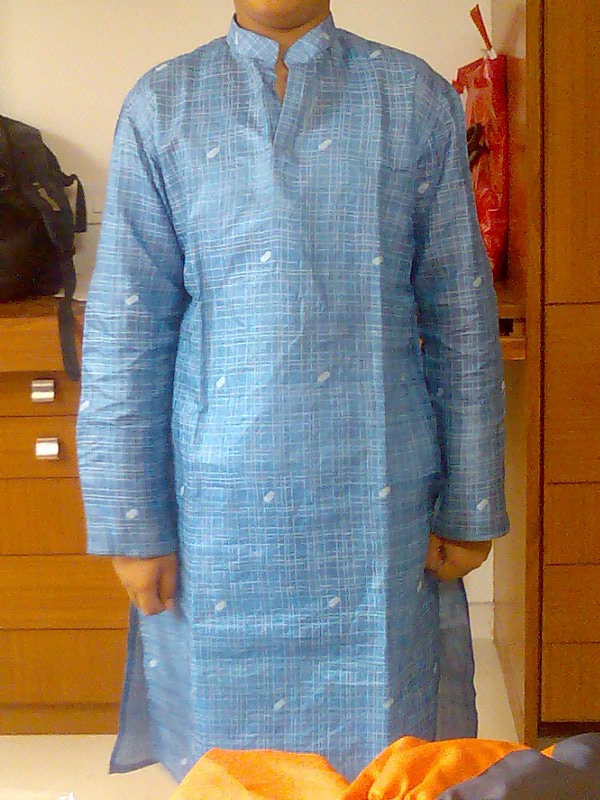
Khadi (pronounced [kʰaːdiː], Khādī), derived from khaddar,[1][2][3] is a hand-spun and woven natural fibre cloth promoted by Gandhi as swadeshi (of homeland) for the freedom struggle of India and the term is used throughout the Indian subcontinent.[4][5] The first piece of the hand-woven cloth was made in the Sabarmati Ashram of Gandhi during 1917–18. The coarseness of the cloth led Gandhi to call it khadi.[6] The cloth is made from cotton, but it may also include silk or wool, which are all spun into yarn on a charkha. It is a versatile fabric that remains cool in summer and warm in winter. To improve its appearance, khadi is sometimes starched to give it a stiffer feel.[7]
Origin
[edit]Greco-Roman merchants imported finer cotton in large quantities to the Roman Empire. In medieval times, cotton textiles were imported to Rome through the maritime Silk Road. Arabian-Surat merchants traded cotton textiles to Basra and Baghdad from three areas of Gujarat, the Coromandel Coast and the East Coast of India. To the east, trade reached China via Java. 14th-century Moroccan traveler Ibn Battuta mentioned Delhi sultan Muhammad bin Tughluq sending five varieties of cloth to the Yuan emperor in China.[8] Some of the textiles are stored in repositories of the Victoria and Albert Museum, London.[9]


After the First Indian War of Independence in 1857, domestic textile production by mill or traditional methods declined to its lowest levels before khadi emerged as a "silent economic revolution" as an outcome of a long and laborious evolutionary process.[10]
The American Civil War (1861–1865) caused a raw cotton crisis in Cottonopolis Britain. Substitute Indian cotton at was sourced at cheap prices as the British sought to supplement raw materials to Manchester-Lancashire area textile mills. During Victorian era (1837–1901), 47 mills existed in the 1870s but Indians still bought clothes at an artificially inflated price, since the colonial government exported the raw materials for cloth to British fabric mills, then re-imported the finished cloth to India.[11][better source needed][12] In the Edwardian era (1901–1914) the Swadeshi movement of boycotting foreign cloth remained prominent.[13] During the first two decades of the 20th century it was backed by nationalist politicians and Indian mill owners.
In 1922, Mahatma Gandhi requested the Indian National Congress (INC) to start a khadi department. In 1924, due to a large amount of work, a semi-independent body All India Khadi Board (AIKB) was formed which liaisoned with the INC's khadi department at the provincial and district levels. During his tenure as President of the Indian National Congress from December 1924 to April 1925, Mahatma Gandhi organized the first Swadeshi Exhibition with Khadi and Village Industries (Gramodyog) exhibits at the Belgaum Congress Session from December 26 to 27, 1924. The exhibition featured khadi, spinning wheels, and village crafts, highlighting the vision of economic self-reliance. It formed a key part of Gandhi’s constructive programme against British colonial rule.[14] In 1925, the All India Spinner Association (AISA) was formed comprising the khadi department and AIKB. Mahatma Gandhi was the founder of AISA. He made it obligatory for all members of the INC to spin cotton themselves and pay their dues in yarn. Gandhi collected large sums of money to create grassroots-level khadi institutions to encourage spinning and weaving which were certified by AISA.[citation needed] Handspun yarn was expensive and of poor quality, and weavers preferred yarn produced by mills because it was more robust and consistent in quality. Gandhi argued that the mill owners would deny handloom weavers an opportunity to buy yarn because they would prefer to create a monopoly for their own cloth.[15] When some people complained about the costliness of khadi to Gandhi, he only wore dhoti, though he used wool shawls when it got cold. Some were able to make a reasonable living by using high-quality mill yarn and catering to the luxury market. Gandhi tried to put an end to this practice by threatening to give up khadi altogether, but since the weavers would have starved if they listened to him, they ignored the threat.[16] In 1919, Gandhi started spinning at Mani Bhawan Mumbai and encouraging others to do so. He invented Patti Charkha, using a double-wheel design to increase speed and control while reducing size. In 1946, when huge funds were being spent on development for more productive charkhas, he recommended takli over charkha.[17]
The khadi movement began in 1918 and was marked with its own changing dynamics. Initially, a clear emphasis could be seen on using khadi as an economic solution due to stagnation, from 1934 onwards the fabric became something that villagers could use for themselves.[18]
In 1921, Gandhi went to Chandina Upazila in Comilla, Bangladesh, to inspire local weavers and consequently in the greater Comilla region, weaving centers were developed in Mainamati, Muradnagar, Gauripur and Chandina.[19]
Khadi in post-independence India
[edit]In 1948, India recognized the role of rural cottage industries in its Industrial Policy Resolution. In 1948, Shri Ekambernathan invented amber charkha. The All India Khadi & Village Industries Board (AIKVIB) was set up in January 1953 by the Government of India. In 1955 it was decided that a statutory body, the Khadi and Village Industries Commission (KVIC), should replace the Board and the KVIC Act was passed in 1956, which brought the KVIC into existence as a statutory organisation the following year.[20]
After Independence, the government reserved some types of textile production, such as towel manufacturing for the handloom sector, which resulted in a deskilling of traditional weavers and a boost for the power loom sector. Private sector enterprises have been able to make handloom weaving somewhat remunerative and the government also continues to promote the use of Khadi through various initiatives.[16][21]
Prime Minister Narendra Modi during Khadi Utsav (27 Aug 2022), said "Khadi was ignored after Independence due to which weavers in the country suffered"[22] and asserted that khadi is a movement to help the poor, and further claimed that the KVIC is a statutory organisation engaged in promoting and developing khadi and village industries.[23]
Muslin (khadi) in Bangladesh
[edit]The Pakistan government saw khadi as emblematic of the ideology of Congress that had led the non-cooperation movement, so khadi organisations like the Noakhali Ambika Kalinganga Charitable (NAKC) Trust, started on Gandhi's visit in 1946, were discouraged. Pakistan prime minister Firoz Khan Noon (1957–58), who remained Governor of East Pakistan (1950-1953) was liberal towards khadi and established The Khadi and Cottage Industry Association in 1952. Sheikh Mujibur Rahman's historic 7 March speech of Bangabandhu refueled the momentum to produce khadi. A sudden wave of demand persisted in Bangladesh for many years after the country's independence from Pakistan in 1971. In 1975, some years after the independence of Bangladesh, the NAKC trust was reformed and renamed the Gandhi Ashram Trust.[24]
Muslin was registered under Bangladesh as its geographical indication in 2020.[25]
The soft or refined khadi is known as muslin khadi. Researchers have tried to replicate muslin and identified phuti carpas as the variety from the DNA of cotton and from motifs used in making muslin sarees from Victoria & Albert Museum London of 1710 collection with 350 muslin sarees.[26]
Trademark
[edit]The KVIC holds the exclusive rights to use the trademarks khadi and Khadi India. The National Internet Exchange of India Domain Dispute Policy Arbitration Tribunal in New Delhi rejected a private entity's claim that khadi is a generic word.[27][28][29] In 2017, KVIC and the government of India fought a case[30] at the EUIPO against a German company that had trademarked the word. While KVIC obtained the latest trademark registration in Bhutan on 9 July 2021; trademark registration was granted in UAE on 28 June 2021, and the organisation registered the trademark in Mexico in December 2020.[31]
Legacy
[edit]The KVIC enrolled 2624 functional Khadi institutions[32] in India where decentralized units of Kshetriya Shri Gandhi Ashram in Uttar Pradesh and Uttarakhand, Zila Khadi Gramodyog Sangh[33] in Bihar and Jharkhand, Sarvodaya Sangh[34] in Tamilnadu have survived as the oldest operational Khadi organisations.[35]
See also
[edit]References
[edit]- ^ "Khadi, Khāḍi, Khādi: 10 definitions". wisdomlib.org. 3 August 2014. Retrieved 26 October 2020.
- ^ wplly (19 April 2019). "The Origin of Khadi Fabric | Historical Story of Khadi". Khadi Cotton. Archived from the original on 7 November 2020. Retrieved 26 October 2020.
- ^ "Khadi | Definition of Khadi by Oxford Dictionary on Lexico.com also meaning of Khadi". Lexico Dictionaries | English. Archived from the original on 29 October 2020. Retrieved 26 October 2020.
- ^ "The Fascinating History of the Fabric That Became a Symbol of India's Freedom Struggle". The Better India. 12 April 2017. Retrieved 8 August 2017.
- ^ "Freedom@70: How Khadi is getting a new spin", The Economic Times, 13 August 2017.
- ^ Gonsalves, Peter (April 2015). "Clothing Choices in Gandhi's Swadeshi Movement". Gandhi Marg. 37 (1).
- ^ "Khadi". getcopaycom.ipage.com. Archived from the original on 27 July 2020. Retrieved 27 July 2020.
- ^ Islam, Khademul. "Our Story of Dhaka Muslin". Aramco World. Retrieved 1 June 2016.
- ^ "Collections Search: Khadi". Victoria and Albert Museum.
- ^ The Story of Silent Economic Revolution. Bombay: Khadi & Village Industries Commission. 1958. OCLC 1174022.
- ^ Black, Carolyn (2003). Pakistan: The People. Crabtree Publishing Company. p. 8. ISBN 978-0-7787-9347-2.
- ^ Mahesh, Aggarwal R. C. /Bhatnagar (27 July 2005). Constitutional Development & National Movement in India. S. Chand Publishing. ISBN 9788121905657.
- ^ "Historical background of Khadi". chandrakantalrks.org. Archived from the original on 22 October 2017. Retrieved 8 August 2017.
- ^ "THE 1924 BELGAUM CONGRESS SESSION". Retrieved 4 August 2025.
- ^ Sinha, Sangita. "The Story Of Khadi, India's Signature Fabric". Culture Trip. Retrieved 8 August 2017.
- ^ a b "Saturday Dressing: Kerala govt staff opt for khadi". Business Standard. Press Trust of India. 6 January 2007. Retrieved 20 March 2016.
- ^ Shepard, Mark (27 July 2016). "Charkha Master A Meeting with Narayan Desai".
- ^ Gandhi, M.K (1955). Gandhiji on Khadi (PDF). Navajivan Publishing House.
- ^ "The story of Khadi". Star LifeStyle. Dhaka: The Daily Star. 13 December 2011. Retrieved 14 January 2014.
- ^ Parekh, Geetanjali (2010). History of Khadi. NBT National Book Trust. pp. 38–39. ISBN 978-8123760421. Retrieved 24 March 2017.
- ^ "Mann Ki Baat: PM Modi urges India to embrace Gandhi's legacy 'Khadi'". Zee News. 1 February 2016. Retrieved 10 June 2016.
- ^ @PTI_News (27 August 2022). "Khadi was ignored after Independence due to which weavers in the country suffered: PM Modi. PTI KA PD KRK" (Tweet) – via Twitter.
- ^ "PM Modi in Mann Ki Baat: Khadi not a cloth, but a movement to help the poor". Business Standard. 24 September 2017. Retrieved 6 April 2018.
- ^ Bhuiyan, Mohammed. "Fashion output on Khadi in Bangladesh : A Review". Research Gate. Retrieved 1 December 2017.
- ^ Kalam, Abdul. "GI recognition Muslin belongs to Bangladesh". Good Day Bangladesh. Retrieved 1 January 2021.
- ^ "Muslin Khadi". West Bengal Khadi & Village Industries Board (WBKVIB). 29 October 2018.
- ^ "Tribunal bars unauthorised use of Khadi brand name". Indiaretailing.com. 21 May 2021. Archived from the original on 23 May 2021. Retrieved 23 May 2021.
- ^ "'Khadi', 'Khadi India' not generic names, rules tribunal". The Hindu. 20 May 2021. ISSN 0971-751X. Retrieved 23 May 2021.
- ^ "KVIC: Court bars individuals/cos from using 'Khadi' brand name without authorisation". www.millenniumpost.in. 20 May 2021. Retrieved 23 May 2021.
- ^ Shairwal, Sakshar Law Associates-Sakshi (22 June 2021). "Khadi v Khadi - Khadi's Plight in the EUIPO". Lexology. Retrieved 15 August 2022.
- ^ "KVIC Secures Trademark Registrations in Bhutan, UAE & Mexico; Files Applications in 40 Countries to Protect Brand "Khadi"". Orissa Diary.
- ^ "Khadi Institutions Profiles". KVIC. Retrieved 11 July 2022.
- ^ Prasad, Anirudh (September 2003). "Industrial Decentralization-A Case Study of Khadi and Village Industries in Jharkhand". Jharkhand Journal of Development and Management Studies. 1 (4): 511. Retrieved 12 July 2022.
- ^ "A Study on Operational Efficiency of Sarvodaya Sanghs in Virudhunagar District" (PDF). Madurai Kamraj University. pp. 2–3. Retrieved 12 July 2022.
- ^ "Report on Re-categorisation of Khadi Institutions Revised Framework and Analysis" (PDF). KVIC. p. 2. Archived from the original (PDF) on 7 March 2023. Retrieved 12 July 2022.
External links
[edit]- Khadi Culture: Fabrics from the roots of a nation!
- India's Khādī Culture
- Khadi and Village Industries Commission (Government of India), official website
- Gul Ahmed's Khadi Collection – Explore a range of Khadi fabrics from Gul Ahmed.
- More about Khadi
Khadi
View on GrokipediaKhadi, also known as khaddar, is a hand-spun and hand-woven fabric made from natural fibers such as cotton, silk, or wool, originating from the Indian subcontinent.[1][2] The production process involves spinning yarn on a charkha (spinning wheel) or takli (spindle) and weaving it by hand on traditional looms, resulting in a textured, breathable cloth that supports rural artisanal labor.[3][4] Promoted by Mahatma Gandhi during the Swadeshi movement in the early 20th century, khadi symbolized economic self-reliance and resistance to British colonial imports of machine-made textiles, aiming to revive indigenous industries and provide employment to millions in villages.[5][6] This initiative not only fostered national unity through the act of spinning—embodied in Gandhi's advocacy of the charkha—but also laid the foundation for khadi as a tool for sustainable development and rural empowerment post-independence.[3][7] In contemporary contexts, khadi continues to represent eco-friendly practices due to its low mechanization and local sourcing, though it faces challenges in scaling production while maintaining artisanal quality.[5]
Definition and Characteristics
Etymology and Basic Definition
Khadi is a hand-spun and hand-woven cloth produced from natural fibers, primarily cotton, though variations include silk, wool, or mixtures of these materials. This artisanal textile is distinguished by its production method, requiring yarn to be spun on a charkha (spinning wheel) and woven on a handloom, ensuring an irregular texture and breathability inherent to manual processes.[8][9] The fabric's coarseness arises from the uneven hand-spinning, contrasting with uniform mill-produced textiles, and it typically features a plain weave structure.[10] The term "khadi" originates from the Hindi word "khaddar," which refers to coarse, handspun and handwoven cotton fabric traditionally used in India, Pakistan, and Bangladesh. This etymology reflects the cloth's historical association with vernacular handcraft traditions predating industrialized textile production. While ancient Sanskrit references to "khāḍi" denote cotton cloth more broadly, the modern usage emphasizes the hand-labor-intensive process revived in the early 20th century.[11][12][13]Material Properties and Production Methods
Khadi consists of hand-spun and hand-woven fabric derived from natural fibers such as cotton, silk, or wool, with cotton being the predominant material.[8] The yarns are exclusively produced by spinning on a traditional device called the charkha, a wooden spinning wheel operated manually.[8] This handcrafting imparts a distinctive irregular weave and coarser texture compared to machine-made textiles.[14] Key material properties include high breathability, enabling the fabric to remain cool during summers and provide warmth in winters due to its natural fiber composition.[8] Khadi cotton exhibits strong moisture absorption, retaining up to 20% of its weight in water without becoming clammy, which enhances wearer comfort in humid conditions.[15] The fabric is hypoallergenic, resistant to causing skin irritations, and tends to soften and improve in appearance with successive washes, reflecting its durability and resilience.[16][8] These attributes stem from the absence of synthetic additives and the retention of natural fiber characteristics during minimal mechanical processing.[17] Production commences with raw cotton processing: ginning separates fibers from seeds, followed by blowing to remove impurities, carding to align fibers, drawing to create slivers, and roving to prepare for spinning.[18] Spinning occurs on the charkha, where fibers are twisted into yarn by hand, ensuring variability in thickness and strength inherent to artisanal methods.[19] The yarn is then dyed, often with natural extracts, before weaving on a handloom, where warp and weft threads are interlaced at right angles to form the cloth.[20][21] This labor-intensive process, reliant on manual tools without electricity, results in a low environmental impact, consuming approximately 3 liters of water per meter of fabric produced.[22]Historical Development
Pre-Modern Origins in India
Hand-spun and hand-woven cotton cloth, the precursor to modern khadi, originated in the Indian subcontinent during the Indus Valley Civilization (c. 3300–1300 BCE). Archaeological excavations at sites like Mohenjo-Daro and Harappa have uncovered terracotta spindle whorls, loom weights, and impressions of woven fabrics on pottery, indicating widespread use of drop spindles for spinning cotton fibers into yarn and simple frame or pit looms for weaving.[23] These tools and artifacts demonstrate that cotton processing was a sophisticated, labor-intensive craft integrated into urban economies, with evidence of both coarse and finer textiles produced locally from domesticated Gossypium arboreum.[24] Cotton domestication in the region traces to the Neolithic site of Mehrgarh in present-day Pakistan, around 5000 BCE, where charred cotton seeds and early thread fragments provide the oldest archaeobotanical evidence of cultivation and rudimentary spinning in South Asia.[25] By the mature Harappan phase (c. 2600–1900 BCE), cotton had become a staple fiber, supplemented occasionally by wool and flax, with production likely decentralized among households and specialized artisans.[26] This hand-processing method persisted through the Vedic period (c. 1500–500 BCE), as referenced in texts like the Rigveda, where cotton fabrics (karpasa) are described as everyday wear for laborers and warriors, spun by women using takli spindles.[27] In medieval India (c. 500–1500 CE), hand-spinning and weaving remained the dominant textile techniques, yielding coarse khaddar-like cloth for rural populations while finer variants supported extensive trade along the Silk Road and maritime routes to Rome and the Arab world.[28] Economic treatises such as Kautilya's Arthashastra (c. 300 BCE) detail state oversight of cotton ginning, spinning guilds, and loom operations, underscoring the fabric's role in pre-modern agrarian economies where it was produced from locally grown short-staple cotton without mechanical aids.[23] This artisanal process, reliant on manual takli or early charkha precursors, characterized khadi's pre-industrial essence until the advent of powered machinery disrupted traditional methods.[29]Revival During the Swadeshi Movement (1905–1911)
The Swadeshi Movement emerged in 1905 as a nationalist response to the British announcement of Bengal's partition on July 19, 1905, aimed at dividing the province along religious lines to weaken anti-colonial sentiment. On August 7, 1905, a large gathering at Calcutta's Town Hall passed a resolution pledging boycott of British goods, marking the formal launch of the campaign for economic self-reliance.[30] This initiative, led by figures such as Surendranath Banerjee among moderates and Bipin Chandra Pal and Aurobindo Ghosh among extremists, extended beyond politics to revive indigenous industries devastated by British textile imports, which had reduced India's share of global cotton textile exports from 25% in 1800 to under 2% by 1900.[30][31] A core focus was the rejection of Manchester cloth, symbolizing colonial economic dominance, with organized bonfires of foreign textiles beginning on October 16, 1905—the effective partition date—and continuing in cities like Calcutta and Dhaka. Participants pledged to wear only swadeshi cloth, initially prioritizing output from Indian mills in Bombay and Ahmedabad, which saw production surges; for instance, Bombay mill cloth consumption in Bengal rose from 1905 levels amid the boycott. However, the movement also spurred revival of traditional handloom weaving to support rural artisans, as mill cloth alone could not meet demand, leading to campaigns encouraging home spinning and local cooperatives.[31][30] Khadi, or hand-spun and hand-woven cotton fabric, gained early prominence as an accessible alternative, promoted through swadeshi societies that trained women and villagers in spinning to counter the decline of household charkha (spinning wheels) use, which had dropped sharply under colonial competition. Leaders like Pal emphasized khadi's role in fostering self-sufficiency, with affluent Bengalis donating funds and land to establish khadi production units and gramodyog (village industry) initiatives, producing coarse but durable cloth for everyday wear like dhotis and saris. By 1906–1907, such efforts had disseminated spinning techniques in educational institutions and national schools set up during the movement, though output remained limited—estimated at thousands of yards annually in Bengal hubs—due to lack of widespread mechanization or standardization.[31][30] The movement's repressive suppression by British authorities from 1908, including arrests of over 1,000 nationalists and bans on swadeshi associations, curtailed khadi's momentum by 1911, when the partition was annulled on December 12 amid sustained protests. Nonetheless, this period laid groundwork for khadi's symbolic association with resistance, demonstrating causal links between boycott economics and artisan revival, as handloom employment in affected regions temporarily increased before reverting under mill competition.[30][31]Gandhi's Promotion and Institutionalization (1917–1947)
Mahatma Gandhi initiated the systematic promotion of khadi in 1917–1918 at his Sabarmati Ashram, where the first pieces of hand-woven cloth were produced, emphasizing its role in fostering self-reliance among villagers.[31] By 1918, he integrated khadi into broader swadeshi efforts as a relief program for impoverished rural populations, advocating hand-spinning and weaving to counter economic dependence on British imports. Gandhi personally adopted khadi attire, reducing his clothing to a loincloth and shawl by 1921, symbolizing simplicity and commitment to the cause.[32] Gandhi's advocacy gained momentum during the Non-Cooperation Movement (1920–1922), where he urged widespread adoption of the charkha spinning wheel, linking khadi production to moral and economic regeneration.[33] In 1919, he specifically encouraged women to spin yarn, leading to the establishment of khadi-only shops and training centers in ashrams.[34] This period saw khadi evolve from a practical fabric to a tool for mass mobilization, with Gandhi arguing that decentralized production could achieve swaraj by empowering millions through cottage industry.[35] To institutionalize khadi production, Gandhi founded the All India Khadi Board in 1923, followed by the All India Spinners' Association (AISA) in 1925, headquartered initially in Adampur after his visit to local weavers.[36][37] AISA focused on organizing decentralized spinning and weaving networks, propagating techniques in rural areas, standardizing production, and marketing khadi to ensure economic viability for artisans.[38] The association emphasized village-level self-sufficiency, training spinners, and distributing charkhas, which by the 1930s supported thousands of rural workers and integrated khadi into Congress party activities.[31] Through the 1930s and into World War II, Gandhi sustained khadi's prominence via campaigns like the 1930 Salt March, where participants wore khadi, and the 1942 Quit India Movement, reinforcing its status as a nationalist emblem.[7] By 1947, AISA had established a nationwide infrastructure for khadi, transitioning it from symbolic protest to a structured industry that employed over 100,000 spinners and weavers, laying groundwork for post-independence policies.[33] Gandhi's insistence on khadi's purity—hand-spun and hand-woven without machinery—preserved its ideological core, though production challenges persisted due to quality inconsistencies and market competition.[35]Role in India's Independence Struggle
Symbolism of Self-Reliance and Boycott of British Goods
Khadi embodied self-reliance by promoting the revival of hand-spinning and hand-weaving in Indian villages, enabling economic independence from British-manufactured textiles that dominated the market through colonial policies favoring imports.[31] Mahatma Gandhi positioned khadi as the "fabric of Indian independence," arguing that widespread adoption of this cloth would dismantle the economic foundations of British rule by reducing demand for foreign goods.[31] This symbolism extended beyond material use, representing a moral and constructive program where individuals contributed to national self-sufficiency through daily acts like spinning on the charkha.[31] The boycott of British goods, intensified through khadi's promotion, formed a core element of Gandhi's strategy during the Non-Cooperation Movement, launched on August 1, 1920, following the Congress special session in Calcutta.[39] Gandhi urged the rejection of imported cloth, including public bonfires of foreign textiles, to protest British economic exploitation and foster swadeshi production.[39] By July 1921, the movement's focus sharpened on exclusive khadi use, with Gandhi declaring that mill cloth alone could not sustain the boycott, necessitating hand-spun alternatives.[40] This approach aimed to empower rural populations, as spinning provided accessible employment and symbolized decentralized economic control.[31] Khadi's adoption as boycott attire unified diverse social classes, from peasants to nationalists, in visible defiance against colonial imports, which had previously captured over 60% of India's cloth market by the early 20th century.[41] Gandhi's personal example—spinning daily and wearing only khadi—reinforced its status as a uniform of resistance, linking individual austerity to collective political action.[31] The initiative's success was evident in declining British textile exports to India, with imports dropping significantly during the movement's peak, though exact figures varied by region due to uneven enforcement.[42] Critics within the nationalist fold, including some favoring industrial mills, questioned khadi's scalability, yet Gandhi maintained its primacy for moral self-reliance over mere economic substitution.[31] By institutionalizing khadi through organizations like the All India Spinners' Association in 1925, the symbolism endured, embedding self-reliance as a foundational ethic in the independence narrative.[41]Economic Mobilization Through Spinning and Weaving
Mahatma Gandhi promoted spinning and weaving khadi as a decentralized economic activity to supplement agricultural income in rural India, arguing that it would provide employment during idle periods and foster self-sufficiency by reducing reliance on imported mill cloth.[35] He viewed hand-spinning as a subsidiary industry capable of absorbing surplus rural labor, particularly among women and the landless, thereby addressing underemployment in villages where agriculture alone could not sustain populations.[43] In September 1925, Gandhi established the All India Spinners' Association (AISA) to systematize khadi production, standardize wages for spinners, and distribute charkhas (spinning wheels) to villages, transforming individual efforts into a coordinated economic network.[43] By the mid-1930s, the AISA supported operations across over 53,000 villages, employing around 220,000 spinners and 20,000 weavers, which generated supplementary earnings and stimulated local markets for raw cotton and finished cloth.[44] This mobilization contributed to economic boycott of British goods, as increased khadi output—facilitated by widespread adoption of spinning—diminished demand for Lancashire textiles and retained wealth within Indian villages through decentralized production.[31] Spinners received fixed wages per hank of yarn, often yielding modest but steady income, with Gandhi emphasizing quality control and efficiency to make khadi competitive, though production costs remained higher than machine-made alternatives.[45] The program empowered rural artisans by integrating them into a national constructive effort, though its scale was limited by challenges like irregular supply chains and varying skill levels among participants.[43]Criticisms Within the Nationalist Movement
Within the Indian nationalist movement, prominent figures expressed reservations about khadi's centrality to the independence struggle, often prioritizing economic modernization, cultural diversity, or political pragmatism over Gandhi's emphasis on decentralized hand-spinning and weaving as a path to self-reliance. Jawaharlal Nehru, a key Congress leader, articulated skepticism regarding khadi's efficacy in achieving broader freedom, stating in correspondence that he did not see how it would lead to political liberation, viewing Gandhi's approach as more critical of modern industry than constructive for national progress.[46] Nehru supported khadi symbolically during campaigns like Non-Cooperation but advocated for large-scale industrialization to drive economic development, contrasting Gandhi's village-centric model which he saw as insufficient for India's future needs.[46] Sarojini Naidu, a leading Congress activist and poet who participated in satyagraha and civil disobedience, resisted adopting plain khadi, preferring richly woven Indian silks and saris to maintain feminine aesthetics and preserve the subcontinent's diverse textile heritage.[47] Naidu argued that an exclusive focus on coarse khadi risked marginalizing generational handloom traditions beyond cotton spinning, potentially impoverishing cultural expression within the movement; she viewed Gandhi's uniform khadi mandate as overly ascetic and unrepresentative of India's vibrant weaving practices.[48] Her stance highlighted tensions between khadi's symbolic boycott of British mill cloth and the nationalist imperative to celebrate indigenous variety, as evidenced by her continued use of luxurious handlooms during the 1920s and 1930s.[47] Subhas Chandra Bose, who served as Congress president in 1938–1939, harbored doubts about khadi's practical utility despite initial involvement in swadeshi sales, favoring state-led heavy industry and urbanization over cottage-based production to build economic strength for confrontation with British rule.[49] Bose's Forward Bloc and later Indian National Army emphasized mechanized self-sufficiency, critiquing khadi's labor-intensive methods as inadequate for rapid mobilization against imperialism.[50] This divergence contributed to his 1939 resignation from Congress leadership, underscoring a factional split where pro-change elements prioritized legislative engagement over constructive programs like charkha spinning.[43] Rabindranath Tagore, whose nationalist writings inspired early swadeshi sentiments, opposed the "cult of the charkha" in the early 1920s, decrying its economic romanticism as a distraction from scientific advancement and global integration.[43] Tagore's critique, rooted in modernist ideals, warned that overemphasizing khadi could hinder India's technological progress, even as he endorsed boycott principles during the 1905 Bengal partition protests.[43] Similarly, the Swaraj Party faction within Congress, active post-1922 after Gandhi's Non-Cooperation suspension, largely ignored khadi mandates such as the 1924 spinning franchise requiring daily wheel use for party membership, tolerating it only to appease Gandhi rather than embracing its decentralized ethos.[43] Gandhi himself lamented this reluctance in 1944, noting the party's acceptance was grudging and personal rather than ideological.[43] These internal critiques reflected broader debates in the 1920s–1930s over whether khadi's moral symbolism outweighed its inefficiencies compared to mill production, with detractors arguing it diverted resources from urban industrialization essential for military and economic sovereignty.[43] Muhammad Ali Jinnah, a former Congress member until 1920, rejected khadi-wearing and non-cooperation tactics, appearing in Western attire and opposing the 1920–1922 movement's economic boycott as futile against entrenched colonial structures.[51] Despite such voices, khadi retained prominence in Congress resolutions, though implementation often faltered amid these modernist and pragmatic challenges.[43]Post-Independence Evolution in India
Establishment of Khadi and Village Industries Commission (KVIC)
The Khadi and Village Industries Commission (KVIC) was established as a statutory body through the Khadi and Village Industries Commission Act, 1956, enacted by the Parliament of India on September 25, 1956, to coordinate and promote the development of khadi and village industries nationwide.[52] The legislation extended to the entirety of India except Jammu and Kashmir at the time and empowered the central government to constitute the Commission with a chairman, vice-chairman, and members nominated for expertise in relevant fields, aiming to organize production, supply raw materials, and market khadi products while generating rural employment.[53] KVIC became operational in April 1957, succeeding and absorbing the functions of the All-India Khadi and Village Industries Board, which had been formed earlier in the post-independence period to institutionalize khadi promotion beyond the freedom struggle.[54] This merger centralized oversight under the Ministry of Micro, Small and Medium Enterprises (formerly Industry), with headquarters established in Mumbai to facilitate planning, financing, and technical assistance for decentralized village-based industries like hand-spinning, hand-weaving, and allied crafts such as pottery and beekeeping.[55] The Commission's foundational mandate emphasized non-mechanized production to preserve traditional skills and counterbalance urban industrialization, reflecting a policy commitment to equitable rural economic growth amid India's Five-Year Plans, though implementation faced challenges from limited initial funding and coordination with state-level boards.[56] By its inception, KVIC inherited networks from pre-independence khadi organizations, enabling it to certify authentic khadi and regulate village industries through defined standards, such as manual processes using charkha wheels for yarn production.[53]Policy Shifts and Subsidies from 1950s to 2010s
Following the establishment of the Khadi and Village Industries Commission (KVIC) in 1957 under the Khadi and Village Industries Commission Act of 1956, the Indian government prioritized Khadi as a tool for rural employment and self-reliance, aligning with the industrial policies of 1948 and 1956 that identified it as a key opportunity for decentralized production.[57] During the initial Five-Year Plans from the 1950s onward, subsidies and grants supported KVIC's functions, including raw material supply, training, and marketing, with allocations integrated into broader rural development outlays to generate non-farm jobs in villages.[58] In the 1970s, policy emphasis shifted toward financial incentives with the introduction of the Interest Subsidy Eligibility Certification (ISEC) scheme in 1977, providing Khadi institutions with loans at a subsidized 4% interest rate to encourage expansion and credit access, marking a move from direct grants to indirect support mechanisms.[57] The KVIC Act was amended in 1987 to strengthen regulatory oversight, expanding KVIC's role in certifying institutions and coordinating village industries, though this reinforced its monopoly on production and distribution standards.[57] From the 1990s to the 2010s, government expenditures on Khadi rose significantly—plan outlays from ₹194.27 crore in 1994 to ₹1,962.97 crore by 2015, alongside non-plan funds and interest subsidies increasing from ₹9.63 crore to ₹31.45 crore—yet production, sales, and employment stagnated or declined due to over-regulation, entry barriers for new institutions, and inefficiencies like middlemen capturing subsidies.[57] A key shift occurred in 2009–2010 when the traditional rebate scheme, offering direct price subsidies to consumers, was replaced by the Market Development Assistance (MDA) program to boost sales promotion, with MDA allocations jumping from ₹81.22 crore (1957–2010 cumulative) to higher levels post-2011.[57] By 2011, market-linked pricing was introduced via KVIC circulars, allowing institutions flexibility beyond cost-plus models, though adoption remained limited amid persistent low artisan wages (e.g., ₹100–125 per day for spinners and weavers) and fund misutilization highlighted in audits.[57] These reforms aimed to address criticisms of KVIC's monopolistic control stifling innovation, but the sector's growth lagged behind machine-made textiles, reflecting broader tensions between Gandhian ideals and modern economic liberalization.[57]Recent Growth and Modernization (2020–2025)
During the fiscal year 2020–21, the Khadi and Village Industries Commission (KVIC) reported a turnover of Rs 95,741.74 crore, marking an increase from Rs 88,887 crore in the previous year, driven by heightened demand for indigenous products amid the COVID-19 pandemic.[59] This growth continued, with KVIC achieving sales of Rs 1.55 lakh crore in FY 2023–24, reflecting a 400% rise in sales and 314.79% increase in production compared to earlier benchmarks under government promotion of self-reliance initiatives.[60] By FY 2024–25, turnover reached a record Rs 1.7 lakh crore, attributed to expanded rural employment and market outreach efforts.[61] [62] Product diversification contributed significantly to this expansion, particularly in ready-made Khadi garments, whose sales surged 561% from Rs 1,081.04 crore to Rs 7,145.61 crore between FYs 2020–21 and 2024–25, signaling a shift from traditional fabric sales to value-added apparel.[62] Annual Khadi production stabilized at 125.22 million meters, supported by KVIC's allocation of funds for new looms and charkhas to enhance artisan output without mechanization.[63] In FY 2024–25, KVIC disbursed Rs 215 crore under the Modified Market Development Assistance scheme to 1,110 Khadi institutions, aiding marketing and distribution improvements.[64] Modernization efforts emphasized digital integration and branding to appeal to younger consumers and global markets. KVIC promoted e-marketing and social media campaigns, enhancing online visibility and sales through platforms tailored for Khadi products.[65] The "Make the World Wear Khadi" initiative, launched in early 2025, sought to position Khadi in international fashion by blending traditional weaving with contemporary designs, targeting eco-conscious buyers.[66] These steps, aligned with national campaigns like Vocal for Local, focused on sustainable branding rather than full mechanization, preserving Khadi's handcrafted ethos while boosting rural incomes.[67]Economic Analysis
Employment Generation and Rural Impact
Khadi and village industries, overseen by the Khadi and Village Industries Commission (KVIC), primarily generate employment through decentralized, labor-intensive production processes that emphasize hand-spinning and hand-weaving in rural settings. In the financial year 2023-24, KVIC reported creating 10.17 lakh new jobs, predominantly in rural areas, contributing to a cumulative employment base of 1.87 crore individuals across khadi and allied village industries.[68][69] By FY 2024-25, this figure rose to 1.94 crore, reflecting a 49.23% increase from 1.30 crore in FY 2013-14, with the sector's structure favoring self-employment and artisanal work over urban factory models.[70][71] The rural impact stems from KVIC's mandate to foster non-farm livelihoods in villages, reducing dependence on agriculture and curbing urban migration. Programs target sectors like weaving, pottery, and food processing, where khadi production clusters provide year-round income opportunities, particularly for women and marginalized groups in underdeveloped regions.[72] For instance, in districts like Wardha, Maharashtra, KVIC initiatives have improved income levels and socio-economic conditions by integrating local artisans into supply chains, though scalability remains constrained by market demand and skill levels.[73] Official data indicate that over 80% of employment occurs in rural non-agricultural activities, supporting household economies without requiring large capital investments.[56] Despite these gains, the employment model's effectiveness is debated due to reliance on subsidies and variable productivity; while it sustains millions in low-skill roles, per-worker output lags behind mechanized textiles, potentially limiting broader rural industrialization. KVIC's focus on inclusive growth has nonetheless stabilized village economies, with recent expansions tying job creation to sales growth exceeding 400% over the past decade.[68][74]Cost Efficiency Versus Machine-Produced Cloth
Khadi production incurs higher unit costs than machine-produced cloth due to its reliance on manual spinning and weaving processes, which demand significantly more labor time and skill per meter of fabric compared to automated spinning mills and power looms. Hand-spinning yarn on a charkha, for instance, yields output rates of approximately 1-2 grams per minute, whereas ring spinning machines achieve rates exceeding 100 grams per minute, amplifying labor expenses that constitute the majority of khadi's production overhead. [75] [76] Empirical price data reflects this disparity: as of 2023, retail prices for plain khadi cotton fabric ranged from ₹140 to ₹260 per meter, while equivalent machine-made cotton fabrics were available at ₹50 to ₹130 per meter, underscoring khadi's intrinsic cost inefficiency absent external support. [77] [78] [79] Government interventions via the Khadi and Village Industries Commission (KVIC) partially offset these costs through production rebates, raw material subsidies, and marketing assistance, enabling khadi to achieve market viability despite lacking the economies of scale inherent in mechanized textile mills. For example, KVIC's rebate schemes, which covered up to 20-30% of sales value in recent years, have sustained khadi's production volume at around 400-500 million square meters annually, but evaluations indicate that such supports elevate the effective delivery cost of the program relative to unsubsidized industrial alternatives. Without these measures, khadi's higher marginal costs—driven by lower productivity and fragmented rural operations—would render it uncompetitive for mass consumption, as machine-produced cloth benefits from continuous production lines and bulk raw material procurement that reduce per-unit expenses by 30-50% or more in composite mills. [80] Proponents of khadi emphasize non-monetary efficiencies, such as lower energy consumption (97.6 MJ/kg for khadi versus 170.5 MJ/kg for mill cloth), which could yield long-term savings in resource-intensive economies, though these do not translate to immediate cost advantages given labor's dominance in khadi's expense structure. [81] Critics, including economic analysts, contend that prioritizing khadi over mechanized production perpetuates inefficiencies, as subsidies divert resources from scalable industries capable of lower-cost output without compromising quality through technological advancements like automated looms. [82] This tension highlights khadi's role as a policy-driven initiative for decentralized employment rather than a purely efficient manufacturing model.Environmental and Sustainability Claims
Khadi production is frequently touted for its reduced environmental footprint relative to industrialized textile manufacturing, primarily due to reliance on manual spinning and weaving that eschews electricity-intensive machinery. A comprehensive life-cycle assessment (LCA) of khadi-handloom fabrics in rural India, conducted using GaBi software, determined an embodied energy of 97.6 MJ/kg for khadi, compared to 170.5 MJ/kg for mill-woven cotton and 147 MJ/kg for conventional cotton processing.[83] This disparity arises from hand processes, which emit lower greenhouse gases during fabrication; the same study reported a global warming potential of approximately 3.9 kg CO₂-equivalent per kg in the use phase for khadi, with manufacturing stages showing cleaner profiles than mechanized alternatives due to avoided fossil fuel dependency.[83] Water consumption claims emphasize khadi's efficiency in processing, with proponents asserting that one meter of fabric requires just 3 liters versus 55 liters for mill-made equivalents, attributing this to minimal mechanical dyeing and finishing needs.[84] [5] However, full LCA data indicate that upstream cotton cultivation dominates resource use at 750 L/kg across handloom and mill methods, while the garment's use phase—encompassing 40 washes—adds 3370 L/kg, underscoring that end-user habits, not production alone, drive total impacts.[83] Decentralized, small-scale operations may further mitigate transport emissions, though some analyses question offsets from localized distribution and packaging.[84] Sustainability advocates highlight khadi's avoidance of chemical-intensive industrialization, promoting it as biodegradable and supportive of organic farming integration, though empirical verification remains limited beyond the cited LCA.[85] No large-scale peer-reviewed studies contradict these manufacturing-stage advantages, but broader textile LCAs note that cotton's inherent demands—pesticides, irrigation—persist regardless of weaving method, tempering absolute eco-superiority claims.[86]Legal and Trademark Framework
KVIC's Monopoly and Certification Standards
The Khadi and Village Industries Commission (KVIC) holds statutory authority under the Khadi and Village Industries Commission Act, 1956, to exclusively certify khadi, creating a de facto monopoly on authenticating products as genuine khadi for regulatory, subsidy, and labeling purposes.[87] This framework empowers KVIC to regulate production, ensure compliance with traditional methods, and enforce the Khadi Mark Regulations, 2013, which authenticate cloth as khadi only if it meets the Act's criteria, thereby preventing unauthorized use of the term that could undermine rural employment objectives.[87] Khadi is statutorily defined in Section 2(d) of the 1956 Act as any cloth woven on handlooms in India from cotton, silk, or woolen yarn handspun in India, or from a mixture of such yarns, with spinning and weaving performed manually without power-driven machinery for those stages.[87] Certification standards, outlined in KVIC's quality assurance guidelines and aligned with Bureau of Indian Standards (BIS), mandate verification of hand processes, including charkha spinning and non-powered loom weaving, alongside quantitative metrics for yarn and fabric quality.[88]| Parameter Category | Key Standards | Measurement Details |
|---|---|---|
| Yarn Quality | Count variability (CV%), CSP (Count Strength Product), unevenness (U%), imperfections (neps, thick/thin places) | Per IS 1315:1977; e.g., cotton yarn CSP ≥ 2,000–2,500 depending on count[88] |
| Fabric Construction | Thread density (warp/weft per inch), mass (g/m²), breaking load | E.g., 40s count fabric: 60–80 threads/inch; mass 100–200 g/m²[88] |
| Processing | Defect limits, color fastness, fibre properties (fineness ±0.1 micronaire, maturity) | No visible defects like stains or slubs; fastness grades 3–4 per BIS tests[88] |
