Hubbry Logo
Al-Nabi Yusha'Al-Nabi Yusha'Main
Open search
Al-Nabi Yusha'
Community hub
Al-Nabi Yusha'
logo
8 pages, 0 posts
0 subscribers
Be the first to start a discussion here.
Al-Nabi Yusha'
Al-Nabi Yusha'
from Wikipedia

Al-Nabi Yusha' (Arabic: النبي يوشع) was a small Palestinian village in the Galilee situated 17 kilometers to the northeast of Safad, with an elevation of 375 meters above sea level. It became part of the Palestine Mandate under British control from 1923 until 1948, when it was depopulated during the 1948 Arab-Israeli War. The village was surrounded by forest land overlooking the Hula Valley.

Key Information

History

[edit]

During the late eighteenth century, a family known as al-Ghul built the religious complex and shrine known as the Maqam an-Nabi Yusha' (biblical Joshua), which included a mosque and a building for visitors, as an act of devotion. This family, also called the "servants of the shrine," numbered about fifty and were the first to settle the site. They cultivated the surrounding land, and the place subsequently evolved into a village.[5]

In 1851/1852 van de Velde noted the wali at Al-Nabi Yusha, with an old terebinth tree.[6]

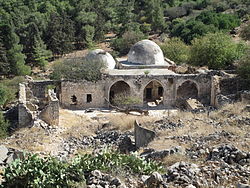
In 1875 Victor Guérin arrived at the Maqam (shrine) after walking up on a very steep and difficult path from the east. He described the shrine, dedicated by the local Muslims to Nabi Yusha', as a building surmounted with two small cupolas.[7][8]

In 1881, the PEF's Survey of Western Palestine (SWP) noted that the "Metawali" from nearby Qadas came to Al-Nabi Yusha' to venerate the name of Joshua.[9]

Pottery from Rachaya Al Foukhar have been found in the village.[10]

British Mandate era

[edit]

At the end of World War I it was under French control, and the 1920 boundary agreement between Britain and French placed it in Lebanon.[8] At the time of the census conducted by the French in 1921, the villagers were granted Lebanese citizenship.[11] However the Boundary Commission established by the 1920 agreement shifted the border, leaving the village in Palestine.[8] Transfer of control to the British authorities was not complete until 1924.[12]

During the Mandate period, the British built a police station in the village.[5] The people of al-Nabi Yusha', all of whom were Shia Muslims, held an annual mawsim (pilgrimage) and festival on the fifteenth of the month Sha'aban (the eighth month of the Islamic calendar). The mawsim was similar to that of the Nabi Rubin festival in southern coast of Palestine.[5]

View of Hula valley from al-Nabi Yusha' 1930s

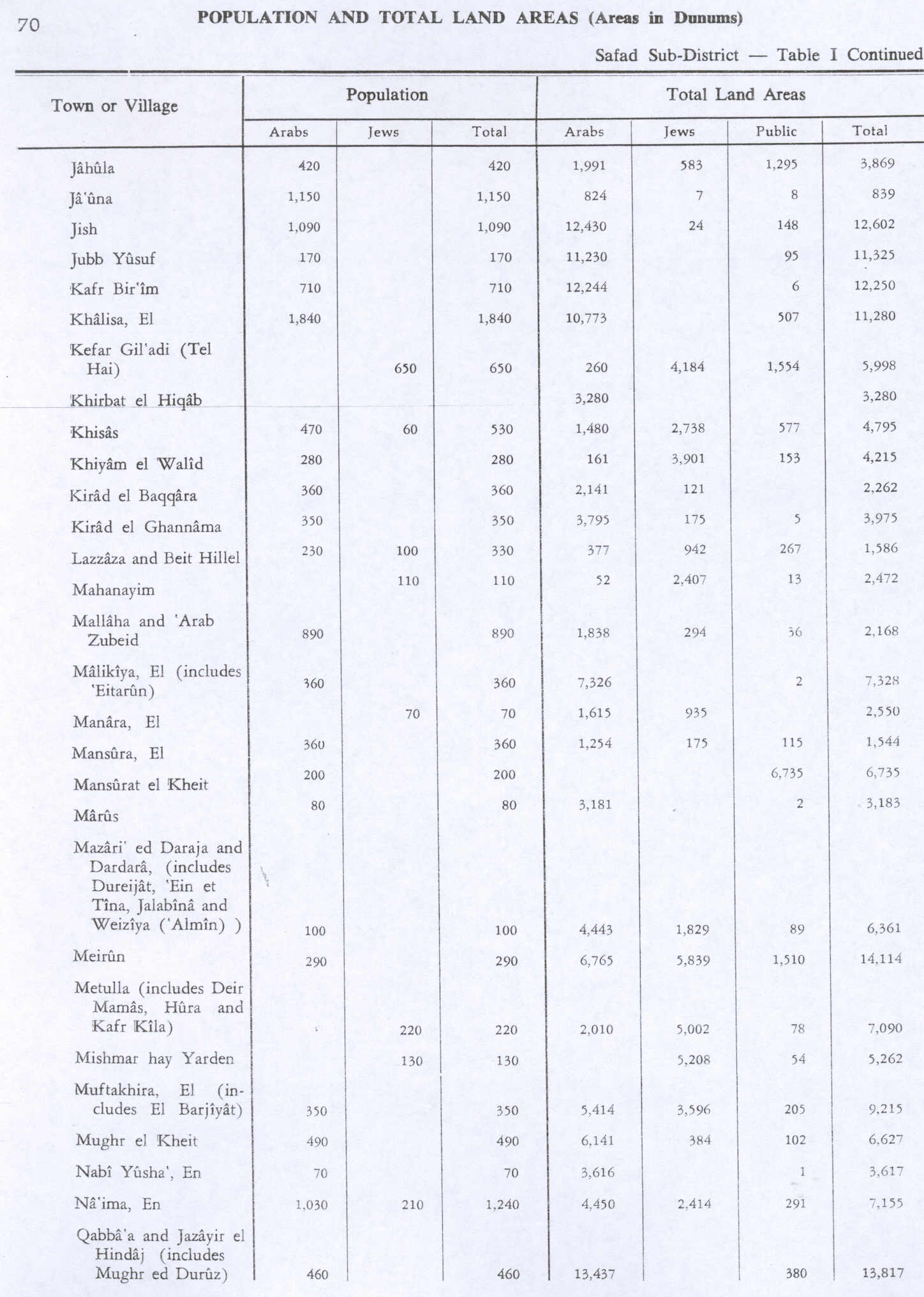
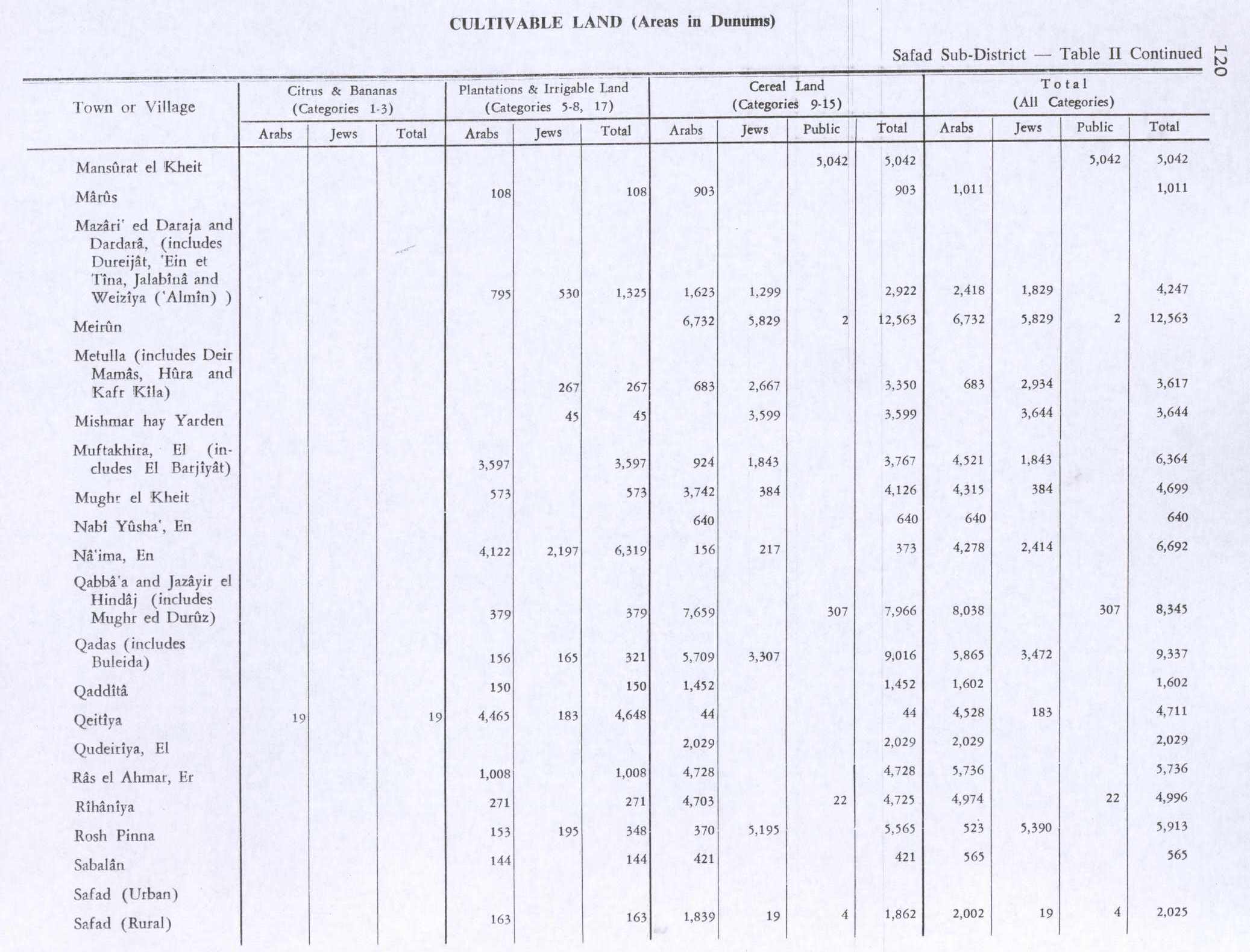
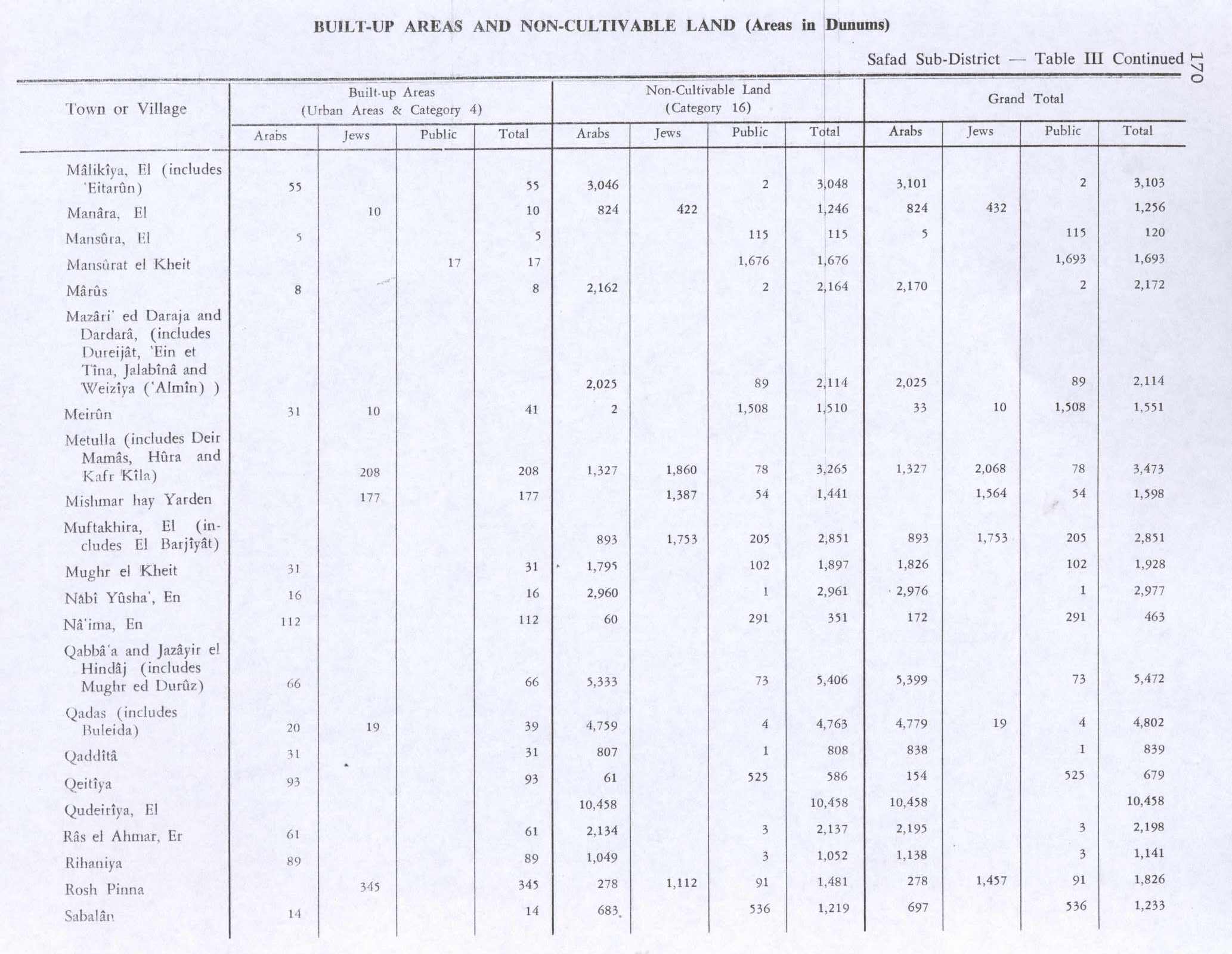
In the 1931 census of Palestine, the village was home to 52 residents that year (12 households),[13] growing to 70 in the 1945 statistics,[2][3] and 81 (18 households) by 1948 when it was depopulated. The village occupied an area of 3,617 dunams, all private except for a dunam of public property.[3] In 1944–45 the village had 640 dunams of land used for cereals,[5][14] while 16 dunams was built-up (urban) area.[15]

Al-Nabi Yusha'.1945. Survey of Palestine. Scale 1:250,000
Nabi Yusha 1948
Nebi Yusha police fortress, 1948

1948 war, and aftermath

[edit]

Al-Nabi Yusha' was depopulated on May 16, in the 1948 Arab-Israeli War during Operation Yiftach led by Israeli army officer Yigal Allon who later became a key Israeli figure. An early attempt to take the village by Haganah forces during the operation ended in the deaths of 22 Haganah fighters, who had their corpses reportedly decapitated by the Arab forces.[16]

Most of its residents ended up in refugee camps in Lebanon and Syria. In 1998, the descendants of al-Nabi Yusha' refugees were estimated at 499.[citation needed]

The Israeli moshav Ramot Naftali was established in 1945 south of the village, and since 1948 includes Al-Nabi Yusha' land. It is located close to the border between Al-Nabi Yusha' and the lands of Mallaha.[5][17]

The Palestinian historian Walid Khalidi described the village remains in 1992 as: "The site has been fenced in with barbed wire and is buried under rubble, making access difficult. However, some evidence of the village remains: fragments of houses, tombs in the village's cemetery, and the shrine of al-Nabi Yusha'. The two domes and arched entrance of the main part of the shrine are still intact, but the thick stone walls of the rooms attached to it are broken and the entire complex of buildings is neglected; weeds sprouts from the roof. The village site is surrounded by fig trees and cactuses. The flat lands around the site are planted by Israeli farmers with apple trees, while the sloping parts are wooded or used as pasture."[18]

The Nabi Yusha shrine

[edit]

The shrine was surveyed by the British School of Archaeology in 1994, who described it as rectangular structure formed around a courtyard, aligned north-south, which was entered through a gateway on the north end. The principal rooms were at the south end of the courtyard, with two major domed chambers, of which the west chamber was found to be the oldest in the whole shrine complex.[19]

Alternative traditional sites for the Prophet's tomb are situated in Turkey (the shrine on Joshua's Hill, Istanbul), Jordan (An-Nabi Yusha' bin Noon, a Sunni shrine near the city of Al-Salt[20][21]) and Iraq (the Nabi Yusha' shrine of Baghdad[20]).

See also

[edit]

References

[edit]

Bibliography

[edit]
[edit]
Revisions and contributorsEdit on WikipediaRead on Wikipedia
from Grokipedia
Al-Nabi Yusha' (: النبي يوشع) was a small Muslim Arab village in the of , centered on a maqam () traditionally venerated as the tomb of , the biblical . The site, located about 17 kilometers northeast of at an elevation of 375 meters overlooking the , attracted Muslim pilgrims who identified it with the prophet's burial place despite Jewish traditions placing Joshua's tomb in near . The village's , primarily from the al-Ghul , numbered around 30-40 families in the early , sustaining itself through and on terraced hillsides. The existing structure was constructed in the late , though the location's sanctity predates it, with 19th-century European explorers noting its picturesque setting and ongoing veneration. In May 1948, during Operation Yiftach in the Arab-Israeli War, Israeli forces captured the village, leading to its depopulation; subsequent destruction razed most buildings, leaving the maqam as the primary remnant amid military use of the area. The site's identification as Joshua's tomb remains a point of religious divergence, with Islamic tradition affirming it while biblical accounts and archaeological evidence support alternative locations in central , underscoring the evolution of sacred geography through local lore rather than verifiable historical records.

Geography and Setting

Location and Topography

Al-Nabi Yusha' was situated in the , approximately 17 kilometers northeast of (Tzfat) and near the Lebanese border. The village occupied a position at an elevation of 375 meters above sea level. The topography features steeply sloping hills along the Naftali Ridge, adjacent to the bed of a small , with the site overlooking the Plain to the east and south. This elevated, rugged terrain contributed to its strategic oversight of surrounding valleys and approach roads.

Pre-1948 Demographics and Economy

Al-Nabi Yusha' was a predominantly Muslim village with a small that grew modestly during the British Mandate period. The 1931 census recorded 52 inhabitants living in 12 households, all Muslims. By 1945, according to Village Statistics prepared by the Mandate's Department of Lands and Government Office of Statistics, the population had increased to 70, remaining entirely Muslim with no recorded Jewish or Christian residents. The local economy centered on , with residents deriving their primary livelihood from farming on village lands totaling 3,617 dunums, nearly all (3,616 dunums) privately owned by . In 1944/45, 640 dunums were cultivated with cereals, reflecting the limited arable area amid predominantly non-arable terrain; included 16 dunums for built-up areas and the remainder as uncultivable. No significant non-agricultural economic activities, such as or industry, are documented for the village prior to 1948.

Historical Development

Origins and Early Settlement

Al-Nabi Yusha' was founded in the late eighteenth century by the al-Ghul family, who constructed the Maqam an-Nabi Yusha' shrine as a devotional site dedicated to the prophet Yusha' (biblical Joshua). The complex included a mosque and facilities for pilgrims, forming the nucleus of the settlement on steep terrain overlooking the Hula Valley. The founding families migrated from Mais al-Jabal, a village in , establishing initial households estimated at three extended families around 1750. Early residents were exclusively Shiite , designated as Metawali in regional accounts, indicative of their sectarian identity and cross-border affinities with Lebanese Shia communities. The settlement developed modestly during the Ottoman period, with agriculture—primarily grain cultivation and herding—sustaining a small population on the Naftali ridge. By the , Ottoman surveys recorded the village's presence, though it remained sparsely populated, with no evidence of prior continuous habitation predating the shrine's establishment. The site's religious significance drew periodic pilgrims, particularly for the annual festival on the fifteenth of , fostering limited economic activity beyond subsistence.

Ottoman Era and British Mandate

During the Ottoman period, Al-Nabi Yusha' existed as a small Shi'i Muslim village in the , situated along the ridge overlooking the and near the strategic route from Safad to . The settlement's origins trace to the mid-18th century, when families from the nearby Lebanese village of Mays al-Jabal established residence there, drawn by the site's religious significance tied to the Maqam an-Nabi Yusha' . Residents primarily engaged in on terraced lands, cultivating grains and olives amid the rugged terrain, with the village falling under the administrative qada of Safad. The served as a focal point for local , reflecting the area's enduring of the figure identified as the biblical in Islamic tradition. Following the Ottoman Empire's defeat in World War I, the village's status shifted under the post-war mandates. The 1923 Paulet-Newcombe Agreement between Britain and France demarcated the northern border, transferring Al-Nabi Yusha'—along with six other predominantly Shi'i villages—from the French Mandate of Greater Lebanon to British Mandatory Palestine, formalizing British control by 1924. This placed the village in a sensitive frontier zone, enhancing its strategic value for border security. The British administration constructed a fortified police station in Al-Nabi Yusha' during the 1936–1939 Arab Revolt, positioning it as a key outpost to monitor cross-border movements and suppress unrest along the Lebanon-Palestine frontier. The Mandate-era population remained exclusively Muslim and Shi'i, sustaining traditions like the annual mawsim festival on the 15th of , which drew pilgrims to the for prayers and communal gatherings. Land ownership totaled approximately 3,617 dunums, predominantly Arab-held, supporting modest agrarian livelihoods with limited economic diversification. The police fort's presence underscored the site's , yet the village maintained relative stability until the escalating tensions of the late 1940s, when British forces evacuated the station on April 15, 1948.

Events of the 1948 Arab-Israeli War

Strategic Importance and Pre-War Context

Al-Nabi Yusha' occupied a commanding position on the Naftali Ridge at approximately 400 meters above sea level, overlooking the to the east and south, which provided natural vantage points for monitoring agricultural lands, water routes, and potential infiltration paths from . This , combined with its placement along the historic mountain road connecting to the northern border, rendered the site critical for controlling access between settlements and Lebanese territory, facilitating or blocking military logistics in a region prone to cross-border raids. The British Mandate authorities recognized this leverage by constructing a fortified —known as a —in 1938 near the village during the 1936–1939 , as part of a network designed to suppress rebel activities, secure supply convoys, and protect Jewish communities in the from ambushes along vulnerable highland passes. The fort, equipped with defensive walls, watchtowers, and , dominated intersecting roads leading to kibbutzim such as Manara and , thereby serving as a bulwark against irregular forces that had disrupted Mandate control over northern frontiers. During , it further contributed to border security against potential Axis incursions via , underscoring its enduring role in regional defense infrastructure. In the escalating violence following the November 1947 UN Partition Plan, the fort became a flashpoint amid the phase of the 1948 conflict, with forces launching four assaults on the village and station between April and early May to preempt Arab consolidation. British withdrawal from the site on 15 April 1948 enabled units and local militias to occupy it, positioning irregular fighters to interdict Israeli convoys and support advances into the area from Syrian and Lebanese bases, thereby heightening its value as a staging point for pan-Arab operations. This pre-invasion jockeying reflected broader Mandate-era frictions, where the fort's capture was essential for either side to dominate Galilee's northern approaches before the May 1948 Arab state invasions.

Key Military Engagements

Israeli forces launched repeated assaults on the Al-Nabi Yusha' police fort, known as Metzudat Koach, in and May 1948 to gain control of strategic heights overlooking the and approaches to . After British forces evacuated the site on 15 , it was occupied by irregular Arab fighters, including units from the . The initial attack occurred on 15 April, involving platoons from the and , but ended in failure due to strong defenses and detection of the assault force. A more determined assault on 20 April, conducted by elements of the Third Battalion attacking from multiple directions , inflicted casualties on the defenders but suffered heavy losses itself, with at least 22 Israeli soldiers killed and the fort remaining in Arab hands. As part of Operation Yiftach, launched to clear Arab forces from , a final push by the Yiftach Brigade's Third Battalion on the night of 16–17 May targeted the fort amid broader advances following Israel's . Supported by Israeli air operations including runs from two planes, the attack prompted the Arab garrison to abandon the position, allowing Israeli forces to occupy it without close-quarters fighting. The village adjacent to the fort was depopulated around the same time, with residents fleeing amid the offensive. Across these engagements, 28 Israeli soldiers lost their lives, highlighting the fort's defensive strength and tactical importance.

Capture, Depopulation, and Immediate Aftermath

The police fortress at Al-Nabi Yusha', a strategic British Mandate outpost overlooking the , was targeted multiple times by forces of the as part of Operation Yiftach, launched on April 28, 1948, to secure eastern and isolate . After two failed assaults in early May amid heavy (ALA) resistance, a third attack commenced at dawn on May 16, 1948, involving infantry assaults, a 24-hour , and demolition charges to breach fortifications reinforced with barbed wire. The fortress fell to Israeli forces by May 17, with units overcoming ALA defenders who had commandeered the site after British evacuation on April 15. The adjacent village of Al-Nabi Yusha', home to approximately 80 Shiite residents primarily engaged in , was not directly assaulted but depopulated in the immediate wake of the fortress conquest. Residents abandoned the site amid the ongoing military operations, with no documented combat within the village proper or evidence of systematic expulsion orders; flight appears attributable to the proximity of intense fighting and collapse of ALA control in the area. This pattern aligned with broader dynamics in Operation Yiftach, where conquest of key positions prompted voluntary evacuations in peripheral settlements, though Israeli directives emphasized holding captured terrain while discouraging returns. In the aftermath, the fortress—renamed Metzudat Koach—was fortified as an Israeli outpost to guard against Lebanese incursions and secure supply routes, with 28 fighters killed during the campaign commemorated there. The village structures were left in ruins, later overgrown and partially dismantled, while the surrounding lands transitioned to Israeli agricultural and use, contributing to the consolidation of Jewish territorial continuity in . No immediate refugee absorption or efforts were recorded for Al-Nabi Yusha' inhabitants, who dispersed northward, reflecting the war's displacement of smaller communities.

The Nabi Yusha' Shrine

Religious and Cultural Significance

The Maqam an-Nabi Yusha' is revered in Islamic tradition as the tomb of the prophet Yusha' bin Nun, the successor to Musa who led the Bani Isra'il into the Promised Land after the Exodus, conquering cities such as Jericho and apportioning territory among the tribes. This attribution, though one of several competing sites for the prophet's burial across the region, positioned the shrine as a focal point of local Muslim devotion in the Galilee, where it drew veneration despite discrepancies with biblical accounts placing Joshua's grave at Timnath-Serah in Samaria. Culturally, the shrine anchored the religious life of al-Nabi Yusha''s exclusively Muslim population, serving as the site for an annual mawsim—a and festival—held on the 15th of , the eighth month of the Islamic . This event, comparable to festivals at other Palestinian prophetic shrines like Nabi Rubin, involved communal prayers, gatherings, and festivities that reinforced social and spiritual ties among villagers and regional participants prior to the village's depopulation in 1948. The mawsim highlighted the shrine's role in perpetuating prophetic narratives and within the Shi'i-influenced Muslim community of the area.

Construction and Architectural Features

The Maqam an-Nabi Yusha' shrine complex was constructed in the late eighteenth century by the al-Ghul family, who established it as an act of religious devotion including a mosque and accommodations for visitors. The core structure comprises a rectangular layout organized around a north-south aligned courtyard, accessible via a gateway at the northern end. Principal chambers are situated at the courtyard's southern extremity, featuring two prominent domed rooms, with the western dome identified as the oldest surviving element of the complex based on a architectural survey. Surrounding the courtyard are additional ruined auxiliary buildings, indicative of phased expansions during the Ottoman era. Later Ottoman-period modifications included the addition of a riwaq () and a , likely in the nineteenth century, enhancing the site's function as a mosque-shrine ensemble. The design reflects typical regional Islamic architectural elements, such as domed mausolea over revered sites, though specific materials like stone on foundations underscore adaptive construction to the hilly terrain.

Post-1948 Condition and Preservation Efforts

After the capture of Al-Nabi Yusha' by Israeli forces during Operation Yiftah on May 20, 1948, the village was depopulated, and the Maqam an-Nabi Yusha' shrine was abandoned, leading to its deterioration over subsequent decades. The structure, originally constructed in the late by the al-Ghul clan, transitioned from active religious use to neglect amid the site's militarization and the absence of local Muslim custodians. The persists in a partial ruinous state, with remnants of its dome, , and surrounding walls visible but degraded, including preserved wall heights of approximately 1.0–1.1 meters constructed from fieldstones, hewn stones, and ashlars coated in . No systematic restoration as a religious has occurred, reflecting the site's integration into Israeli security zones rather than priorities for Islamic sites post-1948. Observations indicate the need for significant renovation to prevent further decay, though Palestinian advocacy groups document its survival as evidence of enduring heritage amid depopulation. In June 2014, the Israel Antiquities Authority undertook a salvage excavation—the first at the site—uncovering architectural features consistent with the shrine's Ottoman-era construction, directed amid routine archaeological oversight rather than dedicated preservation initiatives. This effort focused on documentation and limited recovery of artifacts, prioritizing scientific recording over structural rehabilitation, with no subsequent major interventions reported. The absence of ongoing funding or international involvement underscores a lack of formalized preservation, contrasting with treatments of pre-Islamic sites in the region.

Post-War Legacy and Current Status

Israeli Utilization and Security Role

The Nabi Yusha police fort, captured by Israeli forces on May 17, 1948, during Operation Yiftach, was repurposed as a key outpost in Israel's northern border defense network due to its elevated position overlooking the and proximity to , approximately 1 kilometer from the international border. The structure, renamed Metzudat Koach to honor the 28 Jewish fighters killed in its defense, continues to serve operational purposes for the , which conducts patrols and surveillance from the site to counter cross-border threats, including infiltration attempts and smuggling. Its security significance persists amid ongoing tensions with , which has claimed the site as part of disputed Lebanese territory seized in , using it as a pretext for attacks. Israeli forces have reinforced the area's infrastructure, with IDF engineering units constructing secure access roads and barriers since October 2023 to facilitate rapid troop movements and civilian evacuations under rocket fire from , where launched over 10,000 projectiles targeting northern Israel by early 2024. The site also functions logistically for , designated as a designated meeting point for IDF soldiers and their families during rotations in the northern command, underscoring its integration into active defense operations rather than solely historical preservation. While memorials and a at Metzudat Koach commemorate the battles, operational use by border units ensures the fort's role in deterring incursions, with no evidence of demilitarization despite preservation efforts by Israeli authorities.

Demographic and Land Changes

Prior to the 1948 Arab-Israeli War, al-Nabi Yusha' was a small Palestinian village with a recorded population of 70 residents in 1945, increasing to approximately 81 by early 1948, consisting primarily of Muslim families engaged in agriculture. The village occupied about 3,617 dunams of land, of which 640 dunams were arable and used for cereal cultivation, 16 dunams for built-up areas, and the remainder largely non-arable terrain. The village was captured by Israeli forces on May 16-17, 1948, during military operations in the , leading to the flight or expulsion of its inhabitants and complete depopulation. No Palestinian population has returned to the site since, resulting in a demographic shift from an exclusively village to an uninhabited area under Israeli sovereignty. Surrounding regions saw the establishment or expansion of Jewish settlements, with pre-existing communities like Ramot Naftali utilizing portions of the village's lands for even before 1948. Post-war, the lands were repurposed primarily for Jewish agricultural and forestry purposes, aligning with broader Israeli state policies of and development in border areas. Organizations such as the contributed to efforts over former village sites in the vicinity, including al-Nabi Yusha', transforming arable and non-arable areas into wooded reserves while enhancing strategic depth near the Lebanese border. Today, the village remnants, including the shrine, lie fenced and in rubble amid restricted access zones, with no civilian settlement directly on the original site but integration into regional councils administering Jewish-populated moshavim and kibbutzim. This reflects causal patterns of military security needs driving land reallocation, prioritizing defense and cultivation over prior demographic continuity.

Ongoing Claims and Commemorations

Descendants of the approximately 70-80 residents displaced from al-Nabi Yusha' during Operation Yiftach on 16-17 May 1948 number in excess of 500 as of 2018 and assert claims to the village lands as part of the Palestinian demand for under UN Resolution 194. These claims emphasize restitution of property lost in the 1948 war, though implementation remains contested amid Israeli sovereignty over the site since 1948. The village's displacement is preserved in oral histories and Nakba documentation, with families such as the al-Ghul clan—original settlers around 250 years prior—recounting traditions tied to the Nabi Yusha' shrine and annual pre-1948 mawsim festivals on 15 . Specific commemorative events for al-Nabi Yusha' are not prominently recorded, unlike larger Nakba observances, but the site's inclusion in narratives of depopulated villages sustains collective memory among refugees, often in Lebanon-based communities. Israeli memorials at the former police fort (Metzudat Koach) focus instead on the 1948 battle's casualties, highlighting divergent historical interpretations of the events.

References

Add your contribution
Related Hubs
User Avatar
No comments yet.