Hubbry Logo
OrichalcumOrichalcumMain
Open search
Orichalcum
Community hub
Orichalcum
logo
8 pages, 0 posts
0 subscribers
Be the first to start a discussion here.
Orichalcum
Orichalcum
from Wikipedia

Orichalcum
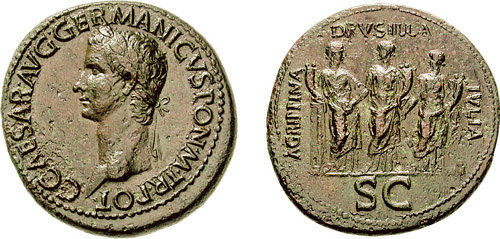
A bronze sestertius coin from the time of Caligula
Material typeMetal

Orichalcum (or aurichalcum) /ˌɔːrɪˈkælkəm/ or orichalc /ˌɔːrɪˈkælk/ is a metal mentioned in several ancient writings, including the story of Atlantis in the Critias of Plato. Within the dialogue, Critias (460–403 BC) says that orichalcum had been considered second only to gold in value and had been found and mined in many parts of Atlantis in ancient times, but that by Critias's own time, orichalcum was known only by name.[1]

Orichalcum may have been the name for some noble metal, such as platinum,[2] as it was supposed to be mined, but has been identified as pure copper or certain alloys of bronze, and especially brass alloys[3] in the case of antique Roman coins, the latter being of "similar appearance to modern brass" according to scientific research.[4]

Overview

[edit]

The name is derived from the Greek ὀρείχαλκος, oreikhalkos (from ὄρος, oros, mountain and χαλκός, chalkos, copper), literally meaning "mountain copper".[5]

The Romans transliterated "orichalcum" as "aurichalcum", which was thought to mean literally "gold copper". It is known from the writings of Cicero that the metal which they called orichalcum resembled gold in color but had a much lower value.[6] In Virgil's Aeneid, the breastplate of Turnus is described as "stiff with gold and white orichalc".[citation needed]

Orichalcum has been vaguely identified by ancient Greek authors to be either a gold–copper alloy, a form of pure copper or a copper ore or various chemicals based on copper, but also copper–tin and copper–zinc alloys, or a metal or metallic alloy supposedly no longer known.[citation needed]

In later years "orichalcum" was used to describe the sulfide mineral chalcopyrite and also to describe brass. These usages are difficult to reconcile with the claims of Plato's Critias, who states that the metal was "only a name" by his time,[1] while brass and chalcopyrite were very important in the time of Plato,[citation needed] as they still are today.[citation needed]

Joseph Needham notes that Bishop Richard Watson, an 18th-century professor of chemistry, wrote of an ancient idea that there were "two sorts of brass or orichalcum". Needham also suggests that the Greeks may not have known how orichalcum was made and that they might even have had an imitation of the original.[7]

Ingots found

[edit]
Orichalcum found at Gela, Sicily

In 2015, 39 orichalcum ingots were discovered in a sunken vessel on the coast of Gela in Sicily which have tentatively been dated at 2,100 years old. They were analyzed with X-ray fluorescence and found to be an alloy consisting of 75–80% copper, 15–20% zinc, and smaller percentages of nickel, lead, and iron.[8] Another cache of 47 ingots was recovered in February 2016 and found to have similar composition as measured with ICP-OES and ICP-MS: around 65–80% copper, 15–25% zinc, 4–7% lead, 0.5–1% nickel, and trace amounts of silver, antimony, arsenic, bismuth, and other elements.[9]

In ancient literature

[edit]

Orichalcum is first mentioned in the 7th century BC by Hesiod, and in the Homeric hymn dedicated to Aphrodite, dated to the 630s BC.[citation needed]

According to the Critias of Plato, the inner wall surrounding the citadel of Atlantis with the Temple of Poseidon "flashed with the red light of orichalcum". The interior walls, pillars, and floors of the temple were completely covered in orichalcum, and the roof was variegated with gold, silver, and orichalcum. In the center of the temple stood a pillar of orichalcum, on which the laws of Poseidon and records of the first son princes of Poseidon were inscribed.[10]

Pliny the Elder points out that orichalcum had lost currency due to the mines being exhausted. Pseudo-Aristotle in De mirabilibus auscultationibus (62) describes a type of copper that is "very shiny and white, not because there is tin mixed with it, but because some earth is combined and molten with it." This might be a reference to orichalcum obtained during the smelting of copper with the addition of "cadmia", a kind of earth formerly found on the shores of the Black Sea, which is attributed to be zinc oxide.[citation needed]

Numismatics

[edit]

In numismatics, the term "orichalcum" is used to refer exclusively to a type of brass alloy used for minting Roman as, sestertius, dupondius, and semis coins. It is considered more valuable than copper, of which the as coin was previously made.[3]

In media

[edit]
  • Orichalcum is featured in the video game series Kingdom Hearts. It serves as a rare material, found in hidden treasure chests or rewarded by defeating enemies, that can be used to craft more powerful items and weapons.

See also

[edit]

References

[edit]
[edit]
Revisions and contributorsEdit on WikipediaRead on Wikipedia
from Grokipedia
Orichalcum, derived from the Ancient Greek term oreichalkos meaning "mountain copper," refers to a legendary fusible metal described in classical antiquity as highly valuable and versatile. In Plato's dialogue Critias (c. 360 BCE), it is portrayed as a precious material second only to gold in worth, abundant in the mythical island of Atlantis where it was mined alongside other resources and used to coat architectural elements such as temple walls, pillars, floors, and a surrounding citadel wall, emitting a fiery red glow. The term appears in earlier Greek literature, including works by (c. 7th century BCE), suggesting its cultural significance predating Plato's account, though details on its composition remained ambiguous in ancient texts, with some authors like (1st century CE) describing it as a treated form of . Archaeological evidence has since identified orichalcum as an early primarily composed of (75-80%) and (15-20%), with trace elements like lead, , and iron, as confirmed by analysis of ingots recovered from a 5th-century BCE off , . In 2024–2025, recovery operations on this Gela II have yielded additional ingots and well-preserved ship remains, providing further insights into ancient networks. This 's reddish hue and luster align with Plato's vivid depictions, indicating it was a prized good in the ancient , valued for coinage, ornaments, and tools due to its corrosion resistance and workability. Later Roman sources continued to reference orichalcum in contexts, bridging mythical lore with practical .

Etymology and Terminology

Origins of the Name

The term orichalcum derives from the ὀρείχαλκος (oreíchalkos), a compound word formed from ὄρος (óros, "") and χαλκός (chalkós, "" or ""). This etymology literally translates to "mountain copper," evoking a metal sourced from mountainous regions or one with a fiery, lustrous quality reminiscent of ore extraction. The earliest attestations of oreíchalkos appear in archaic predating , specifically in the Homeric to (circa 630 BCE), where it describes ornamental earrings, and in Hesiod's (circa 700–650 BCE), referring to protective greaves. It gained prominence in 's dialogues Timaeus and (circa 360 BCE), linking the term to the legendary metal of , though without altering its core linguistic roots. In Latin, the word was transliterated as orichalcum but frequently adapted to aurichalcum, blending aurum ("") with the Greek root to highlight its perceived golden-copper resemblance, as noted by Roman naturalist in his . This evolution reflected interpretations of the metal as a prestigious akin to but more valuable. During the medieval and periods, orichalcum and aurichalcum influenced Latin alchemical literature, where they denoted rare, gold-like compounds sought for transmutation experiments, appearing in lexicons and treatises as symbols of ancient metallurgical knowledge.

Alternative Terms and Translations

In Latin texts, the term aurichalcum served as a direct equivalent to the Greek orichalcum, often denoting a valued with a golden hue. Roman author employed aurichalcum in his (Book 34, Chapter 2) to describe a prestigious metal historically used for coinage and ornaments, noting its high demand before the advent of more common alternatives like calamine brass. Biblical references to a precious copper-like material have been linked to orichalcum through translations. In Ezra 8:27 of the , the vessels described as "fine copper, precious as " (Hebrew: neḥoshet ṣeḥûbâ) are rendered in the as chalkoû stilbontos (shining copper), a term evoking orichalcum's composition and luster in some interpretations; the King James Version translates this as "fine ," reflecting an early interpretive alignment with brass alloys. In modern scholarship, orichalcum is predominantly identified as an ancient form of (a ), though earlier misconceptions occasionally equated it with (a natural ) due to shared golden appearances in descriptive accounts. Analyses of Roman orichalcum artifacts confirm content typically between 15-28%, distinguishing it from electrum and underscoring its role as a deliberate metallurgical rather than a naturally occurring .

References in Ancient Literature

Plato's Atlantis Account

In Plato's dialogues Timaeus and Critias, orichalcum is portrayed as a legendary metal central to the mythical island empire of Atlantis, introduced as part of a narrative recounted by Critias based on ancient Egyptian records heard by Solon. The substance is described as a naturally occurring resource mined abundantly from the earth in Atlantis, valued more highly than any other metal except gold, underscoring the island's unparalleled prosperity and access to rare materials. This positioning of orichalcum highlights its role in symbolizing the Atlanteans' advanced metallurgical capabilities and immense wealth, elements that Plato uses to contrast the lost civilization's splendor with its eventual moral decline. The detailed depiction appears primarily in Critias, where orichalcum adorns key architectural features of Atlantis's capital. The city's concentric structure features three walls: the outermost coated in on the exterior and tin on the interior, while the innermost wall surrounding the central is sheathed in orichalcum, which "flashed with the red light of orichalcum," evoking a fiery, radiant glow that enhanced the metropolis's majestic appearance. specifies: "The exterior of the wall, they covered with a coating of , and the interior with tin, and with the wall which surrounded the innermost circle they coated with orichalcum." Similarly, the grand temple of and Cleito at the heart of the city incorporates orichalcum extensively: its roof is crafted from inlaid with , silver, and orichalcum, while the walls, pillars, and floor are fully lined with the metal, further emphasizing its prestige in sacred and monumental construction. This account is framed within a chronological setting 9,000 years prior to Solon's visit to around 590 BCE, placing the events of Atlantis's rise and fall circa 9600 BCE, a timeline that situates the in a prehistoric of divine-human origins and cataclysmic destruction. Orichalcum's prominence in these descriptions serves not only as a literal element of Atlantean opulence but also as a symbolic emblem of the civilization's technological sophistication and hubristic excess, which ultimately leads to its submersion by divine intervention.

Mentions in Other Classical Texts

In the works of early Greek poets, orichalcum appears as a divine or semi-precious material in mythological contexts, predating its more famous mention in Plato's dialogues. It is mentioned in the Homeric Hymn to (c. 630 BCE), where the Hours place earrings of orichalcum in the goddess's ears. , in his poem The Shield of (7th century BCE), describes the greaves of as crafted from orichalcum, portraying it as a lustrous, heroic armor befitting a . The Roman poet Virgil employs orichalcum metaphorically in his epic Aeneid (1st century BCE), highlighting its gleaming, brass-like quality in descriptions of warfare. In Book 12, the breastplate of Turnus, the Rutulian king, is depicted as "stiff with gold and white orichalcum," evoking a radiant, fiery sheen that enhances the scene's dramatic intensity. Pliny the Elder provides one of the most detailed practical accounts in his Natural History (1st century CE), identifying orichalcum as a naturally occurring reddish-gold metal extracted from mines in Cyprus, valued for its color and durability but ultimately scarce due to depleted sources. He notes its resemblance to gold when alloyed, though it fell out of common use by his time.

Physical Characteristics and Composition

Descriptions in Ancient Sources

In ancient sources, orichalcum is consistently described as a lustrous, reddish metal that emitted a fiery glow, distinguishing it from common . , in his dialogue , portrays it as flashing with a "red light," evoking a flame-like appearance when used to sheath the innermost wall of Atlantis's citadel, and notes its integration with and silver in ornate temple decorations. This vivid coloration contributed to its high esteem, as it was said to surpass all other metals in beauty except . Plato further emphasizes orichalcum's perceived value, ranking it second only to in the Atlantean hierarchy, where it was abundantly mined from the island's earth and employed extensively for architectural and ceremonial purposes, including coating temple walls, pillars, floors, and even a central pillar inscribed with laws. Its utility in such applications suggests a material that was both solid and fusible, allowing for casting and overlay work on large-scale structures like statues and ornaments. Pliny the Elder, writing in Natural History, describes aurichalcum as a superior variety of , long in high request on account of its excellent quality for coinage such as sesterces, but notes that none has been found for a long time, the earth having been quite exhausted. This aligns with its rarity and links to origins in regions beyond the seas rich in metallic ores, consistent with the Greek etymology oreichalkos meaning "mountain ."

Modern Chemical Analyses

Modern chemical analyses have established orichalcum as a copper-zinc alloy, equivalent to brass, produced through the cementation process in antiquity. This method entailed heating copper sheets with zinc oxide or carbonate ores, such as calamine, in crucibles to diffuse zinc into the copper, yielding an alloy typically comprising 70-80% copper and 20-30% zinc. The resulting material exhibited a golden-yellow to reddish hue valued for its aesthetic and practical properties in ancient metallurgy. The 2015 recovery of ingots from a 6th-century BCE shipwreck near , , provided pivotal empirical data. Non-destructive () spectroscopy revealed compositions of 70-82% , 14-26% , and minor traces of lead (1-7%) and iron (less than 1%), aligning with early formulations and confirming the artifacts as orichalcum. These findings underscore the alloy's homogeneity and production consistency in the Mediterranean during the Classical period, with the lower zinc content contributing to the reddish glow described in ancient texts. Earlier hypotheses suggesting orichalcum as a high-copper ore or —a - —have been refuted, as analyses confirm the ingots as Cu-Zn alloys with no significant or . A archaeometric study of Roman coins from the Augustan era (post-23 BCE ) reinforced these conclusions, identifying similar alloys in orichalcum-denominated sestertii and dupondii. Advanced XRF and micro-XRD techniques on a cohort of coins showed Cu-Zn ratios of approximately 72-82% and 18-28% , linking the terminology directly to standardized Roman production via cementation.

Archaeological Evidence

Ingots from Sicilian Shipwreck

In 2015 and 2017, a team of underwater archaeologists led by the Superintendence of the Sea of the Region recovered a total of 86 ingots of orichalcum from a site off the coast of , , at a depth of about 3 meters. The wreck, known as Gela II, dates to the BCE, making it approximately 2,500 years old, and was part of ancient maritime trade networks in the Mediterranean. The ingots, cast in rectangular forms, measure between 15 and 40 cm in length and 2 to 6 cm in width, consistent with standardized cargo for transport. The recovery occurred during systematic dives in the Contrada Bulala area, near the ancient port of , a key hub for Greek and commerce. Archaeologists associate the vessel with Phoenician or Greek traders operating along routes connecting the western and , with the ingots likely originating from , a major center for and production in antiquity. This shipment underscores the extensive in high-value metals during the Classical period, where served as a distribution point for goods from the and Aegean regions. These ingots represent the earliest confirmed archaeological evidence of orichalcum, a copper-zinc alloy prized in ancient accounts for its golden sheen and durability. Their discovery validates references in classical literature, particularly Pliny the Elder's description in Natural History of orichalcum as a Cypriot import valued second only to gold, bridging textual descriptions with tangible artifacts from early metallurgical practices. The find highlights the technological sophistication of 5th-century BCE metalworking and the role of maritime commerce in disseminating such materials across the ancient world. In October 2024, recovery operations for the commenced, with the vessel—measuring about 15 meters long and 5 meters wide—being raised from the seabed for conservation and display at the Museo Archeologico Regionale in . Additional artifacts, including Corinthian helmets and , have been retrieved, offering further insights into Classical Greek ship using mortise-and-tenon and sewn-plank techniques. As of 2025, the project continues to reveal details of the ship's cargo and structure.

Other Historical Artifacts

Archaeological investigations in have revealed statues and tools from the BCE that exhibit notable content derived from local sulphide ores, leading to analyses identifying them as early forms of potentially akin to ancient descriptions of orichalcum. These artifacts, including figurines and implements from sites like Enkomi and Lapithos, demonstrate the unintentional alloying of with during processes, marking an early stage in Mediterranean . In the , residues from ancient mines at Rio Tinto have provided evidence of copper-zinc exploited since the , with compositions matching classical accounts of orichalcum as a fiery, reddish metal. Elemental analyses of and samples from these sites indicate natural enrichment in deposits, supporting the production of brass-like in pre-Roman times. Such findings suggest Rio Tinto served as a key source for zinc-bearing materials traded across the ancient world, paralleling the high-zinc ingots recovered from Sicilian shipwrecks in their alloy profile. Roman-era votive offerings unearthed in Italy, particularly from the 1st to 3rd centuries CE, include items with alloy compositions resembling orichalcum, characterized by significant copper-zinc ratios. Excavations at sanctuaries like San Casciano dei Bagni have yielded bronze and brass artifacts, such as figurines and ritual objects, deposited as dedications and analyzed to contain up to 20% zinc, consistent with Roman brass production techniques. These offerings highlight the ritual use of durable, golden-hued alloys in religious contexts across the empire. Recent excavations in eastern , , have uncovered ingots and objects linked to Hellenistic networks, with analyses confirming intentional addition in alloys dating to the late 1st millennium BCE. Sites associated with Urartian and subsequent Hellenistic periods, such as those near , have produced scale armor, bracelets, and tools with contents ranging from 10-25%, indicating advanced local that contributed to broader Mediterranean exchanges. These finds underscore 's role in the dissemination of technology during the Hellenistic era.

Historical Uses

In Numismatics and Coinage

Orichalcum, a -zinc prized for its golden hue and enhanced durability compared to pure or tin-, was prominently used in Roman coinage starting from the BCE. Following the monetary reform of in 23 BCE, it became the standard material for higher-value denominations such as the and , often referred to as orichalcum. This , typically containing 15-28% , provided a visually appealing brass-like appearance that mimicked while offering improved resistance to and wear during circulation. Prior to widespread Roman adoption, brass-like compositions resembling orichalcum appeared sporadically in Mediterranean coinage, including issues from Carthaginian and certain Greek city-states during the 4th to 2nd centuries BCE. Carthaginian Punic bronzes, analyzed via , revealed alloys with , tin, and notable zinc content (alongside traces of , iron, and ), suggesting early experimentation with zinc-enriched metals for durable . In the Hellenistic world, such alloys were rare. Economically, orichalcum served as a vital for denominations below silver, bridging the gap between low-value as and precious metals in the Mediterranean trade network. Its higher intrinsic value—nearly double that of reddish or due to the zinc alloying process—facilitated everyday transactions, bulk commerce, and military payments across Roman provinces, enhancing economic integration from to . This role underscored orichalcum's practicality in a bimetallic , where its golden sheen also deterred counterfeiting by elevating perceived worth. Analyses of sestertii have affirmed the alloy's consistent composition (approximately 78% and 22% on average) and its role in stabilizing Roman monetary output.

In Metallurgy and Ornamentation

In , orichalcum referred to a composed primarily of and , typically containing 15-28% , produced via the . This involved heating sheets or ingots with zinc-rich calamine ore ( silicate) and charcoal in crucibles at temperatures around 900-1000°C, allowing zinc vapors to alloy with the without melting the mixture. The resulting material exhibited a distinctive golden hue and improved malleability compared to pure , making it suitable for and forging. This production technique emerged in the late around 60 BCE and became widespread under , marking a significant advancement in non-ferrous that facilitated large-scale alloying for imperial needs. Beyond coinage, orichalcum's aesthetic appeal—its fire-like reddish-gold color and resistance to tarnishing—lent it to ornamental applications, particularly in military and personal adornments. It was commonly employed for fibulae (brooches), which served both functional and decorative purposes in fastening clothing and signaling status among soldiers and civilians. Archaeological analyses of Late Republican and Early Imperial sites reveal orichalcum fibulae with intricate designs, such as zoomorphic motifs, highlighting its role in everyday ornamentation. Orichalcum was also used for tools and implements due to its corrosion resistance and workability. In military contexts, orichalcum enhanced the visual prestige of equipment through decorative fittings, including mounts, belt buckles, and harness ornaments. For instance, excavations at sites like in the of Judaea have uncovered fittings on scabbards and armor plates, where the alloy's luster complemented iron components. This selective use in high-visibility elements underscored orichalcum's status as a premium material for Roman forces, often reserved for officers' gear during the 1st century BCE to 2nd century CE. Its corrosion resistance further ensured durability in field conditions, contributing to its adoption in ornamental metalwork across the empire.

References

Add your contribution
Related Hubs
User Avatar
No comments yet.