



Community hub
Recent from talks
Contribute something
Nothing was collected or created yet.
Odds ratio
View on Wikipedia | This article includes a list of general references, but it lacks sufficient corresponding inline citations. (July 2024) |
An odds ratio (OR) is a statistic that quantifies the strength of the association between two events, A and B. The odds ratio is defined as the ratio of the odds of event A taking place in the presence of B, and the odds of A in the absence of B. Due to symmetry, odds ratio reciprocally calculates the ratio of the odds of B occurring in the presence of A, and the odds of B in the absence of A. Two events are independent if and only if the OR equals 1, i.e., the odds of one event are the same in either the presence or absence of the other event. If the OR is greater than 1, then A and B are associated (correlated) in the sense that, compared to the absence of B, the presence of B raises the odds of A, and symmetrically the presence of A raises the odds of B. Conversely, if the OR is less than 1, then A and B are negatively correlated, and the presence of one event reduces the odds of the other event occurring.
Note that the odds ratio is symmetric in the two events, and no causal direction is implied (correlation does not imply causation): an OR greater than 1 does not establish that B causes A, or that A causes B.[1]
Two similar statistics that are often used to quantify associations are the relative risk (RR) and the absolute risk reduction (ARR). Often, the parameter of greatest interest is actually the RR, which is the ratio of the probabilities analogous to the odds used in the OR. However, available data frequently do not allow for the computation of the RR or the ARR, but do allow for the computation of the OR, as in case-control studies, as explained below. On the other hand, if one of the properties (A or B) is sufficiently rare (in epidemiology this is called the rare disease assumption), then the OR is approximately equal to the corresponding RR.
The OR plays an important role in the logistic model.
Definition and basic properties
[edit]Intuition from an example for laypeople
[edit]If we flip an unbiased coin, the probability of getting heads and the probability of getting tails are equal — both are 50%. Imagine we get a biased coin such that, if one flips it, one is twice as likely to get heads than tails (i.e., the odds double: from 1:1 to 2:1). The new probabilities would be 66.666...% for heads and 33.333...% for tails.
A motivating example, in the context of the rare disease assumption
[edit]Suppose a radiation leak in a village of 1,000 people increased the incidence of a rare disease. The total number of people exposed to the radiation was out of which developed the disease and stayed healthy. The total number of people not exposed was out of which developed the disease and stayed healthy. We can organize this in a contingency table:


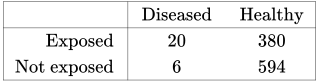
The risk of developing the disease given exposure is and of developing the disease given non-exposure is . One obvious way to compare the risks is to use the ratio of the two, the relative risk.



The odds ratio is different. The odds of getting the disease if exposed is and the odds if not exposed is The odds ratio is the ratio of the two,


As illustrated by this example, in a rare-disease case like this, the relative risk and the odds ratio are almost the same. By definition, rare disease implies that and . Thus, the denominators in the relative risk and odds ratio are almost the same ( and .


Relative risk is easier to understand than the odds ratio, but one reason to use odds ratio is that usually, data on the entire population is not available and random sampling must be used. In the example above, if it were very costly to interview villagers and find out if they were exposed to the radiation, then the prevalence of radiation exposure would not be known, and neither would the values of or . One could take a random sample of fifty villagers, but quite possibly such a random sample would not include anybody with the disease, since only 2.6% of the population are diseased. Instead, one might use a case-control study[2] in which all 26 diseased villagers are interviewed as well as a random sample of 26 who do not have the disease. The results might turn out as follows ("might", because this is a random sample):


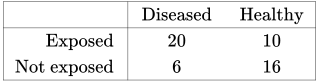
The odds in this sample of getting the disease given that someone is exposed is 20/10 and the odds given that someone is not exposed is 6/16. The odds ratio is thus , quite close to the odds ratio calculated for the entire village. The relative risk, however, cannot be calculated, because it is the ratio of the risks of getting the disease and we would need and to figure those out. Because the study selected for people with the disease, half the people in the sample have the disease and it is known that that is more than the population-wide prevalence. Therefore, the numbers of diseased and healthy within exposed, and diseased and healthy within non-exposed, are not addable.
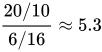
It is standard in the medical literature to calculate the odds ratio and then use the rare-disease assumption (which is usually reasonable) to claim that the relative risk is approximately equal to it. This not only allows for the use of case-control studies, but makes controlling for confounding variables such as weight or age using regression analysis easier and has the desirable properties discussed in other sections of this article of invariance and insensitivity to the type of sampling.[3]
Definition in terms of group-wise odds
[edit]The odds ratio is the ratio of the odds of an event occurring in one group to the odds of it occurring in another group. The term is also used to refer to sample-based estimates of this ratio. These groups might be men and women, an experimental group and a control group, or any other dichotomous classification. If the probabilities of the event in each of the groups are p1 (first group) and p2 (second group), then the odds ratio is:

where qx = 1 − px. An odds ratio of 1 indicates that the condition or event under study is equally likely to occur in both groups. An odds ratio greater than 1 indicates that the condition or event is more likely to occur in the first group. And an odds ratio less than 1 indicates that the condition or event is less likely to occur in the first group. The odds ratio must be nonnegative if it is defined. It is undefined if p2q1 equals zero, i.e., if p2 equals zero or q1 equals zero.
Definition in terms of joint and conditional probabilities
[edit]The odds ratio can also be defined in terms of the joint probability distribution of two binary random variables. The joint distribution of binary random variables X and Y can be written
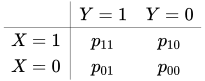
where p11, p10, p01 and p00 are non-negative "cell probabilities" that sum to one. The odds for Y within the two subpopulations defined by X = 1 and X = 0 are defined in terms of the conditional probabilities given X, i.e., P(Y |X):
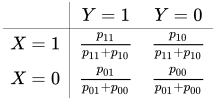
Thus, the odds ratio is:

Note that the odds ratio is also the product of the probabilities of the "concordant cells" (X = Y) divided by the product of the probabilities of the "discordant cells" (X ≠ Y). However, in some applications the labelling of categories as zero and one is arbitrary, so there is nothing special about concordant versus discordant values in these applications.
Symmetry
[edit]If we had calculated the odds ratio based on the conditional probabilities given Y,
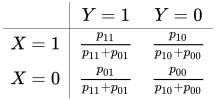
we would have obtained the same result

Other measures of effect size for binary data such as the relative risk do not have this symmetry property.
Relation to statistical independence
[edit]If X and Y are independent, their joint probabilities can be expressed in terms of their marginal probabilities px = P(X = 1) and py = P(Y = 1), as follows
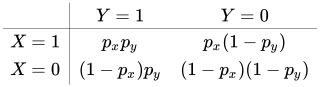
In this case, the odds ratio equals one, and conversely the odds ratio can only equal one if the joint probabilities can be factored in this way. Thus the odds ratio equals one if and only if X and Y are independent.
Recovering the cell probabilities from the odds ratio and marginal probabilities
[edit]The odds ratio is a function of the cell probabilities, and conversely, the cell probabilities can be recovered given knowledge of the odds ratio and the marginal probabilities P(X = 1) = p11 + p10 and P(Y = 1) = p11 + p01. If the odds ratio R differs from 1, then

where p1• = p11 + p10, p•1 = p11 + p01, and

In the case where R = 1, we have independence, so p11 = p1•p•1.
Once we have p11, the other three cell probabilities can easily be recovered from the marginal probabilities.
Example
[edit]
Suppose that in a sample of 100 men, 90 drank wine in the previous week (so 10 did not), while in a sample of 80 women only 20 drank wine in the same period (so 60 did not). This forms the contingency table:
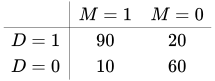
The odds ratio (OR) can be directly calculated from this table as:
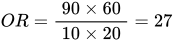
Alternatively, the odds of a man drinking wine are 90 to 10, or 9:1, while the odds of a woman drinking wine are only 20 to 60, or 1:3 = 0.33. The odds ratio is thus 9/0.33, or 27, showing that men are much more likely to drink wine than women. The detailed calculation is:

This example also shows how odds ratios are sometimes sensitive in stating relative positions: in this sample men are (90/100)/(20/80) = 3.6 times as likely to have drunk wine than women, but have 27 times the odds. The logarithm of the odds ratio, the difference of the logits of the probabilities, tempers this effect, and also makes the measure symmetric with respect to the ordering of groups. For example, using natural logarithms, an odds ratio of 27/1 maps to 3.296, and an odds ratio of 1/27 maps to −3.296.
Statistical inference
[edit]
Several approaches to statistical inference for odds ratios have been developed.
One approach to inference uses large sample approximations to the sampling distribution of the log odds ratio (the natural logarithm of the odds ratio). If we use the joint probability notation defined above, the population log odds ratio is

If we observe data in the form of a contingency table
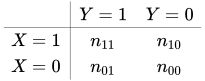
then the probabilities in the joint distribution can be estimated as
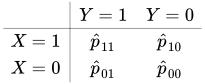
where ij = nij / n, with n = n11 + n10 + n01 + n00 being the sum of all four cell counts. The sample log odds ratio is
- .

The distribution of the log odds ratio is approximately normal with:

The standard error for the log odds ratio is approximately
- .
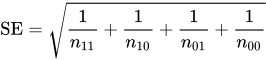
This is an asymptotic approximation, and will not give a meaningful result if any of the cell counts are very small. If L is the sample log odds ratio, an approximate 95% confidence interval for the population log odds ratio is L ± 1.96SE.[4] This can be mapped to exp(L − 1.96SE), exp(L + 1.96SE) to obtain a 95% confidence interval for the odds ratio. If we wish to test the hypothesis that the population odds ratio equals one, the two-sided p-value is 2P(Z < −|L|/SE), where P denotes a probability, and Z denotes a standard normal random variable.
An alternative approach to inference for odds ratios looks at the distribution of the data conditionally on the marginal frequencies of X and Y. An advantage of this approach is that the sampling distribution of the odds ratio can be expressed exactly.
Role in logistic regression
[edit]Logistic regression is one way to generalize the odds ratio beyond two binary variables. Suppose we have a binary response variable Y and a binary predictor variable X, and in addition we have other predictor variables Z1, ..., Zp that may or may not be binary. If we use multiple logistic regression to regress Y on X, Z1, ..., Zp, then the estimated coefficient for X is related to a conditional odds ratio. Specifically, at the population level


so is an estimate of this conditional odds ratio. The interpretation of is as an estimate of the odds ratio between Y and X when the values of Z1, ..., Zp are held fixed.

Insensitivity to the type of sampling
[edit]If the data form a "population sample", then the cell probabilities are interpreted as the frequencies of each of the four groups in the population as defined by their X and Y values. In many settings it is impractical to obtain a population sample, so a selected sample is used. For example, we may choose to sample units with X = 1 with a given probability f, regardless of their frequency in the population (which would necessitate sampling units with X = 0 with probability 1 − f). In this situation, our data would follow the following joint probabilities:

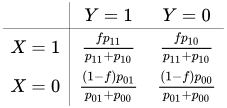
The odds ratio p11p00 / p01p10 for this distribution does not depend on the value of f. This shows that the odds ratio (and consequently the log odds ratio) is invariant to non-random sampling based on one of the variables being studied. Note however that the standard error of the log odds ratio does depend on the value of f.[citation needed]
This fact is exploited in two important situations:
- Suppose it is inconvenient or impractical to obtain a population sample, but it is practical to obtain a convenience sample of units with different X values, such that within the X = 0 and X = 1 subsamples the Y values are representative of the population (i.e. they follow the correct conditional probabilities).
- Suppose the marginal distribution of one variable, say X, is very skewed. For example, if we are studying the relationship between high alcohol consumption and pancreatic cancer in the general population, the incidence of pancreatic cancer would be very low, so it would require a very large population sample to get a modest number of pancreatic cancer cases. However we could use data from hospitals to contact most or all of their pancreatic cancer patients, and then randomly sample an equal number of subjects without pancreatic cancer (this is called a "case-control study").
In both these settings, the odds ratio can be calculated from the selected sample, without biasing the results relative to what would have been obtained for a population sample.
Use in quantitative research
[edit]Due to the widespread use of logistic regression, the odds ratio is widely used in many fields of medical and social science research. The odds ratio is commonly used in survey research, in epidemiology, and to express the results of some clinical trials, such as in case-control studies. It is often abbreviated "OR" in reports. When data from multiple surveys is combined, it will often be expressed as "pooled OR".
Relation to relative risk
[edit]
As explained in the "Motivating Example" section, the relative risk is usually better than the odds ratio for understanding the relation between risk and some variable such as radiation or a new drug. That section also explains that if the rare disease assumption holds, the odds ratio is a good approximation to relative risk[5] and that it has some advantages over relative risk. When the rare disease assumption does not hold, the unadjusted odds ratio will be greater than the relative risk,[6][7][8] but novel methods can easily use the same data to estimate the relative risk, risk differences, base probabilities, or other quantities.[9]
If the absolute risk in the unexposed group is available, conversion between the two is calculated by:[6]

where RC is the absolute risk of the unexposed group.
If the rare disease assumption does not apply, the odds ratio may be very different from the relative risk and should not be interpreted as a relative risk.
Consider the death rate of men and women passengers when a ship sank.[3] Of 462 women, 154 died and 308 survived. Of 851 men, 709 died and 142 survived. Clearly a man on the ship was more likely to die than a woman, but how much more likely? Since over half the passengers died, the rare disease assumption is strongly violated.
To compute the odds ratio, note that for women the odds of dying were 1 to 2 (154/308). For men, the odds were 5 to 1 (709/142). The odds ratio is 9.99 (4.99/.5). Men had ten times the odds of dying as women.
For women, the probability of death was 33% (154/462). For men the probability was 83% (709/851). The relative risk of death is 2.5 (.83/.33). A man had 2.5 times a woman's probability of dying.
Confusion and exaggeration
[edit]Odds ratios have often been confused with relative risk in medical literature. For non-statisticians, the odds ratio is a difficult concept to comprehend, and it gives a more impressive figure for the effect.[10] However, most authors consider that the relative risk is readily understood.[11] In one study, members of a national disease foundation were actually 3.5 times more likely than nonmembers to have heard of a common treatment for that disease – but the odds ratio was 24 and the paper stated that members were ‘more than 20-fold more likely to have heard of’ the treatment.[12] A study of papers published in two journals reported that 26% of the articles that used an odds ratio interpreted it as a risk ratio.[13]
This may reflect the simple process of uncomprehending authors choosing the most impressive-looking and publishable figure.[11] But its use may in some cases be deliberately deceptive.[14] It has been suggested that the odds ratio should only be presented as a measure of effect size when the risk ratio cannot be estimated directly,[10] but with newly available methods it is always possible to estimate the risk ratio, which should generally be used instead.[9]
While relative risks are potentially easier to interpret for a general audience, there are mathematical and conceptual advantages when using an odds-ratio instead of a relative risk, particularly in regression models. For that reason, there is not a consensus within the fields of epidemiology or biostatistics that relative risks or odds-ratios should be preferred when both can be validly used, such as in clinical trials and cohort studies.[15]
Invertibility and invariance
[edit]The odds ratio has another unique property of being directly mathematically invertible whether analyzing the OR as either disease survival or disease onset incidence – where the OR for survival is direct reciprocal of 1/OR for risk. This is known as the 'invariance of the odds ratio'. In contrast, the relative risk does not possess this mathematical invertible property when studying disease survival vs. onset incidence. This phenomenon of OR invertibility vs. RR non-invertibility is best illustrated with an example:
Suppose in a clinical trial, one has an adverse event risk of 4/100 in drug group, and 2/100 in placebo... yielding a RR=2 and OR=2.04166 for drug-vs-placebo adverse risk. However, if analysis was inverted and adverse events were instead analyzed as event-free survival, then the drug group would have a rate of 96/100, and placebo group would have a rate of 98/100—yielding a drug-vs-placebo a RR=0.9796 for survival, but an OR=0.48979. As one can see, a RR of 0.9796 is clearly not the reciprocal of a RR of 2. In contrast, an OR of 0.48979 is indeed the direct reciprocal of an OR of 2.04166.
This is again what is called the 'invariance of the odds ratio', and why a RR for survival is not the same as a RR for risk, while the OR has this symmetrical property when analyzing either survival or adverse risk. The danger to clinical interpretation for the OR comes when the adverse event rate is not rare, thereby exaggerating differences when the OR rare-disease assumption is not met. On the other hand, when the disease is rare, using a RR for survival (e.g. the RR=0.9796 from above example) can clinically hide and conceal an important doubling of adverse risk associated with a drug or exposure.[citation needed]
Estimators of the odds ratio
[edit]Sample odds ratio
[edit]The sample odds ratio n11n00 / n10n01 is easy to calculate, and for moderate and large samples performs well as an estimator of the population odds ratio. When one or more of the cells in the contingency table can have a small value, the sample odds ratio can be biased and exhibit high variance.
Alternative estimators
[edit]A number of alternative estimators of the odds ratio have been proposed to address limitations of the sample odds ratio. One alternative estimator is the conditional maximum likelihood estimator, which conditions on the row and column margins when forming the likelihood to maximize (as in Fisher's exact test).[16] Another alternative estimator is the Mantel–Haenszel estimator.[citation needed]
Numerical examples
[edit]The following four contingency tables contain observed cell counts, along with the corresponding sample odds ratio (OR) and sample log odds ratio (LOR):
| OR = 1, LOR = 0 | OR = 1, LOR = 0 | OR = 4, LOR = 1.39 | OR = 0.25, LOR = −1.39 | |||||
|---|---|---|---|---|---|---|---|---|
| Y = 1 | Y = 0 | Y = 1 | Y = 0 | Y = 1 | Y = 0 | Y = 1 | Y = 0 | |
| X = 1 | 10 | 10 | 100 | 100 | 20 | 10 | 10 | 20 |
| X = 0 | 5 | 5 | 50 | 50 | 10 | 20 | 20 | 10 |
The following joint probability distributions contain the population cell probabilities, along with the corresponding population odds ratio (OR) and population log odds ratio (LOR):
| OR = 1, LOR = 0 | OR = 1, LOR = 0 | OR = 16, LOR = 2.77 | OR = 0.67, LOR = −0.41 | |||||
|---|---|---|---|---|---|---|---|---|
| Y = 1 | Y = 0 | Y = 1 | Y = 0 | Y = 1 | Y = 0 | Y = 1 | Y = 0 | |
| X = 1 | 0.2 | 0.2 | 0.4 | 0.4 | 0.4 | 0.1 | 0.1 | 0.3 |
| X = 0 | 0.3 | 0.3 | 0.1 | 0.1 | 0.1 | 0.4 | 0.2 | 0.4 |
Numerical example
[edit]| Quantity | Experimental group (E) | Control group (C) | Total |
|---|---|---|---|
| Events (E) | EE = 15 | CE = 100 | 115 |
| Non-events (N) | EN = 135 | CN = 150 | 285 |
| Total subjects (S) | ES = EE + EN = 150 | CS = CE + CN = 250 | 400 |
| Event rate (ER) | EER = EE / ES = 0.1, or 10% | CER = CE / CS = 0.4, or 40% | — |
| Variable | Abbr. | Formula | Value |
|---|---|---|---|
| Absolute risk reduction | ARR | CER − EER | 0.3, or 30% |
| Number needed to treat | NNT | 1 / (CER − EER) | 3.33 |
| Relative risk (risk ratio) | RR | EER / CER | 0.25 |
| Relative risk reduction | RRR | (CER − EER) / CER, or 1 − RR | 0.75, or 75% |
| Preventable fraction among the unexposed | PFu | (CER − EER) / CER | 0.75 |
| Odds ratio | OR | (EE / EN) / (CE / CN) | 0.167 |
Related statistics
[edit]There are various other summary statistics for contingency tables that measure association between two events, such as Yule's Y, Yule's Q; these two are normalized so they are 0 for independent events, 1 for perfectly correlated, −1 for perfectly negatively correlated. A. W. F. Edwards studied these and argued that these measures of association must be functions of the odds ratio, which he referred to as the cross-ratio.[17]
Odds Ratio for a Matched Case-Control Study
[edit]A case-control study involves selecting representative samples of cases and controls who do, and do not, have some disease, respectively. These samples are usually independent of each other. The prior prevalence of exposure to some risk factor is observed in subjects from both samples. This permits the estimation of the odds ratio for disease in exposed vs. unexposed people as noted above.[18] Sometimes, however, it makes sense to match cases to controls on one or more confounding variables.[19] In this case, the prior exposure of interest is determined for each case and her/his matched control. The data can be summarized in the following table.
Matched 2 × 2 Table
[edit]| Case-control pairs | Control exposed | Control unexposed |
|---|---|---|
| Case exposed | ||
| Case unexposed |


This table gives the exposure status of the matched pairs of subjects. There are pairs where both the case and her/his matched control were exposed, pairs where the case patient was exposed but the control subject was not, pairs where the control subject was exposed but the case patient was not, and pairs were neither subject was exposed. The exposure of matched case and control pairs is correlated due to the similar values of their shared confounding variables.
The following derivation is due to Breslow & Day.[19] We consider each pair as belonging to a stratum with identical values of the confounding variables. Conditioned on belonging to the same stratum, the exposure status of cases and controls are independent of each other. For any case-control pair within the same stratum let
- be the probability that a case patient is exposed,
- be the probability that a control patient is exposed,
- be the probability that a case patient is not exposed, and
- be the probability that a control patient is not exposed.


Then the probability that a case is exposed and a control is not is , and the probability that a control is exposed and a case in not is . The within-stratum odds ratio for exposure in cases relative to controls is



We assume that ψ is constant across strata.[19]
Now concordant pairs in which either both the case and the control are exposed, or neither are exposed tell us nothing about the odds of exposure in cases relative to the odds of exposure among controls. The probability that the case is exposed and the control is not given that the pair is discordant is

The distribution of given the number of discordant pairs is binomial ~ B and the maximum likelihood estimate of π is
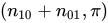

Multiplying both sides of this equation by and subtracting gives


- and hence

- .

Now is the maximum likelihood estimate of π, and ψ is a monotonic function of . It follows that is the conditional maximum likelihood estimate of given the number of discordant pairs. Rothman et al. [20] give an alternate derivation of by showing that it is a special case of the Mantel-Haenszel estimate of the intra-strata odds ratio for stratified 2x2 tables.[20] They also reference Breslow & Day[19] as providing the derivation given here.


Under the null hypothesis that .

Hence, we can test the null hypothesis that by testing the null hypothesis that . This is done using McNemar's test.


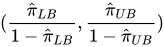
There are a number of ways to calculate a confidence interval for π. Let and denote the lower and upper bound of a confidence interval for π, respectively. Since , the corresponding confidence interval for ψ is


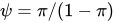
- .
Matched 2x2 tables may also be analyzed using conditional logistic regression.[21] This technique has the advantage of allowing users to regress case-control status against multiple risk factors from matched case-control data.
Example
[edit]McEvoy et al. [22] studied the use of cell phones by drivers as a risk factor for automobile crashes in a case-crossover study.[18] All study subjects were involved in an automobile crash requiring hospital attendance. Each driver's cell phone use at the time of her/his crash was compared to her/his cell phone use in a control interval at the same time of day one week earlier. We would expect that a person's cell phone use at the time of the crash would be correlated with his/her use one week earlier. Comparing usage during the crash and control intervals adjusts for driver's characteristics and the time of day and day of the week. The data can be summarized in the following table.
| Case-control pairs | Phone used in control interval | Phone not used in control interval |
|---|---|---|
| Phone used in crash interval | 5 | 27 |
| Phone not used in crash interval | 6 | 288 |
There were 5 drivers who used their phones in both intervals, 27 who used them in the crash but not the control interval, 6 who used them in the control but not the crash interval, and 288 who did not use them in either interval. The odds ratio for crashing while using their phone relative to driving when not using their phone was
- .
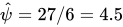
Testing the null hypothesis that is the same as testing the null hypothesis that given 27 out of 33 discordant pairs in which the driver was using her/his phone at the time of his crash. McNemar's . This statistic has one degree of freedom and yields a P value of 0.0003. This allows us to reject the hypothesis that cell phone use has no effect on the risk of automobile crashes () with a high level of statistical significance.


Using Wilson's method, a 95% confidence interval for π is (0.6561, 0.9139). Hence, a 95% confidence interval for ψ is

(McEvoy et al.[22] analyzed their data using conditional logistic regression and obtained almost identical results to those given here. See the last row of Table 3 in their paper.)
See also
[edit]References
[edit]- ^ Szumilas M (August 2010). "Explaining Odds Ratios". Journal of the Canadian Academy of Child and Adolescent Psychiatry. 19 (3): 227–229. ISSN 1719-8429. PMC 2938757. PMID 20842279.
- ^ LaMorte WW (May 13, 2013), Case-Control Studies, Boston University School of Public Health, archived from the original on 2013-10-08, retrieved 2013-09-02
- ^ a b Simon S (July–August 2001). "Understanding the Odds Ratio and the Relative Risk". Journal of Andrology. 22 (4): 533–536. doi:10.1002/j.1939-4640.2001.tb02212.x. PMID 11451349. S2CID 6150799.
- ^ Morris JA, Gardner MJ (May 1988). "Calculating confidence intervals for relative risks (odds ratios) and standardised ratios and rates". British Medical Journal (Clinical Research Ed.). 296 (6632): 1313–6. doi:10.1136/bmj.296.6632.1313. PMC 2545775. PMID 3133061.
- ^ Viera AJ (July 2008). "Odds ratios and risk ratios: what's the difference and why does it matter?". Southern Medical Journal. 101 (7): 730–4. doi:10.1097/SMJ.0b013e31817a7ee4. PMID 18580722.
- ^ a b Zhang J, Yu KF (November 1998). "What's the relative risk? A method of correcting the odds ratio in cohort studies of common outcomes". JAMA. 280 (19): 1690–1. doi:10.1001/jama.280.19.1690. PMID 9832001. S2CID 30509187.
- ^ Robbins AS, Chao SY, Fonseca VP (October 2002). "What's the relative risk? A method to directly estimate risk ratios in cohort studies of common outcomes". Annals of Epidemiology. 12 (7): 452–4. doi:10.1016/S1047-2797(01)00278-2. PMID 12377421.
- ^ Nurminen M (August 1995). "To use or not to use the odds ratio in epidemiologic analyses?". European Journal of Epidemiology. 11 (4): 365–71. doi:10.1007/BF01721219. PMID 8549701. S2CID 11609059.
- ^ a b King G, Zeng L (2002-05-30). "Estimating risk and rate levels, ratios and differences in case-control studies" (PDF). Statistics in Medicine. 21 (10): 1409–1427. doi:10.1002/sim.1032. ISSN 0277-6715. PMID 12185893. S2CID 11387977.
- ^ a b Taeger D, Sun Y, Straif K (10 August 1998). "On the use, misuse and interpretation of odds ratios". The BMJ.
- ^ a b A'Court C, Stevens R, Heneghan C (March 2012). "Against all odds? Improving the understanding of risk reporting". The British Journal of General Practice. 62 (596): e220-3. doi:10.3399/bjgp12X630223. PMC 3289830. PMID 22429441.
- ^ Nijsten T, Rolstad T, Feldman SR, Stern RS (January 2005). "Members of the national psoriasis foundation: more extensive disease and better informed about treatment options". Archives of Dermatology. 141 (1): 19–26. doi:10.1001/archderm.141.1.19. PMID 15655138.
- ^ Holcomb W (2001). "An odd measure of risk: Use and misuse of the odds ratio". Obstetrics & Gynecology. 98 (4): 685–688. doi:10.1016/S0029-7844(01)01488-0. PMID 11576589. S2CID 44782438.
- ^ Taylor HG (January 1975). "Social perception of the mentally retarded". Journal of Clinical Psychology. 31 (1): 100–2. doi:10.1136/bmj.316.7136.989. PMC 1112884. PMID 9550961.
- ^ Wells GA (2022). "Commentary on controversy and debate 4 paper series: Questionable utility of the relative risk in clinical research". Journal of Clinical Epidemiology. 142: 268–270. doi:10.1016/j.jclinepi.2021.09.016. PMID 34560254.
- ^ Rothman KJ, Greenland S, Lash TL (2008). Modern Epidemiology. Lippincott Williams & Wilkins. ISBN 978-0-7817-5564-1.[page needed]
- ^ Edwards AW (1963). "The Measure of Association in a 2 × 2 Table". Journal of the Royal Statistical Society. A (General). 126 (1): 109–114. doi:10.2307/2982448. JSTOR 2982448.
- ^ a b Celentano DD, Szklo M, Gordis L (2019). Gordis Epidemiology, Sixth Edition (PDF). Philadelphia, PA: Elsevier. p. 149-177. ISBN 9780323552318. Archived from the original (PDF) on 3 May 2024.
- ^ a b c d Breslow, NE, Day, NE (1980). Statistical Methods in Cancer Research: Vol. 1 - The Analysis of Case-Control Studies. Lyon, France: IARC Scientific Publications. p. 162-189. ISBN 978-92-832-0132-8.
- ^ a b Rothman KJ, Greenland S, Lash TL (2008). Modern Epidemiology, Third Edition (PDF). Philadelphia, PA: Lippincott Williams & Wilkins. p. 287,288. ISBN 978-0-7817-5564-1.
- ^ Breslow NE, Day NE, Halvorsen KT, Prentice RL, Sabai C (1978). "Estimation of multiple relative risk functions in matched case-control studies". Am J Epidemiol. 108 (4): 299–307. doi:10.1093/oxfordjournals.aje.a112623. PMID 727199.
- ^ a b McEvoy SP, Stevenson MR, McCartt AT, Woodward M, Haworth C, Palamara P, Cercarelli R (2005). "Role of mobile phones in motor vehicle crashes resulting in hospital attendance: a case-crossover study". BMJ. 331 (7514): 428. doi:10.1136/bmj.38537.397512.55. PMC 1188107. PMID 16012176.
External links
[edit]- Odds Ratio Calculator – website
- Odds Ratio Calculator with various tests – website
- OpenEpi, a web-based program that calculates the odds ratio, both unmatched and pair-matched


Odds ratio
View on GrokipediaDefinition
Intuitive Explanation
Odds describe the relative likelihood of an event occurring compared to it not occurring, often phrased in everyday terms as "for every X times it happens, it doesn't happen Y times." This contrasts with probability, which simply states the share of times an event is expected to occur out of all possible outcomes, like saying there's a 50% chance of heads in a fair coin flip. In the coin example, the odds of heads are even, or 1 to 1, emphasizing the balance between success and failure in a single scenario.[9] To build intuition, consider the odds of rain on a typical summer day versus a winter day. If rain feels more likely in summer, the odds might be described as 1 to 3 in favor (meaning it rains once for every three non-rainy days), while in winter they could be 1 to 9 against (raining once for every nine dry days). This verbal framing highlights how odds capture the tilt toward or away from an event without needing precise percentages, making it easier to grasp imbalances in chances.[10] The odds ratio takes this further by comparing the odds of an event across two different groups or conditions, revealing how much stronger or weaker the likelihood is in one relative to the other. As a measure of association between two binary variables—such as a factor like weather patterns and an outcome like precipitation—it helps quantify relational differences in a straightforward way.[1] This approach proves useful for comparing groups because it focuses on relative shifts in odds rather than absolute probabilities, allowing clearer insights into associations even when baseline chances vary.[11]Formal Definition
The odds of a binary event with success probability is defined as the ratio of the probability of success to the probability of failure: [4] The odds ratio (OR) measures the association between two binary variables by taking the ratio of the odds of the outcome in one group to the odds of the outcome in the other group: where and are the odds for the respective groups.[1] In a standard 2×2 contingency table classifying observations by exposure status (rows: exposed , unexposed ) and outcome status (columns: outcome , no outcome ) with cell counts , , , and , the odds ratio is given by [1] Equivalently, the odds ratio can be expressed using joint probabilities as which corresponds to the ratio of conditional odds of given versus given .[12]Probability Interpretations
The odds ratio (OR) can be formally expressed using conditional probabilities as the ratio of the odds of an event occurring given one condition to the odds given the alternative condition. Specifically, for events A and B, the OR is given by where denotes the conditional probability of B given A, and and represent the complements. This formulation highlights the OR as a measure of how the odds of B change depending on the presence or absence of A, derived directly from the row-specific conditional distributions in a contingency table.[5] While joint probabilities, such as , capture the overall co-occurrence of events in the population and inform measures of general association, the odds ratio relies on conditional probabilities to assess group-specific odds. This distinction allows the OR to isolate the relative effect within strata defined by A, avoiding confounding from marginal distributions and providing a clearer view of conditional dependence. Joint probabilities contribute to the baseline association but do not directly enter the OR calculation, which normalizes within exposure levels.[5] The odds ratio admits a straightforward interpretation as a multiplicative factor on the odds scale. An OR greater than 1 indicates that the odds of the outcome are higher in the group exposed to A compared to those not exposed, with the value specifying the factor of increase; for instance, an OR of 2 implies that exposure doubles the odds of B. Conversely, an OR less than 1 suggests reduced odds, and an OR of 1 denotes no difference in odds between groups. This multiplicative property facilitates comparisons across studies or populations, as it scales relative effects independently of baseline odds.[4] Marginal probabilities play a crucial role in constraining the possible values of the OR. Since each conditional probability lies between 0 and 1, the corresponding odds range from 0 (when the probability is 0) to infinity (when the probability approaches 1). Consequently, their ratio—the OR—is bounded from below by 0 and has no finite upper bound, reflecting the potential for arbitrarily strong associations depending on the marginal prevalence of the events.[2]Basic Properties
Symmetry and Invertibility
The odds ratio possesses a key symmetry property: the measure of association between an exposure and an outcome is identical regardless of which variable is treated as the exposure and which as the outcome. In a 2×2 contingency table with cell counts (exposed with outcome), (exposed without outcome), (unexposed with outcome), and (unexposed without outcome), the odds ratio is defined as . Transposing the table to swap the roles of exposure and outcome yields the same cross-product formula , demonstrating that .[13][14] This symmetry extends to invertibility with respect to complements of the variables. The odds ratio for the association between exposure and the complement of the outcome (i.e., no outcome) is the reciprocal of the original odds ratio: . Similarly, the odds ratio for the association between the complement of the exposure (i.e., no exposure) and the outcome is also the reciprocal: . These reciprocal relationships imply that the direction of the association reverses when considering complements, but the strength (absolute value) remains unchanged, providing a consistent measure of magnitude across codings.[14][15] The invariance under complementation further underscores this robustness; for instance, redefining the outcome by flipping its status (e.g., from disease to non-disease) inverts the odds ratio but preserves its absolute value, ensuring the measure's interpretation is independent of arbitrary binary codings.[14] Boundary behaviors of the odds ratio delineate the nature of association: a value of exactly 1 indicates no association between the variables, as the odds are equivalent across levels. An odds ratio greater than 1 signifies a positive association, where the odds of the outcome increase with exposure; conversely, a value less than 1 denotes a negative association, where the odds decrease.[5][16]Relation to Independence
The odds ratio provides a key indicator of statistical independence between two binary events, A and B, in a contingency table framework. Specifically, the odds ratio equals 1 if and only if A and B are independent, meaning the joint probability P(A and B) equals the product of their marginal probabilities P(A)P(B).[17] Under this condition, the cross-product of cell probabilities in the 2×2 table aligns such that no association exists between the events.[5] The logarithm of the odds ratio, log(OR), serves as a natural measure of deviation from independence, where log(OR) = 0 precisely when OR = 1 and the events are independent.[17] This log scale is symmetric around zero, allowing positive values to indicate positive association (OR > 1) and negative values to indicate negative association (OR < 1), quantifying the extent of departure from the null state of independence in probabilistic terms.[18] In cross-sectional data, the odds ratio—particularly the marginal odds ratio—approximates the strength of association between variables when marginal independence is the reference condition, enabling tests for overall dependence across the population sample.[19] This approach is useful for summarizing binary associations in observational settings where joint distributions are directly observable. However, an odds ratio not equal to 1 signals association but does not imply causation, as it reflects correlation rather than directional influence.[20]Recovery of Probabilities
In a 2×2 contingency table representing the joint distribution of two binary events A and B, the individual cell probabilities can be recovered from a known odds ratio OR and the marginal probabilities Pr(A) = p₁ and Pr(B) = q₁ through algebraic rearrangement. Let π denote the joint probability Pr(A and B). The remaining cell probabilities are then Pr(A and not B) = p₁ - π, Pr(not A and B) = q₁ - π, and Pr(not A and not B) = 1 - p₁ - q₁ + π. Substituting these into the definition of the odds ratio yields the equation Rearranging terms gives the quadratic equation in π: This can be solved using the quadratic formula selecting the root that ensures all cell probabilities are non-negative (i.e., π ∈ [max(0, p₁ + q₁ - 1), min(p₁, q₁)]). A 2×2 table has three degrees of freedom after accounting for the total probability summing to 1; specifying the two marginal probabilities and the odds ratio thus determines the cell probabilities uniquely via the valid quadratic root. This recovery requires the marginal probabilities to be known; without them, the odds ratio alone permits multiple possible tables with the same OR value. When OR = 1 (independence), the solution simplifies to π = p₁ q₁.Examples
General Contingency Table Example
Consider a hypothetical survey of 500 consumers examining the association between exposure to a television advertisement (exposed or unexposed) and whether they made a purchase (yes or no). The results are summarized in the following 2×2 contingency table:| Purchase (Yes) | Purchase (No) | Total | |
|---|---|---|---|
| Ad Exposed | 50 | 150 | 200 |
| Ad Unexposed | 30 | 270 | 300 |
| Total | 80 | 420 | 500 |
Rare Disease Context Example
In epidemiology, the odds ratio is particularly useful for analyzing rare diseases, where the probability of the outcome is low, allowing it to approximate the relative risk. Consider a hypothetical cohort study examining the association between exposure to a risk factor (e.g., a specific environmental toxin) and the development of a rare disease, such as a certain type of cancer, over a fixed period. Suppose 1,000 individuals are exposed and 1,000 are unexposed. Among the exposed, 10 develop the disease (a=10 cases, b=990 non-cases), while among the unexposed, 5 develop it (c=5 cases, d=995 non-cases). This scenario reflects a rare disease, with incidence rates of 1% in the exposed group and 0.5% in the unexposed group. The odds ratio is calculated as the ratio of the odds of disease in the exposed group to the odds in the unexposed group: .[9] Under the rare disease assumption—where the probability of the disease is less than 10% in both exposure groups—the odds ratio closely approximates the relative risk (RR), defined as the ratio of the probability of disease given exposure to the probability given non-exposure: RR = (disease|exposed)/(disease|unexposed). In this example, the exact RR is (10/1000)/(5/1000) = 2.00, matching the OR nearly exactly.[9] An OR of approximately 2 indicates that the exposure roughly doubles the odds of developing the disease compared to non-exposure; under the rare disease assumption, this also suggests the exposure approximately doubles the actual risk of the disease.[9] This assumption emerged in early case-control studies during the mid-20th century as epidemiologists sought to simplify analyses of infrequent outcomes, enabling the use of odds ratios from case-control data to infer relative risks without needing to track large populations for direct probability estimates in prospective cohort studies.[21]Estimation
Sample Odds Ratio
The sample odds ratio serves as the straightforward plug-in estimator for the population odds ratio, derived directly from the observed cell counts in a 2×2 contingency table. Consider the standard 2×2 table layout, with cell counts denoted as (exposed cases), (exposed non-cases), (unexposed cases), and (unexposed non-cases). The estimator is given by which represents the maximum likelihood estimator (MLE) under typical sampling conditions for such tables.[22] This MLE assumes either independent binomial sampling within rows (e.g., fixed marginal totals for exposure groups, as in cohort studies) or multinomial sampling across all cells of the 2×2 table (e.g., no fixed margins, as in cross-sectional studies).[22][23] Although the sample odds ratio itself is biased—exhibiting upward bias (away from 1) in small to moderate samples, particularly when the true odds ratio is near 0 or infinity—the logarithm of the estimator, , is approximately unbiased, satisfying where is the true population value.[24][25] This property arises from the asymptotic normality of the MLE and makes the log scale preferable for inference and modeling.[24] A common issue arises when any cell count is zero, causing to evaluate to 0 or infinity due to division by zero. To address this, the Haldane-Anscombe correction adds 0.5 to each of the four cell counts before computing the estimator, yielding a finite adjusted value .[26] This simple adjustment, originally proposed for small-sample biometrical data, reduces estimation instability without substantially altering the value in non-zero cases.[27]Alternative Estimators
The sample odds ratio, while straightforward, can exhibit bias and instability in small samples or sparse contingency tables, particularly when zero cell counts lead to undefined values. Alternative estimators mitigate these limitations by incorporating weighting, exact methods, or prior information to yield more reliable point estimates. The Mantel-Haenszel estimator addresses confounding in stratified data by computing a weighted average of stratum-specific odds ratios, assuming a common underlying odds ratio across strata. It is calculated as where the summation is over strata , and are the concordant cell counts, and are the discordant counts, and is the total sample size in stratum . This estimator is consistent and asymptotically unbiased under the common odds ratio assumption, making it suitable for meta-analysis of case-control studies.[28] Median unbiased logit estimators provide a bias-corrected alternative for single 2×2 tables, especially in small or sparse samples. These are obtained by finding the value of such that it equals the median of the estimator's sampling distribution, typically solved numerically using the exact conditional hypergeometric distribution to ensure the estimate is finite and median-unbiased even with zero cells. This approach outperforms the sample odds ratio in terms of bias reduction when expected cell frequencies are low.[29] Bayesian estimators for the odds ratio use conjugate beta priors on the cell probabilities to regularize estimates and avoid infinities in sparse data. A common choice is the Jeffreys noninformative prior, Beta(0.5, 0.5), applied independently to the success probabilities in each row or column, yielding a posterior distribution for the odds ratio from which the mean, median, or mode can be taken as the point estimate. This method shrinks extreme values toward unity, improving stability in small samples compared to frequentist alternatives.[30] These estimators are selected over the sample odds ratio based on data characteristics: the Mantel-Haenszel for stratified analyses to control confounding, and median unbiased or Bayesian methods for unstratified sparse data to minimize bias and ensure computability, with the latter offering additional interpretive benefits through credible intervals.[28][29][30]Statistical Inference
Confidence Intervals
Confidence intervals for the odds ratio quantify the uncertainty around the point estimate derived from the sample odds ratio in a 2×2 contingency table. These intervals are typically constructed on the logarithmic scale due to the skewness of the odds ratio distribution, ensuring positive bounds and approximate symmetry. Common methods include the Wald, exact, and profile likelihood approaches, each with distinct assumptions and performance characteristics, particularly in small samples.[31] The Wald confidence interval, the most frequently used method, is based on the asymptotic normality of the log odds ratio. For a 95% interval, it is calculated as , where is the sample odds ratio and the standard error is , with , , , and denoting the cell counts in the contingency table. This method relies on large-sample approximations and is straightforward to compute, making it suitable for routine analyses in software packages. However, the Wald interval can exhibit poor coverage properties in small samples or when cell counts are sparse, often resulting in intervals that are too narrow and fail to achieve the nominal 95% coverage probability.[31][32][33] The exact confidence interval addresses limitations of asymptotic methods by inverting exact tests, typically using the non-central hypergeometric distribution under the conditional model for 2×2 tables. It solves for the bounds of the odds ratio parameter such that the probability of observing data as extreme as or more extreme than the sample under the null hypothesis equals for each tail, often implemented via the Clopper-Pearson approach adapted for ratios. This method provides guaranteed coverage at least as high as the nominal level but can be conservative, yielding wider intervals, especially in small samples where it is preferred over the Wald for reliability. Unconditional exact methods, treating margins as fixed binomial, further improve finite-sample performance by avoiding conditioning biases.[32][33] Profile likelihood intervals offer a likelihood-based alternative, constructing bounds by maximizing the likelihood conditional on the odds ratio parameter and identifying values where the likelihood ratio test statistic does not exceed the critical value (3.84 for 95% intervals). Formally, the interval consists of such that , where is the log-likelihood. This approach performs well in moderate samples, providing better coverage than Wald without the conservatism of exact methods, and is particularly useful when the model includes covariates. In comparisons, profile intervals often balance width and coverage effectively across sample sizes.[34][35]Hypothesis Testing
Hypothesis testing for the odds ratio typically evaluates the null hypothesis that the odds ratio equals 1, indicating no association between the two binary variables in a 2×2 contingency table, which corresponds to statistical independence.[36] The Pearson chi-square test provides an asymptotic approach for testing this null hypothesis in 2×2 tables with moderate to large sample sizes. Under the null, the test statistic follows a chi-square distribution with 1 degree of freedom, computed as: where are the cell counts in the contingency table and . This statistic measures deviation from expected frequencies under independence, with larger values indicating evidence against the null odds ratio of 1.[37] For small sample sizes or sparse tables where the chi-square approximation is unreliable (e.g., expected cell counts below 5), Fisher's exact test is preferred. It conditions on the fixed marginal totals and uses the hypergeometric distribution to compute the exact probability of the observed table or more extreme tables in either direction. The p-value is obtained by summing these hypergeometric probabilities over all tables with the same margins that are as or more extreme than the observed one, directly testing the null odds ratio of 1 without relying on large-sample approximations.[36] When categories are ordered, trend tests extend the assessment of odds ratios to detect monotonic associations, treating the data as ordinal to estimate a common odds ratio across levels. The Cochran-Armitage trend test, for instance, uses a score-based approach to test for a linear trend in proportions, which aligns with testing a constant non-unit odds ratio in the ordinal context, often implemented via a score statistic asymptotic to chi-square. Other methods, such as the score test from logistic regression or Mantel-Haenszel trend estimators, similarly evaluate the null of no trend (odds ratio = 1) by incorporating ordinal scores for the exposure levels.[38] Power considerations in odds ratio hypothesis testing emphasize the sample size required to detect a true odds ratio deviating from 1 with sufficient probability, typically aiming for 80% or 90% power at a 5% significance level. Calculations often rely on formulas accounting for the anticipated odds ratio, baseline proportions, allocation ratio between groups, and whether the study is cohort or case-control; for example, in unmatched case-control designs, the required number of cases (and equal controls) can be derived from the non-centrality parameter of the test statistic, increasing with larger target odds ratios or smaller baseline event rates. These computations ensure adequate sensitivity to clinically meaningful associations while controlling type II error.[39]Applications
Role in Logistic Regression
In logistic regression, used to model the relationship between a binary outcome variable and one or more predictors, the odds ratio serves as the primary measure for interpreting the effect of predictors on the odds of the outcome occurring. The model is formulated as , where is the probability of the positive outcome given predictor , and the logit function transforms the probability to the log-odds scale. The coefficient quantifies the change in the log-odds associated with a one-unit increase in , such that the odds ratio represents the multiplicative factor by which the odds of change for that unit increase, holding other factors constant. This formulation, originally proposed by Cox in 1958, enables direct estimation of odds ratios through maximum likelihood, facilitating inference about associations in binary data.[40] For a binary predictor (e.g., treatment versus control), directly yields the odds ratio comparing the odds of the outcome between the two groups defined by and . An odds ratio greater than 1 indicates higher odds in the group, while a value less than 1 suggests lower odds; a value of 1 implies no association. When is continuous, interprets as the odds ratio per one-unit increment in , allowing assessment of how the odds scale with gradual changes in the predictor. This per-unit or group-wise interpretation underscores the odds ratio's utility in quantifying effect sizes in a standardized, multiplicative manner across different predictor types.[7] In multivariable logistic regression, extending to , each provides an adjusted odds ratio for the -th predictor, controlling for the effects of all other predictors in the model. These adjusted odds ratios account for potential confounding, offering a more precise estimate of the predictor-outcome association than unadjusted ratios from bivariate analyses. For instance, in epidemiological studies, this allows researchers to isolate the effect of an exposure while adjusting for covariates like age or sex.[41] The validity of these odds ratio interpretations relies on key assumptions of the logistic model, including linearity of the log-odds with respect to the continuous predictors (i.e., the log-odds increase linearly with ) and the absence of unspecified interactions between predictors, which would otherwise require inclusion of interaction terms to accurately model non-additive effects on the log-odds scale. Violations of linearity can be addressed through transformations or splines, but the core assumption ensures that meaningfully captures the average multiplicative change in odds.[42]Use in Case-Control Studies
Case-control studies employ a retrospective design in which participants are selected based on their disease status—cases who have the outcome of interest and controls who do not—after which exposure histories are ascertained to evaluate associations. In unconditional case-control studies, the odds ratio (OR) is computed from a standard 2×2 contingency table, yielding the ratio of the odds of exposure among cases to the odds among controls; this OR validly estimates the population OR under the study's sampling scheme.[43] Retrospective sampling fixes the number of cases and controls, enabling the sample OR to estimate the prospective population OR, particularly when the outcome is rare in the source population, where the OR approximates the relative risk.[21] This approach offers key advantages for investigating rare outcomes, as it allows efficient recruitment of sufficient cases without requiring an impractically large overall sample size, unlike prospective cohort designs. Moreover, under the rare disease assumption, the OR provides a close approximation to the relative risk, aiding in the interpretation of exposure effects on disease occurrence.[44] Despite these benefits, the OR cannot directly estimate absolute risks, disease incidence, or prevalence, necessitating supplementary data from cohort studies or registries for such metrics. Generalizability further depends on selecting controls that represent the population from which cases are drawn, often through population-based sampling to avoid bias.[43]Insensitivity to Sampling
The odds ratio demonstrates notable insensitivity to the sampling scheme employed in observational studies, distinguishing it from measures like relative risk that vary with design specifics. Specifically, the odds ratio remains invariant to the direction of sampling, producing identical estimates whether data are gathered prospectively by conditioning on exposure (as in cohort studies) or retrospectively by conditioning on outcome (as in case-control studies).[45][46] This equivalence ensures that the odds ratio serves as a consistent measure of association across these designs, provided the underlying population parameters align.[46] In a standard 2×2 contingency table with cell counts denoted as the odds ratio is the cross-product ratio , which relies solely on the joint distribution within cells and is unaffected by the row or column marginal totals fixed by the sampling process.[5] Under common frameworks such as product-multinomial or independent binomial sampling—where either rows or columns (but not both) are fixed—the maximum likelihood estimator of coincides across schemes, preserving the measure's validity regardless of whether exposure or outcome defines the sampling units.[5] This robustness extends to cross-sectional sampling, where observations capture exposure and outcome simultaneously without a predefined temporal sequence; here, the odds ratio quantifies the cross-sectional association independently of any implied time direction, treating the data as arising from a multinomial distribution.[47] Such invariance facilitates its application in diverse epidemiological contexts, including case-control studies where outcome-based selection is standard.[45] Exceptions occur when sampling directly biases the odds, such as in outcome-dependent designs lacking adjustment for selection probabilities (e.g., unbalanced or clustered subsampling from a cohort), potentially distorting the cross-product ratio away from the population value.[25]Comparisons
Relation to Relative Risk
The relative risk (RR), also known as the risk ratio, quantifies the association between an exposure and an outcome by comparing the probability of the outcome occurring in the exposed group to that in the unexposed group, formally defined aswhere indicates the outcome and indicates exposure.[1] In contrast, the odds ratio (OR) compares the odds of the outcome in the exposed group to the unexposed group. While the RR is typically estimated in cohort studies—either prospective or retrospective—where participants are followed based on exposure status to observe outcomes, the OR can be computed in case-control studies, where participants are selected based on outcome status (cases vs. controls) and exposure histories are assessed retrospectively.[48] This makes the OR more versatile, as it is always defined for binary outcomes (since odds are bounded away from infinity), whereas the RR requires direct probability estimates that may not be feasible in certain designs like case-control studies without additional assumptions.[2] A key relationship between the OR and RR emerges under the rare outcome assumption, where the probability of the outcome is low in both groups (e.g., ). In such cases, the odds approximate the probability, leading to OR ≈ RR.[49] For non-rare outcomes, a more precise approximation converts the OR to an estimate of the RR using the baseline risk in the unexposed group:
This formula, derived from the mathematical relationship between odds and probabilities, adjusts for the deviation when outcomes are common, ensuring the estimated RR reflects the true multiplicative increase in risk.[50] For rare diseases, such as certain cancers in case-control studies, this approximation holds closely, allowing ORs to serve as valid proxies for RRs without significant bias.[2] Despite these connections, the OR and RR differ in interpretation and magnitude, particularly for common outcomes. Both measures indicate the direction of association (values >1 suggest increased risk with exposure, <1 suggest protection), but the OR tends to exaggerate the effect size compared to the RR when the outcome prevalence exceeds 10-20%. For instance, if the unexposed risk is 40% and the RR is 2 (exposed risk 80%), the corresponding OR is 6, implying a sixfold increase in odds rather than a twofold increase in risk.[51] The OR exhibits symmetry across the exposure-outcome table—the OR computed from the perspective of exposure given outcome equals that of outcome given exposure—while the RR is inherently directional and depends on the reference group.[52] This asymmetry means the RR for the inverse association (e.g., exposure given outcome) does not equal the reciprocal of the original RR. A frequent source of misinterpretation arises when ORs are erroneously reported or understood as RRs, especially in media coverage of epidemiological findings, leading to inflated perceptions of risk. For common outcomes, an OR of 3 might be described as "tripling the risk," but the actual RR could be as low as 1.5, depending on baseline prevalence, thus overstating the effect by a factor of two.[53] This confusion is exacerbated because the OR lacks the intuitive probability-based framing of the RR, prompting calls for clearer reporting in both scientific literature and public communication to distinguish the measures and avoid misleading implications about absolute or relative changes in risk.[54]
Related Statistics
The phi coefficient serves as a standardized measure of association between two binary variables in a 2×2 contingency table, calculated as , where , , , and represent the cell frequencies, is the total sample size, and is the Pearson chi-square statistic. This coefficient ranges from -1 to 1, with values near 0 indicating weak association and values approaching ±1 indicating strong association; it is related to the odds ratio through the log-odds scale, particularly in approximations assuming underlying continuous latent variables that inform the strength and direction of the binary association.[19][55] Yule's Q provides another bounded measure of association for binary data, defined as , where OR denotes the odds ratio; this transformation maps the odds ratio's unbounded range onto [-1, 1], facilitating interpretation similar to a correlation coefficient while preserving the ordinal nature of the association.[56] The kappa statistic quantifies inter-rater agreement for categorical data beyond what would be expected by chance, with values ranging from -1 (perfect disagreement) to 1 (perfect agreement); in diagnostic settings, it connects indirectly to the odds ratio by assessing the reliability of binary classifications, where low kappa can attenuate estimates of the odds ratio as a validity index.[57] The tetrachoric correlation estimates the correlation between two binary variables by positing underlying continuous latent variables that follow a bivariate normal distribution, with thresholds determining the observed categories; the observed odds ratio in the binary data thus reflects the strength of association in this latent continuous scale, offering a way to interpret binary associations as if they were measured on an interval scale.[58]Special Cases
Matched Pair Designs
In matched pair case-control studies, cases are individually paired with controls sharing similar characteristics, such as age or socioeconomic status, to control for confounding variables and reduce variability in the estimation of exposure effects.[59] This design enhances the precision of the odds ratio by focusing on within-pair differences rather than population-level comparisons.[60] The analysis employs a matched 2×2 contingency table that tabulates only the discordant pairs—those in which the case and control differ in exposure status—ignoring concordant pairs where both are exposed or both unexposed. In this table, cell b counts the discordant pairs where the case is exposed and the control is unexposed, while cell c counts the pairs where the case is unexposed and the control is exposed. The odds ratio is then estimated as the simple ratio of these counts: OR = b / c.[61][62] This pair-specific odds ratio approximates the association between exposure and outcome conditional on the matching factors.[61] To assess the statistical significance of the odds ratio, McNemar's test is applied, which evaluates the null hypothesis of marginal homogeneity in exposure between cases and controls. The test statistic is computed as χ² = (b - c)² / (b + c), distributed as chi-squared with one degree of freedom for large samples (typically when b + c ≥ 20).[63][64] Key assumptions underlying this approach include a fixed matching ratio, such as 1:1 pairing, to ensure balanced representation.[65][64]Numerical Illustrations
To illustrate the computation of the odds ratio in a matched pair design, consider a case-control study with 100 matched pairs, where 80 pairs are concordant (both exposed or both unexposed) and 20 are discordant. Among the discordant pairs, 15 have the case exposed and the control unexposed (b = 15), while 5 have the case unexposed and the control is exposed (c = 5). The odds ratio is then b/c = 15/5 = 3, meaning the odds of exposure are three times higher for cases than for matched controls. The 95% confidence interval for this odds ratio, obtained via the adapted Wilson score method for the underlying binomial proportion of discordant pairs where the case is exposed (π̂ = 15/20 = 0.75), is approximately (1.1, 7.9) after back-transformation from the interval for π.[66] For stratified analyses, the Mantel-Haenszel procedure pools odds ratios across strata to adjust for a confounding factor. Suppose there are two strata, such as age groups, with the following 2×2 contingency tables (rows: exposed/unexposed; columns: cases/controls): Stratum 1:| Cases | Controls | |
|---|---|---|
| Exposed | 20 | 10 |
| Unexposed | 10 | 10 |
| Cases | Controls | |
|---|---|---|
| Exposed | 20 | 5 |
| Unexposed | 10 | 10 |
| Group | Outcome | No Outcome |
|---|---|---|
| Exposed | 50 | 50 |
| Unexposed | 25 | 75 |
or <- 15 / 5 for the point estimate, with the 95% confidence interval via library(PropCIs); oddsratioci.mp(15, 5). For stratified analysis, use mantelhaen.test(table_data). Similar pseudocode applies in Python using libraries like statsmodels for Mantel-Haenszel computation.