Hubbry Logo
SpeleologySpeleologyMain
Open search
Speleology
Community hub
Speleology
logo
8 pages, 0 posts
0 subscribers
Be the first to start a discussion here.
Speleology
Speleology
from Wikipedia
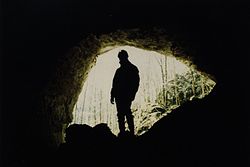
Grotte des Faux-Monnayeurs, Mouthiers-Haute-Pierre (France)
Beam of sun inside the cavity of Rocca ill'Abissu, Fondachelli Fantina, Sicily
Pirunkirkko (literally "devil's church") of Paistjärvi, a peak cave in Heinola, Päijät-Häme, Finland

Speleology (from Ancient Greek σπήλαιον (spḗlaion) 'cave' and -λογία (-logía) 'study of') is the scientific study of caves and other karst features, as well as their composition, structure, physical properties, history, ecology, and the processes by which they form (speleogenesis) and change over time (speleomorphology). The term speleology is also sometimes applied to the recreational activity of exploring caves, but this is more properly known as caving, potholing (British English), or spelunking (United States and Canadian English). Speleology and caving are often connected, as the physical skills required for in situ study are the same.

Speleology is a cross-disciplinary field that combines the knowledge of chemistry, biology, geology, physics, meteorology, and cartography to develop portraits of caves as complex, evolving systems.

History

[edit]

Before modern speleology developed, John Beaumont wrote detailed descriptions of some Mendip caves in the 1680s. The term speleology was coined by Émile Rivière in 1890.[1]

Prior to the mid-nineteenth century the scientific value of caves was considered only in its contribution to other branches of science, and cave studies were considered part of the larger disciplines of geography, geology or archaeology. Very little cave-specific study was undertaken prior to the work of Édouard-Alfred Martel (1859–1938), the 'father of modern speleology', who through his extensive and well-publicised cave explorations introduced in France the concept of speleology as a distinct area of study. In 1895 Martel founded the Société de Spéléologie, the first organization devoted to cave science in the world. Other early speleologists include Herbert E. Balch.

An international speleological congress was proposed at a meeting in Valence-sur-Rhone, France in 1949 and first held in 1953 in Paris. The International Union of Speleology (UIS) was founded in 1965.[2]

The growth of speleology is directly linked with that of the sport of caving, both because of the stimulation of public interest and awareness, and the fact that most speleological field-work has been conducted by sport cavers.

Cave geology, hydrogeology and biology

[edit]

Karst is a landscape that has limestone underneath which has been eroded. Caves are usually formed through chemical corrosion via a process of dissolution.[3] Corrosion has several ways of doing this, it can be on carbonate rocks through chemical reactions, in gypsum and rock salt it can happen physically, and in silicate rocks and warm climate the decomposition of the materials can happen as well.

Geochemistry

[edit]

Speleothems

[edit]
Cave labeled with the six most common types of speleothems: flowstone, columns, drapery, stalagmites, stalactites and straws

A speleothem is a geological formation by mineral deposits that accumulate over time in natural caves.[4] Speleothems most commonly form in calcareous caves due to carbonate dissolution reactions. They can take a variety of forms, depending on their depositional history and environment. Their chemical composition, gradual growth, and preservation in caves make them useful paleoclimatic proxies.

Biochemistry

[edit]

Caves have an absence of stable temperature, high relative humidity, low rates of evaporation and limited supply of organic material, which help in creating an environment which is highly favorable for the growth of microbes. Microbial assemblages in caves include archaea, bacteria, fungi and other micro-eukaryotes, these highly adapted microbial communities represent the living-backbone of cave ecosystems and play a key role in shaping structures and sustaining trophic networks.[5]

Cave cartography

[edit]

The creation of an accurate, detailed map is one of the most common technical activities undertaken within a cave. Cave maps, called surveys, can be used to compare caves to each other by length, depth and volume, may reveal clues on speleogenesis, provide a spatial reference for further scientific study, and assist visitors with route-finding.

Cave biology

[edit]

Caves provide a home for many unique biota. Cave ecologies are very diverse, and not sharply distinct from surface habitats. Generally however, the deeper the cave becomes, the more rarefied the ecology.

Cave environments fall into three general categories:

  • Endogean
the parts of caves that are in communication with surface soils through cracks and rock seams, groundwater seepage, and root protrusion.
  • Parahypogean
the threshold regions near cave mouths that extend to the last penetration of sunlight.
or "true" cave environments. These can be in regular contact with the surface via wind and underground rivers, or the migration of animals, or can be almost entirely isolated. Deep hypogean environments can host autonomous ecologies whose primary source of energy is not sunlight, but chemical energy liberated from limestone and other minerals by chemoautotrophic bacteria.

Cave organisms fall into three basic classes:

Cave organisms
Latin English Definition
Troglobites cave dwellers are obligatory cavernicoles, specialized for cave life. Some can leave caves for short periods, and may complete parts of their life cycles above ground, but cannot live their entire lives outside of a cave environment. Examples include chemotrophic bacteria, some species of flatworms, glowworms, collembola, and blindfish.
Troglophiles cave lovers can live part or all of their lives in caves, but can also complete a life cycle in appropriate environments on the surface. Examples include cave crickets, bats, millipedes, pseudoscorpions, and spiders.
Trogloxenes cave guests frequents caves, and may require caves for a portion of its life cycle, but must return to the surface (or a parahypogean zone) for at least some portion of its life. Hibernating reptiles and mammals are the most widely recognized examples.

There are also so-called accidental trogloxenes which are surface organisms that enter caves for no survival reason. Some may even be troglophobes (“cave haters”), which cannot survive in caves for any extended period. Examples include deer which fell through a sinkhole, frogs swept into a cave by a flash flood, etc.

The two factors that limit cave ecologies are generally energy and nutrients. To some degree moisture is always available in actively forming Karst caves. Cut off from the sunlight and steady deposition of plant detritus, caves are poor habitats in comparison with wet areas on the surface. Most of the energy in cave environments comes from the surplus of the ecosystems outside. One major source of energy and nutrients in caves is dung from trogloxenes, most of which is deposited by bats. Other sources are mentioned above.[6]

Cave ecosystems are very fragile. Because of their rarity and position in the ecosystem they are threatened by a large number of human activities. Dam construction, limestone quarrying, water pollution and logging are just some of the disasters that can devastate or destroy underground biological communities.[7]

Other areas of cave science

[edit]

Speleologists also work with archaeologists in studying underground ruins, tunnels, sewers and aqueducts, such as the various inlets and outlets of the Cloaca Maxima in Rome.[8]

See also

[edit]

References

[edit]
[edit]
Revisions and contributorsEdit on WikipediaRead on Wikipedia
from Grokipedia
Speleology is the scientific study of and formations, derived from the Greek words spelaion () and logos (), encompassing the , mapping, and of subterranean environments and their geological, , biological, and archaeological features. As an interdisciplinary field, it integrates principles from to understand cave formation processes like speleogenesis, hydrology to examine groundwater flow in systems, biology to study unique cave ecosystems and endemic , and other sciences such as physics, chemistry, and to interpret environmental histories preserved in cave deposits like speleothems. The modern discipline emerged in the late 19th century, pioneered by French explorer Édouard-Alfred Martel (1859–1938), often regarded as the father of speleology for his systematic explorations, documentation of over 1,500 , and establishment of the Société de Spéléologie in 1895, which formalized cave research as a distinct scientific endeavor. Martel's work emphasized safe exploration techniques, cave conservation, and the integration of multiple scientific disciplines, laying the groundwork for speleology's evolution from recreational caving to a rigorous academic pursuit during the early . By the mid-, speleology had academized further, with the formation of key organizations to coordinate global efforts, including the National Speleological Society (NSS) in the United States in 1941, which focuses on cave exploration, conservation, and education with over 8,500 members. Internationally, the Union Internationale de Spéléologie (UIS), founded in , serves as the primary non-governmental body promoting worldwide collaboration among speleologists, organizing congresses, standardizing cave mapping symbols, and advancing research on phenomena across 58 member countries. Speleology's contributions extend to practical applications, such as protecting resources in aquifers that supply to millions, reconstructing past climates through isotopic analysis of formations, and conserving fragile subterranean biodiversity, including troglobitic species adapted exclusively to life.

Definition and Scope

Overview of Speleology

Speleology is the scientific exploration, study, and documentation of and other features, encompassing their physical, chemical, biological, and hydrological processes. This discipline involves the systematic investigation of cave systems to understand their formation, structure, and environmental interactions. As a composite , speleology draws on multiple fields to analyze the diverse aspects of subterranean environments. The multidisciplinary nature of speleology integrates for studying rock formations and processes, for examining cave ecosystems, for water flow dynamics, chemistry for mineral compositions, physics for environmental conditions like and , and for mapping cave networks. This interdisciplinary approach allows researchers to address the complex interplay of factors within caves, from geological stability to biological adaptations. Such integration is essential for comprehensive cave research and preservation efforts. Key objectives of speleology include gaining insights into cave formation mechanisms, the unique ecosystems they support, and their broader environmental roles in storage and conservation. Practical applications extend to resource management, such as developing plans, protecting in aquifers, and informing conservation strategies to mitigate human impacts. These goals contribute to global by highlighting caves as natural laboratories for studying isolated ecosystems and paleoclimatic records. Globally, tens of thousands of caves are known, with the majority occurring in landscapes that cover approximately 10% of Earth's land surface. regions, characterized by soluble rocks like , host the vast majority of these features due to dissolution processes that create extensive underground networks. This prevalence underscores speleology's importance in managing widespread subterranean resources. Speleology encompasses the comprehensive scientific study of , including their , description, physical structure, , hydrological systems, biological inhabitants, and related phenomena, whereas speleogenesis specifically refers to the processes of cave origin and development, primarily through the dissolution of soluble rocks like by aggressive waters. Speleogenesis focuses on the geochemical, hydraulic, and physical mechanisms that shape cave morphologies over geological time, such as conduit enlargement in aquifers, but does not extend to broader aspects like or human . In contrast to recreational caving, which involves the physical entering and traversing of caves for adventure or sport—often termed "indoor "—speleology integrates such as a methodological tool within a rigorous scientific framework. studies represent a specialized subset of speleology, concentrating on the formation, , and dating of cave deposits like stalactites and flowstones, without addressing the full spectrum of cave ecosystems or . Karstology, meanwhile, examines a wider array of soluble rock landscapes, incorporating both subterranean s and surface features such as sinkholes and poljes, integrating disciplines like , , and ecology across entire terrains. Speleology overlaps with and draws upon hydrogeology to analyze subterranean water flow and storage in caves, as well as biospeleology for the examination of cave-adapted organisms like troglobites, yet remains distinct by synthesizing these into a holistic cave-centric discipline rather than limiting to water dynamics or biology alone. A speleologist is defined as a researcher who investigates caves through fieldwork and analysis, differing from a caver, who primarily engages in non-scientific exploration. The term "speleology" derives from the Greek spēlaion (cave) and logos (study), emphasizing its academic focus on cave systems.

History

Early Exploration and Pre-Scientific Interest

Human engagement with caves dates back to prehistoric times, where they served as shelters, artistic canvases, and sites for ritual activities. The Lascaux Cave in France, adorned with vivid paintings of animals and symbols dating to approximately 17,000 years ago, exemplifies early human use of subterranean spaces for what archaeologists interpret as hunting magic or religious ceremonies. Similarly, other Paleolithic sites across Europe reveal patterns of cave occupation tied to spiritual practices, with art and artifacts suggesting caves were viewed as liminal spaces connecting the earthly and supernatural realms. In ancient mythologies, caves frequently symbolized portals to the , reflecting deep cultural fascination with the subterranean unknown. Greek lore portrayed caves as entrances to , the realm of the dead; for instance, the Alepotrypa Cave in southern , occupied from around 6000 to 3200 BCE and used for burials and rituals, likely contributed to myths of an otherworldly domain accessible through caverns. In Mayan cosmology, caves represented gateways to , the underworld inhabited by death gods, where rituals involving offerings and ceremonies were conducted to invoke deities like , the rain god; sites in , such as , contain artifacts from these practices spanning centuries BCE to CE. These mythological associations, preserved in oral traditions and later texts, underscore caves' role in pre-scientific worldviews as sacred or foreboding locales. Medieval and early modern periods saw cave exploration driven primarily by practical and spiritual imperatives rather than systematic inquiry. Religious pilgrims sought out caverns as hermitages or holy sites, such as those in Europe's regions believed to house saints or relics, while mining operations in places like the in extracted lead and other minerals from underground passages as early as the Roman era, often guided by local warning of dangers like collapsing tunnels or mythical creatures. Adventure seekers, influenced by tales of hidden treasures or lost worlds, ventured into caves for thrill, with from rural communities—depicting caverns as dwellings of fairies or dragons—playing a crucial role in navigation, as local guides shared generational knowledge to avoid hazards. The 18th and 19th centuries marked a surge in organized expeditions fueled by romantic notions of the underground, blending adventure with emerging pseudoscientific ideas. John Cleves Symmes Jr.'s 1818 hollow Earth theory, positing concentric spheres with polar openings leading to inner worlds, captivated imaginations and indirectly spurred interest in subterranean realms, inspiring fictional and exploratory pursuits akin to cave delving. In Europe, systematic forays began, exemplified by the 1818 discovery of extensive passages in Slovenia's Postojna Cave by local lamplighter Luka Čeč during preparations for an imperial visit, revealing over 24 kilometers of passages that drew adventurers reliant on torchlight and guides familiar with the terrain. Figures like Édouard-Alfred Martel in France epitomized this transitional era; from the 1880s, he conducted daring explorations of sites like the Gouffre de Padirac using ropes and ladders, documenting findings through sketches and narratives that blended thrill-seeking with early observational notes, laying groundwork for formalized study without yet employing scientific methodologies.

Development as a Modern Scientific Discipline

The formalization of speleology as a scientific discipline began in the late 19th century with the establishment of dedicated organizations. In 1895, French explorer Édouard-Alfred Martel founded the Société de Spéléologie in Paris, the world's first society devoted exclusively to the scientific study of caves, which published regular articles and promoted systematic exploration and research. This initiative marked a shift from recreational caving to structured scientific inquiry, emphasizing documentation, mapping, and environmental analysis. Building on this foundation, the National Speleological Society (NSS) was established in the United States in 1941, uniting cavers for the advancement of exploration, conservation, and study, and growing to over 8,000 members across 250 local chapters by the late 20th century. Post-World War II, speleology experienced significant international expansion through collaborative efforts. The first International Congress of Speleology convened in in 1953, following preparatory meetings in 1949, fostering global exchange on cave science and leading to regular quadrennial events that have produced over 25,000 pages of proceedings. This period saw the formation of the Union Internationale de Spéléologie (UIS) in 1965 during the fourth congress in , , which standardized international cooperation and approved foundational statutes to promote speleological research across disciplines. These developments integrated speleology into broader scientific networks, emphasizing interdisciplinary approaches to systems and cave ecosystems. Academic integration accelerated in the mid- with the launch of specialized publications and programs. The International Journal of Speleology, founded in 1964 by the Società Speleologica Italiana, became a cornerstone for peer-reviewed research, evolving into the UIS's official journal in 1978 and covering topics from to . By the late , speleology entered curricula, with programs like the Cave and Studies initiative at Institute of Mining and Technology, established as the academic arm of the National Cave and Research Institute, offering undergraduate and graduate training in , , and . In recent decades up to 2025, speleology has embraced digital technologies and to address contemporary challenges. Advances in 3D digital modeling, such as integrated high-precision real-scene techniques using and , have enabled detailed reconstructions of caves for analysis of formation processes and conservation planning. tools, including satellite-derived data and drone-based surveys, have enhanced surface-subsurface integration for mapping. Concurrently, cave monitoring networks have proliferated to track climate change impacts, with initiatives like those in the Peruvian and Chinese monsoon regions using geochemical and hydrological sensors to calibrate records for paleoclimate reconstruction and predict future environmental shifts.

Methods and Techniques

Exploration Equipment and Safety Protocols

Essential gear for speleological exploration includes protective helmets certified to UIAA or CE standards, which safeguard against falling rocks and impacts during navigation through narrow passages. These helmets, often equipped with chin straps for secure fit, have evolved from early 20th-century models to lightweight designs optimized for prolonged underground use. Headlamps represent a critical advancement, transitioning from carbide lamps—popular in the mid-20th century for their dual light and warmth provision but cumbersome due to water and fuel requirements—to modern LED systems by the , offering brighter, longer-lasting illumination with rechargeable batteries and reduced weight. Ropes, typically 10-11 mm dynamic for vertical drops, and full-body harnesses with sit- and chest- components ensure secure attachment during descents, while protective clothing such as synthetic coveralls, knee/elbow pads, and gloves prevent abrasion and in damp environments. Safety protocols in speleology emphasize comprehensive prior to entry, evaluating hazards such as sudden flooding from surface rainfall, falls from slippery ledges, and hypoxia in low-oxygen sumps. Pre-trip planning involves checking weather forecasts to avoid rain-prone periods, inspecting all equipment for wear, and ensuring groups of at least three members maintain voice contact and carry three independent light sources with spare batteries. The (SRT), pioneered by American caver Bill Cuddington in the late , revolutionized vertical exploration by allowing efficient ascent and descent on a single anchored rope using mechanical ascenders and descenders, reducing the need for heavy ladders and enabling deeper pit access. During operations, protocols mandate testing handholds, using belays for traverses, and relocating to higher ground if water levels rise, with all participants dressed in quick-drying synthetics to mitigate risks. Training standards are upheld by organizations like the National Speleological Society (NSS), which through its Vertical Training Commission (VTC)—established in 2021—offers a train-the-trainers model for SRT proficiency, focusing on equipment systems, , and problem-solving to prevent accidents. The NSS National Cave Rescue Commission (NCRC) provides tiered certifications, including Small Party Assisted Rescue (SPAR) for basic medical and rope techniques in small groups, and advanced levels for task force leadership in complex extractions. Emergency response plans require leaving detailed itineraries with surface contacts, including cave coordinates and expected return times, and carrying communication devices such as two-way radios for team coordination or satellite messengers like inReach for remote signaling by 2025, ensuring rapid activation of search-and-rescue teams trained in cave-specific protocols. Recent innovations enhance safety and efficiency, with collision-tolerant drones deployed for initial scouting of unstable passages since the early 2020s, enabling 3D mapping without human risk in hazardous areas. Environmental sensors integrated into wireless networks provide on air quality, , and , as demonstrated in cave monitoring systems using technology for low-power, long-range transmission. These tools, often battery-powered and deployable via SRT, allow proactive hazard detection and support broader exploration objectives.

Surveying, Mapping, and Cartography

Surveying in speleology involves systematic measurement of cave passages to create accurate representations for navigation, scientific analysis, and preservation. Traditional core methods rely on tape measures for distance, compasses for (bearing), and clinometers for inclination to record both two-dimensional (2D) plans and three-dimensional (3D) profiles between fixed survey stations. These instruments allow teams to triangulate positions by establishing a network of points, often forming loops that return to the starting station to verify measurements. Since the early , digital tools like the DistoX have enhanced precision and efficiency in these surveys. Introduced around 2008 as a modification of the Leica Disto device, the DistoX integrates a meter with a three-axis and , enabling rapid, contactless measurements up to 150 meters with accuracies typically within 1-2 cm. This shift from manual to electronic recording reduces human error in transcription and allows for paperless data collection via connected PDAs or tablets. Mapping techniques in speleology progress from initial hand-sketching of passage walls, floors, and ceilings during surveys to digital processing for final . Sketches capture morphological details like stalactites or breakdown piles, which are later overlaid on centerline data using software such as Therion, an open-source tool that generates scalable 2D maps and interactive 3D models from survey files. Common scale standards include 1:1000 for overview maps of extensive systems, balancing detail with readability, while finer scales like 1:200 are used for intricate sections. Data integration enhances the utility of surveys by correlating subsurface features with surface . Global Positioning System (GPS) receivers at cave entrances and nearby surface points provide absolute coordinates, allowing cave maps to be georeferenced within broader geographic frameworks. Error minimization is achieved through loop closures, where discrepancies between expected and measured return positions—ideally under 2% of loop length—are distributed via least-squares adjustments to refine the entire dataset. These surveying and mapping efforts contribute to global inventories, such as the GrottoCenter World Caves Database managed by the Union Internationale de Spéléologie (UIS), which as of 2024 catalogs over 100,000 caves worldwide with integrated survey data for and conservation. Accurate maps from such methods support applications like hazard assessment and ecosystem monitoring by providing verifiable baselines for ongoing studies.

Geological and Geochemical Aspects

Cave Formation Processes

Speleogenesis refers to the processes by which caves form primarily through the chemical dissolution of soluble , such as , by acidic waters. This dissolution creates voids and passages over geological timescales, with the most common mechanism involving carbonate rocks like (CaCO3). Caves originate either epigenically, where recharged from the surface carries dissolved to form weak acids that erode the rock, or hypogenically, where deeper ascends and mixes with shallower waters to drive dissolution without direct surface influence. Epigenic caves dominate in humid regions with landscapes, while hypogenic ones often form in confined aquifers or volcanic settings. The key chemical process begins with rainwater absorbing atmospheric and soil-derived carbon dioxide (CO2), forming (H2CO3) via the reaction: H2O+CO2H2CO3\text{H}_2\text{O} + \text{CO}_2 \rightleftharpoons \text{H}_2\text{CO}_3 This weak acid then reacts with to dissolve : CaCO3+H2CO3Ca(HCO3)2\text{CaCO}_3 + \text{H}_2\text{CO}_3 \rightleftharpoons \text{Ca(HCO}_3\text{)}_2 The resulting (Ca(HCO3)2) is highly soluble and carries away dissolved ions, enlarging initial fissures into larger cavities. In hypogenic settings, alternative acids like from oxidizing (H2S) can contribute, particularly in or sulfide-rich environments, but remains the primary agent in most caves. These reactions are enhanced by flow rates, , and CO2 partial pressure, with dissolution rates in typically ranging from 0.01 to 0.1 mm per year under natural conditions. Cave morphology evolves progressively from narrow fissures or joints in the , influenced by the hydrological regime and . In the below the , passages develop as tubular or elliptical conduits due to full submersion and uniform pressure, often forming maze-like networks. As base level lowers—due to river incision or sea-level changes—vadose zones emerge above the , leading to steeper, slot-like canyons or keyhole cross-sections from downcutting streams. Tectonic uplift or faulting can redirect water flow, rejuvenating dissolution along fractures and promoting multi-level cave systems. This evolution reflects cycles of incision and stability, with passages stabilizing once disconnected from active drainage. A prominent example is Mammoth Cave in Kentucky, United States, the world's longest known cave system, spanning 426 miles (686 km) of surveyed passages as of 2025. Formed primarily through epigenic dissolution in Mississippian-age limestone (approximately 320–360 million years old), its development began around 10–15 million years ago during Miocene uplift and base-level lowering in the region. The cave's multi-level morphology illustrates phreatic origins in deeper zones transitioning to vadose canyons, driven by ancient river systems eroding the Green River valley.

Speleothems and Mineralogy

Speleothems are secondary mineral deposits formed within through the precipitation of minerals from , primarily in the above the . These structures develop when percolating through or other soluble rock dissolves minerals like and becomes supersaturated upon entering the cave environment, where degassing reduces solubility and triggers deposition. Common types include stalactites, which are elongated, downward-hanging formations that grow from the ceiling as successive rings of precipitate from dripping , often starting as thin soda straws. Stalagmites rise from the cave floor beneath stalactites, forming broader, mound-shaped structures from the impact and evaporation of those same drips. Flowstones, resembling frozen waterfalls or curtains, result from mineral-rich flowing along walls or floors, layering in undulating sheets. Rarer forms, such as helictites, exhibit twisted, gravity-defying shapes due to forces directing mineral-laden through narrow tubes, allowing growth in any direction independent of . The geochemical processes governing speleothem growth involve the of drip with respect to , primarily through the loss of CO₂ to the cave atmosphere, which shifts the and promotes . Growth rates for speleothems typically range from 0.1 to 3 mm per year, influenced by factors such as drip rate, , and prior in the , though rates can vary significantly by site and . Ages of these formations are determined using uranium-series methods, which exploit the decay of isotopes incorporated during , providing precise chronologies extending up to approximately 500,000 years for well-preserved samples. Mineral diversity in speleothems is extensive, with (CaCO₃) dominating due to its stability in most environments, but other phases like (another CaCO₃ polymorph) and (CaSO₄·2H₂O) occur where conditions favor higher magnesium concentrations or sulfate-rich waters, respectively. Isotopic analysis of oxygen (δ¹⁸O) and carbon (δ¹³C) in these minerals serves as key paleoclimate proxies; δ¹⁸O variations reflect changes in sources and , while δ¹³C signals shifts in cover, CO₂ production, or drip prior , enabling reconstructions of past environmental conditions. Conservation of speleothems faces significant threats from human activities, particularly and , which can irreversibly damage these slow-forming structures. Vandalism includes intentional breakage of formations for souvenirs, graffiti etching, or sledgehammer removal of crystals, as seen in cases like Endless Cave where historical destroyed numerous stalactites and stalagmites. Tourism exacerbates impacts through increased foot traffic that compacts substrates, introduces contaminants like lint and that discolor surfaces, and promotes microbial overgrowth from artificial , leading to the proliferation of lamp flora that clogs pores and alters growth dynamics. In show caves such as Carlsbad Caverns, these pressures have necessitated strict visitor limits, trail hardening, and restoration protocols to mitigate physical and ecological damage, underscoring the need for legal protections like the U.S. Federal Cave Resources Protection Act to preserve these geochemical archives.

Hydrogeological Aspects

Karst Systems and Hydrology

Karst landscapes are terrains formed predominantly on soluble rocks such as , dolomite, and , where dissolution by water leads to distinctive geomorphic features including sinkholes (dolines), sinking streams, caves, springs, and larger depressions like poljes. These systems develop through the chemical weathering of , creating a highly permeable subsurface network that contrasts with more uniform aquifers. In , the is characterized by rapid infiltration through the epikarst—a , fissured upper zone of the rock—where precipitation percolates quickly into the subsurface, often bypassing layers. Allogenic recharge occurs when surface rivers or streams from non- areas sink into the system, feeding underground conduits and contributing to high-permeability flow paths that enable swift and discharge. This dynamic results in aquifers supplying approximately 25% of the world's potable , underscoring their global significance for freshwater resources. Surface features in karst regions play a crucial role in directing water flow; dolines act as point-recharge sites where water funnels into the subsurface, while larger uvalas—formed by the coalescence of multiple dolines—create broader catchment areas for infiltration. Iconic examples include the tower of in southern , where isolated pinnacles rise dramatically from the plains, illustrating how dissolution shapes vertical and horizontal drainage patterns over millennia. Monitoring presents challenges due to the heterogeneous and anisotropic nature of flow, often requiring artificial tracer tests to delineate pathways. , employing fluorescent compounds like fluorescein, has been a standard method since the , allowing researchers to track water movement from injection points to springs over distances of kilometers. These techniques reveal times—sometimes as short as hours—highlighting the vulnerability of systems to surface contamination. As of 2025, real-time monitoring using sensors and bacterial analysis enhances understanding of dynamics.

Groundwater Flow and Aquifer Dynamics

In karst aquifers, is divided into vadose and phreatic regimes. The , situated above the , involves unsaturated, gravity-driven percolation through fissures, fractures, and small conduits, often manifesting as drip-feed infiltration from ceiling drips and wall seepage. In contrast, the below the supports saturated flow, where water moves horizontally through larger, solution-enlarged conduits toward springs or outlets, with minimal air pockets. These regimes create a dynamic transition influenced by seasonal fluctuations. Flow within karst systems further distinguishes between conduit-dominated and matrix-porosity pathways. Conduit flow, prevalent in both vadose and zones, is turbulent and high-velocity, adhering to the Darcy-Weisbach equation for friction losses in open channels rather than for porous media. Matrix flow, conversely, is laminar and slow, governed by through the fine pores and microcracks of the host rock, contributing to longer residence times and diffuse recharge. This duality results in highly heterogeneous behavior, with permeability varying by orders of magnitude across scales—from micrometer pores to meter-scale caves—leading to anisotropic and non-uniform transport. Karst aquifer properties are marked by extreme spatial heterogeneity, arising from the interplay of low-permeability matrix blocks and high-conductivity fracture-conduit networks. Recharge rates are notably high, often comprising 40–50% of annual in well-developed systems, facilitated by rapid infiltration through epikarst and autogenic features like sinkholes. A prominent example is the in , a karstic system spanning multiple counties, where recharges via faults, fractures, and sinking streams, ultimately supplying and supporting for over 2 million people while exhibiting conduit-dominated flow with minimal storage delay. To simulate these complex dynamics, standard models like have been adapted for , incorporating dual-porosity frameworks to distinguish matrix and conduit contributions. The -Conduit Flow (CFP) extension, for instance, integrates three-dimensional porous-equivalent flow with one-dimensional pipe networks to capture both laminar matrix seepage and turbulent conduit discharge, improving accuracy for transient events like storm pulses. Tracer studies, using dyes or isotopes injected into sinks or , validate these models by quantifying conduit velocities; in the , such tests reveal linear velocities ranging from 915 to 9,150 meters per day in the segment, highlighting rapid transport exceeding 0.3 km/h under conditions. Environmental factors exacerbate karst aquifer sensitivity, particularly pollution vulnerability from direct surface-subsurface linkages via open conduits, which bypass soil filtration and enable swift contaminant propagation—such as nitrates or pathogens—over kilometers in hours to days. Climate variability, including prolonged droughts, further disrupts flow by diminishing recharge and elevating evapotranspiration, leading to reduced baseflow in springs; recent analyses, including studies up to 2025, document ongoing discharge declines (e.g., 10–20% in median flows) in European karst systems tied to warming temperatures and erratic precipitation, with intensified impacts observed in Mediterranean and alpine regions.

Biological Aspects

Cave Ecosystems and Adaptations

Cave ecosystems are characterized by extreme conditions, including perpetual , stable temperatures, and limited availability, which shape unique biological communities reliant on alternative energy sources to surface . Primary energy inputs derive from allochthonous , such as washed in by streams or carried by flooding, and chemosynthetic processes where microbes oxidize reduced compounds like to fix carbon. These sources sustain food webs beginning with decomposers breaking down organic inputs, progressing to herbivores and detritivores, and culminating in predators adapted to sparse resources. Troglomorphism represents the suite of evolutionary adaptations in cave-dwelling , enabling survival in nutrient-poor, dark environments. Common traits include the loss of eyes (eyelessness), due to the absence of light-induced production, and elongation of appendages for enhanced sensory navigation via touch and chemoreception. The ( anguinus), an aquatic salamander endemic to European caves, exemplifies these adaptations; its lineage has exhibited blindness and pale coloration for tens of millions of years, reflecting deep evolutionary divergence in subterranean habitats. Cave ecosystems are broadly divided into aquatic and terrestrial types, each hosting specialized biota. Aquatic systems support stygobionts, such as blind crustaceans and fish confined to underground waters, while terrestrial environments harbor troglobionts like elongated spiders and millipedes that navigate cave floors. Biodiversity hotspots, such as Movile Cave in Romania—an isolated system sealed for approximately 5.5 million years—demonstrate exceptional endemism, with over 50 invertebrate species, nearly all unique to the site, thriving in a chemosynthesis-dominated food web. Human activities pose significant threats to these fragile systems, particularly through the disruption of inputs via tourism-related alterations to surface and . Globally, nearly 8,000 troglobitic have been described, though estimates suggest tens of thousands more remain undescribed, underscoring the vulnerability of this hidden diversity to such perturbations.

Biospeleology: Microorganisms and Fauna

Biospeleology encompasses the study of microscopic life forms and small within environments, where these organisms drive essential biogeochemical processes in the absence of . Microorganisms, particularly and fungi, dominate cave microbial communities, exhibiting remarkable adaptations to oligotrophic and extreme conditions. For instance, chemolithoautotrophic such as Thiobacillus species oxidize sulfides to derive energy, contributing to sulfuric acid production that influences dissolution and cycling. Fungi complement bacterial dominance by decomposing and facilitating , with diverse assemblages identified across global systems through culture-independent methods. These microbial groups form the foundation of cave food webs, supporting higher trophic levels through primary production via . In sulfide-rich caves like the Frasassi system in , extremophilic microorganisms thrive in highly acidic biofilms known as snottites, with pH levels ranging from 0 to 1. These communities are dominated by acid-tolerant such as Acidithiobacillus, which sustain aphotic ecosystems through sulfur oxidation. The host a unique chemoautotrophic network, including slow-growing anaerobic slimes and filamentous microbial ropes, highlighting the resilience of these extremophiles in subsurface isolation. Among the microfauna, invertebrates such as springtails (Collembola) and mites (Acari) are prevalent, inhabiting sediments and deposits where they graze on microbial films. Symbiotic relationships further integrate these components; for example, the cave amphipod Niphargus ictus harbors ectosymbiotic Thiothrix bacteria on its gills, enabling nutrient acquisition in nutrient-poor waters. Cave microorganisms play pivotal roles in biogeochemical cycles, including and production or consumption. Diazotrophic fix atmospheric , supporting primary productivity in nitrogen-limited caves, while methanogenic contribute to generation under anaerobic conditions. Conversely, aerobic methanotrophs consume up to 90% of atmospheric in cave sediments, mitigating . These processes link cave to broader environmental dynamics. In , sulfidic caves serve as analogs for Martian subsurface habitats, with studies employing robotic explorers in terrestrial lava tubes to simulate detection on Mars, emphasizing microbial in extreme isolation as of ongoing research through 2025. Advances in discovery methods, such as DNA metabarcoding of 16S rRNA genes, have unveiled extensive microbial novelty in caves, with studies reporting up to 47% of bacterial taxa previously unreported in cave environments and approximately 0.7% entirely novel to science in phosphate-rich sediments. This technique reveals fine-scale diversity, including uncultured lineages, underscoring the underexplored biosphere of subterranean ecosystems.

Interdisciplinary Applications

Archaeological and Paleontological Studies

Speleology plays a crucial role in archaeological studies by facilitating the discovery and preservation of evidence of prehistoric human activity within cave environments. Caves have served as natural repositories for artifacts and remains, offering insights into early human behaviors due to their stable conditions that protect fragile materials from surface weathering. For instance, the in contains some of the oldest known cave art, dated to approximately 36,000–30,000 years before present (BP) through radiocarbon analysis of charcoal and bone remains, depicting animals with remarkable detail and indicating symbolic expression by early Homo sapiens. Similarly, the Altamira Cave in preserves paintings and associated tools from 36,000 to 13,000 years ago, including engraved bones and stone implements that suggest ritualistic or practical uses by modern humans. These finds highlight how speleological uncovers tools like pieces and lithic artifacts, evidencing advanced cognitive abilities in Homo sapiens as early as 40,000 years ago. Paleontological records from caves further illuminate prehistoric life, with fossil deposits providing direct evidence of hominin and extinct fauna. In , , sediment analysis has yielded from hominins dating back around 50,000 years, identifying the lineage—a to Neanderthals—through mitochondrial and nuclear DNA extracted from bone fragments and sediments. This site demonstrates the integration of speleology with genetic studies, where cave sediments preserve biomolecules that reveal interbreeding events between Denisovans, Neanderthals, and early modern humans over 200,000 years. In , caves such as Mammoth Cave in contain bones, including those of giant kangaroos and wombats from 50,000 to 40,000 years ago, preserved in sediments and offering clues to patterns without direct evidence of human hunting in some cases. Speleologists employ specialized excavation techniques to handle fragile cave sediments, such as dry-sieving and stratigraphic profiling to minimize disturbance of delicate layers containing artifacts and fossils. These methods, adapted for low-light and confined spaces, ensure the integrity of remains like burials and tool scatters, which are often embedded in breccias or flowstone. Dating these deposits frequently involves uranium-thorium (U-Th) analysis of associated speleothems, providing precise chronologies up to 500,000 years old by measuring isotopic disequilibria in calcite formations overlying or interbedded with archaeological layers. Key sites like Blombos Cave in South Africa exemplify this approach, where engraved ochre pieces and shell beads dated to about 75,000 years ago via optically stimulated luminescence and U-Th methods indicate early symbolic behavior in Homo sapiens. Interdisciplinary teams, combining speleologists, archaeologists, and geneticists, enhance these investigations, as seen in Denisova where cave mapping informs DNA sampling strategies to reconstruct human migration and adaptation histories.

Conservation, Ethics, and Climate Impacts

Conservation efforts in speleology emphasize sustainable practices to preserve fragile cave environments, with "" principles adapted specifically for activities. These guidelines promote planning ahead to minimize disturbance, traveling on durable surfaces to avoid damaging speleothems and cave floors, and properly disposing of all waste to prevent contamination of underground ecosystems. The National Speleological Society reinforces these by advocating no , no litter, and leaving formations untouched, ensuring that caves remain pristine for future exploration and study. Protected areas play a crucial role in safeguarding landscapes, exemplified by World Heritage Sites such as the , inscribed in for its outstanding tower karst, pinnacle karst, and large cave systems spanning over 47,000 hectares across multiple clusters. This designation highlights the global recognition of karst's geological and ecological value, implementing strict management plans to mitigate threats like and tourism overuse. Ethical guidelines in speleology prioritize minimal environmental impact and respect for host countries' sovereignty. The International Union of Speleology (UIS) Code of Ethics, which supports international while emphasizing and non-destructive practices, requires expeditions to obtain permissions and share data responsibly. Referenced in UIS funding calls as recently as 2023, the code underscores avoiding damage to and collaborating with local experts to foster ethical research. Complementing this, the International Association for Promoting Geoethics (IAPG) provides guidance on responsible speleology, promoting awareness of geoheritage and sustainable practices in research since the 2020s. A key IAPG publication from 2020 applies geoethics to speleotourism, advocating for education on human impacts to prevent degradation of sites. Climate change poses significant threats to cave systems, with speleothem records indicating sensitivity to shifts that alter patterns and drip rates. Recent models suggest that a +1.5°C global warming scenario could modify drip water chemistry and growth rates in speleothems by influencing and , potentially disrupting paleoclimate proxies. In ventilated caves, such changes may lead to variations in ratios like Mg/Ca, reflecting broader hydroclimate responses to warming. Coastal caves face additional risks from sea-level rise, which floods environments and shifts sedimentation patterns, as observed in records where eustatic rise inundated cave passages. Policies aimed at cave protection include regulations on resource extraction, such as guidelines restricting to prevent disruption and population declines. The IUCN's 2014 guidelines for advocate sustainable harvesting practices, including seasonal bans during breeding periods and monitoring to enforce minimal disturbance in key roosts. In protected U.S. sites like the Jornada Bat Caves, conservation efforts have curbed unregulated since the late through land acquisition and access controls. Monitoring initiatives leverage to enhance conservation, with apps enabling public reporting of threats and . Platforms like facilitate documentation of marine and coastal conditions, supporting protection through community-submitted data on groundwater and habitat integrity. At sites such as , projects engage volunteers in ecological surveys, contributing to long-term monitoring of health and informing management decisions.

References

  1. https:///news/2021-06-dna-sediment-reveals-epic-history.html
  2. https:///news/2025-10-hunters-collectors-bone-humans-australian.html
Add your contribution
Related Hubs
User Avatar
No comments yet.