Hubbry Logo
Ann-MargretAnn-MargretMain
Open search
Ann-Margret
Community hub
Ann-Margret
logo
8 pages, 0 posts
0 subscribers
Be the first to start a discussion here.
Ann-Margret
Ann-Margret
from Wikipedia

Ann-Margret Olsson (born April 28, 1941), credited as Ann-Margret, is an American actress and singer with a career spanning seven decades. Her many screen roles include Pocketful of Miracles (1961), State Fair (1962), Bye Bye Birdie (1963), Viva Las Vegas (1964), Carnal Knowledge (1971), The Train Robbers (1973), Tommy (1975), The Return of the Soldier (1982), 52 Pick-Up (1986), Newsies (1992), Grumpy Old Men (1993), Any Given Sunday (1999), Taxi (2004), and Going in Style (2017). Her accolades include five Golden Globe Awards and an Emmy Award in addition to two Academy Award nominations and two Grammy nominations.

Key Information

Gaining popularity in 1961 as a singer with a sultry, vibrant contralto voice,[1][2] Ann-Margret quickly rose to Hollywood stardom. She released Born to be Wild, her first classic-rock album, in 2023.

Early life

[edit]

Ann-Margret Olsson was born on 28 April 1941, in Valsjöbyn, Krokom Municipality, Jämtland County, Sweden, to Anna Regina (née Aronsson) and Carl Gustav Olsson, a native of Örnsköldsvik. She described Valsjöbyn as a small town of "lumberjacks and farmers high up near the Arctic Circle".[3] Her father had emigrated to the United States, but returned to Sweden in 1937 and married Anna Aronsson. After Ann-Margret's birth, Gustav wanted to emigrate again with the family.

After World War II, his wife hesitated and Gustav emigrated alone, but was joined by his wife and daughter in 1946.[4] In 1949, Ann-Margret became a naturalized American citizen.[5]

Ann-Margret took her first dance lessons at the Marjorie Young School of Dance. She showed natural ability from the start, easily mimicking all the steps. Her parents were supportive, and her mother made all of her costumes by hand. To support the family, Ann-Margret's mother became a funeral parlor receptionist after her husband suffered a severe injury on his job.[6][7] While a teenager, Ann-Margret appeared on the Morris B. Sachs Amateur Hour, Don McNeill's Breakfast Club, and Ted Mack's Amateur Hour. She continued to star in theater as she attended New Trier High School in Winnetka, Illinois. (Two fellow movie stars, Charlton Heston and Rock Hudson, had graduated from the school many years earlier.)

She was part of a group known as the Suttletones, which went to the Dunes hotel and casino in Las Vegas. The Dunes also headlined Tony Bennett and Al Hirt at the time. George Burns heard of her performance, and she auditioned for his annual holiday show, for which she and Burns performed a softshoe routine. Variety proclaimed that "George Burns has a gold mine in Ann-Margret... she has a definite style of her own, which can easily guide her to star status".[8]

Ann-Margret said she dropped her last name before moving out to California because when you are an entertainer, "mean things" can be written about you and she did not want her parents to be hurt by anything written about her.[9]

Career

[edit]

Music career

[edit]
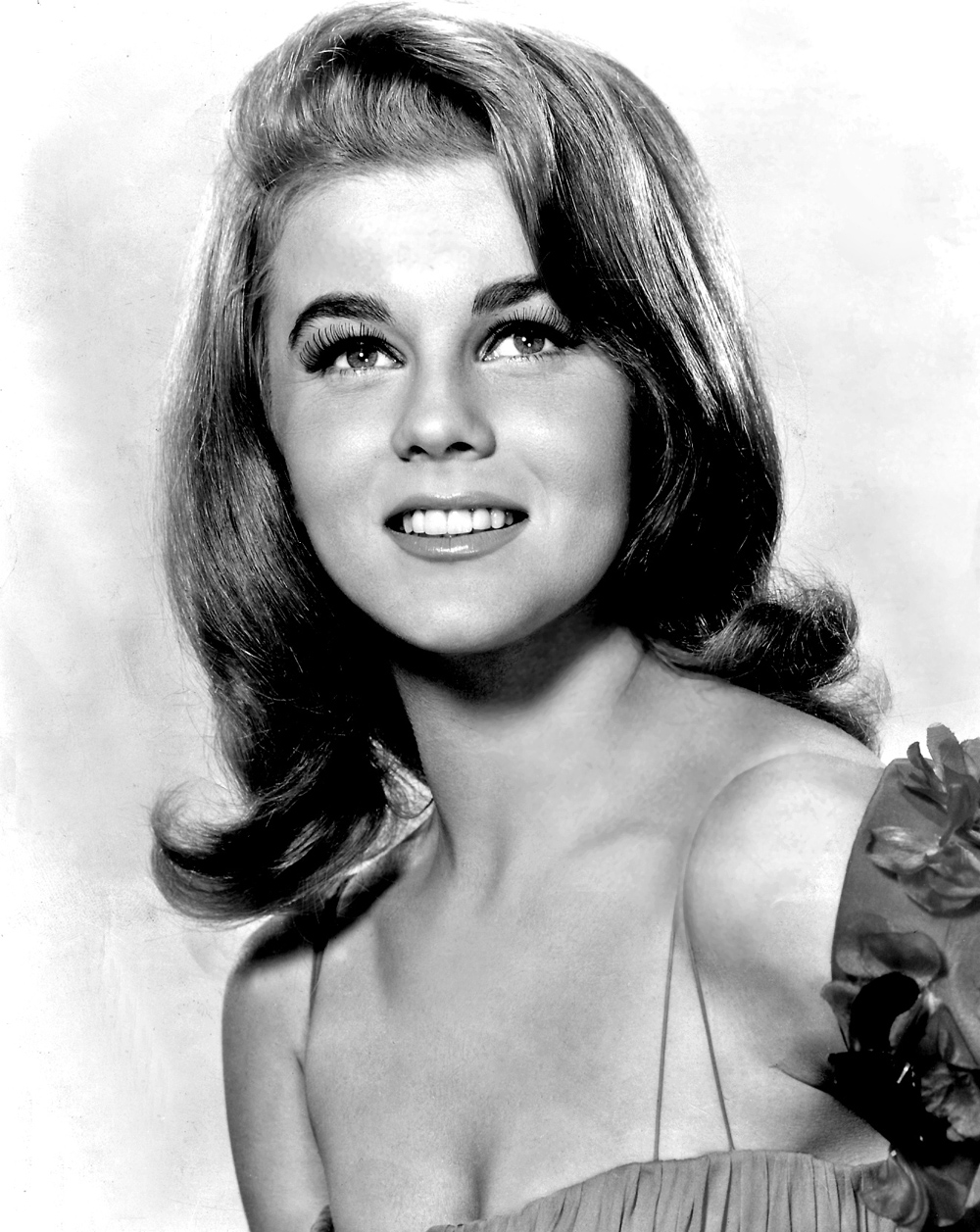
1960s publicity photo

Ann-Margret began recording for RCA Victor in 1961, first recording "Lost Love". Her debut album And Here She Is ... Ann-Margret was recorded in Hollywood, arranged and conducted by Marty Paich. Later albums were produced in Nashville with Chet Atkins on guitar, the Jordanaires (Elvis Presley's backup singers), and the Anita Kerr Singers, with liner notes by mentor George Burns. She had a sexy, throaty contralto singing voice,[10] and RCA Victor attempted to capitalize on the "female Elvis" comparison by having her record a version of "Heartbreak Hotel" and other songs stylistically similar to Presley's. She scored a minor success with "I Just Don't Understand" (from her second LP), which entered the Billboard Top 40 in August 1961 and stayed six weeks, peaking at number 17;[11] the song was later performed by the Beatles in 1963. In 1962, Ann-Margret was nominated for a Grammy Award for Best New Artist.[12]

Her only charting album was Beauty and the Beard (1964), on which she was accompanied by trumpeter Al Hirt. Other career highlights included appearing on The Jack Benny Program in 1961 and singing the Bachelor in Paradise theme at the 34th Academy Awards in 1962. Her contract with RCA Victor ended in 1966. In 1963, Life Magazine mentioned that her recordings had sold in excess of half a million units.[13]

In the late 1970s and early 1980s, she had hits on the dance charts, the most successful being 1979's "Love Rush", which peaked at number eight on the disco/dance charts.[14] In 2001, working with Art Greenhaw, she recorded the album God Is Love: The Gospel Sessions. The album went on to earn a Grammy nomination (forty years after her first) and also a Dove Award nomination for gospel album of the year. Her album Ann-Margret's Christmas Carol Collection, also produced and arranged by Greenhaw, was recorded in 2004.[15] 2011 saw the release of "God is Love: The Gospel Sessions 2"

In 2023, she went back into the studio to record a full-length album of new recordings for Cleopatra Records. "Born to Be Wild" featured 13 covers including "Splish Splash", "Earth Angel", "Son of A Preacher Man", and a new take on "Teach Me Tonight" featuring Pat Boone. Other guest performers included Pete Townshend, The Fuzztones, Paul Shaffer, The Oak Ridge Boys, and more.[16] The album was released on 14 April 2023, on vinyl, compact disc, and all streaming platforms.

Rapid rise to Hollywood stardom (1961–1964)

[edit]
Ann-Margret in a publicity photo from the 1960s

In 1961, Ann-Margret filmed a screen test at 20th Century Fox and was signed to a seven-year contract.[17] She made her film debut in a loan-out to United Artists in Frank Capra's Pocketful of Miracles with Bette Davis; it is a remake of Capra's own Lady for a Day (1933). For her performance Ann-Margret was awarded her first Golden Globe, for New Actress of the Year, alongside Jane Fonda and Christine Kaufmann.[18]

Then came a 1962 remake of Rodgers and Hammerstein's musical State Fair, in which she played the "bad girl" role of Emily opposite Bobby Darin and Pat Boone. She had previously tested for the part of Margie, the "good girl", but the studio bosses deemed her too seductive for that role.[19] In her autobiography, Ann-Margret wrote that the two roles seemed to represent the two sides of her real-life personality. She was shy and reserved offstage but wildly exuberant and sensuous onstage, transforming "from Little Miss Lollipop to Sexpot-Banshee", in her words.[20] In a 2021 retrospective of Ann-Margret's career for FilmInk, Stephen Vagg argued "she wasn't that well cast as a bad girl. Because she had so much energy and shape, producers thought she was; but she was more effective in parts closer to what she was in real life: an energetic good girl with a twinkle in the eye".[21]

Her performance as the all-American teenager Kim in Bye Bye Birdie (1963) made her a major star. Its premiere at Radio City Music Hall, 16 years after her first visit to the famed theater, was the highest first-week grossing film to date at the Music Hall. Life magazine put her on the cover for the second time and announced that the "torrid dancing almost replaces the central heating in the theater".[22][23] Her performance earned her a Golden Globe nomination for Best Actress. She was then asked to sing "Baby Won't You Please Come Home" at President John F. Kennedy's private birthday party at the Waldorf Astoria New York, one year after Marilyn Monroe's famous "Happy Birthday to You".[24] A few months later, Ann-Margret voiced an animated version of herself, named "Ann-Margrock", on the television series The Flintstones.[25] She sang the ballad "The Littlest Lamb" as a lullaby, as well as the rocker, "Ain't Gonna Be a Fool".

Ann-Margret met Elvis Presley on the MGM soundstage when the two filmed Viva Las Vegas (1964). Filmink argued "She had so much energy and pep that she had blown her previous three male co-stars off screen, but Elvis could match her. He was the best on-screen partner she ever had, and she was his".[21] She recorded three duets with Presley for the film: "The Lady Loves Me", "You're the Boss", and "Today, Tomorrow, and Forever"; only "The Lady Loves Me" made it into the final film and none of them were commercially released until years after Presley's death, due to concerns by Colonel Tom Parker that Ann-Margret's presence threatened to overshadow Elvis.[26] Choreographer David Winters was hired because Ann-Margret was his dance student and recommended him for the job.[27] It was Winters' first choreographer credit on film. He would go on to become a common collaborator for both Presley and Ann-Margret.

Decline in fortunes and European sojourn (1965–1969)

[edit]

Bye Bye Birdie and Viva Las Vegas had established Ann-Margret as Hollywood's biggest new star, but a string of box-office flops followed until October 1965. The first, Kitten with a Whip, saw Ann-Margret give a "balls-to-the-wall performance" as a juvenile delinquent who entraps a politician.[21] She followed up with The Pleasure Seekers, yet another musical romantic comedy. Ann-Margret was excited to do her next project, Bus Riley's Back in Town; its writer William Inge had penned her favorite film Splendor in the Grass (1961). However Inge was so infuriated by the result that he took his name off the credits of Bus Riley. She then featured in Once a Thief, a crime film intended to be a star-making vehicle for French actor Alain Delon in the United States.[21] The actress learned decades later that during this time she had been offered the title role in Cat Ballou, a critically acclaimed box-office smash that the American Film Institute ranked as the tenth greatest Western film of all time. Her agent had turned down the role without telling her.[28][29] Ann-Margret broke her flop streak with The Cincinnati Kid, in which she played a femme fatale opposite Steve McQueen. It was her first hit since Viva Las Vegas, but her role was not a large one.[21]

While she was working on Once a Thief, she met her future husband Roger Smith, who after his successful run on the private-eye television series 77 Sunset Strip, was performing a live club show at the hungry i on a bill with Bill Cosby and Don Adams. That meeting began their courtship, which was met with resistance from her parents.[30]

Ann-Margret performing for U.S. service personnel in Vietnam in 1966

Ann-Margret starred in four films in 1966. Made in Paris, the first of these, was a fashion-focused romantic comedy in which Ann-Margret received top billing. FilmInk attributes its box office failure to "dodgy writing and uninspiring male leads".[21] A month after its release, she teamed up with entertainers Chuck Day and Mickey Jones for a USO tour to entertain U.S. servicemen in South Vietnam and other parts of South-East Asia. A moderately successful remake of the classic John Ford Western Stagecoach followed, with Ann-Margret essaying the role of a prostitute. She then starred in the "hopelessly confused" sex comedy The Swinger which, in Stephen Vagg's words, "came close to killing her Hollywood career more than any other [film] by virtue of its sheer incompetence."[21] Ann-Margret ended 1966 by featuring in the hit Dean Martin–starrer Murderers' Row, a spy spoof. Looking at Ann-Margret's uneven draw at the box office, Vagg points out that after Viva Las Vegas, her roles in hit films "had been parts any girl could have played" but the star vehicles that were tailored for her were all flops.[21]

During a lull in her film career in July 1967, Ann-Margret gave her first live performance in Las Vegas, with her husband Roger Smith (whom she had married that May) taking over as her manager after that engagement. Elvis Presley and his entourage came to see her during the show's five-week run and celebrate backstage. According to Ann-Margret's autobiography, Presley sent her a guitar-shaped floral arrangement for each of her Vegas openings.[31] After the first Vegas run ended, she followed with a CBS television special The Ann-Margret Show, produced and directed by David Winters on 1 December 1968, with guest-stars Bob Hope, Jack Benny, Danny Thomas, and Carol Burnett. Then, she returned to Saigon as part of Hope's Christmas show. A second CBS television special followed, Ann-Margret: From Hollywood With Love, produced, directed and choreographed by David Winters, with guest-stars Dean Martin and Lucille Ball. David Winters and the show were nominated for a Primetime Emmy in Outstanding Choreography.[32]

Critical acclaim in supporting roles (1970s)

[edit]
Ann-Margret performing at a state dinner honoring the Shah of Iran in 1975

In 1970, she returned to films with R. P. M., where she starred alongside Anthony Quinn, and C.C. and Company with Joe Namath as a biker and her portraying a fashion journalist.

In 1971, she starred in Carnal Knowledge by director Mike Nichols, playing the girlfriend of a neglectful, arguably abusive character played by Jack Nicholson. She was nominated for the Academy Award for Best Supporting Actress and won the Golden Globe Award for Best Supporting Actress. Filmink argued this amounted to a comeback "in a way...because she never really regained her former status as an above-the-title star of feature films—her follow-up movies were 'girl' parts... the seventies were tough times for female stars who were not Barbra Streisand."[21]

On the set of The Train Robbers in Durango, Mexico, in June 1972, she told Nancy Anderson of Copley News Service that she had been on the "grapefruit diet" and had lost almost 20 pounds (134 to 115) eating unsweetened citrus.[33]

On Sunday, 10 September 1972, while performing at Lake Tahoe, she fell 22 feet (6.7 meters) from an elevated platform to the stage and suffered injuries including a broken left arm, cheekbone, and jawbone. She required meticulous facial reconstructive surgery that required wiring her mouth shut and putting her on a liquid diet. Unable to work for ten weeks, she returned to the stage almost back to normal.[34]

Throughout the 1970s, Ann-Margret balanced her live musical performances with a string of dramatic film roles that played against her glamorous image. In 1973, she starred with John Wayne in The Train Robbers. Then came the musical Tommy in 1975, for which she received her second Oscar nomination, this time for the Academy Award for Best Actress. In addition, she has been nominated for ten Golden Globe Awards, winning five, including her Best Actress – Motion Picture Comedy or Musical for Tommy. On 17 August 1977, Ann-Margret and Roger Smith traveled to Memphis to attend Elvis Presley's funeral.[35] Three months later, she hosted Memories of Elvis featuring abridged versions of the Elvis 1968 TV and Aloha from Hawaii specials.[36]

Other notable films she co-starred in during the late 1970s include Joseph Andrews (1977), The Last Remake of Beau Geste (1977), and the horror/suspense thriller Magic (1978) with Anthony Hopkins. She had a cameo in The Cheap Detective (1978).

Ann-Margret was an early choice of Allan Carr's to play the role of Sandy Dumbrowski in the 1978 film Grease. At 36 years of age when filming commenced, she was ultimately determined to be too old to convincingly play the role of a high school student. Twenty-eight-year-old Olivia Newton-John got the role instead, and the character was renamed "Sandy Olsson" (after Ann-Margret's birth surname) in her honor.[37]

For her contributions to the film industry, Ann-Margret received a motion picture star on the Hollywood Walk of Fame in 1973. Her star is located at 6501 Hollywood Boulevard.[38]

Television-movie era (1980s)

[edit]
Ann-Margret in 1988

Ann-Margret starred opposite Bruce Dern in Middle Age Crazy (1980). In 1982, she co-starred with Walter Matthau and Dinah Manoff in the film version of Neil Simon's play I Ought to Be in Pictures. That same year also saw the release of Lookin' to Get Out, filmed two years prior in 1980, in which she co-starred with Jon Voight and played the mother of a five-year-old Angelina Jolie in Jolie's screen debut. To round out 1982, she appeared alongside Alan Bates, Glenda Jackson, and Julie Christie in the film adaptation of The Return of the Soldier. She also starred in the TV movies Who Will Love My Children? (1983) and a remake of A Streetcar Named Desire (1984), winning Golden Globe Awards for both performances.

After Barbara Stanwyck won the Primetime Emmy Award for Outstanding Lead Actress in a Limited Series or Movie in 1983 for her role in The Thorn Birds, she mentioned Ann-Margret's performance in Who Will Love My Children?, stating at the podium "I would like to pay a personal tribute at this time to a lady who is a wonderful entertainer...I think she gave one of the finest, most beautiful performances I have ever seen...Ann-Margret, you were superb."[39][40]

In Twice in a Lifetime (1985) Ann-Margret portrayed a waitress for whom Gene Hackman's character left his wife. The next year she appeared as the wife of Roy Scheider's character in the crime thriller 52 Pick-Up. In 1987 she co-starred with Elizabeth Ashley (and also with Claudette Colbert, in the last on-screen role of the film legend's career) in the NBC two-part series The Two Mrs. Grenvilles. It earned Ann-Margret another Emmy Award nomination, this time for Outstanding Lead Actress in a Mini Series or a Special.

In 1989, an illustration of Oprah Winfrey appeared on the cover of TV Guide, and although the head was Oprah's, the body was from a 1979 publicity shot of Ann-Margret. The illustration was rendered so tightly in color pencil by freelance artist Chris Notarile that most people thought it was a composite photograph.[41]

Continuing film and television career (1990–present)

[edit]

In 1991, she starred in the TV film Our Sons opposite Julie Andrews as mothers of sons who are lovers, one of whom is dying of AIDS. In 1992, she co-starred with Robert Duvall and Christian Bale in the Disney musical Newsies. In 1993, Ann-Margret starred in the hit comedy Grumpy Old Men reuniting with Matthau and Jack Lemmon. Her character returned for Grumpier Old Men (1995), the equally successful sequel which this time co-starred Sophia Loren.

Ann-Margret published an autobiography in 1994 titled Ann-Margret: My Story,[42] in which she publicly acknowledged her battle with and ongoing recovery from alcoholism. She played Belle Watling in Scarlett (1994), a television miniseries loosely based on the 1991 book of the same name written by Alexandra Ripley as a sequel to Margaret Mitchell's 1936 novel Gone with the Wind. In 1995, Empire magazine ranked her tenth on its list of the 100 Sexiest Stars in film history.

She also filmed Any Given Sunday (1999) for director Oliver Stone, portraying the mother of football team owner Cameron Diaz. She filmed a cameo appearance for The Limey, but her performance was cut from the movie.[43]

Ann-Margret also starred in several television films, including Queen: The Story of an American Family (1993), Following Her Heart (1994), and Life of the Party (1999), the latter of which she received nominations for an Emmy Award, a Golden Globe Award, and a Screen Actors Guild Award.

In 2000, she recorded the theme song, a modified version of the Viva Las Vegas theme, to the live-action film The Flintstones in Viva Rock Vegas.[44]

She made guest appearances on the television show Touched by an Angel in 2000 and three episodes of Third Watch in 2003. In 2001, she made her first appearance in a stage musical, playing the character of brothel owner Mona Stangley in a new touring production of The Best Little Whorehouse in Texas. The production co-starred Gary Sandy and Ed Dixon. She played Jimmy Fallon's mother in the 2004 comedy Taxi, co-starring Queen Latifah. In 2001, Ann-Margret worked with Art Greenhaw on the album God Is Love: The Gospel Sessions. The project resulted in her second Grammy Award nomination and first Dove Award nomination for Best Album of the Year in a Gospel category. They teamed up again in 2004 for the album Ann-Margret's Christmas Carol Collection. She performed material from the album at two auditorium church services at Crystal Cathedral in Garden Grove, California, and broadcast worldwide on the program Hour of Power.[45]

In November 2005, Ann-Margret reunited with Chuck Day and Mickey Jones for an encore of their 1966 USO tour for veterans and troops at Nellis Air Force Base, Nevada.[46]

In 2006, Ann-Margret had supporting roles in the box-office hits The Break-Up with Jennifer Aniston and Vince Vaughn, and The Santa Clause 3 with Tim Allen. She also starred in several independent films, such as Memory (2006) with Billy Zane and Dennis Hopper. In 2009, she appeared in the comedy Old Dogs with John Travolta and Robin Williams.

Ann-Margret guest-starred in an episode of Law & Order: Special Victims Unit, "Bedtime", which first aired on 31 March 2010, on NBC.[47] She received her sixth Emmy nomination for her performance. She also appeared in the Lifetime series, Army Wives, in the episode "Guns and Roses" (season four, episode five), which originally aired 9 May 2010. On 29 August 2010, she won an Emmy, her first, for Guest Performance by an Actress for her SVU performance. The Emmy venue audience gave her a standing ovation.

On 14 October 2010, Ann-Margret appeared on CBS's CSI.[48]

In the fall of 2011, she co-starred with Andy Williams for a series of concerts at his Moon River Theater in Branson, Missouri. These proved to be Williams' last performances before his death in 2012.

In 2014, she began appearing in a recurring role in the Showtime original series Ray Donovan.[49] On 1 October 2018, it was announced that she had joined the second season of the Syfy series Happy! in a recurring role.[50]

In 2018, she guest-starred in The Kominsky Method, portraying Diane, a widow and possible love interest for the recently widowed Norman, played by Alan Arkin.

On 28 November 2023, she was a guest narrator of Disney's Candlelight Processional at Walt Disney World.[51]

Personal life

[edit]

Ann-Margret is a stepmother of the three children of her husband Roger Smith, an actor, who later became her manager. She and Smith were married for 50 years from 8 May 1967 until his death on 4 June 2017. Before her marriage to Smith, she dated Eddie Fisher,[52] was briefly engaged to Burt Sugarman,[53][54] and was romantically linked to Elvis Presley when they co-starred in the film Viva Las Vegas in 1964.[55]

Ann-Margret has given talks about her Swedish-American heritage, including her explorations of Swedish cuisine.[56]

A keen motorcyclist, Ann-Margret rode a 500 cc Triumph T100C Tiger in The Swinger (1966) and used the same model, fitted with a nonstandard electric starter, in her stage show and her TV specials. She was featured in Triumph Motorcycles' official advertisements in the 1960s. She suffered three broken ribs and a fractured shoulder when she was thrown off a motorcycle in rural Minnesota in 2000.[57]

In a 2012 interview, she stated, "All my life I've had this feeling, deep, deep, deep inside of me ...my faith and my feelings. ...I mean you go outside and you see flowers. You see the trees. You see all your loved ones, you see ...and then you think of Who created it all." She described her relationship with God, and with Jesus Christ as "something which is really important to me. If I thought that I would never see my mother and father again, I couldn't make it. I could not go a step further."[58]

On 14 May 2022, she was awarded an honorary doctoral degree in Humane Letters by the University of Nevada, Las Vegas.[59]

Portrayal

[edit]

The 2005 CBS miniseries Elvis includes the story of her affair with Elvis Presley during the filming of Viva Las Vegas. She was portrayed by the actress Rose McGowan. She also provided the voice of a fictionalized version of herself in a 1963 Flintstones episode "Ann-Margrock Presents".[25]

Filmography

[edit]

Film

[edit]
Year Title Role Notes
1961 Pocketful of Miracles Louise Golden Globe Award for New Star of the Year – Actress
1962 State Fair Emily Porter
1963 Bye Bye Birdie Kim McAfee Nominated – Golden Globe Award for Best Actress – Motion Picture Comedy or Musical
1964 Viva Las Vegas Rusty Martin
Kitten with a Whip Jody Dvorak
The Pleasure Seekers Fran Hobson
1965 Bus Riley's Back in Town Laurel
Once a Thief Kristine Pedak
The Cincinnati Kid Melba
1966 Made in Paris Maggie Scott
Stagecoach Dallas
The Swinger Kelly Olsson
Murderers' Row Suzie
1967 The Tiger and the Pussycat Carolina
1968 Mr. Kinky Maggie, a Hippy
Seven Men and One Brain Leticia
1969 Rebus Singer
1970 R. P. M. Rhoda
C.C. and Company Ann McCalley
1971 Carnal Knowledge Bobbie Golden Globe Award for Best Supporting Actress – Motion Picture
Nominated – Academy Award for Best Supporting Actress
Nominated – New York Film Critics Circle Award for Best Supporting Actress
1972 The Outside Man Nancy Robson
1973 The Train Robbers Mrs. Lowe
1975 Tommy Nora Walker Golden Globe Award for Best Actress – Motion Picture Comedy or Musical
Nominated – Academy Award for Best Actress
1976 The Twist Charlie Minerva
1977 Joseph Andrews Lady Booby Nominated – Golden Globe Award for Best Supporting Actress – Motion Picture
The Last Remake of Beau Geste Flavia Geste
1978 The Cheap Detective Jezebel Dezire
Magic Peggy Ann Snow Nominated – Saturn Award for Best Actress
1979 The Villain Charming Jones
1980 Middle Age Crazy Sue Ann Burnett Nominated – Genie Award for Best Performance by a Foreign Actress
1982 The Return of the Soldier Jenny Baldry
Lookin' to Get Out Patti Warner
I Ought to Be in Pictures Steffy Blondell
1985 Twice in a Lifetime Audrey Minelli
1986 52 Pick-Up Barbara Mitchell
1987 A Tiger's Tale Rose Butts
1988 A New Life Jackie Jardino
1992 Newsies Medda Larkson Nominated – Golden Raspberry Award for Worst Supporting Actress
1993 Grumpy Old Men Ariel Truax
1995 Grumpier Old Men Ariel Gustafson
1999 Any Given Sunday Margaret Pagniacci
2000 The Last Producer Mira Wexler
2001 A Woman's a Helluva Thing Claire Anders-Blackett
2002 Interstate 60 Mrs. James
2004 Taxi Mrs. Washburn
2005 Mem-o-re Carol Hargrave
2006 Tales of the Rat Fink Heartbreaker Voice role
The Break-Up Wendy Meyers
The Santa Clause 3: The Escape Clause Sylvia Newman
2009 All's Faire in Love Her Majesty the Queen
Old Dogs Martha
The Loss of a Teardrop Diamond Cornelia
2011 Lucky Pauline Keller
2017 Going in Style Annie
2018 Papa Barbara
2021 Queen Bees Margot

Box-office ranking

[edit]

For two years, Ann-Margret was voted by movie exhibitors as being among the more popular actors in the United States:

  • 1964 – 8th
  • 1965 – 17th[60]

Television

[edit]
Year Title Role Notes
1961 The Jack Benny Program Herself Episode: "Variety Show"
1962 The Andy Williams Special Herself Episode: "May 4, 1962"
1963 The Flintstones Ann-Margrock (voice) Episode: "Ann-Margrock Presents"[25]
1970 Here's Lucy Ann-Margret Episode: "Lucy and Ann-Margret"
1971 Dames at Sea Ruby TV adaptation of stage musical[61][62]
1983 Who Will Love My Children? Lucile Fray TV movie
Golden Globe Award for Best Actress – Miniseries or Television Film;
Nominated – Primetime Emmy Award for Outstanding Lead Actress in a Miniseries or a Movie
1984 A Streetcar Named Desire Blanche DuBois TV movie
Golden Globe Award for Best Actress – Miniseries or Motion Picture Made for Television
1987 The Two Mrs. Grenvilles Ann Arden Grenville Miniseries
Nominated – Golden Globe Award for Best Actress – Miniseries or Television Film
Nominated – Primetime Emmy Award for Outstanding Lead Actress in a Miniseries or a Movie
1991 Our Sons Luanne Barnes TV movie
1993 Alex Haley's Queen Sally Jackson 2 episodes
Nominated – Golden Globe Award for Best Supporting Actress – Series, Miniseries or Television Film
Nominated – Primetime Emmy Award for Outstanding Supporting Actress in a Miniseries or a Movie
1994 Scarlett Belle Watling Miniseries
Following Her Heart Ingalill "Lena" Lundquist TV movie
Nobody's Children Carol Stevens
1996 Blue Rodeo Maggie Yearwood
Seduced by Madness Diane Kay Borchardt Miniseries
1998 Life of the Party Pamela Harriman TV movie
Nominated – Golden Globe Award for Best Actress – Miniseries or Television Film
Nominated – Primetime Emmy Award for Outstanding Lead Actress in a Miniseries or a Movie
Nominated – Screen Actors Guild Award for Outstanding Performance by a Female Actor in a Miniseries or Television Movie
Four Corners Amanda "Maggie" Wyatt 2 episodes
1999 Happy Face Murders Lorraine Petrovich TV movie
2000 Perfect Murder, Perfect Town Nedra Paugh Miniseries
The 10th Kingdom Cinderella
Touched by an Angel Angela Episode: "Millennium"
Popular God Episode: "Are You There, God? It's Me Ann-Margret"
2001 Blonde Della Monroe Miniseries
2003 Third Watch Judge Barbara Halsted 3 episodes
2004 A Place Called Home Tula Jeeters TV movie
2010 Law & Order: Special Victims Unit Rita Wills Episode: "Bedtime"
Primetime Emmy Award for Outstanding Guest Actress in a Drama Series
Army Wives Aunt Edie Episode: "Guns & Roses"
CSI: Crime Scene Investigation Margot Wilton Episode: "Sqweegel"
2014 Ray Donovan June 2 episodes
2018 The Kominsky Method Diane 2 episodes
Nominated – Online Film & Television Association Award – Best Guest Actress in a Comedy Series
2019 Happy! Bebe DeBarge 2 episodes
2022 A Holiday Spectacular Grandma Margret TV Movie

Discography

[edit]

Albums

[edit]

Singles

[edit]
Title Year Peak chart positions
US
[65]
US AC
[65]
US Dance
[66]
JPN
[67]
CAN[68]
"Lost Love" 1961
"I Just Don't Understand" 17 6
"It Do Me So Good" 97[A]
"What Am I Supposed to Do" 1962 82 19
"Jim Dandy" [B]
"So Did I" 1963
"Bye Bye Birdie" / "Take All the Kisses" [C] 2
"Someday Soon" 1964
"Man's Favorite Sport"
"Hey Little Star" [D]
"Mister Kiss Kiss Bang Bang" 1966
"Sleep in the Grass" 1969 [E]
"Love Rush" 1979 8
"Midnight Message" 1980 12
"Everybody Needs Somebody Sometimes" 1981 22
"—" denotes a recording that did not chart or was not released in that territory

Soundtrack appearances

[edit]
  • State Fair (1962)
  • Bye Bye Birdie (1963)
  • The Pleasure Seekers (1965)
  • Rebus (1969)
  • C.C. & Company (1970)
  • Dames at Sea (1971)
  • Tommy (1975)
  • Newsies (1992)
  • The Flintstones in Viva Rock Vegas (2000)
  • The Best Little Whorehouse in Texas (2001)
  • Viva Las Vegas (LP reissue of Viva Las Vegas EP) (2007) (with Elvis Presley)
  • Going in Style (2017)

Theatre productions

[edit]

Orders

[edit]

Awards and nominations

[edit]
Year Association Category Nominated work Result
1961 Billboard Year-End Most Promising Female Vocalist Won[74]
1962 Grammy Award Best New Artist Nominated
Golden Laurel Top Female New Personality Won
Golden Globe Award Most Promising Newcomer – Female Won
1963 Golden Laurel Top Female Musical Performance State Fair Won
Top Female Star Nominated
1964 Top Female Comedy Performance Bye Bye Birdie Won
Top Female Star Nominated
Golden Globe Award Best Motion Picture Actress – Musical/Comedy Bye Bye Birdie Nominated
Photoplay Award Most Popular Female Star Won
1965 Golden Laurel Musical Performance, Female Viva Las Vegas Won
1966 Made in Paris Won
1967 Top Female Star Nominated
1972 Academy Award Best Actress in a Supporting Role Carnal Knowledge Nominated
Golden Globe Award Best Motion Picture Actress in a Supporting Role Won
1973 Hollywood Walk of Fame Motion Pictures Contributions to the film industry Inducted
1975 Academy Award Best Actress in a Leading Role Tommy Nominated
Golden Globe Award Best Motion Picture Actress – Musical/Comedy Won
1978 Best Motion Picture Actress in a Supporting Role Joseph Andrews Nominated
1979 Saturn Award Best Actress Magic Nominated
1981 Genie Award Best Performance by a Foreign Actress Middle Age Crazy Nominated
1983 Primetime Emmy Award Outstanding Lead Actress in a Limited Series or a Special Who Will Love My Children? Nominated
Golden Apple Award Female Star of the Year Won
1984 Primetime Emmy Award Outstanding Lead Actress in a Limited Series or a Special A Streetcar Named Desire Nominated
Golden Globe Award Best Performance by an Actress in a Mini-Series or Motion Picture Made for TV Who Will Love My Children? Won
1985 A Streetcar Named Desire Won
1987 Primetime Emmy Award Outstanding Lead Actress in a Mini Series or a Special The Two Mrs. Grenvilles Nominated
Women in Film Crystal Award For outstanding women who, through their endurance and the excellence of their work, have helped to expand the role of women within the entertainment industry.[75] Recipient
1988 Golden Globe Award Best Performance by an Actress in a Mini-Series or Motion Picture Made for TV The Two Mrs. Grenvilles Nominated
1993 Primetime Emmy Award Outstanding Lead Actress in a Mini Series or a Special Queen: The Story of an American Family Nominated
1994 Golden Globe Award Best Performance by an Actress in a Supporting Role in a Series, Mini-Series or Motion Picture Made for TV Nominated
1999 Primetime Emmy Award Outstanding Lead Actress in a Miniseries or a Movie Life of the Party: The Pamela Harriman Story Nominated
Golden Globe Award Best Performance by an Actress in a Mini-Series or Motion Picture Made for TV Nominated
1999 Screen Actors Guild Award Outstanding Performance by a Female Actor in a TV Movie or Miniseries Nominated
2001 Grammy Award Best Southern, Country, or Bluegrass Gospel Album God is Love: The Gospel Sessions Nominated
2002 GMA Dove Award Best Country Album Nominated
2005 CineVegas International Film Festival Centennial Award Won
2010 Primetime Emmy Award Outstanding Guest Actress in a Drama Series Law & Order: SVU: Bedtime Won
2013 Ft. Lauderdale International Film Festival Lifetime Achievement Award Recipient
2019 Online Film & Television Association Award Best Guest Actress in a Comedy Series The Kominsky Method Nominated

Notes

[edit]

References

[edit]

Bibliography

[edit]
[edit]
Revisions and contributorsEdit on WikipediaRead on Wikipedia
from Grokipedia
Ann-Margret (born Ann-Margret Olsson; April 28, 1941) is a Swedish-American actress, singer, and dancer renowned for her vibrant performances in film, television, and stage across seven decades. Born in Valsjöbyn, , she immigrated to the with her family after , settling in , where she developed an early passion for song and dance despite being an introverted child. After graduating high school in 1959 and briefly attending , she left to pursue music, performing with a band called the Suttletones and gaining attention from entertainer , who launched her career in 1959. Her breakthrough came in the early with a recording contract from RCA Victor and a film deal with 20th Century Fox, leading to her screen debut in (1961) and starring roles that defined her as a and versatile performer. Key films include (1963), her musical comedy debut; (1964), opposite , which showcased her energetic dance style; (1971), earning her first Academy Award nomination for Best Supporting Actress; and Tommy (1975), for which she received her second Oscar nod as . She also starred in later hits like Grumpy Old Men (1993) and appeared in television specials, amassing five and an Emmy for her guest role in Law & Order: (2010). In her personal life, Ann-Margret married actor Roger Smith in 1967, remaining with him until his death in 2017, and she raised his three children from a previous marriage. She faced significant challenges, including a near-fatal 22-foot fall during a performance in 1972 that left her in a for several days, yet she remarkably returned to work within weeks, demonstrating her resilience. Known for her USO tours to entertain troops in during the , she has been celebrated for her enduring contributions to , earning a star on the in 1973.

Early life

Childhood in Sweden

Ann-Margret was born Ann-Margret Olsson on April 28, 1941, in Valsjöbyn, a rural village in Jämtland County, northern . She was the only child of Anna Regina (née Aronsson) and Carl Gustav Olsson, a native of nearby Örnsköldsvik who worked as an for an electrical company. The family resided in Valsjöbyn, a small community of lumberjacks and farmers situated high near the , where life was simple and closely knit. Following the end of , faced significant economic difficulties, prompting Ann-Margret's father to immigrate to the in 1942 in search of better opportunities as an electrician. Ann-Margret and her mother stayed behind in during the war years, enduring the hardships of postwar recovery until they could reunite with her father. The family's decision to emigrate stemmed directly from these economic pressures, leading Ann-Margret and her mother to join him in when she was five years old in 1946.

Immigration and education in the United States

In November 1946, at the age of five, Ann-Margret Olsson immigrated to the from with her mother, Anna Regina Olsson, to join her father, Carl Gustav Olsson, who had arrived earlier during and secured employment as an electrician at the Johnson Electrical Company in the area. The family, seeking better opportunities after the hardships of wartime , settled in the suburb of , where they lived modestly, including a period residing above a funeral parlor where Anna later worked as a receptionist following her husband's on-the-job injury. They became naturalized U.S. citizens in 1949. Upon arrival, Ann-Margret encountered significant challenges adapting to life in America, particularly with the , which she did not speak, leading to an initially introverted phase as she navigated cultural differences and a new environment far from her rural Swedish roots. Her played a pivotal role in supporting the family's transition and nurturing Ann-Margret's emerging interests in the ; Anna harmonized traditional Swedish songs with her daughter at home and encouraged her participation in local activities to build confidence and skills. This familial emphasis on creativity helped mitigate the adjustment struggles, fostering Ann-Margret's passion for music and movement from an early age. Ann-Margret's formal education in the United States began in local schools before she enrolled at in nearby , from which she graduated in 1959. At , a prestigious public institution known for its strong arts programs, she discovered and developed her singing talent through participation in school revues, drama productions, and local talent contests, often performing on Chicago-area television shows like the Morris B. Sachs Amateur Hour. Complementing this, she received early dance training at the Marjorie Young School of Dance in Wilmette, where her natural aptitude for rhythm and expression became evident, laying the groundwork for her multifaceted performance abilities. These high school experiences marked the formative phase of her artistic growth, blending academic rigor with creative exploration in a supportive suburban setting.

Career

Music career beginnings

Ann-Margret's entry into the music industry began during her high school years in the late 1950s, when she performed in talent shows and school productions at in . After graduating in 1959 and enrolling as a freshman at , she formed a vocal group called the Suttletones with fellow students. The quartet performed locally in Chicago-area nightclubs, such as the Mist, blending swing standards and emerging rock elements, which honed her stage presence and vocal style. The Suttletones' big break came in 1960 when they secured a lounge engagement at the Dunes Hotel in , where comedian spotted Ann-Margret during a guest spot in his show. This led to her signing a with RCA Victor in early 1961, just before her 20th birthday. Her debut single, "Lost Love," was recorded that spring in Nashville under producers and Dick Pierce, followed by the more successful "," which peaked at number 17 on the in August 1961. RCA marketed her as a "female ," emphasizing her rockabilly-infused pop sound with energetic covers and original tracks. Her first album, And Here She Is: Ann-Margret, released in October 1961, featured a mix of upbeat pop, jazz standards, and rockabilly numbers like "Baby Won't You Please Come Home" and "Teach Me Tonight," showcasing her versatile voice and playful delivery. To promote her recordings, Ann-Margret embarked on live shows in Chicago clubs and national tours, including appearances on American Bandstand, where her dynamic, hip-shaking performances—clearly influenced by Elvis Presley's style—captivated audiences and built a dedicated fanbase among teenagers. These early gigs, often with a backing band echoing Presley’s sound, established her reputation for high-energy stagecraft before her music intertwined with her burgeoning film career.

Rise to stardom in film (1961–1964)

Ann-Margret made her screen debut in 1961's , directed by , where she portrayed Louise, the long-lost daughter of Bette Davis's character, Apple Annie. This supporting role, secured through a loan-out from 20th Century Fox to , marked her entry into Hollywood after a successful earlier that year. Following the film's release, her vibrant energy and musical talents impressed studio executives, leading to a seven-year contract with 20th Century Fox, which positioned her for leading roles in musicals that capitalized on her background in recording with RCA Victor. Her breakthrough came in 1962 with , a remake of the musical, in which she played Emily Porter, a lively carnival showgirl who brings a flirtatious edge to the story opposite and . The film highlighted her singing and dancing abilities in numbers like "Isn't It Kinda Fun?," establishing her as a charismatic presence in the genre. Building on this momentum, Ann-Margret starred as Kim MacAfee in 1963's , a screen adaptation of the Broadway hit, where she embodied the all-American teenager obsessed with rock star Conrad Birdie (Jesse Pearson). Her performance, blending innocence with emerging sensuality, earned her a Golden Globe nomination for in a Motion Picture – Musical or Comedy, solidifying her transition from supporting player to leading lady. The pinnacle of this period arrived in 1964 with , co-starring as race car driver Lucky Jackson, with Ann-Margret as Rusty Martin, a hotel singer and dancer. Their electric on-screen chemistry, evident in high-energy duets like "The Lady Loves Me" and dynamic dance sequences, showcased her multifaceted appeal—combining vocal prowess, athletic choreography, and undeniable sex appeal—while the film's success, grossing over $9 million worldwide, cemented her stardom. These roles collectively propelled Ann-Margret from a promising newcomer to a major Hollywood attraction, blending her musical roots with cinematic charisma to captivate audiences during the early .

Challenges and European work (1965–1969)

Following her peak stardom in 1964, where she ranked as the eighth most popular box-office draw , Ann-Margret encountered significant career setbacks in the mid-to-late due to a string of underperforming films and persistent as a vivacious "sex kitten" character. This image, while initially boosting her fame through energetic musicals like , limited her opportunities for diverse roles as audience tastes shifted toward more nuanced storytelling amid the evolving Hollywood landscape of the era. Films such as Made in Paris (1966), a set in where she portrayed a flirtatious fashion buyer, failed to capitalize on her charm and grossed poorly, exacerbating her challenges. The Swinger (1966), a sex comedy directed by that leaned heavily into her established persona as a provocative , became a notable box-office , nearly derailing her momentum with its confused tone and outdated premise. Similarly, (also known as Appointment in Beirut, 1968; released in some markets in 1969), an Italian-Spanish-German co-production crime thriller in which she played a sultry singer entangled in a casino heist plot, underperformed internationally and did little to advance her reputation beyond typecast roles. These flops highlighted how changing viewer preferences for grittier, less formulaic content clashed with the lightweight vehicles studios continued to assign her, prompting a temporary dip in her Hollywood viability. To reinvigorate her career, Ann-Margret pivoted toward European productions, seeking fresh opportunities away from American . The Pleasure Seekers (1964, released December 1964 but filmed earlier in , ), a musical comedy about American women abroad, marked an early foray into international settings, though it arrived amid her rising fame and offered limited dramatic depth. By 1967, she delved deeper into European cinema with films like The Tiger and the Pussycat (1967, Italian), where she explored a more restrained comedic role opposite , and The Prophet (1967, Italian-French), a satirical drama with that allowed tentative steps toward character-driven performances. These ventures, including the ensemble Seven Men and One Brain (1967, Italian title Sette uomini e un cervello), aimed to showcase her versatility in dramatic contexts but met with modest success outside Europe, reflecting broader difficulties in breaking her Hollywood mold.

Supporting roles and critical acclaim (1970s)

In the 1970s, Ann-Margret transitioned from leading roles to more complex supporting characters, showcasing her dramatic range and earning significant critical recognition. Her breakthrough in this vein came with the role of Bobbie in ' Carnal Knowledge (1971), where she portrayed the emotionally vulnerable girlfriend of Jack Nicholson's self-centered Jonathan, a part that contrasted sharply with her earlier glamorous personas. This performance was lauded for its depth and authenticity, with critics noting how she "steals the movie" through a nuanced depiction of desperation and heartbreak. For her work, Ann-Margret received her first Academy Award nomination for Best Supporting Actress in 1972, along with a Golden Globe win in the same category. Building on this momentum, Ann-Margret demonstrated her versatility in Ken Russell's rock opera adaptation Tommy (1975), playing Nora Walker, the devoted yet increasingly unhinged mother of the deaf, dumb, and blind protagonist (Roger Daltrey). The role fused musical performance with intense dramatic elements, including a memorable hallucinatory sequence involving baked beans, champagne, and soap suds that highlighted her physical and emotional commitment. Critics praised her "fine performance" amid the film's extravagant style, recognizing her ability to anchor the chaotic narrative with raw vulnerability. This turn earned her a second Academy Award nomination, this time for Best Actress in 1976. Ann-Margret continued exploring emotional complexity in other supporting roles, such as Melba in Norman Jewison's (1965), a poker drama where she played the flirtatious wife of Karl Malden's character, adding tension to the male-dominated ensemble; the film gained renewed appreciation in the 1970s for its character-driven dynamics. Later, in Richard Attenborough's (1978), she portrayed Peggy Ann Snow, the conflicted love interest of ventriloquist Corky (), bringing sensitivity to a story of isolation and madness. Her work in these films further established her beyond the image, emphasizing dramatic subtlety and relational nuance.

Television focus (1980s)

Building on her critical acclaim from supporting roles in 1970s films such as Tommy and Magic, Ann-Margret pivoted to television in the 1980s, embracing the medium's growing prominence for dramatic storytelling and allowing her to showcase deeper emotional range. This era marked her most prolific period in TV movies and specials, where she balanced intense dramatic performances with her signature song-and-dance flair, adapting to industry shifts toward made-for-TV productions that offered substantial lead roles for established stars. Ann-Margret's television breakthrough came in 1983 with the ABC biographical drama Who Will Love My Children?, in which she portrayed Lucile Fray, an farm wife diagnosed with terminal cancer who desperately arranges adoptions for her ten children in her final days. Based on a true story, the film highlighted her vulnerability and resilience, earning widespread praise for its heartfelt depiction of maternal sacrifice. For this role, she received a Primetime Emmy nomination for Outstanding Lead Actress in a Limited Series or a Special and won the Golden Globe Award for in a or Motion Picture Made for Television. The momentum continued in 1984 with her starring turn as the tormented in ABC's adaptation of ' A Streetcar Named Desire, co-starring as and as Stella. Ann-Margret's interpretation of the delusional, aristocratic antiheroine was lauded for its raw emotional depth and physicality, transforming the stage classic into a compelling small-screen drama. The performance garnered her another Emmy nomination in the same category and a second consecutive Golden Globe win for in a or Motion Picture Made for Television. Later in the decade, she led the 1987 NBC The Two Mrs. Grenvilles, playing chorus girl Ann Arden Grenville, whose marriage into New York high society unravels amid scandal and class conflict; the role, adapted from Dominick Dunne's novel, brought further Emmy and Golden Globe nominations, solidifying her reputation as a versatile dramatic actress. Complementing her dramatic work, Ann-Margret sustained her entertainer persona through musical variety specials and live stage appearances, blending her vocal and dance talents to appeal to diverse audiences. In 1980, she hosted the CBS special Ann-Margret: Hollywood Movie Girls, a lively tribute to classic film vixens featuring songs, comedy sketches, and guest stars like George Burns, Dom DeLuise, and Danny DeVito, which showcased her energetic choreography and charismatic hosting. She also guested on holiday specials, such as the 1981 NBC production The George Burns Early Early Early Christmas Special, performing duets and numbers that highlighted her playful rapport with Burns. Paralleling these TV efforts, Ann-Margret maintained high-profile residencies in Las Vegas, including runs at Caesars Palace in 1980 and 1988, where her revue-style shows incorporated elaborate song-and-dance routines, keeping her visible as a multifaceted performer amid her TV commitments.

Later film, television, and music work (1990–present)

In the 1990s, Ann-Margret revitalized her on-screen presence as the vivacious Ariel Truax in the hit comedy Grumpy Old Men (1993), opposite , marking a return to romantic leading roles after years focused on television. She reprised the character in the sequel (1995), which further showcased her comedic timing and enduring appeal as a love interest amid the film's buddy dynamic. Later film appearances included a deleted cameo as the ex-wife of Peter Fonda's character in Steven Soderbergh's (1999), where her scenes were ultimately cut to maintain narrative pace, though director Soderbergh later praised her performance. Ann-Margret returned to the big screen in 2017's , portraying the supportive Annie Santori in the heist comedy remake alongside , , and , earning positive notices for her warm, grounded portrayal. On television, Ann-Margret continued selective guest roles throughout the 1990s and 2000s, including appearances on (2000) as an inspirational figure and (2003) in multiple episodes as a resilient character navigating personal loss. Her dramatic work culminated in a standout guest performance on Law & Order: Special Victims Unit in 2010, earning her a Primetime Emmy Award for Outstanding Guest Actress in a Series—the first such win of her career—for her nuanced depiction of a complex family matriarch. Ann-Margret's music career experienced a notable resurgence in the 2020s with the release of her covers Born to Be Wild on April 14, 2023, via , featuring rock and pop classics from the 1950s to 1970s reinterpreted with guests like , Joe Perry, and ; the highlighted her still-vibrant vocal style and celebrated her rock 'n' roll roots. In recognition of her contributions to , she received an honorary from the , in May 2022, during commencement ceremonies, where she addressed graduates on perseverance and creativity. That holiday season, she narrated the Disney Candlelight Processional at on November 28, 2023, delivering excerpts from the Christmas story amid orchestral accompaniment and a , though she withdrew from the following day's due to scheduling conflicts. Complementing these milestones, Ann-Margret has maintained ongoing cabaret-style performances, including live appearances tied to her promotion and charity events, such as a 2025 fundraiser where she discussed her enduring stage energy.

Personal life

Marriage and family

Ann-Margret met actor Roger Smith in 1961, and the couple began dating in 1964 before marrying on May 8, 1967, in a private ceremony at the Riviera Hotel in . Their union, which lasted 50 years until Smith's death, was marked by mutual support and a commitment to privacy, with the couple rarely discussing personal details publicly. Smith, previously known for his role on the television series , transitioned into managing Ann-Margret's career shortly after their marriage, guiding her professional endeavors while prioritizing their family life. The couple had no biological children together but raised Smith's three children from his previous marriage—daughter Tracey and sons and —as a blended . Ann-Margret embraced her role as , instilling values of love and resilience in the children, who remained close to her throughout their lives. The resided primarily in a Benedict Canyon home in , which they purchased in 1968 and where Ann-Margret continued to live after Smith's passing. Roger Smith died on June 4, 2017, at age 84, at Sherman Oaks Hospital in , following a long battle with , a neuromuscular disorder he had been diagnosed with in 1965. Ann-Margret cared for him devotedly during his health struggles, maintaining their private family dynamic even as she balanced her career, a testament to the enduring partnership that defined their life together.

Health challenges and philanthropy

Ann-Margret has faced several significant health challenges throughout her life, most notably a severe in 1972 during a performance at a casino. While preparing for her show, she fell 22 feet from a faulty platform, suffering multiple facial fractures, a broken in two places, a broken left arm, a , and a deep gash on her knee; she was in a for three days following the incident. Surgeons performed on her face and at UCLA Medical Center, which lasted several hours and required her to be wired shut for recovery. The , compounded by the death of her father from cancer in 1973, exacerbated emotional struggles, contributing to a period of that she overcame by achieving sobriety in 1980. In 2000, Ann-Margret sustained further injuries in a accident while riding in , fracturing her shoulder and breaking three ribs after hitting sand on the road. Despite these setbacks, she demonstrated remarkable resilience, continuing to perform and ride motorcycles into her later years, including appearances as recent as 2025 at age 84, where she actively participated in events without reported mobility limitations. Ann-Margret has been deeply involved in philanthropy, particularly supporting causes related to health and veterans. She served as the national chairperson for the Myasthenia Gravis Division of the Muscular Dystrophy Association, raising awareness and funds for the neuromuscular disease that also affected her late husband, Roger Smith. Her commitment to veterans dates back to the Vietnam War era, when she toured with the USO in 1966 and 1968, performing for troops under dangerous conditions, including exposure to groundfire; she received the USO's Spirit of Hope Award in 2003 for her ongoing support. In recent years, she has continued her charitable efforts, making a notable appearance at Project Angel Food's 2025 Lead With Love fundraiser to support meal delivery services for those with critical illnesses.

Cultural impact and honors

Portrayals in media

Ann-Margret has incorporated elements of into her performances, playfully amplifying her iconic red-haired, leggy, and vivacious persona associated with her early image. In her 1968 television special The Ann-Margret Show, directed and choreographed by David Winters, she starred in a musical variety format featuring high-energy dance sequences and songs that exaggerated her sensual stage presence, blending humor with her signature style. Similarly, in the 1977 satirical comedy , adapted from Henry Fielding's novel, Ann-Margret portrayed the debauched aristocrat Lady Booby, a role that comically riffed on her established reputation for portraying alluring, flirtatious characters. Portrayals of Ann-Margret by other performers in media often highlight her dynamic energy and cultural associations, particularly her on-screen chemistry with Elvis Presley in Viva Las Vegas. Comedian Kristen Wiig delivered memorable impersonations on Saturday Night Live, capturing Ann-Margret's distinctive, fluid dance movements and breathy vocal delivery; a notable 2011 sketch depicted Wiig as Ann-Margret struggling to discard a piece of paper, parodying her exuberant physicality from musical numbers. In biographical depictions of Presley, such as the 2005 CBS miniseries Elvis, Rose McGowan played Ann-Margret, emphasizing their intense professional and romantic connection during the filming of Viva Las Vegas. Ann-Margret's evolution from sex symbol to lasting entertainment icon has inspired cultural references in music videos, advertisements, and tributes that evoke her as a symbol of glamorous vitality. Her red-haired, athletic allure and free-spirited performances have been alluded to in media evoking mid-century Hollywood sensuality, reinforcing her enduring influence. In a contemporary nod to this legacy, Ann-Margret endorsed to portray her in a potential biopic, praising the actress's ability to capture her fiery essence.

Awards and distinctions

Ann-Margret has received numerous accolades throughout her career, recognizing her contributions to film, television, and music. She earned two Academy Award nominations: for Best Supporting Actress for her role in Carnal Knowledge (1971) at the in 1972, and for for her performance in Tommy (1975) at the in 1976. She is a five-time Golden Globe winner, with honors spanning her early breakthrough and later dramatic roles. In 1962, she won the New Star of the Year – Actress award for . She received a nomination for in a Motion Picture – Musical or Comedy for (1963) in 1964. Additional Golden Globe victories include in a Motion Picture – Drama for Carnal Knowledge (1971) in 1972, and in a Motion Picture – Musical or Comedy for Tommy in 1975. She also won in a Miniseries or Motion Picture Made for Television for Who Will Love My Children? (1983) in 1984 and (1984) in 1985. Other notable honors include a star on the , unveiled on July 11, 1973, at 6501 for her motion picture contributions. Reflecting her Swedish heritage, Ann-Margret was awarded the in 1988 by King Carl XVI Gustaf of for promoting Swedish culture abroad. In 2022, the (UNLV) conferred upon her an honorary during its spring commencement, honoring her six-decade career and ties to the entertainment industry. In 2024, she received the Cinecon Legacy Award at Cinecon 61 for her career achievements. In 2025, Ann-Margret served as the ambassador for the Daytime Beauty Awards and received a tribute at the 7th annual event.
AwardYearCategory/WorkResult
Academy Award1972Best Supporting Actress, Nomination
Academy Award1976Best Actress, TommyNomination
Golden Globe1962New Star of the Year – Actress, Win
Golden Globe1972Best Actress – Motion Picture Drama, Win
Golden Globe1975Best Actress – Motion Picture Musical or Comedy, TommyWin
Golden Globe1984Best Actress – Miniseries or TV Movie, Who Will Love My Children?Win
Golden Globe1985Best Actress – Miniseries or TV Movie, Win
Hollywood Walk of Fame1973Motion PicturesStar
Royal Order of the Polar Star1988Cultural PromotionHonor
UNLV Honorary Degree2022Doctor of Humane LettersHonorary
Cinecon Legacy Award2024Career AchievementsWin
Daytime Beauty Awards2025Ambassador and TributeHonor

Filmography

Feature films

Ann-Margret's feature film career spans over six decades, beginning with a supporting role in her debut and evolving through musicals, dramas, and comedies. Her early work in the prominently featured musicals that showcased her singing and dancing talents, while the marked a shift to more dramatic roles earning critical acclaim. From the onward, she embraced comedic supporting parts in ensemble casts, often bringing vivacity to older characters. The following table lists her theatrical feature films chronologically, including key details and notes on significant aspects such as genre emphasis or awards recognition.
YearTitleRoleDirectorNotes
1961Pocketful of MiraclesLouise WarrenFrank CapraDebut film; supporting role as Bette Davis's daughter in this Capra comedy-drama remake.
1962State FairEmily "Em" PorterJosé FerrerMusical remake; portrayed a farm girl in this family-oriented musical.
1963Bye Bye BirdieKim McAfeeGeorge SidneyStar-making musical role as a teenager idolizing a rock star; earned Golden Globe nomination for New Star of the Year – Actress.
1964Viva Las VegasRusty MartinGeorge SidneyIconic 1960s musical opposite Elvis Presley; highlighted her energetic dance sequences.
1964Kitten with a WhipJody DvorakDouglas HeyesNoir thriller; played a fugitive on the run, diverging from her musical persona.
1965Bus Riley's Back in TownLaurel McKayeHarvey HartDrama; role as a former girlfriend in this coming-of-age story.
1965Once a ThiefKristine MundtRalph NelsonCrime drama; supporting role opposite Alain Delon.
1965The Pleasure SeekersFran HobsonJean NegulescoMusical comedy; one of three young women seeking romance in Spain.
1965The Cincinnati KidMelbaNorman JewisonSupporting role in poker drama with Steve McQueen; early dramatic turn.
1966Made in ParisMaggie ScottBoris SagalRomantic comedy; fashion buyer entangled in love abroad.
1966StagecoachDallasGordon DouglasRemake of the Western classic; portrayed the saloon singer opposite John Wayne.
1966The SwingerKelly OlssonGeorge SidneyComedy; journalist posing as a wild writer to boost her career.
1967The Tiger and the PussycatCarolinaDino RisiItalian comedy; generational romance with Vittorio Gassman.
1970C.C. and CompanyAnnSeymour RobbieBiker action film; brief appearance as a love interest.
1970R.P.M.RhodaStanley KramerDrama; graduate student in a campus unrest story.
1971Carnal KnowledgeBobbieMike NicholsPivotal 1970s drama; role as a free-spirited woman earned Academy Award nomination for Best Actress.
1973The Train RobbersMrs. LoweBurt KennedyWestern; widow seeking to recover stolen gold opposite John Wayne.
1975TommyNora WalkerKen RussellRock opera musical; mother figure in The Who's adaptation, won Golden Globe for Best Actress in a Motion Picture – Musical or Comedy.
1976The Last Remake of Beau GesteIsabellaMarty FeldmanParody comedy; supporting role in this Foreign Legion spoof.
1978MagicPegRichard AttenboroughPsychological thriller; girlfriend to a ventriloquist dummy's owner, co-starring Anthony Hopkins.
1980The VillainCharming JonesHal NeedhamWestern comedy; damsel in animated-style chase sequences.
1982I Ought to Be in PicturesSteffy BlondellHerbert RossComedy-drama; aspiring actress reuniting with her father in Hollywood.
1985Twice in a LifetimeAudreyBud YorkinDrama; explores marital infidelity and family dynamics.
198652 Pick-UpBarbara MitchellJohn FrankenheimerNeo-noir thriller; wife caught in extortion plot.
1990A Tiger's TaleRose DelvecchioPeter DouglasComedy; mother in a controversial teen romance story.
1992NewsiesMedda LarksonKenny OrtegaMusical; vaudeville performer supporting newsboy strike.
1993Grumpy Old MenAriel GustafsonDonald Petrie1990s comedy hit; feisty neighbor sparking rivalry.
1994Grumpier Old MenAriel GustafsonHoward DeutchComedy sequel; reprised her role amid escalating neighbor antics.
1999Any Given SundayMargaret PagniacciOliver StoneSports drama; team owner's wife in high-stakes football world.
2000The Last ProducerMira ReynoldsBurt ReynoldsComedy; Hollywood insider in a tale of fading stardom.
2001A Woman's a Helluva ThingClaire Anders-BlackettTim MathesonDrama; complex character in a story of regret and redemption.
2004TaxiMrs. WashburnTim StoryAction comedy; eccentric mother in a high-speed chase film.
2006The Break-UpWendyPeyton ReedRomantic comedy; friend offering advice in a couple's split.
2006The Santa Clause 3: The Escape ClauseSylviaMichael LembeckFamily holiday comedy; mother-in-law to Santa Claus.
2008The Loss of a Teardrop DiamondCorneliaJodie MarkellPeriod drama; wealthy Southern belle based on Tennessee Williams' work.
2009Old DogsMarthaWalt BeckerFamily comedy; eccentric character in a custody adventure.
2009All's Faire in LoveMrs. BanksScott MarshallRomantic comedy; dean at a Renaissance fair college.
2011LuckyPaulineGil Cates Jr.Drama; mentor figure in a story of life's second chances.
2017Going in StyleAnnieZach BraffHeist comedy remake; love interest in retirees' bank robbery tale.
2021Queen BeesMargotMichael LembeckComedy; newcomer to a retirement community clique.

Television appearances

Ann-Margret's television career spanned over five decades, beginning with vibrant variety specials in the late that showcased her singing and dancing talents, evolving into dramatic roles in TV movies and during the and , and later including guest spots on series and voice work. Her early TV work often blended musical performance with , reflecting her stage background, while later appearances highlighted her versatility in more serious narratives. She received multiple Emmy nominations for her television performances, underscoring her impact on the medium. In 1968, Ann-Margret starred in her first network variety special, The Ann-Margret Show, which featured guest appearances by , , and , and highlighted her energetic musical numbers. This was followed in 1969 by Ann-Margret: From Hollywood with Love, a special where she portrayed a journey to stardom, performing alongside guests like and , earning an Emmy nomination for choreography. During the 1970s, she continued with specials such as Ann-Margret: When You're Smiling (1973), a musical to her influences, and the TV adaptation Dames at Sea (1971), where she played the lead role of Ruby in this comedy. These variety formats dominated her and 1970s output, allowing her to perform original songs and medleys in a lively, revue-style presentation. Transitioning to drama in the 1980s, Ann-Margret earned critical acclaim for her role as Lucille Fray in the TV movie Who Will Love My Children? (1983), portraying a mother battling cancer, which garnered her first Emmy nomination for Outstanding Lead Actress in a Limited Series or Special. She followed this with a standout performance as in the 1984 TV adaptation of , opposite , earning another Emmy nomination for the same category and a Golden Globe win. Other notable 1980s TV movies included (1987), where she played Ann Grenville in this miniseries based on Dominick Dunne's novel, resulting in yet another Emmy nomination. These roles marked her shift toward character-driven dramas, often exploring themes of family and resilience. The 1990s saw Ann-Margret in prominent and TV films, including her portrayal of Sally Jackson in Queen (1993), a about and adapted from Alex Haley's , which brought her a fifth Emmy nomination for Outstanding Supporting Actress in a or Special. She also starred in Following Her Heart (1994) as a widow starting anew and (1996) as a reclusive , both Hallmark-style TV movies emphasizing emotional depth. In the , her TV work included guest roles, such as in (2000), and the TV movie A Woman's a Helluva Thing (2001), where she played a fading singer. Later in her career, Ann-Margret incorporated voice work and series guest appearances, voicing a character in an episode of as early as 1963 and returning to animation sporadically. In 2017, she guest-starred as Bebe DeBarge in the animated series Happy!, blending her musical flair with dark comedy. Her Emmy-winning performance came in 2010 for Outstanding Guest Actress in a Drama Series, playing Rita Wills in the "Bedtime Story" episode of Law & Order: Special Victims Unit (2009), a role that highlighted her dramatic range in a procedural context. More recently, she appeared as Diane in two episodes of (2018–2019), a series, and had a recurring role as Mary in (2024), an Apple TV+ comedy-drama set in 1960s . These later works demonstrated her enduring appeal in both scripted series and limited formats.

Box office performance

Ann-Margret's box office performance peaked during the 1960s, driven by her roles in high-energy musicals that capitalized on her vibrant screen presence and singing talents. Her early films established her as a major draw, with Bye Bye Birdie (1963) grossing $13.1 million domestically, making it one of the year's top performers and contributing to her rapid rise as a teen idol. Similarly, Viva Las Vegas (1964), co-starring Elvis Presley, earned $9.4 million domestically and ranked 14th among the highest-grossing films of 1964, solidifying her appeal in the musical genre. These successes reflected broader trends in Hollywood's embrace of youth-oriented musicals during the era. In exhibitor polls, Ann-Margret's popularity was evident; she ranked 8th in the 1964 Quigley Top Ten Money-Making Stars, based on theater owners' assessments of drawing power. Adjusted for inflation, equates to approximately $132 million in 2017 dollars, underscoring its enduring commercial impact relative to production costs of around $1 million. similarly adjusts to about $130 million in equivalent terms, highlighting how her output generated substantial returns amid a competitive market for musical entertainment. Her career saw a notable resurgence in the through comedic roles that leveraged her established charisma. Films like Grumpy Old Men (1993) grossed $70.2 million domestically, benefiting from strong ensemble appeal and word-of-mouth success in the holiday season release. This trend continued with (1995), which earned $71.5 million domestically, demonstrating her ability to draw audiences to lighthearted ensemble comedies later in her career. Overall, Ann-Margret's amassed over $967 million in worldwide across 33 features, with the 1960s musicals and comedies representing her most lucrative phases.

Discography

Studio and compilation albums

Ann-Margret's studio albums span over six decades, beginning with her pop-oriented debut in the early 1960s and evolving through , , , and rock influences, often featuring collaborations that highlighted her versatile voice. Released primarily under major labels like RCA Victor and MCA, these recordings captured her transition from a teen idol to a mature performer, with production emphasizing big-band arrangements and duet dynamics. While most did not achieve significant chart success, select releases like Beauty and the Beard marked her highest peaks on the 200. Compilations, issued later in her career, have preserved her key tracks for retrospective audiences.

Studio Albums

Ann-Margret's studio output reflects her multifaceted musical style, from upbeat pop to introspective sessions. Her debut, And Here She Is... Ann-Margret, was recorded in Hollywood and featured standards and contemporary tunes arranged to suit her youthful energy. Subsequent RCA releases in the incorporated film-inspired themes and collaborations, such as the duet album Beauty and the Beard with trumpeter , arranged by and peaking at No. 84 on the 200. By the late , she explored country with on The Cowboy & the Lady. After a hiatus, her 1980 self-titled album marked a genre shift, followed by projects in the . Her 2023 release, , a rock covers collection featuring guests like , debuted at No. 93 on the Top Album Sales chart, her first charting album since 1964.
TitleRelease YearLabelChart Peak (Billboard)Notes
And Here She Is... Ann-Margret1961RCA VictorDid not chartDebut album; pop and standards focus.
On the Way Up1962RCA VictorDid not chartUpbeat pop tracks showcasing early vocal style.
The Vivacious One1962RCA VictorDid not chartJazz-influenced selections.
Bachelors' Paradise1963RCA VictorDid not chartTied to film soundtrack elements; .
Beauty and the Beard (with )1964RCA VictorNo. 84 ()Duet album; arranged by ; highest charting to date.
David Merrick Presents Hits from His Broadway Shows (with )1964RCA VictorDid not chartBroadway medley-style recordings.
Songs from "The Swinger" and Other Swingin' Songs1966RCA VictorDid not chartSwing and pop tunes linked to her film role.
The Cowboy & the Lady (with )1969LHI RecordsDid not chartCountry duets; produced by Hazlewood.
Ann-Margret1980Did not chartDisco-oriented; first album in over a decade.
God Is Love: The Gospel Sessions2001Greenhaw ProductionsDid not chart album; faith-based themes.
2023No. 93 (Top Album Sales)Rock covers; features duets with artists like Joe Perry; independent release vibe.

Compilation Albums

Compilations of Ann-Margret's work emerged in the late and continued into the , aggregating her RCA-era hits and rarities for new generations. Early efforts like The Best of Ann-Margret captured her pop success, while later releases from Legacy and Real Gone Music emphasized remastered tracks and thematic groupings. These collections often include soundtrack contributions from films like , providing context to her multimedia career without delving into individual singles.
TitleRelease YearLabelNotes
The Best of Ann-Margret1969RCA VictorEarly hits compilation from her debut era.
The Essential Ann-Margret2016RCA/LegacyDigital retrospective of key tracks.
The Definitive Collection2017Real Gone MusicComprehensive overview with rarities.

Singles

Ann-Margret issued more than 20 standalone singles across her recording career, beginning with RCA Victor in the early 1960s and continuing with various labels into the 1980s. These releases primarily featured upbeat pop, rockabilly, and jazz standards, often as covers of earlier hits, alongside original compositions and duets that highlighted her energetic vocal style. While only a handful achieved significant commercial success on the Billboard Hot 100, her later disco-influenced tracks found success on the Dance Club Songs chart, and collaborations with artists like Al Hirt and Lee Hazlewood added variety to her output. Her breakthrough single, "I Just Don't Understand," a cover of Jimmy Reed's 1960 R&B track, reached No. 17 on the in 1961, marking her first major hit and showcasing her ability to blend rock and pop elements. Follow-up releases like "It Do Me So Good" (No. 97 Hot 100) and "What Am I Supposed to Do" (No. 82 Hot 100, No. 19 Adult Contemporary) demonstrated her early chart presence, though subsequent 1960s singles such as "Jim Dandy" and "" failed to chart despite promotional tie-ins to her film roles. Duets included the 1964 jazz-infused "Personality" with and 1969's country-tinged "Sleep in the Grass" and "The Dark End of the Street" with , the latter a cover of the soul classic by James Carr. In the late 1970s and , Ann-Margret pivoted toward , with "Love Rush" peaking at No. 8 on the chart in 1979 and "Midnight Message" reaching No. 12 in 1980; these tracks, produced with electronic elements, reflected evolving pop trends. Non-charting later singles included 1980's duet "Splish Splash" with , a playful cover of Bobby Darin's 1958 hit, and occasional holiday-themed releases like contributions to seasonal compilations, though no standalone holiday singles charted prominently. Overall, her singles discography underscores her transition from to versatile entertainer, with many tracks later appearing on compilation albums.
YearA-SideB-SideChart PeakLabelNotes
1961I Don't Hurt AnymoreNo. 17 (Hot 100)RCA Victor 47-7894Cover of ; her biggest hit single.
1961It Do Me So GoodGimme LoveNo. 97 (Hot 100)RCA Victor 47-7952Upbeat pop track.
1962What Am I Supposed to DoLet's Stop Kidding Each OtherNo. 82 (Hot 100), No. 19 (AC)RCA Victor 47-7986 with adult contemporary appeal.
1963Take All the Kisses-RCA Victor 47-8168Tied to her film role; cover from the musical.
1964Personality (with )Tain't What You Do-RCA Victor 47-2690 duet cover of original.
1969The Dark End of the Street (with )Victims of the Night-LHI LHI-5Cover of James Carr's soul hit.
1979Love RushFor YouNo. 8 () America CM-279 single; extended mix released.
1980Midnight MessageWhat I Do to MenNo. 12 ()MCA 41223Dance track with 12-inch version.
1980Splish Splash (with )--Epic 9-50864Duet cover of classic.

Soundtrack contributions

Ann-Margret's contributions to film soundtracks began prominently with her debut musical role in (1963), where she portrayed Kim MacAfee and delivered several vibrant performances on the original motion picture soundtrack. Notable among these is "A Lot of Livin' to Do," a lively ensemble number she shared with co-stars Jesse Pearson and , capturing the youthful exuberance central to the film's plot about a rock star's farewell tour. She also led tracks like the title song "" and "One Boy," showcasing her versatile vocal range in a mix of solo and group arrangements composed by with lyrics by Lee Adams. The RCA Victor soundtrack album highlighted her emergence as a recording artist tied to cinema, blending pop and Broadway styles. Her soundtrack work reached a commercial peak in Viva Las Vegas (1964), opposite Elvis Presley, where she contributed to multiple songs that amplified the film's high-energy musical sequences. The standout duet "The Lady Loves Me," penned by Doc Pomus and Mort Shuman, featured playful banter between the leads, emphasizing their on-screen chemistry as rival entertainers in Las Vegas. Ann-Margret also performed solo numbers such as "Appreciation," a sultry showcase of her interpretive dancing and singing, and "My Rival," adding to the soundtrack's rock 'n' roll flair produced by George Stoll for MGM Records. These recordings not only supported the movie's narrative of romance and competition but also helped the soundtrack achieve enduring popularity in Presley's discography. A pivotal later contribution came with Tommy (1975), the screen adaptation of The Who's rock opera directed by Ken Russell, in which Ann-Margret portrayed the protagonist's mother, Nora. On the Polydor soundtrack, she sang key tracks including the haunting "Mother and Son" with Roger Daltrey, the celebratory "Champagne," and the holiday-themed "Christmas," often in collaboration with Oliver Reed and a children's chorus. Her vocals on "Do You Think It's Alright?" and "Smash the Mirror" conveyed the character's emotional turmoil and maternal devotion, integrating seamlessly with the rock elements composed by Pete Townshend.) This role marked a shift toward more dramatic musical performances in her career, with the soundtrack's eclectic ensemble—featuring artists like Tina Turner and Elton John—earning acclaim for its innovative fusion of opera and pop. In subsequent decades, Ann-Margret continued selective involvement, such as her rendition of "My Lovey-Dovey Baby" in the musical (1992), a period piece where her warm, nostalgic delivery complemented the film's turn-of-the-century newsboy strike story. While not tied to a Grammy nomination for her personally, her broader efforts, including those in Tommy, contributed to the lasting impact of these films' musical elements, reflecting her enduring appeal across genres from musical comedy to .

Stage and live performances

Theatre roles

Ann-Margret's foray into theatre was relatively brief, occurring primarily in the early 2000s after decades of prominence in film and television, where she demonstrated versatility through scripted dramatic readings and musical performance. Her stage work emphasized character-driven narratives and live audience interaction, highlighting her ability to convey emotional nuance and charisma without the safety net of multiple takes. The following year, Ann-Margret took on her first role as Miss Mona Stangley in the national touring revival of and Peter Masterson's The Best Little Whorehouse in Texas, which opened on February 13, 2001, and concluded on May 12, 2002, after visiting over 40 cities. As the resilient, flirtatious madam defending her establishment against a crusading preacher, she delivered powerhouse renditions of songs like "Hard Candy Christmas," blending sultry vocals, high-energy dance numbers, and comedic timing that critics lauded as a natural extension of her screen persona. The production, directed by Randal Myler with musical direction by Keith Levenson, marked a triumphant return to live performance for Ann-Margret, who at age 60 infused the character with wit and vulnerability, contributing to the tour's success and a release.

Concert and cabaret appearances

Ann-Margret began her live performance career in cabaret venues during her late teens, singing and dancing with her family's band, The Suttletones, at clubs in Reno, , and starting in 1959. At age 18, she auditioned for comedian in the lounge of the Dunes Hotel in , leading to a 10-night engagement at the Sahara Hotel later that year, where she received enthusiastic reviews for her energetic style and vocal talent. Her breakthrough in Las Vegas came in 1967, when she headlined her first major show at the Riviera Hotel on July 7, shortly after her marriage there earlier that year. This engagement, produced with her husband Roger Smith, marked the start of her reputation as a top draw in the city, blending sultry songs, high-energy dances, and motorcycle stunts that echoed her film persona. She continued performing regularly at prominent Las Vegas hotels, including the Riviera through 1969, the Dunes, the International Hotel (later the Las Vegas Hilton), and Caesars Palace, earning her the nickname "The Queen of Vegas" for her commanding stage presence and sold-out runs from the late 1960s into the 1970s. A notable incident occurred during a November 1972 show at a Lake Tahoe casino, where she fell 22 feet from a platform, entering a coma but recovering to return to the stage weeks later. Beyond , Ann-Margret embarked on national tours and one-off concerts, showcasing her act in theaters across the U.S. In 1971, she performed at the International Hotel in , delivering a set that included hits like "My Baby's Comin' Home" and covers of standards. Her 1983 national tour brought her to major venues, including a multi-night stand at Chicago's , where she mixed personal anecdotes with renditions of her film songs and rock numbers. By the early 1990s, she adapted her Vegas-style for broader audiences, headlining a 1991 concert at New York City's with , featuring a toned-down yet charismatic performance of classics like "Baby Love" and original material. In the mid-2000s, Ann-Margret maintained an active concert schedule, appearing at venues like the McCallum Theatre in , in November 2003 and Ruth Eckerd Hall in , in January 2004. She returned to for shows at The Orleans Hotel & Casino in November 2006, continuing her tradition of intimate sets with big-band arrangements.

References

Add your contribution
Related Hubs
User Avatar
No comments yet.