Hubbry Logo
AnointingAnointingMain
Open search
Anointing
Community hub
Anointing
logo
8 pages, 0 posts
0 subscribers
Be the first to start a discussion here.
Anointing
Anointing
from Wikipedia
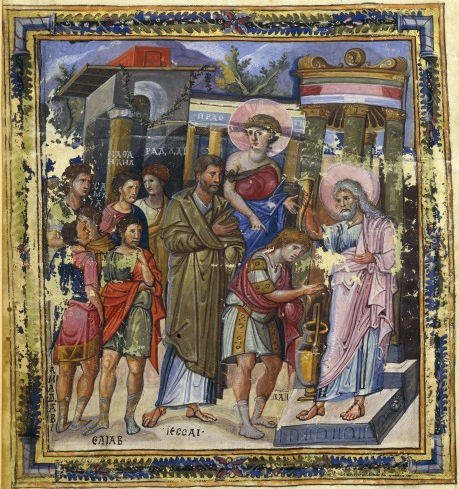
The Anointing of David, from the Paris Psalter, 10th century (Bibliothèque Nationale, Paris)

Anointing is the ritual act of pouring aromatic oil over a person's head or entire body.[1] By extension, the term is also applied to related acts of sprinkling, dousing, or smearing a person or object with any perfumed oil, milk, butter, or other fat.[2] Scented oils are used as perfumes and sharing them is an act of hospitality. Their use to introduce a divine influence or presence is recorded from the earliest times; anointing was thus used as a form of medicine, thought to rid persons and things of dangerous spirits and demons which were believed to cause disease.

In present usage, "anointing" is typically used for ceremonial blessings such as the coronation of European monarchs. This continues an earlier Hebrew practice most famously observed in the anointings of Aaron as high priest and both Saul and David by the prophet Samuel. The concept is important to the figure of the Messiah or the Christ (Hebrew and Greek[3] for "The Anointed One") who appear prominently in Jewish and Christian theology and eschatology. Anointing—particularly the anointing of the sick—may also be known as unction; the anointing of the dying as part of last rites in the Catholic church is sometimes specified as "extreme unction".

Name

[edit]

The present verb derives from the now obsolete adjective anoint, equivalent to anointed.[4] The adjective is first attested in 1303,[n 1] derived from Old French enoint, the past participle of enoindre, from Latin inung(u)ere,[6] an intensified form of ung(u)ere 'to anoint'. It is thus cognate with "unction".

The oil used in a ceremonial anointment may be called "chrism", from Greek χρῖσμα (khrîsma) 'anointing'.[7]

Purpose

[edit]

Anointing served and serves three distinct purposes: it is regarded as a means of health and comfort, as a token of honor, and as a symbol of consecration.[1] It seems probable that its sanative purposes were enjoyed before it became an object of ceremonial religion, but the custom appears to predate written history and the archaeological record, and its genesis is impossible to determine with certainty.[1]

Health

[edit]

Used in conjunction with bathing, anointment with oil closes pores. It was regarded as counteracting the influence of the sun, reducing sweating. Aromatic oils naturally masked body and other offensive odors.[1]

Applications of oils and fats are also used as traditional medicines. The Bible records olive oil being applied to the sick and poured into wounds.[n 2][11] Known sources date from times when anointment already served a religious function; therefore, anointing was also used to combat the malicious influence of demons in Persia, Armenia, and Greece.[2] Anointing was also understood to "seal in" goodness and resist corruption, probably via analogy with the use of a top layer of oil to preserve wine in ancient amphoras, its spoiling usually being credited to demonic influence.[12]

For sanitary and religious reasons, the bodies of the dead are sometimes anointed.[n 3][11] In medieval and early modern Christianity, the practice was particularly associated with protection against vampires and ghouls who might otherwise take possession of the corpse.[12]

Hospitality

[edit]

Anointing guests with oil as a mark of hospitality and token of honor is recorded in Egypt, Greece, and Rome, as well as in the Hebrew scriptures.[1] It was a common custom among the ancient Hebrews[n 4] and continued among the Arabs into the 20th century.[11]

Religion

[edit]

In the sympathetic magic common to prehistoric and primitive religions, the fat of sacrificial animals and persons is often reckoned as a powerful charm, second to blood as the vehicle and seat of life.[2][18] East African Arabs traditionally anointed themselves with lion's fat to gain courage and provoke fear in other animals. Australian Aborigines would rub themselves with a human victim's caul fat to gain his powers.[2]

In religions like Christianity where animal sacrifice is no longer practiced, it is common to consecrate the oil in a special ceremony.[12]

Egypt

[edit]

According to scholars belonging to the early part of the twentieth century (Wilhelm Spiegelberg,[19] Bonnet,[20] Cothenet,[21] Kutsch,[22] Martin-Pardey[23]) officials of ancient Egypt were anointed as part of a ceremony that installed them into office. This assumption has been questioned by scholars like Stephen Thompson, who doubt such anointing ever existed:[24]

After a review of the evidence for the anointing of officials in ancient Egypt as a part of their induction into office, I must conclude that there is no evidence that such a ceremony was ever practiced in ancient Egypt. Attempts to trace the origin of the Hebrew practice of anointing kings to an Egyptian source are misdirected. The only definite case in which an Egyptian king anointed one of his officials is that of EA 51. In this instance, it is probable that Thutmosis III was engaging in a custom common among Asiatics, rather than that he was introducing an Egyptian custom into Syria-Palestine

Anointment of the corpse with scented oils was however a well attested practice as an important part of mummification.[25]

India

[edit]
Jain Abhisheka at Śravaṇa Beḷgoḷa

In Indian religion, late Vedic rituals developed involving the anointing of government officials, worshippers, and idols. These are now known as abhisheka. The practice spread to Indian Buddhists.[citation needed] In modern Hinduism and Jainism, anointment is common, although the practice typically employs water or yoghurt, milk, or (particularly) butter[2] from the holy cow, rather than oil. Many devotees are anointed as an act of consecration or blessing at every stage of life, with rituals accompanying birthing, educational enrollments, religious initiations, and death.[citation needed] New buildings, houses, and ritual instruments are anointed,[citation needed] and some idols are anointed daily. Particular care is taken in such rituals to the direction of the smearing. People are anointed from head to foot, downwards.[2] The water may derive from one of the holy rivers or be scented with saffron, turmeric, or flower infusions; the waste water produced when cleaning certain idols or when writing certain verses of scripture may also be used.[citation needed] Ointments may include ashes, clay, powdered sandalwood, or herbal pastes.

Buddhism

[edit]

Buddhist practices of anointing are largely derived from Indian practices but tend to be less elaborate and more ritualized. Buddhists may sprinkle assembled practitioners with water or mark idols of Buddha or the Bodhisattvas with cow or yak butter. Flower-scented water is also used, as are ink-water and "saffron water" stained yellow using saffron or turmeric.[citation needed]

Judaism

[edit]
Samuel anoints David, Dura Europos, Syria, 3rd century.

In antiquity, use of a holy anointing oil was significant in the Hebrews' consecration of priests,[26] the Kohen Gadol (High Priest),[27][28] and the sacred vessels.[29][11] Prophets[n 5] and the Israelite kings were anointed as well,[11] the kings from a horn.[33] Anointment by the chrism prepared according to the ceremony described in the Book of Exodus[34] was considered to impart the "Spirit of the Lord".[33] It was performed by Samuel in place of a coronation of both Saul[35] and David.[11] The practice was not always observed and seems to have been essential only at the consecration of a new line or dynasty.[1]

Because of its importance, the High Priest and the king were sometimes called "the Anointed One".[n 6][11] The term—מָשִׁיחַ, Mashiaẖ—gave rise to the prophesied figure of the Messiah (q.v.)[n 7] and a long history of claimants.

The expression "anoint the shield" which occurs in Isaiah[43] is a related or poetic usage, referring to the practice of rubbing oil on the leather of the shield to keep it supple and fit for war.[11] The practice of anointing a shield predates the anointing of other objects in that the "smearing" (Hebrew "mashiach") of the shield renewed the leather covering on a wooden shield. A victorious soldier was elevated on his shield by his comrades after a battle or upon his selection as a new king. The idea of protection and selection arose from this and was extended to the idea of a "chosen one" thus leading to the modern concept of a Messiah (Hebrew for the one who was anointed.)[citation needed]

Christianity

[edit]
The Anointing of Jesus, by William Hole, 1906

Christianity developed from the association of Jesus of Nazareth with the Jewish prophecies of an "Anointed One".[n 8] His epithet "Christ" is a form of the Greek equivalent of the Hebrew title. He was not anointed by the High Priest in accordance with the ceremony described in Exodus, but he was considered to have been anointed by the Holy Spirit during his baptism.[n 9] A literal anointing of Jesus also occurs when he was lavishly oiled by Mary of Bethany.[50][51] Performed out of affection, the anointment is said by Jesus to have been preparation for his burial.

In the New Testament, John describes "anointing from the Holy One"[52] and "from Him abides in you".[53] Both this spiritual anointment[citation needed] and literal anointment with oil are usually associated with the Holy Spirit. Eastern Orthodox churches in particular attach great importance to the oil said to have been originally blessed by the Twelve Apostles.[citation needed]

The practice of "chrismation" (baptism with oil) appears to have developed in the early church during the later 2nd century as a symbol of Christ, rebirth, and inspiration.[54] The earliest surviving account of such an act seems to be the letter written "To Autolycus" by Theophilus, bishop of Antioch. In it, he calls the act "sweet and useful", punning on khristós (Ancient Greek: χριστóς, "anointed") and khrēstós (χρηστóς, "useful"). He seems to go on to say "wherefore we are called Christians on this account, because we are anointed with the oil of God",[55][n 10] and "what person on entering into this life or being an athlete is not anointed with oil?"[54] The practice is also defended by Hippolytus in his "Commentary on the Song of Songs"[56] and by Origen in his "Commentary on Romans". Origen opines that "all of us may be baptized in those visible waters and in a visible anointing, in accordance with the form handed down to the churches".[57]

Anointing was particularly important among the Gnostics. Many early apocryphal and Gnostic texts state that John the Baptist's baptism by water was incomplete and that anointment with oil is a necessary part of the baptismal process. The Gospel of Philip claims that

chrism is superior to baptism, for it is from the word "chrism" that we have been called "Christians", certainly not from the word "baptism". And it is from the "chrism" that the "Christ" has his name. For the Father anointed the Son, and the Son anointed the apostles, and the apostles anointed us. He who has been anointed possesses everything. He possesses the Resurrection, the Light, the Cross, the Holy Spirit. The Father gave him this in the bridal chamber; he merely accepted the gift. The Father was in the Son and the Son in the Father. This is the Kingdom of Heaven.

In the Acts of Thomas, the anointing is the beginning of the baptismal ritual and essential to becoming a Christian, as it says God knows his own children by his seal and that the seal is received through the oil. Many such chrismations are described in detail through the work.

In medieval and early modern Christianity, the oil from the lamps burnt before the altar of a church was felt to have particular sanctity. New churches and altars were anointed at their four corners during their dedication, as were tombs, gongs, and some other ritual instruments and utensils.[12]

Latin Catholicism
[edit]
The frontispiece of the Vatican Library's Gelasian Sacramentary manuscript[58]

The Roman Catholic, Anglican and Lutheran Churches bless three types of holy oils for anointing: "Oil of the Catechumens" (abbreviated OS, from the Latin oleum sanctum, meaning holy oil), "Oil of the Infirm" (OI), and "Sacred Chrism" (SC). The first two are said to be blessed, while the chrism is consecrated.

The Oil of Catechumens is used to people immediately before baptism, whether they are infants or adult catechumens. In the early church converts seeking baptism, known as "catechumens", underwent a period of formation known as catechumenate, and during that period of instruction received one or more anointings with the oil of cathecumens for the purpose of expelling evil spirits.[12] Before the 1968 revision of the rite of ordination the ordaining bishop anointed the hands of the new priest with the Oil of Catechumens,[59] The older form is now used only in ordaining members of associations, such as the Priestly Fraternity of Saint Peter, dedicated to the preservation of the pre-Vatican II liturgy. In the later form, priests,[60] like bishops,[61] are anointed with chrism, the hands of a priest, the head of a bishop. (In the older form, a bishop's hands, as well as the head, are anointed with chrism. The traditional Roman Pontifical also has a rite of coronation of kings and queens including anointing with the Oil of Catechumens. In some countries, as in France, the oil used in that rite was chrism.

Oil of the Infirm is used for administration of the sacrament of anointing of the sick, the ritual treatment of the sick and infirm through what was usually called Extreme Unction in Western Christianity from the late 12th to the late 20th century.[62]

Sacred Chrism is used in the sacraments of baptism, confirmation, and holy orders. It is also used in the dedication of new churches, new altars, and in the consecration of new patens and chalices for use in Mass. In the case of the sacrament of baptism, the subject receives two distinct unctions: one with the oil of catechumens, prior to being baptized, and then, after baptism with water is performed, the subject receives an unction with chrism. In the case of the sacrament of confirmation, anointing with chrism is the essential part of the rite.

Any bishop may consecrate the holy oils. They normally do so every Holy Thursday at a special "Chrism Mass". In the Gelasian sacramentary, the formula for doing so is:[12]

Send forth, O Lord, we beseech thee, thy Holy Spirit the Paraclete from heaven into this fatness of oil, which thou hast deigned to bring forth out of the green wood for the refreshing of mind and body; and through thy holy benediction may it be for all who anoint with it, taste it, touch it, a safeguard of mind and body, of soul and spirit, for the expulsion of all pains, of every infirmity, of every sickness of mind and body. For with the same thou hast anointed priests, kings, and prophets and martyrs with this thy chrism, perfected by thee, O Lord, blessed, abiding within our bowels in the name of our Lord Jesus Christ.

Orthodoxy and Greek Catholicism
[edit]
A chrismarium used in Russia before the revolution of 1917

In the Eastern Orthodox and Eastern Catholic churches, confirmation is known as chrismation. The Mystery of Chrismation is performed immediately after the Mystery of Baptism as part of a single ceremony. The ritual employs the sacred myron (μύρον, "chrism"), which is said to contain a remnant of oil blessed by the Twelve Apostles. In order to maintain the apostolic blessing unbroken, the container is never completely emptied[12] but it is refilled as needed, usually at a ceremony held on Holy Thursday at the Patriarchate of Constantinople[63] or the patriarchal cathedrals of the autocephalous churches.[64] At the Patriarchate of Constantinople, the process is under the care of the Archontes Myrepsoi, lay officials of the patriarchate. Various members of the clergy may also participate in the preparation, but the consecration itself is always performed by the patriarch or a bishop deputed by him for that purpose. The new myron contains olive oil, myrrh, and numerous spices and perfumes. This myron is normally kept on the Holy Table or on the Table of Oblation. During chrismation, the "newly illuminate" person is anointed by using the myron to make the sign of the cross on the forehead, eyes, nostrils, lips, both ears, breast, hands, and feet. The priest uses a special brush for this purpose. Prior to the 20th century, the myron was also used for the anointing of Orthodox monarchs.

The oil that is used to anoint the catechumens before baptism is simple olive oil which is blessed by the priest immediately before he pours it into the baptismal font. Then, using his fingers, he takes some of the blessed oil floating on the surface of the baptismal water and anoints the catechumen on the forehead, breast, shoulders, ears, hands, and feet. He then immediately baptizes the catechumen with threefold immersion in the name of the Trinity.

Anointing of the sick is called the "Sacred Mystery of Unction". The practice is used for spiritual ailments as well as physical ones, and the faithful may request unction any number of times at will. In some churches, it is normal for all of the faithful to receive unction during a service on Holy Wednesday of Holy Week. The holy oil used at unction is not stored in the church like the myron, but consecrated anew for each individual service. When an Orthodox Christian dies, if he has received the Mystery of Unction and some of the consecrated oil remains, it is poured over his body just before burial. It is also common to bless using oils which have been blessed either with a simple blessing by a priest (or even a venerated monastic), or by contact with some sacred object, such as relics of a saint, or which has been taken from an oil lamp burning in front of a wonderworking icon or some other shrine.[citation needed]

In the Armenian Church, crosses are traditionally not considered holy until they have been anointed and prayed over, thus introducing the Holy Spirit into them. The same ritual was formerly observed in the other Orthodox churches.[12]

Protestantism
[edit]

Owing to their particular focus upon the action of the Holy Spirit, Pentecostal churches sometimes continue to employ anointing for consecration and ordination of pastors and elders, as well as for healing the sick.[citation needed]

The Pentecostal expression "the anointing breaks the yoke" derives from a passage in Isaiah[65] which discusses the power given the prophet Hezekiah by the Holy Spirit over the tyrant Sennacherib.[citation needed]

Latter-day Saints
[edit]

Members of the Church of Jesus Christ of Latter-day Saints practice anointing with pure, consecrated olive oil[66] in two ways: 1) as a priesthood ordinance in preparation for the administration of a priesthood blessing, and 2) in conjunction with washing as part of the endowment.[67] The Doctrine and Covenants contains numerous references to anointing[68] and administration to the sick[69] by those with authority to perform the laying on of hands.[70] On 21 January 1836, Joseph Smith instituted anointing during the rites of sanctification and consecration preparatory to the rites practiced in the Kirtland Temple.[71] The anointing would prepare church members to receive the endowment of "power from on high" promised in an earlier 1831 revelation.[72] At the present time, any holder of the Melchizedek priesthood may anoint the head of an individual by the laying on of hands. Olive oil must be used if available, and it must have been consecrated earlier in a short ordinance that any holder of the Melchizedek priesthood may perform.[73]

Royalty

[edit]
The anointing of Louis XV as king of France
Friedrich I being anointed king of Prussia by two Protestant bishops, following his coronation at Königsberg in 1701
Ointment in silver box from the coronation of Swedish king Gustav III, 1772, containing lavender and roses
The anointing of Tsar Nicholas II at Uspensky Cathedral in Moscow in 1896

In addition to its use for the Israelite kingship, anointing has been an important ritual in Christian rites of Coronation, especially in Europe. As reported by the jurisconsult Tancredus, initially only the kings of Jerusalem, France, England and Sicily were crowned and anointed:

Et sunt quidam coronando, et quidam non, tamen illi, qui coronatur, debent inungi: et tales habent privilegium ab antiquo, et de consuetudine. Alii modo non debent coronari, nec inungi sine istis: et si faciunt; ipsi abutuntur indebite. […] Rex Hierosolymorum coronatur et inungitur; Rex Francorum Christianissimus coronatur et inungitur; Rex Anglorum coronatur et inungitur; Rex Siciliae coronatur et inungitur.
And [the kings] are both crowned and not, among them, those who are crowned must be anointed: they have this privilege by ancient custom. The others, instead, must not be crowned or anointed: and if they do so unduly it is abuse.[74]

Later French legend held that a vial of oil, the Holy Ampulla, descended from Heaven to anoint Clovis I as the king of the Franks following his conversion to Christianity in 493. The Visigoth Wamba is the earliest Catholic king known to have been anointed,[75][76] although the practice apparently preceded him in Spain.[77][n 11] The ceremony, which closely followed the rite described by the Old Testament.,[79] was performed in 672 by Quiricus, the archbishop of Toledo;[77] It was apparently copied a year later when Flavius Paulus defected and joined the Septimanian rebels he had been tasked with quieting.[n 12][80] The rite epitomized the Catholic Church's sanctioning the monarch's rule; it was notably employed by usurpers such as Pepin, whose dynasty replaced the Merovingians in 751. While it might be argued that the practice subordinated the king to the church, in practice the sacral anointing of kings was seen as elevating the king to priestly or even saintly status.[81] Lupoi argues that this set in motion the conflicting claims that developed into the Investiture Crisis.[82] At the same time, royal unction recontextualized the elections and popular acclamations still legally responsible for the elevation of new rulers. They were no longer understood as autonomous authorities but merely agents in service of God's will.[81] The nature of anointment was alluded to in Shakespeare's Richard II:

Not all the water in the rough rude sea
Can wash the balm off an anointed king.[83]

Napoleon was reportedly anointed in the presence of the Pope at his coronation.[84]

In Eastern Orthodoxy, the anointing of a new king is considered a Sacred Mystery. The act is believed to empower him—through the grace of the Holy Spirit—with the ability to discharge his divinely appointed duties, particularly his ministry in defending the faith. The same myron used in Chrismation is used for the ceremony. In Russian Orthodox ceremonial, the anointing took place during the coronation of the tsar towards the end of the service, just before his receipt of Holy Communion. The sovereign and his consort were escorted to the Holy Doors (Iconostasis) of the cathedral and jointly anointed by the metropolitan. Afterwards, the tsar was taken alone through the Holy Doors—an action normally reserved only for priests—and received communion at a small table set next to the Holy Table.

In the present day, royal unction is less common, being practiced only upon the monarchs of Britain and of Tonga.[citation needed] The utensils for the practice are sometimes reckoned as regalia, like the ampulla and spoon used in the Kingdom of France and the anointing horns used in Sweden and Norway.[citation needed] The Biblical formula is not necessarily followed. For the 1626 coronation of King Charles I of England, the holy oil was made of a concoction of orange, jasmine, distilled roses, distilled cinnamon, and ben oil.

See also

[edit]
  • Coronation, the assumption of an office by wearing a crown
  • Enthronement, the assumption of an office by sitting upon a throne
  • Investiture, the assumption of an office by wearing an item of clothing
  • Messiah, the "Anointed One" in the Abrahamic religions

Notes

[edit]

Citations

[edit]
  1. ^ a b c d e f EB (1878).
  2. ^ a b c d e f EB (1911), p. 79.
  3. ^ James Strong, The New Strong's Exhaustive Concordance of the Bible (Nashville: T. Nelson, 1990) Heb. No. 4899 Gr. No. 5547.
  4. ^ Oxford English Dictionary, 1st ed. "anoint, v." Oxford University Press (Oxford), 1884.
  5. ^ Mannyng, Robert (1303), Handlyng Synne, l. 7417
  6. ^ Oxford English Dictionary, 1st ed. "† aˈnoint, adj." Oxford University Press (Oxford), 1884.
  7. ^ Oxford English Dictionary, 1st ed. "chrism, n." Oxford University Press (Oxford), 1889.
  8. ^ Isaiah 1:6
  9. ^ Mark 6:13
  10. ^ James 5:14–15
  11. ^ a b c d e f g h i j Easton (1897).
  12. ^ a b c d e f g h EB (1911), p. 80.
  13. ^ Mark 14:8
  14. ^ Luke 23:56
  15. ^ 2 Samuel 14:2
  16. ^ Psalms 104:15
  17. ^ Luke 7:38–46
  18. ^ Smith, William Robertson, Lectures on the Religion of the Semites
  19. ^ 1 W. Spiegelberg, "Die Symbolik des Salbens im A.gyptischen," Recueil de travaux relatifs... (RT) 28 (1906): 184-85
  20. ^ 10 H. Bonnet, Reallexikon der dgyptischen Reli gionsgeschichte (Berlin, 1952
  21. ^ " E. Cothenet, "Onction," in L. Pirot, A. Robert, H. Cazelles, eds., Dictionnaire de la Bible, Suppld ment, vol. 6 (Paris, 1960
  22. ^ 12 E. Kutsch, Salbung als Rechtsakt (Berlin, 1963), pp.
  23. ^ 13 E. Martin-Pardey, "Salbung," LA, vol. 5, cols. 367-69
  24. ^ Thompson, Stephen E. (1994). "he Anointing of Officials in Ancient Egypt". Journal of Near Eastern Studies. 53 (1): 25. doi:10.1086/373652. JSTOR 545354. S2CID 162870303.
  25. ^ McCreesh, N.C. (2009). Ritual anointing: analyses of hair and coffin coatings in ancient Egypt. The University of Manchester Library (PhD). Retrieved 1 February 2019.
  26. ^ Exodus 29:7
  27. ^ Exodus 29:29
  28. ^ Leviticus 4:3
  29. ^ Exodus 30:26
  30. ^ 1 Kings 19:16
  31. ^ 1 Chronicles 16:22
  32. ^ Psalm 105:15
  33. ^ a b 1 Samuel 16:13
  34. ^ Exodus 30:22–25
  35. ^ 1 Sam 10:1
  36. ^ Leviticus 4:3–5
  37. ^ 4:16
  38. ^ 6:20
  39. ^ Psalm 132:10
  40. ^ Psalm 2:2
  41. ^ Daniel 7:13
  42. ^ Daniel 9:25–26
  43. ^ Isaiah 21:5
  44. ^ John 1:41
  45. ^ Acts 9:22
  46. ^ 17:2–3
  47. ^ 18:5
  48. ^ 18:28
  49. ^ Isaiah 61:1
  50. ^ John 12:1–12:11; also Matthew 26:6–26:13, Mark 14:1–14:11, and Luke 7:36–7:50.
  51. ^ Fleming, Daniel (1998). "The Biblical Tradition of Anointing Priests". Journal of Biblical Literature. 117 (3): 401–414. doi:10.2307/3266438. JSTOR 3266438.
  52. ^ 1 John 2:20
  53. ^ 1 John 2:27
  54. ^ a b Ferguson, Everett (2009). Baptism in the Early Church: History, Theology, and Liturgy in the First Five Centuries. Kindle Locations 5142-5149: Wm. B. Eerdmans. p. 269. ISBN 978-0802827487.{{cite book}}: CS1 maint: location (link)
  55. ^ Theophilus of Antioch, "To Autolycus", 1.12.
  56. ^ Smith, Yancy (2013). The Mystery of Anointing. Gorgias. p. 30. ISBN 978-1463202187.
  57. ^ Origen, "Commentary on Romans", 5.8.3.
  58. ^ Vatican Library MS Reginensis 316.
  59. ^ "Rituale Romanum: Rite for ordination of priests". Archived from the original on 2019-08-16. Retrieved 2019-08-16.
  60. ^ Ordination of Priests, 133
  61. ^ Rite of Ordination of a Bishop, 28
  62. ^ Oxford Dictionary of the Christian Church (Oxford University Press 2005 ISBN 978-0-19-280290-3), article "unction"
  63. ^ Pavlos Menesoglou. "The Sanctification of the Holy Chrism". Greek Orthodox Archdiocese of America. Archived from the original on 2003-03-01. Retrieved 2008-03-09..
  64. ^ "The Consecration of Holy Christ". Orthodox Church in America. 5 April 2004. Archived from the original on 2011-09-27.
  65. ^ Isaiah 10:27
  66. ^ "When did the use of consecrated olive oil in priesthood blessings originate?". www.churchofjesuschrist.org. Retrieved 2020-08-26.
  67. ^ "Prophetic Teachings on Temples: Washing and Anointing - Initiatory". www.churchofjesuschrist.org. Retrieved 2020-08-26.
  68. ^ "Anointing, Anoint". The Church of Jesus Christ of Latter-day Saints. Retrieved 2020-08-26.
  69. ^ "Administration to the Sick". The Church of Jesus Christ of Latter-day Saints. Retrieved 2020-08-26.
  70. ^ "Hands, Laying on of". The Church of Jesus Christ of Latter-day Saints. Retrieved 2020-08-26.
  71. ^ "Anoint", The Joseph Smith Papers, archived from the original on September 10, 2013, retrieved 24 October 2012
  72. ^ "Endowment of Power". www.churchofjesuschrist.org. Retrieved 2020-08-26.
  73. ^ "Consecrating Oil". The Church of Jesus Christ of Latter-day Saints. Retrieved 2020-08-26.
  74. ^ Tancredus, De Regibus Catholicorum et Christianorum 6:18 (https://books.google.com/books?id=CTVgAAAAcAAJ&pg=PA130)
  75. ^ Lupoi (2000), pp. 251 f.
  76. ^ Moorhead (2001), p. 173.
  77. ^ a b Darras (1866), p. 270.
  78. ^ King (1972), pp. 48–49.
  79. ^ Wolfram (1997), pp. 273–274.
  80. ^ a b Wolfram (1997), p. 273.
  81. ^ a b Lupoi (2000), p. 252.
  82. ^ Lupoi (2000), pp. 251 f..
  83. ^ Shakespeare, William. Richard II, II.ii.
  84. ^ Merieau, Eugenie (2019). "French authoritarian constitutionalism and its legacy". Elgar.

References

[edit]

Further reading

[edit]
Revisions and contributorsEdit on WikipediaRead on Wikipedia
from Grokipedia
Anointing is a ritual act of applying consecrated , typically scented with spices, to the head or body of a or to an object, signifying divine consecration, , or . The practice derives from the Hebrew verb māšaḥ, meaning "to smear" or "anoint with ," and was central to ancient Israelite traditions for designating individuals for sacred roles. In the , anointing marked the selection of prophets, priests, and kings as recipients of God's authority and spirit, with notable examples including Samuel's anointing of and as kings of , and Zadok's anointing of . This rite symbolized a covenantal commissioning, distinguishing the anointed from the common populace and invoking divine protection and efficacy in leadership or ministry. The term māšîaḥ ("anointed one") applied to such figures, later evolving into the Greek Christos and shaping messianic expectations in and . The tradition persisted in post-biblical contexts, influencing Christian sacraments like and extreme unction, as well as European ceremonies where monarchs were anointed to legitimize their rule as divinely ordained. While for the rite's efficacy remains tied to theological interpretations rather than measurable outcomes, its causal role in reinforcing hierarchical and communal identity is evident in historical records of religious and political institutions.

Definition and Etymology

Core Concept and Terminology

Anointing refers to the ritualistic or ceremonial application of oil, ointment, or similar substances to a person, body part, or object, typically involving pouring, smearing, or rubbing to imbue symbolic significance such as consecration, divine designation, protection, or refreshment, distinguishing it from utilitarian lubrication in mechanics or cooking by its intentional ritual context across ancient and religious traditions. This practice emphasizes setting apart the recipient for a sacred purpose, often evoking empowerment or sanctity through the medium of perfumed oils blended with spices. In Semitic languages, the term derives from the Hebrew verb māšaḥ (משח), meaning "to smear" or "to anoint with oil," implying dedication or consecration, as seen in the noun māšîaḥ (משיח), denoting "the anointed one" and referring to figures appointed for leadership or prophetic roles. The Greek equivalent, chriō (χρίω), carries a similar connotation of rubbing or smearing with oil for ceremonial or religious investiture, often linked to spiritual endowment. In Latin, unguere (or inunguere) signifies "to smear" or "to anoint," extending to the application of ointments for ritual purposes, underscoring themes of divine favor or authority. These roots collectively highlight anointing's role in marking separation for higher function, rather than mere physical care.

Linguistic and Symbolic Origins

The English term "anoint" entered the language in the mid-14th century from enoint, the past participle of enoindre, which traces to Latin inunguere, combining the preposition in- ("on") with unguere ("to smear" or "to anoint with ointment"), emphasizing the physical act of applying a fatty substance. This root reflects a broader Indo-European linguistic linking smearing or rubbing actions to preservation and enhancement, as seen in the Proto-Indo-European ǵʰer-, meaning "to rub" or "to graze," which underlies Greek chriō (χρίω), denoting the rubbing or anointing with oil in ceremonial contexts. Such terms evolved independently or through shared ancestral roots in pastoral and agricultural societies, where the verb forms captured the tactile process before acquiring abstract connotations. In non-Indo-European traditions, analogous concepts appear in abhiṣeka (अभिषेक), a compound of abhi- ("towards" or "upon") and a verbal root denoting "to pour" or "to sprinkle," signifying consecration through , as documented in Vedic texts from circa 1500–500 BCE. This term parallels the functional emphasis in Indo-European cognates by prioritizing the directional pouring over the substance itself, suggesting convergent linguistic development from observable hydraulic actions in arid regions, without necessitating . Empirical indicates these words arose from concrete verbs describing manipulation of viscous s, later extending to denote through their preservative effects. Symbolically, oil's role originated in its empirical utility within ancient , particularly in olive-dependent economies of the Mediterranean basin dating to at least 6000 BCE, where pressed oils combated in dry climates by forming a protective barrier against and pathogens. This tangible moisturizing—evident in archaeological residues from presses—fostered associations with vitality and abundance, as oils extended perishability of hides and foodstuffs, evolving causally into metaphors for sustenance and effusion of life force. Purity symbolism further derived from oil's clarifying refinement processes, mirroring from impure presses to luminous liquids, a pattern observed cross-culturally without reliance on unsubstantiated attributions. Thus, anointing's icons transitioned from pragmatic dermatological aids to emblems of enduring potency, grounded in material causation rather than primordial .

Materials and Methods

Substances Employed

predominated as the base substance in Mediterranean anointing practices, owing to its regional abundance from olive cultivation dating back to at least 6000 BCE in the and its chemical composition featuring 65–83% monounsaturated fatty acids, primarily , which modern analyses confirm possesses anti-inflammatory effects through modulation of inflammatory pathways. This profile likely contributed to its selection for applications, providing emollience and stability in temperate climates without requiring extensive processing. In biblical formulations, such as the sacred anointing oil prescribed in Exodus 30:23–25, (one hin, approximately 3.8–5.7 liters) formed the carrier for spices including 500 shekels of liquid , 250 shekels each of fragrant and aromatic cane (possibly calamus), and 500 shekels of cassia, yielding a perfumed blend with resins and aromatics derived from arid-zone for their volatile compounds that imparted fragrance and potential preservation. , sourced from tree exudates in the and , contains sesquiterpenes with documented bacteriostatic properties, while ( resin, often used similarly in Near Eastern contexts) provided terpenoids for aromatic diffusion and mild preservative action against microbial degradation in oil mixtures. These additives, harvested via tapping resin-producing trees, were integrated for their empirical utility in extending and masking odors in pre-refrigeration environments, rather than solely symbolic roles. Ancient Egyptian and Mesopotamian traditions incorporated animal fats like beef tallow or ox fat alongside vegetable oils, leveraging their saturated content (e.g., palmitic and stearic acids in ratios indicating origins) for superior solidity and adhesion in arid conditions, as evidenced in residues and analyses from pharaonic sites. These fats, rendered from abundant in the and Euphrates regions, offered hydrolytic stability and occlusive barriers against evaporation, complementing imported resins like or for enhanced durability in preparations. In South Asian contexts, (from indicum, cultivated since 3000 BCE in the Indus Valley) emerged as a regional variant, prized for its lignans such as sesamin and sesamol, which confer stability via free radical scavenging, adapting to subtropical humidity by resisting rancidity through natural inhibitors. , extracted from Cocos nucifera kernels prevalent in coastal tropics, supplied medium-chain triglycerides like for rapid absorption and emollient effects, selected for its melt point aligning with temperature to provide climate-specific hydration without greasiness.

Techniques of Application

Anointing techniques primarily involved pouring oil over the head, a method documented in ancient Israelite practices where oil was dispensed from a horn directly onto the recipient's head before being manually spread to ensure even coverage and facilitate absorption aided by gravity. This approach leveraged the head's position to allow oil to flow downward across the and , promoting penetration into dry skin prevalent in arid regions without requiring extensive manual effort. Rubbing or smearing onto the body constituted another core technique, applied through direct contact to integrate the substance via and , enhancing sensory stimulation and dermal uptake particularly for localized or general refreshment. In such applications, the method prioritized mechanical distribution over volume, using hands or cloths to work the oil into surfaces, which was practical for treating wounds or preparing the body in resource-limited settings. Horns crafted from animal parts served as primary tools for controlled oil dispensation in ancient Near Eastern contexts, including Israelite traditions, enabling precise pouring while minimizing spillage and conserving scarce aromatic substances through their natural containment properties. Smaller vessels akin to vials appeared in later or varied practices for portability, but horns predominated in early rituals due to their durability and cultural availability from livestock. Variations in application extent reflected practical intents: head-focused pouring for designations targeted sensory centers like the for rapid perceptual effects, whereas full-body rubbing extended coverage for or athletic , accommodating anatomical differences in exposure and absorption rates across larger surface areas. These distinctions optimized oil efficiency, with head methods suiting upright postures and body techniques involving prone or seated positions to counter in hot climates.

Historical Origins

Ancient Near East and Mesopotamia

In Sumerian texts from circa 3000 BCE, oils derived from crops such as and were incorporated into temple rituals, where they were poured or applied for purification and as offerings, reflecting the era's agricultural advancements in that enabled surplus production of lipid-rich plants beyond subsistence needs. These practices, documented in liturgical compositions, involved "sacred oil" or "cleansing oil" directed toward cult statues or ritual vessels, serving to maintain their material integrity in 's arid environment rather than invoking inherent divinity. Empirically, such applications functioned as barriers, leveraging the natural properties of oils to counteract bacterial proliferation in hot, dusty conditions, a causal necessity for preserving wooden or perishable temple elements and human skin alike. series from early Mesopotamian sources prescribe anointing with "soothing " or " of " during exorcistic rites, prioritizing therapeutic outcomes like soothing over spiritual prophylaxis against immaterial entities. By the Early Dynastic period (circa 2900–2350 BCE), anointing extended to personal use among s and functionaries, tied to oil's role in physical fortification—such as pre-battle applications for chafing prevention or post-injury treatment—evident in ritual texts advising self-anointing for bodily restoration amid environmental stressors. This pragmatic evolution, unencumbered by later theological overlays, underscores anointing's origins in resource availability and physiological utility, with sesame oil's high stability (yielding up to 50% extractable fat per seed) amplifying its deployment in preparations.

Egypt and the Mediterranean World

In , anointing practices emerged prominently during around 2500 BCE, integral to mummification processes aimed at bodily preservation through the application of oils, resins, and fats. These substances, including , were selected for their empirical preservative qualities, such as antibacterial effects that inhibited decomposition by reducing microbial growth on tissues. Tomb artifacts, including labeled vessels from workshops dating to the Late Period (664–525 BCE), confirm the use of such materials, with imported for its solvent properties in extracting organs and its role in final body treatments. Among the , anointing extended to daily and status display, where perfumed oils served practical functions like skin protection and odor mitigation in the hot climate, as indicated by cosmetic jars and spoons found in burials. These practices prioritized functional outcomes over symbolism, with oils derived from local and traded sources enhancing physical for the living before adapting to funerary rites. In the broader Mediterranean world, Greco-Roman anointing drew on similar empirical applications, particularly evident in athletic contexts from the first Olympic Games in 776 BCE onward. Greek athletes routinely coated their bodies with olive oil prior to training and competition to warm muscles, increase skin elasticity, and improve blood flow, thereby reducing friction and injury risk during events like wrestling and running. This technique, applied in gymnasia, provided a glossy sheen that also deterred dust and sun damage, reflecting a causal emphasis on performance enhancement rather than mere aesthetics. Philosophers like , building on humoral theory, viewed such oil applications as contributing to bodily equilibrium by balancing the four humors—blood, phlegm, yellow bile, and black bile—through external warming and fluid modulation, though direct textual attribution to anointing is inferential from broader physiological discussions. Trade networks across the Mediterranean facilitated the diffusion of these methods, with Egyptian imports of and resins influencing Greek adaptations via Phoenician and Minoan intermediaries, enabling the spread of oil-based preservation and enhancement techniques without invoking unsubstantiated spiritual continuity.

Purposes and Functions

Consecration and Spiritual Designation

Anointing functions as a mechanism to set apart individuals, such as , for dedicated spiritual service, employing as a tactile and olfactory marker that persists in social memory and visually distinguishes the consecrated from others. The oil's sheen and fragrance create enduring sensory cues, leveraging basic human to reinforce communal recognition of altered status, akin to how rituals generally enhance social through shared, multisensory experiences. From first-principles reasoning grounded in causal observable effects, this practice parallels primitive marking of or with durable substances to assert and deter interference, evolving into a claim of divine or collective proprietorship over the anointed person for sacred duties. In religious interpretations, anointing effects consecration by invoking empowerment, where the oil represents the infusion of divine presence or , purifying and sanctifying the recipient for mediatory roles between the divine and human realms. Proponents of this view, often from scriptural traditions, assert that the rite imparts tangible spiritual authority, as evidenced in consecration narratives where anointed figures gain enhanced capacities for or efficacy. Secular analyses, drawing from anthropological and psychological frameworks, recast anointing as performative signaling that bolsters group cohesion without requiring metaphysical claims, where the ritual's —repetitive actions and sensory inputs—fosters psychological alignment and perceived legitimacy of the designated role among participants. These perspectives emphasize empirical outcomes like reduced intra-group conflict and heightened compliance to the anointed's directives, attributing to evolved human responses to ritualized cues rather than otherworldly intervention, though religious sources counter that such reductions overlook purported miraculous validations.

Healing and Therapeutic Applications

In , anointing with oils such as mixed with herbs was employed for treating skin ailments, wounds, and infections, with records dating back to approximately 4500 BCE demonstrating its use in ointments for therapeutic purposes. Mesopotamian healers applied oils like alongside wine to wounds as early as the third millennium BCE, leveraging their emollient qualities to soften tissue and prevent in arid climates. These practices extended to fever reduction, where oils served as carriers for aromatic compounds believed to cool the body through and soothe . Olive oil, a primary substance in these applications, exhibits verifiable emollient and anti-inflammatory effects attributable to like , which inhibit enzymes similarly to ibuprofen, aiding in repair and reducing . In dry environments, its moisturizing properties—derived from content—protected skin from cracking and facilitated barrier restoration, providing empirical benefits beyond ritual. When combined with or incantations in religious traditions, such as those in Abrahamic texts advocating oil anointing for the sick, these pharmacological actions likely contributed to outcomes, potentially augmented by mechanisms enhancing relief and recovery perception. While effective for superficial protection and minor inflammation, exclusive reliance on anointing oils historically risked delaying interventions for severe conditions, as natural antiseptics like those in honey-infused mixtures offered limited efficacy against deep infections compared to modern antibiotics. Studies confirm olive oil's role in reducing scaling and pain in but underscore its supportive, not curative, function in systemic illnesses.

Royal and Leadership Investiture

In the , anointing with oil marked the elevation of individuals to positions of , including kingship, by symbolizing divine selection and an indelible bond of legitimacy. This practice, evident in Israelite traditions predating widespread monotheistic institutional control, involved pouring oil on the head of the chosen ruler, as seen in the anointing of around 1020 BCE and circa 1000 BCE by the prophet , signifying their vassalage to a higher divine . Unlike verbal oaths, which relied on memory in largely illiterate populations, the tactile and visible application of oil created a durable theater that reinforced subject loyalty through sensory imprinting and communal witnessing, thereby consolidating the ruler's power base. The rite's core function lay in its role as a mechanism for political stabilization, transforming personal ambition into perceived cosmic mandate and deterring challenges by framing rebellion as . In Mesopotamian contexts, while direct royal anointing evidence is absent, kings invoked divine for similar legitimization, suggesting anointing's Israelite variant adapted regional motifs of sacral kingship to emphasize tangible consecration. Adopted into Christian Europe from the seventh century, as in Visigothic Spain, anointing evolved into a formal rite vesting monarchs with quasi-sacral authority, evident in coronations like that of in 800 CE, where oil application underscored continuity with biblical precedents. This persisted through medieval and early modern eras, with French kings anointed at using sacred to invoke the roi thaumaturge tradition of miraculous healing powers tied to legitimacy. Critics of anointing's ideological underpinnings, particularly the divine right doctrine it bolstered, contend it perpetuated hierarchical illusions by conflating ritual with inherent entitlement, enabling absolutist rule under religious guise. Enlightenment philosophers like argued such claims undermined natural rights and contractual governance, viewing anointing as a tool for elite power retention rather than genuine providence. Historical upheavals, including the (1642–1651) and (1789–1799), empirically demonstrated the fragility of anointing-derived legitimacy when confronted with , reducing it to ceremonial vestige. In contemporary settings, echoes remain in events like the 2023 coronation of , where private anointing with olive oil-derived evokes tradition amid democratic constraints, serving more as symbolic continuity than substantive authority. This persistence highlights anointing's enduring utility in projection, though stripped of coercive force in constitutional monarchies.

Hospitality and Social Customs

In ancient Near Eastern and Mediterranean societies, hosts commonly anointed the heads or feet of arriving guests with perfumed as a of , serving to cleanse travel-induced dust, soothe irritated , and mitigate body odors in arid environments. Egyptian monuments from the second millennium BCE depict this practice applied to guests' heads and other body parts, using oil to refresh weary travelers after long journeys on foot or by . Similarly, in regions of the ancient East, plain or scented was poured to honor visitors, a custom rooted in the practical necessities of pre-modern rather than sanctity. This anointing provided tangible hygienic advantages, as oils formed a protective barrier against in dry climates, reducing chafing and cracking of exposed to constant and sun during . Ancient applications often incorporated aromatic additives with mild properties, aiding in control and minor wound prevention without reliance on scarce . For instance, post-washing with limited , oil application preserved moisture and eased fatigue, empirically enhancing guests' comfort and enabling prolonged social engagement, as evidenced by the rebuke in :46 for omitting such refreshment. Over time, the practice transcended mere utility to symbolize refined across cultures, from Eastern nomadic groups to Greco-Roman gatherings, where perfumed oils signified and facilitated communal dining without evoking sacral connotations. In these contexts, withholding anointing signaled neglect, underscoring its role in fostering reciprocal social bonds amid the hardships of ancient mobility.

Cultural and Religious Practices

Abrahamic Traditions

In , anointing consecrated priests, kings, and sacred vessels to denote their dedication to divine service, as detailed in the Torah's prescriptions for purity and holiness. The formula for the included 500 shekels each of pure and cassia, 250 shekels each of sweet and aromatic cane, blended with a hin of (Exodus 30:23-25), restricting its use to furnishings, altars, and personnel to maintain ritual sanctity. This oil was reportedly prepared once by , with the attributing its enduring supply to miraculous means, though empirically, such compositions drew from regional aromatic trade practices without verified supernatural longevity. Aaron's ordination involved pouring the oil upon his head to sanctify him as (Leviticus 8:12), per biblical accounts traditionally dated to the 13th century BCE amid narrative, aligning with ancient Near Eastern customs of oil application for but lacking direct archaeological attestation of the specific Israelite rite. Prophets occasionally anointed successors to kingship, as when Samuel poured on , the youngest son of Jesse, designating him future ruler amid Saul's reign (1 Samuel 16:13), emphasizing divine election over hereditary claim. These acts symbolized empowerment for leadership and mediation, tied to temple laws that prohibited profane replication of the oil to preserve its distinct holiness, reflecting a causal framework where 's symbolic and possibly properties reinforced communal order rather than invoking inherent spiritual transference. Christian doctrine identifies as the "Christ," from Greek Christos meaning "anointed one," translating Hebrew Mashiach and portraying him as the prophesied fulfillment of Jewish consecration traditions without recorded literal oil anointing in the Gospels beyond his baptismal empowerment by the . The New Testament's sole directive on anointing appears in James 5:14, urging church elders to pray over the sick while anointing with oil, interpreted by early interpreters as leveraging olive oil's established medicinal efficacy for ailments like wounds and fevers—common in 1st-century Hellenistic —rather than a ritual channeling autonomous supernatural healing, with outcomes attributed to and natural recovery mechanisms. In , anointing holds no formal consecratory function for prophets or rulers, consistent with rejection of divine kingship to avert ; , deemed the final , prescribed for topical and oral use as a cure for seventy diseases, including , underscoring its empirical therapeutic value from a blessed tree ( 24:35; 3423). Caliphs succeeded via communal pledge (bay'ah) rather than anointing rituals, prioritizing egalitarian consultation over monarchical pomp, as evidenced by Abu Bakr's election in 632 CE without ceremonial oil, thereby maintaining prophetic humility against deification risks inherent in such practices. Hadiths emphasize oils like for protection and healing, but as practical remedies, not sacramental endowments, aligning with Islam's focus on and avoidance of intermediary .

Indic and Eastern Traditions

In , abhisheka denotes the ritual consecration through the pouring of sanctified liquids—such as milk, curd, , honey, and sandalwood paste—over deities' images, shiva lingams, or human initiates, a practice integrated into Vedic sacrificial rites by around 1500–1200 BCE. These substances were chosen not only for symbolic associations with sensory elements (e.g., linked to fire and ) but also for tangible properties suited to South Asia's monsoon-influenced tropical environment, including 's preservative qualities and sandalwood's capacity to cool overheated skin during rituals. Sandalwood paste, derived from , exhibits empirically verified cooling effects that mitigate inflammation and perspiration, alongside insect-repellent efficacy against mosquitoes prevalent in humid regions, underscoring practical pharmacological roots over idealized spiritual exclusivity. Buddhist monastic traditions adapted Indic anointing customs for therapeutic ends, employing oils, butter, or medicinal pastes to alleviate physical ailments and support meditative discipline, as evidenced in early texts describing lay offerings of such substances to the . These applications drew from shared Ayurvedic rather than doctrines unique to enlightenment, with oils functioning causally as emollients for or conditions exacerbated by tropical exposure, their aromatic diffusion aiding concentration amid environmental stressors like vectors. Symbolic interpretations emerged secondarily, but core continuity lies in empirical utility: for instance, ghee-based unguents preserved efficacy in heat-prone settings, mirroring pre-Buddhist uses without unsubstantiated claims of transcendent potency.

Greco-Roman and Other Ancient Practices

In , athletes routinely anointed their bodies with in gymnasia following physical exertion, such as wrestling or running, to remove sweat and dirt via strigils (scrapers), protect the skin from sun and , and enable therapeutic . This practice, documented from the Archaic period onward and prominent by the 5th century BCE, integrated , training, and social display, with oil often scented or mixed with ashes for enhanced efficacy. The , a collection of medical texts attributed to and his followers circa 430–370 BCE, explicitly recommends anointing with for treating musculoskeletal injuries, promoting circulation, and alleviating pain through and warmth, reflecting empirical observations of oil's emollient and effects derived from local olive cultivation. Roman adoption of Greek customs extended anointing to public baths, gladiatorial preparations, and religious rites, where consecrated , altars, and sacrificial victims to invoke divine favor and purify participants. Texts like those of (1st century BCE) describe oil's role in gymnasia-like palaestrae for health maintenance, while sacrificial protocols involved applying oil to animals' heads or hides before immolation, a step paralleled in earlier Etruscan influences but systematized under Roman by the era (509–27 BCE). These applications prioritized practical benefits—oils' impermeability against environmental stressors and facilitation of physical resilience—over esoteric symbolism, as evidenced by widespread Mediterranean trade in olive products rather than uniform doctrinal mandates. Beyond Greco-Roman spheres, archaeological evidence from reveals ritual use of resin, a tree-derived substance processed into or pigments from Olmec times (circa 1500–400 BCE) through Aztec periods (14th–16th centuries CE), applied to sculptures, murals, and possibly human participants in ceremonies at sites like . Chemical analyses of residues confirm copal's diterpenoid composition, used for its and aromatic properties in body paints or object consecrations, akin to anointing for preservation and sensory enhancement in humid climates. In sub-Saharan African traditions, such as among Nilotic groups, animal fats were smeared over marks post-incision (evidenced in ethnographic records tracing to practices circa 500 BCE), forming a barrier against and symbolizing maturation, with fats sourced from local fauna for their natural antibacterial rather than imported . These variants demonstrate convergent adaptations to regional botanicals and fats for tangible outcomes like wound sealing and ritual demarcation, diffused partly via trade routes but rooted in observable material properties.

Modern Interpretations

Contemporary Religious Uses

In Catholicism, anointing with —a consecrated mixture of and balsam—remains integral to several sacraments administered worldwide as of 2025. During , infants or adults receive anointing on the crown to signify their consecration as , while involves a similar anointing on the to strengthen the recipient with the . The sacrament of the , formerly extreme unction, entails the applying oil of the sick to the forehead and hands of the ill or elderly, invoking forgiveness of sins and recovery of health when aligned with God's will; this rite is performed millions of times annually, often in hospitals. Chrism oils are blessed by bishops during the annual Chrism Mass on Holy Thursday, emphasizing communal unity in the faith. Pentecostal and charismatic Christian groups, emerging from early 20th-century revivals such as the 1906 , routinely practice anointing with during for , drawing from James 5:14-15, which instructs elders to anoint the sick with oil and pray in faith. This involves applying oil to the forehead or affected areas amid communal , with adherents reporting immediate physical or emotional relief; services in denominations like the feature such rituals weekly, affecting tens of millions globally. Proponents attribute outcomes to divine intervention, citing testimonies of recoveries unattributable to alone. In contemporary , anointing rituals have largely diminished, confined to symbolic or niche practices amid affecting observance rates, which have declined to under 20% strict adherence in many communities. features in lighting the , evoking ancient temple dedications, but personal anointing is rare outside esoteric or customs, such as optional oil application in () adaptations or modern navel anointing for newborns in some progressive rituals. Traditional shemen ha-mishchah (anointing oil) from Exodus is not replicated due to biblical prohibitions on its private use, limiting it to historical commemoration rather than routine lifecycle events. Islamic practices incorporate for health per hadiths recommending its consumption and topical application as a blessed cure, with Prophet Muhammad stating it heals all diseases except death, but formal anointing as a for spiritual designation or is absent from core (). Cultural applications, like scented oils (ittar) during prayers or funerals, persist in Sunni and Shia communities, yet frequency has waned with and medical access, numbering in informal uses rather than mosque-led ceremonies. Adherents across these traditions maintain that anointing imparts tangible spiritual or physical restoration, with surveys of Pentecostal healings reporting 70-80% subjective improvements post-ritual. However, empirical analyses attribute many such outcomes to mechanisms, where expectation of divine efficacy activates endogenous release and reduces perceived symptoms, as evidenced in randomized trials showing faith-enhanced placebos yielding 30-40% pain relief comparable to low-dose analgesics, without causal links to intervention. In medicalized societies, reliance on anointing has empirically declined—e.g., Catholic cases correlate inversely with healthcare utilization rates—reflecting prioritization of verifiable treatments over ritual, though believers contest this as overlooking non-measurable spiritual dimensions.

Secular and Wellness Applications

In modern spas and , anointing—reinterpreted as the ritualistic application of s—has gained traction as a secular technique for promoting relaxation and mental through and . Practitioners apply diluted oils topically to pulse points or during full-body treatments to facilitate stress reduction, leveraging the volatile compounds in plants for sensory and physiological effects. For instance, lavender , when inhaled or applied, activates the to induce calmness, as evidenced by its modulation of and hippocampus activity. A of clinical trials confirmed lavender's role in lowering levels and subjective stress ratings across diverse populations. Similarly, randomized studies in intensive care settings demonstrated that lavender reduced anxiety scores by up to 20% compared to controls, independent of effects. Beyond applications, secular anointing oils contribute to skincare regimens by serving as emollients and preservatives, harnessing their and properties for practical cosmetic benefits. , applied as a topical anointing agent, has shown in treatment, with a double-blind reporting 89% resolution rates after six months of twice-daily use at 100% concentration. Combined formulations of lavender, , and other oils improve skin barrier integrity, increasing hydration by measurable biophysical parameters like reduction. and oils, used in anointing-style moisturization, rival synthetic emollients in , boosting hydration by 20-30% after two weeks in xerosis patients, per multicenter randomized . These applications reflect a market-driven shift toward natural ingredients, where essential oils act as stable preservatives against microbial contamination in formulations. The of anointing oils in wellness products underscores their integration into consumer-driven industries, prioritizing empirical utility over historical . The global essential oils market, fueled by skincare and demand, reached USD 25.86 billion in 2024 and is forecasted to expand at a 9.0% to USD 56.25 billion by 2033, with comprising over 40% of applications. This growth stems from verifiable advantages, such as the in lavender providing oxidative stability superior to some synthetics, enabling longer without compromising efficacy. While nostalgia for ancient practices persists in branding, causal mechanisms—rooted in barrier repair and volatile emission—drive adoption, as oils like these outperform placebos in controlled dermatological outcomes.

Scientific Perspectives and Criticisms

Empirical Benefits of Oils

, frequently used as the primary carrier in anointing formulations across historical and religious contexts, derives empirical benefits from its , including and , which demonstrate antimicrobial activity against common skin pathogens. studies have shown that extracts from extra virgin inhibit bacterial growth, such as and Salmonella typhimurium, achieving complete inhibition at concentrations of 0.625 mg/ml, thereby reducing potential risks in topical applications. These effects stem from disruption of microbial cell membranes and on , independent of ritual elements. Oleuropein, a key polyphenol in olive-derived oils, promotes through enhanced epithelialization and deposition, as evidenced in models where topical administration accelerated closure of full-thickness wounds by up to 30% compared to untreated controls. This regenerative capacity aligns with modern dermatological findings, where topicals reduce , scaling, and in conditions like radiation dermatitis, improving barrier function via oleic acid's emollient properties and polyphenol-mediated anti-inflammatory pathways that suppress production. In contexts simulating anointing through or prolonged contact, these oils yield measurable physiological outcomes attributable to their chemical composition rather than expectancy alone; meta-analyses of topical applications, often diluted in bases, report statistically significant reductions in scores (e.g., 1-2 points on VAS scales) and joint stiffness in musculoskeletal disorders, linked to inhibition of pro-inflammatory mediators like prostaglandins. Such benefits are corroborated by controlled trials distinguishing chemical permeation enhancers in oils from inert carriers, where active compounds directly modulate without relying on psychological factors. Historical uses of similar oils for wound care in pre-antibiotic eras may reflect these advantages, as quantitative reconstructions of ancient formulations show alignment with contemporary reductions in bacterial load on abraded .

Skeptical Views on Ritual Efficacy

Skeptics of interpretations of rituals contend that there is no demonstrating the transmission of divine power through oils, with observed effects attributable instead to psychological expectation or minor biochemical properties of the substances used. Double-blind studies on analogous religious practices, such as intercessory , have consistently failed to show outcomes exceeding responses, suggesting that any perceived benefits from anointing derive from the 's role in fostering belief rather than inherent spiritual efficacy. For instance, analyses of rituals indicate that mechanisms—activated by anticipation and contextual cues—account for reported improvements, without requiring causation. From an evolutionary psychological perspective, anointing and similar rituals persist not due to verifiable healing powers but as costly signals that enhance group cohesion and . These displays impose tangible costs, such as time, resources, or discomfort, which reliably indicate participants' commitment to shared norms, thereby promoting trust and survival advantages for communities rather than individual intervention. While functional for social bonding, this framework attributes ritual persistence to adaptive signaling rather than causal realism in claims of divine , with cognitive biases like —where successes are remembered and failures overlooked—reinforcing illusory beliefs. Academic critiques further note that ancient anointing oils lack demonstrated spiritual in contemporary contexts, underscoring the absence of falsifiable mechanisms beyond naturalistic explanations. Relativistic defenses of anointing's "cultural validity," often advanced in biased academic discourses favoring unverified pluralism over rigorous testing, falter under scrutiny prioritizing empirical . Such views, which sidestep demands for reproducible , conflate subjective with objective causality, perpetuating unexamined supernatural assertions despite systemic overrepresentation of non-skeptical perspectives in mainstream . Truth-seeking requires rejecting these accommodations in favor of causal chains grounded in observable data, where anointing's effects remain confined to parity or incidental sensory stimulation absent controlled validation of transcendent claims.

Controversies in Faith Healing

Faith healing practices involving anointing with oil, particularly in Christian traditions drawing from James 5:14, have sparked controversies when adherents forgo conventional medical treatment, leading to preventable deaths. In the church in , members rely on and anointing the sick with oil instead of seeking professional care, resulting in multiple child fatalities; for instance, between 1975 and 1995, a study documented 172 U.S. child deaths nationwide from such faith-based neglect, with 140 involving readily treatable conditions like or . Specific cases include the 2009 death of 15-month-old Ava Worthington from bacterial after her parents anointed her with oil and prayed, prompting manslaughter charges against Carl and Raylene Worthington. Similarly, in 2017, City couple James and Brianna Young faced criminal mistreatment charges after their newborn died two days post-birth from prematurity complications, despite anointing and rituals. Proponents, often from Pentecostal or charismatic groups, argue that anointing with oil invokes divine intervention that supersedes biological limitations, citing biblical precedents and anecdotal recoveries as evidence of spiritual overriding medical . Critics, including medical ethicists and legal authorities, counter that such claims foster and , as empirical data reveals no verifiable causal link between anointing rituals and physiological cures beyond effects or natural remission; prosecutions for parental , such as the 2011 Hickman case where infant Sydney died untreated after anointing and , underscore how faith absolutism can constitute under state laws. Over the past 25 years, hundreds of U.S. children have perished in similar scenarios, with courts increasingly rejecting religious exemptions to statutes. While anointing in may provide psychological comfort—studies indicate religious practices correlate with reduced stress and improved via enhanced and support—these benefits do not justify supplanting evidence-based interventions, as causal mechanisms remain tied to factors rather than agency. Integration with scientific is empirically warranted, as unchecked reliance on rituals has yielded disproportionate mortality in isolated sects like Idaho's faith-healing Pentecostals, where child death rates exceed national averages. Balanced scrutiny reveals that while subjective well-being gains exist, absolutist interpretations of anointing's power lack substantiation against biological realities, prompting calls for policy reforms to prioritize verifiable treatments.

References

Add your contribution
Related Hubs
User Avatar
No comments yet.