Hubbry Logo
Machine translationMachine translationMain
Open search
Machine translation
Community hub
Machine translation
logo
8 pages, 0 posts
0 subscribers
Be the first to start a discussion here.
Machine translation
Machine translation
from Wikipedia

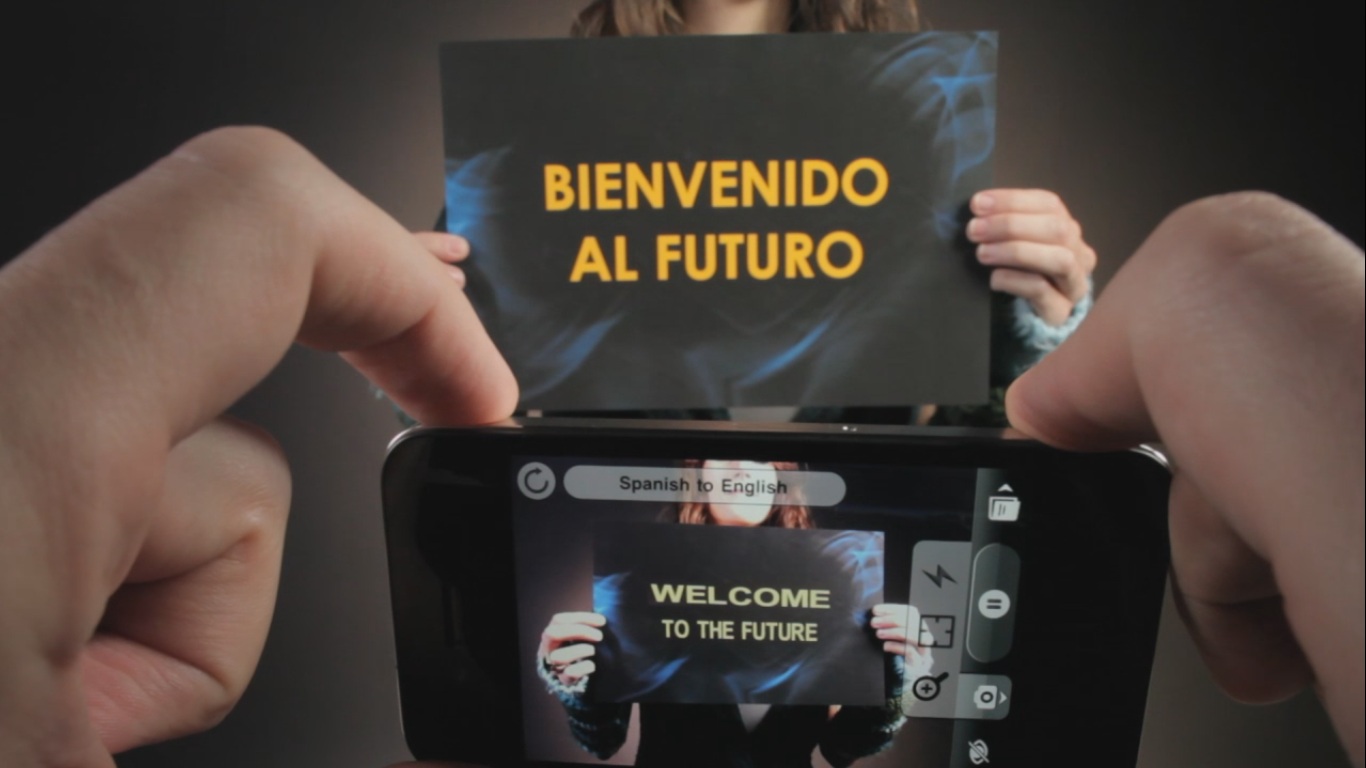
A person is holding a sign reads "BIENVENIDO AL FUTURO". Another person is holding an iPhone to translate the sign. The phone shows "WELCOME TO THE FUTURE", and "Spanish to English".
A mobile phone app translating Spanish text into English

Machine translation is the use of computational techniques to translate text or speech from one language to another, including the contextual, idiomatic, and pragmatic nuances of both languages.

Machine translation tools, while some language models are capable of generating comprehensible results, remain limited by the complexity of language and emotion, often lacking depth and semantic precision. Its quality is influenced by linguistic, grammatical, tonal, and cultural differences, making it inadequate to replace real translators fully.[1][2] Effective improvement requires understanding the target society’s customs and historical context, human intervention and visual cues remain necessary in simultaneous interpretation, on the other hand, domain-specific customization, such as for technical documentation or official texts—can yield more stable results[3], and is commonly employed in multilingual websites and professional databases.[4][5]

Early approaches were mostly rule-based or statistical. These methods have since been superseded by neural machine translation[6] and large language models.[7]

History

[edit]

Origins

[edit]

The origins of machine translation can be traced back to the work of Al-Kindi, a ninth-century Arabic cryptographer who developed techniques for systemic language translation, including cryptanalysis, frequency analysis, and probability and statistics, which are used in modern machine translation.[8] The idea of machine translation later appeared in the 17th century. In 1629, René Descartes proposed a universal language, with equivalent ideas in different tongues sharing one symbol.[9]

The idea of using digital computers for translation of natural languages was proposed as early as 1947 by England's A. D. Booth[10] and Warren Weaver at Rockefeller Foundation in the same year. "The memorandum written by Warren Weaver in 1949 is perhaps the single most influential publication in the earliest days of machine translation."[11][12] Others followed. A demonstration was made in 1954 on the APEXC machine at Birkbeck College (University of London) of a rudimentary translation of English into French. Several papers on the topic were published at the time, and even articles in popular journals (for example an article by Cleave and Zacharov in the September 1955 issue of Wireless World). A similar application, also pioneered at Birkbeck College at the time, was reading and composing Braille texts by computer.

1950s

[edit]

The first researcher in the field, Yehoshua Bar-Hillel, began his research at MIT (1951). A Georgetown University MT research team, led by Professor Michael Zarechnak, followed (1951) with a public demonstration of its Georgetown-IBM experiment system in 1954. MT research programs popped up in Japan[13][14] and Russia (1955), and the first MT conference was held in London (1956).[15][16]

David G. Hays "wrote about computer-assisted language processing as early as 1957" and "was project leader on computational linguistics at Rand from 1955 to 1968."[17]

1960–1975

[edit]

Researchers continued to join the field as the Association for Machine Translation and Computational Linguistics was formed in the U.S. (1962) and the National Academy of Sciences formed the Automatic Language Processing Advisory Committee (ALPAC) to study MT (1964). Real progress was much slower, however, and after the ALPAC report (1966), which found that the ten-year-long research had failed to fulfill expectations, funding was greatly reduced.[18] According to a 1972 report by the Director of Defense Research and Engineering (DDR&E), the feasibility of large-scale MT was reestablished by the success of the Logos MT system in translating military manuals into Vietnamese during that conflict.

The French Textile Institute also used MT to translate abstracts from and into French, English, German and Spanish (1970); Brigham Young University started a project to translate Mormon texts by automated translation (1971).

1975-1980s

[edit]

SYSTRAN, which "pioneered the field under contracts from the U.S. government"[19] in the 1960s, was used by Xerox to translate technical manuals (1978). Beginning in the late 1980s, as computational power increased and became less expensive, more interest was shown in statistical models for machine translation. MT became more popular after the advent of computers.[20] SYSTRAN's first implementation system was implemented in 1988 by the online service of the French Postal Service called Minitel.[21] Various computer based translation companies were also launched, including Trados (1984), which was the first to develop and market Translation Memory technology (1989), though this is not the same as MT. The first commercial MT system for Russian / English / German-Ukrainian was developed at Kharkov State University (1991).

1990s and early 2000s

[edit]

By 1998, "for as little as $29.95" one could "buy a program for translating in one direction between English and a major European language of your choice" to run on a PC.[19]

MT on the web started with SYSTRAN offering free translation of small texts (1996) and then providing this via AltaVista Babelfish,[19] which racked up 500,000 requests a day (1997).[22] The second free translation service on the web was Lernout & Hauspie's GlobaLink.[19] Atlantic Magazine wrote in 1998 that "Systran's Babelfish and GlobaLink's Comprende" handled "Don't bank on it" with a "competent performance."[23]

Franz Josef Och (the future head of Translation Development AT Google) won DARPA's speed MT competition (2003).[24] More innovations during this time included MOSES, the open-source statistical MT engine (2007), a text/SMS translation service for mobiles in Japan (2008), and a mobile phone with built-in speech-to-speech translation functionality for English, Japanese and Chinese (2009). In 2012, Google announced that Google Translate translates roughly enough text to fill 1 million books in one day.

ANNs & LLMs in 2020s

[edit]

Approaches

[edit]

Before the advent of deep learning methods, statistical methods required a lot of rules accompanied by morphological, syntactic, and semantic annotations.

Rule-based

[edit]

The rule-based machine translation approach was used mostly in the creation of dictionaries and grammar programs. Its biggest downfall was that everything had to be made explicit: orthographical variation and erroneous input must be made part of the source language analyser in order to cope with it, and lexical selection rules must be written for all instances of ambiguity.

Transfer-based machine translation

[edit]

Transfer-based machine translation was similar to interlingual machine translation in that it created a translation from an intermediate representation that simulated the meaning of the original sentence. Unlike interlingual MT, it depended partially on the language pair involved in the translation.

Interlingual

[edit]

Interlingual machine translation was one instance of rule-based machine-translation approaches. In this approach, the source language, i.e. the text to be translated, was transformed into an interlingual language, i.e. a "language neutral" representation that is independent of any language. The target language was then generated out of the interlingua. The only interlingual machine translation system that was made operational at the commercial level was the KANT system (Nyberg and Mitamura, 1992), which was designed to translate Caterpillar Technical English (CTE) into other languages.

Dictionary-based

[edit]

Machine translation used a method based on dictionary entries, which means that the words were translated as they are by a dictionary.

Statistical

[edit]

Statistical machine translation tried to generate translations using statistical methods based on bilingual text corpora, such as the Canadian Hansard corpus, the English-French record of the Canadian parliament and EUROPARL, the record of the European Parliament. Where such corpora were available, good results were achieved translating similar texts, but such corpora were rare for many language pairs. The first statistical machine translation software was CANDIDE from IBM. In 2005, Google improved its internal translation capabilities by using approximately 200 billion words from United Nations materials to train their system; translation accuracy improved.[25]

SMT's biggest downfall included it being dependent upon huge amounts of parallel texts, its problems with morphology-rich languages (especially with translating into such languages), and its inability to correct singleton errors.

Some work has been done in the utilization of multiparallel corpora, that is a body of text that has been translated into 3 or more languages. Using these methods, a text that has been translated into 2 or more languages may be utilized in combination to provide a more accurate translation into a third language compared with if just one of those source languages were used alone.[26][27][28]

Neural MT

[edit]

A deep learning-based approach to MT, neural machine translation has made rapid progress in recent years. However, the current consensus is that the so-called human parity achieved is not real, being based wholly on limited domains, language pairs, and certain test benchmarks[29] i.e., it lacks statistical significance power.[30]

Translations by neural MT tools like DeepL Translator, which is thought to usually deliver the best machine translation results as of 2022, typically still need post-editing by a human.[31][32][33]

Instead of training specialized translation models on parallel datasets, one can also directly prompt generative large language models like GPT to translate a text.[34][35][36] This approach is considered promising,[37] but is still more resource-intensive than specialized translation models.

Issues

[edit]
Machine translation could produce some non-understandable phrases, such as "鸡枞" (termite mushroom) being rendered as "wikipedia".
Broken Chinese "沒有進入" from machine translation in Bali, Indonesia. The broken Chinese sentence sounds like "there does not exist an entry" or "have not entered yet".

Studies using human evaluation (e.g. by professional literary translators or human readers) have systematically identified various issues with the latest advanced MT outputs.[36] Some quality evaluation studies have found that, in several languages, human translations outperform ChatGPT-produced translations in terminological accuracy and clarity of expression.[38][39] Common issues include the translation of ambiguous parts whose correct translation requires common sense-like semantic language processing or context.[36] There can also be errors in the source texts, missing high-quality training data and the severity of frequency of several types of problems may not get reduced with techniques used to date, requiring some level of human active participation.

Disambiguation

[edit]

Word-sense disambiguation concerns finding a suitable translation when a word can have more than one meaning. The problem was first raised in the 1950s by Yehoshua Bar-Hillel.[40] He pointed out that without a "universal encyclopedia", a machine would never be able to distinguish between the two meanings of a word.[41] Today there are numerous approaches designed to overcome this problem. They can be approximately divided into "shallow" approaches and "deep" approaches.

Shallow approaches assume no knowledge of the text. They simply apply statistical methods to the words surrounding the ambiguous word. Deep approaches presume a comprehensive knowledge of the word. So far, shallow approaches have been more successful.[42]

Claude Piron, a long-time translator for the United Nations and the World Health Organization, wrote that machine translation, at its best, automates the easier part of a translator's job; the harder and more time-consuming part usually involves doing extensive research to resolve ambiguities in the source text, which the grammatical and lexical exigencies of the target language require to be resolved:

Why does a translator need a whole workday to translate five pages, and not an hour or two? ..... About 90% of an average text corresponds to these simple conditions. But unfortunately, there's the other 10%. It's that part that requires six [more] hours of work. There are ambiguities one has to resolve. For instance, the author of the source text, an Australian physician, cited the example of an epidemic which was declared during World War II in a "Japanese prisoners of war camp". Was he talking about an American camp with Japanese prisoners or a Japanese camp with American prisoners? The English has two senses. It's necessary therefore to do research, maybe to the extent of a phone call to Australia.[43]

The ideal deep approach would require the translation software to do all the research necessary for this kind of disambiguation on its own; but this would require a higher degree of AI than has yet been attained. A shallow approach which simply guessed at the sense of the ambiguous English phrase that Piron mentions (based, perhaps, on which kind of prisoner-of-war camp is more often mentioned in a given corpus) would have a reasonable chance of guessing wrong fairly often. A shallow approach that involves "ask the user about each ambiguity" would, by Piron's estimate, only automate about 25% of a professional translator's job, leaving the harder 75% still to be done by a human.

Non-standard speech

[edit]

One of the major pitfalls of MT is its inability to translate non-standard language with the same accuracy as standard language. Heuristic or statistical based MT takes input from various sources in standard form of a language. Rule-based translation, by nature, does not include common non-standard usages. This causes errors in translation from a vernacular source or into colloquial language. Limitations on translation from casual speech present issues in the use of machine translation in mobile devices.

Named entities

[edit]

In information extraction, named entities, in a narrow sense, refer to concrete or abstract entities in the real world such as people, organizations, companies, and places that have a proper name: George Washington, Chicago, Microsoft. It also refers to expressions of time, space and quantity such as 1 July 2011, $500.

In the sentence "Smith is the president of Fabrionix" both Smith and Fabrionix are named entities, and can be further qualified via first name or other information; "president" is not, since Smith could have earlier held another position at Fabrionix, e.g. Vice President. The term rigid designator is what defines these usages for analysis in statistical machine translation.

Named entities must first be identified in the text; if not, they may be erroneously translated as common nouns, which would most likely not affect the BLEU rating of the translation but would change the text's human readability.[44] They may be omitted from the output translation, which would also have implications for the text's readability and message.

Transliteration includes finding the letters in the target language that most closely correspond to the name in the source language. This, however, has been cited as sometimes worsening the quality of translation.[45] For "Southern California" the first word should be translated directly, while the second word should be transliterated. Machines often transliterate both because they treated them as one entity. Words like these are hard for machine translators, even those with a transliteration component, to process.

Use of a "do-not-translate" list, which has the same end goal – transliteration as opposed to translation.[46] still relies on correct identification of named entities.

A third approach is a class-based model. Named entities are replaced with a token to represent their "class"; "Ted" and "Erica" would both be replaced with "person" class token. Then the statistical distribution and use of person names, in general, can be analyzed instead of looking at the distributions of "Ted" and "Erica" individually, so that the probability of a given name in a specific language will not affect the assigned probability of a translation. A study by Stanford on improving this area of translation gives the examples that different probabilities will be assigned to "David is going for a walk" and "Ankit is going for a walk" for English as a target language due to the different number of occurrences for each name in the training data. A frustrating outcome of the same study by Stanford (and other attempts to improve named recognition translation) is that many times, a decrease in the BLEU scores for translation will result from the inclusion of methods for named entity translation.[46]

Applications

[edit]

While no system provides the ideal of fully automatic high-quality machine translation of unrestricted text, many fully automated systems produce reasonable output.[47][48][49] The quality of machine translation is substantially improved if the domain is restricted and controlled.[50] This enables using machine translation as a tool to speed up and simplify translations, as well as producing flawed but useful low-cost or ad-hoc translations.

Travel

[edit]

Machine translation applications have also been released for most mobile devices, including mobile telephones, pocket PCs, PDAs, etc. Due to their portability, such instruments have come to be designated as mobile translation tools enabling mobile business networking between partners speaking different languages, or facilitating both foreign language learning and unaccompanied traveling to foreign countries without the need of the intermediation of a human translator.

For example, the Google Translate app allows foreigners to quickly translate text in their surrounding via augmented reality using the smartphone camera that overlays the translated text onto the text.[51] It can also recognize speech and then translate it.[52]

Public administration

[edit]

Despite their inherent limitations, MT programs are used around the world. Probably the largest institutional user is the European Commission. In 2012, with an aim to replace a rule-based MT by newer, statistical-based MT@EC, The European Commission contributed 3.072 million euros (via its ISA programme).[53]

Wikipedia

[edit]

Machine translation has also been used for translating Wikipedia articles and could play a larger role in creating, updating, expanding, and generally improving articles in the future, especially as the MT capabilities may improve. There is a "content translation tool" which allows editors to more easily translate articles across several select languages.[54][55][56] English-language articles are thought to usually be more comprehensive and less biased than their non-translated equivalents in other languages.[57] As of 2022, English Wikipedia has over 6.5 million articles while, for example, the German and Swedish Wikipedias each only have over 2.5 million articles,[58] each often far less comprehensive.

Surveillance and military

[edit]

Following terrorist attacks in Western countries, including 9-11, the U.S. and its allies have been most interested in developing Arabic machine translation programs, but also in translating Pashto and Dari languages.[citation needed] Within these languages, the focus is on key phrases and quick communication between military members and civilians through the use of mobile phone apps.[59] The Information Processing Technology Office in DARPA hosted programs like TIDES and Babylon translator. US Air Force has awarded a $1 million contract to develop a language translation technology.[60]

Social media

[edit]

The notable rise of social networking on the web in recent years has created yet another niche for the application of machine translation software – in utilities such as Facebook, or instant messaging clients such as Skype, Google Talk, MSN Messenger, etc. – allowing users speaking different languages to communicate with each other.

Online games

[edit]

Lineage W gained popularity in Japan because of its machine translation features allowing players from different countries to communicate.[61]

Medicine

[edit]

Despite being labelled as an unworthy competitor to human translation in 1966 by the Automated Language Processing Advisory Committee put together by the United States government,[62] the quality of machine translation has now been improved to such levels that its application in online collaboration and in the medical field are being investigated. The application of this technology in medical settings where human translators are absent is another topic of research, but difficulties arise due to the importance of accurate translations in medical diagnoses.[63]

Researchers caution that the use of machine translation in medicine could risk mistranslations that can be dangerous in critical situations.[64][65] Machine translation can make it easier for doctors to communicate with their patients in day to day activities, but it is recommended to only use machine translation when there is no other alternative, and that translated medical texts should be reviewed by human translators for accuracy.[66][67]

Law

[edit]

Legal language poses a significant challenge to machine translation tools due to its precise nature and atypical use of normal words. For this reason, specialized algorithms have been developed for use in legal contexts.[68] Due to the risk of mistranslations arising from machine translators, researchers recommend that machine translations should be reviewed by human translators for accuracy, and some courts prohibit its use in formal proceedings.[69]

The use of machine translation in law has raised concerns about translation errors and client confidentiality. Lawyers who use free translation tools such as Google Translate may accidentally violate client confidentiality by exposing private information to the providers of the translation tools.[68] In addition, there have been arguments that consent for a police search that is obtained with machine translation is invalid, with different courts issuing different verdicts over whether or not these arguments are valid.[64]

Ancient languages

[edit]

The advancements in convolutional neural networks in recent years and in low resource machine translation (when only a very limited amount of data and examples are available for training) enabled machine translation for ancient languages, such as Akkadian and its dialects Babylonian and Assyrian.[70]

Evaluation

[edit]

There are many factors that affect how machine translation systems are evaluated. These factors include the intended use of the translation, the nature of the machine translation software, and the nature of the translation process.

Different programs may work well for different purposes. For example, statistical machine translation (SMT) typically outperforms example-based machine translation (EBMT), but researchers found that when evaluating English to French translation, EBMT performs better.[71] The same concept applies for technical documents, which can be more easily translated by SMT because of their formal language.

In certain applications, however, e.g., product descriptions written in a controlled language, a dictionary-based machine-translation system has produced satisfactory translations that require no human intervention save for quality inspection.[72]

There are various means for evaluating the output quality of machine translation systems. The oldest is the use of human judges[73] to assess a translation's quality. Even though human evaluation is time-consuming, it is still the most reliable method to compare different systems such as rule-based and statistical systems.[74] Automated means of evaluation include BLEU, NIST, METEOR, and LEPOR.[75]

Relying exclusively on unedited machine translation ignores the fact that communication in human language is context-embedded and that it takes a person to comprehend the context of the original text with a reasonable degree of probability. It is certainly true that even purely human-generated translations are prone to error. Therefore, to ensure that a machine-generated translation will be useful to a human being and that publishable-quality translation is achieved, such translations must be reviewed and edited by a human.[76] The late Claude Piron wrote that machine translation, at its best, automates the easier part of a translator's job; the harder and more time-consuming part usually involves doing extensive research to resolve ambiguities in the source text, which the grammatical and lexical exigencies of the target language require to be resolved. Such research is a necessary prelude to the pre-editing necessary in order to provide input for machine-translation software such that the output will not be meaningless.[77]

In addition to disambiguation problems, decreased accuracy can occur due to varying levels of training data for machine translating programs. Both example-based and statistical machine translation rely on a vast array of real example sentences as a base for translation, and when too many or too few sentences are analyzed accuracy is jeopardized. Researchers found that when a program is trained on 203,529 sentence pairings, accuracy actually decreases.[71] The optimal level of training data seems to be just over 100,000 sentences, possibly because as training data increases, the number of possible sentences increases, making it harder to find an exact translation match.

Flaws in machine translation have been noted for their entertainment value. Two videos uploaded to YouTube in April 2017 involve two Japanese hiragana characters えぐ (e and gu) being repeatedly pasted into Google Translate, with the resulting translations quickly degrading into nonsensical phrases such as "DECEARING EGG" and "Deep-sea squeeze trees", which are then read in increasingly absurd voices;[78][79] the full-length version of the video currently has 7.1 million views as of August 2025.[80]

Machine translation and signed languages

[edit]

In the early 2000s, options for machine translation between spoken and signed languages were severely limited. It was a common belief that deaf individuals could use traditional translators. However, stress, intonation, pitch, and timing are conveyed much differently in spoken languages compared to signed languages. Therefore, a deaf individual may misinterpret or become confused about the meaning of written text that is based on a spoken language.[81]

Researchers Zhao, et al. (2000), developed a prototype called TEAM (translation from English to ASL by machine) that completed English to American Sign Language (ASL) translations. The program would first analyze the syntactic, grammatical, and morphological aspects of the English text. Following this step, the program accessed a sign synthesizer, which acted as a dictionary for ASL. This synthesizer housed the process one must follow to complete ASL signs, as well as the meanings of these signs. Once the entire text is analyzed and the signs necessary to complete the translation are located in the synthesizer, a computer generated human appeared and would use ASL to sign the English text to the user.[81]

[edit]

Only works that are original are subject to copyright protection, so some scholars claim that machine translation results are not entitled to copyright protection because MT does not involve creativity.[82] The copyright at issue is for a derivative work; the author of the original work in the original language does not lose his rights when a work is translated: a translator must have permission to publish a translation.[83]

See also

[edit]

Notes

[edit]

Further reading

[edit]
[edit]
Revisions and contributorsEdit on WikipediaRead on Wikipedia
from Grokipedia
Machine translation is the automated process of using and computational algorithms to convert text or speech from one to another without intervention. Originating from early 20th-century patents and gaining momentum with the 1954 Georgetown-IBM experiment, which demonstrated rudimentary Russian-to-English , the field has progressed through rule-based systems reliant on linguistic rules, statistical methods exploiting parallel corpora in the , and neural architectures since the mid-2010s that employ for end-to-end modeling. Key achievements include the shift to (NMT), which uses encoder-decoder frameworks with attention mechanisms to produce more fluent and contextually aware outputs, markedly improving metrics like scores for high-resource language pairs and powering scalable services handling diverse global content. Despite these advances, persistent limitations define the technology's scope: NMT struggles with idiomatic expressions, cultural nuances, and low-resource languages due to data scarcity, often yielding literal or erroneous translations that fail to capture intent or propagate biases embedded in training datasets. Controversies arise from overreliance on MT for critical applications, as evidenced by accuracy shortfalls in emotion-laden or ambiguous texts, where systems lack causal understanding and human oversight remains essential to mitigate risks like or cultural insensitivity.

History

Early Theoretical Foundations and Origins

The concept of machine translation emerged from early philosophical inquiries into universal languages capable of bypassing linguistic barriers. In the 17th century, proposed a universal code based on rational principles to enable precise cross-lingual communication, while advocated for a , a formal symbolic system for expressing thoughts independently of natural languages, facilitating automated translation through . These ideas, rooted in first-principles reasoning about as a decodable structure, prefigured computational approaches by emphasizing and semantics over arbitrary . Cryptanalytic techniques provided a practical precursor, treating languages as cipher systems amenable to statistical decoding. As early as the 9th century, the Arab scholar developed for breaking substitution ciphers, a method later refined for multilingual code-breaking during , which demonstrated that encrypted texts could be rendered into via probabilistic patterns rather than exhaustive enumeration. This cryptological lens influenced mid-20th-century theorists, who analogized natural languages to noisy codes requiring similar decryption, assuming underlying universal grammars or information-theoretic equivalences. The immediate theoretical catalyst for computational machine translation was Warren Weaver's July 1949 memorandum, "Translation," circulated privately among scientists including . As director of the Foundation's natural sciences division and a proponent of Claude Shannon's , Weaver hypothesized that digital computers—then emerging from wartime applications—could automate translation by modeling languages as interconvertible codes, drawing directly from successes in deciphering Axis messages without bilingual keys. He outlined five approaches: direct word-for-word substitution, cryptanalytic decryption via universal logical forms, statistical co-occurrence modeling, structural linguistic analysis, and propositional calculus for semantic equivalence, explicitly linking feasibility to computers' speed in handling vast permutations. This document, unencumbered by empirical testing yet grounded in verifiable wartime precedents, galvanized U.S. government and foundation funding, marking the transition from speculative philosophy to actionable computational despite skepticism from linguists like , who critiqued its oversimplification of idiomatic nuances. Preceding patents, such as Petr Troyanskii's 1933 Soviet proposal for a mechanical device using dictionaries and algorithms to select and print translated words from perforated cards, illustrated rudimentary automation but lacked Weaver's theoretical breadth or computational vision.

1950s: Initial Computational Experiments

The initial computational experiments in machine translation during the 1950s were spurred by post-World War II advances in and , with Warren Weaver's 1949 serving as a conceptual precursor by proposing that electronic computers could decode languages akin to breaking codes, leveraging principles developed by . Weaver, director of the Rockefeller Foundation's Natural Sciences Division, circulated this private memo to about 200 scientists and officials, arguing for machine-based translation to address multilingual barriers in , though it emphasized probabilistic models over rigid rules and acknowledged uncertainties in linguistic structure. While not a computational implementation itself, the catalyzed funding and research interest, framing translation as a solvable problem through digital means rather than purely human linguistic analysis. The first public demonstration of computational machine translation occurred on January 7, 1954, in a collaboration between researchers and engineers, using the to translate 60 selected Russian sentences into English. This system employed a direct, rule-based approach with a restricted of 250 Russian words and just six grammatical rules, primarily handling simple declarative sentences from chemical literature to minimize syntactic complexity. Outputs were generated at a rate of about six words per second, but required human preprocessing for segmentation and for coherence, revealing limitations such as literal word-for-word substitutions that ignored idiomatic nuances or context-dependent meanings. Despite these constraints, the Georgetown-IBM experiment proved the technical feasibility of automated translation on early hardware, impressing observers and prompting U.S. investment exceeding $20 million in MT research by the decade's end through agencies like the and Department of Defense. It operated on the assumption of universal linguistic patterns amenable to algorithmic mapping, yet empirical results underscored challenges in handling and morphology, foreshadowing debates over whether translation demanded deep semantic understanding or could rely on alone. Subsequent small-scale efforts at institutions like Harvard and the University of explored similar rule-driven prototypes, but none matched the Georgetown demonstration's visibility or immediate policy impact.

1960s-1970s: Expansion, ALPAC Report, and Funding Cuts

During the 1960s, machine translation research expanded significantly, driven by Cold War-era demands for rapid translation of scientific and technical texts, particularly from Russian. The National Symposium on Machine Translation, held in February 1960 at the , convened researchers from the and to discuss progress and challenges, highlighting growing international interest. Key projects included the development of rule-based systems at institutions like Grenoble University, where Bernard Vauquois's group, from 1960 to 1971, created a prototype for translating Russian mathematics and physics texts into French using pivot-language methods and syntactic analysis. U.S.-based efforts, such as extensions of the Georgetown-IBM experiment, focused on direct word-for-word translation for limited domains like chemistry and , but outputs required extensive human post-editing due to structural mismatches between languages. This optimism prompted U.S. government agencies to commission an independent evaluation of machine translation's viability. In 1964, the Automatic Language Processing Advisory Committee (ALPAC), sponsored by the , National Research Council, Air Force Office of Scientific Research, and , began assessing the field's progress toward "fully automatic high-quality translation" (FAHQT). The committee's report, Languages and Machines: Computers in Translation and Linguistics, released in November 1966, concluded that machine translation had failed to deliver practical systems despite over a decade of investment exceeding $20 million. It found that automated outputs were inferior in accuracy and to human translations, with machine systems costing more—often double or more—than professional human rates of $9 to $66 per 1,000 words, while requiring comparable or greater effort. ALPAC deemed FAHQT unattainable in the foreseeable future without fundamental linguistic and computational breakthroughs, attributing overhyping to inadequate understanding of language complexity, such as and context-dependence. The ALPAC report triggered immediate and severe funding cuts in the United States, reducing federal support for machine translation from millions annually to near zero by the early 1970s, effectively creating a "winter" for the field. U.S. research groups disbanded or pivoted to adjacent areas like , with surviving efforts emphasizing theoretical and semantics rather than end-to-end translation. Internationally, work persisted on a smaller scale; for instance, Canada's TAUM project at the University of Montreal, initiated in 1970, developed a syntactic transfer system for English-French translation of technical documents, achieving partial automation but still reliant on human intervention. European initiatives, including extensions at and early SYSTRAN deployments for restricted domains, maintained momentum, though overall progress stagnated amid skepticism about scaling rule-based methods to unrestricted text. By the late 1970s, demand shifted toward hybrid human-machine aids rather than pure automation, reflecting ALPAC's caution that machines excelled only in narrow, controlled tasks.

1980s-1990s: Rule-Based Systems and Early Commercialization

During the , machine translation development emphasized (RBMT) systems, which employed hand-crafted linguistic rules, bilingual dictionaries, and structural transfer mechanisms to analyze source language syntax and generate target language output. These systems dominated research and application, building on earlier direct and transfer approaches despite persistent challenges in handling syntactic divergences and semantic nuances across languages. The Eurotra project, funded by the from 1978 to 1992, exemplified large-scale RBMT efforts, aiming to develop a for translating between all nine official languages through a modular, transfer-based involving source, transfer, and target analysis modules. Eurotra involved over 100 researchers across multiple countries and focused on formal grammars and dictionaries, though it prioritized theoretical depth over immediate , resulting in a demonstration system by 1990 rather than a fully operational tool. SYSTRAN, one of the earliest commercial RBMT systems originating in the , expanded significantly in the 1980s for institutional use. The deployed SYSTRAN for French-to-other-language translations, processing 1,250 pages in 1981 and increasing to 3,150 pages in 1982, with extensions to additional pairs like English-to-Italian by mid-decade. In the United States, the Foreign Technology Division provided online access to SYSTRAN for raw translations from Russian, French, and German starting in 1986, serving and needs. Commercialization accelerated in the early with the release of RBMT software for mainframe and emerging personal computers, targeting controlled-language technical documentation rather than general text. led in proprietary developments, as companies including , , , Sharp, and invested in RBMT systems for Japanese-English and intra-Asian pairs, often integrating them into word processors and enterprise workflows by the late . Other systems, such as METAL and , entered commercial markets for specific domains like patents and legal texts, though adoption remained limited to high-volume users due to post-editing requirements and rule maintenance costs. Into the 1990s, RBMT persisted as the commercial standard, with installations growing in diversity for sectors like and , even as empirical data from evaluations highlighted limitations in fluency for unrestricted input. By decade's end, over a dozen RBMT vendors offered products, but scalability issues and the rise of corpus-driven alternatives began eroding dominance in settings.

2000s: Emergence of Statistical Methods

The emergence of (SMT) in the 2000s represented a from rule-based systems, driven by advances in computational power, algorithmic refinements, and the availability of large bilingual parallel corpora that enabled data-driven probability modeling over hand-crafted linguistic rules. SMT estimated translation likelihoods by statistically aligning source and target language sentences, deriving parameters such as fertility, distortion, and lexicon probabilities from empirical co-occurrences in training data, which yielded outputs that were often more fluent and natural despite lacking explicit encoding. This approach gained traction as parallel corpora expanded, including releases like the in 2000 from proceedings, providing millions of sentence pairs for training robust models across high-resource language pairs. A cornerstone advancement was phrase-based SMT, proposed by Philipp Koehn, Franz Och, and Daniel Marcu in 2003, which generalized word-based models by extracting and translating contiguous multi-word phrases directly from aligned corpora, thereby capturing local context, idiomatic units, and reordering patterns more effectively than single-word alignments. Evaluations demonstrated that phrase-based systems consistently achieved higher scores— a metric correlating with human judgments of adequacy and fluency—outperforming word-based SMT by 2-5 points on average for language pairs like English-French, due to reduced error propagation from lexical ambiguities. The 2007 release of the toolkit, an open-source phrase-based decoder developed by Koehn and collaborators at the , standardized implementation and spurred global research, incorporating features like decoding and integration with language models for real-time . Commercial and institutional adoption accelerated SMT's impact, with launching Translate on , 2006, as a free online service powered by phrase-based models trained on over 100 million sentence pairs sourced from and documents, enabling instant translations for 17 languages initially and scaling to billions of daily queries. Concurrently, the U.S. Defense Advanced Research Projects Agency's Global Autonomous Language Exploitation () program, running from 2006 to 2011 with a budget exceeding $200 million, funded SMT enhancements for low-resource languages such as and Chinese, emphasizing integration with automatic to achieve end-to-end translation accuracy above 60% in domain-specific tasks like broadcast news. These efforts highlighted SMT's empirical strengths in leveraging vast data volumes but also exposed limitations in handling rare words and structural divergences, prompting hybrid extensions by decade's end.

2010s: Neural Revolution and Widespread Adoption

The mid-2010s marked the transition from statistical machine translation (SMT) to neural machine translation (NMT), driven by advances in deep learning architectures capable of modeling entire sentences as sequences. In September 2014, Ilya Sutskever and colleagues at Google introduced the sequence-to-sequence (seq2seq) model, an encoder-decoder framework using long short-term memory (LSTM) networks to learn mappings between input and output sequences without explicit alignment, demonstrating competitive performance on tasks like English-to-French translation. Concurrently, Dzmitry Bahdanau, Kyunghyun Cho, and Yoshua Bengio proposed an attention mechanism in their September 2014 paper, allowing the decoder to focus dynamically on relevant parts of the input sequence, addressing limitations in fixed-length context vectors and improving translation quality for longer sentences. These innovations enabled end-to-end training on large parallel corpora, outperforming phrase-based SMT by capturing long-range dependencies and semantic relationships more effectively. Industry adoption accelerated in 2016 when deployed its (GNMT) system, a production-scale LSTM-based NMT model trained on millions of sentence pairs across eight languages. Announced on September 27, 2016, GNMT initially powered translations for English-Japanese and English-Korean in , achieving up to 60% relative improvement in machine evaluation metrics like scores on challenging language pairs such as English-Japanese, where prior SMT systems struggled with morphological complexity. Subsequent expansions covered additional languages, with GNMT's capability allowing translations between non-directly trained pairs via English pivoting, reducing errors by 15-20% in some cases. Other firms followed: integrated NMT into its search engine in 2016, reporting gains of 5-10 points over SMT for Chinese-English, while and released neural systems emphasizing fluency over literal word-for-word matching. By the late 2010s, NMT supplanted SMT as the dominant paradigm, integrated into consumer tools like mobile apps, web services, and real-time communication platforms, with scores typically 5-15 points higher across European and Asian language pairs due to enhanced contextual coherence. The introduction of the architecture by Vaswani et al. further propelled the revolution, replacing recurrent layers with self-attention for parallelizable training on GPUs, yielding state-of-the-art results on benchmarks like WMT with scores exceeding 28 for English-German—surpassing prior NMT by 2-4 points and enabling scalability to billions of parameters. This shift democratized high-quality translation, powering features in devices like smartphones and browsers, though it highlighted ongoing needs for and low-resource languages.

2020s: LLM Integration and Adaptive AI Advances

The integration of large language models (LLMs) into machine translation systems marked a significant in the early , shifting from specialized neural architectures to general-purpose models pretrained on vast multilingual corpora. OpenAI's , released in June 2020, demonstrated proficiency in zero-shot translation by reformulating the task as next-token in a prompted sequence, achieving competitive results on benchmarks without task-specific fine-tuning. This approach leveraged the model's parametric knowledge from pretraining, enabling translations across language pairs with limited parallel data, though outputs occasionally suffered from inconsistencies in factual accuracy or stylistic fidelity compared to dedicated (NMT) systems. The November 2022 launch of , an instruction-tuned variant building on GPT-3.5, accelerated LLM adoption for practical translation, facilitating interactive and context-aware outputs via user prompts that specify tone, domain, or preferences. Studies highlighted LLMs' advantages in handling long-context dependencies and semantic nuances, such as disambiguating polysemous terms through in-context examples, outperforming traditional NMT in low-resource scenarios where parallel corpora are scarce. For instance, achieved translation quality scores of 0.81 on expert evaluations, rivaling human translators in fluency for general texts while enabling stylized or domain-adapted variants like formal-legal phrasing. However, LLMs exhibited slower inference speeds—up to 100-500 times that of optimized NMT—and higher susceptibility to hallucinations, necessitating hybrid pipelines combining LLM generation with NMT reranking for reliability. Adaptive AI advancements complemented LLM integration by incorporating feedback loops and continual learning, allowing systems to refine translations dynamically without full retraining. Platforms like ModernMT introduced adaptive neural translation in the early , updating models incrementally from user corrections or domain-specific glossaries during deployment, yielding reported improvements of 20-30% in efficiency over static baselines. This enabled , such as adapting to terminology in enterprise settings, and extended to LLM hybrids where prompts evolve based on interaction history. By 2024-2025, benchmarks showed adaptive LLMs excelling in interactive scenarios, like real-time collaborative , though domain-specific fine-tuned NMT retained edges in precision for technical fields such as . These developments prioritized causal understanding of intent over rote , fostering more robust handling of idiomatic or culturally embedded expressions.

Methods and Approaches

Rule-Based Machine Translation

(RBMT) employs hand-crafted linguistic rules, bilingual dictionaries, and grammatical structures to convert source text into a target , relying on explicit of both languages' morphologies, syntaxes, and semantics rather than statistical patterns or neural networks. This approach dominated early machine translation efforts, originating in systems like the Georgetown-IBM experiment, which demonstrated basic Russian-to-English translation using predefined rules for 60 Russian words and limited grammar. RBMT systems process input through modular stages, ensuring translations adhere to formalized linguistic constraints, though they demand extensive expert input for rule development. RBMT architectures vary by depth of abstraction: direct systems perform word-for-word substitutions guided by simple rules and dictionaries, preserving source order with minimal restructuring; transfer-based systems analyze source syntax, map intermediate structures to target equivalents via bilingual rules, and regenerate target output; interlingua systems decompose source text into a language-neutral semantic representation before reconstructing it in the target language, enabling broader language pair coverage but requiring deeper analysis. Each type encodes rules for handling inflection, agreement, and word order differences, with transfer and interlingua approaches better suited for structurally dissimilar languages. Core components include morphological and syntactic analyzers to parse source input into constituents (e.g., stems, parts-of-speech, dependencies), transfer modules for equivalence mapping (lexical, structural, or conceptual), and generators applying target-language rules to produce fluent output. Bilingual dictionaries provide lexical mappings, often augmented by rule sets for exceptions like idiomatic shifts or context-dependent senses, while parsers use finite-state automata or chart parsing for efficiency. Systems like , initially developed in 1968 for Russian-English military translation, exemplify direct and transfer RBMT, incorporating thousands of hand-written rules for domain-specific accuracy. Open-source implementations, such as Apertium (released in 2007), focus on shallow-transfer RBMT for closely related languages like Spanish-Portuguese, achieving up to 80-90% post-edited accuracy in constrained domains through modular constraint grammars. RBMT excels in interpretability, as rules allow of decisions, and in controlled environments like technical manuals, where consistency outperforms data-driven methods without parallel corpora. It requires no training data, making it viable for low-resource s with formal grammars, and supports customization via rule tweaks for precision. However, development is labor-intensive, often taking years and expert linguists to encode comprehensive rules, leading to high costs—estimated at millions for full language pairs—and against , , or idiomatic expressions not explicitly ruled. suffers for open-domain text, as incomplete rule coverage yields systematic errors, prompting hybrids with statistical in later systems. Despite limitations, RBMT principles persist in hybrid engines for explainability in regulated sectors like legal or .

Statistical Machine Translation

Statistical machine translation (SMT) employs probabilistic models trained on large bilingual corpora to predict translations by estimating the conditional probability of a target-language sentence given a source-language input, typically formalized as finding the target sentence ee that maximizes P(ef)P(fe)P(e)P(e|f) \approx P(f|e) \cdot P(e), where ff is the source sentence, P(fe)P(f|e) is the translation model capturing lexical mappings, and P(e)P(e) is the target language model assessing fluency. This data-driven approach contrasts with rule-based methods by deriving parameters directly from empirical alignments in parallel texts rather than hand-crafted linguistic rules, enabling scalability across language pairs with sufficient data. Core components include word or phrase alignment models to link source and target units, a translation probability table for substitution likelihoods, and a reordering model to handle syntactic differences, with parameters estimated via expectation-maximization algorithms on aligned sentence pairs. The foundational models, developed by researchers at 's , laid the groundwork for SMT in the early 1990s, starting with Model 1 (a simple unigram-based alignment and model) and extending through Models 2-5, which incorporated relative positions, fertilities, and deflection for improved alignment accuracy. These models, detailed in et al.'s 1993 paper "The Mathematics of ," treated as a noisy channel process inspired by , using Viterbi alignment to infer latent correspondences from corpora like the Canadian Hansards containing over 1 million sentence pairs. Early implementations, such as 's system in the late , demonstrated initial viability for French-English , achieving around 60-70% accuracy on restricted vocabularies but struggling with out-of-vocabulary words and long-range dependencies due to word-level granularity. Phrase-based SMT, which became dominant by the mid-2000s, addressed word-based limitations by extracting and translating contiguous multi-word phrases directly from aligned data, using heuristics like relative frequency for phrase probabilities and minimum error rate training to optimize feature weights in log-linear models. Philipp Koehn et al.'s 2003 framework introduced a decoder employing for efficient hypothesis generation, incorporating features for phrase translation, language modeling (often n-gram based with smoothing like Kneser-Ney), and distortion penalties, yielding significant score improvements—up to 5-10 points over word-based systems on NIST benchmarks for Arabic-English. Training involved Giza++ for alignments, followed by phrase table extraction limited to phrases up to 7-10 words to mitigate data sparsity, as longer units rarely occurred sufficiently in corpora of 10-100 million sentences. SMT powered major systems like from its 2006 launch, leveraging billions of web-mined sentence pairs to support over 100 languages, with phrase-based models enabling rapid scaling but requiring for specialized texts via techniques like minimum risk training. Its advantages included empirical robustness to linguistic diversity without deep grammar encoding, efficient resource use for high-resource pairs (e.g., outperforming rule-based by 20-30% in fluency on Europarl data), and adaptability to new languages via from related ones. However, limitations persisted: heavy dependence on parallel data (millions of sentences minimum for adequacy), poor handling of low-resource languages or morphological richness (e.g., agglutinative tongues like Turkish), sensitivity to alignment errors causing propagation in decoding, and suboptimal long-context coherence, as phrase locality ignored global syntax—issues quantified by lower scores (often 10-20 points below human levels) and human evaluations revealing stiffness in output. By the mid-2010s, these spurred the shift to neural methods, with Google transitioning in 2016 after SMT plateaued on metrics like despite refinements such as hierarchical phrases or syntax-augmented models.

Neural Machine Translation

Neural machine translation (NMT) employs deep neural networks to learn direct mappings from source-language sentences to target-language equivalents through end-to-end training on large parallel corpora, predicting target word sequences probabilistically without explicit linguistic rules or phrase alignments. This paradigm emerged in with foundational (seq2seq) models using recurrent neural networks (RNNs), such as (LSTM) units, which encode the input sequence into a fixed-dimensional vector before decoding the output. Early implementations demonstrated viability for tasks like English-to-French translation, achieving competitive scores with sufficient data, though limited by vanishing gradients in long sequences. A pivotal advancement came with the integration of attention mechanisms, allowing the decoder to dynamically weigh relevant parts of the source sequence at each output step, mitigating information bottlenecks in fixed encodings. Dzmitry Bahdanau, Kyunghyun Cho, and introduced this in their 2014 paper, applying it to English-to-French translation and outperforming prior phrase-based statistical systems on WMT14 benchmarks by enabling better alignment learning during training. By 2016, commercial deployment accelerated with Google's (GNMT) system, a deep LSTM with eight encoder-decoder layers and , which reduced translation errors by 55% to 85% relative to phrase-based baselines across eight language pairs using and news data. The 2017 Transformer architecture further transformed NMT by replacing RNNs with self-attention and multi-head attention mechanisms across stacked encoder and decoder layers, enabling parallelization and capturing long-range dependencies more effectively without sequential processing. Proposed by et al., Transformers achieved state-of-the-art results on WMT 2014 English-to-German translation (28.4 ) using eight attention heads and positional encodings, scaling to billions of parameters in subsequent models. This shift improved training efficiency on GPUs, with decoding yielding fluent outputs, though reliant on techniques like label smoothing and residual connections for stability. Compared to , NMT produces more fluent and contextually coherent translations by modeling entire sentences holistically rather than n-gram phrases, reducing post-editing effort by approximately 25% in human evaluations and better preserving semantic nuances. However, NMT demands vast —often billions of sentence pairs—and substantial compute, with challenges including hallucinations from over-reliance on patterns, poor handling of rare words via subword tokenization (e.g., byte-pair encoding), and degradation on long sentences exceeding 50 tokens due to dilution. remains difficult without fine-tuning, as models overfit to general corpora, and low-resource languages suffer from scarcity, prompting techniques like from high-resource pairs. Despite these, NMT's dominance by the late stemmed from its empirical superiority in metrics and with hardware advances.

Large Language Model-Enhanced Translation

Large language models (LLMs), characterized by billions to trillions of parameters and trained on diverse multilingual text corpora, have augmented (MT) by leveraging emergent capabilities for zero-shot or few-shot , often outperforming specialized neural MT systems in and contextual coherence for high-resource languages. This approach emerged prominently around 2020 with models like , which demonstrated proficiency via simple prompting, such as instructing the model to "translate the following English text to French," without task-specific fine-tuning. By 2023, advanced LLMs like achieved scores exceeding 40 in English-to-Spanish and English-to-German pairs on standard benchmarks like WMT, surpassing earlier statistical and neural baselines in zero-shot settings due to their parametric knowledge of linguistic patterns. Key methods include , where structured inputs guide the model—e.g., providing examples for few-shot learning or chain-of-thought reasoning to handle ambiguity—and fine-tuning on parallel corpora to adapt LLMs for domain-specific MT, as seen in adaptations of models like LLaMA for low-resource pairs. Hybrid systems integrate LLMs with traditional NMT for , where the LLM refines outputs for idiomaticity; for instance, a 2024 study reported 1.6–3.1 point gains in English-centric tasks by prompting LLMs to critique and revise NMT drafts. Multilingual evaluations across 102 languages and 606 directions reveal LLMs excel in intra-European translations (e.g., scores above 0.85 for English-French) but degrade sharply for low-resource languages like or Quechua, where scores drop below 20 due to data imbalances in pre-training. Despite gains, LLMs introduce challenges like hallucinations—fabricating details absent in source text—and inconsistent handling of rare dialects, as evidenced by benchmarks showing up to 15% error rates in long-text translation from overgeneration. Empirical assessments, including human judgments on , indicate LLMs approach human parity in controlled high-resource scenarios (e.g., 2024 TACL evaluations yielding 80–90% preference rates over NMT) but falter in causal fidelity, prioritizing plausible outputs over literal accuracy. Interactive paradigms, such as agentic workflows where multiple LLM instances collaborate (e.g., one for drafting, another for verification), mitigate some issues, improving scores by 2–5 points in 2024 experiments. Overall, LLM-enhanced MT shifts focus from rule- or data-driven alignment to probabilistic , enabling adaptive, context-aware translation but requiring safeguards against biases inherited from training data, such as underrepresentation of non-Western languages.

Technical Challenges and Limitations

Contextual Disambiguation and Semantic Ambiguity

Contextual disambiguation in machine translation refers to the process of resolving ambiguities in source text by leveraging surrounding linguistic or situational cues to select the appropriate interpretation for translation. Semantic ambiguity, encompassing phenomena like polysemy—where a word has multiple related senses—and homonymy—where meanings are unrelated—poses a persistent challenge, as systems must infer intent from limited input without human-like world knowledge. Failure to disambiguate can result in translations that preserve literal form but distort meaning, such as rendering the English word "bank" as a financial institution in a sentence about rivers or vice versa. Rule-based machine translation systems addressed disambiguation through hand-crafted syntactic and semantic rules, often incorporating dictionaries with sense annotations or grammatical constraints to prioritize likely interpretations within predefined contexts. These methods achieved high accuracy for rule-covered cases but scaled poorly to open-domain text due to the of possible ambiguities and the labor-intensive rule development. , dominant in the 2000s, relied on probabilistic models trained on parallel corpora, using statistics to favor translations aligned with frequent contextual patterns; however, it frequently underperformed on rare or context-dependent senses, as models lacked explicit mechanisms for long-range dependencies or subtle semantic shifts. Neural machine translation marked an advance by employing mechanisms to weigh contextual dynamically, enabling better handling of local ambiguities through distributed representations that capture latent semantic relations. Despite this, standard sentence-level NMT struggles with extra-sentential context, such as discourse-level cues or , leading to errors in up to 20-30% of ambiguous cases in benchmarks involving polysemous verbs or nouns, particularly in low-frequency senses. Context-aware variants, introduced around , extend models to document-level processing by concatenating sentences or using hierarchical encoders, improving disambiguation by 5-15% on datasets like the Scielo corpus for scientific texts. Large language model integration since the early 2020s has further mitigated these issues by leveraging vast pretraining on diverse texts, allowing models like GPT variants to resolve ambiguities via prompted reasoning or in-context learning, outperforming prior NMT on polysemous benchmarks by incorporating broader world knowledge. For instance, studies show LLMs reducing error rates on ambiguous sentences containing rare word senses by dynamically generating disambiguated paraphrases before . Yet, challenges persist: models remain vulnerable to adversarial inputs, cultural nuances absent from , and over-reliance on surface patterns, yielding inconsistent results across languages with higher ambiguity loads, such as English-Japanese pairs. Empirical evaluations, including targeted WMT ambiguity tasks, reveal that even state-of-the-art systems lag human translators by 10-25% in semantic fidelity for contextually dense .

Low-Resource Languages and Data Scarcity

Low-resource languages, comprising the vast majority of the world's approximately 7,000 spoken languages, pose fundamental challenges to machine translation systems due to the scarcity of parallel training data. These languages typically lack large-scale bilingual corpora, with many having fewer than 100,000 sentence pairs available—or none at all—compared to millions or billions for high-resource languages like English or Mandarin. Neural machine translation models, which dominate contemporary systems, rely heavily on data volume to learn alignments between source and target languages; insufficient data leads to , where models memorize training examples but fail to generalize to unseen inputs, resulting in outputs with grammatical errors, lexical gaps, and semantic inaccuracies. Empirical evaluations underscore the performance disparities: on benchmarks like FLORES-200, scores for low-resource language pairs often fall below 10, while high-resource pairs exceed 30, highlighting how data scarcity exacerbates issues like morphological complexity and syntactic divergence not adequately captured in sparse datasets. For instance, even advanced large language models like , when prompted for , underperform traditional neural models in 84.1% of low-resource directions, producing translations that preserve surface forms but distort meaning due to inadequate exposure to the target language's idiomatic structures. This gap persists because neural architectures prioritize statistical patterns emergent from abundant data, and low-resource settings amplify parameter inefficiency, where models allocate representational capacity ineffectively across limited examples. Data scarcity also compounds evaluation difficulties, as reference translations for low-resource languages are rare, leading to reliance on indirect metrics or human assessments that reveal systemic underrepresentation; surveys indicate that over 90% of machine research focuses on the top 100 languages, perpetuating a cycle where low-resource improvements lag due to unverified assumptions in high-resource paradigms. Causal factors include historical biases favoring widely spoken tongues and the high cost of corpus creation, which demands bilingual expertise often unavailable for endangered or minority languages, thus entrenching translation inequities in global applications.

Idiomatic, Cultural, and Non-Literal Expressions

Machine translation systems frequently fail to accurately render idiomatic expressions, which are fixed phrases whose meanings deviate from the literal combination of their components, such as the English "" denoting death rather than physical action. Neural machine translation (NMT) models, trained on parallel corpora, often produce literal translations that obscure intent, as evidenced by a 2023 study showing that even advanced systems like those from exhibit high rates of literal errors on idiom test sets, with automatic metrics detecting up to 40% mistranslation frequency without targeted interventions. This stems from idioms' non-compositional semantics, where statistical patterns in training data insufficiently capture cultural embedding, leading to outputs that confuse target-language speakers. Cultural expressions pose additional hurdles, requiring not just linguistic transfer but to preserve equivalence in and , such as translating references to historical events or that lack direct analogs. For instance, NMT struggles with culture-bound terms like Japanese "" ( implying selfless service), often defaulting to generic equivalents like "" that lose nuanced implications of cultural . A 2024 review highlights that while NMT improves factual , cultural fidelity remains low due to data biases favoring high-resource languages, resulting in ethnocentric outputs that misrepresent source intent. Empirical benchmarks, including human evaluations, report accuracy drops of 20-30% for culturally laden sentences compared to neutral text, underscoring the need for or hybrid human-AI workflows. Non-literal language, encompassing metaphors, sarcasm, and irony, exacerbates these issues by demanding pragmatic inference beyond surface syntax, which current MT architectures handle poorly without explicit world knowledge integration. Metaphors like "time flies" are routinely literalized as "the moment moves by air," as shown in evaluations where NMT scores plummet on figurative datasets. detection in translation is particularly deficient, with models failing to reverse polarity in ironic statements (e.g., "Great weather!" during a translated without ), due to reliance on lexical over speaker intent; studies indicate error rates exceeding 50% in low-context scenarios. Advances like retrieval-augmented generation offer marginal gains by sourcing similar idiomatic pairs, but persistent gaps affirm that full mastery requires causal understanding of human cognition, not mere .

Real-Time, Multimodal, and Non-Standard Input Handling

Real-time machine translation demands low-latency processing to support interactive applications such as live conversations or subtitling, where delays exceeding 500 milliseconds can disrupt natural flow. models, being autoregressive, inherently incur high latency from sequential decoding, often requiring the full source sentence before generating output. To mitigate this, simultaneous machine translation (SiMT) employs strategies like mechanisms or adaptive waiting policies, enabling partial input processing and incremental output generation while balancing quality and speed; for example, fixed-policy SiMT fixes translation points per input segment, achieving latencies under 1 second for short sentences in English-to-German tasks. Non-autoregressive models further reduce latency by parallelizing token generation, though they some accuracy, with sequence-level training objectives helping to close the gap to autoregressive baselines. Multimodal machine translation integrates non-textual inputs like images or speech to enhance disambiguation and context, particularly for ambiguous textual content. In speech-to-text translation pipelines, automatic speech recognition (ASR) precedes translation, but end-to-end neural models directly map audio to translated text, improving robustness to accents via joint training; however, noisy audio environments degrade performance, necessitating noise-robust ASR components or data augmentation. Vision-inclusive approaches, such as multimodal transformers, fuse image features extracted via convolutional networks with textual encoders, aiding translation of visually grounded phrases; a 2020 study demonstrated 1-2 BLEU point gains on English-German pairs with descriptive images. Early commercial examples include camera-based apps like WordLens, launched in 2010 and acquired by Google in 2014, which overlay real-time translations on live video feeds of signs or documents using optical character recognition (OCR) and lightweight statistical models. Handling non-standard inputs—such as dialects, slang, noisy text from , or handwritten scripts—poses significant challenges due to training data biases toward formal, forms. Dialectal variations, prevalent in low-resource scenarios, lead to error rates up to 20% higher than standard variants, addressed via from high-resource standards or dialect-specific fine-tuning; surveys indicate limited datasets hinder progress, with techniques like augmentation showing promise. For noisy text, benchmarks like MTNT reveal that standard models exhibit catastrophic failures, dropping scores by 10-15 points on with typos or abbreviations, prompting normalization preprocessors or robust training with synthetic noise. Handwritten inputs require OCR integration, where errors from scripts or poor legibility propagate to translation, mitigated by end-to-end trainable OCR-translation pipelines, though real-world accuracy remains below 90% for diverse scripts without . These limitations underscore the need for diverse, real-world training corpora to achieve causal robustness against input perturbations.

Evaluation and Assessment

Automated Metrics: BLEU, METEOR, and Their Shortcomings

The Bilingual Evaluation Understudy () metric, introduced in 2002 by Papineni et al., evaluates machine translation quality by computing modified n-gram precision between the candidate translation and one or more human reference translations. It calculates the proportion of n-grams (for n up to 4) in the candidate that match references, applying a clipping mechanism to avoid overcounting, then takes the across n-gram orders and multiplies by a brevity penalty to penalize overly short outputs. Scores range from 0 to 1, with higher values indicating greater overlap; empirical tests on Chinese-to-English systems showed correlating with human rankings at a Spearman of approximately 0.70-0.80 for system-level judgments. METEOR, proposed in 2005 by Banerjee and Lavie, addresses some limitations by incorporating linguistic flexibility through unigram matching that includes , synonymy via resources like , and later paraphrasing modules. It computes a of for aligned unigrams, penalizes fragmentation to approximate fluency via chunking of consecutive matches, and yields scores from 0 to 1. Evaluations on English-French and English-Spanish corpora demonstrated achieving higher with human adequacy and fluency judgments, with Pearson correlations up to 0.70 at the segment level compared to 's 0.50-0.60. Despite their widespread adoption— in benchmarks like WMT since 2005 and in subsequent iterations—both metrics exhibit significant shortcomings rooted in their reliance on surface-level or lexical matching rather than semantic fidelity. favors literal, reference-mimicking outputs, underpenalizing synonyms or rephrasings (e.g., scoring "the lawyer questioned the validity" low against "the attorney challenged the legitimacy" despite equivalence) and ignoring or grammatical variations beyond n-grams, leading to correlations dropping below 0.50 for low-quality translations or diverse pairs. mitigates some lexical rigidity but remains constrained by dictionary coverage (e.g., biases toward English idioms), inadequately capturing discourse coherence or cultural nuances, and its fragmentation penalty often fails to distinguish fluent paraphrases from disjointed ones, with correlation degrading in morphologically rich languages. Neither fully aligns with assessments of adequacy (content preservation) over fluency, as evidenced by studies showing system rankings diverging when references vary stylistically, prompting calls for reference-agnostic or embedding-based alternatives.

Human Judgment and Empirical Benchmarks

Human evaluation remains the gold standard for assessing machine translation quality, as it directly measures aspects like semantic adequacy—how faithfully the translation conveys the source meaning—and , the naturalness and grammatical correctness of the target output, which automated metrics often fail to capture comprehensively. Professional translators or native speakers typically perform these assessments, using standardized protocols to mitigate subjectivity, though inter-annotator agreement varies from moderate ( ~0.5-0.7) to high depending on task design and rater training. Methods include segment-level direct assessment, where evaluators rate individual sentences on a 0-100 scale for overall ; pairwise or listwise , comparing multiple system outputs side-by-side; and frameworks like Multidimensional Quality Metrics (MQM), which categorize issues such as mistranslations, omissions, or stylistic infelicities. The Conference on Machine Translation (WMT) shared tasks provide key empirical benchmarks, annually collecting human judgments on thousands of segments from news-domain texts across dozens of language pairs, with results aggregated via z-normalized scores to rank systems while normalizing for rater biases and drift. In WMT 2024, for English-to-German, human evaluators rated over 4,000 segments from 20+ systems, yielding win rates where top commercial engines like achieved z-scores around 0.2-0.3 above baselines, though LLM-based systems showed variability in consistency. Preliminary WMT 2025 results for high-resource pairs indicated leading performances by models like Gemini 2.5 Pro, with human-assessed quality scores approaching but not equaling professional human translations, particularly in handling nuanced . Large-scale studies validate these benchmarks' reliability; a 2021 analysis of over 500,000 ratings across WMT datasets found direct assessment and scalar quality metrics (0-6 Likert scales) correlating strongly (Pearson's r > 0.8) with ranking methods, though scalar approaches better detect absolute quality shifts, enabling longitudinal tracking of progress from statistical to neural paradigms. Human judgments reveal empirical ceilings: for instance, even state-of-the-art neural systems score 10-20% below references on adequacy in low-resource benchmarks like WMT's African languages, underscoring data scarcity's causal role in persistent gaps. These evaluations, drawn from crowdsourced yet vetted annotators, highlight that while scalable, human assessment incurs high costs—estimated at $0.10-0.50 per segment—prompting hybrid approaches, yet affirm its necessity for causal insights into failure modes like or cultural misalignment.

Comparative Performance Against Human Translation

Human evaluations consistently demonstrate that machine translation (MT) systems, even advanced neural and large language model (LLM)-based variants, underperform professional translators in overall , particularly in accuracy, contextual adaptation, and stylistic nuance, though they approach parity in for high-resource pairs in straightforward texts. Using the Multidimensional Quality Metrics (MQM) framework, which assesses errors in adequacy, , and other dimensions, large-scale assessments of neural MT outputs from the Workshop on Machine Translation (WMT) datasets reveal a clear preference for translations, with MQM scores favoring humans by margins of 1 to 5 points on average scales for English-to-German and Chinese-to-English directions, indicating persistent subtle errors in semantic fidelity and naturalness that professionals mitigate through expertise. These findings hold despite MT's improvements, as evaluators, especially professionals, rank paraphrased outputs higher than MT, underscoring MT's limitations in capturing idiomatic intent without over-reliance on literal mappings. LLM-enhanced MT, such as , narrows the gap in controlled benchmarks but matches only junior- or mid-level human translators while falling short of seniors, particularly in domains requiring stylistic adaptation and low hallucination tolerance. In evaluations across news, technology, and biomedical texts for language pairs including Chinese-English, Russian-English, and Chinese-Hindi, exhibited comparable total error rates to juniors under MQM but produced overly literal translations, lexical inconsistencies, and unnatural phrasing, with no observed hallucinations yet weaker performance in grammar and named entity handling compared to experts. Independent annotators confirmed 's consistency across resource levels but highlighted its inability to replicate senior translators' fluency and contextual sensitivity, positioning it as a tool for initial drafts rather than standalone professional output. In specialized domains like literary translation, the disparity widens, with outputs outperforming LLMs in adequacy and diversity, as LLMs generate more rigid, literal renditions lacking creative equivalence. of over 13,000 sentences from four language pairs in the LITEVAL-CORPUS showed LLMs consistently inferior under both complex (MQM) and simpler (best-worst scaling) schemes, with automatic metrics failing to detect superiority (success rates ≤20%), while evaluators identified translations as superior in 80-100% of cases via direct assessment. Similar gaps persist in legal and texts, where accuracy exceeds 98% versus MT's higher error rates in and safety-critical nuances, emphasizing MT's unsuitability for unedited use in high-stakes contexts. Overall, while MT excels in , empirical benchmarks affirm translators' edge in error minimization and cultural-linguistic depth, informing hybrid workflows where MT serves augmentation.

Applications and Use Cases

Everyday and Commercial Translation Tools

, launched on April 28, 2006, serves as the most widely used everyday machine translation tool, supporting over 130 languages for text, speech, image, and real-time conversation translation. It processes more than 100 billion words daily and has exceeded one billion app installs globally. Features include camera-based visual translation for 88 languages into over 100 target languages, offline mode, and integration into Android and web browsers for quick access during travel or casual communication. DeepL Translator, originating from the Linguee dictionary founded in 2009 and pivoting to in 2017, emphasizes high-fidelity s particularly for European s through its proprietary models. It offers free text alongside a Pro version for commercial users, featuring document upload for formats like PDF and Word, glossaries for consistent , formal/informal tone adjustments, and a history for revisiting past outputs. DeepL integrates with business workflows via APIs, prioritizing accuracy over broad coverage, which supports 30+ languages as of 2025. Microsoft Translator provides commercial-grade capabilities integrated into Azure and suites, enabling asynchronous document translation across multiple file formats and real-time multilingual conversations for business meetings. It supports over 100 languages and is available at no additional cost within Microsoft products like and Teams, facilitating enterprise-scale deployments with custom models for domain-specific accuracy. Apple's Translate app, introduced in on September 16, 2020, focuses on seamless device integration for everyday users, handling text, voice, and split-view conversations in 19 languages with offline support for select pairs. It includes camera translation for signs and menus via Live Text and extends to apps like Messages and , with expansions in iOS 18 adding live in and Phone calls powered by Apple Intelligence. These tools collectively enable widespread adoption in personal scenarios such as and , while commercial variants offer for content localization and customer support.

Public Sector and Administrative Uses

Machine translation systems are integrated into operations to facilitate multilingual communication in administrative processes, including the translation of documents, public announcements, and citizen services. In the , the eTranslation platform, developed by the , provides secure AI-powered for public administrations, supporting the 24 EU languages plus others like Norwegian and Icelandic for document, website, and text . Launched with expansions around 2020, it enables small and medium-sized enterprises and government bodies to process sensitive content efficiently, reducing reliance on manual for routine tasks while prioritizing to mitigate risks. In immigration and public services, machine translation aids real-time document processing and interpretation. The United States Citizenship and Immigration Services (USCIS) has tested AI tools since at least 2024 to accelerate translation of application documents and provide on-the-spot interpretation during interviews, addressing language barriers in a system handling millions of cases annually. Similarly, Canadian federal agencies, including , deployed prototypes like PSPC Translate in 2025 to support internal multilingual workflows, driven by surging demand for AI-assisted tools amid concerns over free external services' security. These applications enhance processing speeds for administrative backlogs but require post-editing by humans to ensure precision in legally binding contexts. At international levels, organizations like the employ machine translation for conference management and multilingual reporting. The UN's gText system, part of broader AI initiatives reported in 2024, assists translators in handling documents across six official languages, supporting automated drafting and review to cope with high-volume global communications. In and , governments use customized MT for translating foreign publications and intercepted materials, as seen in U.S. enterprise systems for ad-hoc needs, though evaluations emphasize case-specific accuracy assessments to avoid errors in high-stakes scenarios. Overall, these deployments yield cost efficiencies—such as reduced translation times for public websites and announcements—but necessitate hybrid human-AI workflows, as standalone MT scores below human benchmarks in fidelity for administrative nuance.

Specialized Domains: Medicine, Law, and Military

In the medical domain, machine translation encounters significant obstacles due to the precision required for terminology and context, where errors can directly endanger patient outcomes. Neural machine translation models frequently fail to generate accurate domain-specific medical terms, such as anatomical references or pharmacological names, resulting in translations that deviate from clinical standards. Inaccurate renditions of eponyms, acronyms, and abbreviations—common in medical texts—exacerbate these issues, potentially leading to misdiagnoses or improper treatments. Empirical assessments highlight fluency deficits, unnatural phrasing, and inadequate domain adaptation, rendering unedited MT unsuitable as a standalone tool for critical communications like discharge instructions. For instance, among over 25 million U.S. patients preferring non-English languages, reliance on flawed MT for health materials has been linked to unsafe care, underscoring the need for human post-editing to mitigate risks like compromised safety and regulatory violations. Legal translation via machine systems demands fidelity to , idiomatic legal phrasing, and jurisdictional subtleties, yet performance lags behind human experts due to persistent inaccuracies in handling specialized . Studies comparing AI-generated outputs to human translations of contracts and statutes reveal error rates exceeding 30% in capturing obligations, with frequent mistranslations of clauses or omissions of key provisions. Large language models, while advancing beyond traditional neural MT, still underperform in legal benchmarks, producing outputs vulnerable to misinterpretation in or negotiations without rigorous validation. Free tools like exhibit particularly low vocabulary accuracy for legal corpora, often conflating terms across civil and systems. These deficiencies stem from insufficient training data tailored to polysemous legal jargon, amplifying risks in high-stakes documents where even minor distortions can invalidate agreements or influence judicial outcomes. Military applications of machine translation prioritize rapid, field-deployable solutions for , , and command coordination, but inherent limitations in reliability constrain their tactical utility. U.S. initiatives, such as machine learning-based apps for offline translation, facilitate soldier-level communication in austere environments, drawing on neural architectures to process spoken or textual inputs in real time. However, military-specific corpora reveal challenges in rendering operational , hierarchical commands, and encrypted , with standard models prone to hallucinations or context loss under noisy conditions. Historical roots trace to post-World War II efforts prioritizing MT for , yet contemporary evaluations emphasize accuracy shortfalls that could compromise mission success, necessitating domain-fine-tuned datasets to elevate performance. Security protocols further limit adoption, as data leakage risks in cloud-dependent systems outweigh benefits without on-device processing, highlighting MT's role as an augmentative rather than autonomous tool in classified operations.

Social Media, Entertainment, and Surveillance

Machine translation facilitates multilingual engagement on platforms by enabling real-time or near-real-time rendering of user posts, comments, and feeds into users' preferred languages. Meta's SeamlessStreaming model, introduced in 2023, delivers translations across dozens of languages with approximately two-second latency, supporting audio and text in live and posts on and . Similarly, X (formerly ) integrates Translator for automatic tweet rendering, a feature active since 2009 that processes over 100 languages but often requires user opt-in for accuracy adjustments. These systems leverage (NMT) architectures trained on vast social datasets, though performance degrades on informal , emojis, and rapid shifts common in platforms with billions of daily posts. In entertainment, machine translation streamlines localization for subtitling and in films, television, and streaming services, reducing production timelines from weeks to hours for initial drafts. developed a proof-of-concept AI model in 2020 using back-translation techniques to simplify complex English subtitles before NMT into target languages like Spanish or , achieving up to 20% improvements in downstream translation quality metrics such as scores. AI-driven tools from providers like AppTek combine automatic with NMT for real-time subtitling, enabling platforms to generate multilingual captions for live events or archived content, while algorithms synchronize translated audio with lip movements using models trained on synchronized corpora. Despite these advances, human remains standard for high-profile releases to correct idiomatic errors and preserve narrative tone, as fully automated outputs can introduce cultural mismatches in dialogue-heavy genres like or drama series. For applications, governments and agencies deploy machine to and analyze foreign-language communications, intercepted signals, and open-source at scale. The U.S. Department of Defense has invested in MT since the through programs like the Joint Chiefs of Staff's early systems, evolving to NMT platforms by the that process petabytes of multilingual intercepts daily for threat detection. Modern implementations, such as those used by the Department of Security's Immigration and , integrate NMT with for real-time of audio, text, and documents in monitoring, supporting over 100 languages with reported speed gains of 10-50 times over manual methods. These tools enable rapid cross-lingual in monitoring and , though error rates in low-resource languages—often exceeding 30% for proper nouns or encrypted —necessitate hybrid human-AI workflows to mitigate risks of false positives in operational decisions.

Societal and Economic Impacts

Productivity Enhancements and Cost Efficiencies

Machine translation systems enable rapid initial drafts, allowing translators to focus on rather than creating content from scratch, which empirical studies show can double rates. For instance, controlled experiments comparing of machine-generated output to full demonstrate that translators complete tasks up to twice as quickly while maintaining or improving , particularly for repetitive or high-volume texts. This efficiency stems from neural machine translation's ability to process thousands of , contrasting with speeds of 200-500 words per hour, thereby scaling output in domains like software localization where volume demands outpace manual capacity. In enterprise applications, such as for multinational firms, machine translation integrates with systems to further amplify gains, with post-editors reporting 30-50% time reductions on familiar language pairs after initial training. These enhancements are most pronounced in low-context, technical content, where error rates are minimized, enabling teams to handle larger workloads without proportional staff increases. However, productivity benefits diminish for creative or culturally nuanced material, requiring selective application to maximize returns. Cost efficiencies arise primarily from reduced labor hours and scalable , with machine translation lowering per-word expenses from typical human rates of 0.080.08-0.20 to 0.030.03-0.10 in optimized workflows. Case studies of localization platforms up to 15-fold reductions compared to fully trained engines, achieved through cloud-based neural models that eliminate upfront development overhead. For high-volume sectors like and legal , these savings compound annually; one of health-related texts found machine-assisted workflows cut total costs by avoiding full human fees while preserving through targeted edits. Such reductions incentivize adoption but hinge on quality estimation tools to filter low-confidence outputs, preventing downstream revision expenses.

Labor Market Shifts and Translator Role Evolution

The advent of (NMT) since 2016 has introduced significant pressures on the traditional labor market for professional , accelerating a shift from standalone human translation to hybrid models integrating AI assistance. While the U.S. Bureau of Labor Statistics reported a 49.4% increase in for interpreters and translators from to 2022, driven by and demands, projections indicate only 2% growth from 2024 to 2034, slower than the average for all occupations. This deceleration correlates with rising MT adoption; a 2025 analysis estimates that cumulative effects have prevented approximately 28,000 new translator positions that might otherwise have emerged, with each 1 increase in MT usage linked to a 0.7 drop in growth. Industry reports highlight downward pressure on rates and volumes for routine translation tasks, particularly in high-volume sectors like and technical documentation, where machine-assisted workflows have reduced demand for full human translations. IBISWorld data for the U.S. translation services industry notes shrinking expenditures as firms increasingly rely on machine-assisted translators, contributing to profit margins despite overall market expansion. Over 70% of independent language professionals in incorporate MT into their processes, often at lower compensation rates compared to unaided work. Median annual salaries for U.S. translators rose 5% in to around $57,090, reflecting a premium for specialized skills amid commoditization of basic services. Translator roles have evolved toward machine translation (PEMT), where professionals correct AI-generated outputs for accuracy, fluency, and cultural nuance rather than producing translations from scratch. This shift emphasizes skills in , domain expertise (e.g., legal or ), and AI tool proficiency, allowing translators to handle higher-value tasks like creative adaptation or real-time interpretation that MT struggles with. Empirical studies confirm AI complements rather than fully replaces humans in complex scenarios, with translators focusing on efficiency gains—such as processing 30-50% more volume via PEMT—while preserving irreplaceable human judgment for idiomatic or context-sensitive content. Consequently, the demands ongoing upskilling, with successful practitioners integrating linguistic expertise with technical literacy to oversee AI systems and mitigate errors in specialized domains.

Global Accessibility Versus Quality Trade-Offs

Machine translation systems prioritize global accessibility by offering free or low-cost tools that support hundreds of languages, enabling billions of daily interactions across linguistic barriers. For instance, , as of 2025, accommodates 249 languages and processes translations for over 500 million users each day, facilitating rapid communication in diverse settings from to . This scalability stems from neural architectures trained on vast monolingual and parallel corpora, allowing deployment via web and mobile apps without per-use fees, which democratizes access for individuals in low-income regions or speakers of minority languages. Yet, this emphasis on breadth introduces inherent quality compromises, as models must generalize across uneven data distributions. High-resource language pairs, such as English-Spanish, routinely achieve scores above 30-40, correlating with 80-90% semantic fidelity in controlled evaluations. In contrast, low-resource languages—those with limited parallel training data, comprising over 90% of the world's 7,000+ tongues—yield scores often below 10-20, reflecting deficiencies in capturing idioms, syntax, or cultural nuances. Empirical analyses confirm that data scarcity causally limits model performance, with fine-tuning on sparse corpora yielding marginal gains unless supplemented by from high-resource proxies, which still falters on domain-specific or idiomatic content. The tension manifests in real-world applications, where accessibility-driven deployments prioritize volume over precision, exacerbating errors in contexts requiring fidelity, such as legal or texts. Studies on low-resource highlight that unsupervised or zero-shot methods, favored for rapid expansion to unsupported languages, amplify hallucinations or literal translations devoid of pragmatic , undermining trust in global . Professional localization firms note a persistent triangle—lowering costs and boosting speed for mass inherently caps quality ceilings, necessitating human for reliable outputs, which negates the economic rationale for unchecked . Consequently, while MT fosters inclusive information flows—evident in its role during humanitarian crises or cross-border education—unmitigated pursuit of universality risks perpetuating informational asymmetries, as users in data-poor ecosystems receive inferior translations compared to those in linguistic powerhouses. Rigorous benchmarks underscore that without targeted investments in parallel data collection, which remains logistically prohibitive for rare languages, quality lags will constrain MT's utility in equitable global knowledge exchange. This dynamic prompts calls for hybrid strategies, balancing expansive coverage with selective enhancements, though scalability constraints favor accessibility in resource allocation.

Controversies and Criticisms

Accuracy Failures and Real-World Errors

Machine translation systems, even advanced neural models, frequently produce errors due to challenges in handling linguistic ambiguity, idiomatic expressions, and contextual dependencies, leading to outputs that deviate from intended meanings. For instance, (NMT) often fails to capture non-literal idioms, resorting to word-for-word renderings that obscure semantic intent, as demonstrated in evaluations where models like those from mistranslated English idioms into literal equivalents in target languages such as Spanish or Chinese. These limitations persist because NMT relies on probabilistic from training data, which inadequately represents rare or culturally embedded phrases without sufficient context. In medical contexts, accuracy failures can yield hazardous results, with studies revealing high rates of mistranslated technical terms that impair comprehension. A 2025 evaluation of and ChatGPT-4 found frequent errors in translating English medical instructions to Spanish, Chinese, and Russian, including substitutions that altered clinical meanings and posed risks of patient harm, such as confusing dosage instructions or symptom descriptions. Similarly, multimodal assessments of AI tools reported that generated numerous medical terminology errors, reducing overall understandability for non-experts and potentially leading to misdiagnoses or improper treatments. Overall accuracy hovers around 85% for general use, but in specialized domains like healthcare, the 15% error margin amplifies dangers, as even isolated inaccuracies in terminology can cascade into clinical negligence or regulatory violations. Legal applications expose further vulnerabilities, where precision is paramount for contracts, patents, and statutes. A 2024 study comparing large language models to traditional NMT in legal English-to-other-language tasks identified persistent issues with domain-specific and , resulting in translations that failed to preserve legal intent and introduced ambiguities exploitable in disputes. Real-world consequences include financial losses from misinterpreted agreements or invalid patents, underscoring how MT's contextual shortcomings—exacerbated by limited training data for low-resource legal corpora—undermine enforceability. In and administrative settings, critical errors have prompted warnings against sole reliance on MT, as evaluations consistently uncover severe inaccuracies that could affect public safety or policy execution. Beyond domains, everyday errors compound in high-stakes scenarios, such as services or international diplomacy, where mistranslations of idioms or have led to miscommunications with tangible fallout. For example, uncontextualized NMT outputs in response can delay aid or escalate conflicts by altering nuances in intent, as probabilistic models prioritize fluency over fidelity in underrepresented scenarios. While mitigates some risks, unedited MT deployment remains prone to "catastrophic" deviations, particularly in real-time applications lacking human oversight. These failures highlight that empirical benchmarks like scores overestimate practical utility, as they undervalue rare but impactful errors in live environments.

Alleged Biases and Cultural Distortions

Machine translation systems, reliant on large-scale training data scraped from the internet and other corpora, often perpetuate biases embedded in those datasets, including gender stereotypes, ideological leanings, and cultural insensitivities. These biases arise because neural models learn probabilistic associations from data reflecting societal patterns, which can amplify underrepresented or skewed representations rather than neutrally mapping source to target languages. For instance, English-to-other-language translations frequently default to masculine forms for occupations like "doctor" or "engineer" when the input is gender-neutral, mirroring imbalances in training corpora where such roles are disproportionately associated with men. Gender bias in machine translation has been documented extensively since at least 2018, with systems like exhibiting systematic errors in resolving , such as translating "he is a doctor" correctly but failing on ambiguous inputs like "the doctor" by assuming male pronouns in languages like Spanish or French. A 2021 analysis of multiple MT engines found that they reproduce stereotypes, e.g., pairing "nurse" with feminine terms more often than statistical baselines would predict, due to data where women comprise over 90% of references in English sources. attempts, such as fine-tuning on balanced datasets, reduce but do not eliminate these issues, as models trained post-2020 still show residual in cross-lingual settings involving non-binary or morphologically rich languages. Ideological biases emerge when translating politically charged content, as models infer connotations from dominant data patterns, often skewed by the prevalence of Western, English-centric sources. In a 2023 study of neural MT for English-Arabic ideological messages, systems like Google Translate altered neutral or conservative-leaning phrases—e.g., rendering "traditional family values" with connotations implying rigidity or backwardness in Arabic—while preserving progressive terms without distortion, attributed to training data overrepresenting liberal viewpoints from news and web corpora. Similarly, large language models underpinning modern MT, such as those from 2023 evaluations, display left-leaning sensitivities, flagging conservative-adjacent hate speech less stringently than equivalent progressive content, a pattern traced to training on datasets with disproportionate left-leaning annotations. Cultural distortions manifest in failures to preserve pragmatic intent, idioms, or context-specific references, leading to flattened or offensive outputs. Machine translation often literalizes idioms, such as rendering English "" into languages where equivalents imply violence rather than death, distorting humor or . In cross-cultural scenarios, systems overlook taboos; for example, a 2023 analysis highlighted MT engines translating polite refusals in high-context cultures (e.g., Japanese) as blunt negatives, eroding relational nuances essential to social harmony. These issues stem from training data's underrepresentation of diverse cultural corpora, with over 60% of common MT datasets deriving from European languages, causing semantic flattening in low-resource pairs like Indonesian-English where local proverbs lose idiomatic force. Empirical tests post-2022 show that even advanced models like those in GPT-4-integrated translators retain these distortions, necessitating human oversight for fidelity.

Ethical Concerns in Privacy, Surveillance, and Misuse

Machine translation systems, particularly public and cloud-based services, raise significant concerns due to the retention and potential reuse of user-submitted for model and improvement. Free online tools often store inputs indefinitely or for extended periods without explicit user consent, exposing sensitive information such as personal documents, medical records, or confidential communications to unauthorized access or breaches. For instance, cyberattacks targeting machine translation platforms have increased, with hackers exploiting stored user for or , as noted in analyses of rising vulnerabilities in these services as of May 2025. Empirical studies reveal user of these risks, with surveys indicating widespread reluctance to input passwords, images, or contact details into engines due to fears of harvesting by providers. In neural machine translation (NMT), ethical challenges extend to the sourcing of training data, which frequently includes web-scraped corpora containing personal or proprietary information without adequate anonymization or consent, potentially violating data protection regulations like GDPR. Providers such as have policies allowing temporary retention of queries (e.g., up to three days for ), but opt-out mechanisms are inconsistent, and aggregated data may indirectly reveal user patterns. These practices underscore a tension between technological advancement and individual privacy rights, with recommendations emphasizing on-premises deployment for high-stakes confidentiality to mitigate external risks. Surveillance applications amplify these concerns, as governments and agencies deploy machine to process multilingual intercepts at scale, enabling broader monitoring of global communications. Historically, U.S. government funding since the has intertwined MT development with needs, including tools for rapid of foreign signals. Modern neural systems facilitate real-time of vast foreign-language datasets, such as or intercepted calls, enhancing capabilities for tracking threats but raising oversight issues in democratic contexts. For example, agencies like the NSA integrate AI-driven into pipelines to non-English content, potentially expanding dragnet operations without proportional transparency or warrants. Such uses prioritize operational efficiency over safeguards, with critics arguing they normalize mass data absent robust legal constraints. Misuse of machine translation includes its exploitation for propagating , where actors leverage automated tools to translate or fabricated narratives across languages, accelerating global dissemination. Systems can inadvertently introduce distortions, toxicity, or fabricated details during , compounding risks even without intent. In adversarial scenarios, state-backed operations have employed MT to adapt content for international audiences, as seen in rapid scaling of narratives during geopolitical conflicts, though empirical tracking of such instances remains limited by attribution challenges. Ethical frameworks stress the need for tracking and human verification to counter deliberate manipulations, such as injecting biased inputs to generate skewed outputs for deceptive purposes. Overall, these vulnerabilities highlight the requirement for regulatory standards ensuring accountability in deployment, balancing utility against harms from unchecked proliferation.

Overhype Versus Empirical Realities

Despite claims from technology companies that (NMT) and large language models (LLMs) have reached or surpassed human-level performance in many languages, empirical evaluations reveal persistent gaps in accuracy, fluency, and contextual understanding. For instance, Google's 2016 announcement of NMT achieving state-of-the-art results relied heavily on scores, an automated metric that measures n-gram overlap with reference translations but often overestimates quality by rewarding literal matches over semantic fidelity. Independent human evaluations, however, consistently identify flaws such as mistranslations of idioms, ambiguities, and cultural nuances, where MT systems produce outputs requiring extensive to match professional standards. Recent studies comparing LLMs like to human translators underscore these limitations. A 2024 evaluation across multiple language pairs found competitive in direct adequacy for simple texts but inferior in and handling of complex or domain-specific , with human translations scoring 15-20% higher in blind assessments by linguists. Similarly, a comparative analysis of NMT, LLMs, and human outputs in the 2024 WMT shared task revealed that while MT excels in speed for high-resource languages, it underperforms in low-resource scenarios and creative content, exhibiting lower diversity and higher error rates in lexical choices. These findings challenge industry narratives of full , as MT's error propagation in chained translations or multimodal contexts amplifies inaccuracies beyond what metrics capture. In specialized domains, the hype-reality divide is stark: MT adoption in legal or has led to documented failures, such as misrendering contractual ambiguities or pharmacological terms, prompting regulatory bodies to mandate human oversight. A 2024 study on German-English texts showed machine variants scoring below human ones in adequacy for technical prose, with evaluators noting MT's inability to preserve logical coherence or rhetorical . Industry surveys indicate that while MT boosts initial productivity by 30-40% in routine tasks, over 70% of professional translators report that raw MT outputs necessitate full rewrites for publishable quality, contradicting predictions of widespread job displacement. This reliance on hybrid workflows highlights causal realities: MT's statistical pattern-matching excels in volume but falters where human reasoning infers unstated or cultural , as evidenced by persistent underperformance in literary and diplomatic texts.

Future Directions

Hybrid Human-AI Workflows and Post-Editing

Hybrid human-AI workflows in machine translation integrate automated systems for initial text generation with human intervention to refine outputs, leveraging the speed of (NMT) or large language models while addressing their limitations in nuance, context, and idiomatic accuracy. In these processes, AI generates a raw draft, which translators then to achieve desired quality levels, often resulting in throughput increases of up to 350% compared to fully human translation for suitable content types. This approach has become standard in professional localization since the widespread adoption of NMT around 2016, particularly for high-volume tasks like software interfaces or content. Post-editing divides into light and full variants, distinguished by intervention depth and intended output fidelity. Light (LPE) involves minimal corrections to ensure basic intelligibility, terminological consistency, and grammatical fluency, typically yielding productivities of 700-1,000 words per hour depending on source quality and language pair. Full (FPE), by contrast, requires comprehensive stylistic polishing, cultural adaptation, and error elimination to match human-translated standards, often at 40-60% of full human translation time but with higher cognitive demands on editors. Empirical studies confirm LPE suffices for internal or draft purposes, while FPE is essential for client-facing materials, with post-edited outputs sometimes rated clearer and more accurate than unaided human translations in controlled evaluations across English-to-Arabic, French, and German pairs. Productivity gains from hybrid workflows vary by factors like MT quality, domain specificity, and editor expertise, with recent integrations of generative AI like GPT-4 showing measurable enhancements in translation speed and final quality for in-house operations. A 2023 analysis of versus translation found significant time reductions—up to 50% in processing effort—without proportional quality drops, though gains diminish for low-quality MT inputs or complex literary texts. Interactive tools, which allow real-time AI suggestions during review, further augment efficiency by incorporating quality estimation models that cut editing time by identifying high-confidence segments. However, some research indicates marginal overall improvements in hybrid setups when accounting for overhead and error-prone AI hallucinations, underscoring the need for domain-adapted models. Challenges in these workflows include editor fatigue from repetitive corrections and the risk of over-reliance on AI, potentially eroding linguistic skills, as observed in trainee studies where perceived influences post-editing outcomes. Advances in , such as adaptive interfaces aligning AI assistance with translator workflows, aim to mitigate these by prioritizing communicative goals over raw output volume. As of 2025, hybrid methods dominate industry practice, with tools like ChatGPT-4o demonstrating utility in domain-specific , such as Arabic technical texts, by suggesting refinements that reduce manual effort while preserving accuracy.

Advances in Multimodal and Universal Translation

Multimodal machine translation systems have advanced by incorporating visual, audio, and textual inputs to resolve ambiguities inherent in text-only translation, such as homonyms or context-dependent meanings. These systems leverage and alongside neural networks to process images of signs, videos, or spoken language, enabling real-time translation of non-textual content. For instance, early demonstrations like WordLens in 2012 showcased image-based text translation, but recent neural approaches integrate deeper multimodal fusion for improved accuracy. A pivotal development is Meta's SeamlessM4T model, released in August 2023, which represents the first unified for multimodal and multilingual translation supporting nearly 100 languages across speech-to-speech, speech-to-text, text-to-speech, and text-to-text modalities. This model employs a single encoder-decoder framework with layers for modality-specific processing, achieving state-of-the-art performance on benchmarks like CVSS for speech translation while preserving prosody, , and non-verbal cues in outputs. SeamlessM4T v2, an enhanced version, further reduces latency to around two seconds and expands multitask capabilities, facilitating seamless communication in diverse formats. Universal translation efforts focus on massively multilingual models that scale to hundreds of languages without requiring exhaustive pairwise data, using techniques like from high-resource languages to low-resource ones. Meta's No Language Left Behind (NLLB) initiative scaled to 200 languages in 2022, with subsequent advancements like the 2024 MADLAD-400 model pretraining on 400 languages to boost zero-shot quality, as evidenced by score improvements of up to 20% on low-resource pairs. These models employ parameter-efficient scaling and generation to bridge resource gaps, though challenges persist in handling morphological complexity and . Recent research integrates large language models with vision-language pretraining for collaborative multimodal translation, enhancing disambiguation through in-depth visual questioning of images alongside text. A 2025 study demonstrated that such hybrid systems outperform unimodal baselines by 5-10% in ambiguous scenarios, like translating idiomatic expressions dependent on cultural visuals. Despite these gains, empirical evaluations reveal limitations in generalizing to unseen modalities or dialects, underscoring the need for diverse datasets to mitigate to dominant languages like English.

Integration with Emerging AI Paradigms

Large language models (LLMs) represent a pivotal emerging in machine , shifting from specialized neural architectures to general-purpose models capable of zero-shot and few-shot across diverse language pairs. Unlike traditional systems trained on parallel corpora, LLMs leverage vast pretraining on monolingual and multilingual text to infer translations through prompting, enabling handling of low-resource languages where parallel data is scarce. For instance, models like and Llama variants have demonstrated superior performance in stylized, interactive, and long-document translation scenarios by maintaining coherence over extended contexts, as evidenced by benchmarks showing improvements in scores for non-standard tasks. However, empirical evaluations indicate that while LLMs outperform in versatility, fine-tuned domain-specific neural MT systems retain advantages in high-resource pairs due to targeted optimization, with LLMs occasionally introducing hallucinations or stylistic inconsistencies absent in dedicated models. Integration with multimodal AI paradigms extends translation beyond text to incorporate visual, audio, and contextual cues, addressing limitations in purely textual systems. Multimodal machine translation (MMT) models, such as Meta's SeamlessM4T released in August 2023, unify text-to-text, speech-to-text, speech-to-speech, and text-to-speech pipelines in a single architecture supporting nearly 100 input and 35 output languages, achieving up to 20% relative error rate reductions in speech translation via cascaded but end-to-end trainable components. These systems draw on vision-language models to resolve ambiguities, for example, by referencing images for object-specific terminology in technical translations, as explored in surveys of MMT methods that fuse encoder-decoder frameworks with cross-modal . Empirical studies confirm multimodal inputs enhance accuracy in real-world scenarios like sign translation or video subtitling, though challenges persist in aligning modalities without inflating computational costs, with current models requiring substantial GPU resources for . Emerging hybrid paradigms, including pretrain-finetune strategies and agentic workflows, further embed machine translation within broader AI ecosystems. In the pretrain-finetune approach, LLMs are initially pretrained on massive multilingual corpora before fine-tuning on translation-specific tasks, yielding systems that adapt to domain shifts like legal or texts with minimal . Agentic integrations, drawing from and planning paradigms, enable iterative translation refinement, where AI agents query external tools or users for clarification, as prototyped in LLM-augmented pipelines that improve latency in by anticipating source content. Evaluations across 2023-2025 benchmarks underscore these advancements' causal impact on scalability, with multimodal LLMs reducing dependency on by 50-70% in low-resource settings, though real-world deployment reveals trade-offs in and propagation from foundational training . Overall, these integrations prioritize empirical gains in coverage and adaptability, positioning machine translation as a core capability in unified AI models rather than isolated tools.

References

Add your contribution
Related Hubs
User Avatar
No comments yet.