Hubbry Logo
KarpathosKarpathosMain
Open search
Karpathos
Community hub
Karpathos
logo
8 pages, 0 posts
0 subscribers
Be the first to start a discussion here.
Karpathos
Karpathos
from Wikipedia

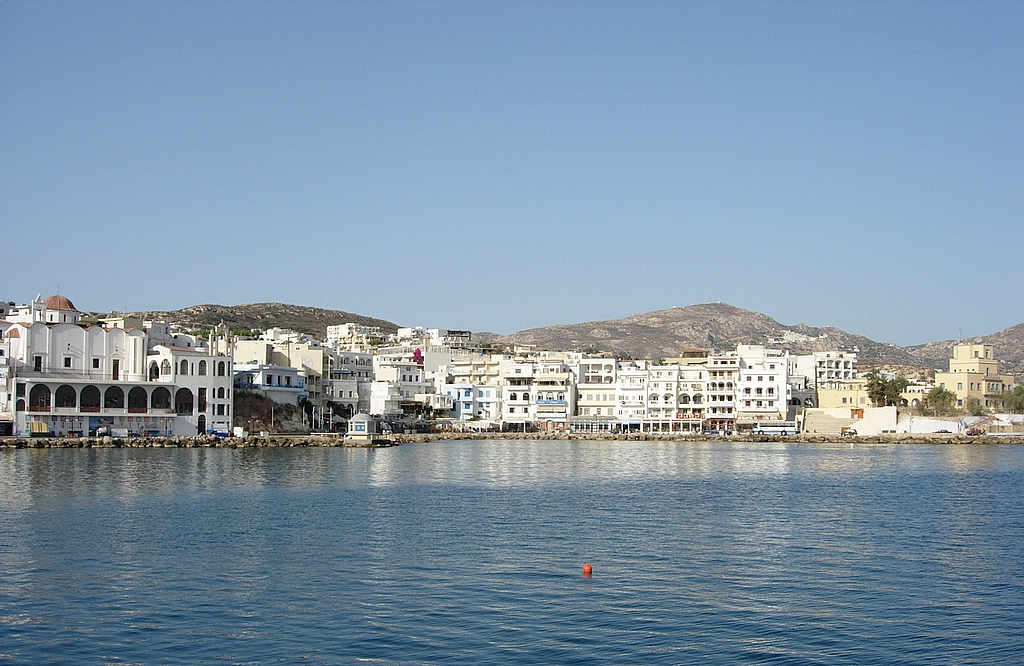
Karpathos (Greek: Κάρπαθος, pronounced [ˈkarpaθos]), also Carpathos, is the second largest of the Greek Dodecanese islands, in the southeastern Aegean Sea. Together with the neighboring smaller Saria Island it forms the municipality of Karpathos, which is part of the regional unit Karpathos-Kasos. Because of its remote location, Karpathos has preserved many peculiarities of dress, customs and dialect, the last resembling those of Crete and Cyprus. The island has also been called Carpathus in Latin and Scarpanto in Italian.

Key Information

Etymology

[edit]

Homer calls the island Krapathos, with metathesis of two letters in the first syllable.[2][3] Other names of the island include Tetrapolis[4] and Anemoessa.[5]

Municipality

[edit]
The community of Olympos

The present municipality of Karpathos was formed at the 2011 local government reform, by the merger of the following two former municipalities, that became municipal units:[6]

The municipality has an area of 324.800 km2, and the municipal unit spans 219.924 km2.[7]

Mythology

[edit]

Karpathos is the mythological homeland of the Titan Iapetus, and the birthplace of Proteus.[8]

History

[edit]
Remains of the early Christian basilica of St Fotini, Pigadia
Diafáni village.
Menetes village.
The Administration Building in Papagos Square, Pigadia, also houses the Karpathos Archaeological Museum.
Map of Karpathos, by Buondelmonti Cristoforo, 1420.

The island of Karpathos was in both ancient and medieval times closely connected with Rhodes. Its current name is mentioned, with a slight shift of one letter, in Homer's Iliad as Krapathos (οἳ δ' ἄρα Νίσυρόν τ' εἶχον Κράπαθόν τε Κάσον τε).[9] Apollonius of Rhodes, in his epic Argonautica, made it a port of call for the Argonauts travelling between Libya and Crete (Κάρπαθος: ἔνθεν δ' οἵγε περαιώσεσθαι ἔμελλον).[10] The island is also mentioned by Diodorus who claims it was a colony of the Dorians,[11] Pomponius Mela,[12] Pliny the Elder,[13] and Strabo.[14]

Main church of Diafani

The island's cities are listed on the Delian League's tribute lists.[15]

The Karpathians sided with Sparta in the Peloponnesian War in 431 BCE and lost their independence to Rhodes in 400 BCE. In 42 BCE, the island fell to Rome. After the division of the Roman Empire in 395 CE, the island became part of the Byzantine Empire.

Of its Christian bishops, the names that are known of are; Olympius, who was a supporter of Nestorius, Zoticus (in 518), Mennas (in 553), Ioannes, Leo (in 787), and Philippus (in 879). In the 14th century, the island was a see of the Latin Church, four of whose bishops bore the name Nicolaus.[16][17] No longer a residential bishopric, Karpathos (in Latin Carpathus) is today listed by the Catholic Church as an archiepiscopal titular see.[18]

In 1304, Karpathos was given as fief to the Genoese corsairs Andrea and Lodovico Moresco, but in 1306 it fell to Andrea Cornaro, a member of the Venetian Cornaro family.[19][20] The Cornaro controlled Karpathos until 1538, when it passed into the possession of the Ottoman Turks.[19]

During the Greek War of Independence from 1821 to 1822, the island rebelled, but afterwards it fell again under Ottoman rule.[19] In 1835, Sultan Mahmud II conceded to the island the privilege of the maktu tax system; that is, the tax was calculated as an annual lump sum, and not on a household basis.[19] The Ottoman rule ended on 12 May 1912, when the Italians occupied the island and the rest of the Dodecanese, during the Italo-Turkish War of 1911–12. On that day, sailors from the Regia Marina battleship Vittorio Emanuele and the destroyer Alpino landed in Karpathos.[19] With the Treaty of Lausanne (1923), Karpathos joined the other islands of the Dodecanese in the Italian possession of the Italian Aegean Islands.[19] The Italians occupied the island until September 1943, when Italy surrendered. Afterwards, Karpathos was occupied by German forces, who eventually left the island on 4 October 1944.[21] The island was ceded by Italy to Greece with the Paris Peace Treaties of 1947.[22] The island formally joined the Kingdom of Greece on 7 March 1948, together with the other Dodecanese islands.[citation needed]

In the late 1940s and 1950s, due to the economic problems after World War II, a number of Karpathians emigrated to the U.S. eastern seaboard cities; Karpathos today has a significant Greek-American constituency who have returned to their island and invested heavily. Inhabitants of the mountains to the north are more traditional.[citation needed]

Exploration

[edit]

Among 19th-century explorers of the island were the British explorers Theodore and Mabel Bent in the spring of 1885. Most of their energies were spent in excavating the site of Vroukounta in the far north of the island. Some of their finds are now in the British Museum, London.[23]

Geography

[edit]
Modern fountain of Neptune (Poseidon) in Diafáni.
Map of Karpathos (Scarpanto), by Giacomo Franco, 1597

The island is located about 47 kilometres (29 miles) southwest of Rhodes, in the part of the Mediterranean which is called the Carpathian Sea (Latin: Carpathium Mare). The Sea of Crete, a sub-basin of the Mediterranean Sea, has its eastern limit defined by the island of Karpathos.[24] Karpathos' highest point is Kali Limni, at 1,215 metres (3,986 ft). Karpathos comprises 11 villages. Pigadia (official name Karpathos), the capital and main port of the island, is located in the southeast of the island. The capital is surrounded by the villages of Menetes, Arkasa, Finiki, Pyles, Othos, Volada and Aperi. The villages of Mesochori and Spoa are located in central Karpathos, while Olympos and the second port of Karpathos, Diafani, are in the north.

The island Saria was once united with Karpathos, but an earthquake divided them. Saria preserves many important antiquities.

Climate

[edit]

Karpathos has a hot semi-arid climate (Köppen climate classification: BSh). The island has one of the mildest winters in Europe, and according to the Hellenic National Meteorological Service, the lowest temperature that has been recorded, was 2.2 °C (36 °F) on 9 February 1976 and 14 February 2004.[25]

Climate data for Karpathos Airport (Hellenic National Meteorological Service) 1995‍–‍2025
Month Jan Feb Mar Apr May Jun Jul Aug Sep Oct Nov Dec Year
Mean daily maximum °C (°F) 16.1
(61.0)
16.0
(60.8)
17.2
(63.0)
19.6
(67.3)
23.6
(74.5)
27.3
(81.1)
29.1
(84.4)
29.4
(84.9)
27.7
(81.9)
24.4
(75.9)
20.8
(69.4)
17.7
(63.9)
22.4
(72.3)
Daily mean °C (°F) 13.7
(56.7)
13.7
(56.7)
14.8
(58.6)
16.9
(62.4)
20.6
(69.1)
24.3
(75.7)
26.3
(79.3)
26.8
(80.2)
25.0
(77.0)
21.7
(71.1)
18.3
(64.9)
15.3
(59.5)
19.8
(67.6)
Mean daily minimum °C (°F) 11.3
(52.3)
11.3
(52.3)
12.3
(54.1)
14.2
(57.6)
17.7
(63.9)
21.3
(70.3)
23.5
(74.3)
24.1
(75.4)
22.4
(72.3)
19.0
(66.2)
15.9
(60.6)
13.0
(55.4)
17.2
(62.9)
Average rainfall mm (inches) 67.7
(2.67)
42.5
(1.67)
32.5
(1.28)
15.0
(0.59)
11.7
(0.46)
2.1
(0.08)
0.01
(0.00)
0.0
(0.0)
4.9
(0.19)
12.2
(0.48)
30.2
(1.19)
71.9
(2.83)
290.71
(11.44)
Source: [26][27] (Mar 1995 – Feb 2025)

Transportation

[edit]
The airport

Karpathos Island National Airport, with its relatively large runway, is located on the south side (Afiartis area). Karpathos is connected to neighboring islands and to the mainland via ferries and airplanes. The ferries provide transport to and from Piraeus (via Crete and Rhodes). Scheduled domestic flights connect the island with Rhodes, Kasos, Crete and Athens daily. Additionally, charter flights from various European cities are frequently scheduled during the high season (April–October).

The twelve villages of Karpathos

Within the island, cars are the preferred mode of transportation. The port, the airport, the main villages and other popular locations are connected by an adequate system of municipal roads, most of which are paved. During the summer months, small private boats depart from Pigadia to various locations daily, including Olympos (via Diafani) and some inaccessible beaches. Fixed-rate taxis (agoraia) and municipal buses are also available all year long.

Population

[edit]

The municipality's 2021 census population was 6,567 inhabitants. This number more than doubles in the summer months as many Karpathian expatriates come to the island for their vacation with their families. Also, taking into consideration the number of tourists that visit, there can be up to 20,000 people on the island during the summer months. The population density is greatest on the 15th of August due to the Panagias festival (Dormition of Mary), which is considered the most important festival on the island. Individuals travel from around the world to attend the festival and view the many traditions that still remain on the island.

Census

[edit]
Community 1947 1951 1961 1971 1981 1991 2001[7] 2011 2021[1]
Karpathos (Pigadia) - - - - - - 2,180 2,788 3,047
Menetes 1,651 1,499 1,413 1,233 1,179 954 760 662 638
Arkasa - - - - 390 394 507 564 540
Olympos - - - - - - 684 556 530
Mesochori - - - - 357 344 446 371 451
Aperi - - - - 457 402 470 355 428
Othos - - - - 282 229 385 281 264
Volada - - - - - - 418 264 241
Spoa 339 340 380 293 251 254 301 169 224
Pyles - - - - - - 414 216 204

Beaches

[edit]

The beaches of Karpathos island can be divided into four large groups: the beaches on the east coast are smaller and gravelly but without wind; the beaches of the southern part of the island, near the airport, are made of fine white sand; the sandy beaches on the west coast are the most exposed to the Meltemi and they are available only in low wind conditions; the beaches of the north of the island are accessible only by sea and partly by jeep.

  • East coast: Amoopi, Karpathos Beach (Vrontis), Achata, Kato Latos (reachable only on foot), Kyra Panagia, Apella, Agios Nikolaos (Spoa).
  • South coast: Mihaliou o Kipos (known by inhabitants of the village of Othos as "Shell beach"), Damatria, Diakoftis, Devils Bay, Agrilaopotamos (nude beach), Pounta beach.
  • West coast: Lefkos beach, Mesohori, Finiki, Arkasa Leucadius.
  • North coast: Diafani, Alimounta (Saria island), Palatia (Saria island), Kalamia, Vananda, Apokapos (or Papa-Mina), Opsi, Kantri, Forokli, Kapi, Nati, Philios (or Agios Minas), Agnontia.

See also

[edit]

Notes

[edit]

Sources

[edit]
  • Bertarelli, L.V. (1929). Guida d'Italia, Vol. XVII. Consociazione Turistica Italiana, Milano.
[edit]
Revisions and contributorsEdit on WikipediaRead on Wikipedia
from Grokipedia
Karpathos (Greek: Κάρπαθος), also known as Carpathos, is the second largest island in the archipelago, located in the southeastern between the islands of and , and administratively part of the region of . Covering an area of 301 square kilometers with a rugged, mountainous terrain dominated by the 1,215-meter-high Kali Limni peak, it features a diverse landscape of high mountains, pine forests, plateaus, and approximately 160 kilometers of coastline lined with turquoise waters and sandy beaches. As of the 2021 Population-Housing Census conducted by the Hellenic Statistical Authority, the island's municipality has a resident population of 6,567. The island's history spans millennia, with evidence of human habitation dating to the period (4000–3000 BC) and significant Minoan influence emerging around 1600 BC, as indicated by archaeological findings. It flourished under Roman rule from the due to its strategic natural harbor, later falling under Byzantine control in the AD, followed by periods of Venetian (1306–1540), Ottoman (1540–1912), and Italian (1912–1947) domination before its incorporation into in 1948. Key historical sites include the ruins of ancient towns like Arkesia and Vrykous, an early Christian at Agia Foteini, and a Mycenaean on the Vounos rock. Karpathos is celebrated for its preserved , particularly in remote villages such as Olympos in the north, where inhabitants speak an archaic Doric dialect, wear traditional hand-woven costumes, and uphold ancient customs through festivals like the Panigyria. The island's economy centers on , drawing visitors to its unspoiled beaches (e.g., Kyra and those near Lefkos), hiking trails on the Lastos plateau, and authentic experiences in villages like Pigadia (the capital and main port), Diafani, Aperi, and Arkasa. , including and cultivation, and also contribute to the local economy, while the island's relative isolation has helped preserve its traditional way of life.

Etymology and Names

Etymology

The name "Karpathos" originates from the "Krapathos," first attested in Homer's (Book 2, line 676), where the island is listed among those sending ships to the under the command of Pheidippos and Antiphus. This early form appears in the context of the catalog of ships, highlighting the island's role in the epic narrative. Throughout , the name stabilized as "Karpathos," referring to both the island and its inhabitants, as seen in historical records such as the Athenian Tribute Lists, which mention the "Karpathians" and "Eteokarpathians" (the original inhabitants). The etymology of the term remains uncertain, potentially linked to pre-Greek substrates or early Indo-European roots, though no definitive derivation has been established in scholarly sources. Under Byzantine rule in the medieval period, the name shifted to "Scarpanto," a form that Italian administrators revived in the early ; during Ottoman control, it was known as "Kerpe." By the , following Greek independence and the island's incorporation into in 1948, the name reverted to its classical Greek spelling, Κάρπαθος. In contemporary , "Kárpathos" is pronounced approximately as [ˈkarpaθos], with stress on the first and a voiced interdental for the "th."

Historical and Alternative Names

In ancient times, Karpathos was known as Tetrapolis, a name derived from the four principal Dorian cities—Vrykounda, Potidaion, Arkeseia, and possibly Saria—that formed a on the island and its nearby islet during the Archaic period. Another ancient designation was Anemoessa, meaning "windy island," reflecting the island's notorious winds as noted in classical sources. These names highlight Karpathos's role in early Aegean networks, with the Homeric form Krapathos appearing in the as an etymological precursor. During the medieval era, the island was referred to as Carpathus in Latin texts, while under Venetian and Genoese influence from the 13th to 16th centuries, it became known as Scarpanto, a name first adopted by Genoese rulers like the Moresco brothers in the early 1300s and later by Venetian lords such as the . This variant persisted due to the island's strategic position in maritime trade routes controlled by Italian powers. Under Ottoman rule from 1538 to 1912, Karpathos was called Kerpe in Turkish administrative records, emphasizing its peripheral status within the empire's Aegean holdings. Following the Italian occupation starting in 1912 amid the , the name Scarpanto was revived officially until 1947, when the islands were ceded to after . In contemporary international contexts, particularly in English, the island is commonly rendered as Carpathos.

Geography

Physical Geography

Karpathos is situated in the southeastern as part of the island group, positioned between the islands of to the northeast and to the southwest, approximately 47 kilometers southwest of . The island spans an area of 301 square kilometers, features a coastline extending 160 kilometers, and measures 49 kilometers in length from north to south, with a maximum width of 11 kilometers and a minimum of 3.3 kilometers. This elongated, narrow configuration contributes to its diverse coastal features, including secluded coves and steep rocky shores. The topography of Karpathos is predominantly mountainous, characterized by rugged peaks, deep ravines, fertile valleys, and pockets of lush forests, particularly in the central and northern regions. The highest elevation is Mount Kali Limni, reaching 1,215 meters above sea level, which dominates the island's central landscape and offers panoramic views across the . To the north lies the uninhabited volcanic islet of Saria, separated by a narrow and featuring similar rocky terrain with archaeological remnants. Geologically, Karpathos formed through extensive tectonic activity associated with the of the African plate beneath the Eurasian plate, resulting in uplift and events during the early that shaped its current elevated morphology. The island's includes limestones and marbles. Karpathos supports notable , including endemic adapted to its isolated, varied habitats, such as the Karpathos grayling (Hipparchia christenseni), a critically endangered lepidopteran confined to the island's rocky slopes and grasslands. Northern and central areas, encompassing Saria, are designated protected sites under the European Union's network (site code GR4210003), safeguarding habitats for rare flora and fauna amid the island's Mediterranean ecosystems.

Climate and Environment

Karpathos exhibits a hot semi-arid climate classified as BSh under the Köppen system, characterized by limited annual precipitation and significant seasonal temperature variations. Summers are hot and dry, with average highs reaching 29°C in August and occasional peaks up to 35°C or higher, moderated somewhat by the prevailing northerly Meltemi winds that bring dry, refreshing air from the Aegean. Winters are mild, with average lows around 10°C in January and February, though rare cold snaps can drop temperatures to extremes near 2°C as recorded in historical meteorological observations. Annual precipitation totals approximately 500-600 mm, predominantly falling between October and March in the form of intermittent showers or thunderstorms, while the Meltemi winds, peaking from June to September, further suppress summer rainfall and enhance aridity. The island's environment faces several challenges exacerbated by its semi-arid conditions and exposure to strong winds. Water scarcity is a persistent issue, intensified by tourism demands and irregular rainfall patterns, leading to reliance on and imported supplies during dry periods. To address water shortages, plants have been implemented since the . In October 2025, announced a €2.5 billion national plan over the next decade to combat and secure water supplies on islands, including expansions in and smart water management systems. The Meltemi winds contribute to , particularly in exposed coastal and hilly areas, stripping topsoil and threatening agricultural viability. Wildfire risks are elevated during the hot, dry summers, with vulnerabilities in forested and maquis-covered regions. Conservation efforts prioritize the protection of Karpathos's unique ecosystems, with the northern region and Saria Island designated as a (SPA) under the EU Birds Directive and a Site of Community Importance (SCI) under the since 2001. These marine and coastal zones safeguard biodiversity, including the endangered and various populations, establishing the area as a key bird sanctuary within the network. Tourism growth poses risks to these habitats through increased coastal development and waste, prompting initiatives for sustainable that limit visitor impacts on sensitive marine and terrestrial environments.

History

Ancient and Classical Periods

Evidence of on Karpathos dates to the period, with archaeological findings indicating habitation from approximately 4500 to 3000 BCE. These early inhabitants likely originated from and maintained a self-sufficient based on and , as suggested by scattered and tool remains from coastal and elevated sites. During the subsequent , particularly from the Middle Minoan III to Late Minoan I periods (around 2000–1450 BCE), Minoan influences became prominent, evidenced by imported ceramics and chamber tombs that reflect cultural and trade connections with . A total of over 70 prehistoric sites have been identified across the island, many positioned on strategic hilltops near the sea for defense and access. The transition to the ancient Greek period began around 1000 BCE with Dorian colonization, primarily from Argos in the Peloponnese, which brought architectural advancements and organized urban development to the island. These settlers established four city-states: Potidaion (also known as Poseidion), Argos (or Arkeseia), Karpathos, and Vrykous, each featuring fortified acropolises and temples dedicated to gods like Poseidon. This era marked a peak of prosperity, with the cities engaging in maritime trade, agriculture, and craftsmanship; inscriptions and coinage from the period highlight their autonomy and cultural ties to broader Dorian networks in the Aegean. The island's strategic location facilitated participation in regional alliances, including the Athenian League from 477 BCE, where Karpathian communities contributed tribute until shifting allegiance to Sparta during the Peloponnesian War (431–404 BCE). Key geopolitical shifts occurred in the late classical period, as Karpathos lost its to around 400 BCE following defeats in regional conflicts. This subjugation integrated the island into the Rhodian federation, limiting local governance while maintaining economic ties through shared ports and markets. In 42 BCE, during the final years of the , Karpathos was annexed by as part of broader conquests in the , transitioning it from Hellenistic autonomy to imperial province status. Archaeological evidence underscores this history, with prominent sites including the of the ancient fortress at Lefkos (ancient Lefki), featuring Hellenistic-era walls and a Roman that demonstrate defensive and . Ancient ports, such as Potidaion near modern Pigadia, reveal harbor structures and ship sheds from the classical period, vital for trade with and beyond. These remnants, alongside Mycenaean-style tombs and pottery scatters, provide tangible links to the island's prehistoric and classical past.

Medieval, Ottoman, and Modern Eras

During the medieval period, Karpathos remained part of the until the early 14th century, when external powers began exerting control over the islands. In 1304, the island was granted as a to the Genoese corsairs Andrea and Lodovico Moresco by the . However, by 1306, control shifted to Andrea Cornaro, a member of the prominent Venetian , who governed Karpathos as part of Venetian interests in the Aegean. The , as Venetian feudatories, maintained control over Karpathos, , and Saria until the Ottoman conquest in 1538, allowing a degree of local autonomy under their administration. The conquered Karpathos in 1538 under the command of Admiral during his campaigns in the Aegean, integrating the island into Ottoman rule as part of the broader province. Under Ottoman administration, the island enjoyed a degree of local autonomy, with governance often mediated by dragomans—local Greek interpreters and administrators—who facilitated relations between the Ottoman authorities and the island's Christian population, allowing traditional customs and Orthodox practices to persist. Karpathos participated in the Greek War of Independence, with locals rebelling against Ottoman control in 1821–1822, though the uprising was suppressed, and the island remained under Ottoman sovereignty until the early 20th century. In the , occupied Karpathos and the rest of the in May 1912 during the , establishing the islands as the Italian Aegean Territory and implementing infrastructure projects alongside policies of . Italian control lasted until 1943, when, following 's surrender in , German forces seized the island as part of the , prompting local resistance efforts by Greek partisans who collaborated with Allied forces to sabotage occupations and aid evacuations. The 1947 Treaty of Paris formally ceded the , including Karpathos, to Greece in full sovereignty, with the transfer taking effect on March 31, 1948, marking the island's integration into the modern Greek state. Post-1948, Karpathos underwent economic modernization, shifting from and seafaring to -driven growth, bolstered by Greece's accession to the (now the ) on January 1, 1981, which facilitated infrastructure funding and market access. In the , developments such as the expansion of Karpathos Island National Airport's terminal in 2010 enhanced connectivity, supporting a surge in and contributing to the island's integration into broader European economic networks.

Mythology and Folklore

Mythological Associations

In , Karpathos (ancient Carpathos) is notably linked to the prophetic sea god , known for his shape-shifting abilities and role as herdsman of Poseidon's seals. While places Proteus on the island of Pharos in in the Odyssey, the Roman poet relocates him to Carpathos in the Georgics (4.387–529), where he serves as an consulted by the Cyrene regarding her son Aristaeus's troubles. This association underscores Karpathos's portrayal as a mystical maritime refuge in later classical traditions. The island holds connections to the Titans in mythological lore, regarded as a homeland for , the Titan son of and , and father of , , Atlas, and . , symbolizing mortality and the mortal lifespan, is said to have been the first inhabitant of Karpathos in certain interpretive traditions, linking the island to the primordial conflicts between Titans and Olympians. Additional ties exist to Olympian deities, particularly Apollo, with possible associations extending to his mother Leto through shared cultic reverence in the Dodecanese. Ancient cults of Apollo are evidenced by Hellenistic coins from Karpathos featuring his laureate head, indicating his worship as a patron of , , and protection—attributes resonant with the island's seafaring heritage. Inscriptions from the region, such as those documenting dedications, further attest to these practices, blending mythological reverence with local religious life.

Local Legends and Traditions

Local legends in Karpathos often revolve around the island's history of pirate raids, which profoundly shaped the isolation of villages like Olympos. According to oral traditions, pirates terrorized coastal settlements between the 7th and 9th centuries, forcing residents to flee to remote mountainous refuges where they constructed low, stone houses camouflaged against the rocky terrain to evade detection. These tales emphasize the ingenuity of the islanders in building "anti-pirate" structures and maintaining secrecy, contributing to Olympos' enduring seclusion high on Mount Profitis Ilias. Supernatural folklore on Karpathos includes vivid superstitions centered on curses, which serve as tools for and expressing grievances within tight-knit communities. Ethnographic studies document phrases like "May the take your head and brain," invoked in disputes over land, marriage, or honor, believed to invoke harm if not resolved. These curses reflect a blend of Christian and pre-Christian beliefs, where words hold magical power, and are part of broader oral practices warning against or . Protective elements in local feature saints like John of Karpathos, a 7th-century ascetic whose life stories portray him as a guardian against spiritual and physical threats, inspiring tales of divine intervention during hardships. Stories from the 19th and 20th centuries mythologize resistance heroes, particularly during the Italian occupation from to , portraying women as fearless fighters who smuggled supplies, spied, and sabotaged occupiers while men were conscripted or in hiding. These narratives, passed down orally, elevate figures like anonymous female couriers as symbols of defiance, blending historical with embellished feats of bravery to foster communal pride. Oral transmission remains vital, with tales preserved in the unique Karpathian dialect—a Dorian-influenced variant akin to —recited during family gatherings and influencing contemporary that keep the alive.

Administration and Demographics

Municipal Structure

The Municipality of Karpathos was established on January 1, 2011, through the (Law 3852/2010), which restructured local government in by merging smaller administrative units into larger municipalities to enhance efficiency and service delivery; specifically, it combined the former municipalities of Karpathos and Olympos into a single entity covering the main island of Karpathos and the islet of Saria. Pigadia (Πηγάδια), located on the southeastern coast, serves as the capital and administrative seat of both the municipality and the regional unit of Karpathos within the South Aegean Region. The municipality is divided into two municipal units—Karpathos and Olympos—further subdivided into 13 local communities: in the Karpathos unit, these include Karpathos (Pigadia), Menetes, Volada, Aperi, Othos, Arkasa, Piles, Mesochori, Spoa, Avlona, and Diafani; the Olympos unit comprises Olympos and Saria (the latter an uninhabited islet). Governance follows the standard framework for Greek municipalities under the , led by an elected and a municipal council of 27 members, responsible for policy-making, budgeting, and local services; as of 2025, the mayor is Michail Fellouzis. In recent years, the municipality has benefited from funding to support infrastructure development, including projects for beach accessibility upgrades co-financed by the Recovery and Resilience Fund (€275,792 in 2025) and the creation of 25 new hiking trails on Karpathos and Saria backed by the to promote .

Population and Settlements

According to the Greek census conducted by the Hellenic Statistical Authority (ELSTAT), the municipality of Karpathos had a permanent resident of 6,567, reflecting a 5.5% increase from 2011. This yields a of approximately 20 inhabitants per square kilometer over the municipality's 322 square kilometers. The annual growth rate between 2011 and 2021 averaged 0.51%, driven by modest natural increase and return migration, though projections based on this trend suggest a permanent population of around 6,700 by 2025. The island's experiences a marked seasonal fluctuation, more than doubling during the summer months to exceed 13,000 residents due to influxes from and returning members of the Karpathian . This temporary swell underscores the island's reliance on connections, as many permanent residents maintain ties abroad while contributing to local communities during peak seasons. Key settlements include Pigadia, the administrative capital on the southeast coast with 2,816 inhabitants, serving as the primary urban hub. Inland, Menetes has 382 residents, known for its elevated position and agricultural focus, while the remote northern village of Olympos counts just 199 people, many of whom are elderly. Historical migration patterns have led to significant outflows to urban centers like and overseas destinations such as , particularly from isolated communities like Olympos, depleting younger demographics and fostering strong transnational networks. Demographically, Karpathos mirrors Greece's broader challenges with an aging population and low birth rates, where the fertility rate is below the national average of 1.43 children per woman (as of 2021). In the , about 17% of residents are over years old, exacerbating the skew toward older age groups.

Economy

Traditional Industries

Karpathos's traditional economy has long revolved around , which sustains local communities through the cultivation of olives, grapes for wine production, and figs, primarily for domestic use. The island's rugged terrain necessitates terraced farming systems in the mountainous regions, enabling the growth of these crops despite limited . Historically, the island achieved self-sufficiency in agricultural and pastoral products, though modern production focuses on olive groves, scattered vineyards, and fruit trees, with cereals now imported to meet needs. Livestock herding remains small-scale, centered on and sheep raised for , cheese, and consumed locally, complementing agricultural outputs in a system. Fishing, particularly in the coastal village of Diafani, employs traditional methods using small boats to harvest such as and , supporting both household needs and limited local . These activities have historically contributed to the island's , with surplus produce occasionally exchanged through regional networks, including with nearby . Handicrafts form another pillar of traditional industry, especially in the remote village of Olympos, where women specialize in textiles like sheets, carpets, tablecloths, and towels on household looms, preserving techniques passed down generations. Pottery production involves hand-painted clay items, while other artisanal works include and lace-making, often sold locally or through historical inter-island exchanges. These crafts not only provide supplementary income but also embody cultural continuity amid economic shifts. Traditional industries face significant challenges, including chronic that restricts and crop yields, exacerbated by low rainfall and reliance on limited sources. Emigration, peaking from the late 19th to mid-20th centuries to destinations like America, has depleted the labor force available for farming and herding, leading to aging populations and reduced productivity in rural areas. Since Greece's accession to the in 1981, agricultural subsidies under the have provided crucial support to island farmers, aiding modernization and sustaining these sectors despite ongoing pressures. Today, increasingly bolsters these traditional pursuits by creating markets for local produce and crafts.

Tourism and Modern Development

Karpathos has experienced significant growth in recent years, positioning it as one of Europe's top emerging destinations for 2025 due to its authentic cultural experiences and unspoiled natural landscapes. In 2024, the island welcomed approximately 99,300 international air arrivals. Up to September 2025, there were 89,704 international air arrivals, a decrease of 8.3% compared to the same period in 2024, amid broader Greek recovery trends showing 12% revenue growth year-to-date. Italian visitors lead the market, comprising the largest nationality group at around 24% of arrivals in peak months, with ongoing surges driven by direct flights from and targeted promotions. Tourism serves as the dominant economic driver for Karpathos, contributing substantially to the local economy within the region where it accounts for over 97% of GDP through direct and indirect effects. The sector emphasizes eco-tourism, highlighting the island's rugged hiking trails and pristine beaches to attract environmentally conscious travelers seeking low-impact adventures. Recent developments include hotel expansions, such as Hilton's planned openings on the island by 2026, alongside investments in new accommodations to accommodate rising demand. Efforts to secure broader recognition for Olympos village build on its 2020 inscription in the Greek National Inventory of , focusing on preserving traditional practices amid pressures. Sustainable initiatives, including events like the 2025 Karpathos Climb and Adventure Fest, promote responsible practices to mitigate risks. Despite these advances, Karpathos faces challenges from seasonal dependency, with most arrivals concentrated in summer months, straining limited like water and systems. Post-COVID recovery has been robust, with 2025 marking full rebound through record Greek-wide revenues of €16.7 billion in the first eight months, up 12% from 2024, enabling targeted upgrades such as beach accessibility projects funded by the Recovery and Resilience Fund.

Culture

Traditional Villages and Architecture

Karpathos's traditional villages exemplify the island's rugged, insular heritage, with settlements like Olympos and the area around ancient Vroukounta showcasing preserved built environments adapted to the mountainous terrain and historical threats. Olympos, perched on the slopes of Mount Profitis Ilias in the north, features compact stone houses clustered for communal protection, reflecting a medieval layout designed to deter pirate raids through its elevated, defensible position. These structures, often cubic in form with influences from neighboring Cycladic islands, utilize local and for walls, providing durability against the harsh Aegean winds and seismic activity. The in these villages emphasizes functionality and self-sufficiency, with distinctive features such as arched that facilitate and load-bearing, slate-like roofs that shed rainwater efficiently. Communal ovens, built into shared courtyards, served as central hubs for and social gatherings, underscoring the matrifocal community structure where women historically managed and economic life. Windmills, particularly the cylindrical stone ones dotting the hills above Olympos, represent 19th-century for grinding , many of which remain as iconic landmarks despite partial ruin. Near Vroukounta, the ancient site's vicinity includes remnants of early Christian and Byzantine structures integrated into later traditional farmsteads, highlighting a continuity of stone-building techniques from antiquity. Preservation efforts in these villages balance ongoing depopulation challenges—driven by youth migration to mainland and abroad—with targeted initiatives that leverage for . In Olympos, geographical isolation has inherently safeguarded unique architectural and cultural elements, but recent EU-funded projects, such as the development of networks connecting traditional sites, support restoration and highlight the built heritage to eco-tourists. These interventions help mitigate abandonment while promoting respectful visitation that sustains local crafts and structures without overwhelming the fragile .

Customs, Festivals, and Arts

Karpathos's customs reflect a blend of ancient and enduring social structures, particularly in the village of Olympos, where matrilineal traditions persist, with women historically serving as primary decision-makers, economic providers, and guardians of cultural heritage. In this community, property and inheritance often pass through the female line, and women maintain autonomy through activities like foraging and weaving, challenging broader Greek patriarchal norms. Traditional dress underscores these roles, with women donning embroidered costumes featuring white shirts adorned with intricate floral patterns, flowered aprons, dark silk headscarves, and leather boots known as stivania, often reserved for festivals and daily life in Olympos. Festivals form a vital part of Karpathian social life, centered on religious and communal gatherings that reinforce bonds. The Panagia feast on August 15, commemorating the Dormition of the Virgin Mary, draws large crowds to Olympos, beginning with a solemn at the main church, followed by evening celebrations in the village square featuring and , the slow Kato Horos performed in traditional attire, and shared meals of local delicacies. Similar festivities occur in villages like Aperi and Menetes, blending mourning with joy through hymns, lanterns, and basil-adorned processions. Wedding rituals, especially in Olympos, emphasize communal participation, with multi-day events including religious ceremonies, feasting, and dances like sousta and accompanied by and mantinades—improvised rhymed couplets—extending into the night. In 2025, initiatives highlighted these traditions through summer events from June to August, including and nights, concerts, and the inaugural Karpathos Climb & Adventure Fest on October 6–7, which integrated folk performances with outdoor activities to promote sustainable . The arts of Karpathos thrive through and , preserving the island's unique identity. Central instruments include the , a pear-shaped, three-stringed bowed made of mulberry wood and played with a bow, and the , a four-course introduced in the early for rhythmic accompaniment, both essential to dances like kato horos and sousta during festivals and weddings. manifests in mantinades, short rhymed verses sung or recited at gatherings, often improvising on themes of , , or daily life, while the island's distinctive dialect—archaic and akin to ancient —remains spoken by elders in Olympos, supported by local preservation efforts through cultural associations and tourism programs that document songs and stories. These customs, festivals, and arts draw from Karpathos's layered historical influences, starting with Dorian settlers who established prosperous city-states like the Tetrapolis in antiquity, fostering early communal and poetic traditions. Byzantine and Ottoman periods (from the 14th to early ) introduced Islamic architectural motifs and resilient folk practices, while Italian occupation (1912–1947) added elements like organized that indirectly bolstered retention, creating a syncretic culture resilient to modernization.

Transportation

Air Access

Karpathos Island National (IATA: AOK, ICAO: LGKP), the island's primary hub, is situated in the southern part of Karpathos, approximately 14 km southwest of the capital Pigadia and near the village of Lefkos. The airport opened in 1970 with initial constructions beginning in the 1960s, and it has since received extensive renovations, including a new terminal building inaugurated in 2009 to support expanding operations. It handled 282,959 passengers in , the most recent full-year data available as of 2025. The airport's infrastructure includes a single asphalt runway measuring 2,399 meters in length (12/30 orientation), suitable for regional jets and charter aircraft. Ongoing expansions and upgrades, such as facility enhancements initiated in , aim to accommodate rising demand from tourism growth while improving passenger amenities like check-in areas and lounges. Major carriers and Sky Express operate daily scheduled flights to (approximately 1 hour 15 minutes) and , with additional connections to nearby islands like . Seasonal charter services from European destinations, particularly and , supplement the schedule during peak summer months via operators like and TUI fly. Operations at can be challenged by Karpathos's prevailing windy conditions, especially the strong northerly meltemi during summer, which often result in flight delays, diversions, or cancellations to ensure . The runway's relatively narrow width (30 meters) and exposed location exacerbate these issues for larger aircraft during gusty landings and takeoffs.

Maritime Connections

Karpathos's primary ports are Pigadia, the island's capital and main harbor in the southeast, and Diafani, a smaller port in the north serving northern villages and Saria Island. These facilities handle both passenger ferries and local fishing vessels, with Pigadia accommodating the bulk of arrivals due to its deeper berths and proximity to key infrastructure. Ferry services to Karpathos are operated mainly by for conventional routes and for high-speed connections, linking the island to major hubs in the Aegean. From (), voyages take 12 to 18 hours with three weekly sailings year-round, increasing during summer. Connections to last 3 to 4 hours, with up to five weekly departures in peak season, while routes to , an intermediary island en route to , require about 1 to 1.5 hours. Travel to Crete's port takes around 3.5 hours, and to about 6 hours, supporting inter-island hops. In summer 2025, total sailings to Karpathos reach 20 to 30 per week, driven by tourism demand from and . Port infrastructure has seen significant upgrades since the 2010s to handle larger vessels and boost . Pigadia's main was expanded with a new terminal and 210-meter quay walls, increasing capacity for passenger and cargo operations while integrating archaeological protections. These improvements, part of Greece's broader 680 million modernization , include deeper channels to accommodate bigger and green features like cold-ironing facilities for reduced emissions. Diafani supports smaller vessels, and Pigadia features a for yachts up to 20 meters, offering berths, water, and fuel services to attract tourists.

Attractions

Beaches and Natural Features

Karpathos boasts over 100 beaches along its rugged 160-kilometer coastline, ranging from secluded coves to expansive bays, many framed by dramatic cliffs and pine forests. The island's diverse topography creates varied beach types, with the eastern shores featuring gravelly and pebbly stretches ideal for calm swims, such as Apella Beach, renowned for its white pebbles, crystal-clear turquoise waters, and natural shade from overhanging rocks. Further south, sandy beaches like Achata offer fine grains and emerald waters embraced by verdant mountains, providing a serene escape just 13 kilometers north of Pigadia. On the western side, beaches are often exposed to the prevailing , making them hotspots for watersports; Afiartis Bay, near , draws windsurfers worldwide due to consistent offshore gusts reaching 30 km/h or more during summer. In the north, remote and untouched beaches like Vananda provide solitude, accessible via a 2.6-mile hike from Diafani through scenic , with natural tree shade and pebbly shores teeming with . Many of these spots, including Apella and Achata, are reachable only by from Pigadia or Lefkos, especially during peak season when can make access challenging or seas rough. Beyond the beaches, Karpathos features striking natural attractions like the Lefkos Lagoon on the west coast, a sheltered with three interconnected sandy coves and shallow, waters perfect for families, located 33 kilometers northwest of Pigadia. The uninhabited Saria islet, opposite Diafani, offers rugged trails through ancient ruins and wild landscapes, culminating at Palatia ; in 2025, the approved funding for a new network of 25 trails spanning over 220 kilometers across Karpathos and Saria, with a budget of €247,876, with work beginning in May 2026 and completion by December 2027, aimed at enhancing access for eco-tourism. Popular activities include in the clear Aegean waters around Amoopi and Achata, where diverse thrives in rocky shallows, and along coastal paths, spotting over 200 migratory during spring and autumn. Environmental efforts focus on preserving these sites, with ongoing initiatives like accessibility upgrades at select beaches, including Diafani, Thalassodentro (Pigadia), Xenonas (Pigadia), and Foiniki (Arkasa), approved in September 2025 by the Ministry of Tourism, to combat and promote amid rising sea levels. Visitors should heed seasonal wind warnings, as northerly Meltemi can intensify from June to , affecting boat trips and open-water activities.

Historical Sites and Exploration

Karpathos boasts several significant historical sites that reflect its layered past, from prehistoric settlements to medieval fortifications. The Medieval Castle of Pigadia, perched on a hill overlooking the capital's harbor, dates to the Byzantine era and served as a defensive stronghold against invasions, offering panoramic views of the surrounding landscape. Nearby, the ruins of the in Pigadia and Istia represent an ancient outdoor worship site possibly dedicated to the goddess of , with remnants indicating use during . These sites, along with the ancient of Potideon in Pigadia, which flourished in the Roman and Early Christian periods with evidence of and Early occupation, highlight the island's role as a maritime hub in the southeastern Aegean. The island's museums provide essential contexts for these artifacts and structures. The Archaeological Museum of Karpathos, located in the Province House in Pigadia and operational since 2005, displays findings from prehistoric settlements, including , through to early Christian and Byzantine eras, such as inscriptions and sculptures from the island's ancient cities. Complementing this, the Folk Art Museum in Menetes, housed in a 200-year-old traditional , preserves examples of local crafts, tools, and household items that illustrate 19th- and 20th-century rural life, offering insights into the cultural continuity alongside ancient heritage. Archaeological exploration of Karpathos has unfolded over centuries, beginning with limited 19th-century surveys in the that noted surface scatters of ancient pottery, though systematic British efforts focused more on nearby until the . During the Italian occupation from 1912 to 1947, excavations intensified in the region, including preliminary work on Karpathos sites that uncovered Roman and Byzantine remains, building on earlier Ottoman-era interest in antiquities. Modern investigations, such as the British School at Athens' 2010s survey and excavation at the Early Byzantine settlement of Leukos, have revealed a fifth- to sixth-century community with churches, houses, and industrial features, using GPS mapping to document over 100 structures. Recent digs and analyses have also illuminated activity, identifying 71 prehistoric sites across Karpathos with Middle Minoan III to Late Minoan I ceramics, indicating independent island development rather than direct Minoan or Mycenaean colonization. Preservation efforts on Karpathos address the pressures of increasing through targeted initiatives. In 2025, an EU-funded under the Programme approved a 220-kilometer network of 25 trails across Karpathos and Saria, with a budget of €247,876, with work beginning in May 2026 and completion by December 2027, designed to promote sustainable access to sites while minimizing environmental impact and supporting restoration of paths near archaeological monuments. This initiative integrates site protection with eco-tourism, ensuring that historical exploration remains viable amid growing visitor numbers.

References

Add your contribution
Related Hubs
User Avatar
No comments yet.