Hubbry Logo
DoucheDoucheMain
Open search
Douche
Community hub
Douche
logo
8 pages, 0 posts
0 subscribers
Be the first to start a discussion here.
Douche
Douche
from Wikipedia

Douche
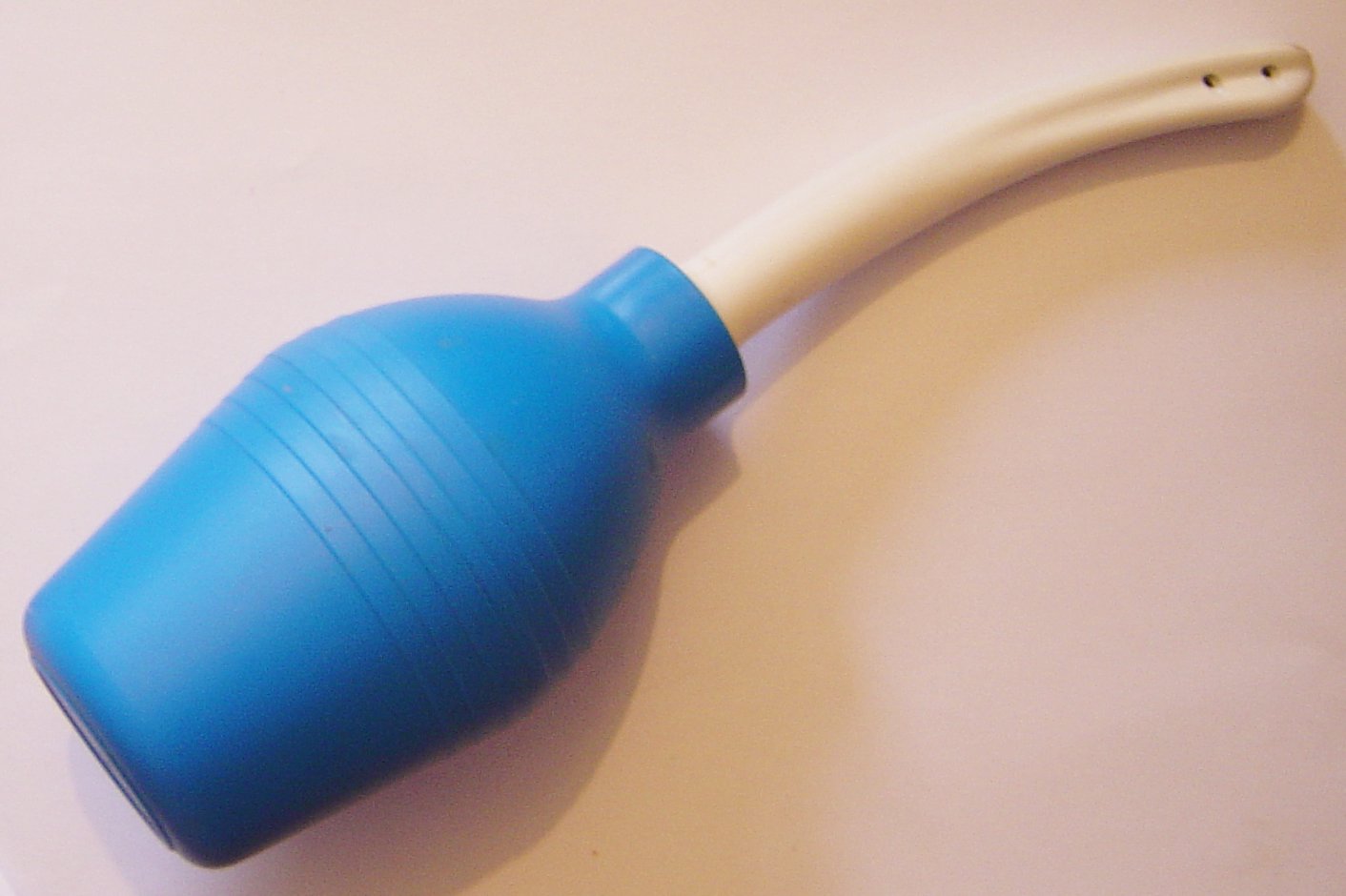
A vaginal bulb syringe with lateral holes near the tip of the nozzle
Pronunciation/dʃ/
ICD-9-CM96.44
MeSHD044364

A douche is a term for a device used to introduce a stream of water into the body for medical or hygienic reasons, or for the stream of water itself. Douche usually refers to vaginal irrigation, the rinsing of the vagina, but it can also refer to the rinsing of any body cavity. A douche bag is a piece of equipment for douching—a bag for holding the fluid used in douching. To avoid transferring intestinal bacteria to the vagina, the same bag must not be used for both an enema and a vaginal douche.

Douching after sexual intercourse is not an effective form of birth control.[1] Additionally, douching is associated with a number of health problems, including cervical cancer, pelvic inflammatory disease, endometritis, and increased risk of sexually transmitted infections.[2]

Etymology

[edit]

The word's first known use is in 1766. Douche came into English via French, from Italian: doccia "conduit pipe" and docciare "pour by drops" to douche, from doccia water pipe, probably back-formation from doccione conduit, from Latin: duction-, ductio means of conveying water, from ducere to lead.[3][failed verification] In French today it means shower, as it does in many European languages.

Overview

[edit]
Vaginal douche apparatus with five quart tank from 1905 nursing text

Vaginal douches may consist of water, water mixed with vinegar, or even antiseptic chemicals. Douching has been touted as having a number of supposed but unproven benefits. In addition to promising to clean the vagina of unwanted odors, it can also be used by women who wish to avoid smearing a sexual partner's penis with menstrual blood while having sexual intercourse during menstruation. In the past, douching was also used after intercourse as a method of birth control, though it is not effective.

Many health-care professionals state that douching is dangerous, as it interferes with both the vagina's normal self-cleaning and with the natural bacterial culture of the vagina, and it might spread or introduce infections. Douching is implicated in a wide variety of dangers, including: adverse pregnancy outcomes including ectopic pregnancy, low birth weight, preterm labor, preterm birth, and chorioamnionitis; serious gynecologic outcomes, including increased risk of cervical cancer, pelvic inflammatory disease, endometritis, and increased risk for sexually transmitted infections, including HIV; it also predisposes women to develop bacterial vaginosis (BV),[4] which is further associated with adverse pregnancy outcomes and increased risk of sexually transmitted infections.[5] Due to this, the U.S. Department of Health and Human Services strongly discourages douching, citing the risks of irritation, bacterial vaginosis, and pelvic inflammatory disease (PID). Frequent douching with water may result in an imbalance of the pH of the vagina, and thus may put women at risk for possible vaginal infections, especially yeast infections.[6]

In May 2003, a randomized, controlled, multi-center study was conducted with 1827 women ages 18–44 who were regular users of a douche product and who had been treated recently for a sexually transmitted bacterial infection or bacterial vaginosis. Women were randomly assigned to use either a newly designed and marketed douche product or a soft cloth towelette. There was little or no indication of a greater risk of PID among women assigned to use the douche product (versus soft cloth towelette).[7]

The "fountain syringe" is used for douching, by replacing the attached enema nozzle with the vaginal nozzle (shown bottom left). The vaginal nozzle is longer and thicker and has lateral holes

Antiseptics used during douching disturb the natural balance of bacteria in the vagina and can cause infections.[8] Unclean douching equipment may introduce foreign bodies into the vagina. Douching may also wash bacteria into the uterus and fallopian tubes, causing fertility problems.[9] For these reasons, the practice of douching is now strongly discouraged except when ordered by a physician for medical reasons.[8]

Douching after intercourse is estimated to reduce the chances of conception by only about 30%.[10] In comparison, proper male condom use reduces the chance of conception by as much as 98%.[11] In some cases douching may force the ejaculate further into the vagina, increasing the chance of pregnancy. A review of studies by researchers at the University of Rochester Medical Center (N.Y.) showed that women who douched regularly and later became pregnant had higher rates of ectopic pregnancy, infections, and low birth weight infants than women who only douched occasionally or who never douched.[8]

A 1995 survey quoted in the University of Rochester study found that 27% of U.S. women age 15 to 44 douched regularly, but that douching was more common among African-American women (over 50%) than among white women (21%),[8] and frequent douching contributes to more frequent bacterial vaginosis among African-American women than the average.[4]

Medical doctor Harriet Hall writes that not only can douching change the pH of the vagina and lead to infections, "There is no need ... to cleanse the vagina. It cleanses itself".[12]

Slang uses

[edit]

Douchebag and its variants, or simply douche,[13][14] are pejorative terms[14] referring to an arrogant, obnoxious, or despicable person.[15] The slang usage of the term originated in the 1960s.[16]

See also

[edit]

References

[edit]
[edit]
Revisions and contributorsEdit on WikipediaRead on Wikipedia
from Grokipedia
A douche is a device or procedure used to flush the vagina or other body cavities with a stream of water or cleansing solution for purported hygienic purposes. Typically involving mixtures of water with vinegar, baking soda, or antiseptics, douching aims to remove odors, discharge, or menstrual residue but disrupts the vagina's natural microbial balance and pH. Devices include bulb syringes, gravity-fed bags, or irrigators, with historical roots in 19th-century vaginal syringes employed for cleansing, disease treatment, and contraception. Despite past promotion for and —such as disinfectant marketed as a douching agent from the 1930s to 1960s— indicates douching offers no benefits and poses substantial risks. It increases susceptibility to by eliminating protective lactobacilli, elevates risks of , , , , and sexually transmitted infections like and . Medical authorities, including gynecologists, unanimously advise against routine douching, emphasizing the vagina's self-cleansing mechanism renders it unnecessary and counterproductive. Peer-reviewed studies confirm these adverse outcomes stem from douching's interference with vaginal ecology, pushing pathogens upward and fostering without addressing underlying causes of odor or .

Etymology and Terminology

Linguistic Origins

The word douche entered English in 1766 as a noun denoting a jet or of , particularly , directed for cleansing purposes, borrowed directly from French douche with the same meaning. In French, the term emerged in the to describe a or water pipe, reflecting practices of therapeutic application. This French usage derives from Italian doccia, signifying a conduit pipe or , which arose as a from doccione ("large pipe" or "conduit spout") in the . The Italian root traces to the docciare ("to pour in drops" or "to "), combining acqua ("," from Latin aqua) with a , emphasizing the action of channeling flow. Ultimately, the lineage connects to Latin ducere ("to lead, draw, or conduct"), the source of words like "duct" and "aqueduct," evoking the idea of directing or piping fluids—a semantic thread preserved across . The form to douche appeared in English by , initially in medical contexts for applying streams to body cavities. By the early , the term had specialized in English to often denote vaginal , though retaining broader connotations of any directed rinse.

Definitions and Distinctions

A douche is defined as a jet or current of , such as water or a cleansing solution, directed into a or against a body part for hygienic, medicinal, or therapeutic purposes. This term originates from the French word for "" or "" and encompasses the procedure itself or the device used to deliver the liquid stream. In medical contexts, douching most commonly refers to vaginal douching, the practice of flushing the interior of the with or mixtures including , soda, or iodine to purportedly cleanse or deodorize. or anal douching involves similar rinsing of the , typically with plain or saline, aimed at rather than therapeutic evacuation. This distinguishes it from enemas, which are administered rectally to relieve or prepare for procedures and often incorporate laxatives or larger volumes for bowel clearance. Douching procedures differ from external washing methods, such as bidets or showers, by involving internal of mucous membrane-lined cavities. , sometimes referred to as nasal douching, uses saline solutions to flush the sinuses but is more precisely termed irrigation in clinical usage to avoid with vaginal or rectal practices. Devices for douching vary, including syringes, bags with tubing, or commercial kits, but the core distinction lies in the targeted and intent—hygienic cleansing versus medical intervention like enemas for colonic evacuation.

Historical Development

Ancient and Pre-Modern Practices

In , women employed vaginal douching with mixtures such as , wine, , and , often post-coitally, in attempts to prevent conception by flushing out . Similar practices extended to and , where douching involved squeezing or flushing liquids like water or acidic solutions into the for contraceptive purposes or to address uterine flux and infections, as referenced in medical texts emphasizing post-intercourse cleansing. Hippocratic writings, dating to the 5th-4th centuries BCE, describe irrigating the womb—distinct from mere vaginal flushing—with clysters inserted through the to treat gynecological ailments like retained menses or sterility, reflecting a humoral theory where excess moisture required evacuation to restore balance. Greco-Roman physicians, including in his 2nd-century CE Gynecology, advocated related postcoital measures to inhibit conception, though they prioritized mechanical expulsion (e.g., jumping or sneezing) over douching alone, cautioning against harmful potions. Medieval European practices, influenced by inherited classical knowledge, involved douching with acidic or solutions such as , , juice, or herbal decoctions to counteract or purify after and intercourse, particularly among those seeking contraception amid limited alternatives. with smoke from burning herbs like complemented liquid douching for "purifying" the , as noted in period medical compendia, though efficacy was unproven and risks like irritation were inherent due to rudimentary delivery methods like animal-bladder syringes. These rituals persisted into the early , blending folk traditions with Galenic medicine, but lacked empirical validation beyond anecdotal reports in texts like the .

Modern Medical Adoption (19th-20th Centuries)

In the early 19th century, vaginal douching emerged as a recommended medical procedure for post-coital hygiene and contraception, with the British journal The Lancet explicitly advising women in 1829 to irrigate the vagina immediately after intercourse to prevent conception. This practice gained traction following publications like Charles Knowlton's 1832 book Fruits of Philosophy, which promoted douching with solutions such as vinegar or salt water as an accessible, physician-endorsed method to flush semen from the reproductive tract. By mid-century, gynecologists integrated it into clinical routines for purportedly reducing infection risks and maintaining vaginal "tone" and elasticity, often using bulb syringes or irrigators made of rubber or glass. Adoption extended beyond contraception to gynecological treatments, where douching served as a primary intervention for conditions like or , with physicians prescribing irrigations in the 1840s–1880s amid rising awareness of bacterial causes of pelvic infections. Devices such as the "whirling spray" , patented in the mid-1800s, facilitated self-administered procedures at home under medical guidance, reflecting a shift toward patient empowerment in . Usage surged after 1830, correlating with increased female literacy and access to printed medical advice, though for contraception remained low—estimated at under 70% even with prompt application—prompting ongoing refinements in technique and solutions. Into the , douching retained medical endorsement for postpartum care and infection prevention, with protocols in calling for saline or carbolic acid irrigations to cleanse the birth canal and avert puerperal fever, a leading cause of maternal mortality until antibiotics. By the , vaginal syringes evolved into standardized tools in clinics, often combined with spermicides, as documented in gynecological texts emphasizing irrigation's role in "vaginal antisepsis." Commercial products like disinfectant douches, marketed from the 1930s, blurred lines between medical prescription and consumer hygiene but were initially physician-recommended for deodorizing and treating discharges. Despite accumulating evidence of inefficacy and risks like mucosal irritation, adoption persisted through the mid-century, with surveys indicating 20–30% of U.S. women using it routinely under medical advice until the advent of oral contraceptives diminished reliance.

Types and Devices

Vaginal Douching Devices

Vaginal douching devices are instruments engineered to deliver into the vaginal canal for purposes, typically comprising a for liquid and a mechanism for controlled expulsion. The two predominant categories are manual bulb syringes and gravity-fed bag systems. syringes feature a compressible , often made of rubber or medical-grade , connected to a for insertion, enabling user-generated through squeezing to propel fluid. Bag systems, alternatively, consist of a flexible bag—capable of holding volumes such as 300ml or more—attached via tubing to a specialized vaginal , relying on or occasional manual pumping for fluid delivery. These apparatuses are constructed from durable, flexible materials like or to facilitate and prevent allergic reactions, with nozzles designed for gentle insertion and multi-port dispersion of solution. Reusable models predominate in consumer markets, though disposable variants exist for single-use applications. Combination devices, integrating vaginal and rectal functionalities, incorporate interchangeable nozzles on a shared or bag setup, historically rooted in early 20th-century kits but adapted for modern personal use. Nozzles generally include perforations or tapered designs to minimize trauma during insertion, with capacities varying from 90ml in portable bulbs to larger enema-style bags exceeding 500ml.

Alternative Applications

Rectal douching, also known as an when used for medical purposes, involves introducing liquid into the rectum to cleanse the lower bowel or relieve . Devices such as bulb syringes, enema bags, or bottles deliver water or saline solutions, with capacities typically ranging from 2 to 8 ounces for or up to 1-2 liters for therapeutic enemas. Medically, enemas stimulate bowel movements by softening stool and increasing rectal pressure, often employed for acute unresponsive to oral laxatives, with procedures recommended no more than once daily to avoid dependency or . In non-medical contexts, is practiced for personal hygiene, particularly prior to receptive anal intercourse, though studies link frequent use to increased risk of rectal infections due to mucosal disruption. Nasal douching, or , utilizes saline solutions to flush the nasal passages and sinuses, aiding in the removal of , allergens, and irritants. Common devices include neti pots, squeeze bottles, or powered irrigators delivering 8-16 ounces of solution per session, with isotonic saline (0.9% ) preferred to match bodily fluids and minimize stinging. This practice, dating back to ancient Ayurvedic traditions but validated in modern studies for reducing symptoms of chronic , allergies, and upper respiratory infections, involves tilting the head to allow drainage and is advised 1-2 times daily during acute episodes. Proper technique mandates distilled, sterile, or boiled tap water to prevent rare but fatal infections like , as reported by the CDC following cases linked to contaminated rinses. Less commonly, douching principles extend to oral devices, which propel pressurized water streams to dislodge plaque and debris from interdental spaces and subgingival areas, complementing brushing and flossing. These irrigators, operating at 30-150 , demonstrate in reducing gingival and in patients with braces or limited dexterity, per clinical reviews, though they do not replace mechanical plaque removal. Evidence from randomized trials supports their adjunctive role in periodontal maintenance, with benefits most pronounced in moderate-to-severe cases.

Procedures and Usage

Step-by-Step Process

Vaginal douching typically begins with preparation of a cleansing solution, often consisting of warm water mixed with substances like , baking soda, or commercial douche preparations, though plain water is also used. The solution is filled into a device such as a bulb , douche bag with tubing, or equipped with a . Users are advised to perform the procedure in a or to contain the expelled fluid. The individual assumes a reclined position, such as lying on their back with knees drawn up toward the chest, to facilitate access and gravity-assisted flow. , such as , is applied to the nozzle tip to ease insertion and reduce discomfort. The is then gently inserted a short distance into the , typically 2-4 inches, while avoiding forceful pressure to prevent injury. Fluid is released by squeezing the bulb syringe or opening the on a apparatus, allowing the solution to enter the under mild pressure; the liquid then exits carrying dislodged material. This step is repeated 2-3 times or until the expelled runs clear, with each rinse using fresh solution to minimize risks. After completion, the external genital area is rinsed with plain water, and the device is cleaned thoroughly with soap and hot water or disinfected for reuse. Variations exist based on device type; for example, gravity-fed systems rely on suspension above the body for flow, while manual bulb syringes provide controlled expulsion. Medical contexts, such as post-procedure care, may specify solutions like Nidagel for initial uses following vaginal packing removal.

Common Substances and Variations

Common substances employed in vaginal douching primarily consist of , either plain or mixed with additives intended to alter or provide effects. Plain , often lukewarm or , is the most frequently reported base, with one study of Ethiopian women finding 75.8% using water alone and 53% opting for specifically. diluted in is a widespread variation, used to create an acidic solution mimicking vaginal , while baking soda solutions provide an alkaline alternative. Soapy water represents another common mixture, reported by 17.9% of participants in a cross-sectional analysis of douching practices. additives, such as iodine or , are incorporated in some homemade or over-the-counter preparations to target perceived infections, though their efficacy remains unproven beyond disrupting normal flora. Saline solutions, essentially salt , serve as a neutral variation, sometimes preferred for purported gentleness. Commercial douching products introduce further variations, typically containing water blended with , , polysorbate surfactants, preservatives like , and fragrances for odor control. These formulations often aim to balance acidity while adding detergents or buffering agents, such as persulfates in patented compositions. Less common additives include extracts or soaps, though empirical data on their prevalence is limited to self-reported surveys showing regional preferences for simple water-based mixes over complex recipes.

Health Effects

Claimed Benefits and Historical Rationales

Vaginal douching has been employed since antiquity, with ancient women across cultures using substances such as honey, olive oil, or wine to flush the vagina in attempts to prevent pregnancy following intercourse. By the time of Hippocrates in the 5th century BCE, the vaginal douche was established as a common therapeutic measure for pelvic conditions, often involving herbal infusions or plain water to cleanse and soothe. In the early 19th century, douching gained popularity in Europe and the United States as a method for maintaining vaginal hygiene, incorporating water mixed with antiseptics, fragrances, or other additives to address perceived odors and discharges. During the late 19th and early 20th centuries, douching emerged as the first widely adopted clinical form of in the United States, promoted as an effective post-coital measure to destroy through antiseptic solutions. Products like were marketed explicitly for this purpose in the and , with advertisements emphasizing its germicidal properties to interrupt viability, though clinical studies by the revealed high failure rates exceeding 30% in preventing conception. As evidence mounted against its contraceptive reliability, marketing shifted focus by the mid-20th century to non-contraceptive rationales, framing douching as essential for daily to achieve a "fresh feeling" and prevent infections. Claimed benefits historically centered on enhanced cleanliness, with proponents asserting that douching removes menstrual residue, seminal fluids, and debris post-intercourse to avert odors and bacterial buildup, thereby promoting a sense of freshness and confidence. Medical advocates in the 19th and early 20th centuries rationalized it as a preventive against vaginal infections, positing that flushing disrupts pathogenic flora and restores balance, with some studies from the era suggesting antiseptic douches could reduce risks of diseases like gonorrhea. Additionally, it was touted for therapeutic relief in conditions like vulvovaginitis, where douching with mild solutions was believed to alleviate symptoms and control discharge, though such practices were often self-initiated without physician oversight. These rationales persisted in popular culture and advertising, despite emerging critiques from medical bodies questioning their empirical basis.

Documented Risks and Mechanisms

Vaginal douching disrupts the vaginal by mechanically flushing out beneficial lactobacilli, which maintain an acidic (typically 3.8-4.5) essential for inhibiting growth, thereby facilitating overgrowth of anaerobic bacteria and leading to conditions such as (BV). This alteration creates an environment conducive to ascending infections, where displaced pathogens can migrate to the upper genital tract, increasing susceptibility to (PID). A of studies from 1965 to 1995 found that douching elevates PID risk by 73%, with odds ratios ranging from 1.1 to 4.0 across cohorts, attributed to this microbial imbalance rather than confounding factors alone. Repetitive douching exacerbates these effects, as evidenced by experimental data showing that while a single saline douche allows recovery within 72 hours, repeated applications with antiseptics like acetic acid prolong , suppressing lactobacilli recolonization and elevating incidence rates to over 50% in frequent users. Mechanisms include not only removal of protective mucus and but also potential introduction of contaminants from non-sterile solutions or devices, promoting opportunistic infections; cohort studies confirm adjusted ratios for of 1.5-2.0 among douches compared to non-douchers, independent of sexual activity. In , this correlates with novel BV-associated organisms ascending to the , raising risk and contributing to adverse outcomes like (relative risk 1.3-1.6) and . Douching heightens vulnerability to sexually transmitted infections (STIs) by eroding epithelial barriers and altering local immunity, with longitudinal data linking it to increased acquisition ( up to 2.0 in high-risk groups) via enhanced viral entry post-flora disruption. For PID, the process involves bacterial ascension facilitated by douching-induced inflammation, where weakened mucosal defenses permit pathogens like or to proliferate upward, supported by histopathological evidence of in douched women with . These risks persist even with perceived hygienic intent, as cessation trials demonstrate resolution rates improving by 20-30% within months, underscoring over mere association. Empirical thresholds indicate frequency matters: weekly or more douching triples odds, while infrequent use shows minimal elevation.

Empirical Evidence from Studies

A of epidemiological studies concluded that vaginal douching is associated with adverse reproductive health outcomes, including , , , , and , though most evidence derives from observational designs rather than randomized trials, limiting . Longitudinal cohort analyses have demonstrated that frequent douching disrupts vaginal , elevating (BV) incidence; one study of over 3,000 women reported adjusted hazard ratios of 1.5–2.0 for BV among regular douches, independent of sexual behavior or hygiene confounders, attributing this to removal of protective species. A separate prospective confirmed douching's role in imbalance, with post-douche samples showing reduced abundance and increased anaerobic pathogens within 24 hours. Associations with (PID) appear in case-control studies, where ever-douchers exhibited odds ratios of 1.7–3.6 for PID compared to non-douchers, potentially via ascending infection facilitated by disrupted cervical barriers; however, a randomized field trial in high-risk populations found no direct causation from douching alone, suggesting confounding by underlying sexually transmitted infections. Meta-analyses link douching-induced to preterm birth risks, with conferring a of approximately 2.0 for spontaneous preterm delivery before 37 weeks; while direct douching-preterm links vary (odds ratios 1.2–1.8 in some cohorts), consistent mediation through persists across studies, outweighing rare reports of protective effects from infrequent periconceptional use. No randomized controlled trials demonstrate benefits for prevention, reduction, or enhancement; experimental evaluations of commercial douching products reveal pH-altering effects that inhibit beneficial lactobacilli while promoting overgrowth, contradicting hygiene rationales. Peer-reviewed consensus, including from obstetric guidelines, attributes negligible upsides to douching, with risks amplified in adolescents and during due to immature or altered mucosal defenses.

Controversies and Debates

Public Health Warnings vs. Cultural Practices

Public health authorities, including the Centers for Disease Control and Prevention (CDC) and the American College of Obstetricians and Gynecologists (ACOG), explicitly warn against vaginal douching due to its disruption of the vaginal microbiome, which increases risks of (BV), (PID), , , , and . The CDC states that douching offers no protection against sexually transmitted infections (STIs) and may heighten susceptibility by altering natural acidity and flushing beneficial lactobacilli, with cohort studies showing elevated BV relapse rates among practitioners. A comprehensive 2002 review of epidemiological data concluded that harms predominate, with no verified benefits for hygiene, as the vagina maintains self-regulation through endogenous ; routine douching is thus deemed unnecessary and counterproductive. In contrast, vaginal douching endures as a in diverse demographics, often rooted in perceptions of , menstrual or post-coital , and traditional ideals, particularly in subgroups with higher prevalence rates. U.S. surveys report overall douching rates of approximately 20% among women aged 15-44, but rates exceed 50% among African American women and vary by socioeconomic factors like lower education and urban residence, reflecting intergenerational transmission rather than medical endorsement. In some communities, it is normalized as a preventive measure against or , despite lacking empirical support, with qualitative studies attributing persistence to and cultural norms prioritizing perceived purity over microbial balance. This divergence fuels debate, as campaigns emphasizing causal risks—such as pH alteration facilitating ascent—encounter resistance from practices sustained by non-evidence-based beliefs. While culturally tailored interventions aim to reduce douching through education, longitudinal data affirm no causal benefits, even in adherent groups, reinforcing that empirical harms, including heightened STI acquisition via disruption, outweigh subjective gains regardless of . Peer-reviewed analyses, drawing from large-scale cohorts like the and Nutrition Examination Survey, consistently link frequency to adverse outcomes without protective effects, prioritizing biological mechanisms over sociocultural rationales.

Demographic Patterns and Persistence

Vaginal douching exhibits distinct demographic patterns in the United States, with rates varying significantly by race and . Among reproductive-age women, overall recent douching rates range from 15% to 22%, but African American women report markedly higher rates, with lifetime estimates between 27% and 85% and recent douching around 47-55%. In contrast, non-Hispanic white women show rates of 11-17%, while women, particularly Mexico-born , report around 12-30%. These disparities persist across socioeconomic levels, including among college-educated women, where 52% of African American graduates report douching compared to 12% of white graduates. Age and further influence patterns, with higher rates observed among younger women, adolescents, and those from lower socioeconomic backgrounds. Approximately 15.5% of adolescent girls and young women engage in douching, often linked to low family and maternal influences. Recent douching is also associated with lower levels and southern U.S. residency in some cohorts. The persistence of douching despite documented health risks stems from entrenched cultural and perceptual factors rather than empirical benefits. Many women, particularly in African American communities, view it as essential for , citing beliefs in its necessity for cleanliness after or intercourse, or to address perceived s and infections. These practices are often transmitted intergenerationally, with women learning from mothers or grandmothers, reinforcing norms independent of advice. Partner expectations and misconceptions about vaginal —such as equating douching with odor control—contribute to continuation, even as campaigns have reduced overall prevalence since the early . Longitudinal data indicate that while rates have declined broadly, subgroup persistence reflects resistance to cessation messages, often prioritizing subjective cleanliness over evidence of microbial disruption.

Slang and Cultural Connotations

Emergence of Pejorative Usage

The application of "douchebag" to denote a contemptible, obnoxious, or foolish person originated in mid-20th-century , with initial evidence from . As early as 1946, the term appeared in linguistic records describing a "misfit" or individual "maladjusted to military life," reflecting post-World War II usage among service members to label those perceived as inadequate or disruptive within regimented environments. This early likely drew from the literal douchebag's connotations of disposability, messiness, or association with intimate practices viewed as effeminate or unclean in hyper-masculine , though direct causal links remain speculative absent primary etymological analysis. Literary attestation followed shortly thereafter, with one of the earliest printed uses in James Jones's 1951 novel , where the term is deployed as an —such as in the "douchebag "—to deride a character's unappealing or idiotic traits amid the gritty portrayal of pre-Pearl Harbor Army life. The usage remained niche through the 1950s and early 1960s, appearing sporadically in profane or vernacular contexts among urban youth, particularly in New York, before broader dictionaries formalized it by 1967 as denoting a generally despicable individual. This emergence coincided with declining literal douching practices due to medical warnings against vaginal , potentially freeing the term for metaphorical repurposing as an evoking futility or . Unlike earlier insults tied to specific social failings, "douchebag" encapsulated a vague yet visceral disdain, paving the way for its expansion beyond military and literary spheres into everyday American vernacular by the late .

Linguistic Evolution and Examples

The "douchebag," derived from the vaginal device, first appeared in English in the mid-20th century, initially targeting women as a descriptor for an "unattractive co-ed," with the citing a 1967 entry in American Speech extending it to "any individual whom the speaker finds objectionable." Earlier attestations include a 1951 usage in James Jones' novel , where it functions as a vulgar implying worthlessness or irritation, predating the OED's formal record and suggesting underground circulation in American vernacular by the late or early . By the , the term had gained traction among young urban males, particularly in New York, as a broad for obnoxious or contemptible behavior, reflecting a semantic shift from literal apparatus—evoking images of superfluous or self-maintenance—to metaphorical uselessness or pretentious harmfulness. This evolution paralleled a inflection: originally gendered through its hygienic association, "douchebag" crossed to primarily male targets by the and , often implying via feminized or ineffectual , as in 1970s-1980s adolescent where it denoted peers exhibiting showy, self-absorbed traits. The standalone "douche" emerged as a clipped form in the , with "douchey" appearing by to describe behaviors "stupid, obnoxious, or contemptible," per OED records, amplifying the term's versatility in casual . Linguistic pejoration here stems from the device's of artificial cleansing—suggesting without genuine improvement—mirroring broader English patterns where or bodily items (e.g., "") degrade into insults via or futility. Examples illustrate this progression: In 1951's , a character snarls "that fukken Wiener Douchebag sonofabitch," deploying it as raw, context-specific abuse amid military bravado. By 1967, American Speech documented "Douche bag... an unattractive co-ed," narrowing to social undesirability before broadening. In contemporary usage, as in a 2009 analysis, it targets "arrogant, obnoxious" archetypes like overly groomed, entitled males, with phrases like "What a douchebag move" encapsulating performative idiocy in everyday English. The term's persistence owes to its phonetic punch—short, vowel-heavy for emphasis—and adaptability across subcultures, though critics note its potential misogynistic undertones in equating insult with female hygiene tools.

Societal and Media Representations

The term "douchebag," denoting an obnoxious, self-absorbed, or socially inept individual—typically a man displaying arrogance or inconsiderate behavior—has permeated societal discourse as a for behaviors deemed antithetical to communal norms. In everyday language, it often targets traits like entitlement, , or performative , reflecting cultural pushback against perceived excesses in male privilege, particularly among young, affluent demographics. This usage gained traction in the mid-20th century, with early literary appearances in Norman Mailer's 1951 novel , where it insulted cowardly or pretentious soldiers, evolving by the into a staple of youth amid rising visibility in suburban and urban subcultures. In media representations, "douchebag" frequently characterizes antagonists or flawed protagonists embodying stereotypes of bro-culture, such as edgelords with exaggerated grooming (e.g., spiked hair or man-buns) and dismissive attitudes toward others. Films like (2010) deploy the term dialogically to critique ambition laced with betrayal, as in Eduardo Saverin's retort to : "my Prada's at the cleaners along with my and my fuck-you flip flops you pretentious douchebag," highlighting interpersonal toxicity in tech entrepreneurship. Television series amplify this archetype, with compilations identifying characters like those in 1980s-inspired shows (, 2016 onward) using "douchebag" to denote bullies or conformists, mirroring slang's surge in pop culture via SNL skits (e.g., "Lord and Lady Douchebag," 1980) and films like E.T. (1982). Societally, the term facilitates public shaming and norm enforcement, as seen in online platforms where users label violators of —such as reckless drivers or privilege flaunters—as "douchebags" to invoke collective disapproval, evidenced in threads and academic analyses of dynamics from 2023. Internationally, adaptations like Russia's "StopXam" (Stop a Douchebag) initiative since the confront offenders, blending with to address perceived antisocial acts. Media lists of "famous douchebags," such as WatchMojo's rankings including for provocative commentary, underscore its application to public figures, though such designations remain subjective and tied to biases rather than empirical consensus. Despite critiques of its gendered focus—predominantly targeting men while sparing analogous female behaviors—the term persists in contemporary , appearing in peer-reviewed linguistic studies of TV dialogue as a marker of disdain for "wretched and disgusting" conduct.

References

Add your contribution
Related Hubs
User Avatar
No comments yet.