
Hubbry Logo
TacrolimusTacrolimusMain
Open search
Tacrolimus
Community hub
Tacrolimus
logo
8 pages, 0 posts
0 subscribers
Be the first to start a discussion here.
Tacrolimus
Tacrolimus
from Wikipedia

Tacrolimus
Clinical data
Trade namesPrograf, Advagraf, Protopic, Envarsus, others
Other namesFK-506, fujimycin
AHFS/Drugs.comMonograph
MedlinePlusa601117
License data
Pregnancy
category
Routes of
administration
Topical, by mouth, intravenous
ATC code
Legal status
Legal status
Pharmacokinetic data
Bioavailability24% (5–67%), less after eating food rich in fat
Protein binding≥98.8%
MetabolismLiver CYP3A4, CYP3A5
Elimination half-life11.3 h for transplant patients (range 3.5–40.6 h)
ExcretionMostly fecal
Identifiers
  • (3S,4R,5S,8R,9E,12S,14S,15R,16S,18R,26aS)-8-allyl-5,6,8,11,12,13,14,15,16,17,18,19,24,25,26,26a-hexadecahydro-5,19-dihydroxy-3-{(E)-2-[(1R,3R,4R)-4-hydroxy-3-methylcyclohexyl]-1-methylvinyl}-14,16-dimethoxy-4,10,12,18-tetramethyl-15,19-epoxy-3H-pyrido[2,1-c] [1,4]oxaazacyclotricosane-1,7,20,21(4H,23H)-tetrone
CAS Number
PubChem CID
DrugBank
ChemSpider
UNII
KEGG
ChEBI
ChEMBL
PDB ligand
CompTox Dashboard (EPA)
ECHA InfoCard100.155.367 Edit this at Wikidata
Chemical and physical data
FormulaC44H69NO12
Molar mass804.031 g·mol−1
3D model (JSmol)
  • C=CC[C@@H]1/C=C(\C)C[C@H](C)C[C@H](OC)[C@H]2O[C@@](O)(C(=O)C(=O)N3CCCC[C@H]3C(=O)O[C@H](/C(C)=C/[C@@H]3CC[C@@H](O)[C@H](OC)C3)[C@H](C)[C@@H](O)CC1=O)[C@H](C)C[C@@H]2OC
  • InChI=1S/C44H69NO12/c1-10-13-31-19-25(2)18-26(3)20-37(54-8)40-38(55-9)22-28(5)44(52,57-40)41(49)42(50)45-17-12-11-14-32(45)43(51)56-39(29(6)34(47)24-35(31)48)27(4)21-30-15-16-33(46)36(23-30)53-7/h10,19,21,26,28-34,36-40,46-47,52H,1,11-18,20,22-24H2,2-9H3/b25-19+,27-21+/t26-,28+,29+,30-,31+,32-,33+,34-,36+,37-,38-,39+,40+,44+/m0/s1 checkY
  • Key:QJJXYPPXXYFBGM-LFZNUXCKSA-N checkY
 ☒NcheckY (what is this?)  (verify)

Tacrolimus, sold under the brand name Prograf among others, is an immunosuppressive drug. After an allogenic organ transplant, the risk of organ rejection is moderate; tacrolimus is used to lower the risk of organ rejection. Tacrolimus is also sold as a topical medication for treating T cell-mediated diseases, such as eczema and psoriasis. For example, it is prescribed for severe refractory uveitis after a bone marrow transplant, exacerbations of minimal change disease, Kimura's disease, and vitiligo. It can be used to treat dry eye syndrome in cats and dogs.[6][7]

Tacrolimus inhibits calcineurin, which is involved in the production of interleukin-2, a molecule that promotes the development and proliferation of T cells, as part of the body's learned (or adaptive) immune response.

Chemically, it is a macrolide lactone[8] that was first discovered in 1987, from the fermentation broth of a Japanese soil sample that contained the bacterium Streptomyces tsukubensis. It is on the World Health Organization's List of Essential Medicines.[9] In 2021, it was the 296th most commonly prescribed medication in the United States, with more than 500,000 prescriptions.[10][11]

Medical uses

[edit]

Organ transplantation

[edit]

It has similar immunosuppressive properties to ciclosporin, but is much more potent. Immunosuppression with tacrolimus was associated with a significantly lower rate of acute rejection compared with ciclosporin-based immunosuppression (30.7% vs 46.4%) in one study.[12] Clinical outcome is better with tacrolimus than with ciclosporin during the first year of liver transplantation.[13][14] Long-term outcome has not been improved to the same extent. Tacrolimus is normally prescribed as part of a post-transplant cocktail including steroids, mycophenolate, and IL-2 receptor inhibitors such as basiliximab. Dosages are titrated to target blood levels at specific times after medication administration.[15]

Skin

[edit]
Tacrolimus 0.1% Ointment

As an ointment, tacrolimus is used in the treatment of dermatitis (eczema), in particular atopic dermatitis, if topical corticosteroids and moisturisers fail in helping.[16][17] It suppresses inflammation in a similar way to steroids, and is equally as effective as a mid-potency steroid. An important advantage of tacrolimus is that, unlike steroids, it does not cause skin thinning (atrophy), or other steroid related side effects.[18][17]

It is applied on the active lesions until they heal off, but may also be used continuously in low doses (twice a week), and applied to the thinner skin over the face and eyelids.[citation needed] Clinical trials of up to one year have been conducted. Recently it has also been used to treat segmental vitiligo in children, especially in areas on the face.[19]

Eyes

[edit]

Tacrolimus solution, as drops, is sometimes prescribed by veterinarians for keratoconjunctivitis, and other dry eye maladies, in the eyes of domestic cats, dogs, and horses.[20] It has been studied for use in human eyes.[21][22]

Contraindications and precautions

[edit]

Contraindications and precautions include:[23]

Topical use

[edit]
  • Occlusive dressing
  • Known or suspected malignant lesions
  • Netherton's syndrome or similar skin diseases
  • Certain skin infections[18]

Side effects

[edit]

By mouth or intravenous use

[edit]

Side effects can be severe and include infection, cardiac damage, hypertension, blurred vision, liver and kidney problems (tacrolimus nephrotoxicity),[25] hyperkalemia, hypomagnesemia, hyperglycemia, diabetes mellitus, itching, lung damage (sirolimus also causes lung damage),[26] and various neuropsychiatric problems such as loss of appetite, insomnia, posterior reversible encephalopathy syndrome, confusion, weakness, depression, vivid nightmares, cramps, neuropathy, seizures, tremors, and catatonia.[27]

In addition, it may potentially increase the severity of existing fungal or infectious conditions such as herpes zoster or polyoma viral infections.[23]

Carcinogenesis and mutagenesis

[edit]

In people receiving immunosuppressants to reduce transplant graft rejection, an increased risk of malignancy (cancer) is a recognised complication.[23] The most common cancers are non-Hodgkin's lymphoma[28] and skin cancers. The risk appears to be related to the intensity and duration of treatment.

Topical use

[edit]

The most common adverse events associated with the use of topical tacrolimus ointments, especially if used over a wide area, include a burning or itching sensation on the initial applications, with increased sensitivity to sunlight and heat on the affected areas.[citation needed] Less common are flu-like symptoms, headache, cough, and burning eyes.[29]

Cancer risks

[edit]

Tacrolimus and a related drug for eczema (pimecrolimus) were suspected of carrying a cancer risk, though the matter is still a subject of controversy. The FDA issued a health warning in March 2005 for the drug, based on animal models and a small number of patients. Until further human studies yield more conclusive results, the FDA recommends that users be advised of the potential risks. However, current practice by UK dermatologists is not to consider this a significant real concern and they are increasingly recommending the use of these new drugs.[30] A 2023 systematic review and meta-analysis published in The Lancet Child & Adolescent Health concluded with moderate-certainty evidence that the two drugs were not associated with any increased risk of cancer.[31]

In November 2024, International Agency for Research on Cancer (IARC) classified hydrochlorothiazide, voriconazole and tacrolimus as group 1 carcinogens.[32][33]

Interactions

[edit]

Also like cyclosporin, it has a wide range of interactions. Tacrolimus is primarily metabolised by the cytochrome P450 system of liver enzymes, and there are many substances that interact with this system and induce or inhibit the system's metabolic activity.[23]

Interactions include that with grapefruit which increases tacrolimus plasma concentrations. As infections are a major cause of morbidity and mortality in the post-transplant patient, the most commonly[citation needed] reported interactions include interactions with anti-microbial drugs. Macrolide antibiotics including erythromycin and clarithromycin, as well as several of the newer classes of antifungals, especially of the azole class (fluconazole, voriconazole), increase tacrolimus levels by competing for cytochrome enzymes.[23]

Pharmacology

[edit]

Mechanism of action

[edit]
FKBP12, the target protein of tacrolimus

Tacrolimus is a macrolide calcineurin inhibitor. In T cells, activation of the T cell receptor normally increases intracellular calcium, which acts via calmodulin to activate calcineurin. Calcineurin then dephosphorylates the transcription factor nuclear factor of activated T cells (NF-AT), which moves to the nucleus of the T cell and increases the activity of genes coding for IL-2 and related cytokines. Tacrolimus prevents the dephosphorylation of NF-AT.[34]

In detail, tacrolimus reduces peptidylprolyl isomerase activity by binding to the immunophilin FKBP12 (FK506 binding protein), creating a new complex. This FKBP12–FK506 complex interacts with and inhibits calcineurin, thus inhibiting both T lymphocyte signal transduction and IL-2 transcription.[35] Although this activity is similar to that of cyclosporin, the incidence of acute rejection is reduced by tacrolimus use over cyclosporin use.[12] Although short-term immunosuppression concerning patient and graft survival is found to be similar between the two drugs, tacrolimus results in a more favorable lipid profile, and this may have important long-term implications given the prognostic influence of rejection on graft survival.[36]

Pharmacokinetics

[edit]

Oral tacrolimus is slowly absorbed in the gastrointestinal tract, with a total bioavailability of 20 to 25% (but with variations from 5 to 67%) and highest blood plasma concentrations (Cmax) reached after one to three hours. Taking the drug together with a meal, especially one rich in fat, slows down resorption and reduces bioavailability. In the blood, tacrolimus is mainly bound to erythrocytes; only 5% are found in the plasma, of which more than 98.8% are bound to plasma proteins.[23][37]

The substance is metabolized in the liver, mainly via CYP3A, and in the intestinal wall. All metabolites found in the circulation are inactive. Biological half-life varies widely and seems to be higher for healthy persons (43 hours on average) than for patients with liver transplants (12 hours) or kidney transplants (16 hours), due to differences in clearance. Tacrolimus is predominantly eliminated via the faeces in form of its metabolites.[23][37]

When applied locally on eczema, tacrolimus has little to no bioavailability.[23]

Pharmacogenetics

[edit]

The predominant enzyme responsible for metabolism of tacrolimus is CYP3A5. Genetic variations within CYP3A5 that result in changes to the activity of the CYP3A5 protein can affect concentrations of tacrolimus within the body. In particular, individuals who are homozygous for the G allele at the single nucleotide polymorphism (SNP) rs776746 (also known as CYP3A5 *3/*3) have a non-functional CYP3A5 protein. The frequency of the G allele varies worldwide, from 4% in some African populations to 80–90% in Caucasian populations.[38] Across a large number of studies, individuals homozygous for the G allele have been shown to have higher concentrations of tacrolimus and require lower doses of the drug, as compared to individuals who are not homozygous for the G allele. Achieving target concentrations of tacrolimus is important – if levels are too low, then there is a risk of transplant rejection, if levels are too high, there is a risk of drug toxicities. There is evidence to suggest that dosing patients based on rs776746 genotype can result in faster and more frequent achievement of target tacrolimus levels. However, there is a lack of consistent evidence as to whether dosing based on rs776746 genotype results in improved clinical outcomes (such as a decreased risk for transplant rejection or drug toxicities), likely because patients taking tacrolimus are subject to therapeutic drug monitoring.[39][40][41][42]

Studies have shown that genetic polymorphisms of genes other than CYP3A5, such as NR1I2[43][44] (encoding PXR), also significantly influence the pharmacokinetics of tacrolimus.

History

[edit]

Tacrolimus was discovered in 1987 by a Japanese team led by pharmacologist Tohru Kino; it was among the first macrolide immunosuppressants discovered, preceded by the discovery of rapamycin (sirolimus) on Rapa Nui (Easter Island) in 1975.[45] It is produced by a soil bacterium, Streptomyces tsukubensis.[46] The name tacrolimus is derived from "Tsukuba macrolide immunosuppressant".[47]

The early development (investigational new drug phase) of tacrolimus, called at the time by the development code FK-506, happened in the next several years. A firsthand account of that process is given in Thomas Starzl's 1992 memoir.[48]

Tacrolimus was first approved by the US Food and Drug Administration (FDA) in 1994,[49][50] for use in liver transplantation; the indications were extended to include kidney transplants.[51] The first generic version of tacrolimus (capsule for oral route) was approved in the US in 2009.[52] A generic version of tacrolimus for injection was approved in the US in 2017.[53]

Tacrolimus was approved for medical use in the European Union in 2002, for the treatment of moderate to severe atopic dermatitis.[54] In 2007, the indications were expanded to include the prophylaxis of transplant rejection in adult kidney or liver allograft recipients and the treatment of allograft rejection resistant to treatment with other immunosuppressive medicinal products in adults.[55] In 2009, the indications were expanded to include the prophylaxis of transplant rejection in adult and paediatric, kidney, liver or heart allograft recipients and the treatment of allograft rejection resistant to treatment with other immunosuppressive medicinal products in adults and children.[56]

Available forms

[edit]

A branded version of the drug is owned by Astellas Pharma, and is sold under the brand name Prograf, given twice daily. A number of other manufacturers hold marketing authorisation for alternative brands of the twice-daily formulation.[57]

Once-daily formulations with marketing authorisation include Advagraf (Astellas Pharma) and Envarsus (marketed as Envarsus XR in US by Veloxis Pharmaceuticals and marketed in Europe by Chiesi).[57] These formulations are intended to reduce pharmacokinetic variation in blood levels and facilitate compliance with dosing.[citation needed]

The topical formulation is marketed by LEO Pharma under the name Protopic.[57]

Biosynthesis

[edit]
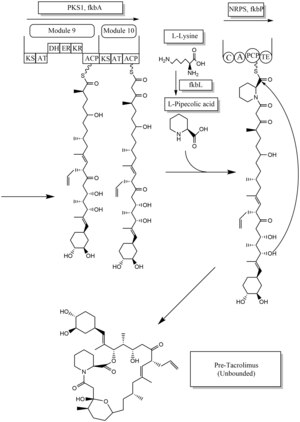
The biosynthesis of tacrolimus is hybrid synthesis of both type 1 polyketide synthases (PKS 1) and nonribosomal peptide syntheses (NRPS). The research shows the hybrid synthesis consists of ten modules of type 1 polyketide synthase and one module of nonribosomal peptide synthase. The synthetic enzymes for tacrolimus are found in 19 gene clusters named fkb. The 19 genes are fkbQ, fkbN, fkbM, fkbD, fkbA, fkbP, fkbO, fkbB, fkbC, fkbL, fkbK, fkbJ, fkbI, fkbH, fkbG, allD, allR, allK and allA.[58]

There are several possible ways of biosynthesis of tacrolimus. The fundamental units for biosynthesis are following: one molecule of 4,5-dihydroxycyclohex-1-enecarboxylic acid (DHCHC) as a starter unit, four molecules of malonyl-CoA, five molecules of methylmalonyl-CoA, one molecule of allylmalonyl-CoA as elongation units. However, two molecules of malonyl-CoA are able to be replaced by two molecules of methoxymalonyl CoA. Once two malonyl-CoA molecules are replaced, post-synthase tailoring steps are no longer required where two methoxymalonyl CoA molecules are substituted. The biosynthesis of methoxymalonyl CoA to Acyl Carrier protein is proceeded by five enzymes (fkbG, fkbH, fkbI, fkbJ, and fkbK). Allylmalonyl-CoA is also able to be replaced by propionylmalonyl-CoA.[58]

The starter unit, DHCHC from the chorismic acid is formed by fkbO enzyme and loaded onto CoA-ligase domain (CoL). Then, it proceeds to NADPH dependent reduction(ER). Three enzymes, fkbA,B,C enforce processes from the loading module to the module 10, the last step of PKS 1. fkbB enzyme is responsible of allylmalonyl-CoA synthesis or possibly propionylmalonyl-CoA at C21, which it is an unusual step of general PKS 1. As mentioned, if two methoxymalonyl CoA molecules are substituted for two malonyl-CoA molecules, they will take place in module 7 and 8 (C13 and C15), and fkbA enzyme will enforce this process. After the last step (module 10) of PKS 1, one molecule of L-pipecolic acid formed from L-lysine and catalyzed through fkbL enzyme synthesizes with the molecule from the module 10. The process of L-pipecolic acid synthesis is NRPS enforced by fkbP enzyme. After synthesizing the entire subunits, the molecule is cyclized. After the cyclization, the pre-tacrolimus molecule goes through the post-synthase tailoring steps such as oxidation and S-adenosyl methionine. Particularly fkbM enzyme is responsible of alcohol methylation targeting the alcohol of DHCHC starter unit (Carbon number 31 depicted in brown), and fkbD enzyme is responsible of C9 (depicted in green). After these tailoring steps, the tacrolimus molecule becomes biologically active.[58][59][60]

Research

[edit]

Lupus nephritis

[edit]

Tacrolimus has been shown to reduce the risk of serious infections while also increasing remission of kidney function in lupus nephritis.[61][62]

Ulcerative colitis

[edit]

Tacrolimus has been used to suppress the inflammation associated with ulcerative colitis (UC), a form of inflammatory bowel disease. Although almost exclusively used in trial cases only, tacrolimus has shown to be significantly effective in the suppression of flares of UC.[63] A 2022 updated Cochrane systematic review found that tacrolimus may be superior to placebo in achieving remission and improvement in UC.[64]

References

[edit]

Further reading

[edit]
[edit]
Revisions and contributorsEdit on WikipediaRead on Wikipedia
from Grokipedia
Tacrolimus is a macrolide lactone immunosuppressant and calcineurin inhibitor primarily used to prevent organ rejection in patients receiving kidney, liver, heart, or lung transplants. It works by binding to the intracellular protein FKBP12, forming a complex that inhibits the phosphatase activity of calcineurin, thereby blocking the dephosphorylation and nuclear translocation of nuclear factor of activated T-cells (NFAT), which suppresses T-cell activation, proliferation, and the production of cytokines such as interleukin-2 (IL-2). Discovered in 1984 from the fermentation broth of the soil bacterium Streptomyces tsukubaensis isolated near Mount Tsukuba in Japan, tacrolimus (also known as FK506) was developed by Fujisawa Pharmaceutical Company as a more potent alternative to cyclosporine for immunosuppression. Its chemical formula is C44H69NO12, and it exhibits low oral bioavailability (approximately 20-25%), necessitating therapeutic drug monitoring to maintain trough levels between 5-15 ng/mL depending on the transplant type and time post-transplant. Approved by the U.S. Food and Drug Administration (FDA) in April 1994 under the brand name Prograf for the prophylaxis of liver transplant rejection, tacrolimus rapidly became a cornerstone of immunosuppressive regimens worldwide, often combined with corticosteroids and antimetabolites like mycophenolate mofetil to minimize rejection rates while balancing toxicity risks. Subsequent approvals expanded its use to kidney (1997), heart (1997), and lung (2021) transplants, with extended-release formulations like Advagraf approved in 2007 for once-daily dosing to improve patient adherence. A topical ointment formulation (Protopic) was approved in December 2000 for moderate to severe atopic dermatitis in patients unresponsive to conventional therapies, offering a steroid-sparing option by locally suppressing T-cell mediated inflammation without significant systemic absorption. Off-label applications include treatment of autoimmune conditions such as lupus nephritis and uveitis, though these require careful monitoring due to its narrow therapeutic index. Despite its efficacy in reducing acute rejection episodes by up to 50% compared to earlier regimens, tacrolimus is associated with significant adverse effects, including (affecting up to 50% of long-term users), (such as tremors and headaches), new-onset after transplantation (10-30% incidence), , and an increased susceptibility to infections and malignancies due to immune suppression. Contraindications include to tacrolimus. Major drug interactions include strong inhibitors like , which can elevate tacrolimus levels and precipitate toxicity. Ongoing research focuses on optimizing dosing through , particularly polymorphisms in , to personalize therapy and mitigate long-term complications.

Medical uses

Solid organ transplantation

Tacrolimus serves as a cornerstone maintenance immunosuppressant in solid organ transplantation for kidney, liver, heart, and lung transplants, primarily to prevent acute and chronic rejection episodes. Approved for liver transplantation in 1994, kidney and heart transplantation in 1997, and lung transplantation in 2021, it is administered to most recipients as part of standard protocols to promote long-term graft function and patient survival. Compared to cyclosporine, the other primary calcineurin inhibitor, tacrolimus exhibits superior efficacy in reducing acute rejection rates across organ types. In a landmark 1994 randomized trial involving 529 liver transplant recipients, tacrolimus reduced the incidence of acute rejection to 37.4% versus 42.3% with cyclosporine, alongside fewer cases of corticosteroid-resistant or refractory rejection (21.0% versus 28.1%). Meta-analyses of kidney transplantation trials similarly report a 31% relative reduction in acute rejection with tacrolimus, alongside lower rates of graft loss. These advantages, observed in 1990s studies, contributed to tacrolimus becoming the preferred agent, with comparable benefits in heart and lung transplants through reduced biopsy-proven rejection. Standard regimens begin with an intravenous loading dose of 0.03 to 0.05 mg/kg/day as a continuous infusion for patients unable to take oral medications, transitioning to oral maintenance dosing of 0.1 to 0.15 mg/kg/day divided into two doses. Trough levels are targeted at 5 to 15 ng/mL, with higher ranges (10-15 ng/mL) in the early post-transplant period (first 1-3 months) tapering to 5-10 ng/mL thereafter, adjusted based on organ type and clinical response. Tacrolimus is routinely combined with mycophenolate mofetil for antiproliferative effects, corticosteroids for broad immunosuppression, and induction therapy using interleukin-2 receptor antagonists like basiliximab to minimize early rejection risk. In liver transplantation, tacrolimus-based protocols have markedly improved outcomes, with 1-year graft survival rates exceeding 90% in modern regimens, reflecting enhanced rejection control and overall allograft preservation. Similar high survival rates are achieved in (over 90% at 1 year) and other solid organ transplants, underscoring tacrolimus's role in optimizing long-term engraftment.

Dermatological conditions

Tacrolimus ointment was approved by the U.S. in December 2000 for the short-term and non-continuous chronic treatment of moderate to severe in patients aged 2 years and older who are unresponsive to or intolerant of other conventional therapies, such as topical corticosteroids. This approval marked the introduction of topical inhibitors as a steroid-sparing option for managing inflammatory conditions where long-term use risks . In the skin, tacrolimus exerts its therapeutic effects primarily by inhibiting the activation of T-cells through binding to FK-binding protein 12 (FKBP12), forming a complex that blocks activity; this prevents the and nuclear translocation of nuclear factor of activated T-cells (NFAT), thereby suppressing the transcription of pro-inflammatory cytokines such as interleukin-2 (IL-2), IL-3, IL-4, and tumor necrosis factor-alpha (TNF-α), which reduces T-cell proliferation and downstream inflammation in atopic lesions. This targeted addresses the underlying immune dysregulation in without the broad immunosuppressive effects seen in systemic administration. For atopic dermatitis, the ointment is applied topically in two strengths: 0.03% for children aged 2 to 15 years and 0.1% for adults and adolescents aged 16 years and older, typically twice daily to affected areas until clearance, followed by intermittent application to maintain remission. Clinical trials have demonstrated rapid efficacy, with 50% to 70% of patients achieving significant symptom improvement—defined as at least a 50% reduction in eczema area and severity index scores—within 3 weeks of twice-daily application, particularly in facial and flexural areas. This response rate is higher compared to mild topical corticosteroids like 1% , with sustained benefits observed in long-term maintenance therapy. Beyond , tacrolimus ointment is used off-label for other inflammatory dermatoses, including , where topical application promotes stimulation and repigmentation in approximately 50% of facial lesions after 6 months of twice-daily use, often in combination with phototherapy. It has also shown efficacy in recalcitrant , particularly facial and inverse variants, by reducing plaque and scaling, and in seborrheic , where it alleviates and facial comparable to topical antifungals. These applications leverage tacrolimus's anti-inflammatory properties in steroid-sensitive or thin-skinned areas. The U.S. FDA has issued a warning for topical tacrolimus due to rare reports of malignancies, including skin cancers and lymphomas, in patients using inhibitors, advising against continuous long-term use and recommending discontinuation if symptoms resolve. However, systemic absorption remains low, with blood concentrations typically below 2 ng/mL and representing less than 10% of exposure from equivalent oral doses, decreasing further as improves. This limited contributes to a favorable safety profile for localized dermatological use compared to systemic formulations.

Ophthalmic conditions

Tacrolimus ophthalmic formulations, primarily as a 0.1% suspension, were approved in in 2008 for the treatment of refractory allergic conjunctival diseases, including severe forms with corneal involvement. In the United States, tacrolimus are used off-label for conditions such as severe , (VKC), and associated with (GVHD), where it serves as an alternative to corticosteroids in steroid-resistant cases. These applications leverage tacrolimus's ability to inhibit in inflamed ocular tissues, reducing T-cell activation and local inflammation with minimal systemic effects. Available formulations include 0.03% and 0.1% ophthalmic suspensions or ointments, typically administered as one drop or a small ribbon applied to the affected eye 1 to 4 times daily, depending on severity. Clinical studies have reported substantial symptom relief, with reductions of 70-90% in itching, redness, and sensation after 4-6 weeks of treatment in patients with VKC and severe . A common transient side effect is a burning sensation upon instillation, affecting up to 60% of patients initially but diminishing with continued use. Randomized controlled trials from the , such as a 2011 placebo-controlled study and a 2016 prospective evaluation, demonstrated tacrolimus's efficacy in reducing corneal epitheliopathy and shield ulcers in VKC, with faster resolution of proliferative lesions compared to continued steroid monotherapy. Unlike topical steroids, tacrolimus does not elevate , making it suitable for long-term management in patients at risk for . In GVHD-associated dry eye, trials showed improved tear production and surface staining scores without the cataractogenic risks of steroids. A key advantage of ophthalmic tacrolimus is its minimal systemic exposure, as absorption through the is low, resulting in undetectable blood levels in most patients even with prolonged use. Treatment protocols often involve initial combination with low-dose topical s for acute flares, followed by steroid tapering over 4-6 weeks while maintaining tacrolimus twice daily to sustain remission and prevent relapse. This approach has enabled steroid discontinuation in over 50% of refractory cases within 6 months.

Other approved indications

Tacrolimus is approved for the treatment of in select regions, including since 2005, particularly for patients with an inadequate response to conventional disease-modifying antirheumatic drugs such as . Clinical trials have demonstrated that oral doses of 1-3 mg/day, administered once daily after dinner, lead to significant reductions in arthritis scores, with American College of Rheumatology 20% response rates reaching 48.3% at the 3 mg dose compared to 14.1% with . In these patients, target trough blood levels are typically maintained at 3-7 ng/mL to balance efficacy and minimize toxicity. In hematologic contexts, tacrolimus is utilized systemically for the management of steroid-refractory acute following allogeneic transplantation, often in combination with corticosteroids or other agents. Studies report overall response rates of 40-60% in acute cases, with improvements in , gut, and liver involvement, though long-term remains challenging due to infectious complications. Dosing is generally lower than for solid , starting at approximately 0.075 mg/kg/day orally and adjusted to achieve trough levels of 5-15 ng/mL, depending on response and tolerance. Additionally, tacrolimus has approval in since 2009 for induction therapy in corticosteroid-refractory , with brief evidence supporting its role in moderate-to-severe cases unresponsive to standard treatments. For this indication, initial dosing targets higher trough levels of 10-15 ng/mL to promote remission, tapering thereafter.

Contraindications and precautions

General contraindications

Tacrolimus is contraindicated in patients with known to the drug itself or to other compounds, as has been reported in cases of prior allergic reactions to macrolide antibiotics. For the injectable formulation, to polyoxyl 60 hydrogenated castor oil (HCO-60), the solubilizing agent, is also an absolute due to the risk of anaphylactic reactions. Relative contraindications include active untreated infections, such as or , because tacrolimus's potent immunosuppressive effects can exacerbate these conditions and increase the risk of disseminated disease. Use during is associated with risks of fetal harm when administered to pregnant women, based on findings from animal reproduction studies and postmarketing experience, including from the Transplantation Pregnancy Registry International indicating increased rates of , preterm delivery, , and birth defects (approximately 5-8%). Limited human also suggest potential neonatal risks including and renal dysfunction. Use is recommended only if the potential benefit justifies the potential risk to the . Tacrolimus is excreted in human milk, and due to the potential for serious adverse reactions in breastfed infants from and other effects, is not recommended during treatment with systemic tacrolimus. For topical formulations, may be considered if the treated area is not in direct contact with the , but the benefits and risks should be discussed with a healthcare provider. Severe hepatic impairment (Child-Pugh class C) represents a relative requiring significant dose reduction and close monitoring, as tacrolimus clearance is substantially decreased in such patients, leading to prolonged and heightened toxicity risk. Concomitant administration with strong inhibitors, such as or , is relatively contraindicated without intensive , due to the potential for markedly elevated tacrolimus levels and associated or other adverse events. Route-specific precautions, such as avoidance in certain dermatological conditions for topical use, should also be considered alongside these general criteria.

Route-specific precautions

For oral and intravenous administration of tacrolimus, routine monitoring of renal function via serum creatinine levels is essential due to the potential for nephrotoxicity. Blood glucose and electrolyte levels should also be regularly assessed, as the drug can induce hyperglycemia and disturbances in potassium or magnesium balance. In patients with gastrointestinal disorders that impair absorption, such as severe diarrhea or malabsorption syndromes, oral tacrolimus should be used with caution or avoided, given its incomplete and variable bioavailability from the gastrointestinal tract. Topical tacrolimus is not recommended for application on infected skin lesions or pre-malignant/malignant conditions, such as cutaneous T-cell lymphomas, which may resemble ; any active bacterial or viral infections must be treated and resolved prior to use. Hands should be washed thoroughly after application—unless the hands are the treatment site—to minimize inadvertent systemic exposure or spread to unaffected areas. Special caution is advised in patients with AIDS or other immunocompromised states, where higher systemic absorption may occur due to altered , as safety and efficacy have not been established in this population. For ophthalmic administration, typically as compounded eye drops for in conditions like , patients should avoid wearing contact lenses during treatment to prevent and ensure effective to the ocular surface. Across all routes, live vaccines are contraindicated during tacrolimus therapy due to , which can lead to inadequate or disseminated infection; inactivated vaccines may be considered under medical supervision. to tacrolimus represents a general applicable to all formulations. of tacrolimus blood levels is recommended for systemic routes to optimize efficacy and minimize toxicity.

Adverse effects

Systemic administration

Systemic administration of tacrolimus, typically via oral or intravenous routes, is associated with a range of dose-dependent adverse effects, primarily due to its inhibition and resulting . These toxicities are more pronounced in transplant patients and often require monitoring of levels to maintain therapeutic trough concentrations, generally between 5-15 ng/mL, to balance efficacy and safety. is one of the most significant adverse effects, occurring in 20-50% of patients, with incidences reported as 17-44% in renal transplant recipients and 18-42% in liver transplant recipients. It commonly presents as an acute rise in serum , , or due to of renal and tubular damage. Management involves dose reduction to alleviate symptoms, with trough levels targeted below 10 ng/mL in affected cases, or switching to cyclosporine if toxicity persists despite adjustments. Neurotoxicity affects 5-15% of patients severely, manifesting as tremors (incidence up to 50-70%, particularly early post-transplant), headaches, or seizures, particularly when trough levels exceed 15 ng/mL. Mild symptoms like fine hand tremors are more common, occurring in over 50% of cases early post-transplant, while severe events such as seizures or are linked to supratherapeutic exposure and . Dose adjustment to lower trough levels, typically below 12 ng/mL, often resolves these symptoms, though persistent cases may necessitate temporary discontinuation or alternative . Metabolic disturbances include new-onset diabetes mellitus after transplantation (NODAT) in 10-20% of patients, , and . NODAT arises from tacrolimus-induced and beta-cell dysfunction, with higher risk in the first year post-transplant under high-dose regimens. , seen in up to 30% of cases, results from reduced renal excretion, while occurs in 40-50% of recipients, often requiring antihypertensive therapy. These effects are managed through dose minimization, alongside interventions like insulin for or potassium binders for . Gastrointestinal effects are frequent, with reported in 46% and in up to 72% of patients, often mild but contributing to and potential tacrolimus . These symptoms typically occur early in therapy and are dose-related, resolving with supportive care or dose reduction. Pruritus (itchiness) is a recognized adverse effect, particularly with systemic administration, affecting up to 36% of patients; it may present as generalized itching or accompanied by skin rash. Hematologic toxicities include in approximately 65% and in 48% of treated patients, stemming from and increased infection risk. may present as with reduced , while elevates susceptibility to opportunistic infections. Monitoring complete blood counts and dose adjustments are standard, with used for severe if needed.

Topical and ophthalmic administration

Topical administration of tacrolimus, primarily as an ointment for dermatological conditions such as , commonly results in localized skin reactions at the application site. These include burning, stinging, and pruritus, affecting 30-50% of patients initially, with incidences reported as high as 45-58% in the first few days of treatment. These sensations are typically transient, resolving within 1-2 weeks as the skin adapts, with 90% of burning events lasting between 2 minutes and 3 hours (median 15 minutes) and pruritus events similarly short-lived. may also occur but is less frequent, around 12%. Ophthalmic administration of tacrolimus, often as compounded for conditions like or , is associated with mild, transient ocular effects. Common side effects include , ocular , and conjunctival hyperemia, with incidences ranging from 10-40% depending on the formulation and patient population; for instance, irritation has been reported in up to 43% of cases in controlled trials. These effects are generally short-term, with burning or stinging sensations resolving quickly after instillation, and no severe ocular irritation observed in many studies. Systemic absorption following topical or ophthalmic use is minimal and rare under standard conditions, but it can occur with application over large skin areas or on compromised barriers, potentially leading to mild immunosuppressive effects such as elevated blood tacrolimus levels. Absorption decreases as lesions heal, with no evidence of accumulation from repeated applications. In some patients using topical tacrolimus, consumption of alcohol can trigger a disulfiram-like flush , characterized by facial or skin redness and warmth at application sites, attributed to accumulation of tacrolimus metabolites that interact with alcohol . This reaction occurs in a minority of cases, approximately 3-7%, and typically resolves within an hour. Overall, discontinuation rates due to intolerance from these localized effects are low, less than 5%, reflecting the generally favorable tolerability profile of non-systemic tacrolimus administration.

Long-term risks

Prolonged use of tacrolimus, a inhibitor commonly employed in immunosuppressive regimens for solid , is associated with an elevated risk of malignancies due to its suppression of T-cell mediated immunity, which impairs the body's ability to surveil and eliminate nascent cancer cells. In particular, transplant recipients on tacrolimus-based face a 2- to 4-fold increased incidence of non-melanoma cancers, including , compared to those on alternative immunosuppressants like cyclosporine. Lymphomas, often manifesting as (PTLD), also show heightened risk, with an overall incidence of approximately 1-2% in solid organ transplant recipients, though this rises significantly in Epstein-Barr virus (EBV)-seronegative patients due to uncontrolled viral proliferation under . Data from transplant registries indicate that the 10-year cumulative incidence of de novo cancers in these patients is 2- to 3-fold higher than in the age- and sex-matched general population, underscoring the need for vigilant monitoring. To mitigate these oncologic risks, annual dermatologic screening is recommended for all solid organ transplant recipients on tacrolimus to facilitate early detection and intervention. Cardiovascular complications represent another major long-term concern with chronic tacrolimus exposure, primarily through its contributions to , , and subsequent accelerated . Tacrolimus induces post-transplant in up to 50-70% of recipients by mechanisms involving renal and sodium retention, while also promoting characterized by elevated triglycerides and cholesterol, both of which exacerbate endothelial damage and plaque formation. These factors collectively heighten the risk of and other atherosclerotic events, with accounting for a substantial portion of long-term mortality in transplant populations—often cited as the leading beyond the first post-transplant year, contributing to 10-15% of overall mortality in stable kidney and liver recipients over extended follow-up. Regarding bone health, the primary risk of in tacrolimus-treated patients stems from concomitant co-therapy rather than tacrolimus itself, which exhibits a relatively neutral impact on density compared to other inhibitors. High-dose corticosteroids, frequently used alongside tacrolimus in the early post-transplant period, accelerate and inhibit function, leading to trabecular bone loss and increased risk; however, tacrolimus does not significantly impair bone formation or density in isolation, and regimens minimizing duration have shown preservation of lumbar spine bone mass at 12 months post-transplant.

Interactions

Drug interactions

Tacrolimus is primarily metabolized by the 3A4 () enzyme system in the liver and intestines, making it highly susceptible to drug interactions that alter its blood concentrations and therapeutic efficacy. Concomitant use with other medications requires careful monitoring of tacrolimus trough levels to prevent toxicity or rejection in transplant patients. Strong CYP3A4 inhibitors, such as ketoconazole, can significantly increase tacrolimus exposure, with co-administration leading to approximately a 2-fold increase in tacrolimus area under the curve (AUC) and often requiring substantial dose reductions (e.g., around 50%) to maintain therapeutic levels, based on close monitoring. Similarly, other inhibitors like itraconazole, voriconazole, and clarithromycin may cause rapid rises in tacrolimus concentrations, necessitating initial dose reductions and frequent monitoring. Tacrolimus can also inhibit CYP3A4, increasing plasma concentrations of co-administered statins metabolized by this enzyme, such as atorvastatin, thereby elevating the risk of myopathy and rhabdomyolysis. Precautions include initiating statins at low doses (e.g., atorvastatin ≤10 mg/day), monitoring creatine kinase levels, liver function, tacrolimus trough levels, and symptoms of muscle pain or weakness; patients should seek immediate medical attention for signs like dark urine, and discontinue if myopathy is suspected. Pravastatin or fluvastatin, which are not CYP3A4 substrates, may be safer alternatives. In contrast, inducers like rifampin decrease tacrolimus levels by approximately 50% or more through enhanced metabolism, often requiring dose increases or close to avoid subtherapeutic concentrations and graft rejection. and exhibit similar inductive effects, further emphasizing the need for level adjustments. Potassium-sparing diuretics, such as , can exacerbate tacrolimus-induced by promoting potassium retention, increasing the risk of electrolyte imbalances in patients with renal impairment. Concurrent use warrants regular serum potassium monitoring and potential diuretic adjustments. Tacrolimus also demonstrates synergistic nephrotoxicity when combined with aminoglycosides (e.g., gentamicin) or nonsteroidal anti-inflammatory drugs (NSAIDs, e.g., ibuprofen), which can lead to acute renal failure through additive effects on renal and tubular damage. Overall management involves of tacrolimus trough levels (typically 5-15 ng/mL depending on the clinical context) and dose accordingly; St. John's wort should be avoided due to its potent induction of , which can markedly reduce tacrolimus concentrations and compromise . No significant drug interaction is documented between tacrolimus (oral or topical) and topical minoxidil. Reliable drug interaction databases like Drugs.com do not list any interaction between them. Topical tacrolimus and minoxidil are frequently combined in compounded formulations or studied together for treating alopecia conditions (e.g., alopecia areata, cicatricial alopecia), with research showing they are generally well-tolerated and safe when used concurrently.

Food and lifestyle interactions

Grapefruit juice inhibits the intestinal CYP3A4 enzyme responsible for tacrolimus metabolism, substantially increasing its bioavailability and blood concentrations—studies in transplant patients have reported increases of up to 3-fold or more, raising the risk of toxicity such as nephrotoxicity or neurotoxicity. Patients should completely avoid grapefruit and its juice to prevent these interactions. High-fat meals delay tacrolimus absorption by slowing gastric emptying and reduce its , with one study showing a 37% decrease in area under the curve (AUC) and a 77% decrease in maximum concentration (Cmax) compared to conditions. To ensure stable drug levels, administration should occur consistently either with or without food at the same daily intervals. Alcohol consumption may potentiate tacrolimus-related , including symptoms like tremors or headaches, and should be limited or avoided to minimize risks. Patients using topical tacrolimus face a heightened risk of skin malignancies with prolonged sun exposure due to of skin cells; protective measures such as broad-spectrum (SPF 30+), protective clothing, and limiting direct are essential. Smoking induces activity, but this has minimal impact on tacrolimus since the drug is primarily metabolized by CYP3A4.

Pharmacology

Mechanism of action

Tacrolimus is a immunosuppressant that primarily exerts its effects by binding with high affinity to the intracellular immunophilin FKBP12 (FK506-binding protein 12), forming a stable complex. This FKBP12-tacrolimus complex then binds to and inhibits the calcium-dependent serine/threonine phosphatase , preventing its activation. The inhibition of was first elucidated in seminal studies demonstrating tacrolimus's potent suppression of T-cell signaling pathways. By blocking activity, tacrolimus prevents the of the nuclear factor of activated T-cells (NFAT) family. Dephosphorylated NFAT normally translocates to the nucleus to promote the transcription of genes encoding key proinflammatory cytokines, including interleukin-2 (IL-2), IL-3, IL-4, and tumor necrosis factor-alpha (TNF-α). This disruption in the calcineurin-NFAT pathway selectively inhibits T-lymphocyte activation, proliferation, and cytokine production, thereby dampening the adaptive immune response without inducing widespread cellular toxicity. In contrast to purine analogs like , which broadly inhibit in all rapidly dividing cells, tacrolimus's action is targeted to in T cells. In topical formulations, tacrolimus exhibits additional anti-inflammatory properties beyond T-cell suppression, including the reduction of degranulation and diminished eosinophil recruitment and activity in inflamed tissues.32464-9/fulltext) These effects contribute to its efficacy in conditions involving local reactions. Tacrolimus does not directly impact B-cell function or by professional antigen-presenting cells, with any observed modulation of occurring indirectly through impaired T-cell help.

Pharmacokinetics

Tacrolimus exhibits low and variable oral , typically ranging from 20% to 25%, primarily due to extensive first-pass in the liver and intestines. Intravenous administration achieves complete bioavailability of 100%, making it suitable for initial dosing in transplant patients unable to take oral medications. , particularly high-fat meals, can further reduce absorption by up to 30-40%, leading to recommendations for consistent administration conditions to minimize variability. Following absorption, tacrolimus is widely distributed throughout the body, with a of 1 to 3 L/kg in adults. It is highly bound to plasma proteins, approximately 99%, mainly to and alpha-1-acid , and extensively partitions into erythrocytes, where it accumulates rapidly. This distribution profile allows tacrolimus to cross the blood-brain barrier, potentially contributing to neurotoxic effects observed in some patients. Metabolism of tacrolimus occurs predominantly via the 3A4 (CYP3A4) enzyme in the liver and , producing at least 15 metabolites, with the primary ones being 13-O-demethyltacrolimus and 31-O-demethyltacrolimus, both of which are inactive and lack immunosuppressive activity. These metabolites do not significantly contribute to the drug's therapeutic or toxic effects. Elimination of tacrolimus is primarily fecal, accounting for approximately 99% of the dose as metabolites, with renal clearance being minimal at less than 1% of unchanged drug. The terminal elimination averages about 12 hours (ranging from 3.5 to 40.5 hours), influenced by factors such as hepatic function and concurrent medications. Due to its narrow therapeutic index and high inter- and intrapatient variability, therapeutic monitoring of tacrolimus is essential, focusing on whole-blood trough levels typically targeted at 5-15 ng/mL depending on the transplant type and time post-transplant. Immunoassays are commonly used for routine monitoring, but liquid chromatography-mass spectrometry (LC-MS) provides higher accuracy by distinguishing tacrolimus from metabolites and cross-reacting substances.

Pharmacogenomics

Tacrolimus pharmacogenomics primarily involves genetic variations in enzymes and drug transporters that influence , absorption, and dosing requirements in transplant patients. The gene, which encodes a key enzyme in tacrolimus , exhibits significant polymorphisms affecting interindividual variability in drug exposure. Similarly, variants in the ABCB1 gene, encoding , impact intestinal efflux and oral . These genetic factors can guide personalized dosing to optimize efficacy while minimizing toxicity, such as or rejection risk. The CYP3A5*3 allele (rs776746), a loss-of-function variant, results in poor metabolizer status by reducing or abolishing CYP3A5 enzyme expression. This allele is highly prevalent, with an approximate 90-93% frequency in Caucasians, leading to higher tacrolimus plasma concentrations at standard doses and increased toxicity risk. Poor metabolizers (*3/*3 genotype) typically require 30-50% lower doses compared to extensive metabolizers to achieve therapeutic trough levels (5-15 ng/mL), as extensive metabolizers (*1 carriers) exhibit rapid clearance necessitating dose increases of 1.5-2 times the standard starting dose (up to 0.3 mg/kg/day total). For example, extensive metabolizers may start at 0.15-0.2 mg/kg/day divided twice daily, while poor metabolizers use the baseline 0.1 mg/kg/day. Polymorphisms in ABCB1 (also known as MDR1), particularly the 3435C>T variant (rs1045642) in exon 26, affect P-glycoprotein function and tacrolimus intestinal absorption. The T allele is associated with higher bioavailability, as evidenced by increased concentration-to-dose ratios in CT and TT genotypes compared to CC, potentially leading to elevated trough levels and toxicity at standard doses. Meta-analyses confirm this variant influences pharmacokinetics in renal transplant recipients, though its effect is less pronounced than CYP3A5 and often interacts with ethnicity or co-existing CYP variants.30350-7/fulltext) Pre-transplant for and ABCB1 is utilized in select transplant centers to predict initial dosing and reduce early post-transplant variability. For instance, -guided algorithms can forecast stable doses within the first week, with extensive metabolizers receiving higher initial loads (e.g., 0.2 mg/kg followed by 0.15 mg/kg/day maintenance). remains essential to adjust for nongenetic factors like age or concurrent medications. Meta-analyses from the 2010s, including systematic reviews of over 2,000 patients, indicate that CYP3A5 polymorphisms explain 20-50% of the variability in tacrolimus dose requirements, with non-expressers (*3/*3) achieving target concentrations at 40-60% lower doses than expressers. ABCB1 variants contribute an additional 5-10% to this variability, particularly in bioavailability. These findings underscore genetics as a major determinant beyond standard pharmacokinetic models. Despite proven utility, routine pharmacogenomic testing for tacrolimus is not widespread due to costs (approximately $200-500 per test) and logistical challenges in rapid pre-transplant implementation. It is, however, recommended in high-risk groups such as pediatrics, where CYP3A5-guided dosing in heart or kidney transplants can reduce adverse events and save up to $17,000 per patient through fewer dose adjustments and hospitalizations. Ongoing efforts focus on cost-effective panels integrating CYP3A5 with ABCB1 for broader adoption.

History and development

Discovery and isolation

Tacrolimus was discovered in 1984 by scientists at Fujisawa Pharmaceutical Company (now ) during a systematic screening of samples for novel antimicrobial and immunosuppressive agents in the region of . The compound, initially designated as FR900506 or FK506, was isolated from the fermentation broth of the actinomycete bacterium tsukubaensis, a strain newly identified from a sample collected near . This discovery emerged from efforts to identify alternatives to existing immunosuppressants like cyclosporine, amid growing needs for therapies. Initial characterization revealed tacrolimus to be a novel 23-membered with a complex structure featuring a hemiketal ring and allyl side chain, distinguishing it from peptide-based immunosuppressants. In preclinical studies, it demonstrated potent immunosuppressive activity, notably prolonging allograft survival in models by suppressing T-cell activation and production, with effective doses as low as 0.32 mg/kg orally. Compared to cyclosporine, tacrolimus exhibited approximately 100-fold greater potency and , while binding to a distinct intracellular protein, FKBP12 (FK506-binding protein), rather than , leading to a shared but mechanistically nuanced inhibition of . The generic name "tacrolimus" was coined in 1987, derived from "" (the discovery site), "acrol" (referring to its structure), and "immunosuppressant," reflecting its origin and pharmacological profile. This naming formalized its identity as FK506 transitioned from a research code to a clinical candidate, highlighting its potential as a in transplantation medicine.

Clinical development and approvals

Tacrolimus entered clinical development in the late through phase I trials conducted primarily in the United States and , which evaluated its safety, tolerability, and in healthy volunteers and initial patient cohorts. These early studies confirmed the drug's immunosuppressive potential while identifying dose-related toxicities such as and , establishing a foundation for further investigation in transplant settings. The first clinical use of tacrolimus (then known as FK506) occurred on March 1, 1989, when it was administered intravenously to a liver transplant recipient at the as rescue therapy for refractory rejection, marking a significant milestone in its transition from preclinical to human application. Pivotal phase III trials in the early 1990s advanced tacrolimus toward regulatory approval, with a landmark U.S. multicenter randomized controlled trial published in 1994 comparing it directly to cyclosporine in 555 liver transplant patients. This study demonstrated tacrolimus's superiority, showing significantly lower rates of biopsy-proven rejection (41% vs. 48%). Building on these results and similar European trials, the U.S. Food and Drug Administration (FDA) approved oral and intravenous formulations of tacrolimus (under the brand name Prograf) on April 8, 1994, for the prophylaxis of organ rejection in liver transplant recipients, with indications later extended to kidney (1997) and heart (2006) transplants. The European Medicines Agency (EMA) followed with approval on February 16, 1996, for similar prophylactic uses in solid organ transplantation across the European Union. Further development expanded tacrolimus beyond systemic transplantation . The FDA approved a topical ointment (Protopic, 0.03% and 0.1%) on December 8, 2000, for short-term and intermittent long-term treatment of moderate to severe in patients aged 2 years and older unresponsive to conventional therapies. The EMA granted approval for the same indication in 2002, emphasizing its role as a steroid-sparing alternative for inflammatory skin conditions. In 2012, the EMA extended approval for oral tacrolimus to include induction of remission in moderate to severe refractory to conventional treatments, reflecting post-marketing data on its efficacy in autoimmune applications. Post-marketing surveillance and additional studies in the 2000s supported label expansions, including pediatric indications for prophylaxis (initially approved for children over 6 months in liver transplants around 2003, with further extensions). In July 2021, the FDA expanded approval of Prograf to include prophylaxis of organ rejection in adult and pediatric transplant recipients. Generic versions of oral tacrolimus capsules (0.5 mg, 1 mg, and 5 mg) received FDA approval starting August 10, 2009, enhancing accessibility while requiring demonstrations due to the drug's narrow . These developments solidified tacrolimus as a cornerstone immunosuppressant, with ongoing monitoring for long-term safety.

Formulations and administration

Available dosage forms

Tacrolimus is available in several for oral, intravenous, topical, and ophthalmic administration, tailored to its primary uses in and dermatologic conditions. Oral formulations include immediate-release capsules under the brand name Prograf, available in strengths of 0.5 mg, 1 mg, and 5 mg. Prograf Granules for oral suspension are available in 0.2 mg and 1 mg unit-dose packets for pediatric patients unable to swallow capsules. Extended-release oral formulations are also marketed, such as Advagraf (in ) and Astagraf XL or Envarsus XR (in the ), with strengths ranging from 0.5 mg to 5 mg to support once-daily dosing. Intravenous administration is provided as an injection concentrate of 5 mg/mL, which must be diluted prior to for use in transplant patients unable to take oral medication. Topical formulations consist of Protopic ointment in concentrations of 0.03% and 0.1%, packaged in tubes of 30 g or 60 g for the treatment of . Ophthalmic use involves a 0.1% suspension marketed as Talymus in regions including and for conditions like , while in the it is typically compounded off-label at concentrations of 0.03% to 0.1%. Generic versions of oral tacrolimus formulations have been available since 2009, with multiple FDA-approved products demonstrating to the reference listed drug Prograf.

Dosing guidelines

Tacrolimus dosing is tailored to the indication, patient factors, and therapeutic drug monitoring to balance efficacy and toxicity risk. In solid organ transplantation, therapy typically begins intravenously for immediate postoperative immunosuppression, transitioning to oral administration as soon as tolerated. The initial intravenous dose for kidney and liver transplants is 0.03 to 0.05 mg/kg/day, administered as a continuous infusion or divided every 12 hours, with lower starting doses of 0.01 mg/kg/day for heart transplants and 0.01 to 0.03 mg/kg/day for lung transplants. Oral maintenance dosing initiates at 0.2 mg/kg/day divided every 12 hours for kidney transplants, 0.1 to 0.15 mg/kg/day for liver transplants, 0.075 mg/kg/day for heart transplants, or 0.075 mg/kg/day for lung transplants, adjusted based on trough levels. Target trough levels vary by organ, posttransplant period, and center protocols but per FDA guidelines include, for example, 7 to 20 ng/mL in the early posttransplant period (first 1 to 3 months) and 5 to 15 ng/mL for long-term maintenance in kidney transplants, or 5 to 20 ng/mL throughout the first year in liver transplants. Consistent monitoring ensures steady-state achievement within 3 to 5 days. For topical use in moderate to severe , apply a thin layer of 0.03% or 0.1% ointment to affected areas twice daily, rubbing gently until absorbed, and discontinue upon clearance of lesions or after 6 weeks if no improvement. Treatment should be limited to up to 10% of , with a maximum of 1 g/day for adults using the 0.1% strength to minimize systemic absorption; children aged 2 to 15 years should use only the 0.03% ointment under similar application guidelines. Dose adjustments are necessary for organ impairment and genetic factors influencing . In severe hepatic impairment, lower initial doses may be required due to decreased , with close monitoring of trough levels. expressers (*1 allele carriers) require approximately 1.5- to 2-fold higher starting doses to achieve target trough levels, as they exhibit increased clearance. No routine adjustment is needed for mild to moderate renal impairment, but doses should be titrated based on levels to avoid . Therapeutic drug monitoring is critical given pharmacokinetic variability across patients. Whole-blood trough levels should be measured weekly in the initial posttransplant period, then monthly once stable, with more frequent testing during dose changes or intercurrent illness. Intravenous administration requires hospital monitoring due to infusion-related risks, while oral doses are taken consistently 12 hours apart, preferably on an empty . Pediatric dosing follows weight-based regimens similar to adults but often requires 1.5 times higher doses per kg due to greater clearance rates, particularly in younger children. For transplants in children, initial oral dosing is 0.3 mg/kg/day divided every 12 hours, targeting the same trough ranges as adults, with intravenous initiation at 0.03 to 0.05 mg/kg/day if needed. Dose requirements may decrease with age as clearance normalizes. Prograf Granules may be used for children unable to swallow capsules, mixed with water for administration.

Biosynthesis and production

Natural biosynthesis pathway

Tacrolimus is naturally biosynthesized by the actinomycete bacterium tsukubaensis through a complex modular (PKS) and non-ribosomal synthetase (NRPS) system encoded by the fkb . This cluster spans approximately 70 kb on the bacterial chromosome and comprises around 19 core genes, including three multidomain type I PKS polypeptides: FkbA, FkbB, and FkbC. These enzymes assemble the core 21-carbon backbone via a loading module and 10 successive extension modules, incorporating a shikimate-derived 4-carbon starter unit (4,5-dihydroxycyclohex-1-enecarboxylic acid-CoA, produced by FkbO) along with , methylmalonyl-CoA, two methoxymalonyl-ACP units, and one specialized allylmalonyl-CoA extender unit. The allylmalonyl-CoA is biosynthesized separately via a dedicated noncanonical PKS pathway involving the tcsA-tcsD genes, where the enzymes assemble it from and crotonyl-CoA derivatives through condensation and modification steps. The biosynthesis begins with the loading module of FkbC, which acylates the shikimate-derived starter onto its acyl carrier protein (ACP), followed by 10 iterative extension cycles across the modules of FkbC (modules 1–3), FkbB (modules 4–6), and FkbA (modules 7–10). Each extension module contains conserved domains—ketosynthase (KS), acyltransferase (AT), and ACP—along with optional modifying domains like ketoreductase (KR), dehydratase (DH), and enoylreductase (ER) that control β-keto group processing, resulting in specific stereochemistry and functionality in the growing chain. The allylmalonyl-CoA is specifically loaded at module 4 of FkbB, introducing the characteristic C-21 allyl side chain. After the final extension, the full-length polyketide is transferred to the NRPS module of FkbP, which incorporates an L-pipecolic acid unit derived from lysine via the fkbJ and fkbL genes, enabling macrolactonization to form the 23-membered ring. Post-PKS modifications refine the pre-tacrolimus scaffold into the mature compound. These include multiple hydroxylations mediated by monooxygenases, and O-methylations by methyltransferases like FkbG, FkbH, FkbI, FkbJ at positions C-13, C-15, C-31, and the pipecolate nitrogen, respectively, with FkbM responsible for C-31 . Additional tailoring steps involve retention (distinguishing tacrolimus from ascomycin) and final oxidations, ensuring the bioactive structure. The fkb cluster is tightly regulated by environmental cues, particularly limitation during late growth phases in submerged . Key regulators include the cluster-situated activators FkbN (a regulatory protein family member that binds upstream of fkbG and activates transcription) and FkbR (an response regulator enhancing fkbN expression), alongside global systems like the phosphate-responsive PhoP-PhoR regulon, which represses biosynthesis under high-phosphate conditions. and carbon source availability further modulates onset, with responses linking primary metabolism to secondary production. In wild-type S. tsukubaensis strains, tacrolimus yields remain low, typically in the range of 10–50 mg/L under standard conditions, primarily due to inefficient precursor supply and regulatory bottlenecks, prompting extensive for industrial .

Commercial production methods

Tacrolimus is commercially produced through large-scale of optimized strains of the bacterium Streptomyces tsukubaensis, which is cultivated in industrial bioreactors scalable to volumes such as 1000 L or larger to meet pharmaceutical demands. The process employs nutrient-rich media containing carbon sources like and nitrogen sources including to support microbial growth and metabolite production, achieving optimized titers exceeding 1 g/L in engineered strains after several days of cultivation. Recent and process optimizations have achieved titers up to 1.3 g/L or higher in industrial-scale fermentations as of 2025. Downstream processing begins with extraction of tacrolimus from the fermentation broth using organic solvents such as to separate the compound from and impurities. The crude extract is then purified via sequential chromatography steps, including for initial fractionation and (HPLC) for fine separation of tacrolimus from related and byproducts, followed by recrystallization to yield the active pharmaceutical ingredient. Semisynthetic enhancements to production involve genetic engineering of S. tsukubaensis, such as targeted overexpression of (PKS) genes within the tacrolimus biosynthetic cluster (fkb), which boosts precursor flux and enzyme activity to achieve 2- to 3-fold yield improvements over wild-type strains. Quality control measures ensure pharmaceutical-grade tacrolimus meets stringent standards, with HPLC analysis confirming purity levels above 99% and additional testing verifying endotoxin levels below detectable limits for intravenous use. As an alternative to , total of tacrolimus has been developed through highly complex routes exceeding 40 synthetic steps, but it remains non-commercial due to prohibitive costs and inefficient scalability compared to biological methods.

Ongoing research

Autoimmune and inflammatory diseases

Tacrolimus has shown promise in the treatment of , an autoimmune kidney condition associated with systemic , through phase III clinical conducted in the 2010s. In a randomized comparing tacrolimus to intravenous , low-dose oral tacrolimus (typically 2-3 mg/day) combined with steroids achieved a complete or partial remission rate of 83% at 24 weeks, demonstrating noninferiority to standard therapy. This efficacy was comparable to mycophenolate mofetil in induction therapy, with meta-analyses confirming higher complete remission rates (risk ratio 1.53) versus in Chinese patients. For , an with autoimmune features, tacrolimus is approved in for induction therapy at doses of 0.2-0.3 mg/kg/day for a 10-week course, targeting T-cell mediated inflammation. Clinical trials have reported response rates of 40-50% for mucosal healing, though high relapse rates limit its role to short-term use, with ongoing investigations into regimens. In , an autoimmune neuromuscular disorder, small studies from the 2000s indicated that tacrolimus at 3-5 mg/day led to symptom improvement in approximately 70% of patients, often allowing dose reduction. Recent trials in the 2020s for systemic lupus erythematosus (SLE) have highlighted tacrolimus's role in reducing flares, particularly as adjunct low-dose therapy for minor exacerbations like or cutaneous involvement, enabling tapering and multi-organ remission. Despite these benefits, challenges in using tacrolimus for autoimmune and inflammatory diseases include elevated infection risks due to , with common serious adverse events such as (1.1%), herpes zoster (1.0%), and cytomegalovirus infections reported in cohorts. Careful monitoring is essential to mitigate these risks in immunocompromised patients.

and other applications

Tacrolimus, also known as FK506, exhibits neuroprotective effects in preclinical models of various neurological injuries, primarily through its inhibition of and interaction with FK506-binding proteins (FKBPs), which modulate pathways involved in , inflammation, and neuronal regeneration. In models of focal and global cerebral ischemia, tacrolimus reduces infarct volume, attenuates apoptotic and necrotic , and improves long-term neurological function, with a therapeutic window extending up to several hours post-injury. Similarly, in (TBI) paradigms such as fluid percussion models, it preferentially protects vulnerable pyramidal neurons in the hippocampus and cortex, decreasing lesion size and enhancing motor recovery. Beyond acute injuries, tacrolimus shows promise in neurodegenerative conditions. In mouse models of , systemic administration mitigates cognitive impairments, reduces neurotoxicity markers like amyloid-beta accumulation, and suppresses microglial activation, suggesting a role in modulating and . A pilot in patients with and (NCT04263519, initiated 2020) is investigating its neurobiological effects. For neonatal hypoxic-ischemic brain injury, pretreatment with tacrolimus preserves brain tissue volume, prevents neuron loss in the hippocampus and cortex, and downregulates pro-inflammatory cytokines and cell death pathways, indicating potential preventive applications in perinatal care. These effects often occur at doses lower than those required for , highlighting tacrolimus's independent neuroprotective mechanisms via calcineurin-independent pathways, such as enhancement of neurotrophic signaling. In applications, tacrolimus promotes nerve regeneration and functional recovery following injury or repair. Systematic reviews of demonstrate accelerated axonal regrowth, improved nerve conduction, and enhanced muscle reinnervation when tacrolimus is administered locally or systemically, attributed to its facilitation of neurite outgrowth through FKBP52-mediated mechanisms. This has implications for , including peripheral nerve grafts and trauma repair, where it supports without solely relying on immunosuppressive actions. Ongoing clinical trials, such as the MND-SMART study for motor neuron disease () initiated in 2025, are evaluating tacrolimus's potential in humans. Outside , tacrolimus displays antifungal activity against select pathogenic fungi. It exhibits fungicidal effects against and synergistic enhancement with azoles against dermatophytes, Sporothrix species, and , potentially broadening its utility in topical treatments for fungal skin infections. Additionally, preliminary investigations suggest antiparasitic potential against , though clinical translation remains limited due to its primary immunosuppressive profile.

References

Add your contribution
Related Hubs
User Avatar
No comments yet.