Hubbry Logo
Keystone speciesKeystone speciesMain
Open search
Keystone species
Community hub
Keystone species
logo
8 pages, 0 posts
0 subscribers
Be the first to start a discussion here.
Keystone species
Keystone species
from Wikipedia

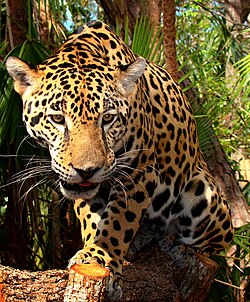
The jaguar: a keystone, flagship, and umbrella species, and an apex predator
The beaver: a keystone species, and habitat creator, responsible for ecological effects such as the creation of lakes, canals and wetlands irrigating large forests and creating ecosystems

A keystone species is a species that has a disproportionately large effect on its natural environment relative to its abundance. The concept was introduced in 1969 by the zoologist Robert T. Paine. Keystone species play a critical role in maintaining the structure of an ecological community, affecting many other organisms in an ecosystem and helping to determine the types and numbers of various other species in the community. Without keystone species, the ecosystem would be dramatically different or cease to exist altogether. Some keystone species, such as the wolf and lion, are also apex predators.

The role that a keystone species plays in its ecosystem is analogous to the role of a keystone in an arch. While the keystone is under the least pressure of any of the stones in an arch, the arch still collapses without it. Similarly, an ecosystem may experience a dramatic shift if a keystone species is removed, even though that species was a small part of the ecosystem by measures of biomass or productivity. It became a popular concept in conservation biology, alongside flagship and umbrella species. Although the concept is valued as a descriptor for particularly strong inter-species interactions, and has allowed easier communication between ecologists and conservation policy-makers, it has been criticized for oversimplifying complex ecological systems.

History

[edit]
Ochre seastars (Pisaster ochraceus), a keystone predator
California mussels (Mytilus californianus), the seastar's prey
Keystone species will disrupt the environment if removed, And when kept they regulate the environment.

The concept of the keystone species was introduced in 1969 by zoologist Robert T. Paine.[1][2] Paine developed the concept to explain his observations and experiments on the relationships between marine invertebrates of the intertidal zone (between the high and low tide lines), including starfish and mussels. He removed the starfish from an area, and documented the effects on the ecosystem.[3] In his 1966 paper, Food Web Complexity and Species Diversity, Paine had described such a system in Makah Bay in Washington.[4] In his 1969 paper, Paine proposed the keystone species concept, using Pisaster ochraceus, a species of starfish generally known as ochre starfish, and Mytilus californianus, a species of mussel, as a primary example.[1] The ochre starfish is a generalist predator and feeds on chitons, limpets, snails, barnacles, echinoids, and even decapod crustacea. The favourite food for these starfish is the mussel which is a dominant competitor for the space on the rocks. The ochre starfish keeps the population numbers of the mussels in check along with the other preys allowing the other seaweeds, sponges, and anemones, that ochre starfish do not consume, to co-exist. When Paine removed the ochre starfish, the mussels quickly outgrew the other species crowding them out. At the start, the rock pools held 15 rock-clinging species. Three years later there were 8 such species; and ten years later the pools were largely occupied by a single species, mussels. The concept became popular in conservation, and was deployed in a range of contexts and mobilized to engender support for conservation, especially where human activities had damaged ecosystems, such as by removing keystone predators.[5][6][7]

Definitions

[edit]

A keystone species was defined by Paine as a species that has a disproportionately large effect on its environment relative to its abundance.[8] It has been defined operationally by Davic in 2003 as "a strongly interacting species whose top-down effect on species diversity and competition is large relative to its biomass dominance within a functional group."[9]

A classic keystone species is a predator that prevents a particular herbivorous species from eliminating dominant plant species. If prey numbers are low, keystone predators can be even less abundant and still be effective. Yet without the predators, the herbivorous prey would explode in numbers, wipe out the dominant plants, and dramatically alter the character of the ecosystem. The exact scenario changes in each example, but the central idea remains that through a chain of interactions, a non-abundant species has an outsized impact on ecosystem functions. For example, the herbivorous weevil Euhrychiopsis lecontei is thought to have keystone effects on aquatic plant diversity by foraging on nuisance Eurasian watermilfoil in North American waters.[10] Similarly, the wasp species Agelaia vicina has been labeled a keystone species for its unparalleled nest size, colony size, and high rate of brood production. The diversity of its prey and the quantity necessary to sustain its high rate of growth have a direct impact on other species around it.[8]

The keystone concept is defined by its ecological effects, and these in turn make it important for conservation. In this it overlaps with several other species conservation concepts such as flagship species, indicator species, and umbrella species. For example, the jaguar is a charismatic big cat which meets all of these definitions:[11]

The jaguar is an umbrella species, flagship species, and wilderness quality indicator. It promotes the goals of carnivore recovery, protecting and restoring connectivity through Madrean woodland and riparian areas, and protecting and restoring riparian areas. ... A reserve system that protects jaguars is an umbrella for many other species. ... the jaguar [is] a keystone in subtropical and tropical America ...

— David Maehr et al, 2001[11]

Predators

[edit]

Sea otters and kelp forests

[edit]
Sea urchins like this purple sea urchin can damage kelp forests by chewing through kelp holdfasts
The sea otter is an important predator of sea urchins, making it a keystone species for the kelp forests.

Sea otters protect kelp forests from damage by sea urchins. When the sea otters of the North American west coast were hunted commercially for their fur, their numbers fell to such low levels – fewer than 1000 in the north Pacific ocean – that they were unable to control the sea urchin population. The urchins, in turn, grazed the holdfasts of kelp so heavily that the kelp forests largely disappeared, along with all the species that depended on them. Reintroducing the sea otters has enabled the kelp ecosystem to be restored. For example, in Southeast Alaska some 400 sea otters were released, and they have bred to form a population approaching 25,000.[12][13][14][15]

The wolf, Yellowstone's apex predator

[edit]
Riparian willow recovery at Blacktail Creek, Yellowstone National Park, showing effect of the reintroduction of wolves

Keystone predators may increase the biodiversity of communities by preventing a single species from becoming dominant. They can have a profound influence on the balance of organisms in a particular ecosystem. Introduction or removal of a keystone predator, or changes in its population density, can have drastic cascading effects on the equilibrium of many other populations in the ecosystem. For example, grazers of a grassland may prevent a single dominant species from taking over.[16]

The elimination of the gray wolf from the Greater Yellowstone Ecosystem had profound impacts on the trophic pyramid.[17] Without predation, herbivores began to over-graze many woody browse species, affecting the area's plant populations. In addition, wolves often kept animals from grazing in riparian areas, which protected beavers from having their food sources encroached upon. The removal of wolves had a direct effect on beaver populations, as their habitat became grazing territory. Increased browsing on willows and conifers along Blacktail Creek due to a lack of predation caused channel incision because the beavers helped slow the water down, allowing soil to stay in place. Furthermore, predation keeps hydrological features such as creeks and streams in normal working order. When wolves were reintroduced, the beaver population and the whole riparian ecosystem recovered dramatically within a few years.[18]

Sea stars and other non-apex predators

[edit]

As described by Paine in 1966, some sea stars (e.g., Pisaster ochraceus) may prey on sea urchins, mussels, and other shellfish that have no other natural predators.[19] If the sea star is removed from the ecosystem, the mussel population explodes uncontrollably, driving out most other species.[4]

These creatures need not be apex predators. Sea stars are prey for sharks, rays, and sea anemones. Sea otters are prey for orca.[20]

The jaguar, whose numbers in Central and South America have been classified as near threatened, acts as a keystone predator by its widely varied diet, helping to balance the mammalian jungle ecosystem with its consumption of 87 different species of prey.[21] The lion is another keystone species.[22]

Acorn banksia, Banksia prionotes, is periodically the sole source of nectar for important pollinators, honeyeaters.

Mutualists

[edit]

Keystone mutualists are organisms that participate in mutually beneficial interaction, the loss of which would have a profound impact upon the ecosystem as a whole. For example, in the Avon Wheatbelt region of Western Australia, there is a period of each year when Banksia prionotes (acorn banksia) is the sole source of nectar for honeyeaters, which play an important role in pollination of numerous plant species. Therefore, the loss of this one species of tree would probably cause the honeyeater population to collapse, with profound implications for the entire ecosystem. Another example is frugivores, such as the cassowary, which spreads the seeds of many different trees. Some seeds will not grow unless they have been through a cassowary.[23][24]

Ecosystem engineers

[edit]
Prairie dog town. Drawing by Josiah Gregg, 1844

A term used alongside keystone is ecosystem engineer.[5] In North America, the prairie dog is an ecosystem engineer. Prairie dog burrows provide the nesting areas for mountain plovers and burrowing owls. Prairie dog tunnel systems also help channel rainwater into the water table to prevent runoff and erosion, and can also serve to change the composition of the soil in a region by increasing aeration and reversing soil compaction that can be a result of cattle grazing. Prairie dogs also trim the vegetation around their colonies, perhaps to remove any cover for predators.[25] Grazing species such as plains bison, which is another keystone species, the pronghorn, and the mule deer have shown a proclivity for grazing on the same land used by prairie dogs.[26]

Beaver dam, an animal construction which has a transformative effect on the environment

The beaver is a well known ecosystem engineer and keystone species. It transforms its territory from a stream to a pond or swamp. Beavers affect the environment first altering the edges of riparian areas by cutting down older trees to use for their dams. This allows younger trees to take their place. Beaver dams alter the riparian area they are established in. Depending on topography, soils, and many factors, these dams change the riparian edges of streams and rivers into wetlands, meadows, or riverine forests. These dams have been shown to be beneficial to a myriad of species including amphibians, salmon, and song birds.[27]

In the African savanna, the larger herbivores, especially the elephants, shape their environment. The elephants destroy trees, making room for the grass species and creating habitat for various small animal species.[28][29] Without these animals, much of the savanna would turn into woodland.[30] In the Amazon river basin, peccaries produce and maintain wallows that are utilized by a wide variety of species.[31][32] Australian studies have found that parrotfish on the Great Barrier Reef are the only reef fish that consistently scrape and clean the coral on the reef. Without these animals, the Great Barrier Reef would be under severe strain.[33]

In the Serengeti, the presence of sufficient gnus in these grasslands reduces wildfire likelihood, which in turn promotes tree growth. The documentary The Serengeti Rules documents this in detail.[34]

Limitations

[edit]

Depends on context

[edit]

The community ecologist Bruce Menge states that the keystone concept has been stretched far beyond Paine's original concept. That stretching can be quantified: the researcher Ishana Shukla has listed 230 species identified as keystones in some 157 studies in the 50 years since Paine's paper. Menge's own work has shown that the purple Pisaster sea star that Paine had studied was a powerful keystone species in places exposed to strong wave action, but was far less important in sheltered places. Paine had indeed stated that in Alaska, without the relevant mussel species as prey, the predatory Pisaster was "just another sea star". In other words, the extent to which a species could be described as a keystone depended on the ecological context.[7]

Multiple meanings

[edit]

Although the concept of the keystone species has a value in describing particularly strong inter-species interactions, and for allowing easier communication between ecologists and conservation policy-makers, it has been criticized by L. S. Mills and colleagues for oversimplifying complex ecological systems. The term has been applied widely in different ecosystems and to predators, prey, and plants (primary producers), inevitably with differing ecological meanings. For instance, removing a predator may allow other animals to increase to the point where they wipe out other species; removing a prey species may cause predator populations to crash, or may allow predators to drive other prey species to extinction; and removing a plant species may result in the loss of animals that depend on it, like pollinators and seed dispersers. Beavers too have been called keystone, not for eating other species but for modifying the environment in ways that affected other species. The term has thus been given quite different meanings in different cases. In Mills's view, Paine's work showed that a few species could sometimes have extremely strong interactions within a particular ecosystem, but that does not automatically imply that other ecosystems have a similar structure.[3]

See also

[edit]

References

[edit]

Further reading

[edit]
Revisions and contributorsEdit on WikipediaRead on Wikipedia
from Grokipedia
A keystone species is an organism that has a disproportionately large effect on the structure and function of its relative to its or abundance. The term was coined by ecologist in 1969 to describe the predatory sea star in intertidal communities, where its removal led to dominance by mussels and reduced . Keystone species often exert top-down control through predation or mutualism, maintaining diversity by preventing competitive exclusion among prey or facilitating habitat creation. Classic examples include sea otters (Enhydra lutris), which control populations to preserve forests, and North American beavers (Castor canadensis), whose dam-building alters and supports . Other instances encompass gray wolves (Canis lupus) in Yellowstone, which regulate herbivores and indirectly benefit vegetation, and prairie dogs (Cynomys spp.), whose burrowing enhances soil aeration and provides refuge for multiple taxa. These species highlight causal mechanisms where low-abundance organisms drive stability via trophic cascades or engineering effects. The keystone concept has transformed by emphasizing species-specific roles over uniform community assembly, influencing conservation priorities. However, it has sparked debate due to challenges in , potential context-dependency, and risks of overemphasizing single at the expense of broader dynamics. Empirical identification remains difficult, requiring experimental manipulations rather than correlative observations.

Conceptual Foundations

Definition and Core Characteristics

A keystone species is defined as an that has a disproportionately large effect on its relative to its abundance or . This influence often manifests through strong biotic interactions, such as predation, mutualism, or physical habitat alteration, which regulate community structure, maintain , and prevent competitive exclusion among other . The concept, originally centered on top predators, has broadened to encompass species across trophic levels whose removal triggers cascading changes, including reduced species diversity or ecosystem phase shifts. Central to the definition is the asymmetry between a keystone species' low relative population size and its outsized ecological impact; for instance, quantitative assessments, such as those comparing observed effects to null models of biomass-proportional influence, confirm that keystone effects exceed expectations based on abundance alone. Core characteristics include irreplaceable functional roles that other species cannot duplicate, sensitivity to perturbations that amplify through food webs, and context-dependence, where keystone status may vary with environmental conditions like availability or disturbance regimes. Empirical identification often relies on removal experiments, revealing how their absence alters prey populations, complexity, or nutrient cycling, thereby underscoring causal mechanisms over correlative patterns. These traits distinguish keystone species from dominant ones, which exert influence primarily through sheer numbers rather than unique interactions; for example, while a dominant bed might cover extensive substrate, a sparse predator like the sea star ()—as documented in Paine's intertidal studies—sustains diversity by controlling mussel monopolization, preserving space for over 20 associated species. Such dynamics highlight first-principles causal realism in : keystone effects stem from direct trophic or linkages, not emergent properties alone, and their persistence requires ongoing empirical validation amid debates over definitional precision. Keystone species are distinguished from primarily by the scale of their influence relative to population size. While keystone species exert a disproportionately large effect on structure and diversity despite often low abundance—typically through trophic interactions such as predation or herbivory— achieve their impact via high and physical structuring of , such as corals forming reefs or kelp creating underwater forests that support numerous associates. Removal of a alters habitat availability but does not necessarily cascade through trophic levels in the same regulatory manner as keystone removal, which can lead to phase shifts or collapses in species composition. In contrast to ecosystem engineers, which modify abiotic environments (e.g., burrowing animals altering or beavers constructing dams that reshape ), keystone species more frequently influence biotic interactions and competitive dynamics without necessarily changing physical structures. Although some overlap exists—such as predatory keystones that incidentally engineer —the keystone designation emphasizes top-down control on diversity rather than habitat modification per se. Dominant species, by comparison, wield influence through sheer numerical prevalence or , often as primary producers or abundant consumers, whereas keystones operate with outsized per-individual effects irrespective of commonality. Indicator species differ fundamentally as they passively signal environmental conditions or perturbations—such as pollution-sensitive lichens reflecting air quality—without actively shaping dynamics, unlike keystones whose removal directly disrupts and function. This passive role positions indicators as monitors of health rather than architects of stability.

Historical Origins

Coining of the Term

The term "keystone species" was coined by American ecologist Robert T. Paine in 1969 to describe species that exert a disproportionately large influence on their relative to their abundance. Paine introduced the concept in the context of his experimental studies on intertidal communities along the of the , where he identified the predatory sea star as maintaining community structure through selective predation. In a key publication that year, Paine defined such a species as one of "high trophic status" whose activities create or maintain by preventing competitive exclusion among prey. Paine's formulation drew an to the architectural keystone, the wedge-shaped stone at the apex of an arch that locks the structure in place, suggesting that certain species similarly "hold together" ecological communities despite comprising a small fraction. This insight emerged from removal experiments conducted in the mid-1960s at sites like Mukkaw Bay, Washington, where excluding P. ochraceus resulted in mussel (Mytilus californianus) monocultures dominating the habitat, reducing overall from approximately 15 to 8 taxa. The term's debut marked a shift in ecological thinking, emphasizing top-down control and non-equilibrium dynamics over traditional bottom-up resource limitation models. Subsequent clarifications by Paine refined the idea, distinguishing it from equilibrium-based diversity theories prevalent at the time, and highlighted its applicability to predatory species that regulate prey populations below levels. While Paine's original focus was on marine predators, the concept's framing avoided unsubstantiated extensions to other taxa until empirical validation, underscoring a commitment to observable trophic interactions.

Early Empirical Observations

In the mid-1960s, ecologist Robert T. Paine conducted pioneering field observations and experiments in the rocky intertidal zones of the outer coast of Washington state, particularly at sites like Mukkaw Bay. He identified the predatory sea star Pisaster ochraceus as exerting a dominant influence on community structure through its selective predation on the competitively superior mussel Mytilus californianus, which otherwise monopolized space and suppressed algal and invertebrate diversity. To empirically test this dynamic, Paine initiated removal experiments in 1963, systematically excluding P. ochraceus from designated intertidal plots while monitoring control areas with natural predator densities. Within months, recruitment surged, leading to rapid bed formation that displaced subordinate such as chitons, limpets, and , as well as macroalgae. Species richness in experimental plots declined markedly; for instance, one site experienced a reduction from approximately 16 taxa to 8 within the first year, illustrating a driven by predator absence. These observations, detailed in Paine's 1966 publication, highlighted how a relatively low-biomass predator could sustain higher overall diversity by preventing competitive exclusion, challenging prevailing bottom-up resource limitation models in . Paine quantified predation rates, noting P. ochraceus consumed up to 80% of available in preferred size classes, underscoring its disproportionate regulatory role relative to abundance. Follow-up monitoring over several years confirmed the persistence of mussel dominance in cleared plots, with recovery of diverse assemblages only upon predator reintroduction.

Classification by Functional Role

Predatory Keystone Species

Predatory keystone species are predators that disproportionately influence ecosystem structure and by exerting top-down control on the populations of competitively dominant prey species, thereby preventing monocultures and promoting . Unlike dominant species whose effects scale with abundance, these predators maintain effects even at low densities through selective predation that disrupts exclusionary dynamics among prey. This role often manifests in trophic cascades, where predator removal leads to prey proliferation, resource depletion, and reduced community richness. The ochre sea star (), a keystone predator in intertidal zones, exemplifies this through its predation on mussels (), which otherwise monopolize space and suppress invertebrate diversity. In experiments initiated in 1963 by Robert T. Paine, exclusion of from experimental plots resulted in mussel beds covering over 90% of the substrate within 2-3 years, reducing from approximately 15 to 8 taxa, while control plots with stars maintained higher diversity. Paine's 1969 analysis formalized the keystone concept, showing that at densities as low as 1-5 per square meter sustains community structure by targeting the most abundant prey. Recent die-offs from sea star wasting , starting in 2013, have correlated with mussel dominance in affected areas, underscoring the predator's ongoing regulatory role. Sea otters (Enhydra lutris) serve as keystone predators in North American ecosystems by consuming sea urchins (Strongylocentrotus spp.), herbivores that graze (Macrocystis pyrifera) to barren states when unchecked. Surveys by James A. Estes in the 1970s demonstrated that otter-present areas supported kelp densities exceeding 10 times those in otter-absent zones, with urchin biomasses <1 kg/m² versus >5 kg/m² in barrens. This predation sustains macroalgal cover, which sequesters carbon and provides for over 100 and invertebrate ; otter declines from historical overhunting, reducing populations from ~300,000 in the 1700s to near by 1911, triggered widespread kelp loss. Recovery efforts since the 1980s have restored local urchin control, enhancing . Gray wolves (Canis lupus) function as keystone predators in terrestrial systems, as evidenced by their 1995 reintroduction to Yellowstone National Park, where 14 wolves from Canada initiated population control of elk (Cervus canadensis). Pre-reintroduction elk numbers peaked at ~20,000 in the 1990s, leading to overbrowsing of riparian willows (Salix spp.) and aspen (Populus tremuloides), with recruitment reduced by 99% in some areas; post-reintroduction, elk declined to ~5,000 by 2004, enabling 2-5-fold increases in woody plant heights and beaver (Castor canadensis) dam construction, which expanded wetlands by 30%. This cascade benefited species like songbirds (+300% in willow recovery zones) and scavengers, though effects vary with multi-predator dynamics including bears and cougars. Long-term monitoring confirms wolves' disproportionate impact relative to their pack sizes of 10-20 individuals. Other examples include the crown-of-thorns triton (Charonia tritonis), a gastropod predator that limits outbreaks of corallivorous (Acanthaster planci) on reefs; triton depletion correlates with starfish densities surging 10-100 fold, causing coral mortality up to 90% in affected patches. These cases highlight how predatory keystones enforce coexistence via differential predation, with empirical validation from removal experiments showing rapid shifts in community metrics like Shannon diversity indices dropping 20-50%.

Mutualistic Keystone Species

Mutualistic keystone species are organisms engaged in symbiotic relationships where both parties benefit, and the interaction exerts a disproportionately large influence on structure, , or stability relative to the species' abundance. Unlike predatory keystone species that regulate through consumption, mutualistic ones facilitate essential services such as , , or protection from herbivores, often preventing competitive exclusion or enabling persistence. The removal or disruption of these interactions can cascade through the , altering composition and reducing resilience to disturbances. A prominent example is the mutualism between trees and certain species in tropical savannas and forests, where defend the trees against herbivores and pathogens in exchange for and domatia (hollow structures for nesting). This relationship suppresses herbivory that would otherwise allow grasses or other competitors to dominate, maintaining cover and associated arthropod diversity; experimental exclusion of has led to up to 90% defoliation and reduced recruitment in some systems. In African ecosystems, this keystone dynamic also indirectly influences large herbivores like by altering browse availability, demonstrating top-down effects via mutualistic facilitation. Ant-hemipteran mutualisms represent another class, particularly in forested habitats, where protect sap-feeding (e.g., or scale insects) from predators in return for honeydew, restructuring communities and enhancing plant stress tolerance. Studies in woodlands have shown that this interaction increases hemipteran densities by orders of magnitude, suppressing alternative prey and altering predator guilds, with landscape-scale effects on tree growth documented through long-term monitoring. Such mutualisms are termed keystone because their disruption shifts ecosystems toward dominance or reduced canopy vigor. Pollinator-plant mutualisms, such as those involving hummingbirds and columnar cacti in arid environments, exemplify keystone roles in reproductive success and community persistence. Hummingbirds pollinate species like the saguaro cactus (Carnegiea gigantea), which rely almost exclusively on them for cross-pollination over vast distances; hummingbird declines correlate with 50-70% reductions in cactus fruit set and seedling establishment, cascading to frugivores and seed dispersers. Similar dynamics occur with specialized ants as seed-dispersing mutualists for understory plants, where generalized myrmecochory prevents soil seed bank overload and promotes diversity in temperate forests. In marine and coastal settings, mutualisms like that between reef-building oysters and canopy-forming in mangroves stabilize sediments and buffer against storm surges, underpinning forest resilience; experimental data from (2005) recovery sites indicate that intact mutualisms accelerate regrowth by 2-3 times compared to disrupted pairings. These cases highlight how mutualistic keystone interactions often integrate with abiotic factors, amplifying services beyond biotic partners alone.

Ecosystem Engineering Keystone Species

Ecosystem engineering keystone species exert a disproportionately large influence on community structure by physically modifying the abiotic environment, creating or altering that support other organisms relative to their own . These modifications, known as allogenic engineering when involving external materials or autogenic when based on the organism's body, can increase habitat complexity, resource availability, and . Unlike predatory keystone species, which regulate populations through consumption, engineers reshape via structural changes, such as building or burrows, with effects persisting even after the engineer's decline due to legacy habitats. The (Castor canadensis) exemplifies this role, constructing dams from felled trees and branches that impound streams, forming ponds and wetlands covering up to 30% of historical North American landscapes before European settlement. These engineered wetlands enhance , reduce flood peaks by 30-90% in some systems, and foster habitats for , amphibians, and birds, increasing local by providing diverse niches absent in unaltered streams. Beaver activity also improves by trapping sediments and processing nutrients, supporting riparian vegetation recovery observed in studies where willow growth increased post-dam formation. Other terrestrial examples include prairie dogs (Cynomys spp.), whose extensive burrow networks in North American grasslands aerate soil, create microhabitats for over 150 associated species, and alter plant communities by selective foraging, maintaining grassland diversity against shrub encroachment. In savannas, African elephants (Loxodonta africana) act as engineers by uprooting trees and dispersing seeds, preventing woody plant dominance and sustaining open habitats for grazers, with their removal linked to bush encroachment in protected areas since the 1970s. Aquatic cases feature American alligators (Alligator mississippiensis) in southeastern U.S. wetlands, where they excavate ponds during dry periods, maintaining water holes that serve as refugia for fish and invertebrates amid seasonal droughts. Marine ecosystem engineers include oysters (Crassostrea virginica), which form reefs that stabilize sediments, attenuate wave energy by up to 50% in coastal zones, and provide substrate for epifauna, boosting in estuarine systems; reef-building by oysters historically supported fisheries yielding millions of metric tons annually before overharvesting. Earthworms (Lumbricus spp.) function as soil engineers, enhancing aeration and nutrient cycling in temperate soils, with densities of 100-500 individuals per square meter increasing plant productivity by 20-30% through bioturbation. Empirical studies confirm keystone status when engineer removal cascades to ecosystem shifts, as seen in beaver extirpation leading to 80-90% loss in parts of and by the early 20th century.

Key Examples and Case Studies

Marine and Intertidal Examples

The ochre sea star () serves as a foundational example of a keystone predator in rocky intertidal zones along the of . In a 1966 experiment conducted by Robert T. Paine on Tatoosh Island, Washington, removal of P. ochraceus from experimental plots resulted in rapid dominance by the mussel Mytilus californianus, which outcompeted other sessile and , reducing from approximately 15 to 8 taxa within one year. This demonstrated that the sea star's predation disproportionately maintains community structure by preventing competitive exclusion, with effects persisting in control plots where diversity remained higher. Subsequent studies confirmed these dynamics, showing P. ochraceus preferentially consumes mussels, thereby facilitating space for understory species like barnacles () and . Sea otters (Enhydra lutris) exemplify keystone predators in subtidal ecosystems of the North Pacific, particularly off and , where they control populations of herbivorous sea urchins (Strongylocentrotus spp.). By preying on urchins, otters prevent overgrazing of giant (Macrocystis pyrifera), preserving habitat complexity that supports over 100 associated fish and invertebrate species; in areas depleted of otters, urchin barrens emerge, characterized by denuded seafloors with biomass reductions exceeding 90% in kelp cover. Historical overhunting reduced otter populations by over 90% from pre-fur trade estimates of 150,000–300,000 individuals, leading to widespread collapse, but reintroduction efforts since the 1970s have restored local , with kelp density increasing up to 10-fold in otter-occupied regions. Recent analyses quantify otters' indirect effects, noting enhanced in intact kelp forests equivalent to millions of tons annually, underscoring their role in ecosystem resilience against climate stressors. Other marine and intertidal keystone species include certain s and crabs in temperate zones, though evidence is less paradigmatic than for sea stars and otters; for instance, non-consumptive effects of P. ochraceus on (Nucella ostrina) behaviors further regulate trophic cascades beyond direct predation. In tropical intertidal systems, predatory gastropods like muricids occasionally exhibit keystone-like control over algal mats, but site-specific variability limits generalization, with peer-reviewed syntheses identifying fewer than 20 confirmed marine cases compared to hundreds proposed.

Terrestrial Predator Examples

Gray wolves (Canis lupus) serve as a paradigmatic example of terrestrial keystone predators in temperate forest and grassland ecosystems, particularly evident in the Greater Yellowstone Ecosystem following their reintroduction in November 1995 after local extirpation by the 1920s. By 2015, wolf predation reduced elk (Cervus canadensis) densities from approximately 20,000 in the early 1990s to around 6,000 and shifted elk foraging patterns away from high-risk areas, alleviating intense browsing on woody plants like aspen (Populus tremuloides) and cottonwood (Populus spp.), which exhibited recruitment rates increasing from near zero pre-reintroduction to measurable recovery by the 2010s. This trophic cascade extended to enhanced beaver (Castor canadensis) dam construction—rising from fewer than 10 active colonies in the 1990s to over 20 by the 2010s—and subsequent riparian habitat diversification, supporting greater avian and invertebrate biodiversity while stabilizing stream geomorphology through reduced erosion. Long-term monitoring through 2023 confirms these effects persist, though modulated by climate variability and multi-predator dynamics involving cougars (Puma concolor). Dingoes (Canis dingo) function as keystone predators in arid and semi-arid Australian ecosystems, where their suppression of mesopredators prevents native small mammal declines. Introduced around 4,000 years ago, dingoes limit red fox (Vulpes vulpes) and feral cat (Felis catus) abundances, with dingo exclusion via fencing correlating to 70-100% reductions in small mammal populations across multiple taxa by the early 2000s. In dingo-present areas, grass cover remains 20-50% higher due to reduced herbivore overgrazing and mesopredator predation, sustaining biodiversity hotspots; experimental removals in New South Wales from 2002-2005 demonstrated continent-scale collapses in rodent and marsupial diversity absent dingo control. As Australia's apex terrestrial carnivore, dingoes maintain trophic balance without evidence of overpredation on livestock when native prey is abundant, per 2020s surveys in Queensland. Jaguars (Panthera onca) act as keystone predators in Neotropical rainforests and wetlands, regulating mid-sized herbivores and maintaining forest integrity through selective predation. In the and Amazon basins, jaguar densities of 3-7 individuals per 100 km² control armadillo, peccary (Tayassu spp.), and caiman populations, preventing localized overbrowsing and that could otherwise degrade seedling by up to 40%, as observed in camera-trap studies from 2010-2020. Their absence correlates with mesopredator surges and reduced prey diversity, underscoring their disproportionate ecosystem influence relative to comprising less than 1% of carnivore biomass. Conservation efforts since 2018 emphasize corridors to preserve these dynamics amid . African lions (Panthera leo) exemplify keystone predation in savanna , where prides curb densities to avert grassland degradation. In Serengeti-Mara systems, predation accounts for 20-30% annual mortality in buffalo (Syncerus caffer) and (Connochaetes spp.) herds exceeding 1 million individuals, fostering vegetation mosaics that support 500+ plant species and preventing from , as quantified in 2010s aerial surveys. Their role extends to behavioral mediation, keeping migratory ungulates mobile and reducing transmission via cull selection, with declines post-2000 linked to 15-25% drops in floral diversity in protected reserves.

Other Habitat Modification Examples

North American beavers (Castor canadensis) serve as ecosystem engineers by constructing dams that impound streams, creating wetlands and ponds which alter hydrology and support diverse aquatic and riparian communities. These modifications elevate water tables, increase vegetation density and height, and reduce temperature fluctuations, fostering habitats for species such as amphibians, fish, and waterfowl. Beaver activity has been documented to enhance biodiversity in historically degraded areas, with reintroductions in regions like Maryland leading to restored riparian zones by 2021. Black-tailed prairie dogs (Cynomys ludovicianus) function as keystone species in North American grasslands through burrowing and grazing behaviors that reshape and vegetation composition. Their colonies maintain shortgrass habitats by clipping tall plants and preventing shrub encroachment, providing burrows that shelter over 150 associated species including burrowing owls, snakes, and . Studies from 2020 confirm these engineering effects increase habitat heterogeneity, supporting grassland persistence amid pressures like woody invasion. African savanna elephants (Loxodonta africana) modify landscapes by uprooting trees, trampling vegetation, and excavating waterholes, which promotes open savanna structures essential for biodiversity in eastern and southern Africa. Their foraging consumes up to 300 pounds of vegetation daily, dispersing seeds via dung and creating pathways that facilitate movement for other herbivores. Research in 2023 demonstrates elephant rewilding enhances semi-open ecosystems, countering woodland thickening and benefiting species dependent on heterogeneous habitats.

Empirical Validation and Recent Research

Methods for Identifying Keystone Species

The most direct method for identifying keystone species entails experimental removal or exclusion of the candidate species from a defined patch, followed by observation of changes in community structure, , or ecosystem function relative to control areas. This approach quantifies the species' disproportionate influence by measuring outcomes such as shifts in species composition, dominance by competitors, or loss of subordinate taxa; for instance, in Robert Paine's 1966 intertidal experiment, manual removal of the predatory sea star over five years resulted in (Mytilus californianus) monopolization of space, reducing overall from 15 to 8 taxa in experimental plots compared to controls. Such manipulations provide causal evidence but are resource-intensive, ethically constrained for protected or charismatic species, and limited to systems amenable to replication, like small-scale habitats. Observational and statistical methods serve as non-invasive alternatives, correlating a species' abundance or presence with metrics of community stability or diversity across natural gradients or comparative sites. These include regression analyses linking predator density to prey diversity or variance partitioning to isolate effects from confounders like environmental variables; however, they risk conflating correlation with causation and may overlook transient or context-specific roles. Network-based statistical techniques, such as centrality indices (e.g., betweenness or motif centrality) in food webs or co-occurrence graphs, identify candidates by their positional importance in interaction structures, where high centrality predicts amplified effects upon perturbation. Computational modeling complements empirical approaches by simulating species removal in parameterized food web or dynamic system models to forecast community responses. Techniques like loop analysis or keystoneness indices evaluate functional group impacts on overall network stability or biomass, as in Valls et al.'s 2006 framework, which ranks species by the magnitude of simulated changes in ecosystem properties relative to their biomass. These methods enable hypothesis testing for inaccessible systems but depend on accurate parameterization and may overestimate effects in complex, non-linear dynamics. Integration of multiple methods, including long-term monitoring data, enhances reliability, though definitional ambiguities persist in distinguishing keystones from strongly interactive species.

Evidence from Long-Term Studies

Long-term ecological monitoring programs, such as those conducted at U.S. Long-Term Ecological Research (LTER) sites, have documented disproportionate influences of keystone species through repeated observations spanning decades, often incorporating experimental manipulations like predator exclusions or reintroductions. These studies emphasize causal mechanisms, such as predation or modification, while accounting for confounding variables like variability and anthropogenic pressures. Evidence from such efforts validates keystone effects in diverse systems, though outcomes can vary by context and require integration with short-term experiments for full . The reintroduction of gray wolves (Canis lupus) to Yellowstone National Park in 1995 provides one of the most extensively studied cases, with monitoring exceeding 25 years revealing reduced elk (Cervus canadensis) densities and browsing intensity, facilitating recovery in riparian vegetation like willows (Salix spp.) and aspen (Populus tremuloides). Willow heights increased from suppressed levels (averaging under 1 meter pre-reintroduction) to over 2 meters in some areas by the 2010s, correlating with decreased elk numbers from approximately 20,000 in the 1990s to around 5,000 by 2010. Beaver (Castor canadensis) colonies expanded, with dam counts rising from near zero to over 10 active sites in northern ranges by 2013, enhancing wetland formation and supporting avian and amphibian diversity. However, analyses indicate that trophic cascades explain only part of vegetation recovery, with drought and reduced snowpack contributing significantly; elk population declines predated wolves in some metrics, underscoring multifactorial drivers. Sea otters (Enhydra lutris) exemplify keystone predation in ecosystems, with over two decades of foraging and intertidal surveys in demonstrating sustained control of purple sea urchins (Strongylocentrotus purpuratus), preventing urchin barrens and preserving macroalgal diversity. In areas with stable otter populations, density remained 10-20 times higher than in otter-absent zones, with urchin densities exceeding 100 individuals per square meter in the latter by the 2000s, leading to near-total loss. Long-term data from the onward show otters exploiting prey surpluses to buffer against urchin outbreaks, maintaining fish and invertebrate assemblages; recovery rates in reoccupied sites reached 50-70% cover within 5-10 years post-colonization. These patterns hold despite varying oceanographic conditions, affirming otters' structural role, though warming waters have intensified urchin pressures in some locales. Beavers (Castor spp.) as ecosystem engineers yield evidence from paleoecological reconstructions and contemporary monitoring, spanning millennia to recent decades, showing dam-building alters and boosts . In North American watersheds, historical beaver activity—evident from relic dams dated to 5,000-10,000 years ago—created persistent wetlands supporting 50-100% more plant than unaltered streams; modern reintroductions in the have replicated this, with complexes increasing macroinvertebrate abundance by 2-5 times and bird richness by 20-30% within 10 years. A 20-year study in the documented 300% rises in water retention during droughts due to beaver-modified landscapes, fostering riparian recovery amid aridity. Effects scale with , but abandonment leads to gradual infilling, highlighting temporal dynamics.

Post-2020 Developments and Findings

A 2025 analysis of 30-year community datasets in Alaskan forests revealed that the recolonization of s (Enhydra lutris), a classic keystone predator, produced dynamic and -dependent effects on community structure, with stronger top-down control in areas of high density but weaker influences amid urchin barrens. This finding underscores how environmental modulates keystone impacts, challenging uniform assumptions of predator dominance and highlighting the need for spatially explicit models in predicting trophic cascades. Concurrently, on foraging behavior following the 2014-2016 collapse of the intertidal keystone predator identified "keystone interdependence," where otters shifted to surplus prey, coupling rocky intertidal and subtidal ecosystems and preventing overgrazing that could have destabilized recovery. In terrestrial systems, evaluations of the Yellowstone wolf (Canis lupus) reintroduction trophic cascade, using riparian willow (Salix spp.) metrics from 1995-2023, quantified persistent but attenuated effects, with wolf presence correlating to 20-30% higher willow heights and reduced browsing compared to pre-reintroduction baselines, though climate variability and elk behavioral adaptations diminished cascade strength over time. Microbial ecology studies post-2020 have increasingly identified keystone taxa in soil networks; for example, degradation in alpine meadows led to shifts in bacterial keystones, reducing network modularity by up to 40% and elevating carbon/nitrogen loss risks, as measured via co-occurrence analyses of 16S rRNA sequences from 2020-2024 samples. Conceptual refinements emerged in 2024, proposing a revised keystone framework for conservation that emphasizes empirical removal experiments over correlative evidence, critiquing inconsistent applications in policy where "keystone" labels often overlook species-specific traits like body size or trophic position. (Cynomys spp.) studies reinforced their keystone role in grasslands, with 2025 surveys documenting support for over 200 associated species through burrow provision and herbivory moderation, amid ongoing threats that have halved populations since 2020.

Limitations and Debates

Context-Dependent Effects

The ecological impacts of keystone species are often context-dependent, varying with factors such as prey or resource density, environmental disturbances, community composition, and spatiotemporal scales. This variability implies that a species may exert disproportionately strong effects in one setting but negligible influence in another, challenging the notion of fixed keystone roles. For instance, empirical models of collapse demonstrate that keystone traits shift in importance based on network structure and perturbation type, with no single trait consistently dominant across contexts. In marine systems, sea otters (Enhydra lutris) illustrate this dynamic: their predation initially strongly suppresses purple sea urchins (Strongylocentrotus purpuratus) in urchin-dominated barrens, facilitating kelp forest recovery, but effects diminish markedly once urchin densities decline below critical thresholds, redirecting foraging to alternative prey like clams. This context-specific shift, observed in long-term monitoring from 2014 to 2023 along the California coast, underscores how interspecific interactions modulate keystone function, with otters' overall community structuring role weakening in low-urchin states. Similarly, the ochre sea star (Pisaster ochraceus), a classic keystone predator, maintains mussel-dominated intertidal zones primarily under high mussel recruitment or low disturbance; in fragmented or wave-exposed habitats, its top-down control lessens, allowing competitive algae or other invertebrates to dominate. Terrestrial examples further highlight dependency on abiotic and biotic conditions. North American beavers (Castor canadensis) engineer wetlands through dam-building, but their hydrological alterations—such as increased water retention and —vary with stream gradient, soil permeability, and vegetation availability; in steep, rocky terrains, dam persistence and effects are minimal compared to low-gradient alluvial systems. In forested ecosystems, invasive brushtail possums (Trichosurus vulpecula) in act as keystones by suppressing canopy trees in specific podocarp-broadleaf forests, yet this role is absent in other woodland types where alternative dispersers or lower possum densities prevail. Temporal fluctuations, such as seasonal prey migrations or climate-driven productivity changes, can also alter keystone efficacy, as seen in predator-prey models where keystone designation rotates across network states. Such context-dependency complicates identification and management, as static classifications may overlook phase shifts or rare events that amplify or nullify effects. Empirical validation requires multi-scale data, including density manipulations and longitudinal observations, to discern when a species transitions from keystone to peripheral status. Recent analyses, including climate perturbation simulations, confirm that even purportedly robust keystones like large carnivores exhibit reduced influence under altered precipitation or temperature regimes, emphasizing the need for adaptive, site-specific assessments over generalized assumptions.

Definitional and Methodological Challenges

The keystone species concept, originally introduced by Robert Paine in 1969 to describe species like the ochre sea star () that exert a disproportionately large influence on community structure relative to their abundance through predation, has faced definitional challenges due to its progressive broadening. Subsequent applications have extended the term to encompass ecosystem engineers such as beavers, mutualists like certain pollinators, and even microbial taxa, resulting in over 230 animal species labeled as keystones across diverse archetypes including predators, herbivores, and burrowers. This expansion dilutes the concept's precision, as definitions vary from those emphasizing top-down control on diversity to those incorporating functional roles in modification, without a unified threshold for "disproportionality." Quantifying the relative impact remains problematic, as proposed metrics like community importance (CI), defined as the change in an ecosystem trait per unit change in species abundance normalized by the trait's value, lack established thresholds to distinguish keystones from other influential species. Critics argue that the absence of operational standards allows speculative designations, with researchers applying the label liberally based on observational correlations rather than rigorous tests, potentially rendering the term a "nonconcept" akin to vague ecological panchrestons. For instance, while Paine's definition focused on preventing competitive dominance in intertidal zones, modern usages often overlook biomass relativity, leading to inconsistent application across taxa and ecosystems. Methodologically, identifying keystones demands experimental manipulations such as species removals, yet these are logistically daunting for large or widespread organisms, often requiring infeasible combinatorial designs or exclosures that inadvertently affect co-occurring species. Full removals, the gold standard for , can confound direct and indirect effects, which may manifest over decades, as seen in potential trophic cascades in tropical forests. No standardized protocol exists, fostering reliance on unverified anecdotes or short-term observations that fail to capture variability, with statistical models and network analyses offering proxies but struggling to establish amid functional . Context-dependency exacerbates these issues, as a species' keystone role may shift with environmental conditions, such as the sea star Pisaster exerting stronger effects in high-wave-exposure sites than sheltered ones, complicating generalizations. Overattribution arises from this, with many claims lacking empirical validation, prompting calls for refined criteria focused on demonstrable, ecosystem-level functional importance rather than unsubstantiated speculation.

Overattribution and Measurement Issues

The keystone species concept has faced criticism for overattribution, where species are frequently designated as keystones based on correlational observations or rather than rigorous causal demonstration, diluting the term's original specificity introduced by Robert Paine in 1969. Early reviews, such as Mills et al. (1993), analyzed documented cases of species removals and found that while some, like Paine's sea star, clearly exerted disproportionate effects on community structure, many purported keystones failed to produce predicted collapses in diversity upon perturbation, suggesting overgeneralization from limited examples. By the , the label had been applied to over 200 species across taxa, often without comparable experimental validation, leading ecologists to argue that the concept's metaphorical appeal encouraged premature attribution in conservation rhetoric. Measurement challenges compound overattribution, as quantifying a ' disproportionate impact requires isolating its causal role amid variables like environmental stochasticity and multi-species interactions, which observational studies rarely achieve. Experimental methods, such as exclusion or removal experiments, provide the strongest evidence but are logistically and ethically constrained; for instance, only a handful of manipulative studies exist for terrestrial systems compared to Paine's intertidal benchmarks, with success rates below 50% in confirming keystone status due to incomplete replication or short-term monitoring. Alternative approaches, including network centrality metrics or simulation models, attempt to infer keystoneness from topology but often conflate structural position with functional impact, yielding false positives when species effects prove context-dependent rather than universally dominant. These issues persist in contemporary research, where computational tools like frameworks for keystones promise scalability but lack ground-truth validation against field perturbations, risking further propagation of unverified claims. Power and Mills (1995) highlighted the absence of predictive frameworks for keystone occurrence, noting that empirical detection demands long-term, multi-site data—often spanning decades—to distinguish transient from structural effects, a requirement unmet in most designations. Critics, including recent appraisals, contend that without standardized metrics tying biomass-relative effects to measurable diversity shifts (e.g., via Shannon index changes exceeding 20-30% post-removal), the risks becoming a prone to in assessments. As of 2024, ecologists advocate narrower definitions emphasizing replicable trophic cascades to mitigate overattribution, though adoption remains uneven due to the field's reliance on descriptive .

Controversies and Policy Implications

Debates in Conservation Prioritization

Proponents of prioritizing keystone species in conservation argue that their disproportionate ecological influence justifies allocating limited resources to them for maximum ecosystem-wide benefits, as their protection or restoration can prevent cascading losses more effectively than diffuse efforts across many taxa. For instance, under frameworks like the U.S. Endangered Species Act (ESA), keystone species are seen as offering higher (ROI) due to their role in maintaining community structure, with empirical analyses showing that funding correlates modestly with recovery success (Kendall τ = 0.05, P = 0.049). This approach aligns with principles, where reallocating surplus funds from low-ROI efforts—estimated at $17 million annually from the top 50 underperforming recoveries—could enhance outcomes for high-impact species while indirectly aiding dependent taxa. Evidence from invasive non-native keystones, such as causing 70% declines in marsh rabbits and 40-80% in raccoons, underscores how targeting such species can avert broad disruptions, supporting analogous prioritization of native equivalents. Critics contend that over-reliance on the keystone label for prioritization introduces risks of inefficiency and bias, as the concept is often applied inconsistently, blending empirical effects with unstated value judgments favoring while ignoring non-natives with similar impacts, like feral cats linked to 14% of global extinctions. Such variability, noted since Mills et al. (1993), can lead to misallocation, as keystone effects are frequently context-dependent and lack robust long-term validation, potentially neglecting non-keystone species that collectively sustain ecosystems. In state-level plans like Wyoming's SWAP, this manifests as selective emphasis on species like the American beaver while omitting gray wolves due to economic conflicts with ranching, reflecting anthropocentric priorities over neutral ecological assessment. Debates further center on triage ethics under resource constraints, where assuming equal value for all —as ESA implicitly does—may foster "injurious neglect" of underfunded non-keystones (only 12% of 1,125 listed receive adequate ), versus compressing budgets to favor keystones for broader ROI, though evidence suggests the latter could support 182 additional via reallocation without guaranteed gains. Proposed revisions advocate a value-neutral focused on biomass-relative effects, decoupling it from direct directives to serve as an explanatory tool post-stakeholder decisions, thereby enhancing transparency and reducing in prioritization. This shift prioritizes local input and holistic strategies over shorthand keystone reliance, acknowledging that while keystones like sea otters exemplify successes, overattribution can undermine comprehensive conservation.

Unintended Consequences of Interventions

Reintroductions of keystone predators like sea otters (Enhydra lutris) have successfully restored trophic control over herbivores such as sea urchins, yet they have also depleted commercially valuable shellfish populations, leading to economic losses for fisheries in regions like . For instance, post-reintroduction surveys documented sharp declines in and other invertebrate stocks due to otter predation, prompting concerns over viability without compensatory management. Similarly, in , rapid otter population growth following 1969–1972 translocations exceeded expectations, altering nearshore ecosystems in ways that disadvantaged indigenous harvest practices reliant on clams and . Beaver (Castor spp.) reintroductions, intended to engineer habitats and boost , have generated hydrological disruptions including flooding of agricultural lands and infrastructure damage from dam-induced water retention. In , studies of restored ponds revealed elevated levels—up to 10-fold higher in newly formed impoundments—potentially magnifying in food webs and posing risks to fish and wildlife consumers. dams have also impeded upstream for anadromous species like , reducing access to spawning grounds in affected rivers despite overall habitat enhancements for some taxa. These effects underscore how keystone engineering species can inadvertently prioritize certain functions at the expense of others, such as flood-prone valley bottoms. Wolf (Canis lupus) restorations, exemplified by the 1995 Yellowstone National Park reintroduction of 14 pairs from , curbed elk overbrowsing but escalated depredations on , with over 2,000 confirmed incidents in surrounding states by 2020, straining rancher economies and prompting expanded lethal control programs. Elk populations dropped by approximately 50% in core areas, reducing hunter harvest opportunities and altering dynamics in ways that benefited some vegetation but challenged game management objectives. Beyond , such interventions have fueled human-wildlife conflicts, including habitat displacement for prey and indirect effects like increased abundance from competitive release. Global reviews of conservation translocations indicate that unintended negative outcomes occur in about 20% of cases involving keystone-like species, often stemming from overlooked context dependencies or off-target trophic interactions. recoveries, for example, have subsidized terrestrial populations through nutrient-rich carcasses washing ashore, enhancing wolf densities and predation on caribou in coastal — an emergent cross-ecosystem cascade not anticipated in initial planning. These cases highlight the need for predictive modeling of cascading effects, as overemphasis on keystone reinforcement can amplify vulnerabilities in human-dominated landscapes.

Socioeconomic Conflicts and Human Dimensions

Conservation efforts for keystone species frequently generate socioeconomic tensions with human activities such as , ranching, and , as the species' ecological roles can impose direct costs on local economies. For instance, (Castor canadensis) dam-building alters , leading to flooding that damages timberlands and croplands; a single can inundate thousands of acres, rendering fields inaccessible for harvesting and increasing tree susceptibility to rot and disease. In agricultural regions, these floods exacerbate waterlogging of pastures and fields, prompting costly interventions like or relocation, which burden farmers and operations. Predatory keystone species like gray wolves (Canis lupus) exemplify conflicts with livestock industries following reintroductions. In , after wolves were reintroduced in late 2023, ranchers reported verified losses including 27 calves and cows killed in 2024, alongside over 100 missing animals, leading to compensation claims totaling $581,000 by early 2025. Depredation compensation payments strained state budgets, with one ranch receiving $287,407 in March 2025 for 15 confirmed kills, highlighting how localized rural economic burdens arise from broader conservation goals. These incidents fuel disputes between ranchers incurring direct losses and proponents emphasizing ecosystem-wide benefits, often distributed unevenly across urban and rural stakeholders. Marine keystone species such as sea otters (Enhydra lutris) create analogous frictions with fisheries. In , expanding otter populations overlap with the , as otters prey on crabs and other , potentially reducing harvestable stocks and sparking debates since the 1970s. In Alaska's , surging otter numbers since the 20th century—recovering from near-extinction due to —have correlated with declining abundances, intensifying values-based clashes between conservationists and fishers dependent on these resources for livelihoods. Historical data indicate that fisheries developed during otter absences thrived on unchecked booms, but recovery has reversed this dynamic, leading to calls for spatial or translocation to mitigate economic impacts. Herbivorous or ecosystem-engineering keystone species like black-tailed prairie dogs (Cynomys ludovicianus) conflict with ranching through burrow systems that pose injury risks to and perceived forage competition. Ranchers often classify prairie dogs as pests, citing leg fractures from holes and reduced grazing capacity, which has prompted control measures including poisoning and shooting on private lands. Despite evidence that may preferentially graze modified prairie dog habitats due to enhanced quality, persistent perceptions of economic harm sustain eradication efforts, particularly in the where ranching dominates. These human dimensions underscore rural stakeholders' prioritization of immediate property and productivity losses over diffuse gains, influencing policies like delisting protections to favor agricultural interests. Overall, such conflicts reveal causal trade-offs where keystone species stabilization benefits long-term services—like flood mitigation or support—but imposes short-term costs on extractive industries, often requiring compensation programs or to balance human welfare with conservation imperatives. Rural communities disproportionately absorb these costs, fostering sociopolitical divides that challenge policy implementation.

References

Add your contribution
Related Hubs
User Avatar
No comments yet.