Hubbry Logo
MetamonadMetamonadMain
Open search
Metamonad
Community hub
Metamonad
logo
8 pages, 0 posts
0 subscribers
Be the first to start a discussion here.
Metamonad
Metamonad
from Wikipedia

Metamonad
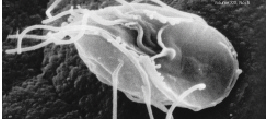
"Giardia lamblia", a parasitic diplomonad
Giardia lamblia, a parasitic diplomonad
Scientific classification Edit this classification
Domain: Eukaryota
Phylum: Metamonada
Grassé 1952 emend. Cavalier-Smith 2003
Subdivisions[1][2][3]
Synonyms
  • Archezoa?[4]
  • Centrosomea Chatton Villeneuve 1937
  • Metamonadina Grassé 1952
  • Polymastigota Butschli 1884
  • Tetramastigota Hulsmann & Hausmann 1994

The metamonads are a large group of flagellate amitochondriate microscopic eukaryotes. They include the retortamonads, diplomonads, parabasalids, oxymonads, and a range of more poorly studied taxa, most of which are free-living flagellates. All metamonads are anaerobic (many being aerotolerant anaerobes), and most members of the four groups listed above are symbiotes or parasites of animals, as is the case with Giardia lamblia which causes diarrhea in mammals.[4]

Characteristics

[edit]

A number of parabasalids and oxymonads are found in termite guts, and play an important role in breaking down the cellulose found in wood. Some other metamonads are parasites.

These flagellates are unusual in lacking aerobic mitochondria. Originally they were considered among the most primitive eukaryotes, diverging from the others before mitochondria appeared. However, they are now known to have lost aerobic mitochondria secondarily, and retain both organelles and nuclear genes derived ultimately from the mitochondrial endosymbiont genome. Mitochondrial relics include hydrogenosomes, which produce hydrogen (and make ATP), and small structures called mitosomes.

It now appears the Metamonada are, together with Malawimonas, sister clades of the Podiata.[5]

All of these groups have flagella or basal bodies in characteristic groups of four (or more, in parabasalids), which are often associated with the nucleus, forming a structure called a karyomastigont. In addition, genera such as Carpediemonas and Trimastix are now known to be close relatives of the retortamonad-diplomonad lineage and the oxymonads, respectively. Most of the closer relatives of the retortamonad-diplomonad lineage actually have two flagella and basal bodies.

Classification

[edit]

The metamonads were thought to make up part of the Excavata, a proposed eukaryotic supergroup including flagellates with feeding grooves and their close relatives. Their relationships are uncertain,[6] and they do not always appear together on molecular trees. Current opinion is that Excavata is not a monophyletic group, but it might be paraphyletic.

The following higher level treatment from 2013 is based on works of Cavalier-Smith[7] with amendments within Fornicata from Yubuki, Simpson & Leander.[8]

Metamonada were once again proposed to be basal eukaryotes in 2018.[9]

Evolution

[edit]

Within Metamonada, two main branches are recovered in recent phylogenetic analyses. One branch contains the Parabasalia and the closely related anaeramoebae. The other branch contains two large groups: the Fornicata, which is closely related to barthelonids[1] and the recently isolated Skoliomonas;[3] and the Preaxostyla.[2]

A 2023 study found it likely that Metamonada is a paraphyletic group at the base of Eukaryota, meaning their anaerobic metabolism possibly represents the ancestral condition in eukaryotes (similar to what the Archezoa-Metakaryota hypothesis proposed) and that aerobic mitochondria might not have the same origin as hydrogenosomes.[4]

References

[edit]
[edit]
Revisions and contributorsEdit on WikipediaRead on Wikipedia
from Grokipedia
Metamonada is a diverse and monophyletic of anaerobic eukaryotic protists belonging to the supergroup , primarily consisting of unicellular flagellates adapted to low-oxygen (hypoxic) environments through highly reduced mitochondrion-related organelles (MROs) that replace canonical mitochondria. These microorganisms encompass a range of ecological roles, including free-living species in marine and freshwater sediments, symbiotic associations in the guts of wood-eating such as , and parasitic lifestyles in vertebrates and , with prominent human pathogens like Giardia intestinalis (causing ) and Trichomonas vaginalis (causing ). Their biology is marked by rapid rates of , which has historically complicated phylogenetic reconstructions but is now well-supported by multi-gene and phylogenomic analyses. The taxonomy of Metamonada is organized into major lineages that reflect their morphological and genetic diversity. Key subgroups include Fornicata, comprising diplomonads (e.g., Giardia) and retortamonads, which often feature multiple flagella and reduced endocytic systems; Parabasalia, including trichomonads (e.g., Trichomonas) and hypermastigids, known for parabasal bodies involved in energy metabolism; and Preaxostyla, encompassing oxymonads (e.g., Monocercomonoides), some of which represent the only known eukaryotes to have completely lost all mitochondrial relics. Recent discoveries have further expanded this diversity, identifying novel free-living clades such as the BaSk group (barthelonids and skoliomonads), which inhabit extreme environments like alkaline hypersaline soda lakes and demonstrate even more derived MRO functions. Evolutionarily, Metamonada provides critical insights into early eukaryotic diversification, with their MROs exhibiting a spectrum of reductions: from hydrogenosomes in parabasalids that generate ATP via under anaerobic conditions, to mitosomes in diplomonads that support iron-sulfur cluster biogenesis without production, and total loss in certain oxymonads. Phylogenetically, they often emerge as a deep-branching group near the root of the tree, potentially sister to other excavates or malawimonads, underscoring their role in understanding mitochondrial evolution and the transition to anaerobiosis in microbial eukaryotes. Metamonads also hold significant and ecological importance, as parasites contributing to global burdens of diarrheal and sexually transmitted diseases, while symbionts aiding host of recalcitrant .

Overview

Definition and Scope

Metamonada is a diverse of anaerobic, heterotrophic, protists within the eukaryotic domain, primarily adapted to oxygen-poor environments and encompassing both parasitic and free-living forms. These organisms are unicellular eukaryotes that lack typical aerobic mitochondria, instead relying on reduced mitochondrion-related organelles (MROs) for energy production under anaerobic conditions. The is characterized by the presence of multiple flagella organized into karyomastigonts, which are cytoskeletal structures linking basal bodies to the nucleus and supporting and cell . The scope of Metamonada includes over 700 described species distributed across more than 130 genera, with the majority concentrated in three main groups: Fornicata, Parabasalia, and Preaxostyla. These groups exhibit a range of lifestyles, from obligate symbionts in animal guts to occasional free-living forms in hypoxic sediments or aquatic habitats. Unifying traits across the include dependence on diverse anaerobic metabolic pathways, including hydrogenosome-mediated in certain groups, and adaptations to microaerophilic or strictly anaerobic niches that preclude . Recent discoveries, such as the BaSk group of free-living metamonads, have further expanded this diversity as of 2024. Ecologically, metamonads play key roles as gut symbionts aiding in digestion—such as breakdown in hosts—or as parasites causing infections in vertebrates and , while a few free-living species contribute to microbial communities in oxygen-depleted environments. Their position within the broader eukaryotic tree highlights their importance in understanding early anaerobic adaptations in microbial eukaryotes.

Historical Background

The earliest descriptions of metamonads trace back to the mid-19th century, when flagellated protists were identified as inhabitants of animal digestive tracts. In 1836, Alfred François Donné discovered in purulent vaginal discharge from patients, recognizing it as a motile protozoan parasite through microscopic examination. This marked one of the first observations of what would later be classified within the parabasalid lineage of Metamonada. Similarly, in 1859, Vilém Dušan Lambl provided a detailed description of the trophozoite stage of Giardia intestinalis (then named Cercomonas intestinalis) in human fecal samples from children with diarrhea, establishing it as a associated with intestinal infections. The formal grouping of these and related organisms as Metamonada emerged in the late , based on ultrastructural similarities in their flagellar systems. Pierre-Paul Grassé initially proposed the name Metamonadina in 1952 as a superorder encompassing anaerobic, symbiotic flagellates with a characteristic mastigont (flagellar root) structure. This was emended and elevated to status by Thomas Cavalier-Smith in 2003, who emphasized the shared organization of the mastigont system—featuring recurrent flagella and associated cytoskeletal elements—as a unifying synapomorphy across diplomonads, retortamonads, parabasalids, and oxymonads. Early views positioned Metamonada as primitively amitochondriate eukaryotes, reflecting a pre-mitochondrial stage in eukaryotic evolution under the Archezoa hypothesis proposed by Thomas Cavalier-Smith in 1987. This misconception persisted through the 1980s, portraying metamonads as ancient lineages lacking organelles due to their absence in diplomonads like Giardia and parabasalids like Trichomonas. However, discoveries in the 1990s revealed mitochondrial relics, such as a mitochondrial-type heat shock protein 70 (Hsp70) ortholog in Trichomonas vaginalis (Bui et al., 1996) and chaperonin 60 genes in Giardia lamblia (Clark and Roger, 1995), providing evidence for secondary loss of typical mitochondria and their reduction to hydrogenosomes or mitosomes. Key taxonomic advancements in the early 2000s integrated Metamonada into broader eukaryotic phylogeny. Andrew G. B. Simpson's 2003 analysis formalized their inclusion in the supergroup, linking metamonads with other ventral-groove-bearing protists based on cytoskeletal and molecular data. Subsequent debates, including Cavalier-Smith's 2010 reevaluation of eukaryotic deep phylogeny, questioned the of and thus Metamonada's position, proposing for some subgroups while retaining their role as secondarily anaerobic excavates.

Morphology and Ultrastructure

Flagellar Apparatus

The flagellar apparatus in metamonads is organized around the karyomastigont, a defining structural unit that integrates the nucleus with multiple basal bodies and associated cytoskeletal elements to coordinate flagellar emergence and function. Typically comprising four basal bodies per karyomastigont, this complex gives rise to 4–8 flagella, often arranged with anterior and recurrent orientations, and includes accessory structures such as microtubular roots and fibrillar connectors that stabilize the system. In diplomonads, such as intestinalis, a duplicated karyomastigont configuration features two nuclei, each associated with four basal bodies nucleating one anterior, one posterolateral, one ventral recurrent, and one caudal , resulting in eight flagella total that emerge from basal bodies positioned between the nuclei. Variations in the flagellar apparatus reflect adaptations across metamonad lineages, with recurrent flagella commonly forming feeding grooves or undulating membranes. In diplomonads, the recurrent flagellum adheres to the ventral groove, creating a cytostome for particle ingestion, while parabasalids exhibit variation, with trichomonads like Trichomonas vaginalis having a single karyomastigont with four to five anterior flagella and one recurrent flagellum supported by a costa for enhanced undulation, and hypermastigotes having multiple karyomastigonts. Multiflagellate crowns, comprising hundreds of flagella in organized bands, characterize hypermastigote parabasalids such as Trichonympha, enabling coordinated propulsion in dense host environments. Retortamonads possess a simpler setup with two flagella—one anterior for propulsion and one posterior trailing along the cytostomal groove—while oxymonads feature four flagella in two pairs arising from a single karyomastigont, often with vanes on the posterior pair to facilitate gliding. Functionally, the flagellar apparatus drives locomotion, host attachment, and feeding in anaerobic habitats, with recurrent flagella generating hydrodynamic forces for gliding or swimming. In , the anterior flagella enable rapid swimming, while the ventral recurrent flagella, coupled with the disc, support attachment to intestinal epithelia; flagella, including those in multiflagellate arrays, promote undulatory motion for navigating viscous gut contents and adhering to symbionts. Cytostomal feeding is facilitated by the groove-associated flagella, which direct bacterial prey toward the mouth-like opening in oxygen-depleted niches. The karyomastigont occasionally associates with mitochondrion-related organelles, such as hydrogenosomes in parabasalids, for localized energy support during . Ultrastructural analyses via reveal a conserved 9+2 axonemal in metamonad flagella, featuring outer doublet with dynein arms and radial spokes for bending, alongside central pair and nexin links for stability. Basal bodies exhibit triplet with accessory structures like cartwheels, connected by fibrillar bridges to the nucleus and microtubular roots such as the axostyle (a longitudinal bundle for ) and costa (a supportive costa in recurrent flagella). In diplomonads, the ventral disc integrates with the karyomastigont through microribbons and over 90 microtubule-associated proteins, while parabasalid crests display layered fibrillar vanes for amplified surface area in undulation. These details underscore the apparatus's role as a cohesive cytoskeletal hub, observed consistently across lineages.

Cellular Features

Metamonads exhibit a diverse array of cell shapes, but many are typically small, measuring 5–20 μm in length, with pear-shaped or bilobed forms predominating in well-studied representatives. A ventral feeding groove, or , is present in numerous , enabling phagocytic uptake of bacterial prey and other particulate matter in their anaerobic habitats. The cell surface is enveloped by a flexible pellicle reinforced by helical microtubular bands that confer structural rigidity and support overall cell architecture. These microtubular elements form part of a broader that maintains cell integrity during locomotion and environmental stresses. In adaptation to their anaerobic metabolism, some metamonads lack a conventional Golgi apparatus, with endomembrane trafficking instead relying on alternative, simplified mechanisms for protein processing and . The , composed primarily of and associated fibers, plays a central role in organizing the cell's internal framework, often linking to the flagellar system for coordinated motility. Nuclear organization varies, but certain metamonads feature two nuclei—a rostral and a caudal—that divide via synchronized closed , ensuring equitable distribution during . This binucleate condition, observed in diplomonads, reflects an ancient duplication event that enhances transcriptional capacity in compact cells. Reproduction in metamonads occurs predominantly through asexual binary fission, where the cell divides longitudinally to produce two identical daughter cells. Genetic analyses, however, indicate rare sexual stages, including potential meiotic processes and , inferred from combinations and in species like .

Organelles and Metabolism

Metamonads harbor highly reduced mitochondrion-related organelles (MROs), which represent modified mitochondria adapted to anaerobic conditions. In parabasalids, such as , these organelles are hydrogenosomes that generate hydrogen gas (H₂) via [FeFe]-hydrogenase and produce ATP through involving enzymes like pyruvate:ferredoxin oxidoreductase (PFO), acetate:succinyl-CoA transferase (ASCT), and succinyl-CoA synthetase (SCS). In diplomonads, including , the MROs are mitosomes that do not produce ATP but primarily facilitate iron-sulfur (Fe-S) cluster biogenesis using the iron-sulfur cluster (ISC) assembly machinery. These organelle types reflect functional specialization, with hydrogenosomes supporting limited energy generation and mitosomes focusing on essential cofactor synthesis. Biogenesis of MROs in metamonads involves adapted protein import systems, notably the small Tim (sTim)/mitochondrial import and assembly (MIA) pathway, which guides proteins into the intermembrane space. A 2025 study characterized this pathway across metamonad lineages, revealing evolutionary modifications for anaerobiosis, including a disulfide relay-independent sTim system lacking canonical twin cysteines. In Trichomonas vaginalis hydrogenosomes, sTim proteins maintain a helix-loop-helix architecture and assemble into heterohexameric complexes stabilized by electrostatic interactions rather than disulfide bonds, as confirmed by structural modeling and single-particle analysis. This adaptation enables protein import despite the absence of oxygen-dependent oxidative folding, highlighting lineage-specific patterns in MRO maturation. MRO genomes in metamonads exhibit extreme reduction, with no detectable mitochondrial DNA (mtDNA) across lineages; all genes are nuclear-encoded and targeted to the organelles via N-terminal signals processed by mitochondrial processing peptidase (MPP). A 2024 study on novel free-living metamonads from the BaSk clade demonstrated even greater reduction, with highly streamlined MRO proteomes lacking mtDNA and, in some cases like Skoliomonas litria, key ISC components, relying instead on laterally acquired systems for Fe-S cluster synthesis. These remnants underscore the organelles' minimalistic nature while retaining core import and assembly functions. The functions of metamonad MROs center on anaerobic energy support and Fe-S cofactor production, confirming their derivation from aerobic mitochondrial ancestors through secondary reduction. Hydrogenosomes contribute to ATP yield under anoxic conditions, while mitosomes ensure Fe-S cluster availability for cytosolic enzymes, linking MROs to the broader anaerobic metabolism of these protists.

Anaerobic Energy Pathways

Metamonads generate energy through , with pathways varying by lineage and lacking . In parabasalids like , serves as the primary pathway, featuring a pyrophosphate-dependent (PPi-PFK). Glucose is metabolized via the early steps of to phosphoenolpyruvate (PEP), where or pyruvate-phosphate dikinase (PPDK) facilitates conversion to pyruvate. This adaptation, common in metamonads, allows net ATP production of three molecules per glucose due to PPi utilization in the PFK step, without oxygen dependency. In species possessing hydrogenosomes, such as those in Parabasalia, pyruvate is transported into the organelle and oxidized by pyruvate: oxidoreductase (PFO), producing , CO₂, and reduced . The reduced then donates electrons to [FeFe]-, generating molecular (H₂) as a to dispose of excess reducing equivalents under anaerobic conditions. is subsequently converted to via acetate:succinate CoA-transferase and synthetase (or ADP-forming in some cases), yielding an additional ATP through and resulting in a total of five ATP per glucose molecule. In diplomonads like Giardia intestinalis, contributes to energy production but is secondary to the cytosolic arginine dihydrolase (ADI) pathway, which generates 1.5 ATP per via arginine deiminase, carbamoyltransferase, and carbamate kinase. The ADI pathway often provides the majority of ATP, supporting growth in amino acid-rich environments. Pyruvate from is fermented to , , or without , relying on mitosomes for Fe-S clusters to support enzymes like PFO. Variations occur across metamonad lineages, particularly in organelle-linked processes. Transcriptomic analysis of the free-living parabasalian Pseudotrichomonas keilini reveals a streamlined , retaining core glycolytic and fermentative elements but with reduced complexity compared to parasitic relatives, emphasizing efficient ATP generation from limited substrates. Metamonads lack a functional tricarboxylic acid (TCA) cycle, relying instead on incomplete oxidation via for energy. Key enzymes such as PFO and exhibit bacterial-like characteristics, acquired through lateral gene transfer from prokaryotic donors, which has facilitated their adaptation to hypoxic environments.

Taxonomy and Phylogeny

Taxonomic History

In the 19th and early 20th centuries, protozoan classification relied heavily on morphological traits such as and habitat preferences, leading to the grouping of many protists, including what would later be recognized as metamonads, within informal categories like zooflagellates. By 1952, Pierre-Paul Grassé introduced the superorder Metamonadina to encompass diplomonads and retortamonads, emphasizing their shared recurrent and cytostomal structures as key unifying features. The 1964 revised classification by Honigberg et al. formalized these groups within the class Zoomastigophorea of the subphylum Mastigophora, placing diplomonads and retortamonads in subclass Metamonadina, parabasalids in subclass Parabasalina, and oxymonads separately in subclass Oxymonadina, based primarily on light microscopy observations of and . During the 1980s, ultrastructural studies advanced this framework, with Guy Brugerolle highlighting shared mastigont systems—complexes of basal bodies, flagella, and associated cytoskeletal elements—as a synapomorphy linking diplomonads, retortamonads, and parabasalids. These organisms, all amitochondriate and featuring paired basal bodies with recurrent flagella tied to feeding grooves, were unified under an expanded Metamonada, reflecting their common cytoskeletal organization despite divergent habitats like animal guts or sediments. Brugerolle's work, culminating in detailed electron microscopy analyses, emphasized the homology of microtubular fibers and accessory structures, providing a morphological basis for treating them as a cohesive rather than disparate zoomastigophorean subclasses. The advent of the supergroup concept in the early 2000s integrated Metamonada into broader eukaryotic phylogenies, with Cavalier-Smith's 2003 emendation formally including parabasalids and related anaerobes within the phylum Metamonada based on shared excavate traits like a ventral feeding groove and reduced mitochondrial derivatives. This placement within the infrakingdom Excavata was supported by cytoskeleton similarities, such as preaxostylar fibers, marking a shift from isolated protozoan classes to a higher-level grouping of diverse flagellates. However, challenges persisted, including debates over the monophyly of Metamonada due to heterogeneous ultrastructures and the initial exclusion of oxymonads, whose addition was proposed morphologically but contested until molecular evidence in the mid-2000s confirmed their affiliation via multi-gene analyses showing close relation to other metamonads. Cavalier-Smith's 2013 revision further refined this by subsuming all anaerobic metamonads under a single subphylum within , addressing concerns through comparative and incorporating oxymonads definitively based on pre-2010 molecular data. This framework highlighted evolutionary adaptations to anaerobiosis while resolving earlier taxonomic fragmentation. The incorporation of molecular phylogenies has since driven additional refinements, though ultrastructural homologies remain foundational.

Current Phylogenetic Relationships

Recent phylogenomic studies using multi-gene datasets, including transcriptomes from diverse metamonad lineages, have established Metamonada as a monophyletic within the broader excavate assemblage, positioned as a eukaryote group rather than a basal lineage. This consensus arises from analyses of up to 188 protein-coding genes across expanded taxon sampling, which place monophyletic Metamonada as sister to Malawimonadida, together forming a that is paraphyletic with respect to Discoba in some trees, though the exact boundaries of "" remain fluid. Earlier SSU rRNA-based phylogenies often depicted Metamonada as polyphyletic due to long-branch attraction artifacts, but these have been resolved by phylogenomic approaches that mitigate such biases through site-heterogeneous models and increased gene coverage. Internally, Metamonada comprises several well-supported major branches, with Fornicata—including diplomonads (e.g., ) and retortamonads—forming one primary , and Parabasalia another distinct group characterized by multiflagellate cells. Anaeramoebae emerge as a divergent, free-living lineage sister to Parabasalia, based on 2021-2024 genomic and transcriptomic data that highlight their role in illuminating ancestral metamonad traits like anaerobic metabolism. Preaxostyla, encompassing oxymonads (e.g., ), clusters robustly with Fornicata in recent analyses, supporting an overall binary split between Fornicata + Preaxostyla and Parabasalia + Anaeramoebae. Additionally, the BaSk , comprising barthelonids and skoliomonads, has been identified as a novel free-living lineage sister to Fornicata, inhabiting extreme environments such as alkaline hypersaline soda lakes. These relationships underscore multiple independent lifestyle transitions within Metamonada, particularly in diplomonads, where expanded 2024 sampling reveals at least four switches from free-living to endobiotic or states, challenging prior assumptions of unidirectional . Despite these advances, uncertainties persist regarding the precise integration of certain lineages, such as oxymonads within Preaxostyla, where limited genomic data from gut symbionts has historically led to variable placements due to compositional heterogeneity. Similarly, the position of Preaxostyla relative to other branches shows some instability in trees, though phylogenomic datasets with broader sampling have largely resolved potential by incorporating free-living representatives. Ongoing efforts to sequence underrepresented oxymonads and additional Preaxostyla taxa are expected to further refine these relationships.

Major Lineages

Fornicata

Fornicata represents a major within the metamonads, encompassing primarily the diplomonads and retortamonads, along with related lineages such as enteromonads and Carpediemonas-like organisms. This group is defined by its position in the anaerobic branch of , featuring excavate-like feeding grooves and a shared evolutionary history of mitochondrial reduction. The is named for the arched ("fornix") connection between karyomastigonts observed in some members, particularly diplomonads, though retortamonads exhibit a single karyomastigont. Fornicata species are predominantly inhabitants of low-oxygen environments, including anoxic sediments and host intestines, with lifestyles ranging from free-living to parasitic. Diplomonads, the most prominent group within Fornicata, are characterized by their binucleate condition and possession of two identical karyomastigonts, each comprising a nucleus associated with four flagella, resulting in eight flagella total arranged in anterior, lateral, and posterior positions. These organisms often display bilateral symmetry due to the duplicated nuclear and flagellar apparatus, facilitating coordinated locomotion and feeding via a ventral groove. serves as a well-known example, a flagellated parasite that infects the and causes , a common diarrheal illness transmitted via contaminated water. Recent phylogenomic studies have revealed significant diversity among diplomonads, including free-living forms such as Trepomonas species, which inhabit marine and freshwater anoxic sediments and exhibit adaptations like lateral flagellar grooves for . Analyses of 13 transcriptomes from free-living diplomonads, including Trepomonas and Hexamita isolates, have tripled the available genome-scale data and demonstrated multiple independent transitions between free-living and endobiotic lifestyles within the clade. For instance, Trepomonas agilis displays vacuolar movements and cytoskeletal features suited to sediment-dwelling, while 2023 ultrastructural examinations of 58 cultures uncovered in genera like Hexamita and novel lineages, such as scale-covered cells in Trepomonas rotans, suggesting a complex evolutionary history of lifestyle shifts. Retortamonads, the to diplomonads within Fornicata, are typically mononucleate with a single karyomastigont bearing four flagella: two anterior for locomotion and two recurrent ones with lateral vanes aiding in cytostomal feeding on bacterial prey. These protists lack the duplicated apparatus of diplomonads but share a retort-like (flask-shaped) body form, with a prominent for ingestion. Chilomastix mesnili exemplifies the group, commonly found as a commensal or occasional in the intestines of vertebrates, including humans, where it relies on host-derived nutrients without causing overt disease in most cases. Genomic analyses from 2021 highlight their streamlined metabolism, dependent on and the arginine dihydrolase pathway for ATP production under anaerobic conditions, with minimal reliance on complex organelles due to nutrient acquisition from engulfed . This metabolic simplicity pre-adapts retortamonads to parasitic niches, mirroring features in diplomonads like and Spironucleus. Overall, Fornicata encompasses approximately 200 described species across its lineages, with ongoing discoveries emphasizing ecological versatility and frequent lifestyle transitions. Within the broader metamonad phylogeny, Fornicata forms a well-supported monophyletic group basal to parabasalids. These protists illustrate key adaptations to anaerobiosis, including reduced mitochondria-related organelles, underscoring their role in understanding eukaryotic evolution in oxygen-poor habitats.

Parabasalia

Parabasalia represent one of the major lineages within the Metamonada, comprising a diverse assemblage of anaerobic, flagellated protists characterized by distinctive cytoskeletal and organellar features. These organisms are defined by the presence of parabasal bodies—complex structures associating Golgi dictyosomes with basal bodies of flagella—and a microtubular axostyle-pelta complex that provides structural support, often extending through the cell to form a supportive axis. The group includes trichomonads and hypotrichomonads, with cells typically possessing multiple karyomastigonts, which are multiflagellar units linking the nucleus, basal bodies, and associated structures; the number of these units can reach up to four to six in more complex forms. Parabasalids lack typical mitochondria but possess hydrogenosomes, organelles that generate hydrogen gas (H₂) as a metabolic byproduct during . Key taxa within Parabasalia highlight their ecological specialization. , a trichomonad, is a well-known parasitic species that causes , a common sexually transmitted disease in humans, infecting the urogenital tract and leading to symptoms such as and . In contrast, many parabasalids serve as symbiotic gut inhabitants in wood-feeding invertebrates; for instance, species of the genus , large and morphologically elaborate hypotrichomonads, reside in the hindguts of , where they contribute to lignocellulose digestion by fermenting wood-derived carbohydrates and producing for host nutrition. These symbionts often exhibit striking structural adaptations, such as numerous flagella arranged in tufts for motility within the viscous gut environment. The classification of Parabasalia was significantly updated in 2024, expanding to 11 classes, 16 orders, and 31 families based on molecular phylogenetic analyses and morphological revisions, incorporating newly described lineages and reclassifying ambiguous taxa like Lophomonas into separate orders. This revision underscores the phylum's , supported by shared traits such as closed pleuromitosis—a unique mitotic process where chromosomes divide within an intact —and the absence of typical mitochondrial remnants beyond hydrogenosomes. Parabasalia exhibit considerable diversity, with approximately 400 described species, the vast majority of which are obligate symbionts or parasites in invertebrate hosts, particularly in the digestive tracts of termites, cockroaches, and other xylophagous arthropods; free-living forms are exceedingly rare and poorly documented. Their symbiotic roles often involve mutualistic contributions to host digestion, while parasitic members like those in the Trichomonadida order can impact vertebrate health, emphasizing the lineage's evolutionary adaptations to anaerobic, host-associated niches.

Other Groups

Oxymonads, a key group within the Preaxostyla lineage, represent a lineage of anaerobic, multiflagellate protists primarily known as symbiotic inhabitants of the hindguts of lower and . These organisms, such as Pyrsonympha species, exhibit a distinctive rostrum—a forward-projecting housing the nucleus and associated organelles—and possess numerous flagella arranged in tufts for within the viscous gut environment. Their inclusion within Metamonada has been debated due to atypical features like the absence of a ventral feeding groove, but multilocus phylogenetic analyses, including recent 2024 studies, robustly support their placement as a deep-branching group allied with other metamonads, sharing reduced mitochondrion-related organelles (MROs) adapted for anaerobic conditions. Notably, species like Monocercomonoides exilis represent the only known eukaryotes to have completely lost all mitochondrial-related organelles and associated functions, including replacement of the mitochondrial iron-sulfur cluster assembly by a cytosolic SUF system. Anaeramoebae constitute a recently established phylum-level divergent lineage of free-living metamonads, characterized by amoeboid cells with temporary stages and sparse cytoskeletons lacking centrioles. Described in 2021, these protists, exemplified by Anaeramoeba such as A. ignava and A. pumila, inhabit anoxic sediments and engage in syntrophic associations with prokaryotes, facilitating transfer in low-oxygen ecosystems. Their MROs represent an intermediate form between mitochondria and hydrogenosomes, producing via pyruvate: while retaining disulfide relay systems and pathways typical of more ancestral organelles. Phylogenetically, Anaeramoebae emerge as the to Parabasalia, illuminating evolutionary transitions in metamonad energy and highlighting basal traits like acentriolar centrosomes. Recent discoveries have unveiled additional minor metamonad lineages, particularly the "BaSk" clade comprising Skoliomonas and Barthelona species, which are free-living anaerobes adapted to extreme environments. Skoliomonas genera, described in , inhabit hypersaline alkaline soda lakes (pH ~10, salinity 5–160 ppt), featuring biflagellate cells with a hunchbacked , ventral groove, and posterior spike for navigation in sediment. These organisms exhibit profound MRO reduction; for instance, S. litria lacks detectable mitochondrial proteins, marking the first known free-living without MROs, while other strains retain minimal functions in and serine via lateral gene transfer-acquired systems. Barthelona species, from marine sediments, possess similarly reduced MROs supporting and partial iron-sulfur cluster assembly. Genome assemblies from confirm the BaSk 's position as sister to Fornicata within Metamonada, underscoring the phylum's hidden diversity in hypoxic niches.

Ecology and Distribution

Habitats and Lifestyles

Metamonads primarily inhabit oxygen-depleted environments, including anoxic sediments in freshwater and marine benthic zones, as well as the hypoxic guts of animals such as and vertebrates. These protists are exclusively anaerobic, thriving in low-oxygen niches where their mitochondrion-related organelles (MROs) enable survival by supporting hydrogenosome-like functions and other reduced metabolic processes. Certain lineages, such as the recently described Skoliomonas species, occupy haloalkaliphilic habitats like hypersaline soda lakes, including in , Goodenough Lake in , and in the United States, where they endure levels around 10 and salinities ranging from 5 to 160 ppt. Their lifestyles vary between free-living and host-associated forms, with many acting as bacterivores that engulf prokaryotes through . Free-living metamonads, exemplified by novel clades like the BaSk group (including Skoliomonas and Barthelona), feed on in anoxic sediments using a ventral feeding groove and cytopharynx, generating currents with flagellar vanes to draw in prey. In contrast, commensal oxymonads in hindguts, such as those in Reticulitermes and Incisitermes species, contribute indirectly to breakdown by harboring ectosymbiotic that degrade lignocellulose, supplementing the host's nutrient-poor diet without direct enzymatic action by the protists themselves. These anaerobic energy pathways, involving and MRO-mediated processes, underpin their persistence in such hypoxic settings. Adaptations to low oxygen include highly reduced MROs, which in some free-living lineages like Skoliomonas litria have lost their genome entirely while retaining minimal metabolic roles. Feeding typically occurs via cytostomes, specialized oral structures that facilitate bacterial ingestion and digestion in food vacuoles, as observed in diplomonads and retortamonads. Dispersal mechanisms differ by habitat: host-associated forms, such as those in termite or vertebrate guts, spread through fecal excretion into soil or water, while free-living species rely on passive transport via water currents in aquatic sediments. Some isolates form cysts, enhancing viability during environmental transit. Metamonads exhibit a global distribution, with elevated diversity in tropical regions where termite populations and associated gut communities flourish, alongside anaerobic sediments worldwide. Recent metabarcoding efforts using V9 hypervariable region primers have uncovered numerous undescribed free-living lineages, amplifying detection of 124 operational taxonomic units (OTUs) in low-oxygen sediments and swamps, including novel Chilomastix and Hexamita relatives, thus highlighting previously overlooked diversity in benthic environments.

Symbiotic and Parasitic Roles

Metamonads exhibit diverse symbiotic relationships, particularly within the guts of wood-feeding , where oxymonads and parabasalids play crucial roles in lignocellulose . These protists, such as species in the genera and Pseudotrichonympha, produce cellulases for lignocellulose and harbor (including ectosymbionts) that contribute to the process, enabling the breakdown of plant cell walls into fermentable sugars that the host can utilize for energy. This mutualism is , with protists relying on the 's anoxic environment and the host benefiting from enhanced nutrient acquisition from otherwise indigestible wood. In addition to cellulose processing, parabasalids contribute to interspecies transfer in the , producing H₂ via hydrogenosomes equipped with iron-only hydrogenases. These enzymes facilitate H₂ evolution at rates up to 2,131 µmol min⁻¹ mg⁻¹ under optimal conditions, which prokaryotic symbionts such as methanogens and acetogens then consume to sustain their own and prevent feedback inhibition of . This H₂ shuttling optimizes energy yield from lignocellulose, underscoring the integrated in digestion. Certain metamonads function as parasites, causing significant disease in vertebrate hosts. , a , infects the of humans and various animals, leading to characterized by watery , flatulence, , and that can result in and nutrient deficiencies. Assemblages A and B of G. duodenalis show broad host specificity, affecting mammals including humans, , and , with transmission occurring through of environmentally resistant cysts present in contaminated or . Trichomonas vaginalis, a , is a common sexually transmitted parasite primarily affecting the urogenital tract, causing with symptoms such as purulent , itching, and in over 50% of infected women, while most men remain asymptomatic. Transmission occurs via unprotected sexual contact, and the parasite's adherence to mucosal surfaces exacerbates and increases susceptibility to other infections like . In veterinary contexts, Tritrichomonas foetus causes bovine , a venereal disease leading to embryonic death, reduced pregnancy rates, and in herds. Bulls serve as persistent carriers, facilitating spread during natural breeding without showing clinical signs. Commensal metamonads, including diplomonads and parabasalids, inhabit the guts of vertebrates and without overt , contributing to microbial community stability. For instance, Tritrichomonas musculis and Tritrichomonas casperi in murine intestines modulate host immunity by producing metabolites like succinate, which influence T-cell responses and bacterial competition in the layer. These protists exhibit metabolic diversity, with some favoring dietary and others mucus glycans, thereby shaping gut and immune . A recent review highlights how such commensals, through of carbohydrate-active enzymes, adapt to herbivorous hosts and maintain bacterial diversity via predation. Metamonad interactions are marked by varying host specificity and transmission strategies, often involving cysts that enhance environmental persistence. Diplomonads like demonstrate zoonotic potential with low infectious doses (as few as 10 cysts), while parabasalids such as T. vaginalis show stricter human . Phylogenetic analyses reveal multiple evolutionary shifts between commensal and parasitic lifestyles, with host-associated species retaining genomic features like variant surface proteins that aid immune evasion. Challenges in medical management arise from resistance to standard disinfection and emerging tolerance in populations, complicating control efforts.

Evolutionary Insights

Origins and Adaptations

Metamonads are believed to have originated from a free-living aerobic ancestor that possessed fully functional mitochondria capable of , consistent with the last eukaryotic common ancestor (LECA) prior to their divergence. This ancestral state underwent secondary reduction to mitochondrion-related organelles (MROs), such as hydrogenosomes and mitosomes, as an adaptation to anaerobic environments, marking a post-LECA transition to anaerobiosis rather than a primitive condition. Comparative genomic analyses of diverse metamonad lineages, including free-living forms, support this reconstruction by revealing remnants of mitochondrial genes and pathways that were secondarily modified or lost. Key evolutionary innovations in metamonads facilitated their adaptation to low-oxygen niches, including extensive lateral gene transfer (LGT) from prokaryotes to acquire genes for pyruvate:ferredoxin oxidoreductase (PFO) and [FeFe]-hydrogenase, enabling pyruvate fermentation to acetate, CO₂, and H₂ for ATP production in MROs. Gene duplications further allowed compartmentalization of these enzymes between cytosolic and organellar locales, as exemplified in the free-living Mastigamoeba balamuthi, where duplicated PFO and hydrogenase variants support dual anaerobic glycolysis pathways. Additionally, metamonads exhibit the loss of peroxisomes, which are typically involved in oxidative metabolism, reflecting a broader streamlining of oxygen-sensitive pathways; this absence has been confirmed genomically in lineages like oxymonads. The evolution of the karyomastigont—a multiflagellar apparatus associating the nucleus, basal bodies, and Golgi—likely enhanced motility and feeding efficiency in hypoxic, viscous microhabitats, representing a derived trait for anaerobic lifestyles in major metamonad clades such as Fornicata and Parabasalia. Phylogenetic evidence indicates shared morphological and molecular features suggesting a close early split of metamonads from malawimonads, another basal eukaryotic lineage. Recent of free-living metamonads, such as those from the , further illuminates these origins by demonstrating conserved anaerobic metabolic cores (e.g., PFO-based pathways) alongside variable MRO reductions, underscoring the supergroup's ancient adaptation to anaerobiosis.

Recent Discoveries

In 2024, researchers described Skoliomonas gen. nov., a novel genus of haloalkaliphilic anaerobic bacterivorous flagellates isolated from hypersaline and alkaline environments, representing a new within the Metamonada related to barthelonids. This discovery expands the known ecological diversity of metamonads beyond typical anoxic niches. Concurrently, phylogenomic analyses of expanded taxa revealed multiple evolutionary switches between parasitic and free-living lifestyles, challenging prior assumptions of unidirectional transitions and highlighting a broader spectrum of free-living forms within this group. Genomic studies in 2024 uncovered extreme reduction in mitochondrion-related organelles (MROs) among free-living metamonads, with draft genomes and transcriptomes from five newly isolated strains showing the most minimized MRO proteomes yet documented in the group, including loss of key metabolic pathways while retaining compartmentalization. A 2025 investigation into the small Tim (sTim)/ assembly (MIA) pathway across Metamonada identified three distinct modifications adapted to anaerobiosis, such as altered component distributions and structural variations that facilitate protein import into reduced MROs. Advancements in metabarcoding techniques included the development of V9 primers specifically targeting and Metamonada, which improved detection rates by a 2.7-fold increase for and 1.8-fold for Metamonada compared to universal primers in environmental surveys, enabling better assessment of their diversity in complex communities. Additionally, a 2024 transcriptome analysis of the free-living parabasalian Pseudotrichomonas keilini revealed glycolytic hydrogenosomes with shared features to those in parasitic relatives like Trichomonas vaginalis, including hydrogen production and ATP synthesis via . These findings collectively shift the perception of Metamonada from predominantly parasitic to encompassing diverse free-living lineages, resolve previous in phylogenies through broader sampling, and provide new insights into the of anaerobic adaptations in eukaryotic organelles.

References

Add your contribution
Related Hubs
User Avatar
No comments yet.