


Community hub
Recent from talks
Contribute something
Nothing was collected or created yet.
Paramount Pictures
View on Wikipedia
Paramount Pictures Corporation, commonly known as Paramount Pictures or simply Paramount, is an American film production and distribution company and the flagship namesake subsidiary of Paramount Skydance. Founded on May 8, 1912, it is the sixth-oldest global film studio and the second-oldest in the United States behind Universal Pictures, and it is one of the "Big Five" film studios located within the city limits of Los Angeles.[1]
Key Information


In 1916, film producer Adolph Zukor put 24 actors and actresses under contract and honored each with a star on the logo.[2] In 1967, the number of stars was reduced to 22 and their hidden meaning was dropped. In 2014, Paramount Pictures became the first major Hollywood studio to distribute all of its films in digital form only.[3] The company's headquarters and studios are located at 5555 Melrose Avenue, Hollywood, California.[4]
The most commercially successful film franchises from Paramount Pictures include Transformers, Mission: Impossible, and Star Trek. Additionally, the studio's library includes many individual films such as The Godfather and Titanic, both of which became the highest-grossing films of all time during their initial releases. Paramount Pictures is a member of the Motion Picture Association (MPA),[5] and is currently one of seven film studios of Paramount Skydance Studios, alongside a 49% stake in Miramax, a 50% stake in United International Pictures, Paramount Players, a revival of Republic Pictures, and Skydance Animation.
History
[edit]Famous Players Film Company
[edit]
| Year | Event |
|---|---|
| 1886 | Westinghouse Electric Corporation is founded as Westinghouse Electric & Manufacturing Company |
| 1912 | Famous Players Film Company is founded |
| 1913 | Lasky Feature Play Company is founded |
| 1914 | Paramount Pictures is founded |
| 1916 | Famous Players and Lasky merge as Famous Players–Lasky and acquire Paramount |
| 1927 | Famous Players–Lasky is renamed to Paramount Famous Lasky Corporation; CBS is founded with investment from Columbia Records |
| 1929 | Paramount acquires 49% of CBS |
| 1930 | Paramount Famous Lasky Corporation is renamed to Paramount Publix Corporation |
| 1932 | Paramount sells back its shares of CBS |
| 1934 | Gulf+Western is founded as the Michigan Bumper Corporation |
| 1935 | Paramount Publix Corporation is renamed to Paramount Pictures |
| 1936 | National Amusements is founded as Northeast Theater Corporation |
| 1938 | CBS acquires Columbia Records |
| 1950 | Desilu is founded and CBS distributes its television programs |
| 1952 | CBS creates the CBS Television Film Sales division |
| 1958 | CBS Television Film Sales is renamed to CBS Films |
| 1966 | Gulf+Western acquires Paramount |
| 1967 | Gulf+Western acquires Desilu and renames it Paramount Television (now CBS Studios) |
| 1968 | CBS Films is renamed to CBS Enterprises |
| 1970 | CBS Enterprises is renamed to Viacom |
| 1971 | Viacom is spun off from CBS |
| 1987 | National Amusements acquires Viacom |
| 1988 | CBS sells Columbia Records to Sony |
| 1989 | Gulf+Western is renamed to Paramount Communications |
| 1994 | Viacom acquires Paramount Communications |
| 1995 | Paramount Television and United Television launch UPN; Westinghouse acquires CBS |
| 1997 | Westinghouse is renamed to CBS Corporation |
| 2000 | Viacom acquires UPN and CBS Corporation |
| 2005 | Viacom splits into the second CBS Corporation and Viacom |
| 2006 | Skydance Media is founded as Skydance Productions; CBS Corporation shuts down UPN and replaces it with The CW |
| 2009 | Paramount and Skydance enter an agreement to co-produce and co-finance films |
| 2017 | CBS Corporation sells CBS Radio to Entercom (now Audacy) |
| 2019 | CBS Corporation and Viacom re-merge as ViacomCBS |
| 2022 | ViacomCBS is renamed to Paramount Global |
| 2025 | Skydance acquires National Amusements and merges with Paramount Global as Paramount Skydance |
Paramount is the sixth oldest surviving film studio globally; after the Gaumont Film Company (or just Gaumont) (1895), Pathé (1896), Titanus (1904), Nordisk Film (1906) and Universal Pictures (1912). It is the last major film studio still headquartered in the Hollywood district of Los Angeles.[1]

Paramount Pictures dates its existence from the 1912 founding date of the Famous Players Film Company. Hungarian-born founder Adolph Zukor, who had been an early investor in nickelodeons, saw that movies appealed mainly to working-class immigrants.[6] With partners Daniel Frohman and Charles Frohman he planned to offer feature-length films that would appeal to the middle class by featuring the leading theatrical players of the time (leading to the slogan "Famous Players in Famous Plays"). By mid-1913, Famous Players had completed five films, and Zukor was on his way to success. Its first film was Les Amours de la reine Élisabeth, which starred Sarah Bernhardt.
That same year, another aspiring producer, Jesse L. Lasky, opened Jesse L. Lasky Feature Play Company with money borrowed from his brother-in-law, Samuel Goldfish, later known as Samuel Goldwyn. The Jesse L. Lasky Feature Play Company hired as their first employee a stage director with virtually no film experience, Cecil B. DeMille, who would find a suitable site in Hollywood. This place was a rented old horse barn converted into a production facility with an enlarged open-air stage located between Vine Street, Selma Avenue, Argyle Avenue and Sunset Boulevard. It was later known as the Lasky-DeMille Barn.[7] In 1914, their first feature film, The Squaw Man was released.
On May 8, 1914, Paramount Pictures Corporation[8] (previously known as Progressive Pictures) was founded by a Utah theatre owner, W. W. Hodkinson, who had bought and merged five smaller firms.[9] On May 15, 1914, Hodkinson signed a five-year contract with the Famous Players Film Company, the Lasky Company and Bosworth, Inc. to distribute their films.[10] Actor, director and producer Hobart Bosworth had started production of a series of Jack London movies. Paramount was the first successful nationwide distributor; until this time, films were sold on a statewide or regional basis, which had proved costly to film producers. Also, Famous Players and Lasky were privately owned while Paramount was a corporation.
Famous Players–Lasky
[edit]In 1916, Zukor engineered a three-way merger of his Famous Players, the Lasky Company, and Paramount. Zukor and Lasky bought Hodkinson out of Paramount, and merged the three companies into one. The new company Lasky and Zukor founded on June 28, Famous Players–Lasky Corporation, although it continued to use the name "Paramount", as well. As a result, it became the largest film company at the time with a value of US$12.5 million (equivalent to $248.2 million in 2024).[11] The corporation was able to grow quickly, with Lasky and his partners Goldwyn and DeMille running the production side, Hiram Abrams in charge of distribution, and Zukor making great plans. With only the exhibitor-owned First National as a rival, Famous Players–Lasky and its "Paramount Pictures" soon dominated the business.[12] The fusion was finalized on November 7, 1916.[13]

Because Zukor believed in stars, he signed and developed many of the leading early stars, including Mary Pickford, Marguerite Clark, Pauline Frederick, Douglas Fairbanks, Gloria Swanson, Rudolph Valentino, and Wallace Reid. With so many important players, Paramount was able to introduce "block booking", which meant that an exhibitor who wanted a particular star's films had to buy a year's worth of other Paramount productions. It was this system that gave Paramount a leading position in the 1920s and 1930s, but which led the government to pursue it on antitrust grounds for more than twenty years.[14]
By the mid-1920s, the old Lasky-DeMille barn property was not big enough to handle all of the studios' West Coast productions.[15] On January 5, 1926, Lasky reached an agreement to buy the Robert Brunton Studios, a 26-acre facility owned by United Pictures and located at 5451 Marathon Street, for $1.0 million (equivalent to $14.1 million in 2024).[16] On March 29, the company began an eight-month building program to renovate the existing facilities and erect new ones.[17] On May 8, Lasky finally moved operations from the Sunset and Vine lot to the new building. At present, those facilities are still part of the Paramount Pictures headquarters. Zukor hired independent producer B. P. Schulberg, an unerring eye for new talent, to run the new West Coast operations.
On April 1, 1927, the company name was changed to Paramount Famous Lasky Corporation.[18] In September 1927, the Paramount Famous Lasky Corporation studio in Astoria (New York City) was temporarily closed with the objective of equipping it with the technology for the production of sound films.[19][20] In the same year, Paramount began releasing Inkwell Imps, animated cartoons produced by Max and Dave Fleischer's Fleischer Studios in New York City. The Fleischers, veterans in the animation industry, were among the few animation producers capable of challenging the prominence of Walt Disney. The Paramount newsreel series Paramount News ran from 1927 to 1957. Paramount was also one of the first Hollywood studios to release what were known at that time as "talkies", and in 1929, released their first musical, Innocents of Paris. Richard A. Whiting and Leo Robin composed the score for the film; Maurice Chevalier starred and sang the most famous song from the film, "Louise".
Publix, Balaban and Katz, Loew's competition and wonder theaters
[edit]The driving force behind Paramount's rise was Zukor. He built a chain of nearly 2,000 screens, ran two production studios (in Astoria, New York, now the Kaufman Astoria Studios, and Hollywood, California), and became an early investor in radio, acquiring for the corporation a 50% interest in the new Columbia Broadcasting System in 1928 (selling it within a few years; this would not be the last time Paramount and CBS crossed paths).
By acquiring the successful Balaban & Katz chain in 1926, Zukor gained the services of Barney Balaban (who would eventually become Paramount's president in 1936), his brother A. J. Balaban (who would eventually supervise all stage production nationwide and produce talkie shorts), and their partner Sam Katz (who would run the Paramount-Publix theatre chain in New York City from the thirty-five-story Paramount Theatre Building on Times Square).

Balaban and Katz had developed the Wonder Theater concept, first publicized around 1918 in Chicago. The Chicago Theater was created as a very ornate theater and advertised as a "wonder theater". When Publix acquired Balaban, they embarked on a project to expand the wonder theaters, and starting building in New York City in 1927. While Balaban and Public were dominant in Chicago, Loew's was the big player in New York City, and did not want the Publix theaters to overshadow theirs. The two companies brokered a non-competition deal for New York City and Chicago, and Loew's took over the New York City area projects, developing five wonder theaters. Publix continued Balaban's wonder theater development in its home area.[21]
On April 24, 1930, Paramount-Famous Lasky Corporation became the Paramount Publix Corporation.[22][23]
1920s and 1931–1940: Receivership and reorganization
[edit]
Eventually, Zukor shed most of his early partners; the Frohman brothers, Hodkinson and Goldwyn were out by 1917 while Lasky hung on until 1932, when, blamed for the near-collapse of Paramount in the Great Depression years, he was also tossed out. In 1931, to solve the financial problems of the company Zukor hired taxi/rental car magnate John D. Hertz as chairman of the finance committee in order to assist vice-president and treasurer Ralph A. Kohn.[24] However, on January 6, 1933, Hertz resigned from his position when it become evident that his measures to lift the company had failed.[25] The over-expansion and use of overvalued Paramount stock for purchases created a $21 million debt which led the company into receivership on January 26, 1933,[26] and later filing bankruptcy on March 14, 1933.[27] On April 17, 1933, bankruptcy trustees were appointed and Zukor lost control of the company.[28][29] The company remained under the control of trustees for more than a year in order to restructure the debt and pursue a reorganization plan.[30] On December 3, 1934, the reorganization plan was formally proposed.[31] After prolonged hearings in court, final confirmation was obtained on April 25, 1935, when Federal Judge Alfred C. Coxe Jr. approved the reorganization of the Paramount-Publix Corporation under Section 77-B of the Bankruptcy Act.[32][33]
On June 4, 1935, John E. Otterson[34] became president of the re-emerged and newly renamed Paramount Pictures Inc.[35] Zukor returned to the company and was named production chief but after Barney Balaban was appointed president on July 2, 1936, he was soon replaced by Y. Frank Freeman and symbolically named chairman of the board.[36][37] On August 28, 1935, Paramount Pictures was re-listed on the New York Stock Exchange and when the company was under Balaban's leadership, the studio was successfully relaunched.[38]
.jpg)
As always, Paramount films continued to emphasize stars; in the 1920s there were Gloria Swanson, Wallace Reid, Rudolph Valentino, Florence Vidor, Thomas Meighan, Pola Negri, Bebe Daniels, Antonio Moreno, Richard Dix, Esther Ralston, Emil Jannings, George Bancroft, Betty Compson, Clara Bow, Adolphe Menjou, and Charles Buddy Rogers. By the late 1920s and the early 1930s, talkies brought in a range of powerful draws: Richard Arlen, Nancy Carroll, Maurice Chevalier, Gary Cooper, Marlene Dietrich, Charles Ruggles, Ruth Chatterton, William Powell, Mae West, Sylvia Sidney, Bing Crosby, Claudette Colbert, the Marx Brothers, W.C. Fields, Fredric March, Jack Oakie, Jeanette MacDonald (whose first two films were shot at Paramount's Astoria, New York, studio), Carole Lombard, George Raft, Miriam Hopkins, Cary Grant and Stuart Erwin, among them.[39] In this period Paramount can truly be described as a movie factory, turning out sixty to seventy pictures a year. Such were the benefits of having a huge theater chain to fill, and of block booking to persuade other chains to go along. In 1933, Mae West would also add greatly to Paramount's success with her suggestive movies She Done Him Wrong and I'm No Angel.[40][41] However, the sex appeal West gave in these movies would also lead to the enforcement of the Production Code, as the newly formed organization the Catholic Legion of Decency threatened a boycott if it was not enforced.[42] Paramount cartoons produced by Fleischer Studios continued to be successful, with characters such as Betty Boop and Popeye the Sailor becoming widely successful. One Fleischer series, Screen Songs, featured live-action music stars under contract to Paramount hosting sing-alongs of popular songs. The animation studio would rebound with Popeye, and in 1935, polls showed that Popeye was even more popular than Mickey Mouse.[43] After an unsuccessful expansion into feature films, as well as the fact that Max and Dave Fleischer were no longer speaking to one another, Fleischer Studios was acquired by Paramount, which renamed the operation Famous Studios. That incarnation of the animation studio continued cartoon production until 1967, but has been historically dismissed as having largely failed to maintain the artistic acclaim the Fleischer brothers achieved under their management.[44]
1941–1950: United States v. Paramount Pictures, Inc.
[edit]In 1940, Paramount agreed to a government-instituted consent decree: block booking and "pre-selling" (the practice of collecting up-front money for films not yet in production) would end. Immediately, Paramount cut back on production, from 71 films to a more modest 19 annually in the war years.[45] Still, with more new stars like Bob Hope, Alan Ladd, Veronica Lake, Paulette Goddard, and Betty Hutton, and with war-time attendance at astronomical numbers, Paramount and the other integrated studio-theatre combines made more money than ever. At this, the Federal Trade Commission and the Justice Department decided to reopen their case against the five integrated studios. Paramount also had a monopoly over Detroit movie theaters through subsidiary company United Detroit Theaters.[46] This led to the Supreme Court decision United States v. Paramount Pictures, Inc. (1948) holding that movie studios could not also own movie theater chains. This decision broke up Adolph Zukor's creation, with the theater chain being split into a new company, United Paramount Theaters, and effectively brought an end to the classic Hollywood studio system.
1951–1966: Split and after
[edit]With the separation of production and exhibition forced by the U.S. Supreme Court, Paramount Pictures Inc. was split in two.[47] Paramount Pictures Corporation was formed to be the film production and distribution company, with the 1,500-screen theater chain handed to the new United Paramount Theaters on December 31, 1949. Leonard Goldenson, who had headed the chain since 1938, remained as the new company's president. The Balaban and Katz theatre division was spun off with UPT; its trademark eventually became the property of the Balaban and Katz Historical Foundation. The foundation later acquired ownership of the Famous Players trademark. Cash-rich and controlling prime downtown real estate, Goldenson began looking for investments. Barred from film-making by prior antitrust rulings, he acquired the struggling ABC television network in February 1953, leading it first to financial health, and eventually, in the mid-1970s, to first place in the national Nielsen ratings, before selling out to Capital Cities in 1985 (Capital Cities would eventually sell out, in turn, to The Walt Disney Company in 1996). United Paramount Theaters was renamed ABC Theaters in 1965 and was sold to businessman Henry Plitt in 1977. The movie theater chain was renamed Plitt Theaters. In 1985, Cineplex Odeon Corporation merged with Plitt. In later years, Paramount's television division would develop a strong relationship with ABC, providing many hit series to the network.
Paramount Pictures had been an early backer of television, launching experimental stations in 1939 in Los Angeles and Chicago. The Los Angeles station eventually became KTLA, the first commercial station on the West Coast. The Chicago station got a commercial license as WBKB in 1943, but was sold to UPT along with Balaban & Katz in 1948 and was eventually resold to CBS as WBBM-TV.
In 1938, Paramount bought a stake in television manufacturer DuMont Laboratories. Through this stake, it became a minority owner of the DuMont Television Network.[48] Paramount also launched its own network, Paramount Television Network, in 1948 through its television unit, Television Productions, Inc.[49]
Paramount management planned to acquire additional owned-and-operated stations ("O&Os"); the company applied to the FCC for additional stations in San Francisco, Detroit, and Boston.[50] The FCC, however, denied Paramount's applications. A few years earlier, the federal regulator had placed a five-station cap on all television networks: no network was allowed to own more than five VHF television stations. Paramount was hampered by its minority stake in the DuMont Television Network. Although both DuMont and Paramount executives stated that the companies were separate, the FCC ruled that Paramount's partial ownership of DuMont meant that DuMont and Paramount were in theory branches of the same company. Since DuMont owned three television stations and Paramount owned two, the federal agency ruled neither network could acquire additional television stations. The FCC requested that Paramount relinquish its stake in DuMont, but Paramount refused.[50] According to television historian William Boddy, "Paramount's checkered antitrust history" helped convince the FCC that Paramount controlled DuMont.[51] Both DuMont and Paramount Television Network suffered as a result, with neither company able to acquire five O&Os. Meanwhile, CBS, ABC, and NBC had each acquired the maximum of five stations by the mid-1950s.[52]
When ABC accepted a merger offer from UPT in 1953, DuMont quickly realized that ABC now had more resources than it could possibly hope to match. It quickly reached an agreement in principle to merge with ABC.[53] However, Paramount vetoed the offer due to antitrust concerns.[54] For all intents and purposes, this was the end of DuMont, though it lingered on until 1956.
In 1951, Paramount bought a stake in International Telemeter, an experimental pay television service which operated with a coin inserted into a box. The service began operating in Palm Springs, California on November 27, 1953, but due to pressure from the FCC, the service ended on May 15, 1954.[55]
With the loss of the theater chain, Paramount Pictures went into a decline, cutting studio-backed production, releasing its contract players, and making production deals with independents. By the mid-1950s, all the great names were gone; only Cecil B. DeMille, associated with Paramount since 1913, kept making pictures in the grand old style. Despite Paramount's losses, DeMille would, however, give the studio some relief and create his most successful film at Paramount, a 1956 remake of his 1923 film The Ten Commandments.[56] DeMille died in 1959. Like some other studios, Paramount saw little value in its film library and sold 764 of its pre-1950 films to MCA Inc./EMKA, Ltd. (known today as Universal Television) in February 1958.[57]
1966–1970: Early Gulf+Western era
[edit]By the early 1960s, Paramount's future was doubtful. The high-risk movie business was wobbly; the theater chain was long gone; investments in DuMont and in early pay-television came to nothing; and the Golden Age of Hollywood had just ended, even the flagship Paramount Building in Times Square was sold to raise cash, as was KTLA (sold to Gene Autry in 1964 for a then-phenomenal $12.5 million). Their only remaining successful property at that point was Dot Records, which Paramount had acquired in 1957, and even its profits started declining by the middle of the 1960s.[58] Founding father Zukor (born 1873) was still chairman emeritus; he referred to chairman Balaban (born 1888) as "the boy". Such aged leadership was incapable of keeping up with the changing times, and in 1966, a sinking Paramount was sold to Charles Bluhdorn's industrial conglomerate, Gulf and Western Industries. Bluhdorn immediately put his stamp on the studio, installing a virtually unknown producer named Robert Evans as head of production. Despite some rough times, Evans held the job for eight years, restoring Paramount's reputation for commercial success with movies like The Odd Couple, Rosemary's Baby, Love Story, The Godfather, Paper Moon, Chinatown, and 3 Days of the Condor.[59]
Gulf and Western also bought the neighboring Desilu Productions television studio (once the lot of RKO Pictures) from Lucille Ball in 1967. Using some of Desilu's established shows such as Star Trek, Mission: Impossible, and Mannix as a foot in the door at the networks, the newly reincorporated Paramount Television eventually became known as a specialist in half-hour situation comedies.[60]
In 1968, Paramount formed Films Distributing Corp to distribute sensitive film product, including Sin With a Stranger, which was one of the first films to receive an X rating in the United States when the MPAA introduced their new rating system.[61]
1971–1980: CIC formation and high-concept era
[edit]In 1970, Paramount teamed with Universal Pictures to form Cinema International Corporation, a new company that would distribute films by the two studios outside the United States. Metro-Goldwyn-Mayer would become a partner in 1973. Both Paramount and CIC entered the video market with Paramount Home Video (now Paramount Home Entertainment) and CIC Video, respectively.
Robert Evans abandoned his position as head of production in 1974; his successor, Richard Sylbert, proved to be too literary and too tasteful for Gulf and Western's Bluhdorn. By 1976, a new, television-trained team was in place headed by Barry Diller and his "Killer-Dillers", as they were called by admirers or "Dillettes" as they were called by detractors. These associates, made up of Michael Eisner, Jeffrey Katzenberg, Dawn Steel and Don Simpson would each go on and head up major movie studios of their own later in their careers.
The Paramount specialty was now simpler. "High concept" pictures such as Saturday Night Fever and Grease hit big, hard, and fast all over the world,[62] while its fortuitous earlier acquisition of the Star Trek property, which had grown into a cult favorite, enabled Paramount to have a long running science fiction film and television franchise to compete with the outstanding popular success of Star Wars. Diller's television background led him to propose one of his longest-standing ideas to the board: Paramount Television Service, a fourth commercial network. Through Gulf and Western, Paramount Pictures purchased the Hughes Television Network (HTN) including its satellite time in planning for PTVS in 1976. Paramount sold HTN to Madison Square Garden Corporation in 1979.[63] But Diller believed strongly in the concept, and so took his fourth-network idea with him when he moved to 20th Century Fox in 1984, where Fox's then freshly installed proprietor, Rupert Murdoch was a more interested listener.
However, the television division would be playing catch-up for over a decade after Diller's departure in 1984 before launching its own television network – UPN – in 1995. Lasting eleven years before being merged with The WB network to become The CW in 2006, UPN would feature many of the shows it originally produced for other networks, and would take numerous gambles on series such as Star Trek: Voyager and Star Trek: Enterprise that would have otherwise either gone direct-to-cable or become first-run syndication to independent stations across the country (as Star Trek: Deep Space Nine and Star Trek: The Next Generation were).
Paramount Pictures was not connected to either Paramount Records (active between 1917 and 1932) or ABC-Paramount Records (1955–66) until it purchased the rights to use the name (but not the latter's catalog) in the late 1960s. The Paramount name was used for soundtrack albums and some pop re-issues from the Dot Records catalog which Paramount had acquired in 1957. By 1970, Dot had become an exclusively country music label[64] and in 1974, Paramount sold all of its record holdings to ABC Records, which in turn was sold to MCA (now Universal Music Group) in 1979.[65][66]
1980–1994: Continual success
[edit]Paramount's successful run of pictures extended into the 1980s and 1990s, generating hits like Airplane!, American Gigolo, Ordinary People, An Officer and a Gentleman, Flashdance, Terms of Endearment, Footloose, Pretty in Pink, Top Gun, Crocodile Dundee, Fatal Attraction, Ghost, the Friday the 13th slasher series, as well as joining forces with Lucasfilm and Steven Spielberg to create the Indiana Jones franchise. Other examples are the Star Trek film series and a string of films starring comedian Eddie Murphy like Trading Places, Coming to America and Beverly Hills Cop and its sequels. While the emphasis was decidedly on the commercial, there were occasional less commercial but more artistic and intellectual efforts like I'm Dancing as Fast as I Can, Atlantic City, Reds, Witness, Children of a Lesser God and The Accused. During this period, responsibility for running the studio passed from Eisner and Katzenberg to Frank Mancuso, Sr. (1984) and Ned Tanen (1984) to Stanley R. Jaffe (1991) and Sherry Lansing (1992). More so than most, Paramount's slate of films included many remakes and television spin-offs; while sometimes commercially successful, there have been few compelling films of the kind that once made Paramount the industry leader.
Around the end of 1981, Paramount Pictures took over fellow Gulf and Western subsidiary Sega from the company's manufacturing division in an effort to get into the video game business. Paramount sold Sega following the crash of 1983, and the two companies would later work together on the live action/CGI Sonic the Hedgehog film series.[67]
On August 25, 1983, Paramount Studios caught fire. Two or three sound stages and four outdoor sets were destroyed.[68][69]
When Charles Bluhdorn died unexpectedly, his successor Martin Davis dumped all of Gulf and Western's industrial, mining, and sugar-growing subsidiaries and refocused the company, renaming it Paramount Communications in 1989. With the influx of cash from the sale of Gulf and Western's industrial properties in the mid-1980s, Paramount bought a string of television stations and KECO Entertainment's theme park operations, renaming them Paramount Parks. These parks included Paramount's Great America, Paramount Canada's Wonderland, Paramount's Carowinds, Paramount's Kings Dominion, and Paramount's Kings Island.[70]
In May 1985, Paramount decided to start its own talent department, an attempt to form a stable of exclusively-contracted film personnel (outside of Eddie Murphy); this effort proved unsuccessful and studio president Dawn Steel decided to shut down the department on July 30, 1986.[71] In 1987, Paramount Pictures, MGM/UA Communications Co. and Universal Pictures teamed up in order to market feature film and television product to China, a response to the 25-billion admission tickets that were clocked in the country in 1986. Worldwide Media Sales, a division of the New York-based Worldwide Media Group had been placed in charge of the undertaking.[72] That year, Paramount Pictures decided to consolidate its distribution operations, closing a number of branch offices that were designed for the studio and relocating staff and major activities in an effort to cut costs and provide for a more efficient centralization; this decision was made in response to a change in distribution practices that had occurred among the various major studios.[73] In August 1987, Paramount Overseas Productions declared that the subsidiary would be in service not just for the upcoming film Experts, which was shot on a budget of $12 million in Canada, but also for other films filmed there worldwide, including the United Kingdom and Canada.[74]
In 1993, Sumner Redstone's entertainment conglomerate Viacom made a bid for a merger with Paramount Communications; this quickly escalated into a bidding war with Barry Diller's QVC. But Viacom prevailed, ultimately paying $10 billion for the Paramount holdings. Viacom and Paramount had planned to merge as early as 1989.[75]
Paramount is the last major film studio located in Hollywood proper. When Paramount moved to its present home in 1927, it was in the heart of the film community. Since then, former next-door neighbor RKO closed up shop in 1957 (Paramount ultimately absorbed their former lot); Warner Bros. (whose old Sunset Boulevard studio was sold to Paramount in 1949 as a home for KTLA) moved to Burbank in 1930; Columbia joined Warners in Burbank in 1973 then moved again to Culver City in 1989; and the Pickford-Fairbanks-Goldwyn-United Artists lot, after a lively history, has been turned into a post-production and music-scoring facility for Warners, known simply as "The Lot". For a time the semi-industrial neighborhood around Paramount was in decline, but has now come back. The recently refurbished studio has come to symbolize Hollywood for many visitors, and its studio tour is a popular attraction.
1989–1994: Paramount Communications
[edit] | |
| Company type | Public |
|---|---|
| NYSE: PCI | |
| Industry | Entertainment Mass media Publishing |
| Predecessor | Gulf and Western Inc. |
| Founded | June 5, 1989 |
| Founder | Martin S. Davis |
| Defunct | July 7, 1994 |
| Fate | Acquired and folded into Viacom |
| Successor | Viacom |
| Headquarters | Gulf and Western Building, New York City, New York, United States |
| Subsidiaries | Paramount Pictures Simon & Schuster Paramount Parks Madison Square Garden Famous Players UCI Cinemas |
In 1983, Gulf and Western began a restructuring process that would transform the corporation from a bloated conglomerate consisting of subsidiaries from unrelated industries to a more focused entertainment and publishing company. The idea was to aid financial markets in measuring the company's success, which, in turn, would help place better value on its shares. Though its Paramount division did very well in recent years, Gulf and Western's success as a whole was translating poorly with investors. This process eventually led Davis to divest many of the company's subsidiaries. Its sugar plantations in Florida and the Dominican Republic were sold in 1985; the consumer and industrial products branch was sold off that same year.[76] In 1989, Davis renamed the company Paramount Communications Incorporated after its primary asset, Paramount Pictures. The company's ticker symbol was changed from GW to PCI.[77] In addition to the Paramount film, television, home video, and music publishing divisions, the company continued to own the Madison Square Garden properties (which also included MSG Network), a 50% stake in USA Networks (the other 50% was owned by MCA/Universal Pictures) and Simon & Schuster, Prentice Hall, Pocket Books, Allyn & Bacon, Cineamerica (a joint venture with Warner Communications), and Canadian cinema chain Famous Players Theatres.[76]
That same year, the company launched a $12.2 billion hostile bid to acquire Time Inc. in an attempt to end a stock-swap merger deal between Time and Warner Communications. This caused Time to raise its bid for Warner to $14.9 billion in cash and stock. Gulf and Western responded by filing a lawsuit in a Delaware court to block the Time-Warner merger. The court ruled twice in favor of Time, forcing Gulf and Western to drop both the Time acquisition and the lawsuit, and allowing the formation of Time Warner.
Paramount used cash acquired from the sale of Gulf and Western's non-entertainment properties to take over the TVX Broadcast Group chain of television stations (which at that point consisted mainly of large-market stations which TVX had bought from Taft Broadcasting, plus two mid-market stations which TVX owned prior to the Taft purchase), and the KECO Entertainment chain of theme parks from Taft successor Great American Broadcasting. Both of these companies had their names changed to reflect new ownership: TVX became known as the Paramount Stations Group, while KECO was renamed to Paramount Parks.[78][79]
Paramount Television launched Wilshire Court Productions in conjunction with USA Networks, before the latter was renamed NBCUniversal Cable, in 1989. Wilshire Court Productions (named for a side street in Los Angeles) produced television films that aired on the USA Networks, and later for other networks. USA Networks launched a second channel, the Sci-Fi Channel (now known as Syfy), in 1992. As its name implied, it focused on films and television series within the science fiction genre. Much of the initial programming was owned either by Paramount or Universal. Paramount bought one more television station in 1993: Cox Enterprises' WKBD-TV in Detroit, Michigan, at the time an affiliate of the Fox Broadcasting Company.

1994–2005: Dolgen/Lansing and "old" Viacom era
[edit]In February 1994, Viacom acquired 50.1% of Paramount Communications Inc. shares for $9.75 billion, following a five-month battle with QVC, and completed the merger in July.[80][81][82] At the time, Paramount's holdings included Paramount Pictures, Madison Square Garden, the New York Rangers, the New York Knicks, and the Simon & Schuster publishing house.[83] The deal had been planned as early as 1989, when the company was still known as Gulf and Western.[75] Though Davis was named a member of the board of National Amusements, which controlled Viacom, he ceased to manage the company.
During this time period, Paramount Pictures went under the guidance of chairman Jonathan Dolgen and president Sherry Lansing.[84][85] During their administration over Paramount, the studio had an extremely successful period of films with two of Paramount's ten highest-grossing films being produced during this period.[86] The most successful of these films, Titanic, co-produced with 20th Century Fox and Lightstorm Entertainment, became the highest-grossing film up to that time, grossing over $1.8 billion worldwide.[87] Also during this time, three Paramount Pictures films won the Academy Award for Best Picture; Titanic, Braveheart, and Forrest Gump.
Paramount's most important property, however, was Star Trek. Studio executives had begun to call it "the franchise" in the 1980s due to its reliable revenue, and other studios envied its "untouchable and unduplicatable" success. By 1998, Star Trek television shows, movies, books, videotapes, and licensing provided so much of the studio's profit that "it is not possible to spend any reasonable amount of time at Paramount and not be aware of [its] presence"; filming for Star Trek: Voyager and Star Trek: Deep Space Nine required up to nine of the largest of the studio's 36 sound stages.[88][89]: 49–50, 54
In 1995, Viacom and Chris-Craft Industries' United Television launched United Paramount Network (UPN) with Star Trek: Voyager as its flagship series, fulfilling Barry Diller's plan for a Paramount network from 25 years earlier. In 1999, Viacom bought out United Television's interests, and handed responsibility for the start-up network to the newly acquired CBS unit, which Viacom bought in 2000 – an ironic confluence of events as Paramount had once invested in CBS, and Viacom had once been the syndication arm of CBS, as well.[90] During this period the studio acquired some 30 television stations to support the UPN network, also acquiring and merging in the assets of Republic Pictures, Spelling Television and Viacom Productions, almost doubling the size of the studio's television library. The television division produced the dominant prime time show for the decade in Frasier, as well as such long running hits as NCIS and Becker and the dominant prime time magazine show Entertainment Tonight. Paramount also gained the ownership rights to the Rysher library, after Viacom acquired the rights from Cox Enterprises.
During this period, Paramount and its related subsidiaries and affiliates, operating under the name "Viacom Entertainment Group" also included the fourth largest group of theme parks in the United States and Canada which in addition to traditional rides and attractions launched numerous successful location-based entertainment units including a long running "Star Trek" attraction at the Las Vegas Hilton. Famous Music – the company's celebrated music publishing arm almost doubled in size and developed artists including Pink, Bush, and Green Day, as well as catalog favorites including Duke Ellington and Henry Mancini. The Paramount/Viacom licensing group under the leadership of Tom McGrath created the "Cheers" franchise bars and restaurants and a chain of restaurants borrowing from the studio's Academy Award-winning film Forrest Gump – The Bubba Gump Shrimp Company. Through the combined efforts of Famous Music and the studio over ten "Broadway" musicals were created including Irving Berlin's White Christmas, Footloose, Saturday Night Fever, Andrew Lloyd Webber's Sunset Boulevard among others. The company's international arm, United International Pictures (UIP), was the dominant distributor internationally for ten straight years representing Paramount, Universal and MGM. Simon and Schuster became part of the Viacom Entertainment Group emerging as the United States' dominant trade book publisher.
In 2002, Paramount; along with Buena Vista Distribution, 20th Century Fox, Sony Pictures Entertainment, MGM/UA Entertainment, Universal Studios, DreamWorks Pictures, Artisan Entertainment, Lions Gate Entertainment, and Warner Bros. formed the Digital Cinema Initiatives. Operating under a waiver from the antitrust law, the studios combined under the leadership of Paramount Chief Operating Officer Tom McGrath to develop technical standards for the eventual introduction of digital film projection – replacing the now 100-year-old film technology.[91] DCI was created "to establish and document voluntary specifications for an open architecture for digital cinema that ensures a uniform and high level of technical performance, reliability and quality control."[91] McGrath also headed up Paramount's initiative for the creation and launch of the Blu-ray Disc.
2005–2019: "New" Viacom era
[edit]
On December 11, 2005, the Paramount Motion Pictures Group announced that it had purchased DreamWorks SKG (which was co-founded by former Paramount executive Jeffrey Katzenberg) in a deal worth $1.6 billion. The announcement was made by Brad Grey, chairman and CEO of Paramount Pictures who noted that enhancing Paramount's pipeline of pictures is a "key strategic objective in restoring Paramount's stature as a leader in filmed entertainment."[92] While the agreement did not include DreamWorks Animation SKG Inc., the most profitable part of the company that went public the previous year, Paramount became the distributor of DreamWorks Animation films from 2006 to 2012. 20th Century Fox would take over distribution beginning in 2013 to 2017, followed by Universal Pictures permanently from 2019 following NBCUniversal's acquisition of the animated studio in 2016[93]
Reflecting in part the troubles of the broadcasting business, in 2005 Viacom wrote off over $18 billion from its radio acquisitions and, early that year, announced that it would split itself in two.[94] With that announcement, Dolgen and Lansing were replaced by former television executives Brad Grey and Gail Berman.[95][96] The Viacom board split the company into CBS Corporation and a separate company under the Viacom name. The board scheduled the division for the first quarter of 2006. Under the plan, CBS Corporation would comprise the CBS and UPN networks, Viacom Television Stations, Infinity Broadcasting Corporation, Viacom Outdoor, Paramount Television, King World Productions, Showtime Networks, Simon & Schuster, Paramount Parks, and CBS News. The revamped Viacom would include "MTV, VH1, Nickelodeon, BET and several other cable networks, as well as the Paramount movie studio".[97] The split was completed on December 31, 2005.[98] Paramount's home entertainment unit began using the CBS DVD brand for the Paramount Television library, as both Viacom and CBS Corporation were controlled by Sumner Redstone's National Amusements.[99]
Grey also broke up the famous United International Pictures (UIP) international distribution company with 15 countries being taken over by Paramount or Universal by December 31, 2006, with the joint venture continuing in 20 markets. In Australia, Brazil, France, Ireland, Mexico, New Zealand and the United Kingdom, Paramount took over UIP. While in Austria, Belgium, Germany, Italy, the Netherlands, Russia, Spain and Switzerland, Universal took over and Paramount would build its own distribution operations there. In 2007 and 2008, Paramount may sub-distribute films via Universal's countries and vice versa. Paramount's international distribution unit would be headquartered in Los Angeles and have a European hub.[100] In Italy, Paramount distributed through Universal.[101] With Universal indicated that it was pulling out of the UIP Korea and started its own operation there in November 2016, Paramount agreed to have CJ Entertainment distribute there.[102] UIP president and chief operating officer Andrew Cripps[100] was hired as Paramount Pictures International head. Paramount Pictures International distributed films that made the 1 billion mark in July 2007; the fifth studio that year to do so and it its first year.[103]
On October 6, 2008, DreamWorks executives announced that they were leaving Paramount and relaunching an independent DreamWorks. The DreamWorks trademarks remained with DreamWorks Animation when that company was spun off before the Paramount purchase, and DreamWorks Animation transferred the license to the name to the new company.[104]
DreamWorks films, acquired by Paramount but still distributed internationally by Universal, are included in Paramount's market share. Grey also launched a Digital Entertainment division to take advantage of emerging digital distribution technologies. This led to Paramount becoming the second movie studio to sign a deal with Apple Inc. to sell its films through the iTunes Store.[105]
Also, in 2007, Paramount sold another one of its "heritage" units, Famous Music, to Sony/ATV Music Publishing (best known for publishing many songs by The Beatles, and for being co-owned by Michael Jackson), ending a nearly-eight-decade run as a division of Paramount, being the studio's music publishing arm since the period when the entire company went by the name "Famous Players".[106]
In early 2008, Paramount partnered with Los Angeles-based developer FanRocket to make short scenes taken from its film library available to users on Facebook. The application, called VooZoo, allows users to send movie clips to other Facebook users and to post clips on their profile pages.[107] Paramount engineered a similar deal with Makena Technologies to allow users of vMTV and There.com to view and send movie clips.[108]
In 2009, CBS Corporation stopped using the Paramount name in its series and changed the name of the production arm to CBS Television Studios, eliminating the Paramount name from television, to distance itself from the latter.
In March 2010, Paramount founded Insurge Pictures, an independent distributor of "micro budget" films. The distributor planned ten movies with budgets of $100,000 each.[109] The first release was The Devil Inside, a movie with a budget of about US$1 million.[110] In March 2015, following waning box office returns, Paramount folded Insurge Pictures and its operations into the main studio.[111]
In July 2011, in the wake of critical and box office success of the animated feature, Rango, and the departure of DreamWorks Animation upon completion of their distribution contract in 2012, Paramount announced the formation of a new division, devoted to the creation of animated productions.[112] It marks Paramount's return to having its own animated division for the first time since 1967, when Paramount Cartoon Studios shut down (it was formerly Famous Studios until 1956).[113]
In December 2013, Walt Disney Studios (via its parent company's purchase of Lucasfilm a year earlier)[114] gained Paramount's remaining distribution and marketing rights to future Indiana Jones films. Paramount will permanently retain the distribution rights to the first four films and will receive "financial participation" from any additional films.[115]
In February 2016, Viacom CEO and newly appointed chairman Philippe Dauman announced that the conglomerate was in talks to find an investor to purchase a minority stake in Paramount.[116] Sumner Redstone and his daughter Shari were reportedly opposed to the deal.[117] On July 13, 2016, Wanda Group was in talks to acquire a 49% stake of Paramount.[118] The talks with Wanda were dropped. On January 19, 2017, Shanghai Film Group Corp. and Huahua Media said they would finance at least 25% of all Paramount Pictures movies over a three-year period. Shanghai Film Group and Huahua Media, in the deal, would help distribute and market Paramount's features in China. At the time, the Wall Street Journal wrote that "nearly every major Hollywood studio has a co-financing deal with a Chinese company."[119]
On March 27, 2017, Jim Gianopulos was named as a chairman and CEO of Paramount Pictures, replacing Brad Grey.[120] In June 2017, Paramount Players was formed by the studio with the hiring of Brian Robbins, founder of AwesomenessTV, Tollin/Robbins Productions and Varsity Pictures, as the division's president. The division was expected to produce films based on the Viacom Media Networks properties including MTV, Nickelodeon, BET and Comedy Central.[121] In June 2017, Paramount Pictures signed a deal with 20th Century Fox for distribution of its films in Italy, which took effect on September. Prior to the deal, Paramount's films in Italy were distributed by Universal Pictures, a deal that dates back to the CIC era.[101]
On December 7, 2017, it was reported that Paramount sold the international distribution rights of Annihilation to Netflix.[122] Netflix subsequently bought the worldwide rights to The Cloverfield Paradox for $50 million.[123] On November 16, 2018, Paramount signed a multi-picture film deal with Netflix as part of Viacom's growth strategy, making Paramount the first major film studio to do so.[124]
In April 2018, Paramount posted its first quarterly profit since 2015.[125] Bob Bakish, CEO of parent Viacom, said in a statement that turnaround efforts "have firmly taken hold as the studio improved margins and returned to profitability. This month's outstanding box-office performance of A Quiet Place, the first film produced and released under the new team at Paramount, is a clear sign of our progress."

2019–2025: ViacomCBS/Paramount Global era
[edit]On September 29, 2016, National Amusements sent a letter to both CBS Corporation and Viacom, encouraging the two companies to merge back into one company.[126] On December 12, the deal was called off.[127] On May 30, 2019, CNBC reported that CBS and Viacom would explore merger discussions in mid-June 2019.[128] Reports say that CBS and Viacom reportedly set August 8 as an informal deadline for reaching an agreement to recombine the two media companies.[129][130] CBS announced to acquire Viacom as part of the re-merger for up to $15.4 billion.[131] On August 2, 2019, the two companies agreed to remerge back into one entity,[132] which was named ViacomCBS; the deal was closed on December 4, 2019.[133]
In December 2019, ViacomCBS agreed to purchase a 49% stake in Miramax that was owned by beIN Media Group, with Paramount gaining the distribution of the studio's 700-film library, as well as its future releases. Also, Paramount would produce television series based on Miramax's IPs.[134] The deal officially closed on April 3, 2020.[135] ViacomCBS later announced that it would rebrand the CBS All Access streaming service as Paramount+ to allow for international expansion using the widely recognized Paramount name and drawing from the studio's library, as well as that of CBS, MTV, Nickelodeon, and more.[136]
Gianopulos was fired in September 2021 and replaced by Nickelodeon president Brian Robbins.[137]
In January 2022, Paramount Pictures acquired the rights to Tomi Adeyemi's young adult fantasy novel Children of Blood and Bone from Lucasfilm and 20th Century Studios. As part of the acquisition, the film will have a guaranteed exclusive theatrical release while Adeyemi will write the screenplay and serve as executive producer. The film adaptation will also be produced by Temple Hill Entertainment and Sunswept Entertainment.[138][139]
On February 16, 2022, ViacomCBS changed its name to Paramount Global, after the studio.[140]
On March 8, 2022, Paramount Players' operations were folded into Paramount Pictures Motion Picture Group.[141] However, it continues to operate as a label as it has several upcoming films on its slate.
On November 15, 2022, Paramount entered a multi-year exclusive deal with former president of DC Films Walter Hamada. Hamada oversaw the development of horror films beginning in 2023.[142]
2025–present: Paramount Skydance era
[edit]In 2024, terms were set for the merger between Paramount Global and Skydance Media, at a valuation of $28 billion.[143] Negotiations continued into 2025 among the investment teams with David Ellison, the CEO of Skydance, and Shari Redstone.[144][145] In July 2025, the merger received regulatory approval, setting a path for Ellison to become CEO of Paramount.[41] The deal closed the following month.[146]
Investments
[edit]DreamWorks Pictures
[edit]In 2006, Paramount became the parent of DreamWorks Pictures. Soros Strategic Partners and Dune Entertainment II soon afterwards acquired controlling interest in live-action films released through DreamWorks, with the release of Just Like Heaven on September 16, 2005. The remaining live-action films released until March 2006 remained under direct Paramount control. However, Paramount still owns distribution and other ancillary rights to Soros and Dune films.
On February 8, 2010, Viacom repurchased Soros' controlling stake in DreamWorks' library of films released before 2005 for around $400 million.[147] Even as DreamWorks switched distribution of live-action films not part of existing franchises to Walt Disney Studios Motion Pictures for post-2010 titles beginning with I Am Number Four (2011) and ending with The Light Between Oceans (September 2016). Universal Pictures would later take over distribution for DreamWorks' films beginning with The Girl on the Train (October 2016) as part of a distribution deal via the studio's new parent company, Amblin Partners, which NBCUniversal would later acquire a minority stake in 2017, Paramount continues to own the films released before the merger, and the films that Paramount themselves distributed, including sequel rights such as that of Little Fockers (2010), distributed by Paramount and DreamWorks. It was a sequel to two existing DreamWorks films, Meet the Parents (2000) and Meet the Fockers (2004). (Paramount only owned the international distribution rights to Little Fockers, whereas Universal Pictures handled domestic distribution.)[148]
Paramount also owned distribution rights to the DreamWorks Animation (DWA) library of films made before 2013, and their previous distribution deal with future DWA titles expired at the end of 2012, with Rise of the Guardians. 20th Century Fox took over distribution for post-2012 titles beginning with The Croods (2013) and ending with Captain Underpants: The First Epic Movie (2017).[149] Universal Pictures subsequently took over distribution for DreamWorks Animation's films beginning with How to Train Your Dragon: The Hidden World (2019) due to NBCUniversal's acquisition of the company in 2016. Paramount's rights to the 1998–2012 DWA library would have expired 16 years after each film's initial theatrical release date,[150] but in July 2014, DreamWorks Animation purchased Paramount's distribution rights to the pre-2013 library, with 20th Century Fox distributing the library until January 2018, which Universal then assumed ownership of distribution rights.[151]
Another asset of the former DreamWorks owned by Paramount is the pre-2008 DreamWorks Television library, which is currently distributed by Paramount's sister company CBS Media Ventures; it includes Spin City, High Incident, Freaks and Geeks, Undeclared and On the Lot.
CBS library
[edit]Independent company Hollywood Classics represents Paramount with the theatrical distribution of all the films produced by the various motion picture divisions of CBS over the years, as a result of the 2000 Viacom/CBS merger.
Paramount has outright video distribution to the aforementioned CBS library with some exceptions; less-demanded content is usually released manufactured-on-demand by CBS themselves or licensed to Visual Entertainment Inc. As of the 2019 Viacom/CBS merger, this library now includes the theatrical distribution of Terrytoons short films on behalf of Paramount Animation, while CBS Media Ventures owns the television distribution. Until 2009, the video rights to My Fair Lady were with original theatrical distributor Warner Bros., under license from CBS (the video license to that film has now reverted to Paramount).
Units
[edit]Divisions
[edit]- Paramount Pictures
- Paramount Home Entertainment
- Paramount DVD
- Paramount High Definition (HD DVD and Blu-Ray)
- Paramount Television Studios
- Paramount Licensing, Inc.
- Paramount Pictures International
- Paramount Players
- Nickelodeon Movies
- Paramount Studio Group – physical studio and post production
- The Studios at Paramount – production facilities & lot
- Paramount on Location – production support facilities throughout North America including New York City, Vancouver, and Atlanta
- Worldwide Technical Operations – archives, restoration and preservation programs, the mastering and distribution fulfillment services, on-lot post production facilities management
- Paramount Parks & Resorts, licensing and design for parks and resorts[152]
- Paramount Home Entertainment
- Paramount Animation[112]
- Paramount Music
- Skydance Sports
- Skydance Animation
Joint ventures
[edit]- United International Pictures (co-owned with Comcast's Universal Pictures)
- Miramax (co-owned with BeIN Media Group)
Former divisions, subsidiaries, and joint ventures
[edit]- Paramount Digital Entertainment (Dormant)
- Paramount Television (original) (now CBS Studios)
- Big Ticket Entertainment (semi-in-name-only since 2006; currently produces The Drew Barrymore Show and Hot Bench)
- Spelling Television (in-name-only since 2006)
- Viacom Productions (folded into PNT in 2004)
- Wilshire Court Productions (shut down in 2003)
- Paramount Domestic Television (now CBS Media Ventures)
- Folded Viacom Enterprises in 1995 and Rysher Entertainment and Worldvision Enterprises in 1999
- RTV News, Inc., producer of Real TV and Maximum Exposure
- United Paramount Network (UPN) – formerly a joint venture with United Television, now part of Nexstar/Paramount Global/Warner Bros. Discovery joint venture The CW Television Network
- Paramount Stations Group (now CBS News and Stations)
- USA Networks (also including the Sci-Fi Channel) – Paramount owned a stake starting in 1982, 50% owner (with Universal Pictures) from 1987 until 1997, when Paramount/Viacom sold their stake to Universal (now part of NBCUniversal)
- Paramount International Television – merged with CBS Broadcast International in 2004 to form CBS Studios International
- Paramount Television Studios – second television division (2013–2024); operations folded into CBS Studios
- Paramount Worldwide Television Licensing & Distribution – merged in 2020 with CBS Studios International to form ViacomCBS Global Distribution Group
- Fleischer Studios – purchased in 1942 and organized as Famous Studios (which shut down in 1967); library folded into Paramount Animation.
- Terrytoons – purchased by CBS Films (later Viacom International) in 1956; theatrical library moved to Paramount Animation following re-merger of ViacomCBS in 2019.
- Paramount Famous Productions – direct-to-video division (2007–2011)
- Paramount Parks – purchased by Cedar Fair Entertainment Company in 2006
- Paramount Classics/Paramount Vantage[153] – Paramount Classics merged into Paramount Vantage; the latter then went dormant in December 2013
- DW Studios, LLC (also DW Pictures) – defunct, holding film library and rights, principal officers left to recreate DreamWorks as an independent company
- DW Funding LLC – DreamWorks live-action library (pre-09/16/2005; DW Funding, LLC) sold to Soros Strategic Partners and Dune Entertainment II and purchased back in 2010[154]
- Go Fish Pictures – Arthouse/Independent film unit for used distributing DreamWorks Pictures foreign films; defunct in 2007 after parent company's sale
- Paramount Theatres Limited – Founded 1930 in the United Kingdom with the opening of a cinema in Manchester. Several Paramount Theatres had opened or had been acquired in the United Kingdom during the 1930s before being sold to The Rank Organisation becoming part of the Odeon Cinemas chain in 1939.
- Epix (now MGM+) – 49.76% owner (with Metro–Goldwyn–Mayer and Lionsgate) from 2009 until 2017, when Paramount/Viacom and Lionsgate sold their stakes to MGM
- Insurge Pictures – micro-budget film division (March 2010 – 2015);[109] absorbed into Paramount itself
- Republic Pictures
- "Continental Café" – the commissary run by Pauline Kessinger until the cafe was replaced by the Zukor Building in 1983.[155]
- Rede Telecine (co-owned with Amazon's Metro-Goldwyn Mayer, The Walt Disney Company's The Walt Disney Company Latin America, Grupo Globo's Canais Globo and Comcast's Universal Pictures)
Other interests
[edit]In March 2012, Paramount licensed their name and logo to a luxury hotel investment group which subsequently named the company Paramount Hotels and Resorts. The investors plan to build 50 hotels throughout the world based on the themes of Hollywood and the California lifestyle. Among the features are private screening rooms and the Paramount library available in the hotel rooms. In April 2013, Paramount Hotels and Dubai-based DAMAC Properties announced the building of the first resort: "DAMAC Towers by Paramount."[156][157]
Logo
[edit]
The distinctively pyramidal Paramount mountain has been the mainstay of the company's production logo since its inception and is the oldest surviving Hollywood film logo. In the sound era, the logo was accompanied by a fanfare called Paramount on Parade after the film of the same name, released in 1930. The words to the fanfare, originally sung in the 1930 film, were "Proud of the crowd that will never be loud, it's Paramount on Parade."
The motion picture logo has gone through many changes over the years:
- The logo began as a somewhat indistinct charcoal rendering of the mountain ringed with superimposed stars. The logo originally had twenty-four stars, as a tribute to the then current system of contracts for actors, since Paramount had twenty-four stars signed at the time.
- In 1951, the logo was redesigned as a matte painting created by Jan Domela.
- A newer, more realistic-looking logo debuted in 1953 for Paramount films made in 3D. It was reworked in early-to-mid 1954 for Paramount films made in widescreen process VistaVision. The text VistaVision – Motion Picture High Fidelity was often imposed over the Paramount logo briefly before dissolving into the title sequence. In early 1968, the text "A Paramount Picture/Release" was shortened to "Paramount", the byline A Gulf+Western Company since the Gulf+Western owns Paramount Pictures Corporation in 1966 appeared on the bottom, and the number of stars being reduced to 22. In 1974, another redesign was made, with the Paramount text and Gulf+Western byline appearing in different fonts.
- In May or June 1975, the logo was simplified in a shade of blue, adopting the modified design of the 1968 print logo, which was in use for many decades afterward. A version of the print logo had been in use by Paramount Television since 1968, for the first movie of the 1975 horror movie Bug (1975) at the end.
- A black and white logo with "A Paramount Picture" appeared in the 1980 live action film Popeye, resembling the one used on Paramount's classic Popeye cartoon shorts.
- The studio launched an entirely new logo in December 1986 with computer-generated imagery of a lake and stars. This version of the Paramount logo was designed by Dario Campanile and animated by Flip Your Lid Animation (Studio Productions), Omnibus/Abel for the CGI stars and Apogee, Inc for the mountain; for this logo, the stars would move across the screen into the arc shape instead of it being superimposed over the mountain as it was before. A redone version of this logo by Pittard Sullivan made its debut with South Park: Bigger, Longer & Uncut, released on June 30, 1999.
.jpg)
- In March 2002, an updated logo by BUF Compagnie was introduced in which shooting stars would fall from a night sky to form the arc while the Paramount logo would fly into place between them. An enhanced version of this logo made by PIC Collective debuted with Iron Man 2, released on May 7, 2010. The south col area of Mount Everest became the primary basis. The music is accompanied by Paramount on Parade, which was only used on Mean Girls. This logo continued to be featured on DVD and Blu-ray releases with the first incarnation of Viacom byline until March 5, 2019, ending with Instant Family.[citation needed]
- On December 16, 2011, an updated logo[158][159][160] was introduced with animation done by Devastudios, using Terragen and Autodesk Maya.[161] The new logo includes a surrounding mountain range and the sun shining in the background. Michael Giacchino composed the logo's new fanfare. His work on the fanfare was carried onto the Paramount Players and Paramount Animation logos, as well as the Paramount Television Studios logo, which is also used for the Paramount Network Original Productions logo with 68 Whiskey.
- The word "Pictures" was restored to the bottom of the Paramount logo in 2022 after ViacomCBS took on the Paramount name and branding for its entire operation; this revised logo used for printed materials and merchandising, while still appearing as simply "Paramount" on-screen, no longer uses the byline.
- In August 2025, following the formation of Paramount Skydance, the byline "A Skydance Corporation," was added below the logo.[162]
Studio tours
[edit] | This section needs additional citations for verification. (October 2020) |
Paramount Studios offers tours of their studios.[163] The 2-hour Studio Tour offers, as the name implies, a regular tour of the studio.[163] The stages where Samson and Delilah, Sunset Blvd., White Christmas, Rear Window, Sabrina, Breakfast at Tiffany's, and many other classic films were shot are still in use today. The studio's backlot features numerous blocks of façades that depict a number of New York City locales, such as "Washington Square", "Brooklyn", and "Financial District". The After Dark Tour involves a tour of the Hollywood Forever Cemetery.[163]
Film library
[edit]A few years after the ruling of the United States v. Paramount Pictures, Inc. case in 1948, Music Corporation of America (MCA) approached Paramount offering $50 million for 750 sound feature films released prior to December 1, 1949, with payment to be spread over a period of several years. Paramount saw this as a bargain since the fleeting movie studio saw very little value in its library of old films at the time. To address any antitrust concerns, MCA set up EMKA, Ltd. as a dummy corporation to sell these films to television. EMKA's/Universal Television's library includes the five Paramount Marx Brothers films, most of the Bob Hope–Bing Crosby Road to... pictures, and other classics such as Trouble in Paradise, Shanghai Express, She Done Him Wrong, Sullivan's Travels, The Palm Beach Story, For Whom the Bell Tolls, Double Indemnity, The Lost Weekend, and The Heiress.
The studio has produced many critically acclaimed films such as Titanic, Footloose, Breakfast at Tiffany's, Braveheart, Ghost, The Truman Show, Mean Girls, Psycho, Rocketman, Ferris Bueller's Day Off, The Curious Case of Benjamin Button, Days of Thunder, Rosemary's Baby, Sunset Boulevard, Forrest Gump, Coming to America, World War Z, Babel, The Conversation, The Fighter, Interstellar, Terms of Endearment, The Wolf of Wall Street and A Quiet Place; as well as the Godfather, Star Trek, and Mission: Impossible film series.
Film series
[edit]| Title | Release date | No. Films | Notes |
|---|---|---|---|
| Popeye the Sailor Man | 1933–57; 1980 | 232 | 231 short subjects from 1933 to 1957, and a live-action feature film from 1980; Co-production with King Features, Fleischer Studios, Famous Studios and Walt Disney Productions (1980) |
| Sophie Lang | 1934–37 | 3 | |
| Hopalong Cassidy | 1935–41 | 41 | |
| Bulldog Drummond | 1937–39 | 3 | |
| The Aldrich Family | 1939–44 | 11 | |
| Road to ... | 1940–52 | 6 | |
| The War of the Worlds | 1953–2005 | 2 | |
| Love Story | 1970–78 | ||
| The Godfather | 1972–90 | 3 | |
| Charlotte's Web | 1973–2003; 2006 | ||
| Bad News Bears | 1976–2005 | 4 | |
| Peanuts | 1977–80 | 2 | |
| Grease | 1978–82 | 2 | |
| Star Trek | 1979–present | 13 | |
| Friday the 13th | 1980–89; 2009 | 12 | Co-production with Warner Bros. Pictures (1980–2009) and New Line Cinema (2009) |
| Indiana Jones | 1981–2023 | 5 | Co-production with Lucasfilm. Studio credit only (2023) |
| Beverly Hills Cop | 1984–94 | 3 | |
| Footloose | 1984–2011 | 2 | |
| Crocodile Dundee | 1986–2001 | 3 | Co-production with Hoyts Distribution (1986–88), 20th Century Fox (1986) and Universal Pictures (2001) |
| Top Gun | 1986–present | 2 | |
| The Naked Gun | 1988–present | 4 | |
| Coming to America | 1988–2021 | 2 | |
| Jack Ryan | 1990–present | 5 | |
| The Addams Family | 1991–93 | 2 | co-production with Scott Rudin Productions, Columbia Pictures and Orion Pictures (both 1991) |
| Mission: Impossible | 1996–2025 | 8 | |
| Rugrats | 1998–2003 | 3 | Co-production with Nickelodeon Movies and Klasky Csupo |
| Lara Croft: Tomb Raider | 2001–03 | 2 | |
| Jackass | 2002–present | 6 | |
| SpongeBob SquarePants | 2004–present | 4 | Co-production with Nickelodeon Movies and United Plankton Pictures Inc. |
| Mean Girls | 2004–24 | 3 | |
| Shrek | 2007–11 | Distribution only; Co-production with DreamWorks Animation | |
| Transformers | 2007–present | 7 | Co-production with DreamWorks Pictures (2007–09) and Hasbro |
| Paranormal Activity | |||
| Cloverfield | 2008–present | 3 | |
| Kung Fu Panda | 2008–11 | 2 | Distribution only; Co-production with DreamWorks Animation |
| Madagascar | 2008–12 | ||
| Marvel Cinematic Universe | 2008–13 | 6 | Distribution only; Co-production with Marvel Entertainment and Marvel Studios (2008–11), Studio credit only (2012–13) |
| Watchmen | 2009–24 | 3 | International distributor; co-production with Warner Bros. Pictures and DC Studios |
| G.I. Joe | 2009–present | ||
| Teenage Mutant Ninja Turtles | 2014–present | Co-production with Nickelodeon Movies | |
| Terminator | 2015–19 | 2 | Co-production with Skydance (2015–19), 20th Century Fox and Tencent Pictures (both 2019) |
| A Quiet Place | 2018–present | 3 | Co-production with Platinum Dunes and Sunday Night Productions |
| Dora the Explorer | 2019–present | 2 | Co-production with Nickelodeon Movies, Walden Media and Media Rights Group |
| Sonic the Hedgehog | 2020–present | 3 | Co-production with Sega Sammy Group, Original Film, Marza Animation Planet, and Blur Studio |
| PAW Patrol | 2021–present | Co-production with Nickelodeon Movies and Spin Master Entertainment | |
| Scream | 2022–present | Co-production with Spyglass Media Group | |
| Smile | 2022–present | 2 | Co-production with Temple Hill Entertainment |
Highest-grossing films
[edit]
|
|
‡ — Includes theatrical reissue(s)
Latino and Hispanic representation
[edit]On July 31, 2018, Paramount was targeted by the National Hispanic Media Coalition and the National Latino Media Council, which have both claimed that the studio has the worst track record of hiring Latino and Hispanic talent both in front of and behind the camera (the last Paramount film directed by a Hispanic director was Rings in 2017). In response, Paramount released the statement: "We recently met with NHMC in a good faith effort to see how we could partner as we further drive Paramount's culture of diversity, inclusion, and belonging. Under our new leadership team, we continue to make progress — including ensuring representation in front of and behind the camera in upcoming films such as Dora the Explorer, Instant Family, Bumblebee, and Limited Partners – and welcome the opportunity to build and strengthen relationships with the Latino creative community further."[166][167][168]
The NHMC protested at the Paramount Pictures lot on August 25. More than 60 protesters attended, while chanting "Latinos excluded, time to be included!". NHMC president and CEO Alex Nogales vowed to continue the boycott until the studio signed a memorandum of understanding.[169]
On October 17, the NHMC protested at the Paramount film lot for the second time in two months, with 75 protesters attending. The leaders delivered a petition signed by 12,307 people and addressed it to Jim Gianopulos.[170]
See also
[edit]Notes
[edit]- ^ Current variant with 'A Skydance Corporation' byline used since 2025.
- ^ The film grossed $2,264,812,968 worldwide, but the $1,590,450,697 of the film's box office belong to 20th Century Fox, which released the film internationally, Paramount owns North American distribution only.
- ^ In July 2014, the film's distribution rights were purchased by DreamWorks Animation from Paramount and transferred to 20th Century Fox.[171] In January 2018, they were transferred to Universal Pictures.[172][173]
- ^ In July 2013, the film's distribution rights were transferred from Paramount to The Walt Disney Studios.[174][175][176]
References
[edit]- ^ a b Bingen, Steven (2016). Paramount: City of Dreams. Guilford, Connecticut: Taylor Trade Publishing. p. 8. ISBN 9781630762018. Archived from the original on July 16, 2022. Retrieved January 10, 2022.
- ^ "Star System". ocgirl 玩樂筆記 -. Archived from the original on February 2, 2017. Retrieved January 25, 2017.
- ^ Fingas, Jon (January 19, 2014). "Paramount now releases movies only in digital form". Engadget. Archived from the original on July 9, 2019. Retrieved September 7, 2017.
- ^ "Directions". The Studios at Paramount. Archived from the original on March 12, 2018. Retrieved August 26, 2017.
- ^ "Motion Picture Association of America – Who We Are – Our Story". MPAA. Archived from the original on August 30, 2017. Retrieved January 17, 2018.
- ^ Wu, Tim (November 2, 2010). The Master Switch: The Rise and Fall of Information Empires – Tim Wu – Google Books. Knopf Doubleday Publishing. ISBN 9780307594655. Archived from the original on March 9, 2021. Retrieved June 17, 2015.
- ^ Wertheim, Arthur Frank (2020). The Silent Movies of W. C. Fields: How They Created The Basis for His Fame in Sound Films. Albany, Georgia: BearManor Media. Archived from the original on March 19, 2022. Retrieved January 22, 2022.
- ^ "Paramount Pictures Corporation". Progressive Silent Film List. Silent Era : www.silentera.com. Retrieved September 29, 2025.
- ^ Aberdeen, J.A. "W. W. Hodkinson: The Man Who Invented Hollywood". Society of Independent Motion Picture Producers (SIMPP). Archived from the original on January 10, 2022. Retrieved January 10, 2022.
- ^ Quinn, Michael J. (1999). "Paramount and Early Feature Distribution: 1914–1921". Film History. 11 (1). Indiana University Press: 98–113. JSTOR 3815260. Archived from the original on March 19, 2022. Retrieved January 10, 2022.
- ^ "$12,500,000 MERGER OF FILM COMPANIES; Famous Players and Jesse L. Lasky Feature Unite in a New Corporation. ADOLPH ZUKOR, PRESIDENT Consolidate to Meet Present Conditions;- 84 Pictures a Year to be Distributed by Paramount". The New York Times. June 29, 1916. ISSN 0362-4331. Archived from the original on November 10, 2021. Retrieved August 26, 2020.
- ^ "Lasky Company merges with Famous Players, later to become Paramount – Jun 28, 1916 – HISTORY.com". HISTORY.com. Archived from the original on August 10, 2017. Retrieved August 10, 2017.
- ^ Federal Trade Commission Decisions, Volume 11. Washington, D. C.: United States. Federal Trade Commission. 1930. p. 202. Archived from the original on March 19, 2022. Retrieved January 10, 2022.
- ^ "The Famous Players–Lasky Antitrust Case". www.cobbles.com. Archived from the original on August 6, 2017. Retrieved August 10, 2017.
- ^ Stephens, E.J.; Christaldi, Michael; Wanamaker, Marc (2013). Early Paramount Studios. Mount Pleasant, South Carolina: Arcadia Publishing. p. 56. ISBN 9781439643679. Archived from the original on March 19, 2022. Retrieved January 22, 2022.
- ^ "1926: THE NEW STUDIO | Paramount Pictures". Paramount.com. Archived from the original on November 14, 2011. Retrieved October 28, 2011.
- ^ "Paramount Pictures. Historic Assessment Technical Report (Appendix F)" (PDF). Los Angeles, California: Los Angeles City Planning. p. 19. Archived (PDF) from the original on January 22, 2022. Retrieved January 22, 2022.
- ^ McDonald, Paul; Carman, Emily; Hoyt, Eric; Drake, Philip (2019). Hollywood and the Law. London: Bloomsbury Publishing. ISBN 9781838716196. Archived from the original on March 19, 2022. Retrieved January 9, 2022.
- ^ "Famous Players–Lasky Corporation". SilentEra.com. Archived from the original on March 29, 2009. Retrieved April 16, 2009.
- ^ "PARAMOUNT STUDIOS, BUILDING N0.1 (MAIN BUILDING)" (PDF). New York City: New York City Landmarks Preservation Commission. March 14, 1978. p. 2. Archived (PDF) from the original on November 19, 2021. Retrieved January 9, 2022.
- ^ Gray, Christopher (March 11, 2007). "The Kings Is Dead! Long Live the Kings!". Real Estate / Streetscapes. The New York Times. Archived from the original on December 13, 2014. Retrieved December 9, 2013.
- ^ "PARAMOUNT CHANGES NAME; To Be Known Hereafter as the Paramount Publix Corporation". The New York Times. April 25, 1930. p. 20. Archived from the original on January 9, 2022. Retrieved January 9, 2022.
- ^ Blair, John M.; Reeside, Arthur (1940). "Appendix I". Investigation of Concentration of Economic Power. Washington, D.C.: U.S. Government Printing Office. p. 59. Archived from the original on March 19, 2022. Retrieved January 9, 2022.
- ^ "HERTZ AND WRIGLEY TO JOIN PARAMOUNT; Lasker Also to Become a Director of the Movie Corporation, Zukor Announces.TO BE NO REORGANIZATION Yellow Cab, Chewing Gum and Advertising Officials Buy Heavily, Into the Company. Invited to Join Board, Says Zukor". The New York Times. October 31, 1931. p. 25. Archived from the original on January 21, 2022. Retrieved January 21, 2022.
- ^ "J.D. HERTZ QUITS PARAMOUNT PUBLIX; Finance Chairman Asserts Differences Arose as to His Duties. PRAISE FOR HIS SERVICES Corporation and Kuhn, Loeb & Co., Its Bankers, Voice Regret That He Is Leaving". The New York Times. January 7, 1933. p. 21. Archived from the original on January 21, 2022. Retrieved January 21, 2022.
- ^ "PARAMOUNT-PUBLIX PUT IN RECEIVERSHIP; Court Acts on Donovan Plea – $29,166 Claim Listed Against $166,000,000 Assets. BOARD DENIES INSOLVENCY Film Concern to Continue Its Business – Publix Enterprises Goes Into Bankruptcy. PARAMOUNT-PUBLIX IS IN RECEIVERSHIP". The New York Times. January 27, 1933. p. 1. Archived from the original on January 21, 2022. Retrieved January 21, 2022.
- ^ "PARAMOUNT PUBLIX FILES AS BANKRUPT; Petition in Federal Court Is Entered With the Consent of Present Equity Receivers. HEARING SET FOR FRIDAY Attorney for the Minority Bondholders Charges Collusion in Previous Action". The New York Times. March 15, 1933. p. 21. Archived from the original on January 21, 2022. Retrieved January 21, 2022.
- ^ Congressional Record – Senate. Washington, D.C.: U.S. Government Printing Office. February 24, 1936. p. 2670. Archived from the original on March 19, 2022. Retrieved January 21, 2022.
- ^ "PARAMOUNT PUBLIX CASE.; Corporation Must Defend Tomorrow Election of Trustees". The New York Times. April 25, 1933. p. 27. Archived from the original on January 21, 2022. Retrieved January 21, 2022.
- ^ "Paramount Trustees Make Application To Proceed With Reorganization Plan". The New York Times. August 3, 1934. p. 25. Archived from the original on January 21, 2022. Retrieved January 21, 2022.
- ^ "PARAMOUNT PUBLIX UNITS.; $4,530,000 Earnings for 9 Months Estimated in Court Report". The New York Times. December 5, 1934. p. 42. Archived from the original on January 21, 2022. Retrieved January 21, 2022.
- ^ "PARAMOUNT PUBLIX WINS LEGAL MOVE; Show-Cause Order Is Granted, Indicating Court's Approval of Reorganization Plan. BANK INTEREST CUT TO 5% Loans to Be Paid in Cash, While Other Creditors Accept One-half in Debentures". The New York Times. February 1, 1935. p. 29. Archived from the original on January 21, 2022. Retrieved January 21, 2022.
- ^ "PARAMOUNT PUBLIX READY TO REORGANIZE; Judge Coxe Approves Atlas Plan for Underwriting Subscriptions to Warrants". The New York Times. April 26, 1935. p. 33. Archived from the original on January 21, 2022. Retrieved January 21, 2022.
- ^ Eileen S. Quigley. International Motion Picture Almanac, 1938. p. 581.
- ^ "PARAMOUNT BOARD ELECTS OTTERSON; Head of the Electric Research Products Made President of New Company". The New York Times. June 5, 1935. p. 29. Archived from the original on January 9, 2022. Retrieved January 9, 2022.
- ^ "FINANCIAL .,, . e 'rm nrk illr . = . . FINANCIAL BALABAN, ZUKOR HEAD PARAMOUNT; Former Elected President of Pictures Corporation; Latter Retained as Chairman. KENNEDY FINISHES STUDY Report Said to Show Theatres' Profit Offset by Results of Film Production Division". The New York Times. July 3, 1936. p. 25. Archived from the original on January 9, 2022. Retrieved January 9, 2022.
- ^ Gomery, Douglas (2017). The Hollywood Studio System: A History (3rd ed.). London: Bloomsbury Publishing. p. 88. ISBN 9781349918447. Archived from the original on March 19, 2022. Retrieved January 21, 2022.
- ^ Regev, Ronny (2018). Working in Hollywood: How the Studio System Turned Creativity into Labor. Chapel Hill, North Carolina: University of North Carolina Press. p. 38. ISBN 9781469637068. Archived from the original on March 19, 2022. Retrieved January 9, 2022.
- ^ Eames, John Douglas (1985). The Paramount story ([1st ed.]. ed.). New York City: Crown. p. 37. ISBN 0-517-55348-1.
- ^ "Filmsite.org". Filmsite.org. Archived from the original on July 23, 2010. Retrieved January 7, 2010.
- ^ a b "Filmsite.org". Filmsite.org. Archived from the original on January 25, 2010. Retrieved January 7, 2010.
- ^ "Mae-West.org". Mae-West.org. Archived from the original on February 18, 2009. Retrieved January 7, 2010.
- ^ "Forums.GoldenAgeCartoons.com". Forums.GoldenAgeCartoons.com. Archived from the original on July 11, 2011. Retrieved January 7, 2010.
- ^ Maltin, Leonard (1987) [1980]. Of Mice and Magic. New York City: Plume. p. 311.
- ^ Eames, John Douglas (1985). The Paramount Story. New York City: Crown Publishers, Inc. p. 115. ISBN 0-517-55348-1.
- ^ "The Paramount Theater Monopoly: The History of United Detroit Theaters". SIMPP v. Paramount Theatres. Cobbles.com. Archived from the original on October 31, 2006. Retrieved January 7, 2010.
- ^ Nelmes, Jill (2003). An Introduction to Film Studies (3 ed.). Routledge. p. 16. ISBN 0-415-26268-2.
- ^ Hess, Gary Newton (1979). An Historical Study of the DuMont Television Network. New York City: Arno Press. p. 91. ISBN 0-405-11758-2.
- ^ Schatz, Thomas (1999). Boom and Bust: American Cinema in the 1940s. University of California Press. p. 433. ISBN 0-520-22130-3.
- ^ a b Browne, Nick (1994). American Television: New Directions in History and Theory. Routledge. p. 32. ISBN 3-7186-0563-5. Archived from the original on January 25, 2021. Retrieved April 9, 2010.
- ^ Boddy, William (1992). Fifties Television: the Industry and Its Critics. University of Illinois Press. p. 56. ISBN 0-252-06299-X.
- ^ Brooks, Tim; Marsh, Earle (2007). The Complete Directory to Prime Time Network and Cable TV Shows, 1946–present (9th ed.). New York City: Ballantine. p. xiii. ISBN 978-0-345-49773-4.
- ^ Bergmann, Ted; Skutch, Ira (2002). The DuMont Television Network: What Happened?, pp. 79–83. Lanham, Maryland: Scarecrow Press, 2002. ISBN 0-8108-4270-X.
- ^ Dean, L. "DuMont TV — KTTV TV11". Larry Dean's R-VCR Television Production website. Archived from the original on December 31, 2006. Retrieved December 28, 2006.
- ^ "Telemeter: Coin Operated TV". TVObscurities.com. March 31, 2009. Archived from the original on July 22, 2012. Retrieved June 9, 2012.
- ^ "Filmsite.org". Filmsite.org. Archived from the original on January 10, 2010. Retrieved January 7, 2010.
- ^ McDougal, Dennis (2001). The Last Mogul: Lew Wasserman, MCA, and the Hidden History of Hollywood (pp. 231–232). Da Capo Press.
- ^ "Dot Records Story, Part 3". BSNpubs.com. November 10, 1999. Archived from the original on May 4, 2017. Retrieved February 14, 2016.
- ^ Evans, Robert (2006). The kid stays in the picture (1st New Millennium printing. ed.). Beverly Hills, Calif.: Phoenix Books. pp. xii. ISBN 1-59777-525-8.
- ^ Dick, Bernard F. (2001). Engulfed : the death of Paramount Pictures and the birth of corporate Hollywood. Lexington, Ky.: Univ. Press of Kentucky. ISBN 0-8131-2202-3.
- ^ Murphy, A.D. (November 20, 1968). "Coding Old Pix New Wrinkle". Daily Variety. p. 1.
- ^ "Film History of the 1980s". Filmsite.org. September 8, 1986. Archived from the original on August 23, 2015. Retrieved August 8, 2015.
- ^ "Cohen Buys Hughes TV Network for 3rd Time". Associated Press. June 9, 2003. Archived from the original on January 17, 2013. Retrieved May 30, 2012.
- ^ "Paramount Album Discography". BSNpubs.com. April 16, 2000. Archived from the original on January 13, 2010. Retrieved January 7, 2010.
- ^ Hombach, Jean-Pierre (1987). Elton John. Rocket Record Company. ISBN 1471611868.
- ^ Hombach, Jean-Pierre. Whitney Houston - Bobby Brown the Truth. ISBN 1471632903.
- ^ Harmetz, Aljean (July 1, 1982). "VIDEO GAMES GO TO HOLLYWOOD". The New York Times. ISSN 0362-4331. Retrieved August 30, 2023.
- ^ John Antczak (August 26, 1983). "Fire destroys sets, stages at Paramount". Times-News. Hendersonville, North Carolina. Associated Press. p. 18. Archived from the original on January 4, 2021. Retrieved August 17, 2012.
- ^ "Fire destroys Paramount sound stages". Lodi News-Sentinel. Lodi, California. United Press International. August 26, 1983. p. 8. Archived from the original on March 9, 2021. Retrieved August 17, 2012.
- ^ "Park History | Kings Island, Mason OH". Visitkingsisland.com. Archived from the original on September 5, 2015. Retrieved August 8, 2015.
- ^ "Par Pulling Plug On Pool of Talent". Variety. August 6, 1986. pp. 3, 95.
- ^ "MGM/UA, Par, Universal Team To Market U.S. Products In China". Variety. June 3, 1987. p. 6.
- ^ "Paramount Is Closing Branches As Part Of Distrib Consolidation". Variety. July 22, 1987. pp. 4, 34.
- ^ "Paramount POP Subsid Not Just For 'Experts'". Variety. August 12, 1987. p. 26.
- ^ a b Delugach, Al (May 6, 1989). "Viacom, Gulf & Western Discuss Merger". Los Angeles Times. Archived from the original on October 15, 2012. Retrieved May 30, 2012.
- ^ a b Prince, Stephen (2000) A New Pot of Gold: Hollywood Under the Electronic Rainbow, 1980–1989 (p. 60-65). University of California Press, Berkeley/Los Angeles, California. ISBN 0-520-23266-6
- ^ Williams, Linda (April 10, 1989). "Gulf & Western Wants Buyer for Finance Division : Paramount's Parent Plans to Change Name, Focus on Entertainment, Publishing". Los Angeles Times. Archived from the original on June 26, 2013. Retrieved May 21, 2012.
- ^ "Paramount to buy Salomon's stake in TVX - UPI Archives". UPI. September 14, 1989. Retrieved August 17, 2025.
- ^ "Paramount to buy 4 theme parks for $400 million - UPI Archives". UPI. July 31, 1992. Retrieved August 17, 2025.
- ^ Fabrikant, Geraldine (February 15, 1994). "Executives Say That Viacom Has Won Paramount Battle". The New York Times. p. A1. Archived from the original on December 18, 2020. Retrieved August 15, 2020.
- ^ "Annual Report". U.S. Securities and Exchange Commission. Archived from the original on March 8, 2016. Retrieved March 7, 2016.
- ^ "75 Power Players: The Outsiders". Next Generation. No. 11. November 1995. p. 61.
Viacom completed acquisition of Paramount Communications in July 1994, creating one of the world's largest entertainment companies.
- ^ Fabrikant, Geraldine (February 15, 1994). "Executives Say That Viacom Has Won Paramount Battle". The New York Times. Archived from the original on November 14, 2013. Retrieved May 21, 2012.
- ^ Citron, Alan (March 18, 1994). "Viacom to Name Jonathan Dolgen New Paramount Studio Head : Hollywood: The Sony Pictures executive will oversee movie and TV operations in a deal that is expected to be announced today. – latimes". Archived from the original on October 10, 2015. Retrieved August 8, 2015.
- ^ "The Sherry Lansing Foundation". The Sherry Lansing Foundation. Archived from the original on March 7, 2015. Retrieved August 8, 2015.
- ^ "Box Office by Studio: Paramount". Box Office Mojo. Archived from the original on February 3, 2012. Retrieved January 7, 2010.
- ^ "Titanic". Box Office Mojo. March 15, 1998. Archived from the original on March 21, 2012. Retrieved January 7, 2010.
- ^ Meehan, Eileen R. (2005). Why TV is not our fault: television programming, viewers, and who's really in control. Rowman & Littlefield. p. 93. ISBN 0-7425-2486-8. Archived from the original on March 9, 2021. Retrieved November 7, 2020.
- ^ Poe, Stephen Edward (1998). A Vision of the Future. Simon and Schuster. ISBN 0-671-53481-5.
- ^ Croteau, David; Hoynes, William (2006). "3". The business of media : corporate media and the public interest (2nd ed.). Thousand Oaks: Pine Forge. p. 85. ISBN 1-4129-1315-2.
- ^ a b "Digital Cinema Initiatives (DCI) November 20, 2008 ERRATA TO DCI DIGITAL CINEMA SYSTEM SPECIFICATION, VERSION 1.2". Dcimovies.com. Archived from the original on February 20, 2011. Retrieved January 7, 2010.
- ^ "Paramount-Dreamworks deal finalised". ABC News. February 3, 2006. Archived from the original on November 5, 2013. Retrieved April 27, 2013.
- ^ "Paramount Pictures Buys DreamWorks". foxnews.com/ Associated Press. December 12, 2005. Archived from the original on May 21, 2013. Retrieved April 14, 2013.
- ^ Higgins, John M. (February 27, 2005). "Viacom's Big Bath". Broadcasting&Cable. Archived from the original on June 28, 2013. Retrieved April 13, 2013.
- ^ Eller, Claudia (November 2, 2004). "Hollywood Pioneer Lansing Is Poised to Exit Paramount". Los Angeles Times. Archived from the original on November 5, 2012. Retrieved April 17, 2013.
- ^ Hofmeister, Sallie; Eller, Claudia (June 3, 2004). "Another Exec Quits Viacom in Shake-Up". Los Angeles Times. Archived from the original on February 5, 2012. Retrieved April 17, 2013.
- ^ "Viacom Makes Split Official". CBS News. February 11, 2009. Archived from the original on March 8, 2013. Retrieved April 28, 2013.
- ^ "CBS, Viacom Formally Split". CBS News. February 11, 2009. Archived from the original on June 3, 2013. Retrieved April 13, 2013.
- ^ Griffin, Greg (February 6, 2007). "Redstones settle feud over family business". The Denver Post. Archived from the original on June 18, 2012. Retrieved April 19, 2013.
- ^ a b Thompson, Anne (September 7, 2005). "'End of an Era' for United International Pictures". Backstage. Archived from the original on October 12, 2017. Retrieved May 16, 2019.
- ^ a b Vivarelli, Nick (June 16, 2017). "Fox and Paramount Forge Unique Distribution Partnership in Italy". Variety. Archived from the original on July 31, 2018. Retrieved July 30, 2018.
- ^ Whiteman, Bobbie (November 29, 2006). "CJ to carry Paramount pix for South Korea". Variety. Archived from the original on February 13, 2020. Retrieved May 22, 2019.
- ^ McNary, Dave (August 1, 2007). "Paramount joins billion-dollar club". Variety. Archived from the original on February 29, 2020. Retrieved May 22, 2019.
- ^ Cieply, Michael (October 6, 2008). "DreamWorks Executives Sever Ties With Paramount to Form a New Company". The New York Times. Archived from the original on January 29, 2017. Retrieved February 23, 2017.
- ^ "Paramount Pictures". February 2, 2014. Archived from the original on September 4, 2017. Retrieved October 10, 2017.
- ^ Garrett, Charles Hiroshi (January 2013). The Grove Dictionary of American Music (Second ed.). New York City, NY: Oxford University Press. ISBN 978-0-19-531428-1.
- ^ Nakashima, Ryan (March 11, 2008). "Facebook app lets users send movie clips". USA Today. Archived from the original on May 13, 2009. Retrieved January 7, 2010.
- ^ Lang, Derrik J. (April 3, 2008). "Paramount to open virtual movie vault". USA Today. Archived from the original on December 13, 2009. Retrieved January 7, 2010.
- ^ a b "Hollywood Studio to Back Micro-Budget Movies". IndieWire. March 11, 2010. Archived from the original on November 3, 2011. Retrieved October 28, 2011.
- ^ Levine, Daniel S. "'The Devil Inside' makes its budget back in midnight screenings, making $2 million". TheCelebrityCafe.com. Archived from the original on July 8, 2015. Retrieved August 8, 2015.
- ^ "Paramount's Insurge Gets Absorbed; Bad Robot's 'The Cellar' Moves to Big Studio". Variety. March 23, 2015. Archived from the original on February 19, 2020. Retrieved July 19, 2019.
- ^ a b Semigran, Aly (July 6, 2011). "Riding high off the success of 'Rango,' Paramount Pictures to launch in-house animation division". Entertainment Weekly. Archived from the original on July 9, 2011. Retrieved July 7, 2011.
- ^ "The Lost Popeye Titles". Cartoonresearch.com. May 24, 1941. Archived from the original on June 26, 2015. Retrieved August 8, 2015.
- ^ Schou, Solvej (December 21, 2012). "Mickey meets 'Star Wars': Walt Disney Co. completes acquisition of Lucasfilm". Entertainment Weekly. Archived from the original on December 24, 2012. Retrieved December 22, 2012.
- ^ Kroll, Justin (December 6, 2013). "Disney Acquires Rights to Future 'Indiana Jones' Movies". Variety. Archived from the original on March 19, 2016. Retrieved December 6, 2013.
- ^ "Viacom exploring sale of minority stake in Paramount Pictures". Los Angeles Times. February 24, 2016. Archived from the original on March 8, 2020. Retrieved February 18, 2020.
- ^ Lieberman, David (June 6, 2016). "National Amusements Pushes Change To Viacom Bylaws To Block Paramount Deal". Archived from the original on March 2, 2020. Retrieved February 18, 2020.
- ^ "China's Wanda Group is in talks to buy a 49% stake in Paramount Pictures". July 13, 2016. Archived from the original on February 27, 2020. Retrieved February 18, 2020 – via Los Angeles Times.
- ^ Schwartzel, Erin (January 19, 2017), "Paramount Pictures Gets a $1 Billion Infusion from China", The Wall Street Journal, New York City, archived from the original on January 21, 2017, retrieved January 22, 2017
- ^ "Jim Gianopulos to Run Paramount Pictures for Viacom". The Hollywood Reporter. Archived from the original on March 27, 2017. Retrieved February 16, 2022.
- ^ McNary, Dave (June 7, 2017). "Paramount Pictures Launches New Production Division Headed by Brian Robbins". Variety. Archived from the original on December 19, 2019. Retrieved June 30, 2017.
- ^ "'Annihilation': Behind-the-Scenes of a Producer Clash and That Netflix Deal (Exclusive)". The Hollywood Reporter. December 7, 2017. Archived from the original on February 1, 2018. Retrieved February 16, 2022.
- ^ D'Alessandro, Anthony (February 4, 2018). "Netflix's Ultimate Super Bowl Surprise: 'The Cloverfield Paradox' – Watch Trailer". Deadline Hollywood. Archived from the original on February 5, 2018. Retrieved February 4, 2018.
- ^ Hayes, Dade (November 16, 2018). "Paramount and Netflix Set Multi-Picture Film Deal". Deadline Hollywood. Archived from the original on November 23, 2018. Retrieved November 22, 2018.
- ^ "Paramount Posts First Quarterly Profit". Media Play News. JCH Media Inc. Archived from the original on April 26, 2018. Retrieved April 25, 2018.
- ^ "National Amusements Proposes Viacom, CBS Reunion, Cites "Substantial Synergies"". The Hollywood Reporter. Archived from the original on December 15, 2016. Retrieved February 16, 2022.
- ^ "Shari Redstone withdraws CBS-Viacom merger proposal". CNBC. NBCUniversal. Archived from the original on October 1, 2017. Retrieved February 16, 2022.
- ^ James, Meg (May 30, 2019). "CBS and Viacom merger negotiations expected to resume". Los Angeles Times. Archived from the original on June 1, 2019. Retrieved June 2, 2019.
- ^ Munson, Ben (July 16, 2019). "CBS, Viacom set early August deadline for remerger agreement – report". FierceVideo. Archived from the original on July 20, 2019. Retrieved July 20, 2019.
- ^ Littleton, Synthia (July 19, 2019). "CBS, Viacom Boards Wrestle With Post-Merger Management Decisions, Ending COO Role (EXCLUSIVE)". Variety. Archived from the original on July 31, 2019. Retrieved July 20, 2019.
- ^ "How a Merged CBS-Viacom Could Try to Compete with Hollywood Giants". The Hollywood Reporter. July 19, 2019. Archived from the original on July 31, 2019. Retrieved February 16, 2022.
- ^ "CBS, Viacom Reach Tentative Deal on Team to Lead Combined Company". The Wall Street Journal. August 2, 2019. Archived from the original on March 9, 2021. Retrieved August 3, 2019.
- ^ "Viacom and CBS Corp. are officially back together again". CBS News. December 4, 2019. Archived from the original on December 5, 2019. Retrieved December 5, 2019.
- ^ D'Alessandro, Anthony (December 20, 2019). "ViacomCBS Taking 49% Stake in Miramax for $375M". Deadline Hollywood. Archived from the original on December 20, 2019. Retrieved December 20, 2019.
- ^ Goldsmith, Jill (April 3, 2020). "ViacomCBS Closes Purchase Of Stake In Miramax, With Distribution And First Look Deals". Deadline. Archived from the original on April 12, 2020. Retrieved April 3, 2020.
- ^ Littleton, Cynthia (September 15, 2020). "CBS All Access to Rebrand as Paramount Plus Early Next Year". Variety. Archived from the original on November 25, 2020. Retrieved September 15, 2020.
- ^ Hayes, Dade (September 13, 2021). "Paramount Pictures Revamp Made Official By ViacomCBS: Jim Gianopulos Exits, Brian Robbins Takes Over; David Nevins Adds Par TV To Portfolio". Deadline. Archived from the original on September 17, 2021. Retrieved September 17, 2021.
- ^ Kroll, Justin (January 12, 2022). "Paramount Pictures Lands Rights To Tomi Adeyemi Best-Selling YA Book Series 'Children Of Blood And Bone'". Deadline. Archived from the original on January 23, 2022. Retrieved January 12, 2022.
- ^ Kit, Borys (January 21, 2022). "Lucasfilm Rethinks Its Non-'Star Wars' Slate". The Hollywood Reporter. Archived from the original on January 24, 2022. Retrieved January 26, 2022.
- ^ "ViacomCBS announces new company name: Paramount". CBS News. February 16, 2022. Archived from the original on February 17, 2022. Retrieved February 17, 2022.
- ^ D'Alessandro, Anthony (March 8, 2022). "Paramount Players Merged Under Studio Co-Heads Mike Ireland and Daria Cercek; Jeremy Kramer Departing". Deadline. Archived from the original on March 8, 2022. Retrieved March 8, 2022.
- ^ Charles Pulliam-Moore (November 15, 2022). "Walter Hamada is joining Paramount Pictures following his Warner Bros. Discovery exit". The Verge. Retrieved November 17, 2022.
- ^ Spangler, Todd (April 7, 2025). "Skydance-Paramount Merger Agreement, Which Is Still Pending FCC Approval, Extended for 90 Days". Variety. Retrieved May 30, 2025.
- ^ Shaw, Lucas (January 24, 2024). "David Ellison Makes Offer for Redstone Family's Media Empire". Bloomberg. Retrieved May 30, 2025.
- ^ Steinberg, Brian (May 8, 2025). "Paramount Global, Swinging to Q1 Profit, Maintains Skydance Deal Will Close by June". Variety. Retrieved May 30, 2025.
- ^ Hayes, Dade (August 7, 2025). "Paramount Skydance Merger Finally Closes". Deadline Hollywood. Retrieved August 8, 2025.
- ^ Fixmer, Andy (February 11, 2010). "Viacom Acquires Soros Stake in Films for $400 Million (Update3)". Bloomberg.com. Archived from the original on November 5, 2013. Retrieved February 7, 2013.
- ^ "Box Office Mojo". Box Office Mojo. Archived from the original on October 16, 2011. Retrieved October 28, 2011.
- ^ "Dreamworks Animation to Fox for new 5-Year Distribution Deal". Deadline Hollywood. August 20, 2012. Archived from the original on September 17, 2012. Retrieved September 25, 2012.
- ^ "2013 Annual Report" (PDF). Archived from the original (PDF) on April 12, 2019.
- ^ Cheney, Alexandra (July 29, 2014). "DreamWorks Animation Q2 Earnings Fall Short of Estimates, SEC Investigation Revealed". Variety. Archived from the original on June 23, 2018. Retrieved August 8, 2015.
- ^ "Divisions". paramount.com. Archived from the original on July 11, 2012. Retrieved July 17, 2012.
- ^ "Brad Grey". Inside the Studio. Paramount Picture Corporation. Archived from the original on February 8, 2013. Retrieved February 7, 2013.
- ^ Fixmer, Andy (February 11, 2010). "Viacom Acquires Soros Stake in Films for $400 Million (Update3)". Bloomberg L.P. Archived from the original on November 5, 2013. Retrieved February 7, 2013.
- ^ Baum, Gary (June 25, 2019). "Hollywood Studio Commissary Secrets (and Stars' Favorite Recipes) Revealed in Unpublished Memoir". The Hollywood Reporter. Archived from the original on July 15, 2020. Retrieved July 15, 2020.
- ^ Fattah, Zainab (May 14, 2012). "Paramount Hotels & Resorts Plans 50 Hollywood-Themed Properties". Bloomberg. Archived from the original on December 9, 2014. Retrieved March 10, 2017.
- ^ "Paramount's first resort under development in Dubai – CNN Travel". CNN. Archived from the original on April 4, 2013. Retrieved April 12, 2013.
- ^ "Paramount Unveils New Logo As Part Of 100th Anniversary Celebration". Deadline Hollywood. December 14, 2011. Archived from the original on June 19, 2014. Retrieved June 17, 2015.
- ^ "Paramount Pictures Release 100th Anniversary Logo". The Hollywood Reporter. December 14, 2011. Archived from the original on April 30, 2012. Retrieved February 16, 2022.
- ^ "Press Release – Paramount Pictures Unveils New Logo in Celebration of the Studio's 100th Anniversary". Paramount.com. Archived from the original on October 28, 2012. Retrieved March 16, 2018.
- ^ "Devastudios – Paramount Pictures". Devastudios.com. Archived from the original on September 25, 2020. Retrieved March 31, 2012.
- ^ Pullam-Moore, Charles (August 7, 2025). "Paramount is now a Skydance Corporation". The Verge. Retrieved September 12, 2025.
- ^ a b c "Best Studio Tours In Los Angeles". February 25, 2018. Archived from the original on April 26, 2019. Retrieved April 26, 2019.
- ^ "Box Office by Studio – Paramount All Time". Box Office Mojo. Archived from the original on July 11, 2016. Retrieved July 8, 2016.
- ^ "All Time Domestic Box Office for Paramount Pictures Movies". The Numbers. Archived from the original on March 9, 2021. Retrieved March 8, 2020.
- ^ Robb, David (July 31, 2018). "Paramount Responds To Latino Leaders' Boycott Call Over "Dismal" Hiring Of Latinos In Films – Update". Deadline Hollywood. Archived from the original on August 12, 2018. Retrieved August 13, 2018.
- ^ David NG (August 1, 2018). "Paramount says it is making progress on Latino representation after criticism". Los Angeles Times. Archived from the original on March 9, 2021. Retrieved August 13, 2018.
- ^ Marotta, Jenna (July 31, 2018). "Paramount Pictures Boycott Called for By Latino Groups Claiming Studio Has Worst Recent Representation Track Record". IndieWire. Archived from the original on March 9, 2021. Retrieved August 13, 2018.
- ^ Robb, David (August 25, 2018). "Paramount Targeted By Hispanic Protestors Over "Dismal" Hiring Record". Deadline Hollywood. Archived from the original on August 25, 2018. Retrieved August 25, 2018.
- ^ Handel, Jonathan (October 17, 2018). "Latino Groups Picket Paramount Pictures for Second Time in Two Months". The Hollywood Reporter. Archived from the original on October 23, 2018. Retrieved February 16, 2022.
- ^ Chney, Alexandra (July 29, 2014). "DreamWorks Animation Q2 Earnings Fall Short of Estimates, SEC Investigation Revealed". Variety. Archived from the original on June 23, 2018. Retrieved July 30, 2014.
- ^ "Comcast Completes Its $3.8B DreamWorks Animation Purchase". Deadline Hollywood. August 22, 2016. Archived from the original on August 23, 2016. Retrieved August 23, 2016.
- ^ "Comcast's NBCUniversal completes purchase of DreamWorks Animation". Los Angeles Times. August 23, 2016. Archived from the original on August 23, 2016. Retrieved August 23, 2016.
- ^ Tadena, Nathalie. "Disney Acquires Distribution Rights to Four Marvel Films From Paramount". The Wall Street Journal. Archived from the original on September 26, 2013. Retrieved July 2, 2013.
- ^ Finke, Nikki (July 2, 2013). "Disney Completes Purchase of Marvel Home Entertainment Distribution Rights". Deadline Hollywood. Archived from the original on November 5, 2013. Retrieved July 2, 2013.
- ^ Palmeri, Christopher (July 2, 2013). "Disney Buys Rights to Four Marvel Movies From Viacom's Paramount". Bloomberg. Archived from the original on April 21, 2014. Retrieved July 2, 2013.
Further reading
[edit]- Berg, A. Scott. Goldwyn. New York: Alfred A. Knopf, 1989.
- DeMille, Cecil B. Autobiography. Englewood Cliffs, NJ: Prentice-Hall, 1959.
- Dick, Bernard F. Engulfed: the death of Paramount Pictures and the birth of corporate Hollywood. Lexington, Kentucky: University of Press Kentucky Scholarly, 2001.
- Eames, John Douglas, with additional text by Robert Abele. The Paramount Story: The Complete History of the Studio and Its Films. New York: Simon & Schuster, 2002.
- Evans, Robert. The Kid Stays in the Picture. New York: Hyperion Press, 1994.
- Gabler, Neal. An Empire of Their Own: How the Jews Invented Hollywood. New York: Crown Publishers, 1988.
- Lasky, Jesse L. with Don Weldon, I Blow My Own Horn. Garden City NY: Doubleday, 1957.
- Mordden, Ethan. The Hollywood Studios. New York: Alfred A. Knopf, 1988.
- Schatz, Thomas. The Genius of the System. New York: Pantheon, 1988.
- Sklar, Robert. Movie-Made America. New York: Vintage, 1989.
- Zukor, Adolph, with Dale Kramer. The Public Is Never Wrong: The Autobiography of Adolph Zukor. New York: G.P. Putnam's Sons, 1953.
External links
[edit]
- Official website

- Paramount Pictures papers at the Margaret Herrick Library
- Leo Morgan Paramount Publix and Strand Theatre materials, 1926–1947, held by the Billy Rose Theatre Division, New York Public Library for the Performing Arts


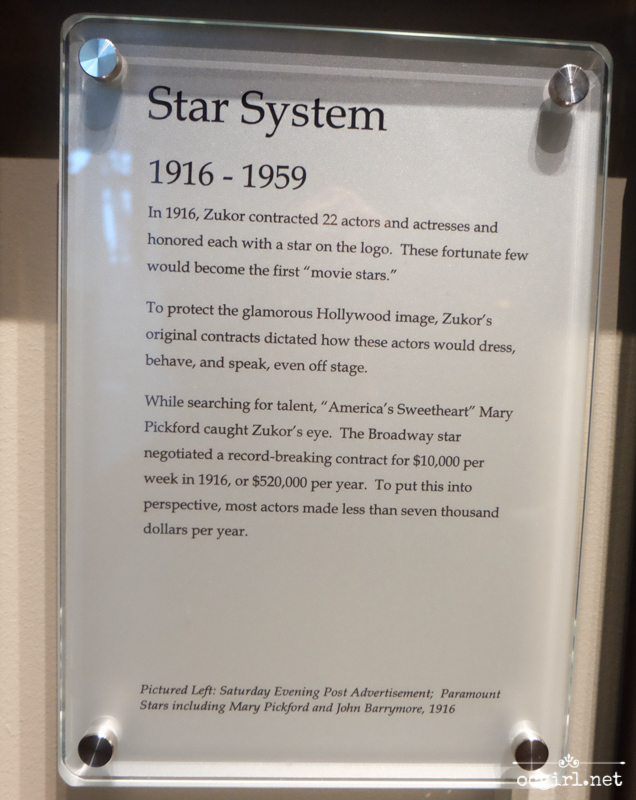

| International | |
|---|---|
| National | |
| Geographic | |
| Academics | |
| Other | |
Paramount Pictures
View on GrokipediaHistory
Origins as Famous Players Film Company (1912–1916)
The Famous Players Film Company was established on May 8, 1912, in New York City by Hungarian-born entrepreneur Adolph Zukor, in partnership with theater owners Philip and Charles Frohman.[7] Zukor, who had immigrated to the United States in 1889 at age 16 and built experience in the fur trade before entering the emerging motion picture exhibition business through penny arcades and nickelodeons, sought to challenge the dominance of short films controlled by the Motion Picture Patents Company (MPPC), led by Thomas Edison.[8] Recognizing the potential for longer narrative features to attract broader audiences and higher revenues, Zukor adopted the motto "Famous Players in Famous Plays" to emphasize quality adaptations of stage successes for the screen.[9] The company's inaugural venture was the U.S. distribution of the French-produced feature Queen Elizabeth (original title: Les Amours de la reine Élisabeth), starring renowned stage actress Sarah Bernhardt, which premiered in July 1912 after Zukor formed the company specifically to release it.[7] This four-reel film, the first full-length dramatic feature exhibited in the United States, defied MPPC restrictions on film length and independent distribution, generating substantial profits—reportedly over $80,000 from limited roadshow engagements despite high rental fees to theaters.[2] The success validated Zukor's strategy of importing and adapting prestigious European features, prompting him to expand into domestic production; by summer 1913, Famous Players had produced five features, including The Prisoner of Zenda and early works featuring emerging stars like Mary Pickford.[7] From 1913 to 1916, Famous Players focused on feature-length productions to elevate cinema's status from novelty to legitimate entertainment, producing films such as The Count of Monte Cristo (1913), directed by Edwin S. Porter and starring James O'Neill.[9] Operating initially from modest facilities in New York, the company navigated legal challenges from the MPPC, which attempted to enforce patent monopolies on cameras and projectors, but Zukor's independent approach and emphasis on star-driven narratives contributed to the gradual erosion of the trust's control.[8] By 1916, with a growing catalog of successful titles and distribution networks, Famous Players had established itself as a key innovator in the shift toward the feature film era, setting the stage for its merger with the Jesse L. Lasky Feature Play Company.[7]Formation of Famous Players–Lasky and Early Expansion (1916–1920s)
The Famous Players–Lasky Corporation was incorporated on June 28, 1916, through the merger of Adolph Zukor's Famous Players Film Company, Jesse L. Lasky's Feature Play Company, Bosworth Incorporated, and the Oliver Morosco Photoplay Company.[10] The new entity was capitalized at $12,500,000, with Zukor serving as president, Lasky as vice president, and Samuel Goldfish (later Samuel Goldwyn) as chairman of the board.[11] This consolidation aimed to enhance production capabilities by combining Eastern and Western facilities, enabling the output of higher-quality, feature-length films to meet growing market demands.[11] The merger positioned the company to produce and distribute approximately 84 pictures annually through an established network.[11] Shortly after formation, in September or October 1916, Famous Players–Lasky acquired the Paramount Pictures Corporation to bolster its distribution arm, integrating production with nationwide release channels.[10] By 1917, the company adopted the "Paramount Pictures" brand for its releases, leveraging Paramount's existing exchange system to reach theaters across the United States and Canada.[2] This acquisition facilitated vertical integration, allowing control over film dissemination and contributing to the company's rapid dominance in the industry.[2] Key productions under specialized units, such as the Famous Players-Mary Pickford Company formed in 1916 (later reorganized), underscored early successes with star-driven features.[10] Expansion accelerated through the 1920s, with the company operating 11 studios by 1917 spanning the U.S. and Canada, including the Famous Players–Lasky Eastern Studio in New York and emerging facilities in Hollywood.[2] Significant developments included the construction of Eastern Studios on Long Island in 1919 and the Lasky Studios in Hollywood around 1922, shifting more production westward to capitalize on California's climate and resources.[10] Distribution enhancements, such as absorbing Paramount's lines in 1919 and launching the Artcraft Pictures brand in 1918 for prestige releases, supported broader market penetration.[10] By the mid-1920s, Famous Players–Lasky had achieved full integration of production, distribution, and exhibition, acquiring theaters and solidifying its leadership amid intensifying competition.[2] Cecil B. DeMille's role as director general from 1919 to 1922 further drove innovative filmmaking, exemplified by epic spectacles that boosted the company's reputation.[10]Publix Theaters Era and Competition with Rivals (1920s–1930s)
In 1925, Famous Players-Lasky Corporation established Publix Theatres Corporation as an affiliate to manage and expand its exhibition operations, marking a strategic push into vertical integration by controlling theaters alongside production and distribution.[12] This initiative capitalized on the booming demand for grand movie palaces during the silent film era, with Publix acquiring prominent circuits like Balaban and Katz, renowned for opulent designs and technological innovations such as air conditioning in select venues.[13] By 1929, Publix had assembled the nation's largest theater chain, operating over 1,200 venues and prioritizing first-run exhibition of Paramount films to enforce block booking practices that bundled shorts, features, and newsreels.[14] The Publix era intensified competition among the major studios, known as the "Big Five"—Paramount, MGM, Warner Bros., Fox Film Corporation (later 20th Century-Fox), and RKO—which dominated Hollywood through similar vertically integrated models.[15] Paramount-Publix rivaled MGM's Loew's circuit and Warner Bros.' expanding Vitaphone-equipped theaters by aggressively building and acquiring houses, often in prime urban locations, to secure premium screen time and limit independent exhibitors' access to top releases.[16] This rivalry escalated with the 1927 advent of synchronized sound, prompting rapid conversions of Publix theaters to accommodate talkies, while Paramount invested in early sound productions to compete with Warner Bros.' pioneering Jazz Singer and MGM's musical extravaganzas.[17] By 1930, reflecting the theaters' centrality, the company reorganized as Paramount-Publix Corporation, boasting nearly 2,000 screens nationwide amid a wave of overbuilding that strained finances as the Great Depression loomed.[14] Competition sharpened as rivals like RKO, formed in 1928 through mergers, challenged Paramount's market share with innovative financing and stars like Fred Astaire, forcing Publix to offer lavish stage shows and premium pricing to draw audiences.[18] However, the era's aggressive expansion via debt-financed acquisitions left Paramount vulnerable to economic downturns, contrasting with more conservative strategies at studios like MGM, which maintained greater financial stability through diversified revenue.[17]Receivership, Reorganization, and the Impact of the Great Depression (1929–1940)
The onset of the Great Depression in 1929 severely strained Paramount-Publix Corporation's finances, as widespread unemployment and reduced consumer spending led to a sharp decline in movie theater attendance across the industry. Industry-wide revenues fell from $720 million in 1929 to $480 million by 1933, with total profits shifting from $54.5 million to industry-wide losses.[19] Paramount-Publix, burdened by aggressive expansion into theater ownership—reaching nearly 2,000 screens nationwide by 1930, including 500 additional acquisitions between September 1929 and May 1930—was particularly vulnerable due to its heavy debt load and ownership of approximately 900 first-run theaters.[14][6] This overleveraging, driven by founder Adolph Zukor's strategy of vertical integration, amplified the crisis as fixed costs for lavish theater operations persisted amid plummeting box office returns.[20] On January 26, 1933, a New York federal court placed Paramount-Publix into equity receivership following a petition by bondholders, citing the company's inability to service its debts despite assets valued at $166 million; simultaneously, subsidiary Publix Enterprises filed for voluntary bankruptcy.[21][21] The receivership extended to 23 films held by a subsidiary, reflecting broader liquidity issues from stock-for-theater swaps and overvalued acquisitions during the late 1920s boom.[22][23] Paramount responded by closing its Long Island City studio and laying off nearly 5,000 employees earning $35 to $50 weekly, while common stock prices plunged to a low of 12.5 cents per share.[24][25] Zukor, whose expansionist policies contributed to the debacle, was temporarily ousted from executive control as trustees managed operations.[20] Reorganization proceedings under Section 77B of the Bankruptcy Act began in 1934, culminating in a court-approved plan on February 1, 1935, and confirmation on April 4, 1935, which separated the film production and distribution assets from the theater chain.[26][27] The restructured entity emerged in April 1935 as Paramount Pictures Inc., focusing on studio operations while theaters were reorganized separately (later as United Paramount Theatres), reducing overhead and enabling survival through cost-cutting and hits like Mae West vehicles that boosted revenues despite the slump.[6] By 1936, Barney Balaban assumed the presidency, with Zukor reinstated as chairman, steering the company toward recovery amid ongoing Depression-era challenges.[28] This bifurcation addressed the core causal issue of intertwined production and exhibition risks, allowing Paramount to stabilize by 1940 as economic conditions improved and double features sustained attendance.[29]Antitrust Litigation and the Paramount Decree (1941–1950)
The U.S. Department of Justice intensified its antitrust enforcement against Paramount Pictures and other major studios following the temporary consent decrees signed in 1940, which had suspended an ongoing trial and banned block booking of films but permitted the retention of vertically integrated theater chains. These decrees addressed only distributional practices without mandating divestiture of exhibition assets, leading the DOJ to seek broader structural separation to dismantle the monopolistic control over motion picture production, distribution, and exhibition. Paramount, as one of the "Big Five" studios (alongside MGM, Warner Bros., 20th Century Fox, and RKO), faced scrutiny for its dominance through ownership of over 1,000 theaters via subsidiaries like Publix Theatres, which enabled practices such as clearing arrangements that prioritized affiliated theaters and forced independent exhibitors into unfavorable licensing terms.[30][31] World War II delayed aggressive litigation from 1941 to 1945, as wartime priorities shifted focus and studios benefited from stabilized attendance and government cooperation on propaganda films, but post-war economic pressures and independent exhibitor complaints revived the case. In October 1944, the Southern District of New York approved modified consent decrees without requiring theater divestiture, prompting the DOJ to appeal to the Second Circuit Court of Appeals. On December 4, 1945, the appellate court reversed, ruling that the district court had erred in refusing to consider divestiture as a remedy for the proven conspiracy under Sections 1 and 2 of the Sherman Act, and remanded for further proceedings on structural relief. The studios, including Paramount, then appealed to the U.S. Supreme Court, arguing that prior practices like block booking had ceased and that divestiture would harm efficiency without benefiting competition.[30][32] The Supreme Court heard arguments from February 9–11, 1948, and on May 3, 1948, issued its landmark decision in United States v. Paramount Pictures, Inc., affirming the monopoly findings and mandating divestiture of theater interests by the Big Five to restore competition in exhibition. The 5-1 ruling, written by Justice William O. Douglas, held that the studios' vertical integration had foreclosed independent producers and exhibitors from the market, with block booking and other restraints exacerbating the harm; it prohibited future block booking of more than 20% of output and banned circuit-wide licensing without competitive bidding. The case was remanded to the district court for crafting final decrees, which prohibited the divesting studios from reacquiring theaters for 10 years and imposed ongoing oversight to prevent evasion.[33][32] Implementation proceeded through 1949–1950, with Paramount completing divestiture on December 31, 1949, by spinning off its 1,500-screen United Paramount Theatres (UPT) circuit as a separate entity under Leonard Goldenson, who later merged it with the American Broadcasting Company in 1953. This separation cost Paramount significant revenue, as exhibition had accounted for roughly half its income, forcing a pivot toward independent production and distribution amid declining post-war attendance. The decrees effectively ended the studio system's oligopolistic control, enabling independent filmmakers greater access but contributing to Paramount's financial strains, including ongoing bankruptcy risks from prior Depression-era debts.[30][31]Post-Decree Restructuring and Independence Push (1951–1966)
Following the 1948 Paramount Decree, which mandated the separation of production from exhibition, Paramount Pictures completed divestiture of its theater interests by 1950, emerging as an independent production and distribution entity with $120 million in assets and $72 million in working capital. Under president Barney Balaban, who held the position from 1936 to 1964, the studio prioritized financial stabilization amid declining box office attendance driven by television's rise, which reduced U.S. theater visits from 90 million weekly in 1948 to 46 million by 1953. Paramount maintained profitability in early quarters post-divestiture, such as the first quarter of 1950, by curtailing in-house production costs and shifting toward package deals with independent producers, stabilizing annual film output at approximately 18 titles plus additional units like the seven films from the Pine-Thomas partnership in 1949.[34][35] To offset revenue losses from lost theater control and television competition, Paramount pursued diversification into ancillary media. In May 1951, it acquired a 50% stake in International Telemeter Corporation to pioneer coin-operated pay-per-view television, attaching metering boxes to sets for charged programming; tests began in Palm Springs, California, in November 1953 and expanded to Etobicoke, Ontario, but the service faltered due to limited adoption and regulatory hurdles. In February 1958, the studio sold its library of 764 pre-1950 sound feature films to MCA Inc. (now part of Universal), generating capital for operations as theaters increasingly relied on TV syndication for older content. Further expansion included the January 1957 acquisition of Dot Records, a leading independent label in singles sales, which provided initial profits through music tie-ins before declining in the mid-1960s.[36][37][38] Balaban's strategy emphasized fiscal prudence, including stock repurchases that reduced outstanding shares from 3.3 million to 1.67 million by 1960, elevating per-share value from $22 to nearly $44 and supporting steady dividends. The studio released contract actors, minimized overhead, and invested in real estate and select television stations to bolster independence from film volatility. Despite these measures, persistent industry contraction—exacerbated by the decree's elimination of block booking and guaranteed outlets—eroded margins, with Balaban transitioning to chairman in June 1964 amid board pressures for renewal, succeeded as president by longtime executive Jack Karp. This period marked Paramount's concerted but ultimately transitional push for self-sufficiency, culminating in its vulnerability to external acquisition by 1966.[34][39][34]Gulf+Western Acquisition and Diversification (1966–1980)
In 1966, Paramount Pictures, facing financial losses from the loss of theater chains after the 1948 Paramount Decree and competition from television, was acquired by Gulf+Western Industries, a conglomerate founded by Charles Bluhdorn in 1958 from an auto parts firm. Bluhdorn's company purchased a controlling stake exceeding 18% of Paramount's stock, leading to a merger valued at approximately $125 million, with the deal finalized in October 1966.[40][41][42] Bluhdorn, known for aggressive acquisitions of undervalued assets, integrated Paramount into Gulf+Western's leisure group, appointing himself chairman and providing capital to stabilize operations amid the studio's $20 million debt.[43][40] Bluhdorn's strategy emphasized high-risk film production to reverse Paramount's fortunes, hiring Robert Evans as head of worldwide production in June 1966 despite Evans's lack of studio executive experience. Under Evans's leadership through 1974, Paramount produced commercially successful films including Rosemary's Baby (1968, grossing $33 million domestically), Love Story (1970, $106 million), and The Godfather (1972, $135 million), which collectively restored profitability and positioned the studio as a leader in adult-oriented blockbusters.[44][43] These successes stemmed from Bluhdorn's willingness to back creative talent over traditional studio formulas, though the conglomerate's broader manufacturing focus sometimes diverted resources from film.[45] Diversification under Gulf+Western extended Paramount beyond theatrical releases into television and international markets. In 1967, the company acquired Desilu Productions for $10 million, renaming it Paramount Television to produce series like Star Trek (syndicated reruns generating ongoing revenue) and entering network TV supply.[40] In 1970, Paramount partnered with Universal to form Cinema International Corporation (CIC), handling foreign distribution and reducing reliance on domestic box office, which by 1980 accounted for over 50% of revenues for both studios.[40] Gulf+Western's non-entertainment expansions, such as zinc mining and sugar production, funded these ventures but exposed Paramount to conglomerate volatility, including a 1974 recession that prompted cost cuts. By 1980, entertainment assets, bolstered by music publishing from Famous Music and arena ownership like the 1977 Madison Square Garden acquisition for $36 million, comprised a growing share of Gulf+Western's portfolio.[42][46][42]High-Concept Blockbusters and CIC Formation (1970s–1980s)
In 1970, Paramount Pictures and Universal Pictures formed Cinema International Corporation (CIC) on April 9 as a joint venture to consolidate their international theatrical distribution operations, addressing escalating costs and logistical complexities in overseas markets. Operations began on January 1, 1971, enabling shared expenses for sales, marketing, and exhibition while preserving each studio's creative independence. Metro-Goldwyn-Mayer joined as a partner in 1973 after closing its own foreign distribution arms, further optimizing the venture's efficiency amid growing global demand for American films. CIC handled non-U.S. releases for these studios until 1981, when it merged with United Artists International to create United International Pictures, but the initial formation underscored Paramount's strategic adaptation to post-antitrust realities by pooling resources rather than competing in distribution.[47][48] Domestically, Paramount shifted toward high-concept blockbusters under Barry Diller, who was named chairman and chief executive officer on September 23, 1974, succeeding the conglomerate-focused leadership of Gulf+Western. Diller, drawing from his ABC programming experience, championed films with concise, high-stakes premises easily promotable via stars, action, and broad appeal—contrasting the 1960s' riskier, director-centric productions. This approach prioritized predictable profitability through event-style marketing and tie-ins, yielding hits like Saturday Night Fever (1977), which grossed $94.2 million domestically on a $3 million budget, capitalizing on disco culture and John Travolta's breakout. Grease (1978) followed, leveraging musical nostalgia to become a box-office phenomenon, while Raiders of the Lost Ark (1981), distributed by Paramount, earned $242 million domestically through adventure spectacle and Steven Spielberg's direction.[49][50][51] The strategy propelled Paramount to industry leadership, with the studio topping annual box-office charts multiple times in the early 1980s via franchises and star vehicles like Star Trek: The Motion Picture (1979), Beverly Hills Cop (1984), and Top Gun (1986). These releases emphasized formulaic elements—buddy cops, sci-fi revivals, military action—to mitigate financial risks in a volatile market influenced by television competition and inflation. Diller's tenure through 1984 transformed Paramount from a mid-tier player into a commercial powerhouse, though critics later noted the formula's role in homogenizing content toward spectacle over narrative depth. By decade's end, this blockbuster focus had diversified revenue streams, including merchandising and soundtracks, sustaining Gulf+Western's entertainment investments amid economic shifts.[52][53]Paramount Communications and Continued Growth (1989–1994)
In June 1989, Gulf+Western Industries Inc. rebranded as Paramount Communications Inc., emphasizing its core entertainment assets including Paramount Pictures, under the leadership of Chairman Martin S. Davis.[54] This restructuring involved divesting non-media businesses, such as the $3 billion sale of Associates Corp., to fund expansion in film, television, and publishing.[55] Davis aimed to enhance shareholder value by concentrating on high-growth media sectors, auctioning off industrial and financial units accumulated under predecessor Charles Bluhdorn.[56] Paramount Pictures continued producing commercially successful films during this period, contributing to the parent company's revenue growth. Notable releases included Indiana Jones and the Last Crusade in 1989, which grossed over $474 million worldwide, and Ghost in 1990, earning $517 million globally.[53] Other hits like The Hunt for Red October (1990) and A Few Good Men (1992) bolstered the studio's box office performance, while 1994's Forrest Gump achieved $678 million worldwide before the company's acquisition.[53] Quarterly revenues rose, with second-quarter 1989 figures reaching $699.1 million, up from $619.6 million the prior year, reflecting operational expansion despite occasional earnings dips, such as in early 1991.[57][58] The focus on media assets drove stock appreciation, with Paramount Communications' shares increasing at more than double the S&P 500's rate from 1989 to 1994.[59] Davis pursued strategic opportunities, including an unsuccessful 1989 bid for Time Inc., but the streamlined portfolio positioned the company for heightened market valuation.[60] This era of refocused growth culminated in the company's appeal as an acquisition target, setting the stage for its merger with Viacom.Viacom Integration and Executive Leadership Challenges (1994–2005)
In 1994, Viacom Inc., under Chairman Sumner Redstone, acquired Paramount Communications Inc. in a $10.1 billion cash-and-stock deal following a contentious bidding war with QVC Network Inc., with Viacom securing 50.1% ownership by purchasing 61.66 million shares.[61][62] The transaction, approved by shareholders on July 6, 1994, integrated Paramount's film studio, television production assets, and publishing units like Simon & Schuster into Viacom's portfolio, which already included MTV Networks and cable systems.[63] This merger aimed to bolster Viacom's content creation amid rising cable and home video demand but immediately burdened the company with substantial debt, exacerbating Viacom's pre-existing $2.4 billion in bank obligations, much maturing by 1997.[64] Integration efforts faced operational hurdles, including cultural clashes between Viacom's cable-focused agility and Paramount's traditional Hollywood structure, leading to early executive exits such as Paramount President Stanley Jaffe's departure in March 1994, with no defined role post-acquisition.[65] Viacom reorganized Paramount's production and syndication units to streamline distribution, shifting TV shows previously handled by Viacom Enterprises under the Paramount banner, yet financial strain from the deal—valued by analysts at up to $9.5 billion including assumed liabilities—limited aggressive investment and fueled internal tensions over cost controls.[66] Executive leadership instability marked the era, culminating in the January 1996 ouster of Viacom President and CEO Frank Biondi Jr., who had led since 1987, amid disagreements with Redstone on management style and Paramount's underwhelming post-merger performance.[67][68] Redstone, assuming CEO duties temporarily, criticized Biondi's approach as insufficiently aggressive for global expansion, reflecting a pattern of Redstone's hands-on interference that prioritized short-term results over long-term strategy.[69] Subsequent shifts included the 2000 Viacom-CBS merger, installing Mel Karmazin as President and COO, whose resignation in June 2004—amid reported boardroom standoffs with Redstone—led to co-presidents Tom Freston and Les Moonves splitting duties, with further reshuffles like Tom McGrath's exit from Paramount Enterprises in July 2004.[70][71][72] These frequent changes, driven by Redstone's impatience and debt-laden finances, hindered cohesive strategy until Viacom's 2005 split into separate entities to address underperformance.[70]Split Viacom Era and Digital Transition Struggles (2005–2019)
In December 2005, Viacom Inc. split into two entities effective January 1, 2006, with the new Viacom retaining ownership of Paramount Pictures alongside cable networks such as MTV and Nickelodeon, while CBS Corporation took broadcast and other assets.[73][74] This separation, orchestrated by controlling shareholder Sumner Redstone through National Amusements, aimed to unlock value by isolating high-growth cable from slower broadcast segments, though it positioned Paramount within a company increasingly reliant on declining linear TV revenues.[73] Brad Grey, formerly of Brillstein-Grey Entertainment, assumed the role of chairman and CEO of Paramount Pictures in 2005, overseeing a period of franchise-driven hits like the Transformers series starting in 2007 but also marked by box-office volatility.[75] Paramount pursued expansion through the December 2005 acquisition of DreamWorks SKG's live-action library for $1.6 billion in cash plus debt assumption, finalized in February 2006, adding titles like Saving Private Ryan and American Beauty to bolster its catalog amid rising digital demands.[76][77] However, the studio grappled with the erosion of physical media sales, as DVD revenues peaked industry-wide around 2004 before plummeting due to online piracy and streaming alternatives.[78] Viacom's 2007 lawsuit against YouTube and Google sought over $1 billion in damages for alleged massive copyright infringement of Paramount and other content, highlighting early resistance to user-generated platforms; the case settled confidentially in 2014 after courts upheld YouTube's DMCA safe harbor protections.[79] By 2014, Paramount pioneered full digital distribution among major studios, releasing The Wolf of Wall Street without 35mm film prints to cut costs and adapt to theater conversions, though this shift exacerbated challenges from fragmented digital windows and competition from Netflix's originals.[80][81] Financial pressures mounted in the 2010s, with Paramount posting operating losses amid Viacom's broader cable ad declines; filmed entertainment revenues fell, prompting cost cuts and write-downs.[78] Grey departed in February 2017 following a string of underperformers like Baywatch and Transformers: The Last Knight, replaced by former Fox executive Jim Gianopulos as chairman and CEO to refocus on franchises and partnerships.[82] These years underscored Paramount's lag in streaming infrastructure, as Viacom prioritized traditional models until merger pressures in 2019.[78]ViacomCBS Re-Merger and Streaming Pivot (2019–2024)
On December 4, 2019, CBS Corporation and Viacom Inc. completed their merger, forming ViacomCBS Inc. in a transaction valued at approximately $30 billion, with Bob Bakish serving as president and chief executive officer of the combined entity.[83] [84] The merger aimed to consolidate assets including Paramount Pictures, CBS's broadcast network, MTV, Nickelodeon, and Showtime, generating combined annual revenues of about $28 billion and targeting $500 million in annual cost synergies through operational efficiencies.[85] This reunion under Shari Redstone's National Amusements control sought to bolster scale amid declining linear TV viewership and the rise of streaming competitors like Netflix and Disney+.[86] ViacomCBS accelerated its pivot to direct-to-consumer streaming, rebranding CBS All Access as Paramount+ on March 4, 2021, which integrated Viacom's content libraries and Paramount Pictures' film catalog to offer over 30,000 episodes and movies at launch.[87] The service expanded internationally, starting with the Nordics, Australia, and Latin America in 2021, and reached 67.5 million global subscribers by Q4 2023, growing to 77.5 million by Q4 2024 through net additions of 5.6 million in the final quarter alone.[88] [89] Paramount Pictures contributed key franchises like Mission: Impossible and Transformers to the platform, with a strategic shift announced in February 2021 to release select theatrical films on Paramount+ just 30-45 days after cinema debut, accelerating content velocity to drive subscriptions amid pandemic-disrupted box office.[90] On February 15, 2022, ViacomCBS rebranded to Paramount Global, effective February 16, to unify its identity around the Paramount brand and emphasize streaming as the core growth driver, aligning the corporate name with Paramount+ and the film studio.[91] [92] This included committing all post-2023 theatrical releases from Paramount Pictures to exclusive post-theatrical windows on Paramount+, prioritizing subscriber retention over traditional TV licensing revenue.[93] However, the transition faced headwinds: streaming direct-to-consumer revenue grew to $7.6 billion in 2024, but the segment posted ongoing losses—narrowing to $497 million annually by late 2024—while linear TV revenues declined due to cord-cutting and advertising softness.[89] Financial strains intensified, with Paramount Global reporting a $5.4 billion net loss in Q2 2024, driven by content impairments and a $14.6 billion long-term debt load as of March 2024, down from $20 billion pre-merger but still burdensome amid high interest rates and content spending.[94] [95] Despite subscriber gains, the company implemented layoffs and cost cuts, including $750 million in merger synergies realized by 2021, yet struggled to achieve DTC profitability until targeting domestic breakeven in 2025.[96] Paramount Pictures' output supported the strategy by licensing legacy titles and producing originals like 1883 spin-offs, but theatrical underperformance—exacerbated by strikes and market saturation—highlighted risks in balancing cinema exclusivity with rapid streaming feeds.[97]Skydance Merger and Post-Merger Adjustments (2024–Present)
In July 2024, Skydance Media reached a preliminary agreement for a merger with Paramount Global, involving the acquisition of National Amusements, the controlling shareholder of Paramount, in a transaction valued at approximately $8 billion.[1] The deal structure included Skydance providing $2.4 billion to acquire National Amusements and injecting $4.5 billion in new capital into the combined entity to reduce debt and fund growth initiatives.[98] Paramount's board approved the merger on July 7, 2024, following a competitive bidding process amid the company's financial challenges, including streaming losses and declining linear TV revenues.[99] Regulatory hurdles delayed completion, with the Federal Communications Commission approving the transfer of control on July 24, 2025, after reviews concerning foreign ownership and media concentration.[100] The merger closed on August 7, 2025, forming Paramount Skydance Corporation as a standalone media company, with trading of legacy Paramount shares ceasing and new Class B shares issued under the ticker "PARA".[101] Skydance founder David Ellison assumed the roles of chairman and chief executive officer, emphasizing a strategy to leverage Paramount's intellectual property alongside Skydance's production expertise in film, animation, and gaming.[102] Post-merger adjustments included a restructured executive team, with former NBCUniversal CEO Jeff Shell appointed as president to oversee operations across three segments: entertainment, news, and sports.[103] Key changes involved appointing new leaders for content divisions, such as a former Netflix executive for originals, signaling a pivot toward cost discipline and AI integration in production to address Paramount's $15 billion debt load entering the merger.[104] By October 2025, the new regime implemented workforce reductions and operational efficiencies, impacting thousands of employees as part of broader efforts to stem losses from legacy cable assets and accelerate streaming profitability.[105] Ellison's leadership has prioritized franchise revitalization and technological investments, though analysts note persistent challenges from cord-cutting trends and competition in a consolidating media landscape.[106]Corporate Structure and Operations
Ownership Evolution and Key Shareholders
Paramount Pictures operated as an independent publicly traded entity following its restructuring after the 1948 Paramount Decree, which mandated divestiture of theater chains to address antitrust concerns.[3] The studio's ownership shifted significantly on March 24, 1966, when it was acquired by Gulf+Western Industries in a merger that integrated Paramount into a diversified conglomerate focused on manufacturing and entertainment.[41] Gulf+Western, led by Charles Bluhdorn, viewed the acquisition as a strategic entry into media amid Paramount's financial recovery from television competition, with the deal exchanging Paramount shares for Gulf+Western stock valued at approximately $125 million based on market prices at the time.[41] Gulf+Western retained control of Paramount Pictures through the 1970s and 1980s, expanding its entertainment portfolio while divesting non-core industrial assets to fund media investments.[107] In 1989, the parent company rebranded as Paramount Communications Inc. to emphasize its entertainment focus, though this did not alter the studio's operational ownership.[107] Ownership transitioned again in 1994 when Viacom Inc., controlled by Sumner Redstone's National Amusements since its 1987 acquisition of Viacom, purchased Paramount Communications in a $10.1 billion cash-and-stock deal after a bidding war with QVC.[61] Viacom completed the takeover by acquiring 50.1% of Paramount Communications shares on March 13, 1994, integrating the studio into its growing media empire that included MTV and Nickelodeon.[62] Under Viacom's umbrella, National Amusements maintained de facto control through super-voting shares, a structure that persisted through corporate restructurings. In 2005, Viacom split into two entities: the new Viacom (cable networks) and CBS Corporation, which inherited Paramount Pictures along with CBS broadcast assets, ensuring continued Redstone family influence via National Amusements' voting power.[108] The 2019 re-merger of CBS Corporation and Viacom formed ViacomCBS (renamed Paramount Global in 2022), with National Amusements holding approximately 10% equity but 80% of voting shares, enabling Shari Redstone to dictate strategic decisions despite institutional investors like Vanguard and BlackRock owning larger economic stakes.[109] The most recent evolution occurred through the merger with Skydance Media, announced on July 7, 2024, and completed on August 7, 2025, forming Paramount Skydance Corporation.[1] The $8 billion transaction involved Skydance first acquiring National Amusements for $2.4 billion in cash, then merging with Paramount Global in an all-stock deal valued at $4.75 billion, granting Skydance investors 70% of the economic interest and full voting control while legacy Paramount shareholders retained 30%.[110] Key post-merger shareholders include the Ellison family (led by David Ellison, Skydance founder and new CEO), RedBird Capital Partners, and KKR, who provided $1.5 billion in strategic investment to support content production and streaming initiatives.[111] This structure shifted control from the Redstone family to Skydance's tech-oriented backers, amid Paramount's challenges with declining linear TV revenue and streaming losses.[112]Current Divisions and Subsidiaries
Paramount Pictures, following the completion of the merger between Paramount Global and Skydance Media on August 7, 2025, which formed Paramount Skydance Corporation valued at $28 billion, now operates within the broader Studios segment of the parent entity alongside other production units such as Skydance Animation and Skydance Media.[111][113] This structure divides operations into three primary segments: Studios for film and content creation, Direct-to-Consumer for streaming platforms, and TV Media for broadcast networks, with Paramount Pictures focusing on theatrical feature films.[103] The core divisions of Paramount Pictures encompass its primary live-action film production and distribution unit, which handles major franchises including Mission: Impossible and Transformers, generating significant box office revenue such as $571 million for Mission: Impossible – Dead Reckoning Part One in 2023.[114] Paramount Animation, established as the dedicated animation arm, produces family-oriented computer-animated features, often in collaboration with Nickelodeon properties like the SpongeBob SquarePants series.[114] Paramount Players operates as an internal label for mid-budget original films across genres such as horror (A Quiet Place, 2018) and action-comedy, aiming to diversify output beyond tentpole releases.[114] Paramount Pictures maintains no major wholly-owned subsidiaries but engages in co-production and distribution partnerships, including a 49% stake in Miramax for select prestige films and joint ventures like United International Pictures for international theatrical distribution in certain markets.[115] Nickelodeon Movies, while primarily tied to the Nickelodeon brand under the parent Studios segment, frequently co-produces and distributes family films released through Paramount Pictures' pipeline.[114] Post-merger adjustments include ongoing executive transitions, such as the departure of Paramount Motion Picture Group President Mike Ireland in August 2025, amid broader cost-cutting measures affecting production divisions.[116][117]Joint Ventures and Strategic Partnerships
Paramount Pictures entered into a slate co-financing agreement with Domain Capital Group on February 7, 2025, covering a minimum of 30 feature films across various budget levels to support production financing amid industry challenges.[118][119] This partnership provides Paramount with capital for upcoming projects without ceding ownership, reflecting a strategy to mitigate financial risks through external investment in an era of rising production costs and uncertain box office returns. In September 2025, Paramount Pictures signed a three-year strategic distribution deal with Legendary Entertainment, under which Paramount handles global theatrical marketing and distribution for Legendary-produced films, excluding China where Legendary East operates independently.[120][121] The agreement leverages Paramount's established release infrastructure to expand Legendary's reach, building on prior collaborations and aiming to capitalize on blockbuster potential in international markets. Historically, Paramount formed Cinema International Corporation (CIC) in 1970 with Universal Pictures for international film distribution, later incorporating MGM to create United International Pictures (UIP) in 1981, which handled overseas releases until UIP's dissolution in 2007.[122] More recently, Paramount Pictures International Limited co-owns SkyShowtime, a European streaming joint venture with Comcast-owned entities, into which it invested $246 million as of 2023 accounts, facilitating content licensing and exhibition of Paramount titles alongside partner libraries.[122] These arrangements underscore Paramount's reliance on alliances to optimize distribution economics and counter streaming disruptions, though outcomes depend on title performance and market dynamics.Former Assets and Divestitures
In 1994, shortly after Viacom Inc. acquired Paramount Communications Inc., the company divested Madison Square Garden, including the New York Knicks and New York Rangers franchises, to a partnership formed by Cablevision Systems Corp. and ITT Corp. for approximately $1.15 billion, allowing Viacom to focus on its core media operations amid the debt from the acquisition.[123] Viacom sold its Famous Music publishing catalog, which included copyrights to over 1 million songs such as "Somewhere Over the Rainbow" and compositions by George Gershwin and Irving Berlin, to Sony/ATV Music Publishing in May 2007 for $362 million, streamlining operations by exiting non-film music assets acquired through earlier conglomerations.[124] In 2005, Viacom divested its Canadian theater chain Famous Players Ltd., a remnant of historical vertical integration ties, selling most locations to Cineplex Galaxy LP as part of a broader strategy to reduce exposure to exhibition amid declining theatrical revenues. Paramount Global agreed to sell its book publishing division Simon & Schuster to KKR & Co. Inc. for $1.62 billion in August 2023, with the transaction closing on October 30, 2023, following a blocked $2.175 billion merger with Penguin Random House due to U.S. Department of Justice antitrust concerns over market concentration in trade publishing.[125][126] Paramount Global sold its Bellator MMA promotion to the Professional Fighters League (PFL) in November 2023 for an undisclosed amount estimated below $100 million, less than the roughly $50 million Viacom paid for a controlling stake in 2011, reflecting challenges in scaling combat sports viewership against dominant competitors like UFC.[127]Production and Creative Strategies
Studio Facilities and Technological Innovations
Paramount Pictures operates its primary production facilities on a 65-acre studio lot in Hollywood, California, which has expanded significantly since its early days when it encompassed 26 acres with just four sound stages.[2] The lot now features 30 sound stages ranging in size from 5,500 to 18,775 square feet, enabling simultaneous handling of multiple large-scale projects including film and television productions.[128] Key assets include a five-acre backlot replicating New York City streetscapes and a water tank exceeding 900,000 gallons for aquatic scenes.[129] The studio has undergone major expansions to modernize infrastructure, including a $700 million master plan approved in 2016 to add up to 1.9 million square feet of new space for production, post-production, and support facilities over two decades.[130] In 2011, Paramount constructed a new post-production sound facility in partnership with Technicolor (now Formosa Group), enhancing capabilities for advanced audio mixing and dubbing.[2] Historical challenges, such as a fire on August 25, 1983, that destroyed multiple sound stages and outdoor sets, prompted reconstructions that bolstered resilience.[2] In terms of technological innovations, Paramount has historically prioritized advancements in sound technology, leading the industry's shift from silent films by investing in early synchronized audio systems during the late 1920s.[131] The studio continues to integrate cutting-edge tools, such as state-of-the-art visual effects pipelines used in recent productions like Better Man (2024), where Weta FX handled motion-capture and CGI enhancements.[132] Facilities support virtual production techniques, including LED volumes and real-time rendering, aligning with broader industry trends toward digital workflows.[133] Paramount's commitment to innovation extends to sustainable technologies, with studio-wide upgrades reducing over 400 million pounds of greenhouse gas emissions through energy-efficient systems.[134]Genre Focus and Franchise Development
Paramount Pictures has prioritized action-adventure and science fiction genres in its modern production slate, utilizing high-budget visual effects and spectacle to appeal to international markets, where these categories consistently outperform others in global box office returns. This focus emerged prominently from the 1970s onward, coinciding with the studio's acquisition of science fiction properties like Star Trek in 1967, which enabled the development of serialized narratives with built-in audiences, reducing the financial uncertainty of standalone originals.[135] By the 1990s, amid escalating costs for special effects-driven films, Paramount shifted resources toward franchise extensions, as evidenced by adaptations of established television and toy IPs, which provided merchandising synergies and sequel potential.[136] The Mission: Impossible series, launched on May 22, 1996, as an adaptation of the 1966–1973 CBS television program, exemplifies this strategy, with eight films by 2023 emphasizing espionage action and starring Tom Cruise, cumulatively generating substantial revenue through escalating budgets and international appeal. Individual entries like Mission: Impossible – Fallout (2018) grossed $791 million worldwide, underscoring the franchise's role in stabilizing studio output during periods of original film underperformance.[137] Similarly, the Transformers live-action films, initiated in 2007 via partnership with Hasbro, targeted science fiction action with robot combat sequences, producing seven features that capitalized on toy-line nostalgia and visual effects advancements, with Transformers: Dark of the Moon (2011) alone earning $1.12 billion globally.[138] Star Trek franchise development further highlights Paramount's science fiction emphasis, with 13 theatrical films from 1979 to 2016, including the 2009 reboot directed by J.J. Abrams that revitalized the property for younger demographics, contributing approximately $1.9 billion in total box office earnings.[135] Post-2024 Skydance merger, the studio announced plans to accelerate franchise sequels in these genres, such as new Transformers and Star Trek installments, while integrating original projects to balance risk, reflecting a causal link between IP continuity and revenue predictability in an era of $200–300 million production budgets.[5] This approach contrasts with earlier decades' genre diversity in dramas and musicals, prioritizing empirical box office data over speculative prestige pursuits.[139]Executive Influence on Content Decisions
Adolph Zukor, as founder and long-serving president of Paramount Pictures from its inception in 1912 through the 1950s, exerted profound influence by pioneering feature-length films over short subjects, thereby elevating production standards and prioritizing narratives with star appeal, such as those featuring Mary Pickford and Gloria Swanson.[140] This shift, driven by Zukor's vision of emulating European prestige cinema, led to the studio's early block-booking practices, which bundled high-profile releases to theaters and reinforced content control over distribution.[141] In the post-studio era, executives like Robert Evans in the 1960s-1970s championed auteur-driven projects, greenlighting films such as The Godfather (1972) and Chinatown (1974) to counter declining attendance, emphasizing gritty realism and literary adaptations over formulaic output.[40] This hands-on approach contrasted with later conglomeratization under Gulf+Western, where content decisions increasingly balanced artistic risks with corporate synergies, though Evans' ouster in 1974 highlighted tensions between executive oversight and creative autonomy. Under Brian Robbins' tenure as Paramount Pictures president and CEO from 2021 to August 2025, content strategy pivoted toward franchise extensions and IP reboots, including refreshed takes on Mean Girls (2024), The Naked Gun (upcoming), and expansions of Transformers and Mission: Impossible, yielding 17 number-one box office releases.[142] [143] Robbins prioritized cross-platform family and kids' content integration from ViacomCBS assets like Nickelodeon, while experimenting with originals like Smile (2022) and Bob Marley: One Love (2024), amid a flexible release model blending theatrical and streaming to mitigate pandemic-era disruptions.[144] His animation push, however, leaned heavily on adaptations rather than new IP, reflecting a risk-averse calculus prioritizing proven assets over speculative development.[145] Shari Redstone, as non-executive chair of Paramount Global through National Amusements' controlling stake until the 2024 Skydance merger, influenced broader content oversight, including editorial interventions at CBS News properties like objections to specific reporting angles, which extended to studio-level sensitivities on politically charged narratives.[146] Post-merger, David Ellison's Skydance integration shifted dynamics toward tech-infused decision-making, incorporating AI for content generation and discovery, while new executives like Jeff Shell emphasized theatrical exclusivity over day-and-date streaming to safeguard box office viability.[147] [148] This evolution underscores executives' causal role in aligning content with fiscal imperatives, often prioritizing data-driven franchises amid streaming competition, though recent DEI policy reversals—citing executive orders—reveal responsiveness to external political pressures over ideological commitments.[149]Distribution and Market Presence
Historical Theater Ownership and Vertical Integration
Paramount Pictures achieved vertical integration in the motion picture industry during the 1920s by expanding into theater exhibition, acquiring major chains to control the downstream distribution of its films. Under Adolph Zukor, the studio formed alliances and purchases, including a significant stake in the Balaban and Katz circuit in 1926, which operated premium urban theaters.[150] This move complemented Paramount's production and distribution arms, enabling practices such as block booking, where theaters were required to purchase bundles of films to secure desirable releases. By 1930, the Paramount-Publix Corporation oversaw nearly 2,000 screens nationwide, representing one of the largest exhibition networks among the major studios and solidifying control over prime exhibition venues.[14] This structure allowed Paramount to prioritize its own productions, limit access for independent films, and enforce uniform pricing and run lengths through "clearance" systems that disadvantaged smaller exhibitors. The Great Depression strained operations, leading to bankruptcy reorganization in 1935, yet Paramount retained substantial theater holdings into the 1940s.[151] Antitrust challenges culminated in the U.S. Department of Justice's 1938 lawsuit against the "Big Five" studios, including Paramount, alleging monopolization via vertical foreclosure. A 1940 consent decree initially addressed block booking but preserved theater ownership; however, the Supreme Court in United States v. Paramount Pictures, Inc. (334 U.S. 131, decided May 3, 1948) ruled that such integration facilitated anticompetitive practices, mandating divestiture of exhibition interests.[33] [30] Compliance decrees finalized in 1950 required Paramount to fully separate its production-distribution from theaters, selling off the Paramount-Publix remnants and related circuits like Plitt Theatres, which traced origins to Paramount's holdings.[152] This breakup dismantled the integrated studio system, shifting power toward independent producers and exhibitors, though later analyses noted vertical integration's potential efficiencies in coordinating supply chains absent abusive tactics.[153] Paramount's exit from exhibition marked a pivotal constraint on its market dominance, influencing industry structure until consent decree modifications in 2020 lifted reentry bans.[154]Modern Distribution Networks and Global Reach
Paramount Pictures manages domestic theatrical distribution in the United States through its own sales and marketing teams, handling releases across major cinema chains without reliance on external partners for primary rollout.[155] Internationally, the studio primarily leverages United International Pictures (UIP), a joint venture with Universal Pictures established in 1981, to coordinate theatrical releases outside North America, covering marketing, booking, and exhibition in over 75 territories.[156] UIP also facilitates non-theatrical distribution, including ancillary rights, for Paramount titles globally excluding the U.S. and Canada.[157] Recent strategic pacts have expanded Paramount's international footprint; on September 4, 2025, the studio finalized a three-year worldwide distribution agreement with Legendary Entertainment, under which Paramount markets and releases Legendary's theatrical films globally except in China, where Legendary East retains control.[120] In Europe, Paramount entered a theatrical distribution and marketing partnership with Sony Pictures International for Germany on October 16, 2024, enabling localized handling of releases amid varying regional exhibition dynamics.[158] These arrangements underscore Paramount's approach to blending in-house capabilities with targeted alliances to optimize reach in fragmented markets. For digital and home entertainment, Paramount operates Paramount Home Entertainment (formerly Paramount Home Video), distributing physical media like DVDs and Blu-rays, alongside digital sales and rentals through platforms such as Amazon Prime Video and iTunes.[159] Streaming distribution centers on Paramount+, which aggregates Paramount Pictures content with live sports, news, and originals, available in over 200 markets as of 2025, supported by plans to produce 150 international originals by that year to bolster subscriber growth.[160] Paramount+ integrates with cable deals, such as the January 7, 2025, multi-year agreement with Comcast for carriage of Paramount networks and enhanced streaming access.[161] Paramount's global reach manifests in substantial international box office contributions, with films like Top Gun: Maverick generating $771 million overseas, representing a significant portion of the studio's cumulative worldwide earnings exceeding $5 billion in peak years.[162] In 2024, Paramount held approximately 10.6% of the U.S. and Canada box office market share, while international territories amplify total grosses through UIP's network, connecting content to audiences in nearly every country.[163] This infrastructure, overseen since October 15, 2025, by Josh Goldstine as president of global marketing and distribution, prioritizes premium theatrical windows followed by rapid transitions to streaming and home video to maximize revenue across borders.[164]Shift to Streaming and Home Entertainment
Paramount Pictures entered the home entertainment market in the late 1970s through its Paramount Home Video division, which released early VHS titles including Saturday Night Fever in 1979 and Grease in 1980, capitalizing on the format's growing consumer adoption to extend revenue from theatrical runs.[165] The division evolved with technological shifts, transitioning to DVD releases in the late 1990s—succeeding VHS as the dominant physical medium—and later incorporating Blu-ray and transactional digital sales, while managing distribution of the studio's film library worldwide under Paramount Home Entertainment (renamed in 2019).[166] In 2008, Paramount relaunched a made-for-home-entertainment production arm as Paramount Famous Productions to develop original content optimized for direct-to-video and TV markets.[167] This progression reflected a strategic diversification from box-office dependency, driven by consumer demand for on-demand access and declining VHS sales amid digital alternatives. The acceleration toward digital and streaming intensified in the 2010s amid eroding theatrical windows and piracy challenges. Paramount became the first major studio to halt U.S. distribution of 35mm film prints in January 2014, mandating digital cinema standards to reduce costs and enable faster home releases.[81] The COVID-19 pandemic in 2020 exacerbated box-office declines, prompting Paramount to pivot toward premium video-on-demand (PVOD) models; for instance, films like The Trial of the Chicago 7 were sold to streaming platforms rather than theatrically released, prioritizing licensing fees over uncertain ticket sales.[168] Paramount Global formalized its streaming commitment with the March 2021 launch of Paramount+, which rebranded and expanded CBS All Access to include Paramount Pictures' post-theatrical catalog alongside originals, aiming to compete in the subscription video-on-demand (SVOD) landscape. Subscriber growth reached 77.5 million by Q4 2024, with direct-to-consumer (DTC) revenue increasing 16% in that quarter amid pricing adjustments and content bundling, though early years incurred losses as the service scaled.[89] By Q3 2024, DTC operations achieved profitability of $49 million, signaling maturation.[169] Hybrid strategies emerged, such as 30-45 day theatrical-to-streaming windows for blockbusters, balancing revenue streams while feeding the platform's library; however, post-2024 leadership under Skydance emphasized theatrical prioritization over made-for-streaming films, viewing box-office hits as key drivers for subsequent home and SVOD viewership.[170][171] This evolution underscores causal links between technological disruption, pandemic shocks, and economic imperatives, with streaming supplementing rather than supplanting traditional windows.Film Library and Financial Performance
Core Library Holdings and Acquired Catalogs
Paramount Pictures' core film library consists of feature films produced under its banner since the late 1940s, following the divestiture of earlier holdings due to antitrust pressures and strategic sales for television syndication. In the 1950s, the studio sold rights to approximately 764 pre-1948 titles to MCA Inc. (now part of Universal Pictures via EMKA, Ltd.), retaining ownership primarily of post-1949 productions.[172][173] This core collection, valued for its enduring commercial properties, includes blockbuster franchises such as the Mission: Impossible series (seven films as of 2023), Transformers (live-action entries from 2007), and Star Trek feature films (13 titles from 1979 to 2016).[174] The library's scale stands at over 3,600 titles as of 2020, encompassing self-produced works alongside select distribution rights for international and co-production releases.[175] Acquired catalogs have augmented this foundation through targeted investments rather than wholesale mergers of rival studios. A notable addition came in March 2020, when ViacomCBS (Paramount's parent) purchased a 49% stake in Miramax for $375 million, gaining partial access to its catalog of more than 700 films, including 68 Academy Award winners such as Pulp Fiction (1994) and Chicago (2002).[175] This bolstered Paramount's prestige holdings without full ownership, reflecting a strategy prioritizing licensing synergies over outright control. Earlier, the 2005 acquisition of DreamWorks SKG for $1.6 billion temporarily incorporated 59 live-action titles (e.g., Saving Private Ryan and Gladiator ), but Paramount divested the library in 2006 for $900 million to investors including George Soros, retaining only perpetual distribution rights for domestic and select international markets.[176][177] Further expansions include the 2019 absorption of CBS Films' dormant catalog into Paramount's distribution pipeline, adding modest theatrical titles like Roman J. Israel, Esq. (2017), though primarily enhancing television and streaming monetization. Unlike competitors with vast ingested libraries from acquisitions (e.g., Disney's Fox merger), Paramount's approach has emphasized organic growth and selective partnerships, limiting acquired volume but preserving focus on high-value, franchise-driven assets amid cyclical industry shifts toward digital rights exploitation.[178]Highest-Grossing Films and Box Office Milestones
Paramount Pictures' highest-grossing film worldwide is Titanic (1997), a co-production with 20th Century Fox that earned $2,257,844,554 in unadjusted ticket sales, surpassing previous records including Paramount's own Raiders of the Lost Ark (1981) and briefly becoming the highest-grossing film in history until Avatar (2009). This milestone reflected the film's global appeal, driven by re-releases that boosted its totals, with Paramount handling key distribution and home video rights.[138] In recent years, Top Gun: Maverick (2022) achieved $1,496,591,728 worldwide, marking Paramount's biggest domestic earner at $718,732,821 and overtaking Titanic's unadjusted U.S. haul of $600,788,188 to set a new studio benchmark for North American performance.[179] The sequel opened with $126.7 million over its first three days and $160.5 million over the Memorial Day weekend, securing the largest Memorial Day opening in history at the time and the longest domestic number-one run for a Paramount film (six weeks).[180] Its success, yielding approximately $391 million in profit after production and marketing costs, underscored a post-pandemic resurgence for theatrical releases amid streaming competition.[181] The Transformers franchise, produced in partnership with Hasbro, dominates Paramount's action-oriented blockbusters, with four entries among the studio's top earners: Transformers: Age of Extinction (2014) at $1,104,054,072, Transformers: Dark of the Moon (2011) at $1,123,794,079, Transformers: Revenge of the Fallen (2009) at $836,303,693, and the original Transformers (2007) at $709,709,791.[138] These films collectively highlight reliance on effects-heavy sequels, though their worldwide totals lag behind Titanic due to market saturation and critical reception variances. Other milestones include Indiana Jones and the Last Crusade (1989), which briefly held Paramount's domestic record at $197 million (unadjusted) before inflation-adjusted challengers, and Forrest Gump (1994) at $678,221,937 worldwide, contributing to the studio's 1990s boom via Oscar-driven longevity.[162] Paramount has seen 13 releases cross $1 billion globally as of 2025, with Mission: Impossible – Dead Reckoning Part One (2023) adding $567,518,956 despite underperforming expectations relative to prior entries.[138]| Rank | Film | Release Year | Worldwide Gross (USD) |
|---|---|---|---|
| 1 | Titanic | 1997 | $2,257,844,554 |
| 2 | Transformers: Dark of the Moon | 2011 | $1,123,794,079 |
| 3 | Transformers: Age of Extinction | 2014 | $1,104,054,072 |
| 4 | Top Gun: Maverick | 2022 | $1,496,591,728[179] |
| 5 | Transformers: Revenge of the Fallen | 2009 | $836,303,693 |
Economic Cycles of Boom and Bust
Paramount Pictures experienced its first major boom in the 1920s through aggressive expansion into theater chains via the Paramount-Publix Corporation, which controlled over 1,500 theaters by 1929 and generated substantial revenues from integrated production and exhibition.[139] This vertical integration fueled profitability amid rising attendance during the silent-to-sound transition, but overleveraging led to collapse during the Great Depression, culminating in bankruptcy filing in 1933 after revenues plummeted due to economic contraction and exhibitor debts.[6] The studio reorganized under the Bankruptcy Act in 1935, shedding theater assets and refocusing on film production, though recovery was gradual amid ongoing Depression-era attendance drops of up to 50% industry-wide.[182] Post-World War II prosperity marked a partial rebound, with hits like Samson and Delilah (1949) grossing over $28 million domestically—equivalent to about $350 million in 2024 dollars—and sustaining operations through the 1950s amid television's disruptive rise.[183] However, the 1948 Paramount Consent Decree forced divestiture of theaters, eroding vertical integration and contributing to a bust phase by the late 1960s, when owner Gulf+Western Industries considered selling studio assets amid declining theatrical revenues and rising production costs.[184] Acquisition by Gulf+Western in 1966 diversified into non-film sectors, stabilizing finances but diluting focus, as film output shifted to fewer, higher-risk spectacles amid the studio system's broader collapse. The 1970s and 1980s saw cyclical volatility under conglomerate ownership, with booms from franchises like Star Trek (1979 onward) and Friday the 13th (1980), yet persistent debt from acquisitions strained cash flows, leading to near-insolvency threats by the early 1990s.[185] Viacom's 1994 merger injected capital, sparking a boom in the 1990s-2000s via blockbusters such as Titanic (1997, $658 million domestic gross) and Transformers series, which propelled annual box office shares to peaks like 10-15% in high years.[186] Market share fluctuated, dipping to 6.2% in 2015 before recovering to 7.5% in 2016 on franchise strength, but underlying trends revealed vulnerability to flops and rising budgets.[186] In the 2010s, reliance on tentpoles like Top Gun: Maverick (2022, $604 million domestic) masked structural declines, as streaming competition eroded traditional revenues; Paramount's domestic box office fell from $1.2 billion in 2019 to under $800 million in 2023 amid pandemic disruptions and content shifts.[187] The pivot to Paramount+ amplified bust pressures, with parent Paramount Global reporting a $5.4 billion net loss in Q2 2024—driven by $6 billion in streaming impairments and content write-downs—despite TV revenues of $19 billion annually.[94] [163] These losses, compounded by $15 billion in debt and subscriber churn, prompted layoffs of 3% of workforce in 2024 and the Skydance merger announcement, reflecting a cycle of overexpansion into unprofitable digital without corresponding cost discipline.[184] Historical patterns underscore causal factors: exogenous shocks like depressions or tech disruptions exacerbate internal mismanagement, such as debt-fueled acquisitions without diversified revenue safeguards.[185]Branding and Iconography
Logo History and Symbolic Evolution
The Paramount Pictures logo was first introduced in 1914, shortly after the company's formation as a distributor for Famous Players Film Company on May 8, 1912.[188] Designed by co-founder William Wadsworth Hodkinson, it consisted of a hand-drawn mountain peak encircled by 24 stars, rendered in a simple script font.[188] [189] Hodkinson sketched the mountain from recollections of Utah peaks encountered in his youth, intending it to evoke reliability and lofty achievement in film production.[188] The stars symbolized the 24 principal actors contracted by the studio in 1914, reflecting the burgeoning importance of the star system in early cinema economics.[188] By 1917, the logo stabilized with the 24-star configuration, appearing statically on silent films and posters, where the mountain's pyramidal form underscored Paramount's branding as the "paramount" or supreme distributor.[188] With the advent of sound films in the late 1920s, on-screen presentations incorporated animation and orchestral cues, evolving the static emblem into dynamic sequences that heightened theatrical immersion.[188] The core symbolism persisted: the mountain as a metaphor for unassailable quality and endurance in an industry prone to volatility, with stars denoting a roster of elite talent driving box-office returns.[189] A major redesign occurred in 1967, simplifying the print logo to 22 stars, eliminating clouds, and refining the "Paramount" script for modernity while retaining the mountain's outline.[188] This version influenced subsequent on-screen variants, including a 1975 update aligning text with corporate styling under Gulf+Western ownership.[190] Digital advancements from the 1990s onward introduced CGI renditions, such as the 2015 centennial edition restoring cloud effects and enhancing parallax for 3D formats, yet the emblem's symbolic essence—peak prominence amid stellar talent—remained unaltered, adapting to streaming without diluting its heritage.[189] In variants like Paramount+, the stars were adjusted to 13 to align with lettering, prioritizing visibility over historical count, but the mountain's form preserved continuity with the 1914 original.[189]Marketing Approaches and Brand Resilience
Paramount Pictures' early marketing strategies emphasized the star system, initiated by founder Adolph Zukor via the Famous Players Film Company in 1912, which adapted popular stage actors to screen roles to exploit their established fame and draw theatergoers to nascent cinema.[150][191] This approach, combined with promotional materials like trade advertisements from 1914, positioned Paramount as a purveyor of prestige features amid competition from short films.[192] Following the 1916 merger into Famous Players-Lasky Corporation, the studio amplified showmanship tactics, including exhibitor guides and branded advertising to ensure uniform presentation and maximize attendance.[2] In the post-World War II era, Paramount shifted toward blockbuster event films, leveraging franchises such as the Mission: Impossible series, which has generated over $4 billion in global box office through sustained teaser campaigns, viral stunts, and cross-media tie-ins. Modern strategies incorporate data analytics for targeted promotion, a practice adopted around 2017 to predict audience engagement and optimize spend.[193] Notable campaigns include the 2023 "Popular is Paramount" initiative, featuring billboards and spots spotlighting hits like Top Gun: Maverick, which earned $1.5 billion worldwide partly due to nostalgic aviation-themed promotions.[194][195] Film-specific innovations, such as embedding actors in live MLB and NFL events for the 2022 horror film Smile, blended traditional media with experiential marketing to heighten buzz.[196] Paramount's brand resilience derives from consistent adaptation to disruptions, including the 1948 U.S. Supreme Court antitrust decree mandating theater divestiture, after which the studio pivoted to independent production while retaining creative control and surviving via hits like the 1950s roadshow epics.[2] As the sole major studio persisting on its original Hollywood lot since 1926, Paramount has weathered ownership transitions—from Gulf+Western acquisition in 1966 to Viacom mergers—and economic cycles, bolstered by an enduring logo evoking aspirational majesty since its 1914 debut.[131][189] In recent years, amid streaming deficits exceeding $1 billion annually for Paramount+ through 2023, the brand has demonstrated durability through franchise reboots and the August 2025 Skydance merger, enabling plans to ramp film output from 8 to 15 annually for diversified revenue.[5][1] This entrepreneurial agility, prioritizing IP leverage over rigid structures, has sustained cultural relevance despite competitive pressures from tech giants.[197]Legal Challenges and Controversies
Antitrust and Regulatory Interventions
In 1938, the U.S. Department of Justice filed an antitrust lawsuit against Paramount Pictures and seven other major studios, alleging violations of Sections 1 and 2 of the Sherman Antitrust Act through monopolistic control of the motion picture industry.[30] The suit targeted practices such as block booking—requiring theaters to purchase films in bundles rather than individually—unreasonable clearance policies that restricted film availability to independent theaters, and vertical integration via ownership of production, distribution, and exhibition chains, which collectively foreclosed competition and suppressed independent producers and exhibitors.[33] Paramount, as one of the "Big Five" studios controlling over 70% of first-run theaters by the mid-1930s, benefited from these arrangements, which ensured preferential access and revenue streams but stifled market entry for smaller entities.[31] The case culminated in the U.S. Supreme Court's 1948 decision in United States v. Paramount Pictures, Inc., where a 7-1 majority, in an opinion by Justice William O. Douglas, ruled the studios' practices illegal per se under antitrust law, particularly block booking and circuit-wide exhibitor licenses.[33] The Court affirmed a 1940 consent decree's prohibitions but remanded for structural remedies, leading to Paramount's divestiture of its 1,000-plus theaters by 1950 through sales to entities like United Paramount Theatres (later American Broadcasting-Paramount Theatres).[32] This dismantled the studio system's oligopolistic structure, fostering independent production and exhibition but contributing to Hollywood's economic decline in the 1950s amid television's rise and reduced attendance.[31] Subsequent Paramount Consent Decrees, enforced until modifications in the 1980s and 1990s, imposed ongoing restrictions on trade practices and merger activities to prevent reconsolidation of market power.[30] In 2020, the DOJ terminated the remaining decrees, arguing they were obsolete in a post-streaming era dominated by new competitors like Netflix, though critics contended this risked enabling vertical reintegration without sufficient safeguards against content monopolization.[30] [4] More recently, Paramount Global's mergers faced regulatory scrutiny under FCC broadcast ownership rules and antitrust reviews. The 2019 Viacom-CBS merger, forming ViacomCBS (rebranded Paramount Global in 2022), received conditional DOJ and FCC approval after divestitures of overlapping assets to address local market concentration. The 2025 $8 billion merger with Skydance Media underwent FCC review, approved on July 24, 2025, following concessions including commitments to local programming on CBS affiliates and assurances against discriminatory employment practices, amid concerns over foreign investment and media consolidation.[198] [199] These interventions reflected causal tensions between scale economies in streaming and risks of reduced viewpoint diversity in broadcast and distribution channels.[200]Executive Scandals and Internal Governance Issues
In the mid-2010s, Sumner Redstone's deteriorating health raised significant governance concerns at Viacom and CBS, precursors to Paramount Global, as his inability to communicate effectively—exacerbated by multiple pneumonias leaving him tube-fed and nearly speechless—questioned his capacity to oversee decisions, including executive appointments like retaining Viacom CEO Philippe Dauman despite shareholder discontent.[201][202] This led to lawsuits alleging elder abuse by companions evicted from his home, settlements in 2019 resolving claims against Redstone and his daughter Shari, and broader shareholder scrutiny of how his condition impaired corporate oversight, with Reuters noting it "ails corporate governance" amid ex-girlfriend lawsuits challenging his mental fitness.[203][204] Family dynamics compounded issues, with a 2007 public feud between Sumner and Shari Redstone over corporate governance and cinema chain futures, pitting familial control against board independence, as dual-class shares enabled the Redstones to maintain dominance despite tensions.[205] Shari's subsequent battles, including a 2016-2018 victory reconstituting Viacom's board after legal fights affirming her influence, highlighted risks of concentrated family power in dual-class structures, where controlling shareholders prioritized personal stakes over fiduciary duties, per analyses of CBS-Viacom dynamics.[206][207] Under Shari Redstone's stewardship via National Amusements, internal instability persisted, exemplified by the 2019 CBS-Viacom merger, which settled in 2023 for $122.5 million after shareholder suits claimed unfair terms favoring Redstone interests through non-voting shares.[208] CEO turnover intensified amid financial losses, with Bob Bakish's 2024 ouster and installation of three co-CEOs reflecting boardroom struggles and failure to stem streaming deficits, contributing to 2024 layoffs exceeding rivals'.[209] The 2024-2025 Skydance merger faced class-action suits alleging National Amusements received disproportionate $60-per-share value for Class A shares, short-changing public investors, underscoring ongoing governance critiques of opaque deal-making.[210][211] Executive misconduct allegations surfaced prominently at Paramount Pictures, with a July 2025 lawsuit by two former employees accusing a high-ranking studio executive of sexual assault and harassment, fostering a toxic environment that executives allegedly ignored, prompting claims of inadequate internal safeguards.[212][213] Broader controversies included Paramount Global's $16 million July 2025 settlement of President Trump's lawsuit over edited "60 Minutes" footage of Kamala Harris, drawing backlash for perceived capitulation amid political pressures, as critics labeled it a "shakedown" response rather than a defense of journalistic integrity.[214][215][216] These incidents, coupled with rapid policy shifts like DEI rollbacks in February 2025 citing executive orders—sparking employee ire—illustrate persistent tensions between leadership directives and internal cohesion.[149][217]Content-Related Lawsuits and Public Backlash
Paramount Pictures faced a notable breach of contract lawsuit from humorist Art Buchwald and producer Alain Bernheim in 1988, alleging that the studio developed the 1988 film Coming to America based on their 1983 story idea "King for a Day" without proper credit or compensation.[218] The California Superior Court ruled in Buchwald's favor in 1990, finding Paramount breached the agreement by failing to pay net profits and exposing the studio's accounting practices that defined "net profits" after deducting excessive distribution fees and overhead, resulting in reported losses on profitable films.[219] Buchwald was awarded $900,000 in damages, though appeals reduced the amount, and the case highlighted opaque Hollywood profit participation formulas without yielding broader industry reforms.[220] In 1996, photographer Annie Leibovitz sued Paramount for copyright infringement over a promotional advertisement for the 1994 film Naked Gun 33⅓: The Final Insult, which parodied her 1991 Vanity Fair cover photograph of a pregnant Demi Moore by depicting Leslie Nielsen in a similar pose with altered lighting and styling to evoke comedy.[221] The U.S. District Court for the Southern District of New York granted summary judgment to Paramount in 1996, ruling the ad constituted fair use as parody, transforming the original work's serious tone into satire without supplanting the market for Leibovitz's image.[222] The Second Circuit affirmed in 1998, emphasizing the ad's commentary on celebrity culture and minimal harm to the original's commercial value.[223] The 2022 release of Top Gun: Maverick triggered multiple copyright disputes, beginning with a November 2022 lawsuit by the heirs of Ehud Yonay, whose 1983 article "Top Guns" inspired the original 1986 film.[224] The plaintiffs claimed the sequel infringed by reusing protected narrative elements like pilot rivalries and training sequences, despite a lapsed license for the original.[225] In April 2024, a federal judge dismissed the case, holding that while the article's copyright was valid, the film's protectable expression was insufficiently similar, as ideas and factual depictions of Navy aviation were not copyrightable.[226] Separately, in April 2025, writer Shaun Gray sued Paramount, alleging his contributions to key scenes were uncredited in the screenplay; the studio countersued in August 2025, accusing Gray of fraudulently concealing his involvement to later claim authorship.[227][228] Public backlash against Paramount's film content has occasionally prompted production changes, as seen with the 2020 Sonic the Hedgehog adaptation, where the trailer's depiction of the title character's human-like teeth and proportions drew widespread online criticism for deviating from the video game's design.[229] Paramount halted post-production in May 2019, investing an additional $5 million to redesign Sonic under director Jeff Fowler's oversight, delaying the release from November 2019 to February 2020; the revised film grossed over $319 million worldwide, crediting fan input for its success.[230] A 2015 lawsuit over Terminator Genisys accused Paramount of misappropriating motion-capture technology from Image Metrics without license, claiming the film used unlicensed facial animation software for character performances.[231] The parties settled confidentially in June 2024, with no admission of liability by Paramount, resolving claims tied to the production's visual effects processes.[231] These cases reflect recurring tensions over intellectual property in adaptations and parodies, though Paramount has prevailed or settled most without systemic concessions.Merger Scrutiny and Labor Disputes
In July 2024, Paramount Global announced a merger agreement with Skydance Media, valued at approximately $8 billion, under which Skydance would acquire National Amusements (controlled by the Redstone family) and merge with Paramount in a transaction involving $4.75 billion in cash and equity for Paramount shareholders, alongside $1.5 billion in debt reduction.[1] The deal faced regulatory review primarily from the Federal Communications Commission (FCC) due to Paramount's ownership of broadcast stations through CBS, requiring approval for the transfer of control.[100] The FCC approved the merger on July 24, 2025, following a settlement in which Paramount paid $16 million to resolve a lawsuit filed by former President Donald Trump alleging defamation over a 60 Minutes interview edit.[232][233] The approval process drew criticism for potential political influence, as it occurred under a Trump-appointed FCC chair after the settlement, prompting Senator Adam Schiff to demand details on any conditions or concessions imposed by the agency, citing "troubling" procedural aspects.[234] The merger closed on August 7, 2025, forming a new entity led by Skydance's David Ellison as chairman and CEO, with commitments to maintain certain programming and localism standards for broadcast holdings as part of FCC stipulations.[1][100] Separate from antitrust concerns at the Department of Justice or Federal Trade Commission—which were minimal given the complementary assets—post-merger speculation about further consolidation, such as a Paramount-led bid for Warner Bros. Discovery, raised potential horizontal merger issues but was rejected by Warner's board in October 2025.[235] Paramount Pictures, as part of Paramount Global, participated in the 2023 Writers Guild of America (WGA) and SAG-AFTRA strikes, which halted production on multiple projects and contributed to industry-wide delays in film releases and revenue losses estimated at billions for major studios.[236] In response to financial pressures exacerbated by streaming losses and merger-related costs, Paramount implemented significant layoffs in 2024, including dozens of unionized postproduction staffers, prompting protests and accusations of "union busting" for allegedly circumventing collective bargaining agreements by outsourcing or terminating roles without negotiation.[236] A potential class-action lawsuit filed in October 2024 alleged that these layoffs violated WARN Act requirements for advance notice and severance, affecting hundreds of employees amid broader cost-cutting targeting $500 million in annual savings.[237] Additional labor challenges included a class-action complaint claiming Paramount Pictures systematically underpaid movie crew members by failing to include full per diems, overtime, and other compensable time in wage calculations, leading to untimely final payments upon project completion.[238] These disputes reflect ongoing tensions in Hollywood's transition to cost-efficient models, where legacy studios like Paramount balance legacy union contracts with competitive pressures from independent producers and streaming platforms.[236][237]Cultural Impact and Reception
Contributions to Cinema and Industry Standards
Paramount Pictures, through its predecessor Famous Players Film Company founded by Adolph Zukor in 1912, pioneered the distribution of feature-length films in the United States by importing the four-reel French production Les amours de la reine Élisabeth (Queen Elizabeth), which challenged the prevailing nickelodeon-era dominance of short films under one reel.[239] Zukor's strategy emphasized "Famous Players in Famous Plays," promoting theatrical stars in extended narratives to elevate cinema's artistic and commercial status, leading to the production of early American features like The Prisoner of Zenda in 1913.[240] This shift from shorts to features, driven by Zukor's recognition of European successes, established the narrative structure and runtime standards that defined subsequent Hollywood filmmaking.[7] The studio's formation of Paramount Pictures in 1916 via mergers exemplified vertical integration, controlling production, distribution, and exhibition—practices that became the blueprint for the Hollywood studio system among the "Big Five" majors.[241] [6] Block booking, whereby theaters committed to entire slates of films, standardized distribution efficiency and risk-sharing but reinforced oligopolistic control until antitrust challenges.[31] Paramount's Publix Theatres chain expanded this model, enabling synchronized release strategies that influenced industry-wide exhibition norms.[2] Technologically, Paramount adopted sound film processes shortly after The Jazz Singer's 1927 debut, integrating synchronized dialogue and music into productions by 1928, which accelerated the industry's transition from silents.[242] The studio also embraced color processes, releasing early Technicolor features in the 1920s, and in 2014 became the first major Hollywood distributor to release all films digitally, streamlining post-production and global delivery.[243] [2] These advancements, rooted in practical efficiencies rather than isolated invention, set precedents for scalable production amid evolving media formats.[2]Critical and Commercial Achievements
Paramount Pictures has achieved significant commercial success through distribution of blockbuster franchises and individual hits, with its films collectively grossing billions worldwide. Titanic (1997), distributed by Paramount in North America, earned $2.257 billion globally, holding the record as the highest-grossing film of all time upon release until surpassed by Avatar in 2009.[138] Top Gun: Maverick (2022) generated $1.495 billion worldwide, marking Paramount's highest original grosser adjusted for inflation and revitalizing theatrical attendance post-COVID-19 pandemic.[138] The Transformers series, starting with Transformers (2007), has amassed over $5 billion in franchise earnings for Paramount, driven by effects-heavy action appealing to broad audiences despite mixed reviews.[162] Critically, Paramount's output includes multiple Academy Award winners for Best Picture, underscoring its role in producing and distributing prestige cinema. Wings (1927) became the first film to win Best Picture, an honor from the inaugural Oscars recognizing its innovative World War I aerial sequences.[2] Subsequent wins include The Godfather (1972) and The Godfather Part II (1974), the latter the only sequel to claim the award, praised for narrative depth and performances earning a combined 13 Oscars.[244] Forrest Gump (1994) and Titanic (1997) each secured Best Picture alongside technical and acting accolades, with Titanic winning 11 Oscars total, a record later tied.[244] These triumphs reflect Paramount's balance of artistic merit and mass appeal, though commercial viability often prioritized spectacle over consistent innovation.| Best Picture Winners Distributed by Paramount Pictures |
|---|
| Wings (1927) |
| Going My Way (1944) |
| The Lost Weekend (1945) |
| The Greatest Show on Earth (1952) |
| The Godfather (1972) |
| The Godfather Part II (1974) |
| Ordinary People (1980) |
| Terms of Endearment (1983) |
| Forrest Gump (1994) |
| Braveheart (1995) |
| Titanic (1997) |
Criticisms of Creative and Business Practices
Paramount Pictures has drawn criticism for diminishing emphasis on original content, favoring high-budget franchises that prioritize financial security over narrative innovation. In July 2023, CEO Brian Robbins stated that the studio would halt production of original intellectual property in its animation division, redirecting resources to proven franchises like Transformers and Teenage Mutant Ninja Turtles to address chronic underperformance.[246] This pivot, while aimed at stabilizing output amid flops like Wonder Park (2019), which lost an estimated $10-20 million despite a $50 million budget, has fueled broader indictments of creative risk-aversion, mirroring industry trends where studios allocate over 70% of slate budgets to sequels and reboots.[4][247] High-profile releases exemplify these shortcomings. Babylon (2022), budgeted at $80 million with stars Brad Pitt and Margot Robbie, earned just $63 million globally, with detractors citing its disjointed depiction of Hollywood's silent-to-talkie transition as alienating audiences despite critical nods to its ambition.[248] Likewise, Better Man (2025), a $110 million Robbie Williams biopic featuring a CGI chimpanzee avatar for the singer, grossed under $10 million worldwide, condemned for gimmicky execution and tonal inconsistency that failed to leverage Williams' fame even in the UK.[249][250] Such outcomes reflect a pattern where franchise dependency—evident in over-reliance on aging IPs like Mission: Impossible, which saw Dead Reckoning Part One (2023) underperform relative to its $290 million cost despite $567 million gross—stifles fresh voices and mid-tier originals essential for long-term vitality.[251] Business practices have compounded these issues through opaque financial maneuvers known as "Hollywood accounting," systematically inflating costs to evade profit-sharing obligations. The landmark Buchwald v. Paramount case over Coming to America (1988), which grossed $288 million yet reported net losses via $100 million+ in allocated expenses like overhead and interest, resulted in a 1995 settlement and exposed tactics such as cross-collateralization across projects.[252][253] Producer Art Buchwald's suit alleged bad-faith deal structuring, a grievance echoed in subsequent investor claims against Paramount for concealing financing risks in films like Zodiac (2007) and The Curious Case of Benjamin Button (2008), where $40 million investments vanished amid disputed revenue allocations.[254] Under Shari Redstone's oversight as controlling shareholder, Paramount Global has faced rebukes for erratic leadership and fiscal imprudence, including the 2024 ouster of CEO Bob Bakish amid stalled Skydance merger talks and $15 billion debt accumulation.[255] The company executed deeper layoffs than competitors in 2024, cutting 3-15% of staff across divisions while writing down $8.4 billion in streaming assets, actions investors decry as short-term fixes exacerbating talent drain and production bottlenecks.[209][256] These decisions, prioritizing shareholder value over operational stability, have eroded market share, with Paramount's filmed entertainment segment posting $84 million losses in recent quarters amid franchise fatigue.[257]Debates on Representation and Ideological Bias
In early 2025, Paramount Global, parent company of Paramount Pictures, faced significant internal and external debates over its diversity, equity, and inclusion (DEI) initiatives, which had influenced hiring practices across its divisions, including film production roles at the studio. Critics, including plaintiffs in discrimination lawsuits, argued that these policies systematically disadvantaged white male candidates in favor of achieving demographic targets, leading to claims of reverse discrimination that undermined merit-based selection for writers, directors, and other creative positions essential to film representation.[258][259] For instance, a 2025 settlement in a lawsuit filed by former freelance writer Brian Beneker against Paramount and CBS resolved allegations that DEI quotas prevented his advancement to a staff position on the television series SEAL Team, prompting the company to terminate such initiatives entirely.[260] Proponents of the prior DEI framework, including Paramount employees, contended that scaling back these programs risked exacerbating underrepresentation of racial minorities and Latinos in key creative roles, citing the company's historical "dismal hiring record" in these areas as evidence of entrenched biases favoring traditional demographics.[261] An open letter from staff in March 2025 decried the shift as prioritizing business compliance over equity, arguing it would hinder diverse storytelling in films and other content.[149] However, empirical outcomes from DEI implementation drew scrutiny for correlating with financial strains at Paramount Global, with some analysts attributing box-office underperformance of certain titles to perceived forced inclusion that alienated broader audiences, though direct causal links remain debated amid broader industry trends.[217] Regulatory pressures amplified these debates, as the Federal Communications Commission (FCC) conditioned approval of Paramount's $8.4 billion merger with Skydance Media in July 2025 on commitments to eliminate DEI programs, reflecting concerns over ideological conformity in media ownership and its potential to skew representational narratives in films toward progressive priorities.[262] Skydance explicitly pledged to forgo diversity promotion in filings, a move criticized by Democratic FCC commissioner Anna Gomez as capitulation to political influence but defended by merger proponents as restoring viewpoint neutrality.[263] This scrutiny extended to content decisions at Paramount Pictures, where past emphases on demographic quotas were accused of biasing script development and casting toward ideological signaling—such as amplifying certain identity-based themes—over narrative coherence, though the studio's blockbuster franchises like Mission: Impossible and Transformers have often prioritized action-driven universality, evading some of the backlash faced by competitors. Broader ideological bias allegations targeted Paramount's output for uneven portrayal of cultural issues, with conservative commentators highlighting instances where films or associated promotions appeared to embed left-leaning assumptions, such as in marketing campaigns emphasizing social justice motifs, while internal pushback against "anti-woke" reforms signaled resistance to balancing perspectives.[264] Post-merger adjustments, including appointing figures to review content bias, aimed to mitigate perceptions of systemic slant, but debates persist on whether such measures sufficiently address causal factors like Hollywood's predominant progressive hiring pools influencing representational choices.[265] These tensions underscore ongoing conflicts between commercial imperatives, legal accountability, and demands for authentic versus engineered diversity in Paramount Pictures' cinematic portrayals.Economic and Industry Influence
Role in Hollywood's Free Market Dynamics
Paramount Pictures functions as a key player among Hollywood's major studios, contributing to an oligopolistic market structure where five entities—Disney, Warner Bros., Universal, Paramount, and Sony—dominate theatrical distribution and capture the bulk of North American box office revenue. In 2024, these majors collectively controlled over 80% of the domestic market, with Paramount's 16 releases generating $881 million in ticket sales, equating to roughly 10.24% share amid total industry grosses of approximately $8.7 billion.[266] This competitive environment drives studios to vie for finite audience dollars through differentiated strategies, such as Paramount's emphasis on franchise sequels like Mission: Impossible – Dead Reckoning and Transformers: Rise of the Beasts, which accounted for a significant portion of its theatrical earnings despite overall segment revenue declines of 20% year-over-year due to fewer high-performing titles.[267][89] The studio's role exemplifies free market responses to consumer-driven disruptions, including the shift toward streaming and international markets, where Paramount has historically leveraged vertical integration remnants—post-2020 termination of the Paramount Consent Decrees—to bundle production, distribution, and exhibition influences.[31] Facing revenue pressures, with filmed entertainment licensing and theatrical segments dropping amid broader industry contraction, Paramount pursued consolidation via its $8 billion merger with Skydance Media, finalized on August 7, 2025, to merge Skydance's tech-oriented production with Paramount's IP library and linear assets like CBS.[1][110] This transaction, approved by the FCC on July 24, 2025, enabled scale advantages against non-traditional competitors like Amazon MGM (12% share in 2024) and Netflix, which bypass theatrical windows to prioritize direct-to-consumer models.[268][269] Under post-merger leadership, Paramount has accelerated content acquisitions—securing UFC rights, Duffer Brothers projects, and South Park streaming exclusivity—to counter eroding cable fees and advertising, which fell 6% in Q3 2024, while DTC revenues grew via Paramount+ subscriber additions of 3.5 million.[270][169] These maneuvers highlight causal market incentives for risk-pooling through IP diversification, though they intensify debates on reduced independent producer access in a landscape where majors' control over talent and distribution limits entry barriers for smaller entities.[271] Ongoing pursuits, such as David Ellison's rejected $23.50-per-share bid for Warner Bros. Discovery on October 24, 2025, further illustrate adaptive consolidation to achieve synergies in a fragmented ecosystem threatened by tech platforms' data-driven efficiencies.[272][273]Responses to Technological Disruptions
In the 1950s, Paramount Pictures confronted the rise of television, which contributed to a 20-30% decline in film attendance among households with TV sets, as indicated by internal polls released in 1950.[274] The studio responded by experimenting with theater-television hybrids, attempting to integrate live TV broadcasts into cinema venues, but this initiative faltered, leading to the sale of its TV operations to Metromedia by 1959.[275] Concurrently, Paramount adapted to broader industry shifts post the 1948 U.S. v. Paramount Pictures antitrust ruling, which mandated divestiture of theater chains, by pivoting toward widescreen formats, color production, and spectacle-driven films to differentiate from small-screen competition.[31] The advent of home video in the 1970s and 1980s prompted Paramount to establish Paramount Home Video, an early entrant in VHS distribution that capitalized on ancillary revenue streams from theatrical releases.[276] This division handled sales, marketing, and physical media for Paramount's catalog, including titles like 48 Hrs. and Ferris Bueller's Day Off, transforming consumer access from rentals to ownership and bolstering studio finances amid theatrical volatility.[277][278] By the 1990s, Paramount extended this model to digital previews and early electronic sell-through, releasing films on digital platforms under innovative windows that shortened the gap between theatrical and home availability.[279] Facing the streaming era's disruption from platforms like Netflix, Paramount launched Paramount+ in March 2021 as a direct-to-consumer service aggregating its film, TV, and live sports content to counter subscription fatigue and content fragmentation.[280] The strategy emphasized original programming, with commitments to 150 international titles by 2025, alongside bundling with services like Pluto TV and BET+ for efficiency, though it incurred losses amid aggressive subscriber growth targets.[160][281] In response to competitive pressures, Paramount maintained theatrical commitments while optimizing release cadences and audience segmentation, rejecting a full pivot to streaming-only films; however, persistent deficits positioned it as a cautionary example in the "streaming wars," prompting explorations of partnerships or divestitures by 2024.[171][282][283]Long-Term Viability and Competitive Landscape
The merger between Skydance Media and Paramount Global, finalized on August 7, 2025, for $8.4 billion, restructured the entity into Paramount Skydance Corporation, with the goal of bolstering financial stability through debt reduction and operational efficiencies.[1][284] This transaction addressed prior vulnerabilities, including a total debt of $14.62 billion as of December 31, 2024, which declined to $11.84 billion by 2025 amid efforts to deleverage.[285][286] However, liquidity constraints persist, with $2.7 billion in cash reported as of June 30, 2025, supporting a $3.5 billion revolving credit facility but underscoring the need for sustained cash flow generation.[287] Paramount Pictures confronts viability risks from persistent streaming unprofitability, exemplified by a $286 million quarterly loss in the fourth quarter of 2024, even as Paramount+ achieved 23% revenue growth in the second quarter of 2025 through subscriber increases and pricing adjustments.[288][289] Post-merger cost-cutting includes layoffs of approximately 2,000 U.S. employees commencing the week of October 27, 2025, targeting redundancies in a media sector strained by cord-cutting and advertising declines.[290] Second-quarter 2025 earnings reflected $6.85 billion in revenue and earnings per share of $0.46, exceeding forecasts, yet analysts highlight execution risks in integration and content profitability as barriers to long-term sustainability.[291][292] In the theatrical market, Paramount Pictures maintains a 6.52% domestic share, lagging behind Warner Bros. at 28.02% and facing pressure from Universal, Disney, and Sony, which dominate distribution of major releases.[293] The studio's pivot post-merger emphasizes an expanded slate of theatrical films, eschewing straight-to-streaming releases to capitalize on box office recoveries, as evidenced by commitments to 15 annual productions amid a broader industry shift away from pandemic-era hybrid models.[294][295] Streaming competition intensifies from Netflix's 300 million subscribers and integrated platforms like Disney+, where Paramount differentiates via hybrid cable retention—such as CBS and MTV networks—and IP-driven franchises, though profitability hinges on balancing subscriber churn with premium content investments.[296][297] Overall prospects remain high-risk, with strong intellectual property assets offering upside potential, but dependent on navigating technological disruptions like AI in production and antitrust scrutiny in potential further consolidations, such as exploratory bids for Warner Bros. Discovery.[298][299] Strategic retention of linear TV assets provides revenue stability in a declining market, positioning Paramount against pure-play streamers, yet sustained viability requires empirical success in theatrical returns and debt servicing amid volatile consumer spending.[294][300]References
- https://www.wikidata.org/wiki/Q30639881