Hubbry Logo
PentastomidaPentastomidaMain
Open search
Pentastomida
Community hub
Pentastomida
logo
8 pages, 0 posts
0 subscribers
Be the first to start a discussion here.
Pentastomida
Pentastomida
from Wikipedia

Pentastomida
Temporal range: Wuliuan–Recent
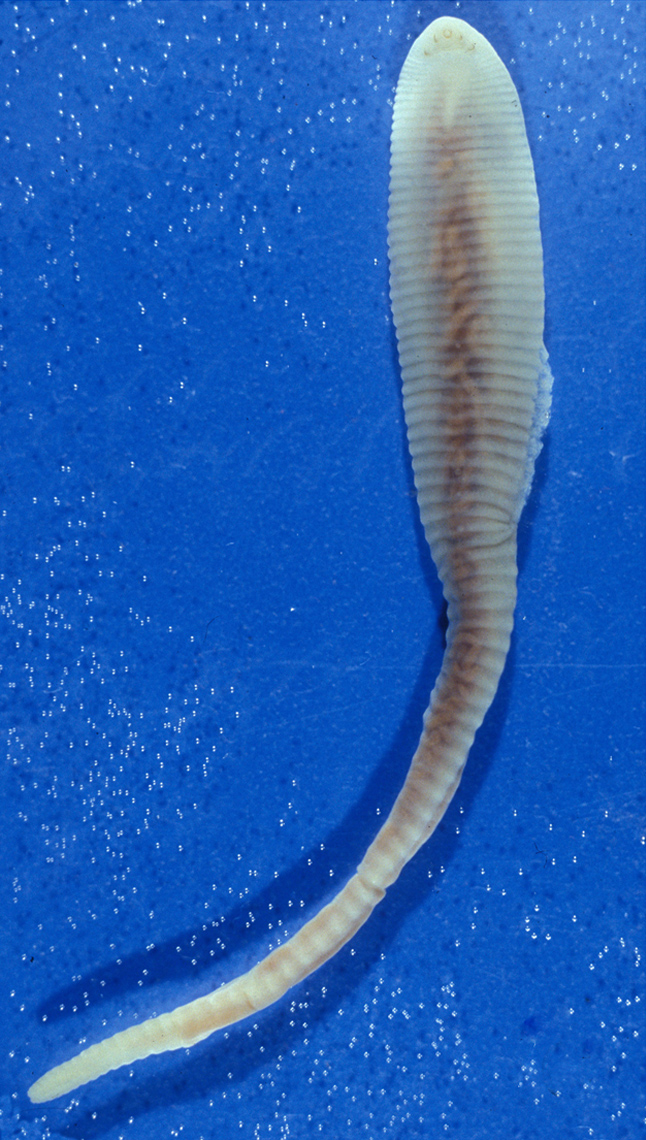
Adult female Linguatula serrata
Scientific classification Edit this classification
Kingdom: Animalia
Phylum: Arthropoda
Class: Ichthyostraca
Subclass: Pentastomida
Diesing, 1836
Orders

see text

Synonyms
  • Pentastomata
  • Linguatulida

The Pentastomida are an enigmatic group of parasitic arthropods commonly known as tongue worms due to the resemblance of the species of the genus Linguatula to a vertebrate tongue; molecular studies point to them being highly derived crustaceans.[1]

About 130 species of pentastomids are known; all are obligate parasites with correspondingly degenerate anatomy. Adult tongue worms vary from about 1 to 14 cm (0.4 to 5.5 in) in length and parasitize the respiratory tracts of vertebrates. They have five anterior appendages. One is the mouth; the others are two pairs of hooks, which they use to attach to the host. This arrangement led to their scientific name, meaning "five openings", but although the appendages are similar in some species, only one is a mouth.

Taxonomy

[edit]

Historically significant accounts of tongue worm biology and systematics include early work by Josef Aloys Frölich,[2] Alexander von Humboldt,[3] Karl Asmund Rudolphi,[4] Karl Moriz Diesing[5] and Rudolph Leuckart.[6]

Other important summaries have been published by Louis Westenra Sambon,[7] Richard Heymons[8] and John Riley,[9] and a review of their evolutionary relationships with a bibliography up to 1969 was published by J. T. Self.[10]

Affinities

[edit]

The affinities of tongue worms have long proved controversial. Historically, they were initially compared to various groups of parasitic worms. Once the arthropod-like nature of their cuticle was recognized, similarities were drawn with mites,[11] particularly gall mites (Eriophyidae). Although gall mites are much smaller than tongue worms, they also have a long, segmented body and only two pairs of legs. Later work[citation needed] drew comparisons with millipedes and centipedes (Myriapoda), with velvet worms (Onychophora) and water bears (Tardigrada). Some authors[citation needed] interpreted tongue worms as essentially intermediate between annelids and arthropods, while others suggested that they deserved a phylum of their own. Tongue worms grow by moulting, which suggests they belong to Ecdysozoa, while other work has identified the arthropod-like nature of their larvae.[12] In general, the two current alternative interpretations are: pentastomids are highly modified and parasitic crustaceans, probably related to fish lice, or they are an ancient group of stem-arthropods, close to the origins of Arthropoda.

Crustaceans

[edit]

The discovery that tongue worms are crustaceans can be traced back to the work of Pierre-Joseph Van Beneden,[13] who compared them to parasitic copepods. The modern form of this hypothesis dates from Karl Georg Wingstrand's study of sperm morphology,[14] which recognized similarities in sperm structure between tongue worms and fish lice (Argulidae) – a group of maxillopod crustaceans which live as parasites on fish and occasionally amphibians. John Riley and colleagues also offered a detailed justification for the inclusion of the tongue worms among the crustaceans.[15] The fish louse model received significant further support from the molecular work of Lawrence G. Abele and colleagues.[16] A number of subsequent molecular phylogenies have corroborated these results,[17][18][19] and the name Ichthyostraca has been proposed for a (Pentastomida + Branchiura) clade.[20] Thus a number of important standard works and databases on crustaceans now include the pentastomids as members of this group.[21]

Stem-arthropods

[edit]

Critics of the Ichthyostraca classification have pointed out that even parasitic crustaceans can still be recognized as crustaceans based on their larvae; but that tongue worms and their larvae do not express typical characters for Crustacea or even Euarthropoda. An alternative model notes the extremely ancient Cambrian origins of these animals and interprets tongue worms as stem-group arthropods.[22] A 2008 morphological analysis recovered Pentastomida outside the arthropods, as sister group to a clade including nematodes, priapulids and similar ecdysozoan 'worm' groups.[23] Adding fossils, they suggested an extinct animal called Facivermis could be closely related to tongue worms. However it should be stressed that these authors did not explicitly test pentastomid/crustacean relationships.

Fossil record

[edit]

Exceptionally preserved, three-dimensional and phosphatised fossils from the Upper Cambrian Orsten of Sweden[24] and the Cambrian/Ordovician boundary of Canada[25] have been identified as pentastomids. Also one from the Wuluian (middle Cambrian) of Greenland.[26] Five fossil genera have been identified from the Cambrian so far: Aengapentastomum, Boeckelericambria, Dietericambria, Haffnericambria and Heymonsicambria. These fossils suggest that pentastomids evolved very early and raise questions about whether these animals were parasites at this time, and if so, on which hosts. Conodonts (primitive fish) have sometimes been mentioned as possible hosts in this context.[25] A fifth genus, Invavita, is from Silurian-aged marine strata of England: fossil specimens of Invavita are found firmly attached to their ostracod hosts of the species Nymphatelina gravida.[27][28] It possessed a head, a worm-like body, and two pairs of limbs.[29]

Classification

[edit]

There are four extant orders recognized in the subclass Pentastomida:

Description

[edit]

Pentastomids are worm-like animals ranging from 1 to 14 centimetres (0.39 to 5.51 in) in length. The female is larger than the male. The anterior end of the body bears five protuberances, four of which are clawed legs, while the fifth bears the mouth. The body is segmented and covered in a chitinous cuticle. The digestive tract is simple and tubular since the animal feeds entirely on blood, except from genus Linguatula which lives in the nasal cavity of carnivorous mammals where they feed mainly on mucus and dead cells,[30][31] although the mouth is somewhat modified as a muscular pump.[32]

The nervous system is similar to that of other arthropods, including a ventral nerve cord with ganglia in each segment. Although the body contains a haemocoel, no circulatory, respiratory, or excretory organs are present.[32]

Behaviour and ecology

[edit]
Armillifer armillatus from a python

Pentastomids live in the upper respiratory tract of reptiles, birds, and mammals, where they lay eggs. They are gonochoric (having two sexes), and employ internal fertilisation. The eggs are either coughed out by the host or leave the host body through the digestive system. The eggs are then ingested by an intermediate host, which is commonly either a fish or a small herbivorous mammal.[32]

The larva hatches in the intermediate host and breaks through the wall of the intestine. It then forms a cyst in the intermediate host's body. The larva is initially rounded in form, with four or six short legs, but moults several times to achieve the adult form. At least one species, Subtriquetra subtriquetra, has a free-living larva.[33] There is both indirect development with nymphal stages and direct development. The pentastomid reaches the main host when the intermediate host is eaten by the main host, and crawls into the respiratory tract from the oesophagus.[32][34]

Human infestation

[edit]
Extraction of an Armillifer grandis nymph from a human eye

Tongue worms occasionally parasitise humans.[35] While a report exists of Sebekia inducing dermatitis,[36][37] the two genera responsible for most internal human infestation are Linguatula and Armillifer. Visceral pentastomiasis can be caused by Linguatula serrata, Armillifer armillatus, Armillifer moniliformis, Armillifer grandis, and Porocephalus crotali.[38]

Armillifer armillatus Wyman, 1848, a 4 cm individual collected from the respiratory system of a python, Python sebae. Specimen deposited in the Natural History Museum of Berlin.
Female (right) and male (left) Armillifer sp.

The terms associated with infections can vary:

Porocephalus and Armillifer (which are all cylindrical and all inhabit snakes) have much more in common with each other than they do with Linguatula (which is flat and inhabits dogs and wolves).

References

[edit]
[edit]
Revisions and contributorsEdit on WikipediaRead on Wikipedia
from Grokipedia
Pentastomida are obligate endoparasitic crustaceans, commonly referred to as tongue worms, comprising approximately 140 species that inhabit the respiratory tracts and coelomic cavities of vertebrates, primarily reptiles, where they feed on and tissue fluids using a simple tubular gut. These worm-like organisms exhibit a distinctive morphology, including an elongate, annulated, chitinous body ranging from 2 to 130 mm in length, and an anterior bearing a central encircled by two pairs of retractable chitinous hooks for attachment to host tissues. In modern , Pentastomida is recognized as a subclass within the class Ichthyostraca of the sub Crustacea, encompassing four orders (Cephalobaenida, Raillietiellida, Reighardiida, and Porocephalida) and seven families, reflecting their close phylogenetic relationship to branchiurans and other parasitic crustaceans based on molecular and morphological evidence. Previously classified as a separate due to their aberrant features bridging annelids and arthropods, their crustacean affinity has been confirmed through studies of fossil records and , tracing their origins to at least the period over 425 million years ago. The group includes genera such as Linguatula, Armillifer, Raillietiella, and Porocephalus, with concentrated in tropical and subtropical regions. Biologically, pentastomids are dioecious, with females significantly larger than males and capable of producing millions of eggs daily, which are released into the host's environment via after being coughed up from the lungs. Their life cycle is typically indirect, involving intermediate hosts (such as or crustaceans) where eggs hatch into primary larvae that encyst in tissues, followed by ingestion by definitive hosts leading to nymphal development through multiple molts in the lungs until maturity. Definitive hosts are predominantly reptiles (about 90% of species), including snakes, , and crocodilians, though some infect birds, mammals, and rarely amphibians; humans serve as accidental intermediate or dead-end hosts in zoonotic cases like linguatulosis, often acquired through consumption of undercooked or contaminated . Lacking complex organs for circulation, , or respiration, they rely on and host resources, with infections generally in natural hosts but potentially causing respiratory distress, granulomas, or secondary infections in heavy infestations or aberrant hosts.

Introduction

Overview

Pentastomida, commonly known as tongue worms, are a small group of obligate endoparasitic arthropods distinguished by their elongated, worm-like bodies and dioecious reproductive system, primarily inhabiting the respiratory tracts of terrestrial vertebrates such as reptiles, birds, and mammals. These parasites exhibit a , though they are most prevalent in tropical and subtropical regions worldwide, reflecting the habitats of their definitive hosts. Approximately 144 species have been described within this group, organized into about 25 genera across four orders: Cephalobaenida, Raillietiellida, Reighardiida, and Porocephalida. Their ecological role centers on , often involving indirect life cycles with intermediate hosts like arthropods or , though detailed aspects of host interactions vary by species. Unique adaptations for their parasitic lifestyle include annulated, non-segmented bodies equipped with chitinous hooks for attachment and a notable absence of a , relying instead on a hemocoel for distribution. Historically, Pentastomida were debated in classification, with early views placing them between helminths and due to their vermiform appearance, though modern consensus affirms their arthropod affinities.

Historical classification

The pentastomids, commonly known as tongue worms due to the superficial resemblance of species like Linguatula to vertebrate tongues, were first described in the late 18th and early 19th centuries. Johann Friedrich Gmelin and others initially reported specimens from animal hosts, but detailed accounts began with Johann Hermann Müller in 1789, who described from the nasal passages of a , noting its worm-like form and hooks. Subsequent discoveries included Alexander von Humboldt's 1812 naming of Porocephalus crotali from a in , and Karl Asmund Rudolphi's 1812 grouping of these parasites under the name Pentastomum within the trematodes, emphasizing their parasitic lifestyle and annulated body. Early taxonomists such as Johann Gottfried Zeder (1803) and Carl Friedrich Philipp von Siebold further documented species, while (1817) and Karl Moriz Diesing (1836) highlighted their enigmatic morphology, leading to initial placements as a distinct group of worms. Influenced by larval stages that resembled those of annelids in segmentation and development, Diesing proposed the order Acanthotheca in 1835, positioning it between nematodes and trematodes, while Pierre-Joseph van Beneden in 1849 suggested crustacean affinities based on preliminary embryological observations. By 1869, formalized Pentastomida as a separate , reflecting their perceived isolation from other metazoans due to unique features like the five frontal appendages. In the early , taxonomic debates intensified with proposals linking pentastomids to . Louis Westenra Sambon, building on earlier work by Paulin Dominique Vaney and Sambon (1910), argued in 1922 for affinities, citing shared traits such as striated muscles and organization; he divided the group into subfamilies like Linguatulinae and Porocephalinae to reflect these connections. This view contrasted with persistent classifications as a class of helminths, as advocated by researchers like Friedrich Leuckart (1860), who had noted larval resemblances to mites but still grouped adults with worms. Sambon's framework marked a pivotal shift, influencing later revisions by Heymons (1935, 1941), though the exact subgroup remained unclear. Mid-20th-century discussions centered on embryological evidence, fueling debates over helminth versus status. Karl Haffner (1924) examined developmental patterns, revealing arthropod-like segmentation, while Rudolf Leuckart's earlier (1860) and Thomas Spencer Cobbold's (1864) observations of larval similarities were revisited alongside parallels in formation. Gerhard Osche (1963) and Jean-Francois Doucet (1965) supported arthropod ties through comparative , noting resemblances to s in appendage development, yet some, like Jean-Marie Nicoli (1963), emphasized helminth-like traits in egg structure. Karl Georg Wingstrand's 1972 study on Armillifer further highlighted crustacean affinities in limb bud formation, but unresolved discrepancies kept pentastomids as a debated class or through the and . The late 20th century saw a consensus emerge through ultrastructural analyses, integrating pentastomids as a within Arthropoda. John T. Riley and colleagues (1978) used electron microscopy to demonstrate arthropod-like composition and sensory structures, while Waltraud Böckeler (1984) detailed muscle and ultrastructure aligning with crustaceans. Volker Storch's 1993 review synthesized these findings with embryological data, confirming shared apomorphies like chitinous and tritocerebrum, solidifying the arthropod placement by the and .

Taxonomy and evolution

Current classification

Pentastomida is classified as a subclass within the class Ichthyostraca of the subphylum Crustacea, phylum Arthropoda, based on morphological and molecular evidence integrating them with other parasitic crustaceans like Branchiura. Some classifications recognize four orders (Cephalobaenida, Raillietiellida, Reighardiida, and Porocephalida), while others consolidate into two (Cephalobaenida and Porocephalida). The subclass comprises four orders: Cephalobaenida, which includes marine parasites primarily infecting ; Porocephalida, encompassing terrestrial and freshwater parasites of reptiles, birds, and mammals; Raillietiellida, featuring parasites of reptiles and amphibians; and Reighardiida, consisting of parasites. These orders contain seven families in total: Cephalobaenidae in Cephalobaenida; Raillietiellidae in Raillietiellida; Reighardiidae in Reighardiida; and four families in Porocephalida—Sebekidae (parasites of crocodilians and ), Subtriquetidae, Porocephalidae (including the Linguatula with species like L. serrata in reptiles and mammals), and Sambonidae. Approximately 16 genera and 130 extant species are recognized across these families, reflecting updates from the foundational monograph by Christoffersen (1987) and nomenclature revisions. Integrative taxonomic studies in the 2020s have refined this hierarchy using molecular markers, including 18S rRNA for confirming crustacean placement and COI/28S rDNA for resolving species boundaries, such as in the diverse genus Raillietiella within Raillietiellidae.

Phylogenetic affinities

The phylogenetic affinities of Pentastomida have long been debated, with early classifications placing them as a separate due to their highly modified, vermiform morphology adapted to endoparasitism. However, embryological and molecular evidence consistently supports their inclusion within Arthropoda, specifically as highly derived members of the , closely related to s. Developmental studies reveal that pentastomid primary larvae exhibit arthropod characteristics, including a nauplius-like form with median naupliar eye, three pairs of appendages, and a , mirroring the free-living nauplius larvae of basal s and indicating a crustacean heritage despite parasitic simplifications. Molecular phylogenies have solidified this placement, with seminal analyses using genes demonstrating Pentastomida as sister to Branchiura (fish lice), forming the Ichthyostraca within Oligostraca. Early work employing 18S rRNA sequences positioned Pentastomida within Crustacea, adjacent to branchiurans like , based on shared genetic signatures amid morphological . Subsequent multi-locus studies incorporating 28S rDNA, elongation factors, and reinforced this, recovering Pentastomida + Branchiura with high support as the basal-most pancrustacean lineage. The phylogenomic analysis of Regier et al. (2010), utilizing over 41 kb of nuclear protein-coding sequences from 62 genes across 75 species, provided robust Bayesian and maximum-likelihood support for this topology, estimating pentastomid around 500 million years ago in the . Recent molecular investigations, including those from the 2020s using 28S rDNA, continue to affirm the affiliation while resolving finer relationships within Pentastomida. For instance, a 2023 phylogenomic study across , analyzing hundreds of genes, upheld Ichthyostraca monophyly and Pentastomida's position as a derived group, emphasizing the role of long-branch attraction in past morphological misplacements. In Neotropical contexts, 2025 analyses of species like Raillietiella gigliolii from amphisbaenian hosts integrated 18S, 28S rDNA, and COI sequences to confirm their embedding within the raillietiellid of Pentastomida, aligning with broader phylogenies and highlighting regional without altering higher-level affinities. These studies underscore the stability of molecular evidence despite limited sampling for pentastomids. Parasitic adaptations, such as the reduction or loss of appendages, segmentation, and sensory structures, have fueled arguments for a stem- status, positing Pentastomida as a relictual lineage predating modern diversification. This view posits that their morphology reflects an ancient, generalized form altered by , potentially bridging to non- groups like annelids or nematoids in some morphological phylogenies. However, comprehensive molecular datasets reject this, favoring an interpretation of extensive convergence and reduction within a derived position, with Ichthyostraca representing specialized ecto- and of aquatic and terrestrial vertebrates. Ongoing debates center on whether Pentastomida constitute a distinct class or a suborder-level lineage, but the consensus from high-impact phylogenomic work prioritizes their integration into Arthropoda over separate status.

Fossil record

The fossil record of Pentastomida is notably sparse, reflecting their soft-bodied morphology and predominantly endoparasitic lifestyle, which hinders preservation outside exceptional Lagerstätten. The oldest known specimens are stem-group pentastomids from the early middle (Wuliuan Stage, approximately 508 million years ago) of , represented by Dietericambria hensoniensis, which exhibits an annulated trunk, paired frontal appendages, and limb vestiges suggestive of early organization. These fossils indicate that pentastomids originated as free-living or ectoparasitic marine arthropods, potentially bridging basal pancrustacean forms to later parasitic lineages. Additional early records include juvenile pentastomids from the late of , such as Oelandocaris-like forms with ontogenetic series showing progressive simplification of appendages, and from the Cambrian-Ordovician boundary in Newfoundland (Heymonsicambria taylori), preserving trunk limb vestiges and anal structures. A significant advance came with the discovery of the first adult pentastomid, Invavita piratica, from the mid-Silurian (approximately 425 million years ago) in , preserved in association with its ostracod host Nymphatelina gravida. This specimen, about 1-4 mm long, features a head with five elongate projections and an annulated, tapering trunk, attached externally to the host and internally near eggs, confirming ectoparasitism on marine crustacean-like invertebrates. These fossils collectively portray pentastomids as stem-group forms with crustacean-like segmental and features, evolving toward concurrent with early diversification. Post- records remain limited. The scarcity of fossils stems from the group's degeneration of hard parts and confinement to vertebrate hosts after the Paleozoic, making identification challenging without exceptional preservation like volcanic ash deposits or resin entrapment. Recent re-evaluations in the 2020s, including high-resolution imaging of Cambrian and Silurian specimens, reinforce their affinity to crustaceans by revealing subtle sclerotized elements and ontogenetic patterns akin to branchiuran or cephalocarid ancestors, filling gaps between free-living arthropods and obligate parasites. This paleontological evidence aligns with molecular phylogenies placing Pentastomida as highly derived crustaceans, though the record highlights major evolutionary transitions obscured by taphonomic biases.

Morphology

External structure

Pentastomida exhibit an elongated, vermiform body that is annulated, resembling rings due to the external segmentation of the , though lacking true segmentation. The body is bilaterally symmetrical, rounded in cross-section, and tapers at both ends, with adults typically measuring 2 to 130 mm in length, though some species reach up to 16 cm. This annulated provides flexibility and aids in movement within the host's respiratory passages. At the anterior end, adults possess a rounded without a distinct head or true appendages, featuring five protuberances: a central and two pairs of sclerotized, retractable hooks arranged laterally. These hooks, controlled by protractor and retractor muscles, serve as primary attachment structures, embedding into the host's respiratory mucosa to anchor the parasite against ciliary action and . The is a small, ventral, sucking-type orifice lacking jaws, permanently held open by a sclerotized cadre that forms a circular, ovoid, or U-shaped frame, facilitating hematophagous feeding on host blood. Larval stages display distinct external features adapted for host penetration and migration. The primary larva, which hatches from the egg, is ovoid and measures approximately 150 μm in length, with two pairs of unsegmented, ventrally curved limbs, each bearing a pair of terminal, chitinized hooks for locomotion and attachment. It also possesses a bifurcate, furca-like tail with terminal spines and bristles, along with dorsolateral penetration spines and a dorso-anterior stylet apparatus to burrow through host tissues. Secondary larval stages, or infective nymphs, retain annulated bodies but lose the limbs, developing a more streamlined form with double hooks (featuring dorsal accessory pieces) and fringed annuli for encystment in intermediate hosts. Sexual dimorphism is pronounced in adults, with females generally larger and stouter, often exceeding males in length by a factor of two or more, while males are more slender and equipped with copulatory spicules for . This size difference correlates with the females' greater reproductive capacity, housing numerous eggs within their expanded bodies.

Internal anatomy

The internal anatomy of Pentastomida exhibits significant reductions and simplifications consistent with their endoparasitic lifestyle, relying heavily on host resources for , respiration, and waste management. The digestive tract is a straightforward, tubular structure adapted for hematophagous feeding, consisting of a , a short for , and a brief posterior intestine terminating in an , with no distinct present. Various glands discharge enzymes into the buccal cavity and . The features two chitinous plates functioning as a pump to draw in host blood and tissue fluids. Pentastomida lack dedicated circulatory and respiratory systems, instead utilizing a hemocoel filled with hemolymph for nutrient distribution via diffusion and body movements, with no heart or vessels to facilitate active circulation. Gas exchange occurs passively through the thin body wall and cuticle, supplemented by their position within the host's respiratory tract, such as lungs or air sacs. The is arthropod-like and centralized, comprising a () and subesophageal ganglia that fuse into a ventral nerve cord with segmental ganglia innervating sensory organs, hooks, and musculature. This setup supports basic sensory functions, including chemoreception via anterior sensilla and mechanoreceptors for detecting host movements, essential for host attachment and . Excretion occurs primarily through across the body wall, with additional osmoregulatory roles played by tegumental cells and absorption in some taxa. Reproductive organs are dioecious and sexually dimorphic, with paired gonads in both sexes: males possess one or two tubular testes extending the body length, connected to and ejaculatory ducts, while females have a paired or divided producing yolked ova that support direct embryonic development within the shell prior to hatching as larvae. In females, the bifurcates into oviducts that join a coiled uterus capable of storing millions of , filled with ingesta in gravid individuals as observed in species like .

Life cycle

Reproductive biology

Pentastomids are dioecious parasites, exhibiting pronounced where females are significantly larger than males, often reaching lengths of several centimeters while males are typically under 2 cm. Males are more mobile and agile, facilitating mate location within the confined spaces of the host's . Mating occurs exclusively in the lungs or respiratory passages of the definitive host, where adults reside as . Fertilization is internal, achieved through the male's paired copulatory spicules, which are sclerotized structures used to transfer spermatophores or directly inseminate the female. Females typically mate only once in their lifetime, storing viable in a for prolonged use, allowing continuous fertilization over their reproductive period. This single event underscores the males' polygamous , as they can inseminate multiple females. Following fertilization, females produce thick-shelled, fully embryonated eggs containing developed primary larvae, which are resistant to environmental and aid in transmission. These eggs are released via the host's (in species inhabiting the lungs) or nasal secretions and (in nasopharyngeal species like ). is remarkably high, with females capable of producing several million eggs daily over their lifespan, which can extend up to 10 years in some species.

Developmental stages and hosts

Pentastomida exhibit an indirect, heteroxenous life cycle requiring at least one intermediate host and a definitive host to complete development from to sexually mature adult. The cycle begins with that are fully embryonated upon release, containing a primary , and are typically passed in the or expelled orally from the definitive host. These are infective when ingested by suitable intermediate hosts, such as , , or , where the primary hatches in the gut and migrates to various tissues, including the , liver, or lungs, before encysting. After encystment, the primary larva undergoes molting to develop into a secondary larva or , which is the infective stage for the definitive host. The secondary larva or remains encysted in the tissues of the intermediate host until the intermediate host is consumed by the definitive host, at which point it excysts, penetrates the intestinal wall of the definitive host, and migrates to the to continue development. In some , the cycle involves two intermediate hosts, with the first (often an like a or ) harboring the primary , which then infects a second intermediate (e.g., a or ) before reaching the definitive host. Definitive hosts are predominantly reptiles, accounting for approximately 90% of known , though mammals and birds can also serve in this role depending on the pentastomid taxon. For example, in the Cephalobaenida order, such as species of Raillietiella, act as intermediate hosts where larvae develop, before geckos or other reptiles ingest them as definitive hosts. In contrast, Linguatula serrata (Linguatulida) uses canids as definitive hosts and herbivores like or as intermediates, with nymphs encysting in visceral organs. Recent studies from 2023–2024 have further elucidated the L. serrata cycle, confirming that eggs are ingested by herbivores via contaminated forage, leading to larval migration and encystment in tissues like the liver and mesenteric lymph nodes, emphasizing the role of predator-prey dynamics in transmission. As of 2025, studies have confirmed anurans and as intermediate hosts for certain Raillietiella species and detailed the indirect life cycle of the invasive R. orientalis involving coprophagous . The overall development from to spans months to years, influenced by host availability and environmental factors; for instance, larvae may become infective in 30–40 days within intermediates, while maturation in the definitive host requires 6–7 months. This prolonged timeline allows pentastomids to persist in encysted forms until suitable definitive hosts are encountered.

Ecology

Host specificity and transmission

Pentastomids exhibit a high degree of host specificity, with approximately 90% of species using reptiles as definitive hosts, where adults reside in the and reach . These definitive hosts include primarily squamates such as snakes and , but also crocodilians and chelonians, alongside a smaller proportion in birds (two genera) and mammals (one genus, such as canids and felids). Infection in definitive hosts occurs through the ingestion of infective third-stage larvae (nymphs) encapsulated in the tissues of intermediate hosts, which are consumed as part of the predator-prey dynamics central to their life cycle. Intermediate hosts for pentastomids encompass a range of invertebrates, including coprophagous insects like and beetles, as well as small vertebrates such as , amphibians, , and occasionally other reptiles. Upon ingestion of embryonated eggs by these intermediate hosts, primary larvae hatch in the gut, penetrate the intestinal wall, and migrate to various tissues—commonly the viscera, muscles, or lymph nodes—where they encyst and undergo further development through multiple molts to the infective stage. Transmission begins with eggs, containing fully developed primary larvae, being expelled from the definitive host's via or swallowed and passed in , contaminating the environment in a fecal-oral route accessible to intermediate hosts. Predator-prey interactions then facilitate transfer to definitive hosts, with specificity levels varying: many show tight - or family-level fidelity, such as Raillietiella primarily infecting (e.g., R. indica in geckos like Hemidactylus frenatus), while others exhibit broader host ranges across reptile taxa. Host behavior, such as patterns that promote of contaminated prey, and climatic factors like and affecting egg viability in the environment, influence transmission success and specificity. A 2025 molecular study in demonstrated ophidian-specific associations, identifying Porocephalus cf. crotali in Bothrops alternatus and Kiricephalus cf. coarctatus in Erythrolamprus poecilogyrus through 28S rDNA and COI mtDNA sequencing, underscoring genetic markers of host-parasite congruence.

Geographic distribution

Pentastomida exhibit a predominantly tropical and subtropical distribution worldwide, closely correlated with the ranges of their reptilian hosts such as snakes, lizards, and crocodilians. They are most diverse and abundant in regions with warm climates, including the Neotropics of the , sub-Saharan Africa, Southeast Asia, and northern Australia, where over 90% of known species occur. This pattern reflects the parasites' dependence on poikilothermic hosts that thrive in such environments, limiting their presence in cooler areas. In the Americas, particularly the Neotropics, Pentastomida show high diversity, with biodiversity hotspots like the hosting 25 South American species, including Porocephalus crotali in snakes and Sebekia oxycephala in crocodilians and intermediate hosts. Africa features significant endemicity, with species such as Armillifer armillatus (mammals as intermediate hosts) and Sebekia minor in crocodilians across West and East African regions. and also harbor diverse assemblages, exemplified by Raillietiella indica in reptiles from to and Sebekia johnstoni in Australian crocodilians. These distributions underscore regional tied to host availability. Occurrences in temperate zones are rare and sporadic, primarily involving cosmopolitan species like in mammals across and , with low prevalence due to unsuitable host distributions. Pentastomida are effectively absent from polar regions, as the lack of suitable reptilian or compatible vertebrate hosts prevents establishment. Endemic patterns are evident in families like Sebekidae, which parasitize crocodilians globally in tropical wetlands, and Raillietiellidae, largely restricted to lizards in , , and . Human-mediated expansions via the international pet trade have recently introduced Pentastomida to non-endemic areas, including reports of Raillietiella orientalis in snakes imported to during the 2020s and in dogs from to in 2023. These cases highlight emerging risks in temperate regions like , where imported reptiles facilitate parasite establishment beyond traditional tropical ranges.

Zoonotic and veterinary significance

Impact on wildlife

Pentastomids primarily infect the respiratory tracts of reptiles, birds, and mammals, where heavy can lead to significant pathological effects in non-human hosts. In reptiles, the most common definitive hosts, adult pentastomids attach to tissues and feed on blood from beds, causing localized , pulmonary congestion, , and hemorrhage. Respiratory obstruction occurs when large numbers of parasites block airways, potentially leading to compromised breathing and secondary bacterial or fungal infections in the . may develop due to the hematophagous feeding habits of the parasites, particularly in cases of intense , though it is often not clinically severe even in heavily infected individuals. Lesions from attachment sites can puncture tissue, exacerbating damage and facilitating secondary septicemia, which contributes to overall host debilitation. These pathological changes translate to broader host impacts, particularly in reptiles where pentastomids reduce host fitness through chronic lung damage and impaired respiratory function. For example, in such as skinks and monitors, infestations lead to decreased activity levels, , and weakened immune responses, as observed in cases of Bosc's monitor lizards exhibiting respiratory distress and lethargy. Mortality is rare in natural settings but can occur in severe cases or when secondary infections overwhelm the host, with larval and adult stages both capable of causing fatal outcomes in intermediate and definitive hosts. In birds, which serve as occasional definitive or intermediate hosts, similar respiratory can impair flight and , further diminishing fitness. Ecologically, pentastomids play a role in parasite-mediated regulation of host populations by exerting density-dependent pressures that limit in communities. Their host specificity and patterns make them potential indicators of , as comprehensive host-parasite records reflect the diversity and health of affected ecosystems. In veterinary contexts, pentastomiasis poses concerns for captive reptiles and birds in zoos and private collections, where imported wild-caught animals often introduce infections leading to clinical disease. Treatment typically involves administered orally at doses such as 200 μg/kg weekly, which has proven effective in eliminating adult pentastomids without notable side effects in domesticated reptiles. A recent study in highlighted the effects of pentastomid infections on populations, with Raillietiella spp. infecting over 70% of berber skinks (Eumeces schneiderii) in high-altitude wadis of province, where pulmonary migration of larvae contributed to respiratory and potential population-level fitness reductions.

Human infestation

Human pentastomiasis is a rare zoonotic infection in which humans act as accidental intermediate hosts for the larval nymphs of pentastomes, leading to either nasopharyngeal or visceral forms of the disease. The condition, also termed linguatulosis or porocephalosis, arises from ingestion of infective stages and is most prevalent in regions where cultural practices involve consuming raw animal products. While often subclinical, symptomatic cases can mimic other parasitic or inflammatory conditions, complicating recognition in clinical settings. The primary causative agents are , responsible for the nasopharyngeal form, and species of Armillifer (notably A. armillatus and A. moniliformis), which predominantly cause visceral pentastomiasis. Over 90% of documented cases involve these species, with nymphs migrating to the nasopharynx, viscera, or occasionally other sites like the eyes or lungs after . L. serrata nymphs are typically acquired from infected herbivores such as goats or camels, while Armillifer nymphs originate from reptilian hosts like snakes. Transmission occurs mainly through the of raw or undercooked viscera containing encysted nymphs, a practice common in endemic areas where from sheep, goats, or snakes is consumed without proper cooking. Additional routes include contaminated , , or direct contact with eggs shed in the or respiratory secretions of definitive hosts—dogs and other carnivores for L. serrata, and for Armillifer. In high-risk regions, such as the and , dietary habits like eating uncooked liver or snake meat facilitate spread, with humans serving as dead-end hosts since adult pentastomes do not develop in them. Most infections remain , discovered incidentally during autopsies or for unrelated issues, but symptomatic cases depend on location and burden. Nasopharyngeal L. serrata infestations cause halzoun syndrome, featuring acute throat pain, , coughing, sneezing, nasal discharge, hoarseness, and occasionally or due to mucosal and migration. Visceral Armillifer infections may present with , fever, , , or hepatic issues; heavy burdens can lead to severe complications like , , or . Rare ocular migrations result in eye or vision impairment. Diagnosis is often delayed due to nonspecific symptoms and low clinician awareness, particularly in non-endemic areas. It relies on patient travel history from endemic zones, imaging such as CT or MRI revealing characteristic calcified, horseshoe-shaped cysts, or direct visualization and morphological identification of nymphs via , , or . Serological assays exist but are not widely available, and molecular methods like PCR provide confirmatory identification when feasible. In immigrants, routine screening for parasitic zoonoses can aid early detection. Globally, fewer than 100 well-documented human cases have been reported, primarily from systematic reviews, though underreporting is likely in endemic settings. Incidence appears to be rising in developed countries due to increased detections among immigrants and refugees from high-prevalence areas, attributed to migration from the (e.g., ), , and . For instance, L. serrata cases are noted in eight Iranian provinces, while Armillifer predominates in African autopsy series. As of 2025, pentastomiasis is increasingly documented in , with ten formal cases reported, and recognized as an emerging zoonotic threat in due to underreporting and cultural practices. Treatment is conservative for asymptomatic individuals, as spontaneous expulsion or calcification of nymphs often occurs without intervention. Symptomatic nasopharyngeal cases involve endoscopic or forceps removal of parasites, coupled with antihistamines or analgesics for relief. Visceral infestations may require surgical excision of cysts in severe or obstructive cases, though antiparasitics like or thiabendazole are sometimes trialed despite unproven efficacy against nymphs. Mortality is low, around 5-12% in symptomatic Armillifer series, mainly from secondary infections. Prevention emphasizes behavioral changes in endemic regions, including thorough cooking of animal viscera and offal to kill nymphs, avoiding raw meat consumption, and handwashing after handling potentially contaminated materials like snake skins or dog feces. Public health education campaigns in the Middle East and Asia target at-risk populations, promoting hygiene and safe food preparation to reduce transmission. In non-endemic areas, heightened clinician awareness for immigrant patients facilitates prevention through targeted screening.

References

Add your contribution
Related Hubs
User Avatar
No comments yet.