Hubbry Logo
Piaroa peoplePiaroa peopleMain
Open search
Piaroa people
Community hub
Piaroa people
logo
8 pages, 0 posts
0 subscribers
Be the first to start a discussion here.
Piaroa people
Piaroa people
from Wikipedia

Key Information

The Piaroa people, known among themselves as the Huottüja or De'aruhua, are a South American indigenous ethnic group of the middle Orinoco Basin in present-day Colombia and Venezuela, living in an area larger than Belgium, roughly circumscribed by the Suapure, Parguaza (north), the Ventuari (south-east), the Manapiare (north-east) and the right bank of the Orinoco (west). Their present-day population is about 15,000 (INE 2002), with an estimated 2,500 living on the left bank of the Orinoco River, in Colombia, in several reservations between the Vichada (north) and the Guaviare (south).[3]

Since the Piaroa (Huottüja or De'aruhua) were discovered by missionaries and explorers around 1780[4] they have been an autonomous society with many individual small self-governed villages scattered over a very wide area. Ethnologists and linguists from the 18th century misidentified the Huottuja as three different tribes belonging to the Saliban family, the Ature, Piaroa, and Quàqua, in actuality were three different regional dialects of the same Piaroa ethnic group from the north, center and south.[5]

In recent years populations living within the traditional territory began to reclaim their cultural heritage and sovereignty by designating official leaders, establishing an admiralty court (tribunal), creating laws that protect their environment, and mapping their villages, rivers, creeks, trails, cemeteries, mountains, valleys, monuments, protected areas, community centers, and conucos (familiar garden patches) in their own language and in Spanish. Under pressure of unlawful incursions into their territory during 2016 through 2019 in the North, South and West by ex-FARC and ELN guerrilla groups from Colombia engaged in illicit activities such as mining and deforestation and due to the failure of the national government under the Venezuelan Constitution, Chapter VIII: Rights of Native People to protect their people or defend their territory, the Piaroa established a Special Indigenous Legal Jurisdiction[6] which includes all of their people that live in the original territory and the traditional sovereign territory. In 2020, Piaroa living on the Catañiapo River successfully and peacefully removed over 200 armed Colombian non-state actors and called an assembly of indigenous jurisdiction officials.[7]

Name

[edit]

Piaroa is a term of unknown origin (probably Latin) which became the name of the language and thus the common name (exonym) for the Huottüja De'aruhua people. The ethnic group officially refers to themselves the "Huottüja" (English spelling) some, mostly men are also known as De'aruwa or De'aruhua (masters of the forest). In their language the Uwottüja, Huottöja, or Wothuha means "knowledgeable people of the forest", usually spelled Huǫttųją (NTM spelling) and Wötʰïhä (IPA spelling), or De'atʰïhä (guardians of the forest).[3][8]

Territory

[edit]
Piaroa Regional Territory Map
Original Ancestral Territory

Taking advantage of the special laws for the indigenous people of Venezuela introduced in 2004,[9] the Colombian Constitution of 1991 and the United Nations Declaration on the Rights of Indigenous Peoples in 2007, the Piaroa declared their autonomy and sovereign status by creating a special legal jurisdiction and a court under their rights to self-determination as indigenous peoples in 2020.[10] The Piaroa originally occupied an area of approximately 33,000 square kilometers, an area that has been acknowledged by the Venezuelan governments since the 1990s.[5] Under pressure by armed non-state actors, illegal gold mining, and other unlawful occupation of their territory, with the lack of protection from the government or military, prompted several organizations formed by the Piaroa and other indigenous rights advocates to take steps to form a multi-faceted autonomous governmental body around their special legal jurisdiction to defend their homes, families, and ecologies from invasion or abuse.[11]

Society

[edit]

Seeing competition as spiritually evil and lauding cooperation, the Piaroa are both strongly egalitarian and supportive of individual autonomy, each community is independently led and often cooperate therebetween.[12] The Piaroa are also strongly anti-authoritarian and opposed to the hoarding of resources, which they see as giving members the power to constrain their freedom.[12] The Huottüja emulate humility, pacifism, and positive moral values; the Piaroa are monogamous and rarely separate or divorce.

Despite sometimes being described as one of the world's most peaceful societies,[12] modern anthropologists report that the relations of Piaroa with neighbouring tribes are actually "unfriendly, marked by physical or magical warfare".[13] Violent conflict erupted between the Piaroa and the Wæñæpi of the Upper Suapure and Guaviarito regions, with both tribes fighting to control the clay pits of the Guanay valley. Clay from that valley is a valuable commodity, being the best clay for making pottery in the region. Constant warfare also exists between the Huottüja and Caribs, who invaded Piaroa territory from the east in search of captives.[13]

Anthropologist Joanna Overing also notes that social hierarchy is minimal, and that it would be difficult to say any true form of male dominance exists, despite leaders being traditionally male.[12] As a result of the individualism in leadership from community to community, a lack of a central form of governance and equality between the sexes, the Piaroa have been described by some anthropologists as a functioning anarchist society.[12]

Religion

[edit]
Piaroa Headdress
Macaw feather headdress of a Piaroa chief.

The traditional Piaroa religion involves shamanism and is centered around a creator god named Wahari who was said to have incarnated as a tapir. The Huottüja were influenced by religion as early as the late 1700s with the mission in San Fernando de Atabapo, in the 1940s by the Salesians and Jesuits, then by missionaries from the Protestant Evangelical faiths including Baptist and Presbyterian. In 2006, the national Venezuelan government took a negative view of the influence of the New Tribes Missions especially those that were deep in the forests, expelling most foreign Christian missionaries.[5] Over the years about 50% of the Piaroa (once estimated at 80%) have converted to Christianity and the influence of the shamans over local communities have waned leaving the village captain or chief in charge of daily movement, as new generations of Piaroa become more educated, modernized and organized.[14]

The most self-isolated and independent villages living at the heart of the traditional territory on the Upper Cuao, Upper Catañiapo and Upper Parguaza rivers have managed to preserve the culture, customs, heritage and their spirituality with the earth. A resurgence of public interest in Piaroa shamanism and entheogenic plant use is providing positive reinforcement for ayahuasca (yagé) and yopo tourism among the De'aruhua communities. Many Piaroa today acknowledge that the influence of the church, monarchy, politics, and violations of their human rights by the state which began in the middle of the eighteenth century have all distorted their indigenous cosmovision as a people. Piaroa continue to identify themselves as Huottuja first, secondly as Venezuelans or Colombians and third as Christians or non-Christian with great indifference relative to anything except being Piaroa. The indigenous Piaroa do not trust the government in general, those who believe in Christianity or intermarry with other ethnos tend not to associate with the more traditional Piaroa that use shamans, however even Christian Piaroa support ideas, initiatives, projects and programs in solidarity with their people in promoting their original culture, identity and language, including shamanism and mythology.[5]

Economy

[edit]

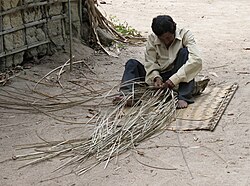
The Piaroa engage in many forms of subsistence farming; those living in rural communities also fish, gather fruit, and hunt for small game. Hunting and gathering is generally not exploited commercially, however fishing and the collection of some fruits are used to supplement or generate income. Since the 1980s the Piaroa have become involved in growing anon, cassava, cocoa, cupuacu, manaca, moriche and other native plants as commercial agroforestry crops. Some also raise cattle, make baskets, string beads, and collect vines (for rattan furniture). Salaried and hourly wage work is also a common among the Piaroa who work in every sector of the economy.[14]

Cocoa harvested by the Piaroa since 2008 has become world-famous based on the efforts of artisan craft chocolate makers in Canada, Germany, France, the United States and Venezuela after being found by cocoa hunters like Castronovo. Nearly 25% of all the traditional Piaroa villages deep in the forests are engaged in growing organic wild grown cocoa today. It is unknown if the wild endemic heirloom variety of cocoa that was first observed by Alexander von Humboldt in 1800 still exists today. The Piaroa from village to village plant all three different cultivars Criollo, Forastero, and Trinitario which are transplanted to the wild to grow under the forest canopy or as a canuco replacement crop to fill the void in the forest that results from cultivating manioc (cassava).

From the 1990 until 2010 ecotourism became a major economic factor among the Piaroa which included students, academic institutions, diplomatic officials, missionaries, non-governmental organizations, researchers and a few perpetual travellers which touched their communities. The Piaroa recognized the potential of tourism in 2004 with the introduction of new laws for indigenous peoples and tourism; but lament in the current state of government affairs in Venezuela as one that does not facilitate their economy, people or tourism which was down 98% in 2015 from 10 years previously.[5]

Language

[edit]

The Piaroa speak Wötʰïhä tivene, or Piaroa language, which belongs to the Saliban language family.[15][16] Because the Piaroa language is a phonetic one, mostly unwritten until the 1930s and phonetically incompatible with Spanish or English sounds, their official alphabet was based on biblical translations developed by the Summer Institute of Linguistics (SIL) in the 1950s, the Huottüja themselves have since developed their own alphabet based on the accepted Latin Language codes ISO 639-3 PID guidelines of the institute, an elementary dictionary and a number of grade school curriculum readers.[17]

References

[edit]
[edit]
Revisions and contributorsEdit on WikipediaRead on Wikipedia
from Grokipedia
The Piaroa are an indigenous ethnic group inhabiting the rainforests east of the Middle Orinoco River in Amazonas State, southern Venezuela, and adjacent areas of Vichada Department, northern Colombia, with a population of approximately 14,000. They speak the Piaroa language, classified within the Saliba-Piaroa linguistic family, and sustain themselves through slash-and-burn horticulture focused on manioc, supplemented by hunting, fishing, and gathering in the tropical forest environment. Central to Piaroa culture are shamanic practices, wherein shamans (shapori) employ hallucinogenic snuffs prepared from seeds of the yopo tree (Anadenanthera peregrina) to facilitate healing, divination, and interaction with spiritual entities, reflecting a worldview integrating biocultural ecology and empirical knowledge of psychoactive plants. Their social organization prioritizes egalitarianism, with decentralized decision-making, minimal leadership hierarchies, and cultural norms emphasizing tranquility and conflict avoidance, adapted to small, kin-based communities. Contemporary Piaroa face pressures from resource extraction, land encroachment, and state policies in Venezuela and Colombia, yet maintain traditional knowledge systems, including ethnoichthyology and homegarden cultivation that enhance biodiversity resilience.

Names and Etymology

Self-Designation and Variants

The Piaroa people designate themselves primarily as De'aruhua or Huottüja, terms that encapsulate their identity as forest inhabitants and knowledgeable guardians of their environment. These endonyms, used consistently in self-representations by community organizations, reflect an intrinsic connection to the Basin's ecosystems, distinguishing them from externally imposed labels. Variants of these self-designations include De'arua, denoting "owners of the ," and Wothuja or Wõthhã, signifying "knowing people" or those with specialized environmental . Additional terms such as De'athhã (" people") and Thhã ("people") appear in ethnographic accounts as contextual self-references, varying by and within the 14,000-strong spanning and . These designations underscore a collective emphasis on ecological mastery rather than hierarchical or territorial exclusivity, with orthographic differences (e.g., Huottüja versus Huottuja) arising from linguistic transcription challenges in non-native scripts. In contrast, "Piaroa" functions as an exonym of obscure colonial-era origin, not employed in internal communal .

Exogenous Names and Historical Usage

The term "Piaroa" serves as the principal exonym for the indigenous group, originating from an undetermined source unrelated to their native lexicon and widely adopted in external ethnographic, linguistic, and administrative references since the colonial era. Its remains speculative, with no verified connection to indigenous languages, though it has persisted as the conventional designation for both the and their language in scholarly literature. During the Spanish colonial period, initial European contacts in the 16th century—driven by quests for gold and other resources in the Orinoco Basin—likely introduced or formalized exogenous nomenclature, though primary accounts from explorers provide limited specific references to group names. By the 19th century, as colonial pressures displaced populations upstream, historical records linked the Piaroa to earlier designations such as "Adole" or "Adoles," potentially denoting floodplain inhabitants who integrated into the group's identity amid encroachment by settlers. Other variant exonyms recorded in mid-20th-century ethnographies include "Ature," "Mako," and "Huo," which may reflect observations by missionaries or anthropologists of subgroups or allied bands in Venezuela and Colombia. These exogenous names facilitated colonial categorization and resource claims, contrasting with the group's internal identifiers and contributing to a standardized external that emphasized their forest-dwelling adaptations rather than autonomous social structures. In post-colonial usage, "Piaroa" dominated anthropological studies, such as those documenting territorial shifts into the , underscoring its role in framing interactions with state authorities and researchers.

History

Pre-Columbian Origins and Early Development

The Piaroa, known to themselves as Wötǔhü or De'aruhwa, trace their ancestral presence to the middle Orinoco River basin in present-day Venezuela and Colombia, where Sáliva-speaking groups—linguistic forebears of the Piaroa—occupied the upper-middle Orinoco region prior to European contact. Archaeological investigations in the Átures Rapids, a key area in Piaroa mythic geography as the birthplace of the sun and culture hero Wahari, reveal preceramic lithic artifacts potentially dating to approximately 9020 BP (uncalibrated), alongside later ceramic occupations featuring Barrancoid, Arauquinoid, Valloid, and Cedeñoid styles, indicating sustained human activity from at least the mid-Holocene. Sites like Culebra and Picure yielded over 2,800 ceramic sherds, thousands of lithics, quartz tools, red ochre features, and exotic stone beads, pointing to a pre-Columbian multi-ethnic trading nexus rather than isolated settlement. Abundant petroglyphs in the Átures region, covering areas exceeding 5 m² with zoomorphic motifs, align with Piaroa oral traditions and suggest cultural continuity, as modern territorial claims by the group invoke these ancestral markers. Monumental , including a 130-foot (40 m) anaconda dated to roughly 2000 years ago, embodies Piaroa cosmology involving primordial beings like Cuämoi, whose daughter Cuähua is mythically tied to engraving the landscape during exile along the . These engravings, concentrated at and confluences, likely served territorial or ritual functions in a landscape of resource-rich interfluvial zones. Early societal development centered on adaptive subsistence in environments, integrating swidden with manioc processing, , , and gathering, as inferred from regional paleoecological patterns and artifactual evidence of tool production for these activities. networks, evidenced by hybrid ceramic traditions and imported materials at rapids sites, facilitated interaction among diverse groups, fostering the egalitarian, village-based structures characteristic of Piaroa precursors without indications of stratification or monumental architecture. While direct genetic or linguistic continuity remains understudied, the persistence of Salivan-speaking peoples in core territories underscores autochthonous development amid broader Amazonian-Orinoco interaction spheres.

Colonial Encounters and Impacts

The Piaroa, inhabiting the interfluvial uplands and sandstone plateaus of the middle , encountered Spanish explorers as early as the , when conquistadors ventured into the region seeking gold and other resources. These initial interactions were sporadic and indirect, as the Piaroa's terrain—characterized by steep escarpments and dense forest—provided natural barriers that deterred sustained European penetration compared to more accessible riverine areas. Historical accounts reflect Piaroa perceptions of as formidable intruders, akin to predatory forces in their cosmology, though direct confrontations were minimal due to the group's strategy of avoidance rather than armed resistance. Unlike neighboring groups such as the Maipure and Atures, who suffered severe depopulation from Spanish missions along the Orinoco River in the 17th and 18th centuries, the Piaroa largely evaded ethnocidal pressures from organized missionary activities and encomienda systems during the core colonial era (roughly 1500–1800). Their peripheral location spared them the forced relocations and labor drafts that decimated lowland populations, though indirect effects included the influx of epidemic diseases like smallpox and measles, to which they lacked immunity, prompting heightened fear and isolationist responses documented in colonial records. By the late 18th century, the Piaroa appear to have incorporated survivors from mission-disrupted communities, blending elements of Saliva-speaking traditions amid broader ethnic mixing in the Orinoco frontier. In the , as Venezuelan and subsequent expanded frontier activities, Piaroa-European contacts intensified through itinerant missionaries, land speculators, and extractive enterprises, leading to cultural impositions such as the coerced adoption of Spanish surnames and Christian given names. These measures, enforced informally by religious agents and later codified in Venezuelan law, marked early encroachments on Piaroa , disrupting traditional naming practices tied to and cosmology without equivalent population collapse seen elsewhere. Overall, colonial impacts on the Piaroa emphasized gradual erosion via transmission and nominal over outright , preserving core social structures but fostering long-term wariness toward outsiders that persisted into the postcolonial period.

20th Century Acculturation and Modern Era

The Piaroa maintained relative isolation from broader Venezuelan and Colombian societies into the mid-20th century, with sustained contact limited primarily to interethnic trade and occasional missionary encounters until the 1940s. Initial sustained interactions with non-indigenous outsiders began around the 1940s, prompting early adaptations in external relations, though epidemics such as measles and malaria in the 1950s accelerated relocations toward accessible riverine areas for medical access provided by services like the Venezuelan Malaria Service. Evangelical missionary activities intensified in the 1950s, particularly through the New Tribes Mission at Tamatama, which converted significant portions of the population and led to proselytization within communities; by the 1970s, approximately 80 percent of Piaroa had adopted , fundamentally altering traditional shamanic practices and customs. Government and Salesian initiatives, including schools at locations like Isla Ratón, introduced education and Western customs to youth, fostering out-migration and frontier expansion into Colombian territories along rivers such as the Mataveni and Zama since the 1950s. In the , economic shifts have emphasized permanent nucleated settlements supported by subsidies for schools and dispensaries, reducing reliance on , gathering, and in favor of cash crops like plantains and bananas, wage labor in urban centers such as , and sporadic gold mining. Adoption of Western goods, including radios and motorized transport via improved roads and airstrips, has integrated communities into market economies, though approximately 5 percent remain isolated in remote watersheds like the upper Cuao-Parguaza-Cataniapo, preserving traditional lifestyles. Social organization has evolved with leadership transitioning to acculturated individuals such as teachers and nurses by the 1980s, culminating in the 1984 Piaroa congress that established a ; rural schools now employ Piaroa educators in over 20 communities. Contemporary challenges include external threats from —prompting protests in 2013 and 2014—and incursions by Colombian guerrillas in 2013, which have strained despite the group's institutionalized aversion to violence through shamanic therapies and mythic narratives emphasizing peace. Preservation efforts, such as initiatives documented in 2012, aim to sustain indigenous crops and services like and amid a population of around 14,000 dispersed across and .

Geography and Demographics

Territorial Distribution

The Piaroa, also known as Huottuja or De'áruwa, traditionally occupy territories in the Orinoco River basin, spanning southern Venezuela and extending into northern Colombia. In Venezuela, their primary settlements are concentrated east of the middle Orinoco River in Amazonas State, with additional presence south of the Orinoco in Bolívar State, amid tropical forests and riverine environments. Geographically, the core of their territory lies on the right bank of the , roughly between 4° to 6° N latitude and 66° to 68° W longitude, bordered by rivers such as the Ventuari and including valleys like the Upper Cuao and Manapiare. This area encompasses over 33,000 square kilometers of the Huottuja-Dearuhua cultural and biodiversity territory, recognized as an international, autonomous zone predominantly within but reaching into since the 1940s. In , Piaroa communities are located in the , particularly within the Resguardo Gran Selva de Matavén indigenous reserve, which includes settlements such as San Luis de Zama and La Urbana. These transborder distributions reflect historical mobility and shared riverine ecosystems, though contemporary pressures from and settlement have influenced settlement patterns in both nations. The Piaroa population in totaled 18,905 according to the 2011 national by the Instituto Nacional de Estadística (INE), representing a substantial increase from prior decades. Earlier enumerations recorded 7,030 individuals in and 11,539 in 1992, reflecting accelerated growth amid broader demographic recovery among lowland indigenous groups in following historical declines from contact-era epidemics and exploitation. Estimates for 2001 placed the Venezuelan Piaroa at approximately 15,000, attributed in part to expanded access to health services that reduced mortality rates from infectious diseases prevalent in remote Amazonian communities. In , where Piaroa communities are concentrated along the border, the population stands at about 773 based on Departamento Administrativo Nacional de Estadística (DANE) data, comprising a minor fraction of the total and showing relative stability without documented surges. Overall trends indicate sustained expansion in through the early , driven by fertility rates exceeding replacement levels and declining , though post-2011 data remain scarce amid national economic disruptions that may have strained indigenous demographics through migration and resource scarcity. No recent censuses provide updated figures, underscoring potential gaps in tracking due to logistical challenges in Piaroa territories.

Environmental Context and Adaptations

The Piaroa inhabit the middle Orinoco Basin in northern Amazonia, spanning forested lowlands and montane areas in Venezuela's Amazonas and Bolívar states and Colombia's Vichada department. This region features tropical rainforest ecosystems with high biodiversity, nutrient-leached soils, and a climate marked by heavy rainfall and humidity conducive to dense vegetation but challenging for sustained agriculture. The Orinoco River and its tributaries provide vital aquatic resources amid savanna-forest mosaics and tepui-influenced highlands. Piaroa adaptations center on swidden (shifting) cultivation, where small forest clearings are burned to plant manioc, plantains, maize, and other crops suited to acidic, low-fertility soils; plots are abandoned after 2-3 years for extended fallow periods allowing natural regeneration. This mobile horticulture prevents soil exhaustion in the oligotrophic environment, integrating with selective forest management to sustain yields. Subsistence is diversified through terrestrial game attracted to swidden edges, in rivers using poisons, nets, and hooks, and gathering products like fruits and palms, reflecting ecological that exploits successional stages. Community relocation every 5-10 years further ensures resource renewal, embodying a low-density land-use strategy calibrated to the basin's .

Language

Linguistic Classification and Features

The Piaroa (ISO 639-3: pid), spoken by the Piaroa people along the and , is classified within the Sáliban , a small isolate group of languages indigenous to the River basin. Within this family, Piaroa forms the Piaroan branch alongside the closely related Wirö language (also termed Maco or Wötihë), with which it shares significant lexical and structural similarities, though Mako—a third Sáliban variety—is sometimes debated as a distinct but affiliated language rather than a Piaroa . This classification reflects comparative linguistic evidence from shared phonological patterns, basic vocabulary, and morphological paradigms, distinguishing Sáliban from neighboring families like Cariban or Chibchan, despite occasional proposals of broader affiliations that lack robust support. Phonologically, Piaroa features a inventory including voiceless stops (/p, t, k/) that exhibit partial adherence to local density neutralization hypotheses, where voicing contrasts weaken in dense stop clusters but persist in other environments, as evidenced by acoustic analyses of spontaneous speech. and processes further characterize its sound system, with limited diphthongs and a reliance on suprasegmental tone or stress for prosodic distinctions, aligning with typological traits of Amazonian languages. Morphologically, Piaroa employs agglutinative strategies in both nominal and verbal domains, with nouns divided into two primary classes based on grammatical —a encoding distinctions between humans/animals and inanimates—that governs marking and agreement beyond simple alienable-inalienable splits. Verbal morphology includes prefixal subject markers showing fusion and portmanteau forms, which have evolved diachronically through reanalysis of earlier auxiliary constructions, as reconstructed from comparative Sáliban data. relies on minor morphological affixes or particles positioned relative to core arguments, without dedicated negative verbs. Syntactically, the favors subject-object-verb in main clauses, with flexible nominal case marking via postpositions and distinctions encoded in verb forms to indicate information source.

Current Status and Vitality

The Piaroa language, spoken primarily by the Piaroa people in the southern and adjacent areas of , has an estimated 12,217 speakers among the population aged three years and older, based on self-reported data from a surveying 12,923 individuals. This figure represents a high rate of proficiency within the ethnic group, though exact totals may vary due to incomplete data from remote communities and cross-border populations. The language is classified as vulnerable under endangerment assessments, indicating that while it remains in use across generations, transmission is not fully robust and faces pressures from dominant languages like Spanish. Vitality is sustained in monolingual indigenous settings but diminishes in areas of greater contact with non-Piaroa populations, where bilingualism in Spanish is common and younger speakers may prioritize the national language for and economic opportunities. Ethnologue designates it as endangered overall, reflecting limited institutional support and the absence of widespread literacy or media in Piaroa, which restricts its use to oral domains such as , rituals, and daily interaction. Intergenerational transmission persists in traditional communities, but urbanization, activities, and resource extraction in ancestral territories pose risks of further attrition. Community-led and academic initiatives, including collaborative projects funded by the Endangered Languages Documentation Programme, aim to record , , and oral narratives to bolster preservation. These efforts involve Piaroa speakers in transcription and translation, supporting cultural revitalization alongside language maintenance, though no formal revitalization programs or have achieved broad adoption as of recent assessments.

Social Structure

Kinship and Community Organization

The Piaroa kinship system is cognatic, tracing descent bilaterally through both parents with a shallow generational depth that allows flexible inclusion of a broad network of relatives. terminology features masculine roots for most terms, which are modified with suffixes such as -a or -hu to denote female counterparts, reflecting a classificatory structure that distinguishes siblings (e.g., chihawa for brothers) and extends to parallel and cross-cousins within ego's generation. This nomenclature emphasizes consanguineal ties while incorporating affines, with a primary distinction between "close kin" (consanguines) and more or to prioritize group cohesion. Marriage practices reinforce within the personal kindred, forming the core of residential units as endogamous cognatic groups that maintain a strong consanguineal base despite affinal influx. —referring to individuals by their child's name rather than their own—serves to perpetuate lineage focus on progeny, preserving the group's internal purity and amid exogamous pressures. Post-marital residence is flexible but often aligns with these kindreds, typically in small, kinship-based hamlets or communal houses housing extended families related through multiple ties. Community organization centers on egalitarian, fluid structures lacking formal hierarchies or centralized , with social cohesion maintained through , personal , and consensus rather than coercive laws or chiefs. Influential ruwang (shamans or knowledgeable elders) provide guidance on disputes and rituals, deriving status from expertise in cosmology and healing rather than inherited power or . Residential groups, comprising 20–50 individuals in dispersed settlements along tributaries, function as self-regulating kindreds where competition is culturally deprecated as spiritually harmful, favoring collective horticultural labor and mutual support. Conflicts are resolved via therapeutic interventions by shamans, emphasizing ethical tranquility over punitive measures, which sustains the group's peaceful ethos.

Gender Roles and Division of Labor

Among the Piaroa, gender roles emphasize complementary cooperation and emotional equilibrium, with both men and women ideally achieving maturity through controlled tranquility and mastery of passions, fostering harmonious interpersonal relations without antagonism or hierarchy. This egalitarian orientation supports individual autonomy in social and productive activities, where coercion is absent and labor participation depends on personal inclination rather than obligation. The division of labor in subsistence activities is distinctly gendered yet interdependent, centered on swidden agriculture, , and gathering in the environment. Men typically clear and burn forest plots to establish new gardens and engage in and to procure , which forms a key component of communal . Women bear primary responsibility for planting, weeding, harvesting, and processing manioc—the staple crop providing approximately 75% of caloric intake—into and other forms, a labor-intensive process that occupies much of their time and ties directly to their prestige and identity. Both genders collect wild fruits, and work parties may be segregated by sex or mixed, underscoring flexibility within the overall complementarity, as a balanced ritually requires both from men's efforts and manioc products from women's. Women leverage manioc cultivation for , exchanging diverse varieties (over 113 documented folk types) as gifts to secure labor alliances and strengthen kin and community ties, infusing economic production with relational meaning beyond mere subsistence. Men's roles extend into domains, with (ruwang practice) predominantly male-led, though women contribute through in curative ceremonies; however, high-level initiations remain rare for women, reflecting subtle asymmetries in spiritual labor despite economic parity. This structure sustains Piaroa resilience in resource-scarce settings, prioritizing mutual dependence over dominance.

Economy and Subsistence

Traditional Practices

The Piaroa traditionally rely on a diversified centered on , supplemented by , , and gathering wild resources. involves clearing plots via slash-and-burn techniques, with fields typically lasting two to three years before fallowing to restore ; this practice supports small-scale adapted to the tropical highland, , and environments of the . The primary crop is bitter cassava (Manihot esculenta), processed into or through grating, pressing to remove toxins, and cooking; women manage cultivation and processing, viewing it as a culturally valued activity intertwined with roles and daily sustenance. Other cultigens include plantains, , and beans, contributing to a staple diet where manioc pairs ideally with hunted meat. Hunting targets peccaries, monkeys, birds, and rodents using blowguns with curare-tipped darts for precision in dense forest, supplemented by lances, snares, pit traps, and deadfall mechanisms; these methods emphasize stealth and knowledge of animal behavior, though shotguns have increasingly supplemented traditional tools since the mid-20th century. Fishing employs hooks, lines, weirs, and ichthiotoxic plants like barbasco (Lonchocarpus spp.) to stun fish in streams and rivers, drawing on detailed local taxonomy of over 100 fish species for sustainable harvest. Gathering provides fruits, nuts, , and tubers from the forest understory, with men and women collecting based on seasonal availability and mobility; this activity buffers against crop shortfalls and integrates with broader ecological knowledge, though it constitutes a smaller caloric share than cultivated or protein sources. Overall, these practices foster self-sufficiency in dispersed communities, with labor divided by —men focusing on hunting and clearing, women on planting and processing—while minimizing environmental depletion through mobility and low-intensity resource use.

Contemporary Economic Shifts

In recent decades, the Piaroa economy has shifted from reliance on , , , and gathering toward greater market integration, including expanded , cash cropping, and wage labor. Hunting and gathering have declined in prominence as permanent crop gardens and livestock raising—such as cattle domestication—have increased, alongside sales of produce in urban centers like . Piaroa communities cultivate and collect underutilized species, including copoazú, seje palm, and peach palm, for local trade in markets where demand often exceeds supply, such as in ; regional, national, and even international outlets (e.g., European demand for tropical fruits rose 40% from 1995 to 2005) hold potential but are limited by inadequate and market failures. This commercialization leverages traditional to generate while sustaining secondary forests, though Venezuelan market conditions tied to oil dependency constrain fuller participation. Wage labor opportunities, including in , have emerged, enabling purchases of Western goods like radios and watches, while community-level initiatives encompass businesses and projects aimed at preventing forest fragmentation. Over 30 Piaroa communities have secured collective land titles from the Venezuelan government, supporting these adaptations amid broader national market expansions since the . Traditional inter- and intra-ethnic trade networks have waned as urban market orientation grows, though indigenous knowledge persists in modified forms without inevitable loss.

Religion and Worldview

Indigenous Cosmology and Mythology

The Piaroa conceive of the as a predatory arena governed by reciprocal exchanges among humans, animals, and divine entities, where life emerges from ongoing struggles against chaos rather than a static . This frames existence as inherently violent yet balanced through ethical restraint and mutual obligations, with shamans accessing cosmological via hallucinogenic to interpret these dynamics. Central to Piaroa mythology is Wahari, the who fashioned animals, humans, and the world but whose efforts were marred by personal failings, such as overindulgence and incomplete mastery over predatory forces, thereby establishing a template for human and shamanic conduct emphasizing moderation and tranquility over excess. Myths recount Wahari's comic misadventures and ethical lapses, including abuses of psychoactive substances, as cautionary narratives that underscore the dangers of unchecked power in a prone to disorder. These stories integrate human-animal transformations and predatory hierarchies, positing that mythic time's unresolved tensions—such as the failure to fully civilize predation—perpetuate the current world's dualities of fertility and decay. Piaroa origin narratives emphasize a transformative process from primordial chaos, involving culture heroes who instituted social norms amid conflicts with animal spirits and rival gods, often resolved through ritual knowledge rather than outright victory. Complementary figures like the Tianawa, conceptualized as non-sensual human-like deities tied to abstract ethical laws, contrast with earthly predators, reinforcing a cosmology where must align with mythic precedents for social viability. These myths, transmitted orally and elaborated in shamanic training, provide interpretive frameworks for navigating illness, predation, and reciprocity, with full narrative mastery reserved for initiates who verify cosmological truths through visionary empiricism.

Shamanism and Ritual Practices

Among the Piaroa, shamans, referred to as shapori or yuhuaruwae, function primarily as healers, diviners, and guardians of social harmony, navigating a cosmology characterized by chaotic spiritual forces through visionary experiences to diagnose illnesses, avert spirit attacks, and promote communal tranquility. These practitioners do not engage in but instead cultivate personal visionary power (miiripa) to translate insights from of consciousness (ASC) into practical guidance, emphasizing emotional mastery and pro-social conduct amid existential violence. Shamanic training commences in , often under familial mentors like fathers, and extends indefinitely as an involving the of curative songs (meye), myths, and techniques for ASC . It is punctuated by three initiatory ordeals conducted at sacred rock sites (rocas): exposure to biting (yandu), wasp stings (piijul), and tongue with a barb (sibari uyuroqu), accompanied by prolonged on manioc flour and , dietary prohibitions against salt, sweets, and spiced foods, and to foster patience, creativity, and resilience. These rites, part of the broader maripa teui process, integrate the novice psychosocially while building märipa—a synthesis of power and knowledge—for recognizing malevolent influences, such as maladjusted behaviors or predatory spirits. Central to practices are psychoactive plants inducing ASC: yopo snuff from seeds for intense visions used in and protection; tobacco () to bridge trance and waking states; and capi vine () to amplify effects, often combined in rituals to access ancestral knowledge or counter contagions from animals. Ethical constraints govern their application, prohibiting harm to others and demanding moderation to avoid madness, with shamans like those observed in 1999–2002 apprenticeships preparing yopo to safeguard families or locate resources while upholding a "law" of non-aggression. Rituals, led by specialists such as meyeruwae (song experts), include communal healings where shamans wield talismans like tusks against spirits and Wahari’s songs—deity-derived incantations—to preempt disease transmission from forest entities. This ethos prioritizes a "good life of tranquillity," instilled from childhood around age six, where shamans model restraint and cooperation to domesticate cosmic disorder, distinguishing ethical practice from paths of destruction or unchecked power enabled by yopo.

Christian Conversion and Syncretism

Christian contact with the Piaroa began in the , when and land barons persuaded or forced many to adopt Spanish surnames and Christian first names, aligning with broader Venezuelan legal impositions on indigenous naming practices. This early influence laid groundwork for partial integration of Christian elements, though traditional animistic beliefs persisted dominantly. Ethnographic accounts indicate that full-scale conversions accelerated in the late , particularly through evangelical Protestant , which emphasized rejection of shamanic practices involving psychoactive plants and spirit invocation. By the early 21st century, approximately 20% of Piaroa in identified as , predominantly evangelical, with ethnic religions comprising the majority at 80%. In , adherence remains low, with evangelicals at 2% or less and overall professing between 5% and 50%, reflecting minimal reach. These conversions have correlated with a decline in shamanic authority, as evangelical teachings often frame traditional shamans and their rituals—such as yopo-induced trances for and cosmology—as incompatible with doctrine, leading to villages where shamans are absent and replaced by evangelical communities. Syncretism appears limited and variable, with identification levels differing across villages; some Piaroa maintain dual allegiances to Christian churches and indigenous deities, while others fully embrace evangelical exclusivity, viewing Piaroa gods as subordinate or illusory. Ongoing efforts, including into Piaroa and curricula as of 2025, aim to deepen evangelical penetration without evident incorporation of shamanic elements. This process reflects causal dynamics of external ideological imposition over indigenous cosmology, where evangelicalism's monotheistic framework displaces poly-spiritual rather than fusing with it, as evidenced by reduced efficacy in converted groups.

Interactions and Conflicts

Relations with Neighboring Groups and States

The Piaroa maintain multifaceted relations with neighboring indigenous groups, characterized historically by , intermarriage, and selective assimilation. Surrounded by Carib-speaking peoples including the Yekuana, Panare, Mapoyo, and Yabarana, as well as Guahibo, , and Arawakan groups such as Piapoco, Puinave, Baniwa, and Bare, they engaged in widespread pre-contact exchanges of goods, cultural practices, and spouses. Close linguistic and genealogical ties exist with the Mako, while post-contact expansion involved absorbing remnants of near-extinct neighbors like the Mapoyo and Yabarana through co-residence. Trade networks highlight the Piaroa's reputation as skilled artisans, particularly in producing high-quality —a paralytic for —exported to other ethnic groups in exchange for items like wax, resins, dyes, baskets, and later Western goods such as tools and fishhooks. Pre-colonial interactions included peaceful with Maipure and Atures peoples but hostilities, including slave raids by Caribs and conflicts with Mako, Yabarana, and Mapoyo. Following European contact, assimilation via intermarriage integrated diverse lineages, with surveys indicating 14% of Piaroa tracing ancestry to Atures or Maipure and 13% to Mako or Yabarana, fostering and territorial expansion. Relations with states have evolved from avoidance to contested integration. In Venezuela, the Piaroa evaded late-17th-century Jesuit missions by retreating into remote forests, limiting early colonial impact. Sustained engagement began in the 1950s with government agents and Salesian/New Tribes missionaries establishing schools and outposts, accelerating Christian conversion (reaching 80% by the 1970s) and infrastructure like roads and airstrips, which spurred downriver migration and population growth from 7,000 in 1982 to 15,000 by 2001 via state welfare services. However, this integration introduced epidemics like measles and malaria, while recent illegal gold mining, guerrilla incursions, and eco-tourism encroachments have provoked conflicts, leading to community-formed territorial guards for autonomy assertion since the 2010s. In , where Piaroa presence expanded binational boundaries since the 1940s and numbers around 2,000, formal legal jurisdiction was granted post-1991 state reorganization, enabling claims. Historical and by Colombian authorities persisted into the , compounded by Venezuelan instability driving migrations to Vichada and Guainía departments as of , straining cross-border dynamics amid unrecognized binational . Organizations like the Huottuja Foundation advocate for over 20,000 Piaroa across 33,000–41,000 km², emphasizing against state and external pressures.

Land Disputes and Resource Threats

The Piaroa territories in the Venezuelan states of Amazonas and Bolívar have experienced escalating land disputes since the mid-2010s, driven by the influx of illegal gold miners and state-sanctioned extraction projects that encroach on their ancestral lands along the River basin. These disputes intensified following the Venezuelan government's 2016 launch of the Orinoco Mining Arc, a development zone spanning 111,000 square kilometers that overlaps with Piaroa habitats and promotes industrial , often leading to and violent confrontations as communities assert territorial control. Ranchers expanding cattle operations along the middle have further exacerbated conflicts, grabbing lands traditionally used for and fishing, which threatens the Piaroa's . Resource threats primarily stem from unregulated , which contaminates waterways with mercury and sediments, disrupting and potable sources critical to Piaroa survival; reports from 2019 documented over 20 ethnic groups, including the Piaroa, affected in Amazonas, with miners frequently issuing death threats to indigenous defenders. non-state actors, such as Colombian guerrillas spilling over borders, add to the by imposing control over sites and extorting communities, as noted in assessments of cross-border threats to Piaroa stability. While and oil exploration pose broader risks in the Amazon, specific incursions into Piaroa areas have been less documented compared to , though from associated indirectly fragments habitats. In response to these pressures, Piaroa communities have established territorial guards since around to monitor borders and deter intruders, reflecting a proactive assertion of amid weak state enforcement of indigenous land demarcations under Venezuelan law. Such measures have occasionally led to clashes, including attacks on miners in 2016 that highlighted the costs of extraction-driven expansion. In , where smaller Piaroa populations reside, armed group territorial disputes have caused displacement, though these are secondary to Venezuelan mining threats.

Self-Defense and Autonomy Assertions

The Piaroa (Huottüja) people emphasize personal and communal autonomy as core values, with individuals and groups asserting the right to self-determination in residence, resource use, and social relations without external coercion. This extends to territorial assertions, where they maintain an autonomous zone spanning Venezuela and Colombia, recognized through organizations like the Huottuja Foundation, which promotes collective rights to ancestral lands for sustainable development. In response to land encroachments, the Piaroa have engaged in defensive actions, notably during a violent dispute from to 1984 over tenure with a wealthy Venezuelan colonist in the middle region, where community members resisted settler expansion through direct confrontation. Following this, the first Piaroa congress in 1984 established a tribewide political body to coordinate land claims and autonomy efforts, marking a shift toward organized territorial defense. Contemporary self-defense includes patrols and blockades against , as seen in 2021 when Piaroa guards affiliated with the Organización Indígena Piaroa del Estado Amazonas (OIPUS) erected barriers along the Sipapo River to halt supply access to and operations, preventing and environmental harm to ancestral territories. These actions, involving around 200 community members, underscore assertions of over lands threatened by extractive industries. Protests against persisted in 2013, with Piaroa leaders publicly opposing proposed operations for endangering lives, ecosystems, and cultural practices, framing such resistance as essential to preserving . In late 2014, Piaroa women demonstrated against violence from miners and Colombian guerrillas, highlighting communal resolve to safeguard territories amid armed incursions. Such efforts align with broader indigenous territorial guard mechanisms in the Venezuelan Amazon, adapted by Piaroa to enforce against state neglect and non-indigenous threats.

References

Add your contribution
Related Hubs
User Avatar
No comments yet.