Hubbry Logo
Thermal sprayingThermal sprayingMain
Open search
Thermal spraying
Community hub
Thermal spraying
logo
8 pages, 0 posts
0 subscribers
Be the first to start a discussion here.
Thermal spraying
Thermal spraying
from Wikipedia
Plasma spraying setup – a variant of thermal spraying
Particle temperature and velocity for different thermal spraying processes[1]

Thermal spraying techniques are coating processes in which melted (or heated) materials are sprayed onto a surface. The "feedstock" (coating precursor) is heated by electrical (plasma or arc) or chemical means (combustion flame).

Thermal spraying can provide thick coatings (approx. thickness range is 20 microns to several mm, depending on the process and feedstock), over a large area at high deposition rate as compared to other coating processes such as electroplating, physical and chemical vapor deposition. Coating materials available for thermal spraying include metals, alloys, ceramics, plastics and composites. They are fed in powder or wire form, heated to a molten or semimolten state and accelerated towards substrates in the form of micrometer-size particles. Combustion or electrical arc discharge is usually used as the source of energy for thermal spraying. Resulting coatings are made by the accumulation of numerous sprayed particles. The surface may not heat up significantly, allowing the coating of flammable substances.

Coating quality is usually assessed by measuring its porosity, oxide content, macro and micro-hardness, bond strength and surface roughness. Generally, the coating quality increases with increasing particle velocities.

Variations

[edit]

Several variations of thermal spraying are distinguished:

  • Plasma spraying
  • Detonation spraying
  • Wire arc spraying
  • Flame spraying
  • High velocity oxy-fuel coating spraying (HVOF)
  • High velocity air fuel (HVAF)
  • Warm spraying
  • Cold spraying
  • Spray and Fuse

In classical (developed between 1910 and 1920) but still widely used processes such as flame spraying and wire arc spraying, the particle velocities are generally low (< 150 m/s), and raw materials must be molten to be deposited. Plasma spraying, developed in the 1970s, uses a high-temperature plasma jet generated by arc discharge with typical temperatures >15,000 K, which makes it possible to spray refractory materials such as oxides, molybdenum, etc.[1]

System overview

[edit]

A typical thermal spray system consists of the following:

  • Spray torch (or spray gun) – the core device performing the melting and acceleration of the particles to be deposited
  • Feeder – for supplying the powder, wire or liquid to the torch through tubes.
  • Media supply – gases or liquids for the generation of the flame or plasma jet, gases for carrying the powder, etc.
  • Robot/Labour – for manipulating the torch or the substrates to be coated
  • Power supply – often standalone for the torch
  • Control console(s) – either integrated or individual for all of the above

Detonation thermal spraying process

[edit]

The detonation gun consists of a long water-cooled barrel with inlet valves for gases and powder. Oxygen and fuel (acetylene most common) are fed into the barrel along with a charge of powder. A spark is used to ignite the gas mixture, and the resulting detonation heats and accelerates the powder to supersonic velocity through the barrel. A pulse of nitrogen is used to purge the barrel after each detonation. This process is repeated many times a second. The high kinetic energy of the hot powder particles on impact with the substrate results in a buildup of a very dense and strong coating. The coating adheres through a mechanical bond resulting from the deformation of the base substrate wrapping around the sprayed particles after the high speed impact.

Plasma spraying

[edit]
Wire flame spraying

In plasma spraying process, the material to be deposited (feedstock) — typically as a powder, sometimes as a liquid,[2] suspension[3] or wire — is introduced into the plasma jet, emanating from a plasma torch. In the jet, where the temperature is on the order of 10,000 K, the material is melted and propelled towards a substrate. There, the molten droplets flatten, rapidly solidify and form a deposit. Commonly, the deposits remain adherent to the substrate as coatings; free-standing parts can also be produced by removing the substrate. There are a large number of technological parameters that influence the interaction of the particles with the plasma jet and the substrate and therefore the deposit properties. These parameters include feedstock type, plasma gas composition and flow rate, energy input, torch offset distance, substrate cooling, etc.

Deposit properties

[edit]

The deposits consist of a multitude of pancake-like 'splats' called lamellae, formed by flattening of the liquid droplets. As the feedstock powders typically have sizes from micrometers to above 100 micrometers, the lamellae have thickness in the micrometer range and lateral dimension from several to hundreds of micrometers. Between these lamellae, there are small voids, such as pores, cracks and regions of incomplete bonding. As a result of this unique structure, the deposits can have properties significantly different from bulk materials. These are generally mechanical properties, such as lower strength and modulus, higher strain tolerance, and lower thermal and electrical conductivity. Also, due to the rapid solidification, metastable phases can be present in the deposits.

Applications

[edit]

This technique is mostly used to produce coatings on structural materials. Such coatings provide protection against high temperatures (for example thermal barrier coatings for exhaust heat management), corrosion, erosion, wear; they can also change the appearance, electrical or tribological properties of the surface, replace worn material, etc. When sprayed on substrates of various shapes and removed, free-standing parts in the form of plates, tubes, shells, etc. can be produced. It can also be used for powder processing (spheroidization, homogenization, modification of chemistry, etc.). In this case, the substrate for deposition is absent and the particles solidify during flight or in a controlled environment (e.g., water). This technique with variation may also be used to create porous structures, suitable for bone ingrowth, as a coating for medical implants. A polymer dispersion aerosol can be injected into the plasma discharge in order to create a grafting of this polymer on to a substrate surface.[3] This application is mainly used to modify the surface chemistry of polymers.

Variations

[edit]

Plasma spraying systems can be categorized by several criteria.

Plasma jet generation:

  • direct current (DC plasma), where the energy is transferred to the plasma jet by a direct current, high-power electric arc
  • induction plasma or RF plasma, where the energy is transferred by induction from a coil around the plasma jet, through which an alternating, radio-frequency current passes

Plasma-forming medium:

  • gas-stabilized plasma (GSP), where the plasma forms from a gas; typically argon, hydrogen, helium or their mixtures
  • water-stabilized plasma (WSP), where plasma forms from water (through evaporation, dissociation and ionization) or other suitable liquid
  • hybrid plasma – with combined gas and liquid stabilization, typically argon and water

Spraying environment:

  • atmospheric plasma spraying (APS), performed in ambient air
  • controlled atmosphere plasma spraying (CAPS), usually performed in a closed chamber, either filled with inert gas or evacuated
  • variations of CAPS: high-pressure plasma spraying (HPPS), low-pressure plasma spraying (LPPS), the extreme case of which is vacuum plasma spraying (VPS, see below)
  • underwater plasma spraying

Another variation consists of having a liquid feedstock instead of a solid powder for melting, this technique is known as Solution precursor plasma spray

Vacuum plasma spraying

[edit]
Vacuum plasma spraying

Vacuum plasma spraying (VPS) is a technology for etching and surface modification to create porous layers with high reproducibility and for cleaning and surface engineering of plastics, rubbers and natural fibers as well as for replacing CFCs for cleaning metal components. This surface engineering can improve properties such as frictional behavior, heat resistance, surface electrical conductivity, lubricity, cohesive strength of films, or dielectric constant, or it can make materials hydrophilic or hydrophobic.

The process typically operates at 39–120 °C to avoid thermal damage. It can induce non-thermally activated surface reactions, causing surface changes which cannot occur with molecular chemistries at atmospheric pressure. Plasma processing is done in a controlled environment inside a sealed chamber at a medium vacuum, around 13–65 Pa. The gas or mixture of gases is energized by an electrical field from DC to microwave frequencies, typically 1–500 W at 50 V. The treated components are usually electrically isolated. The volatile plasma by-products are evacuated from the chamber by the vacuum pump, and if necessary can be neutralized in an exhaust scrubber.

In contrast to molecular chemistry, plasmas employ:

Plasma also generates electromagnetic radiation in the form of vacuum UV photons to penetrate bulk polymers to a depth of about 10 μm. This can cause chain scissions and cross-linking.

Plasmas affect materials at an atomic level. Techniques like X-ray photoelectron spectroscopy and scanning electron microscopy are used for surface analysis to identify the processes required and to judge their effects. As a simple indication of surface energy, and hence adhesion or wettability, often a water droplet contact angle test is used. The lower the contact angle, the higher the surface energy and more hydrophilic the material is.

Changing effects with plasma

[edit]

At higher energies ionization tends to occur more than chemical dissociations. In a typical reactive gas, 1 in 100 molecules form free radicals whereas only 1 in 106 ionizes. The predominant effect here is the forming of free radicals. Ionic effects can predominate with selection of process parameters and if necessary the use of noble gases.

Wire arc spray

[edit]

Wire arc spray is a form of thermal spraying where two consumable metal wires are fed independently into the spray gun. These wires are then charged and an arc is generated between them. The heat from this arc melts the incoming wire, which is then entrained in an air jet from the gun. This entrained molten feedstock is then deposited onto a substrate with the help of compressed air. This process is commonly used for metallic, heavy coatings.[1]

Plasma transferred wire arc

[edit]

Plasma transferred wire arc (PTWA) is another form of wire arc spray which deposits a coating on the internal surface of a cylinder, or on the external surface of a part of any geometry. It is predominantly known for its use in coating the cylinder bores of an engine, enabling the use of Aluminum engine blocks without the need for heavy cast iron sleeves. A single conductive wire is used as "feedstock" for the system. A supersonic plasma jet melts the wire, atomizes it and propels it onto the substrate. The plasma jet is formed by a transferred arc between a non-consumable cathode and the type of a wire. After atomization, forced air transports the stream of molten droplets onto the bore wall. The particles flatten when they impinge on the surface of the substrate, due to the high kinetic energy. The particles rapidly solidify upon contact. The stacked particles make up a high wear resistant coating. The PTWA thermal spray process utilizes a single wire as the feedstock material. All conductive wires up to and including 0.0625 in (1.59 mm) can be used as feedstock material, including "cored" wires. PTWA can be used to apply a coating to the wear surface of engine or transmission components to replace a bushing or bearing. For example, using PTWA to coat the bearing surface of a connecting rod offers a number of benefits including reductions in weight, cost, friction potential, and stress in the connecting rod.

High velocity oxygen fuel spraying (HVOF)

[edit]
HVOF schematic

During the 1980s, a class of thermal spray processes called high velocity oxy-fuel spraying was developed. A mixture of gaseous or liquid fuel and oxygen is fed into a combustion chamber, where they are ignited and combusted continuously. The resultant hot gas at a pressure close to 1 MPa emanates through a converging–diverging nozzle and travels through a straight section. The fuels can be gases (hydrogen, methane, propane, propylene, acetylene, natural gas, etc.) or liquids (kerosene, etc.). The jet velocity at the exit of the barrel (>1000 m/s) exceeds the speed of sound. A powder feed stock is injected into the gas stream, which accelerates the powder up to 800 m/s. The stream of hot gas and powder is directed towards the surface to be coated. The powder partially melts in the stream, and deposits upon the substrate. The resulting coating has low porosity and high bond strength.[1]

HVOF coatings may be as thick as 12 mm (12 in). It is typically used to deposit wear and corrosion resistant coatings on materials, such as ceramic and metallic layers. Common powders include WC-Co, chromium carbide, MCrAlY, and alumina. The process has been most successful for depositing cermet materials (WC–Co, etc.) and other corrosion-resistant alloys (stainless steels, nickel-based alloys, aluminium, hydroxyapatite for medical implants, etc.).[1]

High Velocity Air Fuel (HVAF)

[edit]

HVAF coating technology is the combustion of propane in a compressed air stream. Like HVOF, this produces a uniform high velocity jet. HVAF differs by including a heat baffle to further stabilize the thermal spray mechanisms. Material is injected into the air-fuel stream and coating particles are propelled toward the part.[4] HVAF has a maximum flame temperature of 3,560° to 3,650 °F and an average particle velocity of 3,300 ft/sec. Since the maximum flame temperature is relatively close to the melting point of most spray materials, HVAF results in a more uniform, ductile coating. This also allows for a typical coating thickness of 0.002-0.050". HVAF coatings also have a mechanical bond strength of greater that 12,000 psi. Common HVAF coating materials include, but are not limited to; tungsten carbide, chrome carbide, stainless steel, hastelloy, and inconel. Due to its ductile nature hvaf coatings can help resist cavitation damage.[5]

Spray and Fuse

[edit]

Spray and fuse uses high heat to increase the bond between the thermal spray coating and the substrate of the part. Unlike other types of thermal spray, spray and fuse creates a metallurgical bond between the coating and the surface. This means that instead of relying on friction for coating adhesion, it melds the surface and coating material into one material. Spray and fuse comes down to the difference between adhesion and cohesion.

This process usually involves spraying a powdered material onto the component then following with an acetylene torch. The torch melts the coating material and the top layer of the component material; fusing them together. Due to the high heat of spray and fuse, some heat distortion may occur, and care must be taken to determine if a component is a good candidate. These high temperatures are akin to those used in welding. This metallurgical bond creates an extremely wear and abrasion resistant coating. Spray and fuse delivers the benefits of hardface welding with the ease of thermal spray.[6]

Cold spraying

[edit]
Cold spraying schematic

Cold spraying (or gas dynamic cold spraying) was introduced to the market in the 1990s. The method was originally developed in the Soviet Union – while experimenting with the erosion of the target substrate, which was exposed to a two-phase high-velocity flow of fine powder in a wind tunnel, scientists observed accidental rapid formation of coatings.[1]

In cold spraying, particles are accelerated to very high speeds by the carrier gas forced through a converging–diverging de Laval type nozzle. Upon impact, solid particles with sufficient kinetic energy deform plastically and bond mechanically to the substrate to form a coating. The critical velocity needed to form bonding depends on the material's properties, powder size and temperature. Metals, polymers, ceramics, composite materials and nanocrystalline powders can be deposited using cold spraying.[7] Soft metals such as Cu and Al are best suited for cold spraying, but coating of other materials (W, Ta, Ti, MCrAlY, WC–Co, etc.) by cold spraying has been reported.[1]

The deposition efficiency is typically low for alloy powders, and the window of process parameters and suitable powder sizes is narrow. To accelerate powders to higher velocity, finer powders (<20 micrometers) are used. It is possible to accelerate powder particles to much higher velocity using a processing gas having high speed of sound (helium instead of nitrogen). However, helium is costly and its flow rate, and thus consumption, is higher. To improve acceleration capability, nitrogen gas is heated up to about 900 °C. As a result, deposition efficiency and tensile strength of deposits increase.[1]

Warm spraying

[edit]

Warm spraying is a novel modification of high velocity oxy-fuel spraying, in which the temperature of combustion gas is lowered by mixing nitrogen with the combustion gas, thus bringing the process closer to the cold spraying. The resulting gas contains much water vapor, unreacted hydrocarbons and oxygen, and thus is dirtier than the cold spraying. However, the coating efficiency is higher. On the other hand, lower temperatures of warm spraying reduce melting and chemical reactions of the feed powder, as compared to HVOF. These advantages are especially important for such coating materials as Ti, plastics, and metallic glasses, which rapidly oxidize or deteriorate at high temperatures.[1]

Applications

[edit]
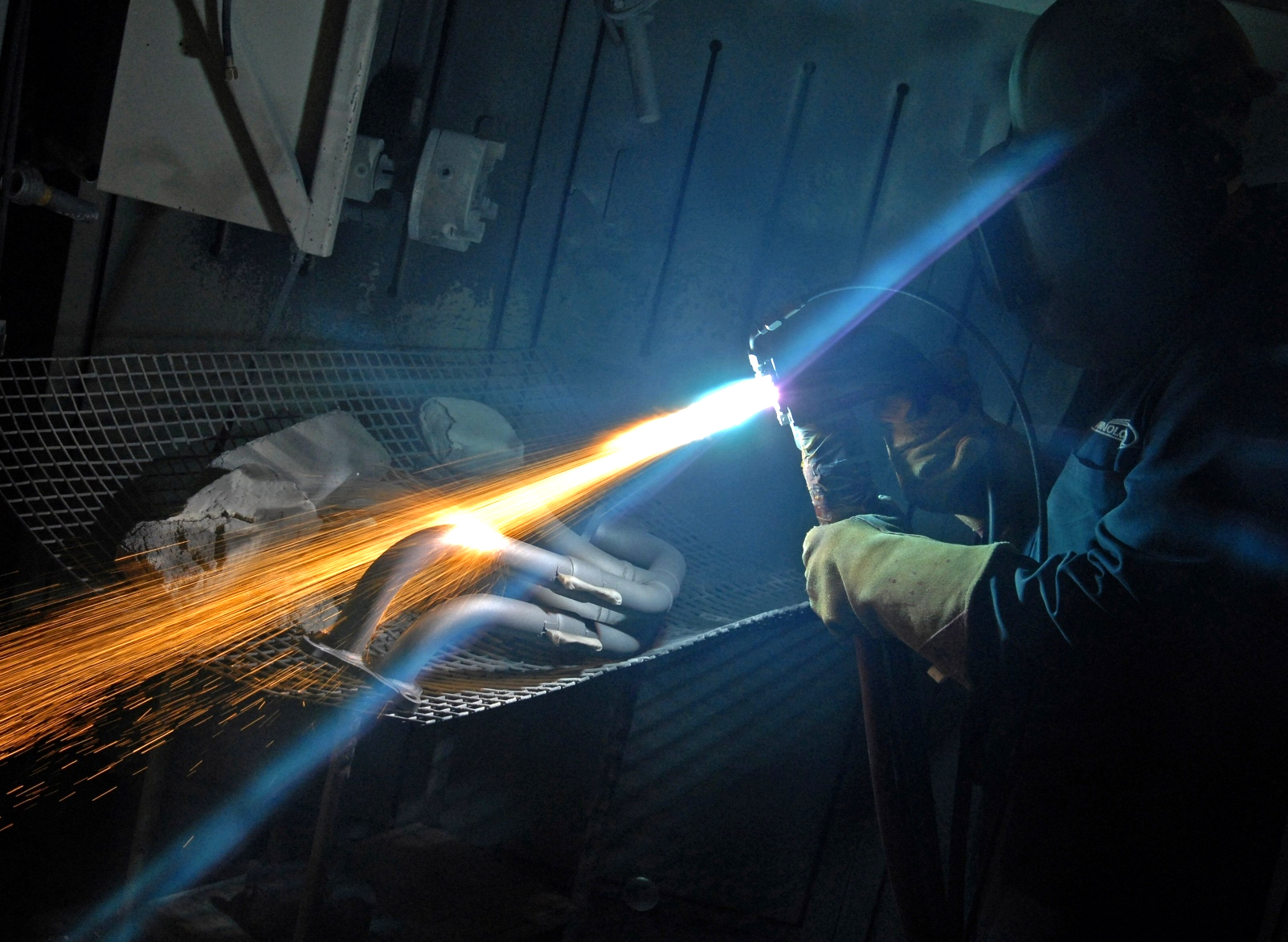
Plasma sprayed ceramic coating applied onto a part of an automotive exhaust system

Limitations

[edit]

Thermal spraying is a line of sight process and the bond mechanism is primarily mechanical. Thermal spray application is not compatible with the substrate if the area to which it is applied is complex or blocked by other bodies.[9]

Safety

[edit]

Thermal spraying need not be a dangerous process if the equipment is treated with care and correct spraying practices are followed. As with any industrial process, there are a number of hazards of which the operator should be aware and against which specific precautions should be taken. Ideally, equipment should be operated automatically in enclosures specially designed to extract fumes, reduce noise levels, and prevent direct viewing of the spraying head. Such techniques will also produce coatings that are more consistent. There are occasions when the type of components being treated, or their low production levels, require manual equipment operation. Under these conditions, a number of hazards peculiar to thermal spraying are experienced in addition to those commonly encountered in production or processing industries.[10][11]

Noise

[edit]

Metal spraying equipment uses compressed gases which create noise. Sound levels vary with the type of spraying equipment, the material being sprayed, and the operating parameters. Typical sound pressure levels are measured at 1 meter behind the arc.[12]

UV light

[edit]

Combustion spraying equipment produces an intense flame, which may have a peak temperature more than 3,100 °C and is very bright. Electric arc spraying produces ultra-violet light which may damage delicate body tissues. Plasma also generates quite a lot of UV radiation, easily burning exposed skin and can also cause "flash burn" to the eyes. Spray booths and enclosures should be fitted with ultra-violet absorbent dark glass. Where this is not possible, operators, and others in the vicinity should wear protective goggles containing BS grade 6 green glass. Opaque screens should be placed around spraying areas. The nozzle of an arc pistol should never be viewed directly unless it is certain that no power is available to the equipment.[10]

Dust and fumes

[edit]

The atomization of molten materials produces a large amount of dust and fumes made up of very fine particles (ca. 80–95% of the particles by number <100 nm).[13] Proper extraction facilities are vital not only for personal safety, but to minimize entrapment of re-frozen particles in the sprayed coatings. The use of respirators fitted with suitable filters is strongly recommended where equipment cannot be isolated.[13] Certain materials offer specific known hazards:[10]

  1. Finely divided metal particles are potentially pyrophoric and harmful when accumulated in the body.
  2. Certain materials e.g. aluminum, zinc and other base metals may react with water to evolve hydrogen. This is potentially explosive and special precautions are necessary in fume extraction equipment.
  3. Fumes of certain materials, notably zinc and copper alloys, have a disagreeable odour and may cause a fever-type reaction in certain individuals (known as metal fume fever). This may occur some time after spraying and usually subsides rapidly. If it does not, medical advice must be sought.
  4. Fumes of reactive compounds can dissociate and create harmful gasses. Respirators should be worn in these areas and gas meters should be used to monitor the air before respirators are removed.

Heat

[edit]

Combustion spraying guns use oxygen and fuel gases. The fuel gases are potentially explosive. In particular, acetylene may only be used under approved conditions. Oxygen, while not explosive, will sustain combustion and many materials will spontaneously ignite if excessive oxygen levels are present. Care must be taken to avoid leakage and to isolate oxygen and fuel gas supplies when not in use.[10]

Shock hazards

[edit]

Electric arc guns operate at low voltages (below 45 V dc), but at relatively high currents. They may be safely hand-held. The power supply units are connected to 440 V AC sources, and must be treated with caution.[10]

See also

[edit]

References

[edit]
Revisions and contributorsEdit on WikipediaRead on Wikipedia
from Grokipedia
Developed in the early by Swiss Max Ulrich Schoop, who patented the first spraying in 1910, thermal spraying is a group of in which finely divided metallic or nonmetallic materials are heated to a molten or semi-molten state and propelled at high velocity onto a substrate, where they solidify rapidly to form a through mechanical and, in some cases, metallurgical . This technique creates lamellar microstructures composed of flattened particles, typically ranging from 20 micrometers to several millimeters in thickness, providing enhanced surface properties without significantly altering the bulk material of the substrate. The process begins with a feedstock—usually in , wire, or rod form—introduced into a heat source that melts or softens the material, followed by acceleration via a toward the prepared surface. Key variants include spraying, which uses combustible gases to achieve temperatures around 3,000°C and velocities up to 100 m/s; spraying, employing an arc between wires for deposition rates up to 25 kg/h at about 4,000°C; plasma spraying, generating jets up to 16,000°C and 600 m/s for high-melting ceramics; high-velocity oxy-fuel (HVOF) spraying, combining for supersonic speeds exceeding 800 m/s and dense s with low ; and , a solid-state method using at 300–1,200 m/s without to minimize oxidation. These methods allow versatility in controlling particle , , and size to optimize quality for specific needs. Thermal spraying finds extensive applications across industries, including for thermal barriers using , automotive for component wear protection, power generation for corrosion-resistant coatings, and biomedical for biocompatible implants like on dental prosthetics. It is also employed in repair and restoration, such as rebuilding worn machinery parts, and in functional coatings for electrical conductivity, surfaces, or . Among its advantages, thermal spraying offers high deposition efficiency, cost-effectiveness compared to alternatives like or , and the ability to coat large or complex geometries with minimal heat input to the substrate, reducing distortion risks. It supports a wide array of materials, from metals and alloys to ceramics, cermets, and polymers, while promoting by avoiding hazardous processes like plating. The global market for thermal spray coatings was valued at approximately $10.4 billion in 2023 and is projected to reach $14.3 billion by 2028, at a CAGR of 6.5%, reflecting its industrial significance and ongoing advancements in process refinement.

Introduction

Definition and Principles

Thermal spraying is a group of processes used to deposit s by heating feedstock materials, such as powders, wires, or rods, to a semi-molten or fully molten state and accelerating them toward a substrate, where they impact, flatten, and solidify to form a layered . This technique enables the application of protective or functional layers, typically ranging from tens to hundreds of micrometers in thickness, without significantly altering the underlying substrate material. The core principles of thermal spraying involve generating high temperatures through various energy sources, including flames, electric arcs, or plasma jets, to melt the feedstock while propelling the resulting particles at velocities generally between 50 and 1200 m/s. Key parameters include particle sizes of 10-100 μm and extreme temperatures, such as up to 15,000 K in plasma processes, which influence particle melting and . Coatings build up layer by layer as successive particles deposit, creating a from the rapid solidification of splats upon impact. The bonds formed between the and substrate, as well as within the itself, can be mechanical (via ), diffusion-based (from atomic intermixing), or metallurgical (involving chemical ), depending on the process , , and compatibility. Unlike , which melts the substrate to achieve fusion, thermal spraying maintains low substrate temperatures to avoid distortion or property changes. It also differs from cladding by producing thinner, more conformal deposits rather than bulk overlays.

Historical Development

Thermal spraying originated in the early with the pioneering work of Swiss Max Ulrich Schoop, who is widely regarded as the father of the technology. In 1910, Schoop established a in to develop a process for spraying molten metal wires onto surfaces using a flame generated by oxygen and a combustible gas, marking the invention of flame spraying. This innovation stemmed from his earlier experiments, including a 1909 for a combustion-based method to melt and propel wire feedstock directly onto substrates for protective coatings. Schoop's subsequent patents, such as one in 1911 incorporating an as a heat source, further refined wire-based spraying, enabling applications like coatings for protection on iron structures. The 1920s saw the evolution of flame spraying to include powder feedstocks, expanding the versatility of the process. Developments in powder manufacturing and torch designs, such as the "puddle torch," allowed for the spraying of finer metallic and ceramic powders, building on Schoop's wire methods to address limitations in coating uniformity and material range. These advancements were driven by industrial needs for hard surfacing and repair, with companies like Metallisation Ltd establishing operations in 1922 to commercialize powder flame spraying equipment. By the mid-20th century, post-World War II demands for repairing aircraft and tank components accelerated adoption, particularly in aerospace for wear-resistant and corrosion-protective layers. Significant mid-century breakthroughs included the introduction of plasma spraying in the 1950s by , which utilized ionized gas to achieve higher temperatures and better control over particle melting for advanced ceramics and alloys. Concurrently, patented the detonation gun process in 1955, developed by H.B. Sargent, R.M. Poorman, and H. Ugelstad, to propel particles at supersonic velocities for denser, more adherent coatings than traditional flame methods. These innovations met growing requirements for high-performance coatings on components and structural repairs following the war. Post-1970s growth was propelled by the commercialization of high-velocity oxygen fuel (HVOF) spraying in the , invented by James A. Browning in 1982 and first available commercially by the late decade, offering superior bond strength and low for demanding applications. In the , cold spraying emerged from Russian research at the Institute of Theoretical and Applied Mechanics in , where scientists like Anatolii Papyrin developed a solid-state process in the mid-1980s that gained traction through patents and international awareness by 1993, avoiding melting to preserve material properties. Key drivers included escalating needs for corrosion protection in offshore and industrial settings, alongside expansions, which fueled a shift from manual operations to automated systems integrating and process controls during the 1980s and 1990s for precision and efficiency.

Fundamentals

Feedstock Materials

Feedstock materials in thermal spraying serve as the primary precursors for coatings, directly influencing the final properties such as adhesion, density, and durability through their composition, form, and processing characteristics. These materials are typically introduced into the spray process in forms like powders, wires, or rods, where they are heated and accelerated to form molten or semi-molten particles that deposit onto a substrate. The choice of feedstock is critical, as it must withstand the high temperatures and velocities of the spray environment while achieving the desired coating functionality, such as corrosion resistance or thermal insulation. Common types of feedstock include metallics, ceramics, cermets, polymers, and composites, each selected based on the intended application and process compatibility. Metallic feedstocks, such as aluminum and , are widely used for protection due to their sacrificial behavior and low points, enabling easy deposition in processes like flame spraying. materials, exemplified by alumina (Al₂O₃) and zirconia (ZrO₂), provide excellent wear resistance and , suitable for high-temperature environments, but require high-energy processes like plasma spraying to melt their elevated points above 2000°C. Cermets, such as carbide-cobalt (WC-Co), combine the hardness of ceramics with the toughness of metals, offering abrasion resistance in demanding industrial settings. Polymers and composites, including polymer-metal blends, are employed for flexible or low-friction coatings, though their sensitivity limits them to lower-energy processes. Feedstock properties play a pivotal role in coating performance, with key attributes including , thermal conductivity, oxidation resistance, , and purity. point determines the degree of during spraying; for instance, low-conductivity ceramics like zirconia exhibit poor , necessitating plasma arcs for complete . Thermal conductivity affects particle heating rates, while oxidation resistance prevents unwanted phase changes or inclusions that could compromise coating integrity. is typically controlled to 15-45 μm for atmospheric plasma spraying to ensure uniform and optimal deposition efficiency, as finer particles may evaporate and coarser ones remain unmelted, leading to . High purity levels, often exceeding 99% for ceramics, are essential to minimize defects like voids or unmelted particles in the coating microstructure. Preparation methods for feedstocks focus on achieving consistent morphology and flowability to facilitate reliable feeding and spraying. Powders are commonly produced via atomization—gas, water, or plasma—which yields spherical particles ideal for uniform heating, though angular powders from crushing fused materials may require post-treatment. Wires and rods are manufactured through processes to ensure electrical conductivity for arc spraying, with diameters typically 1.6-3.2 mm for stable melting. Surface treatments, such as plasma spheroidization, convert irregular powders into spherical forms by melting and resolidifying particles in a plasma jet, improving flow rates (e.g., Hall flowmeter values of 10-20 s/50 g) and reducing in resulting coatings. These methods enhance feedstock handling and deposition consistency across processes. Selection criteria for feedstocks emphasize compatibility with the spraying process and end-use requirements to optimize coating performance. High-melting ceramics like alumina are best suited for plasma spraying due to the process's temperatures exceeding 10,000 K, while reactive metallics such as nickel-based alloys (e.g., NiCrAlY) are chosen for low-pressure plasma spraying to minimize oxidation during flight. For thermal barrier coatings, NiCrAlY powders serve as bond coats, providing oxidation resistance up to 1100°C and promoting for overlying ceramics like . Overall, selection balances material properties with process parameters to achieve low (<5%) and high bond strength (>50 MPa) without introducing defects.

Particle Dynamics and Coating Formation

In thermal spraying, particles injected into the high-temperature gas stream undergo rapid heating primarily through and , leading to or depending on the process and material properties. The rise of a particle can be modeled using the lumped capacity approach, assuming uniform within the particle when the is less than 0.1: dTpdt=hAmcp(TgTp),\frac{dT_p}{dt} = \frac{h A}{m c_p} (T_g - T_p), where TpT_p is the particle , TgT_g is the gas , hh is the , AA is the particle surface area, mm is the particle mass, and cpc_p is the . This heat transfer governs the degree of , with smaller particles (e.g., 10–50 μm) achieving higher temperatures faster due to greater surface-to-volume ratios, influencing subsequent adhesion and . Particle acceleration occurs via momentum transfer from the accelerating gas jet, dominated by the drag force acting on the particle: Fd=12Cdρguv2Ap,F_d = \frac{1}{2} C_d \rho_g | \mathbf{u} - \mathbf{v} |^2 A_p, where CdC_d is the drag coefficient (dependent on Reynolds, Mach, and Knudsen numbers), ρg\rho_g is the gas density, u\mathbf{u} and v\mathbf{v} are the gas and particle velocities, and ApA_p is the particle cross-sectional area. Trajectory deviations arise from shock waves and gas turbulence, with off-axis injection increasing lateral dispersion. Velocity profiles vary significantly across processes; for instance, particles in flame spraying typically reach 50-100 m/s, while in HVOF spraying they exceed 800 m/s, enabling denser coatings through higher kinetic energy. Upon substrate impact, molten or semi-molten particles deform into disk-shaped splats, typically 1–10 μm thick, due to rapid dissipation and viscous flow, forming the characteristic lamellar microstructure of spray coatings. The feedstock material properties, such as and size distribution, briefly influence splat morphology and stacking . Splat overlap and interlamellar bonding determine coating , with incomplete leading to unmelted particles embedded in . To control porosity (typically 1–10%) and in-flight oxidation, short flight times under 1 ms are targeted, minimizing oxygen exposure in fuel-rich or shrouded environments and preserving material composition. The resulting microstructure exhibits strong adhesion strengths of 20–70 MPa, driven by mechanical interlocking and metallurgical bonding at the interface, though values depend on substrate preparation and particle impact conditions. Coating thicknesses commonly range from 50 to 500 μm, built through successive layer deposition, with uniformity controlled by spray distance and particle flux. Rapid cooling post-impact (rates up to 10^6 K/s) induces residual stresses, often tensile near the surface and compressive within lamellae, which can promote cracking if not mitigated by process optimization.

Equipment and Systems

Core Components

Thermal spray systems rely on several essential hardware elements to heat, accelerate, and deposit feedstock materials onto substrates, with designs that are adaptable across various process variants. The primary component is the spray gun, which serves as the point of particle heating and . Combustion guns, used in spraying, operate by igniting a fuel-oxidant mixture such as oxygen and to generate a high-temperature that melts wire or feedstock. Electric arc guns, common in wire arc spraying, employ twin wires connected to a DC power source, where an arc melts the wire tips, and or gas atomizes and propels the molten droplets. Plasma torches, integral to plasma spraying, ionize a gas (typically or ) via a high-voltage arc to create a plasma jet reaching temperatures up to 15,000 K, which heats and accelerates injected particles. designs in these guns are critical for particle ; convergent-divergent nozzles in high-velocity processes focus and accelerate particles to speeds exceeding 500 m/s, while straight-bore nozzles suffice for lower-velocity applications. Feedstock delivery systems ensure precise and consistent supply of materials to the . For powder-based processes, feeders such as vibratory disc models use mechanical to meter powder into a carrier gas stream, achieving flow rates typically between 10 and 100 g/min depending on the application and powder characteristics. feeders, alternatively, suspend powder in an upward gas flow for uniform dispersion, offering similar flow rate capabilities and reduced agglomeration for fine powders. In wire arc processes, dedicated wire feeders drive continuous wire electrodes at controlled speeds, often using push-pull mechanisms to handle wires from 1.6 to 4.0 mm in diameter without . Power and gas supply systems provide the energy and propellants necessary for operation. In flame spraying, precise regulation of gas mixtures like oxygen-acetylene (at ratios around 1:1 to 2:1) controls flame temperature and stability. systems utilize DC power supplies delivering up to 1,000 A at 30-40 V to sustain the melting arc. Plasma generators, typically DC non-transferred arc types with power outputs of 20-100 kW, can also employ RF configurations for specialized low-pressure applications, ionizing process gases such as argon-hydrogen blends to form the plasma. Substrate manipulation hardware enables uniform coating application and heat management. Robotic arms, often six-axis models with payloads up to 20 kg, provide precise gun positioning for complex geometries, ensuring consistent standoff and coverage. Turntables or rotary fixtures support larger substrates, rotating at speeds of 1-10 rpm to facilitate even deposition on cylindrical or flat surfaces. Integrated cooling systems, including water chillers or compressed air jets, dissipate excess heat from the substrate to prevent distortion, maintaining temperatures below 200°C during spraying. While these core components form the basis for most thermal spray setups, specific processes may incorporate unique elements like detonation chambers for pulsed operation.

Process Control Parameters

Process control parameters in thermal spraying encompass adjustable variables that directly influence the in-flight behavior of particles and the resulting coating properties, ensuring and quality. These parameters are categorized into and kinetic aspects, with real-time monitoring essential for optimization across various processes. parameters primarily govern the heat input to the feedstock, affecting particle and . Gas preheat temperatures typically range from 2000 to 3000 K, providing the necessary for particle heating during . In arc and plasma-based systems, electrical settings such as current (200–600 A) and voltage (30–60 V) control plasma arc stability and power delivery, where fluctuations can lead to power variations of up to 100% in restrike modes or 30% in takeover modes due to electrode wear. Kinetic parameters dictate particle and impact dynamics, optimizing deposition . Spray , or standoff, is commonly set between 100 and 300 mm, with shorter distances (e.g., 100 mm in plasma spraying) enhancing but risking overheating, while longer ones reduce . Traverse speed, ranging from 0.5 to 2 m/s, influences thickness uniformity by controlling the relative motion between the spray gun and substrate. is regulated via gas (2–10 bar), accelerating particles to high speeds that promote better splat formation upon impact. These parameters profoundly affect coating quality metrics like and . Higher particle velocities, achievable through elevated pressures, significantly reduce to below 1% in high-velocity processes such as HVOF spraying by minimizing unmelted particles and voids. Optimal standoff distances of 200–250 mm improve by balancing particle temperature and velocity for enhanced substrate , though deviations can increase or weaken bonding. Monitoring techniques enable precise control and of these parameters. Pyrometers measure in-flight particle temperatures with a precision of ±10 , while velocimeters assess speeds to within a few m/s, allowing operators to detect deviations in real time. Feedback loops, often implemented via nested control systems, adjust parameters dynamically—such as voltage or —to maintain stability and compensate for fluctuations, facilitating automated processes like robotic spraying. Parameter ranges vary by specific thermal spray method, as detailed in respective process sections.

Thermal Spray Processes

Flame Spraying

Flame spraying, one of the earliest thermal spray techniques, employs an oxy-fuel flame generated by a using fuels such as or mixed with oxygen to and melt feedstock material, which is then propelled toward the substrate to form a . The flame achieves temperatures ranging from 2500 to 3000 , sufficient to melt materials like metals and alloys, while particle velocities typically fall between 50 and 200 m/s, enabling deposition through impact and rapid solidification into lamellar structures. This method relies on the to both melt the feedstock and provide propulsion, distinguishing it from electrically heated processes. The process features two primary variants: conventional powder flame spraying, where powdered feedstock is injected into the either axially (along the flame axis for direct heating) or radially (perpendicular to the for controlled melting), and wire flame spraying, in which a continuous wire is fed into the tip to melt and atomize upon exposure to the . Powder injection allows for a wider range of materials, including ceramics and cermets, while wire feeding is simpler for metallic coatings and supports higher deposition rates. Both variants utilize low-capital equipment that is highly portable, facilitating field applications without extensive setup. Key advantages of flame spraying include its low cost, ease of operation, and minimal maintenance requirements, making it ideal for producing corrosion-resistant coatings such as or aluminum on surfaces in like bridges and pipelines. The portability of the handheld guns allows for on-site repairs and coatings on large or complex structures, with deposition rates often exceeding those of more sophisticated methods. However, limitations arise from the relatively low particle velocities and temperatures, resulting in coatings with bond strengths of 10-30 MPa and porosity levels of 5-15%, which can compromise mechanical integrity in high-stress environments. These characteristics lead to higher oxide inclusions and less dense microstructures compared to advanced processes like HVOF spraying, which produce coatings with superior and .

Detonation Spraying

Detonation spraying, also known as the detonation gun (D-gun) process, is a thermal spray technique that utilizes discrete, high-frequency detonation cycles to accelerate and deposit feedstock particles onto a substrate, producing dense, high-performance coatings. In this method, a mixture of and oxygen is introduced into a barrel along with powder particles, where it is ignited by a , creating a supersonic wave that propels the particles at velocities typically ranging from 600 to 1200 m/s and temperatures of 3000 to 4000 K. The operates in pulses at frequencies of 1 to 10 Hz, allowing for controlled, intermittent explosions that minimize heat input to the substrate while achieving superior particle kinetics compared to continuous methods. The system features a water-cooled barrel, commonly 300 to 600 mm in length, designed to withstand the explosive forces and maintain structural integrity during operation. Following each , purge gas is injected to clear residual gases and particles, preventing buildup or backfiring and ensuring consistent cycle performance. This pulsed operation distinguishes detonation spraying from earlier flame spraying techniques, which it evolved from by incorporating detonation waves for enhanced and . Coatings produced by detonation spraying exhibit exceptionally low porosity, often below 2%, due to the high-impact deformation and of particles upon arrival, which results in strong inter-particle bonding and minimal voids. Adhesion strengths typically range from 50 to 80 MPa, attributed to the mechanical interlocking and clean substrate preparation facilitated by the process. This makes it particularly suitable for hard materials, such as WC-Co, where dense, wear-resistant layers are essential for demanding applications. The technique was developed in the 1950s by Corporation, initially targeted at components requiring enhanced wear resistance, such as blades and parts.

Wire Arc Spraying

Wire arc spraying, also known as twin-wire arc spraying, is a thermal spray process that utilizes an to melt metallic wires and deposit coatings primarily for protection and surface restoration. In this method, two conductive wires of opposite polarity are fed towards each other at a controlled rate, forming an arc at their tips when they converge; the typical operating parameters include a voltage of 24-40 V and a current of 100-350 A, which generate temperatures sufficient to melt the wire tips rapidly. The molten metal is then atomized into fine droplets by a high-velocity stream of , typically achieving particle velocities of 150-300 m/s, and propelled onto the substrate to form a layered coating. A notable variant is plasma transferred wire arc (PTWA) spraying, which enhances process control by integrating a plasma jet to interact with a single wire feedstock, producing finer droplets and higher plasma temperatures up to 6000 K for improved coating uniformity and reduced oxidation compared to conventional arc spraying. This variant is particularly suited for internal surface coatings, such as bores in engines, where precise deposition is required. In contrast to powder-based methods like plasma spraying, wire arc spraying offers higher material utilization for metallic feedstocks due to its wire consumption efficiency. The process excels in applying thick metallic layers, such as iron-based alloys for structural protection on bridges and , where deposition rates can reach 10-50 kg/h, enabling rapid coverage of large areas. Coatings produced exhibit moderate levels of 3-10%, which can influence mechanical integrity but are often acceptable for conductive applications like electrical grounding or , owing to the inherent metallic nature of the deposits. To mitigate in-flight oxidation, which can degrade coating performance, shroud gases such as or are employed around the arc zone, significantly reducing inclusions and enhancing coating purity.

Plasma Spraying

Plasma spraying employs a direct current (DC) non-transferred arc plasma torch, typically operating at power levels of 20 to 80 kW, to ionize a working gas mixture of argon and hydrogen, producing a high-enthalpy plasma jet with temperatures between 10,000 and 15,000 K. This ionization occurs as an electric arc strikes between a cathode and anode within the torch, heating and accelerating the gas to supersonic speeds while stripping electrons from atoms to form the plasma. Feedstock powders, ranging from metals to ceramics, are injected axially or radially into the plasma jet, where they rapidly heat, melt, and accelerate to in-flight velocities of 300 to 800 m/s before deposition onto the substrate. The high thermal energy enables melting of high-melting-point materials, such as refractory ceramics, making the process versatile for a wide range of coating compositions. Variations of plasma spraying adapt the process environment to achieve specific coating characteristics. Atmospheric plasma spraying (APS) operates at ambient pressure, suitable for general-purpose dense coatings. In contrast, vacuum plasma spraying (VPS), performed at reduced pressures of 10 to 200 mbar in an inert atmosphere, significantly lowers oxidation by limiting reactive gas interactions with molten particles, yielding coatings with minimal impurities and improved purity for sensitive alloys. Low-pressure plasma spraying, a related variant, facilitates the creation of coatings with tailored by altering particle trajectories and cooling rates in the reduced-pressure environment. Deposited coatings from plasma spraying generally feature dense microstructures with porosity below 5%, which enhances mechanical integrity and barrier performance. For thermal barrier applications, (YSZ) layers can reach thicknesses up to 1000 μm, providing effective insulation against high temperatures while maintaining structural stability. between the coating and substrate typically ranges from 30 to 60 MPa, influenced by surface preparation and particle impact conditions. Process parameters allow precise control over coating properties. Powder particle size directly affects porosity, as smaller particles (e.g., 10-50 μm) promote more complete and upon impact, reducing voids compared to coarser sizes that may partially solidify in flight. Gas composition adjustments, such as adding to the argon-hydrogen mixture, elevate plasma and thermal conductivity, thereby increasing and improving deposition efficiency for denser microstructures.

High-Velocity Oxygen Fuel (HVOF) Spraying

High-velocity oxygen fuel (HVOF) spraying is a thermal spray process that utilizes continuous of a fuel-oxygen to propel feedstock particles at supersonic velocities onto a substrate, producing dense, adherent coatings with superior wear resistance. In the , fuels such as or react with oxygen at pressures of 5-10 bar, generating temperatures around 3000 . The resulting high-pressure, high-temperature gas expands through a converging-diverging Laval , accelerating the gas stream to supersonic speeds and entraining injected particles to velocities of 800-1200 m/s. This high minimizes particle and oxidation, leading to coatings with low and strong metallurgical bonding. HVOF systems support both liquid fuels like and gaseous fuels such as or , allowing flexibility in process optimization for different applications. To mitigate degradation and extend gun , integrated cooling systems—often using air or liquid coolants—are employed along the and walls. feedstock is typically injected axially or radially into the hot gas stream, where particles (10-50 μm in size) are heated to 1500-2500 K and accelerated before impacting the substrate at standoff distances of 200-300 mm. The coatings produced by HVOF exhibit porosity levels below 1%, enabling exceptional barrier properties against and . Hardness values can reach up to 1200 HV, particularly for compositions like Cr₃C₂-NiCr, which benefit from the process's ability to retain phases without significant decomposition. These outcomes make HVOF ideal for high-performance applications requiring durable, low-oxide layers. Third-generation high-pressure HVOF (HP-HVOF) variants operate at elevated chamber pressures of up to 15 bar, further refining particle trajectories and reducing coating to achieve even finer microstructures with enhanced uniformity. Unlike air-fueled processes such as HVAF, HVOF's oxygen-rich supports higher temperatures suitable for oxide-containing feedstocks.

High-Velocity Air Fuel (HVAF) Spraying

High-Velocity Air Fuel (HVAF) spraying is a spray process that utilizes combined with a gaseous or , such as , , or , to generate a high-velocity jet for propelling feedstock powders onto a substrate. The process involves injecting powder axially into a where the air-fuel mixture is ignited, producing flame temperatures typically ranging from 1850–2500 K, which is approximately 1000 K lower than in oxygen-fueled variants. Particles are accelerated through a to velocities of 800–1300 m/s, allowing for controlled heating just above the without excessive . This results in dense coatings with low , often below 0.5%, due to the high impact energy and minimal degradation. Compared to High-Velocity Oxygen Fuel (HVOF) spraying, HVAF offers distinct advantages stemming from its lower temperatures and air-based , which significantly reduce in-flight oxidation of sensitive materials like metallic alloys and carbides. Powder feed rates can reach 15–30 kg/h (up to 250–500 g/min), enabling faster deposition and higher throughput, while the cooler operation extends equipment life by minimizing wear. Coatings exhibit superior , reduced content, and enhanced resistance, with bond strengths often exceeding those from conventional methods; for instance, thin layers of 10–50 µm can achieve gas impermeability at thicknesses as low as 40–50 µm. These improvements make HVAF particularly suitable for applications requiring high purity and structural integrity. HVAF is widely applied in producing nano-structured coatings for demanding environments, such as carbide-cobalt- (WC-10Co-4Cr) or carbide-nickel- (Cr3C2-25NiCr) for wear-resistant seals and valves in oil and gas equipment, and alumina (Al2O3) for high-efficiency grit blasting nozzles that operate 10 times faster than traditional variants. It also supports protection on hydraulic rods, aircraft landing gear, and aluminum/magnesium component repairs, leveraging its ability to deposit thin, dense layers with excellent fatigue performance. The process's versatility extends to inner-diameter coatings using fine powders (e.g., 15/5 µm), enhancing its utility in and industrial maintenance. The HVAF process emerged in the 1980s with early prototypes like the Jet Kote system, but gained traction in the through innovations such as the AC-HVAF by Viatcheslav E. Baranovski, which introduced axial injection and stable operation on common fuels like , eliminating the need for hydrogen-oxygen startup. Refinements in the , including Kermetico's AK-07 and Uniquecoat's M3 systems, scaled it for industrial use with velocities up to 1300 m/s and hardness values reaching 1450 HV300, driven by demands for alternatives under regulations like REACH.

Spray and Fuse

The spray and fuse process is a two-step thermal spraying technique designed to produce dense, metallurgically bonded s with excellent wear and resistance. It begins with the deposition of a fusible powder onto a substrate, followed by a high-temperature fusion step that melts the to form strong bonds. This method is particularly valued for applications requiring high integrity, such as in mechanical components exposed to harsh environments. In the initial spraying step, self-fluxing powders—typically nickel- or cobalt-based compositions like NiCrBSi—are applied using or plasma spraying to form an oversprayed layer on the substrate. The initial spraying is akin to spraying, where the is heated and propelled to adhere as lamellar splats. Subsequently, the post-fusion phase heats the to 1000-1200°C via , oxyacetylene , or furnace treatment, causing the material to melt, flow, and diffuse into the substrate surface. This fusion eliminates interlaminar porosity and oxides through the action of fluxing elements like and , resulting in a fully dense with metallurgical bonding and typical thicknesses of 0.1-1 mm. Bond strengths achieved can reach 350-500 MPa, providing superior compared to non-fused sprays. These self-fluxing alloys are well-suited for protective coatings against and in components like and , where the dense enhances durability in or corrosive conditions. For instance, NiCrBSi coatings are commonly used to repair and extend the of valve stems, pump impellers, and related parts in industrial settings. Despite its benefits, the spray and fuse process has limitations, including the risk of heat distortion or metallurgical changes in thin or heat-sensitive substrates due to the high fusion temperatures. Additionally, the two-step nature makes it slower and more costly than single-step thermal spray methods, restricting its use to applications where the enhanced coating quality justifies the extra processing time.

Cold Spraying

Cold spraying is a solid-state process within the thermal spray family, where fine particles are accelerated to high velocities using a compressed gas stream, impacting a substrate to form a deposit through deformation rather than . Typically, or gas is employed as the accelerating medium, with particles achieving speeds of 300 to 1200 m/s via expansion in a at near-ambient temperatures, ensuring the particles remain in the solid phase and avoiding oxidation or phase changes common in processes. This kinetic bonding mechanism relies on the high-impact energy causing severe deformation at the particle-substrate interface, similar to adiabatic shear instability, which promotes metallurgical bonding without significant heat input. For successful deposition, particle velocity must exceed a material-specific critical threshold—such as approximately 500 m/s for —to induce sufficient deformation, while the substrate's yield strength should be lower than that of the particles to facilitate without excessive substrate . Powders ranging from 5 to 100 μm in size are commonly used, with ductile metals like aluminum, , and being particularly suitable due to their ability to deform plastically upon impact. Substrates such as metals, ceramics, or even polymers can be coated, provided the process parameters are optimized to match the materials' properties. A variant known as warm spraying extends the process's applicability by preheating the driving gas to 300–500°C, which slightly warms the particles to enhance without reaching melting points, making it ideal for temperature-sensitive materials like polymers or composites. This modification lowers the critical velocity required for deposition and improves efficiency for harder-to-spray materials, while still maintaining the solid-state nature of the process to minimize oxidation risks. Coatings produced by cold spraying exhibit near-zero —often less than 1%—due to the dense packing from high-velocity impacts, resulting in excellent mechanical integrity and high electrical conductivity comparable to bulk materials. Thicknesses up to 10 mm can be achieved, enabling applications such as repairing aluminum components on , where the process restores dimensions without introducing heat-affected zones that could compromise structural integrity. These properties make cold spraying particularly valuable for preserving the microstructure and performance of sensitive substrates in demanding environments.

Applications

Industrial and Protective Coatings

Thermal spraying is widely employed in industrial applications to provide protection through (Zn) and aluminum (Zn/Al) coatings, particularly on structures such as bridges and ships exposed to harsh marine and atmospheric environments. These coatings function via a sacrificial mechanism, where the sprayed metal corrodes preferentially to protect the underlying , even at edges or damaged areas up to several millimeters away. Arc spraying is commonly used to apply these coatings, achieving thicknesses of 50-500 microns for optimal durability. In bridge applications, Zn/Al thermal spray coatings have demonstrated lifespans exceeding 20-30 years without major maintenance, significantly outperforming traditional paint systems in severe conditions. For ships and offshore structures, duplex systems combining Zn-15%Al thermal spray with topcoats extend to 18-37 years in high- marine settings (C5-M environments), reducing maintenance frequency and costs compared to uncoated or painted alternatives. In wear-prone industrial components, thermal spraying enhances durability using carbide-based coatings, especially via high-velocity oxygen fuel (HVOF) processes, which deposit dense layers with superior adhesion and low . Tungsten (WC-Co or WC-CoCr) coatings are applied to parts like rollers in lines and drill bits in operations, providing exceptional resistance to abrasion, , and sliding . These coatings achieve Vickers values typically in the range of 800-1500 HV, attributed to minimal and strong carbide-binder interfaces during HVOF deposition. The high and enable rollers to withstand continuous mechanical stress, while drills maintain sharpness longer, reducing and extending component life in demanding environments. Thermal barrier coatings (TBCs) produced by plasma spraying (YSZ) are essential for protecting engine components in industrial gas from extreme heat, acting as insulators to minimize to the substrate. These coatings, often 200-400 microns thick, reduce substrate temperatures by 200-300°C, allowing higher operating temperatures that improve efficiency and lower emissions without exceeding material limits. In turbine engines, YSZ TBCs enable inlet temperatures above 1500°C while safeguarding nickel-based superalloys, thereby prolonging part lifespan and reducing cooling requirements. Repair applications of thermal spraying offer cost-effective dimensional restoration for worn industrial parts, such as shafts and components, avoiding full replacement. For shafts, arc or spraying deposits metals like alloys to rebuild tolerances, followed by , restoring functionality in pumps and motors. In s, HVOF-applied or coatings repair or damage on blades and impellers, providing one-third the cost of weld overlays while enhancing resistance to future wear. Overall, these repairs yield cost savings of 50-70% compared to new part , minimizing and extending in power generation and manufacturing sectors.

Aerospace and Automotive Uses

In aerospace applications, thermal spraying is extensively used to apply thermal barrier coatings (TBCs) on turbine blades, enabling operation under extreme temperatures. Plasma-sprayed (YSZ) coatings serve as the primary TBC material, providing that allows blade substrates to withstand surface temperatures up to 1200°C while maintaining structural integrity. These coatings reduce heat transfer to the underlying , permitting higher operating temperatures in gas turbine engines for improved performance. Additionally, abradable coatings such as AlSi-polyester are plasma-sprayed onto seals to minimize clearances between rotating blades and static components, enhancing aerodynamic efficiency by reducing gas leakage. These coatings exhibit controlled wear during blade contact, preserving tight tolerances without damaging the blades. In automotive engines, thermal spraying addresses and in high-stress components. High-velocity oxygen fuel (HVOF) spraying of WC-Co coatings on piston rings significantly reduces and extends , particularly in diesel engines where conditions prevail. These coatings provide a hard, low- surface that improves ring-liner conformity and minimizes oil consumption. For cylinder bore repairs, arc spraying of iron-based materials restores worn surfaces in engine blocks, creating a metallurgically bonded layer that matches the original properties and enables cost-effective . This process, often using plasma-transferred wire arc (PTWA) variants, deposits porous iron coatings that retain oil for . Performance enhancements from these coatings include superior erosion resistance, often exceeding that of uncoated steel by factors of up to 10 times in high-velocity particle environments typical of turbine operations. In engines, TBCs contribute to fuel efficiency gains of 2-5% through thermal insulation that reduces heat losses and allows leaner combustion. Aerospace thermal spray processes adhere to AS9100 quality management standards, ensuring consistent coating quality and traceability for critical components. For instance, General Electric employs vacuum plasma spraying (VPS) on engine turbine buckets to deposit oxidation-resistant NiCoCrAlY bond coats, enhancing durability in oxidative atmospheres.

Emerging Biomedical and Energy Applications

Thermal spraying has found promising applications in biomedical fields, particularly for enhancing the performance of orthopedic and dental implants. Plasma spraying of (HA) coatings on implants promotes by mimicking the mineral composition of , facilitating direct bone-to-implant contact and accelerating healing processes. These coatings typically achieve thicknesses of 50-150 μm, providing a porous surface that supports and proliferation while maintaining adhesion strengths exceeding 40 MPa to ensure long-term implant stability. Cold spraying offers additional benefits in biomedical applications through the deposition of copper layers, which leverage 's inherent contact-killing properties to reduce formation and risks on surfaces. These coatings exhibit dense microstructures without thermal degradation, preserving copper's efficacy against bacteria and viruses, and have been evaluated for use in high-touch medical environments. of such thermal spray coatings is rigorously assessed under standards, including and tests, to confirm safety for prolonged implantation. In energy applications, plasma spraying enables the fabrication of dense electrolytes for solid oxide fuel cells (SOFCs), such as or gadolinium-doped ceria layers, which support high ionic conductivity at intermediate temperatures and improve overall cell efficiency by minimizing gas leakage. For instance, optimized plasma-sprayed electrolytes have demonstrated performance enhancements in metal-supported SOFC designs compared to traditional methods. High-velocity oxygen fuel (HVOF) spraying of coatings, like alumina-titania composites, provides protective barriers for solar thermal components, enhancing durability against environmental degradation and thermal cycling. Thermal spraying also advances battery technology through nano-structured coatings on electrodes, such as plasma-sprayed TiO2 or Li4Ti5O12 anodes, which improve lithium-ion and cycling stability for higher in rechargeable batteries. In the , integration of thermal spraying with additive has driven growth in personalized implants, allowing customized HA or layers tailored to patient for better fit and reduced rejection rates. For infrastructure, thermal-sprayed aluminum or zinc coatings on offshore towers enhance resistance, contributing to by extending component lifespans and reducing maintenance needs in harsh marine environments.

Advantages and Limitations

Key Advantages

Thermal spraying offers exceptional versatility, allowing the deposition of a broad spectrum of materials—including metals, alloys, ceramics, cermets, polymers, and composites—onto diverse substrates such as metals, plastics, , and even . This flexibility enables the creation of coatings with tailored properties for specific functional needs, such as wear resistance or . Coating thicknesses typically range from 20 μm for thin protective layers to several millimeters for dimensional restoration or heavy-duty applications. A key benefit is the minimal heat input to the substrate during most thermal spray processes, where surface temperatures generally remain below 200°C, often as low as 65°C. This low thermal exposure prevents distortion, warping, or metallurgical changes in heat-sensitive substrates, in contrast to high-heat methods like or fusion bonding. Thermal spraying achieves high deposition rates, typically ranging from 1 to 50 kg/h depending on the process and material, which facilitates rapid application and enables efficient in-situ repairs with minimal downtime. These rates contribute to cost-effectiveness, with costs often falling in the range of $5–20 per kg for common materials like aluminum or , making it economical for large-scale or maintenance operations. From an environmental perspective, thermal spraying produces lower emissions and avoids the hazardous chemicals associated with , reducing and waste generation. Additionally, overspray powder—often comprising 50–80% of the feedstock—can be collected and recycled for , minimizing material waste and promoting .

Principal Limitations

Thermal spraying processes inherently produce coatings with microstructural defects that can compromise performance. Porosity levels typically range from 1% to 20%, arising from incomplete particle deformation, entrapped gases, and solidification shrinkage during splat formation. This often includes interconnected voids that facilitate ingress or reduce mechanical integrity. Additionally, oxidation during flight leads to inclusions such as oxides, which act as stress concentrators and weaken inter-splat . Incomplete melting of feedstock particles results in unmelted or partially melted inclusions, further disrupting coating homogeneity and contributing to anisotropic properties. Adhesion between the and substrate, as well as cohesion within the , remains a critical challenge, with bond strengths below 20 MPa increasing the risk of peel-off or under load. These issues stem from mechanical interlocking as the primary bonding mechanism, which is sensitive to surface preparation and . Residual stresses, particularly tensile stresses up to 200 MPa generated during rapid cooling and mismatch between and substrate, exacerbate failures and can induce cracking or warping. Scalability is limited by the line-of-sight nature of the spraying process, which restricts uniform deposition on complex geometries, internal surfaces, or areas with sharp edges and corners. This constraint necessitates off-axis spraying with tolerances of ±15° to ±45°, often increasing defect density in non-optimal zones. High consumable costs for exotic powders, such as or zirconia-based materials ranging from $50 to $200 per kg, further hinder widespread adoption for specialized applications. Manual operation introduces variability in coating thickness, porosity, and uniformity due to operator skill and process inconsistencies, often requiring statistical . Many coatings necessitate post-treatments, such as sealing or fusion, to mitigate open porosity and enhance barrier properties, adding complexity and cost to the overall process.

Safety and Environmental Aspects

Operational Hazards

Thermal spraying operations involve several physical and health hazards to operators due to the high-energy processes used to melt and propel coating materials. These risks arise from the intense , electrical components, and generation of airborne contaminants inherent to techniques such as plasma spraying, flame spraying, and detonation gun spraying. Noise levels during thermal spraying typically range from 110 to 140 dB, generated by the high-velocity gas jets, arc discharges, and explosive detonations in processes like detonation gun spraying. For instance, measurements during metalizing operations have recorded at 119 to 121 dBA, while cold spray processes exceed 110 dBA. Prolonged exposure to these levels poses a significant risk of permanent hearing damage, as sounds above 85 dB over an 8-hour period can lead to . Ultraviolet (UV) light and (IR) are emitted by plasma arcs and processes, with plasma spraying producing UV-C wavelengths (220-280 nm) and arc spraying emitting UV-B (280-320 nm). These radiations can cause acute eye injuries such as , commonly known as arc eye, characterized by painful corneal inflammation, as well as skin burns resembling sunburn. Repeated exposure increases the risk of chronic skin damage or cancer. Dust and fumes generated during thermal spraying include fine metal particulates and vapors, such as (Cr(VI)) from certain alloys, which is a known that can cause respiratory irritation, , and skin ulcers upon or contact; the OSHA PEL for airborne Cr(VI) is 5 µg/m³ as an 8-hour time-weighted average (). Other common hazards involve , with occupational exposure limits set by OSHA at 1 mg/m³ for metal as an 8-hour time-weighted average (PEL). Particulate levels must remain below general thresholds like 5 mg/m³ for respirable to prevent and other lung diseases. Heat hazards stem from the extreme temperatures involved, with spraying reaching over 3,100°C and substrate surfaces often exceeding 500°C during deposition, leading to severe risks from molten particles or hot equipment. Electrical shocks are a concern in arc-based processes, which operate at low voltages (typically 20–50 V) but high currents (up to 500 A) in power supplies, potentially causing severe burns or fatality if operators contact live components. Additionally, detonation gun spraying involves controlled explosions from ignited gas mixtures, but risks of unintended explosions arise from combustible dust accumulations or gas leaks under .

Mitigation Strategies

Engineering controls form the primary line of defense in thermal spraying operations to minimize exposure to hazards such as fumes, dust, and noise. Enclosed spray booths or boxes are essential, designed to maintain negative pressure (0.3–0.5 inches of water) to contain particulates and prevent leaks, often incorporating interlocks that halt operations if ventilation fails. Ventilation systems must provide a minimum of five air changes per minute within the booth, with airflow velocities of 75–200 feet per minute (fpm) to effectively capture effluents; for typical booth volumes, this equates to exhaust rates of 1,000–5,000 cubic feet per minute (cfm), ensuring duct velocities exceed 4,500 fpm to avoid dust settling. Noise barriers, constructed from modular panels (at least 4 inches thick) with sound-absorbent materials, are used to attenuate process noise levels, which can reach 90–145 dBA, reducing exposure to below the OSHA permissible limit of 85 dBA over an 8-hour time-weighted average. Personal protective equipment (PPE) complements by providing additional safeguards tailored to thermal spraying risks. Operators require ear protection with a Noise Reduction Rating (NRR) of 25 dB or higher, such as earplugs or ; in high-noise environments like high-velocity oxy-fuel (HVOF) spraying (125–135 dBA), dual protection (plugs under muffs) is recommended to achieve an effective NRR of approximately 28 dBA after . For against intense UV and visible light, UV-filter goggles or helmets with shade levels of 10–14 are mandatory for processes like plasma arc and electric arc spraying, while shades 4–8 suffice for gas variants; these must comply with ANSI Z87.1 standards. Respirators, NIOSH-approved for particulates and fumes, include half- or full-face air-purifying models with appropriate cartridges or supplied-air systems, selected based on site-specific hazard assessments per OSHA 29 CFR 1910.134. Operational procedures emphasize proactive risk reduction through and . Fume extraction at the source, integrated into booth ventilation or via localized hoods, captures aerosols immediately upon to limit operator exposure. Remote or automated operation is preferred for high-heat processes to minimize proximity to shocks and molten particles, often using robotic systems within enclosures to eliminate direct handling. Electrical requires proper grounding of all equipment and workpieces to prevent static discharge or shocks, with ground fault circuit interrupters (GFCIs) on outlets and avoidance of gas lines for grounding purposes. Regulatory compliance ensures standardized mitigation across operations. In the United States, adherence to ANSI/AWS Z49.1 ("Safety in Welding, Cutting, and Allied Processes") is critical, as it covers thermal spraying under allied processes and mandates ventilation, PPE, and fire prevention measures. Operators must receive on Safety Data Sheets (SDS) for coating materials under OSHA 29 CFR 1910.1200, including hazard recognition and emergency response. In the , the 2006/42/EC applies, supplemented by EN 15339-2:2021, which specifies safety requirements for thermal spraying equipment like gas control units, including emission controls and operator safeguards. Comprehensive programs, covering equipment handling and SDS interpretation, are required to qualify personnel and maintain .

Environmental Considerations

Thermal spraying generates environmental concerns primarily from airborne emissions of metal particulates and compounds, such as Cr(VI) and , as well as overspray waste and potential byproducts. These emissions can contribute to and require control to comply with regulations like the U.S. EPA's National Emission Standards for Hazardous Air Pollutants (NESHAP) and state-specific rules, such as California's Airborne Toxic Control Measure (ATCM) for thermal spraying operations, which limits Cr(VI) and emissions from processes using Cr- or Ni-containing materials. Mitigation involves high-efficiency filtration in exhaust systems (e.g., or filters capturing >99% of particulates), recycling of recoverable overspray powders to reduce waste, and monitoring stack emissions to ensure compliance with limits (e.g., <10 µg/m³ for Cr(VI) in some jurisdictions). Process optimization, such as using low-toxicity alternatives to Cr-containing alloys, further minimizes environmental impact while aligning with goals. from surface preparation must be treated to prevent heavy metal discharge into sewers, per EPA guidelines under the Clean Water Act.

Recent Advancements

Integration with Digital Technologies

The integration of digital technologies into thermal spraying processes has accelerated in the 2020s, aligning with Industry 4.0 principles to enable real-time monitoring, , and automated control for enhanced coating quality and efficiency. Sensors and (AI) tools collect and analyze data on particle behavior and process parameters, facilitating closed-loop systems that adjust operations dynamically and reduce defects such as or uneven deposition. This shift addresses traditional variability in thermal spraying by incorporating (IoT) devices and (ML) models, particularly in high-precision applications like components. In-situ diagnostics play a central role through advanced sensors that monitor particle , velocity, and size during flight, providing essential feedback for optimization. Optical pyrometers, such as two-color systems, measure particle temperatures with an accuracy of ±50 and velocities with less than 10% , operating effectively for particles above 1500–1800 despite challenges like variations. These non-intrusive tools, including high-speed CCD cameras and phase Doppler velocimeters, enable real-time adjustments to spray parameters, ensuring consistent coating properties and supporting in industrial settings. IoT-enabled wireless networks further integrate these sensors into broader monitoring frameworks, capturing data on for immediate corrections. Digital twins enhance this ecosystem by creating virtual replicas of thermal spraying operations, simulating particle trajectories and interactions using (CFD) integrated with real-time sensor inputs. These models predict coating microstructures and performance, allowing for virtual testing of parameters before physical application, which minimizes material waste and downtime. In predictive maintenance, digital twins analyze gun and equipment data to forecast failures, standardizing interfaces like OPC UA for seamless data exchange in closed-loop systems. Such simulations have been applied to optimize atmospheric plasma spraying (APS), correlating in-flight particle data with final coating outcomes. AI and ML algorithms further refine thermal spraying by optimizing process parameters and detecting defects through data-driven predictions. Convolutional neural networks (CNNs) and hierarchical neural networks model relationships between inputs like powder feed rate and outputs such as or , achieving low prediction errors (e.g., error <2% for in cold spray datasets). In high-velocity oxygen fuel (HVOF) , via algorithms like NSGA-II balances metrics including (<2.5% deviation in validations) and deposition efficiency, enabling automated parameter tuning for WC-10Co-4Cr coatings. For defect detection, and models predict from 14 parameters, with RMSE values of 3-4% supporting early identification of flaws in and metallic layers. Case studies from the mid-2020s demonstrate these integrations in practical and industrial contexts, yielding measurable improvements. In a 2024 HVOF application for Ni/WC wear-resistant coatings, AI-optimized parameters reduced to Ra 0.7 μm via robotic integration, enhancing durability for turbine components. spray additive manufacturing of , using ML-driven inverse analysis, achieved deposition efficiencies ≥85% with R² scores up to 0.99, minimizing variability in aluminum alloy repairs for structures. These implementations, often in closed-loop setups with sensor feedback, have decreased process variability by up to 30% in controlled trials, underscoring the role of digital tools in scaling thermal spraying for high-stakes environments.

Novel Materials and Process Innovations

Recent advancements in thermal spraying have introduced novel as feedstocks, particularly nano-composites that enhance . Graphene-reinforced coatings, deposited via high-velocity oxygen fuel (HVOF) spraying, have demonstrated significant improvements in mechanical properties; for instance, the addition of 2 wt% graphene nanoplatelets to coatings increased hardness by 70.4% and by 61.5%, alongside enhancements in . These nano-composites leverage graphene's high strength-to-weight ratio to mitigate brittleness in traditional ceramics, achieving up to 49.5% higher in graphene-carbon nanotube hybrids. Bio-inspired self-healing coatings, such as those incorporating SiC particles in (YSZ) via atmospheric plasma spraying (APS), promote autonomous crack repair through oxidation-induced volume expansion, forming SiO₂ seals that extend service life under thermal cycling above 1000°C. These developments, documented in studies from 2021 onward, draw from biological repair mechanisms to improve oxidation resistance and reduce in thermal barrier coatings (TBCs). Hybrid processes have further innovated thermal spraying by integrating multiple techniques to handle sub-micron particles and boost . Suspension plasma spraying (SPS) employs liquid suspensions of nanoparticles (100 nm–2 μm) to produce dense, fine-grained microstructures, resulting in 36–50% lower wear rates for Al₂O₃-YSZ composites compared to conventional plasma-sprayed . This method fills inter-splat gaps, enhancing cohesion and enabling uniform deposition of sub-micron feedstocks that traditional dry powder processes cannot accommodate. Complementing this, laser-assisted spray (LACS) combines supersonic particle acceleration with localized heating, increasing strength from 18.4 MPa to 76.6 MPa for aluminum 6061 deposits by softening particles for better deformation and without the substrate. These hybrids, advanced since 2021, reduce to as low as 0.24% and improve tensile strength up to 167.6 MPa, offering precise control over integrity. In applications, post-2020 research has emphasized erosion-resistant armors using nanostructured thermal spray coatings, with studies increasing by over 45% from 2020 to 2025 to address extreme wear in armored vehicles and weaponry. HVOF-sprayed coatings provide superior resistance through dense microstructures that withstand high-velocity impacts, as evidenced in bibliometric analyses of defense-focused innovations. For sustainable uses, thermal spraying supports low-VOC alternatives to solvent-based epoxies, such as aluminum or metallization on , minimizing emissions while enabling 50–80% recovery of oversprayed powders through mechanical sieving and , thereby reducing raw material and associated with mining. These eco-friendly practices align with broader efforts to refurbish components, avoiding disposal of superalloys and cutting energy-intensive production. Overall, such innovations have driven market growth, with the thermal spray coatings sector projected to reach USD 18.96 billion by 2032 at a 6.9% CAGR, fueled by performance gains like extended fatigue life in Cr₃C₂-25NiCr coatings.

References

Add your contribution
Related Hubs
User Avatar
No comments yet.