Hubbry Logo
Diving suitDiving suitMain
Open search
Diving suit
Community hub
Diving suit
logo
8 pages, 0 posts
0 subscribers
Be the first to start a discussion here.
Diving suit
Diving suit
from Wikipedia
Diving suit
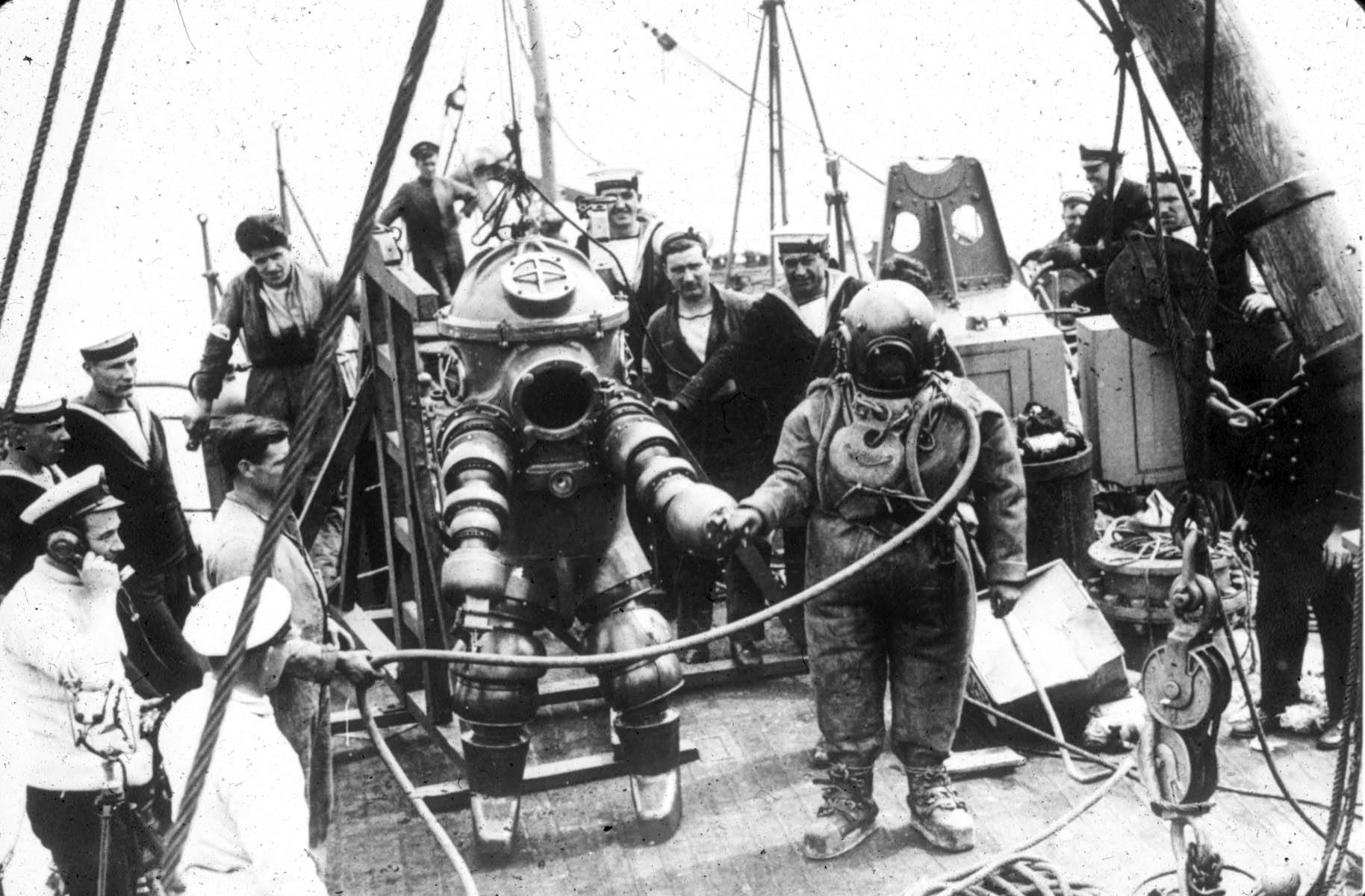
Two divers, one wearing a 1 atmosphere diving suit and the other standard diving dress, preparing to explore the wreck of the RMS Lusitania, 1935
UsesProtection of the diver from the environment
Related itemsAtmospheric diving suit, dry suit, hot water suit, rash guard, wetsuit

A diving suit is a garment or device designed to protect a diver from the underwater environment. A diving suit may also incorporate a breathing gas supply (such as for a standard diving dress or atmospheric diving suit),[1] but in most cases the term applies only to the environmental protective covering worn by the diver. The breathing gas supply is usually referred to separately. There is no generic term for the combination of suit and breathing apparatus alone. It is generally referred to as diving equipment or dive gear along with any other equipment necessary for the dive.

Diving suits can be divided into two classes: "soft" or ambient pressure diving suits – examples are wetsuits, dry suits, semi-dry suits and dive skins – and "hard" or atmospheric pressure diving suits, armored suits that keep the diver at atmospheric pressure at any depth within the operating range of the suit. Hot water suits are actively heated wetsuits.

Function

[edit]

The diving suit is worn as protection from the diving environment. This has several aspects, the importance of which may vary depending on the specific environment of the dive. Atmospheric diving suits primarily isolate the diver from the ambient pressure, and all the complications it brings as consequences of breathing gas under pressure. Ambient pressure suits – dive skins, wetsuits and dry suits – have no pressure isolation effect, and are usually primarily worn for thermal protection, and thermal protection can also influence decompression.[2]nA common secondary purpose of dive skins, wetsuits and dry suits is protection from abrasion, stings from sea animals and minor cuts and impact injury. In some environments containing hazardous materials or microorganisms, the dry suit has the primary function of isolating the diver from the hazardous materials or microorganisms. This type of suit relies on full watertight coverage for effective protection.[2][3] These additional functions are inherently available from the atmospheric diving suit.

History

[edit]
John Lethbridge's diving dress, the first enclosed diving suit, built in the 1710s.

Charles C.-J. Le Roux created a waterproof and windproof fabric which could be made into early diving suits.[4] The first diving suit designs appeared in the early 18th century. Two English inventors developed the first pressure-resisting diving suits in the 1710s. John Lethbridge built a completely enclosed suit to aid in salvage work. It consisted of a pressure-proof air-filled barrel with a glass viewing hole and two watertight enclosed sleeves.[5] This suit gave the diver enough maneuverability to accomplish useful underwater salvage work.

Siebe's improved design in 1873.

After testing this machine in his garden pond (specially built for the purpose) Lethbridge dived on a number of wrecks: four English men-of-war, one East Indiaman, two Spanish galleons and a number of galleys. He became very wealthy as a result of his salvages. One of his better-known recoveries was on the Dutch Slot ter Hooge, which had sunk off Madeira with over three tons of silver on board.[6]

At the same time, Andrew Becker created a leather-covered diving suit with a helmet featuring a window. Becker used a system of tubes for inhaling and exhaling, and demonstrated his suit in the River Thames, London, during which he remained submerged for an hour.[citation needed]

Early diving suit on display at the Naval History Museum in Mexico City.

German-born British engineer Augustus Siebe developed the standard diving dress in the 1830s. Expanding on improvements on the Deane brothers' helmet already made by another engineer, George Edwards, Siebe produced his own design: a helmet fitted to a full length watertight canvas diving suit. Later suits were made from waterproofed canvas invented by Charles Macintosh. From the late 1800s and throughout most of the 20th century, most standard dress was made from a thin sheet of solid rubber laminated between layers of tan twill.[7]

The oldest preserved suit, named "Wanha herra" (meaning "Old gentleman" in the old Finnish language) can be found in Raahe Museum, Finland. It was made of calf leather and dates from the 18th century. Its exact origin is unknown but the foot parts suggest a Finnish origin. The suit, which was used in short underwater work like checking the condition of the bottom of a ship, was donated to Raahe Museum by Captain Johan Leufstadius (1829–1906), who was a master mariner, merchant and ship owner.[citation needed] The conservator of Raahe Museum, Jouko Turunen, tailored an accurate copy of the old suit in 1988, which has been successfully tested underwater several times.[citation needed]

The Sladen suit was a type of heavy dry suit made by Siebe Gorman which was used with rebreathers by British navy divers during the Second World War. Lighter dry suits made of latex rubber by Pirelli were used in World War II by Italian frogmen. They were patented in 1951.[8]

Ambient pressure suits

[edit]
Diver of the Estonian Home Guard, 1941

Ambient pressure suits are a form of exposure protection protecting the wearer from the cold and in the case of dry suits, from contact with the surrounding water. They also provide some defense from abrasive and sharp objects as well as some forms of potentially harmful underwater life. They do not protect divers from the pressure of the surrounding water or barotrauma and decompression sickness.

There are five main types of ambient pressure diving suits; dive skins, wetsuits and their derivative semi-dry suit and hot-water suits, and dry suits.[9] Apart from hot water suits, these types of suit are not exclusively used by divers but are often used for thermal protection by people engaged in other water sports activities such as surfing, sailing, powerboating, windsurfing, kite surfing, waterskiing, caving and swimming.

Added buoyancy due to the volume of the suit is a side effect of most diving suits. A diving weighting system can be worn to counteract this buoyancy. Overalls may be worn over the diving suit as additional protection against cuts and abrasion. This is more usual for professional divers. Overalls increase drag while swimming and are not popular for recreational scuba.[9][10]

Dive skins

[edit]

Dive skins are used when diving in water temperatures above 25 °C (77 °F). They are made from spandex or Lycra and provide little thermal protection, but do protect the skin from jellyfish stings, abrasion and sunburn. This kind of suit is also known as a 'Stinger Suit'. Some divers wear a dive skin under a wetsuit, which allows easier donning and (for those who experience skin problems from neoprene) provides additional comfort.[11]

The "Dive Skin" was originally invented to protect scuba divers in Queensland Australia against the "Box jellyfish" (Chironex fleckeri)[citation needed]

In 1978, Tony Farmer was a swimsuit designer and manufacturer who owned a business called "Daring Designs". Besides swimwear he also did underwear and aerobic wear which included a full suit in Lycra/Spandex. He became a scuba diver and that was the catalyst to the invention of the "dive skin" as we know it today.[citation needed]

Wetsuits

[edit]
Spearfisher in wet suit

Wetsuits are relatively inexpensive, simple, expanded neoprene suits that are typically used where the water temperature is between 10 and 25 °C (50 and 77 °F). The foamed neoprene of the suit thermally insulates the wearer.[12][13] Although water can enter the suit, a close fitting suit prevents excessive heat loss because little of the water warmed inside the suit escapes from the suit to be replaced by cold water, a process referred to as "flushing".

Proper fit is critical for warmth. A suit that is too loose will allow a large amount of water to circulate over the diver's skin, taking up body heat. A suit that is too tight is very uncomfortable and can impair circulation at the neck, a very dangerous condition which can cause blackouts. For this reason, many divers choose to have wetsuits custom-tailored instead of buying them "off the rack". Many companies offer this service and the cost is often comparable to an off-the-rack suit.

Wetsuits are limited in their ability to preserve warmth by three factors: the wearer is still exposed to some water, the suit is compressed by the ambient pressure, reducing effectiveness at depth, and the insulating neoprene can only be made to a certain thickness before it becomes impractical to don and wear. The thickest commercially available wetsuits are usually 10 mm thick. Other common thicknesses are 7 mm, 5 mm, 3 mm, and 1 mm. A 1 mm suit provides very little warmth and is usually considered a dive skin, rather than a wetsuit. Wetsuits can be made using more than one thickness of neoprene, to put the most thickness where it will be most effective in keeping the diver warm. A similar effect can be achieved by layering wetsuits of different coverage. Some makes of neoprene are softer, lighter and more compressible than others for the same thickness, and are more suitable for wetsuits for non-diving purposes as they will compress and lose their insulating value more quickly under pressure, though they are more comfortable for surface sports because they are more flexible and allow more freedom of movement.[14]

Semi-dry suits

[edit]

Semi-dry suits are effectively a wetsuit with watertight seams and nearly watertight seals at wrist, neck, ankles and zip. They are typically used where the water temperature is between 10 and 20 °C (50 and 68 °F). The seals limit the volume of water entering and leaving the suit, and a close fit minimises pumping action caused by limb motion. The wearer gets wet in a semi-dry suit but the water that enters is soon warmed up and does not readily leave the suit, so the wearer remains warm. The trapped layer of water does not add to the suit's insulating ability, and any water circulation past the seals still causes heat loss, but semi-dry suits are cheap and simple compared to dry suits, and do not fail catastrophically. They are usually made from thick Neoprene, which provides good thermal protection, but lose buoyancy and thermal protection as the trapped gas bubbles in the neoprene foam compress at depth. Semi-dry suits are usually made as a one piece full suit with neoprene wrist, cuff and neck seals having a slick sealing surface in contact with the skin. Two-piece sets tend to be a one piece full length suit, sometimes described as "long johns", plus accessories to be worn over, under or with the one-piece suit, such as a shortie tunic, which may be worn separately in warm water, but has no flush-limiting seals at the openings. Semi dry suits do not usually include hoods, boots or gloves, so separate insulating hoods, boots and gloves are worn.[15][16]

Hot water suits

[edit]
Bell umbilical section, containing among other components, hot water supply hoses.

Hot water suits are loose fitting neoprene wetsuits used in cold water commercial surface-supplied diving.[17] A hose in the diver's umbilical line, which links the diver to the surface support, carries the hot water from a heater at the surface down to the suit. The diver controls the flow rate of the water from a valve near his waist, allowing him to vary the warmth of the suit in response to changes in environmental conditions and workload. Tubes inside the suit distribute the water to the limbs, chest, and back. Special boots, gloves, and hood are worn to extend heating to the extremities.[18] Breathing gas heating at the helmet is available by using a hot water shroud over the helmet inlet piping between the valve block and the regulator.[19] These suits are normally made of foamed neoprene and are similar to wetsuits in construction and appearance, but they do not fit as closely by design, and need not be very thick, as their primary function is to temporarily retain and guide the flow of the heating water. The wrists and ankles of the suit are open, allowing water to flush out of the suit as it is replenished with fresh hot water from the surface.[18]

Hot water suits are often used for deep dives when breathing mixes containing helium are used. Helium conducts heat much more efficiently than air, but has a lower molar heat capacity. The heat capacity by volume is increased proportionally to the pressure which means that the diver will lose large quantities of body heat through the lungs when breathing it at great depths. This compounds the risk of hypothermia already present in the cold temperatures found at these depths. Under these conditions a hot water suit is a matter of survival, not comfort. Loss of heated water supply for hot water suits can be a life-threatening emergency with a high risk of debilitating hypothermia. Just as an emergency backup source of breathing gas is required, a backup water heater is also an essential precaution whenever dive conditions warrant a hot water suit. If the heater fails and a backup unit cannot be immediately brought online, a diver in the coldest conditions can die within minutes. Depending on decompression obligations, bringing the diver directly to the surface could prove equally deadly.[18]

Heated water in the suit forms an active insulation barrier to heat loss, but the temperature must be regulated within fairly close limits. If the temperature falls below about 32 °C, hypothermia can result, and temperatures above 45 °C can cause burn injury to the diver. The diver may not notice a gradual change in inlet temperature, and in the early stages of hypo- or hyperthermia, may not notice the deteriorating condition.[18] The suit is loose fitting to allow unimpeded water flow. This causes a large transient volume of water (13 to 22 litres) to be held in the suit, which can impede swimming due to the added inertia.[18] When controlled correctly, the hot water suit is safe, comfortable and effective, and allows the diver adequate control of thermal protection, however hot water supply failure can be life-threatening.[18]

The diver will usually wear something under a hot water suit for protection against scalding and chafe, and for personal hygiene, as hot water suits may be shared by divers on different shifts, and the interior of the suit may transmit fungal infections if not sufficiently cleaned between users. Wetsuits are effective against scalding of the covered parts of the body, and thermal underwear can protect against chafe, and keep the standby diver warm at the surface.[9][20][21]

Hot water is supplied from a heating system at the surface, commonly heated by burning diesel fuel, though electrical versions are also available, and the water is delivered to the umbilical by a pump. Heaters may be rated from one to three divers.[22][23] Large hot water systems are available in containerised packages.[24]

The hot water supply hose of the umbilical is commonly 12 inch (13 mm) bore, and is connected to a supply manifold at the right hip of the suit, which has a set of valves to allow the diver to control flow to the front and back of the torso, and to the arms and legs, and to dump the supply to the environment if the water is too hot or too cold. The manifold distributes the water through the suit through perforated tubes. The hot-water suit is normally a one-piece neoprene wetsuit, fairly loose fitting, to fit over a thin neoprene undersuit, which can protect the diver from scalding if the temperature control system fails, with a zipper on the front of the torso and on the lower part of each leg. Gloves and boots are worn which receive hot water from the ends of the arm and leg hoses. If a full-face mask is worn, the hood may be supplied by a tube at the neck of the suit. Helmets do not require heating. The heating water flows out at the neck and cuffs of the suit through the overlap with gloves, boots, or hood.[25]: ch18 

Risks associated with hot water suits

[edit]
  • Increased risk of decompression sickness due to accelerated ingassing during the deep part of the dive, exacerbated if the heating is reduced during decompression.[26]
  • Increased risk of hypothermia if the skin is warm enough not to feel chilled, but heat balance is negative, as peripheral vasoconstriction to conserve heat does not occur. Major heat loss to breathing gas can occur.[26]

Dry suits

[edit]
Dry suit in icy water
U.S. Navy divers prepare to dive in dry suits
A museum display of diving dry suits with different breathing apparatus configurations

Dry suits are generally used where the water temperature is between −2 and 15 °C (28 and 59 °F). Water is prevented from entering the suit by seals at the neck and wrists and the opening for getting the suit on and off is typically closed by a waterproof zipper. The suit insulates the wearer by maintaining an insulating layer of air in the undersuit between the body and the suit shell, (in exactly the way that thermal insulation garments work above water) or by using a watertight expanded neoprene suit shell, which is inherently insulating in the same way as a wet suit, and which can usually be worn with additional insulating undergarments.[27][28][29]

Both laminated fabric and neoprene drysuits have advantages and disadvantages: a fabric drysuit is more adaptable to varying water temperatures because different garments can be layered underneath. However, they are quite bulky and this causes increased drag and swimming effort. The woven materials are relatively inelastic and constrain joint mobility unless inflated to a fairly loose fit. Additionally, if a fabric drysuit malfunctions and floods, it loses nearly all of its insulating properties. Neoprene drysuits are comparatively streamlined like wetsuits and are more elastic, but in some cases do not allow garments to be layered underneath and are thus less adaptable to varying temperatures. An advantage of this construction is that even it if floods completely, it essentially becomes a wetsuit and will still provide a significant degree of insulation.

Special dry suits made of strong externally rubberised fabric are worn by commercial divers who work in contaminated environments such as sewage or hazardous chemicals. the smooth outer surface is easier to decontaminate. The hazmat dry suit has integral boots and is sealed to a diving helmet and dry gloves to prevent any contact with the hazardous material.

Constant volume dry suits have a system allowing the suit to be inflated to prevent "suit squeeze" caused by increasing pressure and to prevent excessive compression of the insulating undergarments. They also have vents allowing the excess air to escape from the suit during ascent.[2]

For additional warmth, some dry suit users inflate their suits with argon, an inert gas which has superior thermal insulating properties compared to air.[30] The argon is carried in a small cylinder, separate from the diver's breathing gas. This arrangement is frequently used when the breathing gas contains helium, which is a very poor insulator in comparison with other breathing gases.

Tubesuits

[edit]

A tubesuit is a type of heating or cooling garment which is intended to be worn under the diving suit. It circulates heated or chilled water through closed circuit flexible tubes close to the wearers skin. It would normally be worn under a further layer of insulation to reduce heat transfer with the external environment. The circulating water can be supplied from a battery powered heat pump unit carried by the diver, making this type of thermal management suitable for scuba divers. A tubesuit can be worn under an environmentally sealed dry suit, suitable for use in contaminated water[31]

Diving suit combinations

[edit]

A "shortie" wetsuit or tunic may be worn over a full wetsuit for added insulation. Some vendors sell a very similar item and refer to it as a 'core warmer' when worn over another wetsuit. A "skin" may also be worn under a wetsuit. This practice started with divers wearing body tights under a wetsuit for extra warmth and to make donning and removing the wetsuit easier. A "skin" may also be worn as an undersuit beneath a drysuit in temperatures where a full undersuit is not necessary.[citation needed]

Accessories

[edit]
  • Gloves are often worn when diving, as thermal protection, as protection against the environment and work hazards, or both. Both dry and wet gloves are available. Dry gloves may be permanently bonded to the sleeves of a dry suit, or connected by a cuff-ring system.[32]
  • Foot protection is usually worn when diving, either under fins or as protection for the feet when diving heavy, where the diver moves around mainly by walking, in which case the boots may be weighted for better stability when standing. Boots are integral part of most dry suits, unless they are terminated by integral socks. Non-watertight boots may be worn over integral boots or neoprene socks for protection against the workplace hazards when the diver wears a wetsuit or hot-water suit.
  • Hoods are generally worn for thermal protection if the diver does not use a helmet. Dry hoods are available, but relatively uncommon, and the usual arrangement is a neoprene hood which is a separate unit or part of the wetsuit.

Atmospheric diving suits

[edit]
A JIM suit at the Royal Navy Submarine Museum.

An atmospheric diving suit is a small one-man articulated submersible of anthropomorphic form which resembles a suit of armour, with elaborate pressure joints to allow articulation while maintaining an internal pressure of one atmosphere.[33]

These can be used for very deep dives for long periods without the need for decompression, and eliminate the majority of physiological dangers associated with deep diving. Divers do not even need to be skilled swimmers. Mobility and dexterity are usually restricted by mechanical constraints, and the ergonomics of movement are problematic.

See also

[edit]
  • Exposure suit – Clothing to protect against an extreme environment
  • Oilskin, also known as Foul weather gear – Waterproof garment made from treated sailcloth or canvas
  • Personal protective equipment – Equipment designed to help protect an individual from hazards
  • Survival suit – Waterproof suit that protects the wearer from hypothermia from immersion in cold water
  • Timeline of diving technology – Chronological list of notable events in the history of underwater diving equipment
  • Space suit – Garment worn to protect a human in space
  • Standard diving dress – Copper helmet with rubberised canvas diving suit and weighted boots

References

[edit]
[edit]
Revisions and contributorsEdit on WikipediaRead on Wikipedia
from Grokipedia
A diving suit is a specialized garment or device worn by divers to protect the body from the , including extreme cold, water pressure, abrasions, and marine hazards, while often providing , buoyancy control, and integration with . These suits enable safe submersion for activities such as scientific research, commercial salvage, military operations, and recreational , with designs evolving from rigid, surface-supplied systems to flexible, self-contained gear. The history of diving suits dates back to the , when leather outfits with surface-pumped air allowed limited dives to about 60 feet for salvage work. In 1823, Charles Anthony Deane patented a smoke adapted for underwater use, which by 1828 was paired with a strapped canvas suit, and in 1834 was used for deeper operations, such as recovering cannons from the sunken ship Royal George. A pivotal advancement came in 1837 when Augustus Siebe sealed Deane's to an airtight rubber suit, creating the first —a heavy, watertight ensemble connected to surface air pumps via an umbilical, used extensively until the mid-20th century for tasks like bridge construction and submarine repair. The mid-1940s marked a revolution with and Émile Gagnan's invention of the Aqua-Lung in 1943, a self-contained (SCUBA) that paired with lighter suits, freeing divers from surface tethers and enabling untethered exploration. Modern diving suits primarily fall into three categories: wet suits, dry suits, and atmospheric suits, each tailored to specific conditions and dive depths. Wet suits, introduced in the using closed-cell foam, allow a thin layer of water to enter and warm against the body for insulation, making them ideal for temperate waters and up to moderate depths. Dry suits, by contrast, are fully watertight shells—often made from rubber, , or breathable fabrics like —sealed at wrists, neck, and ankles, with insulating undergarments and inflation valves for adjustment; they are essential for cold-water environments, preventing during extended professional or technical dives. Atmospheric diving suits (ADS), rigid exoskeletons that maintain internal air pressure at surface levels, protect against deep-sea pressures up to hundreds of feet without requiring decompression, and are used in specialized applications like offshore oil work or scientific sampling. Across all types, suits now incorporate for enhanced mobility, durability, and safety features, such as reinforced panels against marine stings or integrated communication systems.

Purpose and Design

Functions

Diving suits primarily serve to protect divers from environmental hazards encountered underwater, with key functions including thermal insulation, mechanical protection, and buoyancy control. Thermal insulation prevents hypothermia in cold water by trapping a layer of water or air that the diver's body warms, thereby reducing heat loss to the surrounding environment. In warmer conditions, lighter suits or dive skins provide minimal insulation to maintain thermal balance and avoid hyperthermia risks associated with excessive heat retention. Mechanical protection shields the skin from abrasions, cuts, stings from marine life, and sunburn through durable outer layers that act as a barrier against physical hazards. Buoyancy control is achieved through the suit's material properties, where compressible foams or trapped air/fluid layers provide adjustable lift that divers manage with weights or inflation systems to maintain neutral buoyancy during dives. Suits maintain by addressing the primary mechanisms of heat loss: conduction, where direct contact with cold water is minimized by insulating materials; , reduced by limiting water or air movement within the suit; and , which is negligible underwater but further blocked by opaque or reflective layers in some designs. In cold water, inadequate thermal protection can exacerbate (DCS) risks, as from chilling slows nitrogen absorption and off-gassing in peripheral tissues, leading to bubble formation upon ascent; effective suits help by preserving core temperature and promoting better tissue perfusion for safer . For instance, in cold waters below 50°F (10°C), insulated suits enable extended bottom times by preventing rapid heat loss, allowing divers to operate for hours rather than minutes without , whereas in warm tropical environments above 70°F (21°C), lighter suits suffice for thermal balance while prioritizing mechanical safeguards. In hazardous settings like coral reefs or shipwrecks, suits provide essential protection against sharp edges and stings, permitting safer exploration without direct skin exposure to risks such as venomous organisms or debris. suits, such as wetsuits and drysuits, exemplify these functions through variations in insulation and sealing, while atmospheric suits offer similar protections in pressurized environments.

Design Principles

Diving suit design prioritizes flexibility to ensure diver mobility and reduce fatigue during prolonged underwater activities. This involves suits to allow unrestricted movement while maintaining structural integrity under varying s. Sealing mechanisms are critical to prevent ingress, particularly at entry points, thereby preserving the suit's protective barrier. adjustment is achieved through controlled internal volume and weight distribution, enabling divers to maintain without excessive . against hydrostatic and mechanical wear is essential, with designs tested for resistance to tearing, punctures, and seam failure to withstand operational stresses. Anatomical fit is a core ergonomic , tailoring suit dimensions to the body's contours to minimize restriction and enhance comfort across a range of user sizes, typically accommodating the 5th to 95th of body types. and seal designs at the neck, wrists, and ankles provide secure closures that resist leakage while facilitating ease of donning and doffing. Layering supports modularity, allowing interchangeable components for adaptability to different dive profiles and user preferences. In suits, pressure equalization occurs through flexible enclosures that conform to external hydrostatic forces, distributing pressure across the body to avoid compression injuries. In contrast, atmospheric diving suits employ rigid enclosures to maintain internal pressure at one atmosphere, isolating the occupant from external via articulated joints that balance forces without equalization. This distinction influences overall mobility, with ambient designs favoring flexibility and atmospheric ones emphasizing for deep-water operations. Design factors include water temperature thresholds, such as suits optimized for cold environments below 10°C to support extended exposure, versus those for tropical waters above 25°C that prioritize minimal insulation. Depth ratings dictate material and structural choices, with tests ensuring performance up to specified limits, such as 30 meters for many ambient suits or 900 meters for advanced atmospheric models, to guarantee safety and functionality.

History

Early Developments

Early attempts at diving suits date back to the 16th century, when Italian inventors developed leather outfits with surface-pumped air via tubes or bells, allowing limited dives to about 60 feet (18 m) for salvage work, such as recovering from in calm waters. These rudimentary garments provided basic protection but were constrained by short air supply and lack of mobility. The earliest known diving suit was invented by English wool merchant in 1715, consisting of an enclosed wooden barrel approximately 6 feet long and 2.5 feet in diameter, equipped with a glass porthole for visibility and greased leather sleeves extending from armholes to allow manipulation of objects underwater. This device, tested during a on May 3, 1715, relied on trapped air for breathing and enabled Lethbridge to remain submerged for up to 30 minutes at depths of about 10 to 16 meters, primarily for salvaging treasure from shipwrecks such as those commissioned by the . Limited by its lack of air renewal and need for frequent resurfacing, the suit marked a transition from breath-hold free diving to mechanized, enclosed apparatus, though it offered little mobility and required hoisting by ropes. In the , diving bells emerged as a complementary , often paired with rudimentary protective suits to extend underwater operations beyond free diving limits. English astronomer developed a practical in 1691, a wooden structure weighted with lead and supplied with fresh air via submerged barrels, allowing multiple occupants to work at depths up to 9 meters for extended periods in calm waters. These bells, sometimes used with basic canvas or leather garments for thermal protection, facilitated salvage tasks like recovering cannons from wrecks, but remained tethered to surface vessels for air and stability, restricting movement to the bell's confines. By the mid-1700s, improvements in bell design, including larger wooden or iron frames, supported short salvage dives in harbors, though suits were minimal and focused on basic insulation rather than full enclosure. Further progress occurred in the early 19th century with Charles Anthony Deane's inventions: in 1823, he patented a smoke adapted for use, and by 1828, it was paired with a strapped suit for deeper operations, such as recovering cannons from the sunken ship Royal George. A pivotal advancement came in 1837 when German-born engineer Siebe improved upon Deane's design by sealing the to an airtight rubber suit, creating the first —a copper bolted to a and connected to a full-body waterproof suit made of rubberized material, integrating surface-supplied air through a in a closed system. This design enabled divers to operate in upright or inverted positions at depths up to 30 meters, primarily for deep-sea wreck salvage such as the recovery efforts on HMS Royal George in 1839-1843. However, the apparatus weighed up to 200 kilograms including lead weights and boots for negative , severely limiting mobility and requiring a team for dressing, undressing, and tending the air from the surface. Early suits faced challenges like entanglement, pressure imbalances causing squeezes, and immobility on uneven seabeds, confining their use to controlled environments like harbor maintenance and commercial salvage rather than exploratory diving.

Modern Innovations

The transition from rigid diving suits to flexible, self-contained designs in the marked a significant evolution in diving technology, enabling greater mobility and accessibility for both recreational and professional divers. In 1952, physicist Hugh Bradner at the , invented the modern using , a that provided insulation by trapping a thin layer of water against the body, which warms to body temperature. This innovation complemented the 1943 invention of the Aqua-Lung by Jacques-Yves Cousteau and Émile Gagnan, a self-contained underwater breathing apparatus that revolutionized by allowing divers to explore independently without surface-supplied air. Together, these developments facilitated the rise of recreational in the mid-20th century, as wetsuits extended dive times in cooler waters while preserving freedom of movement. Parallel advancements occurred in dry suits during the , with refinements in rubber fabrics such as rubberized canvas, which improved and for demanding environments. These suits, designed to keep divers completely dry by excluding entry, became essential for polar and operations where extreme cold and prolonged exposure posed severe risks. By the 1950s, the incorporation of into dry suits further enhanced insulation without sacrificing flexibility, supporting tasks like underwater construction and salvage in harsh conditions. In the , semi-dry suits emerged as a hybrid innovation, featuring seals at the neck, wrists, and ankles to minimize water ingress while allowing limited exchange for control. This design built on principles but offered superior thermal protection for temperate waters. Early wetsuits, such as the 1960 yellow Aquafort by Dunlop, emphasized visibility and laid groundwork for improved seals in later semi-dry models. , particularly , revolutionized insulation across these suit types by providing closed-cell foam that resisted compression under pressure, thereby maintaining and warmth. A notable breakthrough in atmospheric suits came from the 1930s Tritonia design by Joseph Peress, a soft, magnesium-alloy suit with fluid-filled joints that allowed operation at surface pressure up to 500 feet. This concept influenced the 1960s development of the by Underwater Marine Equipment Limited (UMEL), which refined the articulated structure for deeper commercial applications, with operational dives beginning in the early 1970s and deeper tests exceeding 1,000 feet (305 m) by the late 1970s. The integration of these flexible suits with scuba systems enhanced overall mobility, shifting diving from cumbersome, tethered operations to agile, self-reliant exploration.

Recent Advancements

In the 2020s, the diving suit industry has increasingly prioritized , with widespread adoption of limestone-based alternatives to traditional petroleum-derived materials. These eco-friendly foams, derived from in , reduce reliance on fuels while maintaining comparable and flexibility. For instance, brands like DynamicNord incorporated 1 mm limestone in tropical skinsuits launched in 2025, offering enhanced environmental benefits without compromising performance in warm waters. Similarly, Matuse's Geoprene line, utilizing limestone-based closed-cell structures, absorbs 98% less water than standard , promoting lighter weight and faster drying for prolonged dives. Material innovations have focused on performance enhancements, particularly flexibility and durability. In 2022, O'Neill introduced -infused fabrics in its Blueprint wetsuits, where recycled yarns blended with graphene particles improved stretch by up to 20% and heat retention, addressing common complaints about stiffness in cold-water exposure. Market-driven features like linings have also gained traction, with products such as the DUI XM450 incorporating silver-ion treatments to inhibit in moist environments, extending suit lifespan and reducing odor after repeated use. By 2025, these advancements contributed to a projected market growth of 5.2% CAGR for diving suits, driven by consumer demand for hygienic and resilient gear. Technology integration has elevated safety through real-time physiological monitoring, with wearable sensors embedded in suits or attached via compatible garments tracking vitals like , peripheral , and core temperature. A 2025 review in Healthcare highlighted systems where chest- or forehead-mounted sensors transmit data to diving computers, enabling alerts for anomalies during descent. Personalization has advanced via for custom-fit suits, as seen in Ocean Tailored's 2025 offerings, which use digital body mapping to optimize seal integrity and reduce water ingress. Emerging 2025 trends include hybrid suits merging thermal layers with drysuit waterproof seals and reinforced panels, providing versatile insulation for variable conditions while minimizing bulk. Enhanced technologies, such as graphene-enhanced foams, further support neutral trim without excess weight, improving energy efficiency on dives.

Ambient Pressure Suits

Dive Skins

Dive skins are lightweight, form-fitting garments constructed from thin or fabrics, typically ranging from 0.5 to 2 mm in thickness, designed primarily for use in warm water environments exceeding 28°C. These materials provide stretch for a second-skin fit while offering UV protection, often rated at UPF 50+ to block harmful rays during surface intervals and shallow dives. They serve as a minor barrier in tropical conditions but do not trap water for insulation, and their ensures no significant alteration to a diver's overall weighting requirements. Originating from rash guards developed for and to prevent skin irritation from board friction and sun exposure, dive skins have evolved into full-body suits covering the , arms, and legs. These one-piece designs feature foot stirrups and thumb loops for secure fit during activity, and their lack of wrist, ankle, or neck seals allows for easy donning and doffing without the need for lubrication or assistance. In addition to UV shielding, dive skins protect against physical hazards such as stings and scrapes through their abrasion-resistant outer layers, commonly a nylon-Lycra blend. Due to their minimal thickness and non-foam construction, they experience negligible compression at depth, maintaining flexibility and fit even under moderate pressure without impacting mobility or requiring adjustments.

Wetsuits

Wetsuits are exposure suits designed to provide for divers in temperatures typically ranging from 10°C to 25°C by allowing a thin layer of to enter and be warmed by the diver's , thereby reducing conductive loss to the surrounding environment. Constructed primarily from , a foam, these suits compress slightly under but maintain and flexibility for mobility during dives. The insulation principle relies on the low thermal conductivity of combined with the trapped layer, which acts as a barrier against colder external , though repeated flushing can increase loss if the suit fit is loose. Neoprene thickness varies to match water conditions, with 3 mm suits suitable for temperatures above 24°C, 5 mm for 18–24°C, and 7 mm for 10–15°C, balancing warmth against flexibility and buoyancy. Common variants include full-body one-piece suits for comprehensive coverage, two-piece sets (jacket and pants) for easier donning and layering, and shorty styles exposing arms and legs for warmer shallows. Seams are typically glued and blind-stitched to minimize water ingress while ensuring durability, with the blind stitching overlapping edges to prevent leaks and enhance water retention around the trapped layer. A semi-dry subtype enhances standard wetsuits by incorporating seals at the neck, wrists, ankles, and often integrated hoods, boots, or gloves to drastically reduce exchange, making them ideal for temperate s where minimal flushing occurs. These seals, usually made from or , limit entry to less than a liter of per dive, preserving the warmed layer longer than in open wetsuits.

Dry Suits

Dry suits maintain the diver's body in a completely dry environment through a waterproof outer shell and separate insulating layers, enabling effective thermal protection in cold-water conditions, particularly temperatures below 10°C and for applications like ice diving. These suits feature seals at the neck, wrists, and ankles—commonly constructed from for a tight, stretchable fit or for greater durability and warmth—to prevent water ingress while allowing necessary movement. Entry and exit are facilitated by specialized waterproof zippers, such as chest-mounted self-donning styles or back-entry designs, and for prolonged dives exceeding typical limits, integrated relief zippers provide access for urinary relief without removing the suit. The outer shell materials vary to balance insulation, flexibility, and durability: offers inherent and compression resistance, vulcanized rubber provides airtight sealing, and trilaminate fabrics—often incorporating breathable membranes like —allow moisture vapor escape while remaining lightweight and packable. Thermal insulation relies on customizable undergarments layered beneath the shell, typically synthetic options like for high warmth-to-weight efficiency or natural for moisture-wicking properties, which can be adjusted based on water temperature and dive duration. Buoyancy management in dry suits involves variable volume control, where low-pressure air from the diver's regulator is added via an inflator during descent to counteract suit compression—known as suit squeeze—and maintain , while dump valves at the shoulders or wrists enable controlled deflation during ascent to avoid rapid, uncontrolled rises. This air management system, distinct from a separate compensator device, requires specialized to integrate with overall dive planning. Compared to early 19th-century designs like Augustus Siebe's canvas suits from 1837, which restricted mobility due to their rigid, heavy construction, modern dry suits prioritize enhanced flexibility through and ergonomic patterning, allowing greater for tasks in challenging environments.

Specialized Variants

Specialized variants of suits address unique environmental and operational challenges in diving, such as maintaining stable during prolonged exposures or providing active thermal regulation in extreme conditions. These designs, often tailored for commercial applications, include constant-volume dry suits and tube-based systems, which prioritize functionality over the simplicity of standard wetsuits or dry suits. While recreational divers rarely require such adaptations, commercial operations benefit from their specialized features, though they often come with trade-offs like reduced mobility. Constant-volume dry suits, first perfected by in 1946 and commercially launched by La Spirotechnique in 1950, feature structures that resist compression under pressure to preserve internal volume. This minimizes fluctuations, allowing divers to maintain with less frequent adjustments, which is particularly advantageous in where prolonged stays at depth demand stable and reduced risk of squeeze injuries. By keeping the suit's air volume nearly constant, these suits optimize heat retention without excessive gas management, enhancing efficiency for tasks like underwater construction or habitat-based operations. Tube suits, also known as hot water suits, incorporate an internal network of inflatable tubes or channels that circulate heated water from the surface to counteract cold-water heat loss. Developed in the late , with the first production model by Diving Unlimited International in 1968, these suits enabled extended work in frigid environments by providing active heating. In the , tube suits gained prominence in for rig inspections and maintenance, where divers faced subzero temperatures during the era's offshore oil boom. The inflatable design suits shallow-depth tasks, offering buoyancy control through water flow, but requires a reliable surface supply umbilical, limiting mobility compared to self-contained systems. Hot water suits, a of tube designs, carry specific risks due to their reliance on continuous surface-supplied heating. Research indicates an elevated incidence of (DCS), with studies showing up to a twofold increase in odds per 10°C rise in body temperature from vasodilation-enhanced gas uptake at depth. Additional hazards include potential entanglement of the hose with underwater structures, which can complicate emergency ascents in confined spaces like oil rig legs, and from sudden flow interruptions or temperature fluctuations, leading to rapid or burns. These risks underscore the need for redundant systems and trained tenders in commercial settings. For extreme cold beyond standard insulation, divers often employ layered systems, such as a thin beneath a , to trap additional warmth while allowing some compressibility for management. This combination is common in polar or high-altitude commercial dives, providing superior thermal protection without the bulk of solely fleece undergarments. However, such setups can further limit dexterity, as the added layers restrict joint movement and fine motor control, a key drawback in precision tasks like or tool handling. Overall, these variants excel in industrial contexts but are less practical for recreational use, where simplicity and ease of movement take precedence. As of 2025, self-contained active heating options have emerged for untethered dives, including battery-powered heated undersuits and vests worn under wetsuits or dry suits. These systems use flexible heating elements powered by rechargeable lithium-ion batteries, providing adjustable warmth for 2–3 hours per dive and enabling extended exposure in cold water without surface support.

Atmospheric Diving Suits

Hard Suits

Hard suits, also known as rigid atmospheric diving suits (ADS), are pressurized, armored exoskeletons that enclose the diver in a sealed environment maintaining one atmosphere of internal pressure, shielding them from the physiological effects of external hydrostatic pressure during deep dives. These suits function as one-person submersibles, featuring a rigid shell with articulated joints for limb movement, transparent acrylic viewports for visibility, and umbilicals supplying breathing gas, hot water for thermal protection, power, and communications from surface support vessels. Unlike flexible suits, hard suits prioritize structural integrity for depths exceeding 300 meters, with operational limits up to 600 meters or more in advanced models. The , developed in the late 1960s by Underwater Marine Equipment Ltd. and first operational in 1972, represents a seminal design in hard suit technology, constructed primarily from for its high strength-to-weight ratio, weighing about 500 kg in air. Its operation involves articulated, oil-filled spherical joints in the arms and legs to facilitate mobility, including claw-like manipulators for tasks, while the diver is lowered to the worksite via crane and relies on umbilical for extended missions up to six hours. is managed through adjustable tanks, typically maintaining slight negative buoyancy (15-50 lb or approximately 7-23 kg) for stability, and the suit's 1 atm interior eliminates decompression requirements, enabling after operations. Subsequent innovations like the , introduced in the mid-1980s by Nuytco Research Ltd., enhance mobility with aluminum alloy construction and fully rotary, oil-filled joints allowing near-human range of motion in all limbs, including dexterous mechanical arms and legs for accessing confined spaces. Rated to 305 meters (1,000 feet), with some variants extending to 760 meters (2,500 feet), the Newtsuit weighs within the 200-500 kg range and achieves via and thrusters for mid-water positioning, independent of constant umbilical tension. umbilicals are jettisonable in emergencies, supporting commercial and military applications without decompression stops due to the constant surface pressure. Hard suits find primary use in high-risk deep-water environments, such as offshore and gas platform maintenance, repairs, and salvage operations, where their rigid withstands pressures that would compress softer garments. For instance, the was deployed in wellhead inspections at depths of 300-350 meters and anchor recovery salvage at 275 meters, leveraging the no-decompression advantage to reduce mission downtime compared to . Weight balancing through systems ensures operators can perform precise manipulations despite the suits' mass, though mobility remains more suited to stationary tasks than free swimming.

Soft Suits

Soft atmospheric diving suits (ADS) represent a subclass of one-atmosphere systems designed for isolation through flexible, gas-filled envelopes rather than rigid exoskeletons, enabling operations in moderate depths while maintaining internal . These suits emerged as precursors to more advanced ADS designs, with early examples prioritizing mobility over the heavy armor of contemporary hard suits. The foundational Tritonia suit, developed by British engineer Joseph Salim Peress in the 1920s, served as a key precursor; patented in 1922 with spherical joints for flexibility, it achieved its first successful dive in 1932 and was deployed to explore the wreck at 312 feet (95 meters) in 1935, demonstrating viability for salvage tasks. Modern iterations build on this by incorporating rubber or envelopes supported by internal frames, such as the glass-reinforced plastic cylinder in the WASP suit, to provide and structural integrity; depth limits vary by design, with some limited to under 150 meters due to material compression, while others achieve greater depths. In the , soft ADS variants were used in salvage operations; German Neufeldt and Kuhnke suits were modified and employed by an Italian salvage company for recovering the sunken S.S. Egypt, highlighting their role in underwater recovery despite the era's technological constraints. Compared to hard suits, soft ADS offer superior dexterity, allowing more natural limb movement for tasks requiring fine manipulation, and eliminate decompression obligations since occupants remain at . However, they carry notable disadvantages, including heightened vulnerability to punctures from sharp underwater hazards, which could compromise the suit's integrity and lead to rapid pressure exposure. Operational concepts for soft ADS emphasize self-contained gas management for suit inflation and life support; compressed air or oxygen from onboard cylinders—such as the seven high-pressure units in the Mikalow suit—maintains envelope rigidity and provides breathing gas. Hybrid configurations integrate scuba elements for enhanced mobility, as seen in prototypes like the EXOSUIT, which enable short, untethered excursions to 300 feet (91 meters) with thrusters for mid-water navigation, blending ADS protection with swimmer-like freedom.

Accessories and Maintenance

Essential Accessories

Essential accessories for diving suits enhance thermal protection, buoyancy control, and by providing modular additions that complement the suit's core functions. These items allow divers to customize their gear for specific environmental conditions, such as water temperature and depth, ensuring full-body coverage and . Hoods, gloves, and boots are critical for extending the suit's insulation and to extremities. Hoods cover the head to prevent heat loss, reducing the need for thicker suit material and minimizing overall weight requirements. gloves protect hands from cold, abrasions, and exposure while maintaining dexterity for tasks like handling. Boots, often made of , shield feet from impacts and provide traction on rocky entries or exits, with booties specifically designed to fit securely under open-heel fins for efficient during . Weight belts and harnesses integrate with diving suits to achieve neutral buoyancy by counteracting the positive buoyancy of the body, suit, and equipment. These systems typically use lead weights secured via nylon or rubber belts that wrap around the waist, or harnesses that distribute weight more evenly across the torso to prevent shifting during movement. Some suits feature integrated pockets or D-rings for attaching weights directly, improving stability in various suit types like wetsuits or drysuits. For dry suits, specialized underwear layers provide beneath the impermeable shell. These undergarments, often composed of synthetic fleece or advanced wicking materials, trap a layer of air or for warmth while allowing to evaporate, with options like base layers for wicking and mid-layers for added insulation in cold conditions. Utility items such as knives and lights attach via D-rings sewn into suits or buoyancy control devices, promoting and quick access. Dive knives, with blunt-tipped blades, cut entangling lines or nets, typically sheathed and clipped to the or belt. Lights illuminate low-visibility environments and signal positions, secured by lanyards to D-rings on shoulders or hips. Communication devices, including slates for writing messages or audible signals like whistles, clip onto D-rings for easy buddy or surface interaction, enhancing in group dives. This modularity ensures compatibility across suit types, such as dry gloves with wrist seals for cold-water drysuits, allowing divers to adapt gear without compromising functionality.

Care and Maintenance

Proper care and maintenance of diving suits are essential to extend their service life, ensure diver safety, and prevent failures during use. After each dive, suits should be rinsed thoroughly with to remove salt, sand, , and other contaminants that can accelerate material degradation. For wetsuits made of , this involves soaking in lukewarm with a mild wetsuit shampoo or baking soda solution for about 30 minutes, turning the suit inside out for a second soak, and then scrubbing areas like zippers and to eliminate debris. Dry suits require similar rinsing, with special attention to zippers, valves, and seals to prevent buildup that could lead to leaks. Following rinsing, suits must be dried completely in a shaded, well-ventilated area away from direct to avoid UV damage, which can cause cracking and loss of flexibility in and other synthetic materials. Wetsuits should be hung inside out on a wide, padded hanger to maintain shape, then turned right side out for final drying; avoid folding while damp to prevent . Dry suits can be hung or laid flat, ensuring excess is removed from internal components. Once dry, store suits in a cool, dry place at consistent temperatures, either hung loosely or folded flat without creasing, to prevent compression damage over time. Periodic inspections are crucial for identifying wear, particularly after every 10-20 dives or before seasonal use. Check for tears, abrasions, seam failures, and seal , paying close attention to neck and wrist seals on dry suits for cold-water diving, where compromised seals can lead to water ingress and risks. wetsuits, vulnerable to from pool training and UV exposure, typically last 3-5 years with diligent care, though heavy use may shorten this. Minor repairs, such as patching small tears in wetsuits, can be done using neoprene cement or glue applied to clean, dry surfaces. For dry suits, complex repairs like valve adjustments or replacements should be handled by technicians to maintain waterproof , as these components require specialized tools and .

References

Add your contribution
Related Hubs
User Avatar
No comments yet.