Hubbry Logo
Engineering disastersEngineering disastersMain
Open search
Engineering disasters
Community hub
Engineering disasters
logo
8 pages, 0 posts
0 subscribers
Be the first to start a discussion here.
Engineering disasters
from Wikipedia
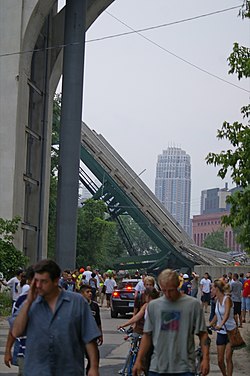
The I-35W Mississippi River bridge collapse in August 2007

Engineering disasters often arise from shortcuts or errors in the design process. Engineering is the science and technology used to meet the needs and demands of society.[1] These demands include buildings, aircraft, vessels, and computer software. In order to meet society’s demands, the creation of newer technology and infrastructure must be met efficiently and cost-effectively. To accomplish this, managers and engineers need a mutual approach to the specified demand at hand. This can lead to shortcuts in engineering design to reduce costs of construction and fabrication. Occasionally, these shortcuts can lead to unexpected design failures. Engineering disasters are also caused by errors such as miscalculations and miscommunication.

Overview

[edit]

Failure occurs when a structure or device has been used past the limits of design that inhibits proper function.[2] If a structure is designed to only support a certain amount of stress, strain, or loading and the user applies greater amounts, the structure will begin to deform and eventually fail. Several factors contribute to failure including a flawed design, improper use, financial costs, and miscommunication.

Safety

[edit]

In the field of engineering, the importance of safety is emphasized. Learning from past engineering failures and infamous disasters such as the Challenger explosion brings the sense of reality to what can happen when appropriate safety precautions are not taken. Safety tests such as tensile testing, finite element analysis (FEA), and failure theories help provide information to design engineers about what maximum forces and stresses can be applied to a certain region of a design. These precautionary measures help prevent failures due to overloading and deformation.[3]

Static loading

[edit]
Stress–strain curve showing typical yield behavior for ductile metals. Stress (σ) is shown as a function of strain (ϵ). Stress and strain are correlated through Young's Modulus: σ=Eϵ where E is the slope of the linear section of the plot. The numbers indicate: 1: True elastic limit 2: Proportionality limit 3: Elastic limit 4: Offset yield strength, usually defined at e=0.2%

Static loading is when a force is applied slowly to an object or structure. Static load tests such as tensile testing, bending tests, and torsion tests help determine the maximum loads that a design can withstand without permanent deformation or failure. Tensile testing is common when calculating a stress-strain curve which can determine the yield strength and ultimate strength of a specific test specimen.

Tensile testing on a composite specimen

The specimen is stretched slowly in tension until it breaks, while the load and the distance across the gage length are continuously monitored. A sample subjected to a tensile test can typically withstand stresses higher than its yield stress without breaking. At a certain point, however, the sample will break into two pieces. This happens because the microscopic cracks that resulted from yielding will spread to large scales. The stress at the point of complete breakage is called a material's ultimate tensile strength.[4] The result is a stress–strain curve of the material's behavior under static loading. Through this tensile testing, the yield strength is found at the point where the material begins to yield more readily to the applied stress, and its rate of deformation increases.[5]

Fatigue

[edit]

When a material undergoes permanent deformation from exposure to radical temperatures or constant loading, the functionality of the material can become impaired.[6][7] This time–dependent plastic distortion of material is known as creep. Stress and temperature are both major factors of the rate of creep. In order for a design to be considered safe, the deformation due to creep must be much less than the strain at which failure occurs. Once the static loading causes the specimen to surpass this point, the specimen will begin permanent, or plastic, deformation.[7]

In mechanical design, most failures are due to time-varying, or dynamic, loads that are applied to a system. This phenomenon is known as fatigue failure. Fatigue is known as the weakness in a material due to variations of stress that are repeatedly applied to said material.[8] For example, when stretching a rubber band to a certain length without breaking it (i.e. not surpassing the yield stress of the rubber band) the rubber band will return to its original form after release; however, repeatedly stretching the rubber band with the same amount of force thousands of times would create micro-cracks in the band which would lead to the rubber band being snapped. The same principle is applied to mechanical materials such as metals.[5]

Fatigue failure always begins at a crack that may form over time or due to the manufacturing process used. The three stages of fatigue failure are:

  1. Crack initiation- when repeated stress creates a fracture in the material being used
  2. Crack propagation- when the initiated crack develops in the material to a larger scale due to tensile stress.
  3. Sudden fracture failure- caused by unstable crack growth to the point where the material will fail

Note that fatigue does not imply that the strength of the material is lessened after failure. This notion was originally referred to a material becoming "tired" after cyclic loading.[5]

Miscommunication

[edit]

Engineering is a precise discipline, requiring communication among project developers. Several forms of miscommunication can lead to a flawed design. Various fields of engineering must intercommunicate, including civil, electrical, mechanical, industrial, chemical, biological, and environmental engineering. For example, a modern automobile design requires electrical engineers, mechanical engineers, and environmental engineers to work together to produce a fuel-efficient, durable product for consumers. If engineers do not adequately communicate among one another, a potential design could have flaws and be unsafe for consumer purchase. Engineering disasters can be a result of such miscommunication, including the 2005 levee failures in Greater New Orleans, Louisiana during Hurricane Katrina, the Space Shuttle Columbia disaster, and the Hyatt Regency walkway collapse.[9][10][11]

An exceptional example of this is the Mars Climate Orbiter. "The primary cause of the orbiter's violent demise was that one piece of ground software supplied by Lockheed Martin produced results in a United States customary unit, contrary to its Software Interface Specification (SIS), while a second system, supplied by NASA, expected those results to be in SI units, in accordance with the SIS." Lockheed Martin and the prime contractor spectacularly failed to communicate.

Software

[edit]

Software has played a role in many high-profile disasters:

Systems engineering

[edit]

Examples

[edit]
Fatalities in engineering disaster, 1900-2023. Source: www.emdat.be

When larger projects such as infrastructures and airplanes fail, multiple people can be affected which leads to an engineering disaster. A disaster is defined as a calamity that results in significant damage which may include the loss of life.[13] In-depth observations and post-disaster analysis have been documented to a large extent to help prevent similar disasters from occurring.

Infrastructure

[edit]

Ashtabula River Bridge Disaster (1876)

[edit]

The Ashtabula River railroad disaster occurred December 29, 1876 when a bridge over the Ashtabula River near Ashtabula, Ohio failed as a Lake Shore and Michigan Southern Railway train passed over it, killing at least 92 people. Modern analyses blame failure of an angle block lug, thrust stress and low temperatures.

Tay Bridge Disaster (1879)

[edit]

On December 28, 1879, the Tay Bridge Disaster occurred when the first Tay Rail Bridge collapsed as a North British Railway passenger train on the Edinburgh–Dundee line passed over it, killing at least 59 people. The major cause was failure to allow for wind loadings.

Johnstown Flood (1889)

[edit]

The Johnstown Flood occurred on May 31, 1889, when the South Fork Dam located on the Little Conemaugh River upstream of the town of Johnstown, Pennsylvania, failed after days of heavy rainfall killing at least 2,209 people. A 2016 hydraulic analysis confirmed that changes made to the dam severely reduced its ability to withstand major storms.

Quebec Bridge collapse (1907)

[edit]

The road, rail and pedestrian Quebec Bridge in Quebec, Canada, failed twice during construction, in 1907 and 1916, at the cost of 88 lives. The first failure was improper design of the chords. The second failure occurred when the central span was being raised into position and fell into the river.

St. Francis Dam collapse (1928)

[edit]

The St. Francis Dam was a concrete gravity dam located in San Francisquito Canyon in Los Angeles County, California, built from 1924 to 1926 to serve Los Angeles's growing water needs. It failed in 1928 due to a defective soil foundation and design flaws, triggering a flood that claimed the lives of at least 431 people.

Tacoma Narrows Bridge collapse (1940)

[edit]
Footage of the old Tacoma Narrows Bridge collapsing
(19.1 MB video, 02:30).

The first Tacoma Narrows Bridge was a suspension bridge in Washington that spanned the Tacoma Narrows strait of Puget Sound. It dramatically collapsed on November 7, 1940. The proximate cause was moderate winds which produced aeroelastic flutter that was self-exciting and unbounded, opposite to damping.

Hyatt Regency Hotel walkway collapse (1981)

[edit]

On July 17, 1981, two overhead walkways loaded with partygoers at the Hyatt Regency Hotel in Kansas City, Missouri, collapsed. The concrete and glass platforms fell onto a tea dance in the lobby, killing 114 and injuring 216. Investigations concluded the walkway would have failed under one-third the weight it held that night because of a revised design.

Federal levee failures in New Orleans (2005)

[edit]

Levees and floodwalls protecting New Orleans, Louisiana, and its suburbs failed in 50 locations on August 29, 2005, following the passage of Hurricane Katrina, killing 1,577 people. Four major investigations all concurred that the primary cause of the flooding was inadequate design and construction by the Army Corps of Engineers.

Ponte Morandi collapse (2018)

[edit]

Ponte Morandi was a road viaduct in Genoa, Liguria, Italy. On August 14, 2018, a section of the viaduct collapsed during a rainstorm, killing forty-three people. The remains of the original bridge were demolished in August 2019.

Surfside condominium building collapse (2021)

[edit]

On June 24, 2021, at 1:22 a.m., Champlain Towers South, a 12-story beachfront condominium in the Miami suburb of Surfside, Florida, partially collapsed killing ninety-eight people. The investigations are currently ongoing.

Aeronautics

[edit]

Space Shuttle Challenger disaster (1986)

[edit]

The Space Shuttle Challenger disaster occurred on January 28, 1986, when the NASA Space Shuttle orbiter Challenger (OV-099) (mission STS-51-L) broke apart 73 seconds into its flight, leading to the deaths of its seven crew members. Disintegration of the vehicle began after an O-ring seal in its right solid rocket booster (SRB) failed at liftoff.

Space Shuttle Columbia disaster (2003)

[edit]
The crew of the STS-107 mission

The Space Shuttle Columbia (OV-102) disaster occurred on February 1, 2003, during the final leg of STS-107. While re-entering Earth's atmosphere over Louisiana and Texas, the shuttle unexpectedly disintegrated, resulting in the deaths of all seven astronauts on board. The cause was damage to thermal shielding tiles from impact with a falling piece of foam insulation from an external tank during the January 16 launch.

Vessels

[edit]

Liberty ships in WWII

[edit]

Early Liberty ships suffered hull and deck cracks, and a few were lost to such structural defects. During World War II, there were nearly 1,500 instances of significant brittle fractures. Three of the 2,710 Liberties built broke in half without warning. In cold temperatures the steel hulls cracked, resulting in later ships being constructed using more suitable steel.

Steamboat Sultana (1865)

[edit]
Depiction of the steamboat Sultana disaster

On the night of April 26, 1865, the passenger steamboat Sultana exploded on the Mississippi River seven miles (11 km) north of Memphis, Tennessee. The explosion resulted in the loss of 1,547 lives. The cause was believed to be the result of an incorrectly repaired boiler exploding, which led to the explosion of two of the three other boilers.

Titan submersible

[edit]

On 18 June 2023, the submersible Titan imploded during an expedition to the wreck of the Titanic, killing all five persons on board. Flaws in the design of the submersible and the carbon fibre pressure hull in particular were discussed as a possible cause of the implosion, with Titan's operator OceanGate having ignored multiple previous warnings about the potential for accidents.

See also

[edit]

References

[edit]
Revisions and contributorsEdit on WikipediaRead on Wikipedia
from Grokipedia
Engineering disasters refer to the catastrophic failures of designed structures, machines, or systems that exceed operational tolerances, resulting in substantial loss of life, injury, economic damage, or . These events typically arise from deviations between predicted and actual performance under load, often traceable to deficiencies in materials, design assumptions, construction practices, or maintenance protocols. Such failures highlight the boundaries of engineering prediction, where empirical models confront real-world variabilities like material fatigue, corrosion, or overload beyond nominal specifications. Primary causal factors include design oversights, such as inadequate safety margins or flawed load path analysis; material shortcomings, including defects or degradation under stress; and human elements like erroneous construction or insufficient inspection, which account for the majority of incidents rather than purely aleatory events. In approximately 80% of analyzed cases, organizational and knowledge gaps—rather than isolated technical errors—predominate, underscoring systemic vulnerabilities in decision-making and risk assessment. Historically, these disasters have prompted iterative advancements in standards and methodologies, transforming isolated tragedies into foundational data for probabilistic modeling and resilience engineering, though persistent challenges arise from scaling complex systems amid incomplete foresight. Empirical reviews of hundreds of structural collapses reveal patterns of preventable escalation, where early indicators of distress are overlooked due to economic pressures or miscalibrated priorities, yielding lessons in causal chain interruption through rigorous validation and .

Definition and Classification

Defining Engineering Disasters

Engineering disasters refer to catastrophic failures of systems, structures, or artifacts designed and constructed by engineers, resulting in substantial human casualties, property destruction, economic losses exceeding millions of dollars, or widespread environmental degradation. These events are distinguished by their root attribution to deficiencies within the engineering lifecycle—such as errors in analysis, specification of materials, fabrication processes, or quality assurance—rather than exogenous factors like acts of war or purely probabilistic natural extremes. For example, a miscalculation in load-bearing capacity or omission of fatigue analysis can precipitate collapse under routine stresses, amplifying minor oversights into mass-scale harm. Central to their is the principle of foreseeability: engineering disasters typically involve breaches of established scientific laws or margins that engineers are professionally obligated to uphold, often traceable to quantifiable lapses like underestimation of dynamic loads by factors of 20-50% or selection of alloys prone to brittle under operational temperatures. Empirical analyses of historical cases reveal patterns where initial flaws propagate through phases, yielding failure modes like , yielding, or acceleration not mitigated by . These failures underscore causal chains rooted in physical realities—material limits under stress, thermodynamic instabilities—rather than abstract social constructs, with post-event investigations confirming that adherence to validated codes could have averted over 70% of documented structural collapses. Quantitatively, engineering disasters are often demarcated by impact thresholds, such as fatalities numbering in the dozens to thousands or repair costs surpassing budgets by orders of magnitude, though no universal metric exists; instead, hinges on evidentiary links to causation over operator alone. derives from iterative refinement of predictive models, yet inherent uncertainties in complex systems—arising from nonlinear interactions or incomplete —persist, as evidenced by recurrent themes in failure databases spanning 1900-2023. This definitional frame prioritizes causal accountability, enabling forensic dissection to isolate accountability from variables like regulatory oversight gaps.

Distinction from Natural and Operational Failures

Engineering disasters are characterized by catastrophic failures in human-designed , systems, or processes attributable to deficiencies in engineering practices, such as flawed calculations, substandard , or inadequate construction methods, leading to unintended loss of life, property damage, or environmental harm. These events are distinct from , which stem primarily from uncontrollable geophysical, meteorological, or biological forces—like earthquakes, hurricanes, floods, or volcanic eruptions—that exceed the anticipated environmental loads for which the engineered system was designed. While a natural event may precipitate failure in an engineered , the as an engineering disaster hinges on that the root cause lies in engineering shortcomings, such as underestimating load capacities or ignoring under foreseeable stresses, rather than the sheer magnitude of the natural force overwhelming a reasonably robust . Operational failures, by contrast, arise from post-construction human actions or inactions during routine use, including procedural errors, insufficient , overloads beyond operational protocols due to misuse, or breakdowns in procedural safeguards, without implicating inherent flaws in the original . For instance, a bridge collapse due to operators routinely exceeding weight limits violates operational guidelines, whereas an engineering disaster involves systemic design errors like improper truss that fails even under rated loads. This demarcation underscores that engineering disasters reveal lapses in predictive modeling, , or during development and fabrication, often verifiable through forensic of blueprints, test data, and failure modes, whereas operational issues manifest in real-time deviations from intended protocols. Distinguishing these categories enables targeted preventive measures: enhanced engineering standards and for design-centric risks, versus operator training and monitoring for operational ones.

Root Causes and Failure Mechanisms

Design and Analytical Errors

Design errors in engineering projects typically manifest as fundamental shortcomings in the conceptual framework, such as inadequate provisions for dynamic loads, environmental interactions, or safety redundancies, often stemming from an incomplete grasp of underlying physical principles. Analytical errors, by contrast, involve flawed computational assessments, including erroneous assumptions in stress-strain modeling, load path evaluations, or finite element simulations that overestimate structural capacity or underestimate failure modes like buckling or fatigue. These errors can compound during implementation, where unverified changes amplify vulnerabilities, leading to disproportionate collapses under nominal operating conditions. A prominent example is the collapse on November 7, 1940, where the design employed slender, solid plate girders rather than open trusses, excessively stiffening the structure vertically while permitting torsional flexibility. This configuration, analyzed primarily for static loads, neglected aeroelastic phenomena; wind speeds of approximately 42 miles per hour induced self-reinforcing torsional flutter via , causing the 2,800-foot main span to twist and fail without material overload. Post-failure investigations revealed that pre-construction testing was absent, and analytical models failed to predict the coupled aerodynamic-structural , highlighting a causal disconnect between quasi-static assumptions and dynamic reality. In the Hyatt Regency Hotel walkway collapse on July 17, 1981, an analytical oversight during a modification proved catastrophic. The original scheme featured continuous hanger rods suspending both second- and fourth-floor walkways from above; however, to simplify fabrication, engineers altered it to separate rods for each level, effectively doubling the load on the fourth-floor connections to 9.5 kips per rod under full crowd loading. This change halved the connection capacity from 9,900 pounds to 4,950 pounds, yet the stamped approval relied on unchecked hand calculations that did not re-evaluate shear and tensile demands at the box beam-rod interface. The National Bureau of Standards investigation confirmed initiation of failure via rod pull-through at the east-end connection, resulting in 114 fatalities and exposing lapses in rigor. The on December 28, 1879, exemplified design errors compounded by analytical deficiencies in material selection and load estimation. Engineer Thomas Bouch's lattice girder design utilized slender cast-iron columns in compression, inherently susceptible to under compressive stresses exceeding 20,000 psi yield strength, with inadequate diagonal bracing to resist lateral forces. The official inquiry attributed the collapse of the 2,000-foot high girders section—killing 75—primarily to defective construction of these ties and struts, though gale-force winds (estimated 60-70 mph) exposed the underestimation of dynamic wind loads in the static-focused analysis. Forensic reappraisals indicate that even without the storm, inherent instabilities from poor quality control in castings would have precipitated progressive failure, underscoring how first-order approximations in stability ignored nonlinear deformation paths. Such errors often arise from overreliance on simplified models that omit second-order effects like geometric nonlinearity or fluid-structure interactions, as evidenced in multiple bridge failures where initial designs passed static checks but succumbed to transient excitations. demands iterative verification through scaled testing and conservative factoring, yet historical cases reveal persistent causal roots in compressed timelines or unheeded warnings, amplifying minor discrepancies into systemic breakdowns.

Material and Manufacturing Defects

Material defects arise from substandard raw materials, such as excessive impurities like or in , which lower and promote brittle failure under impact or low temperatures. These impurities elevate the ductile-to-brittle transition temperature, causing otherwise ductile metals to without significant deformation when stressed below this threshold. Manufacturing defects, conversely, include flaws introduced during fabrication, such as weld imperfections, inadequate , or residual stresses from rapid cooling, which create stress concentrations that propagate cracks. The World War II Liberty Ships exemplify combined material and manufacturing issues. Constructed rapidly from 1941 to 1945, over 2,700 vessels used with high (up to 0.055%) and content, rendering it brittle in cold North Atlantic waters around 0°C. The shift to all-welded hulls, unlike traditional riveted designs, introduced brittle fracture propagation along welds due to residual stresses and lack of arresters like rivets. Approximately 1,500 ships experienced hull or deck fractures, with 10-30% suffering major cracks; three sank directly from fracturing, including the SS Schenectady on January 16, 1943, which split in drydock. Post-war analysis confirmed that ductile steel grades and crack-arresting strakes could have mitigated these failures. The RMS Titanic disaster on April 15, 1912, similarly involved material brittleness exacerbated by cold conditions. Hull plates contained high inclusions (up to 0.069%) and elongated stringers, reducing impact toughness to below 13.5 ft-lbs at -10°C equivalent temperatures, far inferior to modern standards exceeding 50 ft-lbs. rivets in the forward hull, with 40% lower than , failed in brittle shear upon contact, opening seams over 300 feet. Metallurgical tests on recovered samples showed the steel's Charpy V-notch energy dropped sharply near 0°C temperatures, confirming causal role in the hull breach without which the ship might have stayed afloat longer. Such defects underscore the need for material selection based on service environments and rigorous non-destructive testing during manufacturing; failures often reveal overlooked interactions between alloy chemistry, processing, and loading, as evidenced in forensic reconstructions.

Construction, Maintenance, and Operational Lapses

Construction lapses typically arise from deviations in workmanship, unauthorized design modifications, or insufficient during assembly, compromising structural integrity. A prominent example is the Regency Hotel walkway collapse on July 17, 1981, in , where fabricators altered the original rod connection design from continuous hangers suspending both walkways from the ceiling to independent double-rod hangers for fabrication ease; this change doubled the shear load on the fourth-floor beam connections without adequate reanalysis or approval, resulting in the fourth-floor walkway falling onto the second-floor one and causing 114 fatalities and 216 injuries. Maintenance failures involve neglecting routine inspections, repairs, or load rating updates, allowing deterioration to progress unchecked. The collapse on January 28, 2022, in , , exemplified this when severe fractured the legs supporting the 447-foot-long structure, despite biennial inspections from 2007 to 2021 documenting cracking and section loss that warranted immediate intervention; the cited lapses in maintenance execution by the City of and inadequate oversight by the as key contributors to the failure, which injured 10 people though caused no deaths. In the collapse on August 1, 2007, in Minneapolis, Minnesota, while undersized plates were the primary design flaw, overlooked and section loss in critical nodes, identified but not prioritized in inspections, compounded vulnerabilities amid increasing traffic loads. Operational lapses occur through procedural oversights, such as unpermitted load increases or inadequate load management, straining systems beyond intended capacities. Investigations by the into 96 structural collapses during construction from 1990 to 2008 found construction-related errors, often tied to operational decisions like sequencing or temporary bracing, contributing to 80% of incidents involving fatalities or injuries. For in-service structures, added dead loads from retrofits or barriers, as in the I-35W case where post-construction modifications including concrete safety barriers and overlay increased weight by approximately 20% over original estimates, exacerbated design margins without corresponding reinforcements, per the NTSB analysis. Such lapses underscore the need for ongoing load assessments to prevent cumulative overloads leading to .

Human Factors and Organizational Breakdowns

Human factors in engineering disasters include cognitive errors, such as misjudgments under stress or , and interpersonal issues like poor communication, which often initiate failure chains. Organizational breakdowns amplify these through systemic deficiencies, including inadequate protocols, hierarchical pressures suppressing dissent, and cultures that normalize deviations from standards. Studies indicate that and organizational factors contribute to approximately 75-80% of industrial failures, underscoring their prevalence over purely technical causes. A prominent example is the on January 28, 1986, where the vehicle exploded 73 seconds after launch, killing all seven crew members due to seal failure in cold weather. Engineers at contractor Morton Thiokol warned of risks and recommended delay, citing data from prior flights showing erosion, but managers, facing launch schedule pressures, overruled the recommendation during a , prioritizing operational timelines. This reflected 's "normalization of deviance," where repeated minor anomalies were accepted, eroding safety margins, and organizational silence prevented effective upward communication of concerns. Similarly, the disintegrated on February 1, 2003, during reentry, killing seven astronauts after insulating foam from the external tank struck and breached the left wing during ascent. Although ground engineers identified the debris strike via imagery and proposed on-orbit inspection or repair, mission managers dismissed it as non-critical, embedded in a culture that routinely downplayed foam shedding incidents from 113 prior shuttle flights. The cited NASA's "broken ," including flawed decision-making processes and reluctance to deviate from established norms, as key contributors, despite available technical evidence warranting action. In , the Hyatt Regency Hotel walkway collapse on July 17, 1981, in , resulted in 114 deaths and over 200 injuries when two suspended walkways failed during a event. A modification shifted from continuous support rods to independent brackets, effectively doubling the load on critical connections, but this change was approved during a brief meeting without recalculating shear forces or obtaining formal engineering review. The project engineer and fabricator failed to verify the altered design's adequacy, exemplifying lapses in oversight and communication within the design-build team, compounded by rushed approvals to meet construction deadlines. The collapses illustrate organizational culture's role in structural failures. The first incident on August 29, 1907, saw the south arm buckle under its own weight, killing 75 workers, due to flawed compression chord design and unaccounted weight increases from modifications. Root causes traced to the Phoenix Bridge Company's insular , inadequate external consultation, and deference to chief engineer Theodore Cooper's remote directives without on-site verification, fostering an environment where errors persisted unchecked. A subsequent collapse in September 1916 during erection killed 13 more, highlighting persistent oversight deficiencies despite prior lessons.

Environmental and External Triggers

Environmental triggers in engineering disasters primarily involve natural forces such as , flows, fluctuations, and seismic activity that impose unanticipated stresses or on structures, often revealing deficiencies in load assumptions or durability provisions. These phenomena degrade materials through mechanisms like , cracking, or foundation undermining, particularly when designs underestimate event severity or frequency based on historical data. For instance, cyclic thermal expansions and contractions can induce micro-cracks in and , compounding over decades to reduce load-bearing capacity. Hydrologic events, including flooding and scour, frequently precipitate failures in bridges and dams by eroding supporting soils and exposing vulnerabilities in pier designs or spillway capacities. High-velocity floodwaters remove around foundations at rates exceeding 1 meter per day in extreme cases, leading to sudden instability; statistical reviews of Italian bridge incidents from 1950 to 2020 indicate that flooding and scouring contributed to over 20% of collapses attributed to natural hazards, underscoring the role of inadequate geotechnical assessments. Similarly, hurricane-induced surges and winds have overwhelmed , as seen in post-event analyses of U.S. Gulf failures where wave forces exceeded thresholds by factors of 1.5 to 2.0 due to intensified patterns. Wind and aerodynamic effects serve as dynamic environmental triggers, capable of exciting resonant vibrations in slender structures like suspension bridges or towers. Gusts with speeds above 100 km/h can initiate aeroelastic instabilities, such as flutter, where torsional and vertical modes couple destructively, amplifying displacements until fracture occurs; forensic engineering reports attribute such outcomes to insufficient or in lightweight designs. Temperature extremes further exacerbate this by altering material properties— loses 50% of its yield strength near 600°C from intensified by dry conditions—while freeze-thaw cycles in cold climates fracture through volumetric expansion of by up to 9%. External triggers encompass non-environmental, adventitious impacts or overloads from human activities, such as vessel collisions or vehicular strikes, which introduce localized, high-energy impulses absent from original envelopes. impacts, delivering kinetic energies on the order of 100 megajoules, can shear pier supports if redundancy is lacking, as evidenced by incident showing collisions accounting for 10-15% of global bridge failures since 1980. These often stem from navigational errors or mechanical failures rather than inherent structural flaws, yet they highlight the need for protective fenders or sacrificial elements in hazard-prone sites. or wartime actions qualify as deliberate external triggers, though rarer in civilian contexts, with explosive blasts fracturing welds and connections through shock waves propagating at 5-10 km/s. In all cases, post-failure investigations emphasize probabilistic modeling of trigger frequencies to mitigate cascading risks, prioritizing empirical over deterministic safety factors.

Civil and Structural Infrastructure Disasters

Ashtabula River Bridge Disaster (1876)

The Ashtabula River railroad bridge, a Howe structure spanning 157 feet over Ashtabula Creek in northeastern , collapsed on December 29, 1876, at approximately 7:28 p.m., causing the of the Lake Shore & Michigan Southern Railway to plunge 69 feet into the icy waters below. The train, consisting of two locomotives and 11 cars carrying around 160 s and crew bound from , to , was traversing the bridge during a severe snowstorm with high winds when the failure occurred. The lead locomotive crossed safely, but the trailing engine and cars derailed into the ravine, where overturned heating stoves ignited the wooden passenger cars, exacerbating fatalities through impact trauma, crushing, , and burns. Of the approximately 160-170 aboard, 92 to 95 perished, with 47 bodies identified and 48 remaining unidentifiable due to the fire's intensity; survivors numbered around 75, many severely injured. Constructed in 1865 at a cost of $75,000, the bridge represented an early attempt at an all-iron , utilizing for tension and compression members connected via cast-iron junction blocks—a material prone to under stress despite its . Designed and overseen by Amasa Stone without formal stress analysis or testing, the structure incorporated inadequate bracing and relied on empirical rules rather than calculated load factors, with compression chords undersized for the spans' demands. Over 11 years of service, repetitive loading from increasingly heavy —without routine nondestructive inspections—allowed a crack to propagate from a defect, such as an air hole in a critical member, ultimately leading to sudden shear failure under the storm-loaded train weight. A coroner's lasting 68 days, supplemented by an legislative committee investigation initiated on January 12, 1877, attributed the collapse primarily to defective design by the railroad company, substandard fabrication and erection practices, and neglectful maintenance, including the use of in high-stress joints ill-suited for dynamic rail loads. The reports criticized the absence of safety margins calibrated to iron's variable properties, which lacked the era's emerging experimental data on tensile and limits, and highlighted organizational lapses in oversight by the operating railroad. No criminal charges resulted, but the prompted immediate replacement with a wooden bridge by January 18, 1877, and spurred broader reforms in American bridge engineering, including mandates for rigorous stress calculations, material testing, and periodic inspections to prevent similar overload failures in truss systems. Amasa Stone, facing professional ruin and public scrutiny, died by in 1883.

Tay Bridge Disaster (1879)

The Tay Bridge, spanning the Firth of Tay in Scotland, was completed in 1878 as the world's longest bridge at approximately 3,300 meters (2 miles), comprising 85 spans with iron girder superstructure supported on cast iron piers driven into the riverbed. Designed by engineer Sir Thomas Bouch for the North British Railway, it facilitated rail traffic between Dundee and Fife, replacing ferry services amid growing industrial demand. On the evening of December 28, 1879, during a severe with winds exceeding 50 knots from the southeast, the central 13 spans (girders 27 to 39) of the bridge collapsed into the of Tay as the 6:15 p.m. from to traversed them, approximately 200 meters from the end. The , carrying around 75 passengers and in six carriages, plunged into the icy waters below, resulting in the loss of all lives aboard; no bodies were recovered from the submerged wreckage until days later, with the final count confirmed at 75 fatalities. Eyewitnesses reported the girders and twisting under the storm's force, with the failure initiating at the east end of the high girders section due to progressive structural overload. The Court of Inquiry, convened in January 1880 and chaired by Major General Charles Hutchinson, attributed the collapse primarily to deficiencies, concluding that the cross-bracing and fastenings lacked sufficient strength to resist the gale's lateral forces, compounded by inadequate provision for loads in the structure's analysis. Forensic reappraisals confirm that the columns, chosen for economy over or , exhibited brittle under tension from asymmetric -induced , with lugs and tie bars failing sequentially as the piers oscillated out of phase. Bouch's neglected rigorous stress calculations for dynamic effects, relying instead on empirical scaling from smaller bridges, and omitted diagonal bracing in the critical high girders, which amplified vulnerability to torsional and lateral . Construction and material quality further exacerbated the flaws: inspections revealed defective castings in the , including blowholes filled with "Beaumont's eggs" (a makeshift ), which compromised integrity under load, alongside poor workmanship in riveting and alignment of the . The inquiry criticized the North British Railway's oversight, noting insufficient testing of components and maintenance lapses, such as unrepaired distortions observed in the bridge prior to the storm. Bouch, who had been knighted earlier in 1879 for the project, bore principal responsibility; he died of illness in October 1880 before formal censure, though his knighthood was posthumously annulled by . The disaster prompted reforms in British engineering standards, including mandatory wind load considerations in bridge design (e.g., via the Forth Bridge inquiry's influence) and stricter quality controls on castings, shifting preference toward ductile materials like steel for tension members. A replacement , rebuilt with cantilever trusses and rigorous testing between 1882 and 1887, remains in service, underscoring the original's failure as a cautionary case of overreliance on unproven scaling in without accounting for environmental extremes.

Quebec Bridge Collapse (1907)

The , intended to cross the between and Lévis, , was designed as a structure to achieve a central span of 1,800 feet, surpassing existing records for such bridges. The project, initiated by the Quebec Bridge and Railway Company in 1900, involved the Phoenix Bridge Company of , for design and fabrication, with American engineer Theodore Cooper serving as consulting engineer despite never visiting the site. Construction began in 1905, focusing on the south cantilever arm extending from the Quebec shore pier. On August 29, 1907, at approximately 5:30 p.m., the south cantilever arm collapsed into the river without warning, plunging 86 workers into the water; 75 perished, including 33 Mohawk ironworkers from renowned for high-steel work, marking it as the deadliest bridge construction disaster in history at the time. The failure initiated at the anchor arm's lower chords A9L and A9R near the pier, where under caused sequential member failures, crumpling the structure in seconds. Eyewitnesses, including workers and a passing , reported no prior audible cracks or visible deformation, underscoring the suddenness of overload-induced instability. Engineering analysis post-collapse revealed primary causes rooted in flawed stress calculations and assumptions. The dead load—self-weight of the members—was underestimated by about 15%, as initial estimates omitted additional riveting and lattice bracing mass, leading to compressive forces in anchor arm chords exceeding 20% beyond the 's capacity. Designers at Phoenix Bridge, under chief Peter Szlapka, assumed certain members bore tension loads, but revised computations showed critical compression; inadequate slenderness ratios and insufficient lattice bracing failed to prevent Euler , with safety factors below contemporary standards of 4:1 for compression. Cooper's remote approvals exacerbated issues: he endorsed span extensions to 1,800 feet without demanding full recalculations and rejected on-site Norman McLure's warnings of excessive deflections, prioritizing cost over iterative verification. A Canadian , appointed September 1907 and comprising engineers Henry Robinson, John Galbraith, and George Noble, investigated and issued findings in 1908 attributing responsibility to Phoenix Bridge's staff for computational errors and to Cooper for inadequate oversight, though exonerating the fabricating firm itself. The report emphasized systemic lapses, including unheeded warnings from resident engineers about member stresses reaching 85% of yield and organizational pressures to accelerate construction amid financial strains. The disaster prompted reforms in , including mandatory higher safety factors (elevated to 5:1 or more for trusses), rigorous protocols, and the formation of the American Association of Port Authorities' standards committee; it also influenced Canadian codes, underscoring the perils of delegated authority without direct supervision. Reconstruction proceeded under new designs by the Dominion Bridge Company, incorporating and verified calculations, culminating in the bridge's completion in 1917 despite a secondary span-lifting failure in 1916 that killed 13.

Tacoma Narrows Bridge Collapse (1940)

The was a crossing the Tacoma Narrows strait in , Washington, with a main span of 2,800 feet. Designed by and completed in 1940 at a cost of approximately $8 million, it featured a slender, lightweight deck to achieve economic efficiency through deflection theory, which prioritized minimal material use over torsional rigidity. The bridge opened to traffic on July 1, 1940, but exhibited noticeable oscillations even under moderate winds shortly after, earning the nickname "Galloping Gertie" from observers. On November 7, 1940, at around 11:00 a.m., sustained winds of 35 to 42 miles per hour triggered escalating torsional vibrations in the bridge deck. Initial vertical undulations transitioned into severe twisting motions, with the deck rotating up to 45 degrees on either side, as wind-generated vortices shed alternately from the solid plate girders—functioning like an —reinforced the oscillations. These self-excited aeroelastic flutter forces overwhelmed the structure's damping capacity, leading to progressive failure: snapped sequentially, cables slipped at mid-span, and sections of the deck plunged into the water below by 11:10 a.m. No human lives were lost, though the event was captured on , providing rare visual documentation of structural collapse dynamics. The bridge's design incorporated shallow 8-foot-deep plate girders and a narrow deck (depth-to-span ratio of 1:350 and width-to-span ratio of 1:72), rendering it excessively flexible and susceptible to aerodynamic instability under non-turbulent winds far below its static design loads. Unlike earlier stiff suspension bridges, such as the Brooklyn Bridge, this configuration lacked open trusses to dissipate wind energy, allowing vortex-induced forces to couple with the structure's natural torsional mode and amplify displacements without external resonance as the primary driver. Moisseiff's reliance on static load assumptions overlooked dynamic wind-structure interactions, a gap exacerbated by limited prior empirical data on long-span aerodynamics. Post-collapse investigations, including the 1941 Carmody Board report by experts , , and Glenn Woodruff, attributed failure to the deck's aerodynamic properties and insufficient torsional , dismissing simplistic theories in favor of flutter mechanisms confirmed through subsequent models. Further analysis by professor Frederick Farquharson highlighted undamped self-induced vibrations from steady winds interacting with the girder's shape. These findings revealed a blind spot in 1930s practice, where cost-driven lightness trumped stability margins against environmental loads. The disaster prompted paradigm shifts in bridge engineering, mandating wind tunnel testing for aeroelastic stability and favoring deeper, trussed stiffening girders to increase and disrupt airflow. The replacement , opened in , incorporated 33-foot-deep open trusses and wind vents, demonstrating enhanced resistance to similar gusts without observed flutter. This event underscored the causal primacy of empirical validation over theoretical economies in long-span designs, influencing standards like those from the American Association of State Highway Officials for dynamic load considerations.

Hyatt Regency Walkway Collapse (1981)

The Hyatt Regency walkway collapse took place on July 17, 1981, at the Hyatt Regency Hotel in Kansas City, Missouri, when the suspended second- and fourth-floor walkways in the atrium lobby failed during a tea dance competition, resulting in 114 fatalities and 216 injuries. The hotel, which had opened in April 1980, featured four steel-and-concrete walkways spanning a 120-foot-wide atrium to connect conference areas, designed to support a live load of 5,000 pounds per linear foot under American Institute of Steel Construction (AISC) specifications. At the time of collapse, around 7:05 p.m., over 1,600 attendees crowded the lobby, with many dancing on the walkways, imposing dynamic loads that triggered the failure. The fourth-floor walkway fell onto the second-floor walkway, which then plummeted 37 feet to the lobby floor, creating a 90,000-pound mass of debris. The root cause traced to a pivotal design alteration during fabrication: the original engineering drawings specified a single continuous steel hanger rod passing through both the second- and fourth-floor box beams, suspending the upper walkway from the ceiling and the lower from the upper beam. Havens Steel Company, the fabricator, proposed replacing this with two separate rods—one anchoring each independently to the —to simplify and assembly, a change verbally approved by Daniel Duncan of Jack D. Gillum & Associates without full static and dynamic load recalculations. This modification doubled the on the fourth-floor beam's connection (from 90 kips tension to effectively 160 kips under combined loading), rendering the steel nut plates and washers inadequate; laboratory tests post-collapse showed the connections failed in shear at loads 20-30% below the modified design capacity. The National Bureau of Standards (NBS) investigation confirmed the connections lacked sufficient redundancy and that vibration from dancing amplified stresses, but the primary deficiency was the unverified change exceeding AISC safety factors. Post-incident probes by NBS (now NIST) and a revealed systemic lapses, including inadequate design reviews, fabrication shop drawings not rigorously checked against originals, and construction inspections that overlooked the modification. The Missouri Board of Architects and Engineers found the supervising engineers guilty of , indefinitely suspending licenses of Duncan and principal G. Robert Wills for failing to adhere to professional standards under Missouri requiring competent supervision. No criminal charges resulted, but the case spurred reforms in codes, emphasizing documentation of changes and independent peer reviews for load-bearing alterations. The , the deadliest non-terror structural failure in U.S. history at the time, underscored causal failures in communication between designers, fabricators, and constructors rather than material defects or external forces.

I-35W Mississippi River Bridge Collapse (2007)

The I-35W Mississippi River bridge, an eight-lane steel truss arch structure in Minneapolis, Minnesota, collapsed on August 1, 2007, at 6:05 p.m. CDT during rush-hour traffic. The failure caused 13 fatalities and injured 145 people, with 111 vehicles and 18 construction workers falling into the Mississippi River or onto the embankment below. The bridge, opened in 1967 and designed by Sverdrup & Parcel Associates, carried approximately 140,000 vehicles daily and was undergoing resurfacing work at the time, which included added deck materials weighing an extra 468,000 pounds beyond design loads. The (NTSB) investigation identified the primary cause as the inadequate load-carrying capacity of plates at the U10 nodal connection in the main , resulting from a where the plates were specified at half the required thickness (0.5 inches instead of 1 inch). This calculation mistake originated in the firm's 1965-1967 documents and went undetected during fabrication, multiple load rating analyses (including 1990 and 2006 reviews by the ), and routine inspections. Finite element analyses confirmed that the flawed plates buckled under combined dead load, live load, and , initiating a of the . Although the bridge had been rated "structurally deficient" in 2005 due to and fracture-critical member concerns, no evidence linked these to the initiating failure, and prior distortions in nearby plates at L11 were not investigated for overload. Contributing factors included the accumulation of construction materials and equipment on the span, which imposed localized loads exceeding the gusset plates' capacity by a factor of 2.5 to 2.8, but the NTSB emphasized that the design flaw alone rendered the structure vulnerable without this added weight. reviews corroborated that the U10 and adjacent L11 gusset plates fractured first, with no significant prior or damage evident at the critical nodes. The incident prompted federal mandates for enhanced bridge inspections nationwide, including targeted checks of gusset plates, and led to the replacement bridge's completion in 19 months at a cost of $234 million. This event underscored the risks of unverified foundational calculations in designs and the limitations of protocols for hidden connection weaknesses.

Francis Scott Key Bridge Collapse (2024)

The Francis Scott Key Bridge, a continuous structure spanning the in , , as part of Interstate 695, collapsed at approximately 1:28 a.m. EDT on March 26, 2024, following a collision with the Singapore-flagged Dali. The Dali, a 984-foot vessel chartered by and managed by Synergy Marine Group, experienced two successive electrical blackouts shortly after departing the , leading to a loss of and control. The first blackout occurred about 0.8 nautical miles from the bridge, with power briefly restored before a second failure at 0.2 nautical miles, causing the ship to strike a main at a speed of around 8 knots. The impact severed the pier's support, triggering a of the 1.6-mile bridge's main span and adjacent sections into the river. The disaster resulted in six fatalities—all construction workers from a pothole repair crew on the bridge at the time—who fell into the 50-foot-deep, 47-degree water below; no other road users were killed due to a rapid response to the ship's call, which allowed authorities to halt traffic within about one minute. The Dali's crew of 21 Indian and one Sri Lankan national survived unharmed, though two were briefly hospitalized for evaluation. The collision ignited a on the ship, fueled by its cargo of 4,700 containers including hazardous materials like , but this did not contribute to the structural failure. National Transportation Safety Board (NTSB) investigations identified the Dali's power failures as stemming from inadequate electrical system safeguards, including a loose cable in the that at least one attributes to the shipbuilder's during or . The vessel had undergone a recent period in 2023 where temporary wiring configurations may have contributed to the vulnerability, though final causation awaits the full NTSB report. From an standpoint, the bridge—completed in 1977—lacked robust protection commensurate with modern vessel traffic risks; its fender system and dolphins, designed for smaller ships of the era, were deformed or destroyed on impact, offering minimal resistance to a 95,000-ton vessel. The Maryland Transportation Authority had not conducted a required under updated federal guidelines (post-1991 AASHTO standards), which would have quantified the 's fragility—later calculated by NTSB as having a collapse risk 30 times the safety threshold for a vessel strike of the Dali's scale. The event exposed systemic gaps in civil resilience to vessel collisions, prompting NTSB recommendations in 2025 for evaluations of 68 U.S. bridges over navigable waters, emphasizing probabilistic modeling for pier impacts rather than historical data alone. The bridge's , while efficient for load distribution, relied on slender without redundant supports or energy-absorbing barriers, amplifying the consequences of a single-point . Economically, the collapse halted operations for nearly three months, disrupting $15 million in daily commerce primarily involving automobiles and coal, though supply chains adapted via rerouting with limited long-term national effects. Reconstruction, estimated at $1.7–1.9 billion, prioritizes a cable-stayed with enhanced pier protections, targeting partial reopening by fall 2028.

Dam and Flood Control Failures

Johnstown Flood (1889)

The South Fork Dam, an earthfill structure originally built between 1840 and 1852 as part of Pennsylvania's state canal system to supply water to the Pennsylvania Main Line Canal's conduit, impounded Conemaugh Lake approximately 14 miles upstream from Johnstown, Pennsylvania. Standing 72 feet high and 931 feet long at its crest, the dam featured a core wall of hand-laid stone and clay but suffered from foundational engineering shortcomings, including porous construction materials and an insufficient spillway that limited discharge capacity during high inflows. In 1879, the dam and lake were purchased by the exclusive South Fork Fishing and Hunting Club, comprising wealthy industrialists such as Andrew Carnegie and Henry Clay Frick, who repurposed the site as a private resort; modifications included lowering the crest by 2-3 feet to widen the lake, removing and plugging discharge pipes, and installing wire mesh screens over remaining outlets to prevent fish loss, which inadvertently obstructed flow and promoted debris accumulation. These alterations, combined with minimal maintenance and ignored warnings from engineers like John Sewall Fulton in the early 1880s, compromised the dam's structural integrity against hydrologic loads. On May 30-31, 1889, persistent heavy rainfall—estimated at 3 to 6 inches over 24-48 hours from a stalled low-pressure system—filled Conemaugh Lake to capacity, causing upstream tributaries to swell and the dam to experience unprecedented inflow rates exceeding 300,000 cubic feet per second. By early afternoon on May 31, water began overtopping the crest, eroding the earthen embankments and core wall; the breach initiated around 3:10 p.m., releasing approximately 20 million tons (3.6 billion gallons) of water in a 60-foot-high wall traveling at 20-40 mph downstream. The flood wave, augmented by debris-laden tributaries and temporary damming at confluences, reached South Fork around 3:15 p.m., Mineral Point by 3:30 p.m., and Johnstown by 4:07 p.m., a 14-mile transit completed in under 60 minutes. In Johnstown, the surge demolished wooden structures, rail bridges, and the Pennsylvania Railroad viaduct, which acted as a temporary debris dam before igniting and exacerbating fires; the cataclysm killed 2,209 people, including 99 entire families and 396 children, with over 750 bodies unidentified and buried in mass graves. Engineering analyses attribute the failure primarily to human factors rather than solely meteorological extremes: the original design's low freeboard (insufficient height above maximum pool level) and undersized , rated for only 120-200 cubic feet per second discharge, failed to accommodate the rainfall event's volume, while club modifications reduced hydraulic relief and increased vulnerability to (internal ) and overtopping scour. Contemporary investigations, including an 1891 (ASCE) committee report, concluded the breach resulted from overflow due to inadequacy and crest subsidence, though it controversially absolved club members of despite evidence of foreknowledge and cost-cutting; independent reviews, such as those by hydraulic engineer William Sooy Smith, highlighted preventable defects like unmaintained overgrowth and buildup that masked leaks. No criminal liability was assigned, as courts ruled the flood an "," shielding club elites from 42 damage lawsuits despite survivor testimonies of prior warnings; this outcome underscored early gaps in dam regulation and accountability for private alterations to public infrastructure. The disaster prompted federal relief efforts, including Clara Barton's deployment—the organization's first major U.S. operation—and accelerated advancements in dam safety engineering, such as mandatory spillway sizing protocols (e.g., 10-20% of surface area equivalents) and hydrologic modeling for probable maximum events. Post-flood reconstructions in Johnstown emphasized elevated and zoning, though subsequent floods in 1936 and 1977 revealed persistent vulnerabilities in the valley's narrow and industrial density. Modern simulations using models confirm that even without modifications, the original dam would likely have failed under the 1889 storm's intensity, but rigorous maintenance could have mitigated risks through timely repairs.

St. Francis Dam Collapse (1928)

The was a curved situated in , roughly 40 miles northwest of , , constructed by the Los Angeles Department of Water and Power to provide storage for the city's aqueduct system. Construction commenced in 1924 and concluded in 1926, directed by , the department's self-taught chief engineer. The dam rose 205 feet high above its foundation, featured a crest length of about 1,225 feet (including wing walls), and had a base thickness of 175 feet tapering to 16 feet at the crest; it was capable of holding up to 12.4 billion gallons of water when full. The dam failed catastrophically at 11:57 p.m. on March 12, 1928, initiating at Block 35 of the east and unleashing the in a torrent that overwhelmed the canyon. The primary causal factors included unstable foundation —fractured on the east susceptible to and a west of friable —compounded by a dormant paleo-landslide beneath the east side, which heavy winter rains reactivated through seepage. Mulholland's engineering judgments overlooked these hazards due to superficial site investigations (only shallow borings without test pits), absence of trenches or comprehensive grouting to mitigate uplift and seepage, and post-design height increases without base expansion; leaks and a perceptible drop in level were noted that evening but attributed to settling rather than imminent failure. practices, including blasting that weakened , further eroded stability. The flood propagated over 54 miles down the Santa Clara River valley to the near Ventura, arriving around 5:30 a.m. on March 13, with initial waves exceeding 140 feet high that demolished the downstream power plant, bridges, ranches, and settlements including San Francisquito, Castaic Junction, and . Over 400 people perished, with official counts at 432 but likely higher (up to 600) owing to unrecovered bodies, mostly farm laborers and residents caught unaware at night; property losses reached $7 million in 1928 values. Mulholland acknowledged accountability in testimony, declaring himself the responsible , though a coroner's emphasized foundation rock failure over design defects to partially shield the department; the incident nonetheless terminated his career and spurred federal and state reforms in dam oversight. It underscored the perils of inadequate geotechnical evaluation and rushed infrastructure in unstable terrains, catalyzing stricter standards for foundation , seepage control, and independent reviews in .

Banqiao Dam Failure (1975)

The , an earthfill structure on the Ru River in Province, , failed catastrophically on August 8, 1975, following extreme rainfall from Typhoon Nina. The dam, completed in 1956 as part of a flood control and hydroelectric project, overtopped after receiving approximately 1,060 millimeters (42 inches) of rain in 24 hours, far exceeding its design capacity for a once-in-1,000-year event of 530 millimeters over three days. This led to a breach that released a torrent of water, inundating over 12,000 square kilometers downstream and destroying more than 60 other dams in a . Engineering shortcomings were central to the . The dam's system, consisting of only five undersized gates and a secondary , lacked sufficient discharge capacity to handle the inflow, resulting in overtopping and of the embankment. Designer Chen Xing had advocated for 12 gates and a higher crest to mitigate risks, but these recommendations were rejected amid rushed construction during China's , prioritizing speed over safety and using substandard materials like uncompacted clay fill. Nina's rainfall, classified as a once-in-2,000-year event, stalled over the region from August 5 to 7, amplifying runoff from saturated upstream basins, yet forecasting limitations and communication breakdowns prevented timely drawdown or evacuation. Policy decisions, including prohibitions on preemptive water releases to avoid minor downstream flooding, exacerbated levels reaching critical heights. The failure unleashed a flood wave up to 10 meters high and 11 kilometers wide, traveling at 50 kilometers per hour and overwhelming villages in the early hours of August 8. Immediate impacts included the destruction of , crops, and across 30 counties, with economic losses exceeding 10 billion RMB (equivalent to billions in USD today). Death toll estimates vary significantly due to post-event by Chinese authorities; official figures report 26,000 direct deaths, but independent analyses, including from dam critics and later declassified documents, place the total at 85,000 to 230,000, incorporating subsequent epidemics, , and uncounted indirect fatalities from disease in relief camps. The government's suppression of higher estimates, motivated by political during the Mao era, delayed international awareness and engineering reforms until the . Lessons from the event underscore the perils of underestimating probabilistic risks in hydraulic design and the need for robust overflow systems, real-time monitoring, and independent oversight. Subsequent Chinese dam protocols incorporated larger spillways and probabilistic modeling for extreme events, though state-controlled reporting continues to limit full transparency on vulnerabilities in similar structures. The disaster remains the deadliest dam failure on record, highlighting how institutional pressures can override empirical principles.

Federal Levee Failures in New Orleans (2005)

The federally designed and constructed levee system protecting New Orleans failed catastrophically during , which made landfall as a Category 3 storm on August 29, 2005, generating storm surges up to 18 feet above mean sea level that overtopped and breached multiple sections. The system, managed by the U.S. Army Corps of Engineers (USACE) under the 1965-authorized and Vicinity Hurricane Protection Project, included earthen levees, concrete I-walls and T-walls along drainage canals, and protections along the Mississippi River-Gulf Outlet (MR-GO). Approximately 50 major breaches occurred, flooding 80-85% of the city to depths of up to 20 feet in low-lying areas, displacing over one million people and contributing to 1,833 total fatalities, with the majority in the New Orleans metropolitan region. Economic losses from the flooding exceeded $100 billion, including $67 billion in housing damage alone. Key urban breaches at the (455-foot gap on the east side) and London Avenue Canal (425-foot south breach and 720-foot north breach) initiated between 6:30 and 9:00 a.m., without overtopping, due to geotechnical failures: lateral translational slides along weak organic silty clay and layers (1-3 inches thick, high sensitivity), underseepage from shallow layers, and elevated pore pressures beneath I-wall foundations. Sheet pile walls, embedded only 18-24 feet deep (versus post-event standards of 60+ feet), allowed hydrostatic pressures to destabilize bases, with water levels reaching 7-10 feet above mean —below the +13 to +15-foot crest elevations. These failures stemmed from design flaws, including overly optimistic strength assumptions, inadequate site investigations with sparse borings, and to model deflection under surge loads in soft, subsiding foundations (annual subsidence rates of 1/3 to 1/2 inch). Broader system failures, such as at the Navigation Canal (IHNC) and MR-GO frontage in St. Bernard Parish, involved overtopping by surges exceeding crests (designed for +17.5 feet but reduced 1-2 feet by and construction datum errors), followed by rapid of unarmored, dredged sand and shell fills lacking cohesive clay. The USACE's Interagency Performance Evaluation (IPET) report attributed 46 of 50 breaches primarily to overtopping and subsequent scour from long-period waves, with only four to foundational defects, while noting erodible materials and unarmored slopes amplified breaching. Independent engineering teams, however, identified systemic issues predating the storm: outdated Standard Project Hurricane criteria (safety factor of 1.3, insufficient for modern surges), poor transitions between I-walls and earthen sections, and incomplete construction leaving 40% of protections substandard, all under federal oversight despite known risks from 1980s underseepage studies. These engineering lapses—rooted in miscalibrated geotechnical modeling, prioritizing cost over resilience, and institutional delays in updating designs for and regional —enabled breaches at loads below authorized capacities, contradicting claims of adequacy for a Category 3 event. Earthen levees with erosion-resistant clay (e.g., in Citrus and interior St. Bernard Parish) resisted overtopping better, highlighting causal links between material choices and performance. USACE subsequently acknowledged "unacceptable" results, prompting reforms like deeper pilings, T-wall retrofits, and probabilistic risk assessments, with over $15 billion invested in enhancements by 2025.

Building and Residential Collapses

Surfside Condominium Collapse (2021)

The Champlain Towers South, a 12-story building constructed in 1981 with 136 residential units, partially collapsed on June 24, 2021, at approximately 1:22 a.m. EDT in , near Miami Beach. The east-facing tower section failed catastrophically, killing 98 people and injuring 11 others, marking one of the deadliest non-terrorism structural failures in U.S. history. Rescue operations lasted over a month, transitioning to recovery by July 7, 2021, after which the remaining structure was demolished on July 4, 2021, due to instability risks. A 2018 structural field survey by Morabito Consultants, conducted as part of Florida's mandatory 40-year building recertification, identified extensive deterioration including "major structural damage" to the pool deck and entrance drive from failed , leading to concrete spalling, cracking, and exposure. The report warned that unaddressed water intrusion would cause further degradation of the underlying slab, recommending immediate replacement and repairs estimated at millions of dollars; however, the association delayed action amid disputes over costs and contractor bids, with only partial work initiated by April 2021 when conditions were deemed "much worse." Pre-collapse indicators included visible cracks in walls, shifting doors and gates, and sudden water leaks from the garage ceiling hours before the event, signaling progressive distress. Federal investigations by the National Institute of Standards and Technology (NIST), initiated under the National Construction Safety Team Act, have preliminarily determined that the collapse originated in the pool deck's slab-column connections, where punching shear failure propagated upward into the tower due to compromised . Forensic analysis revealed corrosion of steel from prolonged water exposure, exacerbated by shrinkage, inadequate joints, and design deficiencies in the post-tensioned flat-plate system, which lacked sufficient shear at critical connections. Over 1,000 material samples confirmed substandard compressive strength and in affected areas, with computer simulations validating the failure sequence starting around 1:10-1:15 a.m. in the pool deck before engulfing the tower. NIST's full report, delayed to 2026, will recommend model code updates to address similar vulnerabilities in older coastal structures. In response, enacted Senate Bill 4-D in May 2022, mandating milestone structural inspections at 25-30 years for buildings over three stories, requiring 110% reserve funding for major repairs, and eliminating deferred options for condos. Miami-Dade County enhanced recertification protocols with third-party oversight, while nationwide scrutiny has prompted assessments of thousands of aging high-rises, revealing deferred as a in where financial incentives often prioritize short-term affordability over long-term integrity.

Champlain Towers South Collapse Analysis (2021)

The partial collapse of Champlain Towers South, a 12-story condominium building in , occurred at approximately 1:22 a.m. on June 24, 2021, resulting in 98 fatalities and the destruction of the entire east tower wing along with portions of the central structure. The building, constructed in 1981 using a flat-plate structural system—where floor slabs connect directly to columns without beams or drop panels—was particularly susceptible to punching shear failures at slab-column connections under high loads or degradation. Video and survivor accounts indicated audible distress signals, including loud noises, starting around 1:10–1:15 a.m., with the pool deck failing first before propagating to the tower. The National Institute of Standards and Technology (NIST) investigation, initiated the day after the collapse, has identified the pool deck's slab-column connections as the most probable initiation point, supported by large-scale structural tests, computer simulations of sequences, and analysis of pre-event video footage showing distress signs such as cracks in slabs, a jammed , and a displaced weeks prior. Water leakage from the garage ceiling beneath the pool deck escalated dramatically in the hours before failure, originating from repeatedly repaired areas and contributing to accelerated degradation. analyses confirm that punching shear failure at specific pool deck columns (e.g., K/13.1 and L/13.1) generated unbalanced horizontal forces, buckling south-face tower columns and triggering a that severed floor connections and overloaded adjacent supports. Primary causal factors trace to inherent design vulnerabilities, including insufficient punching shear capacity in the pool deck slab (demand-capacity ratio exceeding 1.0 under combined dead, live, and long-term loads) and minimal flexural (less than 1% of slab area), with no shear or drop panels to mitigate localized failures. deficiencies compounded these issues, such as excessive over reducing effective slab depth from 8.125 inches to 7 inches, improper joints allowing ingress, and shrinkage cracks that facilitated of embedded steel rebar. Unanticipated loads from a 1996 renovation—including a 4-inch topping slab, pavers in planters, and membranes—elevated stress levels, while chronic intrusion in the coastal environment promoted spalling and section loss in elements without adequate membranes or drainage systems. lapses, including delayed repairs following a 2018–2021 milestone that identified major structural deficiencies, allowed degradation to progress unchecked, though NIST emphasizes that and flaws predisposed the structure to irrespective of upkeep. The flat-plate system's lack of enabled the failure to propagate horizontally and vertically, as the pool deck imposed tensile forces on tower columns, leading to and a cascade of slab punitive failures without alternate load paths. NIST's ongoing modeling indicates that central shear walls halted further in the west wing, underscoring the role of compartmentalization in limiting total destruction. Engineering analyses highlight that while played a role, its extent was limited, with overload from design and added burdens as dominant drivers; water accumulation from poor drainage likely saturated the slab, reducing effective strength. Implications for include revising codes to mandate enhanced punching shear resistance, redundancy in flat-plate designs for high-rise residential buildings, and rigorous in corrosive environments; NIST anticipates recommendations by spring 2026 to address risks and improve inspection protocols for aging structures. These findings reveal systemic vulnerabilities in mid-20th-century designs, where deferred maintenance interacts catastrophically with foundational shortcomings, necessitating proactive load reassessments during renovations and lifecycle evaluations.

Aerospace and Aviation Disasters

Space Shuttle Challenger Disaster (1986)

The Space Shuttle Challenger (mission ) disintegrated 73 seconds after liftoff from on January 28, 1986, resulting in the deaths of all seven crew members aboard. The vehicle reached a maximum altitude of approximately 46,000 feet (14 km) before aerodynamic forces tore it apart following a breach in the right (SRB). This was the 25th Space Shuttle mission and the 10th flight for Challenger, which had previously flown nine successful missions since 1983. The disaster marked the first fatal accident in 's human spaceflight program, halting shuttle operations for 32 months. The immediate physical cause was a in the between the two lower segments of the right SRB, where hot gases escaped due to the erosion and non-resilient deformation of the primary and secondary seals. These s, intended to prevent gas leakage under internal pressures exceeding 1,000 psi (6.9 MPa), lost elasticity in the unusually cold launch temperature of 31°F (-0.6°C), with joint components chilled to as low as 8°F (-13°C). Prior flights had shown erosion correlated with lower temperatures, but and contractor Morton had not established firm temperature limits or redesign priorities, treating incidents as acceptable anomalies rather than precursors to . The itself contributed causally, as SRB firing induced up to 0.052 inches (1.3 mm) of tangential , compressing the s unevenly and exceeding their sealing capacity under dynamic loads. The mission carried a crew of seven: commander Francis R. Scobee, pilot , mission specialists Judith A. Resnik, Ellison S. Onizuka, and Ronald E. McNair, payload specialist Gregory B. Jarvis, and the first teacher in space, , selected via the to conduct educational demonstrations. Objectives included deploying the and conducting experiments, but the was secondary to public engagement goals amid Reagan administration emphasis on shuttle reliability for national prestige. Launch delays from January 22 to 27 due to weather and technical issues built schedule pressure, as aimed for 24 flights per year to justify program costs, despite historical rates below two annually. Investigation by the Rogers Commission, appointed by President Reagan and chaired by former , identified not only the failure but systemic organizational failures at as root contributors. Engineers at Morton , the SRB manufacturer, had warned on January 27 that resiliency dropped below 53°F (12°C), recommending no launch below 53°F based on flight data showing erosion in 21% of O-rings at cooler temperatures. During a , managers expressed frustration at the recommendation, questioning data and implying contract repercussions, leading management to reverse to approval despite engineer protests, including Allan McDonald's dissent. The Commission faulted 's culture of schedule-driven decisions, where safety assessments were inverted—requiring proof of danger rather than proof of safety—and communication channels silenced mid-level engineers, eroding technical authority. Post-accident analysis confirmed no occurred; the external tank's and oxygen fueled a fireball only after structural breakup, with crew cabin separation preserving some integrity until impact with the Atlantic Ocean at 207 mph (333 km/h), though rapid deceleration likely caused fatal injuries. The exposed engineering trade-offs in the shuttle's reusable SRB design, prioritized for cost over redundancy, unlike expendable boosters. implemented redesigns, including a heated with a third and capture tangs to limit rotation, resuming flights in September 1988 with Discovery STS-26. Congressional scrutiny led to independent safety oversight, reducing launch cadence ambitions, as the program's causal vulnerabilities stemmed from over-reliance on unproven seals under variable environmental stresses without probabilistic risk quantification.

Space Shuttle Columbia Disaster (2003)

The Space Shuttle Columbia, on mission STS-107, launched from Kennedy Space Center on January 16, 2003, at 10:39 a.m. EST, carrying seven astronauts for a planned 17-day microgravity research mission focused on over 80 scientific experiments. The orbiter completed 28 successful orbits before attempting re-entry on February 1, 2003, but disintegrated at approximately 8:59 a.m. EST over Texas and Louisiana, scattering debris across 2,000 square miles and resulting in the loss of the entire crew. This event marked the second fatal accident in the Space Shuttle program, following Challenger in 1986, and grounded the fleet for over two years. The was a breach in the left wing's reinforced carbon-carbon (RCC) leading-edge panel, struck 81.7 seconds after launch by a 1.67-pound piece of foam insulation detached from the external tank's bipod ramp. This impact, occurring at relative velocity of about 500 mph, created a hole estimated at 6 to 10 inches, which allowed superheated atmospheric gases exceeding 2,700°F to penetrate the wing's structure during re-entry, melting aluminum airframe components and triggering aerodynamic breakup at Mach 18. Foam shedding from the external tank had been observed in prior missions, affecting over 80% of the 79 flights with available imagery, yet NASA assessments treated it as an acceptable issue rather than a critical flight . Engineering analyses post-accident, including hypervelocity impact tests at , replicated the damage mechanism, confirming that the RCC panel's vulnerability stemmed from its brittle composite material's limited tolerance to foreign object debris under launch stresses. The external tank's super-lightweight design, using spray-on for cryogenic insulation, inherently prone to cryogenic cracking and detachment due to thermal cycling and vibration, was not redesigned despite known recurrence; instead, post-Challenger tile repair protocols focused on low-energy impacts, underestimating 's kinetic threat. The (CAIB) identified systemic failures, including NASA's Debris Assessment Team's inability to obtain additional imagery for in-orbit inspection and managerial dismissal of engineer warnings about wing vulnerability, rooted in a cultural normalization of foam anomalies as non-critical. In response, implemented redesigns such as removing bipod foam ramps, enhancing tank inspection via cameras, and developing on-orbit repair kits for thermal protection systems, resuming flights with in 2005. The CAIB report emphasized broader reforms in , advocating independent technical authority to override schedule pressures, highlighting how engineering judgments compromised by organizational pressures contributed to the disaster's foreseeability. These changes underscored the causal chain from material and design flaws to procedural oversights, preventing recurrence in subsequent missions until the program's end in 2011.

Maritime and Submersible Failures

Steamboat Sultana Explosion (1865)

The Steamboat Sultana, a wooden-hulled sidewheel steamboat built in 1863 for commercial transport on the , exploded on April 27, 1865, at approximately 2:00 a.m., about seven miles north of . The vessel was carrying an estimated 2,137 passengers and crew, far exceeding its official capacity of 376 persons, primarily recently released prisoners of war from Confederate camps such as Andersonville and Cahaba. The disaster resulted in 1,169 confirmed deaths, with estimates ranging up to 1,800, marking it as the deadliest maritime accident in history. The explosion originated in the starboard boiler, which had developed a leak earlier during the voyage and was hastily repaired in , on April 23 using a temporary patch of hammered sheet secured without proper riveting. This inadequate repair failed under operational pressure, causing a rupture that propagated to adjacent boilers in the interconnected , destroying the main cabin and hurling superheated fragments across the deck. Contributing factors included severe overloading, which increased stress on the hull and boilers, and low levels in the boilers due to negligent monitoring, leading to overheating and steam pressure buildup beyond safe limits. The Sultana's fire-tube boilers, constructed with thin iron plates prone to and , exemplified design vulnerabilities common in mid-19th-century . Immediate casualties numbered around 400 from the blast's concussive force, scalding steam, and debris, with subsequent fires consuming the vessel and forcing survivors into the cold waters, where many drowned due to , injuries, and lack of lifeboats. Rescue efforts by nearby s and riverboats saved 963 individuals, but the disaster's scale overwhelmed response capabilities. Investigations attributed primary causation to the combination of mechanical compromise from the faulty repair and in capacity management, driven by : Union quartermaster Lt. Col. Reuben Hatch accepted bribes from the Sultana's to allow excessive loading despite known risks. No criminal charges resulted, highlighting lax regulatory enforcement in post-Civil operations. The event underscored engineering perils of prioritizing profit over safety, including insufficient boiler inspections and capacity limits, prompting later reforms like the 1871 Steamboat Act, though immediate accident rates persisted due to inconsistent enforcement. reveals that the overload not only strained structural integrity but amplified thermal stresses on the s, where excess weight reduced draft and efficiency, exacerbating water level fluctuations. The Sultana disaster remains a in how compounded failures— defects, improper , and operational —can precipitate catastrophic systemic breakdown in engineering.

Liberty Ships Cracking in World War II

The ships were a class of prefabricated cargo vessels rapidly constructed by the from 1941 to 1945, totaling 2,710 units to sustain Allied supply lines during . These ships featured an all-welded hull for expedited production, replacing traditional riveting to achieve assembly times as short as four days per vessel, though this innovation introduced unforeseen vulnerabilities. Brittle fracturing emerged as a pervasive issue, with 1,031 damage incidents reported by April 1, 1946, affecting approximately 38% of the fleet; alternative analyses cite up to 1,289 damaged ships. Over 200 vessels were sunk or damaged beyond repair, often in cold North Atlantic waters where temperatures dropped below the steel's ductile-brittle transition point. Notable early failures included the SS Schenectady, which fractured longitudinally while docked in , on January 16, 1943, due to a brittle crack initiating at a weld; the ship was repaired and recommissioned. Similarly, the SS Manhattan broke in two near New York in March 1943, and the SS John P. Gaines split and sank on November 24, 1943, off with loss of life. Historians document 19 complete splits without prior deformation, though only seven were confirmed as Liberty-class during wartime service. The root cause stemmed from the steel's inherent low fracture toughness, exacerbated by high sulfur and phosphorus impurities that promoted embrittlement at subzero temperatures, rendering what was presumed ductile mild steel prone to cleavage fracture rather than yielding. All-welded enabled cracks to propagate continuously across plates and seams without the crack-arresting effect of riveted joints, where holes and overlaps would interrupt paths; defects from rushed, unskilled labor further acted as stress raisers. Design elements amplified risks, with 52% of major fractures originating at sharp-cornered hatch openings on the deck, creating geometric stress concentrations that initiated cracks under cyclic loading from waves and shifts. Low of the base , combined with inadequate preheat or post-weld , induced brittle microstructures in the heat-affected zones. Mitigation efforts evolved mid-production: later ships adopted higher-manganese steels to shift the ductile-brittle transition to lower temperatures, incorporated doubler plates and arrestor straps at critical welds, and refined hatch designs with rounded corners to reduce stress peaks. These fractures, while claiming fewer than 10% of losses directly (most sinkings resulted from enemy action), highlighted the perils of prioritizing speed over material testing and structural redundancy, prompting post-war advancements in linear elastic fracture mechanics and Charpy impact testing standards for ship plating.

Titan Submersible Implosion (2023)

The Titan submersible, operated by OceanGate Expeditions, imploded on June 18, 2023, at a depth of approximately 3,346 meters (10,978 feet) during a tourist expedition to the RMS Titanic wreck in the North Atlantic Ocean, killing all five occupants instantaneously due to the catastrophic pressure hull failure. The victims included OceanGate CEO Stockton Rush, British adventurer Hamish Harding, Pakistani-British businessman Shahzada Dawood and his 19-year-old son Suleman Dawood, and French deep-sea explorer Paul-Henri Nargeolet. Communication with the submersible was lost about 1 hour and 45 minutes into the dive, around 9:45 a.m. EDT, prompting a multinational search involving U.S., Canadian, and French assets; debris consistent with an implosion, including the tail cone and hull fragments, was located near the Titanic's bow on June 22, confirming the vessel's destruction. The Titan's pressure hull consisted of a carbon fiber composite cylinder with end domes, an experimental design intended to reach depths beyond 4,000 meters without third-party from a classification society, which deemed an impediment to . Prior to 2023, the had completed 13 successful dives to the Titanic site but exhibited repeated acoustic "events"—loud cracking noises indicative of hull and structural compromise—which dismissed without thorough investigation or non-destructive testing (NDT), despite internal data showing cyclical damage accumulating from pressure cycles. In 2018, the Marine Technology Society's manned committee warned against using carbon fiber for deep-diving pressure hulls due to its vulnerability to under repeated loading, anisotropic material properties, and inconsistencies, but CEO Rush rejected the advice and pressured employees to prioritize schedule over safety. Former director of marine operations David Lochridge raised structural concerns in a 2018 safety memorandum, citing inadequate hull testing and scans revealing voids and delaminations, leading to his termination amid claims of a toxic culture involving intimidation tactics against dissenters. Investigations by the U.S. Coast Guard Marine Board of Investigation (MBI) and (NTSB), culminating in reports released in August and October 2025, respectively, attributed the implosion to a local of the carbon fiber hull during the 88th dive overall, exacerbated by undetected progressive from prior dives (notably after dive 80), defects such as wrinkles and gaps in the composite layers, and OceanGate's flawed real-time acoustic and strain monitoring that failed to detect critical weakening. The MBI identified OceanGate's inadequate , , , and inspection processes—coupled with a disregard for regulatory oversight and industry standards—as primary contributing factors, describing the safety culture as "critically flawed" and the catastrophe as preventable through basic engineering validation like finite element and hydrostatic proof testing to 1.5 times . The NTSB report highlighted that the hull's , while lightweight, lacked the of traditional or hulls, making it prone to brittle under compressive hydrostatic loads without redundant safety margins or empirical fatigue modeling grounded in deep-sea cycles. Recovered wreckage, including hull fragments with exposed layers and end caps separated by over 10 meters, corroborated a rapid inward collapse propagating from a initiation site, with no evidence of external impact or . The incident underscored vulnerabilities in unregulated experimental submersibles, prompting the to recommend enhanced oversight for unclassified tourist operations, including mandatory certification for extreme-depth vessels and improved international coordination for search-and-rescue in remote environments. suspended operations post-implosion, and no criminal charges have been filed as of October 2025, though civil lawsuits from victims' families allege in hull construction and risk disclosure. Engineering analyses post-event validated long-standing concerns that carbon fiber composites, absent rigorous cyclic testing to millions of load cycles, cannot reliably withstand the cumulative micro-damage from repeated implosion-equivalent pressures, contrasting with proven isotropic materials used in certified submersibles like those by .

Nuclear and Energy System Failures

Chernobyl Nuclear Disaster (1986)

The Chernobyl disaster took place on April 26, 1986, at the Chernobyl Nuclear Power Plant near Pripyat in the Ukrainian Soviet Socialist Republic, when a low-power safety test on reactor unit 4 triggered a runaway power excursion, resulting in two explosions that destroyed the 1,000-megawatt RBMK-1000 reactor core and ignited a graphite fire. The incident released approximately 5,200 petabecquerels (PBq) of radioactive iodine-131 and 85 PBq of cesium-137 into the atmosphere over 10 days, contaminating over 200,000 square kilometers across Europe, with the heaviest deposition in Belarus, Ukraine, and Russia. The root engineering failure stemmed from inherent flaws in the Soviet reactor design, particularly its positive of reactivity, which caused multiplication to increase as boiled into voids, destabilizing the core at low power outputs below 700 megawatts thermal. This -moderated, light--cooled system lacked a robust structure, unlike Western pressurized reactors, and featured control rods with graphite displacers that temporarily boosted reactivity upon insertion due to displacement of in the lower core region. Operators, conducting an unauthorized test to simulate turbine-driven emergency cooling after a , withdrew most control rods and disabled safety systems, including the emergency core cooling, exacerbating poisoning that had suppressed reactivity earlier in the shift. At 1:23:04 a.m., a manual emergency shutdown (AZ-5) was initiated amid a power surge from 200 to over 30,000 megawatts in seconds; the flaw induced an initial reactivity spike, leading to a that ruptured fuel channels and ejected core material, followed by a or thermal explosion that breached the vault. The ensuing graphite fire, fueled by zirconium-uranium fuel oxidation, lofted radionuclides high into the atmosphere, with plumes reaching by April 28, prompting international detection before Soviet acknowledgment. Immediate casualties included two plant workers killed in the explosions and 28 of 134 cases among firefighters and staff dying within months from doses exceeding 6 grays. Approximately 116,000 residents were evacuated from the 30-kilometer within weeks, with Pripyat's 49,000 inhabitants relocated on April 27. Over 600,000 "liquidators" decontaminated the site, receiving average doses of 120 millisieverts, though some exceeded 500 millisieverts. Long-term health impacts, per United Nations Scientific Committee on the Effects of Atomic Radiation (UNSCEAR) assessments, include about 6,000 excess cases among those exposed as children, with roughly 15 attributable deaths, but no statistically significant increases in or other solid cancers beyond background rates, challenging claims of tens or hundreds of thousands of radiation-induced fatalities that often rely on linear no-threshold extrapolations without empirical validation. The disaster exposed systemic issues in Soviet engineering culture, including suppressed knowledge of flaws known since 1975 tests and prioritization of production over safety, leading to post-accident retrofits like reduced void coefficients and added absorbers in remaining units. Economic costs exceeded $200 billion in cleanup, construction, and lost power generation, underscoring the causal chain from design shortcuts to operational .

Fukushima Daiichi Nuclear Disaster (2011)

The , located on Japan's northeastern coast, suffered a severe accident on March 11, 2011, triggered by the Tōhoku earthquake of magnitude 9.0 and the ensuing . The plant's six boiling water reactors (Units 1–6) were designed with a seismic capacity exceeding the event's ground acceleration, allowing automatic shutdown () of operating Units 1, 2, and 3 without structural damage to the reactor pressure vessels or containments from the shaking alone. However, the , with run-up heights reaching approximately 15 meters at the site—far exceeding the design basis of 5.7 meters—overtopped the site's and flooded , including the buildings and low-lying areas up to 5 meters deep. This flooding caused a total station blackout by disabling all 12 emergency diesel generators (EDGs), which were sited in vulnerable basements or grade-level enclosures prone to inundation, along with associated electrical and seawater pumps for ultimate cooling. Battery backups provided limited DC power for but depleted within about 8 hours, halting active cooling systems such as the reactor core isolation cooling (RCIC) and residual heat removal (RHR) pumps in most units. Without removal, zirconium cladding in the fuel rods reacted with at temperatures above 1200°C, generating gas that accumulated in the reactor buildings, leading to explosions on (Unit 1), March 14 (Units 3 and 4), and March 15 (Unit 2). Core meltdowns occurred in Units 1–3, with partial fuel melting estimated at 50–70% in Unit 1, 60% in Unit 2, and 60–70% in Unit 3, accompanied by breaches in integrity and releases of radioactive isotopes including cesium-137 (total ~15 PBq) and (~0.5 PBq). Engineering root causes centered on inadequate probabilistic tsunami hazard assessment, which ignored paleoseismic evidence of prior events exceeding 10 meters (e.g., the 1896 Sanriku ) and failed to incorporate lessons from the 2004 Indian Ocean despite its occurrence seven years prior. Critical systems lacked sufficient elevation, waterproofing, or diversity; for instance, EDGs were not air-cooled or relocated to higher ground, creating a common-mode vulnerability to flooding rather than independent failure modes as required by defense-in-depth principles. Operator interventions, such as seawater injection delayed by venting decisions amid hydrogen risks, exacerbated damage, but primary failures traced to design and siting choices prioritizing cost over extreme-event robustness. Post-accident analyses, including those by the Japanese parliamentary commission, attributed the cascade to systemic underestimation of "black swan" natural hazards in hazard modeling, where reliance on historical frequency data lowballed maximum credible waves. Consequences included no acute radiation fatalities among workers or the public, with maximum worker doses around 670 mSv (below lethal thresholds) and public exposures averaging under 10 mSv, per UNSCEAR assessments showing no detectable increase in cancer rates or hereditary effects to date. Over 160,000 people were evacuated, however, resulting in approximately 2,300 indirect deaths from stress, relocation hardships, and disrupted medical care—far exceeding direct disaster impacts. The event released radionuclides contaminating ~1,100 km², necessitating ongoing decommissioning projected to span decades and cost trillions of yen, while highlighting causal over-reliance on single-point defenses against multifault natural forcings.

Offshore and Drilling Incidents

Deepwater Horizon Oil Spill (2010)

The semi-submersible drilling rig, owned by and leased by , exploded on April 20, 2010, while drilling the exploration well in the Gulf of Mexico's Block 252, approximately 41 miles off the coast. The blast killed 11 rig workers and injured 17 others, leading to the rig's sinking two days later on April 22 and the uncontrolled release of hydrocarbons from the uncapped . Over the subsequent 87 days, an estimated 4.9 million barrels (206 million gallons) of crude oil discharged into the Gulf, constituting the largest accidental marine in history and surpassing the 1979 Ixtoc I spill. The flow was halted only after multiple failed containment attempts, culminating in the installation of a capping stack on July 15, 2010, followed by a intersection on September 19. The root engineering failures stemmed from a cascade of well integrity lapses during temporary abandonment procedures. BP's well design opted for a single long-string production casing (7-inch liner inside 9 7/8-inch intermediate casing) rather than a more robust liner-tieback configuration, reducing barriers to flow but saving time and costs; this choice was approved despite internal BP simulations indicating potential instability. Halliburton's cementing job, using nitrogen-foam with insufficient testing for stability under Macondo's high-pressure, high-temperature (exceeding 13,000 psi and 200°C), failed to create a competent seal, allowing influx through microannuli and channels in the cement. A critical negative pressure test on April 20 misinterpreted drill pipe pressure readings (indicating flow) as a thumbprint on gauges, proceeding with operations despite evidence of barrier . The (BOP), a Cameron-manufactured 450-ton stack rated for 15,000 psi, represented the final mechanical safeguard but failed to activate effectively. As hydrocarbons surged into the riser, the blind shear ram—designed to sever the and seal the well—engaged but could not cut the buckled and off-center pipe, which had deformed under explosive forces within minutes of the influx; this was not anticipated in BOP design assumptions or testing protocols. Contributing factors included inadequate BOP maintenance, such as unaddressed issues and lack of regular function testing under dynamic conditions, alongside the absence of a redundant shear ram or acoustic trigger mandated in some international regimes but not U.S. regulations. The BOP's deadman system ultimately activated post-rig sinking via underwater robots, but by then, the explosion had already occurred, underscoring reliance on unproven emergency protocols. Operational decisions amplified these engineering vulnerabilities, with BP prioritizing schedule acceleration amid delays; for instance, centralizer use was limited to six instead of 21 recommended by to avoid logistical costs, exacerbating cement channeling risks. Transocean crew deficiencies and BP's —classifying a Macondo blowout as "medium" probability with $1-3 million impact—reflected complacency in probabilistic modeling that undervalued tail-end risks from depleted reservoirs prone to narrow margins. These lapses, detailed in investigations by the U.S. Chemical Safety Board and National Commission, highlight how deviations from first-principles (maintaining hydrostatic overbalance) and empirical validation of barriers enabled the influx, ignition via or spark in the mud pits, and propagation of the disaster.

Prevention, Mitigation, and Lessons Learned

Development of Engineering Standards and Codes

The development of engineering standards and codes has historically been reactive, driven by investigations into major failures that exposed deficiencies in design, materials, construction, or oversight. In the realm of pressure vessels and boilers, a series of explosions in the late 19th and early 20th centuries, including incidents, underscored the need for uniform rules; this culminated in the (ASME) forming a committee in 1911, leading to the first Boiler and Pressure Vessel Code (BPVC) edition in 1915, which specified construction, inspection, and testing requirements to mitigate risks from and material defects. Subsequent revisions incorporated empirical data from failures, evolving into a multi-section document covering nuclear components, welding qualifications, and nondestructive examination by the mid-20th century. Maritime disasters similarly spurred international frameworks, with boiler failures like the 1865 Sultana highlighting vulnerabilities in riveting and seam integrity that later informed ASME's emphasis on hydrostatic testing and material traceability. World War II Liberty ship fractures, caused by brittle steel in cold waters, prompted advancements in codes and standards through organizations like the American Welding Society (AWS), integrating Charpy impact testing to predict ductile-to-brittle transitions. The 2023 , resulting from repeated non-compliance with classification society rules, has renewed scrutiny on experimental vessel certifications, though pre-existing standards from bodies like the (IMO) already mandated pressure hull analysis. Nuclear incidents accelerated global safety protocols, as the 1986 Chernobyl reactor excursion revealed flaws in control systems and operator protocols, leading to the (IAEA) revising its Safety Series with INSAG-7 in 1992 to prioritize multiple barriers and probabilistic safety assessments. The 2011 Fukushima Daiichi meltdowns, triggered by tsunami-induced power loss, prompted IAEA's post-accident reviews and the 2014 Action Plan, mandating seismic reevaluations, enhanced cooling redundancies, and severe accident management guidelines across member states. Offshore energy failures, exemplified by the 2010 blowout, exposed gaps in barrier integrity and equipment reliability, resulting in U.S. regulatory reforms via the Bureau of Safety and Environmental Enforcement (BSEE), including the 2016 Well Control Rule that enforced dual shear rams on blowout preventers, real-time monitoring, and third-party audits for cementing operations. These codes emphasize empirical validation through full-scale testing and root-cause analyses, reducing recurrence rates but requiring ongoing adaptation to novel risks like deepwater extremes. Overall, such standards reflect causal chains from failure modes to prescriptive rules, backed by data from incident reports rather than theoretical ideals.

Risk Assessment and Probabilistic Modeling

Probabilistic risk assessment (PRA) constitutes a core methodology for evaluating uncertainties in engineered systems by integrating failure probabilities, event sequences, and consequence magnitudes. Developed primarily in the nuclear sector during the 1960s for reliability and formalized in the 1975 Reactor Safety Study (WASH-1400), PRA quantifies core damage frequencies and risks through structured analyses. In broader contexts, it extends to structural, offshore, and transportation failures by modeling rare events via probability distributions derived from historical data, expert elicitation, or simulations. Key techniques include (FTA), which deductively decomposes a top-level undesired event—such as a structural collapse or containment breach—into basic failure causes using Boolean gates to compute minimal cut sets representing independent failure paths. Event tree analysis (ETA) complements FTA by branching from initiating events, like a pressure surge or seismic load, to map success or failure outcomes across safety functions, enabling quantification of scenario probabilities. simulations propagate input variabilities, such as material fatigue distributions or rates (typically 10^{-3} to 10^{-4} per demand), to generate risk profiles, while Bayesian updating refines models with new evidence. These methods informed post-1979 Three Mile Island enhancements, where PRA identified operator-interface flaws contributing to the partial meltdown, prompting design retrofits that reduced estimated core damage probabilities from 10^{-3} per reactor-year to below 10^{-4}. Applications to major disasters underscore PRA's role in mitigation. After the 1986 Chernobyl explosion, which exposed PRA limitations in modeling graphite-tip defects and operator violations under test conditions, international standards like IAEA SSG-3 mandated full-scope PRA incorporating analysis and severe accident phenomenology, yielding probabilistic safety goals such as individual risk below 10^{-5} per year. The 2011 Fukushima Daiichi meltdowns revealed underestimation of multi-unit station blackout risks from compounded (height 14-15 meters exceeding design basis of 5.7 meters) and sequences, leading to post-event stress tests and probabilistic tsunami hazard assessments that recalibrated return periods using data, reducing projected Level 7 release probabilities. Similarly, the 2010 blowout, with 11 fatalities and 4.9 million barrels spilled, prompted offshore quantitative risk assessments incorporating cement integrity failure rates (estimated 1-5% from industry data) and reliability, informing Bureau of Safety and Environmental Enforcement rules that mandate barrier envelope modeling to achieve probabilities under 10^{-4} per well. Despite advancements, probabilistic modeling harbors inherent limitations that can foster complacency. Rare "" events defy from sparse data, as Fukushima's modeling relied on historical maxima without accounting for offshore trench amplifications, yielding underestimated exceedance probabilities. Assumptions of event independence often overlook common-cause failures, such as correlated software bugs or defects, inflating model precision while masking systemic vulnerabilities; human factors, comprising 20-50% of PRA initiator frequencies, resist quantification due to contextual variabilities. Computational burdens in high-dimensional simulations introduce approximation errors, and regulatory over-reliance on PRA metrics like core damage frequency neglects tail risks or societal tolerability, as critiqued in post-disaster reviews where deterministic margins proved more robust against model invalidation. Thus, PRA serves best as a supplementary tool, integrated with empirical testing and conservative design to address epistemic uncertainties rather than supplanting first-order causal checks.

Organizational and Regulatory Reforms

Following major engineering disasters, organizational reforms often emphasized enhanced safety cultures, independent oversight, and within companies and agencies, while regulatory reforms introduced stricter standards, mandatory audits, and international conventions to address systemic failures in design, operation, and emergency response. The 1986 Chernobyl disaster prompted the establishment of the World Association of Nuclear Operators (WANO) in 1989, a voluntary industry body aimed at peer reviews and sharing operational best practices among nuclear plant operators worldwide to prevent recurrence of human-error-driven accidents. It also accelerated the 1994 Convention on Nuclear Safety under the (IAEA), ratified by 87 countries by 2023, which mandates periodic assessments and transparency in reporting deficiencies, shifting from state-controlled to multilateral . In the United States, the (NRC) conducted post-Chernobyl evaluations but made no immediate regulatory alterations to reactor designs, instead reinforcing existing guidelines on reactivity control and operator training based on empirical analysis of the accident's issues. The 2011 Fukushima Daiichi accident led to dissolve its Nuclear and Industrial Agency in 2012 and create the independent Nuclear Regulation Authority (NRA) in 2013, insulating it from industry and political influence to enforce rigorous stress tests and seismic upgrades, with 10 of 33 operable reactors meeting new standards by 2021. Globally, the IAEA's 2015 on Nuclear required member states to integrate extreme external hazards into risk assessments, resulting in enhanced defenses and backup power requirements at plants in , , and . In the U.S., the NRC issued post-Fukushima orders in 2012 mandating filtered vents, mobile generators, and instrumentation at all reactors, verified through unannounced inspections to mitigate cascading failures from natural disasters. After the 2010 , which killed 11 workers and spilled 4.9 million barrels of oil, the U.S. Department of the Interior reorganized the into three entities in 2010-2011: the (BOEM) for leasing, Bureau of Safety and Environmental Enforcement (BSEE) for safety inspections, and Office of Natural Resources Revenue, eliminating conflicts of interest in permitting and regulation. BSEE introduced rules requiring third-party certification of preventers, real-time pressure monitoring during , and environmental compliance bonds up to $1 billion by 2016, reducing well risks through empirical validation of under high-pressure conditions. implemented internal reforms, including a 2010 safety executive committee and $1 billion in early restoration funding, driven by findings of cost-cutting that prioritized speed over barrier integrity testing. World War II Liberty Ship fractures, affecting over 1,100 of 2,710 vessels due to brittle welds in cold waters, spurred post-1945 metallurgical reforms by the , mandating low-temperature impact testing and notch-tough alloys, which informed standards like ASTM E399 adopted in the 1950s for welded structures. These changes emphasized material selection based on Charpy impact data rather than empirical trial-and-error, influencing organizations to integrate into design reviews.

Empirical Testing and First-Principles Validation

Empirical testing in engineering involves subjecting prototypes, components, or materials to real-world conditions, such as load-bearing trials or pressure simulations, to verify performance beyond theoretical models. This approach identifies failure modes not captured by simulations alone, as evidenced by tensile strength assessments that have historically prevented structural collapses by quantifying material limits under stress. First-principles validation complements this by deriving expected behaviors from fundamental laws of physics, like Hooke's law for elasticity or Navier-Stokes equations for fluid dynamics, ensuring designs align with causal mechanisms rather than unverified assumptions. In the of June 18, 2023, the (NTSB) identified insufficient empirical testing of the carbon fiber hull as a key factor, with failing to conduct full-scale pressure tests despite known risks of cyclic fatigue in composites. The U.S. Coast Guard's Marine Board of Investigation similarly highlighted the absence of rigorous hydrostatic testing and structural validation, which allowed undetected to propagate. First-principles analysis post-incident revealed that the hull's anisotropic properties violated basic principles under deep-sea hydrostatic pressure, underscoring the need for iterative physical trials to calibrate finite element models against actual yield points. The blowout on April 20, 2010, exposed deficiencies in (BOP) empirical validation, where negative pressure tests misinterpreted data due to untested pipe buckling scenarios, failing to seal the well as hydrocarbons influxed. The BOP's blind shear ram was not tested for off-center drill pipes, a deviation from first-principles shear that assume uniform loading, leading to incomplete pipe severance. Subsequent investigations emphasized pre-deployment full-flow testing under simulated eccentric loads to validate sealing efficacy, reducing reliance on unproven extrapolations from standard protocols. Chernobyl's reactor No. 4 explosion on April 26, 1986, stemmed partly from inadequate empirical validation of the design's during a rundown , where operators bypassed safety interlocks without prior full-power simulations. The overlooked first-principles neutronics, including positive reactivity feedback from voids, which amplified power surges beyond design bases. Lessons prompted enhanced prototype testing regimes, such as scaled mockups for transient analysis, ensuring insertion dynamics align with diffusion theory predictions before operational deployment. These cases illustrate that integrating empirical data—gathered via standardized protocols like ASTM tensile standards—with first-principles derivations mitigates systemic risks, as simple physical tests have averted many production failures in data-intensive systems by exposing discrepancies early. Post-disaster reforms advocate hybrid validation frameworks, where computational models are benchmarked against empirical benchmarks to quantify uncertainty, prioritizing causal fidelity over alone.

Criticisms of Over-Reliance on Regulation

Critics argue that excessive dependence on regulatory frameworks in engineering can cultivate a "checkbox" compliance culture, where adherence to prescribed rules supplants deeper engineering judgment and proactive risk assessment. This mentality prioritizes procedural fulfillment over understanding underlying physical principles, potentially masking vulnerabilities in complex systems. For instance, in high-stakes environments like nuclear facilities or offshore platforms, operators may interpret regulatory checklists as sufficient safeguards, diminishing vigilance for unforeseen interactions or cascading failures. Safety regulations, while intended to mitigate hazards, often produce by shifting risks rather than eliminating them entirely. Regulations designed to address specific failure modes—such as containment requirements in nuclear reactors or blowout preventer standards in drilling operations—may inadvertently encourage compensatory behaviors, like reduced investment in redundant empirical testing or innovative materials, thereby elevating risks in unaddressed domains. Empirical analyses of regulatory impacts indicate that such measures can increase overall system costs without proportional safety gains, as resources are diverted to bureaucratic documentation rather than causal root-cause enhancements. In the nuclear sector, for example, stringent post-Three Mile Island regulations have escalated construction timelines and expenses, contributing to project cancellations and sustained reliance on less regulated alternatives with their own environmental and failure risks. Over-reliance on regulation also hampers technological advancement by imposing uniform standards that lag behind rapid engineering innovations, fostering stagnation in safety protocols. Proponents of deregulation in targeted areas contend that prescriptive rules constrain first-principles experimentation, such as advanced probabilistic modeling or real-world , which have proven more adaptive in averting disasters than static codes. Historical reviews of incidents like the spill highlight how pre-existing regulations failed to prevent systemic oversights, partly because industry actors outsourced critical to regulatory approval processes, eroding internal and . This dynamic underscores a broader : regulations excel in baseline enforcement but falter when treated as a , often amplifying costs—nuclear plant overruns exceeding 200% in some cases—while underdelivering on resilience against novel threats.

References

Add your contribution
Related Hubs
User Avatar
No comments yet.