


Community hub
Recent from talks
Contribute something
Nothing was collected or created yet.
Carob
View on Wikipedia
| Carob | |
|---|---|

| |
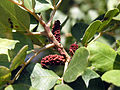
| Carob pods on the tree | |
Scientific classification 
| |
| Kingdom: | Plantae |
| Clade: | Tracheophytes |
| Clade: | Angiosperms |
| Clade: | Eudicots |
| Clade: | Rosids |
| Order: | Fabales |
| Family: | Fabaceae |
| Subfamily: | Caesalpinioideae |
| Genus: | Ceratonia |
| Species: | C. siliqua
|
| Binomial name | |
| Ceratonia siliqua | |

| |
Distribution map
| |
The carob (/ˈkærəb/ KARR-əb; Ceratonia siliqua) is a flowering evergreen tree or shrub in the Caesalpinioideae subfamily of the legume family, Fabaceae. The carob tree is native to the Mediterranean region and the Middle East. It is widely cultivated for its edible fruit, which takes the form of seed pods, and as an ornamental tree in gardens and landscapes. Spain is its largest producer, followed by Italy and Morocco.
Carob pods have a number of culinary applications, including a powder or chips that can be used as a chocolate alternative. The seeds are used to produce locust bean gum or carob gum, a common thickening agent used in food processing.
Description
[edit]
The carob tree grows up to 15 metres (50 feet) tall. The crown is broad and semispherical, supported by a thick trunk with rough brown bark and sturdy branches. Its leaves are 10 to 20 centimetres (4 to 8 inches) long, alternate, pinnate, and may or may not have a terminal leaflet. It is frost-tolerant to roughly −7 °C (19 °F).[citation needed]
Most carob trees are dioecious, so strictly male trees do not produce fruit, but some are hermaphroditic.[1] When the trees blossom in autumn, the flowers are small and numerous, spirally arranged along the inflorescence axis in catkin-like racemes borne on spurs from old wood and even on the trunk (cauliflory); they are pollinated by both wind and insects. The male flowers smell like human semen, an odor that is caused in part by amines.[2]
The fruit is a legume (also known commonly, but less accurately, as a pod), that is elongated, compressed, straight, or curved, and thickened at the sutures. The pods take a full year to develop and ripen. When the sweet, ripe pods eventually fall to the ground, they are eaten by various mammals, such as swine, thereby dispersing the hard inner seed in the excrement.[citation needed]
The seeds of the carob tree contain leucodelphinidin, a colourless flavanol precursor related to leucoanthocyanidins.[3]
Etymology
[edit]
The word "carob" comes from Middle French carobe (modern French caroube), which borrowed it from Arabic خَرُّوبٌ (kharrūb, "locust bean pod") and Persian khirnub,[4] which ultimately borrowed it perhaps from Akkadian language harūb- or Aramaic חרובא ḥarrūḇā.[5] '
Ceratonia siliqua, the scientific name of the carob tree, derives from the Greek κερατωνία keratōnía, "carob-tree" (cf. κέρας kéras, "horn"),[6] and Latin siliqua "pod, carob".[7]
In English, it is also known as "St. John's bread"[8][a] and "locust tree"[10] (not to be confused with African locust bean).[11] The latter designation also applies to several other trees from the same family.
In Yiddish, it is called באקסער bokser, derived from the Middle High German bokshornboum "ram's horn tree" (in reference to the shape of the carob).[12]
The carat, a unit of mass for gemstones, and a measurement of purity for gold, takes its name via the Arabic qīrāṭ from the Greek name for the carob seed κεράτιον (lit. "small horn").[13][14][15]
Distribution and habitat
[edit]The carob tree is native to the Mediterranean region and the Middle East.[16] Although cultivated extensively, carob can still be found growing wild in eastern Mediterranean regions, and has become naturalized in the western Mediterranean.[17]: 20
The tree is typical in the southern Portuguese region of the Algarve, where the tree is called alfarrobeira, and the fruit alfarroba. It is also seen in southern and eastern Spain (Spanish: algarrobo, algarroba, Catalan / Valencian / Balearic: garrofer, garrofera, garrover, garrovera), mainly in the regions of Andalusia, Murcia, Valencia, the Balearic Islands[18] and Catalonia[19][20][21] (Catalan / Valencian / Balearic: garrofer, garrofera, garrover, garrovera); Malta (Maltese: ħarruba), on the Italian islands of Sicily (Sicilian: carrua) and Sardinia (Sardinian: carrubba, carruba), in Southern Croatia (Croatian: rogač), such as on the island of Šipan, in eastern Bulgaria (Bulgarian: рожков), and in Southern Greece, Cyprus, as well as on many Greek islands such as Crete and Samos.[citation needed]
In Israel, the Hebrew name is חרוב (translit. charuv). The common Greek name is χαρουπιά (translit. charoupiá), or ξυλοκερατιά (translit. xylokeratiá, meaning "wooden horn"). In Turkey, it is known as "goat's horn" (Turkish: keçiboynuzu).[17][22]

The various trees known as algarrobo in Latin America (Samanea saman in Cuba, Prosopis pallida in Peru, and four species of Prosopis in Argentina and Paraguay) belong to a different subfamily of the Fabaceae: Mimosoideae. Early Spanish settlers named them algarrobo after the carob tree because they also produce pods with sweet pulp.[23]
Ecology
[edit]
The carob genus, Ceratonia, belongs to the legume family, Fabaceae, and is believed to be an archaic remnant of a part of this family now generally considered extinct. It grows well in warm temperate and subtropical areas, and tolerates hot and humid coastal areas. As a xerophyte (drought-resistant species), carob is well adapted to the conditions of the Mediterranean region with just 250 to 500 millimetres (10 to 20 in) of rainfall per year.[17]
Carob trees can survive long periods of drought, but to grow fruit, they need 500 to 550 millimetres (20 to 22 in) of rainfall per year.[17] They prefer well-drained, sandy loams and are intolerant of waterlogging, but the deep root systems can adapt to a wide variety of soil conditions and are fairly salt-tolerant (up to 3% in soil).[17] After being irrigated with saline water in the summer, carob trees could possibly recover during winter rainfalls.[24] In some experiments, young carob trees were capable of basic physiological functions under high-salt conditions (40 mmol NaCl/L).[24]
Not all legume species can develop a symbiotic relationship with rhizobia to make use of atmospheric nitrogen. It remains unclear if carob trees have this ability: Some findings suggest that it is not able to form root nodules with rhizobia,[17] while in another more recent study, trees have been identified with nodules containing bacteria believed to be from the genus Rhizobium.[25] However, a study measuring the 15N-signal (isotopic signature) in the tissue of the carob tree did not support the theory that carob trees naturally use atmospheric nitrogen.[26]
Cultivation
[edit]The vegetative propagation of carob is naturally restricted due to its low adventitious rooting potential. Therefore, grafting and air-layering may prove to be more effective methods of asexual propagation.[27] Seeds are commonly used as the propagation medium. The sowing occurs in pot nurseries in early spring and the cooling- and drying-sensitive seedlings are then transplanted to the field in the next year after the last frost. Carob trees enter slowly into production phase. Where in areas with favorable growing conditions, the cropping starts 3–4 years after budding, with the nonbearing period requiring up to 8 years in regions with marginal soils. Full bearing of the trees occurs mostly at a tree-age of 20–25 years when the yield stabilizes.[17] The orchards are traditionally planted in low densities of 25–45 trees per hectare (10 to 20/acre). Hermaphroditic or male trees, which produce fewer or no pods, respectively, are usually planted in lower densities in the orchards as pollenizers.[citation needed]
Intercropping with other tree species is widely spread. Not much cultivation management is required. Only light pruning and occasional tilling to reduce weeds is necessary. Nitrogen-fertilizing of the plants has been shown to have positive impacts on yield performance.[17] Although it is native to moderately dry climates, two or three summers' irrigation greatly aid the development, hasten the fruiting, and increase the yield of a carob tree.[28]
Harvest and post-harvest treatment
[edit]The most labour-intensive part of carob cultivation is harvesting, which is often done by knocking the fruit down with a long stick and gathering them together with the help of laid-out nets. This is a delicate task because the trees are flowering at the same time and care has to be taken not to damage the flowers and the next year's crop. The literature recommends research to get the fruit to ripen more uniformly or also for cultivars which can be mechanically harvested (by shaking).[17]
Freshly harvested carob pods have a moisture content of 10–20% and should be dried down to a moisture content of 8% so they do not rot. Further processing separates the kernels (seeds) from the pulp. This process is called kibbling and results in seeds and pieces of carob pods (kibbles). Processing of the pulp includes grinding for animal feed production or roasting and milling for human food industry. The seeds have to be peeled which happens with acid or through roasting. The endosperm and the embryo are then separated for different uses.[17]
Pests and diseases
[edit]Few pests cause severe damage in carob orchards, so they have traditionally not been treated with pesticides. Some generalist pests such as the larvae of the leopard moth (Zeuzera pyrina L.), the dried fruit moth (Cadra calidella), small rodents such as rats (Rattus spp.) and gophers (Pitymys spp.) can occasionally cause damage in some regions. Only some cultivars are severely susceptible to mildew disease (Oidium ceratoniae C.). One pest directly associated with carob is the larva of the carob moth (Myelois ceratoniae Z.), which can cause extensive postharvest damage.[17]
Cadra calidella both attack carob crops before harvest and infest products in stores. This moth, prevalent in Cyprus, will often infest the country's carob stores. Research has been conducted to understand the physiology of the moth, in order to gain insight on how to monitor moth reproduction and lower their survival rates, such as through temperature control, pheromone traps, or parasitoid traps.[29]
Production
[edit]In 2022, world production of carob (as locust beans) was estimated to be 56,423 tonnes,[30] although not all countries known to grow carob reported their results to the UN Food and Agriculture Organization. Production amounts for Turkey and Morocco accounted for nearly all the world total reported in 2022.[30]
Most of the roughly 50 known cultivars[17] are of unknown origin and only regionally distributed. The cultivars show high genetic and therefore morphological and agronomical variation.[17] No conventional breeding by controlled crossing has been reported, but selection from orchards or wild populations has been done. Domesticated carobs (C. s. var. edulis) can be distinguished from their wild relatives (C. s. var. silvestris) by some fruit-yielding traits such as building of greater beans, more pulp, and higher sugar contents. Also, genetic adaptation of some varieties to the climatic requirements of their growing regions has occurred.[17] Though a partially successful breaking of the dioecy happened, the yield of hermaphrodite trees still cannot compete with that of female plants, as their pod-bearing properties are worse.[31] Future breeding would be focused on processing-quality aspects, as well as on properties for better mechanization of harvest or better-yielding hermaphroditic plants. The use of modern breeding techniques is restricted due to low polymorphism for molecular markers.[17]
Uses
[edit]Food
[edit]

Carob products consumed by humans come from the dried, sometimes roasted, pod, which has two main parts: the pulp accounts for 90% and the seeds 10% by weight.[17][32] Carob pulp is sold either as flour or "chunks".[32] The flour of the carob embryo (seed) can also be used for human and animal nutrition,[17] but the seed is often separated before making carob powder.
Carob pods are mildly sweet on their own (being roughly one third to one half sugar by dry weight), so they are used in powdered, chip or syrup form as an ingredient in cakes and cookies, sometimes as a substitute for chocolate in recipes because of the color, texture, and taste of carob. In Malta, a traditional sweet called karamelli tal-harrub and eaten during the Christian holidays of Lent and Good Friday is made from carob pods.[33] Dried carob fruit is traditionally eaten on the Jewish holiday of Tu Bishvat.[34]
Carob pods were used as famine food in the Mediterranean Basin, including the southern Atlantic coast of Portugal and the Atlantic northwestern Moroccan coast.[35] In rabbinic literature, carob was regarded as a low-status food. One source advises that in times of scarcity, even a single kab of carobs should not be hoarded. Other rabbinic texts refer to carob as suitable for animal feed.[36]
Carob powder
[edit]Carob powder (carob pulp flour)[37] is made of dried or roasted, then finely ground, carob pod pulp.[38][39][40][41] Carob powder can be used as a substitute for cocoa powder, which often occurred during the 1970s natural food movement.[42]
Locust bean gum
[edit]Locust bean gum is produced from the endosperm, which accounts for 42–46% of the carob seed, and is rich in galactomannans (88% of endosperm dry mass). Galactomannans are hydrophilic and swell in water. If galactomannans are mixed with other gelling substances, such as carrageenan, they can be used to effectively thicken the liquid part of food. This is used extensively in canned food for animals in order to get the "jellied" texture.[32]
Animal feed
[edit]While chocolate contains the chemical compound theobromine in levels that are toxic to some mammals, carob contains none, and it also has no caffeine, so it is sometimes used to make chocolate-like treats for dogs.[43][44][45] Carob pod meal is also used as an energy-rich feed for livestock, particularly for ruminants, though its high tannin content may limit this use.[46]
Carob pods were used as animal feed in the Mediterranean Basin.[35] They were mainly used for animal fodder in the Maltese islands, apart from times of famine or war, when they formed part of the diet of many Maltese people. On the Iberian Peninsula, carob pods were historically fed to donkeys.[citation needed]
Composition
[edit].jpg)
The pulp of a carob pod is about 48–56% sugars and 18% cellulose and hemicellulose.[17] Some differences in sugar (sucrose) content are seen between wild and cultivated carob trees: ~531 g/kg dry weight in cultivated varieties and ~437 g/kg in wild varieties. Fructose and glucose levels do not differ between cultivated and wild carob.[47] The embryo (20–25% of seed weight) is rich in proteins (50%). The testa, or seed coat (30–33% of seed weight), contains cellulose, lignins, and tannins.[32][48]
Syrup and drinks
[edit]Carob pods are about a third to a half sugar by weight, and this sugar can be extracted into a syrup.[49] In Malta, a carob syrup (ġulepp tal-ħarrub) is made out of the pods. Carob syrup is also used in Crete,[50] and Cyprus exports it.[51]
In Egypt and the Levant, crushed carob pods are heated to caramelize their natural sugars, producing carob molasses. Water and brown sugar are then added to the mixture and boiled for a period of time. The resulting beverage, served cold and known as "kharrub" or "kharoub," is particularly popular during the month of Ramadan. This drink is widely sold by juice shops and street vendors and holds cultural significance in both the Levant and Egypt.[52][53][54][55]
In Lebanon the molasses is called debs el kharrub (literally: molasses of the carob), but people generally shorten it to debs. The molasses has a sweet, chocolate-like flavor. It is commonly mixed with tahini (typically 75% kharrub molasses and 25% tahini). The resulting mixture is called debs bi tahini and is eaten raw or with bread. The molasses is also used in certain cakes.[56] The region of Iqlim al-Kharrub, which translates to the region of the carob, produces a significant amount of carob.[citation needed]
In Cyprus, the dried and milled carob pods are left to soak in water, before being transferred into special containers out of which the carob juice gradually seeps out of and is collected. The juice is then boiled with constant stirring yielding a thick syrup known as haroupomelo.[57][58] Although this syrup is frequently sold and eaten as is, haroupomelo is also used as a base for a local toffee-like sweet snack known as pasteli.[59] Constant stirring of the carob syrup causes it to form into a black, amorphous mass which is then left to cool. The mass is then kneaded, stretched and pulled until the fair, golden color and toffee-like texture of pasteli is obtained.[58]
Carob is used for compote, liqueur, and syrup in Turkey, Malta, Portugal, Spain, and Sicily.[citation needed] In Libya, carob syrup (called rub) is used as a complement to asida (made from wheat flour).[citation needed] The so-called "carob syrup" made in Peru is actually from the fruit of the Prosopis nigra tree.[citation needed] Because of its strong taste, carob syrup is sometimes flavored with orange or chocolate.[citation needed] In Yemen, carob tree is playing a role in controlling diabetes mellitus according to Yemeni folk medicine, and diabetics consume carob pods as a juice to lower their blood sugar levels.[60]
Ornamental
[edit]
The carob tree is widely cultivated in the horticultural nursery industry as an ornamental plant for Mediterranean climates and other temperate regions around the world, being especially popular in California and Hawaii. The plant develops a sculpted trunk and the form of an ornamental tree after being "limbed up" as it matures, otherwise it is used as a dense and large screening hedge. The plant is very drought tolerant as long as one does not care about the size of the fruit harvest, so can be used in xeriscape landscape design for gardens, parks, and public municipal and commercial landscapes.[61]
Timber
[edit]In some areas of Greece, viz. Crete, carob wood is often used as a firewood.[62] As it makes such excellent fuel, it is sometimes even preferred over oak or olive wood.
Because the much fluted stem usually shows heart rot, carob wood is rarely used for construction timber.[63] However, it is sometimes sought for ornamental work—particularly for furniture design, as the natural shape of the trunk is well-suited to the task. Additionally, the extremely wavy grain of the wood gives carob wood exceptional resistance to splitting;[64] thus, sections of Carob bole are suitable for chopping blocks for splitting wood.
Gallery
[edit]-
 Male flowers on a carob tree in Cyprus, which emanate a strong cadaverine odor
 -
 Close-up of female flower on the carob tree
 -
 Green carob fruit pods on tree, 15 cm (6 in) long
 -
 Fruit of the carob tree
 -
 Carob pods: green (unripe) and brown (ripe)
 -
 Abaxial and adaxial surfaces of a leaflet from the carob tree
 -
 Ceratonia siliqua wood – Museum specimen
 -
 Carob pods growing from trunk (Cauliflory)


Notes
[edit]- ^ From the belief that the seeds and pulp were the "locusts" and "honey" eaten by John the Baptist[9]
References
[edit]- ^ Adams P (14 April 2013). "Sweet Crop Broadcast". Landline.
- ^ Armstrong WP (July 28, 2010), Malodorous Male Flowers Of Carob Tree (Ceratonia siliqua), archived from the original on November 18, 2017, retrieved November 17, 2017
- ^ Gotfredsen E. "Leucodelphinidin". Liber Herbarum Minor (English): The incomplete reference-guide to Herbal medicine. Archived from the original on 2017-07-31. Retrieved 2017-07-31.
- ^ Oxford English Dictionary, 1st ed. (1888), s.v. 'carob' Archived 2023-09-28 at the Wayback Machine
- ^ Harper D. "carob". Online Etymology Dictionary. Retrieved 2014-05-16.
- ^ κερατωνία, κέρας. Liddell, Henry George; Scott, Robert; A Greek–English Lexicon at the Perseus Project.
- ^ siliqua. Charlton T. Lewis and Charles Short. A Latin Dictionary on Perseus Project.
- ^ ITIS Report Page: Ceratonia siliqua Archived 2018-06-20 at the Wayback Machine. accessed 5.11.2011
- ^ Little, Elbert L. (1994) [1980]. The Audubon Society Field Guide to North American Trees: Western Region (Chanticleer Press ed.). Knopf. p. 488. ISBN 0394507614.
- ^ Rehm S, Espig G (1991). The cultivated plants of the tropics and subtropics : cultivation, economic value, utilization. Weikersheim (DE): Margraf. pp. viii, 552 p. – p.220.
- ^ Conder CR, Kitchener HH (1883). The Survey of Western Palestine: Memoirs of the Topography, Orography, Hydrography, and Archaeology. Vol. 3. London: Committee of the Palestine Exploration Fund., p. 354 s.v. Khurbet Jala
- ^ "A Brief on Bokser". Forward. 4 February 2005. Archived from the original on 22 December 2022. Retrieved 22 December 2022.
- ^ Pearsall J (2011). "keration". The Oxford English Dictionary (12th ed.). New York: Oxford University Press. p. 211. ISBN 978-0-19-960108-0. Archived from the original on 2023-09-28. Retrieved 2022-06-21.
- ^ Harper, Douglas. "carat". Online Etymology Dictionary.
- ^ κεράτιον in Liddell and Scott.
- ^ "Tropicos - Name - !Ceratonia siliqua L." tropicos.org. Archived from the original on 2017-08-02. Retrieved 2011-05-12.
- ^ a b c d e f g h i j k l m n o p q r Battle I, Tous J (1997). Carob tree. Rome, Italy: International Plant Genetic Resources Institute. ISBN 978-92-9043-328-6. Archived from the original on 2023-06-18. Retrieved 2011-02-19.[page needed]
- ^ "Agricultura planta 11 varietats de garrovers per a la reproducció de material vegetal a la finca de Sa Granja". Conselleria d'Agricultura, Pesca i Medi Natural, Govern de les Illes Balears (in Catalan). 2022-03-16. Retrieved 2023-10-13.[permanent dead link]
- ^ Mumbrú, Jordi (2022-09-02). "La febre dels garrofers". Ara.cat (in Catalan). Retrieved 2023-10-13.
- ^ "El garrofer". Departament d'Acció Climàtica, Alimentació i Agenda Rural, GenCat (in Catalan). Retrieved 2023-10-13.
- ^ Pedrero, Paula (2022-09-19). "El boom de la garrofa també arriba les Terres de l'Ebre". Setmanari l'Ebre (in Catalan). Retrieved 2023-10-13.
- ^ "Fruits". Turkish Cuisine. Archived from the original on 2011-07-28. Retrieved 2010-07-26.
- ^ Valentin Calderon, Lionel. "Barrio Algarrobos" (in Spanish). Aquí Esta Puerto Rico. Archived from the original on 2019-03-08. Retrieved 2019-03-07.
- ^ a b Correia PJ, Gamaa F, Pestana M, Martins-Loução MA (2010). "Tolerance of young (Ceratonia siliqua L.) carob rootstock to NaCl". Agricultural Water Management. 97 (6): 910–916. Bibcode:2010AgWM...97..910C. doi:10.1016/j.agwat.2010.01.022.
- ^ Missbah El Idrissi M, Aujjar N, Belabed A, Dessaux Y, Filali-Maltouf A (1996). "Characterization of rhizobia isolated from Carob tree (Ceratonia siliqua)". Journal of Applied Microbiology. 80 (2): 165–73. doi:10.1111/j.1365-2672.1996.tb03205.x.
- ^ La Malfa S, Tribulato E, Gentile A, Gioacchini P, Ventura M, Tagliavini M (2010). "15N natural abundance technique does not reveal the presence of nitrogen from biological fixation in field grown carob (Ceratonia siliqua L.) trees". Acta Horticulturae. 868: 191–195.
- ^ Gubbuk H, Gunes E, Ayala-Silva T, Ercisli S (2011). "Rapid Vegetative Propagation Method for Carob". Notulae Botanicae Horti Agrobotanici Cluj-Napoca. 39 (1): 251–254. Bibcode:2011NBHAC..39..251G. doi:10.15835/nbha3916074.
- ^ Bailey LH (1914). The Standard Cyclopedia of Horticulture. The Macmillan Company. p. 718. Retrieved 23 November 2011.
- ^ Cox PD (1975). "The influence of photoperiod on the life-cycles of Ephestia calidella (Guenee) and Ephestia figulilella Gregson (Lepidoptera: Phycitidae)". Journal of Stored Products Research. 11 (2): 77–85. doi:10.1016/0022-474X(75)90043-0.
- ^ a b "Carob production in 2022, Crops/Regions/World list/Production Quantity/Year (pick lists)". UN Food and Agriculture Organization, Corporate Statistical Database (FAOSTAT). 2024. Retrieved 3 July 2024.
- ^ Zohary D (2013). "Domestication of the carob (Ceratonia siliqua L.)". Israel Journal of Plant Sciences. 50 (supplement 1): 141–145. doi:10.1560/BW6B-4M9P-U2UA-C6NN (inactive 11 July 2025).
{{cite journal}}: CS1 maint: DOI inactive as of July 2025 (link) - ^ a b c d Droste R (1993). Möglichkeiten und Grenzen des Anbaus von Johannisbrot (Ceratonia siliqua L.) als Bestandteil eines traditionellen Anbausystems in Algarve, Portugal [Possibilities and limitations of the cultivation of locust bean (Ceratonia siliqua L.) as part of a traditional farming system in Algarve, Portugal] (in German). Institut für Pflanzenbau und Tierhygiene in den Tropen und Subtropen, Georg-August-Universität Göttingen: Goltze. ISBN 978-3-88452-743-6.
- ^ Fenech N (2 April 2007). "Lenten treat: Carob caramel sweets". Times of Malta. Archived from the original on 2 December 2019. Retrieved 18 November 2019.
- ^ Soloveichik M. "Why Jews Used to Eat Dried Carob on Tu b'Shvat". Mosaic. Archived from the original on 20 June 2018. Retrieved 25 July 2017.
- ^ a b "Carob Pod", Mathew Attokaran, Natural Food Flavors and Colorants, 2017, ISBN 1119114764, p. 112
- ^ Broshi, Magen (2001). Bread, Wine, Walls and Scrolls. The Library of Second Temple Studies. London: Bloomsbury Publishing PLC. p. 128. ISBN 978-1-84127-201-6.
- ^ Martić, Nikola; Zahorec, Jana; Stilinović, Nebojša; Andrejić-Višnjić, Bojana; Pavlić, Branimir; Kladar, Nebojša; Šoronja-Simović, Dragana; Šereš, Zita; Vujčić, Miodrag; Horvat, Olga; Rašković, Aleksandar (17 March 2022). "Hepatoprotective Effect of Carob Pulp Flour (Ceratonia siliqua L.) Extract Obtained by Optimized Microwave-Assisted Extraction". Pharmaceutics. 14 (3): 657. doi:10.3390/pharmaceutics14030657. PMC 8950939. PMID 35336031.
- ^ Higazy, Magda; ELDiffrawy, Entsar; Zeitoun, Mohamed; Shaltout, Omima; Abou El-Yazeed, Ayman (31 March 2018). "Nutrients of Carob and Seed Powders and Its Application in Some Food Products". Journal of the Advances in Agricultural Researches. 23 (1): 130–147. ISSN 1110-5585. Archived from the original on 18 October 2022. Retrieved 18 October 2022.
- ^ F Gutkind & Co Ltd. "Carob Powder". Ingredients Network. Archived from the original on 2022-10-18. Retrieved 2022-10-18.
- ^ Rodríguez-Solana, Raquel; Romano, Anabela; Moreno-Rojas, José Manuel (30 June 2021). "Carob Pulp: A Nutritional and Functional By-Product Worldwide Spread in the Formulation of Different Food Products and Beverages. A Review". Processes. 9 (7): 1146. doi:10.3390/pr9071146. hdl:10400.1/16836.
- ^ Issaoui, Manel; Flamini, Guido; Delgado, Amélia (January 2021). "Sustainability Opportunities for Mediterranean Food Products through New Formulations Based on Carob Flour (Ceratonia siliqua L.)". Sustainability. 13 (14): 8026. Bibcode:2021Sust...13.8026I. doi:10.3390/su13148026. hdl:10400.1/16834. ISSN 2071-1050.
- ^ Kauffman, Jonathan (2018-01-31). "How Carob Traumatized a Generation". The New Yorker. ISSN 0028-792X. Retrieved 2023-10-07.
- ^ Craig WJ, Nguyen TT (1984). "Caffeine and theobromine levels in cocoa and carob products". Journal of Food Science. 49 (1): 302–303, 305. doi:10.1111/j.1365-2621.1984.tb13737.x.
- ^ Burg B (2007). Good Treats For Dogs Cookbook for Dogs: 50 Home-Cooked Treats for Special Occasions. Quarry Books. p. 28.
- ^ Puotinen CJ (2000). The Encyclopedia of Natural Pet Care. McGraw Hill Professional. p. 81.
- ^ Heuzé V, Sauvant D, Tran G, Lebas F, Lessire M (October 3, 2013). "Carob (Ceratonia siliqua)". Feedipedia.org. A programme by INRA, CIRAD, AFZ and FAO. Archived from the original on October 12, 2013. Retrieved October 3, 2013.
- ^ Biner B, Gubbuk H, Karhan M, Aksu M, Pekmezci M (January 2007). "Sugar profiles of the pods of cultivated and wild types of carob bean (Ceratonia siliqua L.) in Turkey". Food Chemistry. 100 (4): 1453–1455. doi:10.1016/j.foodchem.2005.11.037.
- ^ Calixto, Fulgancio S (5 May 1982). "Components of Nutritional Interest in Carob Pods (Ceratonia siliqua)". J. Sci. Food Agric. 33 (12): 1319–1423. Bibcode:1982JSFA...33.1319C. doi:10.1002/jsfa.2740331219.
- ^ El Batal, H.; Hasib, A.; Ouatmane, A.; Dehbi, F.; Jaouad, A.; Boulli, A. (2016-11-01). "Sugar composition and yield of syrup production from the pulp of Moroccan carob pods (Ceratonia siliqua L.)". Arabian Journal of Chemistry. 9: –955–S959. doi:10.1016/j.arabjc.2011.10.012. ISSN 1878-5352.
- ^ Dubrovskiy, V. (25 November 2019). "The carob tree – Crete's unique and useful product". The New Crete. Archived from the original on 2021-07-26. Retrieved 2022-09-23.
- ^ Christos. "Carob Syrup". Visit Cyprus. Archived from the original on 2022-09-23. Retrieved 2022-09-23.
- ^ Ramadan: Five thirst-quenching drinks from across the Middle East, Nur Ayoubi, 4 April 2022, Middle East Eye
- ^ El-Haddad, Laila; Schmitt, Maggie. "Carob Juice". The Gaza Kitchen: A Palestinian Culinary Journey. Archived from the original on 18 October 2022. Retrieved 18 October 2022.
- ^ "Carob: Locust bean drink, kharroob". Egyptian Cuisine Recipes.
- ^ "Palestinian Cuisine". Institute for Middle East Understanding. Archived from the original on 18 October 2022. Retrieved 18 October 2022.
- ^ "Tahini and Carob molasses". Taste of Beirut. 31 August 2009. Archived from the original on 24 November 2022. Retrieved 11 November 2022.
- ^ Christos. "Carob Syrup". www.visitcyprus.com. Archived from the original on 2022-09-27. Retrieved 2023-04-12.
- ^ a b "Gastronomy in Cyprus". publications.gov.cy. Archived from the original on 2023-04-12. Retrieved 2023-04-12.
- ^ Christos. "Pastelli (Carob Toffee)". www.visitcyprus.com. Archived from the original on 2023-04-12. Retrieved 2023-04-12.
- ^ Qasem, Mousa A.; Noordin, Mohamed Ibrahim; Arya, Aditya; Alsalahi, Abdulsamad; Jayash, Soher Nagi (2018-05-23). "Evaluation of the glycemic effect of Ceratonia siliqua pods (Carob) on a streptozotocin-nicotinamide induced diabetic rat model". PeerJ. 6 e4788. doi:10.7717/peerj.4788. ISSN 2167-8359. PMC 5970558. PMID 29844959.
- ^ "Ceratonia siliqua". Germplasm Resources Information Network. Agricultural Research Service, United States Department of Agriculture. Retrieved 11 December 2017.
- ^ Batlle, I.; Tous, J. (1997). Carob tree: Ceratonia siliqua L. IPGRI. p. 26. ISBN 978-929043328-6. OCLC 1198534064.
- ^ "Carob". WOOD Magazine. Retrieved 2024-11-28.
- ^ "Carob Wood - Moroccan Woodworking". Moroccan Woodworking. 2023-03-22. Retrieved 2024-11-28.
External links
[edit]


- Carob in Fruits of Warm Climates: Julia F. Morton, 1987
- U.C.CalPhotos: Carob —Ceratonia siliqua — Photo Gallery
| International | |
|---|---|
| Other | |

Carob
View on GrokipediaIntroduction
Physical Description
The carob tree (Ceratonia siliqua) is an evergreen, dioecious species that grows as a shrub or tree, typically reaching heights of 5-10 meters, though it can attain up to 15 meters under optimal conditions.[5] It features a broad, rounded crown with dense foliage, supported by a thick trunk that may measure up to 85 cm in circumference at maturity.[6] The leaves are alternate, paripinnate, and measure 10-20 cm in length, consisting of 4-8 oval, leathery leaflets that are glossy dark green and provide year-round cover.[7][8] The tree exhibits a slow to moderate growth rate and develops a deep taproot system, often extending 20 meters or more into the soil, which enhances its exceptional drought tolerance and ability to thrive in arid environments with as little as 200 mm of annual rainfall.[9][10] This root structure allows it to access groundwater effectively, contributing to its longevity of 80-100 years or more, during which it remains productive.[11][12] Reproductively, carob trees produce small, reddish flowers in clusters during late winter or early spring, with male and female flowers on separate plants; pollination occurs primarily via insects such as bees, supplemented by wind.[13] Female trees yield indehiscent, leathery pods that ripen to a dark brown color, measuring 10-30 cm in length, 1.5-3.5 cm in width, and containing 10-20 hard seeds embedded in a sweet, edible pulp that comprises about 90% of the pod's weight by dry matter.[14][15] The pods have a wrinkled surface and emit a mildly sweet aroma reminiscent of chocolate.[16]Etymology
The English word "carob" derives from the Arabic term kharrūb (خَرُّوب), meaning "locust bean pod," referring to the plant's distinctive seed pods.[17] This Arabic root entered European languages during the Middle Ages through trade and cultural exchange across the Mediterranean, appearing in Medieval Latin as carrubium or carubium.[18] By the 16th century, it had reached English via Middle French carobe (modern French caroube) and Spanish algarroba (sometimes shortened to garroba), reflecting the plant's dissemination along ancient trade routes from the Middle East to Iberia and beyond.[17] The scientific binomial Ceratonia siliqua combines Greek and Latin elements tied to the plant's morphology. The genus name Ceratonia stems from the ancient Greek keratōnía, derived from kéras ("horn"), alluding to the curved, horn-like shape of the mature pods.[19] The specific epithet siliqua comes from Latin for "pod," a term used for the elongated fruit structures in legumes, highlighting early Roman observations of the plant's reproductive features.[19] These linguistic choices underscore the historical focus on the pod's form, which resembles a small horn in profile. Common names for the carob tree vary across languages, often tracing back to Semitic roots and spreading via Mediterranean commerce. In Hebrew, it is known as charuv (חרוב), a term linked to biblical references and ancient Levantine agriculture.[15] Italian calls it carrubo, evolving from the same Arabic influence during medieval Sicilian and southern Italian trade.[8] These names illustrate how the plant's nomenclature followed Phoenician, Roman, and Islamic trade networks, carrying the word from the Levant to North Africa and Europe. The cultural significance of carob naming extends to ancient metrology, where the uniform weight of its seeds inspired the unit known as the carat. In ancient Greece and Egypt, traders used carob seeds (kerátion in Greek) as standardized weights for gems and gold, due to their consistent mass of about 0.2 grams each.[20] This practice, documented in Hellenistic texts, evolved into the modern carat via Arabic qīrāṭ, emphasizing the seed's role in equitable exchange along Silk Road and Mediterranean routes.[21]Botany
Taxonomy
The carob tree (Ceratonia siliqua L.) belongs to the family Fabaceae (Leguminosae), subfamily Caesalpinioideae, tribe Caesalpinieae, and genus Ceratonia, which contains two species, C. siliqua and C. oreothauma.[8][22][13] This classification reflects its position within the legume family, characterized by nitrogen-fixing capabilities and pod-like fruits typical of the group.[13] As a relict species from the Tertiary period, C. siliqua has persisted through climatic shifts, with fossil records indicating its presence around the paleo-Mediterranean Sea since the Oligocene and more continuously from Miocene deposits in the region.[23] These fossils, including leaf and fruit impressions, underscore its ancient tropical origins linked to the Tethys Sea during the Paleogene, followed by adaptation to Mediterranean sclerophyllous vegetation.[24] Historically, the species has been classified under synonyms such as Ceratonia coriacea Salisb. and Ceratonia inermis Stokes, with earlier placements sometimes separating it into distinct genera before its stabilization in Ceratonia.[22] Genetically, C. siliqua is diploid with a chromosome number of 2n=24, exhibiting moderate diversity in wild populations across the Mediterranean, as revealed by molecular markers like AFLPs.[25] Natural hybridization potential is limited, with no documented interspecific hybrids involving C. siliqua, though clonal propagation occurs in some cultivated lineages.[13]Morphology
The carob tree (Ceratonia siliqua) exhibits pinnate compound leaves with 4–8 pairs of opposite, leathery leaflets that are obovate to suborbicular in shape, measuring 3–15 cm in length and contributing to its evergreen sclerophyllous habit.[26] These leaflets feature a thick, multilayered epidermis (up to 41 μm on the adaxial side) and a coriaceous texture supported by reticulate venation, which enhances structural integrity in arid environments.[26] A prominent adaptation for water conservation is the thick cuticle, approximately 5 μm on the adaxial surface and 3 μm abaxially, composed of hydrophobic wax rods and plates that minimize transpiration; stomata are restricted to the abaxial epidermis (hypostomatous arrangement, density 180–230 per mm²), further reducing water loss during drought.[26][27] The flowers are small (6–12 mm), apetalous, and arranged in dense axillary racemes (3.5–15 cm long) containing 20–60 individuals, blooming on old wood from late summer to autumn.[26] As a dioecious species, male flowers are red-yellow with 4–7 stamens featuring long filaments and oval anthers surrounding a rudimentary pistil, while female flowers are greenish with a prominent pistil (6–8.5 mm) and abortive staminodes; rare hermaphroditic forms occur with fully developed reproductive organs.[26] Pollination leads to the development of indehiscent legume pods, which are leathery, dark brown, and elongated (10–30 cm long, 1.4–3.5 cm wide), containing 5–17 seeds embedded in a sweet pulp.[26] Seeds are hard, glossy, brown, and compressed ovate-oblong in shape, measuring 8–10 mm long, 7–8 mm wide, and 3–5 mm thick, with an impermeable testa that enforces physical dormancy.[26] The endosperm, comprising 41–60% of seed mass, is rich in galactomannan (a polysaccharide of mannose and galactose in a 4:1 ratio), serving as a storage reserve for germination.[26] The root system features a prominent taproot that can extend up to 18 m deep, supplemented by lateral roots for anchorage and nutrient uptake in poor, rocky soils.[28] The bark is initially smooth and gray on young stems, becoming rough and dark brown with age as it develops longitudinal fissures, providing structural support and contributing to the tree's fire tolerance through resprouting capacity from the root crown post-disturbance.[26][28]Distribution and Ecology
Native Range and Habitat
The carob tree (Ceratonia siliqua) is native to the eastern Mediterranean Basin, including southern European countries such as Greece, Italy, and Spain; North African regions from Morocco to Libya and Tunisia; and Middle Eastern areas like Israel, Syria, Lebanon, and Jordan, with extensions into Turkey and Cyprus.[13] This distribution reflects its adaptation to the region's diverse yet consistently arid landscapes, where it forms part of the natural flora alongside species like Pistacia lentiscus and Olea europaea.[13] In its native habitats, carob occurs primarily in dry, rocky soils of coastal maquis and garigue shrublands, as well as transitional zones between Mediterranean vegetation and more arid Saharan fringes.[13] These environments are typically found at elevations from sea level up to 1000 meters, though it is most common below 600 meters in lowland hillsides.[13] The tree's deep root system enables it to exploit limited water resources in these nutrient-poor, rocky terrains. Carob flourishes under a Mediterranean climate regime with annual rainfall of 250–500 mm, concentrated in mild winters, and mean temperatures ranging from 5–40°C, including summer highs around 25°C and winter lows near 7°C.[13] It exhibits high drought tolerance once established, surviving extended dry periods, but requires at least 250 mm of precipitation for persistence in wild settings.[14] The species is well-suited to calcareous soils with pH levels between 6 and 8, including well-drained, sandy, or rocky substrates that are often nutrient-deficient.[13] It demonstrates notable tolerance to soil salinity, enduring up to 3% NaCl, and avoids waterlogged or highly acidic conditions.[13] Pollen and macro-remain records from the eastern Mediterranean confirm carob's historical presence in these ecosystems since the end of the Pleistocene, approximately 10,000 years ago.[29]Ecological Interactions
The carob tree (Ceratonia siliqua) relies primarily on insect pollination, with bees, flies, and wasps serving as key vectors, while wind plays a minor role in pollen transfer. This entomophilous strategy supports fruit and seed production in its dioecious populations, where male and female trees are often spatially separated. Seed dispersal occurs mainly through endozoochory, as mammals such as goats, sheep, and other herbivores consume the palatable pods and excrete viable seeds, facilitating regeneration across fragmented landscapes; birds may also contribute occasionally by ingesting pods and dispersing seeds over shorter distances.[13][30] As a foundational species in Mediterranean ecosystems, the carob tree plays a critical role in erosion control via its deep root system, which stabilizes slopes and reduces soil runoff in fire-prone and drought-affected areas. It contributes to carbon sequestration at rates up to 20 tons of carbon per hectare per year in mature stands, helping mitigate climate impacts while fostering biodiversity by providing microhabitats, nectar sources, and fruit for diverse fauna and understory plants.[13][31][32] However, carob ecosystems are threatened by overgrazing, which hinders seedling establishment and damages saplings, exacerbating degradation in pastoral regions. Climate change poses additional risks, including altered precipitation patterns and rising temperatures that could drive range shifts northward.[33][34]Cultivation
Agronomic Practices
Carob trees (Ceratonia siliqua) are typically propagated by seeds or vegetatively to ensure desired traits, particularly for commercial fruit production. Seed propagation involves scarification to overcome the hard seed coat, commonly achieved by soaking seeds in concentrated sulfuric acid (H₂SO₄) for one hour, which can result in germination rates of 80-90% when sown in well-drained media under warm conditions (25-30°C).[35] Vegetative propagation, such as grafting female scions onto seedling rootstocks, is preferred for maintaining female cultivars that produce pods, as seed-grown trees yield approximately 50-70% males, hermaphrodites, or low-yielding females.[36] Planting occurs in full sun with well-drained, sandy to loamy soils that tolerate a wide pH range (5.5-8.5), including alkaline conditions; trees perform best on marginal or rocky sites with minimal soil preparation.[11] In orchards, spacing follows 7-9 m between rows and trees, accommodating 100-175 plants per hectare to allow for canopy development and machinery access while optimizing light and air circulation.[37] Young trees require irrigation during the first 2-3 years to establish deep roots, typically 20-50 mm monthly in dry periods, but once mature, supplemental water is minimal, with 250-500 mm annually sufficient in Mediterranean climates due to drought tolerance.[14] Pruning is light and infrequent, focusing on shaping young trees to a central leader for structural strength and removing dead or crossing branches in mature ones to improve airflow and pod yield without excessive fruit reduction.[11] Fertilization needs are low, as carob thrives in nutrient-poor soils; balanced applications of nitrogen, phosphorus, and potassium (e.g., 10-20-10 NPK at 50-100 g/tree annually for young plants) support growth, with phosphorus emphasized for root and reproductive development in deficient sites.[38] Given the dioecious nature, orchard management includes a ratio of one male tree per 20-50 females to ensure wind-pollination, often achieved by grafting male branches onto female trees or strategic planting.[6] Trees from seed or grafts begin producing pods 5-7 years after planting, with yields increasing gradually; peak production occurs between 20 and 30 years, when annual pod output stabilizes at commercial levels before declining slowly after 50-60 years.[39]Harvest and Processing
Carob pods in the Mediterranean region are harvested primarily from October to December, coinciding with the pods' maturation from green to dark brown, which signals ripeness and optimal sugar content.[40] Harvesting methods include manual shaking of tree branches with poles or mechanical shakers attached to tractors, where nets or tarps are spread beneath trees to collect the fallen pods; this labor-intensive process avoids damage to the tree while ensuring efficient collection before winter rains.[41] Mature trees typically yield 50-100 kg of pods annually, depending on variety and environmental conditions.[42][39] Following harvest, pods undergo sun-drying in small-scale operations for 2-4 weeks to reduce moisture content to approximately 15%, preventing fermentation and facilitating handling; in commercial settings, drying may be accelerated under shelter to 8-10% moisture using forced air or mechanical means.[43][44] Separation of the sweet pulp from the hard seeds follows, primarily through kibbling—a mechanical milling process that crushes the dried pods—or water flotation, where pods are soaked and agitated to exploit density differences for sorting.[45] The resulting pulp is then ground into kibble, a coarse powder form used as a base for further processing. Dried pods and kibble are stored in cool, dry environments (below 20°C and 60% relative humidity) to inhibit mold growth and maintain quality, with well-ventilated silos or bags preventing moisture accumulation during transport or long-term holding.[46] Quality grading emphasizes pod size (typically 10-20 cm long for premium grades), sweetness measured by Brix levels of 40-50° in the pulp, and seed purity (aiming for less than 10% seed contamination in pulp lots), ensuring suitability for food and industrial applications.[47][48]Pests and Diseases
The carob tree (Ceratonia siliqua) faces several pests and diseases that can impact cultivation, particularly in Mediterranean regions where it is widely grown. Among the major pests, the carob moth (Ectomyelois ceratoniae) is a primary threat, with its larvae boring into developing pods and seeds, leading to significant damage and reduced yield quality.[49] This lepidopteran pest is prevalent across carob-growing areas, and effective control strategies include the use of sex pheromone traps for monitoring and mass trapping, as well as applications of Bacillus thuringiensis (Bt) formulations targeting larvae.[49] Scale insects, such as Aspidiotus nerii and Coccus hesperidum, also affect carob, infesting leaves and pods sporadically and causing sap loss, sooty mold growth, and weakened tree vigor.[49] Management of these armored and soft scales typically involves integrated approaches, including natural enemies like parasitoids and the application of horticultural oils. Fungal diseases pose notable risks, with anthracnose caused by Colletotrichum species resulting in minor black leaf spots and occasional pod rot, especially under humid conditions that favor spore dispersal.[50] Root rot, primarily from Phytophthora species such as the recently identified P. niederhauserii, affects young trees and nursery stock in poorly drained or wet soils, leading to root necrosis, stunted growth, and plant decline.[51] This oomycete disease has been reported in Spain, highlighting its emergence in carob cultivation.[51] Integrated management emphasizes soil drainage improvements, use of resistant rootstocks, and fungicide applications, with phosphonate-based treatments showing efficacy against Phytophthora.[50] Nematodes and viral pathogens are rare but can be impactful in intensive monocultures. Plant-parasitic nematodes like Xiphinema melitense have been associated with carob roots in limited locales, such as Malta, potentially exacerbating stress in vulnerable plantings.[52] Viral diseases remain uncommon, with no major outbreaks documented, though general vigilance is advised in high-density systems.[15] For sustainability, organic controls such as neem oil sprays are recommended for pests like scales and moths, disrupting insect life cycles without broad environmental harm.[49] Recent trends indicate rising concerns over emerging fungal pathogens, including Phytophthora root rot in nurseries, driven by intensive cultivation and climate variability.[51] Carob trees demonstrate resilience to certain threats, such as Xylella fastidiosa, remaining largely unaffected amid southern European outbreaks since 2013.[53]Production Trends
The global carob production is estimated at approximately 180,000–250,000 tons of pods annually as of 2020–2024.[13][3] As of 2024, production was approximately 181,000 tons, with projections to reach 228,000 tons by 2035.[3] The Mediterranean basin accounting for the majority. Europe dominates output, led by Portugal, Spain, and Italy, while Morocco contributes significantly from North Africa; emerging producers like Australia maintain smaller scales at around 16 tons in 2024.[54][55] The following table summarizes average annual production volumes for major producers based on 2018–2022 data:| Country | Average Production (tons) |
|---|---|
| Portugal | 53,213 |
| Spain | 51,342 |
| Italy | 36,096 |
| Morocco | 27,213 |
| Turkey | 19,324 |
| Greece | 18,712 |
Uses
Food Applications
Carob powder, derived from the roasted and ground pulp of the pods, serves as a popular caffeine-free alternative to cocoa powder in baking due to its naturally sweet flavor and chocolate-like profile.[61] The pulp contains 45-58% sugars on a dry weight basis, primarily sucrose, fructose, and glucose, which contribute to its inherent sweetness without the need for additional refining.[62] This makes it suitable for incorporation into muffins, cakes, and cookies, where it can replace cocoa at ratios up to 100% while maintaining acceptable texture and sensory qualities.[63] Carob syrup is produced by boiling the pods to extract a thick, molasses-like sweetener rich in natural sugars, often used in traditional desserts and beverages across Mediterranean cuisines.[64] In Turkish cuisine, known as pekmez, this syrup is a concentrated fruit product simmered from carob pods and incorporated into sweets, drinks, and confections for its caramelized depth and nutritional profile.[65] Similarly, in Malta, carob syrup is used in traditional desserts and as a natural remedy, enhancing local culinary traditions.[66] Whole carob pods are consumed directly as a chewy, naturally sweet snack, offering a gluten-free option that can be eaten raw or lightly baked for a chocolate-like taste without caffeine or theobromine.[67] They are also ground into flour for gluten-free baking, providing a nutrient-dense base for breads, energy bars, and other products in regions like Malta where carob cultivation supports local culinary traditions.[68] Although primarily valued for human consumption, carob pods serve as a secondary high-fiber supplement in ruminant animal feed, comprising up to 20-30% of rations to boost energy intake via their sugar content while providing modest protein levels of 4-6%.[14][69][70]Industrial Applications
Locust bean gum (LBG), also known as carob bean gum, is the primary industrial derivative extracted from the endosperm of carob seeds, constituting approximately 40% of the seed's weight.[71] The extraction process begins with roasting the seeds in a rotating furnace to thermally peel the hard seed coat, which pops off, allowing recovery of the endosperm halves from the husk and crushed germ.[72] The endosperm is then milled and screened to produce native gum, or further purified by dispersing in hot water for clarification, filtering out insolubles, precipitating with isopropanol or ethanol, and drying under vacuum before final milling into a fine powder.[72] Classified as food additive E410, LBG serves as a versatile hydrocolloid due to its galactomannan structure, providing thickening and stabilizing effects without gelling on its own.[73] In industrial applications, LBG functions as a thickener and stabilizer at concentrations of 0.1-1%, significantly increasing solution viscosity and enhancing texture in products like ice cream, where it prevents ice crystal formation and improves mouthfeel.[74] It also stabilizes emulsions in pet foods, acting as a gelling agent and thickener to maintain consistency in canned formulations, and is used in pharmaceuticals for controlled drug release and suspension stability.[75] These properties stem from LBG's high water-binding capacity and compatibility with other polysaccharides, such as xanthan gum, which amplifies its synergistic viscosity enhancement.[76] Beyond LBG, carob pulp is utilized in biofuel production, particularly for bioethanol fermentation due to its high sugar content (around 50%), yielding fuel-grade ethanol through hydrolysis and yeast fermentation processes.[77] The pulp also finds application in cosmetics as a natural humectant and emollient in creams and lotions, leveraging its polyphenol and sugar content for moisturizing effects.[2] Global LBG production is estimated at over 15,000 tons annually, driven by demand in food processing and non-food sectors, with the market valued at approximately USD 325 million as of 2024.[78][79] This scale reflects carob's role as a sustainable resource, with major production centered in Mediterranean regions supplying industrial hydrocolloid needs.[80]Ornamental and Timber Uses
The carob tree (Ceratonia siliqua) is valued ornamentally for its evergreen canopy, which provides dense shade and aesthetic appeal in drought-prone landscapes. Its drought tolerance and low water requirements make it ideal for xeriscaping, where it is planted as hedges, windbreaks, or specimen trees in urban parks and gardens. In regions with Mediterranean climates, such as southern California, carob trees enhance historic and coastal settings, including Old Town San Diego, where they contribute to low-maintenance, salt-tolerant plantings alongside citrus and other native species.[81][82][7] The wood of the carob tree is dense and hard, with an oven-dry specific gravity of approximately 0.81 and air-dry density of 0.86 g/cm³, rendering it suitable for small-scale applications despite the tree's slow growth rate, which discourages widespread commercial logging. It is employed in crafting fine furniture, tool handles, turned objects like bowls and pens, and occasionally as firewood in Mediterranean areas such as Greece and Crete, where its high energy value of about 4700 kcal/kg supports local heating needs.[83][84][85] Beyond wood, the bark contains up to 50% tannins, which have been utilized traditionally in leather tanning and dyeing processes for their astringent properties. In arid regions, carob leaves serve as nutritious fodder for livestock, particularly ruminants, due to the tree's adaptation to low-rainfall environments (250-500 mm annually) and their palatability despite moderate tannin levels that influence digestibility.[15][86][14] Historically, carob trees have been planted in ancient Mediterranean groves for shade, as evidenced by their role in providing relief for travelers and livestock in biblical and classical traditions, with specimens in Israel and Greece dating back over a millennium. In modern contexts, restoration projects in deforested or degraded areas, such as Peru's Pómac Forest and southern Spain's afforestation initiatives under EU programs, leverage the tree's resilience to rehabilitate soils and biodiversity in semi-arid zones.[87][88][89][90]Nutritional Aspects
Chemical Composition
The chemical composition of the carob pod (Ceratonia siliqua L.) is dominated by its pulp, which constitutes the majority of the fruit's edible portion and serves as a primary source of carbohydrates. On a dry matter basis, the pulp contains 48–52% sugars, primarily sucrose (32–38%), with smaller amounts of fructose (5–7%) and glucose (5–6%), contributing to its sweet flavor and use as a natural sweetener. Protein levels range from 3–4%, characterized by a balanced amino acid profile rich in methionine, cysteine, and aspartic acid, while dietary fiber accounts for 30–40%, including both insoluble forms (cellulose, hemicellulose, lignin) and soluble components bound to polyphenols. Fat content is minimal at 0.5–1%, and notably, the pulp lacks theobromine and caffeine, distinguishing it from cocoa. Additionally, the pulp contains very low levels of oxalates (0.3–0.8 mg/g dry weight), in contrast to cocoa powder, which has much higher oxalate content (650–783 mg/100 g dry matter).[2][91][92] Carob seeds, comprising about 10% of the pod's weight, exhibit a distinct composition focused on structural and functional polysaccharides. They contain 20–25% locust bean gum (LBG), a galactomannan polymer (galactose:mannose ratio of 1:3.1–1:3.9) primarily located in the endosperm (40–50% of seed weight), which provides gelling and thickening properties. Protein content is higher at approximately 25%, concentrated in the germ (20–25% of seed weight) as water-insoluble glutelins (caroubin) rich in lysine, leucine, threonine, and phenylalanine. Lipids make up 1–2% in the germ, dominated by oleic (45%), linoleic (32%), and palmitic (17%) acids, with overall seed fat lower than in many legumes.[93] Micronutrients in carob pods and seeds include a range of minerals and bioactive compounds. Potassium is abundant in the pulp at 970–1,120 mg/100 g dry weight, alongside calcium (up to 300 mg/100 g) and magnesium (about 60 mg/100 g), supporting nutritional value comparable to dairy sources for calcium. Seeds show elevated mineral levels in the tegument and germ, with calcium reaching 1,000 mg/100 g in some analyses and potassium similarly high. Vitamins present include B2 (riboflavin) at 0.18 mg/100 g, alongside lower levels of B1, B3, B6, and folic acid. Antioxidants, particularly polyphenols, are prominent at 100–200 mg/100 g in pulp extracts, encompassing gallic acid, catechin, and condensed tannins (16–20%), with total phenolic content varying up to 19 mg/g in raw pods.[2][94][95]| Component | Pod Pulp (% dry weight) | Seeds (% dry weight) |
|---|---|---|
| Moisture | 10–15 | 9–12 |
| Carbohydrates (sugars + fiber) | 70–85 | 50–60 |
| Protein | 3–4 | 20–25 |
| Fat | 0.4–0.8 | 1–2 |
| Ash (minerals) | 2–3 | 3–4 |
| Fiber | 30–40 | 10–15 (plus LBG) |