


Community hub
Recent from talks
Contribute something
Nothing was collected or created yet.
Mashhad
View on Wikipedia
Mashhad[a] (/məˈʃæd/ mə-SHAD;[10][11] Persian: مشهد [mæʃˈhæd] ⓘ), historically also known as Mashad,[12][13][14] Meshhed, or Meshed[15] in English, is the second-most-populous city in Iran, located in the relatively remote north-east of the country[16] about 900 kilometres (560 miles) from Tehran.[17] In the Central District of Mashhad County, it serves as the capital of Razavi Khorasan province, the county, and the district.[18] It has a population of about 3,400,000 (2016 census), which includes the areas of Mashhad Taman and Torqabeh.[19]
Key Information


.jpg)


Throughout its history, Mashhad has been governed by different ethnic groups. It was previously a small village, which by the 9th century was known as Sanabad, and was located—along with Tus and other villages—on the ancient Silk Road connecting them with Merv to the east. It would eventually outgrow all its surrounding villages. It gained its current name, meaning "place of martyrdom", in reference to the Imam Reza shrine, where the eighth Shia Imam, Ali al-Rida, is buried. The Abbasid caliph Harun al-Rashid is also buried within the same shrine. The shrine is an important place of pilgrimage, visited by 25 millions each year in what is often described as "the holiest city in Iran".[16][20]
Mashhad later also became associated with Ferdowsi, the Persian poet and author of the Shahnameh, who was born in Tus (with many institutions in Mashhad named after him). Mashhad enjoyed relative prosperity in the Mongol period, and continued to grow. Between 1736 and 1796, Mashhad became the capital of Afsharid Iran which was ruled by the Afsharid dynasty founded by Nader Shah, whose tomb is located in the city. In the modern era, Mashhad continued to expand and became the hometown of some of the most significant literary figures and artists of modern Iran, such as the poet Mehdi Akhavan-Sales, and the traditional Iranian singer and composer Mohammad-Reza Shajarian. On 30 October 2009 (the anniversary of Imam Reza's martyrdom), Iran's then-President Mahmoud Ahmadinejad declared Mashhad to be "Iran's spiritual capital".[21][22]
History
[edit]Etymology and early history
[edit]Ancient Greek sources mention the passage and residence of Alexander the Great in this land, which was called "Susia" (Ancient Greek: Σούσια), in 330 BC.[23][24][25][26] The map of Tabula Peutingeriana, which dates back to the early Roman era, names this city on the west of Merv, Alexandria, instead of Susia.[27] Pliny the Elder, says there is a city in the middle of Parthia, near Arsace and Nisiaea, called "Alexandropolis" after its founder.[28] Many Muslim historians, from the 10th to the 16th century AD, attribute the founding of "Sanabad" (the old name of the city) to Alexander.[29][30]
Also in the Shia hadith sources, which the narrators connect to the 7th to 9th centuries AD, there are quotations that Imam Ridha and Harun al-Rashid are buried in a city founded by "the righteous servant, the two-horned one", which is an Islamic title commonly attributed to Alexander the Great.[31][32][33][34]
The older name of Mashhad is Sanabad (سناباد Sanâbâd). It was eventually renamed to Mashhad during the Safavid Empire. The name Mashhad comes from Arabic, meaning a Mazar (mausoleum).[35][36] It is also known as the place where Ali ar-Ridha (Persian, Imam Reza), the eighth Imam of Shia Muslims, died (according to the Shias, was martyred). Reza's shrine was placed there.[37]
The ancient Parthian city of Patigrabanâ, mentioned in the Behistun inscription (520 BC) of the Achaemenid Emperor Darius the Great, may have been located at the Mashhad.[38]
At the beginning of the 9th century (3rd century AH), Mashhad was a small city called Sanabad, which was situated 24 kilometres (15 miles) away from Tus. There was a summer palace of Humayd ibn Qahtaba, the governor of Khurasan. In 808, when Harun al-Rashid, Abbasid caliph, was passing through to quell the insurrection of Rafi ibn al-Layth in Transoxania, he became ill and died. He was buried under the palace of Humayd ibn Qahtaba. Thus the Dar al-Imarah was known as the Mausoleum of Haruniyyeh. In 818, Ali al-Ridha was martyred by al-Ma'mun and was buried beside the grave of Harun.[39] Although Mashhad owns the cultural heritage of Tus (including its figures like Nizam al-Mulk, Al-Ghazali, Ahmad Ghazali, Ferdowsi, Asadi Tusi, and Shaykh Tusi), earlier Arab geographers have correctly identified Mashhad and Tus as two separate cities that are now located about 19 kilometres (12 miles) from each other.
Mongolian invasion: Ilkhanids
[edit]Although some believe that after this event, the city was called Mashhad al-Ridha (the place of martyrdom of al-Ridha), it seems that Mashhad, as a place-name, first appears in al-Maqdisi, i.e., in the last third of the 10th century. About the middle of the 14th century, the traveller Ibn Battuta uses the expression "town of Mashhad al-Rida". Towards the end of the Middle Ages, the name Nuqan, which is still found on coins in the first half of the 14th century under the Il-Khanids, seems to have been gradually replaced by al-Mashhad or Mashhad.

Shias began to make pilgrimages to his grave. By the end of the 9th century, a dome was built above the grave, and many other buildings and bazaars sprang up around it. Over the course of more than a millennium, it has been destroyed and rebuilt several times.[40] In 1161, however, the Seljuks seized the city, but they spared the sacred area their pillaging. Mashad al-Ridha was not considered a "great" city until Mongol raids in 1220, which caused the destruction of many large cities in Khurasan but leaving Mashhad relatively intact in the hands of Mongolian commanders because of the cemetery of Ali Al-Rezza and Harun al-Rashid (the latter was stolen).[41] Thus the survivors of the massacres migrated to Mashhad.[42] When the Arab traveller Ibn Battuta visited the town in 1333, he reported that it was a large town with abundant fruit trees, streams and mills. A great dome of elegant construction surmounts the noble mausoleum, the walls being decorated with colored tiles.[9] The most well-known dish cooked in Mashhad, "sholeh Mashhadi" (شله مشهدی) or "Sholeh", dates back to the era of the Mongolian invasion when it is thought to be cooked with any food available (the main ingredients are meat, grains and abundant spices) and be a Mongolian word.[43][44]
Timurid Empire
[edit]_Empire_1747.jpg)
It seems that the importance of Sanabad-Mashhad continually increased with the growing fame of its sanctuary and the decline of Tus, which received its death-blow in 1389 from Miran Shah, a son of Timur. When the Kartid noble who governed the place rebelled and attempted to make himself independent, Miran Shah was sent against him by his father. Tus was stormed after a siege of several months, sacked and left a heap of ruins; 10,000 inhabitants were massacred. Those who escaped the holocaust settled in the shelter of the 'Alid sanctuary. Tus was henceforth abandoned and Mashhad took its place as the capital of the district.[citation needed]
Later on, during the reign of the Timurid Shahrukh Mirza, Mashhad became one of the main cities of the realm. In 1418, his wife Goharshad funded the construction of an outstanding mosque beside the shrine, which is known as the Goharshad Mosque.[42] The mosque remains relatively intact to this date, its great size an indicator to the status the city held in the 15th century.
Safavid Empire
[edit]Ismail I, founder of the Safavid Empire, conquered Mashhad after the death of Husayn Bayqarah and the decline of the Timurid dynasty. He was later captured by the Uzbeks during the reign of Shah Abbas I. In the 16th century the town suffered considerably from the repeated raids of the Özbegs (Uzbeks). In 1507, it was taken by the troops of the Shaybani or Shabani Khan. After two decades, Shah Tahmasp I succeeded in repelling the enemy from the town again in 1528. But in 1544, the Özbegs again succeeded in entering the town and plundering and murdering there. The year 1589 was a disastrous one for Mashhad. The Shaybanid 'Abd al-Mu'min after a four months' siege forced the town to surrender. Shah Abbas I, who lived in Mashhad from 1585 until his official ascent of the throne in Qazwin in 1587, was not able to retake Mashhad from the Özbegs until 1598. Mashhad was retaken by the Shah Abbas after a long and hard struggle, defeating the Uzbeks in a great battle near Herat as well as managing to drive them beyond the Oxus River. Abbas the Great wanted to encourage Iranians to go to Mashhad for pilgrimage. He is said to have walked from Isfahan to Mashhad. During the Safavid era, Mashhad gained even more religious recognition, becoming the most important city of Greater Khorasan, as several madrasah and other structures were built beside the Imam Reza shrine. Besides its religious significance, Mashhad has played an important political role as well. The Safavid dynasty has been criticized in a book (Red Shi'sm vs. Black Shi'ism) on the perceived dual aspects of the Shi'a religion throughout history) as a period in which although the dynasty didn't form the idea of Black Shi'ism, but this idea was formed after the defeat of Shah Ismail against the Ottoman leader Sultan Yavuz Selim. Black Shi'ism is a product of the post-Safavid period.
Afsharid Empire
[edit]Mashad saw its greatest glory under Nader Shah, ruler of Iran from 1736 to 1747, and also a great benefactor of the shrine of Imam Reza, who made the city his capital. Nearly the whole eastern part of the kingdom of Nadir Shah passed to foreign rulers in this period of Persian impotence under the rule of the vigorous Ahmad Shah Durrani of the Afghan Durrani Empire. Ahmad defeated the Persians and took Mashhad after an eight-month siege in 1753. Ahmad Shah and his successor Timur Shah left Shah Rukh in possession of Khurasan as their vassal, making Khurasan a kind of buffer state between them and Persia. As the city's real rulers, however, both these Durrani rulers struck coins in Mashhad. Otherwise, the reign of the blind Shah Rukh, which with repeated short interruptions lasted for nearly half a century, passed without any events of special note. It was only after the death of Timur Shah (1792) that Agha Mohammad Khan Qajar, the founder of the Qajar dynasty, succeeded in taking Shah Rukh's domains and putting him to death in 1795, thus ending the separation of Khurasan from the rest of Persia.
Qajar Empire
[edit]
Some believe that Mashhad was ruled by Shahrukh Afshar and remained the capital of the Afsharid dynasty during Zand dynasty[45] until Agha Mohammad Khan Qajar conquered the then larger region of Khorasan in 1796.[46]
1912 Imam Reza shrine bombardment
[edit]In 1911 Yusuf Khan of Herat was declared independent in Mashhad as Muhammad Ali Shah and brought together a large group of reactionaries opposed to the revolution, and keep stirring for some time. This gave Russia the excuse to intervene and 29 March 1912 bombed the city; this bombing killed several people and pilgrims; action against a Muslim shrine caused a great shock to all Islamic countries. On 29 March 1912, the sanctuary of Imam Reza was bombed by the Russian artillery fire, causing some damage, including to the golden dome, resulting in a widespread and persisting resentment in the Shiite Muslim world as well as British India. This bombing was orchestrated by Prince Aristid Mikhailovich Dabizha (a Moldovan who was the Russian Consul in Mashhad) and General Radko (a Bulgarian who was commander of the Russian Cossacks in the city).[47] Yusuf Khan ended up captured by the Persians and was executed.
Pahlavi dynasty
[edit]Modernization under Reza Shah
[edit]
The modern development of the city accelerated under Reza Shah (1925-1941). Shah Reza Hospital (currently Imam Reza Hospital, affiliated with the Basij organization) was founded in 1934; the sugar factory of Abkuh in 1935; and the Mashhad University of Medical Sciences in 1939. The city's first power station was installed in 1936, and in 1939, the first urban transport service began with two buses. In this year the first population census was performed, with a result of 76,471 inhabitants.[48]
1935 Goharshad Mosque rebellion
[edit]In 1935, a backlash against the modernizing, anti-religious policies of Reza Pahlavi erupted in the Mashhad shrine. Responding to a cleric who denounced the Shah's heretical innovations, corruption, and heavy consumer taxes, many bazaars and villagers took refuge in the shrine, chanted slogans such as "The Shah is a new Yazid." For four days local police and army refused to violate the shrine and the standoff was ended when troops from Azerbaijan arrived and broke into the shrine,[49] killing dozens and injuring hundreds, and marking a final rupture between Shi'ite clergy and the Shah.[50] According to some Mashhadi historians, the Goharshad Mosque uprising, which took place in 1935, is an uprising against Reza Shah's decree banning all veils (headscarf and chador) on 8 January 1936.[citation needed]
1941–1979 reforms
[edit]
Mashhad experienced population growth after the Anglo-Soviet invasion of Iran in 1941 because of relative insecurity in rural areas, the 1948 drought, and the establishment of Mashhad University in 1949. At the same time, public transport vehicles increased to 77 buses and 200 taxis and the railway link with the capital, Tehran, was established in 1957. The 1956 census reflected a population of 241,989 people. The increase in population continued in the following years thanks to the increase in Iranian oil revenues, the decline of the feudal social model, the agrarian reform of 1963, the founding of the city's airport, the creation of new factories and the development of the health system. In 1966, the population reached 409,616 inhabitants, and 667,770 in 1976. The extension of the city was expanded from 16 to 33 square kilometres (170,000,000 to 360,000,000 square feet).
During World War II, Polish refugee children were admitted in Mashhad in March 1942 (see also Iran–Poland relations).[51] After receiving food and medical care at a local hospital, the children were further evacuated to India.[51]

In 1965 an important urban renewal development project for the surroundings of the shrine of Imam Reza was proposed by the Iranian architect and urban designer Dariush Borbor to replace the dilapidated slum conditions which surrounded the historic monuments. The project was officially approved in 1968. In 1977 the surrounding areas were demolished to make way for the implementation of this project. To relocate the demolished businesses, a new bazaar was designed and constructed in Meydan-e Ab square (in Persian, "میدان آب")[48] by Dariush Borbor. After the revolution, the urban renewal project was abandoned.
1994 Imam Reza shrine bombing
[edit]On 20 June 1994, a bomb exploded in a prayer hall of the shrine of the Imam Reza.[52] The bomb that killed at least 25 people on 20 June in Mashhad exploded on Ashura.[53] The Pakistani terrorist Ramzi Yousef, a Sunni Muslim turned Wahhabi, one of the main perpetrators of the 1993 World Trade Center bombing, was found to be behind the plot.[54]
Geography
[edit]The city is located at 36.20º North latitude and 59.35º East longitude, in the valley of the Kashafrud River near Turkmenistan, between the two mountain ranges of Binalood and Hezar Masjed Mountains. The city benefits from the proximity of the mountains, having cool winters, pleasant springs, and mild summers.[citation needed] It is only about 250 km (160 mi) from Ashgabat, Turkmenistan.
The city is the administrative center of Mashhad County (or the Shahrestan of Mashhad) as well as the somewhat smaller district (Bakhsh) of Mashhad. The city itself, excluding parts of the surrounding Bakhsh and Shahrestan, is divided into 13 smaller administrative units, with a total population of more than 3 million.[55]
Climate
[edit]Mashhad features a cold semi-arid climate (Köppen BSk; Trewartha: BShk) with very hot summers, cold winters and Mediterranean-like dry summer precipitation pattern[citation needed]. The city only sees about 250 millimetres (9.8 inches) of precipitation per year, some of which occasionally falls in the form of snow. Mashhad has wetter and drier periods with the bulk of the annual precipitation falling between the months of December and May. Summers are typically hot and dry, with average high temperatures exceeding 33 °C or 91.4 °F for three months. Winters are typically cool to cold and somewhat damper, with overnight lows routinely dropping below freezing. Mashhad enjoys on average just above 2900 hours of sunshine per year.
Snow cover had been observed in 21.1 days annually, with only 3.8 days in which the snow depth exceeds 0.10 metres or 4 inches.[56]
The highest recorded temperature was 43.8 °C or 110.8 °F on 6 July 1998 and the lowest recorded temperature was −28 °C or −18.4 °F on 3 February 1972.
| Climate data for Mashhad (1991–2020, extremes 1951–2020; elevation: 999.2 metres or 3,278 feet[i]) | |||||||||||||
|---|---|---|---|---|---|---|---|---|---|---|---|---|---|
| Month | Jan | Feb | Mar | Apr | May | Jun | Jul | Aug | Sep | Oct | Nov | Dec | Year |
| Record high °C (°F) | 24.0 (75.2) |
27.4 (81.3) |
32.9 (91.2) |
35.4 (95.7) |
40.6 (105.1) |
42.1 (107.8) |
43.8 (110.8) |
42.4 (108.3) |
42.0 (107.6) |
35.9 (96.6) |
31.2 (88.2) |
28.2 (82.8) |
43.8 (110.8) |
| Mean daily maximum °C (°F) | 8.5 (47.3) |
10.6 (51.1) |
15.7 (60.3) |
22.0 (71.6) |
27.9 (82.2) |
33.4 (92.1) |
35.3 (95.5) |
34.0 (93.2) |
29.7 (85.5) |
23.3 (73.9) |
15.6 (60.1) |
10.7 (51.3) |
22.2 (72.0) |
| Daily mean °C (°F) | 2.8 (37.0) |
4.7 (40.5) |
9.5 (49.1) |
15.4 (59.7) |
21.1 (70.0) |
26.4 (79.5) |
28.5 (83.3) |
26.7 (80.1) |
21.9 (71.4) |
15.5 (59.9) |
8.9 (48.0) |
4.6 (40.3) |
15.5 (59.9) |
| Mean daily minimum °C (°F) | −1.8 (28.8) |
−0.1 (31.8) |
4.3 (39.7) |
9.6 (49.3) |
14.3 (57.7) |
18.7 (65.7) |
20.9 (69.6) |
18.8 (65.8) |
14.1 (57.4) |
8.5 (47.3) |
3.6 (38.5) |
0.0 (32.0) |
9.2 (48.6) |
| Record low °C (°F) | −27.0 (−16.6) |
−28.0 (−18.4) |
−13.0 (8.6) |
−7.0 (19.4) |
−1.0 (30.2) |
4.0 (39.2) |
10.0 (50.0) |
5.0 (41.0) |
−1.0 (30.2) |
−8.0 (17.6) |
−16.0 (3.2) |
−25.0 (−13.0) |
−28.0 (−18.4) |
| Average precipitation mm (inches) | 27.5 (1.08) |
35.7 (1.41) |
56.3 (2.22) |
39.4 (1.55) |
30.6 (1.20) |
5.9 (0.23) |
1.7 (0.07) |
0.8 (0.03) |
2.7 (0.11) |
7.9 (0.31) |
17.2 (0.68) |
20.1 (0.79) |
245.8 (9.68) |
| Average precipitation days (≥ 1.0 mm) | 4.8 | 5.7 | 7.4 | 5.5 | 5 | 1.4 | 0.4 | 0.2 | 0.4 | 1.5 | 3.2 | 3.3 | 38.8 |
| Average rainy days | 4.5 | 7.2 | 10.3 | 9.9 | 6.9 | 2 | 0.6 | 0.5 | 0.7 | 2.9 | 5.4 | 5.5 | 56.4 |
| Average snowy days | 5.8 | 2.6 | 0.5 | 0.1 | 0 | 0 | 0 | 0 | 0 | 0.2 | 1.7 | 4.3 | 15.2 |
| Average relative humidity (%) | 70 | 68 | 65 | 57 | 45 | 31 | 28 | 28 | 32 | 43 | 62 | 69 | 50 |
| Average dew point °C (°F) | −3.1 (26.4) |
−1.9 (28.6) |
1.8 (35.2) |
5.4 (41.7) |
6.9 (44.4) |
6.1 (43.0) |
6.7 (44.1) |
4.8 (40.6) |
2.9 (37.2) |
1.4 (34.5) |
0.6 (33.1) |
−1.5 (29.3) |
2.5 (36.5) |
| Mean monthly sunshine hours | 151 | 152 | 173 | 214 | 285 | 347 | 376 | 366 | 312 | 257 | 179 | 151 | 2,963 |
| Source 1: NOAA NCEI[57](Days with Snowfall 1981-2010)[56] | |||||||||||||
| Source 2: Iran Meteorological Organization(Records)[58] | |||||||||||||
| Climate data for Mashhad (1951–2010) | |||||||||||||
|---|---|---|---|---|---|---|---|---|---|---|---|---|---|
| Month | Jan | Feb | Mar | Apr | May | Jun | Jul | Aug | Sep | Oct | Nov | Dec | Year |
| Record high °C (°F) | 24.0 (75.2) |
26.0 (78.8) |
32.0 (89.6) |
35.4 (95.7) |
40.6 (105.1) |
42.1 (107.8) |
43.8 (110.8) |
42.4 (108.3) |
42.0 (107.6) |
35.8 (96.4) |
29.4 (84.9) |
28.2 (82.8) |
43.8 (110.8) |
| Mean daily maximum °C (°F) | 7.1 (44.8) |
9.3 (48.7) |
14.2 (57.6) |
20.9 (69.6) |
26.8 (80.2) |
32.3 (90.1) |
34.4 (93.9) |
33.1 (91.6) |
28.9 (84.0) |
22.5 (72.5) |
15.5 (59.9) |
9.8 (49.6) |
21.2 (70.2) |
| Daily mean °C (°F) | 1.7 (35.1) |
3.7 (38.7) |
8.5 (47.3) |
14.7 (58.5) |
19.6 (67.3) |
24.4 (75.9) |
26.6 (79.9) |
24.8 (76.6) |
20.3 (68.5) |
14.5 (58.1) |
8.7 (47.7) |
4.0 (39.2) |
14.3 (57.7) |
| Mean daily minimum °C (°F) | −3.8 (25.2) |
−1.8 (28.8) |
2.9 (37.2) |
8.4 (47.1) |
12.4 (54.3) |
16.4 (61.5) |
18.7 (65.7) |
16.5 (61.7) |
11.7 (53.1) |
6.4 (43.5) |
1.9 (35.4) |
−1.7 (28.9) |
7.3 (45.2) |
| Record low °C (°F) | −27.0 (−16.6) |
−28.0 (−18.4) |
−13.0 (8.6) |
−7.0 (19.4) |
−1.0 (30.2) |
4.0 (39.2) |
10.0 (50.0) |
5.0 (41.0) |
−1.0 (30.2) |
−8.0 (17.6) |
−16.0 (3.2) |
−25.0 (−13.0) |
−28.0 (−18.4) |
| Average precipitation mm (inches) | 32.6 (1.28) |
34.5 (1.36) |
55.5 (2.19) |
45.4 (1.79) |
27.2 (1.07) |
4.0 (0.16) |
1.1 (0.04) |
0.7 (0.03) |
2.1 (0.08) |
8.0 (0.31) |
16.1 (0.63) |
24.3 (0.96) |
251.5 (9.90) |
| Average precipitation days (≥ 1.0 mm) | 8.6 | 10.4 | 13.8 | 12.1 | 8.7 | 2.5 | 0.9 | 0.5 | 0.9 | 3.9 | 5.3 | 8.1 | 75.7 |
| Average snowy days | 5.6 | 5.8 | 4.0 | 0.4 | 0.0 | 0.0 | 0.0 | 0.0 | 0.0 | 0.1 | 1.2 | 3.8 | 20.9 |
| Average relative humidity (%) | 75 | 73 | 69 | 62 | 50 | 37 | 34 | 33 | 37 | 49 | 63 | 73 | 54 |
| Mean monthly sunshine hours | 148.3 | 147.5 | 163.3 | 200.4 | 280.4 | 343.2 | 366.9 | 359.7 | 305.2 | 249.5 | 188.3 | 151.6 | 2,904.3 |
| Source: Iran Meteorological Organization (records),[58] (temperatures),[59] (precipitation),[60] (humidity),[61] (days with precipitation),[62] | |||||||||||||
- ^ Rainy days calculated using Parameter codes 47 and 71 from the source
Demography
[edit]Population
[edit]| Year | Pop. | ±% p.a. |
|---|---|---|
| 1986 | 1,463,508 | — |
| 1991 | 1,559,155 | +1.27% |
| 1996 | 1,887,405 | +3.90% |
| 2006 | 2,427,316 | +2.55% |
| 2011 | 2,766,258 | +2.65% |
| 2016 | 3,001,184 | +1.64% |
| 2022 | 3,619,000 | +3.17% |
| source:[65] | ||
At the time of the 2006 National Census, the city's population was 2,410,800 in 621,697 households.[66] The following census in 2011 counted 2,766,258 people in 804,391 households.[67] The 2016 census measured the population of the city as 3,001,184 people in 914,146 households.[68]
Ethnic groups
[edit]The vast majority of Mashhadi people are ethnic Persians, who form the majority of the city's population. Other ethnic groups include Kurdish and Turkmen people who have emigrated recently to the city from the North Khorasan province. There is also a significant community of non-Arabic speakers of Arabian descent who have retained a distinct Arabian culture, cuisine and religious practices.
There are also over 20 million pilgrims who visit the city every year.[9]
Religion
[edit]Today, the holy shrine and its museum hold extensive cultural and artistic treasuries of Iran, in particular manuscript books and paintings. Several theological schools are associated with the shrine of the Eighth Imam.
The second-largest holy city in the world, Mashhad attracts more than 20 million tourists and pilgrims every year, many of whom come to pay homage to the Imam Reza shrine (the eighth Shi'ite Imam). It has been a magnet for travellers since medieval times.[9] Thus, even as those who complete the pilgrimage to Mecca receive the title of Haji, those who make the pilgrimage to Mashhad—and especially to the Imam Reza shrine—are known as Mashtee, a term employed also of its inhabitants. As an important problem, the duration when new passengers stay in Mashhad has been considerably reduced to 2 days and they prefer to finish their trip immediately after doing pilgrimage and shopping in the markets.[69] There are about 3000–5000 unauthorized residential units in Mashhad,[70] which, as a unique statistic worldwide, has caused various problems in the city.[citation needed]
Although mainly inhabited by Muslims, there were in the past some religious minorities in Mashhad. They were mainly Jews, who were forcibly converted to Islam in 1839 after the Allahdad pogrom took place for Mashhadi Jews in 1839.[71] They became known as Jadid al-Islam ("Newcomers in Islam"). On the outside, they adapted to the Islamic way of life, but often secretly kept their faith and traditions.[72][73][74][75][76]
Economy
[edit]
Mashhad is Iran's second largest automobile production hub. The city's economy is based mainly on dry fruits, salted nuts, saffron, Iranian sweets like gaz and sohaan, precious stones.[citation needed] According to the writings and documents, the oldest existing carpet attributed to the city belongs to the reign of Shah Abbas (Abbas I of Persia). Also, there is a type of carpet, classified as Mashhad Turkbâf, which, as its name suggests, is woven by hand with Turkish knots by craftsmen who emigrated from Tabriz to Mashhad in the nineteenth century. Among other major industries in the city are the nutrition, clothing, leather, textiles, chemical, steel, metallic, and non-metallic mineral industries, construction materials factories, & the handicraft industry.
With more than 55% of all the hotels in Iran, Mashhad is the hub of tourism in the country. Religious shrines are the most powerful attractions for foreign travelers; as of 2015 every year, 20 to 30 million pilgrims from Iran and more than 2 million pilgrims and tourists from elsewhere around the world came to Mashhad.[77]
Unemployment, poverty, drug addiction, and theft are the most important social problems of the city.[78]
The divorce rate in Mashhad had increased by 35 percent by 2014.[79][80] Khorasan and Mashhad ranked the second in violence across the country in 2013.[81]
Astan Quds Razavi
[edit]At the same time, the city has kept its character as a goal of pilgrimage, dominated by the strength of the economic and political authority of the Astan Quds Razavi, the administration of the Shrine waqf, probably the most important in the Muslim world[citation needed] and the largest active bonyad in Iran.[82] The Astan Quds Razavi is a major player in the economy of the city of Mashhad.[83] The land occupied by the shrine has grown fourfold since 1979 according to the head of the foundation's international relations department. The Shrine of Imam Reza is vaster than Vatican City.[82] The foundation owns most of the real estate in Mashhad and rents out shop space to bazaaris and hoteliers.[83] The main resource of the institution is endowments, estimated to have annual revenue of $210 billion.[84] Ahmad Marvi is the current Custodian of Astan Quds Razavi.
Padideh Shandiz
[edit]
Padideh Shandiz International Tourism Development Company, an Iranian private joint-stock holding company, behaves like a public company by selling stocks despite being a joint-stock in the field of restaurants, tourism and construction,[citation needed] with a football club (Padideh F.C.; formerly named Azadegan League club Mes Sarcheshmeh). In January 2015, the company was accused of a "fraud" worth $34.3 billion, which is one eighth of Iran budget.[85]
Credit institutions
[edit]Several credit institutions have been established in Mashhad, including Samenolhojaj (مؤسسه مالی و اعتباری ثامن الحجج), Samenola'emmeh (مؤسسه اعتباری ثامن) and Melal (formerly Askariye, مؤسسه اعتباری عسکریه). The depositors of the first institution have faced problem in receiving cash from the institution.[86][87][88]
Others
[edit]The city's International Exhibition Center is the second most active exhibition center after Tehran, which due to proximity to Central Asian countries hosts dozens of international exhibitions each year.[citation needed] Companies such as Smart-innovators in Mashhad are pioneers in electrical and computer technology.[citation needed]
Language
[edit]The language mainly spoken in Mashhad is Persian with a variating Mashhadi accent, which can at times, prove itself as a sort of dialect.[89] The Mashhadi Persian dialect is somewhat different from the standard Persian dialect in some of its tones and stresses.[90][91]
Culture
[edit]
Religious seminaries
[edit]
Long a center of secular and religious learning, Mashhad has been a center for the Islamic arts and sciences, as well as piety and pilgrimage. Mashhad was an educational centre, with a considerable number of Islamic schools (madrasas, the majority of them, however, dating from the later Safavid period.[citation needed] Mashhad Hawza (Persian: حوزه علمیه مشهد) is one of the largest seminaries of traditional Islamic school of higher learning in Mashhad, which was headed by Abbas Vaez-Tabasi (who was Chairman of the Astan Quds Razavi board from 1979) after the revolution, and in which Iranian politician and clerics such as Ali Khamenei, Ahmad Alamolhoda, Abolghasem Khazali, Mohammad Reyshahri, Morteza Motahhari, Abbas Vaez-Tabasi, and Madmoud Halabi (the founder of Hojjatieh and Mohammad Hadi Abd-e Khodaee learned Islamic studies). The number of seminary schools in Mashhad is now thirty nine and there are an estimated 2,300 seminarians in the city.[92]
The Ferdowsi University of Mashhad, named after the Iranian poet, is located here. The Madrassa of Ayatollah Al-Khoei, originally built in the seventeenth century, is the city's traditional centre for religious learning. The Razavi University of Islamic Sciences, founded in 1984, stands at the centre of town, within the shrine complex.

Mashhad is also home to one of the oldest libraries of the Middle-East called the Central Library of Astan Quds Razavi with a history of over six centuries. There are some six million historical documents in the foundation's central library. A museum is also home to over 70,000 manuscripts from various historical eras.

The Astan Quds Razavi Central Museum, which is part of the Astan-e Quds Razavi Complex, contains Islamic art and historical artifacts. In 1976, a new edifice was designed and constructed by the Iranian architect Dariush Borbor to house the museum and the manuscripts.
In 1569 (977 H), 'Imad al-Din Mas'ud Shirazi, a physician at the Mashhad hospital, wrote the earliest Islamic treatise on syphilis, one influenced by European medical thought. Kashmar rug is a type of Persian rug indigenous to this region.
During recent years, Mashhad has been a clerical base to monitor the affairs and decisions of state. In 2015, Mashhad's clerics publicly criticized the performance of concert in Mashhad, which led to the order of cancellation of concerts in the city by Ali Jannati, the minister of culture, and then his resignation on 19 October 2016.
Newspapers
[edit]There are three influential newspapers in Mashhad, Khorasan (خراسان), Qods (قدس) and Shahrara (شهرآرا), which have been considered "conservative newspapers". They are three Mashhad-based daily published by and representing the views of their current and old owners: Foundation of Martyrs and Veterans Affairs, Astan Quds Razavi and Mashhad Municipality, respectively.[93]
Capital of Islamic culture
[edit]The Islamic Educational, Scientific and Cultural Organization named Mashhad 2017's "cultural capital of the Muslim world" in Asia.[citation needed] Several international events, especially entrepreneurs networking event entitled Entrepreneurs Show 2017, was organized by CODE International in collaboration with Ferdowsi University of Mashhad, Khorasan Science and Technology Park, and city district government of Mashhad.[94]
Main sites
[edit]

Apart from Imam Reza shrine, there are a number of parks, the tombs of historical celebrities in nearby Tus and Nishapur, the tomb of Nader Shah and Koohsangi park. The Koohestan Park-e-Shadi Complex includes a zoo, where wild animals are kept. It is also home to the Mashhad Airbase (formerly Imam Reza airbase), jointly a military installation housing Mirage aircraft, and a civilian international airport. Khurshid castle, Vakil Abad Park, Miniature Park, Professor Bazima Science Park, Astan Quds Razavi Museum, Keshti Dome, Harunieh Dome, Bird Garden, Anthropology Museum or Mehdi Qolibek Bath, Mellat Park, Naderi Museum and Bread Museum They are other sightseeing centers of Mashhad.

Some points of interest lie outside the city: the tomb of Khajeh Morad, along the road to Tehran; the tomb of Khajeh Rabi' located 6 kilometres (3.7 miles) north of the city where there are some inscriptions by the Safavid calligrapher Reza Abbasi; and the tomb of Khajeh Abasalt, a distance of 20 kilometres (12 miles) from Mashhad along the road to Neishabur (the three were all disciples of Imam Reza).
Among other sights are the tomb of the poet Ferdowsi in Tus, 24 kilometres (15 miles) distance, and the summer resorts at Torghabeh, Torogh, Akhlamad, Zoshk, and Shandiz. The Shah Public Bath, built during the Safavid era in 1648, is an example of the architecture of that period.
Transportation
[edit]Airport
[edit]
Mashhad is served by the Mashhad International Airport, which handles domestic flights to Iranian cities and international flights, mostly to neighbouring Arab countries. The airbase serves jointly as a civilian airport and a military airbase.[95] During the June 2025 Israeli strikes on Iran, it was reported on 15 June that the Israeli Air Force bombed an aerial refueling plane at the airport.[96]
The airport is the country's second-busiest after Tehran Mehrabad Airport and above Tehran's Imam Khomeini International Airport.[97]
As of 2015 it was connected to 57 destinations and had frequent flights to 30 cities within Iran and 27 destinations in the Central Asia, the Middle East, East Asia and Europe.[98]
The airport had a US$45.7 Million vast expansion project which finished by opening a new Haj Terminal with 10,000 m area on 24 May 2010 and followed by opening a new international terminal with 30000 m2 area with a new parking building, a new storage and cargo terminal, new safety and fire fighting buildings and upgrades to taxiways and equipment. Another US$26.5 Million development project for construction of a new hangar for aircraft repair facilities and expansion of the west side of the domestic terminal was underway using a BOT contract with companies in the private sector.[citation needed]
Rail
[edit]

Mashhad railway station has Local, Regional, InterRegio, and InterRegio-Express services. The station is owned by IRI Railways and has daily services from most parts of the country, plus two suburban services. The building was designed by Heydar Ghiai. Mashhad is connected to three major rail lines: Tehran-Mashhad, Mashhad-Bafq (running south), and Mashhad-Sarakhs at the border with Turkmenistan. Some freight trains continue from Sarakhs towards Uzbekistan and to Kazakhstan, but have to change bogies because of the difference in Rail gauge. Cargo and passenger rail services are provided or operated by RAJA Rail Transportation Co.,[99][100] Joopar Co.,[101] and Fadak Trains Co.[102] A new service from Nakhchivan, Azerbaijan, to Mashhad, Iran, was launched in December 2016.[103]
In April of 2025, Iran and Turkmenistan agreed to start a cross-border passenger train linking Mashhard and Merv, Turkmenistan's capital, with the goal of strengthening economic ties.[104]
Railway & Subway
[edit]Mashhad Urban Railway Corporation (MURCO) is constructing metro and light rail system for the city of Mashhad which includes four lines with 84.5 kilometres (52.5 miles) length. Mashhad Urban Railway Operation Company (MUROC)[105] is responsible for the operation of the lines. The LRT line has been operational since 21 February 2011 with 19.5 kilometres (12.1 miles) length and 22 stations[106] and is connected to Mashhad International Airport from early 2016. The total length of line 1 is 24 kilometers and has 24 stations. the current headway in peak hours is 4.5 minutes.


The second line which is a metro line with 14.5 km length and 13 stations. line 2 construction was planned to finish in early 2020. The first phase of line 2 with 8 kilometers and 7 stations is started on 21 February 2017. On 20 March two stations were added to the network in test operational mode and the first interchange station was added to the network. On 7 May 2018, Iranian President Hassan Rouhani took part in the inauguration ceremony of the first Mashhad Urban Railway interchange station, "Shariati", which connects line 1 and 2.[107] in 27 July shahid Kaveh station operation began and the length of the operational part of line 2 reached to 13.5 kilometers. On 18 November 2019 Alandasht station Began operative. Currently, line 2 operates every day with 13.5 km and 11 stations from 6 am to 10 pm, and the current headway is 10 minutes.[108] Currently Mashhad Urban Railway Operation Company (MUROC)[105] operates 2 lines with 37.5 kilometers length and 35 stations. Tunnel excavation of line 3 has begun and more than 14 kilometers of tunnel excavation is done using two Tunnel Boring Machines[109] and operation of the first phase of line 3 was expected to start in 2021. Tunnel Excavation of line 4 was going to start in summer 2019.[110]
Road
[edit]Road 95 links Mashhad south to Torbat-e Heydarieh and Birjand. Road 44 goes west towards Shahrud and Tehran. Road 22 travels northwest towards Bojnurd. Ashgabat in Turkmenistan is 220 km away and is accessible via Road 22 (AH78).

Bus
[edit]Mashhad operates a Bus Rapid Transit (BRT) system designed to improve traffic flow and mobility within the city. These lines provide direct transport to the Imam Reza Shrine.

.jpg)
Government and politics
[edit]Astan Quds
[edit]Astan Quds which controls the shrine- the tourism driver- is a wealthy tax exempt religious/political organization. It is recommended to reduce poverty in city a Bazaar be opened by poor people in a courtyard.[111]
Members of Parliament
[edit]Mashhad's current members of parliament are described as politicians with fundamentalist conservative tendencies, who are mostly the members of Front of Islamic Revolution Stability, an Iranian principlist political group. They were elected to the Parliament on 26 February 2016.
Members of Assembly of Experts
[edit]Mahmoud Hashemi Shahroudi and Ahmad Alamolhoda are two members of the Iranian Assembly of Experts from Mashhad. Hashemi Shahroudi is currently First Vice-chairman of the Iranian Assembly of Experts.[112] He was the Head of Iran's Judiciary from 1999 until 2009 who upon accepting his position, appointed Saeed Mortazavi, a well known fundamentalist and controversial figure during President Mahmud Ahmadinejad's reelection, prosecutor general of Iran.[113] He was supported by Mashhad's reformists as the candidate of the Fifth Assembly on 26 February 2016.
City Council and mayor
[edit]In 2013, an Iranian principlist political group, Front of Islamic Revolution Stability (which is partly made up of former ministers of Mahmoud Ahmadinejad and Mohammad Taghi Mesbah Yazdi),[114] gained a landslide victory in Mashhad City Council,[115] which on 23 September 2013, elected Seyed Sowlat Mortazavi as mayor, who was former governor of the province of South Khorasan and the city of Birjand.[116] The municipality's budget amounted to 9600 billion Toman in 2015.[117]
Universities and colleges
[edit]Universities
- Ferdowsi University of Mashhad
- Ferdowsi University of Mashhad – International Campus Archived 22 March 2017 at the Wayback Machine
- Golbahar University of Science and New Technology
- Imam Reza International University Archived 5 March 2018 at the Wayback Machine
- Islamic Azad University of Khorasan – Golbahar International Campus
- Islamic Azad University of Mashhad
- Khayyam University Archived 5 March 2007 at the Wayback Machine
- Mashhad University of Medical Sciences at the Wayback Machine (archived 24 March 2017)
- Payame Noor University of Mashhad
- Razavi University of Islamic Sciences
- Sadjad University of Technology at the Wayback Machine (archived 7 May 2010)
- Sama Technical and Vocational Training Center (Islamic Azad University of Mashhad)
- Sport Sciences Research Institute of Iran
Colleges
- Al Mustafa International University
- Alzahra Girls Technical and Vocational College of Mashhad (Technical and Vocational University) at the Wayback Machine (archived 7 June 2013)
- Arman Razavi Girls Institute of Higher Education
- Asrar Institute of Higher Education
- Attar Institute of Higher Education
- Bahar Institute of Higher Education Archived 11 October 2017 at the Wayback Machine
- Binalood Institute of Higher Education
- Cultural Heritage, Hand Crafts, and Tourism Higher Education Center (University of Science and Technology)
- Eqbal Lahoori Institute of Higher Education
- Ferdows Institute of Higher Education at the Wayback Machine (archived 6 May 2015)
- Hakim Toos Institute of Higher Education
- Hekmat Razavi Institute of Higher Education
- Iranian Academic Center for Education, Culture and Research, Mashhad Branch (Jahad Daneshgahi of Mashhad)
- Jahad Keshavarzi Higher Education Center of Khorasan Razavi (Shahid Hashemi Nejad)
- Kavian Institute of Higher Education
- Kharazmi Azad Institute of Higher Education of Khorasan
- Khavaran Institute of Higher Education
- Kheradgarayan Motahar Institute of higher education
- Khorasan Institute of Higher Education
- Khorasan Razavi Judiciary Center (University of Science and Technology)
- Khorasan Razavi Municipalities' Institute of Research, Education, and Consultation of (University of Science and Technology)
- Mashhad Aviation Industry Center (University of Science and Technology)
- Mashhad Aviation Training Center (University of Science and Technology)
- Mashhad Culture and Art Center 1 (University of Science and Technology)
- Mashhad Koran Reciters Society
- Mashhad Prisons Organization Center (University of Science and Technology)
- Mashhad Tax center (University of Science and Technology)
- Navvab Higher Clerical School
- Part Tyre Center (University of Science and Technology)
- Red Crescent Society of Khorasan Razavi (University of Science and Technology)
- Salman Institute of Higher Education
- Samen Teacher Training Center of Mashhad (Farhangian University)
- Samen Training Center of Mashhad (Technical and Vocational University)
- Sanabad Golbahar Institute of Higher Education
- Shahid Beheshti Teacher Training College (Farhangian University) Archived 26 April 2017 at the Wayback Machine
- Shahid Hashemi Nejad Teacher Training College (Farhangian University) Archived 26 February 2016 at the Wayback Machine
- Shahid Kamyab Teacher Training Center at the Wayback Machine (archived 15 August 2012)
- Shahid Montazari Technical Faculty (Technical and Vocational University) at the Library of Congress Web Archives (archived 17 October 2015)
- Shandiz Institute of Higher Education
- Khorasan Razavi Taavon Center (University of Science and Technology) Archived 23 March 2017 at the Wayback Machine
- Tabaran Institute of Higher Education
- Toos Institute of Higher Education
- Toos Porcelain Center (University of Science and Technology)
- Varastegan Medical Sciences Institute of Higher Education at the Wayback Machine (archived 23 March 2017)
- Khorasan Water and Electricity Industry Center (University of Science and Technology) Archived 23 March 2017 at the Wayback Machine
- Workers' House; Mashhad Branch (University of Science and Technology) Archived 23 March 2017 at the Wayback Machine
Sports
[edit]


Major sport teams
[edit]| Club | League | Sport | Venue | Established |
|---|---|---|---|---|
| F.C. Aboomoslem | Football | Takhti Stadium | 1907
| |
| Shahr Khodro F.C. | Football | Imam Reza Stadium | 2007
| |
| Siah Jamegan F.C. | Football | Takhti Stadium | 1970
| |
| Samen Mashhad BC | Basketball | Shahid Beheshti Sport Complex | 2011
| |
| Mizan Khorasan VC | Volleyball | Shahid Beheshti Sport Complex | 2010
| |
| Farsh Ara Mashhad FSC | Futsal | Shahid Beheshti Sport Complex | 1994
| |
| Ferdosi Mashhad FSC | Futsal | Shahid Beheshti Sport Complex | 2011
| |
| Rahahan Khorasan W.C. | Freestyle wrestling | Mohammad Ali Sahraei Hall[118] | 1995
|
Other sports
[edit]
City was host to 2009 Junior World Championships in sitting volleyball where Iran's junior team won gold.
Wrestling is a sport in this city. Pahlevani and zoorkhaneh rituals have a special place in Mashhad and is one of the most important zoorkhaneh in Iran in Mashhad.[119]
Mashhad cycling track was introduced in 2011 as the most equipped cycling track in Iran; Car racing track, motorcycle track and motocross track, three skating rinks, ski track and equestrian track in Mashhad are other sports tracks in Mashhad. The first golf course in Iran is located in the Samen complex of Mashhad.[120][121]
Gallery
[edit]- Some photos of Mashhad (The City of Paradise)
-
 Mashhad at night
 -
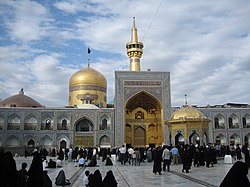
-
 Ferdowsi Tomb
 -
 Tomb of Nader Shah Afshar
 -

-
 Faculty of Science, Ferdowsi University of Mashhad
 -
 Ferdowsi Museum
 -
 Almas Shargh (East Diamond) Shopping Center
 -
 Ferdowsi's self-narration at the end of his life
 -
 Homa Watch
 -
 Former Statue Sq. element
 -
 Mashhad Arman Mall
 -
 Padideh Shandiz Tourism Center
 -
 Mashhad Arman Mall
 -
 Mellat Park
 -
 Kang countryside
 -
 Sheshlik, one of the Iranian tasty foods in Mashhad
 -
 Mashhad is the major trade center of saffron in Iran.
 -
 Stone carving art
 -
 A Masterpiece in Mashhad metro station
 -
 Fereydoon Seddiqi's prominent stone motifs
 -
 Zaal & Simorgh Story
 -
 Emam Reza Historic Hospital
 -
 St. Mesrop Armenian church in Mashhad
 -

-
 Malek's House in Mashhad
 -
 Daroogheh Historical House
 -
 Mashhad Firefighter's Parade
 -
 Mashhad Firefighter's Parade
 -
 Bike lane of Mashhad
 -
 Mashhad Airport Terminal
 -
 Mashhad Intl. Airport
 -
 TV Square
 -
 Imam Hossein Square and Kalaat Road
 -

-
 Mashhad Metro
 -
 Alton Tower
 -
 Tous Museum near Mashhad
 -
 Shandiz, a tourist town near Mashhad
 -
 Some Iranian Handicrafts (metalwork) in Torghabeh
 -
 Mashhad's countryside
 -

-
 Mashhad Metro (LRT) Station
 -
 Mashhad Metro entrance and urban design
 -
 Al-Rabi ibn Khuthaym (Khajeh Rabie Tomb)
 -
 A mosque in Mashhad
 -
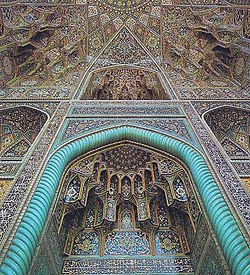 Goharshad Mosque, Abbasid Ivan in Atiq yard
 -

-
 Kang countryside
 -

-

-

-

-
 Oven of Rastgar Moqaddam
 -
 Mashhad Solar Power Plant
 -
 Mashhad Farabi Hospital
 -
 Tulips in Mellat Park
 -
 Mellat Park
 -
 Night shot of Mellat Park
 -
 Metro boarding card charging area
 -
 Mashhad Botanic Garden
 -

-
 Almas Shargh Shopping Center
 -
 Mashhad Electric bus named Shetab
 -
 Traffic playground to learn kids traffic rules
 -
 Snow in Mashhad, December 2012


.jpg)
.jpg)

.jpg)

.jpg)


.jpg)
(7).jpg)
.jpg)
_Reza_1.jpg)


.jpg)
.jpg)


.jpg)


.jpg)
.jpg)


%D8%AFNation_Park_-_panoramio.jpg)


Mashhad as capital of Iran and independent Khorasan
[edit]The following Shahanshahs had Mashhad as their capital:
- Kianid Dynasty
- Malek Mahmoud Sistani 1722–1726
- Afsharid dynasty
- Nader Shah
- Adil Shah
- Ebrahim Afshar
- Shahrukh Afshar
- Nadir Mirza of Khorasan
- Safavid dynasty
- Soleyman II
- Autonomous Government of Khorasan
- Colonel Mohammad Taghi Khan Pessyan
Notable people from Mashhad and Toos
[edit]Artists
[edit]-
 Abolghasem Ferdowsi Pazh, author of one of the world's longest epic poems created by a single poet, and the greatest epic of Persian speaking countries
.jpg)
Music
-
 Mohammad-Reza Shajarian (Siyavash Bidgani), singer-songwriter. He received the Picasso Award, UNESCO Mozart Medal, and National Order of Merit (France).
 -
 Darya Dadvar, soprano soloist and composer
 -
 Tamin and A-del in 25 (Toos) band


Cinema
-
 Ovanes Ohanian, Director
 -
 Amir Ghavidel, Art Director
 -
 Mehdi Sabbagh zade, Director, screenwriter and producer
 -
 Kourosh Ahari, Director, screenwriter and producer
 -
 Mohammad Motie, actor
 -
 Reza Kianian, actor
 -
 Anoushirvan Arjmand, actor
 -
 Reza Attaran, actor
 -
 Borzoo Arjmand, actor
 -
 Mitra Hajjar, actress
 -
 Sare Bayaat, actress
 -
 Hamed Behdad, actor
 -
 Hamid Reza Sadr, film and football critic and journalist
 -
 Homayun, actor
 -
 Mohammad Shiri, actor
 -
 Dariyush Arjmand, actor


.jpg)


.jpg)


-
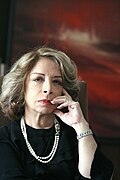 Iran Darroodi, Surreal painter
 -
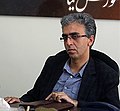 Reza Rafi', poet


- 25band, both singers born in Mashhad; Pop Group formed in 2010
- Abdi Behravanfar, born June 1975 in Mashhad; an Iranian singer, guitar player and singer-songwriter
- Ali "Dubfire" Shirazinia, born 19 April 1971; musician/dj (co-founder of Deep Dish)
- Amir Ghavidel, March 1947 – November 2009; an Iranian director and script writer
- Anoushirvan Arjmand, Iranian actor
- Dariush Arjmand, Iranian actor
- Hamed Behdad, born 17 November 1973 in Mashhad; Iranian actor
- Hamid Motebassem, born 1958 in Mashhad; Iranian musician and tar and setar player
- Homayoun Shajarian, Mohammad-Reza Shajarian's son, born 21 May 1975; renowned Persian classical music vocalist, as well as a Tombak and Kamancheh player
- Iran Darroudi, born 2 September 1936 in Mashhad; Iranian artist
- Javad Jalali, born 30 May 1977 in Mashhad; Iranian photographer and cinematographer
- Mahdi Bemani Naeini, born 3 November 1968; Iranian film director, cinematographer, TV cameraman and photographer
- Marshall Manesh, born 16 August 1950 in Mashhad; Iranian-American actor
- Mitra Hajjar, born 4 February 1977; Iranian actress
- Mohammad-Reza Shajarian, born 23 September 1940 in Mashhad; internationally and critically acclaimed Persian traditional singer, composer and Master (Ostad) of Persian music
- Mohsen Namjoo, born 1976 in Torbat-e-Jaam; Iranian singer-songwriter, author, musician and setar player
- Navid Negahban, born 2 June 1968 in Mashhad; Iranian-American actor
- Noureddin Zarrinkelk, born 1937 in Mashhad; renowned Iranian animator, concept artist, editor, graphic designer, illustrator, layout artist, photographer, script writer and sculptor
- Ovanes Ohanian, ?–1961 Tehran; Armenian-Iranian filmmaker who established the first film school in Iran
- Pouran Jinchi, born 1959 in Mashhad; Iranian-American artist
- Rafi Pitts, born 1967 in Mashhad; internationally acclaimed Iranian film director
- Reza Attaran, born 31 March 1968 in Mashhad; Iranian actor and director
- Reza Kianian, born 17 July 1951 in Mashhad; Iranian actor
- Shahin Ebrahimzadeh-Pezeshki, born 1958 in Mashhad; Persian textile and costume art historian, historian of tribal costumes, textile artist, author, researcher and curator
- Hamed Soltani born Mashhad, Iran is an Iranian producer, television presenter, and director.
Entrepreneurs
[edit]-
 Anousheh Ansari Iranian-American engineer, co-founder and chairman of Prodea Systems, co-founder and CEO of Telecom Technologies, Inc. (TTI), sponsor of the Ansari X Prize

- Anousheh Ansari, born 12 September 1966; the Iranian-American co-founder and chairman of Prodea Systems, Inc., and a spaceflight participant with the Russian space program
- Hossein Sabet, Iranian businessman and Persian carpet dealer who owns Sabet International Trading Co.
- Mahmoud Khayami, born 1930 in Mashhad, Iran; Iranian born industrialist and philanthropist, of French nationality
Sports
[edit]-
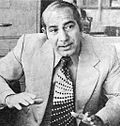 Heshmat Mohajerani, footballer and former football manager
 -
 Maryam Sedaarati, athlete
 -
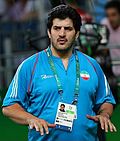 Rasoul Khadem, wrestling coach
 -

-
-

-
 Farhad Zarif, volleyball player


- Abbas Chamanyan, born 10 May 1963 in Mashhad, Iranian football coach, manager and former player
- Abbas Golmakani, World's wrestling champion during the 1950s
- Abolfazl Safavi, Iran professional football player for Aboumoslem team in Takhte Jamshid League. He was later executed in prison by the Iranian regime in 1982 for his affiliation with Iranian opposition, the MEK.
- Ali Baghbanbashi, athlete
- Alireza Vahedi Nikbakht, born 30 June 1980 in Mashhad; Iranian professional football player
- Amir Ghaseminejad, born 11 September 1985 in Mashhad, judoka
- Amir Reza Khadem, born 10 February 1970 in Mashhad, wrestler
- Amir Tavakkolian born 1971 in Mashhad, wrestler
- Farbod Farman, basketballer
- Farhad Zarif, born 3 March 1983, volleyballer
- Ghodrat Bahadori, born 4 February 1990, Iranian futsaler/indoor soccer player
- Hamed Afagh, born 1 February 1983, basketballer
- Hamid Reza Mobarez, born 18 February 1981, swimmer
- Heshmat Mohajerani, born January 1936 in Mashhad, Iran; Iranian football coach, manager and former player
- Hossein Badamaki, born 13 September 1981, Iranian professional football player
- Hossein Tayyebi, Iranian futsaler/indoor soccer player
- Javad Mahjoub, judoka
- Khodadad Azizi, born 22 June 1971 in Mashhad, Iran; retired professional football striker
- Kia Zolgharnain, born 10 November 1965, Iranian-American former futsaler/indoor soccer player Kourosh Khani, racing driver
- Mahdi Javid, born 3 May 1987, Iranian futsaler/indoor soccer player
- Majid Khodaei, born 26 August 1978, wrestler
- Maryam Sedarati, born 1 June 1950, athlete. Iran record holder in women high jump for three decades.
- Masoud Haji Akhondzadeh, born 29 April 1978, judoka
- Mohammad Khadem, 7 September 1935 – 24 November 2020, wrestler
- Mohammad Mansouri, Iranian professional football player
- Mohsen Torki, Iranian football referee
- Rasoul Khadem, born 17 February 1972 in Mashhad; wrestler
- Reza Enayati, born 23 September 1976, Iranian professional football player
- Reza Ghoochannejhad, born 20 September 1987, Iranian-Dutch professional football player
- Rouzbeh Arghavan, born 18 May 1988, basketballer
Religious and political figures
[edit]- Abbas Vaez-Tabasi, 25 June 1935 – 4 March 2016; Grand Imam and Chairman of the Astan Quds Razavi board
- Abdolreza Rahmani Fazli, born 1959 in Shirvan; Interior Minister of President Hassan Rouhani
- Abu Muslim Khorasani, c. 700–755; Abu Muslim Abd al-Rahman ibn Muslim al-Khorasani, Abbasid general of Persian origin
- Al-Ghazali, 1058–1111; Islamic theologian, jurist, philosopher, cosmologist, psychologist and mystic of Persian origin
- Al-Hurr al-Aamili, Shia scholar and muhaddith
- Ali al-Sistani, born approximately August 4, 1930; Twelver Shi'a marja residing in Iraq since 1951
- Ebrahim Raisi, (1960-2024), 8th President of Iran
- Goharshad Begum, Persian noble and wife of Shāh Rukh, the emperor of the Timurid dynasty of Herāt
- Hadi Khamenei, b. 1947; mid-ranking cleric who is a member of the reformist Association of Combatant Clerics
- Hassan Ghazizadeh Hashemi, born 21 March 1959 in Fariman; Minister of Health and Medical Education of President Hassan Rouhani
- Hassan Rahimpour Azghadi, Conservative political strategist and television personality in the Islamic Republic of Iran
- Hossein Vahid Khorasani, born in 1921; Iranian Twelver Shi'a Marja
- Mohammad-Ali Abtahi, born January 27, 1958; former Vice President of Iran and a close associate of former reformist President Khatami
- Mohammad Bagher Ghalibaf, born 23 August 1961 in Torghabeh, near Mashhad; the former Mayor of Tehran and current Speaker of Parliament
- Mohammad-Kazem Khorasani, 1839–1911; Twelver Shi'a Marja, Persian (Iranian) politician, philosopher and reformer
- Morteza Motahhari, 31 January 1919 in Fariman – 1 May 1979; an Iranian cleric, philosopher, lecturer and politician
- Nasir al-Din al-Tusi, born February 1201 in Tūs, Khorasan – 26 June 1274 in al-Kāżimiyyah, near Baghdad; Persian of the Ismaili and subsequently Twelver Shī'ah Islamic belief
- Nizam al-Mulk, 1018 – 14 October 1092; celebrated Persian scholar and vizier of the Seljuq Empire
- Saeed Jalili, born 1965 in Mashhad; Iranian politician and the former present secretary of Iran's Supreme National Security Council
- Seyed Hassan Firuzabadi, current major general, Islamic Republic of Iran
- Seyyed Ali Khamenei, born 19 April 1939; former president and current supreme leader of Iran
- Shahrukh (Timurid dynasty), August 20, 1377 – March 12, 1447; ruler of the eastern portion of the empire established by the Central Asian warlord Timur (Tamerlane)
- Shaykh Tusi, 385–460 A.H.; prominent Persian scholar of the Shi'a Twelver Islamic belief
- Sheikh Ali Tehrani, brother-in-law of Seyyed Ali Khamenei, currently living in Iran. He is one of the oppositions of current Iranian government.
Pahlavic politicians
[edit]-
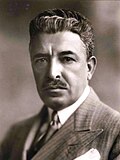 Abdol-Hoseyn Teymoortash, influential Iranian statesman who served as the first minister of court of the Pahlavi dynasty
 -
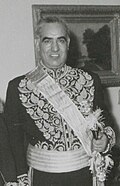
-
 Ali Bozorgnia
 -
 Amirteymour Kalali, prominent statesman


- Abdolhossein Teymourtash, prominent Iraninan statesman and first minister of justice under the Pahlavis
- Amirteymour Kalali, prominent Iraninan statesman
- Manouchehr Eghbal, 14 October 1909 – 25 November 1977; a Prime Minister of Iran
Science & scientists
[edit].jpg)

- Abū al-Wafā' Būzjānī, 10 June 940 – 1 July 998; Persian mathematician and astronomer
- Abū Ja'far al-Khāzin, 900–971; Persian astronomer and mathematician from Khorasan
- Jābir ibn Hayyān, c. 721 in Tus – c. 815 in Kufa; prominent polymath, a chemist and alchemist, astronomer and astrologer, engineer, geographer, philosopher, physicist and pharmacist and physician
- Nasir al-Din al-Tusi, born February 1201 in Tūs, Khorasan – 26 June 1274 in al-Kāżimiyyah near Baghdad; Persian of the Ismaili and subsequently Twelver Shī'ah Islamic belief
- Sharaf al-Dīn al-Ṭūsī, 1135–1213; Persian mathematician and astronomer of the Islamic Golden Age (during the Middle Ages)
Writers and literati
[edit]- Abolfazl Beyhaqi, 995–1077; a Persian historian and author
- Ali Akbar Fayyaz, a renowned historian of early Islam and literary critic, founder of the School of Letters and Humanities at the Ferdowsi University of Mashhad
- Abu-Mansur Daqiqi, 935/942–976/980
- Abusa'id Abolkhayr, 7 December 967 – 12 January 1049 / Muharram ul Haram 1, 357 – Sha'aban 4, 440 AH; a Persian Sufi who contributed extensively to the evolution of Sufi tradition
- Anvari, 1126–1189; one of the greatest Persian poets
- Asadi Tusi, born in Tus, Iranian province of Khorasan, died in 1072 in Tabriz, Iran; Persian poet of Iranian national epics
- Ferdowsi, 935–1020 in Tus; a Persian poet
- Mehdi Akhavan-Sales, 1928, Mashhad, Iran – 1990, Tehran, Iran; a Persian poet
- Mohammad Mokhtari (writer), Iranian writer who was murdered on the outskirts of Tehran in the course of the Chain Murders of Iran
- Mohammad-Taghi Bahar, 6 November 1884, Mashhad, Iran – 22 April 1951, Tehran, Iran
-
 Asghar Imanian, fighter pilot
 -
 Pari Mohammadzade Omid, Heavy vehicle driver


Twin towns – sister cities
[edit]


Consulates
[edit]Active
[edit] Kyrgyzstan (1996–)
 Pakistan (1975–)[123][124][125][126]
 Turkey (1919–?,1930–?, 2014–)[127][128]
 Turkmenistan (1995–)


Former
[edit] United Kingdom (1889–1975)[129]
 Russia (1889–1917)
 Soviet Union (1917–1937, 1941–1979)
 China (1941–?)[130]
 United States (1949–1979)[131]
 Poland[132]
 India
India Japan
Japan Jordan
 Lebanon
 West Germany (c. 1984)
 Kazakhstan (1995–2009)[133]
 Saudi Arabia (2004–2016)[134]


See also
[edit]- The National Library of Astan Quds Razavi
- Mashadi Jewish Community
- Sport Sciences Research Institute of Iran
 Media related to Mashhad at Wikimedia Commons
 Mashhad travel guide from Wikivoyage
Notes
[edit]References
[edit]- ^ [1]
- ^ OpenStreetMap contributors (4 May 2023). "Mashhad, Mashhad County" (Map). OpenStreetMap. OpenStreetMap. Retrieved 4 May 2023.[self-published source]
- ^ "Mashhad". 6 October 2022.
- ^ "Local Government Profile". United Nations Office for Disaster Risk Reduction. Archived from the original on 22 February 2014. Retrieved 4 February 2014.
- ^ [2]
- ^ [3]
- ^ "Statistical Center of Iran > Home".
- ^ "Major Agglomerations of the World – Population Statistics and Maps". citypopulation.de. 13 September 2018. Archived from the original on 13 September 2018.
- ^ a b c d "Sacred Sites: Mashhad, Iran". sacredsites.com. Archived from the original on 27 November 2010. Retrieved 13 March 2006.
- ^ "Mashhad". The Britannica Dictionary. Retrieved 29 March 2025.
- ^ "Mashhad". Merriam-Webster.com Dictionary. Merriam-Webster. Retrieved 29 March 2025.
- ^ "Mashhad". Encyclopædia Britannica. Retrieved 6 January 2018.
- ^ Sharafedin, Bozorgmehr (29 December 2017). "Hundreds protest against high prices in Iran". Reuters. Archived from the original on 28 December 2017. Retrieved 7 January 2018.
- ^ Dockery, Wesley (3 January 2018). "Iran protests: Arab states between trepidation and glee". DW. Deutsche Welle. Retrieved 7 January 2018.
- ^ The Cosmopolitan. Vol. 6. 1889. p. 378.
- ^ a b Simigh, Agnes (29 August 2022). "THE BEST PLACES TO VISIT IN MASHHAD, THE HOLIEST CITY IN IRAN". Voice of Guides. Retrieved 6 October 2022.
- ^ Naar, Ismaeel (22 February 2020). "Kuwait to evacuate 700 citizens from Iran's Mashhad amid coronavirus fears". Al Arabiya English. Retrieved 6 October 2022.
- ^ Habibi, Hassan (c. 2015) [Approved 21 June 1369]. Approval of the organization and chain of citizenship of the elements and units of the divisions of Khorasan province, centered in Mashhad. rc.majlis.ir (Report) (in Persian). Ministry of the Interior, Defense Political Commission of the Government Council. Proposal 3223.1.5.53; Approval Letter 3808-907; Notification 84902/T125K. Archived from the original on 17 November 2015. Retrieved 6 January 2024 – via Islamic Parliament Research Center.
- ^ "Razavi Khorasan (Iran): Counties & Cities – Population Statistics in Maps and Charts". citypopulation.de.
- ^ Higgins, Andrew. "Inside Iran's Holy Money Machine - WSJ". WSJ. Retrieved 17 May 2024.
- ^ مشهد، پایتخت معنوی ایران اعلام شد [Mashhad, Iran's spiritual capital] (in Persian). Khorasan newspaper. Archived from the original on 7 July 2015.
- ^ نامگذاري مشهد به عنوان پايتخت معنوي "Nombramiento de Mashhad como capital espiritual de Irán" (in Persian). Shahr.ir. 1 November 2009. Archived from the original on 26 October 2013. Retrieved 26 October 2013.
- ^ Diodorus (17.77.5)
- ^ Curtius (6.6.4-5)
- ^ Justin (12.3.8 )
- ^ Arrian (4.9.9)
- ^ Tabvla Pevtingeriana, Segmentvm XII - M. Weber
- ^ Pliny, Nat. 6.29
- ^ muhammad-bagher al-majlisi, bahaar-ol-anvaar
- ^ feiz al-kashaani, al-vaafi
- ^ al-kaafi
- ^ al-ghoybah
- ^ jaami-ol-akhbaar
- ^ al-vaafi
- ^ E.J. Brill's First Encyclopaedia of Islam 1913–1936 p. 127
- ^ The Shias: A Short History, Heinz Halm, p. 26
- ^ "Iran travel Information". persiatours.com.
- ^ "Hystaspes (2) – Livius". livius.org. Retrieved 7 January 2018.
- ^ Zabeth (1999) pp. 12–13.
- ^ Zabeth (1999) pp. 13–16.
- ^ موسوي 1370, p. 40
- ^ a b Zabeth (1999) pp. 14–15.
- ^ "Traditional foods of Mashhad City". Archived from the original on 11 May 2017. Retrieved 22 December 2016.
- ^ "زبان و ادبیات ترکان خراسان – غذاهای سنتی گریوان". salariyan.blogfa.com.
- ^ نوایی، عبدالحسین. کریم خان زند
- ^ Ghani, Cyrus (6 January 2001). Iran and the Rise of the Reza Shah: From Qajar Collapse to Pahlavi Power. I.B.Tauris. p. 9. ISBN 978-1-86064-629-4. Retrieved 4 November 2012.
- ^ Kazemzadeh, Firuz (10 April 2013). Russia and Britain in Persia: Imperial Ambitions in Qajar Iran. I.B.Tauris. p. 663. ISBN 978-0-85772-173-0.
- ^ a b تاریخجه شهر مشهد, "Historia de la ciudad de Mashhad". Portal de la Universidad de Ciencias Médicas de Mashhad (in Persian). Archived from the original on 29 October 2013. Retrieved 27 October 2013.
- ^ Ervand, History of Modern Iran, (2008), p.94
- ^ Bakhash, Shaul, Reign of the Ayatollahs: Iran and the Islamic Revolution by Shaul, Bakhash, Basic Books, 1984, p. 22.
- ^ a b Wróbel, Janusz (2003). Uchodźcy polscy ze Związku Sowieckiego 1942–1950 (in Polish). Łódź: Instytut Pamięci Narodowej. p. 16. ISBN 978-83-7629-522-0.
- ^ "Iran / Mashhad Bombing #154427". Vanderbilt Television News Archive. 20 June 1994. Retrieved 19 June 2009.
- ^ "Explosive circles: Iran. (Mashhad bombing)". The Economist. 25 June 1994. Archived from the original on 16 October 2012. Retrieved 19 June 2009 – via HighBeam Research.
- ^ "Context of 'Mid-1994: Ramzi Yousef Works Closely with Al-Qaeda Leaders". History Commons. Archived from the original on 20 July 2014. Retrieved 25 March 2010.
- ^ "Archived copy" (PDF). Archived from the original (PDF) on 3 July 2014. Retrieved 27 February 2008.
{{cite web}}: CS1 maint: archived copy as title (link) - ^ a b "World Meteorological Organization Climate Normals for 1981-2010: Mashhad(WMO number: 40745)" (XLS). ncei.noaa.gov (Excel). NOAA. p. 5. Retrieved 18 February 2024.
Parameter Code: 47 Number of Days with Snowfall
- ^ "World Meteorological Organization Climate Normals for 1991-2020: Mashhad-40745" (CSV). ncei.noaa.gov (Excel). NOAA. Retrieved 18 February 2024.
- ^ a b *"Highest record temperature in Mashhad by Month 1951–2010". Iran Meteorological Organization. Archived from the original on 4 February 2019. Retrieved 8 April 2015.
- "Lowest record temperature in Mashhad by Month 1951–2010". Iran Meteorological Organization. Archived from the original on 4 February 2019. Retrieved 8 April 2015.
- ^ *"Average Maximum temperature in Mashhad by Month 1951–2010". Iran Meteorological Organization. Archived from the original on 8 March 2016. Retrieved 8 April 2015.
- "Average Mean Daily temperature in Mashhad by Month 1951–2010". Iran Meteorological Organization. Archived from the original on 18 October 2018. Retrieved 8 April 2015.
- "Average Minimum temperature in Mashhad by Month 1951–2010". Iran Meteorological Organization. Archived from the original on 8 March 2016. Retrieved 8 April 2015.
- ^ "Monthly Total Precipitation in Mashhad by Month 1951–2010". Iran Meteorological Organization. Archived from the original on 15 September 2018. Retrieved 8 April 2015.
- ^ "Average relative humidity in Mashhad by Month 1951–2010". Iran Meteorological Organization. Archived from the original on 8 March 2016. Retrieved 8 April 2015.
- ^ "No. Of days with precipitation equal to or greater than 1 mm in Mashhad by Month 1951–2010". Iran Meteorological Organization. Archived from the original on 8 March 2016. Retrieved 8 April 2015.
- ^ "No. Of days with snow in Mashhad by Month 1951–2010". Iran Meteorological Organization. Archived from the original on 8 March 2016. Retrieved 8 April 2015.
- ^ "Monthly total sunshine hours in Mashhad by Month 1951–2010". Iran Meteorological Organization. Archived from the original on 8 March 2016. Retrieved 8 April 2015.
- ^ Iran: Provinces and Cities population statistics
- ^ Census of the Islamic Republic of Iran, 1385 (2006): Razavi Khorasan Province. amar.org.ir (Report) (in Persian). The Statistical Center of Iran. Archived from the original (Excel) on 20 September 2011. Retrieved 25 September 2022.
- ^ Census of the Islamic Republic of Iran, 1390 (2011): Razavi Khorasan Province. irandataportal.syr.edu (Report) (in Persian). The Statistical Center of Iran. Archived from the original (Excel) on 20 January 2023. Retrieved 19 December 2022 – via Iran Data Portal, Syracuse University.
- ^ Census of the Islamic Republic of Iran, 1395 (2016): Razavi Khorasan Province. amar.org.ir (Report) (in Persian). The Statistical Center of Iran. Archived from the original (Excel) on 2 April 2022. Retrieved 19 December 2022.
- ^ "-نصف-اقامت-مسافران-یزد-کاشان-کاهش-یافت". Masshad News (in Persian). Archived from the original on 4 February 2019. Retrieved 22 December 2016.
- ^ Unallowable places farsnews.ir
- ^ The double lives of Mashhadi Jews, The Jerusalem Post, 12 August 2007.
- ^ Iran Foreign Policy & Government Guide (World Business Law Handbook Library), Usa Ibp, Intl Business Pubn., 2006, p. 149
- ^ Glazebrook & Abbasi-Shavazi 2007, p. 189
- ^ Abbas Hajimohammadi and Shaminder Dulai, eds. (6 November 2014). "Photos: The Life of Afghan Refugees in Tehran". Newsweek. Retrieved 7 November 2014.
- ^ Koepke, Bruce (4 February 2011), "The Situation of Afghans in the Islamic Republic of Iran Nine Years After the Overthrow of the Taliban Regime in Afghanistan", Middle East Institute. Retrieved 7 November 2014
- ^ "مهاجرت افغانها برای همسایه دردسرساز شد/ سرنوشت خاکستری اتباع خارجی در مشهد". خبرگزاری مهر – اخبار ایران و جهان – Mehr News Agency. 1 January 2017. Retrieved 31 December 2016.
- ^ "Prayer, food, sex and water parks in Iran's holy city of Mashhad". Tehran Bureau. The Guardian. 7 May 2015. Retrieved 16 June 2025.
- ^ "تور مشهد – نقد و اقساط (شروع از 200,000 تومان)". irandehkadeh.com.
- ^ "افزایش 35درصدی طلاق در مشهد". پایگاه خبری تحلیلی قاصد نیوز. Archived from the original on 28 November 2020. Retrieved 31 December 2016.
- ^ "مسائل جنسی عامل 60 درصد طلاق ها در مشهد است/راه های افزایش کیفیت رابطه جنسی". سلامت نیوز. 30 October 2013. Retrieved 31 December 2016.
- ^ "بعد از اعتیاد و طلاق، خشونت، سومین آسیب عمده اجتماعی در مشهد". پایگاه خبری تحلیلی قاصد نیوز. Archived from the original on 14 July 2020. Retrieved 31 December 2016.
- ^ a b Higgins, Andrew (2 June 2007). "Inside Iran's Holy Money Machine". The Wall Street Journal. Retrieved 13 January 2016.
- ^ a b Christopher de Bellaigue, The Struggle for Iran, New York Review of Books, 2007, p.15
- ^ Iran: Order Out of Chaos Archived 29 September 2007 at the Wayback Machine
- ^ Kamdar, Nazanin (6 January 2015). "پدیده شاندیز؛". Rooz Online. Retrieved 7 March 2015.
- ^ "پیشرفت های جدید در ساماندهی مؤسسات اعتباری/ ثامن الحجج در کدام مرحله دریافت مجوز است؟". 9 September 2015. Retrieved 31 December 2016.
- ^ "مجوز تغییر نام موسسه اعتباری عسکریه به موسسه ملل صادر شد". کانون بانک ها و موسسات خصوصی. بازبینیشده در ۱۳۹۵/۰۴/۱۰.
- ^ "مردم گول نخورند / موسسات ثامنالحجج و ثامن مجوز ندارند". Jamejam Online. 2 November 2015. Retrieved 31 December 2016.
- ^ "Welcome to Encyclopaedia Iranica".
- ^ "Overlooking dialect associated with forgetting identity: academic". 23 August 2008.
- ^ Area Handbook for Afghanistan, page 77, Harvey Henry Smith, American University (Washington, D.C.) Foreign Area Studies
- ^ مرکز مدیریت حوزهٔ علمیهٔ خراسان، کارنمای عملکرد سال ۱۳۸۶ مرکز مدیریت حوزهٔ علمیهٔ خراسان، ج ۱، ص ۹–۱۱
- ^ "Guide to Iranian Media and Broadcast" (PDF). BBC Monitoring. March 2007. Retrieved 12 September 2014.
- ^ "Entrepreneurs Show 2017". Tasnim News Agency. 7 December 2017. Retrieved 7 December 2017.
- ^ "Mashhad Airbase / 14th Tactical Air Base". Global Security.
- ^ Fabian, Emanuel. "In 'most distant strike,' Israeli Air Force bombs Iranian plane at Mashhad Airport in northeast Iran". The Times of Israel. Retrieved 15 June 2025.
- ^ "Photos: Airplane Overhaul Facility in Mashhad, Eastern Iran". payvand.com. Archived from the original on 15 April 2015. Retrieved 8 November 2012.
- ^ Photos: Airplane Overhaul Facility in Mashhad, Eastern Iran Archived 15 April 2015 at the Wayback Machine. Payvand.com.
- ^ "Islamic Republic of Iran Railways". raja.ir. Archived from the original on 5 February 2003.
- ^ "Rah-Ahan (Railway) of Iran (R.A.I) or national railway company". rai.ir. Archived from the original on 10 October 2021. Retrieved 26 November 2021.
- ^ "Joopar Rail Co". www.joopar.com.
- ^ "Fadak Trains Co". www.fadaktrains.com.
- ^ "Nakhchivan-Mashhad train schedule to be optimized: Azerbaijan | Hakimiyyet". Archived from the original on 16 January 2017. Retrieved 14 January 2017.
- ^ "Israel Strikes Mashhad, an Iranian City Near Turkmenistan and a Hub for Central Asia Trade - The Times Of Central Asia". 17 June 2025. Retrieved 28 June 2025.
- ^ a b "شرکت بهره برداری قطارشهری مشهد ::". Metro.mashhad.ir. Archived from the original on 16 September 2018. Retrieved 16 March 2022.
- ^ قطار شهري مشهد به صورت آزمايشي به بهرهبرداري رسيد (in Persian). Fars News Agency. 21 February 2011. Retrieved 29 July 2011.
- ^ "اتصال خط یک و دو قطارشهری مشهد با حضور رییس جمهور". MUROC. Archived from the original on 1 December 2018. Retrieved 8 May 2018.
- ^ "ساعت کاری خط دو قطار شهری مشهد افزایش یافت/خط دو می تواند ۷۰ هزار مسافر جابجا کند". MUROC. Archived from the original on 26 September 2021. Retrieved 8 May 2018.
- ^ "شرکت بهره برداری قطارشهری مشهداخباراخبار شرکت بهره برداری قطارشهری مشهد". Archived from the original on 26 September 2021. Retrieved 6 August 2019.
- ^ "قطار شهری مشهد > صفحه نخست". Archived from the original on 27 August 2019. Retrieved 28 July 2019.
- ^ "چند پیشنهاد به آستان قدس رضوی". 7 August 2023.
- ^ "Seyyed Mahmoud Hashemi Shahroudi (First vice chairman)". Official website of the Assembly of Experts – Management Committee of [the] Assembly of Experts. Retrieved 9 June 2016.
- ^ ".:Middle East Online::Feared Iranian prosecutor falls from grace:". middle-east-online.com. Archived from the original on 8 July 2017. Retrieved 28 December 2016.
- ^ Bozorgmehr, Najmeh (23 February 2012). "Hardline group emerges as Iran poll threat". Financial Times. Archived from the original on 10 December 2022. Retrieved 10 March 2015.
- ^ "سهم گروههای سیاسی از چهارمین انتخابات شورای شهر در تهران و ۸ شهر بزرگ". Khabar Online. July 2013. Retrieved 10 March 2015.
- ^ سید صولت مرتضوی شهردار مشهد شد "Seyed Soulat Mortazaví, alcalde de Mashhad" (in Persian). Khabar Online. Fars News. 23 September 2013. Retrieved 11 November 2013.
- ^ "رسانهها هر جا تخلف دیدند، فریاد بزنند". mashhadnews.org. Archived from the original on 20 December 2016.
- ^ "هیات کشتی استان خراسان رضوی". Razavisport.ir. Archived from the original on 22 July 2011. Retrieved 12 November 2010.
- ^ "هیات باستانی". ISNA. 5 March 2016. Archived from the original on 5 March 2016. Retrieved 29 June 2022.
- ^ "داوري:پيست مشهد تاثير بسزايي در رشد دوچرخه سواري خواهد داشت". CFI. 14 August 2014. Archived from the original on 14 August 2014. Retrieved 29 June 2022.
- ^ "احداث اولین زمین گلف کشور". AsrIran (in Persian). Retrieved 29 June 2022.
- ^ "Town Twinning". mashhad.ir. Mashhad. Archived from the original on 27 October 2020. Retrieved 18 June 2020.
- ^ "Consulate of Pakistan in Mashhad, Iran". Archived from the original on 18 March 2011. Retrieved 27 July 2012.
- ^ "دفتر سفارت جمهوری تاجیکستان در مشهد". tajik-em-mashhad.ir. Archived from the original on 23 May 2015. Retrieved 2 June 2015.
- ^ "CONTACTS – Tajik Embassy in Iran". tajembiran.tj.
- ^ "Tajikistan Rejects Iran Visa Offer". Radio Free Europe/Radio Liberty. 7 May 2010.
- ^ "Turkey opens new consulate in Iran". iran-daily.com.
- ^ "Consulate General of Turkey in Mashhad, Iran". embassypages.com.
- ^ Onley, James. The Arabian Frontier of the British Raj: Merchants, Rulers, and the British in the Nineteenth-Century Gulf. New York: Oxford University Press, 2007, p. 15. ISBN 0-19-922810-8.
- ^ "کنسولگریهای خارجی در خراسان – نشریه زمانه". zamane.info. Archived from the original on 16 June 2013. Retrieved 26 July 2012.
- ^ "مرکز تحقیقاتی _ tarikhsazan". tarikhsazan.blogfa.com.
- ^ "کنسولگری ها ؛ مستخدمان و مستشاران خارجی در مشهد". mashhadenc.ir.
- ^ "واضح – سركنسولگري جمهوري قزاقستان در گرگان گلستان گشايش يافت".
- ^ "Saudi consulate opens in Iranian city of Mashhad". Asia Africa Intelligence Wire. 12 July 2004.
Sources
[edit]- Glazebrook, Diana; Abbasi-Shavazi, Mohammad Jalal (2007), "Being Neighbors to Imam Reza: Pilgrimage Practices and Return Intentions of Hazara Afghans Living in Mashhad, Iran", Iranian Studies, 40 (2): 187–201, doi:10.1080/00210860701269535, S2CID 162335732
- Zabeth, Hyder Reza (1999). Landmarks of Mashhad. Mashhad, Iran: Islamic Research Foundation. ISBN 964-444-221-0.
External links
[edit]- Municipality of Mashhad Official website (in Persian)
- Astan Quds Razavi
- e-Mashhad at the Wayback Machine (archived 19 August 2005) Mashhad Portal Official website (in Persian)
| International | |
|---|---|
| National | |
| Geographic | |
| Other | |


| Capital | |||||||||||||||||||||||||||||||||||||||||
|---|---|---|---|---|---|---|---|---|---|---|---|---|---|---|---|---|---|---|---|---|---|---|---|---|---|---|---|---|---|---|---|---|---|---|---|---|---|---|---|---|---|
| Districts |
| ||||||||||||||||||||||||||||||||||||||||

| Periods |
|  | ||||
|---|---|---|---|---|---|---|
| Types | ||||||
| Elements | ||||||
| Traditional cities | ||||||
| Theory and analysis | ||||||
| Lists | ||||||
Mashhad
View on GrokipediaMashhad is a metropolis in northeastern Iran and the capital of Razavi Khorasan Province.[1] With a metropolitan population of 3,461,000 in 2025, it ranks as the second-most populous urban area in the country after Tehran.[2] The city derives its name, meaning "place of martyrdom" in Persian, from the historical martyrdom of Ali al-Rida, the eighth Twelver Shia Imam, whose burial site forms the core of the Imam Reza Holy Shrine, establishing Mashhad as Iran's preeminent center of Shia pilgrimage and the world's largest mosque complex by area.[1][3] Historically, Mashhad originated as the village of Sanabad, which expanded significantly following the Imam's death in 818 CE, evolving into a key religious and administrative hub.[1] During the Afsharid era in the 18th century, it briefly served as the capital of the Persian Empire under Nader Shah, whose tomb also resides there, underscoring its enduring political and cultural prominence.[4] Economically, Mashhad thrives on pilgrimage-driven tourism, alongside sectors such as manufacturing, agriculture—including saffron and dried fruits—and trade, positioning it as a vital node in Iran's northeastern economy.[5][6] The city's religious identity profoundly shapes its social fabric, drawing tens of millions of visitors yearly to the shrine complex, which encompasses mosques, museums, and libraries, while fostering a blend of traditional piety and modern urban development.[7][8]
History
Etymology and Foundations
The name Mashhad derives from the Arabic term mašhad, meaning "place of martyrdom" or "witnessing site," specifically referencing the death of ʿAlī al-Riḍā, the eighth Twelver Shīʿa imām, who was reportedly poisoned in 818 CE (203 AH) by the Abbasid caliph al-Maʾmūn and buried on the site.[9] Historical accounts indicate that the village of Sanābād, located approximately 24 kilometers from the nearby city of Ṭūs, adopted this designation shortly after al-Riḍā's interment in a garden or palace courtyard there, marking the initial nucleus of settlement growth around the tomb.[10][11] Prior to Islamic rule, the broader Khorasan region, encompassing the Sanābād area, formed part of the Sāsānian Empire's eastern provinces, where Zoroastrianism predominated as the state religion, evidenced by archaeological remains of fire temples and inscriptions from the Parthian and Sāsānian periods.[12] The Arab conquests of the seventh century CE gradually supplanted Zoroastrian practices with Islam, though the transition in rural locales like Sanābād remained incomplete until the Abbasid era's administrative consolidation. Sanābād itself appears in early Islamic records as a modest village featuring a pre-Islamic fortress known as Dār al-Imārah, utilized by Abbasid governors such as Ḥumayd ibn Qaḥṭaba in the late eighth century.[13][14] Under Abbasid oversight, al-Maʾmūn's designation of al-Riḍā as heir apparent in 817 CE drew the imām to the Ṭūs region, culminating in his death and burial at Sanābād, which historical chronicles attribute to deliberate poisoning amid political rivalries within the caliphate. This event spurred pilgrimage and settlement expansion, transforming the village into a focal point of Shīʿa veneration by the ninth century, as documented in early endowment records and traveler accounts rather than relying on later hagiographic embellishments.[10][9] The site's development thus reflects causal dynamics of religious burial practices intersecting with Abbasid territorial control, without substantive archaeological corroboration of the poisoning itself beyond textual traditions.Medieval Period: Invasions and Dynasties
The Mongol invasion of Khorasan in 1221, led by forces under Genghis Khan during the conquest of the Khwarazmian Empire, resulted in the near-total destruction of Tus, the regional capital located approximately 30 kilometers west of present-day Mashhad.[15] Tus's fortifications were breached, its population subjected to systematic massacre, and its infrastructure razed, with contemporary accounts estimating tens of thousands killed in the surrounding Khorasan cities alone.[16] This devastation shifted settlement patterns, as survivors sought refuge at the shrine of Imam Reza in the village of Sanabad (later Mashhad), leveraging its religious sanctity for relative protection amid the chaos of nomadic warfare.[17] Under the Ilkhanid dynasty (1256–1335), which established Mongol rule in Persia following Hulagu Khan's campaigns, efforts at reconstruction stabilized the region, including expansions to the Imam Reza Shrine that enhanced its defensive and communal functions.[17] Ilkhanid governors, transitioning from initial extractive policies to administrative integration, invested in infrastructure to consolidate control, fostering urban recovery around Mashhad as a pilgrimage hub rather than the obliterated Tus.[18] This adaptive governance—prioritizing settled religious centers over vulnerable open cities—mitigated the long-term effects of depopulation and economic disruption caused by earlier Mongol tactics of terror.[15] The Timurid era, commencing with Timur's incursions into Khorasan in the 1380s that further sacked remnant settlements, saw renewed prosperity under Shah Rukh (r. 1405–1447), who prioritized cultural and architectural patronage to legitimize rule.[17] Shah Rukh's wife, Gawhar Shad, commissioned the Goharshad Mosque adjacent to the shrine around 1418, featuring intricate tilework and iwan architecture that symbolized Timurid revival.[19] Additional projects, such as the Madrasseh-ye Do-Dar, integrated educational and religious facilities, expanding Mashhad's urban fabric and drawing scholars, which bolstered resilience against recurrent Turkic-Mongol instability through institutionalized piety and trade networks.[20] These dynastic shifts underscore how strategic rebuilding around inviolable sacred sites enabled demographic and economic rebound, countering the causal logic of total warfare with localized incentives for loyalty and investment.[17]Early Modern Era: Safavid to Qajar Rule
Under the Safavid dynasty (1501–1736), Mashhad emerged as Iran's foremost Shi'i pilgrimage center, leveraging the shrine of Imam Reza (the eighth Shi'i imam) to consolidate dynastic legitimacy and attract devotees from across the empire.[21] Shah Ismail I incorporated the city into Safavid territory following the Timurid decline around 1507, initiating expansions to the shrine complex that emphasized Shi'i rituals over prior Sunni orientations.[22] Shah Abbas I (r. 1588–1629) further restored and enlarged the shrine in the early 17th century, funding architectural enhancements and waqf endowments that stimulated local commerce along trade routes linking the Persian Gulf to Central Asia, thereby integrating Mashhad into Safavid economic networks despite intermittent tribal raids.[17] The Afsharid interlude (1736–1796), founded by Nader Shah (r. 1736–1747), elevated Mashhad as the dynasty's administrative capital, serving as the launch point for his expansive military campaigns that reshaped regional power dynamics. Originating from Khorasan, Nader relocated the capital from Isfahan to Mashhad upon deposing the Safavids in 1736, fortifying the city with a citadel and using it as a base for invasions into the Mughal Empire (culminating in the 1739 sack of Delhi) and the Ottoman domains, which temporarily restored Persian influence but strained local resources through conscription and taxation.[23] After Nader's assassination in 1747 near Quchan, his successors, including Shahrukh Afshar (r. 1748–1796), maintained Mashhad as a contested power seat amid civil wars and Zand incursions, fostering instability that eroded prior Safavid-era trade gains until Agha Mohammad Khan Qajar's conquest in 1796.[24] During Qajar rule (1796–1925), Mashhad's role as a pilgrimage hub persisted, drawing annual crowds exceeding 100,000 by the mid-19th century and sustaining artisan economies tied to religious tourism, yet administrative neglect and foreign encroachments marked a period of relative stagnation.[25] Internal strife intensified during the Constitutional Revolution (1905–1911), when local cleric-led uprisings against central authority clashed with Russian interests in northeastern Persia; in April 1912, Russian Cossack forces bombarded the Imam Reza shrine—firing over 200 shells that damaged the Gowharshad Mosque dome—to suppress rebels under Yusuf Khan Garrusi, resulting in dozens of casualties, widespread looting, and deepened anti-Russian sentiment that highlighted the city's vulnerability to imperial interventions.[26][27]Pahlavi Modernization and Resistance
Under Reza Shah Pahlavi's rule from 1925 to 1941, Mashhad experienced targeted modernization initiatives that extended national efforts to centralize authority and promote secular infrastructure. Shrine revenues from the Imam Reza complex were allocated to establish secular schools, construct Shah Reza Hospital (later renamed Imam Reza Hospital), and upgrade urban water systems, fostering gradual urbanization amid broader policies emphasizing Western-style development over traditional structures. These measures aligned with Reza Shah's emphasis on state control, including suppression of clerical autonomy, which redirected religious endowments toward public works but strained relations with local ulema who viewed such reallocations as encroachments on sacred institutions.[28] The regime's secularization drive intensified tensions, culminating in the 1935 Goharshad Mosque uprising. On July 13, 1935, thousands assembled in the Goharshad Mosque—adjacent to the Imam Reza Shrine—to oppose Reza Shah's June 1936 decree mandating the public unveiling of women and adoption of European-style attire, policies enforced through aggressive policing and seen as direct assaults on Islamic norms in the devout city. Led by cleric Mohammad Taqi Braqi, the protests reflected grassroots resistance to coercive cultural reforms, drawing pilgrims and locals who barricaded the mosque; state troops responded with gunfire, killing dozens to hundreds according to contemporaneous accounts, an event that underscored the causal friction between top-down secular imposition and Mashhad's entrenched religious fabric.[29][30] ![Goharshad Mosque from the east during Qajar era][float-right] Following World War II, Mohammad Reza Shah's administration pursued further reforms via the 1963 White Revolution, which included land redistribution in Khorasan Province's rural hinterlands surrounding Mashhad. Decrees from 1962–1964 enabled the state to expropriate large estates, compensating owners based on prior tax values and granting plots to sharecroppers, ostensibly to undermine feudalism and boost agricultural productivity; by 1971, over 1.8 million hectares nationwide had been redistributed to approximately 625,000 families. However, implementation proved uneven, with recipients in arid Khorasan often receiving marginal lands inadequate for self-sufficiency without credit or irrigation support, prompting critiques that the program displaced tenants, inflated food prices through mechanization, and accelerated rural exodus to Mashhad—swelling urban slums and amplifying clerical narratives of elite neglect and cultural alienation as root causes of Islamist discontent.[31]Post-1979 Revolution and Key Events
Following the 1979 Iranian Revolution, Mashhad emerged as a bastion of clerical authority, with local Shia seminaries and the Imam Reza shrine complex placed under direct theocratic oversight, reinforcing the city's role in disseminating revolutionary ideology and suppressing dissent.[32] Prominent hardline clerics, such as Ahmad Alamolhoda, who has led Friday prayers since 1983, wielded significant influence, aligning local institutions with Supreme Leader Ayatollah Khomeini's vision of velayat-e faqih (guardianship of the jurist).[33] On June 20, 1994, a bomb exploded in a crowded prayer hall of the Imam Reza shrine, killing at least 26 pilgrims and injuring over 200, in an attack attributed by Iranian authorities to the People's Mojahedin Organization of Iran (MEK), a dissident exile group opposing the Islamic Republic.[34] The incident highlighted vulnerabilities in the shrine's security amid ongoing low-level insurgencies by opposition factions, though the MEK denied involvement, claiming the regime staged it to justify crackdowns.[34] Economic discontent ignited nationwide protests beginning December 28, 2017, in Mashhad, where demonstrators gathered near the shrine to decry soaring food prices, unemployment, and perceived corruption under President Hassan Rouhani's administration, initially framed as support for hardliners but quickly escalating into anti-regime chants.[35] The unrest spread to over 80 cities, resulting in at least 25 protester deaths—primarily from security forces' gunfire—and approximately 3,700 arrests, with Iranian officials later admitting to a forceful response ordered by Supreme Leader Ali Khamenei to restore order.[35] [36] Grievances centered on inflation exceeding 15% and subsidy cuts, exposing causal links between fiscal policies and public unrest, though regime narratives attributed disturbances to foreign instigation.[35] The death of Mahsa Amini in morality police custody on September 16, 2022, triggered protests in Mashhad by September 19, with crowds clashing against enforcers of mandatory hijab laws, leading to reports of live ammunition use by security forces and multiple fatalities in the city amid broader nationwide upheaval claiming over 500 lives.[37] Human Rights Watch documented systematic suppression, including internet blackouts and mass detentions, as protesters decried systemic gender enforcement and economic stagnation intertwined with cultural restrictions.[38] In 2025, Vakilabad Prison in Mashhad became a focal point for executing political prisoners linked to prior dissent, including five men hanged on April 8 for charges stemming from protest involvement, denied final family visits despite international outcry from groups like the Center for Human Rights in Iran, which highlighted coerced confessions and unfair trials.[39] Further executions followed, such as four on April 30, underscoring the regime's use of capital punishment to deter opposition, with at least 56 reported nationwide that month alone, per rights monitors emphasizing the prison's role in housing protest-related detainees.[40][41]Geography
Location and Topography
Mashhad is situated in the northeastern part of Iran, serving as the capital of Razavi Khorasan Province, at geographic coordinates approximately 36°18′N latitude and 59°37′E longitude.[42] The city lies in the Kashaf River valley within the Mashhad Plain, at an elevation of about 1,000 meters (3,291 feet) above sea level, which positions it in a transitional zone between the vast Iranian Plateau and the Central Asian steppes.[43] [44] This location places Mashhad roughly 900 kilometers east of Tehran and near the borders with Turkmenistan to the north and Afghanistan to the east, facilitating historical trade routes while exposing it to regional geopolitical influences.[43] The topography of Mashhad features a relatively flat alluvial plain hemmed in by mountain ranges, including the Kopet Dag to the north, the Binalud Mountains to the southwest, and the Hezar Masjed range to the east, which have shaped settlement patterns by providing natural defenses and limiting expansion directions.[43] [45] These surrounding highlands, rising sharply from the plain, create a basin-like environment that historically concentrated human activity in the valley floor, where fertile soils supported early agricultural communities and pilgrimage centers.[46] Urban development has radiated outward from the historical core around the Imam Reza Shrine, with satellite imagery revealing accelerated sprawl into peripheral farmlands and foothills between the mid-20th century and 2012, converting over substantial areas of agricultural land to built-up zones amid population pressures.[47] Environmental constraints significantly influence Mashhad's growth, including high seismic risk from proximity to active faults like the Kashaf Rud and Shandiz systems, which have triggered destructive events such as the 1673 earthquake that razed much of the city and more recent magnitudes exceeding 6.0.[48] [49] [50] Soft alluvial soils in the plain amplify ground motions, elevating vulnerability for the densely built urban fabric.[51] Compounding this, acute water scarcity arises from overexploitation of the Mashhad aquifer, leading to subsidence rates exceeding 15 cm per year in parts of the valley and restricting sustainable expansion despite engineering interventions.[52] [53] These factors necessitate topography-informed urban planning to mitigate risks from tectonic activity and hydrological deficits.[54]Climate and Environmental Factors
Mashhad features a semi-arid steppe climate (Köppen BSk), characterized by hot summers, cold winters, and low precipitation concentrated mainly in the cooler months. Average annual rainfall measures about 250 mm, with most falling between November and May, while summers remain predominantly dry. Temperature extremes reach lows of approximately -20°C during winter cold snaps and highs up to 40°C in summer, driven by continental influences and elevation.[55][56][57] Dust storms periodically affect the region, with data from northeastern Iranian meteorological stations indicating peaks in spring (April) and early summer (June), particularly in areas like Mashhad and nearby Sabzevar. These events stem from desiccated soils and regional wind patterns, intensified by upstream wetland drying in neighboring countries and local land degradation. Water shortages compound these issues, resulting from unsustainable groundwater extraction and inefficient irrigation practices, which have led to declining aquifer levels and surface water availability across Khorasan Province; empirical records show a marked increase in scarcity over recent decades due to these anthropogenic factors rather than solely climatic variability.[58][59][60] Rapid urbanization has amplified the urban heat island (UHI) effect in Mashhad, where expanding impervious surfaces and reduced vegetation cover elevate local temperatures by several degrees compared to rural surroundings, as evidenced by satellite-derived land surface temperature analyses. This phenomenon causally contributes to heightened heat stress on residents, increasing risks of cardiovascular and respiratory issues during peak summer periods, alongside elevated energy demands for cooling. Agriculturally, UHI-induced microclimate shifts near urban fringes disrupt crop yields and irrigation efficiency, exacerbating regional food production vulnerabilities amid already constrained water resources; studies attribute these trends directly to built-up area growth outpacing green space preservation.[61][62][63]Demographics
Population Trends
Mashhad's population has exhibited rapid growth throughout the late 20th and early 21st centuries, driven primarily by high natural increase rates in earlier decades, rural-to-urban migration, and inflows from war-displaced populations following the Iran-Iraq War (1980–1988). Official censuses conducted by Iran's Statistical Centre of Iran record the city's resident population rising from 241,989 in 1956 to 1,437,000 in 1986, reflecting accelerated urbanization amid national instability and economic shifts toward cities. By 2006, the figure reached 2,410,800, and the 2016 census tallied 3,001,184 residents in the city proper.[64][65][2]| Census Year | City Population |
|---|---|
| 1956 | 241,989 |
| 1986 | 1,437,000 |
| 2006 | 2,410,800 |
| 2011 | 2,766,258 |
| 2016 | 3,001,184 |
Ethnic and Linguistic Composition
The ethnic composition of Mashhad is predominantly Persian, with Persians forming the majority in this major urban center in northeastern Iran. Urban areas like Mashhad are overwhelmingly inhabited by Persians, reflecting the broader demographic patterns where this group dominates key cities. Historical migrations have introduced smaller Kurdish communities, estimated at around 13-15% of the city's population based on regional analyses of Razavi Khorasan Province, where Kurds number approximately 600,000 in the west and northwest. Turkic minorities, including Turkmen, are present in lesser numbers, primarily in peripheral rural areas rather than the urban core. A substantial Afghan migrant population has altered the demographic landscape since the 1979 Iranian Revolution, with influxes driven by conflicts in Afghanistan, including the post-2021 Taliban resurgence. As of late 2023, roughly 500,000 Afghans were registered in Mashhad, comprising ethnic groups such as Tajiks, Hazaras, and Pashtuns, concentrated in the city as part of Khorasan Razavi's hosting of Iran's largest Afghan refugee contingent. This group, part of Iran's overall 5-8 million Afghan residents (including undocumented), faces integration hurdles, including employment bans in certain sectors like mobile markets and mass deportations exceeding 650,000 nationwide in 2023.[69][70][71][72] Despite these challenges, assimilation occurs through Persian language acquisition and school enrollment, with over 600,000 Afghan children educated in Iranian systems by 2023, enabling economic participation among longer-term residents.[73] Linguistically, Persian dominates as the primary language, rendered in the Mashhadi dialect, an eastern variant distinct from the Tehran standard through phonological shifts (e.g., retention of archaic sounds) and lexical borrowings influenced by proximity to Afghan Dari. Kurdish dialects, such as Kurmanji or Sorani variants, persist among migrant Kurdish groups, while Afghans primarily use Dari (an eastern Persian dialect) or Pashto, though bilingualism in standard Persian is common for daily interactions and assimilation. No official census delineates linguistic breakdowns, as Iran's statistical center focuses on provincial totals without ethnic or linguistic granularity, but Persian's role as the lingua franca underscores its unifying function amid diversity.[74]Religious Demographics
Mashhad's residents are overwhelmingly adherents of Twelver Shia Islam, estimated at 99 percent of the population, reflecting the city's status as Iran's second-holiest Shia site after Qom and drawing a concentrated community of believers.[75] National data indicate that Shia Muslims form 90-95 percent of Iran's overall Muslim majority (99.4 percent of the total population), but Mashhad's demographics skew even more heavily Shia due to historical pilgrimage patterns and institutional reinforcement, with Sunni Muslims and other groups comprising negligible shares under 1 percent.[76] This uniformity fosters a pervasive religious environment where public life aligns closely with Shia doctrinal norms, empirically evidenced by the density of religious observances and low visibility of alternative practices. Religious minorities in Mashhad include remnants of Sunni Muslims, Christians (primarily Armenians and Assyrians), Jews, and Zoroastrians, though their numbers have dwindled to trace levels amid emigration and assimilation pressures since the 1979 Revolution.[76] Iran's Jewish population nationwide stands at approximately 8,000-9,100, with historical communities in Mashhad largely reduced through forced conversions in the 19th century and post-revolutionary exodus, leaving only small, discreet groups today.[77] Christian and Zoroastrian presences are similarly marginal, numbering in the dozens or low hundreds locally, per national estimates of 25,000 Zoroastrians and under 0.4 percent Christians across Iran, often facing restrictions on worship and proselytism.[76] These groups maintain low profiles to avoid scrutiny, with empirical reports documenting sporadic harassment and property disputes. The city hosts one of Iran's highest concentrations of Shia clergy outside Qom, with 75 religious seminaries educating thousands of seminarians as of 2023, contributing causally to Mashhad's pronounced religious conservatism and enforcement of orthodox norms.[78] Earlier counts noted 39 seminaries and around 2,300 students, underscoring a institutional density that amplifies clerical influence over social conduct.[79] This structure sustains a feedback loop where seminaries produce guardians of doctrine, reinforcing resistance to deviation and embedding causal realism in the city's resistance to secular or pluralistic shifts. Conversions from Islam, deemed apostasy under Sharia interpretations enforced by Iranian authorities, face severe suppression in Mashhad, with converts risking arrest, flogging, or execution despite the offense's uncodified status in penal law.[80] Human rights documentation records cases of Christian converts enduring interrogation and imprisonment, particularly in religiously dense areas like Mashhad, where clerical oversight heightens vigilance against perceived threats to Shia unity.[81] While executions remain infrequent—fewer than a handful annually nationwide—underground networks of ex-Muslims report pervasive fear, with 2022-2023 monitors noting increased raids on house churches and coerced recantations, empirically linking local seminary influence to heightened intolerance.[82] This dynamic underscores tensions between the Shia majority's dominance and minority persistence, without evidence of meaningful accommodation.Religious Significance
Imam Reza Shrine: History and Architecture
The Imam Reza Shrine originated in the early 9th century following the martyrdom of Ali ibn Musa al-Ridha, the eighth Shia Imam, in 818 CE at the hands of the Abbasid Caliph al-Ma'mun in the village of Sanabad, which later developed into the city of Mashhad.[83][84] Initial construction of a simple mausoleum occurred shortly after, with significant expansions beginning under the Ghaznavids; Sultan Mahmud of Ghazni initiated renovations and enlargement around 1009 CE, including the addition of a burial chamber.[85] The complex underwent cycles of destruction and rebuilding through the Ilkhanid period, followed by major developments under the Timurids, particularly during Shahrukh Mirza's reign, reaching a peak with the construction of the old courtyard (Sahn Atiq) and golden porch under Sultan Husayn Bayqara in the late 15th century.[17][86] Safavid rulers further expanded the shrine after establishing Shiism as Iran's state religion in 1501, incorporating elaborate structures that blended Persian and Islamic architectural elements.[87] Architecturally, the shrine exemplifies a synthesis of Persian-Islamic styles, featuring intricate tilework, iwan portals, and domes adorned with muqarnas vaulting. The central golden dome, covered externally in gold-plated copper tiles, rises to a height of 31.20 meters from ground level, symbolizing spiritual elevation.[8] Flanking minarets include one constructed by Shah Tahmasb I in the Safavid era, standing 40.5 meters tall with a 13-meter circumference, alongside others varying in height up to 7.50 meters for certain pairs.[88][89] The complex spans over 600,000 square meters including courtyards, with ongoing preservation efforts ensuring structural integrity through constant restoration, as noted in its inclusion on UNESCO's Tentative World Heritage List in 2017 for its historical and artistic value.[8] The Astan Quds Razavi museums within the shrine house verified collections of artifacts, including rare Quranic manuscripts and pages—over 18,877 restored in recent efforts—alongside historical shrine covers, pulpits, candlesticks, pottery, and glassware spanning Islamic eras.[90][91] These holdings, drawn from donations and endowments, reflect diverse calligraphic traditions from Iranian, Indian, and regional Islamic origins, supporting scholarly research while preserved through specialized conservation techniques.[92]Pilgrimage Practices and Visitor Impact
The Imam Reza Shrine attracts pilgrims primarily for ziyarat, a devotional visit involving recitation of specific supplicatory prayers at the tomb and circumambulation (tawaf) of the cenotaph, often preceded by ritual purification through ghusl bathing.[93][94] Additional practices include offering salawat blessings upon the Prophet and reciting an entrance dua for spiritual preparation.[95] During Muharram, mourning ceremonies intensify, with thousands participating in processions to the shrine for Ashura commemorations, including ritual chest-beating and recitations lamenting historical Shiite martyrdoms.[96] Pre-COVID-19, the shrine received approximately 20 million visitors annually, predominantly domestic Iranian Shiites, with surges during religious observances such as the last ten days of Safar drawing 6.5 to 7 million pilgrims.[97][98] Specific events like the birth anniversary of Imam Reza have hosted over 4.4 million attendees, underscoring the site's role as Iran's primary pilgrimage destination.[99] These volumes generate short-term boosts in local services like temporary accommodations but impose strains on transportation, sanitation, and public order due to overcrowding in the shrine's expansive courtyards and surrounding urban areas.[99] Health risks from mass gatherings have materialized in disease outbreaks, notably during the COVID-19 pandemic when Mashhad emerged as an early hotspot linked to shrine visitors, prompting unprecedented closures from late March 2020 onward and police dispersal of crowds to curb transmission via physical contact with shrine surfaces.[100][101][102] Pilgrims' persistence in visiting despite restrictions reflected beliefs in the site's protective intercession, yet contributed to elevated case rates, with studies noting disruptions to pilgrimage rites and heightened psychological stress from bans.[103][104] Security challenges include rare but severe incidents, such as the June 20, 1994, bombing during Ashura that killed 25 and injured over 200, attributed to Sunni extremists targeting Shiite gatherings. More recently, on April 5, 2022, a stabbing attack by a suspected foreign assailant killed two clerics and wounded a third within the shrine complex, highlighting vulnerabilities in crowd management.[105] Gender segregation is strictly enforced, with separate entrances, prayer halls, and queues for women to maintain Islamic norms of modesty, a practice that women's rights advocates criticize for institutionalizing unequal access and reinforcing patriarchal controls in public religious spaces, though Iranian state sources frame it as preserving piety.[106][107]Clerical Institutions and Theological Influence
The clerical institutions in Mashhad, centered around the Imam Reza Shrine, form a key component of Iran's hawza system, focusing on advanced training in Twelver Shia jurisprudence (fiqh), principles of jurisprudence (usul al-fiqh), hadith sciences, and theology. These seminaries emphasize traditional ijtihad derived from classical texts such as those by early Twelver scholars, including figures like Muhammad 'Ali Fadil Khurasani (d. 1923), a prominent teacher at the Mashhad Seminary who contributed to fiqh commentary and was buried at the shrine.[108] The Razavi University of Islamic Sciences, affiliated with the shrine's Astan Quds Razavi foundation, enrolls nearly 800 students across bachelor's, master's, and doctoral levels in 18 fields of Islamic studies, serving as a modern extension of hawza education while maintaining doctrinal continuity with pre-modern scholarship.[109] Mashhad's hawzas exhibit doctrinal rigidity through adherence to strict interpretations of taqlid (emulation of mujtahids) and resistance to integrating secular or reformist methodologies, prioritizing the occultation of the Twelfth Imam and derived rulings over empirical adaptations. This insularity is evident in the curriculum's focus on unaltered classical works, such as Rasail and Maka'sib in usul al-fiqh, which limits exposure to non-theological disciplines and reinforces separation from modern rationalism. Clerics trained here often issue fatwas upholding traditional prohibitions, such as against unrestricted music or gender mixing, which causally sustain social conservatism by framing secular alternatives as threats to Islamic purity, as seen in broader clerical opposition to pre-revolutionary modernization efforts.[110] Funding for these institutions primarily derives from Astan Quds Razavi's vast waqf endowments, including shrine revenues estimated in billions annually, yet operates with significant opacity, exempt from standard audits and enabling unscrutinized allocations to religious education amid sanctions highlighting ties to regime entities.[111] [112] This lack of transparency, as noted in reports on bonyad (foundation) management, contrasts with claims of charitable intent and raises questions about resource prioritization toward doctrinal preservation over broader societal needs. International draw is notable, with affiliated institutions like Imam Reza International University hosting around 300 foreign students from countries including Afghanistan and Iraq, fostering Shia scholarship export but within the same rigid framework.[113]Economy
Overview of Economic Structure
Mashhad's economy is predominantly service-oriented, with the sector comprising the largest share of gross domestic product, estimated at over two-thirds of local economic output, primarily driven by religious tourism and pilgrimage activities that attract approximately 20-25 million visitors annually to the Imam Reza Shrine.[4] This service dominance reflects the city's role as a major pilgrimage hub, supporting hospitality, transportation, and retail subsectors, though official Iranian statistics may understate informal economic activities amid high inflation rates exceeding 40% in recent years due to international sanctions.[114] Independent analyses highlight distortions in reported figures, as pilgrimage inflows provide seasonal boosts but fail to offset structural vulnerabilities in non-tourism segments.[4] Secondary sectors include manufacturing, concentrated in light industries such as food processing, textiles, and metalworking, which account for a smaller portion of GDP but contribute to regional exports.[4] Unemployment rates in Mashhad align closely with national averages around 9-10% as of 2024, though youth unemployment remains elevated at approximately 15%, reflecting challenges in absorbing a young population into formal employment amid sanctions-induced economic pressures.[114] [115] The city also facilitates trade corridors with Central Asia, leveraging its position on historical Silk Road routes through infrastructure like the Tejen-Serakhs-Mashhad railway, which supports freight movement to Turkmenistan and beyond as part of revival efforts for overland commerce.[116] [117]Dominance of Astan Quds Razavi
The Astan Quds Razavi (AQR), the charitable foundation overseeing the Imam Reza Shrine, exerts significant economic influence in Mashhad through its extensive portfolio of assets, including real estate comprising an estimated 43% of the city's properties, agricultural lands, factories, mines, hotels, and museums.[118] These holdings, accumulated largely post-1979 Islamic Revolution, operate under a tax-exempt status that shields income from most Iranian taxation, with obligations limited primarily to value-added taxes and employee-related levies.[119] [120] AQR's wealth is estimated at around $20 billion, primarily in land and related endowments, though precise valuation remains opaque due to limited public financial disclosures and the foundation's autonomy from standard regulatory oversight.[121] It manages approximately 50 major companies and employs between 16,000 and 21,000 individuals directly, spanning sectors such as construction, publishing, and economic organizations like the Razavi Economic Organization.[118] [122] [123] Investments extend to housing and urban development subsidiaries, contributing to AQR's role as a parastatal entity designated by the U.S. Treasury as controlling billions in assets.[111] [124] Governance of AQR falls under the custodian, appointed by Iran's Supreme Leader, ensuring alignment with state priorities; Ebrahim Raisi held the position from 2016 until his 2021 presidency, overseeing expansions in economic activities during that period.[125] This structure reinforces AQR's dominance in Mashhad's economy, where its operations dwarf many private and public entities, though critics highlight the lack of transparency in asset management and revenue allocation.[111]Industrial and Commercial Sectors
Mashhad's industrial base centers on manufacturing specialized components for petrochemical applications, with local firms producing parts integral to Iran's broader sector. Companies in the city supply equipment and materials for natural gas processing and fertilizer production, contributing to national output despite reliance on imported technology. The Khorasan Petrochemical Company, based in the province since 1993, manufactures ammonia, urea, and melamine, supporting agricultural and industrial needs.[126][127] In automotive manufacturing, enterprises like the Pirouz Auto Parts Development Group fabricate a diverse array of components using advanced engineering, serving domestic vehicle assembly. Die-casting operations, such as Toos Diecast Foundry, produce precision parts for both automotive and petrochemical uses, highlighting Mashhad's role in ancillary supply chains. Food processing and textiles also form notable segments, drawing on regional agricultural inputs like saffron and cotton, though output remains modest compared to pilgrimage-driven revenue.[128][129][130] Commercial activities revolve around traditional bazaars, which facilitate wholesale trade in goods ranging from textiles to imported consumer items, bolstered by cross-border exchanges with Afghanistan and Turkmenistan. Proximity to these neighbors enables exports of manufactured products and agricultural goods, with Khorasan Razavi province recording trade volumes that underscore Mashhad's gateway function. Credit institutions, including entities like Samen-ol-Hojaj, have historically provided financing for commerce but encountered widespread insolvencies, eroding trust in local financial mechanisms.[131][130][132] Areas like Shandiz support agro-tourism commerce, with kebab production and seasonal farming yielding fruits and livestock for local markets, though tourism expansion has converted over 700 hectares of arable land since the 1990s. Small and medium enterprises (SMEs) in these sectors struggle with international sanctions restricting access to materials and markets, alongside domestic barriers that impede scaling. Sanctions have contracted the middle-class base supporting SMEs by an estimated 17 percentage points annually since 2012, constraining diversification beyond service-oriented activities.[133][134][135]Economic Criticisms and Challenges
The Astan Quds Razavi (AQR), as a tax-exempt bonyad controlling significant portions of Mashhad's economy including real estate, industry, and agriculture, has faced accusations of exacerbating wealth disparities through elite capture and inefficient resource allocation. Despite its charitable mandate and reported annual revenues exceeding $2 billion from pilgrimage-related activities and investments, local residents experience high unemployment rates hovering around 12-15% in Razavi Khorasan province and visible poverty amid opulent shrine developments. Critics, including Iranian economists, argue that AQR's monopoly on prime land and subsidies displaces private enterprise, concentrating benefits among clerical networks while ordinary pilgrims and workers see minimal trickle-down effects.[136] In January 2021, the U.S. Department of the Treasury sanctioned AQR for allegedly providing financial, material, and logistical support to the Islamic Revolutionary Guard Corps-Qods Force (IRGC-QF) and other designated terrorist entities, designating it a Specially Designated Global Terrorist entity. These sanctions highlighted international concerns over AQR's opaque financial flows, estimated to include billions in assets funneled beyond charitable purposes, potentially undermining Mashhad's integration into global trade. Iranian officials dismissed the measures as politically motivated, but they compounded domestic critiques of the foundation's lack of transparency in fund management.[111] The 2017 protests, which originated in Mashhad on December 28, were triggered by proposed subsidy cuts in the national budget, including reductions in cash handouts and increases in prices for essentials like poultry and eggs, amid broader grievances over bonyad tax exemptions depriving the government of revenue. AQR's immunity from taxation, despite its vast commercial empire, was cited by demonstrators and opposition figures as emblematic of systemic favoritism, with Ebrahim Raisi—then AQR's custodian—facing ridicule for advocating tax crackdowns on others while overseeing a tax-free entity. These events underscored causal links between fiscal policies favoring institutions like AQR and public unrest, as subsidy reforms aimed to offset deficits partly attributable to such exemptions.[137][138] Allegations of nepotism and corruption within AQR intensified under Raisi's tenure as custodian from 2016 to 2019, with reports of family-linked appointments in subsidiary firms and mismanagement of endowments leading to internal audits revealing irregularities. Iran's overall Corruption Perceptions Index score of 25/100 in 2021 (ranking 150/180 globally) reflects pervasive issues in bonyads, which control 20-30% of the economy with minimal oversight, fostering elite entrenchment in Mashhad. While AQR claims to distribute aid to millions, empirical data on provincial Gini coefficients indicate persistent inequality, with rural-urban divides in Razavi Khorasan exceeding national averages due to concentrated institutional wealth.[139][140]Government and Politics
Local Administrative Structure
Mashhad serves as the capital of Razavi Khorasan Province, where the provincial governor is appointed by Iran's Cabinet upon recommendation from the president and Ministry of Interior, ensuring alignment with central policies.[141] This appointed governor oversees provincial administration, including coordination with the Mashhad municipality on regional development and security matters. At the municipal level, the Islamic City Council of Mashhad, directly elected by residents every four years, holds primary legislative authority, including budget approval, urban planning supervision, and mayor selection. The council proposes mayoral candidates, whose final appointment requires confirmation by the Ministry of Interior to maintain national oversight. This process, last conducted following the 2021 local elections, reflects Iran's hybrid system blending electoral participation with centralized vetting via the Guardian Council, which disqualifies candidates deemed incompatible with Islamic principles. The Astan Quds Razavi, custodian of the Imam Reza Shrine, operates as a semi-autonomous entity under direct appointment by the Supreme Leader, wielding parallel authority over shrine-adjacent lands exceeding 13,000 hectares within Mashhad's boundaries.[121] This duality creates overlapping jurisdictions in urban development and infrastructure, often prioritizing pilgrimage facilities over municipal priorities and contributing to administrative inefficiencies, such as uncoordinated planning around the shrine complex.[142] Municipal budgets derive primarily from local taxes, fees, and central government allocations, with significant indirect ties to pilgrimage revenues that sustain the city's economy; annual pilgrim influx generates equivalent economic value exceeding $3 billion, bolstering fiscal resources through related commerce and Astan Quds contributions to select projects.[143] Clerical influence permeates via seminary networks and Guardian Council vetting, enforcing conservative alignment in council compositions and decisions, though formal oversight remains channeled through elected and appointed roles rather than direct clerical mandates.Political Conservatism and Hardliner Base
Mashhad exemplifies principlist dominance within Iran's political landscape, with electoral outcomes consistently favoring hardline conservatives over reformist alternatives. In the March 2024 parliamentary elections, principlist candidates captured all five seats designated for Mashhad in the national legislature, reflecting a voter base that prioritizes ideological rigidity and opposition to nuclear negotiations with the West.[144] This pattern aligns with broader trends in Razavi Khorasan Province, where hardliners consolidated power amid nationwide voter turnout dropping to approximately 41%, the lowest since the 1979 Revolution, yet sufficient to marginalize reformist participation through candidate disqualifications and low moderate engagement.[145][146] The city's hardliner base positions Mashhad as a key bulwark against perceived Western cultural and political influences, reinforced by clerical networks tied to religious institutions. Seminaries and associated bodies in Mashhad actively mobilize against "cultural invasion," framing Western media, secularism, and social liberalization as existential threats to Islamic identity, often through campaigns emphasizing doctrinal purity and resistance to external ideological encroachment.[147] This mobilization draws on the province's conservative demographics, where non-participation in elections is dismissed by local clerical authorities as a minority deviation from the "believer" majority committed to regime preservation.[148] Despite this cohesion, internal tensions among Mashhad's political elites have surfaced in national disputes, particularly evident in pressures on President Masoud Pezeshkian's 2025 cabinet formation and policies. Hardline factions, leveraging Mashhad's influence as a principlist hub, have intensified scrutiny and impeachment threats against ministers perceived as inefficient or conciliatory toward foreign powers, exacerbating factional rifts amid economic strains and external sanctions.[149] Supreme Leader Ali Khamenei has urged unity to mitigate such infighting, which Pezeshkian identified as a greater domestic peril than international threats, highlighting how Mashhad-aligned conservatives enforce ideological boundaries even within the ruling establishment.[150][151]Role in National Iranian Politics
Mashhad functions as a pivotal conservative stronghold in Iran's political landscape, channeling influence through its clerical networks and historical ties to the supreme leadership. Supreme Leader Ali Khamenei, born in the city in 1939, has elevated Mashhad's status, with appointments reinforcing hardliner control over key institutions.[152] The city's Friday prayer imam, Ayatollah Ahmad Alamolhoda, exemplifies this dynamic, consistently advocating rigid ideological stances that oppose economic liberalization or cultural moderation, thereby amplifying clerical sway in national debates on policy and succession.[153] This influence manifests acutely in moments of unrest, as demonstrated by the December 28, 2017, protests that ignited in Mashhad over rising prices and corruption before expanding to over 100 cities nationwide, resulting in at least 25 deaths and widespread anti-regime chants.[154][155] Originating in a bastion of regime loyalty—near Khamenei's birthplace—these events underscored the fragility of the theocratic model's stability, where economic failures erode even pious constituencies' acquiescence, compelling security forces to suppress dissent at the cost of further alienation.[35] The Imam Reza Shrine, central to the regime's claim of divine legitimacy through Shia veneration, has paradoxically become a flashpoint for internal challenges, including a April 5, 2022, knife assault on clerics there amid escalating protests that questioned clerical political dominance.[156] Such incidents, peaking during the 2022-2023 nationwide upheaval following Mahsa Amini's death in custody, reveal defiance against mandatory veiling and broader authoritarian controls even in Mashhad's conservative milieu, straining the system's reliance on religious coercion for cohesion.[156] This pattern illustrates the causal trade-offs of theocracy: while clerical authority from Mashhad bolsters regime resilience against external threats, it fosters domestic volatility when material hardships intersect with ideological rigidity, as empirical protest data from regime heartlands attest.[154]Culture and Society
Dialect and Literary Traditions
The predominant language in Mashhad is Persian, spoken with the Mashhadi accent, a regional variant distinguished by unique tones, stresses, and retention of archaic vocabulary from ancient Persian sources.[157][158] This dialect preserves elements of Dari Persian, incorporating noble terms absent in standard modern varieties, reflecting Khorasan's historical role as a linguistic cradle.[158] Phonetic features include variations in vowel pronunciation and intonation patterns that differentiate it from central Iranian dialects like Tehrani Persian, though mutual intelligibility remains high.[159] Mashhad's literary heritage centers on the epic poetry of Abu'l-Qasim Ferdowsi (c. 940–1020 CE), born in the nearby ancient city of Tus, whose Shahnameh—completed around 1010 CE—comprises approximately 50,000 couplets chronicling Iranian mythology, history, and kings from creation to the Islamic conquest.[160] Ferdowsi's work, composed almost entirely in pre-Islamic Persian to counter Arabic linguistic dominance post-conquest, revitalized the language by drawing on oral traditions and Avestan roots, ensuring the survival of pre-Islamic Iranian narratives.[161] The poet's mausoleum, constructed in 1934 near Mashhad, symbolizes the region's enduring contribution to Persian literary identity.[160] In the 20th century, Mashhad produced influential modern poets, including Mehdi Akhavan-Sales (1928–1990), a pioneer of free verse who critiqued social and political themes in collections like From This Avesta.[162] This tradition underscores Mashhad's role in evolving Persian literature from classical epics to contemporary expression, though publishing remains integrated into national Iranian frameworks rather than distinctly localized.[162]Cultural Sites and Festivals
Mashhad hosts several historical sites emphasizing its pre-Islamic and dynastic heritage, such as the Tomb of Nader Shah, constructed in 1959 to house the remains of the 18th-century Afsharid conqueror and display his personal artifacts, including weapons and the throne chair attributed to him.[163] The nearby Mausoleum of Ferdowsi in Tus, approximately 20 kilometers northwest, honors the poet who authored the Shahnameh around 1010 CE, featuring a 1934 structure with inscriptions from his epic and attracting scholars of Persian literature.[163] The Khorasan Great Museum, opened in 2013, spans 18,000 square meters and exhibits over 7,000 artifacts from prehistoric to Qajar periods, showcasing regional archaeological finds like pottery and coins in a modern building inspired by Seljuk architecture.[164] Cultural festivals in Mashhad blend ancient Persian traditions with local observances, notably Nowruz on March 20-21, marking the solar new year with haft-sin table setups, spring cleaning, and family visits, drawing participants despite overlaps with pilgrimage activities.[165] Ashura commemorations on the 10th of Muharram feature public processions and ta'zieh passion plays reenacting the Battle of Karbala in 680 CE, emphasizing themes of martyrdom central to Shia identity.[166] These events underscore Mashhad's role in preserving intangible heritage, though no specific non-religious sites hold UNESCO status, unlike broader Iranian traditions.[8] Amid Iran's strict cultural regulations, Mashhad's art expression faces censorship, with artists navigating self-imposed limits on political or unveiled imagery to avoid reprisal, fostering underground graffiti and alternative scenes akin to national trends where creators operate without official permits.[167] State-sponsored venues like the Naderi Museum promote approved historical narratives, while suppressed contemporary works highlight tensions between tradition and innovation.[168] Tourism to these sites contributes to Mashhad's appeal, with over 20 million annual visitors primarily for heritage but extending to cultural attractions.[169]Media and Public Discourse
Media in Mashhad operates under stringent state oversight, with major outlets like the Khorasan newspaper, established in 1949 and one of Iran's oldest local publications, reflecting the regime's conservative ideological alignment through its editorial content on national and regional affairs.[170] Similarly, Quds Daily, a high-circulation newspaper linked to Astan Quds Razavi, promotes narratives supportive of theocratic governance.[171] The hardline national daily Keyhan, whose editor is appointed by Supreme Leader Ali Khamenei, exerts significant influence in Mashhad's discourse, advocating uncompromising positions on foreign policy and domestic orthodoxy, as evidenced by the 2025 detention and release of its former editor Mehdi Nasiri in the city amid his criticisms of leadership.[172] Broadcast media is dominated by affiliates of the Islamic Republic of Iran Broadcasting (IRIB), including the provincial IRIB Khorasan Razavi channel, which delivers state-approved programming emphasizing religious piety and anti-Western rhetoric tailored to the region's Shia-majority audience.[173] These outlets exhibit systemic bias toward regime narratives, suppressing alternative viewpoints through self-censorship and direct intervention by bodies like the Ministry of Culture and Islamic Guidance, which licenses publications and enforces red lines on topics such as economic grievances or clerical accountability. Dissent is routinely marginalized, with empirical patterns showing that coverage of internal challenges prioritizes official explanations over independent verification. Public discourse faces acute restrictions during periods of unrest, as seen in the December 2017 protests that originated in Mashhad over rising prices and corruption, where authorities intensified internet throttling and social media blocks to curtail information flow and coordination among demonstrators.[174] This mirrors broader Iranian tactics, including nationwide shutdowns that concealed protest-related deaths, with at least five fatalities reported in similar 2022 incidents amid blocked access to platforms like Instagram and WhatsApp.[175] Such measures, justified by officials as countering "foreign plots," empirically serve to insulate the regime from scrutiny, limiting Mashhad's role as a hub for unfiltered debate despite its demographic density. In 2017, the Islamic Educational, Scientific and Cultural Organization (ISESCO) designated Mashhad the "Capital of Islamic Culture," inaugurating events at the Imam Reza shrine to highlight its heritage amid over 27 million annual pilgrims.[176] State media leveraged this for propaganda, framing it as amplifying "Muslim unity" globally while domestic media downplayed concurrent economic protests, illustrating how cultural designations reinforce ideological control rather than fostering open discourse.[177] Critics, drawing from patterns of selective amplification, argue this obscured underlying causal factors like subsidy cuts fueling unrest, prioritizing regime legitimacy over transparent public engagement.[178]Infrastructure and Transportation
Air Connectivity
Mashhad Shahid Hasheminejad International Airport (IATA: MHD) functions as the city's main aviation hub, accommodating both domestic and international flights with two primary passenger terminals and a dedicated facility for Hajj operations. The airport features two runways, measuring 3,925 meters and 3,811 meters in length, enabling it to handle large aircraft, and supports connections to over 50 destinations worldwide.[179][180] Prior to the COVID-19 pandemic, the airport managed more than 10 million passengers annually in peak years such as 2016, reflecting its role as one of Iran's busiest facilities despite a nominal capacity of approximately 6 million passengers.[179][181] Operations include 170 to 240 daily flights, processing around 22,000 passengers per day under normal conditions, with cargo handling exceeding 86,000 tons yearly.[182] In the Iranian fiscal year ending March 2025, passenger traffic reached 8.42 million, underscoring partial recovery from pandemic disruptions.[183] The facility plays a critical role in facilitating Hajj pilgrimages, with a specialized terminal for outbound and inbound flights to Saudi Arabia; direct services resumed in May 2025 via Saudi carrier Flynas after a suspension since 2015, enabling over 35,000 Iranian pilgrims from Mashhad to travel on approximately 224 round-trip flights by early July.[184][185] Security at the airport has faced challenges from regional threats, including a June 15, 2025, Israeli airstrike during Operation Rising Lion that damaged an Iranian aerial refueling aircraft on the tarmac, marking one of the furthest strikes into Iranian territory and prompting reports of a suicide drone involvement.[186][187] Historical incidents include the 2006 crash of Iran Air Tours Flight 945, an Antonov An-24, which resulted in 28 fatalities during approach, and a 1980s runway excursion of an Ilyushin Il-62M killing 16.[188] These events have necessitated enhanced perimeter defenses and equipment for aircraft handling, though specific post-threat infrastructure upgrades remain limited in public documentation.[189]Rail and Urban Transit Systems
Mashhad is connected to Tehran via a conventional railway line spanning approximately 900 kilometers, which facilitates both passenger services and freight transport. The line's electrification project, valued at $8.5 billion, commenced in February 2012 to improve efficiency and capacity. A high-speed rail link between Tehran and Mashhad, designed to operate at speeds up to 250 km/h, remains in planning stages, with a contract involving Chinese investment nearing finalization as of August 2025. Progress on this project has been protracted, reflecting broader challenges in Iran's rail infrastructure development.[190][191] The Mashhad Urban Railway, or metro system, consists of two operational lines as of 2025. Line 1 extends 24 kilometers from Vakilabad in the northwest to Shahid Hasheminejad Airport in the southeast, serving key districts and the airport with daily ridership supporting urban mobility. Line 2 spans 11 kilometers from Tabarsi Square to Shahid Kaveh Boulevard, providing north-south connectivity. Construction of these lines began in the early 2010s, but expansions have encountered significant delays attributed to mismanagement, including procurement issues and underutilization of resources, mirroring systemic problems in Iran's rail sector where locomotives often remain idle due to maintenance failures.[192][193][194] Line 3, initiated in 2015, has seen partial progress with a 5.1-kilometer segment from Shohada to Imam Reza opened in May 2025, yet full implementation lags behind schedules, with some segments projected for completion beyond initial timelines due to funding and coordination shortfalls. The second line's full extent is anticipated by 2030, underscoring ongoing inefficiencies. Freight rail from Mashhad plays a critical role in exports, particularly from Khorasan Razavi Province, which recorded the highest volume of rail-based shipments in recent years, primarily cement and other goods transiting via the Sarakhs border to Central Asia and beyond. This supports Iran's national rail freight target of 54 million tons in 2025, bolstering economic linkages despite infrastructural bottlenecks.[195][196][197]Road Networks and Public Buses
Mashhad connects to Tehran via Road 44, an expressway spanning approximately 900 km that forms part of Asian Highway 1 (AH1), enabling efficient intercity travel and commerce.[198] The city's internal road infrastructure includes 101.5 km of urban highways, 141.2 km of main streets, 266.2 km of major streets, and 223.5 km of minor and local streets, supporting daily vehicular movement amid growing urban demands.[199] Public transport emphasizes buses and taxis, with BRT lines addressing peak-hour pressures. The BRT system operates over 46 km with 2 lines and 200 dedicated buses, delivering 227,264 daily trips.[199] The broader bus network extends 1,788.1 km across 110 lines, utilizing 1,830 buses—including 826 public, 743 private, and 261 minibuses—for 721,949 daily trips, capturing a 22% modal share when combined with BRT and minibuses.[199] Taxis prevail for local mobility, favored for their availability and direct service, particularly in shared configurations that reduce costs for passengers.[200] Congestion intensifies around pilgrimage hubs and markets, driven by Mashhad's population exceeding 3 million and seasonal influxes of up to 15 million visitors annually.[201] Road accidents underscore infrastructure deficiencies, recording 224 fatalities yearly at a rate of 6.9 per 100,000 residents, with pedestrians comprising 58% of victims due to limited dedicated pathways and enforcement lapses.[199]Education and Research
Higher Education Institutions
Mashhad serves as a major hub for higher education in Iran, with over a dozen institutions collectively enrolling tens of thousands of students across undergraduate and graduate programs. Ferdowsi University of Mashhad (FUM), established in 1949, stands as the city's flagship public university, with an enrollment of approximately 24,000 students and an acceptance rate of 39% based on national entrance exams.[202] It comprises 12 faculties and 38 research centers, emphasizing disciplines such as biology, chemistry, and engineering, while hosting the highest number of international students among Iranian universities.[203] Other key institutions include Mashhad University of Medical Sciences, specializing in health-related fields with significant contributions to clinical research, and the Islamic Azad University of Mashhad, a private entity offering broad programs in humanities, sciences, and technology to a large domestic student body.[204] These universities operate under Iran's centralized higher education system, which mandates ideological alignment with Islamic principles, including compulsory courses on jurisprudence and ethics. Research outputs from Mashhad's institutions demonstrate strengths in STEM fields, with FUM producing publications in areas like materials science and agriculture, supported by seven centers of excellence.[205] However, academic inquiry faces systemic constraints stemming from the 1979 Islamic Revolution's Cultural Revolution, which purged dissenting faculty and imposed ongoing ideological vetting, particularly restricting social sciences and humanities topics deemed incompatible with state doctrine.[206] This environment fosters self-censorship and limits collaboration with Western peers due to sanctions and regime oversight, as evidenced by periodic calls for further purges of non-conforming academics.[207] Amid these limitations, STEM programs attract talent but suffer from severe brain drain, with skilled graduates and faculty emigrating at high rates due to economic stagnation, political repression, and better opportunities abroad. Recent estimates indicate that 25% of Iran's university professors have left the country, exacerbating capacity shortages in technical fields and hindering long-term research productivity.[208] In Mashhad, this trend mirrors national patterns, where annual outflows of 150,000 to 180,000 educated individuals include many from regional STEM cohorts pursuing studies overseas.[209] Despite such challenges, institutions like FUM maintain output through domestic funding and international partnerships limited to non-sensitive areas.Scientific and Academic Contributions
Ferdowsi University of Mashhad (FUM), established as the primary research institution in eastern Iran, hosts the Research Institute of Biotechnology, which focuses on genetic engineering, molecular biology, and agricultural applications, contributing to advancements in crop improvement and microbial technologies.[210] The university's Department of Biotechnology and Plant Breeding produces graduates specializing in genetic manipulation for drought-resistant varieties suited to arid regions, with research outputs including peer-reviewed studies on plant genomics published since the department's expansion in the early 2000s.[211] Similarly, the Department of Biosystems Engineering advances precision agriculture through biomechanical modeling and automation, yielding publications on irrigation efficiency and machinery design for Iran's semi-arid conditions.[212] Mashhad University of Medical Sciences (MUMS) drives biomedical research, with tracked outputs in high-impact journals covering pharmacology, oncology, and epidemiology, as evidenced by its inclusion in the Nature Index for contributions to biological and health sciences from August 2024 onward.[213] In 2017, MUMS hosted the International Congress of Nutrition, presenting data on micronutrient deficiencies prevalent in Khorasan Province, which informed WHO-aligned policy recommendations despite logistical constraints.[214] Collectively, FUM researchers have generated over 20,000 publications garnering more than 260,000 citations, positioning Mashhad as a regional leader in engineering and life sciences output relative to Iran's eastern population centers.[215] International sanctions, intensified since 2010, have curtailed Mashhad's academic collaborations by restricting access to reagents, software, and conferences, leading to a reported decline in co-authored papers with Western institutions and increased reliance on domestic or Asian partnerships.[216] [217] This isolation exacerbates equipment obsolescence in biotech labs, where embargoed imports delay experiments by months, though Iranian adaptations—such as localized production of basic lab consumables—have sustained publication rates amid broader national scientific growth.[218] Politicized export controls, often overriding merit-based assessments, further stifle potential innovations in fields like tissue engineering scaffolds derived from decellularized tissues, as explored in MUMS-led studies.[219]Sports and Recreation
Professional Teams and Facilities
Padideh F.C., a professional football club based in Mashhad, competes in the lower divisions of Iranian football after participating in the Persian Gulf Pro League, with notable seasons including promotion efforts in the late 2010s.[220] The club plays home matches at Imam Reza Stadium, a multi-purpose venue opened in 2017 with a capacity of 27,700 spectators, featuring covered seating, an athletics track, and adjacent facilities for tennis, basketball, and swimming.[221] [222] Another historic club, Aboomoslem F.C., represents Mashhad in domestic competitions and utilizes Samen Al-Aeme Stadium, expanded to 35,000 capacity in 2004, hosting matches amid local rivalries known as the Mashhad derby.[223] In wrestling, Mashhad hosts competitive clubs such as Kefayati, which secured a bronze medal at the 2015 World Wrestling Clubs Cup by defeating Armenia's Tashir club in the consolation final.[224] Facilities include Takhti Wrestling Hall at Ferdowsi University of Mashhad, dedicated to freestyle and Greco-Roman training, and the city regularly organizes events like the Takhti Wrestling Cup, attracting over 30 international and domestic teams.[225] [226] Taekwondo maintains a presence through local academies and university programs, contributing to Iran's national dominance, though professional club structures are less formalized compared to wrestling.[227] Mashhad's sports fans exhibit strong loyalty, particularly in football, with derbies fostering intense rivalries and occasional protests for greater access, such as women's entry to stadiums, reflecting broader cultural tensions in Iranian spectator sports.[228]Popular Sports and Events
Martial arts, particularly traditional Pahlavani wrestling and modern disciplines like karate, maintain strong participatory appeal in Mashhad, reflecting Iran's cultural emphasis on physical discipline and combat sports. Local zurkhaneh (traditional gyms) host regular training sessions where participants engage in exercises combining strength, endurance, and spiritual elements, drawing hundreds of men weekly. Karate clubs proliferate across the city, with federations organizing intra-club competitions that emphasize technique and sparring for amateurs. These activities foster community bonds and physical fitness, though participation rates vary by age and socioeconomic status.[229] Annual tournaments underscore martial arts' prominence, including regional karate championships hosted in Mashhad, such as the 2025 women's event in Region 5 and national Kyokushin finals drawing competitors from across Iran. Wrestling events like the Takhti Cup, held biennially in venues such as Shahid Beheshti Hall, feature Greco-Roman and freestyle bouts open to local athletes, with Iran's teams dominating in 2017 editions. These gatherings, often tied to national holidays or religious commemorations near Imam Reza Shrine, attract thousands of spectators and participants, promoting skill development amid competitive formats. Public sports complexes, including those within the shrine complex spanning 25 hectares, facilitate access for recreational martial arts practice.[230][231] Gender restrictions impose significant barriers, with facilities largely segregated and women facing limited hours or outright exclusion from mixed-use areas, as evidenced by persistent policies barring female entry to certain stadiums and public sports venues in Mashhad. Studies of local high school girls identify cultural norms, inadequate infrastructure, and familial opposition as key obstacles, resulting in lower participation rates compared to males—often below 20% in organized activities. These constraints contribute to elevated inactivity among women, correlating with poorer biological and social health outcomes, including reduced vitality and higher obesity prevalence. Enhanced access could amplify sports' positive effects on cardiovascular health and mental resilience, as observed in broader Iranian surveys linking regular participation to improved self-efficacy and community integration.[232]Notable Individuals
Religious and Political Leaders
Ebrahim Raisi, born on December 14, 1960, in Mashhad's Noqan neighborhood to a clerical family, emerged as a key figure in Iran's judiciary after studying at the local seminary. Appointed deputy prosecutor general in 1985 and later head of Tehran's judiciary, Raisi served on the 1988 "death committees" that ordered the extrajudicial execution of thousands of political prisoners, primarily members of the Mujahedin-e Khalq opposition group, amid concerns over prison overcrowding and ideological threats—a role human rights organizations have cited as evidence of authoritarian overreach and impunity for state-sanctioned killings.[233][234] He later became custodian of the Astan Quds Razavi foundation overseeing the Imam Reza shrine in 2016, and president in 2021, enforcing policies aligning with hardline clerical control until his death in a May 19, 2024, helicopter crash; his body was buried at the shrine, drawing massive crowds in his hometown.[235][236] Saeed Jalili, born September 6, 1965, in Mashhad to a middle-class family with Kurdish and Turkish roots, advanced through the Iran-Iraq War ranks, losing his right leg in 1986 before entering politics as a Khamenei aide. As secretary of the Supreme National Security Council and chief nuclear negotiator from 2007 to 2013, Jalili adopted an unyielding stance in talks with Western powers, rejecting compromises on uranium enrichment and sanctions relief, which critics attributed to ideological rigidity prioritizing regime survival over pragmatic diplomacy.[237][238] He ran unsuccessfully for president in 2013, 2021, and 2024, positioning himself as a principalist hardliner committed to anti-Western self-reliance.[239] Ayatollah Ali Khamenei, born April 19, 1939, in Mashhad, trained at its seminaries under local ulema before ascending nationally as Supreme Leader since 1989, wielding ultimate authority over Iran's religious jurisprudence and military. His Mashhad origins tied him to the city's shrine-centric Shia identity, influencing policies reinforcing clerical dominance, including suppression of dissent to maintain theocratic stability. Historically, Mashhad's ulema have functioned as custodians of the Imam Reza shrine since its 9th-century founding, with early figures like Khwajah Abasalt of Herat (d. 818 CE) serving as personal attendants and transmitters of the Imam's traditions amid Abbasid-era persecutions, laying foundations for the city's role as a Shia bastion against Sunni caliphal oversight.[240] Later generations, including 19th-20th century scholars buried at the complex such as Ayatollah Mirza Hasan Ali Murvarid, defended shrine autonomy against Qajar and Pahlavi secular encroachments, often blending religious guardianship with political resistance to central authority.[241]Scholars, Scientists, and Artists
The ancient city of Tus, now part of the greater Mashhad metropolitan area, was a cradle for medieval Islamic scholarship. Abu Ja'far Muhammad ibn Hasan al-Tusi (995–1067 CE), born in Tus, established foundational Twelver Shia jurisprudence through compilations like Al-Tahdhib and Al-Istibshar, which systematized hadith and fiqh principles central to Shia legal tradition.[242] Similarly, Abu Hamid al-Ghazali (1058–1111 CE), also from Tus, advanced theology and philosophy in works such as Ihya' Ulum al-Din, critiquing philosophical excesses while integrating Sufi mysticism into orthodox Sunni thought, influencing scholars across sects. In literature, Hakim Abul-Qasim Ferdowsi Tusi (c. 940–1020 CE), native to Tus, composed the Shahnameh, a 50,000-verse epic preserving pre-Islamic Persian mythology and language amid Arabization pressures post-Islamic conquest; his tomb stands as a major cultural site in modern Mashhad. Asadi Tusi (d. 1072 CE), another poet from the region, contributed to Persian lexicography with Lughat al-Furs, aiding linguistic standardization. Modern figures include Mohammad Taqi Bahar (1886–1951), born in Mashhad's Sarshoor district, a poet, historian, and parliamentarian who edited classical texts and promoted Persian literary revival during the constitutional era.[243] Gholamreza Ghodsi (1925–1989), a Mashhad-born belletrist, excelled in ghazal poetry, blending classical forms with contemporary themes.[244] Among artists, Iran Darroudi (b. 1936), born in Mashhad, pioneered surrealist painting in Iran, with works like cosmic landscapes exhibited internationally and held in collections such as the Tehran Museum of Contemporary Art.[245] Noureddin Zarrinkelk (1937–2006), also from Mashhad, innovated Iranian animation as a director and concept artist, producing films like Tehran 1500 that fused traditional motifs with futuristic narratives. Scientific contributions from Mashhad natives are less prominently documented in historical records, though the city's universities, such as Ferdowsi University, have fostered research in fields like agronomy and engineering; however, systemic emigration of skilled professionals has diminished local retention of talent, with many Iranian scientists abroad tracing roots to Khorasan Province.[246]Business and Sports Figures
Anousheh Ansari, born on September 12, 1966, in Mashhad, exemplifies a self-made entrepreneur who emigrated from Iran following the 1979 revolution and built successful telecommunications firms in the United States. She co-founded Telecom Technologies, Inc. in 1993, which was acquired by Sonus Networks in 2000, and later established Prodea Systems, focusing on smart home and IoT solutions, demonstrating resilience amid economic sanctions and personal displacement.[247][248] In contrast, much of Mashhad's business landscape is dominated by the Astan Quds Razavi (AQR), a tax-exempt bonyad overseeing the Imam Reza shrine but extending into vast commercial operations including construction, agriculture, and manufacturing, with annual revenues estimated in billions of dollars and significant control over local employment and resources. Critics, including reports from independent outlets, highlight AQR's opaque governance, appointed leadership tied to the Supreme Leader, and allegations of cronyism, where economic power stems from political connections rather than market competition, stifling private enterprise in the region.[136][249][250] In sports, Rasoul Khadem, born March 18, 1972, in Mashhad, stands out as a freestyle wrestling champion, securing a bronze medal in the 82 kg category at the 1992 Barcelona Olympics and a gold in the 76 kg at the 1996 Atlanta Games, contributing to Iran's wrestling prowess amid the sport's cultural emphasis in Khorasan province. His achievements highlight individual merit in a discipline where Iran has amassed multiple Olympic medals since the 1940s, though local training facilities in Mashhad remain tied to state-supported federations rather than independent initiatives.[251]International Relations
Sister Cities and Partnerships
Mashhad maintains formal sister city agreements with cities in neighboring and Muslim-majority countries, often centered on religious pilgrimage, health tourism, and limited economic collaboration amid Iran's international sanctions that constrain deeper trade integration.[252][253] These ties, while promoting symbolic cultural exchanges, have yielded modest practical outcomes, such as joint health tourism initiatives rather than substantial bilateral trade volumes, reflecting geopolitical barriers over stated ambitions for railway and waste management cooperation.[254] Key partnerships include Ürümqi in China, established to leverage economic ties through shared Silk Road heritage, though verifiable trade data remains sparse beyond general saffron and textile exchanges.[255] In Pakistan, agreements with Karachi (2012) and Lahore (renewed 2021) focus on education, transport, and tourism, with Pakistani officials citing potential for enhanced rail links, yet implementation has been hampered by border logistics and sanctions.[253][254] Iraqi holy cities Karbala (2023) and Najaf emphasize Shia pilgrimage facilitation and health services, aligning with Mashhad's role as a religious hub but prioritizing mutual visitor flows over diversified economic gains.[252] Similar cultural pacts exist with Kuala Lumpur, Malaysia, and Osh, Kyrgyzstan (2022), supporting sporadic student and tourism exchanges without documented large-scale commercial breakthroughs.[256]| Sister City | Country | Establishment Year | Primary Focus Areas |
|---|---|---|---|
| Ürümqi | China | Undated (pre-2020) | Economic and cultural heritage ties[255] |
| Karachi | Pakistan | 2012 | Railway, waste management, education[253] |
| Lahore | Pakistan | Renewed 2021 | Cultural, educational, tourism development[254] |
| Karbala | Iraq | 2023 | Health tourism, pilgrimage[252] |
| Najaf | Iraq | Undated | Religious and visitor exchanges[257] |
| Kuala Lumpur | Malaysia | Undated | Cultural and student programs[255] |
| Osh | Kyrgyzstan | 2022 | General municipal cooperation[256] |