


Community hub
Recent from talks
Contribute something
Nothing was collected or created yet.
McAllen, Texas
View on Wikipedia
McAllen is a city in the U.S. state of Texas and the most populous city in Hidalgo County. It is located at the southern tip of the state in the Rio Grande Valley, on the Mexican border. The city limits extend south to the Rio Grande, across from the Mexican city of Reynosa. McAllen is about 70 mi (110 km) west of the Gulf of Mexico. As of the 2024 census estimate, McAllen's population was 148,782,[3] making it the 23rd-most populous city in Texas. It is the fifth-most populous metropolitan area (McAllen–Edinburg–Mission) in the state of Texas, and the binational Reynosa–McAllen metropolitan area counts a population of more than 1.5 million.[6]
Key Information




From its settlement in 1904, the area around McAllen was largely rural and agricultural in character, but the latter half of the 20th century had steady growth, which has continued in the 21st century in the metropolitan area. The introduction of the maquiladora economy and the North American Free Trade Association led to an increase in cross-border trading with Mexico.[7]
History
[edit]In 1904, the Hidalgo and San Miguel Extension (now the Sam Fordyce Branch) of the St. Louis, Brownsville and Mexico Railway reached the Santa Anita Ranch. John McAllen and his son James had donated land to the railroad to guarantee it would cross this area. On December 5, 1904, the McAllen Townsite Company was formed by Uriah Lott, Leonidas C. Hill Sr., John McAllen (1826-1913), James Ballí McAllen (1862-1916), and John J. Young. The new community, which was named for John McAllen, had the depot nearest the county seat, Hidalgo, 8 mi (13 km) to the south.
By 1911, 5,000 acres (2,000 ha) were under cultivation in East McAllen: commodity crops of cotton, alfalfa, broom corn, citrus fruits, grapes, and figs were raised. East McAllen had an estimated population of 1,000 that year, and West McAllen had ceased to exist. In 1911, the town applied for and was issued a charter of incorporation under the name McAllen. In 1916, 20,000 New York state troops were stationed at McAllen to help quell border disturbances related to the Mexican Civil War. The resulting economic boom increased the population from 1,200 in 1916 to 6,000 in 1920.[8]
McAllen adopted a home rule charter in 1927. Canning factories, a winery, tortilla plants, wood-working plants, and some oil exploration increased the population to 9,074 by 1930. In 1936, Hiram Garner opened the Valley Distillery, Incorporated, which produced wines from citrus juices. The town was a petroleum and farm chemurgic center with a population of 11,877 in 1940, by which time it had adopted the nickname "The City of Palms". In 1941, a suspension bridge replaced the old bridge from Hidalgo to Reynosa in Tamaulipas; the new toll bridge was purchased by McAllen and was named the McAllen–Hidalgo–Reynosa International Bridge. Its construction resulted in increased tourist trade, making McAllen a winter resort and port of entry to Mexico.
The discovery of oil in the Reynosa area in 1947 attracted a large migration of people from the Mexican interior to jobs in the region. They both constituted a new tourist market and a cheap labor supply for McAllen. The sister cities were linked as a result of the increased traffic between them. The population of McAllen was 20,005 in 1950 and 32,728 in 1960. In 1954 the McAllen–Hidalgo–Reynosa International Bridge was the number-two port of entry into Mexico.[9]
McAllen was an agricultural, oil, and tourist center in 1970, when the population reached 37,636. By the start of the 1970s, McAllen had a 200-bed hospital and a new air-conditioned high school, the first school in the nation featuring on-site power generated by natural gas-powered turbines. The tourism industry continued to expand as people traveled to the area from both Mexico and the northern United States. The population continued to grow steadily through the 1970s, and reached 66,281 by 1980. During the late 1980s, the McAllen Foreign Trade Zone was an important general-purpose foreign trade zone.[10] At the time, McAllen's main industries were retail, tourism and farming, and each was in trouble. The devaluation of the Mexican peso in the 1980s put a damper on cross-border shopping; local tourism was down because of the recession. In 1983, a freeze took out much of the valley's citrus crop.
In the mid-1980s, fueled by trade and the growth of the maquiladora (in which components are shipped to Mexico from the United States, assembled, and shipped back as finished products), the economy began to improve in Hidalgo County. McAllen sits across the border from Reynosa, a large manufacturing center. After the peso devalued, Mexico was more successful in attracting companies to run their plants in Mexico, with support operations in Texas.
Border crossing is a daily event for many and is a key component in the local economy.[11] The city became a focal point for concerns about the border during the United States federal government shutdown of 2018–2019 over the Mexico–United States barrier. President Donald Trump held a briefing with the border agents at the patrol station here in January 2019.[12] Homeland Security Secretary Kirstjen Nielsen also visited the Border Patrol station in March 2019. In order to deal with overcrowded facilities in 2019 resulting from the arrival of Central American migrant caravans, immigration authorities were releasing a few hundred asylum seekers daily to private groups that assist them with basic needs and travel arrangements.[13]
The mayor emphasized how safe and secure the city is when U.S military troops were mobilized in the city to help the Border Patrol.[14] Portions of the razor wire coils considered unnecessary by the city were removed after troops had placed it at the border.[14] The troops assisted by using military helicopters to carry border patrol agents to and from locations along the Mexico–United States border and by maintaining vehicles.[11] The Marine Corps Commandant General Robert Neller expressed concerns about the impact of continuing border support on combat readiness for the troops.[11]
Geography
[edit]McAllen, located in southern Hidalgo County,[15] is bordered to the southwest by Granjeno; to the west by Mission, Palmhurst, and Alton; to the north by Edinburg, the Hidalgo county seat; to the east by Pharr; and to the south by Hidalgo. The McAllen city limits extend to the southwest as far as the Rio Grande, directly north of Reynosa, Tamaulipas, in Mexico. The Anzalduas International Bridge crosses the Rio Grande at this point, 11 mi (18 km) southwest of downtown McAllen.
McAllen is 238 mi (383 km) south of San Antonio, 158 mi (254 km) southwest of Corpus Christi, 148 mi (238 km) southeast of Laredo, 60 mi (97 km) northwest of Brownsville, and 150 mi (240 km) northeast of Monterrey.
According to the United States Census Bureau, the city has a total area of 48.6 square miles (126.0 km2), of which 0.3 sq mi (0.8 km2), or 0.62%, is covered by water.[16]
Although McAllen is named the "City of Palms", tropical vegetation is only locally dominant. Many thorny shrubs and deciduous trees occur in the area, such as the Rio Grande ash (Fraxinus berlandieriana), cedar elm (Ulmus crassifolia), and honey mesquite (Neltuma glandulosa).
Climate
[edit]McAllen, like much of South Texas, has a subtropical climate.[17] Under the Köppen climate classification, the city features a subtropical semi-arid climate (BSh), featuring long, very hot and humid summers, and brief, warm winters. The city has two distinct seasons, a wet season from May to October and a dry season from November to April. The normal monthly mean temperature ranges from 62.8 °F (17.1 °C) in January to 89.3 °F (31.8 °C) in August.[18] The warm season is extremely long, as average high temperatures from May through September are above 90 °F (32 °C) and average low temperatures are above 70 °F (21 °C), with relatively high dew point values, resulting in higher relative humidity and heat index values. Heat indices consistently reach over 110 °F (43 °C) during these months. Winter temperatures in McAllen and surrounding Rio Grande Valley are some of the warmest in the contiguous United States outside of South Florida, and comparable to the Coachella and Imperial Valleys and Yuma Desert, but with warmer nighttime lows and higher dew points.
Average annual precipitation is 22.31 in (567 mm). Most precipitation occurs in the warm season, with the least precipitation distinctly occurring in the cooler winter. As September is the peak of the north Atlantic hurricane season and tropical storms and hurricanes occasionally drop copious amounts of rainfall on the region, this month tends by far to be the wettest, averaging 4.74 in (120 mm) of rain. The driest month is February, with only 0.66 in (17 mm) of precipitation. Since 1941, it has snowed twice, once when the city received 1.7 in (43 mm) on December 25, 2004.[18]
Temperatures consistently rise above 100 °F (38 °C) from June through August, with exceptionally high humidity. The highest temperature ever recorded in McAllen was 111 °F (44 °C), set on June 22, 2017 and May 9, 2024. The lowest temperature ever recorded in McAllen was 13 °F (−11 °C), on January 12, 1962.[18]
While usually a hot, humid, but relatively dry climate, McAllen has received unusual weather phenomena. In 2013, McAllen received a large hailstorm that destroyed many vehicles and buildings. The storm came suddenly, and many people were unprepared. In December 2017, McAllen received almost 3 in (76 mm) of snow, nearly 13 years after the previous snowfall, which took place during the 2004 Christmas Eve United States winter storm. In February 2021, McAllen reached record low temperatures between 10 °F (−12 °C) and 20 °F (−7 °C) and lost power, heat, and water for a week due to Winter Storm Uri. In addition to these fluke weather events, McAllen is prone to tropical storms, hurricanes such as Hurricane Dolly (2008) and Hurricane Hanna (2020), and heatwaves.
| Climate data for McAllen, Texas (McAllen Miller International Airport), 1991–2020 normals,[a] extremes 1941–present | |||||||||||||
|---|---|---|---|---|---|---|---|---|---|---|---|---|---|
| Month | Jan | Feb | Mar | Apr | May | Jun | Jul | Aug | Sep | Oct | Nov | Dec | Year |
| Record high °F (°C) | 96 (36) |
101 (38) |
105 (41) |
109 (43) |
111 (44) |
111 (44) |
109 (43) |
108 (42) |
108 (42) |
104 (40) |
102 (39) |
96 (36) |
111 (44) |
| Mean maximum °F (°C) | 87.4 (30.8) |
92.4 (33.6) |
96.1 (35.6) |
98.8 (37.1) |
99.5 (37.5) |
102.0 (38.9) |
103.2 (39.6) |
103.8 (39.9) |
101.0 (38.3) |
96.8 (36.0) |
91.7 (33.2) |
87.5 (30.8) |
105.5 (40.8) |
| Mean daily maximum °F (°C) | 72.8 (22.7) |
77.4 (25.2) |
83.2 (28.4) |
88.4 (31.3) |
93.1 (33.9) |
97.4 (36.3) |
98.5 (36.9) |
99.6 (37.6) |
94.3 (34.6) |
89.3 (31.8) |
80.3 (26.8) |
73.8 (23.2) |
87.3 (30.7) |
| Daily mean °F (°C) | 62.8 (17.1) |
67.2 (19.6) |
72.9 (22.7) |
78.4 (25.8) |
83.6 (28.7) |
87.7 (30.9) |
88.6 (31.4) |
89.3 (31.8) |
85.0 (29.4) |
79.0 (26.1) |
70.2 (21.2) |
64.0 (17.8) |
77.4 (25.2) |
| Mean daily minimum °F (°C) | 52.7 (11.5) |
56.9 (13.8) |
62.7 (17.1) |
68.4 (20.2) |
74.1 (23.4) |
78.0 (25.6) |
78.8 (26.0) |
78.9 (26.1) |
75.6 (24.2) |
68.7 (20.4) |
60.1 (15.6) |
54.1 (12.3) |
67.4 (19.7) |
| Mean minimum °F (°C) | 36.2 (2.3) |
38.5 (3.6) |
43.9 (6.6) |
51.1 (10.6) |
61.4 (16.3) |
70.6 (21.4) |
73.0 (22.8) |
73.3 (22.9) |
64.9 (18.3) |
50.4 (10.2) |
41.7 (5.4) |
36.2 (2.3) |
33.2 (0.7) |
| Record low °F (°C) | 13 (−11) |
19 (−7) |
31 (−1) |
40 (4) |
50 (10) |
59 (15) |
65 (18) |
64 (18) |
50 (10) |
41 (5) |
30 (−1) |
18 (−8) |
13 (−11) |
| Average precipitation inches (mm) | 0.84 (21) |
0.66 (17) |
1.15 (29) |
1.35 (34) |
1.98 (50) |
2.73 (69) |
2.10 (53) |
1.75 (44) |
4.74 (120) |
2.04 (52) |
1.19 (30) |
1.10 (28) |
22.31 (567) |
| Average precipitation days (≥ 0.01 in) | 6.1 | 4.5 | 4.4 | 3.8 | 4.3 | 4.8 | 4.7 | 4.7 | 8.0 | 5.8 | 5.2 | 6.1 | 62.4 |
| Source: NOAA[18][19] | |||||||||||||
Demographics
[edit]| Census | Pop. | Note | %± |
|---|---|---|---|
| 1910 | 150 | — | |
| 1920 | 5,331 | 3,454.0% | |
| 1930 | 9,074 | 70.2% | |
| 1940 | 11,877 | 30.9% | |
| 1950 | 20,067 | 69.0% | |
| 1960 | 32,728 | 63.1% | |
| 1970 | 37,636 | 15.0% | |
| 1980 | 66,281 | 76.1% | |
| 1990 | 89,000 | 34.3% | |
| 2000 | 106,414 | 19.6% | |
| 2010 | 129,877 | 22.0% | |
| 2020 | 142,210 | 9.5% | |
| 2022 (est.) | 144,579 | [20] | 1.7% |
| U.S. Decennial Census[21] 2020 Census[3] | |||
2020 census
[edit]| Race / Ethnicity (NH = Non-Hispanic) | Pop 2000[22] | Pop 2010[23] | Pop 2020[24] | % 2000 | % 2010 | % 2020 |
|---|---|---|---|---|---|---|
| White alone (NH) | 17,924 | 15,193 | 13,032 | 16.84% | 11.70% | 9.16% |
| Black or African American alone (NH) | 487 | 833 | 894 | 0.46% | 0.64% | 0.63% |
| Native American or Alaska Native alone (NH) | 112 | 120 | 141 | 0.11% | 0.09% | 0.10% |
| Asian alone (NH) | 2,010 | 3,288 | 3,576 | 1.89% | 2.53% | 2.51% |
| Pacific Islander alone (NH) | 15 | 17 | 21 | 0.01% | 0.01% | 0.01% |
| Some other race alone (NH) | 42 | 88 | 409 | 0.04% | 0.07% | 0.29% |
| Mixed race or multiracial (NH) | 397 | 428 | 887 | 0.37% | 0.33% | 0.62% |
| Hispanic or Latino (any race) | 85,427 | 109,910 | 123,250 | 80.28% | 84.630% | 86.67% |
| Total | 106,414 | 129,877 | 142,210 | 100.00% | 100.00% | 100.00% |
As of the census of 2020, 142,210 people, 45,429 households, and 34,119 families were residing in the city.
2010 census
[edit]As of the census of 2010, 129,877 people, 41,573 households, and 31,823 families resided in the city. Of the 45,862 housing units, 4,289, or 9.4%, were vacant.
The racial makeup of the city was 83.9% White, 0.9% African American, 0.4% Native American, 2.6% Asian, 0.02% Pacific Islander, 10.4% some other race, and 1.8% from two or more races. Hispanics or Latinos of any race were 84.6% of the population.
Of the 41,573 households, 46.0% had children under 18 living with them, 52.2% were married couples living together, 19.0% had a female householder with no husband present, and 23.5% were not families. About 19.1% of all households were made up of individuals, and 23.9% were someone living alone who was 65 or older. The average household size was 3.10, and the average family size was 3.58.
In the city, the age distribution was 30.1% under 18, 9.6% from 18 to 24, 28.1% from 25 to 44, 21.3% from 45 to 64, and 10.9% 65 or older. The median age was 32.2 years. For every 100 females, there were 91.5 males. For every 100 females age 18 and over, there were 87.2 males.
For the period 2012–2016, the estimated median annual income for a household in the city was $45,568, and for a family was $50,184. The per capita income for the city was $21,726. About 22.5% of families and 25.7% of the entire population were below the poverty line, including 36.6% of those under age 18 and 21.4% of those age 65 or over.[25]
Crime
[edit]| McAllen | |
|---|---|
| Crime rates* (2022) | |
| Violent crimes | |
| Homicide | 5 |
| Rape | 58 |
| Robbery | 42 |
| Aggravated assault | 185 |
| Total violent crime | 290 |
| Property crimes | |
| Burglary | 159 |
| Larceny-theft | 2,629 |
| Motor vehicle theft | 63 |
| Arson | 13 |
| Total property crime | 2,864 |
Notes *Number of reported crimes per 100,000 population. 2022 population: 144,579 Source: 2022 FBI UCR Data | |
Based on the Texas Department of Public Safety's Annual Crime in Texas report and the FBI's Crime in the United States report, five murders were reported during 2022.[26] The city has been consistently ranked among the safest cities in Texas.[27]
Health
[edit]McAllen was the focus of a 2009 article in The New Yorker by Atul Gawande entitled "The Cost Conundrum", an inquiry into the factors that contribute to the cost of health care. The McAllen area had the highest taxpayer-sponsored spending per beneficiary in the United States, despite areas with similar demographics and health profiles having half the cost per recipient. The article noted that while the area has a higher prevalence of obesity and diabetes, its rates of infant mortality, HIV, and tobacco use were lower than the national average.[28]
McAllen was the most obese metropolitan area in the country in 2012, with 38.5% of the adult population considered obese. The high obesity rate has likely contributed to area residents' poor health. More than 21% of the population has been diagnosed with diabetes, more than any other metro area in the United States. Poverty may play a large role in the community's health problems, as well. Over 25% of the city population was living below the poverty line during the period 2012–2016.[25] More than 29% of the population also lacked health coverage during that time.[25]
McAllen is featured in Supersize vs Superskinny,[29] a British television programme on Channel 4 that features information about dieting and extreme eating lifestyles. One of the main show features is a weekly comparison between an overweight person and an underweight person. In the show, the overweight participant visits morbidly obese McAllen residents to find motivation for lifestyle and diet changes.
Economy
[edit]The Rio Grande Valley began its rapid development with the introduction of irrigation in 1898 and the construction of the railroad in 1904. These major additions turned a once relatively desolate area into a major agricultural center. Throughout much of the 1900s, McAllen was a rural, agriculture-based economy characterized by sporadic growth.
Today, the area is transforming into a major international trade area. As recently as 1990, McAllen's unemployment rate was at 22.6%. By the end of 2005, that figure had dropped to 7.7%. However, in 2011, census.gov listed the McAllen metro area the poorest in the nation.[30] As of 2012, the average cost of a home in McAllen was the third-least expensive in the country, at $178,000, while average monthly rent for a two-bedroom apartment was $708. In 2012, the cost of living in McAllen was 16.2% lower than the national average.[31]
Trade
[edit]Since the 1980s and especially since the ratification of the North American Free Trade Agreement in 1994, the focal point of economic activity has shifted from agriculture to international trade, health care, retail, and tourism.
The McAllen Foreign-Trade Zone (FTZ) is located south of McAllen between McAllen and Reynosa. Commissioned in 1973, it was the first inland foreign-trade zone in the United States. Also, an FTZ designation site is at the McAllen Miller International Airport to facilitate air cargo needs. Under U.S. and Mexican laws and NAFTA provisions, the FTZ designation offers specific cost-saving opportunities to manufacturers. Products can be brought into the FTZ duty-free. Services have recently expanded to include full logistic support services, including public warehouse services such as pick and pack, order processing, inventory control, incoming/outgoing quality inspection, and kitting.[32]
Sports
[edit]McAllen hosted the NAIA National Football Championship in the late 1970s and NCAA Division II national football championship games in the 1980s.
Until 2014, McAllen was home to the Texas Thunder of the independent United League Baseball, who played at Edinburg Stadium.
Recreation
[edit]Birdwatching
[edit]McAllen is positioned on a major flyway, the migratory path of birds between North and South America, presenting opportunities for bird and butterfly expeditions. The landscape hosts a diverse wildlife population. The Quinta Mazatlan, a historic Spanish colonial mansion, is used as McAllen's wing of the World Birding Center.[33] The McAllen Nature Center is a popular spot for bird-watchers and nature enthusiasts alike. This preserved green space offers visitors a chance to explore walking trails, climb a small hill, and has a cactus garden - all without any charge for admission.
The Bicentennial Bike Path runs from Highway 83 on the south side to Bicentennial and Trenton Road on the north side. The International Museum of Art & Science,[34] Smithsonian affiliate and AAM-accredited museum founded in 1967, is located near the path at the corner of Bicentennial and Nolana Avenue.
The Zinnia Spray Water Park is McAllen's first sprayground park. It is located at 29th and Zinnia Ave.[35]
Champion Lakes Golf Course is located on South Ware Road just south of Highway 83. The golf course has 18 holes plus a driving range. This course hosts numerous tournaments year round.[36]
Government
[edit]- Frank W. Crow, 1911–1913[37][38]
- O. P. Archer, 1913–1923
- F.B. Freeland, 1923–1929
- Frank E. Osborn, 1929–1931
- John Ewing, 1931–1934
- A.L. Landry, 1935–1937
- Horace Etchison, 1937–1944
- Dr. Frank Osborn, 1944–1945
- Allen F. Vannoy, 1945–1947
- T. B. Waite, Jr., 1947–1948
- C. W. Davis, 1949–1952
- Angus McLeod, 1952–1953
- Phillip Boeye, 1953–1961
- Robert F. Barnes, 1961–1963
- Paul G. Veale, 1963–1969
- Jack Whetsel, 1969–1977
- Othal E. Brand, 1977–1997
- Leo Montalvo, 1997–2005
- Richard F. Cortez, 2005–2013
- James E. Darling, 2013–2021
- Javier Villalobos, 2021–Present
The Texas Department of Criminal Justice operates an office in McAllen.[39]
Federal representation
[edit]The United States District Court for the Southern District of Texas McAllen Division is located at Bentsen Tower 1701 W. Hwy. 83, Suite 1011, McAllen, Texas.
The United States Postal Service operates two post offices in McAllen: McAllen Post Office, located at 620 Pecan Blvd, and the McAllen Downtown Post Office at 406 12th Street.[40][41]
The United States Border Patrol McAllen Station is located at 3000 West Military Highway.
The U.S. Customs and Border Protection (CBP) Rio Grande Valley Centralized Processing Center (CPC) is located at 3700 W Ursula Avenue, McAllen, Texas.[42][43]
The 2LT Luis G. Garcia United States Army Reserve Center located at 600 S Col Rowe Blvd is home for the United States Army Reserve 961st Quartermaster Company, 461st Transportation Detachment, and 519th Transportation Detachment.
McAllen is represented in the United States House of Representatives by Monica De La Cruz (R-Edinburg), of the 15th Congressional District, and Vicente Gonzalez (D-McAllen), of the 34th Congressional District.
Transportation
[edit]Mass transit
[edit]Metro McAllen (formerly McAllen Express Transit – MET) has provided public transportation for the City of McAllen since June 1997. In the beginning, McAllen Express was administered by the Lower Rio Grande Valley Development Council. Since 2005, Metro McAllen has been operated as a department of the city of McAllen. Metro McAllen now has 12 fixed routes and paratransit, serving residents and visitors. It operates seven days a week, from 6am–9pm Monday through Saturday and from 8am-6pm on Sunday. LRGVDC continues to operate regional buses under the name Valley Metro.
Downtown Bus Terminal
[edit]The City of McAllen also operates the bus terminal facility in downtown McAllen, known as McAllen Central Station. Central Station serves as a hub for MET and for 14 private domestic and international bus lines. Around 60 buses depart from Central Station on a daily basis. It is centrally located in downtown McAllen at 1501 W Hwy 83.
Highways
[edit] I-2 travels through McAllen from Taylor Road to Sugar Road.
 US 83 travels through McAllen as its major east–west artery. It runs directly south of downtown.
 SH 107 travels east through McAllen into Downtown Edinburg, where it intersects with the Business Route US 281 and then I-69C/US 281.
 SH 336 travels north to an intersection of FM 1016 in McAllen to an interchange with I-2/US 83.
 SH 495 travels through McAllen from FM 2220 (Ware Road) to FM 2061 (McColl Street).
 I-69C travels through McAllen from Falfurrias through McAllen, past Pharr.


Airports
[edit]- McAllen Miller International Airport[44] is served by American Airlines with nonstop service to Dallas/Fort Worth, by United with nonstop service to Houston, by Aeromexico with nonstop service to Mexico City/Santa Lucía, by Delta with nonstop service to Austin, and by Allegiant Air with nonstop flights to Las Vegas and seasonal service to Los Angeles and Orlando-Sanford.
Education
[edit]Postsecondary
[edit]- South Texas College has a total of more than 27,000 students attending its five campuses in Hidalgo and Starr counties, and the eSTC virtual campus. The main campus is in McAllen.
Primary and secondary schools
[edit]The McAllen Independent School District serves most of the city followed by the Valley View Independent School District and the Sharyland Independent School District. Portions of the city extend into the Edinburg Consolidated Independent School District, which operates two elementary schools within the McAllen city limits. The Hidalgo Independent School District, Pharr-San Juan-Alamo Independent School District also serve McAllen.
In addition, residents are allowed to apply to magnet schools operated by the South Texas Independent School District.
The Catholic Diocese of Brownsville operates Our Lady of Sorrows School, an elementary and middle school.
Public libraries
[edit]McAllen Public Library operates a main library and two branches, the Lark Branch and the Palm View Branch. The New Main Library opened in the fall of 2011 inside a former Walmart big-box store.[45] The library earned high praise and received the International Interior Design Association's 2012 Library Interior Design Award.[46]
Arts and culture
[edit]International Museum of Art & Science (IMAS), founded in 1967, is a Smithsonian Affiliate and American Alliance of Museums (AAM) accredited museum located in McAllen at the corner of Bicentennial and Nolana Avenue.
Media
[edit]Television stations
[edit]- XHTAM-TV 2 Reynosa, Tamaulipas Las Estrellas
- KGBT-TV 4 Harlingen, Texas Independent
- KRGV-TV 5 Weslaco, Texas ABC
- XHAB-TV 8 Matamoros, Tamaulipas Vallevision
- XERV-TV 9 Reynosa, Tamaulipas Las Estrellas
- XHREY-TV 1 Reynosa, Tamaulipas Azteca Uno
- XHOR-TV 7 Reynosa, Tamaulipas Azteca 7
- KVEO 23 Brownsville, Texas NBC/CBS
- KTFV-CD 32 McAllen, Texas UniMás
- KTLM 40 Rio Grande City, Texas Telemundo
- KNVO 48 McAllen, Texas Univision
- XHVTV-TV 6 Reynosa, Tamaulipas Multimedios (Canal 6 Mexico)
- KFXV 60 Harlingen, Texas FOX
- KMBH-LD 67 McAllen, Texas FOX
- [ MCN ] 17.12 McAllen, Texas Public Broadcasting Station
Radio stations
[edit]- KURV 710 AM News Talk Radio
- XERDO-AM La Raza 1060 AM (Regional Mexican) [Spanish]
- XEMS-AM Radio Mexicana 1490 AM (Regional Mexican) [Spanish]
- KHID 88.1 FM McAllen (National Public Radio)
- XHRYS-FM Ultra 90.1 FM [Spanish]
- XHRYN-FM Uni 90.5 FM [Spanish]
- XHRYA-FM Mas Music 90.9 FM (Hit Radio) [Spanish]
- XHMLS-FM Exitos 91.3 FM (All-Time Hits) [Spanish]
- KCAS The New KCAS 91.5 FM
- XHEOQ-FM Notigape 91.7 FM (News) [Spanish]
- XHAAA-FM La Caliente 93.1 FM (Regional Mexican) [Spanish]
- KFRQ Q94.5 FM (Classic/Modern/Hard Rock)
- XHRT-FM @FM (Arroba FM) 95.3 FM (All-Time Hits) [Spanish]
- KBTQ Recuerdo 96.1 FM (Oldies) [Spanish]
- KVMV Family Friendly & Commercial Free 96.9 FM (Adult Contemporary Christian)
- KGBT-FM Solamente Exitos 98.5 FM (Regional Mexican) [Spanish]
- KKPS Fuego 99.5 FM (CHR) [Spanish]
- KTEX South Texas Country 100.3 FM (Country)
- KNVO-FM La Suavecita 101.1 FM [Spanish]
- XHAVO-FM Digital 101.5 FM (International Music) [Spanish]
- KBUC Super Tejano 102.1 FM (Tejano) [Spanish]
- XHRR-FM La Ley 102.5 FM (Regional Mexican) [Spanish]
- KBFM Wild 104.1 FM (Hip-Hop/R&B/Reggaeton)
- KJAV Life Radio 104.9 (Contemporary Christian)
- KQXX Kiss 105.5 FM
- KHKZ Kiss 106.3 FM (Hot AC)
- XHVTH-FM La Comadre 107.1 FM (Regional Mexican) (in Spanish)
- KVLY RGV FM 107.9 FM (Top 40)
Area newspapers
[edit]- The Monitor
- Valley Morning Star
- Texas Border Business
- Mega Doctor News
Architecture and points of interest
[edit]- Tallest buildings

| Rank | Building | Height |
|---|---|---|
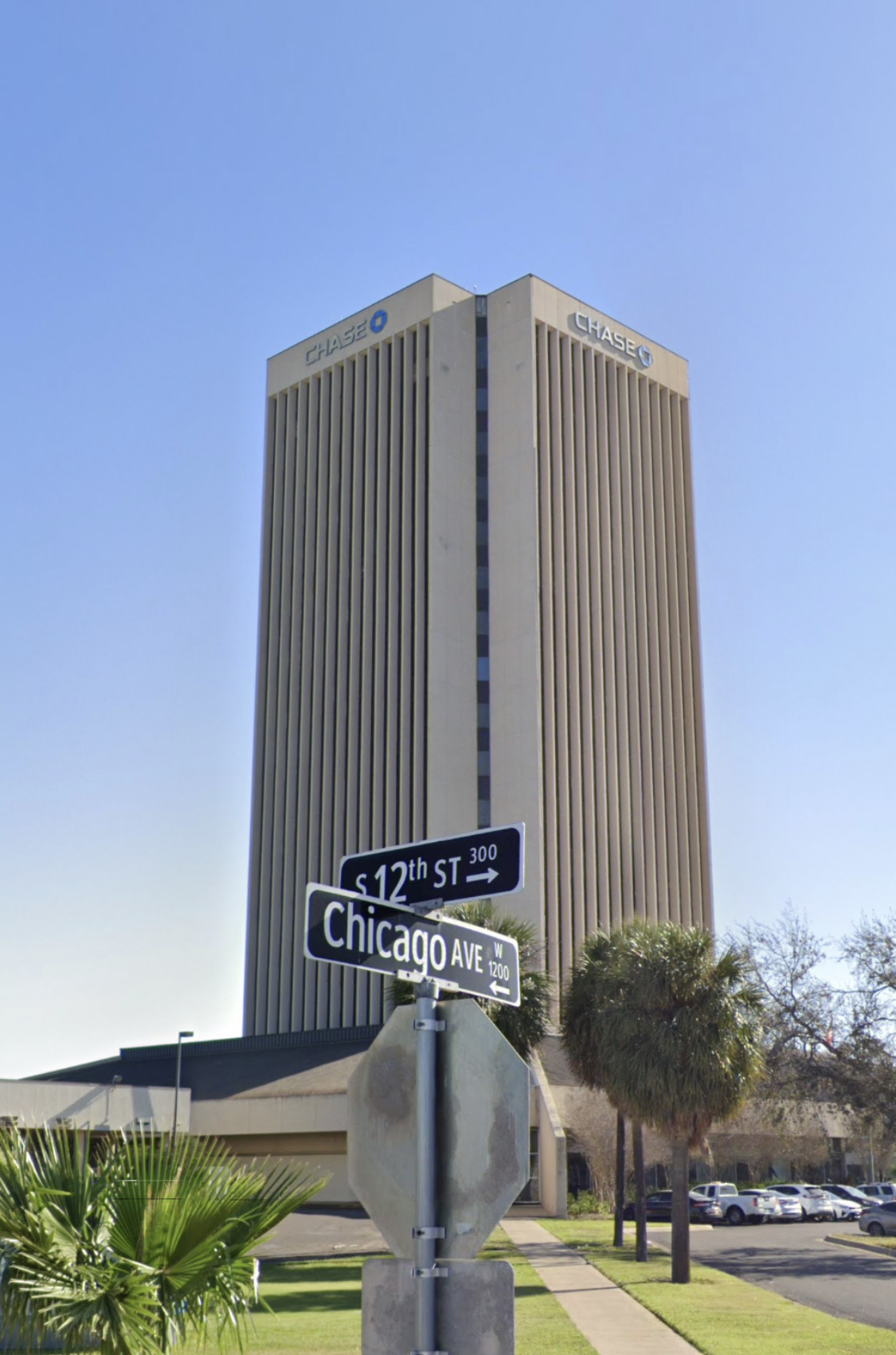
| 1 | Chase Neuhaus Tower | 17 Floors |
| 2 | PNC Bank Building | 11 Floors |
| 3 | Bentsen Tower | 11 Floors |
| 4 | DoubleTree Suites by Hilton Hotel | 9 Floors |
| 5 | McAllen Medical Center | 8 Floors |
| 6 | Inter National Bank | 6 Floors |
- Districts

- Downtown McAllen
- De Palmas Historic District
- 17 Street Entertainment District
- McAllen Arts District
- Uptown McAllen
- McAllen Convention Center District
- Points of Interest

- McAllen Botanical Gardens
- Quinta Mazatlan[47]
- McAllen Convention Center
- La Plaza Mall
- International Museum of Art & Science
- Historic Cine El Rey Theatre
- Veteran's War Memorial of Texas

Veteran's War Memorial of Texas

Notable people
[edit]- Cristela Alonzo, a stand-up comedian and actress, was given the Key to the City in 2019.[48]
- Abraham Ancer, a professional golfer, was born in McAllen.
- Viola Canales, a lecturer in law and writer, was born in McAllen in 1957.
- Jorge Cantú, a baseball player, was born in McAllen in 1982.
- Shaine Casas, a competitive swimmer, was raised in McAllen.[49]
- Raúl Castillo, an actor, was born in McAllen in 1977.
- Michael Cole is a professional wrestling commentator for WWE.
- Ana Brenda Contreras, a Mexican-American actress and singer, was born in McAllen on December 24, 1986.
- Henry Cuesta, a clarinetist on The Lawrence Welk Show, was born in McAllen in 1931.
- Matt Gonzalez, former San Francisco supervisor and running mate of Ralph Nader in the 2008 presidential election, born in McAllen in 1965
- Vicente Gonzalez, U.S. representative, lives in McAllen[50]
- Catherine Hardwicke, a film director, though born in Cameron, Texas, grew up in McAllen.
- Carl Möhner, an actor, director, screenwriter, and painter was born in Vienna in 1921, and died 2005 in McAllen.
- Elizabeth Moon, fantasy and science fiction writer who won the Nebula Award in 2003, was raised in McAllen.
- James Nicholas Rowe, a colonel United States Army, was born in McAllen in 1938.
- Gladys Tamez, a celebrity milliner, was born in McAllen.
- Gloria Trevi, a Mexican pop star, was born in Monterrey, Nuevo Leon, Mexico, but now lives in McAllen.
- Vanessa Angélica Villarreal, poet, essayist, and cultural critic.
Sister cities
[edit]McAllen, Texas sister cities
 Cadereyta Jiménez, Mexico
- Chilpancingo de los Bravo, Mexico
- Ciudad Victoria, Mexico
- García, Mexico
- Guadalupe, Mexico
- Irapuato, Mexico
- Monterrey, Mexico
- Reynosa, Mexico
- San Luis Potosí, Mexico
- Tampico, Mexico
- Taxco de Alarcón, Mexico
- Zihuatanejo de Azueta, Mexico

References
[edit]Footnotes
[edit]- ^ Mean monthly maxima and minima (i.e. the highest and lowest temperature readings during an entire month or year) calculated based on data at said location from 1991 to 2020
Citations
[edit]- ^ "2020 U.S. Gazetteer Files". United States Census Bureau. Retrieved July 24, 2022.
- ^ a b U.S. Geological Survey Geographic Names Information System: McAllen, Texas
- ^ a b c "Explore Census Data". United States Census Bureau. Retrieved December 17, 2023.
- ^ Cite error: The named reference
USCensusEst2024was invoked but never defined (see the help page). - ^ "Mcallen (TX) sales tax rate". IRS offices. Retrieved November 10, 2022.
- ^ "McAllen Overview". McAllen Chamber of Commerce. Retrieved August 26, 2011.
- ^ Bogan, Jesse (April 2, 2009). "A Boom at the Border". Forbes. Retrieved November 22, 2011.
- ^ Garza, Alicia A. "McAllen". Handbook of Texas Online. Retrieved November 22, 2011.
- ^ "McAllen-Hidalgo-Reynosa Bridge". Texas Department of Transportation. Retrieved November 22, 2011.
- ^ "City History". City of McAllen. Retrieved November 22, 2011.
- ^ a b c O'Toole, Molly (March 21, 2019). "Marine Corps commandant says deploying troops to the border poses 'unacceptable risk'". Los Angeles Times. Retrieved March 25, 2019.
- ^ Pappas, Alex (January 10, 2019). "Trump highlights human trafficking as he calls for 'strong barrier' during visit to US-Mexico border". Fox News. Retrieved January 11, 2019.
- ^ Merchant, Nomaan (March 23, 2019). "Desperate migrant families overwhelm border agencies". Ventura County Star. Retrieved March 24, 2019.
- ^ a b Hennessy-Fiske, Molly (March 24, 2019). "Trump says barbed wire 'can be a beautiful sight.' Many border communities disagree". Los Angeles Times. Retrieved March 24, 2019.
- ^ "US Gazetteer files: 2010, 2000, and 1990". United States Census Bureau. February 12, 2011. Retrieved April 23, 2011.
- ^ "Geographic Identifiers: 2010 Census Summary File 1 (G001): McAllen city, Texas". American Factfinder. U.S. Census Bureau. Archived from the original on February 13, 2020. Retrieved February 15, 2018.
- ^ Rio Grande Valley. Wikivoyage.
- ^ a b c d "NowData – NOAA Online Weather Data". National Oceanic and Atmospheric Administration. Retrieved October 18, 2019.
- ^ "Summary of Monthly Normals 1991–2020". National Oceanic & Atmospheric Administration. Retrieved April 14, 2023.
- ^ "City and Town Population Totals: 2020-2022". United States Census Bureau. December 17, 2023. Retrieved December 17, 2023.
- ^ "U.S. Decennial Census". U.S. Census Bureau. Retrieved June 4, 2015.
- ^ "P004: Hispanic or Latino, and Not Hispanic or Latino by Race – 2000: DEC Summary File 1 – McAllen, Texas". United States Census Bureau. Retrieved January 26, 2024.
- ^ "P2: Hispanic or Latino, and Not Hispanic or Latino by Race – 2010: DEC Redistricting Data (PL 94-171) – McAllen, Texas". United States Census Bureau. Retrieved January 26, 2024.
- ^ "P2: Hispanic or Latino, and Not Hispanic or Latino by Race – 2020: DEC Redistricting Data (PL 94-171) – McAllen, Texas". United States Census Bureau. Retrieved January 26, 2024.
- ^ a b c "Selected Economic Characteristics: 2012-2016 American Community Survey 5-Year Estimates (DP03): McAllen city, Texas". American Factfinder. U.S. Census Bureau. Archived from the original on February 13, 2020. Retrieved February 15, 2018.
- ^ "City of McAllen Police Department 2022" (PDF). City of McAllen. Retrieved January 20, 2023.
- ^ "McAllen In The Top Five Safest U.S. Cities". Positive Valley News (PVN). January 20, 2023. Retrieved January 20, 2023.
- ^ Gawande, Atul (May 25, 2009). "The Cost Conundrum". The New Yorker. Retrieved December 16, 2017.
- ^ "Supersize vs Superskinny Kids - Channel 4". www.channel4.com. Archived from the original on March 3, 2011.
- ^ Martha C. White (October 21, 2011) "Poorest place in US? McAllen, Texas, and here's why " MSNBC.com Accessed November 5, 2011.
- ^ "10 cheapest places to live in the U.S." November 13, 2012. Retrieved February 23, 2017.
- ^ "Rio Grande Valley". Texas Border Business. Retrieved November 21, 2011.
- ^ Strong, W.F. (March 16, 2023). "Commentary: Quinta Mazatlan, a garden refuge in McAllen, is an extension of the man who built it". Texas Standard. Retrieved May 28, 2025.
- ^ "International Museum of Art and Science". theimasonline.org. Retrieved January 29, 2020.
- ^ "Zinnia Spray Park". ExploreMcAllen.com. Retrieved June 20, 2012.
- ^ "Palm View Golf Course". McAllen.net. Retrieved June 20, 2012.
- ^ "History of Election of Mayors & City Officials" (PDF). City of McAllen. Retrieved April 9, 2017.
- ^ "Outline History of McAllen, Texas and the Surrounding Area". McAllen Heritage Center. (Includes brief info about mayors)
- ^ "Parole Division Region IV Archived September 4, 2011, at the Wayback Machine." Texas Department of Criminal Justice. Retrieved on May 21, 2010.
- ^ "Post Office Location MCALLEN Archived May 4, 2010, at the Wayback Machine." United States Postal Service. Retrieved on May 9, 2010.
- ^ "Post Office Location – DOWNTOWN MCALLEN Archived June 18, 2010, at the Wayback Machine."United States Postal Service. Retrieved on May 9, 2010.
- ^ Findell, Elizabeth (July 17, 2014). "Border Patrol Opens Central Processing Facility for Unaccompanied Kids". The Monitor. Retrieved June 18, 2018.
- ^ Hennessy-Fiske, Molly (April 3, 2019). "Border Patrol's largest holding area — known to migrants as 'the kennel' — is overwhelmed". Los Angeles Times. Retrieved April 7, 2019.
- ^ "McAllen International Airport – Welcome". Mcallenairport.com. Retrieved September 4, 2011.
- ^ "McAllen Public Library – New Main Library – opening 2011". Mcallenlibrary.net. Retrieved September 4, 2011.
- ^ Lametti, Daniel; Waldman, Katy (July 7, 2012). "How an Abandoned Wal-Mart Became an Award-Winning Public Library". Slate. ISSN 1091-2339. Retrieved September 3, 2016.
- ^ Quinta Mazatlan
- ^ Cepeda, Paola (November 16, 2019). "Cristela Alonzo receives Key to the city of McAllen". KGBT. Retrieved November 16, 2019.
- ^ "Casas Highlights 18 Qualified A&M Swimmers at U.S. Olympic Team Trials". KBTX-TV. June 4, 2021. Retrieved July 19, 2021.
- ^ Livingston, By Abby (May 4, 2020). "U.S. Rep. Vicente Gonzalez suffers broken back, ordered to bed rest at least four weeks". The Texas Tribune. Retrieved October 5, 2025.
Bibliography
[edit]External links
[edit]

- City of McAllen official website
- McAllen Convention and Visitors Bureau
- The Handbook of Texas Online
Municipalities and communities of Hidalgo County, Texas, United States | ||
|---|---|---|
| Cities |  | |
| CDPs |
| |
| Other community | ||
| International | |
|---|---|
| National | |
| Geographic | |
| Other | |

McAllen, Texas
View on GrokipediaMcAllen is a city in Hidalgo County, southern Texas, United States, located in the irrigated Rio Grande Valley approximately seven miles from the Rio Grande River and the international border with Reynosa, Tamaulipas, Mexico.[1][2]
As of the 2024 American Community Survey estimate, the city has a population of 148,784 residents, predominantly of Hispanic or Latino origin, making it the largest urban center in the McAllen–Edinburg–Mission metropolitan statistical area, which encompasses over 800,000 people.[3][4]
The local economy relies heavily on cross-border commerce facilitated by proximity to Mexico, with key sectors including healthcare and social assistance—employing about 30.5% of the workforce—retail trade generating over $17.5 billion annually, international trade, advanced manufacturing, education, and transportation and logistics.[5][6][7]
McAllen functions as a regional hub for medical services, attracting patients from both sides of the border due to its concentration of hospitals and clinics, while its retail sector benefits from maquiladora-driven imports and exports through nearby ports of entry.[5][8]
The city's growth has been shaped by agricultural roots in citrus and vegetable production, evolving into a binational economic zone amid NAFTA and USMCA frameworks, though it faces challenges from fluctuating trade policies and border security dynamics.[8][7]
History
Founding and Early Settlement
The region encompassing modern McAllen was sparsely populated prior to the mid-19th century, with European settlement in the Lower Rio Grande Valley tracing back to Spanish colonial efforts in the 1740s under José de Escandón, who established missions and ranchos primarily south of the Rio Grande but influencing north-bank land grants.[9] Scottish immigrant John McAllen arrived in South Texas around 1850, initially working as a clerk in the settlement of Edinburgh (later Hidalgo), before transitioning to ranching and acquiring extensive lands in Hidalgo County through marriage and purchase, forming the core of the McAllen Ranch by the 1860s.[9][10] These holdings, spanning thousands of acres, supported cattle operations amid the area's semi-arid brushland, which had been utilized by Mexican rancheros since the early 1800s following Mexico's independence from Spain.[11] The town's formal founding occurred on December 5, 1904, when the McAllen Townsite Company was organized by John McAllen, his nephew James Ballí McAllen, half-brother John J. Young, railroad promoter Uriah Lott, and attorney Leonidas C. Hill Sr., to plat a settlement on ranchland adjacent to the new La Feria Branch of the Texas and New Orleans Railroad.[9] Named in honor of John McAllen, the initial townsite covered approximately 1,500 acres west of the rail line, with lots sold to attract farmers and merchants drawn by irrigation potential from nearby canals and the promise of rail access to markets.[9] Early settlers included Anglo-American entrepreneurs and Mexican-American laborers, establishing basic infrastructure such as a post office in 1905 and modest wooden structures for trade, though population growth remained limited to a few dozen residents by 1907 due to water scarcity and isolation.[1] A rival settlement, East McAllen, emerged on May 16, 1907, two miles east under investors William Briggs, O.E. Jones, and John Closner, who platted lots and built a hotel to compete for rail-related commerce, briefly threatening the original site's viability until East McAllen faltered amid financial disputes.[9][12] By 1910, the consolidated West McAllen area supported around 100 inhabitants, primarily engaged in subsistence farming of cotton and vegetables, supplemented by ranching, setting the stage for incorporation amid rising agricultural prospects from federal irrigation projects.[9] This early phase reflected the causal interplay of rail connectivity enabling land subdivision from large ranches into viable smallholdings, though hampered by environmental constraints like alkaline soils and irregular rainfall.[9]Railroad Era and Incorporation
The arrival of the railroad catalyzed the transformation of the McAllen ranchlands into a burgeoning townsite. On August 20, 1904, the Hidalgo and San Miguel Extension—part of the St. Louis, Brownsville and Mexico Railway—reached the area, extending from Edinburg southward.[9] John McAllen and his son James had donated land to secure the route's passage through their holdings, facilitating connectivity to broader markets and spurring settlement on previously arid ranch property owned by the McAllen family since the mid-19th century.[13] This infrastructure development, driven by promoters like Uriah Lott, enabled the export of local agricultural products and attracted investors, marking the onset of the railroad era in the Lower Rio Grande Valley.[9] In response to the rail access, the McAllen Townsite Company was established on December 5, 1904, by Uriah Lott, Leonidas C. Hill Sr., John McAllen, James Ballí McAllen, and John J. Young, who platted the initial lots west of the tracks.[13] An adjacent East McAllen development followed in 1907, leading to the unification of the sites into a single community by 1910 amid rapid population influx from 150 residents in 1910 to over 1,000 by incorporation.[9] The railroad depot, initially constructed around 1905 and later rebuilt after a 1914 fire, served as a hub for freight and passengers, underscoring the line's role in economic viability.[14] McAllen formally incorporated as a town on February 21, 1911, under Texas state charter, with Frank Crow elected as the first mayor and Oliver T. Briggs as the initial city secretary.[9] This legal establishment provided municipal governance to manage growth fueled by rail-induced commerce in cotton, vegetables, and cattle, though the community remained modest until post-World War I expansion.[15] The incorporation reflected pragmatic adaptation to infrastructural change rather than ideological motives, as evidenced by the town'ssite promoters' focus on land sales and rail synergies.[13]Post-WWII Expansion and Modern Growth
Following World War II, McAllen's economy remained anchored in agriculture, with the Rio Grande Valley's irrigation infrastructure supporting robust production of citrus fruits, vegetables, and cotton, which fueled population growth from 11,877 residents in 1940 to 20,005 in 1950.[9][16] This expansion was aided by post-war federal investments in water management and the lingering effects of wartime military presence in the region, which introduced infrastructure improvements and labor inflows.[17] By 1960, the population had doubled to 32,728, as agricultural mechanization and market access via railroads and highways drew migrant workers and settlers.[16] The 1960s and 1970s marked a transition toward diversification, with the creation of Foreign-Trade Zone No. 12 in 1968— the first inland FTZ in the U.S.—opening in 1970 to streamline cross-border commerce, significantly boosting exports and imports through the McAllen-Hidalgo-Reynosa International Bridge established in 1941 but expanded post-war.[18][19] This infrastructure, combined with oil discoveries in Hidalgo County during the 1950s, propelled population increases to 37,636 by 1970 and 66,281 by 1980, despite challenges like the 1980s peso devaluation temporarily curbing Mexican tourism and retail spending.[17][16] Retail emerged as a dominant sector, with McAllen positioning itself as a shopping hub for northern Mexico, leveraging low sales taxes and proximity to maquiladora operations spurred by NAFTA in 1994.[13] Into the modern era, healthcare and logistics have driven further growth, with the health services sector expanding over 150% since 2000 due to investments in facilities like McAllen Medical Center, opened in its current form in 1985, attracting cost-sensitive patients from Mexico and beyond amid U.S. medical inflation.[20][21] The McAllen Economic Development Corporation, founded in 1988, has facilitated industrial parks and job creation in trade-related industries, contributing to population rises to 106,414 in 2000, 129,877 in 2010, and 142,210 in 2020.[6][16] This evolution reflects causal factors like border trade dynamics and sectoral shifts away from volatile agriculture, with retail sales per capita exceeding national averages by the 2000s, though vulnerable to currency fluctuations and security concerns.[7]Geography
Location and Physical Features
McAllen occupies southern Hidalgo County in the Rio Grande Valley region of southern Texas, positioned along U.S. Highway 83 approximately 16 miles west of Weslaco and 35 miles west of Harlingen.[22] The city's geographic coordinates are approximately 26.22°N latitude and 98.24°W longitude.[22] It lies within the floodplain of the lower Rio Grande, near the river that forms the U.S.-Mexico border, with the McAllen Station of U.S. Border Patrol responsible for patrolling 53 miles of the river's course.[23] The city covers about 65 square miles.[24] The terrain surrounding McAllen consists of flat plains typical of the South Texas Plains ecoregion, extending from the edges of the Hill Country southward into the subtropical Lower Rio Grande Valley.[25] Elevations average around 121 feet (37 meters) above sea level, with minimal topographic relief dominated by alluvial deposits from the Rio Grande.[26] This low-lying, level landscape facilitates agricultural irrigation but exposes the area to periodic flooding risks from the river.[25]
Climate and Environmental Conditions
McAllen features a humid subtropical climate (Köppen classification Cfa), with hot, humid summers and mild, occasionally chilly winters influenced by its proximity to the Gulf of Mexico and the Rio Grande Valley's flat terrain. The average annual temperature is 75.6°F, with daytime highs averaging 86°F and nighttime lows around 65°F, based on long-term records from 1941 onward.[27] Summers from June to September often see temperatures exceeding 95°F on more than 50 days per year, accompanied by high humidity that elevates heat index values above 100°F, while winters rarely drop below freezing, with January averages around 53°F.[28] Annual precipitation totals approximately 22 inches, concentrated in convective thunderstorms during the warm season, with September typically the wettest month at over 3.5 inches due to tropical moisture influences.[29] [30] The region experiences about 37 days of measurable precipitation annually, with occasional drought periods exacerbated by the subtropical ridge, as seen in severe to extreme drought conditions preceding the March 2025 floods. Winds are generally light but can gust during thunderstorms or northerly fronts, averaging 8-10 mph year-round. Environmental conditions include vulnerability to extreme weather, particularly tropical cyclones and flash flooding from the Gulf's warm waters; historical events like Hurricane Beulah in 1967 dumped over 30 inches of rain in the Rio Grande Valley, causing widespread inundation, while more recent severe storms in March 2025 led to record-breaking floods with over 200 rescues and three fatalities in the McAllen area due to 10-15 inches of rain in 48 hours.[28] [31] [32] Air quality in McAllen remains generally good, with Air Quality Index (AQI) levels often in the "good" to "moderate" range, though occasional spikes occur from dust, ozone, or cross-border pollutants; PM2.5 concentrations are low on average, but projections indicate a slight increase in poor air days over the next 30 years due to urban growth and climate factors. Water resources are strained by the semi-arid tendencies outside rainy periods, with reliance on the Rio Grande for irrigation and supply, though upstream diversions and variable flows contribute to periodic shortages; local monitoring shows minimal industrial pollution but risks from agricultural runoff affecting groundwater.[33] [34][35]Demographics
Population Trends and Projections
McAllen's population has grown steadily since the late 20th century, driven primarily by high birth rates among its predominantly Hispanic population and net in-migration tied to economic opportunities in retail, healthcare, and cross-border trade. The U.S. Census Bureau recorded 106,414 residents in the 2000 Census, rising to 129,877 by the 2010 Census—a 22.0% increase over the decade. By the 2020 Census, the population reached 142,210, reflecting an 9.5% decennial gain and an average annual growth rate of about 1.5% from 2000 to 2020.[36] Recent estimates show continued expansion, albeit at a moderated pace amid post-pandemic migration shifts and regional economic pressures. The U.S. Census Bureau's July 1, 2023, estimate stood at approximately 143,789, with the July 1, 2024, figure at 148,782—an annual growth rate of roughly 1.1% from the 2020 base. This uptick aligns with broader trends in the Rio Grande Valley, where natural increase (births exceeding deaths) accounts for over half of growth, supplemented by domestic and international inflows.[37][38]| Year | Population | Annual Growth Rate (from prior Census) |
|---|---|---|
| 2000 | 106,414 | - |
| 2010 | 129,877 | 2.0% |
| 2020 | 142,210 | 0.9% |
| 2024 (est.) | 148,782 | 1.1% (from 2020) |
Ethnic Composition and Cultural Demographics
McAllen exhibits a demographic profile dominated by individuals of Hispanic or Latino origin, comprising approximately 85.0% of the city's population according to American Community Survey estimates from 2019-2023. This figure aligns with 2022 data indicating 86.5% Hispanic residency, reflecting the city's location in the Rio Grande Valley near the U.S.-Mexico border.[38] Non-Hispanic whites constitute about 8.6%, Asians 2.9%, and other groups including Black or African American (around 0.9%) and American Indian or Alaska Native (0.6%) form smaller shares.[41] The racial composition, when considering Hispanic ethnicity separately, shows 43.1% identifying as white alone, underscoring that the majority of Hispanics self-identify racially as white.| Ethnic/Racial Group | Percentage (2019-2023 ACS) |
|---|---|
| Hispanic or Latino (any race) | 85.0% |
| Non-Hispanic White | 8.6% [41] |
| Asian | 2.9% [41] |
| Black or African American | 0.9% |
| American Indian/Alaska Native | 0.6% |
| Other/Two or more races | Remaining share [38] |
Socioeconomic Indicators
McAllen exhibits a median household income of $60,165 based on 2019-2023 American Community Survey data. Per capita income in the city during the same period stands at approximately $28,111 in 2023 dollars.[46] These figures lag behind the Texas state median of $72,284 and the national median of around $75,000, reflecting the influence of large family sizes and reliance on lower-wage sectors like retail and services in the border region.[47] The poverty rate in McAllen is 21.2% as of the 2019-2023 period, higher than the state rate of 14% and national average of about 11.5%. [47] This elevated rate correlates with demographic factors including a high proportion of households with children and limited upward mobility in education-dependent jobs, though it has shown slight improvement from prior years.[48]| Indicator | McAllen (2019-2023) | Texas | U.S. |
|---|---|---|---|
| Median Household Income | $60,165 | $72,284 | ~$75,000 |
| Poverty Rate | 21.2% | 14% | 11.5% |
| Homeownership Rate | 59.0% | 62.9% | 65.7% |
Public Safety and Crime Statistics
McAllen maintains violent crime rates significantly below the national average, with FBI Uniform Crime Reporting (UCR) data for fiscal year 2023 indicating 144 incidents per 100,000 residents, reflecting a 35% decline from fiscal year 2022.[53] This rate encompasses murder and nonnegligent manslaughter, rape, robbery, and aggravated assault, positioning McAllen among safer U.S. cities, particularly when compared to national figures exceeding 360 per 100,000. Local National Incident-Based Reporting System (NIBRS) data for 2024 corroborates this trend, reporting a murder rate of 2.7 per 100,000 (4 incidents), rape at 33.5 (50 incidents), robbery at 23.4 (35 incidents), and aggravated assault at 85.0 (127 incidents), based on a population of approximately 149,337.[54] Property crime rates in McAllen align closely with national averages but show a downward trajectory in recent years. The 2024 NIBRS report documented burglary at 62.9 per 100,000 (94 incidents), larceny/theft at 1,700 (2,538 incidents), and motor vehicle theft at 67.6 (101 incidents), yielding a total property crime rate of roughly 1,831 per 100,000.[54] Overall offenses decreased 1.5% from 2023 (8,492 to 8,367 incidents), with property crimes specifically falling 1.9%.[54] FBI 2024 UCR analysis further highlights Texas border communities like McAllen as having murder rates among the lowest nationally, countering perceptions of elevated border-related risks with empirical evidence of sustained safety.[55] Broader crimes against persons, including simple assaults and intimidations under NIBRS classification, rose 6.6% in 2024, contributing to a total of 2,867 such incidents, though this encompasses non-violent offenses not captured in standard UCR violent metrics.[54] McAllen's proximity to the U.S.-Mexico border has not correlated with disproportionate violent crime spikes, as Texas Department of Public Safety data for Hidalgo County (encompassing McAllen) shows overall decreases in border-area offenses from 2023 to 2024.[56] These statistics, derived from mandatory reporting to state and federal agencies, underscore effective local policing amid population growth to an estimated 148,782 residents in 2024.[37]Health Outcomes and Challenges
McAllen, located in Hidalgo County, exhibits some of the poorest health outcomes in the United States, particularly in obesity and related chronic conditions. The McAllen-Edinburg-Mission metropolitan area recorded the highest adult obesity rate among U.S. cities in 2025, with 45% of adults classified as obese and an additional 31% overweight, according to WalletHub's analysis of CDC data on body mass index, physical inactivity, and fruit/vegetable consumption.[57] This rate exceeds the national average of 42% for obesity. Diabetes prevalence is also elevated, with 18.8% of Hidalgo County adults diagnosed in 2023, surpassing Texas and national averages and contributing to higher rates of complications like kidney disease and heart conditions.[58] Despite these issues, life expectancy in Hidalgo County stands at 77.3 years, slightly above the Texas average of 76.7 but below the U.S. figure of 77.6, reflecting the offsetting effects of chronic disease burdens against other factors like lower smoking rates.[59] Socioeconomic challenges exacerbate these outcomes, including high poverty rates and dietary patterns associated with processed foods and low physical activity in the predominantly Hispanic population. Heart disease, driven by obesity, diabetes, hypertension, and inactivity, remains a leading cause of mortality in the region.[60] Limited preventive care contributes to elevated hospitalization rates for manageable conditions, with diabetes-related admissions disproportionately high compared to state norms.[61] Access to healthcare poses significant barriers, with Hidalgo County's uninsured rate at 29.7% in 2023—the highest in the nation—stemming from low incomes, high underemployment in seasonal agriculture and retail, and ineligibility for federal programs among undocumented residents.[62] This leads to delayed treatments, emergency room overuse, and strained public facilities, as uninsured patients often seek care only in crises, increasing costs and wait times.[63] Workforce shortages compound the issue, with acute physician and nurse deficits in the Rio Grande Valley limiting primary care availability and preventive screenings.[64] Transportation barriers further hinder rural residents' access to urban hospitals in McAllen, resulting in worse management of chronic illnesses.[65]Economy
Key Industries and Employment
The McAllen-Edinburg-Mission metropolitan area's nonfarm payroll employment stood at 302,700 in August 2025, reflecting a 1.3% increase over the prior 12 months.[50] The unemployment rate was 7.1% in the same month, exceeding the Texas statewide rate of approximately 4.2% and indicative of persistent labor market challenges in the region.[50] [66] Education and health services constituted the largest sector, employing 95,400 workers or about 31.5% of the total, with a 4.0% year-over-year gain driven by healthcare support roles.[50] Trade, transportation, and utilities followed with 56,600 jobs (18.7%), while government employed 56,700 (18.7%).[50] Healthcare and private education together account for 30.5% of the workforce as of April 2025, underscoring the sector's dominance amid an aging population and regional medical tourism.[5] Retail trade benefits from cross-border commerce with Mexico, contributing to economic activity through shopping by Mexican nationals, though goods-producing sectors remain limited, with manufacturing at just 7,200 jobs (2.4%) and overall goods production under 6% of employment.[5] [50] Recent job growth has been led by education and health services (5.0% annualized in early 2025), government (2.0%), and professional/business services (3.7%), adding 3,200 positions in the first quarter.[66] Agribusiness and food processing support ancillary employment, leveraging the area's citrus and vegetable production, while advanced manufacturing grows via nearshoring trends.[5] Major employers include McAllen Medical Center in healthcare, South Texas College in education, and retailers like H-E-B, alongside manufacturers such as Duro Bag Manufacturing Company and Frito-Lay.[5] [67] The region's civilian labor force reached 405,800 in April 2025, with 383,200 employed, highlighting self-employment rates above national averages in small businesses tied to trade and services.[5]Cross-Border Trade and Commerce
McAllen's strategic position bordering Reynosa, Mexico, positions it as a hub for cross-border commerce, channeling goods through the Hidalgo Port of Entry via the McAllen-Hidalgo-Reynosa International Bridge and the adjacent Pharr International Bridge in the Rio Grande Valley. In 2024, the region's ports of entry collectively processed $27.6 billion in U.S. exports to Mexico and $39.5 billion in imports from Mexico, accounting for a significant share of Texas's $281.2 billion total trade with its top partner.[68][69] The Hidalgo port alone facilitated $44.6 billion in cross-border trade that year, supporting logistics, manufacturing, and agriculture sectors integral to McAllen's economy.[68] Commercial truck traffic underscores the volume, with the Pharr International Bridge handling approximately 1.2 million trucks annually and $46 billion in goods, including electronics, machinery, and automotive parts under the USMCA framework.[70] This bridge ranks among the top U.S. crossings for fresh produce, with 22 million pounds transiting daily during peak seasons, bolstering the Valley's export-oriented farming and cold-chain logistics.[71] Overall, border trade in the Pharr district exceeded $32.4 billion in recent assessments, generating an estimated 53,000 net jobs statewide from Hidalgo-related activity alone, though localized data highlight vulnerabilities to tariffs and supply chain disruptions.[72][73] The USMCA has sustained manufacturing integration with Reynosa's maquiladoras, fostering industrial projects worth over $100 million in McAllen as of 2025, yet emerging tariff threats—such as 25% duties on Mexican produce—could elevate costs and alter flows.[74][71] Local economic development efforts, including binational diplomacy, have driven vehicle crossings exceeding 4.8 million and passenger volumes of 9.8 million from Mexico in the prior year, amplifying retail and service commerce tied to trade corridors.[75][76] These dynamics contribute to McAllen's GDP growth, with trade comprising a core pillar amid Texas's border metros posting employment gains and declining unemployment in late 2024.[77]Healthcare and Medical Services Sector
The healthcare and medical services sector constitutes a major economic driver in McAllen, employing 10,087 individuals in health care and social assistance roles as of 2023, representing the largest industry by employment in the city.[38] Within the broader McAllen-Edinburg-Mission metropolitan statistical area, healthcare support occupations accounted for 50,000 jobs in May 2023, comprising 17.2 percent of total local employment—far exceeding the national average of 4.8 percent.[78] This sector has experienced substantial expansion, with health services growing by more than 150 percent since 2000, fueled by population increases, regional health demands, and infrastructure investments.[20] The industry's economic footprint extends to the Rio Grande Valley, generating an estimated $13.7 billion in impact, with approximately 80 percent stemming from direct healthcare activities such as patient care and operations.[79] Key facilities anchor the sector, including South Texas Health System McAllen, a tertiary hospital offering specialized services like open-heart surgery, cardiac catheterization, and emergency care, which evolved from earlier municipal and Methodist hospitals into a 332-bed institution serving the region.[80] Rio Grande Regional Hospital, a 320-bed acute care provider, operates a Level III Trauma Center and Neonatal Intensive Care Unit, supporting procedures in cardiology, neurology, and orthopedics.[81] McAllen Medical Center functions as a Level I Trauma Center with Comprehensive Stroke Center designation and accredited chest pain services, handling high-acuity cases including trauma and cardiovascular emergencies.[82] Adjacent specialized units, such as South Texas Health System Heart Hospital, focus exclusively on cardiology and cardiovascular interventions.[83] These institutions collectively address local needs while drawing patients from across the border due to McAllen's proximity to Mexico, though formalized medical tourism remains more prominent in adjacent Mexican cities like Reynosa.[84] Despite growth, the sector faces workforce constraints, with acute shortages of healthcare professionals prompting initiatives like partnerships between the McAllen Economic Development Corporation and South Texas College to expand training programs as of 2024.[85] Historically, McAllen drew attention for elevated Medicare expenditures—reaching $15,000 per enrollee in 2006, nearly double the national average—attributed to higher utilization rates rather than poorer outcomes, though post-2010 reforms under the Affordable Care Act correlated with a 10 percent drop in inpatient visits and 40 percent reductions in home health and ambulance spending by 2015.[86][87] These trends underscore ongoing efforts to balance expansion with cost efficiency amid demographic pressures from an aging and predominantly Hispanic population.[88]Government and Politics
Municipal Governance Structure
McAllen operates as a home rule city under the council-manager form of government, a structure adopted following its incorporation on February 20, 1911.[89] In this system, the elected City Commission serves as the legislative and policymaking body, while an appointed city manager handles executive administration.[89] The City Commission comprises seven members: one mayor elected at-large and six commissioners elected from single-member districts, each serving four-year staggered terms.[89] The mayor presides over meetings, votes on all issues, and represents the city in official capacities; commissioners focus on district-specific concerns while contributing to citywide policy.[89] A mayor pro tempore, selected by the commission, assumes the mayor's duties in their absence.[89] Elections are nonpartisan, with district boundaries redrawn periodically to reflect population changes, as approved in recent ordinances.[90] The commission exercises all municipal powers, including enacting ordinances, approving annual budgets, setting tax rates, and appointing key officials such as the city manager, city attorney, police chief, and fire chief.[89] Regular meetings occur on the second and fourth Mondays of each month at 5:00 p.m. in City Hall at 1300 W. Houston Avenue, open to the public except for executive sessions.[89] The city manager, Isaac J. Tawil, appointed on September 13, 2024, oversees daily operations, implements commission directives, manages approximately 1,500 employees across departments, and administers a budget surpassing $650 million.[91] Assisted by a deputy city manager and three assistant city managers, the role emphasizes efficient service delivery in areas like public safety, utilities, and economic development.[92] As of October 2025, the commission includes Mayor Javier Villalobos, District 1 Commissioner Tony Aguirre, District 2 Commissioner Joaquin Zamora, District 3 Commissioner Rolando Rios, District 4 Commissioner Rodolfo "Rudy" Castillo, District 5 Commissioner Victor "Seby" Haddad (mayor pro tempore), and District 6 Commissioner Jose R. "Pepe" Cabeza de Vaca.[89][93]Electoral Representation
McAllen operates under a council-manager form of government, with a mayor and four city commissioners elected at-large by district to staggered four-year terms.[89] The mayor, Javier Villalobos, was first elected in May 2021 and reelected to a second term on May 3, 2025, defeating challengers in a nonpartisan race amid local concerns over taxation and development.[94] [95] City commissioners include Tony Aguirre Jr. for District 1, reelected on May 3, 2025, with 980 votes against 494 for opponent Timothy Wilkins; and Rolando Rios for District 3, elected in the same cycle with 500 votes in initial unofficial tallies.[96] [97] Local elections occur in May of odd-numbered years, with voter turnout in the 2025 municipal races remaining low, consistent with historical patterns in Hidalgo County where turnout for city contests often falls below 10%.[98] [99] At the state level, McAllen falls primarily within Texas Senate District 20, represented by Democrat Juan "Chuy" Hinojosa since 2002, who secured reelection in 2022 with over 60% of the vote in a district encompassing much of Hidalgo County.[100] In the Texas House of Representatives, the city is covered by House District 41, which includes central McAllen, Sharyland, and portions of nearby Edinburg and Pharr; this seat is held by Democrat Armando Martinez, who assumed office in January 2023 following the retirement of prior incumbent Eddie Lucio III and won the 2024 general election with strong Democratic margins typical of the district's 70%+ Hispanic voter base.[101] [102] Parts of eastern McAllen extend into House District 40, represented by Democrat Abel Herrero.[103] State legislative districts were redrawn after the 2020 census, preserving Democratic dominance in the Rio Grande Valley delegation despite Republican gains elsewhere in Texas.[104] Federally, McAllen lies within Texas's 15th congressional district, represented by Republican Monica De La Cruz since January 2023, who flipped the seat from Democratic control in the 2022 midterms by a narrow 5-point margin and won reelection in 2024 amid shifting voter priorities on border security and economic issues.[105] [106] Adjacent portions of the city border the 34th district, held by Democrat Vicente Gonzalez, a former 15th district representative redistricted following 2021 maps that aimed to bolster Republican chances in South Texas.[107] Both districts reflect the area's evolving electoral landscape, where Democratic registration advantages coexist with growing Republican support among working-class Hispanic voters, as evidenced by De La Cruz's upset victory driven by turnout disparities and policy appeals on trade and security.[108][109]Political Dynamics and Voter Trends
McAllen, located in Hidalgo County, has long been characterized by strong Democratic leanings, reflecting its predominantly Hispanic population and historical alignment with labor unions and social welfare policies prevalent in South Texas. However, recent electoral cycles have shown a notable rightward shift among voters, particularly Hispanic residents, driven by concerns over border security, economic pressures from inflation, and cultural issues such as family values and opposition to progressive social policies. This trend mirrors broader patterns in the Rio Grande Valley, where traditional Democratic strongholds have seen Republican gains since 2020.[110][111] In presidential elections, Hidalgo County—encompassing McAllen—supported Democrat Joe Biden with 58.04% of the vote against Donald Trump's 40.98% in 2020, consistent with prior Democratic dominance. By 2024, the county flipped to Republican, with Trump securing victory amid heightened voter focus on immigration enforcement and cartel-related violence spillover. This reversal underscores a departure from the 2016 and 2012 patterns, where Democrats won by larger margins, and aligns with Republican improvements in Hispanic voter support statewide, rising from about 30% in 2016 to over 40% in 2020 and further in 2024.[112][113][110] Local elections reflect similar dynamics. McAllen's mayoral race in June 2021 marked a breakthrough for Republicans, with Javier Villalobos, a registered Republican, defeating Democratic-leaning incumbent Veronica Whitacre by 51.1% to 48.9% in the runoff, becoming the first Republican mayor of the city in over two decades. City commission races are officially nonpartisan, but candidates' affiliations influence outcomes; recent wins, such as in District 1 and 3 in May 2025, have included candidates backed by conservative groups emphasizing fiscal conservatism and public safety. Voter turnout in Hidalgo County remains below state averages—around 50-60% in general elections compared to Texas's 66% in 2020—but surged in 2024, attributed to mobilization on border issues.[114][115]| Election Year | Democratic Candidate % (Countywide) | Republican Candidate % (Countywide) | Turnout % |
|---|---|---|---|
| 2020 Presidential | 58.04 (Biden) | 40.98 (Trump) | ~55 |
| 2024 Presidential | <50 (Harris) | >50 (Trump) | High (astronomical per officials) |
Border Dynamics and Security
Proximity to Mexico and Binational Ties
McAllen lies in Hidalgo County, situated in the southern Rio Grande Valley along the U.S.-Mexico border, with the Rio Grande River marking the international boundary approximately 10 miles south of the city's center.[119] The primary cross-border connection is to Reynosa, Tamaulipas, Mexico, a driving distance of 11 miles via the Hidalgo-Reynosa International Bridge.[120] This adjacency positions McAllen as part of a binational urban corridor, where daily vehicular and pedestrian traffic facilitates personal, commercial, and familial exchanges despite varying security protocols at ports of entry. The cities of McAllen and Reynosa maintain formal sister city relations, renewed in February 2024 through an international initiative aimed at enhancing cross-border cooperation.[121] This partnership includes a joint cross-border contingency plan established for mutual response to public health and safety threats, such as environmental hazards or emergencies affecting both sides.[122] McAllen has expanded its diplomatic network with at least 13 sister city agreements across Mexico and Central America as of 2025, including recent memoranda of understanding with municipalities like Corregidora in Querétaro for trade and logistics collaboration.[123][124] These ties reflect a shared binational community dynamic, as articulated by Reynosa's mayor in 2025, emphasizing intertwined fates across the border through family connections, workforce commuting, and cultural overlaps rooted in the region's Hispanic-majority population.[125] McAllen's leadership actively participates in forums like the annual Mexico-United States Binational Convention to advance such relations, focusing on economic diplomacy and mutual development.[126] Proximity enables frequent cross-border activities, including medical tourism from Mexico to McAllen's healthcare facilities and reverse flows for shopping and services, underscoring the area's integrated socioeconomic fabric.[76]Immigration Flows and Policy Impacts
The Rio Grande Valley Border Patrol Sector, encompassing McAllen and Hidalgo County, recorded 549,077 migrant encounters in fiscal year 2021, a sharp increase from 90,206 the prior year, reflecting a surge in irregular crossings following the termination of the Migrant Protection Protocols (Remain in Mexico) policy implemented under the Trump administration.[127] This escalation continued into 2022 and 2023, with the sector consistently ranking among the highest for encounters nationwide, driven by policies emphasizing catch-and-release practices and expanded parole programs that signaled reduced enforcement deterrents.[128] [129] In response to these flows, McAllen city officials established temporary emergency shelters in August 2021 to handle over 1,900 migrants being processed daily at local facilities, diverting municipal resources from routine operations to humanitarian aid and busing arrangements.[130] [131] The influx strained Hidalgo County's infrastructure, including hotels repurposed as shelters and increased demands on public health services, with reports of over 7,000 migrants released into the area despite positive COVID-19 tests, exacerbating local capacity limits in a city of approximately 143,000 residents.[129] These policy-induced surges correlated with higher operational costs for processing and short-term housing, though federal reimbursements via FEMA programs partially offset expenses before reviews questioned their efficacy and potential incentivization of further migration.[132] Encounters in the sector declined markedly starting in fiscal year 2024, with August 2024 figures at 5,244—a 71% drop from peak periods—and further reductions in 2025 under reinstated strict enforcement measures, including expedited removals and border shutdowns, reaching 5,965 in February and contributing to nationwide lows below 8,400 irregular crossers by April.[133] [134] [135] This policy shift relieved pressure on McAllen-area shelters, rendering many nearly empty by early 2025 and allowing Hidalgo County to redirect resources, including joining Texas's Operation Lone Star for enhanced state-funded security after flows subsided.[136] [137] While some analyses from immigration advocacy groups attribute economic benefits to migrant labor in manufacturing and entrepreneurship, empirical data on irregular flows highlight primarily fiscal and logistical burdens during high-encounter periods, with reduced crossings post-2024 enabling stabilized local budgeting and reduced emergency expenditures.[138][139]Cartel Influence and Spillover Effects
McAllen, located directly across the Rio Grande from Reynosa, Tamaulipas—a stronghold of the Gulf Cartel—experiences indirect cartel influence primarily through cross-border drug and human smuggling operations rather than widespread territorial violence.[140] The Gulf Cartel, fragmented by internal conflicts such as those between the Metros and Rojos factions, has historically generated revenue from trafficking narcotics and migrants into the U.S. via Reynosa, with McAllen serving as a key entry point due to its international bridge and proximity.[141] Federal data from U.S. Customs and Border Protection (CBP) and Immigration and Customs Enforcement (ICE) indicate persistent cartel-linked activities, including the concealment of migrants in commercial shipments and the distribution of cocaine and methamphetamine originating from Mexican plazas.[142] Spillover effects manifest in elevated enforcement actions and seizures, underscoring the cartels' operational reach without equivalent escalation in local violence. In Hidalgo County, encompassing McAllen, Texas Department of Public Safety (DPS) operations yielded 98 kilograms of cocaine valued at $2 million during a single 2024 traffic stop, highlighting the volume of narcotics transiting the area.[143] U.S. Department of Justice records from 2025 detail multiple convictions for cartel-affiliated smuggling, such as a McAllen resident sentenced to 10 years for mailing 19 kilograms of cocaine and a Mexican national imprisoned for trafficking over $1 million in the substance.[144][145] Human smuggling tied to cartels, often involving kidnappings in Reynosa to extort fees, has resulted in incidents like CBP's interception of 55 concealed migrants in produce trailers near McAllen in September 2025, reflecting ruthless tactics that treat individuals as cargo.[142][146] Despite these incursions, direct cartel violence has not substantially spilled over into McAllen, as evidenced by FBI Uniform Crime Reporting data showing the city's violent crime rate at 149.98 per 100,000 residents in fiscal year 2024—among the lowest for U.S. cities of comparable size and far below national averages.[147] This containment is attributable to robust federal and state law enforcement presence, including Operation Lone Star and joint task forces, which disrupt cartel logistics before they foster endemic turf wars seen in Mexican border cities like Reynosa, where factional clashes have claimed dozens of lives in single incidents.[148][149] However, ancillary effects include heightened risks to migrants and localized corruption pressures from laundering operations, as seen in a 2025 multi-agency probe charging 23 individuals in a Rio Grande Valley drug and money laundering network.[150] Overall, while cartel influence drives smuggling volumes, McAllen's security profile remains resilient compared to non-border peers, challenging narratives of inevitable "spillover" escalation.[151]Transportation
Road Infrastructure and Highways
U.S. Highway 83 (US 83), concurrent with Interstate 2 (I-2) through McAllen, functions as the city's primary east-west arterial corridor, facilitating freight and commuter traffic across the Rio Grande Valley. This route spans approximately 906 miles across Texas, entering the McAllen area from the east near Weslaco and extending westward toward Laredo, with ongoing expansions to address capacity constraints.[152] In McAllen, US 83 is locally known as Expressway 83, handling significant volumes that support regional commerce, including cross-border trade via connections to international bridges.[153] The Texas Department of Transportation (TxDOT) has pursued widening projects on US 83, including conversions from four to six lanes with interchange improvements to enhance mobility and safety. A regional corridor study evaluates enhancements from I-2 to US 59, incorporating potential toll lanes and elevated sections to mitigate congestion. Traffic data indicate high utilization, with a McAllen-Pharr segment ranking 41st among Texas's most congested roadways, resulting in 296,919 hours of delays and over $28 million in economic costs in 2023 alone.[154][155][156] Interstate 69C (I-69C), designated along US 281 northward from Pharr, intersects I-2/US 83 via an under-construction interchange project extending from 2nd Street in McAllen to FM 2557 in San Juan. As of 2025, this segment remains partially complete, with an 18-mile southern portion operational and additional expansions underway, including a 7-mile northern extension near Edinburg to integrate into the broader I-69 system connecting to Mexico and major Texas cities. Nightly closures for paving and ramp work continue into late 2025.[157][158][159] State Highway 336 (SH 336), also known as 10th Street, provides a key north-south link from SH 107 west of Edinburg through McAllen to US 281 east of Hidalgo, serving access to McAllen-Miller International Airport and local development zones. Nighttime milling and paving operations on SH 336 occurred from June to October 2025 to maintain pavement integrity amid growing traffic. Additional state routes, such as planned SH 68, aim to alleviate pressure on existing infrastructure by adding four-lane divided highways parallel to I-2 for future population growth.[160][161][162] McAllen's municipal engineering efforts include intersection upgrades and roadway reconstructions, such as the Taylor Road project widening from two to four lanes with added turn lanes, completed in 2024 to improve flow near US 83. The city adopted a Vision Zero plan in 2024 targeting zero traffic fatalities through infrastructure and enforcement measures, reflecting response to high-volume corridors prone to accidents.[163][164][165]Airports and Public Transit Systems
McAllen Miller International Airport (MFE), located at 2500 South Bicentennial Boulevard, serves as the primary commercial airport for McAllen and the surrounding Rio Grande Valley region.[166] The facility features a 138,000-square-foot terminal building equipped with free Wi-Fi, dining options, and a decorative water show, situated along U.S. Highway 83 near La Plaza Mall.[167] It supports both domestic and international flights, with nonstop service provided by carriers including American Airlines to Dallas-Fort Worth and United Airlines to Houston-Intercontinental, alongside connections to destinations such as Las Vegas, Orlando, Los Angeles, Austin, and Mexico City.[166] The airport handles general aviation and customs processing for international arrivals, primarily from Mexico, under U.S. Customs and Border Protection oversight.[168] Public transit in McAllen is primarily provided by Metro McAllen, the city's intracity bus system, which operates 12 fixed routes radiating from a downtown hub at 1501 U.S. 83 Business.[169] The system includes Micro McAllen, an on-demand microtransit service for flexible local travel, and complementary paratransit options for eligible riders with disabilities, available daily.[169] Adult and child fares are set at $1 per ride, with transfers and multi-ride passes offered to enhance affordability and accessibility across Hidalgo County.[169] Route coverage extends to key areas including shopping districts, medical facilities, and the airport, where bus services connect passengers to the terminal. Intercity options, such as Valley Metro operated by the Lower Rio Grande Valley Development Council, supplement local routes with advance-reservation curb-to-curb service across the region.[170] No commuter rail or light rail systems currently operate within McAllen, relying instead on bus infrastructure for mass transit needs.[169]Education
Primary and Secondary Schools
The primary and secondary education system in McAllen is dominated by the McAllen Independent School District (MISD), which operates 31 schools serving approximately 20,095 students during the 2023-2024 school year.[171] MISD encompasses 13 elementary schools, 6 middle schools, 5 traditional high schools, and various alternative and specialty campuses, with a student body that is predominantly Hispanic (over 90%) and economically disadvantaged (around 70% eligible for free or reduced lunch).[172] The district earned an "A" rating in Texas's STAAR-based accountability system for the 2025-2026 school year, with all five high schools also receiving "A" designations; this reflects strong performance in student achievement, school progress, and closing performance gaps.[173] [174] MISD's high schools demonstrate high completion rates, with 99.3% of the Class of 2023 graduating on time or earlier, exceeding state averages.[172] Average SAT scores across the district reached 947 in the 2022-2023 school year.[172] Notable campuses include Achieve Early College High School, which ranked 297th nationally by U.S. News & World Report in 2025 evaluations, emphasizing dual-credit programs and college readiness.[175] Other recognized high schools such as McAllen Memorial High School and James "Nikki" Rowe High School also received national acknowledgment for factors including graduation rates (weighted at 10% in rankings) and advanced coursework participation.[175] At the elementary level, district proficiency rates stand at 59% in reading and 50% in math based on state assessments, with schools like Gonzalez Elementary and Milam Elementary frequently cited among top performers in the area.[176] [177] Charter and specialized public options supplement MISD, including IDEA McAllen Academy, a tuition-free charter serving pre-K through grade 5 with a focus on college preparatory curricula, and South Texas ISD campuses like the Science Academy, which draws students regionally for STEM emphasis and ranks highly in state metrics.[178] [179] Private schools enroll about 1,446 students across seven institutions, representing roughly 5% of the total K-12 population in McAllen.[180] Prominent examples include Our Lady of Sorrows Catholic School, a parochial option from pre-K to grade 8 affiliated with the Diocese of Brownsville, and Covenant Christian Academy, an evangelical institution offering K-12 education with small class sizes (student-teacher ratio around 9:1).[180] [181] St. Johns Episcopal Day School provides early childhood through grade 8 with an emphasis on Anglican traditions and academics.[180] These schools often prioritize faith-based instruction and smaller enrollments compared to public counterparts, though specific performance data varies and is not uniformly reported to state agencies.[182]Higher Education Institutions
South Texas College, a public community college headquartered in McAllen, operates its flagship Pecan Campus at 3201 West Pecan Boulevard, serving as the primary hub for higher education in Hidalgo County.[183] Founded on September 1, 1993, the institution offers associate degrees, baccalaureate programs, and workforce training across fields including health sciences, business, and engineering technology, with a focus on serving first-generation college students—comprising 40% of its non-dual enrollment population.[184] [185] Total credit enrollment stands at approximately 26,000 students across its five campuses and online offerings, with the Pecan Campus accommodating a significant portion due to its central location and facilities like advanced labs and a library.[185] [186] The college maintains a student-faculty ratio of 22:1 and emphasizes affordability, with in-district tuition supporting high access rates in the region.[187] The Texas A&M University Higher Education Center at McAllen, established in 2018, provides upper-division and graduate programs tailored to regional needs, including architecture, public health, and engineering, in partnership with Texas A&M system components.[188] It addresses local workforce demands by offering pathways to bachelor's and master's degrees, with initiatives like the Colonias Program targeting underserved border communities.[189] A $49.9 million nursing building, set for completion in 2026, will expand health sciences capacity, reflecting growing emphasis on medical training amid regional demographics.[190] The University of Texas Rio Grande Valley (UTRGV) maintains a McAllen campus as part of its multi-site system, supporting specialized undergraduate and graduate offerings such as business, education, and health professions, often in collaboration with local partners.[191] Formed in 2015 through the merger of institutions like the University of Texas-Pan American, UTRGV's McAllen facilities facilitate access to its broader research and doctoral programs, with proximity enabling dual-enrollment and transfer pathways from local community colleges.[192] Enrollment data specific to the McAllen site is integrated into UTRGV's system-wide figures, which exceed 30,000 students, underscoring its role in expanding four-year options without a dominant standalone presence in McAllen.[193] Smaller providers, such as the College of Health Care Professions-McAllen campus, offer vocational degrees in allied health fields like medical assisting and radiography, catering to career-oriented students with shorter program durations.[194] These institutions collectively prioritize Hispanic-serving demographics, with over 90% of students at South Texas College identifying as Hispanic, aligning with McAllen's population composition and economic needs in healthcare, education, and trade.[185]Culture and Recreation
Arts, Festivals, and Cuisine
The McAllen Performing Arts Center functions as the primary venue for performing arts in the city, hosting nationally recognized productions in music, dance, and theater.[195] Opened as part of the McAllen Convention Center complex, it has featured Broadway tours such as Annie and The Lion King, alongside performances by artists including Tony Bennett and Russian ballet companies.[196] The center supports local groups like the Valley Symphony Orchestra & Chorale and Broadway McAllen, which bring orchestral concerts and theatrical events to audiences.[197] Additional outlets include the University of Texas Rio Grande Valley Theatre and Thirteen O' Clock Theatre, focusing on dramatic productions and artist cultivation.[198] McAllen hosts annual festivals emphasizing cultural and community elements. Fiesta de Palmas spans three days with live music, food vendors, shopping, arts displays, and family-oriented activities.[199] MXLAN, a three-day event at the McAllen Convention Center, celebrates Latino culture through live muralists, music performances, artisan markets, and culinary demonstrations.[200] Taste McAllen offers unlimited tastings from local restaurants, highlighting regional flavors with themed cocktails and live bands.[201] Other recurring events include the South Texas Book Festival, featuring author readings and literary panels in October.[202] Local cuisine centers on Mexican and Tex-Mex traditions, shaped by the Rio Grande Valley's Tejano heritage and cross-border influences.[203] Taquerias, roadside stands, and diners serve staples like fajitas—originating in the region—and other grilled meats with tortillas.[203] Mexican establishments predominate, with food trucks providing accessible options throughout the city.[204] Emerging spots incorporate local ingredients into eclectic dishes, such as those at Bodega Tavern & Kitchen, blending regional Texas elements with blackened seafood and Tex-Mex variations.[205] Data from 2024 indicates Mexican cuisine leads restaurant counts, followed by American and Italian, underscoring the dominance of border-inspired fare.[206]Sports and Outdoor Activities
McAllen features extensive athletic facilities supporting youth, amateur, and recreational sports, including the McAllen Sports Park, a multi-use complex with eight standard fields, one championship field, and amenities for soccer, football, rugby, and ultimate frisbee.[207] The park also hosts baseball and softball diamonds, alongside tennis courts and basketball areas across city venues like Cascade Park and De Leon Sports Complex.[208] Local programs through McAllen Parks and Recreation include after-school athletics, adult leagues, and Texas Amateur Athletic Federation (TAAF) competitions for various age groups.[209] These facilities accommodate tournaments, such as fastpitch softball events on six dedicated lighted fields equipped with bullpens and spectator seating.[210] Golf is a prominent outdoor activity, with multiple courses in and around McAllen benefiting from the region's mild subtropical climate. Champion Lakes Golf Course offers an 18-hole layout designed for varied skill levels, emphasizing natural terrain and strategic play.[211] The private McAllen Country Club provides members access to a championship golf course, while public options like Palm View Golf Course and nearby Tierra Del Sol Golf Club draw regional players.[212] Approximately 16 golf courses operate within proximity to McAllen, supporting year-round play with minimal seasonal interruptions.[213] Fishing opportunities center on local waterways, including Town Lake at Firemen's Park, where anglers target bass and catfish from piers and shorelines.[214] Hunting and shooting sports are facilitated by area clubs, such as the Mission Skeet and Trap Club, which hosts trap and skeet events, and outfitters offering guided hunts for game birds and feral hogs on private lands.[215] [216] The city's linear parks and trails promote aerobic outdoor pursuits, with paved paths suitable for running, cycling, and walking totaling several miles across venues like Zinnia Park and Firemen's Park.[217] These facilities encourage community fitness, accommodating families and individuals in a flat, accessible landscape.[218]Birdwatching and Natural Attractions
![Breezeway at Quinta Mazatlan, a historical adobe mansion within a nature and birding center in McAllen, Texas][float-right] McAllen, situated in the Lower Rio Grande Valley, serves as a key hub for birdwatching due to the region's status as a neotropical migration corridor supporting over 500 avian species annually.[220] The area's subtropical thornforest habitats attract both resident and migratory birds, making it a destination for ornithologists and enthusiasts seeking species uncommon farther north.[221] Quinta Mazatlán World Birding Center, located at 600 Sunset Drive, comprises a 25-acre urban sanctuary centered around a 1935 adobe mansion restored as a gateway to the World Birding Center network.[222] [223] The site features nearly one mile of trails through thornforest thickets and wildflower meadows, with hotspots including Ruby Pond for waterfowl observation and feeding stations drawing species such as green jays, great kiskadees, Altamira orioles, plain chachalacas, and aplomado falcons.[224] [225] Open Tuesday through Saturday from 8:00 a.m. to 5:00 p.m. (extending to 8:00 p.m. on Thursdays), it hosts guided programs emphasizing conservation and native flora-fauna interactions.[226] Historical rarities recorded here underscore its role in documenting Valley biodiversity amid habitat pressures from urbanization.[225] The McAllen Nature Center, spanning 33 acres at 8701 North McColl Road, provides 1.6 miles of walking trails—including 0.75 miles ADA-accessible—through native South Texas habitats featuring resacas, butterfly gardens, and elevated viewpoints like Lantana Hill for bird observation.[227] [228] Benches and interpretive signage facilitate exploration of local ecosystems, with trails accommodating sightings of songbirds and raptors in a preserved urban green space.[229] These attractions collectively preserve remnant Valley wildlife corridors, countering fragmentation from development while offering accessible entry points for ecological study.[230]Media
Local Newspapers and Publications
The primary daily newspaper serving McAllen is The Monitor, which provides coverage of local, regional, and national news focused on Hidalgo and Starr counties in the Rio Grande Valley.[231] Founded in 1909, it maintains a print circulation of approximately 32,086 as of recent rankings and has transitioned to include digital editions accessible via platforms like MyRGV.com, which aggregates content from affiliated publications such as the Valley Morning Star and Brownsville Herald under AIM Media Texas ownership.[232][233] The Monitor emphasizes breaking news, community events, and border-related issues, with historical archives dating back to the early 20th century reflecting its role in documenting McAllen's growth from an agricultural hub.[234] Its reporting often includes investigative pieces on local government, economy, and public safety, though like many regional outlets, it has faced challenges from declining print readership amid digital shifts.[231] Complementing daily news, the Rio Grande Guardian operates as an independent online publication launched in July 2005, marking it as the first digital newspaper on the South Texas border, with a physical address in McAllen.[235] It focuses on cross-border trade, immigration, and economic development, offering opinion columns and in-depth features that sometimes diverge from mainstream narratives by prioritizing trade data and local stakeholder interviews over institutional consensus.[235] Lifestyle and business-oriented publications include RGVision Magazine, a periodic outlet highlighting achievements in the Rio Grande Valley's commercial sector, resident profiles, and community initiatives, with content geared toward promoting regional progress rather than daily hard news.[236] These outlets collectively sustain local journalism in McAllen, though their influence is tempered by competition from national digital sources and varying resource levels compared to larger metro papers.[231]Broadcasting Outlets
The McAllen-Brownsville television market, ranked 95th by Nielsen in 2023, features several network affiliates serving the Rio Grande Valley, including McAllen.[237] KRGV-TV, broadcasting on virtual channel 5, operates as the ABC affiliate and provides local news under the branding "Channel 5 News," with studios in Weslaco.[238] KGBT-TV on virtual channel 4 serves as the CBS affiliate, offering news, weather, and sports coverage through its main and subchannels.[239] KVEO-TV, licensed to Harlingen and owned by Nexstar Media Group, airs NBC on its primary channel and CBS on a subchannel (23.2), focusing on regional news for McAllen and surrounding areas.[240] Fox programming is available via KFXV (channel 60) or regional feeds under Fox Rio Grande Valley, emphasizing local stories and sports.[241] Spanish-language broadcasting dominates due to the area's demographics, with Univision affiliate KNVO-TV (virtual channel 48) and Telemundo's KTLM (channel 40) delivering news and entertainment tailored to Hispanic audiences.[242] Independent and low-power stations, such as KCWT-CD (PBS) and various digital subchannels, supplement over-the-air options, though cable and satellite providers like Spectrum and DirecTV carry additional national networks.[243] Radio outlets in McAllen, part of the same market, include a mix of English and Spanish formats operated by major groups like iHeartMedia. iHeartMedia stations encompass Wild 104 (WQUD 104.1 FM, top 40/pop), KTEX 100 (100.3 FM, country), and Kiss FM (KHBN 105.5/106.3 FM, contemporary hits), alongside sports talk on Fox Sports 1700 (KNAH AM).[244] Regional Spanish stations feature KGBT (98.5 FM, regional Mexican as "La Jefa") and KVMV (96.9 FM, variety), reflecting the bilingual listener base.[245] Approximately 60 FM and AM signals are receivable in McAllen, per FCC data, with many simulcasting across the Valley for broader reach.[246] Public radio is limited, with KCAS 91.5 FM providing Christian and community programming.[247]Landmarks and Attractions
Architectural and Historical Sites
McAllen, founded in 1911, preserves a modest collection of early 20th-century architecture influenced by Spanish Colonial Revival styles, reflecting its proximity to the Mexican border and subtropical climate. Prominent structures include adobe mansions and commercial buildings constructed during the city's growth as an agricultural hub in the Rio Grande Valley. These sites, often adapted for modern use, highlight the transition from ranching era residences to civic landmarks.[248] The Casa de Palmas Hotel, completed in 1918, stands as McAllen's oldest surviving hotel and a prime example of Spanish Colonial Revival architecture. Designed with a central patio, red tile roof, and twin towers, the three-story brick building originally featured 60 rooms and served as a social and business hub for the region. An expansion in 1939 addressed growing demand, underscoring its role during McAllen's early boom; it sheltered residents during the 1919 Corpus Christi hurricane.[248][249][250] Quinta Mazatlán, a 10,000-square-foot Spanish Revival adobe mansion built in 1935 by oilman Jason Chilton Matthews, exemplifies luxurious private residences of the era. Constructed as a fortified showplace with features like a Roman tub, the property spanned 15 acres of native brushland. Acquired by the City of McAllen in 1998 to prevent demolition, it reopened in 2006 as part of the World Birding Center, integrating its historical structure with conservation efforts.[251][230][252] La Placita, erected in 1935 as the McAllen Post Office, embodies Spanish colonial elements such as stucco walls and baroque detailing. Repurposed as the McAllen Heritage Center museum in 2008, the building houses exhibits on local history, including artifacts from the city's founding and agricultural past. Its preservation underscores efforts to maintain civic architecture amid urban development.[253][254] The M. & J. Nelson Building, constructed between 1948 and 1950, represents mid-century Moderne commercial design in downtown McAllen. This three-story reinforced concrete structure, built for the J.C. Penney Company by local developer Morris Randall Nelson, features streamlined facades and served as a retail anchor. Listed as a Recorded Texas Historic Landmark, it contrasts earlier revival styles with post-war modernism.[255][256] The Veterans War Memorial of Texas, established on Veterans Day 1990 and dedicated around 1995, commemorates U.S. military sacrifices across conflicts from the Revolutionary War onward. Featuring walls inscribed with over 1.4 million names of killed or missing service members, the site includes a central spire completed in 2013. While more contemporary, its monumental scale evokes national memorials and honors the region's veteran contributions.[257][258]Commercial and Tourist Destinations
La Plaza Mall, situated at the intersection of Interstate 2 and South 10th Street, encompasses 1,300,000 square feet of retail space and functions as the region's primary shopping and dining hub, accommodating both upscale and mainstream retailers.[259] Anchor stores include Macy's and Dillard's, drawing significant foot traffic from local residents and cross-border visitors from Mexico seeking diverse merchandise.[260] The Mercado District, located along North 23rd Street, operates as a modern marketplace and food hall housing over 80 independently owned Texas-based businesses, offering opportunities for shopping, dining, and live music performances.[261] This venue emphasizes local vendors and contributes to McAllen's evolving commercial landscape by integrating retail with entertainment.[260] Downtown McAllen's business district features a mix of name-brand clothing outlets and discount shops, providing accessible retail options amid the city's central commercial activity.[262] Additional shopping areas, such as Trenton Crossing and Palms Crossing, expand retail choices with fashion, home decor, and specialty stores, supporting McAllen's role as a retail destination proximate to the U.S.-Mexico border.[263] The McAllen Convention Center, a 174,000-square-foot multi-purpose facility, hosts conventions, trade shows, and events with a seating capacity of up to 3,500, fostering tourism and economic activity through its adjacency to major retail corridors.[195] Its strategic location enhances commerce by attracting out-of-town visitors who patronize nearby shopping districts during stays.[264] McAllen's retail sector benefits from sustained cross-border tourism, with Mexican shoppers contributing substantially to sales at malls and outlets due to favorable exchange rates and product availability.[265]Notable People
Business and Political Figures
Juan "Chuy" Hinojosa, born in McAllen on September 7, 1948, serves as a Democratic Texas State Senator for District 20, which encompasses Hidalgo and Cameron counties, since his election in 2002.[266] As vice chair of the Senate Finance Committee, he secured $26 million in funding for engineering programs at Texas A&M University-Kingsville and has prioritized economic development and higher education initiatives in the Rio Grande Valley.[267] Leo Montalvo became McAllen's first Hispanic mayor upon his election on May 3, 1997, defeating incumbent Othal Brand Sr. by 144 votes after serving previously on the city commission.[268] He held the office until 2005, overseeing municipal governance during a period of population growth and economic expansion driven by cross-border trade.[268] Val LaMantia Peisen, a key business figure in the Rio Grande Valley, founded and owns L&F Distributors, a major beverage distribution company operating in the McAllen metropolitan area.[269] She co-founded the STARS Scholarship Fund to support higher education access and received the University of Texas Rio Grande Valley's business leadership honor in 2019 alongside induction into the Texas Women's Hall of Fame in 2023 for her contributions to commerce and philanthropy.[270][269] Larry D. Fallek has been recognized as a leading businessman in the Texas border region, earning the "Man of the Year" designation in June 2024 for his entrepreneurial efforts supporting local economic vitality.[271]Entertainers and Athletes
Ana Brenda Contreras, born December 24, 1986, in McAllen, is an actress and singer known for roles in telenovelas such as Teresa (2010) and La Que No Podía Amar (2011), as well as appearances in U.S. productions like Dynasty (2018). Raúl Castillo, born in McAllen, is an actor recognized for his performances in films including We the Animals (2018) and the HBO series Looking (2014–2016), along with producing credits in projects like Task (2025). Abraham Ancer, born February 27, 1991, in McAllen, is a professional golfer who has competed on the PGA Tour and LIV Golf, securing victories such as the 2018 Houston Open and representing Mexico in international events despite holding dual U.S.-Mexican citizenship.[272] Shaine Casas, a McAllen High School graduate from McAllen, is an Olympic swimmer who represented the United States at the 2024 Paris Games in the 100m backstroke and 200m backstroke, earning multiple World Championship medals prior to his collegiate career at Texas A&M University.[273] Jake Gautreau, born November 14, 1979, in McAllen, was a standout baseball player drafted in the first round (14th overall) by the San Diego Padres in 2001 after an All-American tenure at Tulane University; he later transitioned to coaching, including roles at Mississippi State and East Carolina universities.[274]References
- ./assets/lossy-page1-139px-Breezeway_at_Quinta_Mazatlan%252C_a_historical_adobe_mansion_within_a_nature_and_birding_center_in_McAllen%252C_Texas_LCCN2014630410.tif.jpg