Hubbry Logo
Neuromuscular junctionNeuromuscular junctionMain
Open search
Neuromuscular junction
Community hub
Neuromuscular junction
logo
8 pages, 0 posts
0 subscribers
Be the first to start a discussion here.
Neuromuscular junction
from Wikipedia

Neuromuscular junction for human
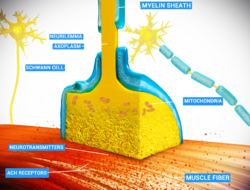
At the neuromuscular junction, the nerve fiber is able to transmit a signal to the muscle fiber by releasing ACh (and other substances), causing muscle contraction
Schematic view of a neuromuscular junction
Details
Identifiers
Latinsynapssis neuromuscularis; junctio neuromuscularis
MeSHD009469
THH2.00.06.1.02001
FMA61803
Anatomical terminology

A neuromuscular junction (or myoneural junction) is a chemical synapse between a motor neuron and a muscle fiber.[1]

It allows the motor neuron to transmit a signal to the muscle fiber, causing muscle contraction.[2]

Muscles require innervation to function—and even just to maintain muscle tone, avoiding atrophy. In the neuromuscular system, nerves from the central nervous system and the peripheral nervous system are linked and work together with muscles.[3] Synaptic transmission at the neuromuscular junction begins when an action potential reaches the presynaptic terminal of a motor neuron, which activates voltage-gated calcium channels to allow calcium ions to enter the neuron. Calcium ions bind to sensor proteins (synaptotagmins) on synaptic vesicles, triggering vesicle fusion with the cell membrane and subsequent neurotransmitter release from the motor neuron into the synaptic cleft. In vertebrates, motor neurons release acetylcholine (ACh), a small molecule neurotransmitter, which diffuses across the synaptic cleft and binds to nicotinic acetylcholine receptors (nAChRs) on the cell membrane of the muscle fiber, also known as the sarcolemma. nAChRs are ionotropic receptors, meaning they serve as ligand-gated ion channels. The binding of ACh to the receptor can depolarize the muscle fiber, causing a cascade that eventually results in muscle contraction.

Neuromuscular junction diseases can be of genetic and autoimmune origin. Genetic disorders, such as Congenital myasthenic syndrome, can arise from mutated structural proteins that comprise the neuromuscular junction, whereas autoimmune diseases, such as myasthenia gravis, occur when antibodies are produced against nicotinic acetylcholine receptors on the sarcolemma.

Structure and function

[edit]

Quantal transmission

[edit]

At the neuromuscular junction, presynaptic motor axons terminate 30 nanometers from the cell membrane or sarcolemma of a muscle fiber. The sarcolemma at the junction has invaginations called postjunctional folds, which increase its surface area facing the synaptic cleft.[4] These postjunctional folds form the motor endplate, which is studded with nicotinic acetylcholine receptors (nAChRs) at a density of 10,000 receptors/μm2.[5] The presynaptic axons terminate in bulges called terminal boutons (or presynaptic terminals) that project toward the postjunctional folds of the sarcolemma. In the frog each motor nerve terminal contains about 300,000 vesicles, with an average diameter of 0.05 micrometers. The vesicles contain acetylcholine. Some of these vesicles are gathered into groups of fifty, positioned at active zones close to the nerve membrane. Active zones are about 1 micrometer apart. The 30 nanometer cleft between nerve ending and endplate contains a meshwork of acetylcholinesterase (AChE) at a density of 2,600 enzyme molecules/μm2, held in place by the structural proteins dystrophin and rapsyn. Also present is the receptor tyrosine kinase protein MuSK, a signaling protein involved in the development of the neuromuscular junction, which is also held in place by rapsyn.[4]

About once every second in a resting junction randomly one of the synaptic vesicles fuses with the presynaptic neuron's cell membrane in a process mediated by SNARE proteins. Fusion results in the emptying of the vesicle's contents of 7000–10,000 acetylcholine molecules into the synaptic cleft, a process known as exocytosis.[6] Consequently, exocytosis releases acetylcholine in packets that are called quanta. The acetylcholine quantum diffuses through the acetylcholinesterase meshwork, where the high local transmitter concentration occupies all of the binding sites on the enzyme in its path. The acetylcholine that reaches the endplate activates ~2,000 acetylcholine receptors, opening their ion channels which permits sodium ions to move into the endplate producing a depolarization of ~0.5 mV known as a miniature endplate potential (MEPP). By the time the acetylcholine is released from the receptors the acetylcholinesterase has destroyed its bound ACh, which takes about ~0.16 ms, and hence is available to destroy the ACh released from the receptors.[citation needed]

When the motor nerve is stimulated there is a delay of only 0.5 to 0.8 msec between the arrival of the nerve impulse in the motor nerve terminals and the first response of the endplate [7] The arrival of the motor nerve action potential at the presynaptic neuron terminal opens voltage-dependent calcium channels, and Ca2+ ions flow from the extracellular fluid into the presynaptic neuron's cytosol. This influx of Ca2+ causes several hundred neurotransmitter-containing vesicles to fuse with the presynaptic neuron's cell membrane through SNARE proteins to release their acetylcholine quanta by exocytosis. The endplate depolarization by the released acetylcholine is called an endplate potential (EPP). The EPP is accomplished when ACh binds the nicotinic acetylcholine receptors (nAChR) at the motor end plate, and causes an influx of sodium ions. This influx of sodium ions generates the EPP (depolarization), and triggers an action potential that travels along the sarcolemma and into the muscle fiber via the T-tubules (transverse tubules) by means of voltage-gated sodium channels.[8] The conduction of action potentials along the T-tubules stimulates the opening of voltage-gated Ca2+ channels which are mechanically coupled to Ca2+ release channels in the sarcoplasmic reticulum.[9] The Ca2+ then diffuses out of the sarcoplasmic reticulum to the myofibrils so it can stimulate contraction. The endplate potential is thus responsible for setting up an action potential in the muscle fiber which triggers muscle contraction. The transmission from nerve to muscle is so rapid because each quantum of acetylcholine reaches the endplate in millimolar concentrations, high enough to combine with a receptor with a low affinity, which then swiftly releases the bound transmitter.[citation needed]

Acetylcholine receptors

[edit]
  1. Ion channel linked receptor
  2. Ions
  3. Ligand (such as acetylcholine)
When ligands bind to the receptor, the ion channel portion of the receptor opens, allowing ions to pass across the cell membrane.

Acetylcholine is a neurotransmitter synthesized from dietary choline and acetyl-CoA (ACoA), and is involved in the stimulation of muscle tissue in vertebrates as well as in some invertebrate animals. In vertebrates, the acetylcholine receptor subtype that is found at the neuromuscular junction of skeletal muscles is the nicotinic acetylcholine receptor (nAChR), which is a ligand-gated ion channel. Each subunit of this receptor has a characteristic "cys-loop", which is composed of a cysteine residue followed by 13 amino acid residues and another cysteine residue. The two cysteine residues form a disulfide linkage which results in the "cys-loop" receptor that is capable of binding acetylcholine and other ligands. These cys-loop receptors are found only in eukaryotes, but prokaryotes possess ACh receptors with similar properties.[5] Not all species use a cholinergic neuromuscular junction; e.g. crayfish and fruit flies have a glutamatergic neuromuscular junction.[4]

AChRs at the skeletal neuromuscular junction form heteropentamers composed of two α, one β, one ɛ, and one δ subunits.[10] When a single ACh ligand binds to one of the α subunits of the ACh receptor it induces a conformational change at the interface with the second AChR α subunit. This conformational change results in the increased affinity of the second α subunit for a second ACh ligand. AChRs, therefore, exhibit a sigmoidal dissociation curve due to this cooperative binding.[5] The presence of the inactive, intermediate receptor structure with a single-bound ligand keeps ACh in the synapse that might otherwise be lost by cholinesterase hydrolysis or diffusion. The persistence of these ACh ligands in the synapse can cause a prolonged post-synaptic response.[11]

Development

[edit]

The development of the neuromuscular junction requires signaling from both the motor neuron's terminal and the muscle cell's central region. During development, muscle cells produce acetylcholine receptors (AChRs) and express them in the central regions in a process called prepatterning. Agrin, a heparin proteoglycan, and MuSK kinase are thought to help stabilize the accumulation of AChR in the central regions of the myocyte. MuSK is a receptor tyrosine kinase—meaning that it induces cellular signaling by binding phosphate molecules to self regions like tyrosines, and to other targets in the cytoplasm.[12] Upon activation by its ligand agrin, MuSK signals via two proteins called "Dok-7" and "rapsyn", to induce "clustering" of acetylcholine receptors.[13] ACh release by developing motor neurons produces postsynaptic potentials in the muscle cell that positively reinforces the localization and stabilization of the developing neuromuscular junction.[14]

These findings were demonstrated in part by mouse "knockout" studies. In mice which are deficient for either agrin or MuSK, the neuromuscular junction does not form. Further, mice deficient in Dok-7 did not form either acetylcholine receptor clusters or neuromuscular synapses.[15]

The development of neuromuscular junctions is mostly studied in model organisms, such as rodents. In addition, in 2015 an all-human neuromuscular junction has been created in vitro using human embryonic stem cells and somatic muscle stem cells.[16] In this model presynaptic motor neurons are activated by optogenetics and in response synaptically connected muscle fibers twitch upon light stimulation.

Research methods

[edit]

José del Castillo and Bernard Katz used ionophoresis to determine the location and density of nicotinic acetylcholine receptors (nAChRs) at the neuromuscular junction. With this technique, a microelectrode was placed inside the motor endplate of the muscle fiber, and a micropipette filled with acetylcholine (ACh) was placed directly in front of the endplate in the synaptic cleft. A positive voltage was applied to the tip of the micropipette, which caused a burst of positively charged ACh molecules to be released from the pipette. These ligands flowed into the space representing the synaptic cleft and bound to AChRs. The intracellular microelectrode monitored the amplitude of the depolarization of the motor endplate in response to ACh binding to nicotinic (ionotropic) receptors. Katz and del Castillo showed that the amplitude of the depolarization (excitatory postsynaptic potential) depended on the proximity of the micropipette releasing the ACh ions to the endplate. The farther the micropipette was from the motor endplate, the smaller the depolarization was in the muscle fiber. This allowed the researchers to determine that the nicotinic receptors were localized to the motor endplate in high density.[4][5]

Toxins are also used to determine the location of acetylcholine receptors at the neuromuscular junction. α-Bungarotoxin is a toxin found in the snake species Bungarus multicinctus that acts as an ACh antagonist and binds to AChRs irreversibly. By coupling assayable enzymes such as horseradish peroxidase (HRP) or fluorescent proteins such as green fluorescent protein (GFP) to the α-bungarotoxin, AChRs can be visualized and quantified.[4]

Toxins that affect the neuromuscular junction

[edit]

Nerve gases

[edit]

Nerve gases bind to and phosphorylate AChE, effectively deactivating them. The accumulation of ACh within the synaptic cleft causes muscle cells to be perpetually contracted, leading to severe complications such as paralysis and death within minutes of exposure.

Botulinum toxin injected in human face

Botulinum toxin

[edit]

Botulinum toxin (also known as botulinum neurotoxin, and commercially sold under the trade name Botox) inhibits the release of acetylcholine at the neuromuscular junction by interfering with SNARE proteins.[4] This toxin crosses into the nerve terminal through the process of endocytosis and subsequently cleaves SNARE proteins, preventing the ACh vesicles from fusing with the intracellular membrane. This induces a transient flaccid paralysis and chemical denervation localized to the striated muscle that it has affected. The inhibition of ACh release does not set in until approximately two weeks after the injection is made. Three months after the inhibition occurs, neuronal activity begins to regain partial function, and six months after, complete neuronal function is regained.[17]

Tetanus toxin

[edit]

Tetanus toxin, also known as tetanospasmin is a potent neurotoxin produced by Clostridium tetani and causes the disease state, tetanus. The LD50 of this toxin has been measured to be approximately 1 ng/kg, making it second only to botulinum toxin D as the deadliest toxin in the world. It functions very similarly to botulinum neurotoxin by attaching and endocytosing into the presynaptic nerve terminal and interfering with SNARE proteins. It differs from botulinum neurotoxin in a few ways, most apparently in its end state, wherein tetanospasmin causes spastic paralysis as opposed to the flaccid paralysis demonstrated with botulinum neurotoxin.

Latrotoxin

[edit]

Latrotoxin (α-Latrotoxin) found in venom of widow spiders also affects the neuromuscular junction by causing the release of acetylcholine from the presynaptic cell. Mechanisms of action include binding to receptors on the presynaptic cell activating the IP3/DAG pathway and release of calcium from intracellular stores and pore formation resulting in influx of calcium ions directly. Either mechanism causes increased calcium in presynaptic cell, which then leads to release of synaptic vesicles of acetylcholine. Latrotoxin causes pain, muscle contraction and if untreated potentially paralysis and death.

Snake venom

[edit]

Snake venoms act as toxins at the neuromuscular junction and can induce weakness and paralysis. Venoms can act as both presynaptic and postsynaptic neurotoxins.[18]

Presynaptic neurotoxins, commonly known as β-neurotoxins, affect the presynaptic regions of the neuromuscular junction. The majority of these neurotoxins act by inhibiting the release of neurotransmitters, such as acetylcholine, into the synapse between neurons. However, some of these toxins have also been known to enhance neurotransmitter release. Those that inhibit neurotransmitter release create a neuromuscular blockade that prevents signaling molecules from reaching their postsynaptic target receptors. In doing so, the victim of these snake bite suffer from profound weakness. Such neurotoxins do not respond well to anti-venoms. After one hour of inoculation of these toxins, including notexin and taipoxin, many of the affected nerve terminals show signs of irreversible physical damage, leaving them devoid of any synaptic vesicles.[18]

Postsynaptic neurotoxins, otherwise known as α-neurotoxins, act oppositely to the presynaptic neurotoxins by binding to the postsynaptic acetylcholine receptors. This prevents interaction between the acetylcholine released by the presynaptic terminal and the receptors on the postsynaptic cell. In effect, the opening of sodium channels associated with these acetylcholine receptors is prohibited, resulting in a neuromuscular blockade, similar to the effects seen due to presynaptic neurotoxins. This causes paralysis in the muscles involved in the affected junctions. Unlike presynaptic neurotoxins, postsynaptic toxins are more easily affected by anti-venoms, which accelerate the dissociation of the toxin from the receptors, ultimately causing a reversal of paralysis. These neurotoxins experimentally and qualitatively aid in the study of acetylcholine receptor density and turnover, as well as in studies observing the direction of antibodies toward the affected acetylcholine receptors in patients diagnosed with myasthenia gravis.[18]

Diseases

[edit]

Any disorder that compromises the synaptic transmission between a motor neuron and a muscle cell is categorized under the umbrella term of neuromuscular diseases. These disorders can be inherited or acquired and can vary in their severity and mortality. In general, most of these disorders tend to be caused by mutations or autoimmune disorders. Autoimmune disorders, in the case of neuromuscular diseases, tend to be humoral mediated, B cell mediated, and result in an antibody improperly created against a motor neuron or muscle fiber protein that interferes with synaptic transmission or signaling.

Autoimmune

[edit]

Myasthenia gravis

[edit]

Myasthenia gravis is an autoimmune disorder where the body makes antibodies against either the acetylcholine receptor (AchR) (in 80% of cases), or against postsynaptic muscle-specific kinase (MuSK) (0–10% of cases). In seronegative myasthenia gravis low density lipoprotein receptor-related protein 4 is targeted by IgG1, which acts as a competitive inhibitor of its ligand, preventing the ligand from binding its receptor. It is not known if seronegative myasthenia gravis will respond to standard therapies.[19]

Neonatal MG
[edit]

Neonatal MG is an autoimmune disorder that affects 1 in 8 children born to mothers who have been diagnosed with myasthenia gravis (MG). MG can be transferred from the mother to the fetus by the movement of AChR antibodies through the placenta. Signs of this disease at birth include weakness, which responds to anticholinesterase medications, as well as fetal akinesia, or the lack of fetal movement. This form of the disease is transient, lasting for about three months. However, in some cases, neonatal MG can lead to other health effects, such as arthrogryposis and even fetal death. These conditions are thought to be initiated when maternal AChR antibodies are directed to the fetal AChR and can last until the 33rd week of gestation, when the γ subunit of AChR is replaced by the ε subunit.[20][21]

Lambert-Eaton myasthenic syndrome

[edit]

Lambert–Eaton myasthenic syndrome (LEMS) is an autoimmune disorder that affects the presynaptic portion of the neuromuscular junction. This rare disease can be marked by a unique triad of symptoms: proximal muscle weakness, autonomic dysfunction, and areflexia.[22] Proximal muscle weakness is a product of pathogenic autoantibodies directed against P/Q-type voltage-gated calcium channels, which in turn leads to a reduction of acetylcholine release from motor nerve terminals on the presynaptic cell. Examples of autonomic dysfunction caused by LEMS include erectile dysfunction in men, constipation, and, most commonly, dry mouth. Less common dysfunctions include dry eyes and altered perspiration. Areflexia is a condition in which tendon reflexes are reduced and it may subside temporarily after a period of exercise.[23]

50–60% of the patients that are diagnosed with LEMS also have present an associated tumor, which is typically small-cell lung carcinoma (SCLC). This type of tumor also expresses voltage-gated calcium channels.[23] Oftentimes, LEMS also occurs alongside myasthenia gravis.[22]

Treatment for LEMS consists of using 3,4-diaminopyridine as a first measure, which serves to increase the compound muscle action potential as well as muscle strength by lengthening the time that voltage-gated calcium channels remain open after blocking voltage-gated potassium channels. In the US, treatment with 3,4-diaminopyridine for eligible LEMS patients is available at no cost under an expanded access program.[24][25] Further treatment includes the use of prednisone and azathioprine in the event that 3,4-diaminopyridine does not aid in treatment.[23]

Neuromyotonia

[edit]

Neuromyotonia (NMT), otherwise known as Isaac's syndrome, is unlike many other diseases present at the neuromuscular junction. Rather than causing muscle weakness, NMT leads to the hyperexcitation of motor nerves. NMT causes this hyperexcitation by producing longer depolarizations by down-regulating voltage-gated potassium channels, which causes greater neurotransmitter release and repetitive firing. This increase in rate of firing leads to more active transmission and as a result, greater muscular activity in the affected individual. NMT is also believed to be of autoimmune origin due to its associations with autoimmune symptoms in the individual affected.[20]

Genetic

[edit]

Congenital myasthenic syndromes

[edit]

Congenital myasthenic syndromes (CMS) are very similar to both MG and LEMS in their functions, but the primary difference between CMS and those diseases is that CMS is of genetic origins. Specifically, these syndromes are diseases incurred due to mutations, typically recessive, in 1 of at least 10 genes that affect presynaptic, synaptic, and postsynaptic proteins in the neuromuscular junction. Such mutations usually arise in the ε-subunit of AChR,[20] thereby affecting the kinetics and expression of the receptor itself. Single nucleotide substitutions or deletions may cause loss of function in the subunit. Other mutations, such as those affecting acetylcholinesterase and acetyltransferase, can also cause the expression of CMS, with the latter being associated specifically with episodic apnea.[26] These syndromes can present themselves at different times within the life of an individual. They may arise during the fetal phase, causing fetal akinesia, or the perinatal period, during which certain conditions, such as arthrogryposis, ptosis, hypotonia, ophthalmoplegia, and feeding or breathing difficulties, may be observed. They could also activate during adolescence or adult years, causing the individual to develop slow-channel syndrome.[20]

Treatment for particular subtypes of CMS (postsynaptic fast-channel CMS)[27][28] is similar to treatment for other neuromuscular disorders. 3,4-Diaminopyridine, the first-line treatment for LEMS, is under development as an orphan drug for CMS[29] in the US, and available to eligible patients under an expanded access program at no cost.[24][25]

See also

[edit]

References

[edit]

Further reading

[edit]
[edit]
Revisions and contributorsEdit on WikipediaRead on Wikipedia
from Grokipedia
The neuromuscular junction (NMJ) is a highly specialized chemical synapse that forms the interface between a motor neuron and a skeletal muscle fiber, converting electrical impulses from the nervous system into chemical signals that trigger muscle contraction for voluntary movement. This structure ensures reliable one-to-one transmission of action potentials, with each motor neuron typically innervating multiple muscle fibers via 100–200 terminal branches. The NMJ is essential for locomotion, posture, and all skeletal muscle activities, and its dysfunction underlies numerous neuromuscular disorders such as myasthenia gravis and Lambert-Eaton myasthenic syndrome. Structurally, the NMJ consists of three main components: the presynaptic terminal of the motor neuron axon, the synaptic cleft, and the postsynaptic region on the muscle fiber known as the motor end plate. The presynaptic terminal contains synaptic vesicles filled with the neurotransmitter acetylcholine (ACh)—typically 5,000–10,000 molecules per vesicle—along with voltage-gated calcium channels, mitochondria, and active zones equipped with SNARE proteins (such as syntaxin, SNAP-25, and synaptobrevin) that facilitate vesicle docking and fusion. The synaptic cleft, a 50-nm-wide extracellular space, is enriched with acetylcholinesterase (AChE) embedded in the basal lamina, which rapidly hydrolyzes ACh to terminate its action and prevent prolonged stimulation. The postsynaptic membrane features deep junctional folds that increase the surface area for receptor clustering, primarily composed of nicotinic acetylcholine receptors (nAChRs)—pentameric ligand-gated ion channels that are densely packed at approximately 10,000 per μm²—and associated proteins like rapsyn for stabilization. Functionally, signal transmission at the NMJ begins when an reaches the presynaptic terminal, depolarizing the and opening voltage-gated calcium channels to allow Ca²⁺ influx, which triggers the fusion of ACh vesicles with the via , releasing about 300 vesicles (or 1–2 million ACh molecules) into the cleft in a process called quantal release. Diffusing ACh molecules bind to postsynaptic nAChRs, causing a conformational change that opens the channel pore, permitting Na⁺ influx and K⁺ efflux to generate an (EPP) that depolarizes the muscle beyond threshold, propagating a muscle action potential along the fiber and ultimately leading to Ca²⁺ release from the for actin-myosin cross-bridge cycling and contraction. AChE then degrades ACh within milliseconds, repolarizing the and allowing the NMJ to reset for subsequent signals, ensuring high-fidelity transmission without fatigue under normal conditions. This process is modulated by perisynaptic Schwann cells and molecular signals like agrin, LRP4, and , which maintain NMJ integrity and plasticity throughout life.

Anatomy and Structure

Presynaptic Components

The presynaptic terminal of the at the neuromuscular junction (NMJ) forms a specialized expansion of the , branching into 100-200 terminal boutons that lose their myelin sheath and are enveloped by terminal Schwann cells. This terminal contains the machinery for (ACh) storage and regulated release, with approximately 600-800 active zones per NMJ in adult mammals, enabling precise synaptic transmission to fibers. Active zones represent electron-dense specializations of the presynaptic membrane, each featuring about 2 docked synaptic vesicles and serving as sites for rapid neurotransmitter exocytosis. These zones are scaffolded by proteins such as and , which organize the release apparatus, while voltage-gated calcium channels—primarily P/Q-type (Cav2.1)—cluster precisely at the active zones to couple depolarization with calcium influx, a process facilitated by interactions with laminin β2 in the synaptic cleft. Synaptic vesicles, numbering around 1200-1600 docked ones per NMJ, store ACh (approximately 5000-10,000 molecules per vesicle) and cluster densely at active zones for efficient release. Docking and priming of these vesicles involve proteins like synaptotagmin, a calcium sensor on the vesicle that binds calcium ions to trigger SNARE-mediated fusion with the plasma . Mitochondria are abundant in the presynaptic terminal , providing ATP for energy-intensive processes such as ACh synthesis via and supporting calcium buffering to maintain during repeated stimulation. Vesicle recycling machinery, including endocytic proteins like actin-binding protein 1 (Abp1) and SNARE complexes, enables rapid retrieval and reuse of vesicle membranes post-exocytosis, sustaining transmission over prolonged activity. Quantal size, defined as the amount of ACh released from a single vesicle, correlates with active zone dimensions and influences synaptic strength, typically releasing a fixed number of molecules per quantum. Vesicle pool dynamics organize into a readily releasable pool of docked, fusion-competent vesicles (estimated at 1200-1600 per NMJ) with a low release probability of about 0.2 per , alongside larger reserve pools that replenish via to prevent depletion.

Synaptic Cleft and Basal Lamina

The synaptic cleft at the neuromuscular junction represents a narrow , measuring approximately 50 nm in width, that separates the presynaptic terminal from the postsynaptic muscle membrane and is filled with enriched in ions and proteins. This space facilitates the diffusion of neurotransmitters like from presynaptic vesicles while maintaining structural integrity through embedded elements. Positioned within the synaptic cleft is the , a thin sheet of specialized that spans the junction and provides mechanical support and biochemical signaling cues. Key components of this include , which forms a scaffold for structural stability; laminins (such as laminin-4, -9, and -11, corresponding to isoforms α2β2γ1, α4β2γ1, and α5β1γ1), which promote adhesion and signaling; and agrin, a large secreted primarily by motor neurons. Agrin binds to the basal lamina via interactions with and plays a pivotal role in anchoring synaptic organizers, thereby ensuring the precise localization and stability of junctional components. Acetylcholinesterase (AChE), the enzyme responsible for hydrolyzing , is asymmetrically distributed and anchored to the within the synaptic cleft, where it is highly concentrated to enable rapid modulation of the signal at its source. This localization positions AChE optimally in the of the cleft for immediate interaction with released . Proteins within the synaptic cleft and , including agrin, laminins, and collagen IV, contribute to synapse alignment by guiding the apposition of presynaptic active zones opposite postsynaptic densities and offer trophic support through signaling pathways that sustain synaptic maturation and long-term maintenance. These elements collectively form a supportive matrix that enhances the fidelity of neuromuscular transmission.

Postsynaptic Components

The postsynaptic membrane of the neuromuscular junction, also known as the motor end plate, is a specialized region of the fiber membrane that receives signals from the motor neuron terminal. This membrane is characterized by extensive invaginations called junctional folds, which dramatically increase the surface area available for synaptic contact and receptor placement. In human , these folds extend up to 1 μm deep into the muscle fiber and amplify the postsynaptic membrane area by approximately 8-fold, enhancing the efficiency of signal reception without proportionally increasing the overall footprint of the end plate. The end plate region itself typically measures 10–50 μm in diameter in mammalian , varying with muscle fiber type and species, and is centrally located along the fiber length to optimize contraction uniformity. Nicotinic acetylcholine receptors (nAChRs) are densely clustered on the crests of these junctional folds, directly opposite the presynaptic active zones, to maximize their exposure to released . These receptors form ligand-gated ion channels essential for initiating muscle , with a density of about 10,000 per μm² at the end plate—far higher than in extrasynaptic regions. In adult mammalian muscle, the functional nAChR is a heteropentameric complex composed of five subunits in a stoichiometry of two α1, one β1, one δ, and one ε (α1₂β1δε), which confers mature channel properties such as faster desensitization compared to the fetal isoform (α1₂β1δγ). This precise clustering is maintained by interactions with cytoskeletal proteins like utrophin and dystrophin-associated complexes, ensuring stable receptor positioning. Voltage-gated sodium channels, primarily the NaV1.4 isoform, are concentrated in the depths of the junctional folds, adjacent to the nAChR-rich crests, to facilitate rapid propagation of the into the muscle interior. This spatial segregation—nAChRs at fold tops for initial and sodium channels at fold bottoms for regenerative spread—allows for efficient conversion of the localized into a full muscle . The channels' localization is complementary to that of nAChRs and relies on interactions with and other scaffold proteins.

Physiology and Function

Synaptic Transmission Mechanism

The arrival of an at the presynaptic nerve terminal the , activating voltage-gated P/Q-type calcium channels (CaV2.1). This influx of Ca2+ ions into the terminal is rapid and localized to active zones, where it reaches micromolar concentrations sufficient to initiate . The process ensures precise temporal coupling between depolarization and release, with calcium entry occurring within milliseconds of the action potential peak. The rise in presynaptic Ca2+ binds to synaptotagmin sensors on , which then facilitate the assembly and zippering of the SNARE complex. This complex comprises the v-SNARE VAMP2 (synaptobrevin) on the vesicle membrane and the t-SNAREs syntaxin-1 and SNAP-25 on the presynaptic plasma membrane, driving the fusion of vesicle and plasma membranes. As a result, each synaptic vesicle undergoes , releasing a quantum of approximately 5,000–10,000 (ACh) molecules into the synaptic cleft in a coordinated manner. Spontaneous fusion of individual vesicles produces miniature end-plate potentials (MEPPs), small depolarizations of the postsynaptic averaging 0.4–0.5 mV, reflecting the quantal nature of ACh release. In response to an , evoked release synchronizes multiple vesicle fusions, generating an (EPP) as the spatial and temporal sum of these quanta. The quantal content—the average number of vesicles released per impulse—varies by species but is typically 50–150 in adult mammalian neuromuscular junctions. This EPP reliably depolarizes the postsynaptic membrane beyond the threshold for initiating a muscle , with the excess amplitude providing a safety factor of 3–5 to accommodate physiological variations or minor perturbations in release. The safety factor maintains transmission fidelity, as the EPP must surpass the approximately 20–30 mV required to trigger voltage-gated sodium channels in the muscle fiber.

Neurotransmitter Receptors and Signaling

The nicotinic acetylcholine receptors (nAChRs) at the neuromuscular junction are pentameric -gated channels that mediate rapid synaptic transmission in . These receptors consist of five transmembrane subunits arranged symmetrically around a central cation-selective pore, with the adult muscle-type being two α1 subunits, one β1 subunit, one δ subunit, and one ε subunit ((α1)₂β1δε). The extracellular domains of the α1 subunits contain the primary (ACh) binding sites, formed at the interfaces between α1 and the δ or ε subunits, enabling high-affinity recognition. Binding of ACh to these orthosteric sites occurs with moderate affinity, characterized by an EC50 of approximately 50–100 μM, sufficient to activate the receptor under physiological conditions where ACh is transiently released in high local concentrations. Upon ACh binding, the receptor undergoes an allosteric conformational transition from a resting to an open state, opening the intrinsic for milliseconds. This ionotropic signaling allows selective permeation of cations, primarily Na⁺ influx and K⁺ efflux, generating a net depolarizing current that initiates the . The single-channel conductance of these receptors is approximately 30 pS under physiological ionic conditions, contributing to the high of transmission despite the brief synaptic ACh pulse. The resulting endplate current (EPC) follows the basic form of an ohmic conductance change and can be expressed as: I=g(VErev)I = g (V - E_{\text{rev}}) where II is the current, gg is the total synaptic conductance (sum of open channels), VV is the postsynaptic membrane potential, and ErevE_{\text{rev}} is the reversal potential, approximately 0 mV, reflecting the receptor's permeability to both Na⁺ and K⁺ (P_Na/P_K ≈ 1.3). This equation captures the voltage-dependent driving force for the depolarizing current, with peak EPC amplitudes typically reaching -20 to -40 nA at resting potentials around -80 mV. While predominantly ionotropic, muscle nAChRs exhibit limited metabotropic modulation through interactions with G-proteins or secondary messengers, such as calcium-dependent signaling pathways that influence receptor clustering and stability. Prolonged ACh exposure leads to desensitization, a reversible inactivation state with fast (τ ≈ 10–100 ms) and slow (τ ≈ 1–10 s) kinetics, reducing channel responsiveness to prevent and regulate synaptic efficacy. These desensitization processes involve conformational shifts in the channel gate and are critical for maintaining junctional .

Signal Termination and Recycling

The signal at the neuromuscular junction is terminated primarily through the rapid of (ACh) by (AChE), an enzyme anchored in the synaptic cleft and . This enzymatic action prevents prolonged activation of postsynaptic nicotinic receptors, ensuring precise control of . AChE catalyzes the breakdown of ACh into choline and via a two-step mechanism involving and deacylation, facilitated by a of serine (Ser203), (His447), and glutamate (Glu334) residues. The serine acts as a to form a covalent acyl-enzyme intermediate, while serves as a general acid-base catalyst, and glutamate stabilizes the histidine's charge; this process achieves a high of kcat2.5×104s1k_{\text{cat}} \approx 2.5 \times 10^{4} \, \mathrm{s}^{-1}, enabling the enzyme to hydrolyze up to 25,000 ACh molecules per second. At the neuromuscular junction, AChE exists in multiple isoforms, with the asymmetric A12 form—composed of three tetrameric catalytic subunits linked by a collagen-tailed anchor (ColQ)—predominating and localizing specifically to the synaptic for optimal ACh clearance. In contrast, globular isoforms (G1, G2, G4), which lack the collagen tail and are more soluble, are present in lower concentrations, primarily in presynaptic terminals or extracellular spaces, contributing less to junctional . The choline produced from ACh hydrolysis is efficiently recycled to sustain ongoing transmission. High-affinity choline transporters, such as CHT1 (encoded by SLC5A7), mediate the reuptake of choline from the synaptic cleft into presynaptic motor neuron terminals, driven by the sodium electrochemical gradient. This uptake is rate-limiting for ACh resynthesis and occurs via a symport mechanism, with CHT1 exhibiting a KmK_m in the low micromolar range to efficiently capture choline even at low concentrations. Once internalized, choline serves as a substrate for (ChAT), the enzyme that catalyzes the acetylation of choline with to regenerate ACh, which is then packaged into synaptic vesicles. To maintain the presynaptic vesicle pool after ACh release, synaptic vesicle membranes are retrieved through clathrin-mediated , a process essential for membrane components and vesicle proteins. heavy and light chains assemble into a lattice on the plasma membrane, recruiting adaptor proteins like AP-2 and to invaginate and pinch off endocytic vesicles, which mature into new synaptic vesicles via acidification and refilling with ACh. This pathway predominates at the neuromuscular junction, where high-frequency stimulation demands rapid turnover, with occurring within seconds of to prevent membrane depletion.

Development and Maintenance

Embryonic Formation

The embryonic formation of the neuromuscular junction (NMJ) begins with the outgrowth and guidance of axons toward target muscles. In mammals, motor axons emerge from the around embryonic day 10.5 (E10.5) in mice and extend into the limb , where they are directed by guidance cues such as netrins and ephrins to reach muscle pioneers. Netrin-1, expressed in the dorsal limb , attracts lateral motor column (LMC) axons via Neogenin/DCC receptors while repelling medial LMC axons through Unc5c, ensuring precise topographic innervation during E11–E13. Ephrins, including ephrin-A5 and ephrin-B2, provide additional repulsive signals that synergize with netrin-1 to refine axon trajectories, with EphB2 and Unc5c forming complexes that activate Src family kinases for enhanced repulsion. This guided outgrowth culminates in initial axon contact with myotubes around E11–E13, establishing the foundational innervation pattern. Initial synapse formation occurs shortly after axon arrival, with NMJs first detectable by E14 in mice through the accumulation of synaptic markers. These early synapses exhibit polyinnervation, where multiple axons converge on a single muscle fiber, and incorporate fetal-type nicotinic acetylcholine receptors (nAChRs) containing the γ-subunit (α1₂β1γδ composition). The basal lamina plays a supportive role in anchoring these nascent contacts, facilitating the alignment of pre- and postsynaptic elements. Synaptic transmission at this stage is weak, characterized by low acetylcholine receptor density and inefficient vesicle release, but sufficient for embryonic muscle function. These fetal-type nAChRs support initial synaptic transmission despite lower conductance compared to adult forms. Central to postsynaptic differentiation is the agrin-MuSK-LRP4 signaling cascade, which drives nAChR clustering at contact sites. Neuronal agrin, released from motor terminals, binds to LRP4 on the muscle surface, recruiting and activating through dimerization and autophosphorylation at key residues (e.g., Tyr553, Tyr754). This event initiates downstream signaling via adaptors like Dok-7 and rapsyn, leading to the aggregation of γ-containing nAChRs into nascent clusters independent of initial contact in some cases. LRP4 in mice results in severe phenotypes, including failure of AChR clustering by E13.5, aberrant motor growth, and perinatal due to , underscoring its essential role in early NMJ assembly. of Lrp4 begins around E12.5 in muscle, aligning with the onset of .

Maturation and Adult Maintenance

Following embryonic formation, the neuromuscular junction (NMJ) undergoes significant postnatal maturation to refine synaptic efficacy and structure. A key event is the subunit switch in nicotinic acetylcholine receptors (nAChRs), where the fetal γ-subunit is replaced by the adult ε-subunit shortly after birth, transitioning from α₂βγδ to α₂βεδ composition. This switch enhances channel conductance and desensitization kinetics, improving the speed and reliability of synaptic transmission to support mature muscle function. Concomitant with this receptor maturation, the NMJ establishes monoinnervation through competitive synapse elimination, reducing polyinnervation from multiple motor axons to a single input per muscle fiber. This process, prominent in early postnatal development, involves activity-dependent competition where weaker synapses are retracted via mechanisms including β-catenin signaling in muscle cells, which stabilizes postsynaptic sites and promotes selective axon withdrawal. In adulthood, NMJ maintenance relies on trophic support and activity-dependent plasticity to ensure long-term stability. (BDNF), released from muscle and motor neurons, acts via TrkB receptors to modulate presynaptic release and postsynaptic receptor clustering, counteracting destabilization. Activity patterns further drive plasticity, with synaptic strengthening in active circuits and selective elimination of inactive inputs, mediated by proBDNF and mature BDNF as opposing signals for withdrawal and reinforcement, respectively. With advancing age, NMJs exhibit progressive degeneration, contributing to through partial and fragmentation of synaptic structures. This includes reduced nAChR density, impaired axonal branching, and incomplete reinnervation, leading to muscle fiber atrophy and weakness. Recent studies in the 2020s have explored stem cell-based regeneration, such as mesenchymal stem cells promoting NMJ reconstruction via paracrine factors and human iPSC-derived neuromuscular assembloids modeling repair, offering potential therapeutic avenues.

Research Methods

Electrophysiological Techniques

Electrophysiological techniques have been instrumental in elucidating the electrical events underlying synaptic transmission at the neuromuscular junction (NMJ), allowing researchers to quantify miniature end-plate potentials (MEPPs), end-plate potentials (EPPs), and end-plate currents (EPCs) with high precision. These methods rely on the detection of voltage or current changes in muscle fibers in response to release from motor terminals, providing insights into quantal transmission where individual vesicles of contribute discrete electrical signals. The foundational technique involves intracellular microelectrode recording, first developed in the 1950s by José del Castillo and , who used sharp glass micropipettes filled with to impale fibers and measure spontaneous MEPPs—small depolarizations reflecting the release of single quanta of . In this approach, a recording with a resistance of 10-50 MΩ is inserted near the end-plate region, capturing MEPPs with amplitudes around 0.5 mV and frequencies of 1-10 per second under resting conditions, while nerve stimulation evokes EPPs that summate multiple MEPPs to reach the threshold for muscle action potentials. To prevent contraction artifacts and isolate ionic currents, voltage-clamp configurations are employed, where a second delivers feedback current to hold the constant, enabling the recording of EPCs that decay with a of approximately 1-3 ms in mammalian muscle. Patch-clamp electrophysiology extends these measurements to the single-channel level, particularly useful for studying the kinetics of nicotinic acetylcholine receptors (nAChRs) at the NMJ. In the cell-attached or excised-patch mode, a fire-polished glass with a tip diameter of 1-2 μm forms a high-resistance seal (gigaohm) on the postsynaptic membrane, allowing direct observation of channel openings with conductances of 20-40 pS and mean open times of 1-10 ms upon agonist application. Noise analysis of macroscopic currents from patch-clamp recordings further quantifies quantal events by decomposing variance in EPC fluctuations into binomial components, revealing the number of channels activated per quantal release (around 1000–2000) and release probability during high-frequency stimulation. Extracellular stimulation protocols assess the fidelity of NMJ transmission under repetitive activity, mimicking physiological or pathological conditions. For instance, the train-of-four (TOF) stimulation delivers four supramaximal nerve shocks at 2 Hz, monitoring the decrement in successive compound muscle action potentials to evaluate fade, which indicates impaired release or receptor desensitization; a TOF ratio below 0.9 signals significant transmission failure. These techniques, often combined with pharmacological blockers like to partially reduce EPP amplitudes, have been refined in mammalian preparations such as the levator auris muscle for more accessible recordings. Recent advancements incorporate two-photon voltage sensing to map NMJ electrical dynamics with subcellular resolution, using fluorescent indicators like Voltage-Sensitive Dyes (VSDs) excited at 920 nm to visualize voltage transients in three dimensions without invasive electrodes. This optogenetic approach, demonstrated in diaphragms post-2020, captures EPP speeds of 10-20 μm/ms and reveals asynchronous release patterns not detectable by traditional methods, enhancing studies of and fatigue. Optogenetic techniques, using light-activated channels like Channelrhodopsin-2 for presynaptic , enable precise control of quantal release in NMJs, revealing mechanisms of short-term plasticity as of 2025.

Imaging and Molecular Methods

Fluorescence microscopy has been instrumental in visualizing key components of the neuromuscular junction (NMJ), particularly through the use of α-bungarotoxin (BTX), a high-affinity that specifically binds to nicotinic acetylcholine receptors (nAChRs) on the postsynaptic membrane. Fluorescently conjugated BTX allows for precise labeling and imaging of AChR clusters, revealing their pretzel-like organization and stability in mature NMJs, as demonstrated in studies of and tissues where BTX highlights the endplate morphology with resolutions sufficient to assess synaptic integrity. To complement postsynaptic visualization, antibodies against , a synaptic vesicle-associated protein, enable fluorescence labeling of presynaptic terminals, facilitating analyses that map the apposition of vesicles to AChR clusters and quantify synaptic alignment in fixed muscle preparations. These techniques, often combined in confocal setups, provide foundational insights into NMJ architecture without disrupting tissue context. Super-resolution microscopy techniques, such as depletion (STED), extend these capabilities to nanoscale resolutions, uncovering the organization of active zones at the NMJ. STED imaging has revealed the doughnut-shaped arrangement of active zone proteins like and in larval NMJs, with diameters around 200-300 nm, and similar ring-like structures in mammalian presynaptic terminals where voltage-gated calcium channels cluster centrally. In adult mouse NMJs, STED has shown the nanoscale alignment of presynaptic active zones with postsynaptic AChR densities, highlighting disruptions in conditions like aging or disease that alter these precise scaffolds. Dual-color STED approaches further delineate the sandwich-like layering of active zone components, with forming outer rings around , essential for release site assembly. Molecular methods complement imaging by quantifying protein expression and dissecting functional roles at the NMJ. Western blotting is widely employed to assess protein levels, such as those of agrin, , or markers, in muscle homogenates or isolated synaptosomes, revealing changes in abundance during development or pathology; for instance, reduced agrin levels correlate with impaired AChR clustering in models. /Cas9-mediated s have advanced functional studies, particularly for agrin, where muscle-specific deletions disrupt NMJ formation by blocking LRP4-MuSK signaling, leading to fragmented synapses and reduced AChR aggregation, as shown in conditional models. These genetic tools, combined with phenotypic analyses, confirm agrin's role in postsynaptic differentiation without off-target effects. Recent advances in cryo-electron microscopy (cryo-EM) have provided atomic-level structures of NMJ-relevant proteins, enhancing molecular understanding. For nAChRs, 2024-2025 cryo-EM studies resolved the human muscle-type receptor (α1β1δε) in resting and desensitized states at 2.5-3.5 Å resolution, illustrating ligand-binding pocket dynamics and gating mechanisms critical for synaptic transmission. Similarly, structures of neuronal subtypes like α7 nAChR in complex with agonists or positive allosteric modulators reveal desensitization pathways, with conformational shifts in transmembrane helices explaining prolonged signaling at the NMJ. For SNARE complexes involved in vesicle fusion, 2023-2025 cryo-EM reconstructions of NSF-SNAP-SNARE assemblies at 3-4 Å detail disassembly mechanisms, showing how repositions syntaxin and synaptobrevin to recycle fusion machinery, directly applicable to presynaptic NMJ function. These high-resolution insights guide targeted interventions for NMJ disorders.

Toxins and Pharmacological Agents

Presynaptic-Targeting Toxins

Presynaptic-targeting toxins interfere with the release of acetylcholine (ACh) from the presynaptic terminal of the neuromuscular junction (NMJ), leading to impaired synaptic transmission and muscle paralysis. These agents primarily act by disrupting vesicular fusion, calcium dynamics, or indirectly overloading the presynaptic machinery, distinct from direct modulation of postsynaptic receptors. Examples include bacterial neurotoxins and spider venoms that target core components of the exocytotic pathway, as well as chemical nerve agents that cause synaptic accumulation through enzyme inhibition. Botulinum neurotoxins (BoNTs), produced by Clostridium botulinum, are the most studied presynaptic toxins and exist in seven serotypes (A-G), each acting as zinc-dependent endoproteases that cleave specific soluble N-ethylmaleimide-sensitive factor attachment protein receptor (SNARE) proteins essential for synaptic vesicle fusion. For instance, BoNT/A, C, and E specifically cleave SNAP-25, a SNARE protein on the plasma membrane, preventing the formation of the SNARE complex required for ACh release, resulting in flaccid paralysis lasting months due to SNAP-25's slow turnover. BoNT/B, D, F, and G target VAMP/synaptobrevin on the vesicle membrane, while BoNT/C cleaves both syntaxin and SNAP-25, blocking exocytosis at cholinergic NMJs with high specificity. Clinically, BoNT/A (as onabotulinumtoxinA, marketed as Botox) was approved by the FDA in 1989 for treating and by locally inhibiting ACh release at NMJs, reducing muscle hyperactivity with minimal systemic effects when dosed appropriately. Its therapeutic efficacy stems from reversible chemodenervation, allowing nerve sprouting and recovery over time, and it has since expanded to indications like cervical dystonia and . β-Bungarotoxin, a heterodimeric from the of krait snakes ( spp.), targets the presynaptic terminal at the NMJ, where its enzymatic activity hydrolyzes membrane phospholipids, leading to calcium-independent , depletion of ACh vesicles, and eventual terminal degeneration. This results in irreversible blockade of neuromuscular transmission and , distinguishing it from purely proteolytic toxins like BoNTs by combining initial facilitation with long-term inhibition. α-Latrotoxin, a 130-kDa protein from the venom of the black widow spider ( spp.), binds to presynaptic receptors such as neurexins and latrophilins, forming cation-permeable pores that trigger massive calcium influx and depolarization of the nerve terminal. This leads to uncontrolled of synaptic vesicles, rapid depletion of ACh stores (up to 60-75% loss after prolonged exposure), and eventual NMJ failure due to vesicle exhaustion and membrane damage. Unlike BoNTs, α-latrotoxin stimulates release independently of extracellular calcium in some contexts but ultimately causes presynaptic depletion without cleaving SNAREs. Tetanus neurotoxin (), produced by , primarily targets central inhibitory rather than terminals at the NMJ, cleaving VAMP/synaptobrevin to block and GABA release, which disinhibits and induces spastic . Although binds initially to NMJ presynaptic sites for retrograde transport along axons to the , its NMJ effects are indirect, manifesting as rigidity from unopposed excitatory drive rather than direct ACh blockade. This contrasts with BoNTs' peripheral action, highlighting 's role in central .

Postsynaptic-Targeting Toxins

Postsynaptic-targeting toxins primarily disrupt neuromuscular transmission by interfering with nicotinic acetylcholine receptors (nAChRs) or the postsynaptic response to (ACh), leading to muscle or altered excitability. These agents bind to the postsynaptic membrane components at the neuromuscular junction (NMJ), contrasting with presynaptic mechanisms that affect neurotransmitter release. Key examples include plant-derived alkaloids, neurotoxins, and marine conotoxins, each with distinct binding affinities and pharmacological applications. Curare alkaloids, such as , act as competitive antagonists at muscle-type nAChRs by binding to the orthosteric site on the receptor's α-subunits, preventing ACh from inducing channel opening and thus blocking . This antagonism is reversible, with dissociation constants (K_D) in the micromolar range, approximately 2.2 μM and 8.8 μM for the two sites on the nAChR. Historically used in poisons, d-tubocurarine has been employed in to induce muscle relaxation, highlighting its high specificity for postsynaptic nAChRs over other receptors. α-Bungarotoxin, a from the of the krait snake (Bungarus multicinctus), binds irreversibly to the α-subunits of muscle nAChRs, occluding the ACh binding site and causing prolonged by inhibiting receptor activation. Its high affinity (K_D in the nanomolar range) and quasi-irreversible nature stem from multiple hydrogen bonds and van der Waals interactions at the receptor interface, as revealed in structural studies of the nAChR. Beyond its toxic effects, α-bungarotoxin conjugated with radiolabels like ¹²⁵I serves as a vital tool for labeling and quantifying nAChRs in NMJ , enabling precise mapping of receptor distribution. Nerve agents like (O-isopropyl methylphosphonofluoridate) inhibit (AChE) in the synaptic cleft, preventing ACh hydrolysis and causing its accumulation, which overstimulates postsynaptic receptors and leads to overload with initial fasciculations followed by block at the NMJ. While the excessive ACh buildup indirectly burdens the presynaptic terminal by prolonging and depleting releasable vesicles through repeated firing, the primary effect is postsynaptic. Recent research into reactivators, such as HI-6, shows promise for poisoning by rapidly reactivating inhibited AChE, with studies in the 2020s demonstrating HI-6's superior efficacy against -inhibited enzymes compared to other like , though optimal dosing remains under investigation. Fasciculins, peptides isolated from the venom of the green mamba (Dendroaspis angusticeps), target (AChE) at the synaptic cleft, inhibiting its hydrolytic activity and causing accumulation of ACh, which results in prolonged receptor activation, repetitive firing, and muscle fasciculations followed by block. These toxins bind with picomolar affinity to a peripheral anionic site on AChE, distinct from the catalytic gorge, and their three-fingered fold facilitates tight, reversible inhibition specific to synaptic AChE isoforms. Unlike direct receptor antagonists, fasciculins amplify postsynaptic signaling to toxic levels, contributing to in . Recent studies on conotoxins, disulfide-rich peptides from venoms, have highlighted their potential to modulate NMJ nAChRs for , with α-conotoxins selectively antagonizing muscle or neuronal subtypes to reduce without full . For instance, α-conotoxins like EI or MIIIJ targeting muscle-type nAChRs inhibit transmission at NMJs, offering effects in neuropathic models as explored in 2024 research on surgical pain relief. These emerging therapeutics leverage the structural diversity of conotoxins for subtype-specific modulation, advancing beyond traditional NMJ blockers toward targeted pain therapies.

Pathological Conditions

Autoimmune Diseases

Autoimmune diseases of the neuromuscular junction (NMJ) arise when the produces autoantibodies that disrupt synaptic transmission, leading to impaired muscle function. These disorders primarily target key components such as acetylcholine receptors (AChRs) on the postsynaptic membrane or voltage-gated calcium channels (VGCCs) on the presynaptic terminal, resulting in or hyperexcitability. The most common examples include (MG), Lambert-Eaton myasthenic syndrome (LEMS), and (also known as Isaac's syndrome), each characterized by distinct antibody profiles and clinical presentations. Diagnosis typically involves serological testing for specific autoantibodies, , and exclusion of other causes, while management focuses on symptom relief, , and addressing underlying triggers like or malignancy. Myasthenia gravis (MG) is the prototypical autoimmune NMJ disorder, caused by autoantibodies against postsynaptic AChRs in approximately 80-85% of cases, leading to receptor degradation, complement activation, and reduced endplate potentials. Less commonly, antibodies target muscle-specific kinase () or low-density lipoprotein receptor-related protein 4 (LRP4), disrupting AChR clustering and maintenance. Symptoms manifest as fatigable muscle weakness, initially affecting ocular muscles (ptosis, ) in 50-60% of patients, progressing to bulbar, limb, and respiratory involvement in generalized forms, with exacerbations triggered by or stress. The is approximately 20 per 100,000 individuals, with a higher incidence in women under 40 and men over 60; about 10-15% of cases associate with , a paraneoplastic trigger. Treatments include symptomatic anticholinesterases like to enhance signaling, immunosuppressive agents such as corticosteroids and for long-term control, and rapid interventions like intravenous immunoglobulin (IVIG) or for crises. Monoclonal antibodies targeting B-cells (rituximab) or complement () have improved outcomes in refractory cases, while benefits AChR-positive patients, reducing autoantibody production. As of 2025, ongoing phase 3 trials explore novel biologics like CAR-T therapies and siRNA inhibitors, showing promising reductions in disease severity without preconditioning. Lambert-Eaton myasthenic syndrome (LEMS) involves autoantibodies against presynaptic P/Q-type VGCCs, inhibiting calcium influx and release, which impairs NMJ transmission. Up to 60% of cases are paraneoplastic, strongly linked to small-cell , while non-tumor forms are idiopathic autoimmune. Clinically, it presents with proximal limb weakness (leg > arm), , and autonomic dysfunction (dry mouth, constipation, ) in 80-96% of patients; unlike MG, strength often improves briefly with repeated activity due to facilitation of calcium entry. Prevalence is rare at about 2.8 per million, predominantly affecting adults over 50 with equal gender distribution. Symptomatic treatment with 3,4-diaminopyridine () prolongs presynaptic action potentials to boost release, often combined with ; via steroids or is standard, with tumor resection essential in paraneoplastic cases to achieve remission in over 70%. IVIG and provide acute relief, and rituximab has shown efficacy in antibody-positive non-paraneoplastic LEMS. Neuromyotonia, or Isaac's syndrome, results from autoantibodies targeting voltage-gated potassium channels (VGKCs), particularly contactin-associated protein-like 2 (CASPR2), causing peripheral nerve hyperexcitability through reduced and repetitive firing. This leads to continuous muscle fiber activity without direct NMJ failure, though it affects synaptic stability indirectly. Symptoms include muscle stiffness, cramps, fasciculations, (visible rippling), and delayed relaxation (pseudomyotonia), often with , , and ; it may associate with or other autoimmune conditions in 20-40% of cases. The condition is extremely rare, with prevalence under 1 per 100,000. Symptomatic relief comes from membrane-stabilizing agents like or , which reduce excitability; with steroids, IVIG, or rituximab targets the autoimmune component, achieving partial remission in most patients, while aids acute flares.

Genetic and Congenital Disorders

Congenital myasthenic syndromes (CMS) represent a heterogeneous group of inherited disorders characterized by impaired neuromuscular transmission due to genetic defects at the neuromuscular junction, typically presenting from birth or early infancy with fatigable . These conditions arise from mutations in genes encoding presynaptic, synaptic, or postsynaptic proteins, with postsynaptic defects being the most common. is predominantly autosomal recessive, though some forms exhibit autosomal dominant patterns, and the overall of CMS is estimated at approximately 1 in 500,000 individuals. Mutations in the CHRNE gene, which encodes the ε-subunit of the (AChR), account for 30-50% of CMS cases and lead to either AChR deficiency or kinetic abnormalities in channel function. Low-expressor in CHRNE cause autosomal recessive AChR deficiency, resulting in reduced receptor density at the endplate and symptoms such as ptosis, , and limb that often respond to inhibitors. In contrast, gain-of-function in CHRNE produce slow-channel (SCCMS) through autosomal dominant , prolonging the open time of the AChR channel and leading to excitotoxic at the endplate, with selective in neck and distal muscles. (AChE) deficiency, while primarily linked to COLQ mutations, can intersect with CHRNE defects in compound forms, exacerbating synaptic ACh accumulation and causing severe, progressive respiratory involvement under autosomal recessive . RAPSN mutations disrupt rapsyn, a cytoplasmic protein essential for AChR clustering and anchoring at the postsynaptic membrane, leading to endplate AChR deficiency in an autosomal recessive manner. These mutations, comprising 15-20% of CMS cases, impair agrin-MuSK signaling downstream effects, reducing AChR density to 8-48% of normal levels and causing underdeveloped postsynaptic folds. Common variants like c.264C>A (p.N88K) predominate in European populations, resulting in fluctuating ptosis and generalized weakness that improves with 3,4-diaminopyridine or inhibitors. Rapsyn deficiency specifically manifests as reduced miniature amplitudes (12-47% of normal) and fewer AChRs per endplate, contributing to fatigable weakness without affecting rapsyn self-association but hindering receptor recruitment. DOK7 defects, accounting for 10-15% of CMS, involve in the encoding Dok-7, an adaptor protein critical for agrin-induced activation and AChR clustering, inherited autosomal recessively. These compromise postsynaptic differentiation, often presenting with limb-girdle and minimal ocular involvement, and are unresponsive to inhibitors but benefit from or . A prevalent European variant, c.1124_1172dupTGCC, disrupts signaling and leads to tubular aggregates in muscle fibers. Recent discoveries from 2022-2025 have highlighted mutations in the GFPT1 gene, which encodes glutamine-fructose-6-phosphate transaminase 1, the rate-limiting enzyme in the hexosamine biosynthetic pathway for protein glycosylation, causing limb-girdle CMS phenotypes under autosomal recessive inheritance. These defects impair N-glycosylation of synaptic proteins, including AChR subunits, leading to reduced receptor stability and function, with symptoms of proximal weakness, ptosis, and myopathic changes on . A 2025 Chinese identified the c.331C>T variant as a hotspot (52.3% allelic frequency), suggesting a and association with earlier onset, bulbar involvement, and tubular aggregates in 46% of cases, expanding the phenotypic spectrum beyond classic limb-girdle patterns. Pathological features include rimmed vacuoles and decremental responses on , with and providing therapeutic benefit in most patients.

References

Add your contribution
Related Hubs
User Avatar
No comments yet.