


Community hub
Plastic bag
View on Wikipedia
 A plastic bag used to collect waste on a street in Paris, 2010 | |
| Classification | Bag |
|---|---|
| Uses | Container |
| Inventor | Sten Gustaf Thulin[1] |
A plastic bag, poly bag, or pouch is a type of container made of thin, flexible, plastic film, nonwoven fabric, or plastic textile. Plastic bags are used for containing and transporting goods such as foods, produce, powders, ice, magazines, chemicals, and waste. It is a common form of packaging.
In the late 1950s, Curt Lindquist, the CEO of the Celloplast company in Sweden, experimented with a new and promising material: plastic. By cutting and heat-sealing pieces together, he invented the first seamless plastic bag. The patent was awarded in 1965.[2] Today most plastic bags are heat sealed at the seams, while some are bonded with adhesives or are stitched.
Many countries are introducing legislation to phase out lightweight plastic bags, because plastic never fully breaks down, causing everlasting pollution of plastics and environmental impacts. Every year, about 1 to 5 trillion plastic bags are used and discarded around the world. From point of sale to destination, plastic bags have a lifetime of 12 minutes. Approximately 320 bags per capita were used in 2014 in the United States.[3]
Package
[edit]

Several design options and features are available. Some bags have gussets to allow a higher volume of contents, special stand-up pouches have the ability to stand up on a shelf or a refrigerator, and some have easy-opening or reclosable options. Handles are cut into or added into some.
Bags can be made with a variety of plastics films. Polyethylene (LDPE, LLDPE, etc.) is the most common. Other forms, including laminates and co-extrusions can be used when the physical properties are needed. Plastics to create single use bags are primarily made with fossil fuels. International Plastic Bag Free Day is celebrated on July 3.
Plastic bags usually use less material than comparable to boxes, cartons, or jars, thus are often considered as "reduced or minimized packaging".[4] In June 2009 Germany's Institute for Energy and Environmental Research concluded that oil-based plastics, especially if recycled, have a better life-cycle analysis than compostable plastics. They added that "The current bags made from bioplastics have less favourable environmental impact profiles than the other materials examined" and that this is due to the process of raw-material production.
Depending on the construction, plastic bags can be suited for plastic recycling. They can be incinerated in appropriate facilities for waste-to-energy conversion. They are stable and benign in sanitary landfills.[5] If disposed of improperly, however, plastic bags can create unsightly litter and harm some types of wildlife.[6][7] Plastic bags have low recycling rates due to lack of separation ability. Mixed material recycling causes contamination of the material. However, plastic bags are reused before discard at a rate of 1.6 times.[3]
Bags come with various features such as carrying handles, hanging holes, tape attachments, and security features. Some bags are designed for easy opening and have reclosable press-to-seal zipper strips. This feature is commonly found in empty kitchen bags and some food packaging. Some bags are sealed for tamper-evident capability, including some where the press-to-reseal feature becomes accessible only when a perforated outer seal has torn away.
Boil-in-bags are often used for sealed frozen foods, sometimes complete entrees. The bags are usually tough heat-sealed nylon or polyester to withstand the temperatures of boiling water. Some bags are porous or perforated to allow the hot water to contact the food: rice, noodles, etc. Grocery stores are the single largest supplier of single-use plastic bags.[3]
Bag-in-box packaging is often used for liquids such as box wine and institutional sizes of other liquids.
Medical uses
[edit]Plastic bags are used for many medical purposes. The non-porous quality of plastic film means that they are useful for isolating infectious body fluids; other porous bags made of nonwoven plastics can be sterilized by gas and maintain this sterility. Bags can be made under regulated sterile manufacturing conditions, so they can be used when the infection is a health risk. They are lightweight and flexible, so they can be carried by or laid next to patients without making the patient as uncomfortable as a heavy glass bottle would be. They are less expensive than re-usable options, such as glass bottles. Moderate quality evidence from a 2018 systematic review showed that plastic wraps or bags prevented hypothermia compared to routine care, especially in extremely preterm infants.[8]
Waste disposal bags
[edit]Flexible intermediate bulk container
[edit]
Flexible intermediate bulk containers are large industrial containers, usually used for bulk powders or flowables. They are usually constructed of woven heavy-duty plastic fibers.
Plastic shopping bags
[edit]Open bags with carrying handles are used in large numbers. Stores often provide them as a convenience to shoppers. Some stores charge a nominal fee for a bag. Heavy-duty reusable shopping bags are often considered environmentally better than single-use paper or plastic shopping bags. Because of environmental and litter problems, some locations are working toward a phase-out of lightweight plastic bags.
History
[edit]
.jpg)

American and European patent applications relating to the production of plastic shopping bags can be found dating back to the early 1950s, but these refer to composite constructions with handles fixed to the bag in a secondary manufacturing process. The modern lightweight shopping bag is the invention of Swedish engineer Sten Gustaf Thulin.[1] In the early 1960s, Thulin developed a method of forming a simple one-piece bag by folding, welding and die-cutting a flat tube of plastic for the packaging company Celloplast of Norrköping, Sweden. Thulin's design produced a simple, strong bag with a high load-carrying capacity, and was patented worldwide by Celloplast in 1965.
From the mid-1980s onwards, plastic bags became common for carrying daily groceries from the store to vehicles and homes throughout the developed world. As plastic bags increasingly replaced paper bags, and as other plastic materials and products replaced glass, metal, stone, timber and other materials, a packaging materials war erupted, with plastic shopping bags at the center of highly publicized disputes.
In 1992, Sonoco Products Company of Hartsville, South Carolina, patented[9] the "self-opening polyethylene bag stack". The main innovation of this redesign is that the removal of a bag from the rack opens the next bag in the stack.
International usage
[edit]The number of plastic bags used and discarded worldwide has been estimated to be on the order of one trillion annually.[10] The use of plastic bags differs dramatically across countries. While the average consumer in China uses only two or three plastic bags a year, the numbers are much higher in most other countries: Denmark: four; Ireland: 20;[11] Germany: 65; Poland, Hungary, Slovakia: more than 400.[12]
A large number of cities and counties have banned the use of plastic bags by grocery stores or introduced a minimum charge. In September 2014, California became the first US state to pass a law banning their use, but the ban contained what has since been called a loophole, allowing supermarkets to provide thicker plastic bags as "reusable" bags at a cost of 10 cents each.[13] In 2024, California passed a new law, taking effect in 2026, which closes this loophole and reinforces the original ban.[14] In India, the government has banned the use of plastic bags of a thickness below 50 microns.[15] In 2018, Montreal, Canada, also banned plastic bags with Ottawa expected to also put the ban into effect.[16]
Plastic bags and the environment
[edit]
Plastic bags are mostly made out of petroleum products and natural gas. 8% of the world's petroleum resources are used for creating plastic bags at 12 million barrels of oil a day. Half of that is used as materials to make them, and the other half for energy to make them. At this rate, it will soon run out,[citation needed] impacting many things that depend on the resource. Not to mention all the air pollution it causes.[17]
Non-compostable plastic bags can take up to 1000 years to decompose. Plastic bags are not capable of biodegradation but rather they photodegrade, a process by which the plastic bags are broken down into smaller toxic parts. In the 2000s, many stores and companies began to use different types of biodegradable bags to comply with perceived environmental benefits.[18][19]
When plastic shopping bags are not disposed of properly, they can end up in streams, which then lead them to end up in the open ocean. To mitigate marine plastic pollution from single-use shopping bags, many jurisdictions around the world have implemented bans or fees on the use of plastic bags.[20] An estimated 300 million plastic bags end up in the Atlantic Ocean alone.[21] The way in which the bags float in open water can resemble a jellyfish, posing significant dangers to marine mammals and leatherback sea turtles, when they are eaten by mistake and enter the animals' digestive tracts.[22] After ingestion, the plastic material can lead to premature death. Once death occurs and the animal body decomposes, the plastic reenters the environment, posing more potential problems.[21]
Huge masses of plastic waste are arriving in the oceans per annum and causing several damages which include risk of marine species, disturbance in food web ultimately effecting marine ecosystem, several microbial and alien species colonize on plastic particles enhancing their harmfulness, and plastic particles driven by winds form garbage patches in various parts of the oceans.[23]
Marine animals are not the only animals affected by improper plastic bag disposal. Sea birds, when hunting, sense for dimethyl sulfide (DMS) which is produced by algae. Plastic is a breeding ground for algae, so the sea birds mistakenly eat the bag rather than the fish that typically ingests algae. (National Geographic)[24]
Plastic bags do not do well in the environment, but several government studies have found them to be an environmentally friendly carryout bag option. According to the Recyc-Quebec, a Canadian recycling agency, "The conventional plastic bag has several environmental and economic advantages. Thin and light, its production requires little material and energy. It also avoids the production and purchase of garbage/bin liner bags since it benefits from a high reuse rate when reused for this purpose (77.7%)."[25] Government studies from Denmark[26] and the United Kingdom,[27] as well as a study from Clemson University,[28] came to similar conclusions.
Even though the bags are plastic, they typically cannot be recycled in curbside recycling bins. The material frequently causes the equipment used at recycling plants to jam, thus having to pause the recycle machinery and slow down daily operations.[29] However, plastic bags are 100% recyclable.[30] To recycle them the user needs to drop them off at a location that accepts plastic film. Usually, this means taking them back to the grocery store or another major retail store.[31]
Danger to children
[edit]Thin, conformable plastic bags, especially dry cleaning bags, have the potential to cause suffocation. Because of this, about 25 children in the United States suffocate each year due to plastic bags, almost nine-tenths of whom are under the age of one. This has led to voluntary warning labels on some bags posing a hazard to small children.[32]
Uses
[edit]Plastic bags are used for diverse applications:
-
 Bags of crisps (chips)
 -
 Gardening supplies
 -
 Bagging vegetables
 -
 blood platelets
 -
 inner bladder for bag-in-box
 -
 Pastry bag with convenience closure
 -

-
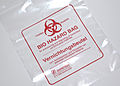 Biohazard bag
 -
 Bin bag or trash bag
 -
 String bag made of plastic fibers
 -
 Multiple chambers for eventual mixing
 -
 Porous bag for cooking rice
 -
 Intravenous therapy
 -
 Tamper evident evidence bag
 -
 Travel toiletries in a reclosable plastic bag
 -
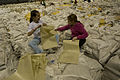 Woven plastic fiber bags used for sand
 -
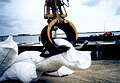 Nonwoven plastic, geotextile bags
 -
 A plastic body bag


_in_a_regulation_plastic_bag_(1355852892).jpg)


See also
[edit]References
[edit]- ^ a b "Plastic T-Shirt Carrier Bag (1965)". European Plastics News. 26 September 2008. Archived from the original on 11 February 2010. Retrieved 17 April 2012.
- ^ Nils Johansson, "The Plastic Bag: From a Mundane Swedish Innovation to the World's Oceans" Environment and History (August 2025) , Vol. 31, No. 3: 293-299
- ^ a b c Wagner, Travis P. (1 December 2017). "Reducing single-use plastic shopping bags in the USA". Waste Management. 70: 3–12. Bibcode:2017WaMan..70....3W. doi:10.1016/j.wasman.2017.09.003. ISSN 0956-053X. PMID 28935376.
- ^ "Life Cycle Inventory of Packaging Options for Shipment of Retail Mail-Order Soft Goods" (PDF). April 2004. Archived from the original (PDF) on 17 December 2008. Retrieved 15 December 2008.
- ^ Lapidos, Juliet (27 June 2007). "Slate Explainer, 27 June 2007". Slate.com. Archived from the original on 21 July 2010. Retrieved 7 July 2010.
- ^ "Teresa Platt Commentary, Plastic Bags on Our Backs, May 2008". teresaplatt.com. Archived from the original on 26 April 2012. Retrieved 7 July 2010.
- ^ Mieszkowski, Katharine (10 August 2007). "Plastic bags are killing us". Salon.com. Retrieved 23 April 2013.
- ^ McCall, Emma M.; Alderdice, Fiona; Halliday, Henry L.; Vohra, Sunita; Johnston, Linda (February 2018). "Interventions to prevent hypothermia at birth in preterm and/or low birth weight infants". The Cochrane Database of Systematic Reviews. 2018 (2) CD004210. doi:10.1002/14651858.CD004210.pub5. ISSN 1469-493X. PMC 6491068. PMID 29431872.
- ^ Beasley, M. Wayne; Fletcher, Wade D.; Wilfong, Harry B. Jr. (9 August 1994), Self-opening polyethylene bag stack and process for producing same, retrieved 10 September 2016
- ^ "Plastic as a Resource". Clean Up Australia. Archived from the original on 11 June 2017. Retrieved 6 June 2017.
- ^ Salvatore (30 November 2010). "Half Sacked: Chinese Plastic Bag Use Drops by 50 Percent". Take Part. Retrieved 6 June 2017.[permanent dead link]
- ^ Karelova, Klaudia (Fall 2017). "From 466 to 90-Regulation or Education? Policy Options for a Single-use Plastic Bag Consumption Reduction in the Slovak Republic". Journal of Environmental Management & Tourism. 8 (5): 1136–1152 – via ProQuest.
- ^ Arana, Vianey (14 February 2024). "California plastic bag ban loophole getting us away from a green future". NBC Bay Area. Retrieved 24 September 2024.
- ^ Rust, Susanne (22 September 2024). "Governor signs California plastic bag bill into law". Los Angeles Times. Retrieved 24 September 2024.
- ^ "Centre bans plastic bags below 50 microns". The Times of India. Retrieved 22 January 2017.
- ^ Turnbull, Jay (31 December 2017). "What you need to know about Montreal's plastic bag ban". CBC News.
- ^ "Are Plastic Shopping Bags a Problem In Our Environment?".
- ^ Wilder, Sam (June 2006). "Festival food recycling: Sun, fun and diversion". BioCycle. 47 (6): 30.
- ^ "The supermarket chain Aldi Süd of Germany is now offering its customers shopping bags made of BASF's biodegradable plastic ecovio®. (Industry News and Notes, brief article)." Plastics Engineering 65.6 (June 2009): 54(2)
- ^ Xanthos, D., Walker, T. R. (2017). International policies to reduce plastic marine pollution from single-use plastics (plastic bags and microbeads): a review. Marine Pollution Bulletin, 118(1–2), 17–26.
- ^ a b Wagner, Jamey. "The Effects of Plastic Bags on the Environment". Health Guidance. healthguidance.org. Retrieved 19 March 2018.
- ^ Schuyler QA, Wilcox C, Townsend K, Hardesty BD, Marshall NJ (2014). "Mistaken identity? Visual similarities of marine debris to natural prey items of sea turtles". BMC Ecol. 14 (1): 14. Bibcode:2014BMCE...14...14S. doi:10.1186/1472-6785-14-14. PMC 4032385. PMID 24886170.
- ^ De Matteis, Alessandro; Turkmen Ceylan, Fethiye Burcu; Daoud, Mona; Kahuthu, Anne (1 March 2022). "A systemic approach to tackling ocean plastic debris". Environment Systems and Decisions. 42 (1): 136–145. Bibcode:2022EnvSD..42..136D. doi:10.1007/s10669-021-09832-0. ISSN 2194-5411.
- ^ "Animals Eat Ocean Plastic Because it Smells Like Food". 9 November 2016. Archived from the original on 10 November 2016. Retrieved 15 February 2018.
- ^ "Environmental and Economic Highlights of the Results of the Life Cycle Assessment of Shopping Bags" (PDF). Recyc-Quebec. December 2017. Archived from the original (PDF) on 23 February 2019. Retrieved 22 February 2019.
- ^ "Life Cycle Assessment of grocery carrier bags" (PDF). Denmark Environmental Protection Agency. February 2018.
- ^ "Life cycle assessment of supermarket carrier bags: a review of the bags available in 2006" (PDF). United Kingdom Environment Agency.
- ^ "Life Cycle Assessment of Grocery Bags in Common Use in the United States". Clemson University. 2014.
- ^ Quinn, Annalisa; Cenicola, Tony (28 February 2020). "Take One Last Look at the (Many) Plastic Bags of New York". The New York Times. Retrieved 29 February 2020.
- ^ "How to Recycle Plastic Bags". Earth911.com. Retrieved 22 February 2019.
- ^ "Find a Drop Off Location". Plastic Film Recycling. Retrieved 22 February 2019.
- ^ "Children Still Suffocating with Plastic Bags". US Consumer Product Safety Commission. Archived from the original on 14 July 2010. Retrieved 7 July 2010.
"Children Still Suffocating with Plastic Bags" (PDF). Consumer Product Safety Alert. U.S. Consumer Product Safety Commission. Archived from the original (PDF) on 16 August 2000.
Further reading
[edit]- Johansson, Nils. "The Plastic Bag: From a Mundane Swedish Innovation to the World's Oceans" Environment and History (August 2025) , Vol. 31, No. 3: 293-299. online
- Selke, S, "Packaging and the Environment", 1994, ISBN 1-56676-104-2
- Soroka, W, "Fundamentals of Packaging Technology", IoPP, 2002, ISBN 1-930268-25-4
- Yam, K. L., "Encyclopedia of Packaging Technology", John Wiley & Sons, 2009, ISBN 978-0-470-08704-6
External links
[edit] Media related to Plastic bags at Wikimedia Commons


| International | |
|---|---|
| National | |

Plastic bag
View on GrokipediaDefinition and Characteristics
Materials and Construction
Plastic bags are predominantly manufactured from polyethylene (PE) polymers derived from ethylene monomers polymerized under controlled conditions. Low-density polyethylene (LDPE), characterized by branched molecular chains, is the primary material for thin, flexible retail and grocery bags, offering transparency, moisture resistance, and ease of sealing. High-density polyethylene (HDPE), with its linear unbranched structure, provides superior tensile strength and puncture resistance, making it suitable for heavier-duty applications like trash bags and merchandise carriers. Linear low-density polyethylene (LLDPE), a copolymer variant, combines LDPE flexibility with enhanced tear resistance through short-chain branching, often used in stretch films and durable shopping bags.[10][11][2] Polypropylene (PP), a thermoplastic olefin polymerized from propylene, serves as an alternative material, particularly for woven or non-woven bags requiring higher rigidity and heat tolerance, such as bulk packaging or reusable totes; its isotactic structure yields semi-crystalline properties for improved mechanical durability compared to standard PE films. Additives, typically comprising 0.1-2% of the resin by weight, are compounded into the polymer melt to modify properties: UV absorbers and hindered amine light stabilizers (HALS) mitigate photodegradation by scavenging free radicals or dissipating UV energy, extending outdoor lifespan; colorants, slip agents, and antiblock compounds prevent sticking and enhance printability or aesthetics.[12][13][14] The construction process primarily employs blown film extrusion, where PE or PP resin pellets—sourced from petrochemical cracking of hydrocarbons—are fed into an extruder, heated to 180-250°C to form a viscous melt, and forced through an annular die to create a thin-walled tube. Air is introduced via a central mandrel to inflate the tube into a bubble, stretching the film biaxially for uniform thickness (typically 10-100 micrometers); the cooled bubble is collapsed, trimmed into flat sheets, and passed through rollers for orientation. Subsequent steps involve gusseting for volume, printing via flexography, and heat sealing or ultrasonic welding to form handles, bottoms, and closures, yielding high-volume output rates exceeding 100 meters per minute. This method's efficiency stems from its ability to produce seamless tubular films directly convertible to bags, minimizing material waste compared to cast extrusion alternatives used for specialized multilayer films.[15][16][17]Types and Variations
Plastic bags are classified primarily by their base polymer, which influences mechanical properties such as tensile strength, flexibility, and barrier performance. High-density polyethylene (HDPE), characterized by long linear molecular chains, yields bags with high strength-to-weight ratios, commonly used for thin retail carrier bags that withstand loads up to 20-30 pounds despite gauges as low as 0.5-1 mil.[10][18] Low-density polyethylene (LDPE), featuring branched chains, produces more pliable bags suitable for stretchy applications like bread wrappers or shrink films, with densities around 0.91-0.94 g/cm³ enabling conformability to irregular shapes.[10][18] Linear low-density polyethylene (LLDPE) blends properties of HDPE and LDPE, offering superior puncture and tear resistance due to its copolymer structure, often applied in heavy-duty trash liners or industrial packaging.[19] Polypropylene (PP) variants, including woven meshes, provide rigidity and heat resistance up to 100-130°C, used for bulk sacks handling weights exceeding 50 kg.[20][21] Design variations adapt bags to specific functions through modifications in structure, thickness, and features. Thickness, measured in mils (thousandths of an inch), ranges from 0.25-0.5 mil for lightweight produce or merchandise bags to 3-6 mil for durable shipping or construction debris containment, with thicker gauges enhancing load-bearing but reducing transparency.[22] Handle configurations include die-cut or patch handles fused into flat-top carriers for one-handed transport, loop handles sewn or welded for reusable shopping totes supporting 40+ pounds, and drawstrings for secure closure in refuse bags.[18][23] Closure types encompass open-ended for disposable uses, resealable zippers or sliders for repeated access in food storage, and heat-sealable edges for tamper-evident packaging.[24] Gusseted constructions add expandable pleats on sides or bottoms to increase capacity without proportional width growth, as in bottom-gusseted poly bags for bulk produce.[25] Specialized variations cater to niche applications while retaining core polyethylene bases. Stand-up pouches incorporate rigid bases or pleats for self-supporting display in retail, often with foil laminates for moisture barriers in snacks or pet food.[23] Woven polypropylene bags, formed from extruded tapes, resist abrasion for agricultural or construction uses like sand containment.[20] Compartmentalized or multi-chamber designs separate contents until mixing is required, such as in medical IV solutions, though these deviate from standard single-cavity retail forms.[25] Some variants incorporate additives for partial degradation under UV or oxidative exposure, but empirical tests show fragmentation into microplastics rather than full biodegradation in typical landfill conditions, limiting their environmental differentiation from conventional types.[26][27]Historical Development
Invention and Early Uses
The invention of the modern plastic shopping bag is attributed to Sten Gustaf Thulin, a Swedish engineer employed by the packaging company Celloplast AB. On April 27, 1965, Thulin received a patent for a one-piece polyethylene bag formed by folding, welding, and die-cutting a continuous tube of plastic film, incorporating integrated handles directly from the material.[28] This design represented an advancement over prior methods that required assembling separate pieces of film via heat-sealing, enabling efficient mass production of lightweight, durable carriers.[29] Thulin's motivation stemmed from observations of paper bag production's heavy reliance on wood pulp, positioning the plastic alternative as a means to reduce deforestation while offering reusability for tasks like waste disposal or storage.[30] Prior to Thulin's patent, polyethylene—a thermoplastic polymer essential to plastic bags—had been discovered accidentally in 1933 by chemists Reginald Gibson and Eric Fawcett at Imperial Chemical Industries (ICI) in the United Kingdom, during experiments with ethylene gas under high pressure.[31] Commercial production of polyethylene film began in 1939, initially applied in military insulation and rudimentary packaging during World War II, such as protective wraps for equipment and early food pouches formed by manual sealing.[32] By the early 1950s, patent applications in the United States and Europe described methods for creating plastic shopping bags from polyethylene, though these often involved labor-intensive assembly and lacked integrated handles, limiting scalability for retail.[33] Thulin's bag entered production at Celloplast's facility in Sweden shortly after patenting, with initial applications focused on supermarket packaging for groceries and dry goods, where its thin gauge (typically 25-50 micrometers) allowed stacking high volumes while supporting loads up to several kilograms.[34] Early adopters in Scandinavian markets valued the bag's waterproofing and tear resistance compared to paper, facilitating uses beyond carrying, such as temporary liners for bins or protective covers.[35] Export of the technology to continental Europe followed by 1967, marking the transition from niche industrial films to widespread consumer utility, though global proliferation accelerated only in the 1970s with adaptations for automated manufacturing lines.[36]Commercialization and Expansion
The modern plastic shopping bag, utilizing high-density polyethylene (HDPE), was patented in 1965 by the Swedish company Celloplast, following a design by engineer Sten Gustaf Thulin that featured welded seams and loop handles for enhanced load capacity and usability.[37] This innovation enabled efficient mass production via extrusion and folding processes, positioning plastic bags as a viable alternative to paper sacks, which required more wood pulp and labor-intensive manufacturing.[34] Celloplast's technology rapidly gained traction in Europe during the late 1960s, with initial adoption in retail settings emphasizing the bags' lightweight nature (approximately 6 grams per bag) and resistance to tearing under loads up to 20-30 kg.[3] By 1979, plastic bags had captured 80% of the European market share, driven by supermarkets' shift toward automated checkout systems that favored the bags' stackability and rapid dispensing.[34] In the United States, commercialization accelerated in the early 1970s through ExxonMobil's introduction of similar HDPE bags to grocery chains, marking a departure from predominant paper bag use amid rising paper costs and environmental concerns over deforestation.[38] Initial consumer resistance stemmed from the bags' tendency to tip over when empty, but modifications like gusseted bottoms addressed this, leading to widespread acceptance; by the late 1970s, major retailers such as Kroger and Safeway integrated them into standard operations.[31] Global expansion followed in the 1970s and 1980s, with adoption in Asia (notably Japan) and developing markets facilitated by low production costs—estimated at 1-2 cents per bag—and polyethylene's scalability from petrochemical feedstocks.[3] Annual production volumes surged from niche applications in the 1960s to billions by the 1980s, as retailers prioritized the bags' convenience for high-volume distribution, outpacing paper alternatives in over 70% of supermarkets worldwide by decade's end.[39] This proliferation was underpinned by patents licensing Thulin's design internationally, enabling localized manufacturing and reducing import dependencies.[34]Production and Manufacturing
Raw Materials and Processes
Polyethylene resins serve as the primary raw material for plastic bags, consisting of long-chain polymers formed from ethylene monomers. These resins are categorized by density and branching structure, with low-density polyethylene (LDPE) commonly used for thin, flexible retail bags due to its clarity and pliability, while high-density polyethylene (HDPE) provides greater strength and rigidity for heavier-duty applications like grocery or trash bags.[19] [40] Linear low-density polyethylene (LLDPE) is also employed for enhanced puncture resistance in certain bag types. Ethylene, the precursor to these resins, is chiefly derived from steam cracking of ethane extracted from natural gas or naphtha fractions of crude oil, processes that yield approximately 800–900°C temperatures to break hydrocarbon bonds.[41] [42] Additives such as colorants, UV stabilizers, or slip agents may be incorporated into the resin pellets to modify properties like opacity or handling during production.[17] The manufacturing process begins with polymerization of ethylene gas under high pressure and temperature, often using catalysts like Ziegler-Natta or metallocene systems to control chain length and density, yielding polyethylene pellets as the intermediate feedstock. These pellets are then fed into an extruder for film formation, where they are heated to 180–260°C and melted into a viscous state before being forced through a circular die in the blown film extrusion method, predominant for bag production.[15] [43] An air ring inflates the emerging molten tube into a bubble, stretching it to the desired thickness (typically 0.025–0.05 mm for standard bags), while internal cooling air and external blowers solidify the film.[17] The collapsed film is wound onto rolls, printed with designs if needed via flexographic methods, and subsequently slit, folded, and heat-sealed to form bag shapes with handles or gussets.[44] Quality control involves testing for metrics like tensile strength (e.g., HDPE films exceeding 20 MPa) and thickness uniformity to ensure durability.[45] Alternative cast extrusion produces flatter films for specialized bags but is less common for standard polyethylene types due to higher costs.[17]Economic Aspects
The global market for plastic bags was valued at approximately USD 26.89 billion in 2024 and is projected to reach USD 37.93 billion by 2034, reflecting a compound annual growth rate (CAGR) of 3.5%, driven primarily by demand in retail, packaging, and industrial sectors.[46] Production economics favor plastic bags due to their low manufacturing costs, estimated at around one cent per single-use bag, stemming from inexpensive raw materials like high-density polyethylene (HDPE) derived from petroleum and efficient extrusion processes that require minimal labor and energy relative to alternatives such as paper or cloth bags.[47] [48] In the United States, the plastic film, sheet, and bag manufacturing sector employed a stable workforce from 2019 to 2024, contributing to broader plastics industry output that supported nearly 670,000 direct jobs and $48.6 billion in payroll as of 2023, with plastic bags forming a key segment of lightweight packaging trade.[49] [50] Major exporting nations like China dominate global supply chains, enabling cost-competitive imports that lower retail distribution expenses, though tariffs and regulations can disrupt these efficiencies.[51] Regulations such as plastic bag bans have demonstrated negative economic effects, including a 6% average decline in store sales and a 10% reduction in employment in affected areas, as observed in U.S. jurisdictions during pre- and post-ban comparisons.[52] In developing economies, outright bans have led to severe job losses, with Kenya experiencing 60-90% reductions in plastic manufacturing employment following implementation.[53] These outcomes highlight the trade-offs of policies prioritizing environmental goals over the low-cost utility and job support provided by plastic bag production, where alternatives often impose higher per-unit costs on consumers and retailers without equivalent scalability.[54]Applications and Utility
Consumer and Retail Uses
Plastic bags serve as a primary packaging solution in retail environments, enabling efficient consolidation and transport of consumer purchases from stores such as supermarkets and convenience outlets. High-density polyethylene (HDPE) "t-shirt" bags, characterized by their handles and lightweight construction, are standard at checkout counters to hold groceries and other items, minimizing spillage and easing handling during transit. This application leverages the bags' flexibility, water resistance, and capacity to support loads up to several kilograms without tearing under normal conditions.[55] In the United States, retail transactions account for approximately 100 billion single-use plastic bags annually, with supermarkets representing the dominant source due to high-volume grocery bagging. Globally, usage reaches an estimated 5 trillion bags per year, reflecting widespread adoption in consumer shopping for their convenience in accommodating varied item shapes and preventing mutual abrasion. Americans average 365 such bags per person yearly, underscoring the scale of retail integration.[56][57][58] Within retail stores, thinner low-density polyethylene (LDPE) bags are employed for in-store packaging of loose produce, bakery goods, and meats, containing items to reduce handling contamination and retain freshness. Produce bags, often perforated for airflow, allow consumers to weigh and select fruits or vegetables while isolating them from direct contact with scales or other shoppers' selections. Similarly, bags for raw poultry or fish capture liquids, averting leaks onto countertops or adjacent products and thereby supporting food safety protocols.[23][1] Consumers frequently repurpose retail-provided plastic bags post-purchase for household tasks, with data indicating that over 77% are reused for applications like lining small trash bins or collecting pet waste, extending their utility beyond initial retail conveyance. This reuse pattern stems from the bags' durability and sealable properties, which align with practical needs in domestic waste management.[59]Industrial and Specialized Uses
Flexible intermediate bulk containers (FIBCs), also known as bulk bags or big bags, consist of woven polypropylene fabric and are designed to hold and transport dry bulk materials weighing 500 to 4,000 pounds, such as sand, gravel, cement, fertilizers, chemicals, grains, and minerals.[60][61] These containers are prevalent in construction for aggregate handling, agriculture for seed and feed storage, and chemical processing for powder containment, offering advantages in stackability, cost efficiency, and reduced labor compared to rigid alternatives like drums.[62][63] FIBCs feature lifting loops for forklift or crane handling and can include liners for moisture or dust protection, with capacities standardized under UN regulations for hazardous goods.[64] In chemical industries, heavy-duty polyethylene (PE) bags serve as liners or standalone packaging for powders, granules, and liquids, providing chemical resistance, impermeability, and compliance with transport standards for substances like fertilizers and industrial reagents.[65][66] These bags, often multi-layered or coated, prevent leakage and contamination during storage and shipping, with low-density PE variants used for their flexibility and high-density PE for puncture resistance in demanding environments.[67] Specialized applications include medical-grade bags made from linear low-density polyethylene (LLDPE) for biohazard waste, specimen collection, chemotherapy drug transport, and pharmacy dispensing, ensuring sterility, tamper-evidence, and regulatory compliance with FDA standards.[68][69] In manufacturing, poly bags package small parts like hardware, electronics components, and pharmaceuticals, with features such as anti-static properties to prevent damage from electrostatic discharge.[70] Geotextile nonwoven plastic bags are employed in civil engineering for erosion control, retaining soil or aggregates in flood-prone areas.[71] Industrial waste management utilizes thick-gauge PE liners in large containers for hazardous and non-hazardous debris, facilitating safe disposal in sectors like manufacturing and construction where volume and containment are critical.[72] These uses leverage plastic bags' lightweight nature, customizability, and durability, enabling efficient material flow in high-volume operations.[73]Hygiene and Safety Benefits
Plastic bags provide hygiene benefits through their disposable nature, which minimizes the accumulation and transfer of pathogens compared to reusable alternatives. Studies have demonstrated that reusable shopping bags frequently harbor high levels of bacteria, including Escherichia coli, Salmonella, and Listeria monocytogenes, due to infrequent cleaning and exposure to raw foods or spills.[74][75] In one assessment of reusable bags, bacterial counts increased up to tenfold during transport in vehicle trunks, highlighting the risk of cross-contamination to food products.[74] Single-use plastic bags, by contrast, are discarded after one application, reducing the opportunity for microbial proliferation and subsequent foodborne illness risks.[76] In food packaging and retail, plastic bags serve as barriers against moisture and contaminants, preserving product freshness and preventing cross-contamination between items like meats and produce.[76] Their impermeability and ability to be sealed hygienically without direct human contact further enhance sanitary handling of perishables and pharmaceuticals.[76] This disposability supports compliance with food safety standards by enabling quick isolation of potentially contaminated goods.[77] While polyethylene (PE) films and bags provide excellent moisture barriers for cold storage and general transit, their application in high-heat environments requires strict scrutiny. Standard plastics and PE-lined packaging can compromise food safety by degrading or leaching when exposed to microwave radiation or extreme temperatures. Consequently, for hot food transport and reheating, the food service industry is transitioning towards microwave-safe, unlined plant-based fibers that withstand heat without chemical migration. For waste management, plastic liner bags in trash receptacles contain liquids, odors, and biological hazards, preventing contact with surfaces and reducing the spread of pathogens from household or commercial refuse.[78] In medical contexts, specialized plastic bags for biohazardous waste provide durable containment during collection and transport, averting leaks and exposure to infectious materials.[78] Single-use designs in healthcare, such as those for intravenous fluids or ostomy collection, maintain sterility and minimize infection risks, as reuse could compromise aseptic conditions.[79]Advantages Over Alternatives
Resource Efficiency
Plastic bags demonstrate superior resource efficiency compared to paper alternatives due to their minimal material requirements and lower production energy demands. A typical high-density polyethylene (HDPE) plastic grocery bag weighs approximately 5-6 grams, whereas an equivalent paper bag weighs 50-60 grams, resulting in plastic using about 90% less raw material per unit. Production of plastic bags consumes 71% less energy than paper bags, with lifecycle assessments indicating that plastic requires 14.9 kg of fossil fuels per 1,000 bags versus 23.2 kg for paper. Paper production also demands significantly more water—about four times that of plastic—and involves higher pulp processing energy, often reliant on non-renewable sources unless mills use biomass.[80][81][82] In terms of reusable alternatives like cotton tote bags, plastic bags exhibit even greater efficiency on a per-use basis unless the reusables achieve extraordinarily high utilization rates. Manufacturing a single cotton tote requires up to 170 megajoules (MJ) of energy and 20,000 liters of water for the cotton cultivation alone, generating a carbon footprint equivalent to 272 kg of CO2—over 170 times that of a plastic bag. To offset this, a cotton bag must be reused 131-150 times, a threshold rarely met in practice given average consumer replacement rates of 1-2 years due to wear or loss. Non-woven polypropylene reusables fare better but still require 11-20 reuses to match plastic's efficiency.[83][84][85] Transportation further amplifies plastic's advantages, as their low weight and compact volume reduce fuel consumption in distribution. Plastic bags weigh roughly one-seventh that of paper equivalents for similar capacity, leading to lower emissions from shipping—paper bags' bulk increases transport energy by up to 50% in volumetric terms. This efficiency extends to retail logistics, where stacking density minimizes storage space and vehicle loads. Lifecycle analyses confirm that, excluding end-of-life disposal, plastic bags yield lower overall resource depletion across fossil use, water, and energy metrics compared to paper or underutilized reusables.[81][86][87]Cost and Convenience
Plastic bags offer substantial cost advantages over paper and reusable alternatives due to efficient manufacturing processes utilizing low-density polyethylene derived from petroleum feedstocks, resulting in production costs of approximately 1 cent per thin grocery bag.[88] In contrast, paper bags require more resource-intensive pulping and assembly, elevating costs to 5-25 cents per unit depending on thickness and handles.[89] [90] Reusable cloth or nonwoven totes incur upfront costs of 25 cents to $3 each, with amortized per-use expenses exceeding plastic bags unless reused hundreds of times, a threshold rarely met in empirical usage data.[91] These disparities enable retailers to distribute plastic bags at negligible expense, minimizing pass-through pricing to consumers compared to bans or fees that shift burdens to costlier substitutes. In terms of convenience, plastic bags' lightweight construction—typically 5-7 grams per standard grocery bag—facilitates effortless handling and storage, weighing far less than equivalent paper bags at 50-60 grams each.[92] [93] Their flexibility allows conformance to irregular item shapes for rapid packing in retail settings, where average use duration is about 12 minutes per bag, outperforming rigid paper options that demand more space and effort.[94] Impermeable to liquids, they provide incidental protection against spills during transport, a feature absent in absorbent paper alternatives without added liners.[95] Studies on consumer behavior indicate preferences for plastic in high-volume retail due to this ease, with bans often prompting unintended increases in overall bag volume or litter from less efficient substitutes.[96] Reusables, while durable, require consumer foresight, cleaning, and bulk storage, reducing spontaneous utility in empirical retail observations.[97]Durability and Reusability Potential
Plastic bags constructed from high-density polyethylene (HDPE) demonstrate notable durability relative to their minimal material usage, with HDPE offering a tensile strength approximately four times greater than low-density polyethylene (LDPE) and exceptional impact resistance that allows bags to endure punctures, stretching, and compressive forces without immediate failure.[98] This material property enables thin HDPE films, common in grocery and retail bags, to support loads exceeding 10-20 kg per bag under standard conditions, far surpassing the tear-prone nature of paper alternatives which fail after a single heavy use.[99] Such inherent strength stems from HDPE's crystalline structure, providing a high strength-to-weight ratio that permits repeated handling without degradation until localized tears propagate from stress points like handles or seams. Empirical lifecycle assessments quantify the reusability potential of polyethylene bags, indicating that slimmer reusable variants can withstand 5-10 cycles of loading and unloading before accumulating sufficient wear to compromise integrity, assuming moderate loads and avoidance of sharp edges.[100][9] For thinner single-use HDPE bags (typically 0.025-0.05 mm thick), durability tests and consumer simulations suggest an average of 3-5 reuses for lighter applications, such as secondary storage or waste lining, prior to failure, though careful handling extends this to 10 uses in low-stress scenarios.[101] These figures derive from standardized tensile and fatigue testing, revealing that failure often occurs via brittle fracture at weakened areas rather than uniform material fatigue, underscoring the bags' capacity for extension beyond single-use design when not subjected to excessive abrasion or overloading. Despite this potential, realized reusability remains constrained by design thinness and behavioral patterns, with surveys indicating that while 97% of users in select U.S. cities repurpose bags informally (e.g., for household storage), structural limits and hygiene concerns limit widespread multi-cycle adoption without reinforcement.[102] Thicker HDPE or woven variants enhance longevity, supporting industrial applications with dozens of cycles, but for conventional retail bags, the reusability ceiling reflects a trade-off prioritizing lightweight disposability over optimized multi-use engineering.[103] This durability profile positions plastic bags as viable for short-term reuse chains, potentially mitigating resource demands if incentivized, though empirical data emphasizes that material robustness alone does not guarantee extended lifespans without user intervention.[104]Environmental Impact Assessment
Lifecycle Analysis Data
A typical single-use high-density polyethylene (HDPE) plastic carrier bag weighs 4.9 to 20 grams, depending on regional standards and thickness. Cradle-to-gate life cycle assessment (LCA) data for HDPE resin production indicate energy consumption of 73.8 gigajoules per metric ton, with non-renewable sources comprising 73.5 gigajoules; this equates to roughly 0.00037 gigajoules per 5-gram bag, excluding minor extrusion and conversion steps which add less than 10% to total impacts. Greenhouse gas (GHG) emissions for HDPE resin are 1.612 kilograms CO₂ equivalent per kilogram, or approximately 0.008 kilograms CO₂ equivalent per 5-gram bag.[105][9] Full cradle-to-grave LCAs, incorporating use and end-of-life phases such as landfilling or incineration, consistently show HDPE bags yielding lower impacts across most categories compared to alternatives, assuming standard disposal practices. For instance, HDPE bags exhibit reduced GHG emissions, acidification, and eutrophication relative to paper bags, with the latter requiring 3 to 5 uses to achieve equivalence in climate impacts under landfilling scenarios. Water depletion is also lower for HDPE, as paper production demands significantly more due to pulping processes. Eutrophication impacts may favor paper in some assessments due to agricultural inputs for wood sourcing, though overall solid waste generation remains higher for paper at approximately 47 grams per bag versus 6-8 grams for HDPE.[9][106]| Impact Category | HDPE Plastic Bag (per bag) | Paper Bag (per bag) | Notes on Comparison |
|---|---|---|---|
| GHG Emissions (kg CO₂e) | ~0.01-0.05 | ~0.04-0.9 | HDPE lower; paper higher due to energy-intensive production.[9][106] |
| Primary Energy Use (MJ) | ~0.1-0.2 | ~0.4-1.0 | HDPE 4-6 times lower; excludes transport.[9] |
| Water Use (liters) | <0.1 | 1-4 | Paper requires 20+ times more for pulping.[9] |
| Solid Waste (grams) | 6-20 | 33-47 | HDPE generates less mass; end-of-life methane from paper decomposition elevates impacts in landfills.[106] |
Contribution to Pollution
Plastic bags constitute a minor fraction of overall plastic waste generation. In the United States, approximately 730,000 tons of plastic bags, sacks, and wraps were generated in 2015, representing less than 2% of the total 35.7 million tons of plastics generated in 2018. Globally, with annual plastic waste production around 350 million tonnes, single-use plastic bags account for roughly 1-2% by volume, though exact figures vary by region due to differences in consumption patterns.[58][107][6] In terms of atmospheric pollution, lifecycle assessments indicate that polyethylene (PE) plastic bags have among the lowest greenhouse gas emissions compared to alternatives like paper or cotton reusables, particularly when considering single-use scenarios. Production emissions for thin PE bags are minimal, often under 0.1 kg CO2-equivalent per bag, driven primarily by fossil fuel-derived feedstocks but offset by low energy intensity in manufacturing. Incineration or landfilling contributes negligibly to air pollution relative to the bag's lightweight design, which results in lower transport-related emissions than heavier substitutes.[9][87][9] Litter from discarded plastic bags contributes to visual and localized pollution, particularly in urban and coastal areas, but empirical data shows this as a small proportion of total debris. Peer-reviewed analyses of shoreline cleanups reveal plastic bags comprise 1-5% of collected items by count pre-policy interventions, with bans or fees reducing their share by 25-47% in affected regions. However, by weight, bags represent less than 1% of marine plastic pollution, dwarfed by sources such as abandoned fishing gear (up to 46% of floating debris) and thicker plastics like bottles or fragments. Only about 0.5% of total plastic waste reaches oceans regardless of type, with bags' thin profile leading to fragmentation into microplastics over time, though their overall mass input remains low.[7][7][6] In landfills, plastic bags occupy space but degrade slowly without significant leaching of toxins under anaerobic conditions, comprising about 1% of municipal solid waste volume in high-consumption areas. Of the roughly 4.2 million tons of plastic bags entering U.S. waste facilities annually, 72% are landfilled, yet their buoyancy and persistence make escaped bags more problematic for waterways than buried ones. Studies emphasize that while bags exacerbate litter aesthetics, their pollution footprint is amplified by visibility bias rather than disproportionate environmental harm relative to total plastic inputs.[108][108][7]Empirical Evidence on Marine and Terrestrial Effects
Empirical studies document that plastic bags, as macroplastic litter, contribute to marine debris primarily through ingestion by filter-feeding and jellyfish-mimicking species. Sea turtles, particularly loggerheads and greens, exhibit high rates of plastic ingestion, with thin plastic sheets and fragments—often derived from bags—comprising a notable portion of gut contents in necropsies. A global meta-analysis of 715 sea turtles from 17 species revealed that ingested anthropogenic debris, including plastic films, correlates with sublethal effects like reduced nutrient absorption and lethal blockages, with oceanic leatherbacks and green turtles showing the highest risk profiles.[109] In Atlantic and Mediterranean surveys spanning three decades, 69% of 1,121 examined turtles contained litter, predominantly single-use plastics such as bags, with spatial proximity to coastal litter sources as a key driver.[110] However, field experiments indicate that discarded conventional plastic bags degrade and fragment relatively quickly in marine sediments, exerting short-term smothering effects on benthic meiofauna but less persistent impacts than denser plastics.[111] Quantitative assessments of plastic bags' prevalence in marine environments reveal they form a minor subset of overall debris. Beach litter surveys consistently show plastics dominating 60-95% of items, but carrier bags specifically account for low single-digit percentages, overshadowed by fishing lines, ropes, and bottles.[112] [113] Policy interventions provide indirect empirical validation: jurisdictions implementing bag bans or fees observed 25-47% reductions in shoreline bag litter proportions, correlating with localized decreases in macroplastic entanglement risks, though total plastic debris volumes remained largely unchanged due to persistent sources like fisheries.[7] These findings underscore that while bags pose targeted hazards via visual resemblance to prey, their buoyant and degradable nature limits long-term accumulation compared to non-fragmenting debris, with open-ocean concentrations rarely exceeding trace levels.[114] Terrestrial effects of plastic bags center on litter ingestion by wildlife and microplastic incorporation into soils, with empirical data indicating limited widespread harm relative to marine pathways. Documented ingestion occurs in terrestrial mammals and birds, but across 37 American species, plastics—including bag fragments—were incidental, with no population-level declines attributed solely to bags.[115] In soil ecosystems, degraded bag microplastics (<5 mm) can sorb heavy metals, enhancing bioavailability to earthworms and reducing burrowing activity in lab exposures at concentrations mimicking littered sites (e.g., 0.1-1% soil mass), though field risks remain low absent high litter densities.[116] Avian studies report occasional bag fragment intake by ground-foragers like crows, leading to gut impaction in isolated cases, but meta-reviews find no causal link to broad biodiversity loss, as bags photodegrade into non-toxic residues over 1-5 years under UV exposure.[117] Landfill containment by bags minimizes dispersal, with leachate analyses showing negligible additive pollution from polyethylene additives. Overall, terrestrial impacts appear confined to localized litter hotspots, lacking the trophic magnification seen in aquatic food webs.Regulatory Responses
Bans and Fees Worldwide
Numerous countries have implemented bans or fees on single-use plastic bags, with over 100 nations enacting such regulations by 2025 to address plastic waste accumulation.[7] These measures range from outright prohibitions on production, sale, and use to mandatory charges at point of sale, often targeting thin-gauge carrier bags under a certain thickness.[118] Full bans predominate in developing regions facing acute litter issues, while fees are more common in higher-income countries to influence consumer behavior without total prohibition.[119] In Africa, Rwanda imposed a comprehensive ban on non-biodegradable plastic bags in 2008, prohibiting their manufacture, import, sale, and use with penalties including fines and imprisonment for violations.[120] Kenya followed with a total ban on plastic bags thicker than 30 microns in 2017, enforced through arrests and business closures to curb wildlife entanglement and waterway blockages.[120] Nigeria extended its restrictions in 2025 to encompass all single-use plastics, including bags, amid efforts to combat pervasive pollution in urban and coastal areas.[121] Europe has favored economic incentives over absolute bans. Ireland introduced a 15-cent levy per plastic bag on March 4, 2002, which immediately slashed per capita usage from 328 bags annually to about 14, while generating revenue for environmental initiatives.[122][123] In the United Kingdom, England mandated a 5-pence charge on single-use carrier bags starting October 5, 2015, later raised to 10 pence in 2021 and expanded to all retailers, resulting in a 98% reduction in supermarket bag distribution.[124][125]| Country/Region | Policy Type | Implementation Date | Scope |
|---|---|---|---|
| Bangladesh | Full ban | 2002 | All plastic shopping bags, prompted by drainage clogs during floods[120] |
| China | Partial ban with fees | Phased 2020–2025 | Ultra-thin bags prohibited; thicker bags subject to charges in major cities[120] |
| India | Full ban on single-use | 2022 | Targets thin carry bags to reduce roadside litter[120] |
| New Zealand | Full ban | 2019 | Nationwide prohibition on single-use checkout bags[120] |