Hubbry Logo
logo
Space
Community hub

Space

logo
0 subscribers
Read side by side
from Wikipedia

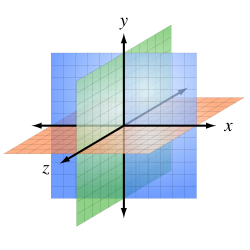
A right-handed three-dimensional Cartesian coordinate system used to indicate positions in space

Space is a three-dimensional continuum containing positions and directions.[1] In classical physics, physical space is often conceived in three linear dimensions. Modern physicists usually consider it, with time, to be part of a boundless four-dimensional continuum known as spacetime.[2] The concept of space is considered to be of fundamental importance to an understanding of the physical universe. However, disagreement continues between philosophers over whether it is itself an entity, a relationship between entities, or part of a conceptual framework.

In the 19th and 20th centuries mathematicians began to examine geometries that are non-Euclidean, in which space is conceived as curved, rather than flat, as in the Euclidean space. According to Albert Einstein's theory of general relativity, space around gravitational fields deviates from Euclidean space.[3] Experimental tests of general relativity have confirmed that non-Euclidean geometries provide a better model for the shape of space.[citation needed]

Philosophy of space

[edit]

Debates concerning the nature, essence and the mode of existence of space date back to antiquity; namely, to treatises like the Timaeus of Plato, or Socrates in his reflections on what the Greeks called khôra (i.e. "space"), or in the Physics of Aristotle (Book IV, Delta) in the definition of topos (i.e. place), or in the later "geometrical conception of place" as "space qua extension" in the Discourse on Place (Qawl fi al-Makan) of the 11th-century Arab polymath Alhazen.[4] Many of these classical philosophical questions were discussed in the Renaissance and then reformulated in the 17th century, particularly during the early development of classical mechanics.

Isaac Newton viewed space as absolute, existing permanently and independently of whether there was any matter in it.[5] In contrast, other natural philosophers, notably Gottfried Leibniz, thought that space was in fact a collection of relations between objects, given by their distance and direction from one another. In the 18th century, the philosopher and theologian George Berkeley attempted to refute the "visibility of spatial depth" in his Essay Towards a New Theory of Vision. Later, the metaphysician Immanuel Kant said that the concepts of space and time are not empirical ones derived from experiences of the outside world—they are elements of an already given systematic framework that humans possess and use to structure all experiences. Kant referred to the experience of "space" in his Critique of Pure Reason as being a subjective "pure a priori form of intuition".

Galileo

[edit]

Galilean and Cartesian theories about space, matter, and motion are at the foundation of the Scientific Revolution, which is understood to have culminated with the publication of Newton's Principia Mathematica in 1687.[6] Newton's theories about space and time helped him explain the movement of objects. While his theory of space is considered the most influential in physics, it emerged from his predecessors' ideas about the same.[7]

As one of the pioneers of modern science, Galileo revised the established Aristotelian and Ptolemaic ideas about a geocentric cosmos. He backed the Copernican theory that the universe was heliocentric, with a stationary Sun at the center and the planets—including the Earth—revolving around the Sun. If the Earth moved, the Aristotelian belief that its natural tendency was to remain at rest was in question. Galileo wanted to prove instead that the Sun moved around its axis, that motion was as natural to an object as the state of rest. In other words, for Galileo, celestial bodies, including the Earth, were naturally inclined to move in circles. This view displaced another Aristotelian idea—that all objects gravitated towards their designated natural place-of-belonging.[8]

René Descartes

[edit]

Descartes set out to replace the Aristotelian worldview with a theory about space and motion as determined by natural laws. In other words, he sought a metaphysical foundation or a mechanical explanation for his theories about matter and motion. Cartesian space was Euclidean in structure—infinite, uniform and flat.[9] It was defined as that which contained matter; conversely, matter by definition had a spatial extension so that there was no such thing as empty space.[6]

The Cartesian notion of space is closely linked to his theories about the nature of the body, mind and matter. He is famously known for his "cogito ergo sum" (I think therefore I am), or the idea that we can only be certain of the fact that we can doubt, and therefore think and therefore exist. His theories belong to the rationalist tradition, which attributes knowledge about the world to our ability to think rather than to our experiences, as the empiricists believe.[10] He posited a clear distinction between the body and mind, which is referred to as the Cartesian dualism.

Leibniz and Newton

[edit]
Gottfried Leibniz

Following Galileo and Descartes, during the seventeenth century the philosophy of space and time revolved around the ideas of Gottfried Leibniz, a German philosopher–mathematician, and Isaac Newton, who set out two opposing theories of what space is. Rather than being an entity that independently exists over and above other matter, Leibniz held that space is no more than the collection of spatial relations between objects in the world: "space is that which results from places taken together".[11] Unoccupied regions are those that could have objects in them, and thus spatial relations with other places. For Leibniz, then, space was an idealised abstraction from the relations between individual entities or their possible locations and therefore could not be continuous but must be discrete.[12] Space could be thought of in a similar way to the relations between family members. Although people in the family are related to one another, the relations do not exist independently of the people.[13] Leibniz argued that space could not exist independently of objects in the world because that implies a difference between two universes exactly alike except for the location of the material world in each universe. But since there would be no observational way of telling these universes apart then, according to the identity of indiscernibles, there would be no real difference between them. According to the principle of sufficient reason, any theory of space that implied that there could be these two possible universes must therefore be wrong.[14]

Isaac Newton

Newton took space to be more than relations between material objects and based his position on observation and experimentation. For a relationist there can be no real difference between inertial motion, in which the object travels with constant velocity, and non-inertial motion, in which the velocity changes with time, since all spatial measurements are relative to other objects and their motions. But Newton argued that since non-inertial motion generates forces, it must be absolute.[15] He used the example of water in a spinning bucket to demonstrate his argument. Water in a bucket is hung from a rope and set to spin, starts with a flat surface. After a while, as the bucket continues to spin, the surface of the water becomes concave. If the bucket's spinning is stopped then the surface of the water remains concave as it continues to spin. The concave surface is therefore apparently not the result of relative motion between the bucket and the water.[16] Instead, Newton argued, it must be a result of non-inertial motion relative to space itself. For several centuries the bucket argument was considered decisive in showing that space must exist independently of matter.

Kant

[edit]
Immanuel Kant

In the eighteenth century the German philosopher Immanuel Kant published his theory of space as "a property of our mind" by which "we represent to ourselves objects as outside us, and all as in space" in the Critique of Pure Reason[17] On his view the nature of spatial predicates are "relations that only attach to the form of intuition alone, and thus to the subjective constitution of our mind, without which these predicates could not be attached to anything at all."[18] This develops his theory of knowledge in which knowledge about space itself can be both a priori and synthetic.[19] According to Kant, knowledge about space is synthetic because any proposition about space cannot be true merely in virtue of the meaning of the terms contained in the proposition. In the counter-example, the proposition "all unmarried men are bachelors" is true by virtue of each term's meaning. Further, space is a priori because it is the form of our receptive abilities to receive information about the external world. For example, someone without sight can still perceive spatial attributes via touch, hearing, and smell. Knowledge of space itself is a priori because it belongs to the subjective constitution of our mind as the form or manner of our intuition of external objects.

Non-Euclidean geometry

[edit]
Spherical geometry is similar to elliptical geometry. On a sphere (the surface of a ball) there are no parallel lines.

Euclid's Elements contained five postulates that form the basis for Euclidean geometry. One of these, the parallel postulate, has been the subject of debate among mathematicians for many centuries. It states that on any plane on which there is a straight line L1 and a point P not on L1, there is exactly one straight line L2 on the plane that passes through the point P and is parallel to the straight line L1. Until the 19th century, few doubted the truth of the postulate; instead debate centered over whether it was necessary as an axiom, or whether it was a theory that could be derived from the other axioms.[20] Around 1830 though, the Hungarian János Bolyai and the Russian Nikolai Ivanovich Lobachevsky separately published treatises on a type of geometry that does not include the parallel postulate, called hyperbolic geometry. In this geometry, an infinite number of parallel lines pass through the point P. Consequently, the sum of angles in a triangle is less than 180° and the ratio of a circle's circumference to its diameter is greater than pi. In the 1850s, Bernhard Riemann developed an equivalent theory of elliptical geometry, in which no parallel lines pass through P. In this geometry, triangles have more than 180° and circles have a ratio of circumference-to-diameter that is less than pi.

Type of geometry Number of parallels Sum of angles in a triangle Ratio of circumference to diameter of circle Measure of curvature
Hyperbolic Infinite < 180° > π < 0
Euclidean 1 180° π 0
Elliptical 0 > 180° < π > 0

Gauss and Poincaré

[edit]
Carl Friedrich Gauss
Henri Poincaré

Although there was a prevailing Kantian consensus at the time, once non-Euclidean geometries had been formalised, some began to wonder whether or not physical space is curved. Carl Friedrich Gauss, a German mathematician, was the first to consider an empirical investigation of the geometrical structure of space. He thought of making a test of the sum of the angles of an enormous stellar triangle, and there are reports that he actually carried out a test, on a small scale, by triangulating mountain tops in Germany.[21]

Henri Poincaré, a French mathematician and physicist of the late 19th century, introduced an important insight in which he attempted to demonstrate the futility of any attempt to discover which geometry applies to space by experiment.[22] He considered the predicament that would face scientists if they were confined to the surface of an imaginary large sphere with particular properties, known as a sphere-world. In this world, the temperature is taken to vary in such a way that all objects expand and contract in similar proportions in different places on the sphere. With a suitable falloff in temperature, if the scientists try to use measuring rods to determine the sum of the angles in a triangle, they can be deceived into thinking that they inhabit a plane, rather than a spherical surface.[23] In fact, the scientists cannot in principle determine whether they inhabit a plane or sphere and, Poincaré argued, the same is true for the debate over whether real space is Euclidean or not. For him, which geometry was used to describe space was a matter of convention.[24] Since Euclidean geometry is simpler than non-Euclidean geometry, he assumed the former would always be used to describe the 'true' geometry of the world.[25]

Einstein

[edit]
Albert Einstein

In 1905, Albert Einstein published his special theory of relativity, which led to the concept that space and time can be viewed as a single construct known as spacetime. In this theory, the speed of light in vacuum is the same for all observers—which has the result that two events that appear simultaneous to one particular observer will not be simultaneous to another observer if the observers are moving with respect to one another. Moreover, an observer will measure a moving clock to tick more slowly than one that is stationary with respect to them; and objects are measured to be shortened in the direction that they are moving with respect to the observer.

Subsequently, Einstein worked on a general theory of relativity, which is a theory of how gravity interacts with spacetime. Instead of viewing gravity as a force field acting in spacetime, Einstein suggested that it modifies the geometric structure of spacetime itself.[26] According to the general theory, time goes more slowly at places with lower gravitational potentials and rays of light bend in the presence of a gravitational field. Scientists have studied the behaviour of binary pulsars, confirming the predictions of Einstein's theories.[citation needed] Non-Euclidean geometry is usually used to describe spacetime.[citation needed]

Mathematics

[edit]

In modern mathematics spaces are defined as sets with some added structure. They are typically topological spaces, in which a concept of neighbourhood is defined, frequently by means of a distance (metric spaces). The elements of a space are often called points, but they can have other names such as vectors in vector spaces and functions in function spaces.

Physics

[edit]

Space is one of the few fundamental quantities in physics, meaning that it cannot be defined via other quantities because nothing more fundamental is known at the present. On the other hand, it can be related to other fundamental quantities. Thus, similar to other fundamental quantities (like time and mass), space can be explored via measurement and experiment.

Today, our three-dimensional space is viewed as embedded in a four-dimensional spacetime, called Minkowski space (see special relativity). The idea behind spacetime is that time is hyperbolic-orthogonal to each of the three spatial dimensions.

Relativity

[edit]

Before Albert Einstein's work on relativistic physics, time and space were viewed as independent dimensions. Einstein's discoveries showed that due to relativity of motion our space and time can be mathematically combined into one object–spacetime. It turns out that distances in space or in time separately are not invariant with respect to Lorentz coordinate transformations, but distances in Minkowski space along spacetime intervals are—which justifies the name.

In addition, time and space dimensions should not be viewed as exactly equivalent in Minkowski space. One can freely move in space but not in time. Thus, time and space coordinates are treated differently both in special relativity (where time is sometimes considered an imaginary coordinate) and in general relativity (where different signs are assigned to time and space components of spacetime metric).

Furthermore, in Einstein's general theory of relativity, it is postulated that spacetime is geometrically distorted – curved – near to gravitationally significant masses.[27]

One consequence of this postulate, which follows from the equations of general relativity, is the prediction of moving ripples of spacetime, called gravitational waves. While indirect evidence for these waves has been found (in the motions of the Hulse–Taylor binary system, for example) experiments attempting to directly measure these waves are ongoing at the LIGO and Virgo collaborations. LIGO scientists reported the first such direct observation of gravitational waves on 14 September 2015.[28][29]

Cosmology

[edit]

Relativity theory leads to the cosmological question of what shape the universe is, and where space came from. It appears that space was created in the Big Bang, 13.8 billion years ago[30] and has been expanding ever since. The overall shape of space is not known, but space is known to be expanding very rapidly due to the cosmic inflation.

Spatial measurement

[edit]

The measurement of physical space has long been important. Although earlier societies had developed measuring systems, the International System of Units, (SI), is now the most common system of units used in the measuring of space, and is almost universally used.

Currently, the standard space interval, called a standard meter or simply meter, is defined as the distance traveled by light in vacuum during a time interval of exactly 1/299,792,458 of a second. This definition coupled with present definition of the second is based on the special theory of relativity in which the speed of light plays the role of a fundamental constant of nature.

Geographical space

[edit]

Geography is the branch of science concerned with identifying and describing places on Earth, utilizing spatial awareness to try to understand why things exist in specific locations. Cartography is the mapping of spaces to allow better navigation, for visualization purposes and to act as a locational device. Geostatistics apply statistical concepts to collected spatial data of Earth to create an estimate for unobserved phenomena.

Geographical space is often considered as land, and can have a relation to ownership usage (in which space is seen as property or territory). While some cultures assert the rights of the individual in terms of ownership, other cultures will identify with a communal approach to land ownership, while still other cultures such as Australian Aboriginals, rather than asserting ownership rights to land, invert the relationship and consider that they are in fact owned by the land. Spatial planning is a method of regulating the use of space at land-level, with decisions made at regional, national and international levels. Space can also impact on human and cultural behavior, being an important factor in architecture, where it will impact on the design of buildings and structures, and on farming.

Ownership of space is not restricted to land. Ownership of airspace and of waters is decided internationally. Other forms of ownership have been recently asserted to other spaces—for example to the radio bands of the electromagnetic spectrum or to cyberspace.

Public space is a term used to define areas of land as collectively owned by the community, and managed in their name by delegated bodies; such spaces are open to all, while private property is the land culturally owned by an individual or company, for their own use and pleasure.

Abstract space is a term used in geography to refer to a hypothetical space characterized by complete homogeneity. When modeling activity or behavior, it is a conceptual tool used to limit extraneous variables such as terrain.

In psychology

[edit]

Psychologists first began to study the way space is perceived in the middle of the 19th century. Those now concerned with such studies regard it as a distinct branch of psychology. Psychologists analyzing the perception of space are concerned with how recognition of an object's physical appearance or its interactions are perceived, see, for example, visual space.

Other, more specialized topics studied include amodal perception and object permanence. The perception of surroundings is important due to its necessary relevance to survival, especially with regards to hunting and self preservation as well as simply one's idea of personal space.

Several space-related phobias have been identified, including agoraphobia (the fear of open spaces), astrophobia (the fear of celestial space) and claustrophobia (the fear of enclosed spaces).

The understanding of three-dimensional space in humans is thought to be learned during infancy using unconscious inference, and is closely related to hand-eye coordination. The visual ability to perceive the world in three dimensions is called depth perception.

In the social sciences

[edit]

Space has been studied in the social sciences from the perspectives of Marxism, feminism, postmodernism, postcolonialism, urban theory and critical geography. These theories account for the effect of the history of colonialism, transatlantic slavery and globalization on our understanding and experience of space and place. The topic has garnered attention since the 1980s, after the publication of Henri Lefebvre's The Production of Space . In this book, Lefebvre applies Marxist ideas about the production of commodities and accumulation of capital to discuss space as a social product. His focus is on the multiple and overlapping social processes that produce space.[31]

In his book The Condition of Postmodernity, David Harvey describes what he terms the "time-space compression." This is the effect of technological advances and capitalism on our perception of time, space and distance.[32] Changes in the modes of production and consumption of capital affect and are affected by developments in transportation and technology. These advances create relationships across time and space, new markets and groups of wealthy elites in urban centers, all of which annihilate distances and affect our perception of linearity and distance.[33]

In his book Thirdspace, Edward Soja describes space and spatiality as an integral and neglected aspect of what he calls the "trialectics of being," the three modes that determine how we inhabit, experience and understand the world. He argues that critical theories in the Humanities and Social Sciences study the historical and social dimensions of our lived experience, neglecting the spatial dimension.[34] He builds on Henri Lefebvre's work to address the dualistic way in which humans understand space—as either material/physical or as represented/imagined. Lefebvre's "lived space"[35] and Soja's "thirdspace" are terms that account for the complex ways in which humans understand and navigate place, which "firstspace" and "Secondspace" (Soja's terms for material and imagined spaces respectively) do not fully encompass.

Postcolonial theorist Homi Bhabha's concept of Third Space is different from Soja's Thirdspace, even though both terms offer a way to think outside the terms of a binary logic. Bhabha's Third Space is the space in which hybrid cultural forms and identities exist. In his theories, the term hybrid describes new cultural forms that emerge through the interaction between colonizer and colonized.[36]

See also

[edit]

References

[edit]
[edit]
Revisions and contributorsEdit on WikipediaRead on Wikipedia
from Grokipedia
Space is the boundless three-dimensional extent in which objects and events occur and have relative position and direction. It serves as the arena for all physical phenomena.[1] In classical physics, Isaac Newton viewed space as an absolute and immutable entity, existing independently of matter and providing a fixed background for motion.[2] Gottfried Wilhelm Leibniz offered a relational alternative, conceiving space as an abstract order derived from the relations among material bodies, without independent substantiality.[2] This foundational debate influenced later theories. Albert Einstein's general relativity integrates space and time into a dynamic four-dimensional spacetime manifold, whose geometry is shaped by the distribution of mass and energy. This has contributed to ongoing discussions in the substantivalism versus relationalism debate.[3] In modern physics, space intersects with quantum mechanics and cosmology, where it may emerge from quantum fields or exhibit expansion driven by dark energy. Reconciling its quantum and gravitational descriptions remains an unresolved challenge.[4]

Physical Foundations

Newtonian Absolute Space

Isaac Newton introduced absolute space in the Scholium to the Definitions of his Philosophiæ Naturalis Principia Mathematica (1687). He described it as an entity that "of its own nature, without relation to anything external, remains always similar and immovable," an eternal, immutable framework independent of bodies or observers.[5] This allowed him to distinguish absolute motion—change of position in absolute space—from relative motion, which depends on reference to other bodies and can mislead the senses.[6] Absolute space thus underpins the identification of inertial frames, where bodies remain at rest or in uniform rectilinear motion unless acted on by forces, as stated in Newton's first law.[5] Newton illustrated absolute motion with the rotating bucket experiment. A bucket of water, suspended by a twisted rope and released, initially lags while the bucket spins; the water then climbs the sides, forming a concave surface. This concavity arises from centrifugal force tied to true circular motion relative to absolute space, not merely to the bucket—even after the water co-rotates with it.[7][8] The experiment shows that dynamical effects like centrifugal force reveal absolute motion, beyond mere relational appearances. This framework enabled precise predictions, including Kepler's elliptical planetary orbits from a central inverse-square gravitational force law, matching observations to within arcminutes for major planets by the late 17th century. Later successes included the 1846 prediction and discovery of Neptune through perturbations in Uranus's orbit calculated with Newtonian gravity.[9] Critics, including Leibniz, argued that absolute rest is unobservable and all detectable motions are relational, making absolute space metaphysically superfluous.[10] Newton defended its necessity for causal realism in mechanics, citing the predictive power of centripetal force analyses in orbital dynamics. In private correspondence with Richard Bentley (1692–1693), he likened space to God's sensorium—an immaterial perceptive medium—while keeping such theological views separate from the Principia's physical claims.[10]

Relativistic Spacetime

Relativistic spacetime unifies space and time into a four-dimensional continuum, as introduced in Albert Einstein's theories of relativity. Special relativity (1905) describes flat Minkowski spacetime with the invariant interval ds² = -c²dt² + dx² + dy² + dz². This leads to the relativity of simultaneity—events simultaneous in one inertial frame are not in another moving at constant velocity—eliminating Newtonian absolute time and space while preserving causality through light cones. General relativity (1915) extends this to curved spacetime, where gravity arises from mass-energy curvature governed by the Einstein field equations: R_μν - (1/2) R g_μν = (8πG/c⁴) T_μν.[11][12] The theory predicts black holes, as in the Schwarzschild metric for spherical masses, where extreme curvature forms an event horizon that traps light. It also predicts gravitational waves—ripples propagating from accelerating masses, such as merging black holes.[13][14] Empirical tests have confirmed these predictions. The 1919 Eddington expedition during a solar eclipse measured starlight deflection by the Sun at approximately 1.61 arcseconds, close to Einstein's predicted 1.75 arcseconds and twice the Newtonian expectation. On September 14, 2015, LIGO detected GW150914, gravitational waves from two merging black holes (~36 and ~29 solar masses), with the inspiral, merger, and ringdown phases matching general relativity templates. These curvature effects are essential in the Global Positioning System (GPS). Satellite clocks gain ~45 microseconds per day from weaker gravitational potential but lose ~7 microseconds from orbital velocity, for a net gain of ~38 microseconds per day. Relativistic corrections are applied before launch to maintain positioning accuracy better than 10 meters; without them, daily errors would exceed 10 kilometers.[15][16] Despite unresolved tensions with quantum mechanics—including singularities and the lack of a complete quantum gravity theory—general relativity preserves strict causality and accurately describes large-scale structure, as validated by observations from the solar system to binary pulsar timings.

Cosmological Scales

The Friedmann–Lemaître–Robertson–Walker (FLRW) metric provides the standard geometric description of space on cosmological scales, derived from general relativity under the assumptions of spatial homogeneity and isotropy. It incorporates a dynamic scale factor a(t)a(t) that governs the expansion or contraction of spatial distances over cosmic time, yielding solutions to Einstein's field equations for a universe filled with matter, radiation, and other energy components. Alexander Friedmann first obtained expanding universe solutions in 1922, followed independently by Georges Lemaître in 1927, with Howard Robertson and Arthur Walker refining the kinematic framework in 1933 and 1937. The metric causally links the observed recession of galaxies to the stretching of spacetime itself rather than peculiar motions, enabling predictions of large-scale structure evolution from initial density perturbations.[17][18] Edwin Hubble's 1929 analysis of Cepheid-calibrated distances revealed a linear relation between redshift and distance, v=H0dv = H_0 d, where H0H_0 approximates 70 km/s/Mpc from modern measurements. The cosmic microwave background (CMB), discovered in 1965 by Arno Penzias and Robert Wilson as uniform 2.725 K blackbody radiation across the sky, serves as relic thermal emission from approximately 380,000 years after the Big Bang. This near-perfect uniformity, with anisotropies at the 10510^{-5} level mapped by satellites like Planck, confirms FLRW-predicted reheating, cooling, and acoustic oscillations in the early plasma that seeded galaxy formation.[19][20][21][22] Observations of Type Ia supernovae in 1998 by the Supernova Cosmology Project and High-Z Supernova Search Team showed distant explosions appearing fainter than expected in a decelerating universe, indicating accelerated expansion driven by dark energy, which comprises about 68% of the energy density. Combined with CMB power spectra and baryon acoustic oscillations (BAO)—a standard ruler of ~150 Mpc imprinted in galaxy clustering from early-universe sound waves—the data support a spatially flat geometry with total density parameter Ωtotal=1.000±0.002\Omega_\mathrm{total} = 1.000 \pm 0.002. BAO measurements from surveys like SDSS independently verify the expansion history and dark energy dominance since z0.6z \approx 0.6.[23][24][25][22][26] The steady-state model, proposed by Hermann Bondi, Thomas Gold, and Fred Hoyle in 1948 and positing constant density through continuous matter creation, was falsified by the CMB's blackbody spectrum and the evolving distribution of quasars and radio sources. Speculative extensions like multiverses lack direct observables and conflict with the CMB's high isotropy (ΔT/T<105\Delta T/T < 10^{-5}), favoring testable uniformity in the observable universe over unverified infinities. Large-scale surveys confirm filamentary structures, voids, and clusters emerging causally from gravitational instability in expanding FLRW spacetime, consistent with Λ\LambdaCDM predictions to scales exceeding 1 Gpc.[27][28][22][29]

Quantum and Emergent Theories

The holographic principle, formulated in the 1990s, links quantum entanglement entropy to emergent spacetime curvature. Refinements in 2025 show that changes in boundary entanglement entropy produce bulk gravitational effects in anti-de Sitter/conformal field theory (AdS/CFT) dualities.[30] The AdS/CFT correspondence equates gravitational dynamics in higher-dimensional anti-de Sitter space with quantum field theories on its boundary. Extensions to de Sitter spacetimes and non-relativistic regimes support the emergence of spacetime from quantum correlations rather than fundamental geometry.[31] These approaches treat entanglement as the primary driver, with quantum information on the boundary reconstructing spatial volume and connectivity in the bulk.[32] In 2025, theories proposed space as emergent from multidimensional time. Physicist Gunther Kletetschka advanced a framework with three primary temporal dimensions, where spatial structure arises secondarily through symmetry breaking and particle interactions. This model predicts testable deviations in high-energy collisions at accelerators.[33] [34] Entropic gravity models derive spacetime curvature from entropy gradients, framing gravitational attraction as quantum relative entropy minimization. These formulations couple matter fields to geometry via entropic actions and recover Einstein's equations in low-energy limits.[35] [36] A related approach treats time and gravity as emerging from high-energy quantum configurations in a spatial substrate, with phase transitions producing temporal flow and metric perturbations that align with cosmic microwave background anisotropies.[37] Support for these ideas comes from resolutions of the black hole information paradox. Emergent spacetime modifies causal horizons—through field vacuum regions or softened singularities—preserving unitarity by encoding infalling information in Hawking radiation via entanglement restructuring, consistent with Page curve results from replica wormhole calculations.[38] [39] These frameworks unify quantum and gravitational regimes without extra dimensions or fine-tuning, emphasizing entanglement-driven causality. Skeptics highlight the lack of direct laboratory evidence, as AdS/CFT simulations provide only indirect support and require astrophysical tests, such as gravitational wave echoes, for confirmation or falsification.[40] [41] The theories thus prioritize testable quantum gravity signatures, including entropy-induced deviations in black hole mergers.

Mathematical Frameworks

Euclidean Geometry

Euclid's Elements, compiled around 300 BCE, established the axiomatic foundation for geometry in flat space. It uses five postulates and common notions to deduce properties of points, lines, planes, triangles, circles, and polyhedra. The parallel postulate states that through a point not on a given line, exactly one parallel line can be drawn (equivalently, if a transversal creates interior angles summing to less than two right angles on one side, the lines meet on that side when extended). These axioms assume an infinite, homogeneous, isotropic space without intrinsic curvature.[42] In 1637, René Descartes advanced Euclidean geometry by developing analytic geometry in La Géométrie, an appendix to Discours de la méthode. He introduced the Cartesian coordinate system, representing points as ordered pairs (or triples in three dimensions) on perpendicular axes. This approach expressed geometric objects algebraically—lines as y=mx+cy = mx + c and conic sections via quadratic equations—and derived distances using the Euclidean metric d=(x2x1)2+(y2y1)2+(z2z1)2d = \sqrt{(x_2 - x_1)^2 + (y_2 - y_1)^2 + (z_2 - z_1)^2}, based on the Pythagorean theorem. These tools facilitated computations in engineering and physics through vector algebra and calculus.[43] In 1899, David Hilbert formalized Euclidean geometry in Grundlagen der Geometrie with 20 axioms grouped into incidence, order, congruence, parallelism, and continuity. This system resolved ambiguities in Euclid's original formulation, such as unstated assumptions about betweenness, and established the independence and relative consistency of the axioms.[44] Euclidean geometry provides accurate predictions for distances, areas, and volumes in terrestrial applications such as surveying and architecture, where empirical measurements confirm theoretical results to high precision over limited scales. However, its assumptions of absolute parallelism and uniformity face empirical challenges in some contexts. The 1887 Michelson-Morley experiment used an interferometer to detect Earth's motion through the luminiferous ether but found a null result, with no fringe shift indicating anisotropic light propagation in a preferred frame. Nevertheless, Euclidean geometry serves as a reliable local approximation for spatial relations in the absence of significant gravitational effects.[45][46]

Non-Euclidean and Differential Geometry

Non-Euclidean geometries arose in the early 19th century by relaxing Euclid's parallel postulate, yielding consistent systems distinct from flat Euclidean space. In 1829, Nikolai Lobachevsky published the first explicit construction of hyperbolic geometry, where infinitely many lines through a point outside a given line are parallel to it, defying Euclidean assumptions. [47] Independently, János Bolyai developed an equivalent absolute geometry in a 1832 appendix to his father's work, emphasizing deductive consistency without reliance on the parallel axiom. [48] These frameworks demonstrated that geometry's foundational properties could vary, paving the way for curved spaces. Differential geometry advanced this foundation with tools for intrinsic curvature measurement. Carl Friedrich Gauss's 1827 Theorema Egregium established that a surface's Gaussian curvature is an intrinsic property, computable solely from distances within the surface, independent of its embedding in higher-dimensional Euclidean space. [49] Bernhard Riemann extended these ideas in his 1854 habilitation lecture, introducing n-dimensional manifolds equipped with metrics allowing variable curvature at each point, generalizing to spaces where local geometry deviates smoothly from flatness. [50] In physical applications, Riemannian geometry models spacetime as a pseudo-Riemannian manifold, where the metric tensor $ g_{\mu\nu} $ defines infinitesimal distances and governs causal structure. [51] Free particles follow geodesics, the shortest paths in this curved geometry, analogous to straight lines in Euclidean space but bent by mass-energy concentrations. [52] This framework underpins general relativity, resolving Newtonian limitations in strong fields. Empirical validation includes the precession of Mercury's perihelion, observed at approximately 574 arcseconds per century, with general relativity predicting an additional 43 arcseconds beyond Newtonian calculations accounting for planetary perturbations, matching measurements to within observational error. [53] Such precision in gravitational phenomena affirms the causal role of spacetime curvature, though the formalism's coordinate complexity challenges intuitive visualization compared to flat-space models.[54]

Abstract and Topological Spaces

Abstract spaces generalize mathematical structures beyond metric or geometric constraints, emphasizing properties invariant under continuous deformations. Topological spaces, formalized by Felix Hausdorff in 1914, define continuity through open sets satisfying axioms for arbitrary unions, finite intersections, and inclusion of the empty set and whole space. This enables the study of proximity without distance metrics.[55] Key examples include Hausdorff spaces, where distinct points have disjoint open neighborhoods, supporting analysis of topological invariants like connectivity. Hilbert spaces extend these ideas to infinite dimensions as complete inner product spaces, providing the framework for quantum mechanical wave functions as formalized by John von Neumann in the late 1920s.[56] They underpin spectral theory, where eigenvalues predict observable probabilities, validated empirically by atomic spectra matching Schrödinger equation solutions to within parts per million. Algebraic topology classifies spaces via homology groups, introduced by Henri Poincaré in 1895 using chain complexes and Betti numbers to detect holes and connectivity invariants.[57] Homeomorphisms—bijective continuous maps with continuous inverses—preserve these topological properties, including open set structures, thereby maintaining paths and limits in continuous dynamical systems.[58] Classification theorems include the complete determination of compact surfaces up to homeomorphism by genus, Euler characteristic, and orientability, established through cutting and gluing constructions.[59] Recent advances in positive geometries, explored in 2025 workshops, employ polytopal structures with canonical forms to unify scattering amplitudes in particle physics, producing exact cross-section predictions verifiable against LHC data at TeV scales.[60] Despite criticisms of excessive abstraction and challenges in embedding high-dimensional topologies into observable spacetime, these frameworks remain indispensable in chaos theory. Topological conjugacy classifies strange attractors, enabling qualitative predictions of sensitive dependence on initial conditions in turbulent flows and planetary orbits.[61] Smale's horseshoe map illustrates this utility, preserving topological entropy under homeomorphisms and exhibiting chaotic dynamics through conjugacy to a symbolic shift map.[62]

Philosophical Conceptions

Ancient and Early Modern Views

In ancient Greek philosophy, Aristotle (384–322 BCE) viewed space as a plenum rather than an independent void. He defined place as the innermost boundary of the containing body and held that natural motion arises from bodies' inherent tendencies to seek specific locations, such as elements moving to their natural places in a filled cosmos that abhors vacuum.[2] This plenum theory influenced later ideas, though it lacked empirical support for absolute continuity.[63] In contrast, atomists such as Democritus (c. 460–370 BCE) and Leucippus proposed an infinite void alongside indivisible atoms, enabling motion through empty space and atomic collisions to form compounds—a mechanistic view that resolved Parmenides' paradoxes of change but remained unverified by direct observation until much later.[64] Early modern thinkers turned to empirical tests of motion to examine spatial relations. In his 1632 Dialogue Concerning the Two Chief World Systems, Galileo Galilei articulated the relativity principle: observers in uniform motion cannot distinguish their state from rest through local experiments, such as drops of water or butterflies in a closed ship. This focus on observable effects challenged the Aristotelian plenum and emphasized inertial motion over absolute spatial frameworks.[65] René Descartes, in his 1644 Principles of Philosophy, revived mechanistic plenum theory, asserting that extension is matter in vortical motion and no empty space exists, with celestial bodies carried by swirling subtle matter around suns. This model explained orbits but failed to account for the precise elliptical paths observed empirically.[66] The 1715–1716 Leibniz-Clarke correspondence crystallized the debate between relational and absolute space. Gottfried Wilhelm Leibniz argued that space is merely the order of coexistences among bodies, lacking independent reality and rendering absolute space superfluous or idolatrous. Samuel Clarke defended Newtonian substantivalism, invoking God's sensorium and inertial effects distinguishable from relative motion. Empirical critiques—such as the undetectability of uniform translation in isolated systems—favored relational utility, despite absolute space's mathematical convenience in dynamics.[2] By the 19th century, developments in geometry began to question Euclidean assumptions. Carl Friedrich Gauss, in the 1820s, privately explored curved surfaces yielding non-Euclidean metrics and recognized geometry's independence from the parallel postulate. Later, Henri Poincaré (1880s–1890s) treated spatial conventions as empirical hypotheses testable against physical laws, prioritizing causal predictions over a priori idealism and foreshadowing experiential validation of spatial structure.[67][68] These insights, grounded in rigorous measurement rather than metaphysical fiat, underscored the role of motion experiments in constraining philosophical claims about space's intrinsic geometry.[69]

Substantivalism vs. Relationalism

Substantivalism holds that space exists as an independent entity, distinct from the matter it contains, serving as a fixed background for motion. Isaac Newton defended this position with his bucket experiment: water in a rotating bucket climbs the sides due to absolute rotation relative to space itself, not merely relative to surrounding bodies. This demonstrates absolute acceleration against a substantive spatial frame, enabling substantivalism to explain inertial forces without invoking external matter distributions. Relationalism denies independent existence to space, viewing it instead as the set of spatial relations among material objects alone. Gottfried Wilhelm Leibniz argued that space arises from the order of coexistences among bodies, favoring ontological economy by eliminating superfluous absolute structures.[70] Ernst Mach extended this idea in the 1870s, proposing that inertial frames derive from the global distribution of matter—an insight that influenced Albert Einstein's development of general relativity through the equivalence principle. Yet pure relationalism struggles to account for absolute rotational effects without retaining some substantival elements.[71] In general relativity, Einstein's hole argument exposes tensions between the views. Diffeomorphism invariance permits coordinate freedom, suggesting relationalism, but avoiding indeterminism—where identical matter distributions produce different metric fields in a matter-free "hole"—requires substantivalists to treat spacetime points as real, endowed with intrinsic structure.[72] Empirical evidence supports substantivalism. The Gravity Probe B mission (2004–2011) measured frame-dragging at –37.2 ± 7.2 milliarcseconds per year, confirming spacetime's substantive response to rotating masses as a form of torsion rather than a purely relational adjustment.[73] Contemporary discussions in quantum gravity, as of 2024–2025, probe spacetime's materiality through theories like loop quantum gravity, where geometry emerges from relational spin networks. Empirical constraints and hole-argument considerations nevertheless favor hybrid structural realism: spacetime possesses real relational structure without complete independence from matter. This approach retains relational parsimony while preserving substantivalism's capacity to explain non-local effects such as acceleration. Pure relationalism fails to fully accommodate verified phenomena like frame-dragging, underscoring substantivalism's explanatory strength.[74][75]

Kantian and Post-Einstein Perspectives

![Immanuel Kant portrait c1790.jpg][float-right] Immanuel Kant, in his Critique of Pure Reason (1781), described space as an a priori form of sensible intuition, independent of experience and necessary for organizing all outer perceptions. Under transcendental idealism, space enables geometry as synthetic a priori knowledge with an innate Euclidean structure. Kant regarded space as phenomenal rather than noumenal, aligning it with Newtonian absolute space. General relativity, formulated in November 1915, challenged Kant's fixed a priori conception by showing spatial geometry to be dynamic, curved by mass-energy, and observer-dependent. Arthur Eddington's 1919 solar eclipse observations confirmed light deflection consistent with relativistic predictions, contradicting Euclidean invariance. Later experiments, including the 1959 Pound-Rebka test of gravitational redshift and the 1971 Hafele-Keating clock comparisons, supported observer-dependent spacetime metrics. GPS systems require general relativistic corrections—about 38 microseconds of time dilation daily—to achieve meter-level accuracy, demonstrating curvature over intuitive fixed space. These results show spatial relations depend on physical conditions and causal interactions rather than innate forms, shifting emphasis toward empirically validated models over strict apriorism. Post-Einstein philosophers, such as Hans Reichenbach in The Philosophy of Space and Time (1928), advanced conventionalism. Reichenbach argued that geometric conventions remain partly underdetermined by empirical facts, combining objective physical realities with conventional choices. This view integrates empirical content into foundational assumptions, favoring falsifiable frameworks over unfalsifiable a priori intuitions. Euclidean priors support everyday cognition but fail in strong fields, necessitating relativistic adjustments as in GPS. Contemporary approaches in quantum gravity further question primordial space. The AdS/CFT correspondence, proposed by Maldacena in 1997, implies bulk space emerges from lower-dimensional conformal field theory via quantum entanglement, consistent with black hole entropy matching boundary degrees of freedom. Simulations in 2024–2025 using tensor networks reconstruct emergent geometries from entangled states, emphasizing causal structures over Kantian a prioris. Apriorism retains heuristic value for flat-space approximations at everyday scales, where relativistic effects fall below 10^{-6} precision. Gravitational wave detections, starting with LIGO's 2015 binary merger signals, align with curved propagators, reinforcing testable realism against views minimizing objective metrics.

Measurement and Empirics

Techniques of Spatial Measurement

Spatial measurement techniques use empirical methods based on observable phenomena, such as angular observations and signal propagation times, to determine distances and positions. The meter, the SI unit of length, was defined in 1791 by the French Academy of Sciences as one ten-millionth of the distance from the North Pole to the equator along the Paris meridian, based on astronomical and geodetic surveys. This definition tied the unit to Earth's geometry but was later refined due to measurement limitations. In 1983, the General Conference on Weights and Measures redefined the meter as the distance light travels in vacuum in exactly 1/299,792,458 of a second, anchoring it to the constant speed of light.[76][77] Classical large-scale measurements relied on triangulation, which calculates distances by measuring angles in networks of triangles from known baselines. Willebrord Snellius pioneered systematic triangulation in 1615–1617, measuring a meridian arc in the Netherlands with chained triangles and theodolites, achieving accuracy sufficient for regional mapping and laying groundwork for national surveys.[78] These methods supported accurate cartography, as seen in 19th-century geodetic surveys such as the U.S. Transcontinental Arc of Triangulation (1871–1890s), which spanned continents using invar tapes and astronomical fixes with positional errors under 1:100,000.[79] Modern techniques extend these principles with electromagnetic signals for precise ranging. Radar measures distances by bouncing radio waves off targets and timing the round-trip delay, as in early post-World War II Venus ranging experiments that determined its distance to within 100 km.[80] Laser interferometry detects phase shifts in split light beams to achieve sub-wavelength precision; LIGO, operational since 2015, measures spacetime strains as small as 10^{-18} meters over 4 km baselines, calibrated to known laser frequencies.[81] Satellite systems like GPS use atomic clocks and signal timing for global positioning. Receivers calculate positions by measuring propagation delays from synchronized satellite signals, achieving about 7 meters horizontal accuracy under open-sky conditions, with errors traceable to cesium fountain clocks stable to 10^{-16}.[82] These approaches rely on repeatable validations—angles through optics, distances through timed light or radio paths. Empirical limits stem from quantum and relativistic effects. Interferometers reach atomic scales (~10^{-10} m), but the Planck length (~1.62 × 10^{-35} m) represents a theoretical boundary where spacetime fluctuations prevent classical measurement, as smaller probes would require energies sufficient to form black holes according to quantum gravity estimates. Practical limits thus arise from Heisenberg uncertainty, with LIGO representing the current extreme in macroscopic spatial detection.

Empirical Validation and Limits

General relativity provides the empirically validated framework for macroscopic spacetime geometry, with predictions confirmed by precise observations. Einstein's 1915 derivation using the field equations explained the anomalous 43 arcseconds per century precession in Mercury's perihelion, resolving a Newtonian discrepancy observed since the 19th century.[83] The 1919 solar eclipse expeditions measured starlight deflection by the Sun's gravity at 1.75 arcseconds, matching GR's prediction and distinguishing it from Newtonian expectations.[83] Gravitational wave detections further affirm GR's causal structure of spacetime. LIGO's 2016 observation of GW150914, a binary black hole merger, produced waveforms aligning with GR simulations, including post-merger ringdown frequencies.[84] The Event Horizon Telescope's April 2019 image of the M87 supermassive black hole revealed a shadow diameter consistent with GR's event horizon for a 6.5 billion solar mass object, providing visual evidence of inescapable spacetime regions.[85] Empirical limits arise at regimes where GR predicts breakdowns without quantum integration. Black hole singularities, points of infinite density hidden by event horizons, defy observation, as no signals escape to test divergence claims.[86] Quantum foam—hypothesized Planck-scale (~1.6 × 10^{-35} m) fluctuations in spacetime geometry—remains undetectable, beyond current interferometers like LIGO (sensitive to ~10^{-19} m strains) or cosmic microwave background probes. As of 2025, debates over spacetime discreteness in loop quantum gravity versus string theory's continuous higher dimensions lack falsifiable tests, with no deviations from GR observed in black hole mergers or high-energy cosmic rays.[87] These frontiers underscore reliance on indirect, classical validations over speculative quantum regimes.

Human Cognition and Application

Psychological Perception of Space

Human spatial perception constructs representations from sensory inputs through cognitive processes that often deviate from objective geometry due to neural mechanisms shaped by evolutionary pressures. In the 1920s, Gestalt psychologists Max Wertheimer, Wolfgang Köhler, and Kurt Koffka developed principles of perceptual organization—such as proximity, similarity, and closure—that explain how the brain groups visual elements into coherent wholes, prioritizing holistic patterns over isolated features for rapid environmental interpretation. These principles show that spatial perception is an active synthesis rather than a passive reflection of external layout, resolving ambiguous stimuli into stable forms, as seen in figure-ground segregation.[88][89] Research into neural mechanisms advanced with the 1971 discovery of hippocampal place cells by John O'Keefe and Jonathan Dostrovsky, who identified neurons in freely moving rats that fire selectively when the animal occupies specific locations, forming a cognitive map independent of sensory modality. This allocentric representation—tied to external landmarks rather than egocentric body position—enables flexible navigation and memory retrieval, as recognized by O'Keefe's 2014 Nobel Prize. Human fMRI studies confirm hippocampal activation during virtual navigation tasks, with BOLD signals correlating to route planning and landmark integration, linking spatial context to episodic memory.[90][91][92][93] Optical illusions highlight perceptual distortions. The Ames room, constructed by Adelbert Ames Jr. in 1946, uses trapezoidal architecture and monocular peephole viewing to induce misperceived relative sizes, with distant figures appearing gigantic due to overapplication of size constancy assumptions from typical Euclidean scenes. Such illusions refute naive realism, showing that spatial judgments rely on probabilistic heuristics calibrated for survival in terrestrial habitats, where horizons approximate flatness and Earth's curvature is imperceptible, leading to biases like underestimating planetary sphericity.[94][95] These mechanisms provide adaptive advantages, such as efficient obstacle avoidance and foraging, but produce systematic errors when extrapolated beyond evolutionary niches. For example, habitual reliance on GPS has been linked to reduced hippocampal grey matter volume, impairing allocentric mapping.[96] Empirical neuroscience emphasizes verifiable neural correlates—such as specific firing patterns and hemodynamic responses—over subjective qualia, which lack causal explanatory power and risk conflation with introspective confabulation. It focuses instead on reproducible causal chains from sensory afferents to behavioral outputs.[97]

Geographical and Navigational Space

Ferdinand Magellan's expedition departed Spain in 1519 and completed the first circumnavigation of Earth. The surviving ship Victoria, under Juan Sebastián Elcano, returned in 1522 after sailing approximately 60,000 km westward, regaining the same longitude and confirming Earth's sphericity through consistent celestial observations.[98] This voyage showed that Earth's surface forms a continuous curved sphere, enabling later navigation based on measured distances and directions.[99] In 1569, Gerardus Mercator developed a conformal cylindrical projection that renders rhumb lines—paths of constant compass bearing—as straight lines on flat maps, simplifying maritime course plotting despite Earth's spherical shape.[100] The projection distorts areas, exaggerating sizes near the poles; for example, Greenland appears comparable to Africa on some maps, though Africa's area (30.37 million km²) exceeds Greenland's (2.16 million km²) by a factor of about 14.[101] It remains widely used in aviation and sailing, where preserving angles outweighs accurate area representation.[102] The Global Positioning System (GPS), initiated by the U.S. Department of Defense in 1973 and fully operational in 1995, uses 24–32 satellites orbiting at about 20,200 km altitude. Positions are computed via trilateration of microwave signals, achieving civilian accuracies under 10 meters.[103] [99] GPS requires relativity corrections: general relativity accounts for gravitational time dilation (+45 microseconds per day on satellites relative to Earth surface clocks), while special relativity accounts for velocity-induced slowing (–7 microseconds per day), yielding a net advance of 38 microseconds per day for clock synchronization.[15] [104] Satellite altimetry, using radar from missions such as TOPEX/Poseidon (launched 1992) and the Jason series, measures sea level to map the geoid—the equipotential surface approximating Earth's gravity field. These measurements confirm Earth's oblate spheroid shape, with an equatorial bulge of about 21 km, quantifying curvature effects on surface distances and orientations.[105] The resulting data support navigational corrections for refraction and tides, linking topography to precise routing and mapping.[106]

Social and Cultural Interpretations

Frameworks in Social Sciences

In economics and sociology, spatial frameworks analyze location-based patterns in human activity, such as settlement hierarchies and resource flows. These approaches use empirical data to model influences like transportation costs and market access, favoring quantifiable regularities over interpretive accounts. Tools such as geographic information systems (GIS) help test predictions against observed distributions of populations and economic exchanges. For example, central place theory, developed by Walter Christaller in his 1933 work Die zentralen Orte in Süddeutschland, posits that settlements form a nested hierarchy in which higher-order centers supply specialized goods and services to hexagonal market areas, minimizing transport distances on an isotropic plain with uniform demand. The theory predicts specific ratios, such as 1:3 for lower- to higher-order places under the marketing principle. Modern GIS analyses of urban sprawl and mobility data reveal hierarchical patterns in contemporary settlement systems that align with these spatial efficiencies.[107][108] Trade models incorporate spatial decay, in which interaction intensities decline with distance due to rising transport and coordination costs. This effect is formalized in the gravity equation, where bilateral trade flows XijX_{ij} between regions ii and jj are proportional to their economic masses (such as GDP) and inversely proportional to distance dijd_{ij} raised to an elasticity typically estimated at 1 to 2. Meta-analyses confirm distance decay as a consistent pattern across datasets, with a doubling of distance typically reducing trade by 20–50% due to tangible frictions. Historical evidence from the 19th-century United States illustrates this effect: railway expansions cut freight costs by factors of 5 to 10 compared to wagon haulage, dropping wheat shipping rates from $0.10 per ton-mile pre-rail to under $0.02 in many corridors post-1850, thereby integrating markets and increasing trade volumes.[109][110][111] Spatial econometrics builds on these models by incorporating locational interdependence into regression analyses, addressing spatial autocorrelation through spatial lag models (capturing endogenous interactions) and spatial error models (correcting for unobserved heterogeneity). These techniques produce unbiased estimates of direct effects (such as local policy impacts) and indirect spillovers (such as regional agglomeration benefits). Ignoring spatial structure can bias standard OLS estimates by 20–50% in studies of urban clusters and resource distributions, making these methods valuable for rigorous policy evaluations grounded in geospatial data.[112][113]

Critiques of Constructivism

Critiques of social constructivism in spatial theory highlight the dominance of empirical physical constraints over claims that space is primarily shaped by power relations or ideological narratives. Foucault's heterotopias—sites such as prisons, gardens, or ships that reflect and contest societal norms through power and exclusion—exemplify constructivist approaches.[114] Yet this framework overlooks the universal action of gravitational forces, which operate regardless of social structures. Satellite gravimetry missions like GRACE-FO have mapped Earth's gravity field since 2018, showing consistent Newtonian behavior across diverse terrains and human-modified sites; 2024-2025 data products reveal no deviations linked to localized power dynamics.[115] These measurements show that physical laws impose invariant limits on spatial practices, subjecting heterotopias to the same causal realities as ordinary spaces. Similarly, empirical studies of human migration reveal the primacy of objective geographic barriers over purely constructivist accounts. Global datasets from 2000-2019 indicate that migration flows are channeled by physiographic features like mountain ranges and deserts, which deter movement regardless of ideological framing. The Himalayan barrier, for example, has historically restricted cross-continental flows, with modern analyses attributing route patterns to terrain ruggedness rather than social narratives alone.[116] Geomorphometric indices of elevation and slope predict migration volumes and directions with high accuracy, supporting causal geography over ideologically malleable interpretations.[117] Military conflicts further expose constructivist shortcomings, as terrain frequently overrides social or discursive factors in determining outcomes. Quantitative analyses of civil wars show that rugged terrain prolongs conflicts by facilitating insurgent mobility and impeding conventional forces, with mountainous regions linked to 20-50% longer insurgencies across 20th-century datasets. Historical cases such as the Afghan-Soviet War (1979-1989) and U.S. operations in the Korengal Valley (2006-2010) illustrate how elevation and vegetation dictate tactical success independently of power discourses.[118] In World War II, terrain features like Normandy's hedgerows and coastal cliffs strengthened defensive positions, defying purely relational reinterpretation.[119] While Ernst Mach's relationalism derived inertia from interactions with distant matter—challenging absolute space while preserving objective relations and influencing general relativity's relational spacetime—social constructivism extends this idea to negate physical causality. General relativity retains empirical testability through universal predictions, unlike constructivist views that prioritize discursive power over verifiable constraints. Gravitational tests, including redshift confirmations up to 2024, show no social mediation in fundamental interactions.[120] Spatial theory thus gains from subordinating constructivist relativism to data-driven causal models, as failures to account for terrain effects reveal the limits of denying space's independent reality.

References

User Avatar
No comments yet.