


Community hub
Recent from talks
Contribute something
Nothing was collected or created yet.
Cut flowers
View on Wikipedia


Cut flowers are flowers and flower buds (often with some stem and leaf) that have been cut from the plant bearing it. It is removed from the plant for decorative use. Cut greens are leaves with or without stems added to the cut flowers for contrast and design purposes.
Floral design professionals work at florist shops (floristry) and use their design skills and experience with many types of flowers and greens to create works of art with flowers.
Cut flowers, and to a lesser extent, cut greens, are a significant and international segment of the floral industry. The plants that are grown vary by plant species as well as by climate, cultural practices and the accessibility of worldwide transportation. Professional horticulturists raise the plants specifically for this purpose, in field or glasshouse growing conditions. Boxes of harvested flowers are shipped via air freight throughout the world.
The study of the efficient production, distribution and marketing of floral crops is a branch of horticulture, called floriculture.[1]
Uses
[edit]Flowers brighten and enhance the human environment. Cut flowers and flower arrangements with cut greens bring the outdoors indoors. Many home gardeners harvest flowers from their own gardens, to increase their everyday enjoyment. Garden cut flowers are also used to enhance gatherings of family and friends. These are often enhanced with the addition foliage from other plants.
In some cultures, a major use of cut flowers is for worship; this can be seen especially in south and southeast Asia.
Sometimes the flowers are picked rather than cut, without any significant leaf or stem. Such flowers may be used for wearing in hair, or in a button-hole. Masses of flowers may be used for sprinkling, in a similar way to confetti.
Garlands, wreaths and bouquets are major value added products in many markets.
It is common for cut flowers and cut greens to be placed in a vase. Common uses are informal and formal bouquets in a glass vase for hospital visits, wedding bouquets, wedding arrangements, funeral casket displays, large arrangements in hotel lobbies and party venues, boutonnieres, wreaths, and garlands. Cut flowers are used at flower shows at garden clubs throughout the world and flower competitions at county and state fairs in the U.S. Cut flowers are a common gift for family or friends or just a day brightener on a work station or kitchen table.
Cut flowers and cut greens
[edit]Plants used for cut flowers and cut greens are derived from many plant species and diverse plant families. Cut flower arrangements can include cut stems from annual plants, flower bulbs or herbaceous perennials, cut stems of evergreens or colored leaves, flowers from landscape shrubs, flowers that have been dried or preserved, fruit on tree branches, dried uniquely shaped fruit or stems from plants, unique dried weeds (sometimes painted to add a distinctive touch), etc. These plants come from diverse natural habitats, so different environmental conditions are used to grow them. The cut flower plants that were first used in the development of the floral industry in northern Europe were those adapted to the cool temperatures that occur there. On the other hand, the warmer temperatures of Southeast Asia, led to the development of different plants adapted to those conditions.
The floral industry was primarily local, wherever in the world, until the 1950s. The advent and development of international trade and transportation changed the cut flower segment of the floral industry. Cut flowers could be grown cheaply in a cool or warm region of the world and shipped to markets in population centers anywhere. This started in the cool coastal regions of California but quickly expanded into the mountains of Colombia, Ecuador, Kenya, Ethiopia, China, Mexico, etc., and to distinctive environments in Indonesia, South Africa, Hawaii, Australia, New Zealand, etc. In many of these countries, flower farmers could choose a location for year-round plant production based on the altitude, cooler crops higher in the mountains, warmer crops at lower altitudes and offer work and income to the local population.
This led to an increase in the taxa used as cut flowers across the world. Rare flowers became common, such as these local flowers from the Western Cape seen at a flower show in Clanwilliam, South Africa.


ra.jpg)
Cool temperature plants
[edit]These plants prefer to grow at temperatures of 10 °C (50 °F) to 18 °C (65 °F)
-

-

-

-

-
 Satin Flower - Clarkia amoena 'Grace Rose'


_-_geograph.org.uk_-_3077870.jpg)

.jpg)
Moderate temperature plants
[edit]These plants prefer to grow at temperatures of 15 °C (59 °F) to 24 °C (75 °F)
-
 Hybrid Tea Rose - Rosa 'Lady Diana'
 -

-
 Inca lily - Alstroemeria aurea 'Orange King'
 -

-

-
 Calla - Zantedeschia 'Majestic Red'
 -

-
 Snapdragon - Antirrhinum majus 'Rocket'
 -

-

-

-

-

-

-

-
 Panicled Hydrangea - Hydrangea paniculata 'Limelight'
 -

-

-
 Double flowering Tulip - Tulipa 'Angelique'
 -
 Daffodil - Narcissus pseudonarcissus 'Pyjama Party'
 -

-
 Lavender - Lavendula angustifolia 'Hidcote'
 -

-

-

-
 Cut Greens - Salal - Gaultheria shallon


.jpg)


.jpg)

.jpg)


1.jpg)


Others - Banksia marginata, Chinese Lanterns - Alkekengi, Clematis - Clematis, Cyclamen - Cyclamen persicum, Epacris impressa, Fuchsia - Fuchsia, Freesia - Freesia, Leucodendron, Love-in-a-Mist - Nigella damascena, Pansy - Viola x wittrockiana, Pelargonium, Primrose - Primula, Protea
Warm temperature plants
[edit]These plants prefer to grow at temperatures of 18 °C (65 °F) to 30 °C (86 °F)
-

-

-

-

-

-

-

-

-
 Blazing star - Liatris spicata 'Kobold'
 -

-
 Floss flower - Ageratum houstonianum 'Blue Horizon'
 -

-

-
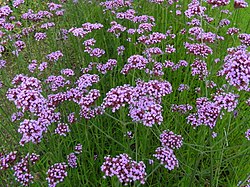
-

-
 Cut Greens - Leatherleaf Fern - Rumohra adiantiformis
 -
 Cut greens - Ti Plant - Cordyline fruticosa


.jpg)

_1.jpg)
ra.jpg)


Others - Begonia, Ylang Ylang - Cananga odorata, Cooktown Orchid - Dendrobium bigibbum, Tasmanian Blue Gum - Eucalyptus globulus, Poinsettia - Euphorbia pulcherima, Gladiolus - Gladiolus, Gumamela - Hibiscus rosa-sinensis, Busy Lizzie - Impatiens, Lobelia - Lobelia cardinalis, Oleander - Nerium oleander, Frangipani - Plumeria rubra, Petunia, Sampaguita - Jasminum sambac, Sturt's Desert Rose - Gossypium sturtianum, Waratah - Telopia specisissima, Royal Bluebell - Wahlenbergia gloriosa
Longevity or postharvest life
[edit]
Flowers removed from the plant remain alive. Respiration and photosynthesis continue, but no longer have a storehouse of sugars to support them. Additionally, the flowers no longer receive water from the roots, yet transpiration continues.
In many countries, cut flowers are a local crop because of their perishable nature. In India, much of the product has a shelf life of only a day. Among these are marigold flowers for garlands and temples, which are typically harvested before dawn, and discarded after use the same day.
The postharvest life or vase life of cut flowers can be several days.[2] The vase life of cut flowers and cut greens can be extended with thoughtful care. This care starts from the moment of harvest and continues until they are enjoyed by a flower consumer. Everyone involved must participate in the, "Floral Chain-of-Life", or the life of the cut flowers and cut greens is reduced.[2][3][4]
Flowers are harvested in the cool part of the day, generally morning, and placed into water as soon as possible to reduce water loss from transpiration.[5] The cut stems go into clean buckets with low pH water as a hydrating solution. Next, the cut stems are refrigerated to slow respiration, photosynthesis and transpiration. Vacuum coolers and hydrocoolers are used for large numbers of flowers on commercial farms. When cold, 2-4 C (36-42 F), the cut stems are sized and graded for shipment. Additionally, most or all of the leaves are removed from the cut flower stems to reduce the cost of shipping and reduce disease issues. The stems stay dry through this process to prevent disease in subsequent storage. The major cut flower types can be packaged and stored dry while other types are stored and shipped in water in a Dutch flower bucket Boxes and pallets of the cut flowers and cut greens are shipped to a far away market, but the brokers and shippers must maintain the correct storage conditions for the flowers.
Cut flowers are conditioned upon arrival at a wholesale florist or retail florist. The flowers are carefully removed from the shipment boxes and placed into low pH water in clean buckets to begin hydration. In the same or later step, the stems are cut under water to remove air bubbles from the xylem vessels in the stems and placed into water with a low pH for hydration and bacteria prevention, a biocide (disinfectant) to reduce bacteria and fungi in the water and a type of sugar (often sucrose) to supply energy to the developing cut flowers.[3][4] The flowers may complete conditioning at room temperature or in a refrigerator depending on the cultivar. Cut flowers and cut greens are kept refrigerated during delivery to the florist or floral designer and to the consumer. Design activities occur at room temperature but floral arrangements are kept refrigerated and hydrated with the floral food solution.
It is important for flower consumers to keep fresh flowers in shade in the car and not allow them to sit in the sun in a hot car. Use clean vases and the flower food available from the florist. The disinfectant in the flower food is especially important. Refill the vase or container with water regularly and re-cut the stems periodically to ensure that there is a fresh surface from which the stems can take up water. Keep flowers away from ceiling fans and air-conditioning vents as this can lead to dehydration and keep flowers away from fresh fruit or vegetables (to reduce the impacts of ethylene from ripening fruit and vegetables). Bacteria and fungi in the water in the vase can easily plug the stems of cut flowers and cut greens, so it is important to use the commercial flower food that includes disinfectants.
Flower vase life can be affected by pre-harvest factors, such as growing conditions, genetic makeup, or post-harvest factors, such as mechanical damage, bacteria or fungi. Vase life also varies across plant species and cultivars.[6] Cut flowers with a short vase life, of less than 5 days, include dahlias, irises, peonies, daffodils, and delphinium; flowers with a medium vase life (6 to 14 days) include marigolds, snapdragons, orchids, and roses; and flowers with a long vase life (2 to 4 weeks) include tulips, carnations, and chrysanthemums.
Chemical treatments that extend vase life are a major component of floriculture research.[7] These include:
- Bud opening development, where buds are harvested early in development then kept in a solution of sucrose, plant hormones, and germicides before they open.
- Pulsing, where flowers are treated with increasing concentrations of sucrose for 16–20 hours at a time.
- Holding or vase solutions, which treat flowers with a mixture of carbohydrates (generally sugar), plant growth regulators, germicides, ethylene inhibitors, mineral salts, and organic acids.[6]
Additives
[edit]The Brooklyn Botanical Garden tested different items that have been claimed to prolong the lives of cut flowers when added to the vase water. These were aspirin, sugar, vitamin pills, vinegar, pennies, and flower food.[8] They found that the best additive for flowers was the retailer-provided "flower food" that is usually given with a bouquet. Flower foods contain an acidifier that lowers the water's pH, disinfectants, and sugar. The sugar replaces the sugar from its roots. The stem unpluggers allow the flower to continue to take up fluids.[9] Sugar alone is almost as effective.
Dried, preserved and everlasting flowers
[edit]Preserved flowers are a common use for cut flowers and some cut florist greens. Panicled hydrangea (Hydrangea paniculata), strawflower (Xerochrysum bracteatum), and lavender (Lavandula angustifolia) can be dried in a vase with no water on a table in an air conditioned kitchen. It is better hang them upside down in a dark air conditioned room; stems are straighter and colors are better. These can be used as a decoration for many months. Additional techniques - use of silica gel, micro sieve, freeze drying, etc. - are available to preserve more tender species.[10]
International trade
[edit]Cut flowers have become a part of international trade and an active economic engine in a number of tropical countries (for instance in Kenya[11]).
Research and Markets has estimated that the cut flower global market will reach a size of US$50.1 Billion by 2030 from its current estimate of US$33.3 Billion for 2022. Roses are projected to increase at a 5.9% compound annual growth rate, while chrysanthemum and gerbera will increase by 5.3% over the next eight years.[12]
Royal FloraHolland in Aalsmeer, Netherlands is the largest flower market in the world. Flowers with a value of over US$4 Billion pass through the market each year. In 2019, the export value of cut flowers was €4.200 Million from the EU, Colombia exports were €1.235 Million, Ecuador exports were €721 Million, Kenya exports were €487 Million and Ethiopia exports were €180 Million, while US exports were only €14 Million compared to €1.052 Million in imports.[13] Union Fleur,[13] a European international flower trade association, represents the interests of Austria, Colombia, Denmark, Ethiopia, Germany, Italy, Kenya, Netherlands, Sweden, Turkey, Uganda, and the United States. Most of Royal FloraHolland exports go to European neighbors.[14][15]
Cut flower exports from China rose from US$71.4 Million in 2011 to US$162.1 Million in 2022, primarily from Yunnan Province where there are 300,000 farmers cultivating 1.5 million hectares of flowers.[16] Overall production is much higher because 90% of flowers are sold in China.[17] Most cut flowers are sold through the Dounan Flower Market in Kunming, Yunnan, China.[18] It is likely that cut flower production in India is similar to China based on the similar population sizes.
In recent decades, with the increasing use of air freight, it has become economic for high value crops to be grown far from their point of sale; the market is usually in industrialized countries. Typical of these is the production of roses in Ecuador and carnations in Colombia,[19][20] mainly for the US market, and production in Kenya[11] and Uganda for the European market. Some countries specialize in especially high value products, such as orchids from Singapore and Thailand.[21]
Cultivation
[edit]Cut flower cultivation is intensive, usually on the basis of greenhouse monocultures, and requires large amounts of highly toxic pesticides, residues of which can often still be found in flower shops on imported flowers. [22][23][24]
As with the production of fruit and vegetables, the industry depends on significant amounts of water, which may be collected and stored by the farm owners. The Patel Dam failure in May 2018, associated with a large Kenyan rose farm, killed dozens of people.
These facts have spurred the development of movements like "Slow Flowers", which propagates sustainable floriculture in the consumer country (U.S., Canada) itself.[25]
See also
[edit]- Floral industry
- Slow Flowers
- List of cut flowers and cut greens
- Flower arrangement
- History of flower arrangement
- Bedding and garden flowers
- House plants - foliage and patio plants
- Potted flowering plants
References
[edit]- ^ Dole, John M; Wilkins, Harold F. (2004). Floriculture: Principles and Species (2nd ed.). Pearson.
{{cite book}}: CS1 maint: multiple names: authors list (link) - ^ a b Stamps, R. H., Greer, L., Ahmad, I., Dole, J. M., Carlson, A. S. (2017). Postharvest Handling of Cut Flowers and Greens: A Practical Guide for Commercial Growers, Wholesalers, and Retailers. United States: Independent Publisher.
{{cite book}}: CS1 maint: multiple names: authors list (link) - ^ a b UMass Extension (August 2016). "Harvesting and Handling Cut Flowers".
- ^ a b Reid, Michael S.; Jiang, Cai-Zhong (2012-09-26), "Postharvest Biology and Technology of Cut Flowers and Potted Plants", Horticultural Reviews, Hoboken, NJ, USA: John Wiley & Sons, Inc., pp. 1–54, doi:10.1002/9781118351871.ch1, ISBN 9781118351871, retrieved 2023-06-22
- ^ Adams, Gretel (June 8, 2022). "Cater to the special needs of flowers at harvest".
- ^ a b Nguyen, Toan Khac; Lim, Jin Hee (2021-10-19). "Do Eco-Friendly Floral Preservative Solutions Prolong Vase Life Better than Chemical Solutions?". Horticulturae. 7 (10): 415. doi:10.3390/horticulturae7100415. ISSN 2311-7524.
- ^ Loyola, C. E., Dole, J. M., & Dunning, R. (2019). "North American specialty cut flower production and postharvest survey". HortTechnology. 29 (3): 338–359. doi:10.21273/HORTTECH04270-19. S2CID 164737153.
{{cite journal}}: CS1 maint: multiple names: authors list (link) - ^ "Additives for cut flowers". Archived from the original on 2013-06-20. Retrieved 2017-07-19.
- ^ Additives for cut flowers
- ^ "Processing of Horticultural Crops:Drying Flowers". FAO Corporate Document Repository. FAO. Retrieved 18 September 2011.
- ^ a b Fredenburgh, Jez (2019). "The 4,000 mile flower delivery".
- ^ Cut Flowers Global Market to Reach $50.1 Billion by 2030: Focus on Aromatherapy & Natural Therapies Fuels Demand for Essential Oils, Driving Cut Flowers Market. | Source: Research and Markets. March 24, 2023 05:48 ET
- ^ a b "Union Fleurs - International Flower Trade Association". 2023.
- ^ "Sectoral Activities Department (SECTOR)". Ilo.org. Archived from the original on 2011-08-10. Retrieved 2011-12-05.
- ^ "Archived copy" (PDF). Archived from the original (PDF) on 2012-06-30. Retrieved 2011-12-05.
{{cite web}}: CS1 maint: archived copy as title (link) - ^ "China | Imports and Exports | World | Cut flowers, flower buds | Value (US$) | 2011 - 2022". TradeEconomy. 2023-05-14.
- ^ "What If China Automated It's Cut-Flower Industry?". 2022.
- ^ "China: A peek inside Kunming's Dounan Flower Market". Floral Daily. 23 Feb 2022.
- ^ Arbeláez, María Angélica, Marcela Meléndez, and Nicolás León "The Emergence of Fresh Cut-Flower Exports in Colombia" In Export Pioneers in Latin America Edited by Charles Sabel et al., Baltimore: Inter-American Development Bank 2012. ISBN 9781597821414
- ^ Austin, James E. 1990. Cut Flower Industry in Colombia (Abridged). Boston: Harvard Business School.
- ^ Thammasiri, K. (2015). "Current Status of Orchid Production in Thailand". Acta Horticulturae (1078): 25–33. doi:10.17660/ActaHortic.2015.1078.2. ISSN 0567-7572. Archived from the original on 2023-11-26. Retrieved 2023-06-24.
- ^ Toumi, Khaoula; Vleminckx, Christiane; van Loco, Joris; Schiffers, Bruno (2016-09-23). "Pesticide Residues on Three Cut Flower Species and Potential Exposure of Florists in Belgium". International Journal of Environmental Research and Public Health. 13 (10). MDPI AG: 943. doi:10.3390/ijerph13100943. ISSN 1660-4601. PMC 5086682. PMID 27669276.
flowers require the use of a wide range of pesticides to control diseases and pests, which can damage production and marketability. Plants and flowers entering into the European market must meet stringent regulations on plant health designed to prevent introduction of some pests or diseases.
- ^ "Pesticides and Cut Flowers". National Wildlife Federation. 2000-06-01. Archived from the original on 2021-04-22. Retrieved 2019-02-13.
Growers of flowers, the most delicate of agricultural crops, are traditionally heavy users of farm chemicals, including some that are highly toxic or suspected to cause cancer.
- ^ Goodman, Joshua (2007-02-12). "Valentine roses get dipped in chemicals - World news - World environment". msnbc.com. Archived from the original on 2020-02-24. Retrieved 2019-02-13.
36 percent of the toxic chemicals applied by Florverde farms in 2005 were listed as "extremely" or "highly" toxic by the World Health Organization.
- ^ "About Us | Slow Flowers". Archived from the original on 2021-08-14. Retrieved 2019-02-13.
External links
[edit]- Cut-Flower Care — How to Make Your Fresh-Cut Flowers Last by Rose G. Edinger, Brooklyn Botanical Garden, Spring 2003, retrieved October 21, 2006
- — What are preserved flowers? Everything you want to know about preserved flowers Archived 2021-01-28 at the Wayback Machine by Floralonly, Albert, published 28, May 2020
| International | |
|---|---|
| National | |

Cut flowers
View on GrokipediaHistorical Development
Ancient Origins and Symbolic Uses
Archaeological evidence indicates that the practice of using cut flowers dates back to the Epipaleolithic period, with floral grave linings discovered in Natufian burials at Raqefet Cave in Mount Carmel, Israel, dated between 13,700 and 11,700 years ago. These consisted of impressions from stems and inflorescences of aromatic plants, including mint (Mentha spp.), sage (Salvia spp.), and oregano (Origanum spp.), deliberately arranged as bedding or decorations within the graves, suggesting intentional harvesting and symbolic placement rather than incidental growth.[8] In ancient Egypt, during the Old Kingdom (c. 2686–2160 BCE), cut flowers were placed in vases as evidenced by tomb paintings and sculptures, marking one of the earliest documented uses for decorative and ritual purposes. By the 18th Dynasty (c. 1540 BCE), depictions in burial scenes show bundled posies of fresh-cut flowers, such as lotus (Nymphaea caerulea) and cornflowers (Centaurea cyanus), used in funerary rites to invoke regeneration and eternal life. The lotus, in particular, symbolized rebirth and the sun's cycle, closing at night and opening at dawn, mirroring Osiris's resurrection myth and placed in tombs to facilitate the deceased's transition to the afterlife.[9][10][11] Ancient Greek practices, influenced by Egyptian traditions, involved cut flowers in wreaths, garlands, and vase arrangements for religious ceremonies, athletic victories, and symposia, with evidence from vase paintings dating to the Archaic period (c. 800–480 BCE). Roses and violets (Viola spp.) were associated with Aphrodite, embodying love and beauty, while laurel (Laurus nobilis) signified victory and purity in rituals honoring Apollo. In Rome, floral crowns and cut-stem bouquets extended these uses to imperial banquets and funerals, where roses symbolized Venus's passion but also secrecy in the phrase sub rosa for confidential matters, as recorded in Pliny the Elder's Natural History (c. 77 CE). These applications highlight flowers' role in denoting fertility, divine favor, and mortality across Mediterranean cultures, grounded in observable botanical behaviors like blooming cycles interpreted through mythological causal frameworks.[12][13]Commercialization in the 19th Century
The commercialization of cut flowers accelerated in the early 19th century with the establishment of dedicated urban flower markets, such as the Marché aux Fleurs in Paris, founded in 1808 on the Île de la Cité to supply fresh flowers and plants to city residents.[14] This market, initiated under Napoleon, transitioned from informal street vending to structured wholesale operations, reflecting growing demand amid urbanization and the Romantic era's emphasis on natural beauty in decor.[15] Similar developments occurred in London, where Covent Garden's Floral Hall opened in 1861, facilitating larger-scale auctions and distribution supported by railway expansions that enabled fresher deliveries from rural growers.[16] By mid-century, technological advances in greenhouse forcing—using heated glass structures—allowed year-round production of staples like roses and carnations, shifting floriculture from seasonal garden hobbies to commercial enterprises.[17] In Britain, the term "florist" evolved from denoting amateur breeders of specialty flowers to exclusively describing commercial growers and sellers of cut stems for urban markets, driven by rising consumption for table arrangements, bouquets, and funerals among the expanding middle class.[16] Continental suppliers in France, Holland, and Belgium exported to London via rail and sea, while domestic areas like Tottenham and Battersea specialized in greenhouse crops.[18] In the United States, commercialization lagged until the late 19th century but gained momentum with rail networks connecting growers in New York, New Jersey, Pennsylvania, Connecticut, and Rhode Island to city wholesalers; by the 1870s, firms relocated to Manhattan's 28th Street district for efficient distribution.[19] Urban florists, facing high real estate costs, adopted bulk wholesale purchasing from exchanges like the New York Cut Flower Company, stocking refrigerators with up to 5,000 cubic feet of inventory and discarding unsold stock daily to minimize waste.[18] Roses (e.g., cultivars 'General Jacqueminot' and 'Marechal Niel') and carnations (e.g., 'Astoria' and 'La France') dominated, with winter stems fetching premiums like 0.75 cents each due to heating costs, while seasonal varieties such as fall chrysanthemums and spring sweet peas filled gaps.[18] This era marked the profession's formalization, with florists creating arranged designs for events, underpinned by the Industrial Revolution's creation of disposable income for non-essential ornamentation.[20]Expansion of Global Trade Post-WWII
Following World War II, the Netherlands rapidly reasserted its position as the epicenter of the global cut flower trade, leveraging established auction systems such as the Aalsmeer flower market, which expanded operations to handle surging volumes amid postwar economic recovery in Western Europe. By the mid-1960s, Dutch exports of cut flowers and bulbs had rebounded strongly, driven by increased consumer demand in prosperous markets like Germany, the United Kingdom, and France, with Amsterdam's Schiphol Airport emerging as a critical node for transatlantic and transpacific shipments starting in that decade.[21][22] This infrastructure facilitated the Netherlands' role not only as a primary producer but also as a re-export hub, processing flowers from emerging suppliers worldwide. Technological advancements in air freight, refrigeration, and post-harvest preservation enabled the trade's globalization by overcoming the perishability of cut flowers, shifting production from temperate consumer regions to equatorial highlands offering year-round daylight, cooler nights, and lower labor costs. In the United States and Europe, local production declined as imports rose, with foreign suppliers capturing over 60% of markets for carnations and chrysanthemums by the 1980s. Colombia's cut flower sector, initiated commercially in the late 1950s and accelerated by U.S.-backed incentives under the 1961 Alliance for Progress, exemplified this transition; exports grew from negligible volumes to a billion-dollar industry by the 2010s, with roses comprising the largest share at $365 million annually by 2015, predominantly destined for the U.S. market.[23][24][25] Ecuador followed a parallel trajectory, with floriculture production commencing in the late 1960s in Andean regions conducive to rose and carnation cultivation, rapidly scaling to become a top global exporter by the 1980s through proximity to U.S. air routes and favorable climates. In Africa, Kenya's industry emerged in the 1970s around Lake Naivasha, capitalizing on similar advantages to supply Europe, achieving a 16.1% global market share by 2024 after steady volume growth from the 1980s onward. These developments transformed the trade from predominantly local and seasonal to a year-round, multi-continental network, with total global exports reaching approximately $10 billion by 2023, underscoring the causal role of logistics innovations and cost arbitrage in displacing higher-cost domestic production in importing nations.[26][27][4]Botanical Varieties and Classification
Dominant Species and Cultivars
Roses (Rosa hybrids, particularly hybrid tea types) dominate the global cut flower market by value, comprising the largest segment due to year-round demand, versatility in arrangements, and premium pricing. In 2024, the roses category led the market, driven by production in regions like Colombia, Ecuador, and Kenya, where cultivars are selected for long stems (over 60 cm), straight growth, and vase life exceeding 10 days.[28][29] Key commercial cultivars include 'Freedom' (red), 'Mercedes' (pink), and 'Akito' (white), bred by breeders like Rosen Tantau for uniformity and disease resistance, enabling high-volume greenhouse production.[30] Chrysanthemums (Chrysanthemum × morifolium), often called mums, rank among the top species by volume, valued for their diverse forms—standards, sprays, and disbuds—and seasonal appeal, especially in autumn markets. Global production emphasizes spray types for filler roles and standards for focal points, with cultivars like 'Anastasia White' and 'Ping Pong Super' favored for compact growth, abundant blooms, and post-harvest durability up to 21 days.[28] These are propagated via cuttings in controlled environments to ensure photoperiodic flowering, supporting exports from the Netherlands and Colombia.[31] Carnations (Dianthus caryophyllus) remain a staple for their longevity (up to 3 weeks in vases) and fragrance, with standard and miniature (spray) types comprising significant trade volumes. Miniature cultivars such as 'Benigna' and 'Jeanne Dionis' excel in production trials for stem strength and color range, including pinks and whites, while standards like those in the Chabaud series offer spicy scent and heat tolerance for field or greenhouse cultivation.[32][33] Demand persists in markets like the US, where they serve as economical alternatives to roses.[34] Gerbera daisies (Gerbera jamesonii) contribute substantially through vivid colors and daisy-like forms, with standard cultivars like 'Festival' and 'Garvinea' series selected for large blooms (7-12 cm diameter) and robust stems suitable for cutting. These perennials, often grown as annuals in hydroponics, provide high yields per plant (up to 100 stems annually) and appeal in mixed bouquets, bolstered by series such as Everlast for uniformity.[35] Other notable species include lilies (Lilium hybrids, e.g., 'Stargazer' Orientals) for fragrance and tulips (Tulipa spp.) for seasonal volume, but they trail the core quartet in consistent commercial dominance.[28]| Species | Key Attributes | Example Cultivars |
|---|---|---|
| Roses (Rosa hybrids) | Long stems, premium value | 'Freedom', 'Akito'[30] |
| Chrysanthemums (C. × morifolium) | Versatile forms, high volume | 'Anastasia White', 'Yeti White'[31] |
| Carnations (D. caryophyllus) | Extended vase life, fragrance | 'Benigna', Chabaud series[32] |
| Gerberas (G. jamesonii) | Bright colors, yield efficiency | 'Festival', 'Everlast'[35] |
Categorization by Climate Adaptation
Cut flowers are classified by their physiological adaptation to prevailing climate conditions, which governs their natural tolerances to temperature extremes, frost, humidity, and seasonal cycles. This categorization informs site selection for open-field production, greenhouse requirements, and breeding efforts to enhance resilience. Temperate-adapted species, thriving in USDA hardiness zones 3-8 with average annual minimum temperatures from -40°C to -7°C, typically necessitate periods of cold exposure (vernalization) for bud initiation and exhibit dormancy during winter. Examples include peonies (Paeonia spp.), which produce abundant stems in zones 3-5 after fall planting and frost protection, yielding blooms in late spring; tulips (Tulipa spp.) and daffodils (Narcissus spp.), bulbous perennials suited to zones 4-7 for early-season cuts via forced indoor cultivation or natural emergence post-chill; delphiniums (Delphinium spp.) and irises (Iris spp.), which leverage moderate summers for tall spikes in zones 5-8.[36] In subtropical and warm climates (USDA zones 9-11, with minima rarely below -1°C), cut flowers adapted to prolonged heat and variable rainfall dominate, often as annuals or tender perennials requiring minimal cold protection but irrigation during dry spells. Zinnias (Zinnia elegans), cosmos (Cosmos spp.), and sunflowers (Helianthus annuus) excel here through succession sowing for continuous harvest from summer into fall, tolerating temperatures up to 35°C with well-drained soils; dahlias (Dahlia spp.) and ranunculus (Ranunculus asiaticus) provide winter-to-spring yields in zones 8-10, lifted tubers for storage to avoid excess moisture. These species' heat tolerance stems from efficient stomatal regulation and root systems optimized for arid stress, enabling commercial viability in regions like the U.S. Southeast or Mediterranean basins.[36][37] Tropical-adapted cut flowers, originating from equatorial zones with year-round temperatures above 15°C and high relative humidity (often 70-90%), are frost-intolerant and prioritize consistent warmth for growth cycles without dormancy. Prominent examples encompass orchids (family Orchidaceae), such as Phalaenopsis hybrids yielding long-lasting spikes; anthuriums (Anthurium spp.), with heart-shaped spathes harvested continuously in humid lowlands; and heliconias (Heliconia spp.), featuring bold bracts from ginger-like rhizomes in shaded, moist conditions. Production concentrates in highland tropics (e.g., Colombia's Andes at 2,000-3,000m elevation) to moderate excessive heat, where diurnal cooling enhances flower quality; these species suffer ethylene sensitivity and chilling injury below 10°C, necessitating heated storage post-harvest.[38][39] While native adaptation guides baseline cultivation, global trade relies on protected environments to decouple species from strict climatic limits—e.g., temperate roses grown in Kenyan highlands via altitude-induced cooling or tropical anthuriums in Dutch greenhouses with climate control. Empirical data from agronomic trials underscore that mismatched environments elevate inputs like energy for heating/cooling, reducing yields by 20-50% without adaptation breeding.[36][40]Cultivation Methods
Agronomic Techniques and Inputs
Cut flower production employs both open-field and protected cultivation systems, with greenhouses predominant for year-round output and environmental control, particularly in regions like the Netherlands and Colombia where over 70% of global trade originates. Field-grown systems suit hardy annuals and perennials in temperate climates, emphasizing site selection with full sun exposure, wind protection, and access to irrigation to optimize growth and reduce mechanical damage. Raised or mounded beds, typically 4-6 inches high, improve drainage and soil warming, essential for species like zinnias and sunflowers to prevent root rot in heavy soils.[41][7] Soil preparation involves testing for pH (ideally 6.0-7.0 for most species) and incorporating organic matter such as 3-4 inches of compost to enhance fertility and structure, followed by tilling to a depth of 8-12 inches while avoiding compaction. Cover crops like rye or clover are sown pre-planting to suppress weeds and add nitrogen upon incorporation, reducing reliance on synthetic inputs. For greenhouse soilless systems, substrates like peat-perlite mixes provide sterility and aeration, amended with slow-release fertilizers at rates calibrated to crop needs.[42][7][43] Nutrient management prioritizes nitrogen for vegetative growth and flower yield, with applications of 1-2 pounds of actual N per 1,000 square feet annually for field crops, split into multiple doses to match uptake peaks; deficiencies manifest as stunted stems and pale foliage. Phosphorus supports root development at 0.5-1 pound P2O5 equivalent, while potassium enhances stem strength and disease resistance, often at 1-2 pounds K2O. Foliar calcium sprays, such as at 1 liter per hectare, address blossom-end issues in sensitive cultivars like gerberas. Soil or fertigation delivers balanced NPK ratios (e.g., 150 ppm N, 60 ppm P2O5, 150 ppm K2O alternately in hydroponics), guided by tissue analysis to avoid excesses that promote weak growth.[43][44][45] Irrigation relies on drip systems to deliver water directly to roots, minimizing evaporation and foliar wetting that fosters diseases; emitters spaced 6-12 inches apart ensure uniform distribution, with volumes adjusted to soil moisture thresholds (e.g., 1-2 inches weekly for field crops). In greenhouses, recirculating systems conserve up to 90% of water compared to overhead sprinkling, critical in arid production hubs. Monitoring via tensiometers prevents overwatering, which dilutes nutrients and invites pathogens.[7][46][47] Crop protection integrates cultural, biological, and chemical methods under IPM frameworks, starting with sanitation, crop rotation, and scouting via sticky traps to detect pests like aphids or thrips at threshold levels (e.g., 5-10 per plant). Biological agents, such as predatory mites for spider mites, reduce chemical use; for diseases like powdery mildew on gerberas, ventilation and resistant cultivars limit spread. Selective pesticides apply only when necessary, targeting species-specific threats without broad-spectrum disruption.[48][49][50]Harvesting and Initial Processing
Cut flowers are harvested at specific developmental stages to optimize vase life and quality, varying by species; for instance, roses are cut when the first petal begins to unfurl, while chrysanthemums are harvested when ray florets are half-open.[51] Harvesting occurs primarily in the early morning after dew has dried but before midday heat, as cooler temperatures and higher plant hydration minimize water loss and ethylene production, which can accelerate senescence.[51] [41] Sharp, sterilized pruners or knives are used to make clean, 45-degree angled cuts on stems, avoiding crushing vascular tissues that impair water uptake.[52] [53] Immediately following harvest, stems are placed in buckets of clean, cool water or a hydrating solution containing sugars and biocides to prevent air embolisms and microbial blockage.[54] Foliage below the water line is stripped to inhibit bacterial growth and decay, while a fresh basal cut is made underwater to ensure continuous hydration.[54] [53] Flowers are then graded by stem length, bud uniformity, and bloom stage, often sorted into bunches of 10 or 25 stems, sleeved in protective materials, and rapidly cooled to 2–4°C (35–40°F) at 80–90% relative humidity to slow metabolic processes and extend longevity.[55] [56] In commercial operations, initial processing may include pulsing with preservative solutions—such as those with 8-hydroxyquinoline citrate and sucrose—to precondition flowers against vascular occlusion, potentially increasing vase life by 20–50% depending on species.[57] Improper handling at this stage accounts for 20–30% of postharvest losses, underscoring the need for hygiene and temperature control to mitigate ethylene sensitivity and pathogen introduction.[57] For tropical species like heliconia, additional steps such as brief hot-water dips may be applied to disinfest without compromising quality.[58]Post-Harvest Management
Preservation and Longevity Factors
The vase life of cut flowers, defined as the duration they remain marketable and aesthetically viable in water, is governed by physiological processes initiated at harvest and modulated by environmental conditions. Primary determinants include water uptake efficiency, carbohydrate reserves, ethylene sensitivity, and microbial activity, with oxidative stress and temperature further accelerating deterioration. These factors interact causally: impaired hydration from stem blockages reduces turgor, hastening senescence, while ethylene triggers programmed cell death in sensitive species.[59][60] Water relations dominate longevity, as cut stems rely on xylem conductivity for uptake; blockages from air emboli, formed during harvest, or bacterial exudates impede flow, leading to wilting within days. Empirical studies show that recutting stems underwater minimizes emboli, extending vase life by 20-50% in roses and carnations by restoring hydraulic continuity. Carbohydrate depletion exacerbates this, as flowers consume stored sugars for respiration post-harvest, with low reserves correlating to faster petal wilting; species like tulips, reliant on bulb reserves, senesce quicker if harvested immature.[61][62] Ethylene, a gaseous hormone, induces senescence in ethylene-sensitive flowers such as carnations and lilies, promoting enzyme activity that degrades cell walls and chlorophyll; insensitive types like snapdragons exhibit longer vase life under similar exposure. Concentrations as low as 0.1 ppm can halve longevity in sensitive cultivars, with sources including endogenous production or external contamination from fruits. Temperature controls these processes: optimal storage at 0-5°C slows respiration and ethylene action, preserving roses up to 3 weeks versus 5-7 days at 20°C, though freezing injury occurs below -0.5°C in many species.[59][63] Pathogenic bacteria, notably Pseudomonas and Erwinia, proliferate in vase solutions, forming biofilms that occlude vessels and produce toxins; acidic pH (below 5) and high organic matter accelerate this, reducing longevity by fostering anaerobic conditions. Relative humidity above 90% during storage prevents desiccation but risks fungal growth if ventilation is poor. Varietal differences persist: alstroemerias maintain 14-21 days due to inherent anti-ethylene traits, while hydrangeas wilt rapidly from carbohydrate drain unless pulsed with sugars.[60][53][64]Treatments and Storage Protocols
Post-harvest treatments for cut flowers begin with immediate hydration upon harvesting, where stems are recut underwater at a 45-degree angle to prevent air embolism and placed in a conditioning solution containing 2-4% sucrose to replenish carbohydrates lost during harvest. For reviving wilted cut sunflower bouquets, additional steps include removing leaves below the water line to reduce bacterial growth, recutting stems at a 45-degree angle underwater, optionally dipping stem ends briefly in boiling water (30-60 seconds) to clear air embolisms before transferring to warm water, adding flower food or sugar (1-3 tsp per vase), placing in a cool dark location for several hours to overnight, and changing water daily with recuts as needed; success varies with wilt severity.[51] Pulsing treatments, involving short-term immersion (typically 12-24 hours) in concentrated solutions, enhance water uptake and delay senescence; for instance, pulsing with 200 ppm 8-hydroxyquinoline sulfate (8-HQS) combined with 2% sucrose has been shown to extend vase life in multiple species by inhibiting bacterial growth and maintaining stem conductivity.[65] Bactericides such as 50 ppm sodium hypochlorite (bleach) or aluminum sulfate are commonly added to holding solutions to control microbial proliferation in vase water, which otherwise clogs xylem vessels and reduces longevity.[66] Storage protocols emphasize low temperatures to slow metabolic rates and ethylene production, with most temperate cut flowers like roses and carnations stored at 0-4°C (32-39°F) to achieve 1.5-2 times longer shelf life compared to ambient conditions.[67] Relative humidity is maintained at 90-95% to minimize transpiration and wilting, often using enclosed coolers or misting systems.[53] Ethylene-sensitive species, such as lilies and snapdragons, require additional mitigation via ventilation, potassium permanganate scrubbers, or pulsing with silver thiosulfate (STS) at 0.2 mM for 1 hour to block ethylene receptors, preventing premature bud opening and petal abscission.[68] Wet storage in buckets with preservative solutions is preferred for long-term holding (up to 2-3 weeks), while dry storage—wrapping stems in moist paper and polyethylene sleeves—is used for short-term transport (1-3 days) to avoid excess moisture-induced decay.[69] Controlled atmosphere storage, involving elevated CO2 levels (5-10%) in sealed packages, further preserves quality by suppressing respiration and ethylene action, particularly effective for roses where it reduces microbial spoilage and extends marketability.[70] Vacuum cooling rapidly lowers flower temperatures to 2-4°C post-harvest, interacting synergistically with low ethylene environments to maintain firmness and color, though it requires species-specific adjustments to avoid chilling injury in tropical varieties like orchids, which demand 10-13°C.[71] Packaging materials such as perforated polyethylene or coated paper minimize water loss and gas buildup during transport, with studies indicating that such methods can halve post-harvest losses when combined with optimal temperature control.[72] Acidification of solutions to pH 3.5-4.0 via citric acid enhances biocide efficacy and water uptake across genera, underscoring the causal role of vascular patency in longevity.[66]Commercial Applications
Decorative and Ornamental Roles
Cut flowers are predominantly utilized in floral arrangements for decorative purposes, including bouquets, centerpieces, garlands, and wreaths in residential interiors, hospitality venues, and public spaces.[73] These applications extend to commercial settings such as hotels and corporate environments, where they enhance aesthetic appeal and ambiance.[74] In event-based ornamentation, cut flowers feature prominently in weddings, festivals, parties, and corporate functions, often comprising 18-22% of expenditures dedicated to arrangements and venue styling.[75] For instance, U.S. couples typically spend around $1,500 on wedding florals, encompassing bridal bouquets, boutonnieres, and decorative installations.[76] Beyond celebrations, they serve in mourning contexts and proposals, with arrangements tailored for symbolic or artistic expression.[73] Daily ornamental demand in the U.S. alone accounts for approximately 10 million cut flower stems, supporting a retail floriculture sector valued at $6.43 billion across outlets.[2] Specialty varieties, excluding standard roses, carnations, and chrysanthemums, are increasingly favored for unique decorative designs in both fresh and dried forms.[2] This versatility underscores their role in professional floral design, where longevity and visual impact drive selection for sustained ornamental value.[77]Cultural and Seasonal Significance
Cut flowers have held cultural importance across civilizations, often symbolizing emotions, spiritual devotion, and life events through rituals and ceremonies. In ancient Egypt, Greece, and Rome, flowers were integral to religious traditions, adorning tombs and used in offerings to deities.[78][79] In India, fresh cut flowers like marigolds and jasmine are essential for pooja rituals, reflecting devotion and offered daily in millions of households to honor the divine.[80] Globally, cut flowers feature in weddings for bouquets and decorations, drawing from diverse traditions such as European white lilies for purity or Asian lotuses for enlightenment, though specific selections vary by region.[81] In funerals, arrangements like lilies and chrysanthemums represent renewal and remembrance, with cultural taboos such as avoiding purple flowers in Latin America due to their association with mourning.[82][83] Seasonally, cut flower demand surges during holidays and festivals, amplifying their role in celebrations and gifting. Valentine's Day drives massive rose sales, accounting for a peak in global purchases, while Mother's Day and Easter together represent about 9% of holiday floral orders, favoring spring blooms like tulips and lilies.[84] In the U.S., additional occasions like Thanksgiving boost fall-themed arrangements with marigolds and mums.[85] Vietnamese Tet features vibrant markets of peach blossoms and apricot flowers, symbolizing prosperity, with similar patterns in other Asian Lunar New Year observances.[86] These events, including weddings and non-calendar gifting, sustain year-round market growth projected to $50.1 billion by 2030, as traditions perpetuate demand for fresh cuts in bouquets and decor.[87][88]Economic Dimensions
Global Market Size and Projections
The global cut flowers market was valued at USD 38.90 billion in 2024, according to TechSci Research, with estimates from other analyses ranging from USD 38.2 billion to USD 40.03 billion for the same year.[89][90][91] These figures reflect wholesale revenue, encompassing production, trade, and distribution of fresh cut flowers such as roses, carnations, and chrysanthemums, driven by demand in ornamental, event, and gifting sectors.[92] Projections forecast steady expansion, with the market expected to reach USD 54.28 billion by the end of the decade at a compound annual growth rate (CAGR) of 5.67%, per TechSci Research.[89] Mordor Intelligence anticipates USD 55.80 billion by 2030, growing from USD 40.30 billion in 2025 at a 6.70% CAGR, attributing gains to rising consumer spending on floral decor in emerging markets and e-commerce penetration.[92] Alternative estimates project higher trajectories, such as USD 60.5 billion by 2030 via a 7.13% CAGR from 2024 levels, or USD 58.25 billion by 2032 at varying rates, reflecting optimism around urbanization and premium flower varieties despite supply chain vulnerabilities.[91][90]| Source | 2024 Value (USD Billion) | Projected Value (USD Billion) | Timeframe | CAGR (%) |
|---|---|---|---|---|
| TechSci Research | 38.90 | 54.28 | 2030 | 5.67 |
| Mordor Intelligence | ~40.30 (2025 est.) | 55.80 | 2030 | 6.70 |
| GlobeNewswire | 40.03 | 60.50 | 2030 | 7.13 |
| SkyQuest Technology | 40.03 | 58.25 | 2032 | ~5.0 |
Trade Patterns and Comparative Advantages
The global trade in cut flowers, valued at $10 billion in 2023, is characterized by concentrated production in equatorial and near-equatorial regions, with distribution hubs facilitating exports to major consumer markets in North America and Europe.[4] The Netherlands serves as the dominant transshipment point, handling over 60% of international cut flower trade through its auction systems and logistics infrastructure, despite producing only a fraction domestically; it re-exports flowers imported from producers like Kenya and Ethiopia.[94] Primary production occurs in countries with year-round favorable climates, enabling consistent supply of high-demand species such as roses and carnations, while air freight ensures freshness for distant markets.[95] Key exporting countries account for the majority of trade volume and value, as shown below:| Country | Export Value (2023, USD million) | Export Volume (2023, thousand kg) |
|---|---|---|
| Netherlands | 4,686 | 645,599 |
| Colombia | 2,061 | 306,044 |
| Ecuador | ~1,100 (estimated from aggregates) | Not specified |
| Kenya | ~663 | Not specified |