Hubbry Logo
First Battle of SirteFirst Battle of SirteMain
Open search
First Battle of Sirte
Community hub
First Battle of Sirte
logo
8 pages, 0 posts
0 subscribers
Be the first to start a discussion here.
First Battle of Sirte
from Wikipedia

First Battle of Sirte
Part of the Battle of the Mediterranean of the Second World War

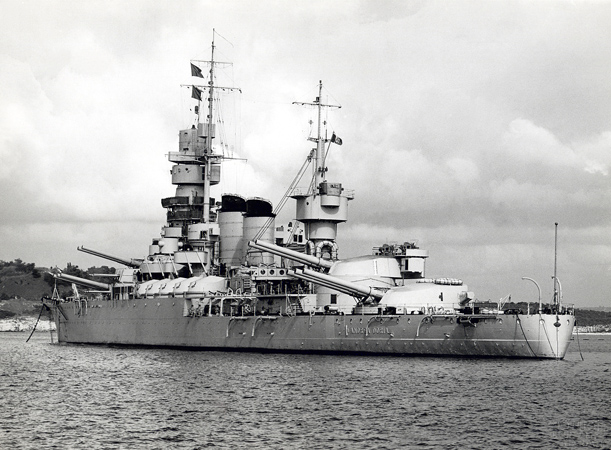
Italian battleship Andrea Doria, 31 December 1939
Date17 December 1941
Location34°8′4″N 17°57′5″E / 34.13444°N 17.95139°E / 34.13444; 17.95139
Result Inconclusive
Belligerents
 United Kingdom
 Australia
Netherlands
 Italy
Commanders and leaders
Andrew Cunningham
Philip Vian
Angelo Iachino
Guido Porzio Giovanola
Strength
5 light cruisers
14 destroyers
4 battleships
2 heavy cruisers
3 light cruisers
13 destroyers
Casualties and losses
1 killed
2 destroyers damaged
None
Map

The First Battle of Sirte was fought between forces of the British Mediterranean Fleet and the Regia Marina (Italian Royal Navy) during the Battle of the Mediterranean in the Second World War. The engagement took place on 17 December 1941, south-east of Malta, in the Gulf of Sirte. The engagement was inconclusive as both forces were protecting convoys and wished to avoid battle.

In the following days, two Royal Navy forces based at Malta ran into Italian minefield T off Tripoli and two British battleships were disabled by Italian Human torpedo during the Raid on Alexandria. By the end of December, the balance of naval power in the Mediterranean had shifted in favour of the Regia Marina.

Background

[edit]

The British Eighth Army and the Axis armies in North Africa were engaged in battles resulting from Operation Crusader, which had been fought between 18 November and 4 December. Its aim was to defeat the Afrika Korps and relieve the siege of Tobruk. This had been achieved and Axis forces were conducting a fighting retreat; by 13 December, they were holding a defensive line at Gazala, east of Benghazi. The Axis were desperate to supply their forces, intending to transport stores to Tripoli, their main port in Libya and Benghazi, the port closest to the front line. The island garrison of Malta was under siege and the British wanted to supply their forces on the island.[1]

Prelude

[edit]

Convoy M41/M42

[edit]

The Italians were preparing to send Convoy M41, of eight ships, to Africa on 13 December 1941. That morning, their previous supply attempt, two fast cruisers carrying fuel to Tripoli, had failed when they were sunk at the Battle of Cape Bon by a force of destroyers en route to Alexandria. The eight merchant ships were in three groups, with a close escort of five destroyers and a distant cover force of the battleships Littorio and Vittorio Veneto, four destroyers and two torpedo boats. Soon after sailing on 13 December, a group of Convoy M41 was attacked by the British submarine HMS Upright and two ships were sunk; later that day two ships collided and had to return to base, while the distant cover force was sighted by the submarine HMS Urge and Vittorio Veneto was torpedoed and forced to return to port.[1]

Supermarina, the high command of the Italian navy, rattled by these losses and a report that a British force of two battleships was at sea, ordered the ships to return to await reinforcement but the "force of two battleships" was a decoy operation by the minelayer HMS Abdiel. On 16 December, the four-ship Italian convoy, renamed Convoy M42, left Taranto, picking up escorts along the way. The close escort was provided by seven destroyers and a torpedo boat; by the time they reached Sicily they were also accompanied by a close cover force, comprising the battleship Duilio, three light cruisers and three destroyers. The distant covering force consisted of the battleships Littorio, Andrea Doria and Giulio Cesare, two cruisers and 10 destroyers.[2]

Allied convoy

[edit]

The British planned to run supplies to Malta using the fast merchant ship Breconshire, covered by a force of cruisers and destroyers, while the destroyers from the Cape Bon engagement would proceed to Alexandria from Malta covered by Force K and Force B from Malta on 15 December.[2] The British force was depleted when the light cruiser HMS Galatea was torpedoed and sunk by U-557, just before midnight on 14 December.[3] U-557 was accidentally sunk less than 48 hours later, by the Italian torpedo boat Orione.[4] On 15 December, Breconshire sailed from Alexandria escorted by three cruisers and eight destroyers under Rear-Admiral Philip Vian in HMS Naiad. On 16 December, the four destroyers of 4th Flotilla (Commander G. Stokes in HMS Sikh) left Malta, covered by Force K (Captain William 'Bill' Agnew in HMS Aurora), two cruisers and two destroyers.[1] Thirty Italian warships were escorting four cargo ships. The two British groups were also at sea and steaming toward each other; the opposing forces were likely to cross each other's tracks east of Malta on 18 December.

Battle

[edit]

On 17 December, an Italian reconnaissance aircraft spotted the British westbound formation near Sidi Barrani, apparently proceeding from Alexandria to intercept the Italian convoy. The British convoy was shadowed by Axis aeroplanes and attacked during the afternoon but no hits were scored and Agnew and Stokes met the westbound convoy. By late afternoon the Italian fleet was close by and spotter planes from the battleships had made contact with the British convoy, but the planes misidentified Breconshire as a battleship.[5] At 17:42, the fleets sighted each other; Admiral Angelo Iachino—commander of the Italian forces—moved to intercept to defend his convoy.[2]

Vian also wished to avoid combat, so with the British giving ground and the Italians pursuing with caution, the British were easily able to avoid an engagement. Just after sunset, an air attack on the British ships caused them to return fire with their anti-aircraft guns, allowing the Italian naval force to spot them. Iachino took in the distant covering force and opened fire at about 105,000 ft (32,000 m), well out of range of the British guns. Vian immediately laid smoke and moved to the attack while Breconshire moved away, escorted by the destroyers HMS Decoy and HMS Havock.[1]

Lacking radar and mindful of their defeat in the night action at the Battle of Cape Matapan, the Italians wished to avoid a night engagement. The Italians fired for only 15 minutes before disengaging and returning westwards to cover convoy M42. HMS Kipling suffered the loss of one midshipman and some damage due to a near-miss either from an 8 in (200 mm) shell, possibly fired by the Italian cruiser Gorizia or as stated by British official reports by 13 in (320 mm) shell splinters from Andrea Doria and Giulio Cesare, that knocked down wireless aerials and holed the hull, superstructure and ship's boats.[6][7] According to Italian sources, the Royal Australian Navy (RAN) destroyer HMAS Nizam was also damaged by near-misses from the Italian destroyer Maestrale.[8] British reports tell of other warships punctured by splinters.[9]

Aftermath

[edit]

Minefield T

[edit]

After dark, Vian turned to return with Stokes to Alexandria, leaving Agnew to bring Breconshire to Malta, joined by Force B, one cruiser (the other was under repair) and two destroyers. Breconshire and her escorts arrived in Malta at 15:00 on 18 December.[2] At midday, the Italian force also split up and three ships headed for Tripoli, accompanied by the close cover force, while the German supply ship Ankara, headed for Benghazi. The distant cover force remained on station in the Gulf of Sidra until evening, before heading back to base. The British had now realised that the Italians had a convoy in the area; Vian searched for it without success as he returned to Alexandria.

In the afternoon, the position of the Tripoli group was established; a cruiser and two destroyers of Force B and two cruisers and two destroyers of Force K (Captain O'Conor, on the cruiser HMS Neptune) sortied from Malta at 18:00 to intercept. The force ran into a minefield (Minefield T) 20 mi (17 nmi; 32 km) off Tripoli, in the early hours of 19 December. The minefield took the British by surprise as the water-depth was 600 ft (180 m), which they had thought was too deep for mines. Neptune struck four mines and sank, the destroyer HMS Kandahar struck a mine and was scuttled the following day. The cruisers Aurora and Penelope were badly damaged but were able to return to Malta. About 830 Allied seamen, many of them New Zealanders from Neptune, were killed.[10] The Malta Strike Force, which had been such a threat to Axis shipping to Libya during most of 1941, was much reduced in its effectiveness and was later forced to withdraw to Gibraltar.[11]

Attack on Alexandria

[edit]

While steaming back to Alexandria along with Vian's force, destroyer HMS Jervis reported an apparently successful depth-charge attack on an unidentified submarine.[12] The only axis submarine off Alexandria was the Italian Sciré, which was carrying a group of six Italian frogmen commandos, including Luigi Durand De La Penne, equipped with manned torpedoes. Shortly after Vian's force arrived in Alexandria, on the night of 18 December, the Italians penetrated the harbour and attacked the fleet. Jervis was damaged, a large Norwegian tanker disabled and the battleships HMS Valiant and Queen Elizabeth were severely damaged. This was a strategic change of fortune against the Allies whose effects were felt in the Mediterranean for several months.[1]

Results

[edit]

Both sides achieved their strategic objectives; the British got supplies through to Malta and the Axis got their ships through to Tripoli and Benghazi, although Benghazi fell to the Eighth Army five days later, on 24 December.

Order of battle

[edit]

Forces present 17 December 1941[13]

Italy

[edit]

Admiral Angelo Iachino (on Littorio)

Maestrale (10a Squadriglia Cacciatorpediniere)
Carabiniere, Corazziere (12a Squadriglia Cacciatorpediniere)
Alpino, Bersagliere, Fuciliere, Granatiere (13a Squadriglia Cacciatorpediniere)
Antoniotto Usodimare (16a Squadriglia Cacciatorpediniere)
  • Close escort:
    • Six destroyers: Saetta (7a Squadriglia Cacciatorpediniere)
Antonio da Noli, Ugolino Vivaldi (14a Squadriglia Cacciatorpediniere)
Lanzerotto Malocello, Nicolò Zeno (15a Squadriglia Cacciatorpediniere)
Emanuele Pessagno (16a Squadriglia Cacciatorpediniere)

Allies

[edit]

See also

[edit]

Notes

[edit]

References

[edit]

Further reading

[edit]
[edit]
Revisions and contributorsEdit on WikipediaRead on Wikipedia
from Grokipedia
The First Battle of Sirte was a naval engagement during the Mediterranean campaign of the Second World War, fought on 17 December 1941 in the Gulf of Sirte between Italian battleships escorting a bound for and British light cruisers attempting to disrupt Axis reinforcements to . The clash arose accidentally when Rear Admiral Philip Vian's British Force B—comprising the light cruisers HMS Naiad, HMS Euryalus, and HMS Carlisle, supported by destroyers including HMS Jervis and HMS Kimberley—escorting the oiler Breconshire toward Malta, encountered Vice Admiral Angelo Iachino's Italian squadron protecting convoy M42 with four battleships (Littorio, Vittorio Veneto, Andrea Doria, and Caio Duilio), heavy cruisers Gorizia and Trento, and numerous destroyers. The British initiated combat around 1745 hours at long range, maneuvering aggressively to shadow and harass the Italians, but the superior firepower of the Italian battleships—firing salvos from their 381 mm and 320 mm guns—straddled Vian's cruisers, causing splinter damage and structural stress from near-misses and heavy seas exacerbated by shell splashes, particularly affecting Naiad's forward turrets and deck. No ships were sunk in the hour-long exchange, with the British inflicting negligible confirmed damage on the Italians despite claims of hits on battleships, while the Italians' accurate gunnery compelled Vian to disengage to safeguard his convoy, allowing the Italian merchants—including Monginevro, Napoli, and Vettor Pisani—to reach port intact. This outcome marked a rare tactical victory for the Regia Marina's heavy units over British light forces, underscoring the challenges of cruiser interdiction against battleship-escorted convoys and bolstering Axis supply lines amid the critical North African front, though the broader strategic context saw continued attrition on both navies from submarines, aircraft, and mines.

Strategic Context

Mediterranean Campaign Overview

Italy entered World War II on June 10, 1940, by declaring war on and the , thereby commencing a fierce naval contest with the Royal Navy for supremacy in the central Mediterranean. This theater became pivotal as Axis forces under advanced into , relying heavily on maritime supply lines to counter British Commonwealth operations in . The Regia Marina's initial efforts focused on escorting merchant convoys across the 1,000-kilometer route from Italian ports like and to Libyan destinations such as Tripoli and , where supplies fueled the ' mechanized offensives. By late 1941, the strategic imperative intensified with the British launch of on November 18, aimed at relieving the besieged garrison at and disrupting Axis logistics. Rommel's Panzerarmee Afrika faced acute shortages of fuel, ammunition, and vehicles, rendering Mediterranean convoys indispensable for reinforcements and to halt Allied gains toward Libya's border. These operations transported thousands of tons monthly, but their success hinged on evading patrols, aircraft from , and submarine ambushes that exploited the narrow Sicilian Strait and passages. Empirical records illustrate the convoys' mixed fortunes: from June to November 1940, 89 escorted groups safely delivered 238,901 tons of supplies and 19,158 troops to without merchant losses, bolstering early Axis momentum. Yet, escalating British interdiction revealed systemic vulnerabilities; in 1941 alone, Malta-based submarines sank 88 Italian merchant vessels totaling 282,300 gross registered tons, comprising 44 percent of overall Axis shipping attrition in the theater and crippling sustainment efforts. Such losses, compounded by surface actions and air strikes, forced Axis commanders to prioritize high-risk sailings during favorable moonless nights, underscoring the sea lanes' role as a chokepoint in the campaign's logistical calculus.

Axis Supply Vulnerabilities and Allied Interdiction Efforts

The Axis position in hinged on sustained maritime from Italian ports to Libyan harbors such as Tripoli and , with the and supporting Italian forces requiring roughly 70,000 tons of supplies monthly—including 25,000 tons of fuel, 10,000 tons of ammunition, and provisions for approximately 100,000 troops—to maintain operational tempo against British Eighth advances. Actual deliveries in 1941 averaged far below this threshold, often 30,000-40,000 tons per month, as eroded capacity and forced reliance on inefficient airlifts or reduced rations, contributing to stalled offensives like those following . British forces leveraged as a forward base for submarine patrols and strikes, targeting the narrow Sicily-Tripoli route where Axis convoys were most exposed. Submarines such as HMS Upholder and HMS Umpire sank multiple transports in ambushes, while and Beaufort aircraft conducted low-level attacks, achieving hits on vessels like the Italian steamer (5,940 tons) in September 1941 and contributing to the loss of over 100,000 tons of Axis shipping in the central Mediterranean during the year's second half. A pivotal example was the 16 April 1941 , where destroyers exploited advantage to sink four freighters totaling approximately 15,000 tons alongside an ammunition ship and three escorting destroyers, demonstrating the vulnerability of lightly protected groups and prompting Italian shifts toward heavier escorts. These attrition rates—frequently exceeding 20% of tonnage per run in mid-1941—rendered unescorted or minimally protected sailings logistically unsustainable, as cumulative losses outpaced Italian fleet replacement capacity and exacerbated fuel shortages that limited and Panzer operations. By late 1941, this causal dependency elevated the strategic priority of defended convoys, with deploying cruisers and destroyers to shield critical loads, underscoring how not only quantified material denial but eroded Axis initiative through enforced caution and dispersal.

Prelude to Engagement

Italian Convoy Operations

The Italian convoy operation designated M42 was launched on 16 December 1941, departing primarily from with four merchant vessels—Monginevro, Napoli, Lerici, and Tergestea—destined for to deliver critical supplies including fuel, ammunition, and essential for sustaining Axis ground forces in amid mounting logistical pressures from Allied . These shipments addressed acute shortages, as Axis requirements exceeded 70,000 tons monthly while deliveries often fell short due to sinkings, underscoring the convoy's strategic imperative despite high risks. Rear Admiral Carlo Bergamini commanded the close escort, comprising the light cruisers Eugenio di Savoia and Duca degli Abruzzi supported by several destroyers, with explicit orders emphasizing convoy protection over aggressive engagement to minimize losses in a fleet constrained by rationing and prior damages. This defensive posture reflected doctrine, which prioritized tonnage delivery to —vital for Rommel's Panzer Army—over fleet actions that could expose capital ships to submarine or air threats, as evidenced by earlier successes despite overall attrition rates nearing 30 percent in late 1941. The selected route hugged the Libyan coast through the Gulf of , exploiting shallower waters and reduced British patrol density to evade detection, while preparatory minelaying operations in approach areas aimed to deter pursuers and safeguard the 's final leg to port. Italian air cover from Sicilian and Libyan bases provided and fighter protection, coordinating with the escort to counter potential Allied intercepts, though limited by range and weather constraints typical of winter Mediterranean operations. This integrated approach enabled the to maintain formation integrity, underscoring pragmatic adaptations to Axis supply vulnerabilities without overextending naval assets.

British Reconnaissance and Positioning

On 16 December 1941, Admiral Andrew Cunningham, commanding the British , received intelligence from Ultra decrypts indicating significant Italian naval activity, including preparations for a major convoy escort to . These intercepts, derived from decrypted Italian naval signals, revealed the scale of the operation, prompting Cunningham to assess the potential for interdiction against the risks posed by Italian battleships. Concurrently, reports from British submarines, such as sightings of Italian merchant vessels and escorts in the central Mediterranean, corroborated the signals and narrowed the expected convoy route toward Tripoli. To capitalize on this intelligence, Cunningham directed Rear Admiral to position Force B—comprising three light cruisers and 14 destroyers escorting the vital oiler Breconshire as part of ME 8—south-east of , approximately 100 nautical miles from the island, by the evening of 16 December. This deployment aimed to shadow and disrupt Axis shipping while safeguarding the inbound Allied , whose fuel was critical for sustaining 's operations amid intensifying Axis air attacks. Vian's force maintained where possible, relying on prior Admiralty directives informed by signal to anticipate Italian movements within the Gulf of approaches. British command deliberations emphasized the trade-offs of divided naval assets: committing the main battle squadron, including battleships like HMS Barham and , risked exposure to Italian heavy units and Luftwaffe strikes without guaranteed convoy destruction, given the escorts' reported strength from intercepts. Empirical data from submarine contacts and decrypts confirmed the Italian convoy's size—estimated at multiple transports with cruiser and destroyer screens—but also highlighted the absence of full battleship commitment from Cunningham's side, as resources were split between interdiction and ME 8 protection, constraining aggressive maneuvers. This positioning reflected a calculated restraint, prioritizing fleet preservation over decisive engagement amid logistical pressures and superior enemy surface threats.

Opposing Forces

Italian Naval Composition

The Italian squadron committed to escorting the M41 convoy during the First Battle of Sirte on 17 December 1941 primarily comprised the 3rd Cruiser Division of the , centered on two heavy cruisers: of the Zara class and of the Trento class. Gorizia, displacing approximately 11,400 tons standard and capable of 32 knots, was armed with eight 203 mm/53-caliber guns in four twin turrets, sixteen 37 mm anti-aircraft guns, and six 533 mm torpedo tubes, providing robust surface gunnery and torpedo strike capability for anti-cruiser roles. Trento, lighter at around 10,000 tons standard with similar speed, mounted an identical of eight 203 mm guns but featured thinner armor and greater vulnerability to damage, emphasizing offensive reach over defensive resilience in line with interwar constraints. These vessels formed the core screening force, leveraging their high speed for maneuverable protection against anticipated British incursions. Supporting the heavy cruisers were seven destroyers from the 9th, 10th, and 11th Squadriglie Cacciatorpediniere, including Vincenzo Gioberti, Alfredo Oriani, Maestrale, Libeccio, Folgore, Fulmine, and Baleno, each displacing 1,400–2,000 tons and armed with 4–6 × 120 mm guns, 8–10 × 533 mm torpedo tubes, and depth charges for anti-submarine duties. These vessels, with speeds exceeding 35 knots, were optimized for torpedo attacks and rapid screening, forming an outer defensive perimeter around the convoy to deter shadowing enemy forces while conserving fuel through shorter operational radii. The composition reflected a deliberate emphasis on cruiser-destroyer synergy for escort duties, omitting battleships from the immediate screen due to persistent damage from the 1940 Taranto raid and the March 1941 Battle of Cape Matapan, which had sidelined units like Littorio and Vittorio Veneto for repairs. Fuel scarcity, a chronic Regia Marina constraint exacerbated by Axis reliance on synthetic production and imports, further shaped the squadron's cautious posture, limiting sortie durations and favoring over prolonged engagements to preserve scarce stocks. Crews, drawn from professional naval personnel with experience in earlier Mediterranean operations, demonstrated competence in formation steaming but operated under directives prioritizing convoy integrity over aggressive pursuit, influenced by strategic imperatives to sustain North African amid Allied . ![Italian naval ensign](./assets/Flag_of_Italy_(1861-1946)

British Naval Composition

Force B, the principal British naval detachment involved, comprised two Queen Elizabeth-class battleships, HMS Warspite (flagship of Rear-Admiral H. B. Rawlings) and HMS Valiant, each displacing approximately 31,000 tons standard and capable of speeds up to 23 knots. These vessels mounted a main armament of ten 381 mm (15-inch) guns in twin turrets, providing a significant advantage over contemporary Italian heavy cruisers, though their effectiveness was constrained by operational priorities. Previously, the force had included a third battleship, HMS Barham, sunk by on 25 November 1941 during operations in the Mediterranean, which underscored the vulnerabilities in maintaining a balanced battle squadron amid Axis submarine threats. Supporting the battleships were three light cruisers from the 15th Cruiser Squadron—HMS Orion, HMS Neptune, and HMS Ajax—each armed with eight 152 mm (6-inch) guns and equipped for and anti-destroyer roles. Fourteen destroyers provided screening, including units from the 14th such as HMS Jervis, Jaguar, Kimberley, and Kingston, alongside others like HMS Sikh, Maori, and Legion from the 4th , totaling a force optimized for convoy protection rather than aggressive pursuit. Both battleships featured advanced systems, including Type 284 for gunnery control, enhancing accuracy in variable conditions, while augmented anti-aircraft batteries—such as multiple 102 mm (4-inch) and 40 mm guns—addressed the persistent threat of Axis air attacks on Mediterranean supply routes. However, Admiralty directives emphasized divided responsibilities: Force B's primary mandate was to safeguard ME.8 en route to and the fast tanker Breconshire, prioritizing the sustainment of besieged Allied positions in over seeking a decisive surface with Italian units, thereby limiting tactical flexibility. This doctrinal restraint reflected broader strategic imperatives in the theater, where attrition from , , and minefields outweighed opportunities for fleet actions.

The Battle Unfolds

Initial Contacts and Maneuvering

At daylight on 17 December 1941, British submarines reported the presence of Italian warships near the planned rendezvous point for opposing operations in the Gulf of , prompting initial caution in British positioning to safeguard the tanker Breconshire en route to . By around 07:00, Italian forces escorting Convoy M 41 southward detected smoke plumes indicative of British cruisers and destroyers, leading Admiral to order evasive zigzagging maneuvers to protect the convoy while maintaining progress toward Tripoli. British and visual confirmations soon identified Italian heavy cruisers at initial ranges of 20-30 km, with clear weather ensuring high visibility that reinforced mutual restraint to prioritize screens over decisive engagement. Rear-Admiral advanced his force in line-ahead formation but refrained from detaching destroyers for runs, adhering to orders emphasizing defense amid the numerical superiority of the distant Italian battleships. In response, the deployed into a protective formation around their transports, balancing southward momentum with southward evasion against potential threats, while both sides monitored ranges without closing aggressively. This pre-fire posturing, influenced by empirical convoy protection imperatives and favorable visibility, set the conditions for limited tactical probing later in the afternoon.

Exchange of Fire and Tactical Developments

The Italian distant covering force, led by the battleship Littorio, detected the British squadron around 17:40 on 17 December 1941 and opened fire from an extreme range of approximately 32 kilometers, placing ineffective salvos well beyond the maximum effective range of the British light cruisers' 6-inch guns. The British commander, Rear-Admiral Philip Vian, responded by deploying smoke screens to shield the convoy Breconshire and executing aggressive maneuvers with his three light cruisers (Naiad, Euryalus, and Carlisle) and accompanying destroyers, simulating the presence of heavier British battleship support to deter closer Italian approach. This tactical feint, combined with the fading light, prompted Italian Vice-Admiral Angelo Iachino to maintain caution despite his superiority in heavy units, including two additional battleships (Andrea Doria and Caio Duilio) and heavy cruisers Gorizia and Trento. As Italian heavy cruisers closed to around 16 kilometers, they commenced firing with 8-inch guns, achieving occasional straddles on the British cruiser line but scoring no direct hits amid the smoke and evasive actions. British cruisers returned fire with their lighter armament, supported by destroyer flotillas that conducted skirmishing runs; these exchanges inflicted minor damage, including near-misses on British destroyers such as Kipling, which suffered superficial structural harm and one casualty from shrapnel. No Italian warships sustained confirmed damage in the primary gunnery duel, though destroyer screens on both sides exchanged at closer ranges during maneuvers to screen their respective convoys. The engagement remained sporadic, lasting roughly one hour, with mutual constraints—long engagement distances averaging over 15 kilometers, deteriorating visibility, and the absence of effective spotting —preventing accurate gunfire or opportunities. Tactically, the inconclusive outcome stemmed from operational priorities overriding decisive combat: Vian's standing orders emphasized convoy protection over risking annihilation against a numerically superior foe, while Iachino, wary of potential British reinforcements or submarine threats, avoided pressing an all-out assault that could expose his own supply mission. The great ranges limited hit probabilities, as naval gunnery accuracy dropped sharply beyond 20 kilometers without advanced fire control, which neither side fully exploited in the Mediterranean theater at that stage; this, coupled with Vian's deception, forced Italian withdrawal northward without exploiting their firepower advantage. No vessels were sunk, underscoring the battle's role as a convoy shield rather than a fleet action.

Disengagement and Pursuit Attempts

As the range opened following the initial exchanges, the Italian squadron under Vice-Admiral disengaged around noon on 17 December 1941, turning northward to rejoin their while shielded by Axis that maintained an aerial umbrella over the retreating force. The brief action had seen the Italian battleship Littorio fire ineffective salvos at over 30,000 meters, after which Iachino prioritized convoy protection over prolonged engagement, breaking visual contact as visibility waned toward dusk. British destroyers, operating at the limits of their endurance after high-speed maneuvers, shadowed the Italians intermittently but failed to close the distance, hampered by the enemy's superior speed and persistent air cover that deterred aggressive pursuit. Rear-Admiral Philip Vian's squadron, lacking the heavy gunfire to force a decisive encounter and mindful of fuel constraints from earlier sprints, maintained a cautious distance without attempting to overhaul the withdrawing force. Vian elected against pressing a night action, assessing the high risk of Italian destroyer-launched torpedoes in poor visibility as outweighing potential gains, particularly given the recent vulnerability demonstrated by the sinking of battleship HMS Barham on 25 November 1941 after multiple torpedo strikes from U-331, which underscored the lethal threat of such weapons even to capital ships. This decision reflected a realistic evaluation of odds, as British signals reported ongoing shadowing without viable closure opportunities, preserving the squadron's integrity amid ongoing Axis air harassment and the need to safeguard interdiction efforts against the convoy.

Immediate Aftermath

Italian Convoy Protection Success

Convoy M41, consisting of eight merchant vessels carrying vital supplies including fuel, ammunition, and vehicles for Axis forces in , successfully reached Tripoli on 18 December 1941 despite encountering British naval opposition during the battle. No were lost, enabling the delivery of approximately 20,000 tons of cargo essential for sustaining German and Italian operations in . This outcome marked a for Italian escort forces, which prioritized convoy integrity over aggressive pursuit, ensuring the uninterrupted flow of amid ongoing Allied attempts. Italian naval losses remained negligible, with no vessels sunk and only light damage reported to the Trieste from long-range British shellfire, which was promptly repaired in Italian dockyards without impacting subsequent operations. Supporting Italian air units from bases in and conducted follow-up strikes on British ships post-disengagement, inflicting minor additional damage and complicating enemy pursuit efforts. These combined defensive measures underscored the effectiveness of layered protection—combining surface escorts, cover, and —in shielding the through contested waters. The protection of M41 empirically demonstrated Axis resilience in Mediterranean logistics, delivering 100% of its payload and thereby bolstering Panzer Afrika's short-term offensive capacity against prevailing narratives of British dominance in convoy interdiction. Independent assessments of wartime confirm that such successes temporarily alleviated supply shortages in , allowing Rommel's forces to maintain momentum into early 1942 despite broader attrition challenges.

British Force Reorganization and Minor Losses

Following the inconclusive exchange of fire on 17 December 1941, Rear-Admiral Philip Vian's Force B reported no significant structural damage to its light cruisers or the accompanying tanker Breconshire, with involvement limited to distant support that avoided direct hits. The , led by HMS Jervis, sustained only light splinter damage from Italian shellfire, resulting in negligible crew impacts and no fatalities directly attributable to the engagement. This minimal material attrition allowed for rapid operational adjustments, maintaining the formation's integrity without necessitating major repairs or withdrawals. Vian reorganized the force to refuel from Breconshire's reserves, a critical step to sustain extended patrols amid fuel constraints in the Mediterranean theater. The squadron detached elements to escort the tanker to for unloading supplies by 18 December, while the main body cautiously withdrew toward , alert to Italian minelaying threats such as Minefield T—laid by Italian cruisers in June 1941 approximately 20 nautical miles northeast of Tripoli to interdict British coastal operations. Although Force B evaded these hazards, the episode underscored persistent risks from uncharted or reinforced fields, influencing routing decisions. In his debrief, Vian stressed that the operation's success hinged on safeguarding the rather than forcing a decisive fleet action against the retreating , a pragmatic assessment reflecting the overriding logistical imperatives of sustaining Malta's over speculative enemy destruction. This focus enabled the British to claim tactical continuity, with the force resuming readiness for subsequent Mediterranean duties shortly after docking in .

Broader Consequences

Impact on Axis Logistics in North Africa

The successful repulsion of British cruiser forces by Italian battleships during the engagement ensured the unhindered passage of multiple convoys to Libyan ports, delivering vital materiel amid the Axis retreat from . These shipments contrasted sharply with earlier setbacks, such as the loss of the Beta convoy in the Battle of Duisburg on 9 November 1941, where seven merchant vessels carrying over 32,000 tons of fuel, ammunition, and equipment were sunk, severely straining Axis stockpiles. In December 1941, protected runs including convoys M41 and K41 landed thousands of tons of cargo at Tripoli and , sustaining German and Italian units despite British naval superiority and submarine threats. This influx—part of broader Axis efforts that delivered approximately 188,000 tons from to alone, with additional arrivals—bolstered fuel and vehicle reserves critical for Rommel's reconstitution. By averting further interdictions during a pivotal retreat phase, the battle's outcome reduced logistical vulnerabilities, enabling Axis forces to regroup and launch counteroffensives in January 1942 that recaptured and extended the North African front. The demonstrated efficacy of heavy escorts, committing over 100,000 tons of warships to safeguard roughly 20,000 tons of supplies per run, underscored a viable for maintaining supply lines against Allied attrition tactics.

Assessments of Tactical and Strategic Outcomes

The First Battle of Sirte is generally regarded as a tactical draw, with neither side inflicting significant damage or losses despite exchanges of fire at ranges exceeding 20 kilometers. British light cruisers, equipped with 6-inch guns effective up to approximately 23 kilometers, achieved early straddles on Italian heavy cruisers using superior spotting and maneuvering, compelling the to deploy screens and alter course to evade. However, the Italian , comprising two 8-inch gunned Zara-class cruisers with a theoretical range advantage of up to 31 kilometers, prioritized over decisive engagement, successfully shielding their transports without conceding ground that would expose the merchant vessels. Italian Admiral Raffaele de Courten's decision to break contact after minimal hits on British ships exemplified prudent evasion tactics, preventing the battle from escalating into a material defeat despite the Royal Navy's gunnery edge in the opening salvos. Historiographical assessments diverge along national lines, with British sources like Admiral Andrew Cunningham's memoirs underscoring the necessity of caution against a numerically superior Italian squadron—bolstered by the latent threat of battleships—and crediting their fire for "driving off" the enemy, though without of sustained pursuit or attempts. Italian accounts, such as Marc'Antonio Bragadin's postwar analysis in The in , counter that the engagement boosted naval morale and validated escort doctrines, as the British failed to capitalize on their initial advantage, retreating to reorganize rather than risk torpedo counterattacks from Italian destroyers. This perspective aligns with operational data showing no British kills or disruptions, debunking claims of a clear tactical repulsion in favor of a mutual disengagement driven by each side's strategic imperatives. Strategically, the battle constituted a victory for , as the escorted M41 —comprising eight merchant ships carrying vital supplies including fuel and ammunition—arrived unscathed at Tripoli and on December 19, 1941, directly sustaining Erwin Rommel's during its push toward . Axis logistics in remained robust post-engagement, with subsequent delivering over 50,000 tons of in December alone, unhindered by the Sirte clash and enabling operational tempo that pressured British Eighth Army positions through early 1942. British failure to neutralize this axis of reinforcement, despite deploying their 4th Squadron specifically for , underscored limitations in Mediterranean dominance, where protection trumped fleet actions amid air and threats; Italian , corroborated by supply records, frames this as a pivotal and logistical affirmation, contrasting with Allied narratives that overstate tactical posturing absent strategic dividends.

References

Add your contribution
Related Hubs
User Avatar
No comments yet.