Hubbry Logo
Liquid crystalLiquid crystalMain
Open search
Liquid crystal
Community hub
Liquid crystal
logo
8 pages, 0 posts
0 subscribers
Be the first to start a discussion here.
Liquid crystal
Liquid crystal
from Wikipedia

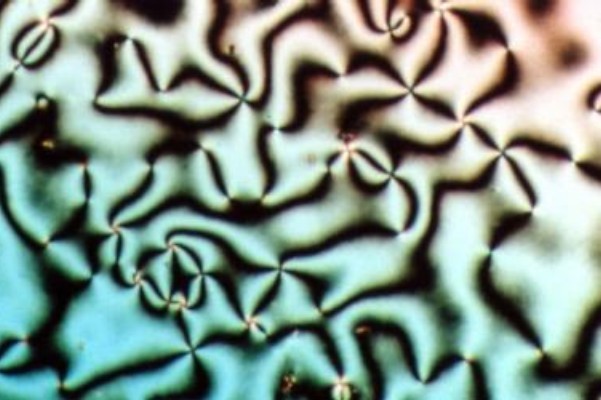
Schlieren texture of liquid crystal nematic phase

Liquid crystal (LC) is a state of matter whose properties are between those of conventional liquids and those of solid crystals. For example, a liquid crystal can flow like a liquid, but its molecules may be oriented in a common direction as in a solid. There are many types of LC phases, which can be distinguished by their optical properties (such as textures). The contrasting textures arise due to molecules within one area of material ("domain") being oriented in the same direction but different areas having different orientations. An LC material may not always be in an LC state of matter (just as water may be ice or water vapour).

Liquid crystals can be divided into three main types: thermotropic, lyotropic, and metallotropic. Thermotropic and lyotropic liquid crystals consist mostly of organic molecules, although a few minerals are also known. Thermotropic LCs exhibit a phase transition into the LC phase as temperature changes. Lyotropic LCs exhibit phase transitions as a function of both temperature and concentration of molecules in a solvent (typically water). Metallotropic LCs are composed of both organic and inorganic molecules; their LC transition additionally depends on the inorganic-organic composition ratio.

Examples of LCs exist both in the natural world and in technological applications. Lyotropic LCs abound in living systems; many proteins and cell membranes are LCs, as well as the tobacco mosaic virus.[1] LCs in the mineral world include solutions of soap and various related detergents, and some clays. Widespread liquid-crystal displays (LCD) use liquid crystals.

History

[edit]

In 1888, Austrian botanical physiologist Friedrich Reinitzer, working at the Karl-Ferdinands-Universität, examined the physico-chemical properties of various derivatives of cholesterol which now belong to the class of materials known as cholesteric liquid crystals. Previously, other researchers had observed distinct color effects when cooling cholesterol derivatives just above the freezing point, but had not associated it with a new phenomenon. Reinitzer perceived that color changes in a derivative cholesteryl benzoate were not the most peculiar feature.

Chemical structure of cholesteryl benzoate molecule

He found that cholesteryl benzoate does not melt in the same manner as other compounds, but has two melting points. At 145.5 °C (293.9 °F) it melts into a cloudy liquid, and at 178.5 °C (353.3 °F) it melts again and the cloudy liquid becomes clear. The phenomenon is reversible. Seeking help from a physicist, on March 14, 1888, he wrote to Otto Lehmann, at that time a Privatdozent in Aachen. They exchanged letters and samples. Lehmann examined the intermediate cloudy fluid, and reported seeing crystallites. Reinitzer's Viennese colleague von Zepharovich also indicated that the intermediate "fluid" was crystalline. The exchange of letters with Lehmann ended on April 24, with many questions unanswered. Reinitzer presented his results, with credits to Lehmann and von Zepharovich, at a meeting of the Vienna Chemical Society on May 3, 1888.[2]

By that time, Reinitzer had discovered and described three important features of cholesteric liquid crystals (the name coined by Otto Lehmann in 1904): the existence of two melting points, the reflection of circularly polarized light, and the ability to rotate the polarization direction of light.

After his accidental discovery, Reinitzer did not pursue studying liquid crystals further. The research was continued by Lehmann, who realized that he had encountered a new phenomenon and was in a position to investigate it: In his postdoctoral years he had acquired expertise in crystallography and microscopy. Lehmann started a systematic study, first of cholesteryl benzoate, and then of related compounds which exhibited the double-melting phenomenon. He was able to make observations in polarized light, and his microscope was equipped with a hot stage (sample holder equipped with a heater) enabling high temperature observations. The intermediate cloudy phase clearly sustained flow, but other features, particularly the signature under a microscope, convinced Lehmann that he was dealing with a solid. By the end of August 1889 he had published his results in the Zeitschrift für Physikalische Chemie.[3]

Otto Lehmann

Lehmann's work was continued and significantly expanded by the German chemist Daniel Vorländer, who from the beginning of the 20th century until he retired in 1935, had synthesized most of the liquid crystals known. However, liquid crystals were not popular among scientists and the material remained a pure scientific curiosity for about 80 years.[4]

After World War II, work on the synthesis of liquid crystals was restarted at university research laboratories in Europe. George William Gray, a prominent researcher of liquid crystals, began investigating these materials in England in the late 1940s. His group synthesized many new materials that exhibited the liquid crystalline state and developed a better understanding of how to design molecules that exhibit the state. His book Molecular Structure and the Properties of Liquid Crystals[5] became a guidebook on the subject. One of the first U.S. chemists to study liquid crystals was Glenn H. Brown, starting in 1953 at the University of Cincinnati and later at Kent State University. In 1965, he organized the first international conference on liquid crystals, in Kent, Ohio, with about 100 of the world's top liquid crystal scientists in attendance. This conference marked the beginning of a worldwide effort to perform research in this field, which soon led to the development of practical applications for these unique materials.[6][7]

Liquid crystal materials became a focus of research in the development of flat panel electronic displays beginning in 1962 at RCA Laboratories.[8] When physical chemist Richard Williams applied an electric field to a thin layer of a nematic liquid crystal at 125 °C, he observed the formation of a regular pattern that he called domains (now known as Williams Domains). This led his colleague George H. Heilmeier to perform research on a liquid crystal-based flat panel display to replace the cathode ray vacuum tube used in televisions. But the para-azoxyanisole that Williams and Heilmeier used exhibits the nematic liquid crystal state only above 116 °C, which made it impractical to use in a commercial display product. A material that could be operated at room temperature was clearly needed.

In 1966, Joel E. Goldmacher and Joseph A. Castellano, research chemists in Heilmeier group at RCA, discovered that mixtures made exclusively of nematic compounds that differed only in the number of carbon atoms in the terminal side chains could yield room-temperature nematic liquid crystals. A ternary mixture of Schiff base compounds resulted in a material that had a nematic range of 22–105 °C.[9] Operation at room temperature enabled the first practical display device to be made.[10] The team then proceeded to prepare numerous mixtures of nematic compounds many of which had much lower melting points. This technique of mixing nematic compounds to obtain wide operating temperature range eventually became the industry standard and is still used to tailor materials to meet specific applications.

Chemical structure of N-(4-methoxybenzylidene)-4-butylaniline (MBBA) molecule

In 1969, Hans Keller succeeded in synthesizing a substance that had a nematic phase at room temperature, N-(4-methoxybenzylidene)-4-butylaniline (MBBA), which is one of the most popular subjects of liquid crystal research.[11] The next step to commercialization of liquid-crystal displays was the synthesis of further chemically stable substances (cyanobiphenyls) with low melting temperatures by George Gray.[12] That work with Ken Harrison and the UK MOD (RRE Malvern), in 1973, led to design of new materials resulting in rapid adoption of small area LCDs within electronic products.

These molecules are rod-shaped, some created in the laboratory and some appearing spontaneously in nature. Since then, two new types of LC molecules have been synthesized: disc-shaped (by Sivaramakrishna Chandrasekhar in India in 1977)[13] and cone or bowl shaped (predicted by Lui Lam in China in 1982 and synthesized in Europe in 1985).[14]

In 1991, when liquid crystal displays were already well established, Pierre-Gilles de Gennes working at the Université Paris-Sud received the Nobel Prize in physics "for discovering that methods developed for studying order phenomena in simple systems can be generalized to more complex forms of matter, in particular to liquid crystals and polymers".[15]

Design of liquid crystalline materials

[edit]

A large number of chemical compounds are known to exhibit one or several liquid crystalline phases. Despite significant differences in chemical composition, these molecules have some common features in chemical and physical properties. There are three types of thermotropic liquid crystals: discotic, conic (bowlic), and rod-shaped molecules. Discotics are disc-like molecules consisting of a flat core of adjacent aromatic rings, whereas the core in a conic LC is not flat, but is shaped like a rice bowl (a three-dimensional object).[16][17] This allows for two dimensional columnar ordering, for both discotic and conic LCs. Rod-shaped molecules have an elongated, anisotropic geometry which allows for preferential alignment along one spatial direction.

  • The molecular shape should be relatively thin, flat or conic, especially within rigid molecular frameworks.
  • The molecular length should be at least 1.3 nm, consistent with the presence of long alkyl group on many room-temperature liquid crystals.
  • The structure should not be branched or angular, except for the conic LC.
  • A low melting point is preferable in order to avoid metastable, monotropic liquid crystalline phases. Low-temperature mesomorphic behavior in general is technologically more useful, and alkyl terminal groups promote this.

An extended, structurally rigid, highly anisotropic shape seems to be the main criterion for liquid crystalline behavior, and as a result many liquid crystalline materials are based on benzene rings.[18]

Liquid-crystal phases

[edit]

The various liquid-crystal phases (called mesophases together with plastic crystal phases) can be characterized by the type of ordering. One can distinguish positional order (whether molecules are arranged in any sort of ordered lattice) and orientational order (whether molecules are mostly pointing in the same direction). Liquid crystals are characterized by orientational order, but only partial or completely absent positional order. In contrast, materials with positional order but no orientational order are known as plastic crystals.[19] Most thermotropic LCs will have an isotropic phase at high temperature: heating will eventually drive them into a conventional liquid phase characterized by random and isotropic molecular ordering and fluid-like flow behavior. Under other conditions (for instance, lower temperature), a LC might inhabit one or more phases with significant anisotropic orientational structure and short-range orientational order while still having an ability to flow.[20][21]

The ordering of liquid crystals extends up to the entire domain size, which may be on the order of micrometers, but usually not to the macroscopic scale as often occurs in classical crystalline solids. However some techniques, such as the use of boundaries or an applied electric field, can be used to enforce a single ordered domain in a macroscopic liquid crystal sample.[22] The orientational ordering in a liquid crystal might extend along only one dimension, with the material being essentially disordered in the other two directions.[23][24]

Thermotropic liquid crystals

[edit]

Thermotropic phases are those that occur in a certain temperature range. If the temperature rise is too high, thermal motion will destroy the delicate cooperative ordering of the LC phase, pushing the material into a conventional isotropic liquid phase. At too low temperature, most LC materials will form a conventional crystal.[20][21] Many thermotropic LCs exhibit a variety of phases as temperature is changed. For instance, a particular type of LC molecule (called a mesogen) may exhibit various smectic phases followed by the nematic phase and finally the isotropic phase as temperature is increased. An example of a compound displaying thermotropic LC behavior is para-azoxyanisole.[25]

Nematic phase

[edit]
Alignment in a nematic phase
Phase transition between a nematic (left) and smectic A (right) phases observed between crossed polarizers. The black color corresponds to isotropic medium.

The simplest liquid crystal phase is the nematic. In a nematic phase, calamitic (rod-like) organic molecules lack a crystalline positional order, but do self-align with their long axes roughly parallel. The molecules are free to flow and their center of mass positions are randomly distributed as in a liquid, but their orientation is constrained to form a long-range directional order.[26]

The word nematic comes from the Greek νήμα (Greek: nema), which means "thread". This term originates from the disclinations: thread-like topological defects observed in nematic phases.

Nematics also exhibit so-called "hedgehog" topological defects. In two dimensions, there are topological defects with topological charges +1/2 and -1/2. Due to hydrodynamics, the +1/2 defect moves considerably faster than the -1/2 defect. When placed close to each other, the defects attract; upon collision, they annihilate.[27][28]

Most nematic phases are uniaxial: they have one axis (called a directrix) that is longer and preferred, with the other two being equivalent (can be approximated as cylinders or rods). However, some liquid crystals are biaxial nematic, meaning that in addition to orienting their long axis, they also orient along a secondary axis.[29] Nematic crystals have fluidity similar to that of ordinary (isotropic) liquids but they can be easily aligned by an external magnetic or electric field. Aligned nematics have the optical properties of uniaxial crystals and this makes them extremely useful in liquid-crystal displays (LCD).[8]

Nematic phases are also known in non-molecular systems: at high magnetic fields, electrons flow in bundles or stripes to create an "electronic nematic" form of matter.[30][31]

Smectic phases

[edit]
Schematic of alignment in the smectic phases. The smectic A phase (left) has molecules organized into layers. In the smectic C phase (right), the molecules are tilted inside the layers.

The smectic phases, which are found at lower temperatures than the nematic, form well-defined layers that can slide over one another in a manner similar to that of soap. The word "smectic" originates from the Latin word "smecticus", meaning cleaning, or having soap-like properties.[32] The smectics are thus positionally ordered along one direction. In the Smectic A phase, the molecules are oriented along the layer normal, while in the Smectic C phase they are tilted away from it. These phases are liquid-like within the layers. There are many different smectic phases, all characterized by different types and degrees of positional and orientational order.[20][21] Beyond organic molecules, Smectic ordering has also been reported to occur within colloidal suspensions of 2-D materials or nanosheets.[33][34] One example of smectic LCs is p,p'-dinonylazobenzene.[35]

Chiral phases or twisted nematics

[edit]
Schematic of ordering in chiral liquid crystal phases. The chiral nematic phase (left), also called the cholesteric phase, and the smectic C* phase (right).

The chiral nematic phase exhibits chirality (handedness). This phase is often called the cholesteric phase because it was first observed for cholesterol derivatives. Only chiral molecules can give rise to such a phase. This phase exhibits a twisting of the molecules perpendicular to the director, with the molecular axis parallel to the director. The finite twist angle between adjacent molecules is due to their asymmetric packing, which results in longer-range chiral order. In the smectic C* phase (an asterisk denotes a chiral phase), the molecules have positional ordering in a layered structure (as in the other smectic phases), with the molecules tilted by a finite angle with respect to the layer normal. The chirality induces a finite azimuthal twist from one layer to the next, producing a spiral twisting of the molecular axis along the layer normal, hence they are also called twisted nematics.[21][23][24]

Chiral nematic phase. The numerator p refers to the chiral pitch (see text).

The chiral pitch, p, refers to the distance over which the LC molecules undergo a full 360° twist (but note that the structure of the chiral nematic phase repeats itself every half-pitch, since in this phase directors at 0° and ±180° are equivalent). The pitch, p, typically changes when the temperature is altered or when other molecules are added to the LC host (an achiral LC host material will form a chiral phase if doped with a chiral material), allowing the pitch of a given material to be tuned accordingly. In some liquid crystal systems, the pitch is of the same order as the wavelength of visible light. This causes these systems to exhibit unique optical properties, such as Bragg reflection and low-threshold laser emission,[36] and these properties are exploited in a number of optical applications.[4][23] For the case of Bragg reflection only the lowest-order reflection is allowed if the light is incident along the helical axis, whereas for oblique incidence higher-order reflections become permitted. Cholesteric liquid crystals also exhibit the unique property that they reflect circularly polarized light when it is incident along the helical axis and elliptically polarized if it comes in obliquely.[37]

A planar cell, filled with achiral LC host doped with an optically active Tröger base analog, placed between a pair of parallel (A) and crossed (B) linear polarizers. This doped mesogenic phase forms self-organized helical superstructures, that allow specific wavelengths of light to pass through the crossed polarizers, and selectively reflects a particular wavelength of light.[38]

Blue phases

[edit]

Blue phases are liquid crystal phases that appear in the temperature range between a chiral nematic phase and an isotropic liquid phase. Blue phases have a regular three-dimensional cubic structure of defects with lattice periods of several hundred nanometers, and thus they exhibit selective Bragg reflections in the wavelength range of visible light corresponding to the cubic lattice. It was theoretically predicted in 1981 that these phases can possess icosahedral symmetry similar to quasicrystals.[39][40]

Although blue phases are of interest for fast light modulators or tunable photonic crystals, they exist in a very narrow temperature range, usually less than a few kelvins. Recently the stabilization of blue phases over a temperature range of more than 60 K including room temperature (260–326 K) has been demonstrated.[41][42] Blue phases stabilized at room temperature allow electro-optical switching with response times of the order of 10−4 s.[43] In May 2008, the first blue phase mode LCD panel had been developed.[44]

Blue phase crystals, being a periodic cubic structure with a bandgap in the visible wavelength range, can be considered as 3D photonic crystals. Producing ideal blue phase crystals in large volumes is still problematic, since the produced crystals are usually polycrystalline (platelet structure) or the single crystal size is limited (in the micrometer range). Recently, blue phases obtained as ideal 3D photonic crystals in large volumes have been stabilized and produced with different controlled crystal lattice orientations.[45]

Discotic phases

[edit]

Disk-shaped LC molecules can orient themselves in a layer-like fashion known as the discotic nematic phase. If the disks pack into stacks, the phase is called a discotic columnar. The columns themselves may be organized into rectangular or hexagonal arrays. Chiral discotic phases, similar to the chiral nematic phase, are also known.

Conic phases

[edit]

Conic LC molecules, like in discotics, can form columnar phases. Other phases, such as nonpolar nematic, polar nematic, stringbean, donut and onion phases, have been predicted. Conic phases, except nonpolar nematic, are polar phases.[46]

Lyotropic liquid crystals

[edit]
Structure of lyotropic liquid crystal. The red heads of surfactant molecules are in contact with water, whereas the blue tails of surfactant molecules are immersed in oil:bilayer (left) and micelle (right).

A lyotropic liquid crystal consists of two or more components that exhibit liquid-crystalline properties in certain concentration ranges. In the lyotropic phases, solvent molecules fill the space around the compounds to provide fluidity to the system.[47] In contrast to thermotropic liquid crystals, these lyotropics have another degree of freedom of concentration that enables them to induce a variety of different phases.

A compound that has two immiscible hydrophilic and hydrophobic parts within the same molecule is called an amphiphilic molecule. Many amphiphilic molecules show lyotropic liquid-crystalline phase sequences depending on the volume balances between the hydrophilic part and hydrophobic part. These structures are formed through the micro-phase segregation of two incompatible components on a nanometer scale. Soap is an everyday example of a lyotropic liquid crystal.

The content of water or other solvent molecules changes the self-assembled structures. At very low amphiphile concentration, the molecules will be dispersed randomly without any ordering. At slightly higher (but still low) concentration, amphiphilic molecules will spontaneously assemble into micelles or vesicles. This is done so as to 'hide' the hydrophobic tail of the amphiphile inside the micelle core, exposing a hydrophilic (water-soluble) surface to aqueous solution. These spherical objects do not order themselves in solution, however. At higher concentration, the assemblies will become ordered. A typical phase is a hexagonal columnar phase, where the amphiphiles form long cylinders (again with a hydrophilic surface) that arrange themselves into a roughly hexagonal lattice. This is called the middle soap phase. At still higher concentration, a lamellar phase (neat soap phase) may form, wherein extended sheets of amphiphiles are separated by thin layers of water. For some systems, a cubic (also called viscous isotropic) phase may exist between the hexagonal and lamellar phases, wherein spheres are formed that create a dense cubic lattice. These spheres may also be connected to one another, forming a bicontinuous cubic phase.

The objects created by amphiphiles are usually spherical (as in the case of micelles), but may also be disc-like (bicelles), rod-like, or biaxial (all three micelle axes are distinct). These anisotropic self-assembled nano-structures can then order themselves in much the same way as thermotropic liquid crystals do, forming large-scale versions of all the thermotropic phases (such as a nematic phase of rod-shaped micelles).

For some systems, at high concentrations, inverse phases are observed. That is, one may generate an inverse hexagonal columnar phase (columns of water encapsulated by amphiphiles) or an inverse micellar phase (a bulk liquid crystal sample with spherical water cavities).

A generic progression of phases, going from low to high amphiphile concentration, is:

Even within the same phases, their self-assembled structures are tunable by the concentration: for example, in lamellar phases, the layer distances increase with the solvent volume. Since lyotropic liquid crystals rely on a subtle balance of intermolecular interactions, it is more difficult to analyze their structures and properties than those of thermotropic liquid crystals.

Similar phases and characteristics can be observed in immiscible diblock copolymers.

Metallotropic liquid crystals

[edit]

Liquid crystal phases can also be based on low-melting inorganic phases like ZnCl2 that have a structure formed of linked tetrahedra and easily form glasses. The addition of long chain soap-like molecules leads to a series of new phases that show a variety of liquid crystalline behavior both as a function of the inorganic-organic composition ratio and of temperature. This class of materials has been named metallotropic.[48]

Laboratory analysis of mesophases

[edit]

Thermotropic mesophases are detected and characterized by two major methods, the original method was use of thermal optical microscopy,[49][50] in which a small sample of the material was placed between two crossed polarizers; the sample was then heated and cooled. As the isotropic phase would not significantly affect the polarization of the light, it would appear very dark, whereas the crystal and liquid crystal phases will both polarize the light in a uniform way, leading to brightness and color gradients. This method allows for the characterization of the particular phase, as the different phases are defined by their particular order, which must be observed. The second method, differential scanning calorimetry (DSC),[49] allows for more precise determination of phase transitions and transition enthalpies. In DSC, a small sample is heated in a way that generates a very precise change in temperature with respect to time. During phase transitions, the heat flow required to maintain this heating or cooling rate will change. These changes can be observed and attributed to various phase transitions, such as key liquid crystal transitions.

Lyotropic mesophases are analyzed in a similar fashion, though these experiments are somewhat more complex, as the concentration of mesogen is a key factor. These experiments are run at various concentrations of mesogen in order to analyze that impact.

Biological liquid crystals

[edit]

Lyotropic liquid-crystalline phases are abundant in living systems, the study of which is referred to as lipid polymorphism. Accordingly, lyotropic liquid crystals attract particular attention in the field of biomimetic chemistry. In particular, biological membranes and cell membranes are a form of liquid crystal. Their constituent molecules (e.g. phospholipids) are perpendicular to the membrane surface, yet the membrane is flexible.[51] These lipids vary in shape (see page on lipid polymorphism). The constituent molecules can inter-mingle easily, but tend not to leave the membrane due to the high energy requirement of this process. Lipid molecules can flip from one side of the membrane to the other, this process being catalyzed by flippases and floppases (depending on the direction of movement). These liquid crystal membrane phases can also host important proteins such as receptors freely "floating" inside, or partly outside, the membrane, e.g. CTP:phosphocholine cytidylyltransferase (CCT).

Many other biological structures exhibit liquid-crystal behavior. For instance, the concentrated protein solution that is extruded by a spider to generate silk is, in fact, a liquid crystal phase. The precise ordering of molecules in silk is critical to its renowned strength. DNA and many polypeptides, including actively-driven cytoskeletal filaments,[52] can also form liquid crystal phases. Monolayers of elongated cells have also been described to exhibit liquid-crystal behavior, and the associated topological defects have been associated with biological consequences, including cell death and extrusion.[53] Together, these biological applications of liquid crystals form an important part of current academic research.

Mineral liquid crystals

[edit]

Examples of liquid crystals can also be found in the mineral world, most of them being lyotropic. The first discovered was vanadium(V) oxide, by Zocher in 1925.[54] Since then, few others have been discovered and studied in detail.[55] The existence of a true nematic phase in the case of the smectite clays family was raised by Langmuir in 1938,[56] but remained an open question for a very long time and was only confirmed recently.[57][58]

With the rapid development of nanosciences, and the synthesis of many new anisotropic nanoparticles, the number of such mineral liquid crystals is increasing quickly, with, for example, carbon nanotubes and graphene. A lamellar phase was even discovered, H3Sb3P2O14, which exhibits hyperswelling up to ~250 nm for the interlamellar distance.[33]

Pattern formation in liquid crystals

[edit]

Anisotropy of liquid crystals is a property not observed in other fluids. This anisotropy makes flows of liquid crystals behave more differentially than those of ordinary fluids. For example, injection of a flux of a liquid crystal between two close parallel plates (viscous fingering) causes orientation of the molecules to couple with the flow, with the resulting emergence of dendritic patterns.[59] This anisotropy is also manifested in the interfacial energy (surface tension) between different liquid crystal phases. This anisotropy determines the equilibrium shape at the coexistence temperature, and is so strong that usually facets appear. When temperature is changed one of the phases grows, forming different morphologies depending on the temperature change.[60] Since growth is controlled by heat diffusion, anisotropy in thermal conductivity favors growth in specific directions, which has also an effect on the final shape.[61]

Theoretical treatment of liquid crystals

[edit]

Microscopic theoretical treatment of fluid phases can become quite complicated, owing to the high material density, meaning that strong interactions, hard-core repulsions, and many-body correlations cannot be ignored. In the case of liquid crystals, anisotropy in all of these interactions further complicates analysis. There are a number of fairly simple theories, however, that can at least predict the general behavior of the phase transitions in liquid crystal systems.

Director

[edit]

As we already saw above, the nematic liquid crystals are composed of rod-like molecules with the long axes of neighboring molecules aligned approximately to one another. To describe this anisotropic structure, a dimensionless unit vector n called the director, is introduced to represent the direction of preferred orientation of molecules in the neighborhood of any point. Because there is no physical polarity along the director axis, n and -n are fully equivalent.[21]

Order parameter

[edit]
The local nematic director, which is also the local optical axis, is given by the spatial and temporal average of the long molecular axes.

The description of liquid crystals involves an analysis of order. A second rank symmetric traceless tensor order parameter, the Q tensor is used to describe the orientational order of the most general biaxial nematic liquid crystal. However, to describe the more common case of uniaxial nematic liquid crystals, a scalar order parameter is sufficient.[62] To make this quantitative, an orientational order parameter is usually defined based on the average of the second Legendre polynomial:

where is the angle between the liquid-crystal molecular axis and the local director (which is the 'preferred direction' in a volume element of a liquid crystal sample, also representing its local optical axis). The brackets denote both a temporal and spatial average. This definition is convenient, since for a completely random and isotropic sample, S = 0, whereas for a perfectly aligned sample S=1. For a typical liquid crystal sample, S is on the order of 0.3 to 0.8, and generally decreases as the temperature is raised. In particular, a sharp drop of the order parameter to 0 is observed when the system undergoes a phase transition from an LC phase into the isotropic phase.[63] The order parameter can be measured experimentally in a number of ways; for instance, diamagnetism, birefringence, Raman scattering, NMR and EPR can be used to determine S.[24]

The order of a liquid crystal could also be characterized by using other even Legendre polynomials (all the odd polynomials average to zero since the director can point in either of two antiparallel directions). These higher-order averages are more difficult to measure, but can yield additional information about molecular ordering.[20]

A positional order parameter is also used to describe the ordering of a liquid crystal. It is characterized by the variation of the density of the center of mass of the liquid crystal molecules along a given vector. In the case of positional variation along the z-axis the density is often given by:

The complex positional order parameter is defined as and the average density. Typically only the first two terms are kept and higher order terms are ignored since most phases can be described adequately using sinusoidal functions. For a perfect nematic and for a smectic phase will take on complex values. The complex nature of this order parameter allows for many parallels between nematic to smectic phase transitions and conductor to superconductor transitions.[21]

Onsager hard-rod model

[edit]
Unsolved problem in physics
Can the nematic to smectic (A) phase transition in liquid crystal states be characterized as a universal phase transition?

A simple model which predicts lyotropic phase transitions is the hard-rod model proposed by Lars Onsager. This theory considers the volume excluded from the center-of-mass of one idealized cylinder as it approaches another. Specifically, if the cylinders are oriented parallel to one another, there is very little volume that is excluded from the center-of-mass of the approaching cylinder (it can come quite close to the other cylinder). If, however, the cylinders are at some angle to one another, then there is a large volume surrounding the cylinder which the approaching cylinder's center-of-mass cannot enter (due to the hard-rod repulsion between the two idealized objects). Thus, this angular arrangement sees a decrease in the net positional entropy of the approaching cylinder (there are fewer states available to it).[64][65]

The fundamental insight here is that, whilst parallel arrangements of anisotropic objects lead to a decrease in orientational entropy, there is an increase in positional entropy. Thus in some case greater positional order will be entropically favorable. This theory thus predicts that a solution of rod-shaped objects will undergo a phase transition, at sufficient concentration, into a nematic phase. Although this model is conceptually helpful, its mathematical formulation makes several assumptions that limit its applicability to real systems.[65] An extension of Onsager Theory was proposed by Flory to account for non entropic effects.

Maier–Saupe mean field theory

[edit]

This statistical theory, proposed by Alfred Saupe and Wilhelm Maier, includes contributions from an attractive intermolecular potential from an induced dipole moment between adjacent rod-like liquid crystal molecules. The anisotropic attraction stabilizes parallel alignment of neighboring molecules, and the theory then considers a mean-field average of the interaction. Solved self-consistently, this theory predicts thermotropic nematic-isotropic phase transitions, consistent with experiment.[66][67][68] Maier-Saupe mean field theory is extended to high molecular weight liquid crystals by incorporating the bending stiffness of the molecules and using the method of path integrals in polymer science.[69]

McMillan's model

[edit]

McMillan's model, proposed by William McMillan,[70] is an extension of the Maier–Saupe mean field theory used to describe the phase transition of a liquid crystal from a nematic to a smectic A phase. It predicts that the phase transition can be either continuous or discontinuous depending on the strength of the short-range interaction between the molecules. As a result, it allows for a triple critical point where the nematic, isotropic, and smectic A phase meet. Although it predicts the existence of a triple critical point, it does not successfully predict its value. The model utilizes two order parameters that describe the orientational and positional order of the liquid crystal. The first is simply the average of the second Legendre polynomial and the second order parameter is given by:

The values zi, θi, and d are the position of the molecule, the angle between the molecular axis and director, and the layer spacing. The postulated potential energy of a single molecule is given by:

Here constant α quantifies the strength of the interaction between adjacent molecules. The potential is then used to derive the thermodynamic properties of the system assuming thermal equilibrium. It results in two self-consistency equations that must be solved numerically, the solutions of which are the three stable phases of the liquid crystal.[24]

Elastic continuum theory

[edit]

In this formalism, a liquid crystal material is treated as a continuum; molecular details are entirely ignored. Rather, this theory considers perturbations to a presumed oriented sample. The distortions of the liquid crystal are commonly described by the Frank free energy density. One can identify three types of distortions that could occur in an oriented sample: (1) twists of the material, where neighboring molecules are forced to be angled with respect to one another, rather than aligned; (2) splay of the material, where bending occurs perpendicular to the director; and (3) bend of the material, where the distortion is parallel to the director and molecular axis. All three of these types of distortions incur an energy penalty. They are distortions that are induced by the boundary conditions at domain walls or the enclosing container. The response of the material can then be decomposed into terms based on the elastic constants corresponding to the three types of distortions. Elastic continuum theory is an effective tool for modeling liquid crystal devices and lipid bilayers.[71][72]

External influences on liquid crystals

[edit]

Scientists and engineers are able to use liquid crystals in a variety of applications because external perturbation can cause significant changes in the macroscopic properties of the liquid crystal system. Both electric and magnetic fields can be used to induce these changes. The magnitude of the fields, as well as the speed at which the molecules align are important characteristics industry deals with. Special surface treatments can be used in liquid crystal devices to force specific orientations of the director.

Electric and magnetic field effects

[edit]

The ability of the director to align along an external field is caused by the electric nature of the molecules. Permanent electric dipoles result when one end of a molecule has a net positive charge while the other end has a net negative charge. When an external electric field is applied to the liquid crystal, the dipole molecules tend to orient themselves along the direction of the field.[73]

Even if a molecule does not form a permanent dipole, it can still be influenced by an electric field. In some cases, the field produces slight re-arrangement of electrons and protons in molecules such that an induced electric dipole results. While not as strong as permanent dipoles, orientation with the external field still occurs.

The response of any system to an external electrical field is

where , and are the components of the electric field, electric displacement field and polarization density. The electric energy per volume stored in the system is

(summation over the doubly appearing index ). In nematic liquid crystals, the polarization, and electric displacement both depend linearly on the direction of the electric field. The polarization should be even in the director since liquid crystals are invariants under reflexions of . The most general form to express is

(summation over the index ) with and the electric permittivity parallel and perpendicular to the director . Then density of energy is (ignoring the constant terms that do not contribute to the dynamics of the system)[74]

(summation over ). If is positive, then the minimum of the energy is achieved when and are parallel. This means that the system will favor aligning the liquid crystal with the externally applied electric field. If is negative, then the minimum of the energy is achieved when and are perpendicular (in nematics the perpendicular orientation is degenerated, making possible the emergence of vortices[75]).

The difference is called dielectrical anisotropy and is an important parameter in liquid crystal applications. There are both and commercial liquid crystals. 5CB and E7 liquid crystal mixture are two liquid crystals commonly used. MBBA is a common liquid crystal.

The effects of magnetic fields on liquid crystal molecules are analogous to electric fields. Because magnetic fields are generated by moving electric charges, permanent magnetic dipoles are produced by electrons moving about atoms. When a magnetic field is applied, the molecules will tend to align with or against the field. Electromagnetic radiation, e.g. UV-Visible light, can influence light-responsive liquid crystals which mainly carry at least a photo-switchable unit.[76]

Surface preparations

[edit]

In the absence of an external field, the director of a liquid crystal is free to point in any direction. It is possible, however, to force the director to point in a specific direction by introducing an outside agent to the system. For example, when a thin polymer coating (usually a polyimide) is spread on a glass substrate and rubbed in a single direction with a cloth, it is observed that liquid crystal molecules in contact with that surface align with the rubbing direction. The currently accepted mechanism for this is believed to be an epitaxial growth of the liquid crystal layers on the partially aligned polymer chains in the near surface layers of the polyimide.

Several liquid crystal chemicals also align to a 'command surface' which is in turn aligned by electric field of polarized light. This process is called photoalignment.

Fréedericksz transition

[edit]

The competition between orientation produced by surface anchoring and by electric field effects is often exploited in liquid crystal devices. Consider the case in which liquid crystal molecules are aligned parallel to the surface and an electric field is applied perpendicular to the cell. At first, as the electric field increases in magnitude, no change in alignment occurs. However at a threshold magnitude of electric field, deformation occurs. Deformation occurs where the director changes its orientation from one molecule to the next. The occurrence of such a change from an aligned to a deformed state is called a Fréedericksz transition and can also be produced by the application of a magnetic field of sufficient strength.

The Fréedericksz transition is fundamental to the operation of many liquid crystal displays because the director orientation (and thus the properties) can be controlled easily by the application of a field.

Effect of chirality

[edit]

As already described, chiral liquid-crystal molecules usually give rise to chiral mesophases. This means that the molecule must possess some form of asymmetry, usually a stereogenic center. An additional requirement is that the system not be racemic: a mixture of right- and left-handed molecules will cancel the chiral effect. Due to the cooperative nature of liquid crystal ordering, however, a small amount of chiral dopant in an otherwise achiral mesophase is often enough to select out one domain handedness, making the system overall chiral.

Chiral phases usually have a helical twisting of the molecules. If the pitch of this twist is on the order of the wavelength of visible light, then interesting optical interference effects can be observed. The chiral twisting that occurs in chiral LC phases also makes the system respond differently from right- and left-handed circularly polarized light. These materials can thus be used as polarization filters.[77]

It is possible for chiral LC molecules to produce essentially achiral mesophases. For instance, in certain ranges of concentration and molecular weight, DNA will form an achiral line hexatic phase. An interesting recent observation is of the formation of chiral mesophases from achiral LC molecules. Specifically, bent-core molecules (sometimes called banana liquid crystals) have been shown to form liquid crystal phases that are chiral.[78] In any particular sample, various domains will have opposite handedness, but within any given domain, strong chiral ordering will be present. The appearance mechanism of this macroscopic chirality is not yet entirely clear. It appears that the molecules stack in layers and orient themselves in a tilted fashion inside the layers. These liquid crystals phases may be ferroelectric or anti-ferroelectric, both of which are of interest for applications.[79][80]

Chirality can also be incorporated into a phase by adding a chiral dopant, which may not form LCs itself. Twisted-nematic or super-twisted nematic mixtures often contain a small amount of such dopants.

Applications of liquid crystals

[edit]
Structure of liquid crystal display: 1 – vertical polarization filter, 2, 4 – glass with electrodes, 3 – liquid crystals, 5 – horizontal polarization filter, 6 – reflector
"Wikipedia" displayed on an LCD

Liquid crystals find wide use in liquid crystal displays, which rely on the optical properties of certain liquid crystalline substances in the presence or absence of an electric field. In a typical device, a liquid crystal layer (typically 4 μm thick) sits between two polarizers that are crossed (oriented at 90° to one another). The liquid crystal alignment is chosen so that its relaxed phase is a twisted one (see Twisted nematic field effect).[8] This twisted phase reorients light that has passed through the first polarizer, allowing its transmission through the second polarizer (and reflected back to the observer if a reflector is provided). The device thus appears transparent. When an electric field is applied to the LC layer, the long molecular axes tend to align parallel to the electric field thus gradually untwisting in the center of the liquid crystal layer. In this state, the LC molecules do not reorient light, so the light polarized at the first polarizer is absorbed at the second polarizer, and the device loses transparency with increasing voltage. In this way, the electric field can be used to make a pixel switch between transparent or opaque on command. Color LCD systems use the same technique, with color filters used to generate red, green, and blue pixels.[8] Chiral smectic liquid crystals are used in ferroelectric LCDs which are fast-switching binary light modulators. Similar principles can be used to make other liquid crystal based optical devices.[81]

Liquid crystal tunable filters are used as electro-optical devices,[82][83] e.g., in hyperspectral imaging.

Thermotropic chiral LCs whose pitch varies strongly with temperature can be used as crude liquid crystal thermometers, since the color of the material will change as the pitch is changed. Liquid crystal color transitions are used on many aquarium and pool thermometers as well as on thermometers for infants or baths.[84] Other liquid crystal materials change color when stretched or stressed. Thus, liquid crystal sheets are often used in industry to look for hot spots, map heat flow, measure stress distribution patterns, and so on. Liquid crystal in fluid form is used to detect electrically generated hot spots for failure analysis in the semiconductor industry.[85]

Liquid crystal lenses converge or diverge the incident light by adjusting the refractive index of liquid crystal layer with applied voltage or temperature. Generally, the liquid crystal lenses generate a parabolic refractive index distribution by arranging molecular orientations. Therefore, a plane wave is reshaped into a parabolic wavefront by a liquid crystal lens. The focal length of liquid crystal lenses could be continuously tunable when the external electric field can be properly tuned. Liquid crystal lenses are a kind of adaptive optics. Imaging systems can benefit from focusing correction, image plane adjustment, or changing the range of depth-of-field or depth of focus. The liquid crystal lens is one of the candidates to develop vision correction devices for myopia and presbyopia (e.g., tunable eyeglass and smart contact lenses).[86][87] Being an optical phase modulator, a liquid crystal lens feature space-variant optical path length (i.e., optical path length as the function of its pupil coordinate). In different imaging system, the required function of optical path length varies from one to another. For example, to converge a plane wave into a diffraction limited spot, for a physically-planar liquid crystal structure, the refractive index of liquid crystal layer should be spherical or paraboloidal under paraxial approximation. As for projecting images or sensing objects, it may be expected to have the liquid crystal lens with aspheric distribution of optical path length across its aperture of interest. Liquid crystal lenses with electrically tunable refractive index (by addressing the different magnitude of electric field on liquid crystal layer) have potentials to achieve arbitrary function of optical path length for modulating incoming wavefront; current liquid crystal freeform optical elements were extended from liquid crystal lens with same optical mechanisms.[88] The applications of liquid crystals lenses includes pico-projectors, prescriptions lenses (eyeglasses or contact lenses), smart phone camera, augmented reality, virtual reality etc.

Liquid crystal lasers use a liquid crystal in the lasing medium as a distributed feedback mechanism instead of external mirrors. Emission at a photonic bandgap created by the periodic dielectric structure of the liquid crystal gives a low-threshold high-output device with stable monochromatic emission.[36][89]

Polymer dispersed liquid crystal (PDLC) sheets and rolls are available as adhesive backed Smart film which can be applied to windows and electrically switched between transparent and opaque to provide privacy.[90]

Many common fluids, such as soapy water, are in fact liquid crystals. Soap forms a variety of LC phases depending on its concentration in water.[91]

Liquid crystal films have revolutionized the world of technology. Currently they are used in the most diverse devices, such as digital clocks, mobile phones, calculating machines and televisions. The use of liquid crystal films in optical memory devices, with a process similar to the recording and reading of CDs and DVDs may be possible.[92][93]

Liquid crystals are also used as basic technology to imitate quantum computers, using electric fields to manipulate the orientation of the liquid crystal molecules, to store data and to encode a different value for every different degree of misalignment with other molecules.[94][95]

See also

[edit]

References

[edit]
[edit]
Revisions and contributorsEdit on WikipediaRead on Wikipedia
from Grokipedia
Liquid crystals are states of that occupy an intermediate position between the ordered crystalline phase and the disordered isotropic liquid phase, characterized by long-range orientational order of molecules while retaining the fluidity to flow like a liquid. This partial order results in anisotropic properties, meaning their physical characteristics—such as optical , dielectric permittivity, and —vary with direction, distinguishing them from conventional liquids. Unlike three-dimensional crystals, liquid crystals lack a rigid lattice but exhibit thermodynamic stability in their mesophases, often appearing cloudy due to from molecular alignments. The discovery of liquid crystals dates to 1888, when Austrian botanist Friedrich Reinitzer observed unusual behavior in cholesteryl benzoate: upon heating, the compound transitioned from a solid to a milky, viscous fluid at 145.5°C, then cleared to an isotropic liquid at 178.5°C, suggesting an intermediate phase. Reinitzer shared his findings with German physicist Otto Lehmann, who confirmed the observations using polarizing microscopy and coined the term "liquid crystal" to describe this novel state blending fluidity and crystallinity. Early 20th-century research by scientists like Georges Friedel classified distinct mesophases, while post-World War II advances in synthesis and theory propelled the field; notably, the 1991 awarded to for his theoretical work on the structure and ordering processes in liquid crystals and polymeric phases, and significant contributions such as George W. Gray's development of stable nematic mixtures enabling practical electro-optic devices. Liquid crystals are broadly classified into thermotropic types, where phase transitions depend on temperature changes in pure substances, and lyotropic types, which form in solutions and depend on concentration of amphiphilic molecules in solvents like . Thermotropic examples include derivatives and rod-like cyanobiphenyls, while lyotropic ones often involve forming micelles or bilayers, as seen in soap- systems. Within these, key mesophases encompass the nematic phase, featuring aligned molecular axes without positional order; the smectic phase, with molecules organized in layers; and the cholesteric (or chiral nematic) phase, displaying helical twisting that produces selective reflection. These phases arise from molecular shapes—typically elongated or disc-like—and intermolecular forces, enabling tunable responses to external stimuli like or heat. The responsive nature of liquid crystals has led to transformative applications, particularly in liquid crystal displays (LCDs), where nematic phases aligned between electrodes and polarizers modulate light transmission for flat-panel screens in televisions, computers, and smartphones. Their sensitivity to temperature gradients enables and mood rings, while optical properties support tunable lasers and sensors for chemical detection. Emerging uses include biomedical devices, such as systems exploiting lyotropic phases for controlled release, and leveraging shape-changing actuators. Ongoing research explores advanced materials like polymer-dispersed liquid crystals for and .

History

Early discoveries

In 1888, Austrian botanist Friedrich Reinitzer discovered the first example of liquid crystal behavior while studying cholesteryl benzoate, a derivative of extracted from plants. Upon heating, the compound transitioned at approximately 145.5°C from a crystalline solid to a cloudy, viscous fluid that displayed —double refraction of light—and vivid, temperature-dependent color changes under polarized light. Further heating to about 178.5°C cleared the fluid into an isotropic liquid, revealing two distinct melting points rather than the typical single transition observed in ordinary substances. Puzzled by these optical anomalies, Reinitzer corresponded with physicist Otto Lehmann, marking the initial recognition of an intermediate state between solid and liquid. Lehmann, based in Aachen, Germany, replicated Reinitzer's experiments in 1889 using polarizing microscopy, which allowed detailed visualization of the material's internal structure. He confirmed the intermediate phase's dual nature—flowing like a liquid yet scattering light anisotropically like a crystal—and coined the term "liquid crystals" (Flüssige Kristalle) to describe it, initially calling variants "flowing crystals" or "crystalline fluids." Through extensive observations of numerous organic compounds, Lehmann distinguished two primary types based on microscopic textures: a more ordered, layered form resembling soap films, which he termed "smectic" (from the Greek for soap, noting its fan-shaped and focal conic patterns), and a less ordered, fluid form showing thread-like defects, later associated with nematic behavior. These empirical classifications highlighted the phase's sensitivity to temperature and shear, laying the groundwork for understanding mesomorphic transitions. In 1922, French crystallographer Georges Friedel advanced this early work by formalizing the nomenclature for these intermediate phases in a seminal , defining "nematic" (from the Greek nēma, meaning thread) for the fluid, orientationally ordered phase with linear defects, and "smectic" for the positionally ordered, layered variants Lehmann had described. Friedel's analysis, drawing on and , emphasized the mesophases' structural analogies to soaps and threads, providing a rigorous framework that resolved ambiguities in prior observations and propelled systematic study.

Theoretical and experimental developments

The theoretical understanding of liquid crystals advanced significantly in the mid-20th century through mean-field models that explained nematic ordering based on molecular interactions. Building on early observational reports of mesophases from the late 19th and early 20th centuries, researchers developed to describe the orientational order in these phases. A pivotal contribution came from the Maier-Saupe theory, formulated by Wilhelm Maier and Alfred Saupe between 1958 and 1959. This mean-field approach modeled nematic liquid crystals as assemblies of elongated molecules interacting via anisotropic dispersion forces, predicting a first-order . The theory introduced an order parameter to quantify molecular alignment and successfully reproduced experimental clearing temperatures and order parameters for various nematic compounds, establishing a foundational framework for subsequent studies of thermotropic liquid crystals. In parallel, experimental investigations in the elucidated the response of nematic phases to external fields, laying groundwork for electro-optic applications. James Fergason's work at demonstrated that could reorient nematic molecules, exploiting dielectric anisotropy to induce birefringence changes observable under polarized light. These experiments, conducted around 1967–1969, revealed field-induced textures and effects in nematics, providing key insights into director dynamics and inspiring later display technologies. The 1970s brought breakthroughs in understanding smectic and chiral phases, particularly through Robert B. Meyer's studies on polar ordering. In 1975, Meyer theoretically predicted and experimentally confirmed in chiral smectic C phases, where tilted molecules in a layered structure generate a spontaneous polarization switchable by . This discovery, verified using DOBAMBC as a model compound, explained electroclinic effects near the smectic A–C transition and opened avenues for fast-switching devices, fundamentally advancing the physics of tilted smectics.

Commercial and modern milestones

In parallel to the twisted nematic (TN) invention, British chemist George W. Gray developed cyanobiphenyl compounds in 1972, achieving stable room-temperature nematic phases with low viscosity suitable for displays, which complemented the TN architecture and facilitated widespread commercialization. The invention of the twisted nematic (TN) display in 1970 by Martin Schadt and Wolfgang Helfrich marked a pivotal advancement in liquid crystal technology, enabling efficient electro-optical modulation through voltage-dependent optical activity in aligned nematic layers twisted by 90 degrees. This breakthrough facilitated the commercialization of liquid crystal displays (LCDs), with the first TN-based products, such as digital watches and calculators from Seiko and Timex, entering the market in 1973. By the 1980s, TN LCDs had proliferated in portable electronics like laptops and early flat-panel televisions, driven by improvements in active-matrix addressing and color capabilities, establishing them as a dominant display technology. In recognition of foundational contributions to the physics of liquid crystals, was awarded the in 1991 for developing methods to analyze order-disorder transitions in complex systems, including liquid crystalline phases and their analogies to superconductors and polymers. De Gennes' theoretical framework, which bridged microscopic molecular interactions with macroscopic behaviors, influenced subsequent industrial applications and earned collaborations with researchers like Theodore C. Lubensky in exploring smectic and blue phases. Recent advancements have extended liquid crystals beyond displays into biomedical applications, with developments in 2024 highlighting nematic and cholesteric liquid crystal droplets as sensitive biosensors for detecting biomolecules through changes in droplet and optical response. These droplets leverage interfacial for label-free detection, achieving high sensitivity in aqueous environments for analytes like proteins and pathogens. Complementing this, lyotropic liquid crystalline nanoparticles have emerged in 2024–2025 for , forming bicontinuous cubic or hexagonal phases that encapsulate therapeutics like siRNA and , enabling sustained release and improved at disease sites such as tumors or ocular tissues. In 2025, researchers at introduced a method to enhance effects in liquid crystals by manipulating director configurations under external fields, allowing prolonged retention of mechanical deformation history for potential use in adaptive sensors and devices. This approach exploits viscoelastic relaxation to store directional information, improving response times and stability over traditional liquid crystal systems.

Molecular design and properties

Molecular structures for liquid crystallinity

Liquid crystalline materials require specific molecular architectures to exhibit mesophases, characterized by a balance between orientational order and molecular mobility. Mesogenic molecules typically consist of a rigid, anisotropic core that promotes alignment, attached to flexible terminal chains that reduce crystallinity and enhance fluidity. For thermotropic liquid crystals, the core is often rod-like (calamitic) or disk-like (discotic), with the flexible tails usually comprising alkyl or alkoxy groups that allow rotational freedom while the core enforces shape persistence. In calamitic mesogens, the elongated core, such as fused or linked aromatic rings, creates a high that favors parallel packing, while discotic mesogens feature planar, polycyclic aromatic cores with radial symmetry to enable stacking. The flexible tails mitigate strong intermolecular attractions that would otherwise lead to solidification, allowing phase transitions over a practical range. Molecular in polarizability and moments is central to nematic ordering, the simplest liquid crystalline phase. Molecules with greater polarizability along their long axis experience enhanced van der Waals attractions when aligned, stabilizing orientational order without positional correlations. Permanent moments, particularly transverse or longitudinal, further promote alignment through dipole-dipole interactions, influencing the dielectric and responsiveness to external fields in nematic phases. Common classes of calamitic liquid crystals include cyanobiphenyl , where a core with a terminal cyano group and alkyl chain exhibits broad nematic ranges due to the electron-withdrawing cyano enhancing molecular polarity and . Discotic examples feature triphenylene , such as hexaalkoxytriphenylenes, whose flat core with six peripheral chains supports hexagonal columnar phases through efficient packing. For lyotropic liquid crystals, amphiphilic structures with polar headgroups (e.g., ionic or polyether) and hydrophobic alkyl tails self-assemble in solvents, forming micelles or lamellae driven by amphiphilicity. Intermolecular forces dictate the specific phase induction from these structures. Van der Waals interactions, amplified by the core's shape, dominate in nonpolar calamitics to favor nematic alignment. In discotics, π-π stacking between aromatic cores stabilizes columnar order, while in polar or supramolecular designs directs and can tune transition temperatures. These forces collectively enable the entropy-driven mesophase stability characteristic of liquid crystals.

Key physical properties

Liquid crystals exhibit pronounced in their physical properties, arising from the long-range orientational order of their molecules, which aligns preferentially along a director axis. This orientational order leads to direction-dependent responses in mechanical, electrical, and optical behaviors, distinguishing liquid crystals from conventional isotropic liquids. For instance, the molecular structures responsible for this order, such as rod-like or disc-like shapes, contribute to the emergence of these anisotropic traits without imposing full positional order as in . In terms of mechanical properties, liquid crystals display anisotropic viscosity, characterized by multiple viscosity coefficients that depend on the orientation of the director relative to the flow direction. The Miesowicz viscosities—η₁ (director parallel to flow and ), η₂ (director parallel to flow but to ), and η₃ (director to flow)—typically range from 10 to 100 mPa·s, with significant differences between coefficients reflecting the ease of molecular and along versus across the director. Elasticity in nematic liquid crystals is quantified by the Frank constants: splay (K₁₁), twist (K₂₂), and bend (K₃₃), which govern deformations of the director field and usually fall in the range of 10⁻¹² to 10⁻¹¹ N, with K₃₃ often larger than K₁₁ due to the energetic cost of bending rod-like molecules. Electrical properties are similarly anisotropic, with dielectric constants varying along and perpendicular to the director, yielding a dielectric anisotropy Δε = ε_parallel - ε_perp that can range from -5 to +20 for common nematic materials, enabling their response to . Positive Δε values, typical in many cyanobiphenyl-based nematics, arise from the alignment of molecular dipoles parallel to the director. Optical hallmarks include , where the differs for polarized parallel (n_e) and perpendicular (n_o) to the director, resulting in an anisotropy Δn = n_e - n_o typically between 0.05 and 0.3 for standard thermotropic nematics, with n_o ≈ 1.5. This , a direct consequence of molecular , allows liquid crystals to manipulate polarization effectively. In chiral variants, optical activity manifests as of plane-polarized , particularly prominent in cholesteric phases. Thermodynamically, mesophase transitions in thermotropic liquid crystals are characterized by relatively low enthalpies compared to , reflecting the partial retention of order. The nematic-to-isotropic transition, a weakly process, involves enthalpies of 1–5 kJ/mol, far smaller than the 20–50 kJ/mol for crystal-to-nematic , due to the modest change in orientational . Mesophase temperature ranges vary widely; for example, commercial eutectic mixtures such as E7, which incorporate 5CB (4'-pentyl-4-biphenylcarbonitrile), exhibit clearing points around 60°C, with many room-temperature nematic mixtures spanning 50–100°C. Rheologically, liquid crystals under shear flow exhibit unique behaviors such as flow alignment, where the director orients at a characteristic angle to the flow direction, governed by the Leslie-Ericksen parodi viscosities and tumbling parameters. This alignment, observed in nematics and smectics, leads to shear thinning and non-Newtonian responses, with the flow viscosity often lower parallel to the director than perpendicular, facilitating applications in displays and sensors.
PropertyTypical Range/ValueNotes
(Miesowicz coefficients)10–100 mPa·sDirection-dependent; η₂ often lowest
Elastic Constants (Frank K₁₁, K₂₂, K₃₃)10⁻¹²–10⁻¹¹ NK₃₃ > K₁₁ in rod-like nematics
(Δε)-5 to +20Positive for many commercial nematics
(Δn)0.05–0.3Higher in high-birefringence mixtures
Nematic-Isotropic 1–5 kJ/molWeak transition
Mesophase Span50–100°CVaries by material; room-temp examples common

Liquid crystal phases

Nematic phase

The nematic phase represents the simplest and most prevalent mesophase in liquid crystals, characterized by long-range uniaxial orientational order without any positional ordering of the molecules. In this phase, the elongated, rod-like molecules align preferentially along a common axis known as the director, denoted by a n\mathbf{n}, while their centers of mass remain randomly distributed as in a conventional fluid, enabling macroscopic flow. This lack of translational order distinguishes the nematic phase from more structured phases, allowing it to exhibit fluid-like combined with anisotropic optical and properties. Under , the nematic phase typically displays a Schlieren texture, featuring dark brushes and regions of varying brightness that arise from spatial variations in the director orientation due to topological defects. These textures, with two- or four-brush points corresponding to disclination strengths of ±1/2\pm 1/2, provide a visual signature of the phase and are used to identify and characterize orientational disorder at boundaries or impurities. The nematic phase is predominantly thermotropic, occurring in rod-like (calamitic) molecules upon heating through a range where partially overcomes intermolecular attractions, stabilizing the orientational order. For instance, in the widely studied compound 4-cyano-4'-pentylbiphenyl (5CB), the crystal-to-nematic transition occurs at approximately 22°C, with the nematic phase stable up to the nematic-to-isotropic transition at 35.5°C, illustrating a narrow but technologically useful stability range. These transition temperatures depend on molecular structure, with longer alkyl chains generally lowering the clearing temperature while enhancing stability. Topological defects, particularly disclinations of ±1/2\pm 1/2 strength, are inherent to the nematic phase and play a crucial role in its elasticity, as described by the Oseen-Frank theory. These line defects, where the director rotates by ±π\pm \pi around the line, accommodate frustrations in alignment and contribute to the elastic free energy through splay, twist, and bend deformations, with Frank elastic constants quantifying the energy cost (typically on the order of 101210^{-12} to 101110^{-11} N for common nematics). The presence and dynamics of such disclinations influence mechanical responses, light scattering, and applications in displays.

Smectic phases

Smectic phases represent a class of liquid crystal mesophases where molecules organize into distinct layers, exhibiting one-dimensional translational order along the layer normal while retaining fluidity within the layers. This layered structure arises from the tendency of rod-like molecules to pack with their long axes roughly aligned perpendicular or tilted relative to the layer planes, distinguishing smectics from less ordered nematic phases. The layer thickness typically corresponds to the molecular length, as confirmed by measurements that reveal sharp peaks indicative of periodic spacing. In the smectic A (SmA) phase, the molecular director is oriented to the layer planes, allowing molecules to translate freely within each layer while maintaining orientational order. This configuration results in a , two-dimensional liquid-like arrangement inside the layers, with no long-range positional order in the plane. The phase is common in calamitic liquid crystals and provides a foundational for understanding higher-order variants. The smectic C (SmC) phase features a tilted director, where the molecular long axes are inclined at an angle (typically 10–30 degrees) relative to the layer normal. This tilt introduces asymmetry in the layer structure, leading to a reduced layer spacing compared to the molecular length due to the projection of the tilted molecules. In chiral smectic C (SmC*) variants, the chirality induces a helical superstructure perpendicular to the layers, resulting in spontaneous polarization and ferroelectric properties that enable fast electro-optic switching. This ferroelectricity stems from the broken mirror symmetry in the tilted arrangement, as first theoretically predicted and experimentally observed in chiral tilted smectics. Higher-order smectic phases, such as smectic B and hexatic phases, exhibit additional in-plane ordering beyond the basic layered structure. The smectic B phase includes positional order within the layers, forming a two-dimensional lattice, while the hexatic B phase displays bond-orientational order without full positional correlation, representing an intermediate state between liquid-like and crystalline arrangements. These phases often follow the SmA upon cooling, with transitions marked by increased rigidity and reduced fluidity in the layers. Typical transition sequences in thermotropic liquid crystals involve progression from isotropic liquid to nematic, then to smectic A, and potentially to SmC or higher-order smectics upon further cooling, driven by thermodynamic stabilization of the layered order. X-ray is essential for characterizing these phases, providing direct measurement of layer spacing through the position of the first-order , often around 20–40 Å depending on molecular architecture, and confirming tilt angles via off-axis scattering in SmC phases.

Chiral and blue phases

Chiral liquid crystals exhibit phases that arise from molecular asymmetry, leading to helical superstructures distinct from achiral nematic phases, where the director aligns parallel without twist. The cholesteric phase, or chiral nematic phase, features a continuous helical twisting of the molecular director along a axis, with the pitch—the distance for a full 360° rotation—typically ranging from 100 to 1000 nm. This periodic modulation of causes selective reflection of circularly polarized light matching the helix handedness, with the reflected wavelength λ given by λ = n p cos θ, where n is the average , p is the pitch, and θ is the incidence . The reflection band width is approximately Δλ = (Δn / n) λ, where Δn is the , enabling vibrant structural colors observable in , such as in exoskeletons. Blue phases represent another chiral variant, forming between the cholesteric and isotropic phases in highly chiral systems, and are characterized by a network of double-twist cylinders—regions where molecules twist in all directions around a central axis—arranged into body-centered cubic (BP I) or simple cubic (BP II) lattices. These structures minimize elastic energy while accommodating chirality but introduce defects at cylinder junctions, resulting in an optically isotropic appearance despite local order. Blue phases are thermodynamically stable only in narrow temperature intervals, often 0.1–2 °C wide, just below the clearing point, due to the delicate balance of twist and splay distortions. Polymer stabilization extends this range to over 60 °C, facilitating practical use. The helical pitch in cholesteric phases can be precisely tuned by adjusting the concentration of chiral dopants in a nematic host; the pitch p is inversely proportional to the dopant molar fraction x, approximately p ≈ h / (x q), where h is a constant related to the host's twist elastic constant and q is the dopant's twisting power. This control allows tailoring the selective reflection band across visible to infrared wavelengths, enabling applications in tunable lasers where the cholesteric structure acts as a distributed Bragg reflector, with lasing wavelength tunable via temperature, electric fields, or mechanical strain for uses in spectroscopy and displays. In 2024, advances in chiral luminescent liquid crystals integrated aggregation-induced emission (AIE) mechanisms, where non-emissive molecules in dilute states become highly fluorescent upon aggregation in the helical matrix, yielding dissymmetry factors up to 0.25 for circularly polarized luminescence and enabling compact optical devices like chiral sensors and anti-counterfeiting tags.

Discotic and conic phases

Discotic liquid crystals arise from disk-shaped molecules that self-assemble into thermodynamically stable mesophases, primarily due to the flat, aromatic cores promoting π-π interactions. The discovery of these phases dates to 1977, when hexa-n-alkanoates of were found to exhibit thermotropic liquid crystalline behavior, marking the first reported examples of discotic phases. These molecules typically feature a rigid, planar central unit surrounded by flexible aliphatic chains, which promote between the core and periphery, facilitating mesophase formation. In the discotic nematic (N_D) phase, the disk-like molecules align such that their short axes (normals to the plane) are parallel, establishing long-range orientational order while lacking positional order, resulting in a , uniaxial structure analogous to calamitic nematics but with symmetry. This phase is less common than columnar variants but has been observed in certain triphenylene derivatives and other discogens, exhibiting textures under polarized microscopy and values typically around -0.1 to -0.3. More prevalent are the columnar discotic phases, where molecules stack face-to-face into elongated columns, with the columns further organizing into two-dimensional lattices. The hexagonal columnar (Col_h) phase features columns arranged in a hexagonal array, often with intracolumnar positional order, leading to high thermal stability and efficient one-dimensional charge transport along the stacking direction, with hole mobilities exceeding 0.1 cm²/V·s in optimized materials. In contrast, the rectangular columnar (Col_r) phase displays a rectangular lattice, sometimes with tilted disk orientations within columns, which can enhance intercolumnar interactions and alter electronic properties. These phases, exemplified by hexasubstituted triphenylenes, enable anisotropic conductivity, making discotic liquid crystals valuable for organic electronics applications such as one-dimensional charge transport in field-effect transistors and photovoltaic devices. Conic, or bowlic, phases emerge from conical or bowl-shaped molecules, which introduce curvature and polarity not present in flat discotics. Proposed theoretically in 1982, these phases were first experimentally realized in 1985 with cyclotriveratrylene (CTV) derivatives, forming ordered structures where the apexes of the cones point in coordinated directions. Common variants include the nonpolar nematic bowlic phase, with aligned but translationally disordered molecules, and plastic bowlic phases featuring rotational freedom around the cone axis within a lattice, alongside crystalline bowlic orders with fixed orientations. These fan-like or pyramidal arrangements often exhibit polar order, enabling ferroelectric properties and potential uses in nonlinear optical devices, though synthesis challenges limit widespread adoption compared to discotic phases.

Lyotropic phases

Lyotropic liquid crystals arise in systems of amphiphilic molecules dissolved in a , typically , where the mesophases form due to the of these molecules driven by hydrophobic interactions and solvent compatibility. Unlike thermotropic liquid crystals, lyotropic phases are induced by solvent concentration rather than alone, though both factors influence the phase behavior. Amphiphilic structures, featuring distinct hydrophilic and hydrophobic moieties, enable this assembly into ordered nanostructures such as micelles and membranes. The of a typical - maps the transition between phases as a function of amphiphile concentration and , often featuring a Krafft boundary below which the amphiphile is limited. At low concentrations (typically below 20-30 wt%), dilute isotropic solutions give way to micellar lyotropic phases, where spherical or cylindrical aggregates form to minimize unfavorable solvent-amphiphile contacts; these can align into ordered cubic or hexagonal arrangements as concentration increases. Further elevation in concentration leads to bicontinuous cubic phases, characterized by intertwined water channels and bilayers, followed by hexagonal phases with packed cylindrical micelles, and finally lamellar phases at high concentrations (above 50-70 wt%), where flat bilayers stack periodically. Temperature variations can shift these boundaries, with higher temperatures often favoring disordered isotropic phases or altering the stability of cubic structures. Micellar lyotropic phases predominate in dilute regimes, with spherical micelles (diameter ~5-10 nm) forming at very low concentrations and evolving into rod-like cylindrical aggregates in more concentrated solutions, enabling hexagonal packing that imparts anisotropic properties. These structures provide a foundation for higher-order mesophases and are crucial for applications requiring tunable fluidity. In contrast, lamellar phases consist of alternating layers of bilayers and solvent, with interlayer spacing around 4-6 nm, mimicking the architecture of biological cell membranes and facilitating the compartmentalization of solutes. In 2025, significant advances have emerged in nanoparticles, particularly cubosomes (cubic-phase derived) and hexosomes (hexagonal-phase derived), engineered for controlled drug release in pharmaceuticals. These nanoparticles, stabilized by polymers like Pluronic, achieve sustained release over days to weeks, enhancing of poorly soluble drugs such as , with in vitro studies demonstrating up to 80% encapsulation efficiency and pH-responsive disassembly for targeted delivery. Stimuli-responsive variants, incorporating cationic amphiphiles, have shown improved antibacterial efficacy against resistant strains by disrupting bacterial membranes upon triggered release.

Metallotropic phases

Metallotropic phases represent a specialized class of liquid crystalline mesophases formed through the coordination of metal ions with organic ligands, resulting in structures where the mesomorphic order arises from reversible metal-ligand bonds. These bonds enable dynamic assembly and disassembly, making the phases highly responsive to changes, as shifts in alter the coordination equilibrium and thus the overall molecular organization. This mechanism distinguishes metallotropic systems by integrating inorganic coordination chemistry with organic mesogenicity, often yielding enhanced rigidity and in the fluid state. Prominent examples include square-planar and complexes derived from enaminoketonato ligands, which demonstrate nematic and smectic C phases over broad temperature ranges. For instance, metallomesogens with ligands exhibit tunable calamitic mesophases, transitioning from nematic to smectic orders depending on substituent effects. Similarly, variants display smectic layering due to the metal's influence on molecular alignment, highlighting how d-block metals contribute to stable, ordered fluid phases. The tunability of metallotropic phases is achieved by modifying metal oxidation states and ligand architectures, which directly impact the coordination geometry and intermolecular interactions. Adjusting the oxidation state, such as from Ni(II) to Ni(0), can shift phase stability and transition temperatures, while ligand design—incorporating flexible chains or rigid cores—allows precise control over clearing points and mesophase types. This versatility stems from the metal center's role as a structural pivot, enabling tailored properties for applications in responsive materials. In contrast to thermotropic phases, where mesomorphism is governed primarily by thermal disruption of molecular packing, metallotropic behavior is driven by the dynamic equilibrium of metal-ligand coordination, which modulates order parameters independently of concentration or . This coordination-driven responsiveness provides unique opportunities for stimuli-sensitive phase changes, setting metallotropic systems apart in the broader landscape of liquid crystals.

Characterization techniques

Optical and microscopic methods

Polarized optical microscopy (POM) is a fundamental technique for identifying liquid crystal mesophases through the observation of birefringent textures under crossed polarizers. In nematic phases, POM reveals characteristic thread-like or textures arising from director distortions and defects, which appear as dark brushes against a bright background due to the anisotropic refractive indices. For smectic phases, focal conic textures are prominent, consisting of elliptical and hyperbolic conics that minimize layer distortions and exhibit fan-like or mosaic patterns, providing visual confirmation of layered ordering. These textures are highly diagnostic, as the Δn = n_e - n_o, where n_e and n_o are the extraordinary and ordinary refractive indices, leads to interference colors that scale with sample thickness and molecular alignment. Conoscopy, an advanced form of POM using a Bertrand lens and condenser, enables the determination of uniaxial or biaxial by analyzing interference figures from convergent beams. In uniaxial nematics, a centered with isogyres and concentric rings indicates optic axis alignment, while off-center patterns signal tilted directors. Biaxial phases produce more complex figures with additional isogyres or four-lobed patterns, allowing discrimination based on the splitting of the optic axis into two directions, as quantified by the angle between them. This method is particularly useful for lyotropic systems, where phase transitions from uniaxial to biaxial are visualized through evolving conoscopic patterns without requiring full measurements. Selective reflection spectroscopy exploits the helical structure of cholesteric liquid crystals to measure the pitch length p, the distance over which the director rotates by 2π. Incident circularly polarized light with the same handedness as the helix is Bragg-reflected at wavelengths λ = \bar{n} p, where \bar{n} = (n_o + n_e)/2 is the average refractive index, for normal incidence, producing a characteristic reflection band whose central wavelength directly relates to p. By scanning the spectrum and fitting the band edges, p can be determined with high precision, often combined with temperature control to track pitch variations. This non-destructive technique confirms the selective reflection asymmetry and handedness, essential for chiral phase characterization. Confocal microscopy provides three-dimensional visualization of defects in blue phases, leveraging fluorescence labeling or refractive index contrast to resolve complex topologies. In blue phase I and II, double-twist cylinders form a cubic lattice stabilized by disclination lines, which confocal imaging reveals as tangled networks with characteristic lengths of tens of nanometers. For blue phase III, the amorphous structure shows dynamic skyrmion-like defects, captured through z-stack scans that highlight their isotropic yet chiral arrangement. This technique elucidates defect-mediated stabilization, offering insights into frustration in these self-assembled photonic structures.

Thermal and calorimetric analysis

Thermal and calorimetric analysis techniques play a crucial role in characterizing the phase transitions and thermal stability of liquid crystals, providing quantitative data on transition temperatures, enthalpies, and behaviors that are essential for understanding their mesomorphic properties. These methods involve controlled heating or cooling of samples to monitor heat flow or mass changes, revealing the energetic barriers and stability limits of liquid crystalline phases. (DSC) and (TGA) are the primary tools, often applied in tandem to map the thermal landscape from crystalline to isotropic states. Differential scanning calorimetry (DSC) measures the heat flow associated with phase transitions as a function of temperature, enabling precise determination of transition enthalpies (ΔH) and temperatures for liquid crystals. In DSC experiments, a sample is heated or cooled at a constant rate while comparing its heat flow to that of a reference, producing endothermic or exothermic peaks corresponding to , clearing (e.g., nematic to isotropic), or other mesophase changes. For instance, the nematic-isotropic transition in typical rod-like liquid crystals exhibits a small first-order character with ΔH values ranging from 1 to 10 kJ/mol, reflecting the weak orientational ordering disrupted at the clearing point; this low enthalpy distinguishes mesophase transitions from solid-liquid , which often exceeds 20 kJ/mol. These measurements are reproducible across heating and cooling cycles, with occasionally observed due to in smectic phases. Seminal compilations of such data underscore the consistency of these values for thousands of liquid crystalline compounds, facilitating comparisons across molecular architectures. Thermogravimetric analysis (TGA) assesses the thermal stability of liquid crystals by monitoring mass loss as a function of under inert or oxidative atmospheres, identifying onset and residue content. In liquid crystalline materials, TGA reveals stability ranges critical for applications like displays, where processing temperatures must avoid degradation; for example, many nematic liquid crystals maintain integrity up to 300–400°C before volatilization or charring begins. The technique quantifies the influence of molecular substituents, such as fluorination, which can enhance oxidative stability by 50–100°C compared to unsubstituted analogs. TGA curves often show single-step decomposition for low-molecular-weight liquid crystals, contrasting with multi-step profiles in polymeric variants due to sequential side-chain and backbone breakdown. Phase diagrams for liquid crystals, illustrating transition temperatures versus composition in binary mixtures or versus pressure/temperature in pure systems, are constructed using repeated heating and cooling cycles in DSC or TGA. These cycles, typically at rates of 5–20°C/min, capture reversible transitions and quantify effects, enabling the mapping of eutectic points or wide mesophase ranges in mixtures like cyanobiphenyls with derivatives. Such diagrams highlight how additives broaden nematic stability, with transition enthalpies varying linearly in ideal mixtures per thermodynamic models. This approach is foundational for designing stable formulations, as validated in high-impact studies on thermotropic systems. To confirm the structural order during thermal transitions, calorimetric methods like DSC are integrated with in situ scattering, correlating heat flow peaks with changes in scattering patterns indicative of molecular alignment. For example, (WAXS) detects the sharpening or broadening of diffraction arcs at nematic-isotropic boundaries, verifying the loss of orientational order precisely at DSC-determined temperatures. This combined technique has elucidated weakly transitions in ionic liquid crystals, where small ΔH values (<5 kJ/mol) align with gradual diffraction intensity drops rather than abrupt shifts. Such synergies provide multidimensional validation, essential for complex systems like polymer-dispersed liquid crystals.

Natural occurrences

Biological liquid crystals

Liquid crystals play a crucial role in biological systems, where molecular ordering facilitates structural integrity, dynamic processes, and functional adaptations in living organisms. These phases, often lyotropic in nature, arise from of biomacromolecules under physiological conditions, enabling properties like fluidity combined with long-range orientational order. In cellular environments, such ordering supports processes ranging from genetic to and mechanical response. DNA molecules form nematic and cholesteric liquid crystalline phases at high concentrations comparable to those , with transitions driven by electrostatic interactions and crowding effects. These phases feature helical twisting in the cholesteric state, and similar cholesteric ordering has been observed in compact structures and nuclei , potentially aiding DNA compaction and segregation during . Likewise, filaments self-assemble into nematic liquid crystalline phases through entropic alignment at high densities, exhibiting defects and flows that mimic behavior. In cellular contexts, networks display nematic ordering in the , contributing to force generation, cell shape maintenance, and via interplay of elasticity and dynamics. The myelin sheath surrounding axons exhibits a multilayered lamellar analogous to a smectic-A liquid crystal phase, with bilayers stacked periodically to provide electrical insulation and accelerate propagation. This structure's and fluidity under physiological conditions enhance signal efficiency while allowing flexibility. Viral capsids often incorporate icosahedral liquid crystalline order in their protein subunits, where orientational alignment and defects drive spontaneous into symmetric shells that encapsidate the . This quasi-crystalline packing ensures stability and efficient packaging, as seen in models of both crystalline and quasicrystalline local order in capsid lattices. In , liquid crystalline precursors template the formation of complex microstructures, such as the crossed-lamellar layers in shells, where oriented organic matrices guide inorganic deposition for enhanced mechanical strength. These biological examples highlight how liquid crystalline phases integrate order and adaptability in natural systems.

Mineral liquid crystals

Mineral liquid crystals refer to lyotropic liquid crystalline phases observed in aqueous suspensions of inorganic clay , particularly those exhibiting anisotropic particle shapes that promote orientational order. In rod-like clay particles such as attapulgite and , which are fibrous phyllosilicates with elongated, needle-like morphologies, nematic phases emerge in dispersions above a critical , where particles align parallel to a common director axis while maintaining positional fluidity. These phases are lyotropic, driven by concentration-dependent interactions in solvent media, analogous to broader principles of but rooted in the geometric of the mineral particles themselves. The formation of these nematic phases in aqueous dispersions of rod-like clays follows Onsager's entropy-driven mechanism, originally proposed for hard-rod colloids, where effects favor orientational alignment to maximize configurational at high concentrations. Above a critical concentration—typically around 1-5% by volume for attapulgite and —the isotropic suspension transitions to a biphasic or fully nematic state, as electrostatic repulsions between charged particles are screened, allowing entropic gains from alignment to dominate over random . This ordering is confirmed through techniques like polarized optical microscopy, revealing schlieren textures indicative of director field distortions, and showing anisotropic scattering patterns. Plate-like smectite clays, such as (a natural ) and laponite (a synthetic analog), form networks at higher concentrations that exhibit smectic-like layered ordering, where particles stack in quasi-periodic sheets with short-range positional correlations along the layer normal. In suspensions at concentrations exceeding 2-3 wt%, gelation accompanies nematic ordering, evolving into tactoidal structures with face-to-face alignments resembling smectic phases, as evidenced by peaks at interlayer distances of ~1-2 nm. Laponite dispersions similarly above ~2 wt%, displaying birefringent domains and layered microstructures under shear or drying, though true long-range smectic periodicity is limited by electrostatic interactions forming house-of-cards networks rather than layers. These states maintain liquid-like fluidity within layers while providing viscoelastic solidity, distinguishing them from rigid crystalline sediments. In geological contexts, the liquid crystalline behaviors of mineral clays hold potential relevance for natural sedimentation processes, where anisotropic particle alignment during settling can lead to preferred orientations in deposited layers, influencing sediment compaction and fabric development in aquatic environments. For instance, in fluvial or marine basins, concentrated clay suspensions may undergo isotropic-nematic transitions during transport, resulting in oriented varves or shales with enhanced mechanical , as observed in ancient sedimentary rocks. This entropic ordering could facilitate efficient packing and reduce permeability in forming strata, contributing to the stratigraphic record of depositional dynamics.

Theoretical foundations

Director and order parameter

In liquid crystals, the director n\mathbf{n} is defined as a unit vector that describes the average orientation of the long molecular axes in a given region. This vector is headless, meaning nn\mathbf{n} \equiv -\mathbf{n}, reflecting the typical lack of distinction between molecular head and tail in most mesogens. The director provides a kinematic descriptor of the orientational order without specifying the degree of alignment. The degree of orientational order is quantified by the scalar order parameter SS, given by S=3cos2θ12,S = \left\langle \frac{3\cos^2\theta - 1}{2} \right\rangle, where θ\theta is the angle between an individual molecular axis and the local director, and the angle brackets denote an ensemble average. This expression corresponds to the second-rank Legendre polynomial P2(cosθ)P_2(\cos\theta), capturing quadrupolar symmetry appropriate for nematic-like phases. In the isotropic phase, S=0S = 0, indicating random orientations, while S=1S = 1 represents perfect uniaxial alignment along n\mathbf{n}. In nematic liquid crystals, typical values of SS range from approximately 0.3 near the isotropic-nematic transition to 0.6 at lower temperatures, reflecting partial order influenced by thermal motion. The director field n(r)\mathbf{n}(\mathbf{r}) can vary spatially across the sample, resulting in elastic distortions that minimize free energy and may introduce topological defects such as disclinations. The order parameter SS is commonly measured using techniques like nuclear magnetic resonance (NMR) spectroscopy, which probes molecular alignments through quadrupolar splittings, or linear dichroism in optical spectroscopy, where differences in absorption parallel and perpendicular to n\mathbf{n} yield SS via transition moment analysis.

Statistical models of liquid crystals

Statistical models of liquid crystals provide a microscopic framework for understanding phase transitions and molecular ordering in these materials, deriving macroscopic properties from the statistical mechanics of interacting particles. These approaches often employ virial expansions or mean-field approximations to compute free energies and predict the emergence of ordered phases like nematic and smectic from isotropic states. The Onsager hard-rod model, introduced in 1949, represents a foundational entropy-driven theory for the isotropic-nematic transition in suspensions of long, thin rods interacting solely through excluded volume effects. In this model, the free energy is approximated using a second-order virial expansion, where orientational ordering arises purely from the maximization of configurational entropy as density increases, without invoking attractive forces. For rods with length-to-diameter aspect ratio L/D4L/D \gtrsim 4, the theory predicts a first-order phase transition to a nematic phase, with the isotropic phase stable at lower densities and the nematic phase featuring partial alignment along a director. This critical aspect ratio highlights the model's applicability to lyotropic systems of high-aspect-ratio particles, such as tobacco mosaic virus or fd bacteriophages. Building on similar principles but incorporating attractive interactions, the Maier-Saupe , developed in 1958–1959, models thermotropic nematic ordering in rod-like molecules with anisotropic dispersion forces. The theory minimizes a free energy functional that includes and a mean-field potential proportional to the second Legendre of the molecular orientation angle, leading to a self-consistent equation for the scalar order parameter SS, which quantifies average molecular alignment relative to the director (as defined in prior theoretical ). Solving this equation reveals a first-order transition, where SS jumps discontinuously from 0 to approximately 0.44 at the nematic-isotropic transition temperature TNIT_{NI} (with TNIT_{NI} exceeding the spinodal temperature TT^* for the metastable nematic phase). Below TNIT_{NI}, SS increases towards 1 as temperature decreases, reflecting enhanced ordering. This model successfully predicts the temperature-driven nematic phase in calamitic liquid crystals, though it overestimates transition widths due to mean-field assumptions. To extend these ideas to layered phases, McMillan's 1971 model adapts the Maier-Saupe framework for smectic A liquid crystals by introducing a positional order parameter that accounts for molecular layering perpendicular to the director. In this approach, the free energy incorporates both orientational and translational , with interactions favoring density waves along one direction, predicting a second smectic-nematic transition in addition to the isotropic-nematic one. The model assumes molecules as rigid rods with end-to-end attractions, yielding phase diagrams where smectic stability depends on the ratio of layering energy to nematic ordering strength, often reproducing observed sequences in like alkyl cyanobiphenyls. Despite their successes, these statistical models have notable limitations, primarily arising from their simplified interaction potentials and approximations. The Onsager model neglects soft attractive potentials and higher-order virial coefficients, leading to inaccuracies for short rods or dense systems, while the Maier-Saupe theory's mean-field treatment ignores molecular correlations and fluctuations, resulting in overestimated transition entropies. Both are tailored to rod-like (calamitic) molecules and poorly capture discotic systems without modification. Modern extensions address these by incorporating soft repulsive potentials, , or hard-platelet models for discotics, enabling predictions of columnar nematic phases in flat, disk-shaped mesogens like hexabenzocoronenes.

Elastic continuum theory

The elastic continuum theory provides a long-wavelength description of distortions in aligned liquid crystals, treating the medium as a continuous elastic body where deformations incur energetic costs. This framework, originally developed by Oseen and later refined by Frank, focuses on the orientational order characterized by the director field n(r)\mathbf{n}(\mathbf{r}), a representing the average molecular orientation at position r\mathbf{r}. The core of the theory is the Frank free energy density, which quantifies the associated with deformations of the director field: f=K12(n)2+K22(n×n)2+K32(n××n)2,f = \frac{K_1}{2} (\nabla \cdot \mathbf{n})^2 + \frac{K_2}{2} (\mathbf{n} \cdot \nabla \times \mathbf{n})^2 + \frac{K_3}{2} (\mathbf{n} \times \nabla \times \mathbf{n})^2, where K1K_1, K2K_2, and K3K_3 are the splay, twist, and bend elastic constants, respectively. The splay term (n)2(\nabla \cdot \mathbf{n})^2 penalizes divergences in the director field, the twist term (n×n)2(\mathbf{n} \cdot \nabla \times \mathbf{n})^2 accounts for helical distortions, and the bend term (n××n)2(\mathbf{n} \times \nabla \times \mathbf{n})^2 describes curvatures perpendicular to n\mathbf{n}. These constants typically range from 101210^{-12} to 101110^{-11} N for nematic liquid crystals, reflecting the material's resistance to deformation. In cases of weak orientational anisotropy, the one-constant approximation simplifies the by setting KK1K2K3K \approx K_1 \approx K_2 \approx K_3, yielding a unified elastic constant KK in the free energy density fK2n2f \approx \frac{K}{2} |\nabla \mathbf{n}|^2. This approximation is particularly useful for analytical tractability in systems where the elastic constants are comparable, such as many rod-like nematics. The also governs the energetics of topological defects, where distortions concentrate into singular configurations to minimize total energy. For instance, splay walls in nematics—planar defects dominated by splay deformation—exhibit energies proportional to K1K3\sqrt{K_1 K_3}
Add your contribution
Related Hubs
User Avatar
No comments yet.