


Community hub
Recent from talks
Contribute something
Nothing was collected or created yet.
Opinion poll
View on Wikipedia | The examples and perspective in this article deal primarily with the English-speaking world and do not represent a worldwide view of the subject. (May 2023) |

An opinion poll, often simply referred to as a survey or a poll, is a human research survey of public opinion from a particular sample. Opinion polls are usually designed to represent the opinions of a population by conducting a series of questions and then extrapolating generalities in ratio or within confidence intervals. A person who conducts polls is referred to as a pollster.
History
[edit]The first known example of an opinion poll was a tally of voter preferences reported by the Raleigh Star and North Carolina State Gazette and the Wilmington American Watchman and Delaware Advertiser prior to the 1824 presidential election,[1] showing Andrew Jackson leading John Quincy Adams by 335 votes to 169 in the contest for the United States presidency. Since Jackson won the popular vote in that state and the national popular vote, such straw votes gradually became more popular, but they remained local, usually citywide phenomena.
In 1916, The Literary Digest embarked on a national survey (partly as a circulation-raising exercise) and correctly predicted Woodrow Wilson's election as president. Mailing out millions of postcards and simply counting the returns, The Literary Digest also correctly predicted the victories of Warren Harding in 1920, Calvin Coolidge in 1924, Herbert Hoover in 1928, and Franklin Roosevelt in 1932.
Then, in 1936, its survey of 2.3 million voters suggested that Alf Landon would win the presidential election, but Roosevelt was instead re-elected by a landslide. George Gallup's research found that the error was mainly caused by participation bias; those who favored Landon were more enthusiastic about returning their postcards. Furthermore, the postcards were sent to a target audience who were more affluent than the American population as a whole, and therefore more likely to have Republican sympathies.[2] At the same time, Gallup, Archibald Crossley and Elmo Roper conducted surveys that were far smaller but more scientifically based, and all three managed to correctly predict the result.[3][4] The Literary Digest soon went out of business, while polling started to take off.[3] Roper went on to correctly predict the two subsequent reelections of President Franklin D. Roosevelt. Louis Harris had been in the field of public opinion since 1947 when he joined the Elmo Roper firm, then later became partner.
In September 1938, Jean Stoetzel, after having met Gallup, created IFOP, the Institut Français d'Opinion Publique, as the first European survey institute in Paris. Stoetzel started political polls in summer 1939 with the question "Why die for Danzig?", looking for popular support or dissent with this question asked by appeasement politician and future collaborationist Marcel Déat.
Gallup launched a subsidiary in the United Kingdom that was almost alone in correctly predicting Labour's victory in the 1945 general election: virtually all other commentators had expected a victory for the Conservative Party, led by wartime leader Winston Churchill. The Allied occupation powers helped to create survey institutes in all of the Western occupation zones of Germany in 1947 and 1948 to better steer denazification. By the 1950s, various types of polling had spread to most democracies.
Viewed from a long-term perspective, advertising had come under heavy pressure in the early 1930s. The Great Depression forced businesses to drastically cut back on their advertising spending. Layoffs and reductions were common at all agencies. The New Deal furthermore aggressively promoted consumerism, and minimized the value of (or need for) advertising. Historian Jackson Lears argues that "By the late 1930s, though, corporate advertisers had begun a successful counterattack against their critics." They rehabilitated the concept of consumer sovereignty by inventing scientific public opinion polls, and making it the centerpiece of their own market research, as well as the key to understanding politics. George Gallup, the vice president of Young and Rubicam, and numerous other advertising experts, led the way. Moving into the 1940s, the industry played a leading role in the ideological mobilization of the American people in fighting the Nazis and the Japanese in World War II. As part of that effort, they redefined the "American Way of Life" in terms of a commitment to free enterprise. "Advertisers", Lears concludes, "played a crucial hegemonic role in creating the consumer culture that dominated post-World War II American society."[5][6]
Statistics
[edit]If we ask a yes-no question of a sample of people selected randomly from a large population, then the proportion of the sample that respond "yes" will be close to the true proportion, , of the whole population who would have said "yes" had all of them been asked.

The distribution of the proportion of 'yes' answers follows the binomial distribution. A binomial distribution converges to a normal distribution if the size of the sample approaches infinity according to the central limit theorem.
In practice the binomial distribution is approximated by a normal distribution when and where is the sample size. The larger is the sample, the better is the approximation.

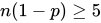

Suppose that people were sampled, and a share of them responded "yes". This sample proportion can be used instead of , which is unknown, to compute the sample mean, variance and standard deviation.

The sample mean is: .

The sample variance is: .

The sample standard deviation is: .

Example
[edit]Assume that we conduct a poll in which people are asked whether they support candidate A. We sample 1000 people of which 650 respond "yes". In this case

and . Therefore, we can approximate the binomial distribution by using the normal distribution.

As a rule of thumb, we want our poll result to be accurate within the 5% significance level. Therefore, we will compute the confidence interval:
The sample mean is: .

The sample variance is: .

The sample standard deviation is: .

We shall use the formula to create a confidence interval with 95% confidence level:

where is the population mean and is the z-score for 95% confidence level.


or:

That is, we are 95% confident that the true population mean, , is between 620.44 and 679.55.
Remembering that , we can say that or is 0.65 with a margin of error equal to 3% (we rounded the numbers).


Sample sizes
[edit]The number of people needed to create a valid sample depends on the population size and required margin of error.
We shall use Cochran's formula: ,

where is the z-score for a confidence level of and is the required margin of error.


Note that the function is maximized at , therefore, before starting sampling we will use to determine the sample size.


For example, assume that we want 95% confidence level and 5% margin of error:
.

Note that the required sample size is affected by the confidence level and margin of error.
If we want 99% confidence interval we have to sample 664 people, and, alternatively, if we want a margin of error of 2% we will have to sample 2401 people.[7]
For a finite population, when the sample is a large proportion of population, we modify the formula:
where N is the size of the entire population. Note that as N approaches infinity, the two formulas coincide, meaning the consideration of population size can only reduce the required sample size needed for a valid sample.

In the above example, if the entire population is 600 then we have to sample only 285 people ().

Sample and polling methods
[edit]Opinion polls for many years were maintained through telecommunications or in person-to-person contact. Methods and techniques vary, though they are widely accepted in most areas. Over the years, technological innovations have also influenced survey methods such as the availability of electronic clipboards[8] and Internet based polling.
Opinion polling developed into popular applications through popular thought, although response rates for some surveys declined. Also, the following has also led to differentiating results:[4] Some polling organizations, such as Angus Reid Public Opinion, YouGov and Zogby use Internet surveys, where a sample is drawn from a large panel of volunteers, and the results are weighted to reflect the demographics of the population of interest. In contrast, popular web polls draw on whoever wishes to participate.
Statistical learning methods have been proposed in order to exploit social media content (such as posts on the micro-blogging platform Twitter) for modelling and predicting voting intention polls.[9][10]
Benchmark polls
[edit]A benchmark poll is generally the first poll taken in a campaign. It is often taken before a candidate announces their bid for office, but sometimes it happens immediately following that announcement after they have had some opportunity to raise funds. This is generally a short and simple survey of likely voters. Benchmark polling often relies on timing, which can be a significant problem if a poll is conducted too early for anyone to know about the potential candidate. A benchmark poll needs to be undertaken when voters are starting to learn more about the possible candidate running for office.[11]
A benchmark poll serves a number of purposes for a campaign. First, it gives the candidate a picture of where they stand with the electorate before any campaigning takes place. If the poll is done prior to announcing for office the candidate may use the poll to decide whether or not they should even run for office. Secondly, it shows them where their weaknesses and strengths are in two main areas. The first is the electorate. A benchmark poll shows them what types of voters they are sure to win, those they are sure to lose, and everyone in-between these two extremes. This lets the campaign know which voters are persuadable so they can spend their limited resources in the most effective manner. Second, it can give them an idea of what messages, ideas, or slogans are the strongest with the electorate.[12]
Tracking polls
[edit]In a tracking poll responses are obtained in a number of consecutive periods, for instance daily, and then results are calculated using a moving average of the responses that were gathered over a fixed number of the most recent periods, for example the past five days.[13] In this example, the next calculated results will use data for five days counting backwards from the next day, namely the same data as before, but with the data from the next day included, and without the data from the sixth day before that day.
However, these polls are sometimes subject to dramatic fluctuations, and so political campaigns and candidates are cautious in analyzing their results. An example of a tracking poll that generated controversy over its accuracy, is one conducted during the 2000 U.S. presidential election, by the Gallup Organization. The results for one day showed Democratic candidate Al Gore with an eleven-point lead over Republican candidate George W. Bush. Then, a subsequent poll conducted just two days later showed Bush ahead of Gore by seven points. It was soon determined that the volatility of the results was at least in part due to an uneven distribution of Democratic and Republican affiliated voters in the samples. Though the Gallup Organization argued the volatility in the poll was a genuine representation of the electorate, other polling organizations took steps to reduce such wide variations in their results. One such step included manipulating the proportion of Democrats and Republicans in any given sample, but this method is subject to controversy.[14]
Deliberative opinion polls
[edit]Deliberative Opinion Polls combine the aspects of a public opinion poll and a focus group. These polls bring a group of voters and provide information about specific issues. They are then allowed to discuss those issues with the other voters. Once they know more about the issues, they are polled afterward on their thoughts. Many scholars argue that this type of polling is much more effective than traditional public opinion polling. Unlike traditional public polling, deliberative opinion polls measure what the public believes about issues after being offered information and the ability to discuss them with other voters. Since voters generally do not actively research various issues, they often base their opinions on these issues on what the media and candidates say about them. Scholars argued that these polls can truly reflect voters' feelings about an issue once they are given the necessary information to learn more about it. Despite this, there are two issues with deliberative opinion polls. First, they are expensive and challenging to perform since they require a representative sample of voters, and the information given on specific issues must be fair and balanced. Second, the results of deliberative opinion polls generally do not reflect the opinions of most voters since most voters do not take the time to research issues the way an academic researches issues.[11]
Exit polls
[edit]Exit polls interview voters just as they are leaving polling places. Unlike general public opinion polls, these are polls of people who voted in the election. Exit polls provide a more accurate picture of which candidates the public prefers in an election because people participating in the poll did vote in the election. Second, these polls are conducted across multiple voting locations across the country, allowing for a comparative analysis between specific regions. For example, in the United States, exit polls are beneficial in accurately determining how the state voters cast their ballot instead of relying on a national survey. Third, exit polls can give journalists and social scientists a greater understanding of why voters voted the way they did and what factors contributed to their vote.[11]
Exit polling has several disadvantages that can cause controversy depending on its use. First, these polls are not always accurate and can sometimes mislead election reporting. For instance, during the 2016 U.S. primaries, CNN reported that the Democratic primary in New York was too close to call, and they made this judgment based on exit polls. However, the vote count revealed that these exit polls were misleading, and Hillary Clinton was far ahead of Bernie Sanders in the popular vote, winning the state by 58% to 42% margin. The overreliance on exit polling leads to the second point of how it undermines public trust in the media and the electoral process. In the U.S., Congress and state governments have criticized the use of exit polling because Americans tend to believe more in the accuracy of exit polls. If an exit poll shows that American voters were leaning toward a particular candidate, most would assume that the candidate would win. However, as mentioned earlier, an exit poll can sometimes be inaccurate and lead to situations like the 2016 New York primary, where a news organization reports misleading primary results. Government officials argue that since many Americans believe in exit polls more, election results are likely to make voters not think they are impacted electorally and be more doubtful about the credibility of news organizations.[11]
Potential for inaccuracy
[edit]Over time, a number of theories and mechanisms have been offered to explain erroneous polling results. Some of these reflect errors on the part of the pollsters; many of them are statistical in nature. Some blame respondents for not providing genuine answers to pollsters, a phenomenon known as social desirability-bias (also referred to as the Bradley effect or the Shy Tory Factor); these terms can be quite controversial.[15]
Margin of error due to sampling
[edit]Polls based on samples of populations are subject to sampling error which reflects the effects of chance and uncertainty in the sampling process. Sampling polls rely on the law of large numbers to measure the opinions of the whole population based only on a subset, and for this purpose the absolute size of the sample is important, but the percentage of the whole population is not important (unless it happens to be close to the sample size). The possible difference between the sample and whole population is often expressed as a margin of error – usually defined as the radius of a 95% confidence interval for a particular statistic. One example is the percent of people who prefer product A versus product B. When a single, global margin of error is reported for a survey, it refers to the maximum margin of error for all reported percentages using the full sample from the survey. If the statistic is a percentage, this maximum margin of error can be calculated as the radius of the confidence interval for a reported percentage of 50%. For a poll with a random sample of 1,000 people reporting a proportion around 50% for some question, the sampling margin of error is approximately ±3% for the estimated proportion of the whole population.[16]
A 3% margin of error means that if the same procedure is used a large number of times, 95% of the time the true population average will be within the sample estimate plus or minus 3%. The margin of error can be reduced by using a larger sample, however if a pollster wishes to reduce the margin of error to 1% they would need a sample of around 10,000 people.[17] In practice, pollsters need to balance the cost of a large sample against the reduction in sampling error and a sample size of around 500–1,000 is a typical compromise for political polls. (To get complete responses it may be necessary to include thousands of additional participators.)[18][19]
Another way to reduce the margin of error is to rely on poll averages. This makes the assumption that the procedure is similar enough between many different polls and uses the sample size of each poll to create a polling average.[20] Another source of error stems from faulty demographic models by pollsters who weigh their samples by particular variables such as party identification in an election. For example, if you assume that the breakdown of the US population by party identification has not changed since the previous presidential election, you may underestimate a victory or a defeat of a particular party candidate that saw a surge or decline in its party registration relative to the previous presidential election cycle.
Sample Techniques are also used and recommended to reduce sample errors and errors of margin. In chapter four of author Herb Asher he says,"it is probability sampling and statistical theory that enable one to determine sampling error, confidence levels, and the like and to generalize from the results of the sample to the broader population from which it was selected. Other factors also come into play in making a survey scientific. One must select a sample of sufficient size. If the sampling error is too large or the level of confidence too low, it will be difficult to make reasonably precise statements about characteristics of the population of interest to the pollster. A scientific poll not only will have a sufficiently large sample, it will also be sensitive to response rates. Very low response rates will raise questions about how representative and accurate the results are. Are there systematic differences between those who participated in the survey and those who, for whatever reason, did not participate? Sampling methods, sample size, and response rates will all be discussed in this chapter" (Asher 2017).
A caution is that an estimate of a trend is subject to a larger error than an estimate of a level. This is because if one estimates the change, the difference between two numbers X and Y, then one has to contend with errors in both X and Y. A rough guide is that if the change in measurement falls outside the margin of error it is worth attention.
Nonresponse bias
[edit]Since some people do not answer calls from strangers, or refuse to answer the poll, poll samples may not be representative samples from a population due to a non-response bias. Response rates have been declining, and are down to about 10% in recent years.[21] Various pollsters have attributed this to an increased skepticism and lack of interest in polling.[22] Because of this selection bias, the characteristics of those who agree to be interviewed may be markedly different from those who decline. That is, the actual sample is a biased version of the universe the pollster wants to analyze. In these cases, bias introduces new errors, one way or the other, that are in addition to errors caused by sample size. Error due to bias does not become smaller with larger sample sizes, because taking a larger sample size simply repeats the same mistake on a larger scale. If the people who refuse to answer, or are never reached, have the same characteristics as the people who do answer, then the final results should be unbiased. If the people who do not answer have different opinions then there is bias in the results. In terms of election polls, studies suggest that bias effects are small, but each polling firm has its own techniques for adjusting weights to minimize selection bias.[23][24]
Response bias
[edit]Survey results may be affected by response bias, where the answers given by respondents do not reflect their true beliefs. This may be deliberately engineered by unscrupulous pollsters in order to generate a certain result or please their clients, but more often is a result of the detailed wording or ordering of questions (see below). Respondents may deliberately try to manipulate the outcome of a poll by e.g. advocating a more extreme position than they actually hold in order to boost their side of the argument or give rapid and ill-considered answers in order to hasten the end of their questioning. Respondents may also feel under social pressure not to give an unpopular answer. For example, respondents might be unwilling to admit to unpopular attitudes like racism or sexism, and thus polls might not reflect the true incidence of these attitudes in the population. In American political parlance, this phenomenon is often referred to as the Bradley effect. If the results of surveys are widely publicized this effect may be magnified – a phenomenon commonly referred to as the spiral of silence.
Use of the plurality voting system (select only one candidate) in a poll puts an unintentional bias into the poll, since people who favor more than one candidate cannot indicate this. The fact that they must choose only one candidate biases the poll, causing it to favor the candidate most different from the others while it disfavors candidates who are similar to other candidates. The plurality voting system also biases elections in the same way.
Some people responding may not understand the words being used, but may wish to avoid the embarrassment of admitting this, or the poll mechanism may not allow clarification, so they may make an arbitrary choice. Some percentage of people also answer whimsically or out of annoyance at being polled. This results in perhaps 4% of Americans reporting they have personally been decapitated.[25]
Wording of questions
[edit]Among the factors that impact the results of opinion polls are the wording and order of the questions being posed by the surveyor. Questions that intentionally affect a respondents answer are referred to as leading questions. Individuals and/or groups use these types of questions in surveys to elicit responses favorable to their interests.[26]
For instance, the public is more likely to indicate support for a person who is described by the surveyor as one of the "leading candidates". This description is "leading" as it indicates a subtle bias for that candidate, since it implies that the others in the race are not serious contenders. Additionally, leading questions often contain, or lack, certain facts that can sway a respondent's answer. Argumentative Questions can also impact the outcome of a survey. These types of questions, depending on their nature, either positive or negative, influence respondents' answers to reflect the tone of the question(s) and generate a certain response or reaction, rather than gauge sentiment in an unbiased manner.[27]
In opinion polling, there are also "loaded questions", otherwise known as "trick questions". This type of leading question may concern an uncomfortable or controversial issue, and/or automatically assume the subject of the question is related to the respondent(s) or that they are knowledgeable about it. Likewise, the questions are then worded in a way that limit the possible answers, typically to yes or no.[28]
Another type of question that can produce inaccurate results are "Double-Negative Questions". These are more often the result of human error, rather than intentional manipulation. One such example is a survey done in 1992 by the Roper Organization, concerning the Holocaust. The question read "Does it seem possible or impossible to you that the Nazi extermination of the Jews never happened?" The confusing wording of this question led to inaccurate results which indicated that 22 percent of respondents believed it seemed possible the Holocaust might not have ever happened. When the question was reworded, significantly fewer respondents (only 1 percent) expressed that same sentiment.[29]
Thus comparisons between polls often boil down to the wording of the question. On some issues, question wording can result in quite pronounced differences between surveys.[30][31] This can also, however, be a result of legitimately conflicted feelings or evolving attitudes, rather than a poorly constructed survey.[32]
A common technique to control for this bias is to rotate the order in which questions are asked. Many pollsters also split-sample. This involves having two different versions of a question, with each version presented to half the respondents.
The most effective controls, used by attitude researchers, are:
- asking enough questions to allow all aspects of an issue to be covered and to control effects due to the form of the question (such as positive or negative wording), the adequacy of the number being established quantitatively with psychometric measures such as reliability coefficients, and
- analyzing the results with psychometric techniques which synthesize the answers into a few reliable scores and detect ineffective questions.
These controls are not widely used in the polling industry.[why?]. However, as it is important that questions to test the product have a high quality, survey methodologists work on methods to test them. Empirical tests provide insight into the quality of the questionnaire, some may be more complex than others. For instance, testing a questionnaire can be done by:
- conducting cognitive interviewing. By asking a sample of potential-respondents about their interpretation of the questions and use of the questionnaire, a researcher can
- carrying out a small pretest of the questionnaire, using a small subset of target respondents. Results can inform a researcher of errors such as missing questions, or logical and procedural errors.
- estimating the measurement quality of the questions. This can be done for instance using test-retest,[33] quasi-simplex,[34] or mutlitrait-multimethod models.[35]
- predicting the measurement quality of the question. This can be done using the software Survey Quality Predictor (SQP).[36]
Involuntary facades and false correlations
[edit]One of the criticisms of opinion polls is that societal assumptions that opinions between which there is no logical link are "correlated attitudes" can push people with one opinion into a group that forces them to pretend to have a supposedly linked but actually unrelated opinion. That, in turn, may cause people who have the first opinion to claim on polls that they have the second opinion without having it, causing opinion polls to become part of self-fulfilling prophecy problems. It has been suggested that attempts to counteract unethical opinions by condemning supposedly linked opinions may favor the groups that promote the actually unethical opinions by forcing people with supposedly linked opinions into them by ostracism elsewhere in society making such efforts counterproductive, that not being sent between groups that assume ulterior motives from each other and not being allowed to express consistent critical thought anywhere may create psychological stress because humans are sapient, and that discussion spaces free from assumptions of ulterior motives behind specific opinions should be created. In this context, rejection of the assumption that opinion polls show actual links between opinions is considered important.[37][38]
Coverage bias
[edit]Another source of error is the use of samples that are not representative of the population as a consequence of the methodology used, as was the experience of The Literary Digest in 1936. For example, telephone sampling has a built-in error because in many times and places, those with telephones have generally been richer than those without.
In some places many people have only mobile telephones. Because pollsters cannot use automated dialing machines to call mobile phones in the United States (because the phone's owner may be charged for taking a call[39]), these individuals are typically excluded from polling samples. There is concern that, if the subset of the population without cell phones differs markedly from the rest of the population, these differences can skew the results of the poll.[40]
Polling organizations have developed many weighting techniques to help overcome these deficiencies, with varying degrees of success. Studies of mobile phone users by the Pew Research Center in the US, in 2007, concluded that "cell-only respondents are different from landline respondents in important ways, (but) they were neither numerous enough nor different enough on the questions we examined to produce a significant change in overall general population survey estimates when included with the landline samples and weighted according to US Census parameters on basic demographic characteristics."[41]

This issue was first identified in 2004,[42] but came to prominence only during the 2008 US presidential election.[43] In previous elections, the proportion of the general population using cell phones was small, but as this proportion has increased, there is concern that polling only landlines is no longer representative of the general population. In 2003, only 2.9% of households were wireless (cellphones only), compared to 12.8% in 2006.[44] This results in "coverage error". Many polling organisations select their sample by dialling random telephone numbers; however, in 2008, there was a clear tendency for polls which included mobile phones in their samples to show a much larger lead for Obama, than polls that did not.[45][46]
The potential sources of bias are:[47]
- Some households use cellphones only and have no landline. This tends to include minorities and younger voters; and occurs more frequently in metropolitan areas. Men are more likely to be cellphone-only compared to women.
- Some people may not be contactable by landline from Monday to Friday and may be contactable only by cellphone.
- Some people use their landlines only to access the Internet, and answer calls only to their cellphones.
Some polling companies have attempted to get around that problem by including a "cellphone supplement". There are a number of problems with including cellphones in a telephone poll:
- It is difficult to get co-operation from cellphone users, because in many parts of the US, users are charged for both outgoing and incoming calls. That means that pollsters have had to offer financial compensation to gain co-operation.
- US federal law prohibits the use of automated dialling devices to call cellphones (Telephone Consumer Protection Act of 1991). Numbers therefore have to be dialled by hand, which is more time-consuming and expensive for pollsters.
Failures
[edit]A widely publicized failure of opinion polling to date in the United States was the prediction that Thomas Dewey would defeat Harry S. Truman in the 1948 US presidential election. Major polling organizations, including Gallup and Roper, had indicated that Dewey would defeat Truman in a landslide; Truman won a narrow victory.
There were also substantial polling errors in the presidential elections of 1952, 1980, 1996, 2000, and 2016: while the first three correctly predicted the winner (albeit not the extent of their winning margin), with the last two correctly predicting the winner of the popular vote (but not the Electoral College).[48]
In the United Kingdom, most polls failed to predict the Conservative election victories of 1970 and 1992, and Labour's victory in February 1974. In the 2015 election, virtually every poll predicted a hung parliament with Labour and the Conservatives neck and neck, when the actual result was a clear Conservative majority. On the other hand, in 2017, the opposite appears to have occurred. Most polls predicted an increased Conservative majority, even though in reality the election resulted in a hung parliament with a Conservative plurality: some polls correctly predicted this outcome.
In New Zealand, the polls leading up to the 1993 general election predicted the governing National Party would increase its majority. However, the preliminary results on election night showed a hung parliament with National one seat short of a majority, leading to Prime Minister Jim Bolger exclaiming "bugger the pollsters" on live national television.[49][50] The official count saw National gain Waitaki to hold a one-seat majority and retain government.
Social media as a source of opinion on candidates
[edit]Social media today is a popular medium for the candidates to campaign and for gauging the public reaction to the campaigns. Social media can also be used as an indicator of the voter opinion regarding the poll. Some research studies have shown that predictions made using social media signals can match traditional opinion polls.[9][10]
Regarding the 2016 U.S. presidential election, a major concern has been that of the effect of false stories spread throughout social media. Evidence shows that social media plays a huge role in the supplying of news: 62 percent of US adults get news on social media.[51] This fact makes the issue of fake news on social media more pertinent. Other evidence shows that the most popular fake news stories were more widely shared on Facebook than the most popular mainstream news stories; many people who see fake news stories report that they believe them; and the most discussed fake news stories tended to favor Donald Trump over Hillary Clinton. As a result of these facts, some have concluded that if not for these stories, Donald Trump may not have won the election over Hillary Clinton.[52]
Influence
[edit]Effect on voters
[edit]By providing information about voting intentions, opinion polls can sometimes influence the behavior of electors, and in his book The Broken Compass, Peter Hitchens asserts that opinion polls are actually a device for influencing public opinion.[53] The various theories about how this happens can be split into two groups: bandwagon/underdog effects, and strategic ("tactical") voting.
A bandwagon effect occurs when the poll prompts voters to back the candidate shown to be winning in the poll. The idea that voters are susceptible to such effects is old, stemming at least from 1884; William Safire reported that the term was first used in a political cartoon in the magazine Puck in that year.[54] It has also remained persistent in spite of a lack of empirical corroboration until the late 20th century. George Gallup spent much effort in vain trying to discredit this theory in his time by presenting empirical research. A recent meta-study of scientific research on this topic indicates that from the 1980s onward the Bandwagon effect is found more often by researchers.[55]
The opposite of the bandwagon effect is the underdog effect. It is often mentioned in the media. This occurs when people vote, out of sympathy, for the party perceived to be "losing" the elections. There is less empirical evidence for the existence of this effect than there is for the existence of the bandwagon effect.[55]
The second category of theories on how polls directly affect voting is called strategic voting. This theory is based on the idea that voters view the act of voting as a means of selecting a government. Thus they will sometimes not choose the candidate they prefer on ground of ideology or sympathy, but another, less-preferred, candidate from strategic considerations. An example can be found in the 1997 United Kingdom general election. As he was then a Cabinet Minister, Michael Portillo's constituency of Enfield Southgate was believed to be a safe seat but opinion polls showed the Labour candidate Stephen Twigg steadily gaining support, which may have prompted undecided voters or supporters of other parties to support Twigg in order to remove Portillo. Another example is the boomerang effect where the likely supporters of the candidate shown to be winning feel that chances are slim and that their vote is not required, thus allowing another candidate to win. For party-list proportional representation opinion polling helps voters avoid wasting their vote on a party below the electoral threshold.[56]
In addition, Mark Pickup, in Cameron Anderson and Laura Stephenson's Voting Behaviour in Canada, outlines three additional "behavioural" responses that voters may exhibit when faced with polling data. The first is known as a "cue taking" effect which holds that poll data is used as a "proxy" for information about the candidates or parties. Cue taking is "based on the psychological phenomenon of using heuristics to simplify a complex decision" (243).[57]
The second, first described by Petty and Cacioppo (1996), is known as "cognitive response" theory. This theory asserts that a voter's response to a poll may not line with their initial conception of the electoral reality. In response, the voter is likely to generate a "mental list" in which they create reasons for a party's loss or gain in the polls. This can reinforce or change their opinion of the candidate and thus affect voting behaviour. Third, the final possibility is a "behavioural response" which is similar to a cognitive response. The only salient difference is that a voter will go and seek new information to form their "mental list", thus becoming more informed of the election. This may then affect voting behaviour.
These effects indicate how opinion polls can directly affect political choices of the electorate. But directly or indirectly, other effects can be surveyed and analyzed on all political parties. The form of media framing and party ideology shifts must also be taken under consideration. Opinion polling in some instances is a measure of cognitive bias, which is variably considered and handled appropriately in its various applications. In turn, non-nuanced reporting by the media about poll data and public opinions can thus even aggravate political polarization.[58]
Effect on politicians
[edit]![[icon]](https://en.wikipedia.org/wiki/File:Wiki_letter_w_cropped.svg) | This section needs expansion. You can help by adding to it. (March 2011) |
Starting in the 1980s, tracking polls and related technologies began having a notable impact on U.S. political leaders.[59] According to Douglas Bailey, a Republican who had helped run Gerald Ford's 1976 presidential campaign, "It's no longer necessary for a political candidate to guess what an audience thinks. He can [find out] with a nightly tracking poll. So it's no longer likely that political leaders are going to lead. Instead, they're going to follow."[59]
An example of opinion polls having significant impact on politicians is Ronald Reagan's advocacy for a voluntary social security program in the 1960s and early 1970s. Because polls showed that a large proportion of the public would not support such a program, he dropped the issue when he ran for presidency.[60]
Regulation
[edit]Some jurisdictions over the world restrict the publication of the results of opinion polls, especially during the period around an election, in order to prevent the possibly erroneous results from affecting voters' decisions. For instance, in Canada, it is prohibited to publish the results of opinion surveys that would identify specific political parties or candidates in the final three days before a poll closes.[61]
However, most Western democratic nations do not support the entire prohibition of the publication of pre-election opinion polls; most of them have no regulation and some only prohibit it in the final days or hours until the relevant poll closes.[62] A survey by Canada's Royal Commission on Electoral Reform reported that the prohibition period of publication of the survey results largely differed in different countries. Out of the 20 countries examined, 3 prohibit the publication during the entire period of campaigns, while others prohibit it for a shorter term such as the polling period or the final 48 hours before a poll closes.[61] In India, the Election Commission has prohibited it in the 48 hours before the start of polling.
Opinion poll in dictatorships
[edit]Opinion polls in dictatorships are often unreliable due to state control, lack of real political competition, and fear among respondents. In Russia, for example, the Levada Center’s director noted that polls are shaped by state media, with many people afraid to answer honestly because of possible negative consequences—even facing criminal charges for participating in certain polls. Across authoritarian regimes, polls are used more for propaganda or internal control than for genuinely measuring public opinion, and response bias is extremely common because people fear punishment for dissenting views.
The director of the Levada Center stated in 2015 that drawing conclusions from Russian poll results or comparing them to polls in democratic states was irrelevant, as there is no real political competition in Russia, where, unlike in democratic states, Russian voters are not offered any credible alternatives and public opinion is primarily formed by state-controlled media, which promotes those in power and discredits alternative candidates.[63] Many respondents in Russia do not want to answer pollsters' questions for fear of negative consequences.[64][65] On 23 March 2023, criminal case was opened against Moscow resident Yury Kokhovets, a participant in the Radio Liberty street poll. He faced up to 10 years in prison under Russia's 2022 war censorship laws.[66]
See also
[edit]- Deliberative opinion poll
- Entrance poll
- Electoral geography
- Europe Elects
- Everett Carll Ladd
- Exit poll
- Historical polling for U.S. Presidential elections
- List of heads of the executive by approval rating
- List of polling organizations
- Median voter theorem
- Metallic Metals Act
- Open access poll
- Psephology
- Political analyst
- Political data scientists
- Political forecasting
- Push poll
- Referendum
- Roper Center for Public Opinion Research
- American Association for Public Opinion Research
- World Association for Public Opinion Research
- Sample size determination
- Survey methodology
- Straw poll
- Swing (politics)
- Types of democracy
- Wiki survey
Footnotes
[edit]- ^ Tankard, James W. (1972). "Public Opinion Polling by Newspapers in the Presidential Election Campaign of 1824". Journalism Quarterly. 49 (2): 361–365. doi:10.1177/107769907204900219. ISSN 0022-5533. S2CID 144801377.
The earliest forerunners of the modern public opinion poll appear to be tallies of voter preferences reported by the Raleigh Star and North Carolina State Gazette and the Wilmington American Watchman and Delaware Advertiser prior to the election of 1824. A study of the background of the election shows these polling efforts were a natural outgrowth of a campaign involving the voters' first real choice of a president and four colorful candidates. Some researchers have attributed the origins of polling to other papers and other historical periods. Some have credited the Harrisburg Pennsylvanian and the Raleigh Star, or the Pennsylvanian alone, with reporting the first public opinion poll. Others give much later dates for the first poll, mentioning a Chicago Record survey during the 1896 presidential campaign and the New York Herald election forecasts prior to 1900. It now appears that the Pennsylvanian merely was reporting the results of the American Watchman poll, so that credit for the first polls should go to the Watchman and the Star.
- ^ Squire, Peverill (1988). "Why the 1936 Literary Digest Poll Failed". Public Opinion Quarterly. Archived from the original on 2022-01-04. Retrieved 2020-11-15 – via Issuu.
- ^ a b Dietrich, Bryce J. (2008), "Crossley, Archibald (1896–1985)", Encyclopedia of Survey Research Methods, Thousand Oaks: SAGE Publications, Inc., pp. 170–171, doi:10.4135/9781412963947, ISBN 9781412918084, retrieved 2021-05-22
- ^ a b Cantril, Hadley; Strunk, Mildred (1951). "Public Opinion, 1935–1946". Princeton University Press. p. vii. Archived from the original on 2009-06-29. Retrieved 2017-09-07.
- ^ Jackson Lears (1995). Fables Of Abundance: A Cultural History Of Advertising In America. Basic Books. p. 235. ISBN 9780465090754.
- ^ Jean M. Converse," Survey Research in the United States: Roots and Emergence 1960 (1987) pp: 114-24
- ^ "Sample size calculator". CheckMarket. Retrieved 2025-03-03.
- ^ G. Rowley, K. Barker, V. Callaghan (1986) “The Market Research Terminal & Developments in Survey Research”, European Journal of Marketing, Vol. 20 Issue: 2, pp.35 - 39.
- ^ a b "Vasileios Lampos, Daniel Preotiuc-Pietro and Trevor Cohn. A user-centric model of voting intention from social media. Proceedings of the 51st Annual Meeting of the Association for Computational Linguistics. ACL, pp. 993-1003, 2013 Retrieved 16-06-4". Archived from the original on 2015-11-11. Retrieved 2016-06-05.
- ^ a b Brendan O'Connor, Ramnath Balasubramanyan, Bryan R Routledge, and Noah A Smith. From Tweets to Polls: Linking Text Sentiment to Public Opinion Time Series. In Proceedings of the International AAAI Conference on Weblogs and Social Media. AAAI Press, pp. 122–129, 2010.
- ^ a b c d Asher, Herbert B. (2017). Polling and the public: what every citizen should know (Ninth ed.). Thousand Oaks, California: CQ Press, an imprint of SAGE Publications. ISBN 978-1-5063-5242-8.
- ^ Kenneth F. Warren (1992). "in Defense of Public Opinion Polling." Westview Press. p. 200-1.
- ^ "About the Tracking Polls". Cnn.com. Archived from the original on 2012-11-04. Retrieved 2013-02-18.
- ^ Asher, Herbert B. (16 August 2016). Polling and the public : what every citizen should know (Ninth ed.). Thousand Oaks, California: SAGE Publications. pp. 196–198. ISBN 978-1-5063-5242-8.
- ^ Moore, David S.; Notz, William (2017). Statistics: concepts and controversies (Ninth ed.). New York: W.H. Freeman and Company, Macmillan Learning. p. 63. ISBN 978-1464192937.
- ^ Halpin, Brendan (2016-02-24). "Pollsters' 3% Margin of Error". Sociology, Statistics and Software. Archived from the original on 2024-11-14. Retrieved 2025-03-03.
- ^ An estimate of the margin of error in percentage terms can be gained by the formula 100 ÷ square root of sample size
- ^ 20 Questions Journalists Should Ask About Poll Results Archived 2016-06-04 at the Wayback Machine, National Council on Public Polls Retrieved 2016-06-05
- ^ Margin of Sampling Error and Credibility Interval Archived 2016-07-07 at the Wayback Machine, American Association for Public Opinion Research, Retrieved 2016-06-05
- ^ Lynch, Scott M. Introduction to Bayesian Statistics and Estimation for Social Scientists (2007).
- ^ Will Oremus (2012-05-17). "Minority Opinions:Hardly anyone responds to public opinion surveys anymore. Can we still trust them?". Slate. Retrieved 2013-11-21.
- ^ Asher, Herb (2016-08-16). Polling and the Public (9th ed.). CQ Press. p. 28. ISBN 978-1506352435.
- ^ Langer, Gary (May 2003). "About Response Rates: Some Unresolved Questions" (PDF). ABC News. Archived (PDF) from the original on 2017-07-20. Retrieved 2010-05-17.
- ^ Response Rates: An Overview Archived 2019-07-12 at the Wayback Machine American Association for Public Opinion Research, Retrieved 2016-06-05
- ^ "Episode 714: Can A Game Show Lose?". Planet Money. NPR. 27 July 2016. Archived from the original on 1 July 2020. Retrieved 30 June 2020.
- ^ Asher, Herbert B. (16 August 2016). Polling and the public : what every citizen should know (Ninth ed.). Thousand Oaks, California: SAGE Publications. p. 75. ISBN 978-1-5063-5242-8.
- ^ Asher, Herbert B. (16 August 2016). Polling and the public : what every citizen should know (Ninth ed.). Thousand Oaks, California: SAGE CQ Press. pp. 82–86. ISBN 978-1-5063-5242-8.
- ^ "Question Wording - AAPOR". www.aapor.org. Archived from the original on 28 October 2020. Retrieved 27 September 2020.
- ^ Asher, Herbert B. (16 August 2016). Polling and the public : what every citizen should know (Ninth ed.). Thousand Oaks, California: SAGE Publications. p. 82. ISBN 978-1-5063-5242-8.
- ^ Government Surveillance: A Question Wording Experiment Archived 2016-05-18 at the Wayback Machine, Pew Research Center Published 2013-07-26 Retrieved 2016-06-05
- ^ What's In A Name? Global Warming vs Climate Change Archived 2016-08-13 at the Wayback Machine, Yale Program on Climate Change Communication, Published 2014-05-27, Retrieved 2016-06-05
- ^ "The Seven Stages of Public Opinion Public Agenda". Publicagenda.org. Archived from the original on 2012-10-25. Retrieved 2013-02-18.
- ^ Lord, F. and Novick, M. R.(1968). Statistical theories of mental test scores. Addison – Wesley.
- ^ Heise, D. R.(1969). Separating reliability and stability in test-retest correlation. American Sociological Review, 34, 93-101.
- ^ Andrews, F. M. (1984). Construct validity and error components of survey measures: a structural modelling approach. Public Opinion Quarterly, 48, 409-442.
- ^ Saris, W. E. and Gallhofer, I. N. (2014). Design, evaluation and analysis of questionnaires for survey research. Second Edition. Hoboken, Wiley.
- ^ "Political Polling in the Digital Age: The Challenge of Measuring and Understanding Public Opinion" by Robert K. Goidel, yr twenty-eleven
- ^ "Understanding Public Opinion Polls" by Jelke Bethlehem, yr twenty-seventeen
- ^ http://transition.fcc.gov/cgb/policy/TCPA-Rules.pdf Telephone Consumer Protection Act at the Wayback Machine (archived 2015-05-21)
- ^ The Growing Gap between Landline and Dual Frame Election Polls: Republican Vote Share Bigger in Landline-Only Surveys Archived 2016-05-18 at the Wayback Machine Pew Research Center, 2010-11-22; Retrieved 2016-06-05
- ^ Keeter, Scott (2007-06-27). "How Serious Is Polling's Cell-Only Problem?". Pew Research Center Publications. Archived from the original on 2008-10-30. Retrieved 2008-11-01.
- ^ Blumenthal, Mark (2008-09-19). "More Pollsters Interviewing By Cell Phone". Pollster.com. Archived from the original on 2008-11-21. Retrieved 2008-11-04.
- ^ Blumenthal, Mark (2008-07-17). "New Pew data on cell phones". Pollster. Archived from the original on 2008-10-11. Retrieved 2008-11-04.
- ^ Blumberg SJ, Luke JV (2007-05-14). Wireless Substitution: Early Release of Estimates Based on Data from the National Health Interview Survey, July–December 2006 (PDF) (Report). Centers for Disease Control. Archived (PDF) from the original on 2009-06-06. Retrieved 2009-06-22.
- ^ Silver, Nate (2008-11-02). "The Cellphone effect, continued". FiveThirtyEight. Archived from the original on 2008-12-04. Retrieved 2008-11-04.
- ^ Blumenthal, Mark (2008-10-17). "More Cell Phone Data from Gallup". Pollster.com. Archived from the original on 2013-01-31. Retrieved 2008-11-04.
- ^ Silver, Nate (2008-07-22). "The Cellphone Problem, Revisited". FiveThirtyEight. Archived from the original on 2009-01-06. Retrieved 2008-11-04.
- ^ Campbell, W. Joseph (2020). Lost in a Gallup: Polling Failure in U.S. Presidential Elections. University of California Press.
- ^ McCulloch, Craig (2 April 2017). "Pollsters, prophets and politics: On the ball or off the mark?". Radio New Zealand. Archived from the original on 30 January 2019. Retrieved 3 June 2020.
- ^ "This much is clear: 100% of pollsters have got no idea". Stuff. 2019-06-10. Archived from the original on 2020-06-03. Retrieved 2020-06-03.
- ^ "News Use Across Social Media Platforms 2016". Pew Research Center's Journalism Project. 2016-05-26. Archived from the original on 2017-01-15. Retrieved 2017-10-06.
- ^ Allcott, Hunt; Gentzkow, Matthew (Spring 2017). "Social Media and Fake News in the 2016 Election" (PDF). Journal of Economic Perspectives. 31 (2): 211–236. doi:10.1257/jep.31.2.211. S2CID 32730475. Archived (PDF) from the original on 2017-10-18. Retrieved 2017-10-06 – via Stanford.
- ^ Hitchens, Peter (2009). "Chapter 1, Guy Fawkes Gets a Blackberry". The Broken Compass: How British Politics Lost its Way. Continuum International Publishing Group Ltd. ISBN 978-1-84706-405-9.
- ^ Safire, William, Safire's Political Dictionary, page 42. Random House, 1993.
- ^ a b Irwin, Galen A. and Joop J. M. Van Holsteyn. Bandwagons, Underdogs, the Titanic and the Red Cross: The Influence of Public Opinion Polls on Voters (2000).
- ^ Fredén, Annika (2017). "Opinion Polls, Coalition Signals and Strategic Voting: Evidence from a Survey Experiment". Scandinavian Political Studies. 40 (3): 247–264. doi:10.1111/1467-9477.12087.
- ^ Pickup, Mark (2010). "Election Campaign Polls and Democracy in Canada: Examining the Evidence behind the Common Claims". In Anderson, Cameron; Stephenson, Laura (eds.). Voting Behaviour in Canada. Vancouver: UBC Press. pp. 243–278.
- ^ Willems, Jurgen; Meyfroodt, Kenn (2024-01-30). "Debate: Reporting pre-election polls: it is less about average Jane and Joe, and more about polarized Karen and Kevin". Public Money & Management. 44 (3): 185–186. doi:10.1080/09540962.2024.2306912. hdl:1854/LU-01HNDE8TMQF8BFNFMTD2P3A21T. ISSN 0954-0962.
- ^ a b Kaiser, Robert G. (March 9, 2011). "David S. Broder: The best political reporter of his time". The Washington Post. Archived from the original on 2011-06-29. Retrieved 2011-03-09.
- ^ Erikson, Robert S.; Tedin, Kent L. (2015). American Public Opinion: Its Origins, Content and Impact (9th ed.). s.l: Taylor and Francis. p. 13. ISBN 978-1-317-35039-2.
- ^ a b Claude Emery (January 1994), Public opinion polling in Canada, Library of Parliament, Canada, archived from the original on 2010-07-30, retrieved 2010-07-17
- ^ Tim Bale (2002). "Restricting the broadcast and publication of pre-election and exit polls: some selected examples". Representation. 39 (1): 15–22. doi:10.1080/00344890208523210. S2CID 153407445.
- ^ "Opinion: The truth about Putin's 86-percent approval rating. How people fail to understand survey data about support for the Kremlin". Meduza. Retrieved 10 December 2015.
- ^ "In Russia, opinion polls are a political weapon". openDemocracy. 9 March 2022.
- ^ Yaffa, Joshua (29 March 2022). "Why Do So Many Russians Say They Support the War in Ukraine?". The New Yorker.
- ^ "Russian police upgrade charges against Moscow resident in 'fake news' case over comment for Radio Liberty". Novaya Gazeta. 30 April 2023.
References
[edit]- Asher, Herbert: Polling and the Public. What Every Citizen Should Know (4th ed. CQ Press, 1998)
- Bourdieu, Pierre, "Public Opinion does not exist" in Sociology in Question, London, Sage (1995).
- Bradburn, Norman M. and Seymour Sudman. Polls and Surveys: Understanding What They Tell Us (1988).
- Cantril, Hadley. Gauging Public Opinion (1944) online.
- Cantril, Hadley and Mildred Strunk, eds. Public Opinion, 1935–1946 (1951), massive compilation of many public opinion polls online
- Converse, Jean M. Survey Research in the United States: Roots and Emergence 1890–1960 (1987), the standard history.
- Crespi, Irving. Public Opinion, Polls, and Democracy (1989).
- Gallup, George. Public Opinion in a Democracy (1939).
- Gallup, Alec M. ed. The Gallup Poll Cumulative Index: Public Opinion, 1935–1997 (1999) lists 10,000+ questions, but no results.
- Gallup, George Horace, ed. The Gallup Poll; Public Opinion, 1935–1971 3 vol (1972) summarizes results of each poll.
- Geer, John Gray. Public opinion and polling around the world: a historical encyclopedia (2 vol. Abc-clio, 2004)
- Glynn, Carroll J., Susan Herbst, Garrett J. O'Keefe, and Robert Y. Shapiro. Public Opinion (1999) textbook
- Lavrakas, Paul J. et al. eds. Presidential Polls and the News Media (1995)
- Moore, David W. The Superpollsters: How They Measure and Manipulate Public Opinion in America (1995).
- Niemi, Richard G., John Mueller, Tom W. Smith, eds. Trends in Public Opinion: A Compendium of Survey Data (1989).
- Oskamp, Stuart and P. Wesley Schultz; Attitudes and Opinions (2004).
- Robinson, Claude E. Straw Votes (1932).
- Robinson, Matthew Mobocracy: How the Media's Obsession with Polling Twists the News, Alters Elections, and Undermines Democracy (2002).
- Rogers, Lindsay. The Pollsters: Public Opinion, Politics, and Democratic Leadership (1949).
- Traugott, Michael W. The Voter's Guide to Election Polls 3rd ed. (2004).
- James G. Webster, Patricia F. Phalen, Lawrence W. Lichty; Ratings Analysis: The Theory and Practice of Audience Research Lawrence Erlbaum Associates, 2000.
- Young, Michael L. Dictionary of Polling: The Language of Contemporary Opinion Research (1992).
Additional sources
[edit]- Brodie, Mollyann, et al. "The Past, Present, And Possible Future Of Public Opinion On The ACA: A review of 102 nationally representative public opinion polls about the Affordable Care Act, 2010 through 2019." Health Affairs 39.3 (2020): 462–470.
- Dyczok, Marta. "Information wars: hegemony, counter-hegemony, propaganda, the use of force, and resistance." Russian Journal of Communication 6#2 (2014): 173–176.
- Eagly, Alice H., et al. "Gender stereotypes have changed: A cross-temporal meta-analysis of US public opinion polls from 1946 to 2018." American psychologist 75.3 (2020): 301+. online
- Fernández-Prados, Juan Sebastián, Cristina Cuenca-Piqueras, and María José González-Moreno. "International public opinion surveys and public policy in Southern European democracies." Journal of International and Comparative Social Policy 35.2 (2019): 227–237. online[dead link]
- Kang, Liu, and Yun-Han Chu. "China's Rise through World Public Opinion: Editorial Introduction." Journal of Contemporary China 24.92 (2015): 197–202; polls in US and China
- Kim So Young, Wolinsky-Nahmias Yael (2014). "Cross-national public opinion on climate change: the effects of affluence and vulnerability". Global Environmental Politics. 14 (1): 79–106. Bibcode:2014GlEnP..14...79K. doi:10.1162/glep_a_00215. S2CID 55878738.
- Murphy, Joe, et al. "Social Media in Public Opinion Research: Report of the AAPOR Task Force on Emerging Technologies in Public Opinion Research." American Association for Public Opinion Research (2014). online
- Shalev, E., & Peer, E. (2023). Predicting a win by a small margin: The effect of graphic scaling in published polls on voters' predictions. Journal of Behavioral Decision Making, 36(4). Online
External links
[edit]


| International | |
|---|---|
| National | |
| Other | |

Opinion poll
View on GrokipediaFundamentals
Definition and Core Principles
An opinion poll is a survey conducted to gauge the views, attitudes, or preferences of a defined population by querying a subset of individuals selected through systematic methods. Unlike informal straw polls or self-selected samples, scientific opinion polls rely on probability-based sampling to produce estimates that can be generalized to the broader population with quantifiable uncertainty.[8][9] The core principle of representativeness underpins opinion polling, achieved primarily through random selection processes where each member of the target population has a known, non-zero probability of inclusion in the sample. This probabilistic foundation enables the application of statistical theory to infer population parameters, such as proportions supporting a candidate or policy, from sample data. Without random sampling, polls risk systematic biases that distort results, as seen in historical failures like the 1936 Literary Digest poll, which used non-representative telephone lists favoring higher-income respondents.[9][1] Reliability in opinion polls further demands attention to sources of error, including sampling variability quantified by the margin of error—typically calculated as approximately for 95% confidence, where is the estimated proportion and is the sample size—and non-sampling errors from question design, non-response, or interviewer influence. Effective polls mitigate these through neutral wording, randomized question order, and high response rates, while disclosing methodology details for scrutiny. Professional standards, such as those from the American Association for Public Opinion Research, emphasize transparency and ethical practices to uphold validity, recognizing that low-quality execution can propagate misinformation despite apparent precision.[10][9]Sampling and Statistical Foundations
Probability sampling forms the cornerstone of reliable opinion polling, enabling statisticians to draw inferences about an entire population from a subset by ensuring every unit has a known, non-zero probability of selection. This approach underpins the calculation of sampling error and confidence intervals, distinguishing scientific polls from anecdotal surveys. In contrast, non-probability methods, such as convenience or quota sampling, select respondents based on accessibility or quotas without defined probabilities, precluding formal error estimation and often introducing unquantifiable biases.[11][12] Common probability techniques include simple random sampling, where units are drawn with equal chance from a complete frame like voter registries, though logistical challenges favor multi-stage variants: cluster sampling groups the population into geographic or administrative units before random selection within clusters, while stratified sampling partitions by key demographics (e.g., age, region) to mirror population proportions and reduce variance. The central limit theorem justifies treating sample proportions as approximately normal for large samples, allowing unbiased estimation of population parameters via the law of large numbers. Design effects account for deviations from simple random sampling, adjusting effective sample size downward in complex designs.[9][1][13] For binary outcomes typical in polls (e.g., support vs. opposition), the sample proportion estimates the population proportion , with variance approximated as . The standard error is , and the 95% confidence interval assumes normality when and , yielding , often termed the margin of error (MoE). Sample size inversely affects MoE, with maximum uncertainty at ; for instance, yields roughly 3.1% MoE, while gives about 4.9%, excluding non-sampling errors like nonresponse.[14][15]| Sample Size (n) | Approximate MoE at p=0.5 (95% CI) |
|---|---|
| 400 | ±4.9% |
| 1,000 | ±3.1% |
| 2,500 | ±2.0% |
Historical Development
Origins and Early Failures
The earliest precursors to modern opinion polls emerged in the United States during the 1824 presidential election, when newspapers began publishing informal "straw polls" to gauge voter sentiment.[18] These proto-polls, such as one conducted by the Harrisburg Pennsylvanian aggregating results from 25 locations, indicated John Quincy Adams leading Andrew Jackson, reflecting a non-representative snapshot of partisan strongholds rather than a national cross-section.[4] Straw polls proliferated in the 19th century as newspapers, including major outlets like the New York Sun and Chicago Tribune, canvassed towns, counties, or subscribers via mail-in ballots to predict election outcomes, often as a novelty to boost circulation.[3] These early efforts lacked scientific rigor, relying on voluntary responses from accessible populations such as literate urban dwellers or party affiliates, which introduced inherent selection biases favoring engaged or affluent respondents.[19] For instance, 19th-century polls frequently overestimated support for Whig or Republican candidates in regional samples, failing to capture broader rural or immigrant sentiments, as evidenced by discrepancies in the 1832 and 1840 elections where straw poll favorites like Henry Clay underperformed actual results.[6] Critics at the time, including political analysts, noted the polls' susceptibility to manipulation through self-selected participation, yet their popularity endured due to the absence of systematic alternatives for measuring public opinion.[20] The most notorious early failure occurred in the 1936 U.S. presidential election, when The Literary Digest's massive straw poll predicted a landslide victory for Republican Alf Landon over incumbent Democrat Franklin D. Roosevelt by a 57% to 43% margin.[21] The poll drew its sample of nearly 10 million potential respondents from telephone directories and automobile registration lists, which during the Great Depression disproportionately represented wealthier, urban Republicans less affected by economic hardship—Roosevelt's core support base among lower-income voters was systematically underrepresented.[22] Despite returning over 2.3 million ballots, the low response rate of about 24% amplified nonresponse bias, as Roosevelt supporters were less likely to reply, skewing results further; in reality, Roosevelt secured 61% of the popular vote and 523 of 531 electoral votes.[23] This debacle exposed the causal flaws in non-probability sampling: frame biases from excluding non-telephone-owning households (over 70% of Americans at the time) and self-selection effects that favored opponents of the New Deal, undermining the poll's apparent scale.[24] Empirical analyses later confirmed that even adjusting for known demographics could not fully salvage the predictions, attributing the error primarily to unrepresentative sampling rather than mere chance.[25] The failure eroded public trust in large-scale straw polls and catalyzed the shift toward quota and probability sampling methods pioneered by George Gallup and Elmo Roper, who accurately forecasted Roosevelt's win that year using smaller, stratified samples.[3]Emergence of Scientific Methods
The spectacular failure of the Literary Digest poll in the 1936 U.S. presidential election, which surveyed over 10 million respondents via mailed ballots drawn from telephone directories and automobile registration lists but predicted a landslide victory for Republican Alf Landon over incumbent Democrat Franklin D. Roosevelt (57% to 43%), underscored the limitations of non-representative, voluntary-response sampling.[26] In reality, Roosevelt secured 61% of the popular vote and 523 of 531 electoral votes, with the poll's bias stemming from over-sampling affluent, urban, and Republican-leaning respondents who were more likely to own phones and cars during the Great Depression, as well as low response rates (about 20%) skewed toward Landon supporters.[22] This debacle eroded public and media trust in haphazard "straw" polls, catalyzing a shift toward systematic methodologies that prioritized representativeness over sheer volume.[3] In response, pioneers like George Gallup, Elmo Roper, and Archibald Crossley developed quota sampling in the mid-1930s, assigning interviewers fixed quotas of respondents matching known population demographics such as age, sex, occupation, and socioeconomic status to mirror the electorate without full randomization.[27] Gallup, who founded the American Institute of Public Opinion in 1935, applied this approach with face-to-face interviews and sample sizes of around 3,000, correctly forecasting Roosevelt's victory at 56% to 44%—a margin within 2% of the actual outcome.[28] Quota sampling represented an empirical advance by reducing selection bias through deliberate stratification, though it relied on interviewer discretion for within-quota choices, introducing potential subjectivity; Gallup mitigated this via standardized questionnaires, interviewer training, and validation techniques like split-ballot experiments, where subsets of the sample faced varied question orders to test response stability.[29] These methods gained institutional traction post-1936, with newspapers syndicating Gallup's results and the founding of Public Opinion Quarterly in 1937 to disseminate polling science amid academic skepticism from statisticians advocating probability theory.[6] By 1940, Gallup formalized principles in The Pulse of Democracy, emphasizing small, controlled samples over mass unsolicited queries, while Roper and Crossley independently refined similar quota systems for market and political research.[3] Though quota sampling yielded accurate 1936-1940 predictions, its non-probabilistic nature later revealed hidden turnout biases, prompting a gradual transition to area-probability sampling by the 1950s; nonetheless, the 1930s innovations established polling as a verifiable empirical tool, distinct from anecdotal or convenience sampling.[30]Expansion and Institutionalization
The post-World War II period marked a phase of rapid expansion for scientific opinion polling, driven by increased demand from media outlets, political campaigns, and market researchers seeking reliable public sentiment data. Following methodological refinements in the 1930s, the number of surveys conducted by major U.S. organizations—such as Gallup, Roper, Crossley, and the National Opinion Research Center—surpassed 400 between 1936 and 1945 alone, laying groundwork for broader application beyond elections to social and economic issues.[31][32] This growth accelerated after 1945, as polling integrated into syndicated newspaper columns and early television broadcasts, transforming it from an experimental tool into a staple of journalistic practice.[33] Institutionalization advanced through the formation of professional bodies aimed at standardizing methods and addressing errors, notably the 1948 U.S. presidential election mispredictions that prompted self-scrutiny among practitioners. The American Association for Public Opinion Research (AAPOR) was established in December 1947 by leading pollsters to foster rigorous survey techniques, ethical guidelines, and knowledge sharing, marking the field's shift toward self-regulation and academic legitimacy.[34] Concurrently, Elmo Roper donated his polling archives to Williams College in 1947, creating the Roper Center for Public Opinion Research as the world's first social science data repository; this encouraged data preservation and secondary analysis, enabling empirical validation of polling accuracy over time.[35] By the 1950s and 1960s, the polling industry professionalized further with the proliferation of firms and the adoption of quota sampling refinements to mitigate biases identified in earlier quota-based approaches. Organizations like Gallup expanded internationally through affiliates, while domestic entities diversified into consumer polling, contributing to the field's economic institutionalization as a multimillion-dollar sector intertwined with advertising and campaign consulting.[6] Despite persistent challenges, such as nonresponse biases emerging with suburbanization, these developments embedded polling within democratic processes, though critics noted risks of overreliance on aggregates that could obscure underlying voter volatility.[36]Digital and Modern Shifts
The proliferation of internet access in the 1990s enabled the initial transition from telephone-based opinion polling to digital methods, with early online surveys emerging as supplements to traditional approaches. By the early 2000s, pollsters increasingly adopted web-based questionnaires to address declining telephone response rates, which had dropped below 10% for live interviewer surveys due to factors like caller ID, voicemail, and the shift to mobile-only households.[37][38] This migration accelerated as broadband penetration grew, allowing for more complex question formats and real-time data collection, though initial implementations relied on opt-in panels prone to self-selection biases that skewed toward younger, urban, and higher-income respondents.[39] Innovations in probability-based online panels marked a key advancement around 1999, with organizations like Knowledge Networks (later GfK) introducing methods that recruited representative samples via random-digit dialing and provided internet access to non-users to mitigate coverage errors.[40] By the 2010s, online polling dominated public opinion landscapes, comprising the majority of national surveys as telephone methods became cost-prohibitive and less viable amid widespread cell phone usage.[38] Mixed-mode approaches, combining online with telephone or mail, gained traction post-2016 to improve representativeness, particularly for underrepresented groups like older adults or rural populations with limited digital access.[37] The COVID-19 pandemic from 2020 further entrenched digital shifts, prompting rapid adoption of text-based and app-integrated polling to bypass in-person and phone constraints, while mobile-optimized surveys addressed the rise of smartphone ubiquity.[40] Contemporary developments include integration of machine learning for response weighting and predictive modeling, as well as experimental use of social media data for sentiment analysis, though these supplements remain controversial due to algorithmic biases and lack of verifiability compared to direct sampling.[41] Despite efficiencies in speed and scale—enabling polls of thousands in days rather than weeks—digital methods continue to grapple with nonresponse biases and digital divides, necessitating ongoing methodological refinements for causal accuracy in public opinion measurement.[37]Polling Methodologies
Sampling Strategies
Probability sampling methods, which assign a known, non-zero probability of selection to every unit in the target population, form the theoretical foundation for unbiased estimation in opinion polls, enabling calculation of sampling error and confidence intervals.[11] These include simple random sampling (SRS), where units are selected via random mechanisms like lottery draws from a complete list (sampling frame); systematic sampling, which picks every k-th unit after a random start; stratified sampling, dividing the population into homogeneous subgroups (strata) such as age, race, or region before proportional random selection within each; and cluster sampling, grouping the population into clusters (e.g., geographic areas) and randomly selecting entire clusters for surveying to reduce costs.[13] [42] In practice, pollsters often combine these in multistage designs, such as stratifying by state or demographics from census data and clustering within counties, as seen in national election surveys where full SRS proves infeasible due to incomplete frames like voter registries excluding non-voters.[43] Stratified sampling enhances precision by ensuring representation of key subgroups, particularly useful in heterogeneous electorates; for instance, oversampling minorities or low-propensity voters adjusts for known imbalances, with allocation either proportional to population shares or optimal based on variance minimization formulas.[44] Cluster and systematic variants further adapt to logistical constraints, such as random digit dialing (RDD) generating phone numbers to cover unlisted lines, historically yielding response rates above 50% in the 1990s but now below 10% amid cell phone shifts and caller ID avoidance.[45] [11] Probability frames have evolved to include address-based sampling (ABS) from postal records or dual-frame RDD for landlines and cells, improving coverage of hard-to-reach groups like the elderly or rural residents, though undercoverage persists for the homeless or recent movers.[46] Non-probability sampling, lacking calculable selection probabilities, relies on purposive selection or self-enrollment, encompassing quota sampling (mirroring population proportions via interviewer judgment, as in early Gallup polls), convenience sampling (e.g., street intercepts), and opt-in online panels where volunteers respond for incentives.[42] [9] These methods dominate modern polling due to lower costs and faster turnaround—over 70% of U.S. polls by 2020 used online opt-in—but introduce selection bias, as participants differ systematically from non-responders, often skewing toward educated, urban, or ideologically extreme individuals.[11] Empirical comparisons show probability samples outperforming non-probability in accuracy for demographic and attitudinal estimates; a 2023 Pew analysis found opt-in samples about half as precise as probability-based ones for vote intention, with mean absolute errors 2-3 points higher in benchmarks against election results.[47] [48] Post-hoc weighting mitigates but cannot fully eliminate biases, as unmodeled confounders like turnout propensity persist, evidenced by non-probability polls underestimating conservative support in the 2016 U.S. election by margins exceeding sampling error.[17] Hybrid approaches integrate probability benchmarks to calibrate non-probability data, such as using small probability samples for raking weights on demographics and partisanship, yet AAPOR standards caution that such methods forfeit inferential guarantees and risk model failure under shifting behaviors like pandemic-induced response patterns.[11] [49] Overall, while probability strategies uphold causal realism by linking sample statistics to population parameters via design-based inference, non-probability alternatives prioritize feasibility at the expense of verifiability, with accuracy hinging on opaque adjustments whose validity erodes when population dynamics outpace historical data.[50][51]Data Collection Approaches
Data collection in opinion polls primarily occurs through interviewer-administered modes, such as telephone and in-person interviews, or self-administered modes, including mail and online surveys.[9] Interviewer-administered approaches allow for clarification of questions and probing but introduce potential interviewer bias, while self-administered methods reduce costs and enable anonymity yet suffer from lower response rates and respondent misinterpretation.[52] Selection of mode depends on factors like target population coverage, budget constraints, and desired response quality, with shifts toward digital methods driven by declining landline usage and rising nonresponse.[11] Telephone polling, historically dominant, employs random digit dialing (RDD) to generate probability samples from landline and cellular frames, ensuring each number has a known selection probability.[11] Dual-frame RDD designs address cell-only households, which comprised over 60% of U.S. adults by 2020, mitigating coverage bias from landline-only sampling.[53] However, response rates have plummeted to below 10% in recent years due to caller ID screening, robocall fatigue, and privacy concerns, necessitating weighting adjustments that can amplify variance.[11] In-person or face-to-face interviews provide high data quality through visual cues and rapport-building, often using address-based sampling (ABS) for clustered household selection.[1] This mode achieves response rates around 20-30% but incurs high costs—up to 10 times those of telephone surveys—and logistical challenges, limiting its use to specialized studies or areas with low telephone penetration.[9] Empirical comparisons show in-person methods yield more accurate estimates for sensitive topics due to reduced social desirability bias in anonymous settings, though travel requirements constrain scalability.[52] Mail surveys distribute paper questionnaires via postal services, selected through probability sampling like ABS, offering broad geographic coverage without technological barriers.[1] Response rates typically range from 10-20%, with advantages in reaching older or rural demographics averse to digital tools, but disadvantages include lengthy field periods (weeks to months) and errors from unclear instructions.[9] Follow-up mailings or incentives can boost participation, yet this mode has declined amid rising postage costs and email preferences.[52] Online data collection has surged, utilizing web panels where respondents complete digital questionnaires, either via opt-in recruitment or probability-recruited panels like Pew's American Trends Panel, initially drawn from RDD or ABS and followed longitudinally.[54] Opt-in panels, common in commercial polling, enable rapid deployment and low costs but introduce severe selection bias, as participants self-select based on internet access and motivation, often overrepresenting educated urbanites.[11] Probability-based online modes mitigate this through initial random recruitment, achieving coverage of 80-90% of U.S. adults with internet, though device effects (e.g., mobile vs. desktop) can influence response patterns.[54] Mixed-mode approaches combine multiple methods sequentially or concurrently, such as telephone follow-ups to online nonrespondents, to optimize coverage and reduce bias while managing costs. Adopted widely post-2016 due to unimode failures, these designs—for instance, starting with cheaper online then escalating to phone—improve representativeness but complicate comparability across modes owing to measurement differences, like higher item nonresponse in self-administered formats.[53] AAPOR guidelines emphasize transparency in mode reporting to assess validity, as hybrid strategies have shown marginal accuracy gains in pre-election contexts.[46]Specialized Poll Types
Benchmark polls, conducted early in a political campaign, provide an initial snapshot of voter preferences, perceptions of candidates, and salient issues to guide strategic planning.[55][56] These surveys typically involve larger samples than subsequent polls and focus on broad attitudes rather than daily fluctuations, allowing campaigns to allocate resources toward addressing identified weaknesses or amplifying strengths.[57] Tracking polls, by contrast, consist of frequent—often daily—surveys throughout a campaign to monitor shifts in public opinion, candidate favorability, and momentum.[55][57] With smaller sample sizes to enable rapid turnaround, they enable real-time adjustments to messaging or tactics in response to emerging trends, such as voter turnout projections or response to debates.[56] Brushfire polls serve as interim assessments between benchmark and tracking efforts, testing specific campaign messages, advertisements, or policy positions on targeted voter segments.[55][58] These polls, named for their role in addressing "hot spots" or sudden issue flare-ups, help refine strategies by evaluating reactions to controlled variables, though their ad hoc nature limits generalizability compared to systematic tracking.[59] Exit polls, administered to voters immediately after casting ballots on election day, aim to forecast outcomes, analyze demographic breakdowns of support, and validate turnout models.[55][57] By querying self-reported choices outside the polling place, they circumvent pre-election biases like social desirability but remain susceptible to non-response from certain groups, such as rushed or privacy-conscious voters.[56] Push polls differ fundamentally from legitimate opinion surveys, as they masquerade as neutral inquiries while embedding persuasive or leading questions to disseminate negative information about opponents or sway attitudes.[55][57] Often criticized as unethical advocacy tools rather than data-gathering exercises, they prioritize influence over accuracy, with suggestive phrasing designed to implant doubts without providing balanced context.[56] Deliberative polls represent a more experimental variant, convening a representative sample for extended discussions and information sessions on complex issues before eliciting opinions, to simulate informed public judgment.[56] This format, developed to counter superficial responses in standard polls, reveals how deliberation can shift views, though its resource-intensive logistics restrict widespread application in fast-paced electoral contexts.[56]Reliability and Sources of Error
Statistical Limitations
Opinion polls rely on sample-based estimates of population proportions, which are inherently subject to sampling variability arising from the random selection process. This variability means that repeated polls using the same method on the same population would yield different results due to chance alone, quantified by the standard error of the estimate, approximately for a proportion from a simple random sample of size .[60][15] The margin of error (MOE), typically reported at the 95% confidence level, is roughly times the standard error, providing an interval within which the true population parameter is likely to lie under ideal conditions; for example, with and , the MOE is about .[60][61] These calculations assume simple random sampling without replacement from an infinite or large population, independent responses, and a binomial distribution approximable by the normal for large (specifically, and ). Violations occur in practice: complex sampling designs, such as clustering or stratification common in telephone or online polls, inflate variance through design effects (often 1.5–2.0 times higher than simple random sampling), requiring adjustment to the effective sample size for accurate MOE reporting.[62][63] Finite population corrections are negligible for national polls targeting millions of voters but matter for smaller domains like state-level subsets.[15] Reported MOEs often understate total uncertainty by focusing solely on sampling variance, excluding model-based adjustments like weighting or raking, which can further increase effective variance without transparent quantification. For instance, post-stratification weighting correlates estimates across variables, reducing but not eliminating variability, yet standard MOE formulas rarely incorporate this covariance structure. Subgroup analyses, such as by demographics, yield wider MOEs (e.g., for ), and comparisons between polls underestimate true differences since each draws from independent samples, with expected variation roughly .[60][62] In low-response environments, even probability samples approximate nonprobability ones, amplifying statistical instability without probability-based inference guarantees.[64] Multivariate polls face additional constraints: while univariate MOEs are straightforward, joint confidence regions for multiple proportions (e.g., candidate vote shares summing to 100%) are elliptical and narrower due to dependence, but polls rarely report these, leading to overinterpretation of shifts in multi-candidate races. For rare events or polarized opinions near 0% or 100%, the normal approximation fails, necessitating exact binomial methods or simulations for credible intervals. Empirical studies confirm that aggregate polling variance has remained stable over decades, around 3–4% for national U.S. presidential margins, but individual poll precision varies with and method, underscoring that larger samples reduce but never eliminate statistical uncertainty.[62][65]Biases in Response and Sampling
Sampling bias in opinion polls arises when the selected sample fails to represent the target population due to systematic errors in the sampling frame or selection process. Common types include undercoverage bias, where subgroups such as mobile-only phone users or rural populations are excluded, as seen in early telephone polling frames that omitted households without landlines, leading to urban skews in voter estimates.[11] Probability sampling methods, relying on random selection, mitigate this but are increasingly challenged by declining response rates, prompting shifts to nonprobability approaches like online opt-in panels, which amplify selection bias by attracting self-selecting participants who differ demographically from non-participants.[50] For example, online opt-in polls have been shown to underrepresent Black voters, with in-person surveys in diverse U.S. cities yielding 10-15 percentage point differences in racial turnout estimates compared to opt-in samples.[66] Response bias encompasses inaccuracies introduced by how individuals answer or choose to participate, distinct from but compounding sampling issues. Nonresponse bias occurs when refusal or noncontact rates correlate with key traits, such as political affiliation; empirical analyses of U.S. election surveys indicate non-ignorable partisan nonresponse, where Republican-leaning voters participate less, contributing to systematic underestimation of conservative support in national polls.[67] Refusal rates in household surveys have risen to 70-90% in recent decades, yet nonresponse alone does not guarantee bias—studies show bias magnitude depends on whether nonrespondents differ substantively on the survey variables, with evidence of up to 5-7 percentage point shifts in vote intention estimates when adjusting for observed nonresponse patterns.[68] [69] Social desirability response bias further distorts results, particularly on sensitive topics like voting intentions, where respondents conceal unpopular views to align with perceived norms; laboratory experiments incentivizing truthful reporting reveal that "shy" conservative voters underreport support for candidates like Donald Trump by 4-8 points in standard polls, a pattern validated in post-2016 U.S. election validations.[70] Internet surveys exacerbate this through volunteer effects, where participants are more engaged or ideologically extreme, introducing coverage errors independent of sampling design.[71] AAPOR analyses of 2020 U.S. polling errors highlight combined response and sampling effects, including mode shifts to online methods that fail to capture non-digital populations, resulting in aggregated errors exceeding 3-5 points in battleground states despite weighting adjustments.[72]| Bias Type | Description | Empirical Impact Example |
|---|---|---|
| Undercoverage (Sampling) | Exclusion of frame-ineligible groups | Early phone polls missed 20-30% of young/mobile voters in 2000s U.S. surveys[11] |
| Nonresponse (Response) | Systematic refusal by subgroups | 2020 polls underestimated Trump by 2-4 points due to lower GOP response rates[67] [73] |
| Social Desirability (Response) | Inaccurate self-reporting | Shy voter effect hid 5%+ Trump support in 2016 pre-election surveys[70] |