Hubbry Logo
Red Army FactionRed Army FactionMain
Open search
Red Army Faction
Community hub
Red Army Faction
logo
8 pages, 0 posts
0 subscribers
Be the first to start a discussion here.
Red Army Faction
Red Army Faction
from Wikipedia

The Red Army Faction (German: Rote Armee Fraktion, pronounced [ˌʁoːtə ʔaʁˈmeː fʁakˌtsi̯oːn] ; RAF [ˌɛʁʔaːˈʔɛf] ),[a] also known as the Baader–Meinhof Group or Baader–Meinhof Gang (German: Baader-Meinhof-Gruppe / Baader-Meinhof-Bande [ˈbaːdɐ ˈmaɪnhɔf ˈɡʁʊpə] ), was a West German far-left militant group founded in 1970, active until 1998, and formally designated a terrorist organisation by the West German government.[b] The RAF described itself as a communist and anti-imperialist urban guerrilla group. It was engaged in armed resistance against what it considered a fascist state. Members of the RAF generally used the Marxist–Leninist term "faction" when they wrote in English.[9] Early leadership included Andreas Baader, Ulrike Meinhof, Gudrun Ensslin, and Horst Mahler.

Key Information

The RAF engaged in a series of bombings, assassinations, kidnappings, bank robberies, and shootouts with police over the course of three decades. Its activities peaked in late 1977, which led to a national crisis that became known as the "German Autumn". The RAF has been held responsible for 34 deaths, including industrialist and former Nazi SS officer Hanns Martin Schleyer, Dresdner Bank head Jürgen Ponto, federal prosecutor Siegfried Buback, police officers, American servicemen stationed in Germany,[10] as well as many cases of collateral damage, such as chauffeurs and bodyguards, with many others injured throughout its almost thirty years of activity; 26 RAF members or supporters were killed.[10] Although better-known, the RAF conducted fewer attacks than the Revolutionary Cells, which is held responsible for 296 bomb attacks, arson and other attacks between 1973 and 1995.[11] The group was motivated by leftist political concerns and the perceived failure of their parents' generation to confront Germany's Nazi past,[10] and in later years some ex-members received support from Stasi and other Eastern Bloc security services.[12][13]

Sometimes, the group is talked about in terms of generations:

  • the "first generation", which consisted of Baader, Ensslin, Meinhof and others;
  • the "second generation", after the majority of the first generation was arrested in 1972.
  • the "third generation", which existed in the 1980s and 1990s up to 1998, after the first generation died in Stammheim maximum security prison in 1977.

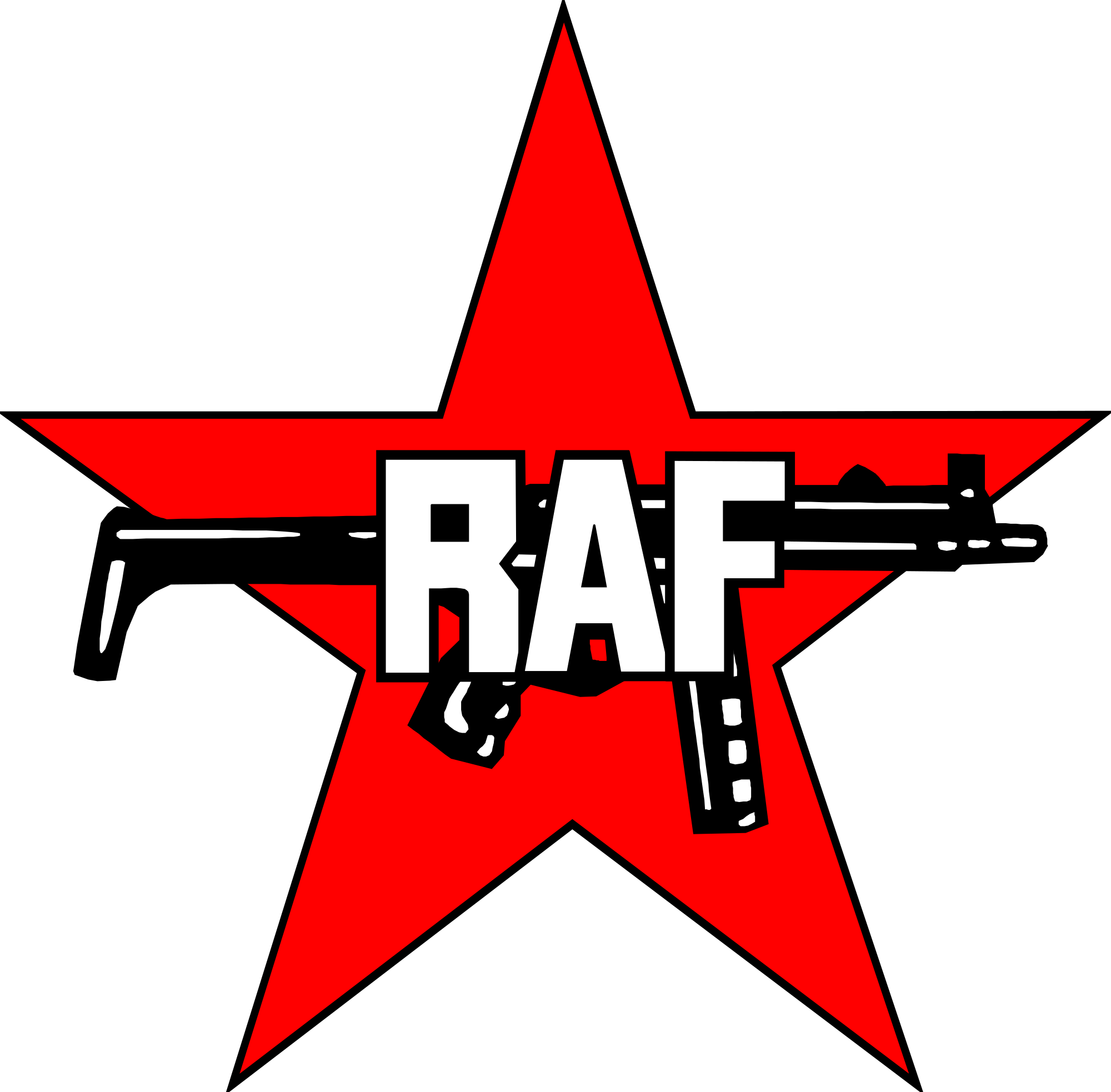
On 20 April 1998, an eight-page typewritten letter in German was faxed to the Reuters news agency, signed "RAF" with the submachine-gun red star, declaring that the group had dissolved.[14] In 1999, after a robbery in Duisburg, evidence pointing to Ernst-Volker Staub and Daniela Klette was found, causing an official investigation into a re-founding.[15]

Name

[edit]
Red Army Faction public poster, 1972, issued by the Federal Criminal Office, on display at the Deutsches Museum, Munich

The usual translation into English is the "Red Army Faction"; however, the founders wanted it to reflect not a splinter group but rather an embryonic militant unit that was embedded, in or part of, a wider communist workers' movement,[c] i.e., a fraction of a whole.

The group always called itself the Rote Armee Fraktion, never the Baader–Meinhof Group or Baader–Meinhof Gang. The name refers to all incarnations of the organization: the "first generation" RAF, which consisted of Baader, Ensslin, Meinhof, and others; the "second generation" RAF; and the "third generation" RAF, which existed in the 1980s and 90s. The terms "Baader–Meinhof Gang" and "Baader–Meinhof Group" were first used by the media and the government. The group never used these names to refer to itself, because it viewed itself as a co-founded group consisting of numerous members and not a group with two figureheads.

Background

[edit]

"The Red Army Faction's Urban Guerrilla Concept is not based on an optimistic view of the prevailing circumstances in the Federal Republic and West Berlin."

The Urban Guerrilla Concept written by RAF co-founder Ulrike Meinhof (April 1971)

The origins of the group can be traced back to the 1968 student protest movement in West Germany. Industrialised nations in the late 1960s experienced social upheavals related to the maturing of the "baby boomers", the Cold War, and the end of colonialism. Newly-found youth identity and issues such as racism, women's liberation, and anti-imperialism were at the forefront of left-wing politics. Many young people were alienated from their parents and the institutions of the state. The historical legacy of Nazism drove a wedge between the generations and increased suspicion of authoritarian structures in society (some analysts see the same occurring in post-fascism Italy, giving rise to "Brigate Rosse").[16]

In West Germany there was anger among leftist youth at the post-war denazification in West Germany and East Germany, a process which these leftists perceived as a failure or as ineffective,[17][18] as former (actual and supposed) Nazis held positions in government and the economy.[19] The Communist Party of Germany had been outlawed since 1956.[20] Elected and appointed government positions down to the local level were often occupied by ex-Nazis.[19] Konrad Adenauer, the first Federal Republic chancellor (in office 1949–1963), had even appointed former Nazi jurist Hans Globke as Director of the Federal Chancellery of West Germany (in office 1953–1963).

The radicals regarded the conservative media as biased – at the time conservatives such as Axel Springer, who was implacably opposed to student radicalism, owned and controlled the conservative media including all of the most influential mass-circulation tabloid newspapers. The emergence of the Grand Coalition between the two main parties, the SPD and CDU, with former Nazi Party member Kurt Georg Kiesinger as chancellor, occurred in 1966. This horrified many on the left and was viewed as a monolithic, political marriage of convenience with pro-NATO, pro-capitalist collusion on the part of the social democratic SPD. With about 90% of the Bundestag controlled by the coalition, an Extra-Parliamentary Opposition (APO) was formed with the intent of generating protest and political activity outside of government.[21] In 1972 a law was passed – the Radikalenerlass – that banned radicals or those with a "questionable" political persuasion from public sector jobs.[22]

Student activists, who associated older generations of Germans with Nazism, argued against peaceful reconciliation:

They'll kill us all. You know what kind of pigs we're up against. This is the Auschwitz generation. You can't argue with people who made Auschwitz. They have weapons and we haven't. We must arm ourselves!

— Gudrun Ensslin speaking after the death of Benno Ohnesorg.[23]

The radicalized were, like many in the New Left, influenced by:

RAF founder Ulrike Meinhof had a long history in the Communist Party. Holger Meins had studied film and was a veteran of the Berlin revolt; his short feature How To Produce A Molotov Cocktail was seen by huge audiences. Jan Carl Raspe lived at the Kommune 2; Horst Mahler was an established lawyer but also at the center of the anti-Springer revolt from the beginning. From their personal experiences and assessments of the socio-economic situation, they soon became more specifically influenced by Leninism and Maoism, calling themselves "Marxist–Leninist" though they effectively added to or updated this ideological tradition. RAF frequently cited Mao Zedong in its public statements, especially in its early years.[1] One of the Maoist doctrines emphasized by the group was the importance of organizing political resistance to bourgeois society, and that armed struggle from the fringes of society will bring the revolution into mainstream society as well, with the bourgeois state revealing its oppressive apparatus by overreacting to fringe groups and their activities.[2] A contemporaneous critique of the Red Army Faction's view of the state, published in a pirate edition of Le Monde Diplomatique, ascribed to it "state-fetishism" – an ideologically obsessive misreading of bourgeois dynamics and the nature and role of the state in post-WWII societies, including West Germany.[26]

It is claimed that property destruction during the Watts riots in the United States in 1965 influenced the practical and ideological approach of the RAF founders, as well as some of those in Situationist circles.[27] According to one former RAF member, in meetings with KGB in Dresden the group was also met by Vladimir Putin, then KGB resident in East Germany. In these meetings RAF members would discuss weapons that were needed for their activities, and pass a "shopping list" to the KGB.[13]

The writings of Antonio Gramsci[28] and Herbert Marcuse[29][25] were drawn upon. Gramsci wrote on power, cultural, and ideological conflicts in society and institutions – real-time class struggles playing out in rapidly developing industrial nation states through interlinked areas of political behavior. Marcuse wrote on coercion and hegemony in that cultural indoctrination and ideological manipulation through the means of communication ("repressive tolerance") dispensed with the need for complete brute force in modern 'liberal democracies'. His One-Dimensional Man was addressed to the restive students of the sixties. Marcuse argued that only marginal groups of students and poor alienated workers could effectively resist the system. Both Gramsci and Marcuse came to the conclusion that analyzing the ideological underpinnings and the 'superstructure' of society was vitally important to understanding class control (and acquiescence). This Gramscian and Marcusian contribution could perhaps be seen as an extension of Marx's work, as he did not cover this area in detail. Das Kapital, his mainly economic work, was meant to be one of a series of books which would have included one on society and one on the state,[30] but his death prevented fulfillment of this.

Many of the radicals felt that Germany's lawmakers were continuing authoritarian policies from the country's past and that the public's apparent acquiescence to these policies was a consequence of the indoctrination that the Nazis had pioneered and implemented in German society (Volksgemeinschaft). The Federal Republic was exporting arms to African dictatorships, which the radicals viewed as supporting the war in Southeast Asia and engineering the remilitarization of Germany with the U.S.-led entrenchment against the Warsaw Pact nations.

The ongoing events further catalyzed the situation. Protests turned into riots on 2 June 1967, when Mohammad Reza Pahlavi, the Shah of Iran, visited West Berlin. There were protesters but also hundreds of supporters of the Shah,[31] as well as a group of fake supporters armed with wooden staves, there to disturb the normal course of the visit. These extremists beat the protesters. After a day of angry protests by exiled Iranian radical Marxists, a group widely supported by German students, the Shah visited the Berlin Opera, where a crowd of German student protesters gathered. During the opera house demonstrations, German student Benno Ohnesorg was shot in the head by a police officer while attending his first protest rally. The officer, Karl-Heinz Kurras, was acquitted in a subsequent trial. It was later discovered that Kurras had been a member of the West Berlin communist party SEW and had also worked for the Stasi,[32] though there is no indication that Kurras' killing of Ohnesorg was under anyone's, including the Stasi's, orders.

Along with perceptions of state and police brutality, and widespread opposition to the Vietnam War, Ohnesorg's death galvanized many young Germans and became a rallying point for the West German New Left. The Berlin 2 June Movement, a militant-Anarchist group, later took its name to honor the date of Ohnesorg's death.

On 2 April 1968, Gudrun Ensslin and Andreas Baader, joined by Thorwald Proll and Horst Söhnlein, set fire to two department stores in Frankfurt as a protest against the Vietnam war. They were arrested two days later.

On 11 April 1968, Rudi Dutschke, a leading spokesman for protesting students, was shot in the head in an assassination attempt by the right-wing sympathizer Josef Bachmann. Although badly injured, Dutschke returned to political activism with the German Green Party before his death in a bathtub in 1979, as a consequence of his injuries.[33]

Axel Springer's populist newspaper Bild-Zeitung, which had run headlines such as "Stop Dutschke now!", was accused of being the chief culprit in inciting the shooting. Meinhof commented, "If one sets a car on fire, that is a criminal offence. If one sets hundreds of cars on fire, that is political action."[34]

Formation

[edit]
Ulrike Meinhof, 1964

"World War II was only twenty years earlier. Those in charge of the police, the schools, the government – they were the same people who'd been in charge under Nazism. The chancellor, Kurt Georg Kiesinger, had been a Nazi. People started discussing this only in the 60s. We were the first generation since the war, and we were asking our parents questions. Due to the Nazi past, everything bad was compared to the Third Reich. If you heard about police brutality, that was said to be just like the SS. The moment you see your own country as the continuation of a fascist state, you give yourself permission to do almost anything against it. You see your action as the resistance that your parents did not put up."

All four of the defendants charged with arson and endangering human life were convicted, for which they were sentenced to three years in prison. In June 1969, however, they were temporarily paroled under an amnesty for political prisoners, but in November of that year, the Federal Constitutional Court (Bundesverfassungsgericht) demanded that they return to custody. Only Horst Söhnlein complied with the order; the rest went underground and made their way to France, where they stayed for a time in a house owned by prominent French journalist and revolutionary Régis Debray, famous for his friendship with Che Guevara and the foco theory of guerrilla warfare. Eventually they made their way to Italy, where the lawyer Mahler visited them and encouraged them to return to Germany with him to form an underground guerrilla group.

The Red Army Faction was formed with the intention of complementing the plethora of revolutionary and radical groups across West Germany and Europe, as a more class conscious and determined force compared with some of its contemporaries. The members and supporters were already associated with the 'Revolutionary Cells' and 2 June Movement as well as radical currents and phenomena such as the Socialist Patients' Collective, Kommune 1, and the Situationists.

Baader was arrested again in April 1970, but on 14 May 1970 he was freed by Meinhof and others. Less than a month later, Gudrun Ensslin wrote an article in a West Berlin underground paper by the name of Agit883 (Magazine for Agitation and Social Practice), demanding a call to arms and a building of the Red Army. The article ended with the words, "Develop the class struggles. Organize the proletariat. Start the armed resistance!"[36] Baader, Ensslin, Mahler, and Meinhof then went to Jordan, where they trained with Popular Front for the Liberation of Palestine (PFLP) and Palestine Liberation Organization (PLO) guerrillas[16] and looked to the Palestinian cause for inspiration and guidance. But RAF organization and outlook were also partly modeled on the Uruguayan Tupamaros movement, which had developed as an urban resistance movement, effectively inverting Che Guevara's Mao-like concept of a peasant or rural-based guerrilla war and instead situating the struggle in the metropole or cities.[37][38]

Many members of the RAF operated through a single contact or only knew others by their codenames. Actions were carried out by active units called 'commandos', with trained members being supplied by a quartermaster in order to carry out their mission. For more long-term or core cadre members, isolated cell-like organization was absent or took on a more flexible form.

In 1969 the Brazilian revolutionary Carlos Marighella published his Minimanual of the Urban Guerrilla.[39] He described the urban guerrilla as:

... a person who fights the military dictatorship with weapons, using unconventional methods. ... The urban guerrilla follows a political goal, and only attacks the government, big businesses, and foreign imperialists.

The importance of small arms training, sabotage, expropriation, and a substantial safehouse/support base among the urban population was stressed in Marighella's guide. This publication was an antecedent to Meinhof's The Urban Guerrilla Concept and has subsequently influenced many guerrilla and insurgent groups around the globe.[40] Although some of the Red Army Faction's supporters and operatives could be described as having an anarchist or libertarian communist slant, the group's leading members professed a largely Marxist–Leninist ideology. That said, they shied away from overt collaboration with communist states, arguing along the lines of the Chinese side in the Sino-Soviet split that the Soviet Union and its European satellite states had become traitors to the communist cause by, in effect if not in rhetoric, giving the United States a free pass in their exploitation of Third World populations and support of "useful" Third World dictators. Nevertheless, RAF members did receive intermittent support and sanctuary over the border in East Germany during the 1980s.[41]

Anti-imperialism and public support

[edit]

"The Baader–Meinhof Gang drew a measure of support that violent leftists in the United States, like the Weather Underground, never enjoyed. A poll at the time showed that a quarter of West Germans under forty felt sympathy for the gang and one-tenth said they would hide a gang member from the police. Prominent intellectuals spoke up for the gang's righteousness [as] Germany even into the 1970s was still a guilt-ridden society. When the gang started robbing banks, newscasts compared its members to Bonnie and Clyde. (Andreas) Baader, a charismatic action man indulged in the imagery, telling people that his favourite movies were Bonnie and Clyde, which had recently come out, and The Battle of Algiers. The pop poster of Che Guevara hung on his wall, [while] he paid a designer to make a Red Army Faction logo, a drawing of a machine gun against a red star."

When they returned to West Germany, they began what they called an "anti-imperialistic struggle", with bank robberies to raise money and bomb attacks against U.S. military facilities, German police stations, and buildings belonging to the Axel Springer press empire. In 1970, a manifesto authored by Meinhof used the name "RAF" and the red star logo with a Heckler & Koch MP5 submachine gun for the first time.[42]

After an intense manhunt, Baader, Ensslin, Meinhof, Meins, and Raspe were eventually caught and arrested in June 1972.

Custody and the Stammheim trial

[edit]
Stammheim Prison

After the arrest of the protagonists of the first generation of the RAF, they were held in solitary confinement in the newly constructed high security Stammheim Prison north of Stuttgart. When Ensslin devised an "info system" using aliases for each member (names deemed to have allegorical significance from Moby Dick),[43] the four prisoners were able to communicate, circulating letters with the help of their defense counsel.

To protest against their treatment by authorities, they went on several coordinated hunger strikes; eventually, they were force-fed. Holger Meins died of self-induced starvation on 9 November 1974. After public protests, their conditions were somewhat improved by the authorities.

The so-called second generation of the RAF emerged at that time, consisting of sympathizers independent of the inmates. On 27 February 1975, Peter Lorenz, the CDU candidate for mayor of Berlin, was kidnapped by the 2 June Movement as part of pressure to secure the release of several non-RAF detainees, alongside estranged member Horst Mahler (who declined to be freed). Since none of these were on trial for murder, the state agreed, and those inmates (and later Lorenz himself) were released.

According to Aust, the success of this operation led to the RAF themselves to attempt their own exchange: on 24 April 1975, the West German embassy in Stockholm was seized by members of the RAF; two of the hostages were murdered as the German government under Chancellor Helmut Schmidt refused to give in to their demands. Two of the hostage-takers died from injuries they suffered when the explosives they planted detonated later that night.

On 21 May 1975, the Stammheim trial of Baader, Ensslin, Meinhof, and Raspe began, named after the district in Stuttgart where it took place. The Bundestag had earlier changed the Code of Criminal Procedure so that several of the attorneys who were accused of serving as links between the inmates and the RAF's second generation could be excluded.

On 9 May 1976, Ulrike Meinhof was found dead in her prison cell, hanging from a rope made from jail towels. An investigation concluded that she had hanged herself, a result hotly contested at the time, triggering a plethora of conspiracy theories. Alternative theories suggest that she took her life because she was being ostracized by the rest of the group. Her comrades consistently denied this hypothesis, repudiating alleged jailhouse recordings cited as evidence.[44]

During the trial, more attacks took place. One of these was on 7 April 1977, when Federal Prosecutor Siegfried Buback, his driver, and his bodyguard were shot and killed by two RAF members while waiting at a red traffic light. Buback, who had been a Nazi member during WWII, was considered by RAF as one of the key persons for their trial. Among other things, two years earlier, while being interviewed by Stern magazine, he stated that "Persons like Baader don't deserve a fair trial."[45] In February 1976, when interviewed by Der Spiegel he stated that "We do not need regulation of our jurisdiction, national security survives thanks to people like me and Herold [chief of BKA], who always find the right way".[46]

Eventually, on 28 April 1977, the trial's 192nd day, the three remaining defendants were convicted of several murders, more attempted murders, and of forming a terrorist organization; they were sentenced to life imprisonment.[47][48]

Security measures

[edit]

A new section of Stammheim Prison was built especially for the RAF and was considered one of the most secure prison blocks around the world at the time. The prisoners were transferred there in 1975 (three years after their arrest). The roof and the courtyard were covered with steel mesh. During the night, the precinct was illuminated by 54 spotlights and twenty-three neon bulbs. Special military forces, including snipers, guarded the roof. Four hundred police officers along with the Federal Office for the Protection of the Constitution patrolled the building. The mounted police officers rotated on a double shift. One hundred more GSG-9 tactical police officers reinforced the police during the trial while BKA detectives guarded the front of the court area. Finally, helicopters overflew the area.[49]: 549 

During the trial, accredited media correspondents had to pass a police road block 400 meters from the court. The police noted their data and the number-plate and photographed their cars. After that they had to pass three verification audits, and finally they were undressed and two judicial officials thoroughly searched their bodies. They were allowed to keep only a pencil and a notepad inside the court. Their personal items including their identity papers were withheld by the authorities during the trial. Every journalist could attend the trial only twice (two days). The Times questioned the possibility whether a fair trial could be conducted under these circumstances which involved siege-like conditions. Der Spiegel wondered whether that atmosphere anticipated "the condemnation of the defendants who were allegedly responsible for the emergency measures".[50]

While the trial progressed, the prisoners received visits from lawyers (and on rare occasions relatives; friends were not allowed). For those visits, three jailers were always present to observe the conversations between prisoners and visitors. The prisoners were not allowed to meet each other inside the prison, until late 1975 when a regular meeting time was established (30 minutes, twice per day), during which they were guarded.

Trial

[edit]

The judges and their pasts are considered important by supporters of the accused. Judge Weiss (Mahler's trial) had judged Joachim Raese (president of the Third Reich's court) as innocent seven times.[citation needed] When he threatened Meinhof that she would be put into a glass cage she answered caustically, "So you are threatening me with Eichmann's cage, fascist?" (Adolf Eichmann who was an Obersturmbannführer in the SS, was held inside a glass cage during his trial in Israel.) Siegfried Buback, the RAF's main trial judge in Stammheim, had been a Nazi Party member. Along with Federal Prosecutor Heinrich Wunder (who served as senior government official in the Ministry of Defense), Buback had ordered the arrest of Rudolf Augstein and other journalists regarding the Spiegel affair in 1962. Theodor Prinzing was accused by defense attorney Otto Schily of having been appointed arbitrarily, displacing other judges.[49]: 547 

At several points in the Stammheim trial, microphones were turned off while defendants were speaking. They were often expelled from the hall, and other actions were taken. It was later revealed that the conversation they had between themselves as well as with their attorneys were recorded. Finally it was reported by both the defendants' attorneys and some of the prison's doctors that the physical and psychological state of the prisoners held in solitary confinement and white cells was such that they could not attend the long trial days and defend themselves appropriately. By the time the Stammheim trial began in early 1975, some of the prisoners had already been in solitary confinement for three years.[49]

Two former members of the RAF, Karl-Heinz Ruhland and Gerhard Müller, testified under BKA's orders, as revealed later. Their statements were often contradictory, something that was also commented on in the newspapers. Ruhland himself later reported to Stern that his deposition was prepared in cooperation with police.[51] Müller was reported to "break" during the third hunger strike in the winter of 1974–1975 which lasted 145 days. The prosecution offered him immunity for the murder of officer Norbert Schmidt in Hamburg (1971), and blamed Baader, Meinhof, Ensslin, and Raspe instead. He was eventually freed and relocated to the US after getting a new identity and 500,000 Deutsche Marks.[citation needed]

Lawyers' arrests

[edit]

The government hastily approved several special laws for use during the Stammheim trial. Lawyers were excluded from trial for the first time since 1945, after being accused of various inappropriate actions, such as helping to form criminal organizations (Section 129, Criminal Law). The authorities invaded and checked the lawyers' offices for possible incriminating material. Minister of Justice Hans-Jochen Vogel boasted that no other Western state had such extensive regulation to exclude defense attorneys from a trial. Klaus Croissant, Hans-Christian Ströbele, Kurt Groenewold, who had been working preparing for the trial for three years, were expelled the second day of the trial. On 23 June 1975, Croissant, Ströbele (who had already been expelled), and Mary Becker were arrested, and in the meantime police invaded several defense attorneys' offices and homes, seizing documents and files. Ströbele and Croissant were remanded and held for four and eight weeks respectively. Croissant had to pay 80,000 Deutsche Marks and report weekly to a police station, and his transport and identity papers were seized.[49]: 545–572 

The defense lawyers and prisoners were not the only ones affected by measures adopted for the RAF trial. On 26 November 1974 an unprecedented mobilization by police and GSG-9 units arrested 23 suspected RAF members, invaded dozens of homes, left-wing bookstores, and meeting places, and made arrests. No guerrillas were found.[citation needed] BKA's chief, Horst Herold stated that despite the fact that "large-scale operations usually don't bring practical results, the impression of the crowd is always a considerable advantage".[52]

On 16 February 1979 Croissant was arrested (on the accusation of supporting a criminal organization – section 129) after France denied his request for political asylum, and was sentenced to a prison term of two and half years to be served in Stammheim prison.

Defense strategy

[edit]

The general approach by defendants and their attorneys was to highlight the political purpose and characteristics of the RAF.

On 13 and 14 January 1976 the defendants readied their testimony (about 200 pages), in which they analyzed the role of imperialism and its fight against the revolutionary movements in the countries of the "third world". They also expounded the fascistization of West Germany and its role as an imperialistic state (in alliance with the U.S. over Vietnam). Finally they talked about the task of urban guerrillas and undertook the political responsibility for the bombing attacks. Finally their lawyers (following Ulrike Meinhof's proposal) requested that the accused be officially regarded as prisoners of war.[49]

On 4 May (five days before Meinhof's death) the four defendants demanded to be allowed to provide data about the Vietnam War. They claimed that because the military intervention in Vietnam by the U.S. (and, indirectly, the FRG) had violated international law, the U.S. military bases in West Germany were justifiable targets of international retaliation. They requested several politicians (like Richard Nixon and Helmut Schmidt) as well as some former U.S. agents (who were willing to testify) to be called as witnesses.

Later when their requests were rejected, U.S. agents Barton Osbourne (ex-CIA, ex-member of the Phoenix Program), G. Peck (NSA), and Gary Thomas gave extensive interviews (organized by defense lawyers) on 23 June 1976 where they explained how FRG support was crucial for U.S. operations in Vietnam. Peck concluded that the RAF "was the response to criminal aggression of the U.S. government in Indochina and the assistance of the German government. The real terrorist was my government."[53][full citation needed] Thomas presented data about the joint operations of FRG and U.S. intelligence organisations in Eastern Europe. He had also observed the Stammheim trial and referred to a CIA instructor teaching them how to make a murder look like a suicide. These statements were confirmed by the CIA case officer Philip Agee.[49]

Criminal acts

[edit]

The RAF has been associated with various serious criminal acts (including bombings, kidnappings and murder) since their founding. The first criminal act attributed to the group after the student Benno Ohnesorg had been killed by a policeman in 1967 was the bombing of the Kaufhaus Schneider department store. On 2 April 1968, affiliates of the group firebombed the store and caused an estimated US$200,000 in property damage.[citation needed] Prominent members of the bombing included Andreas Baader and Gudrun Ensslin, two of the founders of the RAF. The bombs detonated at midnight when no one was in the store and no one was injured. As the bombs ignited, Gudrun Ensslin was at a nearby payphone, yelling to the German Press Agency, "This is a political act of revenge."[citation needed]

On 11 May 1972, the RAF placed three pipe bombs at a United States headquarters in Frankfurt. The bombing resulted in the death of a US officer and the injury of 13 other people. The stated reason for the bombing was a political statement in protest of US imperialism, specifically, a protest of US mining of North Vietnam harbours.[54]

On 19 May 1972, members of the RAF armed five bombs in the Springer publishing house in Hamburg. Only three of the five bombs exploded, but 36 people were injured.[55]

On 24 May 1972, two weeks after the bombing of the United States headquarters in Frankfurt, the group set off a car bomb at the IDHS (Intelligence Data Handling Service) Building at Campbell Barracks in Heidelberg. The bombing resulted in the deaths of three soldiers and the injury of five others.[56]

On 10 November 1974, the group killed Günter von Drenkmann, the president of the state court of Berlin. The killing occurred after a string of events that led to a failed kidnapping by the 2 June Movement, a group that splintered off the RAF after the death of Holger Meins by hunger strike in prison.[57]

Starting in February 1975 and continuing through March 1975, the 2 June Movement kidnapped Peter Lorenz, who at the time was the Christian Democratic candidate in the race for the mayor of West Berlin. In exchange for the release of Lorenz, the group demanded that several RAF and 2 June Movement members that were imprisoned for reasons other than violence be released from jail. The government obliged and released several of these members for the safe release of Lorenz.[58]

On 24 April 1975, six members affiliated with the RAF seized the West German Embassy in Stockholm. The group took hostages and set the building to explode. They demanded the release of several imprisoned members of the RAF. The government refused the request, which led to the murder of two of the hostages. A few of the bombs that were intended to blow up the embassy prematurely detonated, which resulted in the death of two of the six RAF affiliates. The other four members eventually surrendered to the authorities.[citation needed]

In May 1975, several British intelligence reports circulated that stated that the RAF had stolen mustard gas from a joint U.S. and British storage facility. The reports also indicated that the RAF had intended to use the stolen gas in German cities. It eventually turned out that the mustard gas canisters were merely misplaced; however, the RAF still successfully capitalized on the news by frightening several different agencies.[59]

In the 1970's, the RAF was involved in several raids, taking advantage of Switzerland's loosely guarded military armories. According to the source, the group was involved in the theft of 200 Swiss rifles, 500 revolvers, and 400 large grenades.[60]

During the early 1980s, German and French newspapers reported that the police had raided an RAF safe house in Paris and had found a makeshift laboratory that contained flasks full of Clostridium botulinum, which makes botulinum toxin. These reports were later found to be incorrect; no such lab was ever found.[61]

German Autumn

[edit]

On 30 July 1977, Jürgen Ponto, the head of Dresdner Bank, was shot and killed in front of his house in Oberursel in a botched kidnapping.[62] Those involved were Brigitte Mohnhaupt, Christian Klar, and Susanne Albrecht, the sister of Ponto's goddaughter.

Following the convictions, Hanns Martin Schleyer, a former officer of the SS who was then President of the German Employers' Association (and thus one of the most powerful industrialists in West Germany), was abducted in a violent kidnapping. On 5 September 1977, Schleyer's convoy was stopped by the kidnappers reversing a car into the path of Schleyer's vehicle, causing the Mercedes in which he was being driven to crash. Once the convoy was stopped, five masked assailants immediately shot and killed three policemen and the driver and took Schleyer hostage. One of the group (Sieglinde Hofmann) produced her weapon from a pram she was pushing down the road.[63]

A letter was then received by the federal government, demanding the release of eleven detainees, including those in Stammheim. A crisis committee was formed in Bonn, headed by Chancellor Helmut Schmidt, which, instead of acceding, resolved to employ delaying tactics to give the police time to discover Schleyer's location. At the same time, a total communication ban was imposed on the prison inmates, who were now allowed visits only from government officials and the prison chaplain.

The crisis dragged on for more than a month, while the Federal Criminal Police Office carried out its biggest investigation to date. Matters escalated when, on 13 October 1977, Lufthansa Flight 181 from Palma de Mallorca to Frankfurt was hijacked. A group of four PFLP members took control of the plane (which was named Landshut). The leader introduced himself to the passengers as "Captain Mahmud", and was later identified as Zohair Youssif Akache [de]. When the plane landed in Rome for refueling, he issued the same demands as the Schleyer kidnappers, plus the release of two Palestinians held in Turkey and payment of US$15 million.

The Bonn crisis team again decided not to give in. The plane flew on via Larnaca, then Dubai, and then to Aden, where flight captain Jürgen Schumann, whom the hijackers deemed not cooperative enough, was brought before an improvised "revolutionary tribunal" and murdered on 16 October. His body was dumped on the runway. The aircraft again took off, flown by the co-pilot Jürgen Vietor, this time headed for Mogadishu, Somalia.

A high-risk rescue operation was led by Hans-Jürgen Wischnewski, then undersecretary in the chancellor's office, who had been secretly flown in from Bonn. At five past midnight CET on 18 October, the plane was stormed in a seven-minute assault by GSG 9, an elite unit of the German federal police. All four hijackers were shot; three of them died on the spot. None of the passengers were seriously hurt and Wischnewski was able to phone Schmidt and tell the Bonn crisis team that the operation had been a success.

"Stammheim Death Night"

[edit]
Burial site of Baader, Raspe and Ensslin

After the conclusion of the Landshut hostage crisis was announced in the late evening of 17 October, all the RAF members incarcerated in Stammheim committed suicide during the following night. Their lawyer, Arndt Müller, had smuggled pistols into the prison.[citation needed] Andreas Baader and Jan-Carl Raspe shot themselves with these weapons – Baader in the back of his head[64] – while Gudrun Ensslin hanged herself. Irmgard Möller tried to kill herself with a knife, but survived severely injured. The suicides went unnoticed until early next morning, at which time doctors were rushed in. Baader and Ensslin were already dead when found. Raspe was still alive and moved to the hospital where he died soon after. Möller recovered after being brought to a hospital.[65] Authorities claimed that the prisoners – who had been held in isolation for weeks[66] – learned of the failure of the hijacking through smuggled radio equipment, and coordinated the group suicide over an improvised electronic communication system between their maximum-security cells, which had been under surveillance during previous hostage crises.[67]

The coordinated attempt sparked numerous conspiracy theories. It was alleged that the RAF members did not kill themselves, but instead were killed by the German authorities, the BND, CIA, the United States and NATO. These theories were spread by RAF supporters and sympathizers, and some were taken up by the mainstream press. Available evidence shows that these suicides were planned and prepared for a long time by the RAF members.[68][69]

On the very same day, Hanns-Martin Schleyer was shot to death by his captors en route to Mulhouse, France. On 19 October, Schleyer's kidnappers announced that he had been "executed" and pinpointed his location. His body was recovered later that day in the trunk of a green Audi 100 on Rue Charles Péguy. The French newspaper Libération received a letter declaring:

After 43 days we have ended Hanns-Martin Schleyer's pitiful and corrupt existence ... His death is meaningless to our pain and our rage ... The struggle has only begun. Freedom through armed, anti-imperialist struggle.

RAF since the 1990s

[edit]

The dissolution of the Soviet Union in late December 1991 was a serious blow to Leninist groups, but well into the 1990s attacks were still being committed under the name RAF. Among these were the killing of Ernst Zimmermann, CEO of MTU Aero Engines, a German engineering company; another bombing at the US Air Force's Rhein-Main Air Base (near Frankfurt), which targeted the base commander and killed two bystanders; a car bomb attack that killed Siemens executive Karl-Heinz Beckurts and his driver; and the shooting of Gerold von Braunmühl, a leading official at Germany's foreign ministry. On 30 November 1989, Deutsche Bank chairman Alfred Herrhausen was killed with a highly complex bomb when his car triggered a photo sensor in Bad Homburg. On 1 April 1991, Detlev Karsten Rohwedder, leader of the government Treuhand organization responsible for the privatization of the East German state economy, was shot and killed. The assassins of Zimmermann, von Braunmühl, Herrhausen, and Rohwedder were never reliably identified.

After German reunification in 1990, it was confirmed that the Stasi, the security and intelligence organization of East Germany, had been monitoring the RAF, and in the 1980s had provided ten ex-members shelter and new identities.[70] This was already generally suspected at the time.[71][72][page needed] In 1978 part of the group was exfiltrated through Yugoslavia to communist Poland to avoid a manhunt in Germany. Brigitte Mohnhaupt, Peter Boock, Rolf Wagner, and Sieglinde Hoffmann spent most of the year in facilities of the Polish Ministry of Public Security in Masuria, northeastern Poland, where they were also going through series of training programs along with others from Arab countries.[73]

In 1992, the German government assessed that the RAF's main field of engagement now was missions to release imprisoned RAF members. To weaken the organization further the government declared that some RAF inmates would be released if the RAF refrained from violent attacks in the future. Subsequently, the RAF announced their intention to "de-escalate" and refrain from significant activity.

The last action taken by the RAF took place in 1993 with a bombing of a newly-built prison in Weiterstadt by overcoming the officers on duty and planting explosives. Although no one was seriously injured, this operation caused property damage amounting to 123 million Deutsche Marks (over 50 million euros).

The last big action against the RAF took place on 27 June 1993. An agent of the Federal Office for the Protection of the Constitution (the West German domestic intelligence agency) named Klaus Steinmetz had infiltrated the RAF. As a result, Birgit Hogefeld and Wolfgang Grams were arrested in Bad Kleinen. Grams and GSG 9 officer Michael Newrzella died during the mission. Due to a number of operational mistakes involving the various police services, German Minister of the Interior Rudolf Seiters took responsibility and resigned from his post.

Historians and the German authorities have much more clarity about the names and actions of the first and second generations of the RAF than is the case with the third generation. The lawyer and author Butz Peters describes the third generation of the RAF as a "black box": "The members have learned from the mistakes of the first and second generations. You were up to date with the latest forensic technology. In addition, you were much more reserved in your actions. The first generations had many supporters and many members who at some point became soft. The third generation learned from this that they lived very conspiratorially and insularly."[74]

Dissolution

[edit]

On 20 April 1998, an eight-page typewritten letter in German was faxed to the Reuters news agency, signed "RAF" with the machine-gun red star, declaring the group dissolved:

Almost 28 years ago, on 14 May 1970, during a liberation operation, the RAF formed. Today we end this project. The urban guerrilla in the form of the RAF is history now.[14] (German: Vor fast 28 Jahren, am 14. Mai 1970, entstand in einer Befreiungsaktion die RAF. Heute beenden wir dieses Projekt. Die Stadtguerilla in Form der RAF ist nun Geschichte.)

In response to this statement, former BKA President Horst Herold said, "With this statement the Red Army Faction has erected its own tombstone."[75]

Legacy

[edit]

Horst Mahler, a founding RAF member, became a vocal Neo-Nazi and Holocaust denier later in life.[76][77] In 2005, he was sentenced to six years in prison for incitement to racial hatred against Jews.[78][79] He is on record as saying "Der Feind ist der Gleiche" ("The enemy is the same").[80][full citation needed]

In 2007, amidst widespread media controversy, German president Horst Köhler considered pardoning RAF member Christian Klar, who had filed a pardon application several years before. On 7 May 2007, pardon was denied; regular[d] parole was later granted on 24 November 2008.[81] RAF member Brigitte Mohnhaupt was granted release on five-year parole by a German court on 12 February 2007 and Eva Haule was released 17 August 2007.

In 2011, the last imprisoned RAF member, Birgit Hogefeld, was released on parole.[82]

Police in Europe investigating the whereabouts of Ernst-Volker Staub, Burkhard Garweg and Daniela Klette stated that a search had been made in Spain, France and Italy.[83] This followed reports that they could be hiding in the Netherlands in 2017 after being suspected of masterminding robberies in supermarkets and cash transit vehicles in Wolfsburg, Bremen and Cremlingen between 2011 and 2016.[84][85][86] On 26 February 2024, Daniela Klette was arrested in Berlin; according to coverage in The Guardian, Klette's arrest followed an investigative TV report about the missing trio, which sparked 250 independent tips to local police about their whereabouts.[87]

According to scholarly research into Stasi documents, RAF members in East Germany were trained and assisted by personnel from the Stasi Arbeitsgruppe des Ministers S.[12]

List of assaults attributed to the RAF

[edit]
Date Place Action Remarks Photo
22 October 1971 Hamburg Police officer killed RAF members Irmgard Möller and Gerhard Müller attempted to rescue Margrit Schiller who was being arrested by the police for engaging in a shootout.[88] Police sergeant Heinz Lemke was shot in the foot, while Sergeant Norbert Schmid, 33, was killed, becoming the first murder to be attributed to the RAF.[89]
22 December 1971 Kaiserslautern Police officer killed German Police officer Herbert Schoner, 32, was shot by members of the RAF in a bank robbery. The four militants escaped with 134,000 Deutsche Marks.
11 May 1972 Frankfurt am Main Bombing of US Army V Corps headquarters and the officers' mess' Terrace Club[90] US Army LTC Paul A. Bloomquist killed,

13 wounded

12 May 1972 Augsburg and Munich Bombing of a police station in Augsburg and the Bavarian State Criminal Investigations Agency in Munich 5 police-officers wounded. Claimed by the Tommy Weissbecker Commando.
16 May 1972 Karlsruhe Bombing of the car of the Federal Judge Buddenberg His wife Gerta was driving the car and was wounded. Claimed by the Manfred Grashof commando.
19 May 1972 Hamburg Bombing of the Axel Springer Verlag. The building was not evacuated even though warnings about the bombing were made by the RAF. 17 wounded. Ilse Stachowiak was involved in the bombing.
24 May 1972 18:10CET Heidelberg Bombing outside of Officers' Club followed by a second bomb moments later in front of Army Security Agency (ASA), U.S. Army in Europe (HQ USAREUR) at Campbell Barracks. Known involved RAF members: Irmgard Möller and Angela Luther, Andreas Baader, Ulrike Meinhof, Gudrun Ensslin, Holger Meins, Jan-Carl Raspe. 3 dead (Ronald A. Woodward, Charles L. Peck and Captain Clyde R. Bonner), 5 wounded. Claimed by 15 July Commando (in honour of Petra Schelm). Executed by Irmgard Moeller.
24 April 1975 Stockholm, Sweden West German embassy siege, murder of Andreas von Mirbach and Dr. Heinz Hillegaart 4 dead, of whom 2 were RAF members.
7 May 1976 Sprendlingen near Offenbach Police officer killed 22-year-old Fritz Sippel[91] was shot in the head when checking an RAF member's identity papers.
4 January 1977 Giessen Attack against US 42nd Field Artillery Brigade at Giessen In a failed attack against the Giessen army base, the RAF sought to capture or destroy nuclear weapons present.[92] A diversionary bomb attack on a fuel tank failed to fully ignite the fuel.[93][94]
7 April 1977 Karlsruhe Assassination of the federal prosecutor-general Siegfried Buback The driver Wolfgang Göbel and judicial officer Georg Wurster were also killed. Claimed by the Ulrike Meinhof Commando. This murder case was brought up again after the 30-year commemoration in April 2007 when information from former RAF member Peter-Jürgen Boock surfaced in media reports.
30 July 1977 Oberursel (Taunus) Killing of Jürgen Ponto The director of Dresdner Bank, Jürgen Ponto, is shot in his home during an attempted kidnapping. Ponto later dies from his injuries.
5 September 1977

18 October 1977

Cologne resp.

Mulhouse, France

Hanns Martin Schleyer, chairman of the German Employers' Association, is kidnapped and later shot 3 police-officers, Reinhold Brändle (41); Helmut Ulmer (24); Roland Pieler (20); and the driver Heinz Marcisz (41) are also killed during the kidnapping.
22 September 1977 Utrecht, Netherlands Police officer killed Arie Kranenburg (46), Dutch policeman, shot and killed by RAF Knut Folkerts outside a bar.
24 September 1978 A forest near Dortmund[95] Police officer killed Three RAF members (Angelika Speitel, Werner Lotze, Michael Knoll) were engaged in target practice when they were confronted by police. A shootout followed where one policeman (Hans-Wilhelm Hans, 26)[96] was shot dead, and one of the RAF members (Knoll) was wounded so badly that he later died from his injuries.[97]
1 November 1978 Kerkrade, Netherlands[98] Gun battle with four Dutch custom officials Dionysius de Jong (19) was shot to death, and Johannes Goemanns (24) later died of his wounds, when they were involved in a gunfight with RAF members Adelheid Schulz and Rolf Heissler[99] who were trying to cross the Dutch border illegally.[96]
25 June 1979 Mons, Belgium Alexander Haig, Supreme Allied Commander of NATO, escapes an assassination attempt A land mine blew up under the bridge on which Haig's car was traveling, narrowly missing Haig's car and wounding three of his bodyguards in a following car.[100] In 1993 a German Court sentenced Rolf Clemens Wagner, a former RAF member, to life imprisonment for the assassination attempt.[100]
31 August 1981 Rhineland-Palatinate, Germany Large car-bomb exploded in the HQ USAFE and HQ 4th ATAF parking lot of Ramstein Air Base
15 September 1981 Heidelberg Unsuccessful rocket propelled grenade attack against the car carrying the US Army's West German Commander Frederick J. Kroesen. Known involved RAF members: Brigitte Mohnhaupt, Christian Klar.
2 July 1982 Nuremberg Unsuccessful sniper attack against US Army Nuclear Storage Site NATO-23. A family of four (two adults and two children) who were out hunting mushrooms, made their way through a broken fence the day after the sniper incident and were killed in an accidental shooting by members of the 3/17th Field Artillery Battalion, who were on high alert. They were guarding the NATO 2–3 Nuclear storage site at the time and had been fired upon several times the night before by Christian Klar, when two US soldiers had been slightly wounded and one killed.[citation needed]
18 December 1984 Oberammergau, West Germany Unsuccessful attempt to bomb a school for NATO officers. The car bomb was discovered and defused. A total of ten incidents followed over the next month, against US, British, and French targets.[101]
1 February 1985 Gauting Shooting Ernst Zimmerman, head of the MTU is shot in the head in his home. Zimmermann died twelve hours later. The assassination was claimed by the Patsy O'Hara Commando.[citation needed]
8 August 1985 Rhein-Main Air Base (near Frankfurt) Rhein-Main Air Base bombing: A Volkswagen Passat exploded in the parking lot across from the base commander's building Two people killed: Airman First Class Frank Scarton and Becky Bristol, a U.S. civilian employee who also was the spouse of a U.S. Air Force enlisted man.[102] A granite monument marks the spot where they died. Twenty people were also injured. Army Spec. Edward Pimental was kidnapped and killed the night before for his military ID card which was used to gain access to the base. The French revolutionary organization Action Directe is suspected to have collaborated with the RAF on this attack. Birgit Hogefeld and Eva Haule have been convicted for their involvement in this event.
9 July 1986 Straßlach (near Munich) Shooting of Siemens manager Karl Heinz Beckurts and driver Eckhard Groppler
10 October 1986 Bonn Killing of Gerold Braunmühl The senior diplomat of the German Foreign Office was shot by two people in front of his residence on Buchholzstraße.
30 November 1989 Bad Homburg vor der Höhe Bombing of the car carrying the chairman of Deutsche Bank Alfred Herrhausen (killed) The case remained open for a long time, as the advanced explosive method employed baffled German prosecutors, as it could not have been the work of guerrillas like the RAF. Also, all suspects of the RAF were not charged due to alibis. However, the case received new light in late 2007 when German authorities learned that the Stasi, the former East German secret police, may have played a role in the assassination of Herrhausen, as the bombing method was exactly the same as one that had been developed by the Stasi.
13 February 1991 Bonn Sniper attack on U.S. embassy Three Red Army Faction members fired a G1 automatic rifle from across the Rhine River at the U.S. Embassy Chancery. No one was hurt.[103]
1 April 1991 Düsseldorf Assassination of Detlev Karsten Rohwedder, at his house in Düsseldorf Rohwedder was the chief of the Treuhandanstalt, the agency that privatized the former East German enterprises after the German reunification.
27 March 1993 Weiterstadt Weiterstadt prison bombing: Attacks with explosives at the construction site of a new prison Led to the capture of two RAF members three months later at a train station, and a shoot-out between RAF member Wolfgang Grams and a GSG 9 squad; GSG9 officer Michael Newrzella was killed before Grams allegedly was shot, while Birgit Hogefeld was arrested. Damage totaling 123 million Deutsche Marks (over 50 million euros). The attack caused a four-year delay in the completion of the site that was planned to open in 1993.

RAF Commandos

[edit]

The following is a list of all known RAF Commando Units.[104] Most RAF units were named after deceased RAF members, while others were named after deceased members of international militant left-wing groups such as the Black Panthers, Irish National Liberation Army, and the Red Brigades.

[edit]

Films

[edit]

Numerous West German film and TV productions have been made about the RAF. These include Klaus Lemke's telefeature Brandstifter [de] (The Arsonists, 1969); Volker Schloendorff and Margarethe von Trotta's co-directed The Lost Honour of Katharina Blum (a 1975 adaptation of Heinrich Böll's novel Die verlorene Ehre der Katharina Blum); Germany in Autumn (1978), co-directed by 11 directors, including Alexander Kluge, Volker Schloendorff, Rainer Werner Fassbinder, and Edgar Reitz; Fassbinder's Die dritte Generation (The Third Generation, 1979); Margarethe von Trotta's Die bleierne Zeit (The German Sisters/Marianne and Juliane, 1981); and Reinhard Hauff's Stammheim (1986). Post-reunification German films include Christian Petzold's Die innere Sicherheit (The State I Am In, 2000); Kristina Konrad's Grosse Freiheit, Kleine Freiheit (Greater Freedom, Lesser Freedom, 2000); and Christopher Roth's Baader (2002).

Uli Edel's 2008 The Baader Meinhof Complex (German: Der Baader Meinhof Komplex), based on the bestselling book by Stefan Aust, was nominated for Best Foreign Language Film in both the 81st Academy Awards and 66th Golden Globe Awards.

Outside Germany, films include Swiss director Markus Imhoof's Die Reise (The Journey) (1986). On TV, there was Heinrich Breloer's Todesspiel [de] (Death Game) (1997), a two-part docu-drama, and Volker Schloendorff's Die Stille nach dem Schuss (The Legend of Rita) (2000).

There have been several documentaries: Im Fadenkreuz – Deutschland & die RAF (1997, several directors); Gerd Conradt's Starbuck Holger Meins (2001); Andres Veiel's Black Box BRD (2001);[105] Klaus Stern's Andreas Baader – Der Staatsfeind (Enemy of the State) (2003); Ben Lewis's In Love With Terror, for BBC Four (2003);[106] and Ulrike Meinhof – Wege in den Terror (Ways into Terror) (2006).

The 2010 feature documentary Children of the Revolution tells Ulrike Meinhof's story from the perspective of her daughter, journalist and historian Bettina Röhl, while Andres Veiel's 2011 feature film If Not Us, Who? provides a context for the RAF's origins through the perspective of Gudrun Ensslin's partner Bernward Vesper. In 2015, Jean-Gabriel Périot released his feature-length, found-footage documentary A German Youth on the Red Army Faction.[107]

The 2018 remake of Suspiria features a secondary character attempting to run away to join the Red Army Faction, serving as a catalyst for the later events of the film.[108]

Fiction and art

[edit]
  • Heinrich Böll's book The Lost Honour of Katharina Blum (1974) describes the political climate in West Germany during the active phase of the RAF in the seventies. Schlöndorff and Trotta (who knew the leading RAF cadre) filmed the book in 1975.
  • Heldon, a French experimental electronic rock band, released a fundraising single entitled Soutien à la RAF (support to the RAF) with one track named Baader-Meinhof Blues
  • Brian Eno released a single 'B' side in 1978, entitled "RAF" (featuring a cut-up tape loop of German dialogue) named after the Red Army Faction.
  • The Professionals 1978 episode "Close Quarters" features a German terrorist organization known as the "Meyer-Helmut Group", and was possibly inspired by the RAF.
  • Cabaret Voltaire, the industrial band from Sheffield, England, recorded "Baader-Meinhof" that pondered the group's importance in history and their motivations.
  • The Norwegian painter Odd Nerdrum made a painting called The Murder of Andreas Baader in 1977–1978, that shows Nerdrum's personal commentary to the events in the Stammheim prison.
  • Gerhard Richter, a German painter whose series of works entitled 18 October 1977 (1988) repainted photographs of the Faction members and their deaths.
  • In 1990, the album Slap! by the influential British anarcho-punk band Chumbawamba featured a song titled "Ulrike", about Ulrike Meinhof and the RAF.
  • Tom Clancy's 1991 novel The Sum of All Fears features the arrest of RAF members in former Eastern Bloc countries with the cooperation of the democratized Soviet Union at the end of the Cold War as a major plot point. In the book, embittered RAF terrorists ally with the Democratic Front for the Liberation of Palestine to procure a lost Israeli atomic bomb to start a nuclear war. After the nuclear detonation on U.S soil, the RAF attempts to launch a ground war in Berlin with a battalion of commandeered tanks, but are wiped out in a matter of hours by the armed forces of a reunified Germany.
  • Christoph Hein's novel In seiner frühen Kindheit ein Garten (In His Early Childhood, a Garden) deals with a fictionalized aftermath of the Grams shooting in 1993.
  • Josef Žáček, a Czech painter, created a series of paintings entitled Searching in Lost Space 1993[109] that were inspired by events that had occurred in 1993 in Bad Kleinen.
  • In 1996, British singer songwriter Luke Haines released a 9-track album titled Baader Meinhof. In this concept album, all songs are a romanticized retelling of the RAF actions.
  • Bruce LaBruce's 2004 film The Raspberry Reich is an erotic satire of the RAF and of terrorist chic.
  • In 2003, The Long Winters released the song "Cinnamon", about the RAF.
  • In 2004, Canadian singer–songwriter Neil Leyton composed and released a song entitled "Ingrid Schubert".
  • Australian–British playwright Van Badham's play Black Hands/Dead Section provides a fictionalized account of the actions and lives of key members of the RAF. It won the Queensland Premier's Literary Awards in 2005.
  • The 2005 feature film See You at Regis Debray, written and directed by C. S. Leigh, tells the story of the time Andreas Baader spent hiding in the apartment of Régis Debray in Paris in 1969.
  • The 2011 album Amok by German band Weena Morloch features the song "Die Nacht der Stumpfen Messer" ("The Night of Blunt Knives", a play on the Night of the Long Knives) which deals with Andreas Baader's and Gudrun Ensslin's death in prison.

Science

[edit]
  • The Red Army Faction is the inspiration and namesake for the Baader–Meinhof phenomenon, also known as the frequency illusion, a cognitive bias in which a person notices a specific concept, word, or product more frequently after recently becoming aware of it. The name was coined in a 1994 letter to the St. Paul Pioneer Press in which the writer described repeatedly noticing the name of the gang after mentioning it once.[110]

See also

[edit]

Notes

[edit]

Citations

[edit]
  1. ^ a b Dapprich, Matthias (2013). The historical development of West Germany's new left from a politico-theoretical perspective with particular emphasis on the Marxistische Gruppe and Maoist KGruppen. Books on Demand GmbH. p. 49. ISBN 9783746098456. The legitimacy of violent and political resistance was also stressed by Mao Zedong, who was widely cited by the RAF in its first public statements. In contrast to the violent resistance of terrorist factions, political Maoists stressed the importance of political resistance to the bourgeois society.
  2. ^ a b McDevitt, Matthew (2019). Gewalt und Gedächtnis: An Examination of Gerhard Richter's 18. Oktober 1977 in Relation to the West German Mass Media. Trinity College Digital Repository. p. 20. Acting on Carlos Marighella's influential Minimanual of the Urban Guerilla and the Maoist tenet that bringing the armed struggle from the fringes of society to the center of the metropole is the necessary precondition for meaningfully altering the superstructure, the RAF attempted to aggravate the Federal Republic into overreacting, thus exposing the unrelenting and unsympathetic mechanisms of the state.
  3. ^ [1][2]
  4. ^ Escalona, Fabien; Keith, Daniel; March, Luke (17 April 2023). The Palgrave Handbook of Radical Left Parties in Europe. Springer Nature. p. 236. ISBN 978-1137562647. Retrieved 15 August 2025. Besides small, completely marginal, yet nevertheless notoriously violent groups (the Red Army Faction, June 2 Movement), the most significant groups of the radical left were the so-called K-gruppen (communist groups).
  5. ^ "PFLP, DFLP, PFLP-GC, Palestinian leftists". cfr.org. US: Council on Foreign Relations. 31 October 2005. Retrieved 25 August 2025. In 1976, breaking a PLO agreement to end terrorism outside Israeli-held territory, PFLP members joined with West German radical leftists from the Baader-Meinhof Gang to hijack an Air France flight bound for Tel Aviv and landed the plane in Entebbe, Uganda.
  6. ^ [4][5]
  7. ^ Morrison, John; Woog, Adam (2009). Syria. Infobase Publishing. ISBN 978-1-4381-0581-9.
  8. ^ Clark, Victoria (23 February 2010). Yemen: Dancing on the Heads of Snakes. Yale University Press. p. 121. ISBN 978-0-300-16734-4.
  9. ^ Wagner, Rolf Clemens (13 May 1998). "'We Are Not Political Idiots!': Thoughts On The End Of The Red Army Fraction (RAF)". Jungle World. Archived from the original on 5 August 2011 – via Hartford Web Publishing.
  10. ^ a b c Connolly, Kate (24 September 2008). "Terrorist chic or debunking of a myth? Baader Meinhof film splits Germany". The Guardian. Retrieved 11 June 2021.
  11. ^ IM.NRW.de Archived 2 December 2008 at the Wayback Machine, Innenministerium Nordrhein-Westfalen: Revolutionäre Zellen und Rote Zora.
  12. ^ a b Igel, Regine (2012). Terrorismus-Lügen: Wie die Stasi im Untergrund agierte. Herbig. p. 190ff. ISBN 978-3-7766-2698-8.
  13. ^ a b Belton, Catherine (20 June 2020). "Did Vladimir Putin support anti-Western terrorists as a young KGB officer?". Politico. Retrieved 12 September 2021.
  14. ^ a b "RAF-Auflösungserklärung" (in German). Archived from the original on 17 October 2007. Retrieved 24 February 2009.
  15. ^ Verfassungsschutzbericht Nordrhein-Westfalen 2001: "Rote Armee Fraktion", 2001, pp. 42 ff. (Archived 14 September 2004 at the Wayback Machine)
  16. ^ a b Townshend, Charles (2002). Terrorism: A Very Short Introduction. Very Short Introductions. Oxford University Press. ISBN 978-0-19-280168-5.
  17. ^ Mary Lean, "One Family's Berlin", Initiatives of Change, 1 August 1988. Archived 23 November 2010 at the Wayback Machine
  18. ^ The Sovietization of East German, Czech, and Polish Higher Education, 1945–1956. Archived 9 June 2007 at the Wayback Machine (Denazification varied greatly across occupied/post-occupied Europe.)
  19. ^ a b Center for History, "Allianz in the Years 1933–1945 – Limits of denazification", Archived 6 May 2009 at the Wayback Machine; Paddy Ashdown, "Winning the Peace", BBC World Service, Archived 8 August 2007 at the Wayback Machine
  20. ^ Major, Patrick (1997). The Death of the KPD: Communism and Anti-Communism in West Germany, 1945–1956. Oxford University Press (US). p. 16. ISBN 0198206933.
  21. ^ Harold Marcuse, "The Revival of Holocaust Awareness in West Germany, Israel and the United States", Archived 8 June 2007 at the Wayback Machine.
  22. ^ Arthur B. Gunlicks, "Civil Liberties in the German Public Service", The Review of Politics, Vol. 53 No. 2, Spring 1991 (extract). Archived 17 April 2016 at the Wayback Machine.
  23. ^ Harold Marcuse. Legacies of Dachau: The Uses and Abuses of a Concentration Camp, 1933–2001, Cambridge University Press, 2001, ISBN 978-0-521-55204-2. p. 314. Archived 13 March 2017 at the Wayback Machine.
  24. ^ Irving Wohlfarth, "Walter Benjamin and the Red Army Faction", Radical Philosophy 152
  25. ^ a b Peter-Erwin Jansen, "Student Movements in Germany, 1968–1984", Negations (E-journal), No. 3, Fall 1998. Archived 14 August 2007 at the Wayback Machine.
  26. ^ Grossman, A. (7 July 2006) [November 1977]. "'State-Fetishism': some remarks concerning the Red Army Faction". Archived from the original on 15 January 2015. Retrieved 11 February 2015 – via libcom.org.
  27. ^ Scribner, Charity. "Buildings on Fire: The Situationist International and the Red Army Faction". Grey Room, Winter 2007, pp. 30–55.
  28. ^ "Interview with Action Direct member Joelle Aubron". Retrieved 31 August 2007. Archived 5 December 2012 at the Wayback Machine. The interview covers early influences on European guerrilla groups.
  29. ^ Red Army Faction, "The Urban Guerilla Concept" (see also attached notes) retrieved 31 August 2007. Archived 27 September 2007 at the Wayback Machine. Many of the documents of this period are ascribed to Ulrike Meinhof.
  30. ^ Michael A. Lebowitz, Beyond Capital: Marx's Political Economy of the Working Class, Palgrave 2003, p. 27. ISBN 978-0-333-96430-9.
  31. ^ "How the Shah of Iran's visit impacted German history – DW – 06/02/2017". dw.com. Retrieved 25 June 2023.
  32. ^ "Christopher Hitchens on The Baader Meinhof Complex". Vanity Fair. Archived from the original on 21 December 2014. Retrieved 11 February 2015.
  33. ^ Purnell, Nicholas (22 March 2013). "Closed Material Procedures, Rudi Dutschke and King's". King's Review. King's College, University of Cambridge. Archived from the original on 25 July 2021. Retrieved 25 February 2017.
  34. ^ Cited by Joshua Keating (3 January 2012), "Has Germany's car arson wave come to America?", Foreign Policy Blog. Archived 4 January 2012 at the Wayback Machine.
  35. ^ a b A Match That Burned the Germans Archived 7 August 2018 at the Wayback Machine by Fred Kaplan, The New York Times, 12 August 2009
  36. ^ "A Terrorist Call for 'Building a Red Army' (June 5, 1970)". German History in Documents and Images. German Historical Institute. Archived from the original on 14 August 2017. Retrieved 9 April 2017.
  37. ^ National Criminal Justice Reference Service (U.S.), National Institute of Law Enforcement and Criminal Justice (1978). "International summaries". International Summaries. 1–4: 74 – via WorldCat.
  38. ^ Goldberg, Denis (2016). A life for freedom: the mission to end racial injustice in South Africa (Kentucky, Lexington ed.). University Press of Kentucky. p. 84. ISBN 978-0-8131-6646-9.
  39. ^ Carlos Marighella, Minimanual of the Urban Guerrilla Archived 11 June 2008 at the Wayback Machine, at marxists.org
  40. ^ Christopher C. Harmon, "Work in Common: Democracies and Opposition to Terrorism", Papers & Studies, Bangladesh Institute of International & Strategic Studies, July 2002 – note 9 and corresponding text. Restricted access on this website 21 June 2008. Archived 14 August 2007 at the Wayback Machine.
  41. ^ Paxton, Robert O.; Hessler, Julie (2011). Europe in the Twentieth Century. Cengage Learning. p. 533. ISBN 978-1133171126.
  42. ^ "Build Up the Red Army!" Archived 10 October 2016 at the Wayback Machine, originally published in German in 883 magazine, 5 June 1970.
  43. ^ Vague, T., The Red Army Faction Story 1963–1994, Edinburgh 1994, p. 51
  44. ^ Aust, Stefan (2008). Baader-Meinhof (Revised English ed.). Oxford University Press. pp. 255, 258–262, 285. (Raspe responding Judge Foth) 'But anyway, it was the Federal Prosecutor's Office that claimed to have inside knowledge of the prisoners and publicly spread the rumour of differences of opinion and tension between us after Ulrike's death.'
  45. ^ Stern, issue 24, 1975[full citation needed]
  46. ^ Interview with Attorney-General Siegfried Buback in Der Spiegel, 16 February 1976
  47. ^ Stuberger, Ulf G. (2007). Die Tage von Stammheim: als Augenzeuge beim RAF-Prozess. Munich: Herbig. ISBN 978-3-7766-2528-8. OCLC 153885400.
  48. ^ Peters, Butz (2004). Tödlicher Irrtum: die Geschichte der RAF (2nd ed.). Berlin: Argon. p. 352. ISBN 3-87024-673-1. OCLC 59080320.
  49. ^ a b c d e f Ditfurth, Jutta (2007). Ulrike Meinhof: Die Biography (in German). Ullstein. ISBN 978-3550087288.
  50. ^ Der Spiegel, 19 May 1976[full citation needed]
  51. ^ Stern Issue 2, 1973[full citation needed]
  52. ^ Bakker Schut: Stammheim. p. 569
  53. ^ Text of RAF pp. 496–503
  54. ^ Gentry, Caron E.; Sjoberg, Laura, eds. (2011). Women, Gender, and Terrorism. University of Georgia Press. p. 61. ISBN 978-0820335834.
  55. ^ Bahnsen, Uwe (17 May 2012). "Der Tag, an dem die RAF Axel Springer angriff". Die Welt (in German). Archived from the original on 1 December 2016. Retrieved 2 May 2019.
  56. ^ "Blasts at U.S. Base in Germany Kill 3". The New York Times. Vol. 121, no. 41760. 25 May 1972.
  57. ^ "Günter von Drenkmann: Das erste Opfer des Linksterrorismus – WELT". DIE WELT (in German). 3 October 2015. Retrieved 25 June 2023.
  58. ^ "Bewegung 2. Juni/Movement 2 June | Mapping Militant Organizations". web.stanford.edu. Archived from the original on 16 June 2024. Retrieved 25 June 2023.
  59. ^ Tucker, Jonathan B. (2000). Toxic terror: assessing terrorist use of chemical and biological weapons. Cambridge, Massachusetts: MIT Press. ISBN 978-0262201285. OCLC 42421029.[page needed]
  60. ^ Hamm, Mark S (September 2005). "Crimes Committed by Terrorist Groups: Theory, Research and Prevention" U.S. Department of Justice. Retrieved 14 September 2022.
  61. ^ McAdams, David; Kornblet, Sarah (2011). "Baader-Meinhof Group (OR Baader-Meinhof Gang". In Pilch, Richard F.; Zilinskas, Raymond A. (eds.). Encyclopedia of Bioterrorism Defense. Wiley-Liss. doi:10.1002/0471686786.ebd0012.pub2. ISBN 978-0471686781.
  62. ^ Spitzer, Gretel (5 August 1977). "Cartridges used to kill banker found by police". The Times.
  63. ^ Clough, Patricia (6 September 1977). "Four die in kidnap of German industrialist". The Times.
  64. ^ Aust, Stefan (2008). Baader-Meinhof. Oxford University Press. p. 411.
  65. ^ Terhoeven, Petra (2013). Deutscher Herbst in Europa: Der Linksterrorismus der siebziger Jahre als transnationales Phänomen [The German Autumn in Europe: The leftwing terrorism of the 70s as a transnational phenomenon] (in German). Walter de Gruyter. pp. 17–21. ISBN 978-3486855586.
  66. ^ Aust, Stefan (2008). Baader-Meinhof. Oxford University Press. pp. 346–347.
  67. ^ Aust, Stefan (2008). Baader-Meinhof. Oxford University Press. pp. 426–432.
  68. ^ Terhoeven 2013, pp. 17–21.
  69. ^ Kraushaar, Wolfgang (2006). Die RAF und der linke Terrorismus [The RAF and leftwing terrorism] (in German). Vol. I. HIS. p. 53. ISBN 978-3-936 096-65-1.
  70. ^ Jan-Hendrik Schulz: Die Beziehungen zwischen der Roten Armee Fraktion (RAF) und dem Ministerium für Staatssicherheit (MfS) in der DDR. In: Zeitgeschichte Online, May 2007
  71. ^ Schmeidel, John (October 1993). "My Enemy's Enemy: Twenty Years of Co-operation between West Germany's Red Army Faction and the GDR Ministry for State Security". Intelligence and National Security. 8 (4): 59–72. doi:10.1080/02684529308432225.
  72. ^ Röhl, Bettina (2007). So macht Kommunismus Spaß (in German). Europäische Verlagsanstalt. ISBN 978-3-434-50600-3.
  73. ^ Knap, Włodzimierz (15 December 2009). "Terroryści pod ochroną wywiadu SB Czytaj więcej". Dziennik Polski. Archived from the original on 2 October 2015. Retrieved 12 March 2016.
  74. ^ deutschlandfunk.de (5 March 2024). "RAF: Die geheimnisvolle dritte Generation". Deutschlandfunk (in German). Retrieved 5 March 2024.
  75. ^ Koehler, John O. (1999). The Stasi: The Untold Story of the East German Secret Police. Westview Press. p. 449.
  76. ^ Mahler, Horst (25 March 2001). "Discovery of God instead of Jewish Hatred". Lecture prepared for the Conference of Revisionist Historians on 3 April 2001. The meeting was prohibited by the Lebanese government on 23 March 2001.
  77. ^ "German Sentenced to 10 Months for Hitler Greeting". Der Spiegel. Deutsche Presse-Agentur. 29 April 2008. Archived from the original on 10 February 2009.
  78. ^ "Neo-Nazi Horst Mahler transferred to prison in Bavaria". European Jewish Press. 29 December 2006. Archived from the original on 1 December 2008.
  79. ^ Grim, William (9 June 2004). "The Strange Case of Horst Mahler". The Jewish Press. Archived from the original on 9 March 2009.
  80. ^ Frankfurter Rundschau, 22 April 1999; Junge Welt, February 1999
  81. ^ "Red Army Faction boss to be freed". BBC News. 24 November 2008. Archived from the original on 4 February 2015. Retrieved 11 February 2015.
  82. ^ "Frühere RAF-Terroristin Hogefeld kommt auf freien Fuß". Der Tagesspiegel (in German). 10 June 2011. Archived from the original on 23 April 2019. Retrieved 23 April 2019.
  83. ^ "Ex-RAF-Terroristen: Trio wird im Ausland vermutet" (in German). Archived from the original on 30 July 2018. Retrieved 30 July 2018.
  84. ^ "New indications of German leftist terrorist group members hiding in Netherlands". 28 June 2017. Retrieved 30 July 2018.
  85. ^ "current wanted poster". BKA. 29 July 2016. Archived from the original on 8 March 2021. Retrieved 10 September 2019.
  86. ^ "German Red Army Faction radicals 'bungled armed robbery'". BBC News. 19 January 2016. Archived from the original on 4 May 2018. Retrieved 22 June 2018.
  87. ^ Connolly, Kate (27 February 2024). "Red Army Faction militant arrested in Germany after decades on run". The Guardian. Retrieved 7 March 2024.
  88. ^ "The Crisis Years of the RAF / The Baader Meinhof Terrorist" Archived 17 February 2017 at the Wayback Machine Terrosim in Germany. The RAF/Baader Meinhof Group [sic].
  89. ^ Jeffrey Herf, History.UMD.edu Archived 16 October 2012 at the Wayback Machine, "An Age of Murder: Ideology and Terror in Germany, 1969–1991", lecture at the German Historical Institute in Washington, 27 September 2007.
  90. ^ "Anschlag der Rote Armee Fraktion auf das Frankfurter Hauptquartier der US-Armee, 11. Mai 1972" [assault on the headquarters of the US army in Frankfurt by the Red Army Faction]. Zeitgeschichte in Hessen (in German). Landesgeschichtliches Informationssystem Hessen. Archived from the original on 2 April 2015. Retrieved 26 March 2015.
  91. ^ "Rote Armee Fraktion". Archived from the original on 2 February 2014. Retrieved 11 February 2015.
  92. ^ Michael Krepon, Ziad Haider & Charles Thornton, "Are Tactical Nuclear Weapons Needed in South Asia?" Archived 25 March 2009 at the Wayback Machine, in Michael Krepon, Rodney W. Jones, and Ziad Haider (eds.), Escalation Control and the Nuclear Option in South Asia, Stimson Publications, 2004.
  93. ^ Cockburn, Andrew; Cockburn, Leslie (1997). One Point Safe. New York: Doubleday. ISBN 978-0-385-48560-9..
  94. ^ Barry L. Rothberg, "Averting Armageddon: Preventing Nuclear Terrorism in the United States", Duke Journal of Comparative & International Law, 1997, pp. 79–134.
  95. ^ "Terrorists: Closing in on an Elusive Enemy". Time. 9 October 1978. Archived from the original on 18 July 2013. Retrieved 11 February 2015.
  96. ^ a b "History.UMD.edu" (PDF). Archived from the original (PDF) on 16 October 2012. Retrieved 26 March 2008.
  97. ^ "Rote Armee Fraktion". Archived from the original on 3 December 2013. Retrieved 11 February 2015.
  98. ^ "Rote Armee Fraktion". Archived from the original on 5 December 2013. Retrieved 11 February 2015.
  99. ^ Jürgen Köning. "RAF – Die Geschichte der Rote Armee Fraktion". Archived from the original on 26 June 2017. Retrieved 11 February 2015.
  100. ^ a b "German Guilty in '79 Attack at NATO on Alexander Haig". The New York Times. Vol. 143, no. 49526. 25 November 1993. Archived from the original on 3 May 2018. Retrieved 18 February 2017.
  101. ^ "German Terrorists Raid U.S. Consul's Home". The New York Times. Vol. 134, no. 46279. UPI. 4 January 1985. Archived from the original on 10 December 2008.
  102. ^ Rhein-Main car bomb kills 2; more than 20 injured in blast. Stars and Stripes European Edition, August 9, 1985
  103. ^ "Timeline of Terrorism". US Army. Archived from the original on 30 April 2012. Retrieved 18 April 2012.
  104. ^ Smith, J.; Moncourt, Andre (2009). The Red Army Faction, a Documentary History: Volume 1: Projectiles for the People. PM Press. p. 617. ISBN 978-1-60486-179-2. Archived from the original on 6 July 2020. Retrieved 21 February 2016.
  105. ^ "Der Baader Meinhof Komplex vs RAF Film Chronicle" Archived 19 July 2011 at the Wayback Machine by Ron Holloway, accessed 19 April 2009
  106. ^ BBC4 website Archived 5 September 2011 at the Wayback Machine, accessed 19 April 2009
  107. ^ Bruyn, Dirk de (3 August 2015). Dalgarno, Paul; Patch, Bethany (eds.). "A German Youth brings the Red Army Faction to the Melbourne International Film Festival: review". doi:10.64628/AA.nc9syneru. Archived from the original on 10 September 2015. Retrieved 12 September 2015.
  108. ^ "Suspiria: A German History Primer". 30 October 2018. Archived from the original on 13 August 2020. Retrieved 19 July 2020.
  109. ^ Series of paintings Searching in Lost Space 1993 Archived 16 December 2019 at the Wayback Machine Josef Žáček's portraits of members of the Red Army Faction, 1993
  110. ^ "Sunday Bulletin Board: 'I have dubbed it The Baader-Meinhof Phenomenon'". Twin Cities. 16 October 1994. Retrieved 11 June 2023.

References

[edit]

Literature

[edit]

Primary

[edit]

English

[edit]
  • Fundamental texts of the RAF (2023), trans. Camille Akmut.[1]

Secondary

[edit]

English

[edit]
  • Leith Passmore (2011): Ulrike Meinhof and the Red Army Faction. Performing Terrorism. Palgrave Macmillan Ulrike Meinhof and the Red Army Faction
  • Charity Scribner (2014): After the Red Army Faction. Gender, Culture, and Militancy. Columbia University Press. ISBN 9780231168649
  • J. Smith and André Moncourt (editors) (2009): The Red Army Faction, A Documentary History Vol. 1 Projectiles for the People. Kersplebedeb and PM Press, ISBN 978-1-60486-029-0
  • Tom Vague (2001): Televisionaries: The Red Army Faction Story, 1963–1993. AK Press ISBN 978-1873176474

German

[edit]
  • Willi Winkler: Die Geschichte der RAF.(German) Rowohlt, Berlin 2005, ISBN 3-87134-510-5
  • Wolfgang Kraushaar (editor): Die RAF und der linke Terrorismus. (German) 2 books. Edition Hamburg, Hamburg 2006, ISBN 3-936096-65-1
[edit]
Revisions and contributorsEdit on WikipediaRead on Wikipedia
from Grokipedia
The Red Army Faction (RAF), also known as the Baader-Meinhof Gang, was a far-left militant group in West Germany founded in 1970 by figures including Andreas Baader and Ulrike Meinhof, which conducted a sustained campaign of urban terrorism until its disbandment in 1998. Emerging from the radical fringes of the 1968 student movement, the RAF espoused Marxist-Leninist ideology and aimed to overthrow the West German state, which it portrayed as a continuation of fascism allied with American imperialism. Over three decades, the group executed bombings, assassinations of industrialists and officials, kidnappings, and bank robberies, killing 34 people including prosecutors, executives, and police officers. Its most notorious phase, the "German Autumn" of 1977, involved the kidnapping and murder of industrialist Hanns Martin Schleyer and the hijacking of a Lufthansa airliner, culminating in the suicides of imprisoned leaders Baader, Gudrun Ensslin, and Jan-Carl Raspe amid a national crisis. The RAF's actions, which evolved across three generations of members, provoked intense state countermeasures and societal debate, leaving a legacy of over 27 dead militants and unresolved questions about prison deaths and state responses.

Name and Terminology

Origins of the Name

The name Rote Armee Fraktion (RAF), translated as , was first publicly adopted by the group in its inaugural communiqué titled Aufbau der Roten Armee! ("Build the !"), distributed via the underground newspaper Agit 883 on June 5, 1970, shortly after Andreas Baader's prison escape on May 14, 1970. This document outlined the group's strategic vision for establishing an armed urban guerrilla force in to combat perceived and , framing the RAF as the embryonic "red army" necessary for . The component "Rote Armee" drew symbolic inspiration from historical communist militaries, including the Soviet formed in and other international "red army" formations associated with anti-capitalist insurgencies, signifying the RAF's aspiration to embody a disciplined, ideologically pure fighting force against the West German state, which members viewed as a continuation of Nazi structures under capitalist guise. "Fraktion," in this context, connoted a specialized splinter or operational wing within the wider left, echoing Leninist organizational terminology for factions as dynamic subunits advancing class struggle, rather than a mere parliamentary splinter group. This choice underscored the RAF's self-positioning as a faction detached from reformist elements, focused exclusively on clandestine armed action. The nomenclature also reflected solidarity with global anti-imperialist networks; the RAF explicitly modeled itself after contemporaneous groups like the Faction (Sekigun-ha), which had emerged in 1969 from student radicals advocating similar guerrilla tactics against U.S.-aligned governments. This internationalist framing positioned the RAF not as an isolated entity but as a localized "faction" contributing to a worldwide offensive, with early communiqués invoking tactics from Latin American urban guerrillas like the . Adoption of the name thus served both propagandistic and operational purposes, signaling ideological continuity with Marxist-Leninist-Maoist traditions while justifying as defensive warfare against state repression.

Common Aliases and Public Perception

The Red Army Faction (RAF) was frequently referred to in West German media and public discourse as the Baader-Meinhof Gang or Baader-Meinhof Group, appellations derived from two of its most prominent early members, and , whose high-profile arrests and trial in 1972 amplified media focus on their names. The group itself disavowed these labels, adopting the self-designation Rote Armee Fraktion in its inaugural 1970 communiqué to project an image of disciplined urban guerrilla warfare akin to a revolutionary army, drawing symbolic parallels to anti-fascist resistance and international Marxist-Leninist struggles. These aliases persisted due to their evocative association with Baader's criminal notoriety and Meinhof's prior role as a leftist , overshadowing the RAF's preferred terminology in everyday usage. In West German society, the RAF was predominantly perceived as a ruthless terrorist organization whose campaign of targeted assassinations—such as the 1977 murders of industrialist and banker —bombings, and kidnappings engendered profound public alarm and revulsion, contributing to over 30 fatalities and numerous injuries from 1970 to 1998. This view crystallized during events like the 1977 "," when widespread solidarity with the state emerged against the RAF's hijackings and hostage crises, prompting mass demonstrations and demands for reinstating among segments of the populace. Although a fringe minority within radical student and leftist circles initially romanticized the group as anti-imperialist fighters against perceived continuities of in institutions, broader rejected such rationalizations, associating RAF actions with anarchic violence that threatened democratic stability rather than advancing . This consensus was reinforced by the RAF's isolation from mainstream left-wing organizations, which condemned the shift from protest to lethal tactics as counterproductive and morally bankrupt.

Historical Context

Post-War Germany and Radicalization

Following the defeat of in 1945, experienced rapid economic reconstruction known as the , with GDP growth averaging 8% annually from 1950 to 1960 under Chancellor Konrad Adenauer's Christian Democratic Union government and the policies of Economics Minister . This prosperity, fueled by the , currency reform, and labor from displaced persons and , masked underlying social fractures, including incomplete that allowed thousands of former Nazi officials to retain positions in judiciary, police, and administration, fostering perceptions among younger generations of authoritarian continuity. By the mid-1960s, university enrollment surged amid postwar demographics, but inadequate infrastructure and rigid curricula exacerbated youth alienation in a conformist society dominated by the "silent generation" that had accommodated . The radicalization intensified through the Extraparliamentary Opposition (APO), a loose coalition of students, intellectuals, and pacifists opposing the Grand of (1966–1969), which included Social Democrats and was seen as stifling dissent via proposed emergency laws granting expansive executive powers. Key catalysts included protests against the and U.S. imperialism, influenced by Third World liberation struggles and thinkers like , who critiqued advanced industrial society's repressive tolerance. A pivotal event occurred on June 2, 1967, during demonstrations against the of Iran's visit to , when plainclothes officer fatally shot unarmed student Benno Ohnesorg in the head, an act protesters interpreted as emblematic of state-sanctioned violence akin to tactics, despite Kurras's later revealed communist ties. This incident galvanized the Socialist German Student League (SDS), leading to widespread campus occupations and clashes, amplified by animosity toward media mogul Axel Springer's tabloids, which held 80% of West Berlin's newspaper market and routinely vilified protesters as communist agitators. The April 11, 1968, assassination attempt on SDS leader Rudi Dutschke by Josef Bachmann—a Springer reader incited by headlines labeling Dutschke an "enemy of the people"—sparked the "Easter Riots," with arson attacks on Springer facilities and demands for press reform, framing the state and capitalism as fascist restorations. Generational revolt against parental complicity in Nazism, coupled with fears of nuclear escalation and U.S. bases in Germany, shifted APO rhetoric from reform to systemic critique, portraying West Germany as a U.S.-client "fascist" bulwark against socialism. By late 1968, frustration with nonviolent protest's inefficacy—exemplified by the SDS's dissolution amid internal splits—pushed fringes toward Maoist-inspired urban guerrilla models, viewing armed struggle as necessary to expose and dismantle perceived proto-fascist structures, setting the stage for groups like the . This trajectory reflected not economic deprivation but ideological escalation amid affluence, where radicals rejected parliamentary democracy as illusory, prioritizing anti-imperialist solidarity over domestic consensus.

Student Movement and Perceived Threats

The of the late 1960s, organized primarily through the (SDS) and the Außerparlamentarische Opposition (APO), mobilized against perceived authoritarian tendencies in the , including the proposed Notstandsgesetze ( laws) that expanded state powers, which were passed on May 30, 1968. Protests also targeted U.S. involvement in the , the presence of American military bases, and rigid university structures dominated by professors with unresolved Nazi-era affiliations, reflecting broader grievances over the incomplete of West German institutions. Key events fueling included the fatal shooting of student Benno Ohnesorg by police during a June 2, 1967, demonstration against the Shah of Iran's visit to , interpreted by activists as evidence of state-sanctioned violence, and the April 11, 1968, assassination attempt on APO leader , which protesters attributed to inflammatory coverage by media outlets like Bild-Zeitung. Founders of the Red Army Faction (RAF), such as and , emerged from this milieu as active participants in SDS-affiliated protests, viewing West German society as a latent fascist continuation of the Third Reich due to the integration of former Nazis into government, judiciary, and business elites. On April 4, 1968, Baader and Ensslin, protesting consumer capitalism's complicity in , set fire to two department stores, causing minor damage but resulting in their arrests; they justified the acts as symbolic resistance against , marking an early shift from demonstrations to . , a journalist and longtime SDS sympathizer who edited the left-wing magazine konkret since 1957, amplified these views through columns decrying state repression and media bias, later aiding Baader's 1970 jailbreak, which catalyzed the RAF's formation. The movement's participants perceived existential threats in the capitalist state's alignment with U.S. imperialism, exemplified by membership and Vietnam support, and in domestic mechanisms like the emergency laws, which they feared would enable a slide toward akin to the Republic's collapse. This analysis, influenced by Marxist-Leninist and anti-imperialist frameworks, portrayed the Springer press monopoly—controlling over 30% of daily newspapers by circulation—as a tool inciting violence against leftists, as seen in the post-Dutschke attacks on Springer offices in April-May 1968. While the broader student protests emphasized democratic reforms and anti-fascist vigilance, a radical fringe, including RAF precursors, concluded that parliamentary avenues were illusory, necessitating urban guerrilla warfare to dismantle the "fascist" system, a position that alienated mainstream APO elements but drew initial sympathy from an estimated 25% of West German youth disillusioned with . This perception of unrelenting threats from state and capital propelled the transition from protest to , though of systemic remained contested, rooted more in generational trauma than institutional overhaul.

Ideology

Core Doctrines and Influences

The Red Army Faction (RAF) professed a Marxist-Leninist ideology that framed as an imperialist outpost subservient to U.S. , perpetuating fascist elements from the Nazi era through capitalist structures and state repression. This worldview rejected parliamentary democracy and social as illusions designed to sustain exploitation, insisting instead that systemic change required revolutionary violence to dismantle the "fascist" apparatus. Central to their doctrine was the concept of the proletariat's armed against state terror, positioning the RAF as a faction sparking broader anti-imperialist resistance. The RAF's strategy emphasized urban guerrilla warfare, modeled as an offensive anti-imperialist struggle conducted in metropolitan centers rather than rural enclaves, to expose and erode the legitimacy of the bourgeois state through targeted actions like bombings and kidnappings. In their 1971 manifesto The Urban Guerilla Concept, penned by , they argued that legality served power and that clandestine operations—drawing on —would mobilize the masses by demonstrating the state's vulnerability and moral bankruptcy. This approach dismissed electoral politics and trade unionism as co-optive, prioritizing illegalist tactics to build a "combat " capable of protracted confrontation. Influences on RAF doctrines stemmed primarily from the late-1960s (Außerparlamentarische Opposition), which radicalized against the , U.S. military presence, and perceived continuities of in the Adenauer era's . Internationally, they drew tactical inspiration from Latin American urban guerrillas, notably Uruguay's for their city-based hit-and-run operations, and Mao Zedong's protracted adapted to European contexts. Vietnamese resistance against U.S. served as a paradigmatic example of successful anti-colonial struggle, reinforcing the RAF's belief in global solidarity against "fascist internationalism." These elements converged in Meinhof's journalism and RAF communiqués, which critiqued and as tools of pacification.

Rationalizations for Violence

The Red Army Faction (RAF) framed its violent actions within the paradigm of urban guerrilla warfare, positing that armed struggle was an inevitable progression from ineffective protest against a repressive, fascist-continuum state in . Drawing from influences like Carlos Marighella's , RAF ideologues such as argued in documents like "The Urban Guerilla Concept" that non-violent resistance had been systematically crushed by state mechanisms, including emergency laws reminiscent of Nazi-era suppression, necessitating offensive violence to expose and dismantle the system. This rationale was rooted in the belief that West Germany's integration into and hosting of U.S. military bases rendered it complicit in global , particularly the , making targeted attacks on state representatives—judges, executives, and police—a legitimate anti-fascist response equivalent to Third World liberation struggles. Meinhof's earlier essay "From Protest to Resistance," published in May 1968 amid student unrest following the killing of Benno Ohnesorg by police on June 2, 1967, and the attempted assassination of on April 11, 1968, explicitly called for escalating beyond demonstrations to and confrontation, as the state's invalidated passive opposition. The RAF extended this to justify bombings and assassinations, such as the May 1972 attacks on U.S. military facilities, as calibrated strikes to provoke overreaction and reveal the regime's authoritarian core to the , whom they viewed as alienated by rather than inherent enemies. Communiqués following operations, like those after the 1977 "" events, reiterated that such actions fostered international solidarity with and other anti-imperialist groups, positioning RAF violence not as but as dialectical confrontation against structural oppression. Critically, these rationalizations presupposed a conspiratorial view of power, attributing societal ills to an unbroken fascist lineage from the Third —evident in attacks on figures like , kidnapped on September 5, 1977, as symbols of "fascist" capital—while dismissing electoral democracy as illusory. However, the RAF's selective targeting often blurred lines, rationalizing civilian-adjacent casualties (e.g., the March 1985 bombing killing nine at a U.S. base) as collateral in class war, a logic that alienated potential sympathizers by prioritizing symbolic provocation over . This insistence on violence's pedagogical role, as articulated by and others, reflected a Maoist emphasis on protracted adapted to metropolitan conditions, yet empirically failed to ignite widespread revolution, underscoring the disconnect between ideological purity and causal efficacy.

Formation

Key Founders and Early Recruitment

The core founders of the Red Army Faction (RAF) were , , , and , who coalesced amid West Germany's late-1960s radical left-wing milieu rooted in opposition to the and perceived continuities of in state institutions. (born February 6, 1943), a former petty criminal and drifter radicalized through street protests, and (born August 15, 1940), his partner and a theology student turned activist, ignited the group's trajectory with arson attacks on two department stores on April 11, 1968, intended as symbolic protest against ; both were convicted in October 1968 and imprisoned. (born January 23, 1936), a who had defended student radicals like , provided legal support to Baader and Ensslin, aligning ideologically with their anti-capitalist stance before formally joining the nascent group. Meinhof (born October 7, 1934), a prominent leftist for the magazine Konkret known for critiques of West German conservatism and U.S. policy, transitioned from intellectual sympathizer to active participant by orchestrating Baader's armed in 1970 during a supervised library outing in , an operation that wounded a guard and propelled the founders into full clandestinity. This jailbreak, following Baader's brief temporary release in March 1970 and subsequent re-arrest on April 4, 1970, crystallized the RAF's commitment to urban guerrilla warfare, as the group rejected legal avenues and embraced armed struggle against what they termed "fascist" structures. Early recruitment leveraged personal networks from the fragmented 1968 student movement, particularly remnants of the Sozialistischer Deutscher Studentenbund (SDS), which dissolved in March 1970 amid ideological splits, drawing in middle-class intellectuals disillusioned with parliamentary reform. The founders attracted committed radicals through shared anti-imperialist rhetoric and communal living experiments, incorporating figures like filmmaker and mechanic , who joined post-escape for bank robberies and weapons procurement. In summer 1970, a core cadre—including Baader, Ensslin, Meinhof, and early recruits—traveled to for military training with the for the Liberation of Palestine (PFLP), honing tactics in small-arms use and ideological solidarity against "global ." This phase emphasized secrecy and vetting via proven militancy, yielding a first-generation cell of about a dozen operatives by late 1970, sustained by sympathizers in the Hash-Rebellen subculture and underground presses despite limited mass appeal.

Initial Criminal Acts

The initial criminal acts attributed to the core members who later formed the Red Army Faction occurred on the night of April 2–3, 1968, when , , Thorwald Proll, and Horst Söhnlein ignited incendiary devices in two Frankfurt department stores: Kaufhaus Schneider and a Neckermann mail-order warehouse. The fires caused an estimated 200,000 Deutsche Marks (approximately $50,000 at contemporary exchange rates) in but resulted in no injuries or fatalities, as the buildings were evacuated in time. The perpetrators framed the attacks as symbolic protests against and the alienation fostered by capitalist society, drawing inspiration from global revolutionary tactics. Following the incidents, the four individuals were arrested within days. In October 1968, a Frankfurt court convicted them of joint aggravated , sentencing each to three years' under West German law, which treated the acts as politically motivated but criminally prosecutable felonies. The relatively lenient sentences reflected judicial considerations of their youth and ideological claims, though the court rejected arguments that the fires constituted legitimate political resistance. Baader, Ensslin, and Proll served only nine months before release pending in late 1969, while Söhnlein remained incarcerated longer; this early fueled perceptions of leniency toward left-wing radicals, contributing to public backlash and the group's escalating defiance of state authority. These attacks marked the transition from ideological agitation to direct violent action for the nascent group, establishing a pattern of targeting symbols of while evading severe consequences initially. No prior coordinated violent operations by this circle are documented, though individual petty crimes by Baader predated the events. The acts drew limited sympathy from student radicals but alienated broader society, setting the RAF's trajectory toward underground operations and intensified confrontation with authorities.

Escalation of Violence

First-Generation Operations (1970-1972)

The first-generation operations of the Red Army Faction (RAF) commenced with the armed liberation of on 14 May 1970 from the Educational Center in Berlin-Tegel, where he was held on charges related to prior arson attacks. , disguised as a , participated in the raid alongside accomplices including and members of the West-Berlin group; gunfire erupted during the escape, but no fatalities occurred, enabling Baader's flight into clandestinity. This event, often regarded as the RAF's foundational act of urban guerrilla warfare, shifted the group from ideological agitation to direct violent confrontation with state authorities. Following the liberation, RAF members sought military training to enhance their operational capabilities. On 8 June 1970, initial cadres departed for a six-week program in under the Popular Front for the Liberation of Palestine (PFLP), focusing on weapons handling, including Kalashnikov rifles, and guerrilla tactics. Upon returning to , the group prioritized funding through armed robberies, executing simultaneous heists at three banks in on 29 September 1970 to procure resources for sustained underground activities without reported casualties. These operations underscored the RAF's strategy of financial self-sufficiency via expropriation, while early arrests, such as those of Ingrid Schubert, Brigitte Asdonk, and on 8 October 1970, began eroding peripheral support networks. Escalation marked 1971, with the RAF distributing its inaugural manifesto, The Urban Guerilla Concept, on 1 May during labor demonstrations, articulating justifications for armed struggle against perceived . Violent clashes intensified; on 22 October 1971, in Hamburg-Poppenbüttel, RAF members killed Norbert Schmid during a , with Margrit Schiller subsequently arrested at the scene. Such incidents reflected the group's readiness to engage lethally, though police countermeasures, including the death of RAF sympathizer Petra Schelm on 15 July 1971 in , highlighted mounting risks. The period culminated in a May 1972 bombing campaign targeting symbols of state and foreign military presence. On 11 May, the Schelm Commando detonated a at the U.S. Army's V Corps headquarters in am Main, killing one U.S. officer and injuring 13 others. Subsequent attacks included bombs at police headquarters in and on 12 May (five policemen injured), Federal Judge Wolfgang Buddenberg's car in on 15 May (his wife injured), facilities in on 19 May (17 employees injured), and U.S. Army headquarters in on 24 May (three U.S. soldiers killed, five injured). These coordinated strikes, claimed via communiqués, aimed to disrupt institutional power but prompted intensified law enforcement, culminating in the arrests of Baader, , and on 1 June in after a , followed by Ensslin, Meinhof, and others by mid-June. The first generation's operations, blending robbery, assassination, and explosives, inflicted 5 deaths and numerous injuries but ended with the core leadership's capture, fracturing the group's structure.

Assassinations and Bombings

The Red Army Faction escalated its campaign through a series of bombings in May 1972, known as the "," targeting symbols of American imperialism and West German capitalism. On May 11, an detonated at the U.S. Army's V Corps headquarters in , injuring 13 American soldiers. Three days later, on May 14, bombs exploded at the headquarters of the empire in and a in , causing property damage but no deaths. The attacks culminated on with bombs at Campbell in —home to the U.S. Army's command—and the U.S. air base in Ramstein, killing three U.S. soldiers and injuring five others. The RAF claimed responsibility for these actions in communiqués, framing them as retaliation against U.S. involvement in and presence in . The group's second generation, operating after the imprisonment of first-generation leaders, adopted targeted assassinations against high-profile figures perceived as pillars of the state and economy. On April 7, 1977, , the chief federal prosecutor leading investigations into RAF activities, was ambushed and shot dead by gunmen on a in , along with his driver and a bodyguard; the attackers fired over 20 rounds before fleeing. The RAF publicly justified the killing as vengeance for Buback's role in prosecuting left-wing militants. Less than four months later, on July 30, 1977, , chairman of , was fatally shot during a botched attempt at his home in Oberursel; the assailants, including and , had intended to abduct him for ransom or leverage but killed him after he resisted. These precision strikes marked a tactical shift toward eliminating individuals rather than indiscriminate bombings, aiming to destabilize the Federal Republic's institutions.

The German Autumn

Kidnappings and Hijackings

On September 5, 1977, four commandos from the Red Army Faction ambushed Hanns Martin Schleyer's convoy in , , kidnapping the president of the Confederation of German Employers' Associations and killing his driver Heinz Marcisz, as well as three bodyguards: Volker Specht, Heinz-Herbert Hümmer and Manfred Schreiner. The attackers used submachine guns and pistols in the assault, which occurred during evening rush hour, and issued demands for the release of RAF prisoners including , , and , along with a of 10 million Deutsche Marks and a safe passage for the kidnappers out of the country. Schleyer was held captive for 43 days, during which the RAF released photographs of him to prove he was alive and to publicize their anti-capitalist grievances against West German industrial leaders. To intensify pressure on the West German government, the RAF coordinated with allies in the Popular Front for the Liberation of Palestine (PFLP) for further action. On October 13, 1977, four PFLP militants—Zohair Youssif Akache, Suhaila Andrawes, Wabil Harb, and Hind Alameh—hijacked , a en route from to with 86 passengers and five crew members aboard. The hijackers, armed with guns and grenades, diverted the plane to for refueling, then to , , , , and finally , , demanding the release of 11 prisoners (including the RAF's imprisoned leadership) and a 15 million Deutsche Marks ransom. During the ordeal, the hijackers murdered Captain Jürgen Schumann after he attempted to negotiate with them, shooting him twice in the head and dumping his body on the tarmac in . On October 18, 1977, West Germany's counter-terrorism unit stormed the aircraft in under cover of darkness, using stun grenades and submachine guns to kill three hijackers and capture the fourth, freeing all remaining hostages without further casualties. Hours later, upon learning of the failed hijacking, RAF members executed Schleyer with a shot to the head in an in , , abandoning his body in the trunk of a with a note claiming responsibility and denouncing the "fascist" state. These operations marked the RAF's most audacious bid to dismantle West Germany's post-war order through high-profile hostage-taking, though they ultimately failed to secure prisoner releases and accelerated the group's isolation.

Stammheim Siege and Outcomes

As the hijacking of by four Palestinian militants allied with the Red Army Faction (RAF) unfolded from October 13 to 17, 1977, West German authorities heightened security around in , where RAF leaders , , and were held in isolation. Fearing coordinated escape attempts or retaliatory actions by RAF sympathizers, police and encircled the facility, imposing a with armed patrols, , and restricted access to prevent any breach during the crisis. On October 18, 1977, hours after the West German counter-terrorism unit stormed the aircraft at Airport in , killing three hijackers and freeing all 86 passengers and crew, guards discovered the bodies of Baader, Ensslin, and Raspe in their cells. Baader and Raspe had sustained fatal wounds to the head, ruled self-inflicted using smuggled pistols, while Ensslin died by from an electrical cord attached to the cell window bars. Official autopsies and investigations, including forensic analysis, concluded the deaths were coordinated suicides, timed to coincide with the anticipated failure of the hijacking operation and the RAF's demand for their release. The suicides occurred amid the prisoners' prolonged protesting trial conditions and , which had weakened their physical state but did not preclude deliberate acts. Upon receiving confirmation of the deaths via radio, Hanns Martin Schleyer's kidnappers executed him—the RAF's other key demand unmet—before abandoning his body in , , marking the culmination of the "" terror campaign. Multiple probes, including a 1978 parliamentary inquiry, upheld the suicide determination despite RAF communiqués denouncing it as and citing alleged inconsistencies like bullet trajectories and absent on hands. These events effectively decapitated the RAF's first generation, leading to a temporary lull in major operations as surviving members went underground, though the group persisted through subsequent generations. The deaths fueled enduring theories among left-wing circles alleging state execution to silence the prisoners, but lacked substantiating evidence beyond supporter claims, with forensic and ballistic reviews consistently supporting amid the group's history of martyrdom .

Arrests and Security Measures

The arrests of the 's core first-generation members took place in June 1972 after a period of intense manhunt by West German authorities. , , and were captured on June 1 in amid an exchange of gunfire with police. was detained on June 7 in a boutique, and was apprehended on June 15 near . These operations involved coordinated police actions, including raids and , reflecting heightened responses to the group's escalating . In response to the captured militants' potential for continued coordination or escape attempts, the West German government implemented stringent security protocols, including transfer to a purpose-built high-security wing at in . This facility incorporated cells equipped with armored glass windows, remote-controlled doors, and continuous video monitoring to isolate prisoners and prevent internal communication. Authorities justified these measures as essential to neutralize the RAF's operational threat, given prior prison breaks and external support networks, while restricting visits and legal consultations to vetted personnel under armed guard. Subsequent arrests of second-generation RAF members, such as those following the 1977 events, involved similar intensified tactics, including federal police raids and international cooperation, leading to captures like that of in 1982. Security for imprisoned members evolved with reinforced isolation and electronic surveillance across facilities, aimed at disrupting command structures amid ongoing attacks to secure releases. These protocols, while effective in containing immediate risks, drew accusations from RAF sympathizers of constituting systematic , though official inquiries upheld their necessity based on intelligence of persistent external threats.

Stammheim Trial

![Justizvollzugsanstalt Stammheim][float-right] The Stammheim Trial, formally known as the proceedings against the core members of the 's first generation, began in May 1975 in a purpose-built, high-security courtroom complex within near , . The defendants included , , , and initially , charged with forming a criminal terrorist association, multiple murders, attempted murders, and bombings that resulted in the deaths of at least four people, including U.S. in in 1972. The trial's location inside the prison was a direct response to the RAF's history of violent escapes, external support networks, and threats to judicial personnel, with the facility featuring bulletproof enclosures for defendants and extensive surveillance to prevent communication or disruption. Presided over by Judge Rainer Wickel, the proceedings lasted nearly two years, marked by frequent interruptions from the defendants, who rejected the court's legitimacy, labeling it a tool of "fascist" and refusing to participate substantively. Defense lawyers, some accused of RAF sympathies, engaged in filibustering tactics, leading to the removal of several and restrictions on visits to curb coded messages to supporters outside. died by suicide via hanging on May 9, 1976, during the trial, an event that fueled conspiracy theories among RAF sympathizers but was officially ruled self-inflicted amid her documented decline and isolation complaints. Hunger strikes by defendants, including one in late 1974 that contributed to ' death prior to the trial's start, continued sporadically, protesting conditions they described as , though forensic and medical evidence supported the necessity of strict isolation to neutralize ongoing RAF operational threats. External pressures intensified during the trial; on April 7, 1977, RAF members assassinated Federal Prosecutor and his escorts, an act claimed as retaliation against the proceedings. Despite such , the court convicted Baader, Ensslin, and Raspe on April 28, 1977, sentencing each to for their roles in the charged offenses, based on extensive evidence including confessions under , witness testimonies, and forensic links to RAF weaponry. Critics from leftist circles decried the trial as politically motivated and the security measures as violations of , yet these measures were justified by the state's imperative to protect the judicial process from , as evidenced by prior RAF attacks on legal figures and . The verdicts affirmed the RAF's culpability in urban guerrilla warfare against the West German state, underscoring the group's ideological commitment to anti-imperialist over legal defense.

Deaths in Custody

Holger Meins, a key early member of the Red Army Faction, died on November 9, 1974, while imprisoned in Wittlich, West Germany, as a result of complications from a prolonged hunger strike protesting prison conditions. Standing over six feet tall, Meins weighed less than 100 pounds at the time of his death, which sparked widespread protests and was cited by RAF supporters as evidence of state neglect. His death preceded retaliatory actions, including the naming of a subsequent RAF commando after him. Ulrike Meinhof, a founding figure and ideologue of the RAF, was found dead in her cell at Stammheim Prison on May 9, 1976, during the ongoing trial of RAF leaders. The official cause of death was suicide by hanging using a towel attached to the cell bars, as determined by autopsy and prison authorities. Meinhof's death, occurring amid deteriorating health and isolation, fueled immediate accusations from RAF sympathizers of murder or induced suicide due to sensory deprivation and trial pressures, though forensic evidence supported self-infliction with no signs of external violence. The most prominent deaths occurred on October 18, 1977, hours after West German resolved the hijacking, effectively ending the RAF's "German Autumn" offensive. Andreas , Gudrun , and Jan-Carl were discovered deceased in their adjacent high-security cells at : Baader and Raspe from self-inflicted wounds to the head, and Ensslin from using an electrical cord. Irmgard , the fourth defendant in the Stammheim trial, was found alive but gravely wounded from multiple self-inflicted stab wounds to the chest with a ; she survived after surgery and initially described her injuries as a paralleling her comrades. A state commission appointed by Baden-Württemberg authorities conducted an immediate investigation, reviewing forensic autopsies, ballistics, and prison logs, and concluded on October 26, 1977, that all three deaths were suicides, with weapons smuggled into the facility via unknown means and no evidence of third-party involvement. Pathological examinations confirmed the gunshot wounds as contact shots consistent with suicide, and Ensslin's ligature marks aligned with self-asphyxiation. Despite this, controversies persisted, including delays in guard response to reported gunshots around 3-5 a.m., the unexplained presence of a .38 pistol in Baader's cell despite stringent searches, and Möller later recanting her suicide claim in favor of murder theories propagated by RAF remnants. Subsequent inquiries, including a 2013 review by federal prosecutors, upheld the suicide verdicts, finding no new to warrant reopening the case amid persistent but unsubstantiated allegations from left-wing activists of state orchestration to avert acquittals or escapes. These deaths, occurring under fortified isolation protocols designed to prevent communication, underscored the RAF's internal resolve amid mounting defeats, with empirical data from official reports prioritizing self-inflicted causes over speculative conspiracies lacking forensic corroboration.

Later Phases

Second and Third Generations

The second generation of the Red Army Faction (RAF) coalesced in the mid-1970s amid the imprisonment of first-generation leaders, comprising militants including and who assumed operational control. This cohort, active primarily from 1974 to 1982, escalated attacks against perceived imperialist and capitalist targets, including the assassination of Federal Prosecutor on April 7, 1977, in via a motorcycle-borne gunman. They also orchestrated the murder of CEO on July 30, 1977, in Oberursel, though the initial kidnapping attempt failed, leading to his shooting during resistance. Post-German Autumn, following the October 18, 1977, deaths of imprisoned first-generation members and , the second generation persisted with international operations, such as the June 25, 1979, attempt on in , which detonated prematurely without injuring him. Domestic actions intensified, culminating in the August 31, 1981, explosion outside a U.S. Army officers' club near , killing three American soldiers and injuring 23 others. Key figures faced arrests, including Mohnhaupt and Klar on November 11, 1982, near , after which they received multiple life sentences in 1985 for orchestrating murders and kidnappings. The third generation, emerging around 1982 after second-generation captures, operated more clandestinely with up to 20 core members and broader sympathizer networks, shifting toward anonymous against economic and military symbols of Western from 1982 to 1998. Notable actions included the November 30, 1989, assassination of chairman in via a sophisticated roadside triggered by a wire across the road, severing his . This was followed by the April 1, 1991, car killing of Treuhand head in , aimed at disrupting post-reunification . The generation's final claimed operation involved the 1993 arrest of during a weapons purchase, after which surviving members issued a dissolution statement in 1998, citing strategic futility amid heightened security.

1980s and 1990s Actions

The third generation of the Red Army Faction (RAF), operating primarily in the 1980s, focused on targeted assassinations of industrial executives and bombings of U.S. military installations in , framing these as strikes against and . On August 31, 1981, RAF members detonated a at the U.S. Air Forces headquarters at , causing structural damage and injuring personnel, though no fatalities were reported. This attack followed an attempted rocket assassination of U.S. Army Commander General in earlier that year. In 1985, the RAF escalated with the assassination of Ernst Zimmermann, chief executive of the arms manufacturer MTU Aero Engines, who was shot in his Gauting home on February 1 and died hours later; the group claimed responsibility, citing his role in military production. Later that year, on August 8, a car bomb at Rhein-Main Air Base near Frankfurt killed two U.S. servicemen and injured over 20 others, with the RAF taking credit for the strike against NATO infrastructure. In 1986, Siemens manager Karl-Heinz Beckurts and his driver were killed in a car bomb explosion near Stuttgart, another action attributed to the RAF's anti-corporate campaign. The RAF's activities extended into the late 1980s with the November 30, 1989, assassination of chairman via a sophisticated roadside bomb in , which the group linked to opposition against . Entering the 1990s, amid , the RAF assassinated , head of the Treuhand agency overseeing East German privatization, on April 1, 1991, by shooting him through his home window in ; three bullets struck him, and the RAF claimed the act as resistance to capitalist exploitation of the East. Earlier that year, in February, the group fired approximately 250 rounds at the U.S. Embassy in , causing minor damage but no casualties. By the mid-1990s, RAF operations diminished, with no major attacks after 1993, reflecting the end of dynamics and internal exhaustion. On April 20, 1998, the group issued a final communiqué declaring its dissolution, stating "the revolution says: I was, I am, I will be," marking the effective end of its armed struggle after nearly three decades of violence.

Dissolution and Final Statements

On , 1992, the Red Army Faction issued a communiqué announcing the end of its armed campaign after more than two decades of violence, citing a strategic shift amid mounting pressures from and the evolving geopolitical landscape following . This declaration followed the group's 1991 assassination of , head of the Treuhand agency overseeing East German , and preceded a period of dormancy with no major attacks recorded thereafter, though a failed bombing attempt on Weiterstadt occurred in 1993. The 1992 statement marked a de facto cessation of operations, as surviving members faced intensified international cooperation in tracking fugitives and eroding public sympathy amid the collapse of Soviet-style communism, which undermined the RAF's anti-imperialist rationale rooted in Maoist and anti-capitalist ideology. Analysts interpret this as an implicit acknowledgment of tactical exhaustion, with arrests of key figures like in 1993 further depleting ranks. Formal dissolution came on , , via a final communiqué faxed to news agency in , declaring: "The urban guerrilla in the form of the RAF is now past history." The document reflected on the group's founding on , , as a "campaign of liberation" against perceived and , but concluded: "Almost 28 years ago... Today we end this project," attributing the decision to the obsolescence of their guerrilla model after the Eastern bloc's dissolution and shifts in global power dynamics, while insisting persisted in new forms. This endpoint aligned with the release of remaining prisoners, such as Helmut Pohl on May 19, 1998, and symbolized the RAF's inability to adapt to post-Cold War realities, where ideological isolation and operational failures—evidenced by zero successful actions post-1991—rendered continuation untenable. The statements' self-justificatory tone, emphasizing over for 34 murders and numerous injuries, has been critiqued as evasive, failing to address the human cost or ideological bankruptcy exposed by communism's global retreat.

Casualties and Human Cost

Victims and Fatalities

The Red Army Faction (RAF) was responsible for 34 murders between 1970 and the group's dissolution in 1998, primarily through targeted assassinations, bombings, and abductions aimed at representatives of what the group termed "imperialist" institutions, including business executives, judges, police officers, and U.S. military personnel. These fatalities occurred across multiple generations of RAF activity, with the highest concentration during the "" of 1977, when the group sought to force the release of imprisoned leaders by escalating violence. Victims were often selected for their symbolic roles in capitalism, the state, or alliances, reflecting the RAF's Marxist-Leninist ideology that justified lethal force against perceived oppressors. Early actions in the included bombings of U.S. military installations in May 1972, which killed four American servicemen: Lieutenant Colonel Paul A. Bloomquist at the Fifth U.S. Army Corps headquarters in on May 11; two enlisted men at the U.S. Army School of Logistics in on May 19; and Clyde R. Lassen at the McGraw Kaserne in on May 24. In April 1975, RAF members seized the West German embassy in , executing two hostages—Andreas von Mirbach and Heinz Joachim Hellwig—before the siege ended in a failed that killed four terrorists instead. During the October 1977 hijacking of to , the Palestinian hijackers—acting in coordination with the RAF—shot and killed Jürgen Schumann. The 1977 assassinations targeted high-profile figures: on April 7, federal prosecutor , his driver Wolfgang Göbel, and bodyguard Karl-Heinz Bosowski were killed by gunfire from a in ; on July 30, Dresdner Bank CEO was shot during a botched at his home in Oberursel, with his wife and daughter wounded; and on September 5, industrialist —president of the of German Employers' Associations—was abducted in after his driver Heinz Malitz and two bodyguards, Klaus Ries and Heinz Hartwig, were killed in the attack, with Schleyer himself executed on October 18 following the failure of the hijacking operation. Later phases saw continued targeted killings, such as the 1985 of arms executive Ernst Zimmermann in and the 1986 roadside bombing that killed Siemens manager Karl-Heinz Beckurts and his driver Manfred Rössner near . A 1985 bombing at the U.S. near claimed the lives of Frank H. Scarton and Becky Jo Bristol, a civilian contractor.
DateIncidentVictims Killed
May 11, 1972Bombing at Fifth U.S. Army Corps, Paul A. Bloomquist (1 U.S. )
May 19, 1972Bombing at U.S. Army School of Logistics, 2 U.S. enlisted men
May 24, 1972Bombing at McGraw Kaserne, Clyde R. Lassen (1 U.S. captain)
April 24, 1975West German embassy siege, Andreas von Mirbach, Heinz Joachim Hellwig (2 hostages)
April 7, 1977 in , Wolfgang Göbel, Karl-Heinz Bosowski (3)
July 30, 1977Attack on , Oberursel (1)
September 5, 1977Abduction of , Heinz Malitz, Klaus Ries, Heinz Hartwig (3 bodyguards); Schleyer executed October 18
October 13, 1977 hijackingJürgen Schumann (1 pilot)
August 8, 1985 bombingFrank H. Scarton, Becky Jo Bristol (2)
February 1985Car bomb on (1)
July 9, 1986Car bomb near Karl-Heinz Beckurts, Manfred Rössner (2)
This table highlights select incidents accounting for 19 of the 34 total fatalities; remaining deaths involved additional s, bankers, and officials in less publicized attacks, such as the 1971 shooting of Norbert Schmid during an RAF escape attempt. The RAF's communiqués often framed these acts as anti-fascist resistance, but official investigations attributed direct responsibility to the group without ideological mitigation.

Injuries and Long-Term Trauma

The Red Army Faction's bombings and shootings resulted in dozens of non-fatal injuries across their campaign, in addition to the 34 deaths directly attributed to the group. These injuries primarily stemmed from explosive devices targeting military installations, businesses, and public figures, causing shrapnel wounds, blast trauma, fractures, and concussions. For instance, the August 31, 1981, attack on the U.S. Air Forces Europe headquarters at injured 20 individuals, including U.S. military personnel and civilians, with many suffering from lacerations and internal injuries requiring hospitalization. A similar 1985 car bombing at near killed two U.S. airmen and injured over 20 others, exacerbating physical harm through severe burns and traumatic injuries. Earlier actions, such as the May 1972 bombings of U.S. Army facilities in and , wounded at least 13 people in the Frankfurt blast alone, with victims experiencing long-lasting effects from embedded fragments and hearing damage. Long-term trauma among survivors encompassed both physical disabilities—such as , mobility impairments, and the need for repeated surgeries—and profound psychological consequences. Many injured parties developed (PTSD), characterized by flashbacks, , and avoidance behaviors, compounded by the ideological justification of the attacks that hindered societal empathy. Victim support initiatives, including those addressing RAF-specific cases, have documented ongoing challenges, with relatives and survivors reporting persistent grief, fear of recurrence, and social stigmatization that impeded recovery. The lack of centralized records on non-fatal victims has further marginalized their experiences, leaving many to cope without adequate public acknowledgment or compensation.

Societal and Political Repercussions

Government Countermeasures

The West German government adopted a measured response to the Red Army Faction (RAF), emphasizing police and intelligence enhancements, deployment, and targeted legislation while avoiding authoritarian overreactions that could undermine democratic legitimacy. This approach prioritized operational effectiveness over symbolic excess, with Chancellor enforcing a strict no-negotiation policy during crises to deny terrorists political leverage. The Bundeskriminalamt (BKA) was empowered in to lead federal investigations, with its budget expanding from DM 54.8 million in 1971 to DM 290 million by 1981 and staff growing from 930 to 3,536 officers. A computerized database, PIOS/BEFA, was implemented in the , tracking over 135,000 individuals by the mid-1980s and facilitating rapid arrests, such as 15 RAF suspects in during 1978. These intelligence efforts proved initially effective but faced challenges as RAF tactics evolved and public concerns prompted surveillance restrictions by 1981. Special counterterrorism units included the Grenzschutzgruppe 9 (), established in 1972 following the Munich Olympics massacre, which conducted high-risk operations against RAF-linked threats. A pivotal success occurred on October 18, 1977, during the , when stormed a hijacked in , , rescuing all 90 hostages and killing the three hijackers without casualties among the commandos. This operation, codenamed Feuerzauber, demoralized the RAF and contributed to the deaths of imprisoned leaders shortly thereafter. later supported arrests of second-generation RAF members in November 1982 and third-generation operatives on June 27, 1993. Legislative measures fortified the response, with 1971 criminal code amendments introducing penalties for hostage-taking (up to ) and attacks on under Articles 239a, 239b, and 316c. The 1976 amendments added Section 129a, criminalizing membership in terrorist organizations with up to five years' , alongside provisions against and threats. In September 1977, the Contact Ban Law restricted communication for imprisoned terrorists, including with lawyers, for up to 30 days if a danger was deemed present, disrupting RAF coordination and leading to arrests of supportive attorneys. Later incentives included the 1982 Kronzeuge regulation for sentence reductions in exchange for cooperation and the 1989 Aussteiger law facilitating releases for defectors providing information. These countermeasures systematically dismantled RAF generations: the first by 1977, the second by 1982, and the third culminating in the group's dissolution on April 20, 1998, aided by the 1992 Kinkel Initiative offering releases to non-active members, which eroded . The strategy's restraint preserved public support and , contrasting with more draconian alternatives, though it drew criticism for expanding state powers amid left-wing sympathies in some intellectual circles.

Shifts in Public Opinion

In the early 1970s, the Red Army Faction (RAF) garnered limited among segments of West Germany's youth and left-wing intellectuals, rooted in the broader anti-authoritarian sentiments of the 1968 student movement and criticisms of perceived continuities between the postwar state and Nazi-era structures. Surveys conducted in 1971 indicated that the RAF enjoyed some support within these circles, with opinion polls revealing that approximately one in four West Germans under 30 expressed "a certain " for the group, often citing shared disgust toward despite rejecting their violent methods. This sentiment was particularly pronounced in liberal northern regions, where about one in ten individuals reported willingness to harbor RAF fugitives. Public opinion shifted decisively against the RAF following its escalation to lethal violence, particularly after the of 1972, which involved bombings that killed four U.S. servicemen, a West German police officer, and injured dozens more. These attacks, targeting U.S. military bases and the Springer publishing house, provoked widespread outrage, eroding the group's earlier niche appeal and framing it increasingly as a terrorist threat rather than a radical protest entity. By the mid-1970s, mainstream discourse had solidified condemnation, with the RAF's actions alienating even many on the left who had initially viewed it through the lens of anti-imperialist struggle. The German Autumn crisis of 1977 marked a pivotal turning point, as the RAF's coordinated campaign—including the kidnapping and murder of industrialist on September 5, the hijacking on October 13, and the subsequent suicides of RAF leaders in on October 18—unified public resolve against the group. Polling data from the period reflected near-universal rejection of the RAF's demands for prisoner releases, bolstering support for Chancellor Helmut Schmidt's hardline refusal to negotiate and the successful commando rescue operation. This episode transformed the RAF from a fringe phenomenon into a symbol of domestic terrorism, with sympathy confined to a shrinking network of active supporters who rejected electoral politics. Into the 1980s and 1990s, as the RAF's second and third generations persisted with assassinations—such as those of head on April 30, 1990, and Treuhand chairman Detlev Rohwedder on April 1, 1991—public opinion remained firmly oppositional, viewing the group as increasingly nihilistic and detached from any viable . The fall of the in 1989 severed East German state support, accelerating isolation, and by the RAF's self-dissolution on April 18, 1998, via a communiqué acknowledging strategic failures, overt sympathy had virtually evaporated, supplanted by historical assessments emphasizing ideological delusion and human cost over romanticized rebellion.

Influence on Security Policies

The Red Army Faction's escalating violence in the , including high-profile assassinations and kidnappings such as the murder of on April 7, 1977, and the abduction of industrialist on September 5, 1977, during the "," compelled the West German government to enact targeted to bolster state security apparatus. These measures addressed vulnerabilities exposed by RAF operations, such as coordinated attacks, prison communications among members, and support networks, while navigating constitutional constraints rooted in post-Nazi sensitivities toward emergency powers. The Schmidt administration prioritized legal reforms over declaring a full , emphasizing coordinated federal-state responses through "crisis staffs" established in 1977 to centralize during acute threats. Key substantive changes included the 1976 amendment to introducing §129a, which criminalized the "founding of a terrorist association," imposing penalties of six months to five years (up to ten years for leaders), directly aimed at dismantling RAF's and prohibiting membership or support. This provision assigned jurisdiction to federal high courts and the General Prosecutor, enhancing centralized prosecution against groups like RAF, whose communiqué after the Buback killing exemplified their ideological justification for violence. Complementary procedural reforms in 1976 eased standards for terrorist suspects, requiring only "urgent suspicion" rather than concrete evidence, facilitating prolonged holds to disrupt operations. In September 1977, amid the Schleyer crisis, lawmakers authorized the "contact ban" (§31 of the Introductory Act to the Courts Constitution Act), allowing judicially approved isolation of prisoners from communication—including with lawyers—for up to 30 days, implemented at Stammheim to prevent RAF inmates from directing external actions. Institutionally, RAF threats drove expansions in capabilities, such as 1973 amendments to the Federal Criminal Police Office (BKA) enabling electronic data processing for intelligence gathering and 1975 additions of specialized anti-terrorism divisions within the Federal Border Police to intercept cross-border movements. These policies fostered greater inter-agency coordination and , influencing tactics like the successful assault on the hijacked on October 18, 1977, which precipitated the RAF leaders' suicides in Stammheim. While effective in curtailing RAF activities—contributing to no major attacks after 1977—critics, including in its 1977 report, contended that measures like the contact ban risked eroding principles, though courts upheld them as proportionate defenses of democratic order against existential threats. Many provisions, including §129a, persisted into reunified Germany's framework, informing later counter-extremism efforts without the same level of controversy.

Legacy and Assessments

Ideological Failures and Critiques

The Red Army Faction's ideology, drawing from Marxist-Leninist principles, Maoist guerrilla tactics, and anti-imperialist rhetoric, posited West Germany as a fascist continuation of the Nazi state integrated into U.S.-led imperialism, necessitating urban armed struggle to spark revolution. This framework, articulated in documents like "The Urban Guerilla Concept" of 1971, overlooked the empirical realities of post-war West Germany's democratic institutions, regular free elections, and the Wirtschaftswunder economic boom, which by 1970 had achieved unemployment rates below 1% and sustained GDP growth averaging 4-5% annually, fostering broad societal stability rather than revolutionary preconditions. Critics, including terrorism scholars, argue that the RAF's vanguardist approach—prioritizing elite militancy over —isolated the group from potential sympathizers in the and labor movements, as violence against perceived "fascist" targets alienated the public and failed to generate the anticipated uprising. In advanced industrial societies like , urban guerrilla warfare lacked the rural peasant base or widespread grievances characteristic of successful models the RAF emulated, leading to tactical repetition without strategic gains and eventual member disengagement due to unfulfilled ideological promises. Further ideological contradictions emerged from the RAF's operational ties to the East German , which provided training, safe houses, and forged documents starting in the early , undermining claims of anti-authoritarian purity given the German Democratic Republic's record of domestic repression, including the shootings of over 140 escapees between 1961 and 1989. This reliance exposed a selective that ignored Soviet Bloc while fixating on Western capitalism, a noted in analyses of the group's external support networks. The absence of popular backing—evident in the RAF's peak membership never exceeding a few dozen active operatives and public condemnation following events like the 1977 ""—highlighted the ideology's detachment from causal social dynamics, where terrorism reinforced state legitimacy rather than eroding it.

Cultural Depictions and Persistent Myths

The Red Army Faction (RAF) has featured prominently in German cinema and , often as a lens for examining radicalism and generational conflict. The 2008 film , directed by and based on Stefan Aust's investigative book Baader-Meinhof: The Inside Story of the R.A.F., depicts the group's founding in 1970, major attacks like the 1972 Springer bombing, and the 1977 crisis, portraying leaders such as and as driven by anti-imperialist ideology but increasingly isolated and violent. The production, which grossed over €27 million in , faced backlash for its stylistic choices, including fast-paced editing and attractive casting, which some critics argued glamorized the terrorists' charisma and sexualized their rebellion, potentially fostering a "terrorist chic" narrative that downplayed the human cost of their actions. Documentaries and academic works have provided more analytical treatments, focusing on the RAF's media strategies and societal echoes. Films like those in the "Dissent and Its Discontents" series at festivals trace RAF motifs across five decades of German cinema, highlighting how early portrayals shifted from sympathetic underground icons to symbols of failed militancy. Christina Gerhardt's Screening the Red Army Faction: Historical and Cultural Memory (2018) surveys representations in print, film, and art, arguing that cultural artifacts often perpetuate a mythic allure of the RAF as romantic anti-establishment figures, despite their documented ties to state sponsors like East Germany and the Popular Front for the Liberation of Palestine. Such depictions rarely emphasize the empirical failure of their urban guerrilla tactics, which yielded no systemic change and instead provoked stronger state security measures. Persistent myths include the claim that the October 18, 1977, deaths of Baader, , and in Stuttgart-Stammheim Prison were assassinations by West German authorities to silence them during the RAF's peak crisis. A parliamentary inquiry commission, appointed shortly after the events, reviewed forensic reports, results, and prison logs, concluding the deaths were suicides: Baader and Raspe by self-inflicted gunshots, Ensslin by , amid despair following the failed hijacking and Hanns Martin Schleyer's . Theories of murder cite anomalies like the gun's position under Baader's body and alleged lack of powder residue, but these have been rebutted by ballistic experts and biographers like Aust, who note the prisoners' access to smuggled weapons via external RAF networks and their prior discussions of collective as a tactical endgame. The endures in left-leaning circles, amplified by incomplete early investigations, but lacks causal evidence linking state actors to the acts, given the high-security isolation and absence of intruder traces. Another myth romanticizes the RAF as bearers of widespread anti-fascist resistance with latent public backing, obscuring their marginal status and the causal reality of their alienating potential sympathizers. Polls from the 1970s, such as those by the Allensbach Institute, showed over 80% of West Germans condemning RAF violence by 1977, with sympathy confined to a fringe of intellectuals and students influenced by protests. This narrative ignores verifiable facts like the RAF's 34 attributable killings, including civilians and police, and their ideological rigidity, which prioritized symbolic over achievable reform, ultimately discrediting Marxist-Leninist militancy in democratic . Cultural critiques, including in After the Red Army Faction by Charity Scribner, attribute the myth's persistence to selective of the group's gender dynamics and media-savvy communiqués, rather than rigorous assessment of their strategic defeats.

References

Add your contribution
Related Hubs
User Avatar
No comments yet.