


Community hub
Recent from talks
Contribute something
Nothing was collected or created yet.
Rural area
View on Wikipedia


| Rural area |
|---|
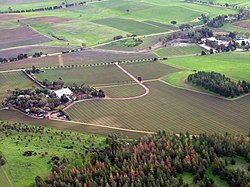
In general, a rural area or a countryside is a geographic area that is located outside towns and cities.[1] Typical rural areas have a low population density and small settlements. Agricultural areas and areas with forestry are typically described as rural, as well as other areas lacking substantial development. Different countries have varying definitions of rural for statistical and administrative purposes.
Rural areas have unique economic and social dynamics due to their relationship with land-based industry such as agriculture, forestry, and resource extraction. Rural economics can be subject to boom and bust cycles and vulnerable to extreme weather or natural disasters, such as droughts. These dynamics alongside larger economic forces encouraging urbanization have led to significant demographic declines, called rural flight, where economic incentives encourage younger populations to go to cities for education and access to jobs, leaving older, less educated, and less wealthy populations in the rural areas. Slower economic development results in poorer services like healthcare, education, and infrastructure. This cycle of poverty contributes to why three quarters of the global impoverished live in rural areas according to the Food and Agricultural Organization.
Some communities have successfully encouraged economic development in rural areas, with policies such as increased access to electricity or internet. Historically, development policies have focused on larger extractive industries, such as mining and forestry. However, recent approaches more focused on sustainable development take into account economic diversification in these communities.
Regional definitions
[edit]North America
[edit]Canada
[edit]In Canada, the Organization for Economic Co-operation and Development defines a "predominantly rural region" as having more than 50% of the population living in rural communities where a "rural community" has a population density less than 150 people per square kilometre. In Canada, the census division has been used to represent "regions" and census consolidated sub-divisions have been used to represent "communities". Intermediate regions have 15 to 49 percent of their population living in a rural community. Predominantly urban regions have less than 15 percent of their population living in a rural community. Predominantly rural regions are classified as rural metro-adjacent, rural non-metro-adjacent and rural northern, following Philip Ehrensaft and Jennifer Beeman (1992). Rural metro-adjacent regions are predominantly rural census divisions which are adjacent to metropolitan centres while rural non-metro-adjacent regions are those predominantly rural census divisions which are not adjacent to metropolitan centres. Rural northern regions are predominantly rural census divisions that are found either entirely or mostly above the following lines of latitude in each province: Newfoundland and Labrador, 50th; Manitoba, 53rd; Alberta, British Columbia, Ontario, Quebec, and Saskatchewan, 54th. As well, rural northern regions encompass all of the Yukon, Northwest Territories and Nunavut.
Statistics Canada defines rural areas by their population counts. This has referred to the population living outside settlements of 1,000 or fewer inhabitants. The current definition states that census rural is the population outside settlements with fewer than 1,000 inhabitants and a population density below 400 people per square kilometre.
United States
[edit]

Rural areas in the United States, often referred to as rural America,[2] consist of approximately 97% of the United States' land area. An estimated 60 million people, or one in five residents (17.9% of the total U.S. population), live in rural America. Definitions vary from different parts of the United States government as to what constitutes those areas.
Rural areas tend to be poorer and their populations are older than in other parts of the United States because of rural flight, declining infrastructure, and fewer economic prospects. The declining population also results in less access to services, such as high-quality medical and education systems..jpg)
South America
[edit]Brazil
[edit]
In Brazil, there are different notions of "rural area" and "countryside". Rural areas are any place outside a municipality's urban development (buildings, streets) and it is carried by informal usage. Otherwise, countryside (interior in Portuguese) are officially defined as all municipalities outside the state/territory capital's metropolitan region. Some states as Mato Grosso do Sul do not have any metropolitan regions, thus all of the state, except its capital is officially countryside. Rio de Janeiro is singular in Brazil and it is de facto a metropolitan state, as circa 70% of its population are located in Greater Rio. In the Federal District it is not applicable and there is no countryside as all of it is treated as the federal capital. Brasília is nominally the capital, but the capitality is shared through all Federal District, because Brazil de facto defines its capital as a municipality, and in municipal matters, the Federal District is treated and governs as a single municipality, city-state-like (Brasília, DF).
Europe
[edit]France
[edit]
15% of the French population lives in rural areas, spread over 90% of the country. The government under President Emmanuel Macron launched an action plan in 2019 amid the yellow vests movement in favor of rural areas named the "Agenda Rural".[3] Among many initiatives recommended to redynamize rural areas, energy transition is one of them. Research is being carried out to assess the impact of new projects in rural areas.[4]
In 2018, the government had launched the "Action Cœur de Ville" program to revitalize town centers across the country. 222 towns were selected as part of the five-year program. One of the program's aims is to make the towns attractive so the areas nearby can also benefit from investments.[5]
Germany
[edit]Germany is divided into 402 administrative districts, 295 rural districts and 107 urban districts. As one of the largest agricultural producers in the European Union, more than half of Germany's territory which is almost 19 million hectares,[6] is used for farming, and located in the rural areas. Almost 10% of people in Germany have jobs related to the agricultural, forest and fisheries sectors; approximately a fifth of them are employed in the primary production. Since there is a policy of equal living conditions, people see rural areas as equivalent as urban areas. Village renewal is an approach to develop countryside and supports the challenges faced in the process of it.[7]
United Kingdom
[edit]
In Britain, there are various definitions of a rural area.[8] "Rural" is defined by the UK Department for Environment, Food and Rural Affairs (DEFRA), using population data from the latest census, such as the United Kingdom Census 2001.[9] These definitions have various grades, but the upper point is any local government area with more than 26% of its population living in a rural settlement or market town ("market town" being defined as any settlement which has permission to hold a street market). A number of measures are in place to protect the British countryside, including green belts.
Asia
[edit]China
[edit]
India
[edit]
In India a village tends to mean a small rural area, including both a settlement and its surrounding agricultural land, rather than just the settlement itself, the typical meaning elsewhere. There are said to be up to 500,000 villages in India. In rural areas, agriculture is the chief source of livelihood along with fishing,[10] cottage industries, pottery etc.
Almost every Indian economic agency today has its own definition of rural India, some of which follow: According to the Planning Commission, a town with a maximum population of 15,000 is considered rural in nature. In these areas the panchayat makes all the decisions. There are five people in the panchayat. The National Sample Survey Organization (NSSO) defines 'rural' as follows:
- An area with a population density of up to 400 per square kilometer,
- Villages with clear surveyed boundaries but no municipal board,
- A minimum of 75% of male working population involved in agriculture and allied activities.[11]
RBI defines rural areas as those areas with a population of less than 49,000 (tier -3 to tier-6 cities).[11]
It is generally said that the rural areas house up to 70% of India's population. Rural India contributes a large chunk to India's GDP by way of agriculture, self-employment, services, construction etc. As per a strict measure used by the National Sample Survey in its 63rd round, called monthly per capita expenditure, rural expenditure accounts for 55% of total national monthly expenditure. The rural population currently accounts for one-third of the total Indian FMCG sales.[11]
Japan
[edit]In Japan, rural areas are referred to as "Inaka" which translates literally to "the countryside" or "one's native village".[12][13]
Pakistan
[edit]
According to the 2017 census about 64% of Pakistanis live in rural areas. Most rural areas in Pakistan tend to be near cities and are peri-urban areas. This is due to the definition of a rural area in Pakistan being an area that does not come within an urban boundary.[14] Rural areas in Pakistan that are near cities are considered as suburban areas or suburbs.
The remote rural villagers of Pakistan commonly live in houses made of bricks, clay or mud. Socioeconomic status among rural Pakistani villagers is often based upon the ownership of agricultural land, which also may provide social prestige in village cultures. The majority of rural Pakistani inhabitants livelihoods is based upon the rearing of livestock, which also comprises a significant part of Pakistan's gross domestic product. Some livestock raised by rural Pakistanis include cattle and goats.
Oceania
[edit]New Zealand
[edit]In New Zealand census areas are classified based on their degree of rurality. However, traffic law has a different interpretation and defines a Rural area as "... a road or a geographical area that is not an urban traffic area, to which the rural speed limit generally applies."[15]
Economics
[edit]Rural economics is the study of rural economies. Rural economies include both agricultural and non-agricultural industries, so rural economics has broader concerns than agricultural economics which focus more on food systems.[16] Rural development[17] and finance[18] attempt to solve larger challenges within rural economics. These economic issues are often connected to the migration from rural areas due to lack of economic activities[19] and rural poverty. Some interventions have been very successful in some parts of the world, with rural electrification and rural tourism providing anchors for transforming economies in some rural areas. These challenges often create rural-urban income disparities.[20]
Rural spaces add new challenges for economic analysis that require an understanding of economic geography: for example understanding of size and spatial distribution of production and household units and interregional trade,[21] land use,[22] and how low population density effects government policies as to development, investment, regulation, and transportation.[23]Development
[edit]
Rural development is the process of improving the quality of life and economic well-being of people living in rural areas, often relatively isolated and sparsely populated areas.[24] Often, rural regions have experienced rural poverty, poverty greater than urban or suburban economic regions due to lack of access to economic activities, and lack of investments in key infrastructure such as education.
Rural development has traditionally centered on the exploitation of land-intensive natural resources such as agriculture and forestry. However, changes in global production networks and increased urbanization have changed the character of rural areas. Increasingly rural tourism, niche manufacturers, and recreation have replaced resource extraction and agriculture as dominant economic drivers.[25] The need for rural communities to approach development from a wider perspective has created more focus on a broad range of development goals rather than merely creating incentive for agricultural or resource-based businesses.
Education, entrepreneurship, physical infrastructure, and social infrastructure all play an important role in developing rural regions.[26] Rural development is also characterized by its emphasis on locally produced economic development strategies.[27] In contrast to urban regions, which have many similarities, rural areas are highly distinctive from one another. For this reason there are a large variety of rural development approaches used globally.[28]Electricity
[edit]Rural electrification is the process of bringing electrical power to rural and remote areas. Rural communities are suffering from colossal market failures as the national grids fall short of their demand for electricity. As of 2019, 770 million people live without access to electricity – 10.2% of the global population.[29] Electrification typically begins in cities and towns and gradually extends to rural areas, however, this process often runs into obstacles in developing nations. Expanding the national grid is expensive and countries consistently lack the capital to grow their current infrastructure. Additionally, amortizing capital costs to reduce the unit cost of each hook-up is harder to do in lightly populated areas (yielding higher per capita share of the expense). If countries are able to overcome these obstacles and reach nationwide electrification, rural communities will be able to reap considerable amounts of economic and social development.

Migration
[edit]
Rural flight (also known as rural-to-urban migration, rural depopulation, or rural exodus) is the migratory pattern of people from rural areas into urban areas. It is urbanization seen from the rural perspective.
In industrializing economies like Britain in the eighteenth century or East Asia in the twentieth century, it can occur following the industrialization of primary industries such as agriculture, mining, fishing, and forestry—when fewer people are needed to bring the same amount of output to market—and related secondary industries (refining and processing) are consolidated. Rural exodus can also follow an ecological or human-caused catastrophe such as a famine or resource depletion. These are examples of push factors.
People can also move into town to seek higher wages, educational access and other urban amenities; examples of pull factors.
Once rural populations fall below a critical mass, the population is too small to support certain businesses, which then also leave or close, in a vicious circle. Services to smaller and more dispersed populations may be proportionately more expensive, which can lead to closures of offices and services, which further harm the rural economy. Schools are the archetypal example because they influence the decisions of parents of young children: a village or region without a school will typically lose families to larger towns that have one. But the concept (urban hierarchy) can be applied more generally to many services and is explained by central place theory.
Government policies to combat rural flight include campaigns to expand services to the countryside, such as electrification or distance education. Governments can also use restrictions like internal passports to make rural flight illegal. Economic conditions that can counter rural depopulation include commodities booms, the expansion of outdoor-focused tourism, and a shift to remote work, or exurbanization. To some extent, governments generally seek only to manage rural flight and channel it into certain cities, rather than stop it outright as this would imply taking on the expensive task of building airports, railways, hospitals, and universities in places with few users to support them, while neglecting growing urban and suburban areas.Poverty
[edit]_-_Poor_Woman_of_the_Village.jpg)
Rural poverty refers to situations where people living in non-urban regions are in a state or condition of lacking the financial resources and essentials for living. It takes account of factors of rural society, rural economy, and political systems that give rise to the marginalization and economic disadvantage found there.[32] Rural areas, because of their small, spread-out populations, typically have less well maintained infrastructure and a harder time accessing markets, which tend to be concentrated in population centers.
Rural communities also face disadvantages in terms of legal and social protections, with women and marginalized communities frequently having a harder time accessing land, education and other support systems that help with economic development. Several policies have been tested in both developing and developed economies, including rural electrification and access to other technologies such as internet, gender parity, and improved access to credit and income.
In academic studies, rural poverty is often discussed in conjunction with spatial inequality, which in this context refers to the inequality between urban and rural areas.[33] Both rural poverty and spatial inequality are global phenomena, but like poverty in general, there are higher rates of rural poverty in developing countries than in developed countries.[34]
.jpg)
Eradicating rural poverty through effective policies and economic growth is a continuing difficulty for the international community, as it invests in rural development.[34][36] According to the International Fund for Agricultural Development, 70 percent of the people in extreme poverty are in rural areas, most of whom are smallholders or agricultural workers whose livelihoods are heavily dependent on agriculture.[37] These food systems are vulnerable to extreme weather, which is expected to affect agricultural systems the world over more as climate change increases.[38][39]
Thus the climate crisis is expected to reduce the effectiveness of programs reducing rural poverty and cause displacement of rural communities to urban centers.[38][39] Sustainable Development Goal 1: No Poverty sets international goals to address these issues, and is deeply connected with investments in a sustainable food system as part of Sustainable Development Goal 2: Zero Hunger.[40][41]Rural health
[edit]
.jpg)
In medicine, rural health or rural medicine is the interdisciplinary study of health and health care delivery in rural environments. The concept of rural health incorporates many fields, including wilderness medicine, geography, midwifery, nursing, sociology, economics, and telehealth or telemedicine.[42]
Rural populations often experience health disparities and greater barriers in access to healthcare compared to urban populations.[43][44] Globally, rural populations face increased burdens of noncommunicable diseases such as cardiovascular disease, cancer, diabetes, and chronic obstructive pulmonary disorder, contributing to worse health outcomes and higher mortality rates.[45] Factors contributing to these health disparities include remote geography, increased rates of health risk behaviors, lower population density, decreased health insurance coverage among the population, lack of health infrastructure, and work force demographics.[44][46][47] People living in rural areas also tend to have less education, lower socioeconomic status, and higher rates of alcohol and smoking when compared to their urban counterparts.[48] Additionally, the rate of poverty is higher in rural populations globally, contributing to health disparities due to an inability to access healthy foods, healthcare, and housing.[49][50]
Many countries have made it a priority to increase funding for research on rural health.[51][52] These research efforts are designed to help identify the healthcare needs of rural communities and provide policy solutions to ensure those needs are met.Academic study
[edit]Because of their unique dynamics, different academic fields have developed to study rural communities.
Economics
[edit]Rural economics is the study of rural economies. Rural economies include both agricultural and non-agricultural industries, so rural economics has broader concerns than agricultural economics which focus more on food systems.[53] Rural development[54] and finance[55] attempt to solve larger challenges within rural economics. These economic issues are often connected to the migration from rural areas due to lack of economic activities[56] and rural poverty. Some interventions have been very successful in some parts of the world, with rural electrification and rural tourism providing anchors for transforming economies in some rural areas. These challenges often create rural-urban income disparities.[57]
Rural spaces add new challenges for economic analysis that require an understanding of economic geography: for example understanding of size and spatial distribution of production and household units and interregional trade,[58] land use,[59] and how low population density effects government policies as to development, investment, regulation, and transportation.[60]Rural planning
[edit]Rural planning is an academic discipline that exists within or alongside the field of urban planning, regional planning or urbanism. The definition of these fields differs between languages and contexts. Sometimes the terms are used interchangeably.
Specific interventions and solutions will depend entirely on the needs of each region in each country, but generally speaking, regional planning at the macro level will seek to:[61]
- Resist development in flood plains or along earthquake faults. These areas may be utilised as parks, or unimproved farmland.
- Designate transportation corridors using hubs and spokes and considering major new infrastructure
- Some thought into the various 'role's settlements in the region may play, for example some may be administrative, with others based upon manufacturing or transport.
- Consider designating essential nuisance land uses locations, including waste disposal.
- Designate Green belt land or similar to resist settlement amalgamation and protect the environment.
- Set regional level 'policy' and zoning which encourages a mix of housing values and communities.
- Consider building codes, zoning laws and policies that encourage the best use of the land.
- Allocation of land.
Sociology
[edit]
| Part of a series on |
| Sociology |
|---|
.svg) |

Rural sociology is a field of sociology traditionally associated with the study of social structure and conflict in rural areas. It is an active academic field in much of the world, originating in the United States in the 1910s with close ties to the national Department of Agriculture and land-grant university colleges of agriculture.[62]
While the issue of natural resource access transcends traditional rural spatial boundaries, the sociology of food and agriculture is one focus of rural sociology, and much of the field is dedicated to the economics of farm production. Other areas of study include rural migration and other demographic patterns, environmental sociology, amenity-led development, public-lands policies, so-called "boomtown" development, social disruption, the sociology of natural resources (including forests, mining, fishing and other areas), rural cultures and identities, rural health-care, and educational policies. Many rural sociologists work in the areas of development studies, community studies, community development, and environmental studies. Much of the research involves developing countries or the Third World.See also
[edit]References
[edit]- ^ "WordNet Search - 3.1". Wordnetweb.princeton.edu. Retrieved 2013-04-25.
- ^ "What is Rural America?". United States Census Bureau. Archived from the original on 2021-09-03. Retrieved 2021-09-03.
- ^ "Nos campagnes, territoires d'avenir". CGET.
- ^ Louis Boisgibault, Fahad Al Kabbani (2020): Energy Transition in Metropolises, Rural Areas and Deserts. Wiley - ISTE. (Energy series) ISBN 9781786304995.
- ^ "Un plan national de revitalisation des centres-villes". Banque des territoires. 12 August 2020.
- ^ "BMELV - Agriculture and rural areas - Farming in Germany". 2012-06-09. Archived from the original on 2012-06-09. Retrieved 2020-02-20.
- ^ Chigbu, Uchendu Eugene (2012). "Village renewal as an instrument of rural development: evidence from Weyarn, Germany". Community Development. 43 (2): 209–224. doi:10.1080/15575330.2011.575231. S2CID 154040610.
- ^ "A Beginners Guide to UK Geography (2023)". Open Geography Portal. Office for National Statistics. 24 August 2023. Retrieved 9 December 2023.
There is no single definition of a rural area, as there are many different approaches to classifying what is 'rural' (or 'non-urban'). These include approaches based on population, population density, land use and socio-economic characteristics, all of which have different advantages and disadvantages depending on the purpose of the classification. The 2011 rural urban area classification for England and Wales classifies Output Areas (OA) and wards as either urban or rural depending on whether the bulk of their population falls in a settlement of greater than 10,000 residents. It also offers sub-classifications of urban and rural areas, based on population density. A 2021 rural urban classification is under development.
- ^ "Local Authority Rural-Urban Classification". UK Government. 24 June 2011.
- ^ 林, 榮祥. "Greening the Blue: End Child Labour in Agriculture". Greening the Blue. Retrieved 24 July 2018.
- ^ a b c "In Focus" (PDF). www.dhanbank.com. December 2010.
{{cite web}}: CS1 maint: url-status (link) - ^ Asamen, Tim (10 February 2017). "Inaka: Moving from Scorn to Pride". Discover Nikkei. Retrieved 2019-09-19.
- ^ Foley, Dylan (2019-04-20). "Exploring rural Japan from the comfort of your living room with 'The Inaka Project'". The Japan Times Online. ISSN 0447-5763. Retrieved 2019-09-19.
- ^ Zaidi, S. Akbar (29 August 2017). "Rethinking urban and rural". Dawn.
- ^ "Land Transport Rule: Setting of Speed Limits 2003, Rule 54001 - Part 2". Waka Kotahi NZ Transport Agency. Ministry of Transport. Retrieved 9 January 2021.
- ^ • Gustav Ranis and Frances Stewart (1993). "Rural Nonagricultural Activities in Development: Theory and Application", Journal of Development Economics, 40(1), pp. 75-101. Abstract.
• Jean O. Lanjouwb and Peter Lanjouw (2001). "The Rural Non-farm Sector: Issues and Evidence from Developing Countries", Agricultural Economics, 26(1), pp. 1-23. Abstract.
• Thomas Reardon et al. (2008). "Effects of Non-Farm Employment on Rural Income Inequality in Developing Countries: An Investment Perspective", Journal of Agricultural Economics,51(2), pp. 266-288. Abstract. - ^ • Thomas P. Tomich, Peter Kilby, and Bruce F. Johnston (1995). Transforming Agrarian Economies. Arrow-page searchable.
• Alain de Janvry, Rinku Murgai, and Elisabeth Sadoulet (2002). "Rural Development and Rural Policy", in Handbook of Agricultural Economics, v. 2A (scrollable preview), ch. 31. Abstract.
• Bruce L. Gardner (2005). "Causes of Rural Economic Development", Agricultural Economics, 32(s1), pp. 21-41. Abstract.
• Kiminori Matsuyama (2008). "Structural change", The New Palgrave Dictionary of Economics 2nd Edition. Abstract.
• Steven C. Deller et al. (2001). "The Role of Amenities and Quality of Life in Rural Economic Growth", American Journal of Agricultural Economics, 83(2), pp. 352-365 Archived 2011-07-21 at the Wayback Machine (close Pages tab). - ^ • Michael R. Carter (2008), "agricultural finance", The New Palgrave Dictionary of Economics, 2nd Edition.Abstract.
• Karla Hoff and Joseph E. Stiglitz (1993). "Imperfect Information and Rural Credit Markets: Puzzles and Policy Perspectives", in Karla Hoff, Avishay Braverman, and Joseph E. Stiglitz, ed., Economics of Rural Organization: Theory, Practice and Policy, ch. 2, pp. 33-52 (press +).
• Rodrigo A. Chaves and Claudio Gonzalez-Vega (1996). "The Design of Successful Rural Financial Intermediaries: Evidence from Indonesia", World Development, 24(1), pp. 65-78. Abstract. - ^ • James Roumasset (2008). "population and agricultural growth", The New Palgrave Dictionary of Economics, 2nd Edition.
Abstract.
• David McGranahan (1999).Natural Amenities Drive Rural Population Change. Agricultural Economic Report No. (AER781) 32 pp, Description and chapter links. - ^ • JunJie Wu, Paul W. Barkley, and Bruce A. Weber, ed. (2008). Frontiers in Resource and Rural Economics. Resources for the Future. ISBN 978-1-933115-65-8.Description. Archived 2008-10-31 at the Wayback Machine
• JEL classification codes#Urban, rural, and regional economics JEL: R Subcategories
• Alain de Janvry and Elisabeth Sadoulet (2007). "Toward a Territorial Approach to Rural Development", Journal of Agricultural and Development, 4(1), pp. 66-98. - ^ • Anthony J. Venables (2008). "New economic geography". The New Palgrave Dictionary of Economics, 2nd Edition.Abstract.
• France Ivry (1994). Agricultural Household Modelling and Family Economics. Elsevier. Abstract. - ^ • Alain de Janvry and Elisabeth Sadoulet (2008). "access to land and development", The New Palgrave Dictionary of Economics 2nd Edition. Abstract.
• JunJie Wu (2008). "Land Use Changes: Economic, Social, and Environmental Impacts", Choices: The Magazine of Food, Farm, and Resource Issues, 23(4), pp. 6-10 (press +). - ^ • John W. Mellor (2008). "agriculture and economic development", The New Palgrave Dictionary of Economics, 2nd Edition. Abstract.
• Christopher B. Barrett and Emelly Mutambatsere (2008). "agricultural markets in developing countries", The New Palgrave Dictionary of Economics, 2nd Edition. Abstract.
• Karla Hoff, Avishay Braverman, and Joseph E. Stiglitz, ed. (1993). Economics of Rural Organization: Theory, Practice and Policy. Oxford University Press for the World Bank.
• William A. Galston and Karen Baehler (1995). Rural Development in the United States: Connecting Theory, Practice, and Possibilities. Wash., D.C.: Island Press. Description and TOC link.
• Alan Okagaki, Kris Palmer, and Neil S. Mayer (1998). Strengthening Rural Economics. Wash., D.C.: U.S. Dept. of Housing & Urban Development. Description Archived 2009-05-09 at the Wayback Machine and PDF (press +). - ^ Moseley, Malcolm J. (2003). Rural development : principles and practice (1. publ. ed.). SAGE. p. 5. ISBN 9780761947660.
- ^ Ward, Neil; Brown, David L. (1 December 2009). "Placing the Rural in Regional Development". Regional Studies. 43 (10): 1237–1244. Bibcode:2009RegSt..43.1237W. doi:10.1080/00343400903234696.
- ^ Rowley, Thomas D., ed. (1996). Rural development research : a foundation for policy (1. publ. ed.). Greenwood Press. ISBN 9780313297267.
- ^ Moseley, Malcolm J. (2003). Rural development : principles and practice (1. publ. ed.). SAGE. p. 7. ISBN 9780761947660.
- ^ Van Assche, Kristof. & Hornidge, Anna-Katharina. (2015) Rural development. Knowledge & expertise in governance Wageningen Academic Publishers Wageningen
- ^ IEA (2022), SDG7: Data and Projections, IEA, Paris https://www.iea.org/reports/sdg7-data-and-projections, License: CC BY 4.0
- ^ "Access to electricity, rural (% of rural population) | Data". Archived from the original on 2018-09-17. Retrieved 2019-03-13.
- ^ 2000 U.S. Census Data
- ^ Janvry, A. de, E. Sadoulet, and R. Murgai. 2002. "Rural Development and Rural Policy". In B.GardnerG. Rausser (eds.), Handbook of Agricultural Economics, vol. 2, A, Amsterdam: NorthHolland: 1593–658.
- ^ Kanbur, Ravi; Venables, Anthony J. (2005). Spatial inequality and development. Oxford New York: Oxford University Press. ISBN 9780199278633. Pdf version.
- ^ a b Jazaïry, Idriss; Alamgir, Mohiuddin; Panuccio, Theresa (1992). The State of World Rural Poverty: An Inquiry into Its Causes and Consequences. New York: University Press. ISBN 9789290720034.
- ^ Huang, Frankie (2018-12-31). "The Rise and Fall of China's Cycling Empires". Foreign Policy. Retrieved 2023-10-26.
- ^ Otsuka, Keijiro. 2009. Rural poverty and income dynamics in Asia and Africa. New York: Routledge.
- ^ "Transforming food systems for rural prosperity". www.ifad.org. Retrieved 2024-01-23.
- ^ a b Barbier, Edward B.; Hochard, Jacob P. (June 2018). "Poverty, rural population distribution and climate change". Environment and Development Economics. 23 (3): 234–256. doi:10.1017/S1355770X17000353. ISSN 1355-770X. S2CID 158642860.
- ^ a b Hallegatte, Stephane; Fay, Marianne; Barbier, Edward B. (June 2018). "Poverty and climate change: introduction". Environment and Development Economics. 23 (3): 217–233. doi:10.1017/S1355770X18000141. ISSN 1355-770X. S2CID 158756317.
- ^ "SDG 2. Zero hunger | Sustainable Development Goals | Food and Agriculture Organization of the United Nations". www.fao.org. Retrieved 2021-10-10.
- ^ "SDG 1. No poverty | Sustainable Development Goals | Food and Agriculture Organization of the United Nations". www.fao.org. Retrieved 2021-10-10.
- ^ Chan, Margaret (2010). Global Policy Recommendations. France: Graphic design: Rasmussen/CH. pp. 14–18. ISBN 978-92-4-156401-4.
- ^ "About Rural Health | CSELS | Rural Health | CDC". www.cdc.gov. 2023-11-28. Retrieved 2024-03-17.
- ^ a b "Rural Health Disparities Overview - Rural Health Information Hub". www.ruralhealthinfo.org. Retrieved 2024-04-03.
- ^ "Tackling inequalities in public service coverage to "build forward better" for the rural poor". www.who.int. Retrieved 2024-03-29.
- ^ Scheil-Adlung, X. (2015-05-05). Global evidence on inequities in rural health protection. New data on rural deficits in health coverage for 174 countries (Report).
- ^ WHO guideline on health workforce development, attraction, recruitment and retention in rural and remote areas. World Health Organization. 2021. hdl:10665/341139. ISBN 978-92-4-002422-9.[page needed]
- ^ "Rural Health Disparities Overview - Rural Health Information Hub". www.ruralhealthinfo.org. Retrieved 2024-04-07.
- ^ "Addressing health inequities among people living in rural and remote areas". www.who.int. Retrieved 2024-03-29.
- ^ "Economic Stability - Healthy People 2030 | health.gov". health.gov. Retrieved 2024-03-29.
- ^ Healthy Horizons- Outlook 2003-2007: A Framework for Improving the Health of Rural, Regional, and Remote Australians (PDF). National Rural Health Alliance. 2003. ISBN 0-7308-5684-4.
- ^ "Rural Health in Rural Hands: Strategic Directions for Rural, Remote, Northern and Aboriginal Communities" (PDF). Society of Rural Physicians Canada. 2002. Archived from the original (PDF) on 2014-03-09.
- ^ • Gustav Ranis and Frances Stewart (1993). "Rural Nonagricultural Activities in Development: Theory and Application", Journal of Development Economics, 40(1), pp. 75-101. Abstract.
• Jean O. Lanjouwb and Peter Lanjouw (2001). "The Rural Non-farm Sector: Issues and Evidence from Developing Countries", Agricultural Economics, 26(1), pp. 1-23. Abstract.
• Thomas Reardon et al. (2008). "Effects of Non-Farm Employment on Rural Income Inequality in Developing Countries: An Investment Perspective", Journal of Agricultural Economics,51(2), pp. 266-288. Abstract. - ^ • Thomas P. Tomich, Peter Kilby, and Bruce F. Johnston (1995). Transforming Agrarian Economies. Arrow-page searchable.
• Alain de Janvry, Rinku Murgai, and Elisabeth Sadoulet (2002). "Rural Development and Rural Policy", in Handbook of Agricultural Economics, v. 2A (scrollable preview), ch. 31. Abstract.
• Bruce L. Gardner (2005). "Causes of Rural Economic Development", Agricultural Economics, 32(s1), pp. 21-41. Abstract.
• Kiminori Matsuyama (2008). "Structural change", The New Palgrave Dictionary of Economics 2nd Edition. Abstract.
• Steven C. Deller et al. (2001). "The Role of Amenities and Quality of Life in Rural Economic Growth", American Journal of Agricultural Economics, 83(2), pp. 352-365 Archived 2011-07-21 at the Wayback Machine (close Pages tab). - ^ • Michael R. Carter (2008), "agricultural finance", The New Palgrave Dictionary of Economics, 2nd Edition.Abstract.
• Karla Hoff and Joseph E. Stiglitz (1993). "Imperfect Information and Rural Credit Markets: Puzzles and Policy Perspectives", in Karla Hoff, Avishay Braverman, and Joseph E. Stiglitz, ed., Economics of Rural Organization: Theory, Practice and Policy, ch. 2, pp. 33-52 (press +).
• Rodrigo A. Chaves and Claudio Gonzalez-Vega (1996). "The Design of Successful Rural Financial Intermediaries: Evidence from Indonesia", World Development, 24(1), pp. 65-78. Abstract. - ^ • James Roumasset (2008). "population and agricultural growth", The New Palgrave Dictionary of Economics, 2nd Edition.
Abstract.
• David McGranahan (1999).Natural Amenities Drive Rural Population Change. Agricultural Economic Report No. (AER781) 32 pp, Description and chapter links. - ^ • JunJie Wu, Paul W. Barkley, and Bruce A. Weber, ed. (2008). Frontiers in Resource and Rural Economics. Resources for the Future. ISBN 978-1-933115-65-8.Description. Archived 2008-10-31 at the Wayback Machine
• JEL classification codes#Urban, rural, and regional economics JEL: R Subcategories
• Alain de Janvry and Elisabeth Sadoulet (2007). "Toward a Territorial Approach to Rural Development", Journal of Agricultural and Development, 4(1), pp. 66-98. - ^ • Anthony J. Venables (2008). "New economic geography". The New Palgrave Dictionary of Economics, 2nd Edition.Abstract.
• France Ivry (1994). Agricultural Household Modelling and Family Economics. Elsevier. Abstract. - ^ • Alain de Janvry and Elisabeth Sadoulet (2008). "access to land and development", The New Palgrave Dictionary of Economics 2nd Edition. Abstract.
• JunJie Wu (2008). "Land Use Changes: Economic, Social, and Environmental Impacts", Choices: The Magazine of Food, Farm, and Resource Issues, 23(4), pp. 6-10 (press +). - ^ • John W. Mellor (2008). "agriculture and economic development", The New Palgrave Dictionary of Economics, 2nd Edition. Abstract.
• Christopher B. Barrett and Emelly Mutambatsere (2008). "agricultural markets in developing countries", The New Palgrave Dictionary of Economics, 2nd Edition. Abstract.
• Karla Hoff, Avishay Braverman, and Joseph E. Stiglitz, ed. (1993). Economics of Rural Organization: Theory, Practice and Policy. Oxford University Press for the World Bank.
• William A. Galston and Karen Baehler (1995). Rural Development in the United States: Connecting Theory, Practice, and Possibilities. Wash., D.C.: Island Press. Description and TOC link.
• Alan Okagaki, Kris Palmer, and Neil S. Mayer (1998). Strengthening Rural Economics. Wash., D.C.: U.S. Dept. of Housing & Urban Development. Description Archived 2009-05-09 at the Wayback Machine and PDF (press +). - ^ Ziafati Bafarasat, Abbas; Oliveira, Eduardo (2021). "Disentangling three decades of strategic spatial planning in England through participation, project promotion and policy integration". European Planning Studies. 29 (8): 1375–1392. doi:10.1080/09654313.2020.1863920. hdl:2078.1/239405. S2CID 234437777.
- ^ Nelson, 1969
Further reading
[edit]- "Definitions of Rural: A Handbook for Health Policy Makers and Researchers" (PDF). (6.12 MB) Thomas C. Ricketts, Karen D. Johnson-Webb, Patricia Taylor. Chapel Hill: North Carolina Rural Health Research Program, Cecil G. Sheps Center for Health Services Research, University of North Carolina, 1998. 13 p.
External links
[edit]


- Census 2000 Urban and Rural Classification
- North West Rural Affairs Forum (England)
- Canadian Rural Partnership
- The Better India- Rural India
- India Rural Population
| International | |
|---|---|
| National | |
| Other | |

Rural area
View on GrokipediaDefinitions and Characteristics
General Definition and Criteria
A rural area is generally defined as a geographic region located outside of towns and cities, characterized by low population density, small settlements, and predominant land uses such as agriculture, forestry, or natural preservation.[9] These areas typically feature sparse housing, limited infrastructure, and economies centered on primary sectors like farming or resource extraction, distinguishing them from urban zones with higher concentrations of commercial, industrial, and residential development.[10] Unlike urban areas, which emphasize built environments and services, rural regions prioritize open spaces and traditional livelihoods, though precise boundaries depend on jurisdictional standards rather than a single global metric.[11] No universally accepted definition exists for rural areas, as classifications vary by country, organization, and purpose, often balancing statistical, administrative, and functional factors.[12] Common criteria include population thresholds, density measures, and exclusion from urban cores; for instance, the United Nations' Degree of Urbanisation (DEGURBA) framework, endorsed in 2020, categorizes rural areas as those with low-density grid cells below 300 inhabitants per square kilometer, contrasting with cities (over 1,500 inhabitants per square kilometer and population exceeding 50,000) and towns/suburbs (300–1,500 inhabitants per square kilometer).[13] [12] The Organisation for Economic Co-operation and Development (OECD) similarly employs density-based typologies, defining rural communities at the local level as those with fewer than 150 inhabitants per square kilometer, while classifying broader regions as predominantly rural if over 50% of their population resides in such low-density units.[14] [15] In national contexts, criteria often adapt these principles to local data; the U.S. Census Bureau delineates rural areas as all territory, population, and housing outside urbanized areas (50,000+ persons) or urban clusters (2,500–49,999 persons), applying density thresholds like at least 1,275 persons per square mile for urban cores and considering contiguous development.[16] [17] European Union approaches, aligned with OECD methods, use local administrative units (LAUs) where rural grid cells exhibit densities under 300 inhabitants per square kilometer, emphasizing policy needs like development funding eligibility.[18] These definitions facilitate data comparability but can overlook functional aspects, such as commuting patterns or economic interdependence with urban centers, leading to hybrid classifications like rural regions proximate to cities.[19] Overall, rural criteria prioritize empirical metrics of sparsity and non-urban character to support targeted analysis and policy.[20]Physical, Demographic, and Socioeconomic Features
Rural areas are defined by low population density, often below 400 inhabitants per square kilometer, featuring expansive open landscapes with sparse settlements and predominant land uses in agriculture, forestry, or natural terrain rather than built environments.[9][1] These regions encompass greater geographic distances between infrastructure and populations, contributing to isolation in remote terrains such as mountains, plains, or coastal hinterlands.[21] Demographically, rural populations exhibit lower overall density and, in many developed nations, an older age structure compared to urban counterparts; for instance, in the United States, the median age in rural areas stands at 43 years versus 36 in urban areas, with 18% of rural residents aged 65 or older against 15% urban.[22][23] Globally, rural inhabitants comprise approximately 39% of the world's population as of 2023, though this share continues to decline due to urbanization and net out-migration of younger cohorts to cities.[4] Rural demographics often show less ethnic diversity, as evidenced by U.S. data where 78% of rural residents identify as white compared to 58% in urban areas.[24] Socioeconomically, rural areas frequently display higher poverty rates, with extreme poverty affecting 16% of the global rural population versus lower urban figures across nearly all regions, and approximately 80% of the world's extreme poor residing in rural settings.[25][26] Employment is disproportionately concentrated in primary sectors, particularly agriculture, which accounts for 26% of total global employment in 2022 but dominates rural labor markets.[27] These patterns correlate with lower median incomes and educational attainment, though variations exist by region and development level, with rural manufacturing or resource extraction providing alternatives in some locales.[23]Empirical Distinctions from Urban Areas
Rural areas are empirically distinguished from urban areas by markedly lower population densities, often below 100-500 inhabitants per square kilometer depending on national criteria, compared to urban densities frequently surpassing 1,000 persons per square kilometer. [28] Globally, as of 2018, approximately 55% of the world's population resided in urban areas, leaving 45% in rural settings characterized by dispersed settlements and extensive open land. [5] This density differential facilitates larger-scale agricultural and natural resource extraction activities in rural zones, which dominate land use, whereas urban areas prioritize commercial, residential, and industrial development. [29] Economically, rural regions exhibit higher reliance on primary sectors such as agriculture, forestry, and mining, with employment in these areas often exceeding 50% of the local workforce in developing countries, in contrast to urban economies driven by services and manufacturing where secondary and tertiary sectors predominate. [30] For instance, in least developed countries, rural populations contribute disproportionately to global agricultural output despite comprising a declining share of total employment due to urbanization trends. [30] Infrastructure access reveals stark gaps, exemplified by the Rural Access Index, which measures the percentage of rural populations within 2 kilometers of an all-season road; in many low-income nations, this falls below 50%, hampering mobility and market integration relative to urban counterparts with dense road and public transport networks. [31] Health and education outcomes further delineate these distinctions, with rural residents facing elevated risks from geographic isolation, lower socioeconomic status, and limited service provision, leading to higher rates of chronic conditions and health risk behaviors. [32] In the United States, rural areas report 68 physicians per 100,000 residents versus 80 in urban settings, contributing to disparities in preventive care and mortality rates. [33] [34] Educational attainment is similarly lower in rural locales, with reduced access to higher education institutions and higher poverty correlating to diminished literacy and skill levels compared to urban populations. [35] These patterns persist globally, though mitigated in high-income countries with better rural connectivity. [36]Historical Evolution
Pre-Industrial Rural Societies
Pre-industrial rural societies, spanning from ancient agrarian civilizations until roughly the mid-18th century, were defined by their overwhelming reliance on agriculture as the primary economic activity, with the vast majority of inhabitants engaged in subsistence farming to produce food for self-consumption rather than surplus for trade. These communities typically operated with minimal division of labor beyond basic household and seasonal tasks, limited technological inputs such as hand tools and draft animals, and low overall productivity that constrained population growth to approximately 0.04% annually from 10,000 BCE through the 19th century.[37] [38] [39] In such systems, crop yields were dictated by soil fertility, weather variability, and rudimentary practices like crop rotation or fallowing, often resulting in periodic famines when harvests failed due to these factors.[40] Social organization in these societies centered on small, self-contained villages or hamlets, where kinship ties and communal labor underpinned daily life, fostering tight-knit but static communities with slow rates of innovation or mobility. Hierarchical structures prevailed, particularly in Europe under feudal arrangements from the 9th to 15th centuries, where peasants or serfs were bound to manorial lands owned by lords, surrendering portions of their output—typically 30-50% of produce—as rent or tribute in exchange for protection and access to common resources like pastures.[41] [42] Similar patterns emerged globally, as in Asian rice-paddy systems where village collectives managed irrigation and labor sharing, though class divisions between landowners and tenants mirrored European inequalities in extracting surplus labor amid land scarcity.[39] Rural population densities remained sparse, often under 30 persons per square mile in medieval European contexts, reflecting the land-intensive nature of farming and vulnerability to disease or conflict that kept settlements dispersed.[43] Economic and demographic stability hinged on ecological balances, with labor abundant relative to arable land, leading to Malthusian pressures where population increases eroded per capita resources until checked by starvation, plague, or war—as evidenced by Europe's 14th-century Black Death reducing populations by 30-60% and temporarily boosting wages through labor scarcity.[38] [44] Family units formed the core production unit, with children contributing to fieldwork from early ages, and inheritance practices like primogeniture in parts of Europe perpetuating land fragmentation or consolidation that influenced long-term inequality.[40] These societies exhibited resilience through adaptive practices, such as diversified cropping to mitigate risks, but their pre-industrial stasis—marked by generational continuity in routines—stemmed from the causal primacy of biophysical limits over institutional reforms.[42]Industrialization and Rural Decline Narratives
The industrialization era, commencing in Britain around the 1760s, initiated widespread rural-to-urban migration through agricultural restructuring, notably the Parliamentary Enclosure Acts passed between 1760 and 1832, which consolidated fragmented open fields and commons into privately held farms. These acts affected over 21 percent of England's surface area, displacing smallholders reliant on common lands for subsistence and fueling depopulation in rural villages as laborers sought wage work in burgeoning industrial cities like Manchester and Birmingham.[45] Narratives framing this as rural decline often emphasize the erosion of communal agrarian systems and the pauperization of displaced peasants, portraying enclosures as a catalyst for social dislocation and urban squalor.[46] Empirical assessments, however, reveal enclosures boosted agricultural output by enabling crop rotation and investment in improvements, with enclosed parishes exhibiting higher yields per acre compared to open-field systems, though at the cost of increased landholding inequality.[47] In the United States, parallel processes during the 19th century involved mechanization—such as the introduction of the McCormick reaper in 1831—and factory expansion, reducing farm labor needs; agricultural employment fell from comprising 72 percent of the non-slave workforce in 1820 to 50 percent by 1870, with internal industrialization driving 63 percent of the subsequent national drop in farm jobs through the early 20th century.[48] Decline narratives in American historiography typically depict this exodus as evidence of rural economic hollowing, linking it to farm foreclosures during the Great Depression, when over 1 million farms were lost between 1929 and 1935.[49] Critiques of these narratives contend they overlook causal mechanisms of productivity enhancement and voluntary opportunity-seeking, arguing that apparent rural decline reflects relative sectoral shifts rather than absolute welfare losses; for example, U.S. farm productivity rose 1.6 percent annually from 1948 to 2017, sustaining food output with fewer workers amid overall GDP growth.[48] Globally, urbanization absorbed rural migrants into higher-wage sectors, with the rural population share declining from over 90 percent in Europe and North America pre-1800 to approximately 20 percent by 2020, accompanied by per capita income gains that challenge monolithic decline interpretations.[5] Such accounts, prevalent in academic literature, may amplify deprivation themes influenced by institutional biases favoring interventionist explanations over market-driven adaptation.[50]20th-21st Century Transformations and Revivals
Throughout the 20th century, rural areas underwent profound transformations driven by technological advancements and economic shifts, primarily mechanization in agriculture and rural-to-urban migration. In the United States, farm mechanization during the early 20th century reduced the labor required for crop production, contributing to a decline in agricultural employment from about 27% of the workforce in 1910 to under 5% by 1960, as efficiency gains displaced workers and prompted outmigration to urban industrial centers.[51] Globally, urbanization accelerated, with the rural share of world population falling from approximately 88% in 1900 to around 50% by 2000, as industrial opportunities drew populations to cities while agricultural productivity rose through machinery and hybrid seeds.[5] These changes often led to rural depopulation, particularly in developed regions, where small family farms consolidated into larger operations, exacerbating labor surpluses and community decline.[52] Rural electrification exemplified infrastructural transformations that boosted productivity but reinforced selective outmigration. In the U.S., only about 10% of farms had electricity by 1930, rising to nearly 100% by 1960 through programs like the Rural Electrification Act of 1935, which financed cooperatives and increased crop output and farm values while enabling household appliances that improved living standards.[53][54] Similar electrification efforts worldwide, such as in Europe and parts of Asia post-World War II, facilitated mechanized farming and reduced drudgery, yet causal links to sustained rural vitality were mixed, as higher efficiency often accelerated labor displacement without commensurate non-farm job creation in remote areas.[55] By the late 20th century, improved road networks and motorized transport further integrated rural economies with urban markets, diminishing isolation but intensifying competition that favored consolidated agribusiness over traditional smallholdings. In the 21st century, rural areas experienced uneven revivals amid persistent challenges, with counterurbanization emerging in select developed regions due to remote work and digital connectivity. The COVID-19 pandemic accelerated this trend, as broadband expansion enabled telecommuting; U.S. counties gaining high-speed internet access saw poverty rates drop by up to 1.5 percentage points and unemployment fall by 0.8 points between 2010 and 2020, attracting knowledge workers to amenity-rich rural locales.[56][57] In Europe and North America, remote work contributed to population growth in remote rural counties, reversing decades of decline—for instance, some Midwest U.S. communities recorded their first net gains in generations by 2022, driven by service-sector jobs viable via internet.[58][59] However, these revivals remain localized, concentrated in areas with natural amenities or proximity to urban hubs, while many global rural populations, especially in developing Asia and Africa, continue absolute growth but face infrastructure gaps; worldwide rural population stabilized around 3.4 billion by 2020, comprising 44% of total, with broadband adoption lagging at under 50% in many low-density regions.[4][5] Revival dynamics also include diversification beyond agriculture, such as agritourism and renewable energy projects, though empirical evidence ties sustained growth primarily to digital infrastructure overcoming geographic barriers. Studies indicate that wired broadband availability correlates with 1-2% higher rural employment rates in sectors like finance and health, fostering entrepreneurship without necessitating urban relocation.[60] Counterurbanization patterns, observed in countries like Belgium and Thailand via social media data, show rural resident increases of 1.8-2.1% in non-metro zones post-2010, signaling a partial reversal of 20th-century flight.[61] Yet, causal realism underscores limitations: without addressing persistent issues like aging demographics and service access, revivals risk being transient, as evidenced by uneven post-pandemic retention rates in rural inflows.[62] Overall, 21st-century transformations hinge on technology bridging urban-rural divides, enabling selective economic resilience rather than uniform revival.Global Regional Variations
North America
In North America, rural areas encompass vast territories characterized by low population density, agricultural dominance, and resource extraction economies, spanning the United States, Canada, and Mexico. These regions cover approximately 97% of U.S. land area despite housing only about 19.3% of the population, or 64.5 million people as of 2020 Census data.[63] In Canada, rural and small town populations constitute 18.14% of the total in 2023, totaling around 7.27 million residents, with growth observed in 10 of 13 provinces and territories from 2021 to 2024.[64] [65] [66] Mexico's rural population stands at 18.42% or about 23.7 million in 2024, often marked by higher poverty rates exceeding 40% in rural contexts.[67] [68] [69] Across the continent, rural definitions typically exclude densely settled urban cores, emphasizing areas outside census-defined urban clusters with populations under 50,000 or non-adjacent to larger cities.[16] [70] United States rural areas, defined by the Census Bureau as all territory not classified as urban—encompassing populations below 5,000 in high-density settlements or outside urbanized areas—have shown modest population recovery, growing 0.25% from 2020 to 2022 after prior declines.[16] [71] Economic reliance on farming, mining, and manufacturing persists, but challenges include an aging demographic, with rural counties experiencing higher median ages and natural population decreases offset by net migration gains of over 100,000 residents between 2023 and 2024.[7] [72] Poverty rates remain elevated, influenced by limited job diversity and infrastructure gaps, though sectors like renewable energy show expansion potential.[73] [74] In Canada, rural economies center on agriculture, forestry, and natural resources, with Statistics Canada delineating rural areas as those outside census agglomerations and subdivisions with fewer than 10,000 residents.[75] Population trends indicate stabilization and slight increases, driven by affordability and lifestyle appeals, yet workforce participation lags urban rates amid outmigration of youth.[66] Mexico's rural zones, predominantly agrarian, face acute issues like extreme poverty affecting 17.4% of residents and limited access to markets, exacerbating inequality despite comprising over 5.3 million small economic units.[69] Continental rural development trends post-2020 highlight remote work-enabled influxes, particularly of younger adults to smaller locales, fostering entrepreneurship but straining housing and services.[76] Persistent hurdles include capital access, health disparities, and environmental pressures from land use changes.[77]Europe
In the European Union, rural areas are statistically defined by Eurostat as thinly populated territories where more than 50% of the population resides in rural grid cells of 1 km², typically exhibiting low population density below 300 inhabitants per km² and limited urban centers.[78] Predominantly rural regions, comprising NUTS level 3 administrative units where at least 50% of residents live in such grid cells, cover approximately 44.7% of the EU's land area but house only about 20% of its total population as of recent estimates.[79] These areas span over 75% of the EU's territory when including intermediate zones, underscoring a vast spatial footprint relative to demographic weight.[78] Demographic trends in European rural regions reveal persistent challenges, including depopulation and aging populations, driven by out-migration of working-age individuals to urban centers for employment opportunities.[80] Between 2015 and 2020, populations in predominantly rural regions declined by an average of 0.1% annually, contrasting with growth in urban areas, with over 20% of EU municipalities—half in remote rural zones—experiencing shrinkage.[81] The old-age dependency ratio in these areas exceeds the EU average of 36.4% as of January 2023, amplifying pressures on local services and economies.[82] Eastern European countries like Romania and Bulgaria retain higher rural population shares, often above 40%, while Western nations such as the Netherlands exhibit rates below 10%, reflecting varied historical industrialization and urbanization paths.[83] Despite these declines, select peri-urban rural zones benefit from proximity to cities, showing stability or modest inflows from remote workers post-2020.[84] Economically, agriculture remains a cornerstone, employing around 4-5% of the rural workforce but contributing disproportionately to regional identities and EU policies like the Common Agricultural Policy (CAP), which allocated €387 billion from 2021-2027 to support farming viability and environmental standards.[85] Forestry and fisheries supplement primary production in northern and coastal rural areas, while diversification into tourism, renewable energy, and agro-processing has gained traction; for instance, rural GDP per capita in strong-performing clusters reaches urban levels through such shifts.[86] However, remote rural areas lag, with only 1.6% classified as economically robust, facing infrastructure deficits in broadband and transport that hinder competitiveness.[86] EU cohesion funds and rural development programs, including LEADER initiatives, target these gaps, funding over 2,000 local action groups to foster entrepreneurship and mitigate poverty risks, which stood at 21.4% in rural areas in 2023, comparable to urban rates.[87] [88] Policy responses emphasize resilience against climate variability and demographic shifts, with the EU's 2023 rural vision promoting multifunctional landscapes that balance food production, biodiversity, and habitation without over-reliance on subsidies that may distort markets.[89] Systematic reviews of anti-depopulation strategies since 2000 highlight mixed efficacy of incentives like tax breaks and service decentralization, underscoring the need for causal focus on local resource endowments rather than uniform interventions.[90] In Eastern Europe, state-led retention efforts contrast with market-oriented Western approaches, yet empirical data indicate that viable rural economies hinge on innovation in value-added sectors over traditional agriculture alone.[91] Overall, while structural depopulation persists, targeted investments could leverage Europe's rural assets—natural capital and cultural heritage—for sustainable growth, provided policies prioritize empirical outcomes over ideological prescriptions.[18]Asia
Asia encompasses the world's largest rural population, with India holding approximately 893 million rural residents and China around 578 million as of recent estimates, representing nearly 90% of global rural dwellers concentrated in these two nations.[92] Rural areas in Asia are predominantly agrarian, characterized by smallholder farming systems where families typically manage about 2.5 acres of land, focusing on staple crops like rice in irrigated paddies across South and Southeast Asia.[93] Dependence on agriculture and natural resources remains high, with informality in employment prevalent, contributing to vulnerability from climatic variability and market fluctuations.[94] In East Asia, particularly China, rural transformation since 1978 has seen agricultural output surge through reforms like the Household Responsibility System, yet challenges persist with aging populations and land fragmentation.[95] China's rural revitalization strategy, outlined in 2027 plans, emphasizes agricultural modernization, infrastructure upgrades, and income diversification to counter urban migration, which has reduced the rural population share to about 36% by 2023.[96] [97] Urbanization accelerates out-migration of working-age individuals, exacerbating rural aging and labor shortages, as evidenced by net rural-to-urban flows driving much of Asia's urban growth.[98] [99] South Asia, including India and Bangladesh, features higher rural population proportions—around 65% in India—where poverty affects over two-thirds of the poor in rural zones, linked to monsoon-dependent farming and limited non-farm opportunities.[100] [101] Development policies focus on diversification into high-value crops and mechanization, though gender wage gaps in agriculture remain stark, with female earnings at 54.5% of male in 1990 data, reflecting persistent structural inequalities.[102] Seasonal migration for work mitigates rural deprivation during lean periods, but remittances often fail to fully offset infrastructure deficits like electricity and water access.[103] Southeast Asia, such as Indonesia, grapples with similar dynamics, where rural economies blend agriculture with emerging agroprocessing, yet poverty incidence hovers higher in rural areas due to uneven policy implementation.[104] ASEAN's 2022-2026 Master Plan promotes youth engagement in rural industries to sustain viability amid urbanization pressures, which reclassify rural lands and alter demographic structures without proportional migration in some cases.[105] [106] Across Asia, rural poverty rates exceed urban counterparts, with developing Asia's extreme poverty concentrated rurally, underscoring the need for targeted interventions beyond broad growth narratives.[107]Other Regions
In Latin America and the Caribbean, rural areas constitute approximately 23.36% of the total population on average across 20 countries as of 2023, with significant variation: Guatemala maintains the highest rural share at 46.9%, while Uruguay has the lowest at 4.23%. [108] Agriculture remains a cornerstone of rural economies, yet persistent poverty and inequality drive rural-to-urban migration, exacerbating urbanization trends that have reduced rural populations over decades. [109] Rural development initiatives emphasize integrating social, environmental, and economic factors to combat poverty, which is often higher in rural zones due to limited access to markets and services, though data from organizations like CEPAL highlight heterogeneous poverty distribution exceeding 60% in some rural pockets. [110] Sub-Saharan Africa's rural regions are characterized by heavy dependence on smallholder agriculture, where 70-80% of rural employment is tied to farming, yet yields remain stagnant due to factors like soil degradation, limited technology adoption, and climate variability. [111] [112] Nearly 80% of the continent's extreme poor reside in rural areas, with projections indicating that by 2030, eight out of ten such individuals will be smallholder farmers facing infrastructure deficits that isolate communities from urban markets and services. [113] Poverty perpetuation stems from inadequate roads, electricity, and irrigation, as seen in cases like rural Tanzania, where these gaps hinder connectivity and economic diversification beyond subsistence crops. [114] Oceania's rural landscapes vary widely, with Australia and New Zealand featuring advanced, export-oriented farming on vast lands, while Pacific islands rely more on subsistence practices. [115] In Australia, agriculture drives rural economies through crops and livestock, supported by mechanization and contributing significantly to GDP despite a low rural population percentage. [116] New Zealand's rural sectors, particularly dairy farming, employ about 1.6% of the workforce and emphasize high-value pastoral systems, though overall rural shares are minimal at 13.02% compared to Papua New Guinea's 86.28%. [117] Challenges include climate risks and labor shortages, but innovation in precision agriculture bolsters productivity in these developed rural contexts. [118] In the Middle East and North Africa, rural areas grapple with arid conditions and water scarcity, limiting arable land to under 10% in many countries and constraining agriculture to irrigated oases or dryland farming. [119] Population pressures and declining farm sizes intensify food security risks, with agriculture facing depletion of aquifers and inefficient water use, though emerging regenerative practices aim to combat desertification. [120] Rural poverty persists amid these environmental constraints, underscoring the need for adaptive technologies to sustain traditional herding and crop production. [121]Economic Dimensions
Primary Sectors and Resource-Based Economies
Primary sectors in rural economies involve the extraction and initial production of natural resources, including agriculture, forestry, fishing, and mining. These activities predominate in rural areas due to the availability of arable land, forests, water bodies, and mineral deposits, which are less feasible in densely populated urban settings. Globally, rural populations exhibit higher reliance on these sectors compared to urban counterparts, with resource extraction forming the backbone of local livelihoods and contributing to national economies through raw material supply chains.[122] Agriculture stands as the dominant primary sector in most rural regions, employing a substantial portion of the workforce. In 2023, the agricultural sector, including forestry and fishing, accounted for 26.1 percent of global employment, totaling 916 million people, with the majority concentrated in rural areas of low- and middle-income countries. The World Bank notes that 80 percent of the world's poor reside in rural areas and primarily engage in farming, underscoring agriculture's role in sustaining basic incomes despite its modest GDP contribution of around 4 percent globally. In the United States, nonmetropolitan (rural) areas saw agriculture represent 5.6 percent of employment in 2021, far exceeding the national average of 1.3 percent, while contributing 6.8 percent to rural GDP from production agriculture.[123][124][125][49][126] Forestry, fishing, and mining supplement agricultural activities in specific rural locales endowed with suitable resources. In the European Union, the agricultural sector's broader inclusion of forestry contributed €228.3 billion to GDP in 2024, supporting rural employment amid varying regional dependencies. U.S. rural economies continue to feature these sectors, with mining and forestry sustaining jobs in resource-rich counties despite overall shifts toward services; for instance, resource-based industries like forestry and mining remain key employers in nonmetro areas. Fishing bolsters coastal rural economies, though data aggregates it with agriculture, highlighting integrated resource use. These sectors often exhibit economic volatility tied to commodity prices, weather, and resource depletion, yet they provide essential exports and local value chains.[127][122][128] Resource-based rural economies characteristically feature lower productivity per worker than secondary or tertiary sectors, leading to higher employment shares relative to GDP output. This structure fosters dependence on natural capital, with examples including agricultural heartlands in the U.S. Midwest or mining districts in Appalachia, where primary activities drive 20 percent or more of local GDP in specialized counties. Transitions occur as mechanization reduces labor needs, but core reliance persists, influencing policy on subsidies and trade. Empirical evidence from international labor data confirms that rural primary sector dominance correlates with development stages, diminishing only with infrastructure and diversification.[129][130][131]Innovation, Entrepreneurship, and Market-Driven Development
Rural areas demonstrate potential for innovation and entrepreneurship, particularly in resource-based sectors like agriculture and renewable energy, where lower operational costs and access to land enable niche market entries. In the United States, rural residents exhibit a higher propensity to start businesses compared to urban counterparts, with self-employed entrepreneurs often achieving higher incomes than non-entrepreneurial rural workers.[132] This entrepreneurial drive persists despite structural barriers, such as limited access to private capital, which constrains scaling.[132] Globally, rural startup creation lags urban areas—for instance, in 2019, Europe recorded 25% fewer young startup entrepreneurs per capita in rural regions than in cities—but surviving rural ventures show slightly higher resilience rates.[133][134] Market-driven development in rural contexts often manifests through private sector adaptations to local resources, bypassing heavy reliance on subsidies. In nonfarm tradable industries, rural businesses between 2010 and 2014 matched urban peers in substantive innovation rates, such as product or process improvements, indicating competitive viability without urban-scale infrastructure.[135] Agri-tech exemplifies this, with startups leveraging precision tools for efficiency gains; for example, FarmHQ, a rural Washington-based firm, raised $500,000 in 2025 to expand irrigation monitoring technology, enabling data-driven water management for smallholder farms.[136] In India, NABARD-supported agri-startups have scaled innovations like drone-based crop monitoring, contributing to yield increases of up to 20% in pilot regions by 2025.[137] These cases highlight causal links between market incentives—such as cost reductions and export opportunities—and voluntary adoption of technologies, rather than top-down mandates. Entrepreneurship hubs in rural settings further catalyze market-led growth by fostering networks and skills without urban migration. The Center on Rural Innovation's case study of Red Wing, Minnesota, illustrates how community-led tech promotion, including workforce training in software development, generated over 100 new jobs by 2022 through private investments in broadband-enabled startups.[138] Similarly, e-commerce platforms in China's Taobao villages demonstrate grassroots resilience, where rural merchants adapted to digital markets, boosting local incomes by 30-50% in participating areas during economic disruptions from 2020 onward via supply chain efficiencies.[139] However, rural firms reach revenue milestones like $1 million at lower rates than urban ones across U.S. regions, underscoring persistent capital and market access gaps that market mechanisms alone may not fully resolve without complementary deregulatory policies.[140] Empirical evidence from OECD analyses emphasizes that property rights enforcement and reduced regulatory burdens correlate with higher rural innovation outputs, as they incentivize risk-taking in underserved markets.[133]Poverty, Migration, and Labor Dynamics
Rural areas globally exhibit higher poverty rates than urban counterparts, with the World Bank reporting an extreme poverty rate of 16 percent in rural regions compared to 3 percent in urban areas as of late 2024 data.[25] This gap arises from structural factors including subsistence agriculture's low productivity, restricted market access, and sparse non-farm job availability, which limit income diversification. In developing countries, where over 85 percent of multidimensionally poor individuals reside rurally, poverty intensity remains elevated due to these constraints.[141] In the United States, rural poverty stood at 15.4 percent in nonmetropolitan areas in 2019, surpassing metropolitan rates across racial and ethnic groups, per USDA Economic Research Service analysis.[142] European transition economies show analogous rural-urban disparities, with rural poverty rates often double those in cities due to post-socialist agricultural inefficiencies and out-migration.[143] In Asia, rural poverty predominates, fueled by agrarian dependence amid rapid urbanization, though absolute levels have declined with economic growth in nations like China and India. Migration from rural areas predominantly flows toward urban centers in both developing and developed contexts, driven by perceived economic prospects. In developing countries, rural-urban migration correlates with structural shifts, reducing agricultural employment shares as populations urbanize—reaching 55.3 percent globally by 2020 and projected to hit 68 percent by 2050.[144] Climatic shocks and conflicts increasingly propel this movement, yielding high returns for migrants but straining urban resources.[145] Developed nations experience "rural flight," with net out-migration causing depopulation; for instance, internal migration patterns include rural-to-rural flows but net losses to cities, exacerbating aging populations.[146] Rural labor dynamics feature a marked decline in agricultural jobs due to mechanization and efficiency gains. U.S. farm employment fell 35 percent from 1969 to 2021, with labor hours dropping over 80 percent since the mid-20th century amid tripled output.[147][148] Globally, as economies advance, farm positions diminish while food processing and related industries stabilize employment; a 2025 Cornell study across 189 countries from 1990-2019 confirmed this inverse relation to wealth.[149] Rural non-farm sectors—manufacturing, retail, and services—absorb some labor, yet shortages persist in agriculture, relying on seasonal migrants facing wage gaps and instability.[128][150] These shifts heighten underemployment risks, perpetuating poverty-migration cycles unless offset by skill development or infrastructure.Infrastructure, Energy, and Access Gaps
Rural areas worldwide face significant deficits in basic infrastructure, including roads, water supply, and sanitation systems, which hinder economic productivity and connectivity. In developing countries, low road density and poor maintenance exacerbate transport costs, limiting market access for agricultural goods and increasing post-harvest losses by up to 30-40% in some regions. Water access gaps are pronounced, with approximately 86% of those lacking safely managed drinking water residing in rural areas in Eastern and Southern Africa as of 2023.[151] Similarly, 3.5 billion people globally lack safely managed sanitation, predominantly in rural settings where open defecation persists due to inadequate facilities.[152] These infrastructural shortcomings stem from high per-capita costs driven by sparse populations, resulting in underinvestment relative to urban centers.[153] Energy access remains a critical bottleneck, particularly electricity, with 730 million people lacking it in 2024, down only marginally from prior years, and 84% of the unelectrified population in rural communities.[154][155] Global rural electrification lags urban rates, achieving around 80-85% in many low-income countries compared to near-universal urban coverage, constrained by grid extension challenges in remote terrains.[156] Off-grid renewable solutions, such as solar mini-grids, have expanded but serve only a fraction of needs, highlighting the need for scaled investment to bridge viability gaps between decentralized renewables and centralized grids.[157] These energy deficits curtail agro-processing, irrigation, and small-scale manufacturing, reducing rural household incomes by 20-30% in affected areas.[158] Digital access gaps amplify economic isolation, with rural internet usage at 17% in low-income countries versus 47% urban in 2023, contributing to 1.8 billion rural non-users globally.[159][160] Even in OECD nations, rural broadband speeds average 24 percentage points below urban levels, impeding e-commerce, remote work, and precision agriculture adoption.[161] In the United States, only 68% of rural Americans subscribed to home broadband in 2023, compared to 80% in non-rural areas, correlating with lower business formation rates.[162] Such disparities drive out-migration, as limited connectivity restricts skill development and market integration, perpetuating cycles of low productivity and depopulation.[163][164]| Indicator | Rural Access (Global/Low-Income) | Urban Access | Source |
|---|---|---|---|
| Electricity (2023-2024) | ~80-85% in many developing rural areas; 730M global lack (mostly rural) | Near 100% | [154][155] |
| Internet Usage (2023) | 17% in low-income rural | 47% in low-income urban | [160] |
| Safely Managed Water (2022-2023) | Lags significantly; 86% of lacks in rural (e.g., Africa) | Higher coverage | [151][152] |