Hubbry Logo
ApicomplexaApicomplexaMain
Open search
Apicomplexa
Community hub
Apicomplexa
logo
8 pages, 0 posts
0 subscribers
Be the first to start a discussion here.
Apicomplexa
Apicomplexa
from Wikipedia

Apicomplexa
Scientific classification Edit this classification
Domain: Eukaryota
Clade: Sar
Clade: Alveolata
Clade: Myzozoa
Phylum: Apicomplexa
Levine, 1970[1][2]
Classes and subclasses Perkins, 2000
Synonyms
  • Apicomplexia

The Apicomplexa (also called Apicomplexia; single: apicomplexan) are organisms of a large phylum of mainly parasitic alveolates. Most possess a unique form of organelle structure that comprises a type of non-photosynthetic plastid called an apicoplast—with an apical complex membrane. The organelle's apical shape is an adaptation that the apicomplexan applies in penetrating a host cell.

The Apicomplexa are unicellular and spore-forming. Most are obligate endoparasites of animals,[3] except Nephromyces, a symbiont in marine animals, originally classified as a chytrid fungus,[4] and the Chromerida, some of which are photosynthetic partners of corals. Motile structures such as flagella or pseudopods are present only in certain gamete stages.

The Apicomplexa are a diverse group that includes organisms such as the coccidia, gregarines, piroplasms, haemogregarines, and plasmodia. Diseases caused by Apicomplexa include:

The name Apicomplexa derives from two Latin words—apex (top) and complexus (infolds)—for the set of organelles in the sporozoite. The Apicomplexa comprise the bulk of what used to be called the Sporozoa, a group of parasitic protozoans, in general without flagella, cilia, or pseudopods. Most of the Apicomplexa can use gliding motility,[5] that uses adhesions and small static myosin motors.[6] The other main lines of this obsolete grouping were the Ascetosporea (a group of Rhizaria), the Myxozoa (highly derived cnidarian animals), and the Microsporidia (derived from fungi). Sometimes, the name Sporozoa is taken as a synonym for the Apicomplexa, or occasionally as a subset.

Description

[edit]
Some cell types: ookinete, sporozoite, merozoite

The phylum Apicomplexa contains all eukaryotes with a group of structures and organelles collectively termed the apical complex.[7] This complex consists of structural components and secretory organelles required for invasion of host cells during the parasitic stages of the Apicomplexan life cycle.[7] Apicomplexa have complex life cycles, involving several stages and typically undergoing both asexual and sexual replication.[7] All Apicomplexa are obligate parasites for some portion of their life cycle, with some parasitizing two separate hosts for their asexual and sexual stages.[7]

Besides the conserved apical complex, Apicomplexa are morphologically diverse. Different organisms within Apicomplexa, as well as different life stages for a given apicomplexan, can vary substantially in size, shape, and subcellular structure.[7] Like other eukaryotes, Apicomplexa have a nucleus, endoplasmic reticulum and Golgi complex.[7] Apicomplexa generally have a single mitochondrion, as well as another endosymbiont-derived organelle called the apicoplast which maintains a separate 35 kilobase circular genome (with the exception of Cryptosporidium species and Gregarina niphandrodes which lack an apicoplast).[7]

All members of this phylum have an infectious stage—the sporozoite—which possesses three distinct structures in an apical complex. The apical complex consists of a set of spirally arranged microtubules (the conoid), a secretory body (the rhoptry) and one or more polar rings. Additional slender electron-dense secretory bodies (micronemes) surrounded by one or two polar rings may also be present. This structure gives the phylum its name. A further group of spherical organelles is distributed throughout the cell rather than being localized at the apical complex and are known as the dense granules. These typically have a mean diameter around 0.7 μm. Secretion of the dense-granule content takes place after parasite invasion and localization within the parasitophorous vacuole and persists for several minutes.[citation needed]

  • Flagella are found only in the motile gamete. These are posteriorly directed and vary in number (usually one to three).
  • Basal bodies are present. Although hemosporidians and piroplasmids have normal triplets of microtubules in their basal bodies, coccidians and gregarines have nine singlets.
  • The mitochondria have tubular cristae.
  • Centrioles, chloroplasts, ejectile organelles, and inclusions are absent.
  • The cell is surrounded by a pellicle of three membrane layers (the alveolar structure) penetrated by micropores.
Apicomplexan structure[8]
  1. Anterior polar ring
  2. Intra-conoid microtubules
  3. Conoid
  4. Posterior polar ring
  5. Inner membrane complex
  6. Subpellicular microtubules
  7. Rhoptries, hold enzymes released during host penetration
  8. Micronemes, important for host-cell invasion and gliding motility
  9. Mitochondrion, creates ATP (energy) for the cell (tubular cristae)
  10. Micropore
  11. Dense granules
  12. Apicoplast membranes (4, secondary red, non-photosynthetic)
  13. Golgi apparatus; modifies proteins and sends them out of the cell
  14. Nucleus
  15. Endoplasmic reticulum, the transport network for molecules going to specific parts of the cell

Replication:

  • Mitosis is usually closed, with an intranuclear spindle; in some species, it is open at the poles.
  • Cell division is usually by schizogony.
  • Meiosis occurs in the zygote.

Mobility:

Apicomplexans have a unique gliding capability which enables them to cross through tissues and enter and leave their host cells. This gliding ability is made possible by the use of adhesions and small static myosin motors.[9]

Other features common to this phylum are a lack of cilia, sexual reproduction, use of micropores for feeding, and the production of oocysts containing sporozoites as the infective form.

Transposons appear to be rare in this phylum, but have been identified in the genera Ascogregarina and Eimeria.[10]

Life cycle

[edit]
Generic lifecycle of an Apicomplexan: 1-zygote (cyst), 2-sporozoites, 3-merozoites, 4-gametocytes

Most members have a complex lifecycle, involving both asexual and sexual reproduction. Typically, a host is infected via an active invasion by the parasites (similar to entosis), which divide to produce sporozoites that enter its cells. Eventually, the cells burst, releasing merozoites, which infect new cells. This may occur several times, until gamonts are produced, forming gametes that fuse to create new cysts. Many variations occur on this basic pattern, however, and many Apicomplexa have more than one host.[11]

The apical complex includes vesicles called rhoptries and micronemes, which open at the anterior of the cell. These secrete enzymes that allow the parasite to enter other cells. The tip is surrounded by a band of microtubules, called the polar ring, and among the Conoidasida is also a funnel of tubulin proteins called the conoid.[12] Over the rest of the cell, except for a diminished mouth called the micropore, the membrane is supported by vesicles called alveoli, forming a semirigid pellicle.[13]

The presence of alveoli and other traits place the Apicomplexa among a group called the alveolates. Several related flagellates, such as Perkinsus and Colpodella, have structures similar to the polar ring and were formerly included here, but most appear to be closer relatives of the dinoflagellates. They are probably similar to the common ancestor of the two groups.[13]

Another similarity is that many apicomplexan cells contain a single plastid, called the apicoplast, surrounded by either three or four membranes. Its functions are thought to include tasks such as lipid and heme biosynthesis, and it appears to be necessary for survival. In general, plastids are considered to have a common origin with the chloroplasts of dinoflagellates, and evidence points to an origin from red algae rather than green.[14][15]

Subgroups

[edit]

Within this phylum are four groups — coccidians, gregarines, haemosporidians (or haematozoans, including in addition piroplasms), and marosporidians. The coccidians and haematozoans appear to be relatively closely related.[16]

Perkinsus , while once considered a member of the Apicomplexa, has been moved to a new phylum — Perkinsozoa.[17]

Gregarines

[edit]
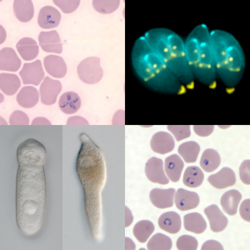
Trophozoite of a gregarine

The gregarines are generally parasites of annelids, arthropods, and molluscs. They are often found in the guts of their hosts, but may invade the other tissues. In the typical gregarine lifecycle, a trophozoite develops within a host cell into a schizont. This then divides into a number of merozoites by schizogony. The merozoites are released by lysing the host cell, which in turn invade other cells. At some point in the apicomplexan lifecycle, gametocytes are formed. These are released by lysis of the host cells, which group together. Each gametocyte forms multiple gametes. The gametes fuse with another to form oocysts. The oocysts leave the host to be taken up by a new host.[18]

Coccidians

[edit]
Dividing Toxoplasma gondii (Coccidia) parasites

In general, coccidians are parasites of vertebrates. Like gregarines, they are commonly parasites of the epithelial cells of the gut, but may infect other tissues.

The coccidian lifecycle involves merogony, gametogony, and sporogony. While similar to that of the gregarines it differs in zygote formation. Some trophozoites enlarge and become macrogamete, whereas others divide repeatedly to form microgametes (anisogamy). The microgametes are motile and must reach the macrogamete to fertilize it. The fertilized macrogamete forms a zygote that in its turn forms an oocyst that is normally released from the body. Syzygy, when it occurs, involves markedly anisogamous gametes. The lifecycle is typically haploid, with the only diploid stage occurring in the zygote, which is normally short-lived.[19]

The main difference between the coccidians and the gregarines is in the gamonts. In the coccidia, these are small, intracellular, and without epimerites or mucrons. In the gregarines, these are large, extracellular, and possess epimerites or mucrons. A second difference between the coccidia and the gregarines also lies in the gamonts. In the coccidians, a single gamont becomes a macrogametocyte, whereas in the gregarines, the gamonts give rise to multiple gametocytes.[20]

Haemosporidia

[edit]
Trophozoites of the Plasmodium vivax (Haemosporidia) parasite among human red blood cells

The Haemosporidia have more complex lifecycles that alternate between an arthropod and a vertebrate host. The trophozoite parasitises erythrocytes or other tissues in the vertebrate host. Microgametes and macrogametes are always found in the blood. The gametes are taken up by the insect vector during a blood meal. The microgametes migrate within the gut of the insect vector and fuse with the macrogametes. The fertilized macrogamete now becomes an ookinete, which penetrates the body of the vector. The ookinete then transforms into an oocyst and divides initially by meiosis and then by mitosis (haplontic lifecycle) to give rise to the sporozoites. The sporozoites escape from the oocyst and migrate within the body of the vector to the salivary glands where they are injected into the new vertebrate host when the insect vector feeds again.[21]

Marosporida

[edit]

The class Marosporida Mathur, Kristmundsson, Gestal, Freeman, and Keeling 2020 is a newly recognized lineage of apicomplexans that is sister to the Coccidia and Hematozoa. It is defined as a phylogenetic clade containing Aggregata octopiana Frenzel 1885, Merocystis kathae Dakin, 1911 (both Aggregatidae, originally coccidians), Rhytidocystis sp. 1 and Rhytidocystis sp. 2 Janouškovec et al. 2019 (Rhytidocystidae Levine, 1979, originally coccidians, Agamococcidiorida), and Margolisiella islandica Kristmundsson et al. 2011 (closely related to Rhytidocystidae). Marosporida infect marine invertebrates. Members of this clade retain plastid genomes and the canonical apicomplexan plastid metabolism. However, marosporidians have the most reduced apicoplast genomes sequenced to date, lack canonical plastidial RNA polymerase and so provide new insights into reductive organelle evolution.[16]

Ecology and distribution

[edit]
Two tachyzoites of Toxoplasma gondii, transmission electron microscopy

Many of the apicomplexan parasites are important pathogens of humans and domestic animals. In contrast to bacterial pathogens, these apicomplexan parasites are eukaryotic and share many metabolic pathways with their animal hosts. This makes therapeutic target development extremely difficult – a drug that harms an apicomplexan parasite is also likely to harm its human host. At present, no effective vaccines are available for most diseases caused by these parasites. Biomedical research on these parasites is challenging because it is often difficult, if not impossible, to maintain live parasite cultures in the laboratory and to genetically manipulate these organisms. In recent years, several of the apicomplexan species have been selected for genome sequencing. The availability of genome sequences provides a new opportunity for scientists to learn more about the evolution and biochemical capacity of these parasites. The predominant source of this genomic information is the EuPathDB[22] family of websites, which currently provides specialised services for Plasmodium species (PlasmoDB),[23][24] coccidians (ToxoDB),[25][26] piroplasms (PiroplasmaDB),[27] and Cryptosporidium species (CryptoDB).[28][29] One possible target for drugs is the plastid, and in fact existing drugs such as tetracyclines, which are effective against apicomplexans, seem to operate against the plastid.[30]

Many Coccidiomorpha have an intermediate host, as well as a primary host, and the evolution of hosts proceeded in different ways and at different times in these groups. For some coccidiomorphs, the original host has become the intermediate host, whereas in others it has become the definitive host. In the genera Aggregata, Atoxoplasma, Cystoisospora, Schellackia, and Toxoplasma, the original is now definitive, whereas in Akiba, Babesiosoma, Babesia, Haemogregarina, Haemoproteus, Hepatozoon, Karyolysus, Leucocytozoon, Plasmodium, Sarcocystis, and Theileria, the original hosts are now intermediate.

Similar strategies to increase the likelihood of transmission have evolved in multiple genera. Polyenergid oocysts and tissue cysts are found in representatives of the orders Protococcidiorida and Eimeriida. Hypnozoites are found in Karyolysus lacerate and most species of Plasmodium; transovarial transmission of parasites occurs in lifecycles of Karyolysus and Babesia.

Horizontal gene transfer appears to have occurred early on in this phylum's evolution with the transfer of a histone H4 lysine 20 (H4K20) modifier, KMT5A (Set8), from an animal host to the ancestor of apicomplexans.[31] A second gene—H3K36 methyltransferase (Ashr3 in plants)—may have also been horizontally transferred.[13]

Blood-borne genera

[edit]

Within the Apicomplexa are three suborders of parasites:[13]

Within the Adelorina are species that infect invertebrates and others that infect vertebrates. The Eimeriorina—the largest suborder in this phylum—the lifecycle involves both sexual and asexual stages. The asexual stages reproduce by schizogony. The male gametocyte produces a large number of gametes and the zygote gives rise to an oocyst, which is the infective stage. The majority are monoxenous (infect one host only), but a few are heteroxenous (lifecycle involves two or more hosts).

The number of families in this later suborder is debated, with the number of families being between one and 20 depending on the authority and the number of genera being between 19 and 25.

Taxonomy

[edit]

History

[edit]

The first Apicomplexa protozoan was seen by Antonie van Leeuwenhoek, who in 1674 saw probably oocysts of Eimeria stiedae in the gall bladder of a rabbit. The first species of the phylum to be described, Gregarina ovata, in earwigs' intestines, was named by Dufour in 1828. He thought that they were a peculiar group related to the trematodes, at that time included in Vermes.[32] Since then, many more have been identified and named. During 1826–1850, 41 species and six genera of Apicomplexa were named. In 1951–1975, 1873 new species and 83 new genera were added.[32]

The older taxon Sporozoa, included in Protozoa, was created by Leuckart in 1879[33] and adopted by Bütschli in 1880.[34] Through history, it grouped with the current Apicomplexa many unrelated groups. For example, Kudo (1954) included in the Sporozoa species of the Ascetosporea (Rhizaria), Microsporidia (Fungi), Myxozoa (Animalia), and Helicosporidium (Chlorophyta), while Zierdt (1978) included the genus Blastocystis (Stramenopiles).[35] Dermocystidium was also thought to be sporozoan. Not all of these groups had spores, but all were parasitic.[32] However, other parasitic or symbiotic unicellular organisms were included too in protozoan groups outside Sporozoa (Flagellata, Ciliophora and Sarcodina), if they had flagella (e.g., many Kinetoplastida, Retortamonadida, Diplomonadida, Trichomonadida, Hypermastigida), cilia (e.g., Balantidium) or pseudopods (e.g., Entamoeba, Acanthamoeba, Naegleria). If they had cell walls, they also could be included in plant kingdom between bacteria or yeasts.

Sporozoa is no longer regarded as biologically valid and its use is discouraged,[36] although some authors still use it as a synonym for the Apicomplexa. More recently, other groups were excluded from Apicomplexa, e.g., Perkinsus and Colpodella (now in Protalveolata).

The field of classifying Apicomplexa is in flux and classification has changed throughout the years since it was formally named in 1970.[1]

By 1987, a comprehensive survey of the phylum was completed: in all, 4516 species and 339 genera had been named. They consisted of:[37][32]

Although considerable revision of this phylum has been done (the order Haemosporidia now has 17 genera rather than 9), these numbers are probably still approximately correct.[38]

Jacques Euzéby (1988)

[edit]

Jacques Euzéby in 1988[39] created a new class Haemosporidiasina by merging subclass Piroplasmasina and suborder Haemospororina.

The division into Achromatorida and Chromatorida, although proposed on morphological grounds, may have a biological basis, as the ability to store haemozoin appears to have evolved only once.[40]

Roberts and Janovy (1996)

[edit]

Roberts and Janovy in 1996 divided the phylum into the following subclasses and suborders (omitting classes and orders):[41]

These form the following five taxonomic groups:

  1. The gregarines are, in general, one-host parasites of invertebrates.
  2. The adeleorins are one-host parasites of invertebrates or vertebrates, or two-host parasites that alternately infect haematophagous (blood-feeding) invertebrates and the blood of vertebrates.
  3. The eimeriorins are a diverse group that includes one host species of invertebrates, two-host species of invertebrates, one-host species of vertebrates and two-host species of vertebrates. The eimeriorins are frequently called the coccidia. This term is often used to include the adeleorins.
  4. Haemospororins, often known as the malaria parasites, are two-host Apicomplexa that parasitize blood-feeding dipteran flies and the blood of various tetrapod vertebrates.
  5. Piroplasms where all the species included are two-host parasites infecting ticks and vertebrates.

Perkins (2000)

[edit]

Perkins et al. proposed the following scheme.[42] It is outdated as the Perkinsidae have since been recognised as a sister group to the dinoflagellates rather that the Apicomplexia:

Macrogamete and microgamete develop separately. Syzygy does not occur. Ookinete has a conoid. Sporozoites have three walls. Heteroxenous: alternates between vertebrate host (in which merogony occurs) and invertebrate host (in which sporogony occurs). Usually blood parasites, transmitted by blood-sucking insects.

The name Protospiromonadida has been proposed for the common ancestor of the Gregarinomorpha and Coccidiomorpha.[43]

Another group of organisms that belong in this taxon are the corallicolids.[44] These are found in coral reef gastric cavities. Their relationship to the others in this phylum has yet to be established.

Another genus has been identified - Nephromyces - which appears to be a sister taxon to the Hematozoa.[45] This genus is found in the renal sac of molgulid ascidian tunicates.

Evolution

[edit]

Members of this phylum, except for the photosynthetic chromerids,[46] are parasitic and evolved from a free-living ancestor. This lifestyle is presumed to have evolved at the time of the divergence of dinoflagellates and apicomplexans.[47][48] Further evolution of this phylum has been estimated to have occurred about 800 million years ago.[49] The oldest extant clade is thought to be the archigregarines.[47]

These phylogenetic relations have rarely been studied at the subclass level. The Haemosporidia are related to the gregarines, and the piroplasms and coccidians are sister groups.[50] The Haemosporidia and the Piroplasma appear to be sister clades, and are more closely related to the coccidians than to the gregarines.[10] Marosporida is a sister group to Coccidiomorphea.[16]

Myzozoa
Apicomplexa s.l.

Squirmida (Digyalum, Filipodium, Platyproteum)

Chrompodellids/Apicomonadea
Apicomplexa s.s.
Gregarines s.l.

Cryptosporidium

Gregarines s.s.

Marosporida

Aggregatidae (Aggregata, Merocystis)

Margolisiella

Rhytidocystidae (Rhytidocystis)

Coccidiomorphea
Coccidia

Hemogregarines

Coccidia with a single host (Eimeria, Isospora, Cyclospora)

Cyst-forming coccidia (Toxoplasma, Sarcocystis, Frenkellia)

Hematozoa

Piroplasms (Babesia, Theileria)

Hemosporidia (Plasmodium, Leucocytozoon)

Dinoflagellates & Perkinsozoa

Janouškovec et al. 2015 presents a somewhat different phylogeny, supporting the work of others showing multiple events of plastids losing photosynthesis. More importantly this work provides the first phylogenetic evidence that there have also been multiple events of plastids becoming genome-free.[51]

See also

[edit]

References

[edit]
[edit]
Revisions and contributorsEdit on WikipediaRead on Wikipedia
from Grokipedia
Apicomplexa is a of single-celled, obligate intracellular eukaryotic parasites within the kingdom Protista, distinguished by the presence of an apical complex—a specialized array of secretory organelles and cytoskeletal elements at the anterior pole that enables active invasion of host cells. Comprising over 6,000 described species, these protozoans exhibit a highly diverse parasitic lifestyle, infecting a broad range of eukaryotic hosts from to vertebrates, including humans and . Many apicomplexans possess a unique, non-photosynthetic called the , derived from a secondary endosymbiosis event involving a red alga, which plays essential roles in and isoprenoid biosynthesis. The life cycles of apicomplexans are complex and typically heteroxenous, involving both asexual and sexual reproduction across intermediate and definitive hosts, with transmission occurring via vectors such as insects, ingestion of oocysts in contaminated food or water, or direct predation. Infective stages, known as sporozoites, penetrate host cells using the apical complex to form a parasitophorous vacuole, followed by intracellular replication that produces merozoites for further dissemination or gametocytes for sexual stages. This intricate biology underpins their pathogenicity, as seen in genera like Plasmodium (causing malaria through erythrocyte invasion and rupture), Toxoplasma (forming tissue cysts in warm-blooded hosts), and Cryptosporidium (adhering to intestinal epithelia). Apicomplexans are of profound medical, veterinary, and economic significance due to the diseases they cause, which collectively affect billions and result in substantial mortality and morbidity. For instance, species transmit , leading to an estimated 263 million cases and 597,000 deaths globally in 2023, predominantly in . chronically infects approximately one-third of the human population, posing severe risks to immunocompromised individuals and fetuses. Other notable pathogens include Theileria parva, responsible for East Coast fever in cattle, and species, which cause diarrheal disease in humans and animals, particularly affecting young children and those with weakened immunity. Despite their parasitic nature, some apicomplexans also serve as biological control agents against agricultural pests.

Morphology and Cell Biology

Apical Complex

The apical complex is the defining ultrastructural feature of the phylum Apicomplexa, located at the anterior end of motile stages and consisting of cytoskeletal elements and secretory organelles that enable host cell invasion. It includes the polar ring complex, which serves as a microtubule-organizing center, and associated secretory vesicles such as rhoptries, micronemes, and dense granules. Electron reveals the apical complex as a specialized site where the inner membrane complex (IMC) opens to the plasma membrane, facilitating regulated . Key components include the conoid, a dynamic, hollow, tubulin-based structure in many species that extrudes during invasion; the apical polar ring, an unusual ring-shaped microtubule-organizing center marked by proteins like RNG1 and RNG2; rhoptries, club-shaped organelles with necks and bulbs containing invasion proteins; micronemes, elongated vesicles that secrete adhesins; and dense granules, which release factors post-invasion. shows the conoid as a cone-shaped array of fibers within the polar ring in species like , with rhoptries and micronemes converging apically. Molecular components encompass RNG2, which links the polar ring to the conoid and regulates secretion, and TRAP (thrombospondin-related anonymous protein) family adhesins from micronemes, featuring integrin-like and TSR domains for substrate binding. The apical complex drives and host cell penetration through an actin-myosin motor system, where micronemal adhesins like TRAP link the parasite's exterior to the via aldolase, powering rearward translocation beneath the IMC. This reorients the parasite apex toward the host cell, triggering sequential microneme and rhoptry secretion to form a moving junction for penetration. Dense granules then secrete to modify the parasitophorous . Disruption of components like RNG2 reduces and by up to 66%, highlighting their essential role. Apical complex structure varies between Conoidasida (e.g., Toxoplasma, with a prominent, mobile conoid) and Aconoidasida (e.g., , historically considered conoid-lacking). Recent and reveal a conserved tubulin-based conoid ring in Aconoidasida, such as in Plasmodium sporozoites and ookinetes, where it assembles dynamically during motility and lacks the full fiber array of Conoidasida. confirms this ring's presence, unifying the under a shared apical apparatus despite morphological differences.

Apicoplast

The is a , non-photosynthetic unique to apicomplexans, originating from the secondary endosymbiosis of a red alga by an ancestral . This event involved the engulfment of a photosynthetic red algal cell, followed by the loss of photosynthetic capabilities while retaining other metabolic functions essential for parasite survival. The organelle's evolutionary history underscores the apicomplexans' algal ancestry, distinguishing them from other protozoans. Structurally, the apicoplast is bounded by four membranes, reflecting its secondary endosymbiotic origin, and contains a small, circular of approximately 35 kb that encodes about 30 proteins, along with ribosomal and transfer RNAs for organellar translation. It is typically located near the nucleus and often closely associated with the , facilitating coordinated cellular processes. The multi-membranous includes an outermost membrane continuous with the , an , and inner membranes derived from the original . The apicoplast performs critical metabolic roles absent in mammalian cells, including the synthesis of isoprenoid precursors via the 2-C-methyl-D-erythritol 4-phosphate (MEP) pathway, which produces isopentenyl pyrophosphate (IPP) and (DMAPP) for protein prenylation, ubiquinone formation, and membrane stability. It also houses a type II (FAS II) pathway that generates long-chain fatty acids for apicoplast membranes, parasite membranes, and (GPI) anchors. Additionally, the organelle contributes to heme biosynthesis through the Shemin pathway, where enzymes produce coproporphyrinogen III, a precursor essential particularly during the mosquito stages of . Unlike chloroplasts, the apicoplast lacks photosynthetic machinery and relies on host-derived carbon sources. Most apicoplast proteins are nuclear-encoded and imported post-translationally via a bipartite targeting signal: an N-terminal endoplasmic reticulum-type followed by a transit peptide resembling those in . This sequence directs proteins through the secretory pathway to the outermost membrane, followed by translocation across the inner membranes via a specialized import machinery, ensuring the organelle's functionality despite its reduced . Due to its prokaryotic-like biochemistry and absence in humans, the is a prime target for antimalarial drugs; for instance, fosmidomycin inhibits the MEP pathway 1-deoxy-D-xylulose 5-phosphate reductoisomerase (IspC), disrupting isoprenoid production and leading to parasite death. Clinical trials of fosmidomycin combined with agents like clindamycin showed initial efficacy but ultimately failed due to , with recent studies (as of 2025) identifying host-derived geranylgeraniol as a potential rescue factor.

Other Cellular Features

The pellicle of apicomplexan cells forms a rigid yet flexible outer boundary, consisting of the outer plasma membrane closely apposed to the inner membrane complex (IMC), a series of flattened vesicles underlying the plasma membrane. The IMC provides structural support and is anchored to longitudinal subpellicular that originate from the apical polar ring and extend posteriorly, typically numbering 20-28 in motile stages such as sporozoites and merozoites. These maintain the characteristic elongated, crescentic shape of invasive forms and contribute to by facilitating actin-myosin interactions at the pellicle's cytoplasmic face. Apicomplexans possess a single, compact mitochondrion with a dense matrix and tubular or bulbous cristae, which houses a reduced electron transport chain adapted for parasitic lifestyles. This organelle supports essential functions beyond canonical ATP production, including the generation of intermediates for pyrimidine biosynthesis and maintenance of redox balance, particularly in intracellular stages where oxygen levels are low. In species like Plasmodium falciparum, the mitochondrion's electron transport chain is active but uncoupled from oxidative phosphorylation during blood-stage replication, emphasizing apicomplexan-specific metabolic adaptations. The nucleus in apicomplexans features a persistent during closed , with organized in a peripheral layer surrounding a more euchromatic core, facilitating rapid replication in asynchronous division cycles. occurs without centrioles, relying instead on a bipartite centrosomal —the outer core for spindle pole organization and the inner core for nucleation via a nucleus-associated (NAO). This centriole-independent mechanism enables diverse division modes, such as endodyogeny in , where daughter cells bud internally around segregated nuclei. In intracellular stages, apicomplexans depend heavily on for ATP production under anaerobic conditions, with most enzymes localized to the rather than specialized organelles like glycosomes found in kinetoplastids. Some glycolytic intermediates, such as , are shuttled to the for , highlighting compartmental crosstalk, while cytosolic ensures efficient energy yield from host-derived glucose.

Reproduction and Life Cycles

Asexual Reproduction

in Apicomplexa primarily occurs through specialized forms of merogony, enabling rapid clonal expansion within host cells to amplify parasite numbers during . The two predominant mechanisms are schizogony and endodyogeny, which differ in their division strategies but both produce invasive daughter cells known as merozoites or tachyzoites. These processes are tightly regulated to ensure efficient dissemination and adaptation to intracellular niches. Schizogony involves multiple rounds of asynchronous nuclear division without intervening , resulting in a multinucleate schizont that subsequently undergoes coordinated to form numerous daughter merozoites. This process is exemplified in the liver stages of species, where up to 30,000 merozoites can be produced from a single sporozoite, facilitating massive amplification before blood-stage infection. The nuclear divisions occur through conventional , with initiating in S-phase and progressing asynchronously across nuclei, leading to a syncytial-like state prior to daughter formation. Endodyogeny, in contrast, is a binary fission variant characterized by internal budding, where two daughter cells assemble within the confines of the mother cell's cytoplasm before its lysis. This mechanism is prevalent in the rapidly dividing tachyzoite stage of Toxoplasma gondii, allowing for quick doubling of parasite numbers in host tissues with minimal external reorganization. Daughter formation begins with the de novo synthesis of an inner membrane complex (IMC) scaffold around each daughter nucleus, which elongates and incorporates maternal organelles, ensuring equipartition of cellular components. Variants of merogony, such as endopolygeny, introduce further diversity by incorporating multiple cycles without corresponding nuclear divisions, yielding polyploid nuclei that resolve during final ; this is observed in certain coccidian parasites like Sarcocystis neurona. These modes exhibit plasticity, with the number of daughters and division timing modulated by host environmental cues, including nutrient availability and immune pressure, which trigger switches between binary and multinucleate replication to optimize survival. For instance, environmental stressors can shift Toxoplasma from endodyogeny to schizogony-like modes . Genetically, schizogony often involves transient , where unreduced genome copies accumulate during early replication phases before karyokinesis distributes chromosomes to daughters, maintaining genetic stability across asynchronous cycles. Daughter cell formation in both schizogony and endodyogeny relies on the IMC, a flattened vesicular sac underlying the plasma membrane, which acts as a cytoskeletal template for and apical complex assembly, ensuring motile progeny with invasion capability. This IMC-mediated process coordinates segregation and , preventing in the resulting merozoites.

Sexual Reproduction

In Apicomplexa, sexual reproduction is a critical phase that generates through fusion and , typically occurring within the vector or definitive host. Gametocytes, the precursor cells to gametes, differentiate from earlier asexual stages in response to environmental cues such as a decrease in from 37°C to around 20°C, along with shifts in and the presence of mosquito-derived factors like xanthurenic acid, particularly in species ingested during a . This differentiation is genetically programmed but environmentally induced, ensuring sexual commitment aligns with transmission opportunities. Gametocytes develop into two distinct forms: microgametocytes and macrogametocytes. Microgametogenesis in microgametocytes involves three rapid asynchronous rounds of nuclear division in Plasmodium, producing eight flagellated, biflagellate microgametes that resemble sperm cells and enable motility for fertilization; these microgametes are elongated, banana-shaped, and propelled by axonemes derived from basal bodies. In contrast, macrogametocytes mature into non-motile macrogametes through the synthesis of specialized organelles, including wall-forming bodies and dense granules, which prepare the female gamete for zygote development without locomotion. This dimorphism ensures efficient gamete interaction in the confined environment of the vector's midgut. Syngamy occurs when a microgamete penetrates and fuses with a macrogamete, forming a diploid that rounds up and initiates further transformation. The zygote differentiates into a motile, elongated ookinete, which traverses the peritrophic matrix and epithelium of the vector before encysting as an oocyst on the , where and sporogony produce infectious sporozoites. This process facilitates transmission to new hosts via the vector. within the oocyst enables , promoting in species like , where natural populations exhibit high rates of novel genotypes from cross-fertilization rather than selfing, enhancing adaptability to host immunity and drugs.

General Life Cycle Stages

Apicomplexans typically exhibit a heteroxenous life cycle, alternating between definitive and intermediate hosts to complete their development, with invasive stages such as sporozoites and merozoites facilitating transmission and . This cycle integrates asexual and , involving distinct proliferative phases that ensure parasite dissemination across hosts via vectors, , or predation. Sporogony represents the post-zygotic phase where oocysts develop in the environment or within vectors, undergoing to produce infective sporozoites enclosed in sporocysts. These sporozoites are released upon oocyst rupture and actively invade host cells in the intermediate host, initiating . Following invasion, merogony occurs as an asexual multiplication process within intermediate host tissues, where sporozoites transform into schizonts that divide to yield numerous merozoites, which can reinvade cells or differentiate further. This stage amplifies parasite numbers and may involve multiple generations, contributing to acute . Gamogony, the sexual phase, typically unfolds in the definitive host or vector, where certain merozoites develop into gametocytes, which produce male microgametes and female macrogametes that fuse into zygotes. These zygotes then encyst as oocysts, setting the stage for sporogony and transmission. In some coccidian apicomplexans, encystment leads to the formation of tissue cysts containing bradyzoites, dormant and slowly replicating forms that persist in intermediate hosts, enabling chronic infections and resistance to immune clearance. This stage underscores the parasite's strategy for long-term survival and reactivation.

Taxonomy and Phylogeny

Historical Classification

The earliest observations of apicomplexan parasites date back to the mid-19th century, with gregarines being among the first groups recognized. In 1843, David Gruby and Charles Philippe Robin Delafond described gregarines as parasites inhabiting the digestive tracts of , marking the initial documentation of these extracellular protozoans. Subsequent studies by between 1845 and 1848 confirmed their unicellular nature and expanded knowledge of their morphology, distinguishing them from multicellular organisms. These findings laid the groundwork for understanding apicomplexans as a distinct parasitic lineage, primarily based on their spore-forming reproductive stages. Coccidian parasites were described shortly thereafter, with early reports emerging in the 1850s and 1870s. In 1857, Édouard Balbiani identified coccidia-like "psorosperms" in earthworms, though their protozoan identity was not fully appreciated at the time. By 1878, Achille Rivolta provided the first clear description of a vertebrate coccidian, naming stiedae from rabbit livers, which highlighted their intracellular nature and sporulation process. The haemosporidian , causative agent of , was discovered in 1880 by Alphonse Laveran in the blood of infected humans, with Italian pathologists Ettore Marchiafava and Amico Bignami confirming and elaborating on these observations in the early 1880s through detailed histological studies. Alfred Kühn's comprehensive work in the early 1900s further systematized coccidian taxonomy, emphasizing their life cycles and distinguishing them from other sporozoans. The formal taxonomic framework for these parasites began to coalesce in the late 19th century. In 1879, Friedrich Leuckart proposed the class Sporozoa within to encompass spore-producing parasites, including gregarines and , divided into subclasses Gregarinina and Coccidiina based on morphological and habitat differences. This classification was refined in 1900 by Louis Léger, who introduced orders within the gregarines, such as Eugregarinida and Schizogregarinida, to account for variations in syzygy and sporulation. By the mid-20th century, Sporozoa encompassed diverse groups like , gregarines, and piroplasms, though polyphyletic issues persisted due to reliance on light microscopy. The modern Apicomplexa was established in 1970 by Norman D. Levine, who elevated the group from the class Sporozoea within Sporozoa to status, unified by the presence of an apical complex—a set of organelles essential for host cell —in at least one life cycle stage. This shift addressed the artificial nature of Sporozoa and emphasized ultrastructural features, retaining early divisions into subclasses like Gregarinasida and Coccidiasida while incorporating emerging electron microscopy data.

Modern Classification

The Apicomplexa is classified within the larger eukaryotic supergroup Alveolata, a diverse characterized by cortical alveoli and other shared ultrastructural features. Approximately 6,000 of Apicomplexa have been described, though estimates suggest the total diversity could be orders of magnitude higher due to their parasitic lifestyles and under-sampling in many host taxa. The modern taxonomic framework emphasizes alongside morphological traits, such as the presence or absence of the conoid—a bundle of at the apical end of motile stages—dividing the into two primary classes: Aconoidasida and Conoidasida. Aconoidasida comprises parasites lacking a conoid structure, primarily infecting blood cells; key orders include Haemosporida (e.g., species causing ) and Piroplasmida (e.g., and , agents of piroplasmosis). In contrast, Conoidasida includes taxa with a well-developed conoid and encompasses a broader range of hosts and habitats; representative orders are Gregarinida (extracellular gut parasites in ) and Eimeriida (intracellular coccidians in s and ). This class-based division, first proposed in the early 2000s, reflects phylogenetic analyses integrating small subunit genes and other molecular markers to resolve relationships beyond traditional morphology-driven groupings. Recent molecular discoveries have expanded the phylum's framework, notably with the erection of the class Marosporida in to accommodate a lineage of marine apicomplexans infecting bivalve mollusks, such as Margolisiella islandica and Rhytidocystis rubra. These post-2010 findings, based on phylogenomic data from hundreds of genes, position Marosporida as sister to the coccidian-hematozoan , highlighting the phylum's hidden diversity in non-vertebrate hosts. Key revisions to apicomplexan taxonomy include the schemes outlined by Perkins et al. (2000), which formalized the Aconoidasida-Conoidasida split using ultrastructural and developmental data, and the comprehensive eukaryotic classification by Adl et al. (2019), which integrated multilocus phylogenies to refine orders and incorporate environmental sequences. A significant update in the latter is the firm placement of Cryptosporidiidae (e.g., Cryptosporidium, a major waterborne pathogen) as a relative within Apicomplexa, specifically under Conoidasida in the order Cryptogregarinorida, resolving prior debates about its affinities based on genome-scale analyses.

Phylogenetic Relationships

Apicomplexa are positioned within the eukaryotic supergroup Alveolata, alongside dinoflagellates and , based on shared ultrastructural features such as cortical alveoli and molecular phylogenies derived from small subunit () genes. Within Alveolata, Apicomplexa form part of the subclade , which also includes dinoflagellates and perkinsids, characterized by predatory or parasitic lifestyles involving a feeding structure like the apical complex or peduncle. More specifically, phylogenomic analyses using concatenated protein datasets have established chrompodellids—encompassing predatory colpodellids and photosynthetic chromerids—as the closest to Apicomplexa within , supporting a common ancestry for these lineages with non-photosynthetic plastids derived from secondary endosymbiosis of a red alga. This relationship is robustly recovered in multi-gene trees, with bootstrap support exceeding 90% in maximum-likelihood reconstructions, highlighting the evolutionary transition from free-living predators to obligate parasites in apicomplexans. Internally, Apicomplexa exhibit a deep bifurcation into two major classes: Aconoidasida (lacking a conoid, including haemosporidians like ) and Conoidasida (possessing a conoid, including coccidians like Toxoplasma), a split consistently confirmed by phylogenies and multi-protein analyses. For instance, maximum-likelihood trees of RNA-binding domain abundant (RAP) proteins from apicomplexan genomes show Aconoidasida forming a monophyletic distinct from Conoidasida, with high posterior probabilities (>0.95) across 175 aligned sequences. Recent single-cell phylogenomic studies from the have resolved previously enigmatic marine apicomplexans, such as ichthyocolids infecting erythrocytes, as early-diverging lineages within Apicomplexa, branching basal to major parasitic clades like those in . These analyses, employing single-amplified genomes and concatenated markers including 18S rRNA and genes, place ichthyocolids as sisters to corallicolids ( parasites), revealing a diverse basal radiation of aquatic apicomplexans outside terrestrial host-adapted groups. Evidence of (HGT) is prominent in the apicoplast genome of Apicomplexa, where reductive evolution has led to the relocation of numerous genes to the nuclear genome, alongside acquisitions from bacterial donors. Systematic phylogenomic surveys identify numerous nuclear genes of probable prokaryotic origin in apicomplexans, many linked to the apicoplast's metabolic pathways, such as isoprenoid , with phylogenetic signals indicating transfers from the original or other during plastid integration. This HGT pattern underscores the organelle's role in facilitating through genome streamlining and functional innovation.

Diversity of Major Groups

Gregarinasina

, a major subgroup within the Apicomplexa, encompasses the gregarines, which are predominantly extracellular parasites infecting the intestinal tracts of hosts such as , annelids, and marine invertebrates. These protists are distinguished by their large, elongated trophozoites that resemble worms, often measuring up to several millimeters in length, and feature a prominent attachment organelle called the mucron or epimerite for adhering to host epithelial cells without penetrating tissues. Unlike many other apicomplexans, gregarines exhibit a simplified apical complex, including a rudimentary conoid, reflecting their basal phylogenetic position as one of the earliest diverging lineages in the phylum. The life cycle of gregarines is typically monoxenous, confined to a single host and occurring extracellularly within the gut lumen or attached to the , without invading deeper tissues or requiring intermediate hosts. Infection begins when hosts ingest oocysts containing infectious sporozoites, which excyst and develop into trophozoites that feed on host cell contents via osmotrophy. involves the pairing of gamonts in a process known as syzygy, where male and female gamonts align end-to-end to form a gametocyst; within this structure, gametes fuse, leading to zygotes that undergo sporogony to produce oocysts filled with sporozoites, which are then released into the environment via host feces to complete the cycle. This lifecycle emphasizes attachment and nutrient absorption over invasive , contrasting with the intracellular strategies of other apicomplexans. Gregarinasina exhibits substantial diversity, with approximately 1,600 described distributed across three main orders: Archigregarinida, primarily marine parasites of polychaetes and other annelids; Eugregarinida, the largest group infecting terrestrial and annelids; and Neogregarinida, which includes tissue-migrating forms in but retains extracellular gamogony. These parasites are globally widespread, thriving in diverse habitats from terrestrial soils to marine sediments, and infect a broad spectrum of phyla, including arthropods, mollusks, and echinoderms. Representative genera include Gregarina in coleopterans and Lecudina in polychaetes, highlighting their host specificity and morphological variations in attachment structures. Ecologically, gregarines play a subtle yet significant role as commensal or mildly pathogenic parasites that rarely cause host mortality but can influence population dynamics by reducing , altering gut , or modulating immune responses. In many cases, they are non-pathogenic under normal conditions, serving as indicators of in invertebrate communities, particularly in aquatic ecosystems where high prevalence correlates with host density. Their abundance underscores the evolutionary success of extracellular in regulating invertebrate populations without driving host .

Coccidiasina

Coccidiasina represents a subclass of intracellular parasites within the phylum Apicomplexa, primarily infecting the tissues of vertebrates and characterized by their invasive sporozoite stages that form cysts or multiply within host cells. These parasites are notable for their role in causing and related diseases, with a focus on epithelial and tissue infections rather than extracellular or blood-stage development. Unlike gregarines, coccidians actively invade host cells using apical complex structures, leading to schizogony as a brief asexual multiplication mechanism before gametogony and oocyst formation. The diversity of Coccidiasina encompasses approximately 2,000 described species, predominantly within the order Eimeriida, though surveys indicate that only a fraction of potential hosts have been examined, suggesting thousands more undiscovered taxa across vertebrate classes. Key genera include Eimeria, which comprises over 1,800 species highly specific to intestinal epithelia of livestock and wildlife; Toxoplasma, a ubiquitous genus with T. gondii infecting warm-blooded animals worldwide; and Sarcocystis, featuring species that form persistent cysts in muscle tissues. These genera exemplify the subclass's adaptation to monoxenous or heteroxenous strategies, with Eimeria typically monoxenous and the others heteroxenous involving intermediate and definitive hosts. Life cycles in Coccidiasina generally begin with the ingestion of sporulated oocysts shed in the feces of infected hosts, followed by excystation in the gastrointestinal tract where enzymes like trypsin facilitate the release of invasive sporozoites. In monoxenous cycles, such as those of Eimeria, sporozoites invade intestinal cells, undergo multiple rounds of asexual schizogony to produce merozoites, then shift to sexual gametogony, culminating in unsporulated oocysts that sporulate externally in favorable environmental conditions before reinfection. Heteroxenous cycles, exemplified by Toxoplasma and Sarcocystis, involve tissue cyst formation in intermediate hosts—bradyzoites in Toxoplasma persist latently in brain or muscle—while definitive hosts (e.g., felids for Toxoplasma) complete sexual reproduction and shed oocysts. Excystation triggers rapid invasion, with sporozoites gliding via microneme secretion to enter host cells. Pathogenesis in Coccidiasina arises from cellular destruction during replication and cyst persistence, leading to conditions like from Eimeria species, which damage intestinal mucosa causing hemorrhage and in and ruminants. Toxoplasma gondii induces in immunocompromised hosts through bradyzoite-laden s in neural tissue, where slow-growing forms evade immunity and reactivate during stress. Similarly, Sarcocystis species form sarcocysts in skeletal or of intermediate hosts, potentially causing or chronic upon ingestion by definitive hosts, though many infections remain subclinical. These mechanisms highlight the subclass's impact on host without direct bloodstream involvement.

Aconoidasida

Aconoidasida is a class of apicomplexan parasites characterized by the absence of a conoid, a defining apical structure present in other apicomplexans that aids in host cell invasion. This class primarily comprises blood-dwelling parasites that infect s and are transmitted by vectors, alternating between in the vector and asexual replication in the host's . The two main orders within Aconoidasida are Haemosporida, which includes genera such as and Haemoproteus vectored by mosquitoes, and Piroplasmida, encompassing genera like and transmitted by ticks. These parasites exhibit heteroxenous life cycles adapted to erythrocytic environments, distinguishing them from tissue-invasive groups in other apicomplexan classes. In Haemosporida, the life cycle features pre-erythrocytic stages in the host, where sporozoites develop into schizonts in tissues such as the liver before invading erythrocytes for schizogony, producing merozoites that continue intraerythrocytic replication. Gametocytes form within infected red cells and are taken up by vectors during feeding, initiating sexual stages. Piroplasmida share erythrocytic schizogony but lack prominent pre-erythrocytic phases; instead, they undergo asexual binary fission or within erythrocytes, with gametocytes also circulating in the for uptake by ticks. Both orders involve motile kinetes (or ookinetes in Haemosporida) in the vector, which traverse the gut wall to reach salivary glands or other tissues, facilitating transmission. Vector transmission underscores their dependence on hematophagous arthropods for dispersal. Aconoidasida encompasses significant diversity, with over 600 described in Haemosporida, predominantly avian and reptilian parasites alongside mammalian ones, and approximately 43 valid in Piroplasmida, mainly affecting and . This group represents a specialized evolutionary to blood , with genomic analyses revealing compact genomes suited to intracellular lifestyles, such as ~23 Mb in Plasmodium . Recent phylogenomic studies have reinforced the molecular distinction of Aconoidasida from Conoidasida, confirming their through multi-gene analyses and highlighting ancient divergences within Apicomplexa. These findings support the class's separation based on both ultrastructural and genetic traits.

Ecology and Distribution

Host Interactions and Transmission

Apicomplexan parasites exhibit diverse transmission strategies that rely heavily on vectors for certain groups, particularly those within the haemosporidia and piroplasms. For instance, species, responsible for , undergo biological transmission through female mosquitoes, where the parasite completes sexual reproduction in the vector's gut before sporozoites are injected into a vertebrate host during a blood meal. Similarly, species are transmitted biologically by hard ticks such as spp., with sporozoites developing in the tick's salivary glands and infecting mammalian hosts upon feeding; transstadial and can occur in ticks, enhancing persistence. In contrast, coccidian apicomplexans like and Isospora primarily employ mechanical or fecal-oral transmission without obligatory vectors, where unsporulated oocysts are shed in host feces and sporulate in the environment to become infectious. To persist within hosts, apicomplexans employ sophisticated immune evasion mechanisms that allow chronic infections. utilizes antigenic variation of the PfEMP1 protein, encoded by var genes, to alter surface antigens on infected erythrocytes, thereby escaping adaptive immunity and sequestering in host tissues to avoid splenic clearance. forms tissue containing bradyzoites, a latent stage that resides intracellularly in the host's and muscles, shielded from immune detection; the cyst wall, composed of proteins like CST1, resists immune-mediated and enables lifelong persistence. These strategies, including modulation of host responses such as downregulation of IFN-γ, facilitate survival across multiple host cell types. Host specificity in apicomplexans reflects long-term co-evolution with vertebrates and , often driven by host-switching events that shape parasite adaptation. Toxoplasma gondii demonstrates broad host specificity, infecting virtually all animals due to versatile surface adhesins like SAG1 that bind diverse host receptors, contributing to its high zoonotic potential through . In contrast, caninum is more host-restricted, primarily affecting and canids, with efficient linked to specific placental interactions; such specificity arises from co-evolutionary pressures favoring vertical over horizontal spread in . Overall, host-switching, rather than strict co-speciation, appears to be the primary driver of diversification, as evidenced by phylogenetic mismatches between apicomplexans and their reptilian or mammalian hosts. Environmental transmission plays a crucial role for coccidian apicomplexans, with oocysts exhibiting remarkable resilience to facilitate indirect spread. oocysts, shed unsporulated in cat feces, sporulate within 1-5 days and can survive in moist or for up to 18 months at 4°C or tolerate temperatures from -20°C to 35°C, resisting common disinfectants like . This durability allows contamination of sources, produce, and shellfish, leading to ingestion-based transmission in intermediate hosts; similar resilience is observed in parvum oocysts, which are highly resistant to and can persist in and for months to years, underscoring the environmental reservoir's importance for zoonotic cycles.

Global Distribution and Environmental Factors

Apicomplexa exhibit a , with species inhabiting diverse terrestrial, freshwater, and marine environments across all continents. Members of this phylum are particularly prevalent in tropical and subtropical regions, where environmental conditions favor their survival and proliferation. For instance, species, responsible for , are predominantly found in tropical countries, with the highest burden in , , and parts of . In contrast, species are ubiquitous in populations worldwide, infecting and other ruminants on nearly all farms due to the widespread environmental contamination by oocysts. Environmental factors play a critical role in shaping the distribution of apicomplexans, with climate variables such as temperature and exerting strong influences on their global patterns. On a broad scale, apicomplexan distributions correlate positively with warmer temperatures and higher levels, which enhance oocyst viability and sporulation in and . emerges as a key determinant in terrestrial , structuring community composition and abundance, particularly in acidic tropical environments where apicomplexans thrive. Habitat specificity further modulates distribution; for example, gregarines predominate in ecosystems, comprising up to 98% of apicomplexan sequences in tropical surveys, while reflecting associations with hosts in these substrates. In marine settings, the recently identified class Marosporida infects such as scallops and , highlighting adaptation to oceanic environments. Recent environmental changes have contributed to shifts in apicomplexan distributions, including expansions facilitated by warming. Rising temperatures and altered are enabling the northward spread of tick vectors for piroplasms like and , potentially invading new regions in temperate zones. has also amplified the role of as reservoirs, with such as wild carnivores harboring piroplasms and other apicomplexans in peri-urban areas, increasing exposure risks through . Biodiversity hotspots for apicomplexans are concentrated in tropical soils, where recent studies from the 2020s reveal exceptionally high diversity and prevalence. Apicomplexans are detected in over 83% of tropical soil samples, often accounting for 30% of the community, with gregarines dominating and exhibiting strong correlations to local edaphic conditions like and moisture. These patterns underscore the phylum's ecological breadth, driven by the abundance of potential hosts in biodiverse tropical ecosystems.

Evolution

Origins and Ancient Traits

The Apicomplexa are estimated to have emerged between 800 and 1000 million years ago from a free-living predatory within the lineage, marking a key transition from predation to obligate . This divergence likely occurred after the initial radiation of around 1 billion years ago, with the apicomplexan lineage specializing in host cell invasion.01330-4) The predatory resembled modern chrompodellids, such as colpodellids, which use a myzocytotic feeding mechanism to extract cytoplasmic contents from prey cells. A pivotal endosymbiotic event in the early evolution of the apicomplexan lineage involved the acquisition of a red algal-derived plastid, known as the , approximately 1.3 billion years ago by the common ancestor of chromalveolates. This secondary endosymbiosis provided metabolic capabilities that were later reduced in parasitic apicomplexans, but the organelle persists as a non-photosynthetic relic essential for isoprenoid and other functions. The timing aligns with molecular clock analyses calibrated against eukaryotic divergence events, predating the parasitic specialization of Apicomplexa. Several ancient traits are conserved from this predatory , notably the apical complex, which is homologous to the myzocytotic apparatus observed in chrompodellids. In colpodellids, this structure facilitates attachment to prey and direct suction of nutrients via a peduncle-like extension, a process termed myzocytosis or "cellular vampirism." In apicomplexans, the apical complex has been co-opted for host cell penetration, retaining components like rhoptries and micronemes that secrete adhesive and invasive molecules, underscoring its evolutionary continuity from predation to . Direct fossil evidence for Apicomplexa is ambiguous and scarce, with no unambiguous records preserved due to their intracellular lifestyle and lack of mineralized structures. Evolutionary timelines are thus primarily inferred from methods applied to and protein sequences, which integrate substitution rates with calibration points from broader eukaryotic phylogenies. These estimates suggest the crown group radiation occurred in the era, consistent with the absence of earlier microfossils attributable to the group.

Diversification and Adaptations

The diversification of Apicomplexa into major groups began with early radiations that established key lineages, including the split between gregarines () and coccidians (Coccidiasina), estimated to have occurred around 800 million years ago during the period when multicellular hosts first emerged. This ancient divergence allowed gregarines to primarily parasitize through extracellular lifestyles, while coccidians evolved intracellular across a broader range of hosts, setting the stage for further branching within the phylum. Subsequent radiations, such as the evolution of Aconoidasida, enabled adaptation to vertebrate blood niches, where parasites like and exploit circulatory systems for dissemination via hematophagous vectors. A hallmark adaptation in Aconoidasida is the loss or reduction of the conoid—a tubulin-based apical structure involved in host cell —facilitating streamlined mechanisms suited to erythrocyte environments and distinguishing them from conoid-bearing groups like coccidians. This morphological simplification correlates with reduction and streamlining across Apicomplexa, where parasite are notably compact (often 10-30 Mb) compared to free-living relatives, reflecting the loss of genes for independent metabolism and nutrient acquisition in favor of host-dependent strategies. Such reductions enhance replication efficiency within constrained intracellular or intravascular spaces, with examples like showing extreme compaction to ~9 Mb while retaining essential machinery. Co-speciation with hosts and vectors has driven much of apicomplexan diversification, particularly in haemosporidian lineages where phylogenetic congruence between parasites and avian or reptilian hosts indicates long-term parallel evolution, though host switching remains common and promotes speciation across host families. Recent discoveries underscore ongoing diversification in marine environments; in 2024, ichthyocolids were identified as a novel, widespread clade of apicomplexans infecting teleost fish globally, from tropical to polar waters, expanding known diversity beyond terrestrial and freshwater systems. These blood parasites, transmitted likely via leeches or other vectors, highlight adaptive radiations into aquatic niches paralleling ancient terrestrial ones. Genomic analyses reveal expanded gene families as critical for host manipulation, with lineages like coccidians showing proliferation of ApiAP2 transcription factors and rhoptry kinases that reprogram host for immune evasion and nutrient provisioning. These expansions, often species-specific, enable fine-tuned adaptations to diverse hosts, such as altered erythrocyte permeability in , underscoring how genomic plasticity fuels the phylum's success as obligate parasites.

Medical and Economic Importance

Human Pathogens

Apicomplexan parasites pose significant threats to human health, primarily through species that cause , , and . These infections affect millions globally, with species responsible for the highest mortality, while and spp. lead to substantial morbidity, particularly in vulnerable populations such as pregnant women, children, and immunocompromised individuals. Plasmodium species, transmitted by mosquitoes, cause , a life-threatening characterized by fever, chills, and . Among the five Plasmodium species infecting humans—P. falciparum, P. vivax, P. ovale, P. malariae, and P. knowlesi—P. falciparum is the most lethal, accounting for nearly all malaria-related deaths due to its ability to cause severe complications like cerebral malaria and multi-organ failure. In 2023, malaria resulted in an estimated 597,000 deaths worldwide, predominantly among children under five in . The parasite's life cycle involves in human erythrocytes and sexual stages in the mosquito vector, enabling rapid transmission in endemic regions. Toxoplasma gondii, an obligate , causes , which is often asymptomatic in healthy adults but can lead to severe outcomes in immunocompromised patients and during congenital infection. In individuals with AIDS, it commonly manifests as , while in pregnant women, it can result in fetal abnormalities such as , , and intrauterine death. Globally, approximately 30% of the human population is seropositive for T. gondii, with higher prevalence in regions with warm, humid climates and close contact with cats or undercooked . Transmission occurs via oocysts in contaminated or and tissue cysts in infected . Cryptosporidium species, particularly C. parvum and C. hominis, cause , a gastrointestinal illness marked by profuse watery , abdominal cramps, and . While self-limiting in immunocompetent hosts, it can be chronic and life-threatening in immunocompromised individuals, such as those with , leading to substantial and . The parasite is transmitted through fecally contaminated , food, or direct contact, with outbreaks often linked to recreational water sources. Globally, cryptosporidiosis contributes to an estimated 7.6% prevalence in human populations, disproportionately affecting children in low-resource settings. Treatment of these apicomplexan infections relies on specific drugs, though challenges like and toxicity persist. For , artemisinin-based combination therapies (ACTs) are the first-line treatment for uncomplicated P. falciparum cases, rapidly reducing parasitemia, while atovaquone-proguanil serves as an alternative for prophylaxis and mild infections. However, artemisinin resistance has emerged in and parts of , complicating control efforts. Toxoplasmosis is typically managed with combined with sulfadiazine and , which targets folate synthesis in the parasite, though alternatives like atovaquone are used in sulfa-intolerant patients. Cryptosporidiosis treatment is limited; shortens symptoms in immunocompetent children but shows poor efficacy in severely immunocompromised adults, often requiring supportive care like hydration. Ongoing research emphasizes the need for new drugs to address resistance and improve outcomes in high-burden areas.30820-0/fulltext)

Veterinary and Wildlife Impacts

Apicomplexan parasites inflict substantial economic burdens on livestock industries through diseases like and theileriosis, primarily affecting via vectors. species cause theileriosis, resulting in global annual losses of approximately US$300 million from cattle mortality, reduced milk production, and treatment costs. infections, particularly bovine babesiosis, exacerbate these impacts; in enzootic regions like , measures alone account for US$573.6 million in yearly expenditures. These losses highlight the parasites' role in compromising animal health and farm profitability worldwide. In production, species drive , a leading with profound economic consequences in intensive systems. Global estimates place annual losses at over US$13 billion, driven by impaired growth, diminished feed efficiency, higher mortality rates, and the costs of preventive anticoccidials. This disease remains a critical challenge in , where uncontrolled outbreaks can reduce flock performance by up to 20-30% in severe cases. populations face severe threats from apicomplexans, contributing to conservation concerns for . Haemoproteus parasites, transmitted by biting midges, cause high mortality in avian hosts; for instance, Haemoproteus minutus has triggered fatal outbreaks in captive parrots from and , affecting 29% of species classified as vulnerable to critically endangered on the . In marine ecosystems, neurona leads to protozoal and significant die-offs among mammals, including the threatened southern (Enhydra lutris nereis), where it accounts for a notable portion of strandings and deaths along the northeastern Pacific coast. Mitigation efforts emphasize targeted interventions to curb these impacts. Live attenuated vaccines against species, administered to chicks, induce protective immunity by allowing controlled replication of oocysts, reducing clinical coccidiosis severity in flocks. For tick-borne apicomplexans like and , vector management relies on acaricides to lower ixodid populations, alongside pasture rotation and quarantine to prevent spread. Recent advancements in the 2020s include genomic surveillance tools, such as parasite reference genomes, which enhance detection and tracking of veterinary apicomplexans through metagenomic sequencing for early outbreak response.

References

Add your contribution
Related Hubs
User Avatar
No comments yet.