


Community hub
Recent from talks
Contribute something
Nothing was collected or created yet.
Balts
View on Wikipedia
 | This article has multiple issues. Please help improve it or discuss these issues on the talk page. (Learn how and when to remove these messages)
|


Key Information


| Part of a series on |
| Indo-European topics |
|---|
 |
 Category Category |
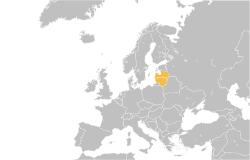
The Balts or Baltic peoples (Lithuanian: baltai, Latvian: balti) are a group of peoples inhabiting the eastern coast of the Baltic Sea who speak Baltic languages. Among the Baltic peoples are modern-day Lithuanians (including Samogitians) and Latvians (including Latgalians) — all East Balts — as well as the Old Prussians, Curonians, Sudovians, Skalvians, Yotvingians and Galindians — the Western Balts — whose languages and cultures are now extinct, but made a large influence on the living branches, especially on literary Lithuanian language.
The Balts are descended from a group of Proto-Indo-European tribes who settled the area between the lower Vistula and southeast shore of the Baltic Sea and upper Daugava and Dnieper rivers, and which over time became differentiated into West and East Balts. In the fifth century CE, parts of the eastern Baltic coast began to be settled by the ancestors of the Western Balts, whereas the East Balts lived in modern-day Belarus, Ukraine and Russia. In the first millennium CE, large migrations of the Balts occurred. By the 13th and 14th centuries, the East Balts shrank to the general area that the present-day Balts and Belarusians inhabit.
Baltic languages belong to the Balto-Slavic branch of the Indo-European languages. One of the features of Baltic languages is the number of conservative or archaic features retained.[5][better source needed]
Etymology
[edit]Medieval German chronicler Adam of Bremen in the latter part of the 11th century AD was the first writer to use the term "Baltic" in reference to the sea of that name.[6][7] Before him various ancient places names, such as Balcia,[8] were used in reference to a supposed island in the Baltic Sea.[6]
In Germanic languages there was some form of the toponym East Sea until after about the year 1600, when maps in English began to label it as the Baltic Sea. By 1840, German nobles of the Governorate of Livonia adopted the term "Balts" to distinguish themselves from Germans of Germany. They spoke an exclusive dialect, Baltic German, which was regarded by many as the language of the Balts until 1919.[9][10]
In 1845, Georg Heinrich Ferdinand Nesselmann proposed a distinct language group for Latvian, Lithuanian, and Old Prussian, which he termed Baltic.[11] The term became prevalent after Latvia and Lithuania gained independence in 1918. Up until the early 20th century, either "Latvian" or "Lithuanian" could be used to mean the entire language family.[12]
History
[edit]Origins
[edit]
The Balts or Baltic peoples, defined as speakers of one of the Baltic languages, a branch of the Indo-European language family, are descended from a group of Indo-European tribes who settled the area between the lower Vistula and southeast shore of the Baltic Sea and upper Daugava and Dnieper rivers. The Baltic languages, especially Lithuanian, retain a number of conservative or archaic features, perhaps because the areas in which they are spoken are geographically consolidated and have low rates of immigration.[13]
Some of the major authorities on Balts, such as Kazimieras Būga, Max Vasmer, Vladimir Toporov and Oleg Trubachyov,[citation needed] in conducting etymological studies of eastern European river names, were able to identify in certain regions names of specifically Baltic provenance, which most likely indicate where the Balts lived in prehistoric times. According to Vladimir Toporov and Oleg Trubachyov, the eastern boundary of the Balts in the prehistoric times were the upper reaches of the Volga, Moskva, and Oka rivers, while the southern border was the Seym river.[14] This information is summarized and synthesized by Marija Gimbutas in The Balts (1963) to obtain a likely proto-Baltic homeland. Its borders are approximately: from a line on the Pomeranian coast eastward to include or nearly include the present-day sites of Berlin, Warsaw, Kyiv, and Kursk, northward through Moscow to the River Berzha, westward in an irregular line to the coast of the Gulf of Riga, north of Riga.[citation needed]
However, other scholars such as Endre Bojt (1999) reject the presumption that there ever was such a thing as a clear, single "Baltic Urheimat":[15]
'The references to the Balts at various Urheimat locations across the centuries are often of doubtful authenticity, those concerning the Balts furthest to the West are the more trustworthy among them. (...) It is wise to group the particulars of Baltic history according to the interests that moved the pens of the authors of our sources.'[15]
Proto-history
[edit]
The area of Baltic habitation shrank due to assimilation by other groups, and invasions. According to one of the theories which has gained considerable traction over the years, one of the western Baltic tribes, the Galindians, Galindae, or Goliad, migrated to the area around modern-day Moscow, Russia around the fourth century AD.[16]
Over time the Balts became differentiated into West and East Balts. In the fifth century AD parts of the eastern Baltic coast began to be settled by the ancestors of the Western Balts: Brus/Prūsa ("Old Prussians"), Sudovians/Jotvingians, Scalvians, Nadruvians, and Curonians. The East Balts, including the hypothesised Dniepr Balts, were living in modern-day Belarus, Ukraine and Russia.[citation needed]
Germanic peoples lived to the west of the Baltic homelands; by the first century AD, the Goths had stabilized their kingdom from the mouth of the Vistula, south to Dacia. As Roman domination collapsed in the first half of the first millennium CE in Northern and Eastern Europe, large migrations of the Balts occurred — first, the Galindae or Galindians towards the east, and later, East Balts towards the west. In the eighth century, Slavic tribes from the Volga regions appeared.[17][18][19] By the 13th and 14th centuries, they reached the general area that the present-day Balts and Belarusians inhabit. Many other Eastern and Southern Balts either assimilated with other Balts, or Slavs in the fourth–seventh centuries and were gradually slavicized.[20]
Middle Ages
[edit]
In the 12th and 13th centuries, internal struggles and invasions by Ruthenians and Poles, and later the expansion of the Teutonic Order, resulted in an almost complete annihilation of the Galindians, Curonians, and Yotvingians.[citation needed] Gradually, Old Prussians became Germanized or Lithuanized between the 15th and 17th centuries, especially after the Reformation in Prussia.[citation needed] The cultures of the Lithuanians and Latgalians/Latvians survived and became the ancestors of the populations of the modern-day countries of Latvia and Lithuania.[citation needed]
Old Prussian was closely related to the other extinct Western Baltic languages, Curonian, Galindian and Sudovian. It is more distantly related to the surviving Eastern Baltic languages, Lithuanian and Latvian. Compare the Prussian word seme (zemē),[21] Latvian zeme, the Lithuanian žemė (land in English).[citation needed]
Modern era
[edit]
.jpg)
In the modern era, the Balts — primarily Lithuanians and Latvians — have sustained a unique cultural and linguistic identity along the eastern shores of the Baltic Sea, speaking the only surviving Eastern Baltic languages, Lithuanian and Latvian, which are among the most conservative Indo‑European tongues and retain archaic features from their Proto‑Indo‑European roots. Following nearly five decades of Soviet rule, Lithuania and Latvia restored their independence in 1990–1991 and subsequently pursued integration with Western institutions, culminating in accession to both the European Union and NATO in 2004. In the 21st century, these two Baltic nations have established stable democracies with parliamentary systems, preserved local languages and traditions, and address common economic, political and cultural priorities.[22]
Culture
[edit]| Part of a series on |
| Baltic religion |
|---|
 |


The Balts originally practiced Baltic religion. They were gradually Christianized as a result of the Northern Crusades of the Middle Ages. Baltic peoples such as the Latvians, Lithuanians and Old Prussians had their distinct mythologies. The Lithuanians have close historic ties to Poland, and many of them are Roman Catholic. The Latvians have close historic ties to Northern Germany and Scandinavia, and many of them are irreligious. In recent times, the Baltic religion has been revived in Baltic neopaganism.[23][24]
Genetics
[edit]The Balts are included in the "North European" gene cluster together with the Germanic peoples, some Slavic groups (the Poles and Northern Russians) and Baltic Finnic peoples.[25][failed verification]
Saag et a. (2017) detected that the eastern Baltic in the Mesolithic was inhabited primarily by Western Hunter-Gatherers (WHGs).[26] Their paternal haplogroups were mostly types of I2a and R1b, while their maternal haplogroups were mostly types of U5, U4 and U2.[27] These people carried a high frequency of the derived HERC2 allele which codes for light eye color and possess an increased frequency of the derived alleles for SLC45A2 and SLC24A5, coding for lighter skin color.[28]
Baltic hunter-gatherers still displayed a slightly larger amount of WHG ancestry than Scandinavian Hunter-Gatherers (SHGs). WHG ancestry in the Baltic was particularly high among hunter-gatherers in Latvia and Lithuania.[28] Unlike other parts of Europe, the hunter-gatherers of the eastern Baltic do not appear to have mixed much with Early European Farmers (EEFs) arriving from Anatolia.[29]
During the Neolithic, increasing admixture from Eastern Hunter-Gatherers (EHGs) is detected. The paternal haplogroups of EHGs was mostly types of R1a, while their maternal haplogroups appears to have been almost exclusively types of U5, U4, and U2.[citation needed]
The rise of the Corded Ware culture in the eastern Baltic in the Chalcolithic and Bronze Age is accompanied by a significant infusion of steppe ancestry and EEF ancestry into the eastern Baltic gene pool.[29][26][30] In the aftermath of the Corded Ware expansion, local hunter-gatherer ancestry experienced a resurgence.[28]
Haplogroup N reached the eastern Baltic only in the Late Bronze Age, probably with the speakers of the Uralic languages.[28]
Modern-day Balts have a lower amount of EEF ancestry, and a higher amount of WHG ancestry, than any other population in Europe.[31][a]
List of Baltic peoples
[edit]
Modern-day Baltic peoples
- Eastern Baltic peoples[32]
- Latvians
- Lithuanians
- Aukštaitians ("highlanders")
- Samogitians ("lowlanders")
See also
[edit]Notes
[edit]References
[edit]- ^ "Lietuviai Pasaulyje" (PDF), osp.stat.gov.lt
- ^ Latvian at Ethnologue (18th ed., 2015) (subscription required)
- ^ "Rodiklių duomenų bazė - Oficialiosios statistikos portalas". osp.stat.gov.lt.
- ^ "Iedzīvotāji pēc tautības gada sākumā 1935 - 2025". data.stat.gov.lv. Retrieved 2025-06-02.
- ^ Bojtár page 18.
- ^ a b Bojtár page 9.
- ^ Adam of Bremen reports that he followed the local use of balticus from baelt ("belt") because the sea stretches to the east "in modum baltei" ("in the manner of a belt"). This is the first reference to "the Baltic or Barbarian Sea, a day's journey from Hamburg. Bojtár cites Bremensis I,60 and IV,10.
- ^ Balcia, Abalcia, Abalus, Basilia, Balisia. However, apart from poor transcription, there are known [sic] linguistic rule whereby these words, including Balcia, might become "Baltia."
- ^ Bojtár page 10.
- ^ Butler, Ralph (1919). The New Eastern Europe. London: Longmans, Green and Co. pp. 3, 21, 22, 2 24.
- ^ Schmalstieg, William R. (Fall 1987). "A. Sabaliauskas. Mes Baltai (We Balts)". Lituanus. 33 (3). Lituanus Foundation Incorporated. Archived from the original on 7 September 2008. Retrieved 2008-09-06. Book review.
- ^ Bojtár page 11.
- ^ PIECHNIK, IWONA (22 December 2014). "FACTORS INFLUENCING CONSERVATISM AND PURISM IN LANGUAGES OF NORTHERN EUROPE (NORDIC, BALTIC, FINNIC)". Studia Linguistica Universitatis Iagellonicae Cracoviensis. 2014 (131, 4): 395–419. doi:10.4467/20834624SL.14.022.2729. Retrieved April 21, 2024.
- ^ Ramat, Anna Giacalone; Ramat, Paolo (2015-04-29). The Indo-European Languages. Routledge. p. 456. ISBN 978-1-134-92186-7.
- ^ a b Bojt, Endre (1999). Foreword to the Past: A Cultural History of the Baltic People. Budapest: Central European University Press. pp. 81, 113. ISBN 978-963-9116-42-9. Retrieved 1 April 2022.
- ^ Tarasov, Илья Тарасов Ilia M. (January 1, 2017). "Балты в миграциях Великого переселения народов // Исторический формат. № 3-4 (11-12). 2017. С. 95-124". Исторический формат, №3-4 – via www.academia.edu.
- ^ Engel, Barbara Alpern; Martin, Janet (2015). Russia in World History. Oxford University Press. p. 16. ISBN 978-0-19-023943-5.
Slavic tribes had reached the territories of the Finns and Balts in the eighth century.
- ^ Gleason, Abbott (2014). A Companion to Russian History. John Wiley & Sons. p. 106. ISBN 978-1-118-73000-3.
moved ... to the Baltic in the eighth-ninth centuries
- ^ Gimbutas, Marija (1971). The Slavs (Ancient Peoples and Places, Vol. 74). Thames and Hudson. p. 97. ISBN 0-500-02072-8.
no finds of Slavic character can be identified before the eighth century
- ^ Bell-Fialkoff, Andrew (2000), Bell-Fialkoff, Andrew (ed.), "The Slavs", The Role of Migration in the History of the Eurasian Steppe: Sedentary Civilization vs. "Barbarian" and Nomad, New York: Palgrave Macmillan US, pp. 133–149, doi:10.1007/978-1-349-61837-8_8, ISBN 978-1-349-61837-8, retrieved 2024-08-31
- ^ Mikkels Klussis. Bāziscas prûsiskai-laîtawiskas wirdeîns per tālaisin laksikis rekreaciônin Donelaitis.vdu.lt (Lithuanian version of Donelaitis.vdu.lt).
- ^ "Latvijos ryšiai ir santykiai su Lietuva". VLE.lt (in Lithuanian). Retrieved 9 July 2025.
- ^ Hanley, Monika. (2010-10-21). "Baltic diaspora and the rise of Neo-Paganism". The Baltic Times.
- ^ Naylor, Aliide. (May 31, 2019). "Soviet power gone, Baltic countries' historic pagan past re-emerges". Religion News Service.
- ^ Balanovsky & Rootsi 2008, pp. 236–250.
- ^ a b Saag 2017.
- ^ Mathieson 2018.
- ^ a b c d e Mittnik 2018.
- ^ a b Jones 2017.
- ^ Malmström 2019.
- ^ Lazaridis 2014.
- ^ Kessler, P. L. "Kingdoms of Eastern Europe - Lithuania". The History Files. Retrieved 2023-06-08.
Further reading
[edit]Lithuanian language
[edit]- Jovaiša, Eugenijus (2013). Aisčiai. Kilmė (in Lithuanian). Vilnius: Lietuvos edukologijos universiteto leidykla. ISBN 978-9955-20-779-5.
- Jovaiša, Eugenijus (2014). Aisčiai. Raida (in Lithuanian). Vilnius: Lietuvos edukologijos universiteto leidykla. ISBN 978-9955-20-957-7.
- Jovaiša, Eugenijus (2016). Aisčiai. Lietuvių ir Lietuvos pradžia (PDF) (in Lithuanian). Vilnius: Lietuvos edukologijos universiteto leidykla. ISBN 978-609-471-052-0.
French language
[edit]- Nowakowski, Wojciech; Bartkiewicz, Katarzyna (1990). "Baltes et proto-Slaves dans l'Antiquité. Textes et archéologie". Dialogues d'histoire ancienne (in French). 16 (1): 359–402. doi:10.3406/dha.1990.1472. Retrieved 18 January 2025.
English language
[edit]- Matthews, W. (1948). "Baltic origins". Revue des Études Slaves. 24 (1): 48–59. doi:10.3406/slave.1948.1468. Retrieved 18 January 2025.
- Jones, Eppie R. (February 20, 2017). "The Neolithic Transition in the Baltic Was Not Driven by Admixture with Early European Farmers". Current Biology. 27 (4). Cell Press: 576–582. Bibcode:2017CBio...27..576J. doi:10.1016/j.cub.2016.12.060. PMC 5321670. PMID 28162894.
- Balanovsky, Oleg; Rootsi, Siiri; et al. (January 2008). "Two sources of the Russian patrilineal heritage in their Eurasian context". American Journal of Human Genetics. 82 (1): 236–250. doi:10.1016/j.ajhg.2007.09.019. PMC 2253976. PMID 18179905.
- Bojtár, Endre (1999). Foreword to the Past: A Cultural History of the Baltic People. Budapest and New York: Central European University Press. p. 9. ISBN 978-963-9116-42-9.
- Gimbutas, Marija (1963). The Balts. London: Thames & Hudson.
- Kropotkin, Peter Alexeivitch (1911). . In Chisholm, Hugh (ed.). Encyclopædia Britannica. Vol. 16 (11th ed.). Cambridge University Press. pp. 789–791.
- Lazaridis, Iosif (September 17, 2014). "Ancient human genomes suggest three ancestral populations for present-day Europeans". Nature. 513 (7518): 409–413. arXiv:1312.6639. Bibcode:2014Natur.513..409L. doi:10.1038/nature13673. hdl:11336/30563. PMC 4170574. PMID 25230663.
- Malmström, Helena (October 9, 2019). "The genomic ancestry of the Scandinavian Battle Axe Culture people and their relation to the broader Corded Ware horizon". Proceedings of the Royal Society B. 286 (1912) 20191528. Royal Society. doi:10.1098/rspb.2019.1528. PMC 6790770. PMID 31594508.
- Mathieson, Iain (February 21, 2018). "The Genomic History of Southeastern Europe". Nature. 555 (7695): 197–203. Bibcode:2018Natur.555..197M. doi:10.1038/nature25778. PMC 6091220. PMID 29466330.
- Mittnik, Alisa (January 30, 2018). "The genetic prehistory of the Baltic Sea region". Nature Communications. 16 (1) 442. Bibcode:2018NatCo...9..442M. doi:10.1038/s41467-018-02825-9. PMC 5789860. PMID 29382937.
- Saag, Lehti (July 24, 2017). "Extensive Farming in Estonia Started through a Sex-Biased Migration from the Steppe". Current Biology. 27 (14). Cell Press: 2185–2193. Bibcode:2017CBio...27E2185S. doi:10.1016/j.cub.2017.06.022. PMID 28712569.
Polish language
[edit]- "Bałtowie". Encyklopedia Internetowa PWN (in Polish). Archived from the original on April 26, 2005. Retrieved May 25, 2005.
- Antoniewicz, Jerzy; Aleksander Gieysztor (1979). Bałtowie zachodni w V w. p. n. e. – V w. n. e.: terytorium, podstawy gospodarcze i społeczne plemion prusko-jaćwieskich i letto-litewskich (in Polish). Olsztyn-Białystok: Pojezierze. ISBN 83-7002-001-1.
- Kosman, Marceli (1981). Zmierzch Perkuna czyli ostatni poganie nad Bałtykiem (in Polish). Warsaw: Książka i Wiedza.
- "Bałtowie". Wielka Encyklopedia PWN (in Polish) (1 ed.). 2001.
- Okulicz-Kozaryn, Łucja (1983). Życie codzienne Prusów i Jaćwięgów w wiekach średnich (in Polish). Warsaw: Państwowy Instytut Wydawniczy.
- Čepienė, Irena (2000). Historia litewskiej kultury etnicznej (in Polish). Kaunas, "Šviesa". ISBN 5-430-02902-5.
External links
[edit]- Gimbutas, Marija (1963). The Balts. London, New York: Thames & Hudson, Gabriella. Archived from the original on 20 August 2008. Retrieved 2008-09-06. E-book of the original.
- Baranauskas, Tomas (2003). "Forum of Lithuanian History". Historija.net. Archived from the original on 6 September 2008. Retrieved 2008-09-06.
- Sabaliauskas, Algirdas (1998). "We, the Balts". Postilla 400. Samogitian Cultural Association. Archived from the original on 2008-04-02. Retrieved 2008-09-05.
- Straižys, Vytautas; Libertas Klimka (1997). "The Cosmology of ancient Balts". www.astro.lt. Retrieved 2008-09-05.

Balts
View on GrokipediaEtymology
Origins of the Term
The term "Balts" (German: Baltische Völker) for the ethnolinguistic group of ancient and modern speakers of Baltic languages—including Lithuanians, Latvians, and extinct tribes such as the Old Prussians—was first proposed in 1845 by the German linguist Hermann Wilhelm B. Nesselmann.[6] Nesselmann, in his work on comparative linguistics, separated the "Baltic" languages (primarily Lithuanian, Latvian, and Prussian remnants) from Slavic as a distinct branch within the Indo-European family, emphasizing shared archaic features like conservative vowel systems and inflectional morphology while noting divergences in phonology and lexicon.[6] This classification arose amid 19th-century philological efforts to map Indo-European subgroups, building on earlier observations of linguistic affinities but rejecting a unified Balto-Slavic identity for modern descendants. The name derives from the Baltic Sea (Latin: Mare Balticum, first attested in the 11th century by Adam of Bremen), which borders the core habitats of these peoples from the lower Vistula River to the Daugava.[4] Etymologically, "Baltic" stems from Proto-Indo-European *bʰel-/ "to shine, gleam" or "white," cognate with Lithuanian baltas "white" and Latvian balts "white," possibly alluding to the sea's foam or pale sands rather than the peoples themselves, who were not self-identified by this term in antiquity.[6] Prior Roman and medieval sources, such as Tacitus' Germania (ca. 98 CE), referred to coastal Balts as Aesti, noting their amber trade without ethnic consolidation under a "Balt" label.[7] The 19th-century adoption reflected scholarly convenience for grouping fragmented tribes, distinct from earlier tribal names like Lituae for Lithuanians (first in 1009 CE) or Lettigalli for Latvians.[6]Historical and Linguistic Evolution
Ancient Roman sources, such as Tacitus in his Germania composed around 98 CE, referred to inhabitants of the southeastern Baltic coast as the Aestii, noting their amber collection and Germanic-like customs without applying a collective term encompassing all related groups.[8] Medieval chronicles documented specific tribes like the Prussians, Lithuanians, Latgalians, Semigallians, and Curonians by name, treating them as distinct entities under external pressures from Teutonic Knights and Slavic principalities, but lacked an overarching ethnolinguistic designation.[4] In the 19th century, philological advancements and nationalist movements prompted the coalescence of a unified term. German linguist Georg Heinrich Ferdinand Nesselmann introduced "baltische Sprachen" in 1845 to classify Lithuanian, Latvian (then termed Lettish), and the extinct Old Prussian as a distinct Indo-European branch, separate from Slavic languages, based on shared phonological and morphological features reconstructed to a common Proto-Baltic ancestor around the late 2nd millennium BCE.[2][9] This linguistic framework, derived from comparative methods analyzing remnants like Prussian glosses and modern dialects, provided the scholarly basis for "Balts" as an ethnic label for these peoples' speakers, initially among Baltic German scholars and later adopted in Lithuanian and Latvian national revivals.[10] The term "Balts," rooted in the Latin Mare Balticum for the Baltic Sea (first attested in medieval geography), evolved from a purely geographic descriptor to an ethnolinguistic one amid 19th-century efforts to map linguistic kinship against Slavic expansionism and German assimilation.[11] By the early 20th century, it solidified in academic usage to denote surviving East Baltic groups (Lithuanians and Latvians) and extinct West Baltic ones (Prussians, Yotvingians), excluding Finnic peoples despite shared geography, due to irreducible linguistic divergence confirmed by sound laws like the retention of Indo-European long *ē in Baltic.[12] This evolution reflected causal linguistic evidence over prior conflations with Slavs, prioritizing empirical reconstruction over geographic proximity.Origins and Prehistory
Archaeological Evidence
Archaeological evidence links the origins of Baltic populations to Bronze Age cultures in the eastern Baltic region, spanning approximately 2000–500 BCE, characterized by barrow burials, bronze artifacts, and early fortifications. In Lithuania, the Bronze Age period from circa 1600 to 800 BCE features settlements with evidence of agriculture, animal husbandry, and metalworking, transitioning from Stone Age traditions without major population disruptions.[13] Key sites include Kivutkalns in Latvia (1230–230 cal BCE), a prominent bronze production center along the Daugava River trade route, indicating specialized craftsmanship and regional exchange networks.[5] Genetic data from ancient Eastern Baltic individuals during this era reveal continuity with local hunter-gatherer ancestries, including high proportions of Western Hunter-Gatherer (WHG) and Eastern Hunter-Gatherer (EHG) components, augmented by gene flow from Neolithic farmers but lacking significant Steppe pastoralist replacement seen elsewhere in Europe.[5] Y-chromosome haplogroup R1a predominates, consistent with Indo-European affiliations, while the absence of haplogroup N underscores minimal Uralic admixture prior to later Iron Age shifts.[5] Early crop cultivation evidence from 1800–1100 cal BCE at southeastern Baltic sites further supports sedentary communities adapting Indo-European agropastoral practices.[14] By the Late Bronze Age (circa 1200–500 BCE), fortified settlements emerged across the eastern Baltic, marking heightened social complexity and defensive structures, such as hillforts with palisades, potentially tied to Proto-Baltic ethnogenesis amid interactions with neighboring cultures like the Pomeranian and Lusatian.[15] These developments align with the Rzucewo and post-East Baltic cultures, interpreted as harboring Proto-Baltic speakers through distinctive pottery and tool assemblages.[16] In the Iron Age (500 BCE–400 CE), material culture diversified into regionally distinct groups, including the Dollkeim-Kovrovo culture in the southwest, associated with early Baltic tribes like the Sambians and linked to Roman-era Aesti references, featuring cremation urns, iron weapons, and amber processing indicative of extensive maritime trade.[17] Burial practices shifted toward inhumations with grave goods, reflecting stable communities resilient to migrations affecting adjacent areas, as corroborated by persistent genetic profiles emphasizing local continuity over external impositions.[5] Amber artifacts and ingots from Baltic sources, found in distant contexts, highlight the region's role in prehistoric exchange systems extending to the Mediterranean by the early centuries CE.[18]Proto-Baltic Culture and Society
The Proto-Baltic culture developed in the southeastern Baltic region during the late Bronze Age and Iron Age, approximately from 1200 BCE to 500 CE, encompassing the ancestors of later Baltic tribes such as the Prussians, Latgalians, and Lithuanians before linguistic and cultural divergence.[19] Archaeological evidence from sites in modern Lithuania, Latvia, and parts of Poland indicates continuity from earlier local cultures, with genetic studies showing population stability in the Baltic Sea region from the Corded Ware period onward, supporting indigenous development rather than large-scale migrations.[5] Social organization was tribal, structured around kinship groups and extended families forming communities of 10 to 20 households, with tribes comprising around 500 individuals led by elders or chiefs.[20] During the Roman Iron Age (ca. 0–400 CE), gradual social stratification emerged, evidenced by differential grave goods in cemeteries, such as weapons and jewelry for elites, indicating hierarchies based on wealth and martial prowess, though less pronounced than in Scandinavian societies.[21] Settlements shifted from isolated farmsteads to larger fortified hillforts by the late Iron Age, reflecting increased communal defense and coordination.[21] The economy relied on mixed subsistence, including arable farming of grains like barley and rye, animal husbandry for cattle and pigs, hunting, fishing, and foraging in forested landscapes.[19] Craft production involved pottery with cord-impressed designs, bone and antler tools, and early ironworking for implements and weapons after 500 BCE.[19] Long-distance trade, particularly in Baltic amber, connected Proto-Baltic groups to Mediterranean and Central European networks as early as 3000 BCE, with intensified exchange during the Iron Age facilitating acquisition of Roman imports like glass beads and bronze.[22] [23] Material culture featured distinctive ornaments, such as bronze spiral bracelets and amber beads, often deposited in hoards or graves, suggesting ritual significance.[19] Dwellings were semi-subterranean longhouses in early phases, transitioning to surface buildings in villages. Religious beliefs, inferred from archaeological contexts and linguistic reconstructions, centered on animism and polytheism, venerating sky, earth, and fire deities, with practices including cremation burials and offerings in natural sacred sites like groves and springs.[19] Evidence of horse sacrifices and ancestor veneration points to Indo-European influences adapted locally.[19]Historical Development
Ancient Contacts and Migrations
The Proto-Balts, as a branch of Indo-European speakers, likely originated from migrations northward and eastward from the Pontic-Caspian steppe regions, associated with cultures preceding the Yamnaya horizon, with settlement in the eastern Baltic area consolidating by around 1250 BCE.[4][24] Archaeological evidence links these movements to the Corded Ware and related cultures of the late Bronze Age (circa 2000–1000 BCE), where linguistic and material traces indicate differentiation from neighboring Germanic and Slavic groups.[16] These migrations involved gradual population expansions rather than mass invasions, facilitated by technological advantages in mobility and metallurgy, leading to the establishment of distinct Baltic tribal societies in the territories between the Vistula River and the Baltic Sea.[4] Early contacts between Baltic tribes and Mediterranean civilizations are evidenced primarily through the extensive amber trade network known as the Amber Road, which transported Baltic succinite from coastal regions to the Mediterranean as early as the Neolithic period, with intensified exchanges by the late Bronze Age around 3000 BCE.[23] Artifacts of Baltic amber have been identified in Iberian Peninsula sites predating the Bell Beaker culture (over 5000 years ago), suggesting indirect trade links via intermediary Celtic and other European groups, predating direct Roman involvement.[25] By the Iron Age (circa 600–200 BCE), this trade connected Baltic producers, identified archaeologically in cultures like those mapped in the region, with southern demand centers, fostering cultural exchanges without large-scale military interactions.[23] Literary references to Baltic peoples appear in ancient Greek and Roman sources, with Herodotus (circa 440 BCE) describing the Neuri, a tribe north of Scythia possibly proto-Baltic, noted for shape-shifting myths but located near the Baltic linguistic zone.[27] More definitively, Tacitus in Germania (98 CE) identified the Aestii along the Baltic coast (Suebian Sea), portraying them as amber collectors who exported glaesum (amber) southward, with customs including rudimentary agriculture and worship of Mother Nerthus, indicating early ethnographic awareness without implying conquest or deep integration.[4] These accounts, while potentially biased by limited direct observation, align with archaeological trade evidence, highlighting the Balts' peripheral but economically linked role in the classical world. Pliny the Elder later detailed amber procurement rituals among these tribes, reinforcing the trade's cultural significance into the 1st century CE.[28]Medieval Crusades and Formative States
The Northern Crusades, authorized by popes including Celestine III in 1193 and Innocent III from 1198, targeted pagan Baltic tribes in Prussia, Livonia, and Semigallia to enforce Christian conversion through military campaigns.[29][30] In Prussian territories, Polish Duke Konrad I of Masovia invited the Teutonic Knights in 1226 to counter raids, leading to their arrival and initial conquests starting in 1230 against tribes including the Pomesanians and Prussians.[31][32] The Knights subdued major clans by the 1240s but faced the Great Prussian Uprising from 1260 to 1274, led by figures like Herkus Monte, which delayed full control until around 1283 despite reinforcements from crusading volunteers.[33] In Livonia, encompassing Latvian and southern Estonian lands, Bishop Albert of Riga founded the city in 1201 and established the Livonian Brothers of the Sword in 1202 to conquer and baptize tribes such as the Livonians and Latgalians by 1209.[34][35] The Sword Brothers expanded against Semigallians and Estonians but suffered defeat at the Battle of Saule in 1236 against Lithuanian forces, prompting their merger into the Teutonic Order in 1237 under papal bull.[35] Subsequent campaigns subdued Curonians and remaining Semigallians by the 1290s, integrating the area into bishoprics and order territories with forced Christianization and German settlement.[34] Lithuanian tribes, threatened by Teutonic incursions and Mongol pressures, coalesced under Mindaugas, who consolidated power by the 1240s and accepted Christianity for coronation as King of Lithuania on July 6, 1253, by papal legate in Vilnius, forming the region's first unified state.[36] Mindaugas allied temporarily with the Teutonics but was assassinated in 1263, after which Lithuania reverted to paganism yet persisted as the Grand Duchy, resisting further crusades through raids and expansion eastward.[36][37] These crusades resulted in the extinction of independent Prussian and Latvian tribal polities, replaced by feudal entities under military orders and bishops where Baltic natives endured as enserfed subjects under German overlords, while Lithuania's state formation enabled survival and later growth as a multi-ethnic power.[29][38]Early Modern Empires and Unions
In 1385, the Union of Krewo established a personal union between the Grand Duchy of Lithuania and the Kingdom of Poland, formalized through the marriage of Lithuanian Grand Duke Jogaila to Polish Queen Jadwiga, initiating shared monarchy while preserving Lithuania's distinct institutions.[39] This arrangement evolved amid external pressures, culminating in the Union of Lublin on July 1, 1569, which created the Polish-Lithuanian Commonwealth—a federal republic of approximately 1 million square kilometers uniting the two realms under a single elected monarch, common Sejm (parliament), and unified foreign policy, though Lithuania retained its own statutes, treasury, and army.[39][40] The Commonwealth endured until the partitions by Russia, Prussia, and Austria in 1772, 1793, and 1795, during which Lithuanian nobility underwent significant Polonization, adopting Polish as the administrative language and Catholicism, while the peasantry, comprising over 90% of the population, preserved Lithuanian language and folk traditions amid serfdom.[39] The territories inhabited by Latvian tribes faced fragmentation following the Livonian War (1558–1583), a multi-power conflict initiated by Russian Tsar Ivan IV's invasion of the Livonian Confederation, leading to its collapse and partition among Poland-Lithuania, Sweden, and Denmark.[41] Southern Livonia, including Latgale, was incorporated into the Polish-Lithuanian Commonwealth via the 1582 Treaty of Yam-Zapolsky, subjecting ethnic Latvians to Polish Catholic administration and reinforcing German noble dominance over serf populations. Northern Livonia (Vidzeme) fell to Swedish control under the 1629 Truce of Altmark, introducing Protestant reforms and mercantilist policies that boosted trade but intensified Baltic German influence until Sweden's defeat in the Great Northern War (1700–1721).[41] Concurrently, the Duchy of Courland and Semigallia emerged in 1561 from the remnants of the Livonian Order, as a hereditary fief under Polish suzerainty ruled by the German Kettler dynasty, granting limited autonomy including overseas colonial attempts in Tobago and Gambia during the 1650s under Duke Jacob Kettler.[42] The duchy persisted until Russian annexation in 1795, with its economy reliant on agriculture, shipbuilding, and trade, though ethnic Latvian peasants remained under feudal obligations to Baltic German landowners. Among the Prussian Balts, early modern developments marked the culmination of prior assimilation processes, as the 1525 secularization of the Teutonic Order's Monastic State of Prussia by Grand Master Albrecht of Brandenburg-Ansbach—converted to Lutheranism—transformed it into the secular Duchy of Prussia, a Polish fief of 57,000 square kilometers with Königsberg as capital, ending monastic rule and integrating remaining Old Prussian linguistic and cultural remnants into German-Polish frameworks.[43][44] This shift, formalized by the Treaty of Kraków, accelerated the extinction of distinct Baltic Prussian identity, already diminished by 14th-century conquests, plagues reducing population by up to 50% in some areas, and forced German settlement; by 1700, Prussian Baltic speech had vanished, supplanted by German dialects.[43] The duchy achieved full sovereignty from Polish vassalage via the 1660 Treaty of Oliva, paving the way for Hohenzollern expansion into Brandenburg-Prussia, though no significant revival of ethnic Prussian elements occurred.[44]National Awakenings and Partitions
The partitions of the Polish-Lithuanian Commonwealth in 1772, 1793, and 1795 divided its territories among Russia, Prussia, and Austria, with the bulk of ethnic Lithuanian-inhabited lands falling under Russian control while smaller portions, including parts of Prussian Lithuania, went to Prussia.[45] This fragmentation intensified foreign administrative pressures on Baltic populations, including Russification policies in the Russian partition that suppressed local languages and customs, setting the stage for reactive national consciousness.[46] In the Prussian zone, limited cultural autonomy persisted longer, fostering cross-border intellectual exchanges.[47] In Lithuania, national awakening gained traction in the early 19th century amid serf emancipation (completed by 1861) and failed uprisings against Russian rule, such as the 1830–1831 November Uprising and the 1863–1864 January Uprising, which involved over 200,000 participants and prompted harsh reprisals including the closure of Vilnius University in 1832 and a ban on Lithuanian publications in Latin script from 1864 to 1904.[48] Historians like Simonas Daukantas advanced ethnic self-awareness through works such as Būdas senovės lietuvių kalnėnų ir žemaičių (Customs of the Ancient Lithuanians, Highlanders, and Lowlanders), published in 1846, emphasizing pre-Christian heritage.[49] The press ban spurred the knygnešiai (book carriers) network, which smuggled over 1,000 titles from East Prussia, sustaining literacy and cultural resistance; by 1905, this underground effort had distributed millions of books.[50] The inaugural Lithuanian periodical Aušra (Dawn), issued from 1883 to 1886 in Tilsit (now Sovetsk, Russia), under editor Jonas Basanavičius, propagated linguistic purification and historical revival, reaching subscribers across the empire.[2] Parallel developments unfolded in Latvia, where territories had entered Russian orbit after the 1721 Great Northern War but experienced analogous imperial constraints. The First National Awakening (circa 1850–1880), led by the Young Latvians (Jaunlatvieši)—intellectuals educated in German universities—included figures like Krišjānis Valdemārs, who founded the Latvian Literary Society in 1868, and Krišjānis Barons, who documented over 217,000 folk songs in the Latvišu dainas collection by 1894.[51] Building on serf liberations (Livonia in 1819, Courland in 1817), the movement emphasized secular education, economic self-reliance, and folklore preservation, with events like the first Latvian Song Festival in 1873 symbolizing collective identity and drawing 15,000 attendees. These efforts shifted Latvian society from peasant subjugation toward bourgeois nationalism, though Russification intensified post-1880s, curbing political gains until the 1905 Revolution.[52] By the late 19th century, these partitioned awakenings had solidified Baltic ethnic distinctions against Slavic and Germanic overlords, prioritizing vernacular revival and historical narratives over assimilation, despite lacking immediate statehood; Prussian Baltic groups, however, saw diminished distinctiveness as Germanization advanced.[53] The movements' focus on empirical cultural documentation—linguistic dictionaries, ethnographic maps, and legal petitions—contrasted with imperial historiography that downplayed Baltic antiquity, fostering resilience evidenced by sustained publications and societies into the 20th century.[54]World Wars, Occupations, and Resistance
During World War I, the territories inhabited by Baltic peoples—primarily Lithuanians and Latvians—served as a major theater of conflict between the German and Russian Empires, with heavy fighting along the Eastern Front from 1915 onward. German forces occupied much of Courland (Latvia) and Lithuania by 1915, establishing the United Baltic Duchy as a puppet entity in 1918, while Russian retreats and the Bolshevik Revolution created power vacuums. Following the Armistice of November 11, 1918, Lithuania declared independence on February 16, 1918, Latvia on November 18, 1918, and Estonia (often grouped regionally despite its Finnic population) on February 24, 1918, though effective control required wars of independence from 1918 to 1920 against Bolshevik Red Army advances and remnant German Freikorps units. These conflicts, known collectively as the Baltic War of Liberation, involved Lithuanian forces repelling Soviet incursions at battles like Grodno in 1920 and Latvian-Estonian coalitions halting Bolshevik offensives near Narva in 1919, culminating in peace treaties with Soviet Russia in 1920 that recognized de facto sovereignty.[55] The interwar period saw the Baltic states consolidate independence amid internal authoritarian shifts, such as the 1926 coup in Lithuania and 1934 in Latvia, but this fragile autonomy ended with the Molotov-Ribbentrop Pact's secret protocols assigning the region to Soviet influence. On June 14-17, 1940, the USSR issued ultimatums demanding entry of Red Army troops into Lithuania, Latvia, and Estonia, followed by staged "people's elections" in July that installed pro-Soviet regimes; formal annexation occurred by August 6, 1940, with presidents and governments deported or executed. Sovietization included nationalization of industry, collectivization of agriculture, and suppression of national institutions, prompting an estimated 60,000-80,000 Balts to flee to Germany. Mass deportations on June 13-14, 1941, targeted perceived elites, exiling approximately 39,000-40,000 individuals (including 10,000 from Estonia, 15,000 from Latvia, and 17,000 from Lithuania) to Siberian labor camps, with high mortality rates from starvation and exposure.[56][57] Nazi Germany's invasion of the USSR on June 22, 1941 (Operation Barbarossa) rapidly overran Baltic territories, with German forces capturing Kaunas on June 24, Riga on July 1, and Tallinn by late July, greeted initially by some locals as liberators from Soviet terror due to the recent deportations. The region was administered as Reichskommissariat Ostland from July 1941, enforcing racial policies that exploited local labor while suppressing independence aspirations; Lithuanian and Latvian auxiliary police units, numbering up to 20,000, participated in anti-partisan operations and pogroms. The Holocaust decimated the Jewish populations, with Einsatzgruppen and local collaborators murdering over 200,000 of the approximately 250,000-300,000 Jews in Lithuania, Latvia, and Estonia through mass shootings at sites like Ponary (95,000 victims near Vilnius) and Rumbula (25,000 near Riga) in 1941-1942, followed by ghetto liquidations and deportations to death camps. Total WWII civilian deaths reached 353,000 in Lithuania and 227,000 in Latvia, representing about 14-20% of pre-war populations, driven by executions, forced labor, and famine. Limited organized resistance emerged against Nazi rule, including underground Lithuanian Front of Activists groups attempting uprisings in June 1941, but most armed opposition focused on evading conscription into the German Wehrmacht or Waffen-SS divisions like the Latvian Legion.[58][59][60] Soviet reoccupation began in 1944, with Red Army advances recapturing Vilnius in July, Riga in October, and Tallinn in September 1944, restoring direct control and triggering further repressions. Post-war resistance coalesced into the Forest Brothers (Miško broliai in Lithuanian, Meža brāļi in Latvian), guerrilla networks of former soldiers, nationalists, and civilians who rejected Soviet legitimacy, operating from forests and rural hideouts. Peak strength reached 30,000-50,000 fighters across the Baltics by 1945, conducting ambushes on NKVD convoys, sabotage of rail lines, and assassinations of officials; Lithuanian partisans alone sustained operations until 1953, with an estimated 30,000 killed in clashes or amnesties turned betrayals. Soviet countermeasures, including mass deportations of 124,000 Estonians, 136,000 Latvians, and 245,000 Lithuanians from 1944-1952, scorched-earth tactics, and informant networks, gradually eroded the movement, though isolated holdouts persisted into the 1960s. This partisan war, one of Europe's longest post-WWII insurgencies, inflicted thousands of Soviet casualties but failed to restore independence until the USSR's collapse.[61][62][63]Soviet Era Deportations and Suppression
The Soviet occupation of the Baltic states—Estonia, Latvia, and Lithuania—following World War II involved systematic deportations aimed at neutralizing perceived class enemies, nationalists, and intellectuals to consolidate control and facilitate collectivization. Between 1944 and 1952, approximately 124,000 individuals were deported from Estonia, 136,000 from Latvia, and 245,000 from Lithuania to remote regions of Siberia and Central Asia, where many perished from harsh conditions, starvation, or disease.[62] A pivotal operation, known as Operation Priboi from March 25 to 28, 1949, targeted rural populations resisting farm collectivization and resulted in the deportation of roughly 90,000 people across the three republics, primarily women, children, and elderly family members of suspected insurgents.[64] These actions built on earlier waves, such as the June 13–14, 1941, deportations under NKVD orders, which affected an estimated 34,000 in Latvia, 60,000 in Estonia, and 75,000 in Lithuania before the German invasion interrupted the process.[65] Deportees were selected based on social profiles like landowners, former officials, or clergy, reflecting a class-based purge rather than individualized crimes, with mortality rates exceeding 20% in transit and exile according to archival records.[62] Beyond deportations, Soviet suppression encompassed arrests, executions, and imprisonment of political elites and cultural figures to dismantle independent institutions. From 1944 to 1953, over 200,000 people in the Baltic republics faced repression, including sentencing to Gulag camps, with Estonia alone seeing 49 former ministers imprisoned in the initial postwar years, 45 of whom were executed or died in custody.[66] Forced Russification policies suppressed Baltic languages in education and media, while religious institutions, particularly Catholic and Lutheran churches, were curtailed through clergy deportations and church closures. Collectivization drives from 1947 onward expropriated private farms, sparking widespread non-cooperation and linking to the 1949 deportation surge as a punitive measure against holdouts.[62] Armed resistance, embodied by the Forest Brothers—guerrilla groups drawing from demobilized soldiers and civilians—emerged immediately after Soviet reoccupation in 1944, conducting ambushes on NKVD personnel, supply lines, and collaborators until the mid-1950s. Numbering up to 50,000 active fighters at peak in Lithuania and Latvia, these partisans destroyed Soviet installations and killed officials, prompting brutal countermeasures including village burnings and mass arrests of relatives to starve out support networks.[61] Soviet forces, bolstered by internal troops and local auxiliaries, gradually overwhelmed the insurgents through superior numbers and infiltration, with armed clashes persisting sporadically into the 1960s; by 1956, organized resistance had collapsed, though isolated holdouts evaded capture for years.[67] This partisan effort, rooted in defense of sovereignty against unprovoked annexation, inflicted measurable losses on occupiers but failed to reverse demographic engineering via deportations and influxes of Russian settlers, which diluted native majorities.[68]Independence Restoration and Post-1991 Era
The restoration of independence by the Baltic states—Estonia, Latvia, and Lithuania—began amid Mikhail Gorbachev's policies of glasnost and perestroika in the late 1980s, which permitted open expressions of dissent against Soviet rule. In Estonia, the Popular Front (Rahvarinde) formed in April 1988, advocating sovereignty through mass demonstrations like the Singing Revolution, where participants revived pre-Soviet cultural traditions to build national momentum.[69] Similar movements emerged in Latvia with the Latvian Popular Front in October 1988 and in Lithuania with Sąjūdis in June 1988, channeling public opposition to Russification and economic stagnation. These groups organized the Baltic Way on August 23, 1989, forming a 600-kilometer human chain of approximately two million people across the three republics to protest the 1939 Molotov-Ribbentrop Pact that enabled Soviet occupation.[70] Lithuania's Supreme Soviet declared the restoration of independence on March 11, 1990, asserting continuity from the interwar republic and rejecting the 1940 annexation as illegal.[70] Latvia followed with a declaration of independence on May 4, 1991, and Estonia on August 20, 1991, both framing their actions as reasserting pre-1940 sovereignty rather than secession from the USSR. The Soviet response escalated in January 1991, with military forces attempting to seize key media and government buildings. In Vilnius on January 13, Soviet troops stormed the television tower and parliament, resulting in 14 civilian deaths and over 1,000 injuries from gunfire and tank treads; in Riga, similar assaults on the interior ministry on January 20 killed five and injured dozens amid barricade defenses by civilians.[71][72] These events, later investigated as war crimes by Baltic authorities, galvanized international sympathy and highlighted the illegitimacy of Soviet claims, as the crackdowns violated Gorbachev's own reform rhetoric without achieving regime change.[73] The failed August 1991 coup in Moscow accelerated recognition: the USSR acknowledged Baltic independence on September 6, 1991, followed by the United States and European Community.[74] Russian troop withdrawals concluded by August 1994, though border disputes persisted until 1999–2007 treaties.[75] Post-restoration governments prioritized decommunization, with citizenship laws favoring pre-1940 residents and their descendants—Lithuania granting it to nearly all, while Latvia and Estonia initially restricted it for Soviet-era immigrants, leading to integration programs amid EU pressure.[76] Economically, the Baltics adopted rapid liberalization: Estonia implemented shock therapy, introducing a 26% flat tax in 1994 (later reduced to 20%) and privatizing state assets, achieving GDP growth averaging 5–7% annually from 1995 onward despite initial 1992–1993 contractions of 8–14% and hyperinflation exceeding 1,000% in Latvia and Lithuania.[77][78] Latvia and Lithuania followed with voucher privatization and currency boards, stabilizing by mid-1990s; by 2004, per capita GDP had tripled from 1991 lows, driven by foreign investment and export reorientation to the West.[79] Accession to NATO on March 29, 2004, and the EU on May 1, 2004, anchored security and market access, with defense spending rising to meet NATO's 2% GDP target by 2018 amid Russian revanchism.[80][81] The post-1991 era featured challenges like 2008–2009 recessions (GDP drops of 15–20%) and demographic decline from emigration, yet structural reforms fostered high economic freedom rankings and digital innovation, as in Estonia's e-governance model serving 99% of public services online by 2020.[82] Geopolitically, the 2022 Russian invasion of Ukraine prompted Baltic bans on Russian energy imports by 2023 and troop hosting for NATO battlegroups, reinforcing deterrence against hybrid threats.[80] These developments underscore a causal shift from Soviet dependency to Western-aligned resilience, with empirical metrics like EU convergence (GDP per capita at 70–90% of EU average by 2023) validating the integration strategy over neutralist alternatives.[83]Languages
Baltic Language Family Classification
The Baltic languages form a subgroup of the Indo-European language family, characterized by shared phonological, morphological, and lexical innovations that distinguish them from other branches.[3][2] Linguists reconstruct a common Proto-Baltic ancestor, spoken approximately between 1500 and 500 BCE in the region east of the Baltic Sea, based on comparative analysis of attested descendants such as Lithuanian, Latvian, and Old Prussian.[84] This proto-language retained certain Proto-Indo-European archaisms, including the pitch accent system and a rich system of noun cases, while undergoing innovations like the development of a distinct satem palatalization pattern.[84][85] Traditionally, the Baltic languages divide into two main branches: East Baltic and West Baltic. The East Baltic branch encompasses the living languages Lithuanian (spoken by about 3 million people as of 2020) and Latvian (spoken by around 1.5 million), along with dialects such as Samogitian and Latgalian, which exhibit mutual intelligibility to varying degrees but share features like the loss of certain Proto-Baltic consonants and vowel shifts.[3][86] The West Baltic branch, now extinct, included Old Prussian, documented in catechisms and glosses from the 14th to 17th centuries CE before its assimilation by German, as well as lesser-attested varieties like Galindian and Sudovian, identified through toponyms and historical records up to the 16th century.[3][86] These branches diverged after the Proto-Baltic stage, with West Baltic showing earlier innovations such as the merger of certain diphthongs absent in East Baltic.[84] The position of Baltic within Indo-European remains debated, particularly regarding its relationship to Slavic languages. While some reconstructions posit a Balto-Slavic intermediate node defined by shared isoglosses like the ruki-law for sibilantization and certain nominal paradigms, others, including Baltic specialist Antanas Klimas, reject this unity, classifying Baltic and Slavic as parallel branches of Indo-European with apparent similarities arising from geographic proximity and prolonged areal contact rather than common descent beyond the proto-family level.[87][84] Evidence against tight Balto-Slavic grouping includes discrepancies in accentual developments and the earlier extinction of West Baltic, which lacks Slavic-like features, supporting the view of Baltic as an independent lineage preserved through conservative traits in Lithuanian and Latvian.[87][85] Extinct Baltic varieties, such as those of the Dnieper Balts mentioned in 9th–10th century East Slavic chronicles, further attest to the family's historical extent but underscore its fragmentation due to migrations and conquests.[86]Historical Divergences and Extinctions
The Proto-Baltic language, ancestral to all Baltic languages, is reconstructed to have existed during the late 2nd to early 1st millennium BCE, following the divergence from Proto-Balto-Slavic around 1500–500 BCE.[88] This proto-language subsequently split into Western and Eastern branches, with the Western Baltic group—including Old Prussian and possibly Sudovian—diverging first, exhibiting phonological and morphological innovations such as the preservation of certain Proto-Indo-European consonants distinct from Eastern developments, likely by the 5th century BCE to early centuries CE.[87] [89] The Eastern Baltic branch further differentiated into proto-Lithuanian (encompassing Aukštaitian and Samogitian dialects) and proto-Latvian (incorporating Latgalian, Semigallian, and Selonian varieties) around the 7th–8th centuries CE, driven by geographic separation and tribal migrations amid Slavic expansions southward.[90] Western Baltic languages underwent early extinction primarily due to Teutonic Order conquests from the 13th century onward, which imposed Germanization on Prussian territories; Old Prussian, the best-attested, persisted in fragmented form until the Great Plague of 1709–1711 decimated its remaining speakers, marking effective extinction by the early 18th century.[91] Sudovian (or Yotvingian), sometimes classified as Western or transitional, survived longer in forested borderlands but assimilated into Polish and Lithuanian by the 16th–17th centuries through Slavic and Lithuanian incursions.[92] Among Eastern Baltic tribal languages, Curonian vanished by the 16th century in Samogitia and the 17th in Courland, supplanted by Lithuanian, Latvian, and German amid Northern Crusades and feudal integrations.[93] Semigallian, a Latvian precursor, disappeared in the late 15th to early 16th century as its speakers merged into Latvian under Livonian Order dominance.[94] Selonian and Galindian similarly faded by the 15th–16th centuries, absorbed into Latvian and Lithuanian ethnolinguistic cores during state formations and partitions. These extinctions resulted from demographic pressures, including conquest, migration, and cultural assimilation, leaving only standardized Lithuanian and Latvian as surviving Baltic languages by the modern era.[86]Modern Linguistic Features and Preservation
Modern Lithuanian retains numerous archaic Indo-European traits, including seven noun cases, a complex system of declensions, and pitch accent distinguishing words, making it among the most conservative living Indo-European languages.[95][96] Its standard form derives primarily from the Aukštaitijan dialect, with Samogitian influencing regional variations, while orthography incorporates diacritics such as ą, ė, and š to represent nasal vowels and palatalized consonants.[97] Latvian, by contrast, exhibits more innovations, featuring a rich vowel inventory of nine monophthongs (including long and short variants) and several diphthongs, alongside a glottal fricative in some dialects contributing to its broken tone.[98][99] The standard Latvian draws from Central dialects, employs 33 letters in its Latin-based alphabet (adding diacritics like ā, č, and ŗ), and maintains fixed stress on the first syllable, enhancing its phonetic regularity compared to Lithuanian's variable prosody.[100] Both languages preserve synthetic morphology with extensive inflection for nouns, verbs, and adjectives, though Latvian shows greater analytic tendencies in modern usage influenced by Germanic and Slavic contacts. Approximately 3.6 million people speak Lithuanian worldwide, with 3 million in Lithuania per 2021 census data, while Latvian has about 1.75 million native speakers, including 1.3 million in Latvia as of recent estimates.[101][102] Preservation efforts intensified post-1991 independence, with Lithuania mandating Lithuanian in education, media, and public life to counter Soviet-era Russification, resulting in over 80% monolingual proficiency among youth. Latvia enforces Latvian as the state language via naturalization requirements and broadcasting quotas, sustaining usage despite emigration; diaspora communities further support it through heritage schools and digital resources.[103][104] Neither core language faces endangerment per UNESCO assessments, though regional varieties like Latgalian are classified as vulnerable, prompting targeted revitalization via literature and education. Challenges include anglicisms from globalization and population decline—Lithuania's speaker base shrank by 10% since 2001 due to migration—but EU membership bolsters digital corpora and translation tools for long-term viability.[105]Religion and Beliefs
Pre-Christian Paganism and Mythology
The pre-Christian religion of the Balts was polytheistic and animistic, featuring worship of deities tied to natural phenomena, fertility, and cosmic order, alongside reverence for ancestral spirits and sacred landscapes. Evidence derives mainly from biased medieval Christian sources, such as 13th-15th century Latin chronicles by Teutonic Knights and missionaries, which document rituals, idols, and shrines while portraying them as idolatrous.[106] [107] Archaeological excavations reveal wooden cult figures, fire altars, and offering pits at sites like sacred groves (alkai) and hill forts, indicating communal ceremonies involving sacrifices of animals, food, and possibly humans in extremis during crises.[107] No indigenous written records exist, limiting knowledge to external observers and later folk traditions collected from the 18th-19th centuries, which risk Christian syncretism and scholarly reconstruction.[108] Prominent deities included Dievas, the supreme sky god associated with creation, light, and moral order, often invoked in oaths and later paralleled to the Christian God by converts.[108] Perkūnas (Prussian Perkūns, Latvian Pērkons), god of thunder, lightning, and justice, protected against evil forces and was depicted with an axe or hammer; historical accounts from the 14th century describe his oak-tree worship and battles against chthonic serpents symbolizing chaos.[106] [108] The earth goddess Žemyna oversaw soil fertility, crops, and household prosperity, receiving libations and first fruits in agrarian rites.[107] Destiny and luck fell under Laima, a triadic figure akin to the Fates, who wove human lifespans from birth, though her prominence emerges more in post-medieval folklore.[108] Lesser spirits (laumės, raganos) inhabited forests, waters, and homes, demanding propitiation to avert misfortune. Mythological motifs, preserved fragmentarily, emphasized dualistic tensions between celestial order and earthly/underworld disruption, with the world tree or cosmic pillars upholding the sky.[107] Prussian sources like Simon Grunau's 16th-century chronicle detail a chief temple at Romowe dedicated to Patrimpas (possibly a localized Perkūnas variant) and other gods, housing eternal flames and idols until destroyed in 1270.[106] Lithuanian and Latvian variants featured fire cults, solstice festivals, and divination, reflecting Indo-European roots with unique Baltic emphases on fate and nature's immanence. Priests (krivis among Prussians, vaidilutės as female seers) led rites, interpreting omens and maintaining purity taboos.[108] Regional differences existed—Prussians emphasized martial deities, while inland Lithuanians focused on agrarian cycles—but shared resistance to Christianization until the 15th century preserved core elements into folk customs.[107]Christianization and Syncretism
The Christianization of the Baltic peoples occurred primarily through military conquests during the Northern Crusades in the 13th century for the West and North Balts, while the East Balts in Lithuania underwent a political conversion in the late 14th century. The Teutonic Knights initiated the Prussian Crusade around 1230, systematically conquering Old Prussian territories and enforcing Catholic baptism amid resistance, completing the subjugation by 1283 after suppressing uprisings such as the Great Prussian Uprising of 1260–1274.[30][109] In Livonia, encompassing modern Latvia, the Livonian Crusade began in 1198 with the establishment of Riga in 1201 by Bishop Albert, involving the Order of the Brothers of the Sword, which merged with the Teutonic Order in 1237; by the mid-13th century, Latgalians, Semigallians, and other tribes had been nominally Christianized through fortified missions and coerced submissions, though pagan revolts persisted into the 1290s.[110] Lithuania, the core of the Grand Duchy and last pagan stronghold in Europe, resisted Christianization until 1387, when Grand Duke Jogaila (Władysław II Jagiełło) accepted baptism as a prerequisite for his marriage to Polish Queen Jadwiga, formalizing the Union of Krewo and integrating Lithuania into Catholic Europe.[111] This conversion was superficial initially, with pagan practices continuing in rural areas and Samogitia fully Christianized only in 1413 following the Peace of Thorn.[112] Jesuit missions from the 16th century onward deepened Catholicism, but enforcement varied, allowing dual-faith adherence where elites adopted Christianity for political gain while folk levels retained pre-Christian rituals.[113] Syncretism manifested in the assimilation of pagan deities and customs into Christian frameworks, with Baltic earth mother figures like Žemyna evolving into associations with the Virgin Mary, who absorbed fertility and protective roles in folk piety.[114] Holy groves and sacred springs, central to Baltic paganism, were often rededicated to saints, while seasonal festivals blended solstice rites with Christian holidays, such as Easter incorporating egg-decorating traditions linked to renewal myths.[115] Archaeological evidence from burial sites indicates continued cremation-like practices and amulets into the early modern period, reflecting underground persistence rather than outright abandonment.[116] In Lithuanian and Latvian folklore, deities like Perkūnas (thunder god) survived as symbolic motifs in proverbs and songs, illustrating causal continuity where Christianity overlaid but did not eradicate indigenous cosmologies.[117] This dualism endured due to weak institutional control in peripheral regions, fostering a resilient folk religion that modern revivals, such as Romuva, draw upon for reconstructing pre-Christian elements.[118]20th-Century Revivals and Secularization
In the interwar period of independence following World War I, nationalist intellectuals in Latvia initiated Dievturība, a reconstruction of pre-Christian Latvian beliefs emphasizing folk traditions and deities like Dievs (god). Founded in 1925 by Ernests Brastiņš, an artist and folklorist, and Kārlis Bregžis, the movement published a manifesto titled Latviešu dievturības atjaunojums and attracted followers through cultural societies, though it remained marginal with estimates of several thousand adherents by the 1930s.[119][120] In Lithuania, similar interests in pagan heritage emerged among ethnographers, preserving oral folklore and rituals amid Catholic dominance, but organized revival awaited post-Soviet freedoms. Soviet occupations from 1940 onward suppressed these efforts, promoting state atheism and labeling pagan groups as bourgeois nationalism; Brastiņš was arrested and died in 1942, while Dievturība societies dissolved. Underground folk practices persisted in rural areas, blending pagan elements with Christianity, but overt revival halted until the late 1980s perestroika era.[120] Post-independence in 1991, Lithuania's Romuva movement formalized under Jonas Trinkūnas, an ethnologist who established communities in 1992, reviving rituals at sites like sacred groves and drawing on Prussian Baltic traditions symbolized by the Romuva sanctuary name.[118] By the early 2000s, Romuva claimed around 5,000 members, focusing on seasonal festivals and ancestor veneration, while Dievturība reemerged in Latvia with reformed organizations emphasizing linguistic purity and nature worship.[118] These neo-pagan groups positioned themselves as authentic ethnic religions, gaining limited official recognition—Romuva as a traditional community in Lithuania by 2024—yet comprising less than 1% of populations.[121] Parallel to these niche revivals, the Baltic states underwent profound secularization, a legacy of five decades of Soviet anti-religious campaigns that dismantled churches and indoctrinated atheism. In Estonia, only 18% professed belief in God per 2010 Eurobarometer data, with 35% unaffiliated and 9% explicitly atheist in 2017 Pew surveys, marking it among Europe's least religious nations.[122] Latvia reported 31% with no religion in 2017, while Lithuania showed higher residual Christianity at 77% Catholic identification but low practice rates, with surveys indicating widespread cultural rather than devout adherence.[123] This secular trend persisted into the 21st century, driven by urbanization, education, and disillusionment with institutional religion, overshadowing pagan revivals despite their cultural symbolism in national identity.[124]Culture and Society
Traditional Social Structures
Pre-Christian Baltic societies were organized into tribes, such as the Prussians, Lithuanians, Latgalians, Semigallians, and Curonians, each functioning as semi-autonomous units with social structures rooted in kinship clans and extended patriarchal families. These tribes lacked centralized states until later periods, relying instead on customary laws enforced through assemblies of free adult males who elected or acclaimed local leaders, often from prominent warrior clans.[125][126] Social hierarchy typically placed noble seniors or chieftains—frequently warriors with retinues—at the apex, supported by priests who wielded considerable authority, particularly among the Old Prussians where spiritual roles emphasized intellectual and ritual expertise. Below them ranked wealthy freemen engaged in agriculture, herding, and trade, comprising the bulk of the population as independent householders. Dependent laborers, including war captives reduced to servitude, occupied the lower strata, though slavery was not as institutionalized as in contemporaneous Mediterranean societies.[126][7][127] Kinship ties extended beyond the nuclear family to multi-generational clans, which regulated inheritance, marriage alliances, and dispute resolution, fostering communal land use and mutual defense. Archaeological evidence from hillforts and burial sites indicates emerging stratification by the late Iron Age, with elite graves containing weapons and imported goods signaling warrior elites, while common burials reflect agrarian freemen. This structure persisted into the early medieval era, adapting under external pressures like Teutonic incursions, which disrupted tribal autonomy by the 13th century.[126][125]Folklore, Arts, and Customs
Baltic folklore draws heavily from pre-Christian pagan beliefs, featuring deities associated with nature such as the forest mother figures Meža māte in Latvian traditions and Medeinė in Lithuanian lore, reflecting the reverence for woodlands as sacred spaces.[128] [129] Mythical creatures and legends persist in oral traditions, often tied to agricultural cycles and seasonal changes, with Lithuanian forests holding particular sanctity in folk narratives.[129] Among extinct Baltic tribes like the Old Prussians, folklore records are fragmentary due to their assimilation following the 13th-century Teutonic conquests, but surviving accounts suggest similar animistic elements centered on local landscapes and ancestral spirits.[130] In the arts, choral singing and folk dancing form a cornerstone, exemplified by the Baltic Song and Dance Celebrations, recognized by UNESCO as an Intangible Cultural Heritage since 2008, where up to 40,000 participants from amateur choirs and dance ensembles perform every four to five years across Lithuania, Latvia, and Estonia.[131] Traditional music blends local folk melodies with influences from historical religious practices, often performed on instruments like the kokle (a Latvian zither) and skudučiai (Lithuanian straw panpipes).[128] Crafts such as intricate amber jewelry, linen weaving, and wood carving preserve motifs from pagan symbolism, including solar crosses and thunder symbols, continuing in modern folk art exhibitions.[132] Customs emphasize seasonal festivals rooted in pagan heritage, such as Lithuania's Joninės on June 24, involving bonfires, flower wreath crafting, and rituals to ensure fertility and ward off evil, directly linked to ancient solstice observances.[133] Latvia's Jāņi counterpart features similar midsummer rites with herb gathering and cheese-making traditions symbolizing abundance.[134] Christmas Eve practices like Lithuania's Kūčios include a 12-dish meatless meal derived from pre-Christian harvest thanksgivings, while pagan-influenced symbols and nature veneration persist in contemporary rituals across both nations.[135] These elements maintain cultural continuity despite historical disruptions, with modern revivals reinforcing ethnic identity through community events.[136]Economic Practices and Daily Life
The economy of ancient Baltic tribes centered on agriculture and animal husbandry, with stock breeding—particularly cattle, pigs, sheep, and horses—holding primacy from the early centuries AD onward.[137] Crop cultivation, featuring cereals like barley and rye alongside flax and hemp, took root in the southeastern Baltic region by approximately 1300–1250 cal BC, marking the earliest direct evidence of farming practices tied to local Bronze Age communities.[14] These activities supported subsistence lifestyles in forested and coastal environments, supplemented by fishing in rivers and the Baltic Sea, beekeeping for honey and wax, and foraging for wild resources.[138] Crafts formed a vital component of production, including pottery with distinctive forms such as wide-mouthed pots and funnel-shaped vessels characteristic of coastal Baltic cultures.[139] Ironworking emerged prominently by the first century AD, utilizing bog iron from swamps for tools, weapons, and implements, which enhanced agricultural efficiency and enabled local manufacturing of jewelry and household goods.[140] Trade networks amplified economic reach, with amber—exploited since at least 2000–1800 BC—as the cornerstone commodity, bartered along the Amber Road for bronze, metals, and luxury items from Mediterranean and Central European partners; furs and honey also served as exchange goods.[28][141] Daily life revolved around extended family units in dispersed villages of wooden farmsteads, harmonizing with surrounding forests and fields through natural settlement patterns.[142] Patriarchal households divided labor seasonally: men focused on plowing, sowing, herding, and woodworking, while women managed milking, spinning fibers like flax, baking from grains, child-rearing, and textile production.[143] Communities emphasized self-sufficiency, with routines dictated by agrarian cycles—spring planting, summer pasturing, autumn harvests, and winter crafts—interwoven with communal rituals for fertility and protection, though these waned post-Christianization.[137] Peasant farmsteads typically housed multi-generational kin alongside seasonal laborers, fostering social cohesion amid manorial influences in later medieval periods.[144]Genetics and Anthropology
Ancient DNA Studies
Ancient DNA (aDNA) studies of the Baltic region have illuminated the genetic foundations of prehistoric populations associated with proto-Baltic speakers, revealing a mosaic of local hunter-gatherer continuity and selective admixture with incoming groups. Genome-wide data from Mesolithic and Neolithic sites in Latvia and Lithuania indicate persistent Western Hunter-Gatherer (WHG) ancestry, with the adoption of farming practices occurring through cultural diffusion rather than large-scale migration from Early European Farmers (EEF). For instance, analysis of remains from the Zvejnieki burial ground in Latvia (ca. 7500–4000 BCE) shows genetic profiles dominated by Eastern Hunter-Gatherer (EHG) and WHG components, exhibiting minimal EEF influence and supporting local persistence across the Mesolithic-Neolithic transition.[145][146] In the Bronze Age (ca. 1230–230 BCE), aDNA from 14 individuals in Latvia and Lithuania clusters distinctly as "Baltic Bronze Age" (Baltic_BA), characterized by elevated WHG ancestry (up to 50% higher than in contemporaneous Corded Ware groups elsewhere in Europe) combined with Yamnaya-related steppe pastoralist input, reflecting the Indo-European linguistic expansion into the region without full population replacement. These samples model as approximately 45–60% local Neolithic farmer-forager admixture and 40–55% steppe ancestry, distinguishing proto-Balts from more steppe-shifted neighbors like Scandinavians or Slavs.[5][147] This genetic signature underscores a relatively insular development, with limited gene flow from Uralic or Siberian sources until the late Bronze to early Iron Age transition in the eastern Baltic, where minor (5–10%) Northeast Asian-related ancestry appears, possibly linked to interactions with Finno-Ugric groups.[148] Comparisons to modern populations demonstrate substantial continuity: contemporary Lithuanians and Latvians derive over 70% of their ancestry from Baltic_BA-like sources, with additional minor contributions from medieval-era migrations (e.g., Slavic or Germanic), affirming the resilience of core Baltic genetic structure despite historical conquests. Data from Prussian sites remain sparse for prehistoric periods, with most available aDNA limited to medieval contexts showing assimilation of Baltic profiles into broader East European gene pools following Teutonic Order incursions.[5][147] These findings, drawn primarily from high-coverage shotgun sequencing, challenge narratives of wholesale replacement and highlight the Baltic region's role as a genetic refugium for pre-steppe European forager lineages.[149]Modern Genetic Continuity
Modern Lithuanian and Latvian populations demonstrate substantial genetic continuity with ancient Baltic groups from the Bronze and Iron Ages, as shown by principal component analysis (PCA) clustering and high shared genetic drift with Bronze Age individuals from the region. This continuity is characterized by elevated proportions of Western Hunter-Gatherer (WHG) and Eastern Hunter-Gatherer (EHG) ancestry, combined with steppe pastoralist (Yamnaya-related) admixture introduced around 3000 BCE, which persists in modern Eastern Balts without major disruptions from later migrations.[147] Quantitative analyses, such as D-statistics, reveal a Z-score of approximately 14.0 for increased WHG affinity in Baltic Late Neolithic/Bronze Age samples relative to earlier groups, aligning closely with contemporary Lithuanian and Latvian profiles.[147] Y-chromosome haplogroup R1a, predominant in ancient Baltic males (e.g., R1a1a1b subclades), remains the most frequent in modern Balts, comprising 35-45% of lineages in Lithuanians and similar proportions in Latvians, underscoring paternal continuity from Indo-European expansions associated with Corded Ware and Fatyanovo cultures.[147] Autosomal studies confirm that Balts retain a relatively homogeneous genetic structure, with strong affinities to ancient local hunter-gatherer and Neolithic components dating back 5,000-4,500 years BP, despite minor gene flow from neighboring Finnic (introducing N1c haplogroups, higher in Latvians at ~40%) and later Indo-European groups.[150] This preservation is evident in genome-wide data showing Balts clustering nearer to steppe-derived Indo-European ancestors than to Anatolian farmer sources, supporting a model of local continuity over replacement.[150] While Slavic expansions from the 6th-8th centuries CE introduced Northeastern European ancestry into adjacent regions, modern Balts exhibit limited admixture from these events, maintaining distinct pre-Slavic Baltic components estimated at 50-65% in some models, with no evidence of wholesale population replacement in core Lithuanian and Latvian territories.[151] Genetic distances based on autosomal and Y-chromosomal loci among Balto-Slavic groups correlate highly (r=0.9), yet Balts diverge from Slavs in retaining higher HG ancestry and lower Southern European input, reflecting geographic isolation and cultural resilience.[152]Admixture and Population Dynamics
Modern Baltic populations, primarily Lithuanians and Latvians, derive much of their genetic makeup from Bronze Age groups linked to the Corded Ware culture, with models estimating around 48-52% steppe-related ancestry admixed with local Eastern Hunter-Gatherer (EHG) and farmer components from earlier Neolithic transitions.[5] This admixture occurred gradually without major population replacements during the Neolithic, as Baltic hunter-gatherers adopted farming practices while retaining genetic continuity, evidenced by persistent local ancestry in ancient DNA from ~7000-2000 BCE sites.[146] Y-chromosomal haplogroups like R1a-Z280, prevalent at 40-50% in modern Balts, trace to these Indo-European expansions around 2500 BCE, distinguishing them from neighboring Finnic (N1c-dominant) and Slavic groups.[152] Subsequent historical events introduced limited but detectable admixture layers. Early medieval Slavic expansions from the 6th-9th centuries CE contributed 10-20% eastern steppe and farmer ancestry in some Baltic fringes, particularly through interactions in shared border zones, though core populations resisted full replacement due to linguistic and cultural barriers.[151] Germanic crusades (13th-15th centuries) and Hanseatic trade added minor northwestern European components via settlers and elites, with autosomal analyses showing elevated frequencies of certain I1 and R1b subclades in coastal Latvians compared to inland groups.[153] Overall, admixture levels remain low relative to more dynamic regions like the Balkans, with principal component analyses placing modern Balts closest to ancient samples from the Baltic periphery, underscoring isolation-by-distance patterns persisting into the Iron Age.[152] Autosomal genetic distances correlate strongly (r=0.9) with linguistic phylogeny among Balto-Slavic speakers, suggesting gene flow tracked cultural exchanges rather than conquest-driven turnover.[152] Population dynamics of Baltic tribes reveal expansion from proto-Baltic cores around 1200 BCE, coinciding with Indo-European migrations into the eastern Baltic, followed by fragmentation into tribes like Prussians, Latgalians, and Samogitians by the Common Era.[5] Medieval consolidations, such as the 14th-century Lithuanian state unifying tribes against Teutonic incursions, temporarily stabilized numbers, but plagues, wars, and assimilations eroded extinct groups like the Curonians by the 16th century, reducing distinct Baltic polities.[5] 20th-century upheavals amplified declines: World War II and Soviet occupations (1940-1991) caused ~20-25% losses through deportations (e.g., 94,000 from Lithuania in 1941), executions, and Russification-induced migrations, shrinking ethnic Baltic majorities in Latvia from 83% in 1935 to 52% by 1989.[154] Post-independence (1991 onward), endogenous decline accelerated due to fertility rates dropping to 1.2-1.6 children per woman and net emigration exceeding 1 million across the region, driven by economic transitions and EU accession in 2004.[155] Latvia's population fell from 2.67 million in 1990 to 1.83 million by 2023, with annual net migration losses peaking at -35,000 during 2008-2011; Lithuania and Estonia experienced similar trajectories, though offset partially by returning diaspora.[155] [154] These dynamics reflect causal pressures from geopolitical instability and aging demographics rather than genetic dilution, as admixture studies confirm ethnic core continuity amid shrinking totals.[5]Peoples and Tribes
Surviving Baltic Groups
The surviving Baltic ethnic groups are the Lithuanians and Latvians, the sole modern descendants of ancient East Baltic tribes such as the Aukštaitians, Samogitians, Semigallians, and Latgalians, whose languages and cultural elements have persisted despite centuries of foreign domination, migrations, and assimilation pressures from Slavic, Germanic, and Scandinavian influences. These groups speak the only extant Baltic languages—Lithuanian and Latvian—classified as East Baltic, with no surviving West Baltic varieties following the extinction of Old Prussian by the 18th century. As of 2024, their combined native speakers total approximately 5 million, concentrated in the Baltic states amid ongoing demographic declines driven by low birth rates (around 9 births per 1,000 in Lithuania and similar in Latvia) and net emigration exceeding 10,000 annually per country.[156] Lithuanians, the larger group, primarily inhabit Lithuania, where they form 84.6% of the population, equating to roughly 2.4 million individuals based on a national total of 2.885 million as of January 2024. This figure excludes diaspora communities in the United States (over 600,000 self-identified Lithuanian descendants per U.S. Census data), the United Kingdom, and Ireland, which sustain linguistic and cultural ties through organizations like the Lithuanian World Community, though assimilation rates among second-generation emigrants exceed 50% in non-Baltic host countries. Lithuanian society preserves pre-Christian pagan motifs in folklore and resists full linguistic shift, with 85.3% of residents speaking Lithuanian as a first language; regional variations include the Samogitian dialect spoken by about 300,000 in western Lithuania, which retains archaic features diverging from standard Aukštaitian-based Lithuanian.[157][158] Latvians, numbering about 1.15 million in Latvia where they comprise 62% of the 1.86 million total population as of mid-2024, exhibit similar continuity from tribal amalgamations post-13th-century conquests by the Teutonic Order and later Polish-Lithuanian and Russian rule. Ethnic Latvians are distributed across Vidzeme, Zemgale, and Kurzeme historical regions, with the Latgale subgroup in the southeast—numbering around 150,000 and speaking a distinct dialect with Polish and Belarusian loanwords—representing a partially separate cultural enclave that faced Russification efforts during the Soviet era but has seen revival since 1991 independence. Latvian diaspora, estimated at 200,000-300,000 globally (primarily in Canada, Australia, and the U.S.), faces higher assimilation risks due to smaller community sizes compared to Lithuanians, contributing to a native speaker base of under 1.8 million worldwide. Both groups' survival owes to 19th-century national awakenings, which codified languages amid imperial suppression, enabling post-1918 statehood and resistance to Soviet-era deportations that claimed 10-15% of their pre-1940 populations.[159][160]Extinct and Minor Historical Tribes
The Western Baltic tribes, distinct from the Eastern groups that contributed to modern Lithuanians and Latvians, largely vanished through conquest, assimilation, and demographic collapse between the 13th and 18th centuries. These included the Old Prussians, who inhabited the region between the Vistula and Neman rivers, and were subdued by the Teutonic Order during the Prussian Crusade starting in 1230. Their language, a Western Baltic tongue, persisted in isolated pockets but became extinct by around 1700 amid German colonization and cultural suppression following the Order's establishment of the Duchy of Prussia in 1525.[161][7] Other Western Baltic groups, such as the Yotvingians (also known as Sudovians), occupied southeastern Poland, southern Lithuania, and western Belarus, engaging in frequent warfare with neighbors including the Teutonic Knights and Lithuanian dukes. By the late 13th century, their core territories were annexed, with remnants assimilated into Lithuanian, Polish, and Belarusian populations; archaeological evidence from fortified settlements like those near the Neman River attests to their martial culture, but no distinct Yotvingian identity survived past the 16th century.[162] The Galindians comprised two branches: Western Galindians in Masuria and northern Mazovia, who were absorbed by Polish and German settlers after 13th-century incursions, and Eastern Galindians near modern Moscow, Slavicized by the 14th century through Kievan Rus' expansion.[163] Among the Eastern Baltic tribes, several minor groups assimilated into the emerging Lithuanian and Latvian ethnoses. The Curonians, seafaring warriors along the Courland coast, resisted the Livonian Order until the 13th century but fragmented thereafter, with northern elements merging into Latvian Semigallians and southern into Lithuanians by the 15th century.[164] The Semigallians, centered in central Latvia, mounted repeated uprisings against crusaders into the 14th century, yet their distinct tribal structure dissolved by the 16th century through intermarriage and Polonization or Germanization.[164] Selonians in southeastern Latvia similarly faded, incorporated into Latgalian and Lithuanian spheres after 13th-century conquests, leaving linguistic traces in regional dialects but no independent continuity. These extinctions were driven by Northern Crusades (1198–1290), which imposed Christianity and feudal structures, compounded by plagues like the 1710–1711 epidemic that decimated Prussian remnants.[161]Modern Identity and Challenges
Demographic Declines and Emigration
Since the restoration of independence in 1991, the populations of Latvia and Lithuania—comprising the core modern Baltic ethnic groups—have undergone significant declines, driven primarily by persistently low fertility rates and net emigration, resulting in negative natural population change compounded by outward migration.[155][165] Latvia's population fell from approximately 2.67 million in 1990 to 1.86 million by mid-2024, with a 1.0% decline (18,400 people) in the preceding year alone, marking the fastest such drop in the European Union.[160][166] Lithuania's population decreased by over 800,000 since 1990, with roughly 484,000 of that loss attributable to emigration, though recent years have seen partial offsets from returns and non-ethnic immigration.[167][158] Fertility rates in both countries remain well below the replacement level of 2.1 children per woman, exacerbating demographic aging and workforce shrinkage. In Latvia, the total fertility rate stood at 1.36 children per woman in recent estimates, while Lithuania's reached an all-time low of 1.18, contributing to annual birth deficits where deaths outnumber births by factors exceeding 2:1.[168][169] These trends trace back to post-Soviet economic disruptions, including high unemployment and delayed family formation, with rates dropping to around 1.1 by the late 1990s before modest recoveries that still fall short of sustainability.[154] Emigration intensified after EU accession in 2004, enabling free movement and drawing primarily young, skilled workers to higher-wage destinations like the United Kingdom, Ireland, and Germany, motivated by domestic wage gaps, limited opportunities, and income inequality.[170][171] Latvia lost about 20% of its population to emigration since joining the EU, with ethnic Latvians declining by 211,000 from 1989 to 2023; Lithuania saw over 1.16 million citizens emigrate by 2023, though annual outflows have moderated to around 9,500–28,700 in 2024 amid some returns (up to 19,000).[172][155][173] Push factors include post-independence economic chaos, persistent poverty relative to Western Europe, and structural unemployment, rather than pull factors alone, as evidenced by sustained outflows despite EU structural funds.[165][174] Projections indicate Latvia could lose 21% of its population by 2050, underscoring risks to national viability without policy interventions like diaspora engagement or incentives for returnees.[175]Ethnic Relations and Minority Integration
In Latvia, ethnic Latvians constitute approximately 62.7% of the population, with Russians forming the largest minority at 24.5%, followed by smaller groups including Belarusians (3.1%), Ukrainians (2.2%), and Poles (2%).[176] This demographic stems from Soviet-era immigration policies that resettled over 500,000 Russians and other Slavs into Latvia between 1940 and 1991, diluting the pre-war Latvian majority of around 75%. Post-independence integration efforts emphasize Latvian language proficiency as a cornerstone of citizenship and public life, including 2022 education reforms mandating 50% Latvian instruction in minority-language schools from grades 1-6 and 80% thereafter, aimed at fostering societal cohesion amid persistent linguistic segregation.[177] These policies have reduced non-citizen status—held by about 9% of residents, mostly ethnic Russians, as of 2024—through naturalization requirements, with over 150,000 former Soviet-era residents acquiring citizenship since 1995, though challenges persist due to lower integration rates among older Russian-speakers and exposure to Kremlin propaganda via Russian media.[159][178]| Ethnic Group | Percentage (approx., recent estimates) |
|---|---|
| Latvians | 62.7% |
| Russians | 24.5% |
| Belarusians | 3.1% |
| Ukrainians | 2.2% |
| Others | 7.5% |
Geopolitical Tensions and National Resilience
The Baltic states—Estonia, Latvia, and Lithuania—have faced heightened geopolitical tensions with Russia since the latter's full-scale invasion of Ukraine on February 24, 2022, prompting fears of similar aggression due to their proximity to Russian territory, including the Kaliningrad exclave and Belarus. Russian hybrid tactics, such as cyberattacks, disinformation campaigns, and maritime provocations, have intensified, exemplified by Russia's adoption of new Baltic Sea baselines on June 18, 2025, which restrict foreign navigation and escalate territorial disputes. In response, the states have decoupled economically from Russia, reducing energy dependencies initiated before 2022, and prepared contingency plans including mass evacuations in anticipation of potential invasion. These tensions are compounded by Russia's exploitation of ethnic Russian minorities in the region, though Baltic governments have countered through integration policies and vigilance against subversion.[185][186][187] To bolster national security, the Baltic states have significantly ramped up defense expenditures, exceeding NATO's 2% GDP guideline and aligning with emerging targets. In 2024, Estonia allocated 3.43% of GDP to defense, Latvia reached approximately 2.4% with commitments to 3% by 2027, and Lithuania positioned itself among top spenders at over 3%, with all three pledging toward a 5% target by July 2025 amid NATO discussions. This includes modernizing armed forces, reinstating conscription—Estonia mandates 8-11 months for males since 2017—and hosting enhanced NATO battlegroups since 2017, which were upgraded to brigade levels post-2022. Joint initiatives, such as the Baltic Naval Squadron (BALTRON) and regional air policing, underscore coordinated deterrence against hybrid and conventional threats.[188][189][190] National resilience draws from historical precedents of non-violent resistance, notably the Singing Revolution from 1987 to 1991, during which mass cultural gatherings, including song festivals attended by hundreds of thousands, defied Soviet suppression and culminated in restored independence on August 20-21, 1991, for Estonia and Latvia, and September 6 for Lithuania. This legacy fosters societal cohesion, evident in contemporary civil defense training, public support for Ukraine aid—Lithuania alone donated over 1% of GDP by 2023—and low tolerance for pro-Russian narratives, reinforced by de-communization efforts and transparent governance. Empirical indicators include high public approval for NATO membership (over 80% in polls) and proactive countermeasures to hybrid threats, such as Estonia's rapid response to the 2007 cyberattacks attributed to Russia, which spurred e-governance advancements for resilience. These factors, combined with geographic vulnerabilities, have driven a pragmatic realism prioritizing deterrence over appeasement.[191][192][193]References
- ./assets/Baltic_cultures_600-200_BC_SVG.svg.png