Hubbry Logo
Astronomical objectAstronomical objectMain
Open search
Astronomical object
Community hub
Astronomical object
logo
8 pages, 0 posts
0 subscribers
Be the first to start a discussion here.
Astronomical object
Astronomical object
from Wikipedia
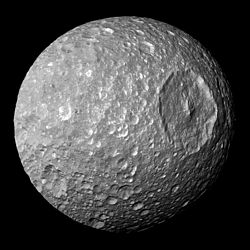
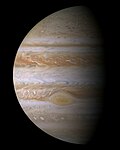
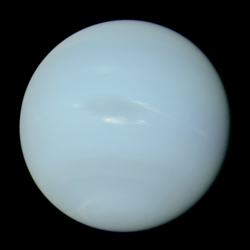
Selection of astronomical bodies and objects

An astronomical object, celestial object, stellar object or heavenly object is a naturally occurring physical entity, association, or structure that exists within the observable universe.[1] In astronomy, the terms object and body are often used interchangeably. However, an astronomical body, celestial body or heavenly body is a single, tightly bound, contiguous physical object, while an astronomical or celestial object admits a more complex, less cohesively bound structure, which may consist of multiple bodies or even other objects with substructures.

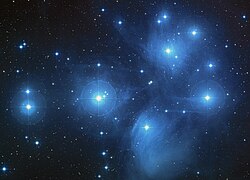
Examples of astronomical objects include planetary systems, star clusters, nebulae, and galaxies, while asteroids, moons, planets, and stars are astronomical bodies. A comet may be identified as both a body and an object: It is a body when referring to the frozen nucleus of ice and dust, and an object when describing the entire comet with its diffuse coma and tail.

History

[edit]

According to NASA astrophysicists, early astronomical objects began to emerge plausibly 13.6 billion years ago, roughly 200 million years after the Big Bang formed the early universe. Over time, light was left from gravity to fuse into the first stars and galaxies.[2]

Astronomical objects such as stars, planets, nebulae, asteroids and comets have been observed for thousands of years, although early cultures thought of these bodies as deities. These early cultures found the movements of the bodies very important as they used these objects to help navigate over long distances, tell between the seasons, and to determine when to plant crops. During the Middle Ages, cultures began to study the movements of these bodies more closely. Several astronomers of the Middle East began to make detailed descriptions of stars and nebulae, and would make more accurate calendars based on the movements of these stars and planets. In Europe, astronomers focused more on devices to help study the celestial objects and creating textbooks, guides, and universities to teach people more about astronomy.

During the Scientific Revolution, in 1543, Nicolaus Copernicus's heliocentric model was published. This model described the Earth, along with all of the other planets as being astronomical bodies which orbited the Sun located in the center of the Solar System. Johannes Kepler discovered Kepler's laws of planetary motion, which are properties of the orbits that the astronomical bodies shared; this was used to improve the heliocentric model. In 1584, Giordano Bruno proposed that all distant stars are their own suns, being the first in centuries to suggest this idea. Galileo Galilei was one of the first astronomers to use telescopes to observe the sky, in 1610 he observed the four largest moons of Jupiter, now named the Galilean moons. Galileo also made observations of the phases of Venus, craters on the Moon, and sunspots on the Sun. Astronomer Edmond Halley was able to successfully predict the return of Halley's Comet, which now bears his name, in 1758. In 1781, Sir William Herschel discovered the new planet Uranus, being the first discovered planet not visible by the naked eye.

In the 19th and 20th centuries, new technologies and scientific innovations allowed scientists to greatly expand their understanding of astronomy and astronomical objects. Larger telescopes and observatories began to be built and scientists began to print images of the Moon and other celestial bodies on photographic plates. New wavelengths of light unseen by the human eye were discovered, and new telescopes were made that made it possible to see astronomical objects in other wavelengths of light. Joseph von Fraunhofer and Angelo Secchi pioneered the field of spectroscopy, which allowed them to observe the composition of stars and nebulae, and many astronomers were able to determine the masses of binary stars based on their orbital elements. Computers began to be used to observe and study massive amounts of astronomical data on stars, and new technologies such as the photoelectric photometer allowed astronomers to accurately measure the color and luminosity of stars, which allowed them to predict their temperature and mass. In 1913, the Hertzsprung–Russell diagram was developed by astronomers Ejnar Hertzsprung and Henry Norris Russell independently of each other, which plotted stars based on their luminosity and color and allowed astronomers to easily examine stars. It was found that stars commonly fell on a band of stars called the main-sequence stars on the diagram. A refined scheme for stellar classification was published in 1943 by William Wilson Morgan and Philip Childs Keenan based on the Hertzsprung–Russell diagram. Astronomers also began debating whether other galaxies existed beyond the Milky Way, these debates ended when Edwin Hubble identified the Andromeda nebula as a different galaxy, along with many others far from the Milky Way.

Galaxy and larger

[edit]

The universe can be viewed as having a hierarchical structure.[3] At the largest scales, the fundamental component of assembly is the galaxy. Galaxies are organized into groups and clusters, often within larger superclusters, that are strung along great filaments between nearly empty voids, forming a web that spans the observable universe.[4]

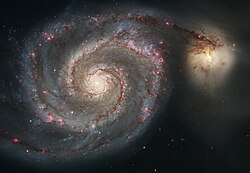
Galaxies have a variety of morphologies, with irregular, elliptical and disk-like shapes, depending on their formation and evolutionary histories, including interaction with other galaxies, which may lead to a merger.[5] Disc galaxies encompass lenticular and spiral galaxies with features, such as spiral arms and a distinct halo. At the core, most galaxies have a supermassive black hole, which may result in an active galactic nucleus. Galaxies can also have satellites in the form of dwarf galaxies and globular clusters.[6]

Within a galaxy

[edit]

The constituents of a galaxy are formed out of gaseous matter that assembles through gravitational self-attraction in a hierarchical manner. At this level, the resulting fundamental components are the stars, which are typically assembled in clusters from the various condensing nebulae.[7] The great variety of stellar forms are determined almost entirely by the mass, composition and evolutionary state of these stars. Stars may be found in multi-star systems that orbit about each other in a hierarchical organization. A planetary system and various minor objects such as asteroids, comets and debris, can form in a hierarchical process of accretion from the protoplanetary disks that surround newly formed stars.

The various distinctive types of stars are shown by the Hertzsprung–Russell diagram (H–R diagram)—a plot of absolute stellar luminosity versus surface temperature. Each star follows an evolutionary track across this diagram. If this track takes the star through a region containing an intrinsic variable type, then its physical properties can cause it to become a variable star. An example of this is the instability strip, a region of the H-R diagram that includes Delta Scuti, RR Lyrae and Cepheid variables.[8] The evolving star may eject some portion of its atmosphere to form a nebula, either steadily to form a planetary nebula or in a supernova explosion that leaves a remnant. Depending on the initial mass of the star and the presence or absence of a companion, a star may spend the last part of its life as a compact object; either a white dwarf, neutron star, or black hole.

Shape

[edit]
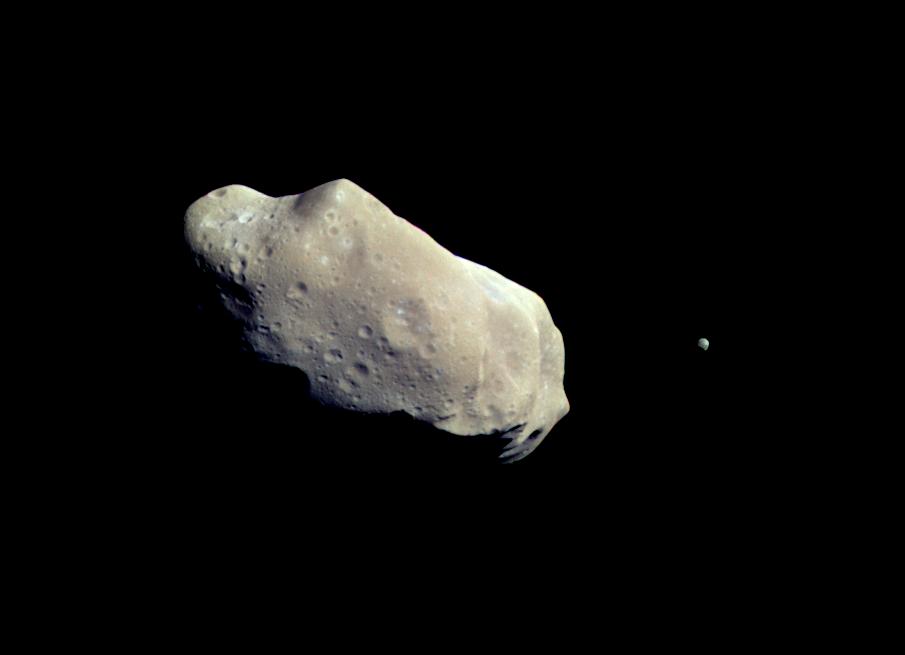
Composite image showing the round dwarf planet Ceres; the slightly smaller, mostly round Vesta; and the much smaller, much lumpier Eros

The IAU definitions of planet and dwarf planet require that a Sun-orbiting astronomical body has undergone the rounding process to reach a roughly spherical shape, an achievement known as hydrostatic equilibrium. The same spheroidal shape can be seen on smaller rocky planets like Mars to gas giants like Jupiter.

Any natural Sun-orbiting body that has not reached hydrostatic equilibrium is classified by the IAU as a small Solar System body (SSSB). These come in many non-spherical shapes which are lumpy masses accreted haphazardly by in-falling dust and rock; not enough mass falls in to generate the heat needed to complete the rounding. Some SSSBs are just collections of relatively small rocks that are weakly held next to each other by gravity but are not actually fused into a single big bedrock. Some larger SSSBs are nearly round but have not reached hydrostatic equilibrium. The small Solar System body 4 Vesta is large enough to have undergone at least partial planetary differentiation.

Stars like the Sun are also spheroidal due to gravity's effects on their plasma, which is a free-flowing fluid. Ongoing stellar fusion is a much greater source of heat for stars compared to the initial heat released during their formation.

Categories by location

[edit]

The table below lists the general categories of bodies and objects by their location or structure.

Solar bodies Extrasolar Observable universe
Simple bodies Compound objects Extended objects
Planets
Dwarf planets
Minor planets
Stars (see sections below)
By luminosity / evolution
  • O (blue)
  • B (blue-white)
  • A (white)
  • F (yellow-white)
  • G (yellow)
  • K (orange)
  • M (red)
Systems
Stellar groupings
Galaxies
Discs and media
Cosmic scale
Logarithmic representation of the observable
universe with the notable astronomical objects
known today. From down to up the celestial
bodies are arranged according to their proximity
to the Earth.
Infographic listing 210 notable astronomical
objects marked on a central logarithmic map of
the observable universe. A small view and some
distinguishing features for each astronomical
object are included.

See also

[edit]

References

[edit]
[edit]
Revisions and contributorsEdit on WikipediaRead on Wikipedia
from Grokipedia
An astronomical object, also referred to as a celestial object, is a naturally occurring physical entity, association, or structure that occupies a well-defined of beyond Earth's atmosphere and can be observed and studied using astronomical techniques. These objects form the fundamental building blocks of the , ranging from small-scale bodies within our Solar System—such as , moons, asteroids, and comets—to vast cosmic structures like , star clusters, nebulae, galaxies, and black holes. , for instance, are massive spheres of plasma primarily composed of and that generate energy through , serving as the primary sources of and in the . Galaxies, collections of , gas, dust, and bound by , are estimated at 100 billion to 2 trillion in the and exhibit diverse morphologies including spirals, ellipticals, and irregulars, with our being a barred spiral containing an estimated 100 to 400 billion . Other notable types include exoplanets orbiting distant , neutron stars as remnants of explosions, and quasars as extremely luminous active galactic nuclei powered by supermassive black holes. The observation and analysis of astronomical objects, often using telescopes across electromagnetic wavelengths from radio to gamma rays, reveal their compositions, temperatures, motions, and interactions, providing critical insights into the universe's origin, , age, and large-scale structure. For example, of these objects allows astronomers to determine elemental abundances and distances, contributing to models of cosmic expansion and the role of and in shaping the universe's fate.

Overview

Definition

An astronomical object is a naturally occurring physical entity, association, or structure that exists beyond Earth's atmosphere and whose properties can be studied through observational astronomy. This definition encompasses a broad range of scales, from compact bodies to extended structures, provided they are detectable and not of human origin. The International Astronomical Union (IAU) uses the term "astronomical object" interchangeably with "celestial object" or "celestial body" to refer to such entities in the cosmos. Key criteria for classification as an astronomical object include its extraterrestrial location, observability via methods such as (e.g., or radio waves), gravitational effects (e.g., orbital perturbations or lensing), or particle interactions (e.g., cosmic rays), and exclusion of artificial constructs like or satellites. These criteria ensure focus on natural phenomena amenable to astronomical study, distinguishing them from terrestrial or . Examples include , which emit through ; , which orbit stars and reflect or emit ; galaxies, vast collections of stars and gas; nebulae, interstellar clouds of dust and gas; black holes, regions of with extreme ; and quasars, highly luminous active galactic nuclei. Astronomical objects are delimited from smaller-scale entities like subatomic particles, which fall under rather than astronomy due to their microscopic nature and non-gravitational detectability in typical astronomical contexts. Conversely, the itself is not considered a singular astronomical object, as it represents the entirety of space-time rather than a discrete . Transient phenomena, such as supernovae—exploding that briefly outshine entire galaxies—are classified as astronomical objects during their active phases, after which remnants like or black holes may persist as distinct objects. The term "astronomical object" emerged in the context of systematic cataloging efforts in the , with the Messier catalog, first published in 1774 with 45 objects and later expanded to 110, serving as an early example by listing such deep-sky entities to aid identification, though it predates the precise modern phrasing.

Significance

Astronomical objects provide unique laboratories for probing fundamental physics under conditions unattainable on , such as the intense gravitational fields near black holes that test the limits of . Observations of stellar-mass and supermassive black holes, including from their mergers, reveal how curvature behaves at extreme densities, confirming predictions of Einstein's theory while searching for potential deviations. Similarly, serve as natural reactors for , where nuclei combine to form , releasing vast energy that counteracts and powers ; this process not only explains stellar lifecycles but also informs efforts to harness fusion for clean energy on . These objects are central to cosmology, offering insights into the 's origin, evolution, and ultimate fate. The (), a relic radiation field from the early , provides direct evidence for , with its temperature fluctuations mapping the seeds of large-scale structures like galaxies and clusters. By analyzing patterns, astronomers determine the 's composition—4.9% ordinary matter, 26.8% , and 68.3% —and trace cosmic expansion, revealing an accelerating driven by . The study of astronomical objects has spurred technological advancements, including precision telescopes, spectroscopic instruments, and computational tools essential for . Innovations like charge-coupled devices (CCDs) originally developed for astronomical imaging now underpin digital cameras and medical scanners, while from telescope technology improve laser surgery and military applications. The , for instance, has revolutionized observations by capturing high-resolution images of distant galaxies, enabling discoveries such as the rate of cosmic expansion and the existence of supermassive black holes in most galaxies, which in turn advanced detector technologies and software for handling vast datasets. Astronomical objects have profoundly influenced cultural and philosophical perspectives, from ancient myths that personified and constellations as deities to modern inquiries into humanity's place in the . In early civilizations, celestial events inspired narratives of creation and fate, fostering cultural unity and calendars that structured societies. Today, efforts like the Search for Extraterrestrial Intelligence (SETI) scan and for signs of , raising existential questions about isolation or connection in a vast and challenging anthropocentric views of existence. Economically, astronomical research fuels the space industry's growth, generating billions in output through missions targeting objects like asteroids for resource extraction. NASA's programs alone contributed $75.6 billion to the U.S. economy in 2023, supporting over 300,000 jobs via aerospace development and . , focusing on near-Earth objects rich in platinum-group metals and water, holds potential for trillions in value, spurring private ventures and international regulations to enable sustainable off-world economies.

Historical Development

Early Observations

Ancient civilizations across , , and meticulously documented celestial phenomena, often interpreting stars, planets, and comets as divine entities or portents of significant events. Babylonian astronomers compiled systematic records as early as the BCE; around the BCE, they produced compendia on clay tablets such as the , detailing the positions of stars, planets, and occasional comets, which they used for calendrical and astrological purposes. Egyptian skywatchers associated constellations like the decans with gods and the Nile's cycles, recording planetary movements in temple alignments and papyri to predict agricultural omens. In , philosophers and scribes noted comets as harbingers, with the earliest reliable sighting of dated to 240 BCE by Chinese observers, though Greek texts later referenced similar "hairy stars" as ill omens. During the classical period, Greek astronomers advanced these observations into more structured models. , around 270 BCE, proposed an early heliocentric framework, suggesting the orbits the Sun based on geometric arguments from observed planetary retrogrades, though it remained a minority view. Claudius Ptolemy, in his second-century CE work , synthesized Babylonian and Greek data into a geocentric , cataloging over 1,000 and the motions of the seven known "wanderers"—the Sun, , Mercury, , Mars, , and Saturn—using epicycle models to predict positions with notable accuracy for the era. In the medieval era, Islamic scholars built upon these foundations, producing refined star catalogs that preserved and expanded classical knowledge. Abd al-Rahman al-Sufi, working in 10th-century Persia, authored , which updated Ptolemy's catalog with over 1,000 entries, including descriptions of nebulae and improved positional data derived from naked-eye observations across the Islamic world. This work facilitated the transmission of astronomical data to during the . The advent of the marked a pivotal shift in the early 17th century. In 1610, , using a rudimentary refractor, observed four satellites orbiting Jupiter—now known as the —challenging geocentric orthodoxy by demonstrating that not all celestial bodies revolved around Earth, as detailed in his publication . These findings expanded the known inventory of astronomical objects beyond naked-eye limits. Throughout these periods, observations were constrained by reliance on unaided vision, which restricted detection to bright, prominent objects within a few thousand light-years, offering no means to gauge cosmic distances or scales and thus framing the as a small, Earth-centered dome. Other cultures contributed valuable records of transient events, enriching global astronomical heritage. Chinese astronomers chronicled the , describing a "guest star" brighter than that remained visible for nearly two years, now identified as the progenitor of the . Mayan skywatchers in tracked and in codices and monuments, linking them to calendars and rituals, while ancient Indian texts like the documented apparitions and planetary positions, though records remain elusive in surviving sources.

Modern Advances

In the 18th and 19th centuries, astronomers advanced the cataloging and analysis of astronomical objects through systematic observations and new spectroscopic techniques. conducted extensive surveys using his large reflector telescopes, compiling catalogs of thousands of nebulae and star clusters between 1786 and 1802, which laid the foundation for understanding the structure of the and external galaxies. In 1814, observed dark absorption lines in the solar spectrum, establishing the basis for stellar spectroscopy by demonstrating that light from stars could be analyzed for compositional clues. Building on this, and in 1859 interpreted these lines as resulting from elemental absorption in stellar atmospheres, enabling the first determinations of stellar chemical compositions, such as the presence of sodium and in the Sun. The 20th century brought revolutionary insights into the scale and dynamics of astronomical objects through optical and radio observations. In the 1920s, used stars as distance indicators to measure galactic redshifts, providing evidence for the expanding universe and confirming that many "nebulae" were distant galaxies. In 1963, Maarten Schmidt identified quasars as highly luminous, distant galactic nuclei powered by supermassive black holes, based on redshifted emission lines from radio sources like 3C 273. emerged in the mid-century, leading to the 1967 discovery of pulsars—rapidly rotating stars emitting beamed radio pulses—by and , which revealed compact stellar remnants previously undetected in visible light. From the late 20th to early , multi-wavelength telescopes uncovered obscured and exotic objects. observatories such as (launched 1983) and Spitzer (2003) detected dust-enshrouded star-forming regions and protoplanetary disks, revealing the universe hidden by interstellar dust. The , operational since 1999, has imaged X-ray emissions from accretion disks around black holes, confirming their presence in galactic centers and binary systems through high-resolution spectra of hot gas. The Kepler mission, launched in 2009, revolutionized detection via the transit method, confirming over 2,600 planets by mission end and contributing to a total of more than 6,000 confirmed exoplanets by 2025. Recent milestones have expanded the observable repertoire of astronomical objects. The , launched in late 2021, has captured images of galaxies forming just 300 million years after the , providing direct views of early universe structures and their seeds. In 2015, the collaboration detected from the merger of two s, 1.3 billion light-years away, marking the first direct observation of these events as dynamic astronomical objects. These advances have also recognized previously overlooked entities, such as dark matter halos—diffuse gravitational structures inferred from galaxy rotation curves since the 1970s and mapped through weak lensing—and rogue planets, free-floating worlds detected via microlensing surveys since the 2010s, estimated to outnumber bound planets in the galaxy.

Classification by Scale

Galactic and Larger Structures

Galaxies represent the fundamental building blocks of astronomical structures on immense scales, typically containing billions of stars along with gas, dust, and . They are classified into three primary morphological types based on their visual appearance and structure: spiral galaxies, which feature a central bulge surrounded by rotating arms rich in young stars and gas; elliptical galaxies, which are smoother, more rounded systems dominated by older stars with little ongoing ; and irregular galaxies, which lack a defined structure and often result from gravitational interactions. This classification scheme, originally proposed by , provides a framework for understanding evolution and diversity. A prominent example is the , our home , a barred spiral approximately 100,000 light-years in diameter and containing an estimated 100 to 400 billion stars. On even larger scales, galaxies aggregate into clusters and superclusters through gravitational binding. Galaxy clusters, such as the , consist of thousands of galaxies bound together by , with the Virgo Cluster encompassing over 2,000 galaxies and spanning about 15 million light-years. Superclusters represent even vaster assemblies; the , which includes the Milky Way, extends across roughly 500 million light-years and contains the mass equivalent to 100 million billion Suns. These groupings contribute to the large-scale structure of the universe, known as the cosmic web, a filamentary network of galaxies, clusters, and immense voids separated by walls and threads. Filaments are elongated chains of galaxies stretching tens to hundreds of millions of light-years, while walls form sheet-like concentrations, and voids are vast underdense regions comprising most of the universe's volume. A notable example is the CfA Great Wall, discovered in 1989, which measures over 500 million light-years in length and exemplifies these wall structures. At cosmological scales, the () serves as a relic astronomical "object," representing the thermal radiation left over from the , filling the uniformly at a temperature of about 2.7 . This background influences the distribution of larger structures by providing initial density fluctuations. Additionally, drives the accelerated , counteracting and shaping the evolution of these vast assemblies on scales exceeding billions of light-years. The formation of galactic and larger structures follows hierarchical merging theories within the Lambda-CDM (ΛCDM) model, the standard cosmological framework incorporating , (Λ), and ordinary matter. In this model, tiny density perturbations from the early universe, amplified by gravity, lead to the coalescence of small dark matter halos into larger ones, eventually forming galaxies, clusters, and superclusters over cosmic time. This process began shortly after the , approximately 13.82 billion years ago, with structures growing through successive mergers driven by gravitational instabilities.

Intragalactic Objects

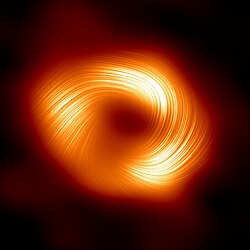
Intragalactic objects encompass the diverse components residing within the confines of individual galaxies, spanning scales from individual to diffuse interstellar material that shapes galactic architecture. These objects form the building blocks of galaxies, which are gravitationally bound systems composed of , interstellar gas and dust, stellar remnants such as white dwarfs, neutron stars, and black holes, along with . Understanding their distribution and interactions provides insights into on scales of thousands of light-years. Stars represent the most prominent intragalactic objects, with main-sequence stars comprising approximately 90% of a galaxy's ; these stars fuse into in their cores, maintaining stability for periods ranging from millions to billions of years depending on their mass. Stellar remnants, the endpoints of , include white dwarfs—dense, Earth-sized cores of low- to medium-mass stars that have exhausted their and cool over time—and stars, ultra-compact objects formed from the of massive star cores, with diameters around 20 kilometers but masses up to twice that of the Sun. The Hertzsprung-Russell diagram illustrates the evolutionary stages of these stars by plotting against surface , revealing the as a diagonal band where most stars reside, alongside branches for giants, supergiants, and white dwarfs. Nebulae and star-forming regions constitute dynamic intragalactic environments where new stars emerge from collapsing gas clouds. Emission nebulae glow due to of their gas by radiation from embedded hot, young stars, facilitating active star birth; a prime example is the (Messier 42), a vast stellar nursery approximately 1,344 light-years away, hosting thousands of forming stars and illuminated by the . In contrast, reflection nebulae scatter blue light from nearby stars off dust grains without significant emission, appearing as hazy patches; NGC 1999 in Orion exemplifies this, highlighting dust's role in light redistribution within star-forming complexes. The (ISM), filling the space between stars, consists of diffuse gas clouds and dust lanes that influence morphology and dynamics. Composed primarily of and with trace heavier elements, the ISM exists in phases from cold molecular clouds to hot ionized gas, serving as the raw material for and recycling elements through supernovae. Dust lanes, opaque concentrations of silicate and carbon grains, delineate spiral arms in galaxies like NGC 1300 by absorbing and reddening starlight, tracing density waves where gas compresses and triggers . At the , unique features dominate, including supermassive s that anchor the . Sagittarius A* (Sgr A*), the Milky Way's central with a of about 4 million solar masses, was directly imaged in 2022 by the Event Horizon Telescope, revealing its shadow against surrounding hot accretion material and confirming its role in galactic dynamics. Nearby, globular clusters—dense, spherical aggregates of tens of thousands to millions of ancient stars—populate the central regions, such as the Arches and Quintuplet clusters, which are massive young associations within 100 parsecs of the core, contrasting with the typically older halo globulars. Stellar populations within galaxies are classified by age and , reflecting chemical evolution over . Population I stars are young, metal-rich (high in elements heavier than ), and concentrated in the galactic disk and spiral arms, formed from enriched ISM in recent epochs. Conversely, Population II stars are old, metal-poor, and prevalent in the halo and globular clusters, originating from primordial gas in the early with low heavy-element abundance. This dichotomy traces the buildup of metals through successive generations of and supernova enrichment.

Physical Properties

Morphology

The morphology of astronomical objects encompasses a diverse array of shapes and structures, primarily dictated by the interplay of gravitational forces, rotational dynamics, and other physical processes during their formation and evolution. Large bodies such as and tend to assume spherical or spheroidal forms due to , where self-gravity pulls material inward uniformly from all directions, counterbalanced by . This spherical symmetry arises because only a allows every point on the surface to be equidistant from the center of mass, minimizing gravitational potential energy. In contrast, smaller objects like comets and many asteroids exhibit irregular shapes, as their weak gravity cannot overcome the structural integrity of their constituent materials, such as loosely bound aggregates or primordial . Disk-like morphologies are prevalent in systems where angular momentum conservation plays a dominant role, leading to flattened structures perpendicular to the axis of . Galactic disks form from collapsing gas clouds that retain specific angular momentum acquired through tidal interactions in the early , resulting in thin, rotating planes of stars, gas, and dust spanning tens of kiloparsecs. Similarly, accretion disks around compact objects like black holes or young stars emerge when infalling material orbits in a plane, spiraling inward while radiating energy and . Key factors influencing these shapes include , which drives collapse; , which induces oblateness by centrifugal forces bulging the ; and, to a lesser extent, magnetic fields that can align or distort structures in magnetized plasmas. For star formation, the marks a critical threshold where gravitational forces overcome thermal pressure in molecular clouds, initiating spherical collapse into protostars. As astronomical objects evolve, their morphologies undergo significant transformations tied to dynamical processes. Protostars begin as nearly spherical collapsing cores but develop shapes upon reaching the if rapid persists, as seen in like with equatorial bulges. On galactic scales, mergers between disk galaxies disrupt spiral arms and redistribute , often yielding elliptical morphologies characterized by smooth, triaxial envelopes of older devoid of significant . These evolutionary shifts highlight how initial conditions and interactions sculpt long-term forms, from compact spheres to extended, irregular distributions. Observationally, morphological classification provides insights into formation histories across object types. For galaxies, the arranges spirals from Sa (tightly wound arms with prominent bulges) to Sc (loosely wound arms with small bulges), extending to irregulars (Irr) that lack coherent structure, reflecting varying degrees of dynamical relaxation and gas content. Many asteroids exhibit structures—loose aggregates of fragments held together by gravity—regardless of spectral type, as exemplified by the Itokawa. Special cases illustrate unique morphological signatures of specific environments. Planetary ring systems, such as Saturn's, consist of thin, planar disks of icy particles orbiting in Keplerian motion, segmented into distinct rings (e.g., A, B, C) by gravitational resonances with nearby moons. Relativistic jets emanating from accreting black holes, like those in M87, exhibit collimated, linear extensions powered by magnetic processes in the , serving as probes of the central engine's geometry. These features underscore how localized dynamics can produce highly structured forms amid broader gravitational influences.

Composition

Astronomical objects exhibit diverse compositions shaped by their formation environments and evolutionary processes. , the most fundamental building blocks, are predominantly composed of and , with typical mass fractions of approximately 74% and 24% in their photospheres, as determined from spectroscopic analyses of the Sun, which serves as a representative main-sequence star. The remaining ~2% consists of heavier elements, collectively termed "metals" in astronomical contexts, which are synthesized through processes such as fusion in stellar cores and explosive events like supernovae. Planetary bodies display a range of compositions depending on their formation distances from their host stars and accretion mechanisms. Rocky, or terrestrial, planets are primarily made of silicates—compounds of silicon and oxygen—and metals like iron and nickel, forming differentiated structures with metallic cores, silicate mantles, and crusts, as evidenced by seismic data from and compositional models for Mercury, , and Mars. In contrast, gas giants such as and Saturn feature thick envelopes dominated by molecular and , comprising over 90% of their mass, overlying denser interiors potentially rich in rock and . Icy bodies, including dwarf planets like and many objects, consist mainly of mixed with , , and other volatiles, forming layered structures where these ices dominate the outer regions. Nebulae and interstellar dust clouds represent diffuse phases of astronomical matter, primarily consisting of ionized or neutral gas with embedded microscopic grains. Emission nebulae, such as the , are filled with ionized hydrogen (H II regions) excited by nearby massive , alongside trace amounts of other ionized elements like oxygen and . Interstellar dust grains, typically silicates (e.g., and ) and carbonaceous materials, account for about 1% of the mass but play crucial roles in absorption and of light; polycyclic aromatic hydrocarbons (PAHs), complex carbon-rich molecules, contribute to unidentified emission features observed in these environments. Exotic astronomical objects push the boundaries of under extreme conditions. Neutron stars comprise ultra-dense , where s dominate due to degeneracy supporting the core against , with densities reaching ~10^17 kg/m³ and compositions transitioning from neutron-rich nuclei in the crust to a superfluid neutron gas in the interior. Black holes, by contrast, possess no discernible "composition" in the traditional sense; according to the , their external properties are fully described solely by mass, charge, and , with the event horizon marking the boundary beyond which and are inaccessible. Isotopic ratios provide key evidence for the origins of these compositions. Primordial abundances from yield a helium mass fraction of ~0.25, with trace (~2.5×10^{-5}) and (~10^{-10}), setting the baseline for cosmic matter before stellar processing. In the solar system, analysis of chondritic meteorites reveals isotopic signatures matching the solar for elements, confirming their role as unaltered samples of the primordial disk and enabling precise determinations of bulk solar system composition.

Observational Categories

Solar System Bodies

The Solar System contains eight , classified into two main groups: the four inner terrestrial planets—Mercury, , , and Mars—which have rocky surfaces and relatively thin atmospheres, and the four outer giant planets— and Saturn as gas giants, and and as ice giants—characterized by thick gaseous or icy envelopes surrounding dense cores. This classification stems from the International Astronomical Union's (IAU) 2006 definition of a as a celestial body that orbits the Sun, has sufficient mass to assume a nearly round shape due to its own gravity (), and has cleared the neighborhood around its orbit of other debris. Dwarf planets, which meet the first two criteria but not the third, include and Eris; orbits in the distant , while Eris, slightly larger than , resides in a similar trans-Neptunian region. Numerous moons orbit these planets, with Jupiter's four largest—the Io, Europa, Ganymede, and Callisto—being particularly notable for their diverse , including Io's intense volcanic activity and Europa's subsurface ocean potential. Saturn boasts the most moons in the Solar System, with 274 confirmed as of March 2025, many of which are small and irregular. Its iconic rings, spanning about 175,000 miles (282,000 km) across but only about 30 feet (10 m) thick, consist almost entirely of billions of water ice particles ranging from dust-sized to several meters across, with trace rocky material. Small Solar System bodies include asteroids, primarily located in the main between Mars and , where rocky remnants from the Solar System's formation—such as the Vesta—total millions of objects but occupy less than 1% of the belt's mass. Comets originate from the , a disk-shaped region beyond containing icy bodies like short-period comets with orbits under 200 years, and the more distant , a hypothesized to harbor trillions of long-period comets with highly elliptical paths. Near-Earth objects (NEOs), a subset of asteroids and comets crossing Earth's orbit, pose potential impact risks; monitors over 39,000 NEOs through its Center for Near-Earth Object Studies (CNEOS) as of September 2025, assessing collision probabilities using tools like the Sentry system to evaluate threats from objects larger than 140 meters. Due to their proximity, Solar System bodies enable detailed direct imaging and in-situ exploration via spacecraft, far surpassing observations of distant objects. Pioneering missions like NASA's Voyager 1 and 2, launched in 1977, provided the first close-up views of the outer planets and their moons during flybys, revealing Jupiter's turbulent atmosphere and Saturn's complex ring structures. More recent efforts include the Perseverance rover, which landed on Mars in February 2021 to investigate Jezero Crater for signs of ancient microbial life, collecting rock samples for potential return to Earth. Updates from ongoing missions continue to refine our understanding; for instance, NASA's spacecraft conducted the first close flyby of on July 14, 2015, revealing a geologically active world with ice plains and mountains, challenging prior assumptions about dwarf planets. By 2025, discoveries have expanded Saturn's moon count to 274 through ground-based observations, highlighting the dynamic nature of these systems.

Stellar and Interstellar Phenomena

Stellar observations primarily rely on photometry and to determine key properties such as and . Photometry involves measuring a star's across multiple bands, allowing astronomers to infer through color indices and bolometric by integrating fluxes over the . , by analyzing absorption and emission lines in a star's , provides precise measurements of surface via line broadening and states, as well as luminosity class through line strengths and profiles. Among stellar phenomena, variable stars like Cepheids play a crucial role in distance measurements within the . Cepheids exhibit periodic pulsations where the pulsation period correlates directly with intrinsic luminosity, a relation first established by Henrietta Leavitt in 1912 through observations of stars in the . This enables calibration of distances up to several kiloparsecs by comparing observed brightness to the predicted luminosity for a given period. Interstellar matter is detected through radio and observations that penetrate . Neutral (HI) regions emit at the 21 cm wavelength due to hyperfine transitions, allowing mapping of gas distribution and kinematics via the Doppler shift; this line was first detected in 1951, revealing the structure of the Milky Way's . observations, particularly from telescopes like JWST, reveal -obscured star formation regions by detecting thermal emission from heated grains, as seen in the Sagittarius B2 cloud where polycyclic aromatic hydrocarbons and silicates trace young stars hidden from optical view. Transient phenomena include novae and remnants. Novae occur when accreted hydrogen on a white dwarf's surface undergoes thermonuclear runaway, causing a sudden increase in brightness by factors of or more; approximately 50 such events are estimated to occur annually in the , though dust obscuration limits optical detections to about 10. remnants, such as the , are expanding shells of gas and dust from core-collapse events, featuring filamentary structures enriched with heavy elements and powered by a central ; the Crab, remnant of the 1054 AD , spans about 11 light-years and emits across radio to gamma rays. Planetary nebulae form as post-asymptotic giant branch (post-AGB) stars eject their outer envelopes, creating ionized shells that glow from excitation; these represent a brief evolutionary phase lasting about years, with morphologies ranging from spherical to bipolar due to binary interactions. Multi-messenger astronomy has revolutionized studies of these phenomena. Neutrinos from the 1987A in the were detected by the Kamiokande II , confirming core-collapse models with 11 events over 13 seconds and providing direct evidence of the proto-neutron star's cooling. In the , gamma-ray bursts from giant flares, such as the 2004 event from SGR 1806-20, release energies exceeding 10^46 ergs in seconds, producing short, intense pulses observable across electromagnetic bands and linking to dynamics. Microlensing surveys fill gaps in detecting faint objects like rogue planets and . The Optical Gravitational Lensing Experiment (OGLE) has identified free-floating planets through short-duration events with Einstein radii under 10 microarcseconds, suggesting billions of such objects per ; for instance, OGLE-2018-BLG-0677Lb indicates a Jupiter-mass rogue at ~1 kpc. , detected as isolated or binary lenses, include systems like OGLE-2016-BLG-1469L, a pair with masses 30-40 Jupiter masses separated by ~4 AU, highlighting microlensing's sensitivity to substellar objects down to 10 Jupiter masses.

Extragalactic Objects

Galaxies and Clusters

Galaxies beyond the are observed through a variety of wavelengths, revealing their structural diversity. Spiral galaxies exhibit prominent arms that can be mapped using neutral (HI) 21 cm line emission, which traces the distribution of gas in the disk and highlights density enhancements along the arms where is active. These observations, often conducted with radio telescopes like the , show that spiral arms are sites of ongoing compression and cooling of interstellar gas. In contrast, elliptical galaxies appear smooth and featureless in optical images but display redder colors in broadband photometry, indicative of predominantly old stellar populations with low rates of current , as younger, bluer stars are scarce. Galaxy clusters, aggregates of hundreds to thousands of galaxies spanning megaparsecs, are studied through their dynamics to infer total mass. The relates the observed velocities of member galaxies to the , allowing mass estimates that often exceed the luminous matter by factors of 10 or more, pointing to the presence of to maintain cluster stability. first applied this approach to Cluster in 1933, calculating a mass discrepancy that suggested unseen mass dominating the system. Systematic catalogs facilitate these studies; the Abell catalog, published in 1958, identified 2,712 rich clusters based on the Sky Survey, with criteria requiring at least 50 member galaxies within a magnitude range, and was extended to an all-sky version in 1989 including southern clusters. A subset of galaxies hosts active galactic nuclei (AGN), powered by accretion onto supermassive s at their centers, producing intense emission across the spectrum. Seyfert galaxies, typically spirals, are characterized by bright, star-like nuclei with strong, broad emission lines from permitted transitions, indicating high-velocity gas motions near the . Radio galaxies, often ellipticals, extend this activity to kiloparsec scales with relativistic jets of plasma that emit , observable in radio wavelengths; exemplifies this, with its X-ray and radio jets spanning thousands of light-years, driven by the AGN and interacting with the surrounding intergalactic medium. Distances to extragalactic objects are crucial for understanding their evolution and the universe's expansion. surveys measure the Doppler-like shift in spectral lines of galaxies, where the vv relates to distance dd via , vH0dv \approx H_0 d, with H0H_0 the Hubble constant, enabling mapping of large-scale structure. For spiral galaxies, the Tully-Fisher relation provides an independent distance indicator by correlating the galaxy's rotational velocity—measured from HI line widths—with its luminosity, assuming more massive spirals rotate faster and are intrinsically brighter. Recent (JWST) observations from 2022 to 2025 have revealed galaxies at redshifts z>10z > 10, corresponding to less than 500 million years after the , that are unexpectedly luminous and massive, with stellar masses exceeding 101010^{10} solar masses. These findings challenge standard hierarchical formation models in Lambda-CDM cosmology, which predict slower buildup of such structures through mergers and accretion, prompting revisions to efficiencies or influences at early epochs.

Cosmological Structures

Cosmological structures encompass the vast, hierarchical organization of matter on scales exceeding individual galaxies, forming the framework of the known as the cosmic web. This network arises from primordial density fluctuations in the early universe, amplified over billions of years through gravitational instability, where overdense regions collapse to form bound structures while underdense areas expand into voids. Observations from the () reveal these initial fluctuations as tiny temperature variations, on the order of 1 part in 100,000, which seeded the growth of all subsequent structures. The cosmic web consists primarily of filaments, walls, clusters, superclusters, and voids, each representing distinct density regimes. Filaments are elongated, thread-like chains of galaxies and extending up to hundreds of megaparsecs, serving as conduits for matter accretion onto denser nodes. Galaxy clusters, concentrated at filament intersections, contain hundreds to thousands of galaxies bound by , with masses around 10^14 to 10^15 solar masses, exemplifying the highest density peaks. Superclusters group multiple clusters over scales of 50-150 megaparsecs, such as the encompassing the . In contrast, voids occupy underdense regions spanning 10-100 megaparsecs, comprising up to 80% of the 's volume but less than 10% of its mass, highlighting the filamentary dominance of structure. Formation of these structures follows the hierarchical merging paradigm within the Lambda cold dark matter (ΛCDM) model, where dark matter halos collapse first, followed by baryonic matter cooling and forming galaxies within them. Simulations demonstrate that by redshift z ≈ 10 (about 500 million years after the Big Bang), proto-filaments emerge, evolving into the observed web by the present epoch. The CMB data from missions like WMAP confirm the power spectrum of fluctuations matching ΛCDM predictions, with acoustic peaks indicating the universe's flat geometry and matter content. Observational mapping of cosmological structures relies on large galaxy redshift surveys, which measure distances via the Doppler shift to trace three-dimensional distributions. The (SDSS) has cataloged over a million galaxies, revealing filamentary patterns and quantifying void statistics, while the 2dF Galaxy Redshift Survey established the characteristic scale of structures at around 100 megaparsecs. Recent discoveries, such as the (∼1 gigaparsec) and Big Ring, challenge homogeneity assumptions on ultra-large scales and have sparked debate about their compatibility with the ΛCDM model, with some interpretations viewing them as rare fluctuations and others questioning their existence as coherent structures due to potential statistical or projection effects. These mappings also probe dark energy's influence through , imprints of sound waves in the early expanded to 150 megaparsec scales. The study of cosmological structures tests fundamental cosmology, constraining parameters like the matter density (Ω_m ≈ 0.3) and (Ω_Λ ≈ 0.7) from growth rate measurements. Seminal theoretical work by in the 1980s formalized the statistical description via correlation functions, while numerical simulations like the Millennium Run have validated the web's against observations. Ongoing efforts with telescopes such as and the aim to refine these maps, potentially revealing deviations from or insights into modified gravity theories.

References

Add your contribution
Related Hubs
User Avatar
No comments yet.