


Community hub
Recent from talks
Contribute something
Nothing was collected or created yet.
European anchovy
View on Wikipedia
| European anchovy | |
|---|---|

| |
Scientific classification 
| |
| Kingdom: | Animalia |
| Phylum: | Chordata |
| Class: | Actinopterygii |
| Order: | Clupeiformes |
| Family: | Engraulidae |
| Genus: | Engraulis |
| Species: | E. encrasicolus
|
| Binomial name | |
| Engraulis encrasicolus | |

The European anchovy (Engraulis encrasicolus) is a forage fish somewhat related to the herring. It is a type of anchovy; anchovies are placed in the family Engraulidae. It lives off the coasts of Europe and Africa, including in the Mediterranean Sea, the Black Sea, and the Sea of Azov. It is fished by humans throughout much of its range.[1]
Etymology
[edit]This species can be fished from the shore with simpler gear, such as beach seines,[1] and it has been widely-eaten for millennia.[2] The species has been fished since ancient times.[1] Both the scientific species name, "Engraulis" (ἐγγραυλίς), and the scientific specific name "encrasicolus" (ἐγκρασίχολος) are names from Ancient Greek, meaning "anchovy" and "small fish" respectively and have been given by Linnaeus.[3] The actual name of the fish, anchovy, is a loan word from French.
Description
[edit]
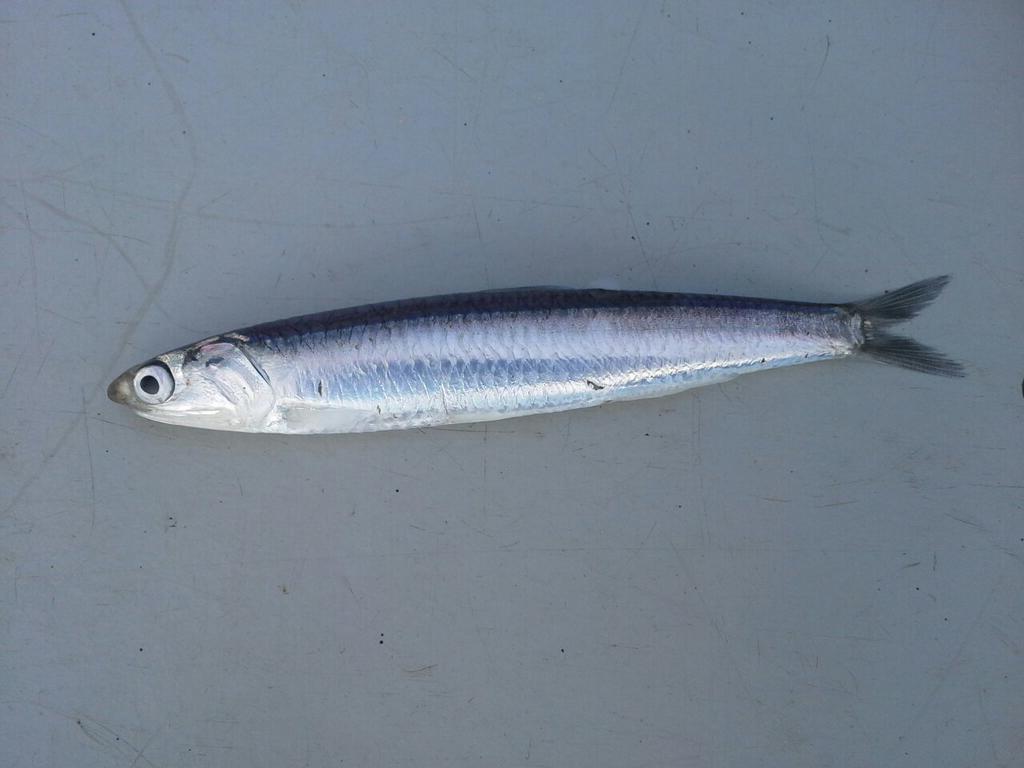
It is easily distinguished by its deeply cleft mouth, the angle of the gape being behind the eyes. The pointed snout extends beyond the lower jaw. The fish resembles a sprat in having a forked tail and a single dorsal fin, but the body is round and slender.[citation needed] The record weight for a single fish is 49 g (1.7 oz).[4] The maximum recorded length is 21 cm (8+1⁄8 in).[citation needed] 13.5 cm (5.3 in) is a more typical length.[5] It has a silver underbelly and blue, green or grey back and sides.[4] A silver stripe along the side fades away with age.[5]
Habitat and ecology
[edit]The European anchovy is a coastal pelagic species; in summer, it usually lives in water less than 50 m deep (although, in the Mediterranean, it goes to depths of 200 m in winter), and it may go as deep as 400 m. As it is euryhaline, it can live in water with a salinity of 5–41[1] PSU (sea water salinity is usually 35 PSU[6]). It can therefore live in brackish water in lagoons, estuaries, and lakes.[1]
European anchovies eat plankton, mostly copepods and the eggs and larvae of fish, molluscs, and cirripedes.[7] They are migratory, often travelling northwards in summer and south in winter. They form large schools,[1] and may form bait balls when threatened (see image, below).
European anchovies are eaten by many species of fish, birds and marine mammals.[4]
Life cycle
[edit]The species spawn multiply[5] in warm periods from about April to November, depending on when the temperatures are warm enough. At least some local subpopulations have separate spawning grounds, and are thus genetically distinct,[1] although spawning grounds shift.[5] Some spawn in fresh water. The shape of the eggs is ellipsoidal to oval.[5] The eggs float as plankton in the upper 50 m of the water column for about 24–65 hours before hatching. The hatched larvae are transparent and grow rapidly; a year later, in the unlikely event that they survive, they will be 9–10 cm (3.5–3.9 in) long.[1] The females are larger than the males. When they reach a length of 12–13 cm (4.7–5.1 in), they spawn for the first time. A survey in southwestern Africa found no specimens older than three years.[1]
Distribution
[edit]Europe
[edit]
European anchovies are abundant in the Mediterranean and formerly also the Black and Azov seas (see below). They are regularly caught on the coasts of Bulgaria, Croatia, France, Georgia, Greece, Italy, Albania, Romania, Russia, Spain, Turkey and Ukraine. The range of the species also extends along the Atlantic coast of Europe to the south of Norway. In winter it is common off Devon and Cornwall (United Kingdom), but has not hitherto been caught in such numbers as to be of commercial importance.
Zuiderzee and English Channel
[edit]Formerly they were caught in large numbers off the coast of the Netherlands in summer when they entered the Wadden Sea and Zuiderzee. After the closing of the Zuiderzee they were still found in the Wadden Sea until the 1960s. They were also caught in the estuary of the Scheldt.
There is reason to believe that anchovies at the western end of the English Channel in November and December migrate from the Zuiderzee and the Scheldt in the autumn, returning there the following spring. They were believed to be an isolated population, for none come from the south in summer to occupy the English Channel, though the species does exist off the coast of Portugal. The explanation appears to be that in summer, the shallow and landlocked waters of the Zuiderzee and the sea off the Dutch coast get warmer than the coastal waters off Britain, so anchovies can spawn and maintain their numbers in warmer Dutch waters better.
Dutch naturalists on the shores of the Zuiderzee first described their reproduction and development. Spawning takes place in June and July. The eggs are buoyant and transparent like most fish eggs, but are unusual in being sausage-shaped, instead of globular. They resemble sprat and pilchard eggs in having a segmented yolk and no oil globule. Larvæ hatch two or three days after fertilization, and are minute and transparent. In August young specimens, c. 38 to 89 mm (1+1⁄2 to 3+1⁄2 in) in length, are found in the Zuiderzee, and these must derive from the previous summer's spawning.
There is no evidence to decide the question whether all the young anchovies as well as the adults leave the Zuiderzee in autumn, but, considering the winter temperature there, it is probable that they do. Eggs have also been found in the Bay of Naples, near Marseille, off the coast of the Netherlands, and once at least off the coast of Lancashire. The occurrence of anchovies in the English Channel has been carefully studied at the Marine Biological Association Laboratory in Plymouth. They were most abundant in 1889 and 1890. In the former year considerable numbers were taken off Dover in drift nets of small mesh used for the capture of sprats. In the following December large numbers were taken together with sprats at Torquay. In November 1890 a thousand of the fish were obtained in two days from the pilchard boats fishing near Plymouth; these were caught near the Eddystone.
Mediterranean, Black Sea and Azov Sea
[edit]
In areas around the Black Sea, the European anchovy is called gávros (Γαύρος) in Greek, hamsie in Romanian, ქაფშია (Kapshia) or ქაფშა (Kapsha) in Georgian, hamsi in Turkish, hapsi in Pontic dialect of Turkish, hapsia (plural) in Pontic Greek, Hapchia in Laz,[8] хамсия (hamsiya) in Bulgarian, and хамса (hamsa) in Russian and Ukrainian. Its Ancient Greek name was ἀφύη, aphýē, later Latinized into apiuva, hence the standard Italian acciuga and the Croatian inćun through the Genoese dialectal anciúa. Modern Greek also uses αντζούγια antsúya, a variant of the Genoese form, for processed – as opposed to the fresh gávros – anchovy products.
Black Sea adult anchovies can reach around 12–15 cm (4+1⁄2–6 in). In the summer, hamsi migrates north to warm shallow waters of the Azov Sea to feed and breed, returning to the deep for the winter by migrating through the Strait of Kerch. During migration the fish moves in huge schools, and are actively hunted by gulls and dolphins. Hamsi makes up a considerable part of fishing and fish processing industries, either canned or frozen. In Turkey, it is the staple food of the local Black Sea cuisine,[9] widely used in pan dishes, baked goods, even as dessert. In Bulgaria hamsiya is traditionally fried and served in cheap fast-food restaurants along the shore, typically with beer. Since the 1990s the dominant position of fried hamsiya is fading but still popular. In Spain, they are called "anchoa" or "boquerón", when they are eaten pickled. They are so typical in Malaga that the inhabitant of this Andalusian city is also called "boquerón".
Anchovy populations in the Mediterranean were severely depleted in the 1980s by the invasive comb jelly Mnemiopsis leidyi which eats the eggs and young, they have since stabilized albeit at a much lower level.
Off Africa (East Atlantic and West Indian Oceans)
[edit]
European anchovies are commercially important down the west coast of Africa, although they are most abundant at the north end of this range. The species is most commercially important in Morocco. In Mauritania, artisanal fishers do not target the species, and commercial fisheries have size limitations.
In West Africa, these anchovies are widely fished and eaten. In Nigeria, Ghana, and Benin, it is an abundant and important commercial species. After the end of the upwelling season ends the Sardinella fishery, fishers change net size to catch anchovies. In Guinea, the Gambia, and Senegal, it is not an important commercial species.
South of the Angola/Namibia border, Engraulis encrasicolus (the European anchovy) mixes with Engraulis capensis, the South African anchovy. The Namibian fishery is significantly involved in fishmeal and fish oil production.
European anchovies are also found in upwelling areas off the east coast of Africa.[1]
Fisheries
[edit]
The IUCN considers the fisheries to be abundant and fully exploited, and in need of careful monitoring.[1] The highly international species has no concerted management plan.[5]
Local populations fluctuate, and have shown large fluctuations in the past.[1] These fluctuations are not well understood.[5] Some past declines have been due to environmental problems, local overfishing, and invasive species from ballast water. Mnemiopsis leidyi is an invasive species which eats European anchovy eggs.[1] Some past fluctuations are likely due to climate change.[4]
European anchovies are caught with purse seines, lamparas, trawls and beach seines.[1] Bycatch is thought, on the basis of insufficient data, to be minor.[5]
Human uses
[edit]
European anchovies are widely eaten.[1] Anchovies are considered an oily fish; they have a salty, strong taste. Some people eat them raw.[4] European anchovies are sold fresh, dried, smoked, salted, in oil, frozen, canned, and processed into fishmeal and fish oil.[4][1] Their ease of preservation has made them a traditional item for long-distance trade.[4] Anchovies are also used as fishing bait.[1]
See also
[edit]Notes
[edit]- ^ a b c d e f g h i j k l m n o p q r Tous, P.; Sidibé, A.; Mbye, E.; de Morais, L.; Camara, Y.H.; Adeofe, T.A.; Monroe, T.; Camara, K.; Cissoko, K.; Djiman, R.; Sagna, A.; Sylla, M. & Carpenter, K.E. (2015). "Engraulis encrasicolus". IUCN Red List of Threatened Species. 2015 e.T198568A15546291. doi:10.2305/IUCN.UK.2015-4.RLTS.T198568A15546291.en. Retrieved 12 November 2021.
- ^ Thring, Oliver (18 January 2011). "Consider the anchovy". The Guardian. Retrieved 30 September 2018.
- ^ "Family ENGRAULIDAE Gill 1861 (Anchovies)". The ETYFish Project. 31 March 2023. Retrieved 3 January 2024.
- ^ a b c d e f g "European Anchovy". britishseafishing.co.uk. 12 March 2014. Retrieved 26 September 2018.
- ^ a b c d e f g h "FishSource – European anchovy – Black Sea". www.fishsource.org. Retrieved 26 September 2018.
- ^ Culkin, F.; Smith, N. D. (1980). "Determination of the Concentration of Potassium Chloride Solution Having the Same Electrical Conductivity, at 15 C and Infinite Frequency, as Standard Seawater of Salinity 35.0000 ‰ (Chlorinity 19.37394 ‰)". IEEE Journal of Oceanic Engineering. OE-5 (1): 22–23. Bibcode:1980IJOE....5...22C. doi:10.1109/JOE.1980.1145443.
- ^ Mustać, Bosiljka; Hure, Marijana (15 July 2020). "The diet of the anchovy Engraulis encrasicolus (Linnaeus, 1758) during the spawning season in the eastern Adriatic Sea". Acta Adriatica. 61 (1): 57–66. Bibcode:2020AcAdr..61...57M. doi:10.32582/aa.61.1.4.
- ^ Özhan Öztürk. Karadeniz Ansiklopedik Sözlük. 2005. pp. 486–488
- ^ Black Sea Region cuisine of Turkey Archived May 11, 2012, at the Wayback Machine
- ^ "Fisheries and Aquaculture - Global Production". Food and Agriculture Organization of the United Nations (FAO). Retrieved 2024-05-06.
References
[edit]
- Froese, Rainer; Pauly, Daniel (eds.). "Engraulis encrasicolus". FishBase. October 2005 version.
- Kube, Sandra; Postel, Lutz; Honnef, Christopher & Augustin, Christina B. (2007): Mnemiopsis leidyi in the Baltic Sea – distribution and overwintering between autumn 2006 and spring 2007. Aquatic Invasions 2(2): 137–145.
| About fish |  | ||||
|---|---|---|---|---|---|
| Anatomy and physiology | |||||
| Sensory systems | |||||
| Reproduction | |||||
| Locomotion | |||||
| Other behaviour | |||||
| By habitat | |||||
| Other types | |||||
| Commerce |
| ||||
| Major groups | |||||
| Lists | |||||


European anchovy
View on GrokipediaTaxonomy and nomenclature
Etymology and common names
The binomial name Engraulis encrasicolus was established by Carl Linnaeus in his Systema Naturae (10th edition) published on 1 January 1758, originally under the junior synonym Clupea encrasicolus.[7] The genus name Engraulis derives from the Ancient Greek ἔγγραυλις (éngraulis), denoting the anchovy fish, possibly linked to γρυλίζω (grulízō), meaning "to grumble," in reference to the fish's presumed sound-producing behavior or appearance.[8] The specific epithet encrasicolus stems from the Ancient Greek ἐγκρᾱσῐ́χολος (enkrāsĭ́kholos), a compound form descriptive of the species' habitat or form, though exact interpretive details vary across classical sources.[9] The English common name "anchovy" entered usage via the Portuguese anchova (from Genoese or Corsican dialects), ultimately tracing to Vulgar Latin apiuva or a related term for small fish, with possible Basque (anchu) or Greek (aphyē, small fry) influences; this reflects the species' historical Mediterranean exploitation for salted preserves since antiquity.[10] "European anchovy" specifies E. encrasicolus to differentiate it from New World congeners like the northern anchovy (Engraulis mordax). Regional vernaculars include gavros (Γαύρος) in Greece, anchoa (salt-cured form), bocarte (fresh), and boquerón (marinated) in Spain, and acciuga in Italy, often tied to preparation methods rather than strict taxonomy.[11][12]Scientific classification and synonyms
The European anchovy, Engraulis encrasicolus, is classified within the domain Eukarya as follows: Kingdom Animalia, phylum Chordata, class Actinopterygii, order Clupeiformes, family Engraulidae, genus Engraulis, and species E. encrasicolus.[1] This placement reflects its position among ray-finned fishes characterized by clupeoid traits such as a streamlined body adapted for schooling in pelagic environments.[1] The species was originally described by Carl Linnaeus in 1758 under the basionym Clupea encrasicolus in Systema Naturae, later transferred to the genus Engraulis by subsequent taxonomists recognizing distinct anchovy morphology, including a protruding lower jaw.[7] No subspecies are currently recognized, though genetic studies have noted population structuring across its range without formal taxonomic subdivision.[1] Accepted synonyms include Engraulis argyrophanus Valenciennes, 1848; Engraulis meletta Cuvier, 1829; Anchoviella guineensis Rossignol & Blache, 1961; Engraulis russoi Dulzetto, 1947; and Engraulis vulgaris Nilsson, 1832, primarily arising from historical misidentifications or regional variants now synonymized based on morphological and molecular evidence.[7] Orthographic variants such as Engraulis encrasicolis and Engraulis encrasicholus also appear in early literature but are considered invalid.[13] Taxonomic revisions, drawing from sources like the World Register of Marine Species and FishBase, emphasize consistency in delimiting E. encrasicolus from congeners like Engraulis ringens through meristic counts (e.g., 44–48 pectoral fin rays) and gill raker numbers.[7][1]Physical characteristics
Morphology and anatomy
The European anchovy (Engraulis encrasicolus) has a slender, elongated body that is oval in cross-section, with body depth comprising approximately one-sixth of the standard length.[2] The head features a pointed snout that projects beyond the lower jaw, and a large mouth with the maxilla short and blunt-tipped, extending nearly to the anterior margin of the preoperculum without surpassing the second supramaxilla.[1] The lower jaw tip aligns below the eye, facilitating a deeply cleft gape suited for filter-feeding on plankton.[14] The body is covered in small, smooth cycloid scales arranged in 41-50 transverse rows.[15] [16] Coloration includes a greenish back, silvery sides, and a faint silver lateral stripe that diminishes with age, providing camouflage in pelagic environments.[1] The species possesses 39-48 vertebrae and 58-80 gill rakers, the latter densely spaced to strain small prey particles efficiently.[16] Fin structure supports schooling and rapid evasion: a single dorsal fin with 12-15 rays positioned midway along the body, paired pelvic fins with 7 rays, an anal fin with 16-20 rays, and a forked caudal fin for propulsion.[16] Internally, skeletal muscle comprises distinct red (slow-twitch, oxidative) fibers in a superficial lateral band for endurance swimming and white (fast-twitch, glycolytic) fibers dominant in the bulk for burst activity.[17] The retina exhibits specialized outer layer architecture, including square or linear multiple cones adapted for detecting motion in varied light conditions.[18]Size, growth patterns, and regional variations
The European anchovy (Engraulis encrasicolus) typically attains a maximum standard length of 20 cm, with a common length of 13.5 cm; weights range up to approximately 21 g, though exceptional individuals reach 49 g.[1][19][20] Sexual maturity is reached at a mean length (Lm) of 10.1 cm, varying between 9 and 14 cm depending on local conditions.[1] Growth is rapid during the first two years, with linear increments slowing thereafter; the species exhibits a lifespan of up to 4 years and a generation time of about 2 years.[21][22][1] Age-0 and age-1 individuals dominate populations, reflecting high early growth rates driven by planktonic foraging, while older cohorts show reduced increments due to metabolic shifts and predation pressures.[21] Regional variations in size and growth reflect environmental gradients, such as temperature and productivity; for instance, Mediterranean populations often exhibit smaller asymptotic lengths compared to Atlantic stocks, with size at maturity (L50) differing significantly across sub-basins (e.g., lower in the western Mediterranean than in the Adriatic or Black Sea).[23][24] In the Bay of Biscay (northeast Atlantic), average body length and weight have declined across age classes since the early 2000s, attributed to warming waters and density-dependent effects rather than fishing alone.[25] Black Sea anchovies show mean lengths of 8-17 cm with cohort-specific growth variations influenced by salinity and eutrophication, while paradoxical faster growth occurs in oligotrophic eastern Mediterranean areas due to reduced competition.[26][21] Temperature strongly drives these clinal patterns, with warmer southern ranges yielding smaller adults via accelerated metabolism and shorter growing seasons.[27]Habitat and ecology
Environmental preferences and tolerances
The European anchovy (Engraulis encrasicolus) inhabits coastal and neritic waters of the eastern Atlantic, Mediterranean, Black, and Azov Seas, preferring temperatures in the range of 15–25°C for optimal growth and distribution, though it demonstrates broad eurythermal tolerance spanning 5–28°C across life stages.[16][28] This wide thermal window facilitates seasonal migrations, with northward and inshore movements during warmer periods, but narrower optima (e.g., 18–19°C) apply during spawning to support egg viability and larval development.[1][29] Deviations from preferred ranges, such as extremes below 10°C or above 25°C, correlate with reduced abundance and recruitment success, as evidenced by larval sensitivity to temperature fluctuations in regions like the Bay of Biscay.[30] Salinity tolerance is similarly expansive, with the species accommodating 5–41 ppt, rendering it euryhaline and capable of entering low-salinity environments like estuaries, lagoons, and even lakes, especially for spawning.[1][16] During reproductive periods, observed salinities range from 9.1–39.6 ppt in spawning grounds such as the eastern Adriatic, where stable, moderate salinity supports higher egg densities.[28] Lower salinities (below 10 ppt) may constrain distribution in juveniles and adults due to osmoregulatory costs, but the species' adaptability to gradients enables exploitation of variable coastal habitats influenced by freshwater inflows.[31] Depth preferences center on the upper water column (0–100 m), where schools form in pelagic layers over continental shelves, though tolerances extend to 180–200 m in cooler or stratified conditions.[32][1] Spawning often occurs over bottoms of 50–100 m, with vertical distribution influenced by thermoclines and prey availability, leading to diel migrations toward the surface at night.[29] The species avoids extreme depths beyond 200 m, as deeper waters exceed physiological limits for schooling and foraging efficiency in this small pelagic clupeoid. Hypoxia sensitivity is pronounced, particularly in early life stages, with larvae exhibiting low tolerance to dissolved oxygen below critical thresholds (e.g., <2–3 mg/L), which can elevate mortality in stratified or eutrophic coastal zones.[33][34] Adults show greater resilience but aggregate in oxygenated surface layers during low-oxygen events, as seen in Mediterranean upwelling areas where hypoxia drives avoidance of bottom waters.[35] Such tolerances underscore vulnerability to deoxygenation trends, where combined warming and stratification reduce habitable volume, though empirical data from peer-reviewed studies emphasize stage-specific responses rather than uniform species-level thresholds.[36]Diet, foraging behavior, and trophic role
The European anchovy (Engraulis encrasicolus) primarily consumes zooplankton, with copepods dominating the diet across multiple regions, often comprising up to 98% of ingested food by volume.[37] In the Moroccan Atlantic, the species exhibits zooplanktivorous habits focused on copepods, alongside lesser contributions from fish larvae, diatoms, and ostracods.[38] Stomach content analyses in the Aegean Sea's İzmir Bay reveal 19 prey taxa, predominantly crustaceans such as copepods, with cladocerans, bivalve larvae, and cirripede nauplii also present; smaller anchovies preferentially filter smaller prey like Oithona media and Eurytemora acutifrons.[5] Dietary composition shows regional and seasonal variability, including occasional phytoplankton intake, but zooplankton consistently prevails, reflecting adaptation to plankton-rich coastal and pelagic zones.[3] [1] Foraging occurs in dense schools, enabling efficient exploitation of patchy plankton distributions, with feeding intensity peaking during daylight hours and correlating with zooplankton abundance and environmental factors like temperature and salinity.[39] Anchovies alternate between particulate feeding (biting individual prey) for larger items and filter-feeding via gill rakers for smaller particles, switching modes at a prey size threshold of 0.710–0.720 mm; this flexibility optimizes energy intake amid variable prey spectra.[40] [38] In the Gulf of Lions, adult foraging aligns with diel vertical migrations of prey, showing reduced activity at night and heightened trophic selectivity during spawning periods influenced by hydrodynamic fronts.[39] Latitudinal gradients influence behavior, with northern populations exhibiting increased reliance on larger zooplankton during summer, potentially linked to cooler waters and distinct prey assemblages.[3] As a mid-trophic forage species, the European anchovy channels energy from primary consumers to predators, exerting bottom-up control on zooplankton populations while serving as prey for piscivores, seabirds, and marine mammals in pelagic food webs.[41] In the Catalan Sea, stable isotope analyses confirm its pivotal role in transferring pelagic production to higher levels, with trophic position varying slightly by size and habitat but consistently intermediate (around 3.0–3.5).[41] This keystone function supports ecosystem stability, as anchovy abundance modulates predator dynamics and influences fisheries yields; fluctuations can propagate top-down effects, such as reduced grazing pressure on phytoplankton during low anchovy periods.[5] [3] In the Bay of Biscay and Mediterranean, it sustains commercially vital predators, underscoring its ecological and economic trophic linkage.[37]Life history
Reproduction and spawning
The European anchovy (Engraulis encrasicolus) reaches sexual maturity at approximately one year of age, with females typically maturing at lengths of 12-14 cm and males slightly smaller, enabling rapid population turnover in response to environmental variability.[42] As a multiple-batch spawner, it produces several clutches of eggs per reproductive season, with gonadal development synchronized to environmental cues such as temperature exceeding 12-15°C and plankton abundance, which directly influence oocyte maturation and hydration.[43] This strategy maximizes reproductive output in fluctuating coastal ecosystems, though energy reserves can be depleted by parasitism, reducing batch fecundity by up to 20% in heavily infected individuals.[44] Spawning occurs primarily in coastal shelf waters during extended seasons that vary latitudinally: from April to September in the Bay of Biscay, peaking in warmer months when sea surface temperatures rise above 15°C; late March to September in the Strait of Sicily; and April to October along the Moroccan Atlantic coast, with intensity tied to upwelling-driven nutrient influx.[45][46][47] In the central Mediterranean, the season aligns with late winter to early autumn, with peak activity from June to August driven by thermal stratification and zooplankton peaks that support pre-spawning condition.[48] Females release hydrated eggs in batches every 3-7 days, often in dense schools over substrates like sandy bottoms or near river plumes where salinity gradients (20-35 PSU) facilitate buoyancy.[49][50] Batch fecundity averages 9,000-11,000 hydrated eggs per gram of gonad-free body weight in the Bay of Biscay population, yielding total seasonal outputs of 10,000-30,000 eggs per female depending on body size (up to 20 cm) and condition factor.[42] Eggs are small (0.6-0.8 mm diameter), pelagic, and transparent with a single oil globule for flotation, hatching within 24-48 hours at 18-22°C into larvae that rely on yolk reserves before exogenous feeding.[51] Spawning success correlates positively with prey density during peak periods, as food scarcity below critical thresholds impairs vitellogenesis and increases atretic oocyte resorption, underscoring the causal link between trophic dynamics and reproductive output.[43]Larval development and recruitment
Eggs of the Engraulis encrasicolus hatch approximately 48 hours after fertilization under laboratory conditions simulating natural temperatures, producing yolk-sac larvae measuring about 2.71 mm in standard length.[52] These early larvae rely initially on endogenous yolk reserves before transitioning to exogenous feeding within days, targeting small zooplankton such as rotifers (Brachionus plicatilis).[52] As larvae develop through pre-flexion and flexion stages, their diet shifts to copepod nauplii and older copepod stages, with selective rejection of less suitable prey like cladocerans despite their abundance.[53] Growth during the first 15 days post-hatch averages 0.17 to 0.31 mm per day, with higher rates achieved under mixed diets of rotifers and Acartia grani nauplii at elevated concentrations (e.g., 1 prey/ml each), compared to single-prey regimens.[52] Larval growth follows nonlinear patterns well-described by Gompertz or Laird-Gompertz equations across length ranges from hatching to settlement, reflecting accelerating then decelerating increments influenced by temperature and nutrition.[54] Otolith daily rings form reliably under favorable conditions, enabling age estimation and back-calculation of growth trajectories, though validation shows temperature-dependent deposition efficiency.[55] Environmental tolerances during this phase include adaptation to salinities and temperatures typical of coastal spawning grounds (e.g., 15–20°C in Mediterranean waters), but suboptimal prey density or composition leads to reduced somatic growth and altered fatty acid profiles, potentially compromising viability.[52] Recruitment—the successful incorporation of larvae into the juvenile population—exhibits high interannual variability driven primarily by physical transport and early survival rather than spawning output alone.[56] Eggs and early larvae, being weakly buoyant and planktonic, undergo passive Lagrangian dispersion via currents, with retention in productive shelf areas enhancing survival probabilities through access to chlorophyll-a rich zones (lagged 3 days as a spawning proxy).[56] In the Gulf of Cadiz, countercurrents during spawning seasons promote connectivity between Spanish and Portuguese shelves, potentially boosting recruitment to western nurseries while exporting some cohorts to oligotrophic Atlantic waters, reducing local retention.[56] Key limiting factors include advection losses, predation, and starvation, modulated by wind-driven upwelling that disperses larvae offshore or concentrates them in favorable habitats; higher temperatures generally accelerate growth and shorten vulnerable pelagic durations, though extremes can exacerbate mortality.[57] Biophysical models indicate that interannual shifts in drift patterns explain much of the recruitment signal, underscoring the primacy of oceanographic forcing over density-dependent processes in early life stages.Distribution and population structure
Core range in European waters
The core range of the Engraulis encrasicolus in European waters spans the coastal pelagic zones of the northeastern Atlantic Ocean and the enclosed basins of the Mediterranean and Black Seas, where it forms the bulk of its biomass and supports major fisheries. In the Atlantic, primary concentrations occur from the Bay of Biscay (ICES Division 8.c) southward through Iberian coastal waters (Division 9.a North) to the Gulf of Cádiz (Division 9.a South), with densities favoring shelf waters up to 200 m depth and temperatures of 10–25 °C.[58] Northern extensions reach the southern North Sea and English Channel sporadically, but abundance diminishes northward of the Bay of Biscay due to cooler waters. Within the Mediterranean Sea, the species occupies all sub-basins, with key population nuclei in the Gulf of Lions, Strait of Sicily, Adriatic Sea, and Aegean Sea, where it exploits productive upwelling and estuarine fronts for schooling and feeding.[59] These areas host semi-isolated stocks influenced by basin-specific hydrography, such as the oligotrophic Tyrrhenian versus mesotrophic Adriatic conditions, supporting year-round presence but with seasonal migrations toward shallower coastal embayments in winter.[21] The Black Sea and Sea of Azov represent another core stronghold, historically yielding high biomasses through endemic subspecies adaptations to lower salinity (e.g., E. e. ponticus), though populations have fluctuated due to environmental stressors.[2] Stock assessments delineate at least seven management units in European waters, reflecting limited gene flow and local retention: three Atlantic (Bay of Biscay, Iberian North, Gulf of Cádiz), multiple Mediterranean (e.g., Adriatic, northern Alboran), and Black Sea, with biomass estimates varying from 20,000–100,000 tonnes per unit depending on recruitment success.[60] This structuring underscores the species' fidelity to temperate shelf ecosystems, contrasting with rarer vagrants in colder northern fringes.[61]Extensions to African coasts and beyond
The European anchovy (Engraulis encrasicolus) inhabits coastal waters along northwestern Africa, including Moroccan and Mauritanian zones, where it supports commercial fisheries primarily through seining and pelagic trawling operations conducted by local and foreign fleets.[6] These populations exhibit genetic continuity with adjacent Atlantic stocks, as mitochondrial DNA analyses of specimens from the Moroccan coast reveal haplotypes closely matching those from the Canary Islands, western Portuguese coast, and central African shelf.[62] Ichthyoplankton transport models indicate larval dispersal from the African mainland to the Canary Islands via the Canary Current, facilitating gene flow and reinforcing connectivity in this transitional zone.[63] Further southward, the species' range extends along the West African coast through Senegal and into Namibian and South African waters, with verified records reaching East London on the southeastern Cape coast, and possibly Durban.[1] Abundance in these regions correlates with upwelling-driven productivity, though populations south of the equator overlap with the related Southern African anchovy (Engraulis capensis), prompting debates on taxonomic boundaries based on morphological and genetic distinctions.[64] Recent genomic surveys have identified a distinct lineage in southern Moroccan and Canary Island samples, suggesting adaptive divergence that may underpin persistence in warmer, upwelling-influenced habitats beyond the core European range.[65] Vagrant occurrences beyond continental Africa are rare but documented in the western Indian Ocean, including off Madagascar, Mozambique, and Kenya, likely resulting from larval drift or occasional migrations facilitated by oceanographic anomalies.[66] These peripheral extensions highlight the species' tolerance for subtropical conditions, though sustained populations remain confined to the eastern Atlantic upwelling systems, with no established breeding grounds east of the African continent.[1]Genetic structure and migration patterns
The European anchovy (Engraulis encrasicolus) exhibits a complex genetic population structure, marked by significant differentiation across major basins including the Northeast Atlantic, Mediterranean Sea, and Black Sea, driven by historical vicariance events such as Pleistocene glaciations and ongoing barriers to gene flow like oceanographic fronts.[67] In the Northeast Atlantic, whole-genome sequencing with over 30 million single nucleotide polymorphisms (SNPs) has delineated three primary genetic clusters: a northern cluster in the North Sea and Kattegat, a southern cluster spanning Irish Sea and central Portuguese waters, and a distinct Cadiz cluster in southern Portugal, with pairwise FST values of 0.012 (northern-southern) to 0.055 (Cadiz-northern/southern), indicating moderate isolation despite high overall nucleotide diversity (π = 0.227–0.246).[68] Within basins, finer-scale structuring persists, including coastal (narrow-shelf, river-influenced) and offshore (wide-shelf) ecotypes that coexist in areas like the Tyrrhenian, Ionian, Adriatic Seas, and Bay of Biscay, where coastal variants show adaptations to low-salinity, high-chlorophyll habitats near river mouths.[69] This differentiation arises from limited gene flow, as evidenced by significant FST values (P < 0.001) amplified by outlier SNPs under selection—such as those linked to reproduction (e.g., BSG and RPL5A genes)—rather than neutral drift alone, with allopatric divergence followed by secondary contact in overlapping zones.[69] Hybridization occurs in transitional regions like the Aegean Sea, involving introgression between European and African lineages, but overall connectivity via currents fails to homogenize populations due to philopatric spawning fidelity and environmental selection.[70] Mitochondrial DNA analyses along the Moroccan coast further confirm localized structuring, underscoring basin-scale phylogeographic breaks.[71] Migration patterns are predominantly seasonal and region-specific, facilitating local adaptations while reinforcing genetic isolation through restricted inter-basin mixing. In the Bay of Biscay, adults undertake inshore migrations to coastal spawning grounds in spring (March–May), followed by summer dispersal to shallow coastal and estuarine waters for foraging, and offshore relocation to deeper areas from September to January for overwintering.[72] Black Sea populations exhibit extensive fall migrations from northern nursery grounds to southern warmer overwintering sites, with spawning concentrated in coastal zones influenced by river outflows, though recent shifts in egg distribution suggest variability tied to temperature and currents.[73] In the Mediterranean, movements are more localized along shelf edges and fronts, with juveniles recruiting to natal-like areas, limiting gene flow and sustaining ecotype divergence despite potential for passive larval transport.[69] These behaviors, combined with high fecundity and short generation times, enable demographic resilience but preserve structure via homing to environmentally matched spawning sites.[68]Population dynamics and fluctuations
Historical trends in abundance
The abundance of Engraulis encrasicolus has displayed characteristic boom-bust cycles typical of clupeoid fishes, with historical records indicating sharp fluctuations driven primarily by interannual variability in recruitment success. In the Bay of Biscay, a core Atlantic stock, biomass estimates derived from acoustic surveys have varied markedly; for example, the 2024 BIOMAN campaign estimated 143,000 tonnes, exceeding long-term averages amid ongoing recovery from lows in the mid-2000s when poor recruitment prompted temporary fishery closures in 2005. [74] [75] Catches in this region, dominated by Spanish and French fleets, peaked during periods of high abundance in the 1980s and 1990s before declining, reflecting stock dynamics rather than sustained overexploitation. [75] Northern expansions have marked recent decades, with abundance and spatial occupancy increasing in the North Sea since the mid-1990s, coinciding with warmer sea temperatures facilitating larval survival and adult colonization. [76] This trend extends to northward range shifts from the Bay of Biscay into the Celtic Sea, supported by enhanced spawning activity and larval transport. [77] In contrast, Mediterranean stocks have shown more variable patterns, with some subregions experiencing depletion in the 1980s followed by partial recoveries, though overall abundances remain rated low to moderate in assessments through the 2010s, influenced by localized environmental conditions. [78] In the Adriatic Sea, integrated stock assessments incorporating environmental covariates reveal time-varying productivity, with historical data from 1987 onward indicating shifts in spawning phenology, such as an advance of 5.5 days per decade in peak timing. [27] [79] Black Sea populations monitored from 2002 to 2018 exhibited ongoing fluctuations in density and biomass, underscoring regional heterogeneity in trends. [80] Capture production data from 1950 to 2022, primarily from European fisheries, highlight these dynamics, with global landings peaking in response to favorable recruitment years before stabilizing or declining in others, serving as a proxy for underlying abundance shifts. [2]Key drivers: environmental versus anthropogenic factors
Population fluctuations in the European anchovy (Engraulis encrasicolus) exhibit marked interannual variability, with abundance shifts often exceeding an order of magnitude over decades.[81] These dynamics are predominantly governed by environmental factors influencing recruitment success, which determines year-class strength in this short-lived pelagic species.[27] Recruitment variability arises from sensitivity to oceanographic conditions during larval stages, including temperature, salinity, and circulation patterns that affect larval survival and transport.[81] For instance, in northwestern Iberian waters, enhanced recruitment since the mid-2010s correlates with weaker downwelling, lower salinity, and sea surface temperatures of 15–17°C, alongside positive phases of the North Atlantic Oscillation.[81] Temperature emerges as a primary environmental driver, modulating growth rates, spawning timing, and habitat suitability. Elevated sea surface temperatures have been linked to reduced body sizes in Bay of Biscay anchovy populations, potentially reflecting thermal stress or shifts in metabolic demands.[82] Broader climatic indices, such as winter sea surface temperature and wind stress in the Black Sea, explain long-term trends in anchovy landings from 1970 to 2016, with warmer conditions favoring higher abundances up to physiological thresholds.[83] Surface circulation patterns further control year-to-year fluctuations, as observed over 18 years in Mediterranean stocks, where transport dynamics dictate larval retention and dispersal.[84] These factors underscore a causal chain from physical oceanography to trophic interactions, with prey availability and predation pressure amplifying environmental signals on population growth.[85] Anthropogenic influences, chiefly fishing pressure, modulate but do not originate these fluctuations. Intensive harvesting can deplete stocks during low-recruitment phases, as evidenced in the Adriatic Sea where integrated stock assessments incorporating environmental covariates reveal fishing's role in amplifying declines.[27] However, empirical analyses indicate that overexploitation neither initiates nor halts inherent boom-bust cycles in anchovy and similar clupeids; instead, it superimposes mortality atop environmentally driven variability.[86] In the northern Catalan Sea, combined fishing and environmental stressors threaten sustainability, yet recruitment failures tied to upwelling variability predominate as causal drivers.[87] Management frameworks, such as those from ICES, account for both by advising catch limits that buffer against environmental uncertainty, emphasizing that sustainable yields hinge more on predicting recruitment than solely curbing exploitation.[88] Comparatively, environmental drivers exert greater control over long-term trends and synchrony across populations, as seen in climate-linked fluctuations spanning Atlantic and Mediterranean basins.[89] Anthropogenic factors like pollution or habitat alteration play minor roles relative to hydroclimatic forcing, with no robust evidence attributing primary causation to human activities beyond fisheries.[90] This distinction informs stock assessments, where models integrating time-varying environmental parameters outperform fishing-only frameworks in hindcasting observed dynamics.[91]Fisheries exploitation
Commercial harvesting practices
Commercial harvesting of the European anchovy (Engraulis encrasicolus) predominantly utilizes purse seining, a method that encircles schools of fish with a large net deployed from vessels equipped with echosounders and sonar to detect dense pelagic aggregations.[92] The net features a floating headrope, weighted footrope, and rings along the bottom line that allow a purse wire to close the base, trapping the school before the catch is pumped or brailed aboard into iced holds.[93] This technique targets the species' schooling behavior and is applied across key fisheries in the Mediterranean, Black Sea, and Atlantic regions such as the Bay of Biscay.[94] In the Mediterranean, variations include lampara-assisted purse seining, where artificial lights on vessels under 24 meters aggregate anchovies at night for approximately two hours before net deployment, enhancing catch efficiency in areas like the Tyrrhenian Sea.[3] Midwater pair trawling, known as volante in the Adriatic, supplements purse seining during daytime operations, towing pelagic nets without seabed contact and relying on echo sounders to locate shoals.[3] Purse seining generally results in low bycatch levels for anchovy fisheries due to the gear's focus on monospecific schools, though overall selectivity depends on mesh size and operational precision.[95] In the Black Sea, purse seining pairs with midwater trawling to exploit seasonal migrations, with nets typically spanning 800–1,600 meters in length and 120–200 meters in depth, featuring 10–16 mm mesh sizes to retain adult anchovies while allowing juveniles partial escape.[80] These practices emphasize rapid hauls to minimize stress and spoilage, aligning with the species' perishability and the fleets' reliance on fresh or processed landings.[96]Catch statistics and economic value
Global capture production of the European anchovy (Engraulis encrasicolus) has fluctuated significantly, with FAO data reporting 356,206 tonnes in 2016, rising to 517,095 tonnes in 2017. Production in subsequent years has generally hovered between 300,000 and 500,000 tonnes annually, influenced by environmental variability and fishing pressures in key regions like the Mediterranean, Black Sea, and Atlantic coasts.[97] In the European Union, catches totaled 104,881 tonnes in 2021, exclusively comprising E. encrasicolus, with Spain as the leading producer at over 40,000 tonnes in 2023.[98] [99] Outside the EU, Turkey and Morocco rank among the top non-EU producers, contributing substantially to Black Sea and North African landings.[4] The economic value of European anchovy fisheries derives primarily from fresh, canned, and processed products, supporting coastal economies in southern Europe and the Mediterranean. In Spain, production of over 12,000 tonnes of canned anchovies generates more than 100 million euros annually.[100] The Black Sea anchovy fishery alone sustains local and national livelihoods with an estimated annual value exceeding 100 million euros.[101] Overall, the species contributes to the EU's broader seafood landings valued at around 6.6 billion euros in recent years, though specific anchovy attribution remains a fraction amid mixed pelagic fisheries.[102] Price volatility along supply chains, particularly in Spain, underscores the sector's sensitivity to abundance fluctuations.[103]Management strategies and stock assessments
Management of Engraulis encrasicolus stocks occurs under regional frameworks, with the International Council for the Exploration of the Sea (ICES) overseeing Atlantic populations and the General Fisheries Commission for the Mediterranean (GFCM) addressing Mediterranean ones. Assessments typically employ survey-based approaches, such as acoustic surveys for adult biomass and larval indices or Daily Egg Production Method for spawning stock biomass (SSB), given the species' short lifespan and recruitment variability. Integrated models like Stock Synthesis increasingly incorporate environmental covariates, including temperature and salinity, to distinguish fishing impacts from natural drivers.[27][104] In the Bay of Biscay (ICES Subarea 8), annual ICES assessments feed into the EU multi-annual management plan, which uses a harvest control rule to set total allowable catches (TACs) ensuring SSB exceeds biological reference points like Blim. For 2025, ICES recommended catches not exceed 30,663 tonnes under this plan, reflecting stable SSB above triggers despite environmental influences on recruitment.[88] In Division 9.a (Atlantic Iberian waters), separate evaluations for western and southern components apply analogous methods, with TACs adjusted to prevent overexploitation amid fluctuating abundances.[104] GFCM strategies in the Mediterranean, exemplified by the Adriatic Sea small pelagic plan (Recommendation GFCM/44/2021/20), target maximum sustainable yield by 2028 via phased TAC reductions (2022–2024), species-specific limits from 2025 per harvest control rules, spawning closures, nursery protections, and fleet capacity caps on tonnage and power. Compliance monitoring and discard minimization support these measures. Catch limits for 2024–2025 were specified in GFCM/46/2023/5 and GFCM/47/2024/4, with assessments leveraging Management Strategy Evaluation and environmentally tuned models to account for synchronicities in oceanographic conditions affecting stock dynamics.[105][27]Human utilization
Culinary and processing applications
The European anchovy (Engraulis encrasicolus) is primarily processed through salting and curing, where fresh fish are cleaned by removing heads and entrails, then layered in containers with coarse salt to ferment and mature for several months, developing a concentrated umami flavor.[106] This traditional method, prevalent in Mediterranean regions like northern Spain's Cantabrian Sea and Italy's Liguria, preserves the fish while enhancing its taste, with optimal curing lasting around six months for premium products.[107][108] Cured anchovies are often filleted, packed in olive oil or additional salt for commercial sale, and used as a seasoning ingredient rather than a main dish due to their intense salinity and pungency.[109] Anchovy paste, produced by grinding salted fillets with olive oil, serves as a convenient base for sauces, dressings, and spreads in European cuisines.[110] Other processing techniques include marinating in oil or vinegar, smoking, drying, and canning whole or filleted, which extend shelf life and facilitate export.[111][112] In culinary applications, fresh European anchovies are grilled, fried, baked, or boiled, retaining a milder flavor and soft texture compared to cured versions, with their edible skin contributing to the dish's integrity.[109] They feature prominently in Mediterranean dishes, such as Sicilian salted anchovies in pasta or Spanish boquerones in vinegar, and as toppings on pizzas, salads, or Caesar dressings worldwide.[113] Cooking methods like frying or microwaving alter proximate composition, reducing moisture while increasing protein concentration, as shown in studies on Black Sea anchovies.[114] Canned products dominate industrial utilization, supporting sectors like ready-to-eat meals and condiments in the European Union.[4]Nutritional profile and health implications
The European anchovy (Engraulis encrasicolus) raw provides approximately 131 kilocalories per 100 grams, with a macronutrient composition dominated by protein (around 20 grams) and fat (about 5 grams), and negligible carbohydrates (0 grams).[115] Moisture content typically ranges from 65-73%, while ash (mineral) content is 1.3-1.8%.[116] Fatty acid profiles vary seasonally and by location, but crude fat levels fluctuate between 5.3-14.5%, with saturated fats like palmitic acid prominent alongside polyunsaturated omega-3 fatty acids.[116]| Nutrient (per 100g raw) | Amount | Notes |
|---|---|---|
| Protein | 17.6-20.2 g | Essential amino acids abundant, supporting muscle repair.[116] |
| Total fat | 5.3-14.5 g | Includes monounsaturated (e.g., oleic acid) and polyunsaturated fats.[116] |
| EPA (omega-3) | ~0.5 g | Eicosapentaenoic acid, anti-inflammatory.[117] |
| DHA (omega-3) | ~0.9 g | Docosahexaenoic acid, key for neural health.[115] |
| Selenium | ~50-60 mcg | Antioxidant mineral, exceeding daily needs in small servings.[118] |
| Vitamin B12 | High (specific values vary) | Supports red blood cell formation.[119] |
| Niacin (B3) | Significant | Aids energy metabolism.[120] |
Threats and conservation status
Overexploitation risks and evidence
The European anchovy (Engraulis encrasicolus) exhibits vulnerability to overexploitation primarily due to its short lifespan (typically 2–3 years), high natural mortality rates, and dependence on variable recruitment, which can amplify the impacts of intensive fisheries targeting dense schools via purse seines and midwater trawls.[125] Stocks in multiple regions, including the Mediterranean and Atlantic, have shown signs of overfishing when fishing mortality (F) exceeds sustainable levels (Fmsy), leading to biomass declines and recruitment failures.[126] In the Adriatic Sea, stock assessments indicate overfishing since 1982, with exploitation rates (E) reaching 0.61 in recent analyses, signaling unsustainable pressure and necessitating reduced fishing effort to prevent collapse.[127] A sharp biomass drop followed the 1985 peak catch of approximately 50,000 tonnes, attributed directly to excessive removals exceeding recruitment, resulting in fishery restrictions.[126] Similarly, the Bay of Biscay stock collapsed in 2005 after consecutive low recruitments from 2001 onward, with spawning stock biomass falling below 15,000 tonnes—triggering a temporary fishery closure—despite subsequent partial recoveries under total allowable catch (TAC) limits.[128] Black Sea populations have experienced repeated collapses, such as in the early 1990s, linked to overexploitation compounding environmental stressors, with catches plummeting from over 200,000 tonnes in the 1980s to under 10,000 tonnes by the mid-1990s before partial rebound.[129] ICES assessments for subdivisions like 9.a (southern Iberian waters) report fluctuating but often fully exploited status through 2023, with fishing mortality occasionally surpassing reference points, underscoring ongoing risks without adaptive management.[130] Genetic studies further reveal reduced diversity in overexploited stocks, such as the Adriatic, where post-1987 fishery downturns correlated with diminished allelic richness, indicating potential long-term resilience erosion.[131] Overall, while some stocks demonstrate resilience through high fecundity enabling rebounds under reduced pressure—as seen in Bay of Biscay recoveries post-2005—evidence from biomass trends, exploitation metrics, and historical collapses highlights persistent overexploitation risks, particularly in data-poor subregions where assessments rely on indirect indicators like catch-per-unit-effort declines.[27]Climate change impacts and adaptations
Ocean warming has advanced the spawning peak of European anchovy in the Bay of Biscay by 5.5 days per decade between 1987 and 2015, correlating with rising sea surface temperatures that alter thermal cues for reproduction.[79] This phenological shift reflects the species' sensitivity to temperature, as anchovy recruitment success depends on optimal ranges of 15–17°C and associated salinity and downwelling conditions.[81] In northwest African waters, sea surface temperature increases of 0.5°C per decade from 1982 to 2015 have driven abundance fluctuations more strongly than fishing pressure, with latitudinal gradients influencing distribution and biomass.[6] Projections under high-emission scenarios (RCP8.5) indicate potential benefits in certain regions, such as a 2.66-fold increase in egg abundance and 16.4% expansion of spawning area in the Bay of Biscay by the end of the 21st century, due to warmer conditions enhancing egg production and suitable habitat.[79] Conversely, ocean warming may induce poleward range shifts, with the species' distribution expanding northward in the Northeast Atlantic while contracting in southern extents, though regional variability persists—decreases along some European coasts and increases elsewhere.[132] Body size reductions observed in the Bay of Biscay, including up to 25% decline in adult weight per decade since the early 2000s, align with the temperature-size rule, whereby higher temperatures accelerate metabolism and reduce somatic growth by approximately 20% per °C increase, independent of density-dependent effects from biomass rises.[82] Evidence for ocean acidification's direct impacts remains limited for European anchovy, though general risks to larval fish include disrupted sensory functions and reduced growth in pelagic species exposed to elevated pCO₂ levels.[133] Stock assessments increasingly incorporate environmental drivers like temperature variability to disentangle climate effects from exploitation, revealing that climatic conditions often override fishing in explaining boom-bust cycles.[27][6] Adaptations include natural phenological plasticity, as demonstrated by earlier spawning timing, and ecological responses such as northward migration tracking thermal optima, which have already expanded the northern range in recent decades.[68] Management strategies emphasize sustainable harvesting levels to buffer climate-induced variability, with models like state-space surplus production indicating long-term viability even under warming, provided fishing mortality remains low.[6] Dynamic stock assessments integrating real-time environmental data, rather than static quotas, offer pathways to resilience by adjusting for recruitment sensitivity to oscillations like the North Atlantic Oscillation.[81][27]Other anthropogenic pressures
Pollution from heavy metals and chemical contaminants poses a significant threat to European anchovy (Engraulis encrasicolus) populations, particularly in enclosed seas like the Black Sea and Mediterranean. Long-term monitoring in the Romanian Black Sea coastal waters revealed bioaccumulation of metals such as cadmium (up to 0.12 mg/kg wet weight), lead (0.08 mg/kg), and mercury (0.02 mg/kg) in anchovy muscle tissue, exceeding safe consumption thresholds in some samples and indicating potential sublethal effects on growth, reproduction, and immune function.[134] These contaminants enter via water column adsorption and trophic transfer, with anchovies' filter-feeding behavior exacerbating uptake.[135] Microplastic and anthropogenic fiber ingestion further compounds physiological stress, as anchovies mistake these particles for planktonic prey. In Ligurian Sea samples, 40-50% of anchovies contained synthetic fibers and microplastics in stomach contents, with mean abundances of 1-2 items per individual; while partial elimination occurs via egestion, retention in tissues can cause intestinal blockages, inflammation, and reduced feeding efficiency.[136] Similar prevalence (up to 57% occurrence) was documented in Mediterranean populations, where microplastics <5 mm dominate, potentially vectoring adsorbed toxins like PCBs that amplify bioaccumulation.[137] Population-level impacts remain understudied, but chronic exposure correlates with biomarkers of oxidative damage and genotoxicity in affected cohorts.[90] Eutrophication-driven marine mucilage events, prevalent in the Adriatic and Aegean Seas, induce acute environmental stress through hypoxic conditions and slime entrapment. During 2021 mucilage blooms, anchovies exhibited elevated lipid peroxidation and depleted glutathione levels, signaling oxidative imbalance that impairs larval survival and adult condition.[138] These episodic pressures, linked to nutrient runoff from agriculture and urbanization, disrupt spawning grounds and foraging, with historical events reducing local biomass by altering water quality and prey availability.[90] Habitat alterations from coastal infrastructure, such as dams reducing freshwater inflow, indirectly exacerbate these effects by shifting salinity regimes in estuarine nurseries, though direct causation requires further quantification.[132]References
- https://en.wiktionary.org/wiki/Engraulis_encrasicolus